

Written by Biblical Scholars Part I
My top favorite genre is Historical Fiction and I’m always on the lookout for Biblical Fiction. Though through the years I’ve read several but I haven’t really delved in this genre like I should.
Dr. Carmen Joy Imes is an Old Testament Scholar whose work I’ve been following and this summer she has been conducting a summer reading series on Youtube about the books she recommneds and they are fantastic for in-depth biblical knowledge and spiritual growth. In one of her videos I mentioned “The Lost Letters of Pergamum” by Bruce W. Longenecker that I have and she said she was going to do a historical fiction recommendation video for that genre and that it was one of the books she is going to talk about. When she uploaded the video, I clicked on it so fast! What is unique about her recommendations for this genre is that the books are written by Biblical Scholars which this tells me that these books are well researched. I am familiar with a few of the author names and had not realized they wrote historical fiction. Be sure to watch Dr. Imes recommendation videos. She gives great commentary on why she recommends them.
The first book I have listed during the intertestamental period and I’ve read a several of nonfiction works on this time period and love it! I was thrilled she included this book on her list and can’t wait to read it.
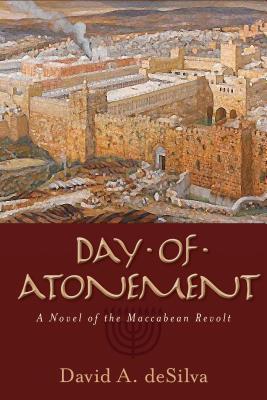
Day of Atonement: A Novel of the Maccabean Revolt by David DeSilva
In the blank pages between Malachi and Matthew, the course of an entire nation was changed . . .
His brother, the high priest Honiah, enjoyed the authority of the high priesthood, and all-important decisions needed his approval. But it was Jason who was shaping the future of Jerusalem and with it, all Judea. He breathed in again, imagining that he could feel the wave of destiny impelling him forward toward his vision as he exhaled . . .
The Greeks have taken over the world, but Jerusalem is still the same backwater city Jason has always known. He wants to help his hometown rise to a new age of prosperity and influence. If that means stretching the terms of the city’s divine covenant, so be it. But how far is he willing to go to achieve Greek greatness for this Jewish city? It will take the willingness of a handful of Jews to die rather than violate the covenant in order to turn the tide back to God.
Written by an internationally recognized expert in the period between the Testaments, Day of Atonement invites readers into Judea during the tumultuous years leading up to the Maccabean Revolt. It was this pivotal decade that reminded Jews of the centrality of the covenant to their national security and taught them that the covenant was worth dying for. The story is so foundational, it is still told every year at Hanukkah. The lessons learned during this turbulent time also shed light on just what was at stake in the ministry of Jesus, whose radical message seemed to threaten the covenant once again.
I have been looking into stories about women in the Bible and the next three books listed look fantastic!
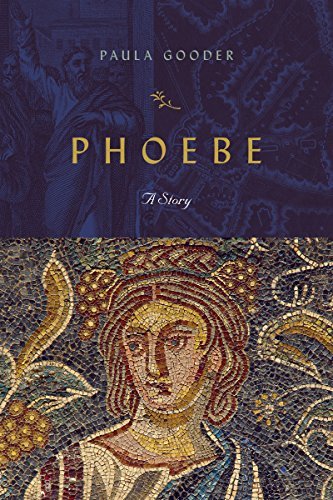
Phoebe: A Story by Paula Gooder
Sometime around 56 AD, the apostle Paul wrote to the church in Rome. He entrusted this letter to Phoebe, whom he describes as the deacon of the church at Cenchreae and a patron of many. But who was this remarkable woman?
Biblical scholar and popular author and speaker Paula Gooder imagines Phoebe’s story―who she was, the life she lived, and her first-century faith―and in doing so opens up Paul’s world, giving a sense of the cultural and historical pressures that shaped his thinking and the faith of the early church. After the narrative, Gooder includes an extensive notes section with comments on the historical context, biographical details, cultural practices, and more. Rigorously researched, this is a book for anyone who wants to engage more deeply and imaginatively with Paul’s theology.

Priscilla: The Life of an Early Christian by Ben Witherington III
Who was Priscilla?
Readers of the Bible may know her as the wife of Aquila, Paul’s coworker, or someone who explained baptism to Apollos. Biblical references to Priscilla spark questions: Why is she mentioned before her husband? Does the mention of her instruction of Apollos mean that women taught in the church? What is her story?
Ben Witherington addresses these questions and more. In this work of historical fiction, Priscilla looks back on her long life and remembers the ways she has participated in the early church. Her journey has taken her to Ephesus, Corinth, and Rome, and she’s partnered with Paul and others along the way.
Priscilla’s story makes the first-century world come alive and helps readers connect the events and correspondence in different New Testament books. Witherington combines biblical scholarship and winsome storytelling to give readers a vivid picture of an important New Testament woman.

A Week in the Life of a Greco-Roman Woman (A Week in the Life Series) by Holly Beers
A young wife meets her daily struggles with equanimityand courage. She holds poverty and hunger at bay, fights to keep her child healthy and strong, and navigates the unpredictability of her husband’s temperament. But into the midst of her daily fears and worries, a new hope appears: a teaching that challenges her society’s most basic assumption. What is this new teaching? And what will it demand of her?
In this gripping novel, Holly Beers introduces us to the first-century setting where the apostle Paul first proclaimed the gospel. Illuminated by historical images and explanatory sidebars, this lively story not only shows us the rich tapestry of life in a thriving Greco-Roman city, it also foregrounds the interior life of one courageous woman―and the radical new freedom the gospel promised her.
The next two look great and I can’t wait to read them. About the middle of next year or towards the end I’m take a journey forward to the 1st century again so these will be perfect. This whole entire list of books is perfectly really. As I read each one, I will be sure to post about what I thought of the stories and if I would recommend them to my readers.
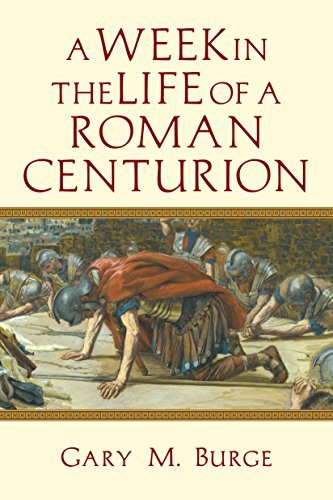
A Week in the Life of a Roman Centurion (A Week in the Life Series) by Gary M. Burge
Enter a world of warfare and treachery, of duty and honor, of love and loyalty, interwoven with the inner workings of a Roman centurion’s household. And then trace it as the road curves toward little Capernaum.
Follow the story of Appius, a proud centurion, and Tullus, his scribe and slave. From a battle with the Parthians, through a tragic personal crisis, to the gladiator arena at Caesarea Maritima, their tale finally leads to the backwater village of Capernaum on the shores of Galilee. There, in a culture not their own and during a week they will never forget, they encounter a Jewish prophet from Nazareth.
A Week in the Life of a Roman Centurion gives us a first-century view of the world of the Gospels. In entertaining historical fiction, splashed with informative sidebars and images, we capture a view of Jesus’ world from the outer framework looking in.
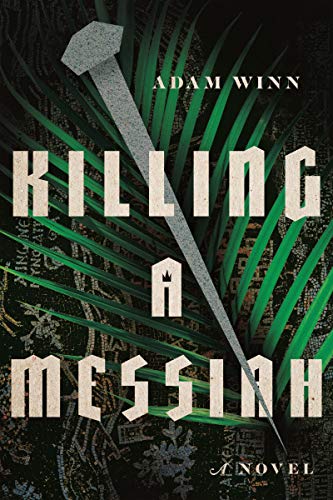
Killing a Messiah: A Novel by Adam Winn
As Passover approaches, the city of Jerusalem is a political tinderbox. Judah, a resistance leader, plots to overthrow the Roman occupation. Eleazar and his father, the high priest Caiaphas, seek peace in the city at all costs. Pilate, the Roman governor, maneuvers to keep order (and his own hold on power). Caleb, a shopkeeper, is reluctantly caught up in the intrigue. When rumors start spreading about the popular prophet Jesus, hailed by many as the Messiah, Roman and Jewish leaders alike fear unrest and violence during the upcoming festival. Then, in the midst of this tension, unexpected alliances emerge.
In Killing a Messiah, New Testament scholar Adam Winn weaves together stories of historical and fictional characters in a fresh reimagining of the events leading up to Jesus’ execution. Based on what we know of the first-century context, Winn’s narrative offers compelling explanations for gaps in the Gospel accounts. The social, political, and religious realities of Jesus’ world come to life and shed new light on our reading of the biblical texts. In a city full of political entanglements, espionage, and competing interests, the blame for the crucifixion is complex and can’t land on just a single party. It takes more than one to kill a messiah.
Stephanie
 Layered Pages