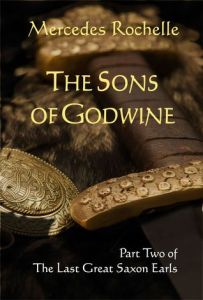
The Sons of Godwine: Part Two of The Last Great Saxon Earls by Mercedes Rochelle

02_The Sons of Godwine

Publication Date: March 7, 2016
Sergeant Press
eBook & Print; 306 Pages

Genre: Historical Fiction

Emerging from the long shadow cast by his formidable father, Harold Godwineson showed himself to be a worthy successor to the Earldom of Wessex. In the following twelve years, he became the King’s most trusted advisor, practically taking the reins of government into his own hands. And on Edward the Confessor’s death, Harold Godwineson mounted the throne—the first king of England not of royal blood. Yet Harold was only a man, and his rise in fortune was not blameless. Like any person aspiring to power, he made choices he wasn’t particularly proud of. Unfortunately, those closest to him sometimes paid the price of his fame.

This is a story of Godwine’s family as told from the viewpoint of Harold and his younger brothers. Queen Editha, known for her Vita Ædwardi Regis, originally commissioned a work to memorialize the deeds of her family, but after the Conquest historians tell us she abandoned this project and concentrated on her husband, the less dangerous subject. In THE SONS OF GODWINE and FATAL RIVALRY, I am telling the story as it might have survived had she collected and passed on the memoirs of her tragic brothers.

This book is part two of The Last Great Saxon Earls series. Book one, GODWINE KINGMAKER, depicted the rise and fall of the first Earl of Wessex who came to power under Canute and rose to preeminence at the beginning of Edward the Confessor’s reign. Unfortunately, Godwine’s misguided efforts to champion his eldest son Swegn recoiled on the whole family, contributing to their outlawry and Queen Editha’s disgrace. Their exile only lasted one year and they returned victorious to London, though it was obvious that Harold’s career was just beginning as his father’s journey was coming to an end.

Harold’s siblings were all overshadowed by their famous brother; in their memoirs we see remarks tinged sometimes with admiration, sometimes with skepticism, and in Tostig’s case, with jealousy. We see a Harold who is ambitious, self-assured, sometimes egocentric, imperfect, yet heroic. His own story is all about Harold, but his brothers see things a little differently. Throughout, their observations are purely subjective, and witnessing events through their eyes gives us an insider’s perspective.

Harold was his mother’s favorite, confident enough to rise above petty sibling rivalry but Tostig, next in line, was not so lucky. Harold would have been surprised by Tostig’s vindictiveness, if he had ever given his brother a second thought. And that was the problem. Tostig’s love/hate relationship with Harold would eventually destroy everything they worked for, leaving the country open to foreign conquest. This subplot comes to a crisis in book three of the series, FATAL RIVALRY.

Available at Amazon

TOSTIG REMEMBERS

Not long after we were comfortably housed in Flanders, Judith and I attended church with Matilda, Baldwin’s only surviving daughter, and her ladies. Matilda was a tiny thing, but a spirited little bundle of energy nonetheless, and very pretty. She would have fit under Judith’s chin. But she was the pride and joy of her parents, well-educated and very conscious of her lineage; her mother was the king of France’s sister, and Baldwin’s ancestors have ruled Flanders since the ninth century.

It had been raining that day and the sun was just peeking from the clouds as we finished the services in the church of St. Donation, which stood only about 400 meters from the castle. As we were leaving, Matilda led her little procession; I was far back in the crowd when the commotion began. Women were screaming, arms were waving, and people were pushing into each other trying to fall back. By the time I elbowed my way through the door, craning my neck to see over all the heads, Matilda was lying face-down in a puddle of mud. She was sobbing for all the world like she had just taken a beating. The poor girl was covered from head to toe with muck, and her beautiful dress was ruined. As she pushed herself up by the arms, I shook the girl next to me.

“What happened?”

“It was him,” she sobbed, pointing. Looking up, I saw a somewhat disheveled man riding away. There was no time to catch up with him—not with poor Matilda in need of assistance. I ran to her side and rolled her into my arms, picking the unresisting girl up like she was a child. She put her arms around my neck, smearing mud and tears all over my tunic.

“Take…take me home,” she coughed between sobs. She didn’t need to tell me that!

By now we had drawn a crowd, but they all parted respectfully as I carried Bruges’ favorite daughter back to her father’s castle. I heard the murmurs as we passed by.

“William the Bastard,” said somebody.

“The Duke,” said another. “He must be punished.”

“Poor girl,” said a third. “He just grabbed her by the back of the neck and threw her in the mud.”

“He beat her!”

“No, he kicked her!”

“He rolled her in the mud then got on his horse.”

I was shocked. That was the Duke of Normandy?

Murmuring words of encouragement, I carried Matilda up the hill to the castle. We passed between rows of soldiers and into the citadel where her ladies ran ahead of me to prepare her chamber. I laid Matilda on a pile of covers and she rolled on her side, hiding her face. Her father rushed in the door and knelt by her bedside.

“Oh my poor child. What happened?”

At that, she sat up and threw her arms around Baldwin’s neck, covering him with mud, too. After a few moments of sobbing, she pulled herself together.

“Oh father. It was Duke William. He was waiting for me at the church. When I came out, he accused me of humiliating him! I told him I would not lower myself to marry a mere bastard, when he grabbed me and threw me into the mud. He pushed me back and forth until I was totally covered then got on his horse and rode away.”

She took a cloth from one of her ladies and blew her nose in it.

“Outrageous!” spit the Count. “I will have his head for this!”

Turning Matilda over to her women, he rose and tried to look dignified. But he was all bespattered like myself, and decided to leave the room, taking the witnesses with him. He put an arm around my shoulder.

“Thank you, Tostig. Poor girl.” He tried to straighten out his tunic then gave up. “Right before you came to Flanders, Duke William sent an embassy asking for Matilda’s hand in marriage. You can imagine how quickly she sent them packing. William was beneath her station, and a bastard on top of everything else. She is not shy, my little Matilda!” He laughed briefly. “But we weren’t expecting this!”

The more he thought about it, his face became redder and redder.

“How dare he shame my little girl! Come, Tostig. We cannot let this go unavenged!”

There is one thing I can say about Count Baldwin; he is a very decisive man. He wasted no time in calling together his scribes and composing letters to his knights and captains. He summoned his household steward and demanded an accounting of all supplies. He called for his banker so he could determine how many funds he could raise. He worked long into the night.

The following day, as Baldwin was busily giving orders, Matilda walked into the great hall, trailing her women. There were no signs of the previous afternoon’s dishevelment; in fact, she had regained her proud bearing. Everyone stopped what they were doing and stared at her.

“Father, I have made a decision,” she said evenly. “You may stop preparations for war. I have decided I will marry Duke William of Normandy.”

You could have heard a feather drop in the room. We were all stunned into silence.

“You what?” her father finally muttered.

“I will have no one else.”

Apparently used to Matilda’s strange behavior, her father leaned back and put the quill down.

“And what has brought about this change of mind?” He crossed his arms over his chest.

She appeared to think for a moment. “It must be a brave and powerful man who would dare do such a thing, right in the middle of your territory.” A brief smile flicked across her face. “I understand him better, now.”

Baldwin looked around at his courtiers. “There you have it. Cancel our preparations.” I detected a bit of sarcasm in his voice, but he was quickly obeyed. He held out a hand to Matilda.

“Come, my child. Sit beside me.”

Someone brought a chair and Matilda obliged, taking her father’s hand.

“Are you sure you want to do this?” he said gently. “He may prove to be a dangerous husband.”

“I will manage him. After all, he really didn’t hurt me.”

Baldwin didn’t even try to reason with her. Given time, he told me later, she might change her mind again.
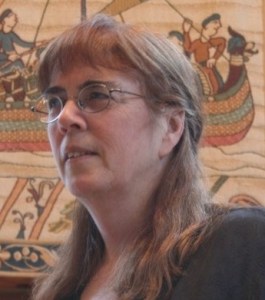
Mercedes Rochelle

About the Author

Born in St. Louis MO with a degree from University of Missouri, Mercedes Rochelle learned about living history as a re-enactor and has been enamored with historical fiction ever since. A move to New York to do research and two careers ensued, but writing fiction remains her primary vocation. She lives in Sergeantsville, NJ with her husband in a log home they had built themselves.

For more information visit Mercedes Rochelle’s website and blog. You can also follow her on FacebookTwitter, and Goodreads.

Blog Tour Schedule

Monday, April 18
Guest Post & Giveaway at Let Them Read Books

Wednesday, April 20
Guest Post at Just One More Chapter

Friday, April 22
Excerpt & Giveaway at Queen of All She Reads

Sunday, April 24
Excerpt & Giveaway at Teddy Rose Book Reviews Plus More

Monday, April 25
Review at Book Nerd

Wednesday, May 4
Excerpt at Layered Pages

Thursday, May 5
Review at Impressions In Ink

Friday, May 13
Interview at Passages to the Past
04_The Sons of Godwine_Blog Tour Banner_FINAL (2)


Characters in Motion with Wendy J. Dunn

Often times the best inspiration comes within us. How do you flesh out your characters to drive the plot?

How do I flesh out my characters to drive my plots?  I could answer this very simply, by saying inspiration, of course, is the key to all my writing, but to answer this truthfully, I must talk about the real key unlocking this inspiration, a story beginning on the day of my tenth birthday. That day, a school friend gave me a child’s book of English history and changed my life forever. At ten, I desperately needed a hero, a guiding light to help me navigate through those difficult growing up years. Because of a chapter in this book, Elizabeth I became my first hero; my search to know more about her introduced me to my second hero, her mother, Anne Boleyn. They both gave me examples of strong and determined women – women who claimed their voices and true identities in a time when women were told to be silent and remember their inferiority.

Dear Heart How Like You This

As a child and teenager, I was also told to be silent and that my worth did not equal that of the males in my world. I was told it was a waste of time to educate girls. Learning about Anne and Elizabeth taught me otherwise. Their stories were the beginning of my understanding that I was not the one at fault, but my world – a world where I learned not only to navigate my ‘woman’s life’ but also one mapped out by patriarchy.

My interest in Elizabeth I and Anne Boleyn soon grew to embrace the whole Tudor period, and grew into a passion turning me into a writer. I not only hold Elizabeth and Anne responsible for my two Anne Boleyn novels (Dear Heart, How Like You This? and The Light in the Labyrinth), Falling Pomegranate Seeds: Duty of Daughters, the first book my Katherine of Aragon trilogy, a novel I hope to see published this year, but also my doctorate.

While my novels are shaped through vast research, I am first and foremost a writer of fiction. My stories are initially ignited by research and then imagined, or dreamed, onto the page. This ‘dreaming’ draws from the compost of my own life experience, which makes me empathise with my characters, especially that of my female characters; this empathy helps me flesh them out. My human experience, faced as a woman, is one common to all humanity: I have experienced rejection, sorrow, love. I have also known what is to hate, but if there is one thing my life has taught me, it is hate gets us nowhere. Writing has been a wonderful tool to help me let go of hate. I don’t even hate Henry VIII. One of the reasons I revisited Anne Boleyn’s story in The Light in the Labyrinth was because I wanted to be more fair to him. I don’t like him, but I don’t hate him; writing Kate Carey’s story helped me to pity him.

I once heard the very lovely and talented Australian author Sophie Masson say, ‘A writer is a lifelong learner’. How true that is; writers learn from observing and thinking about their world. When we write, our thinking goes to another, far, far deeper level. This deep place is where magic happens, through the writer’s engagement with imagination – a magic that builds a bridge between the writer and the reader. But it is more than this. Every time I embark on a new, novel writing adventure, I rediscover the truth of Kundera’s claim that creating a novel ignites a catalyst for change (2006).

The Light in the Labyrinth

For me, this catalyst of change not only happens through the practice of writing, but also through engagement with stories of women from long ago. It is by telling these stories, I realize, yet again, what being a feminist is all about – and how all my writing comes from my standpoint as a woman. Reclaiming the voices of women of the past illuminates for me that the battle for gender equality is one not won – and that women (and men) must keep fighting to achieve it. Women of the first world must fight not only for ourselves, but also for our sisters who live in oppressive cultures where women and female babies are killed because they are regarded as worthless and replaceable. This fight is not one to be won through violence – but through the education of both girls and boys. It is my hope that by giving voice to Tudor women through the construction of fiction, young adult women will engage with my stories and reflect about the possibilities for their own lives.

It goes without saying, despite the passing of hundreds of years since the last Tudor monarch drew her final breath, patriarchy still rules our world. I feel deeply about my historical women. It breaks my heart to think of how Anne and Katherine of Aragon ended their lives – simply because the man they loved had the power to destroy them. It breaks my heart that this still happens in 2016. Last year, in Australia, two women a week were murdered by someone who once professed to love them. The majority of the murderers were men. It is one of the greatest tragedies of our time that there are men who see their female partners and children as possessions – possessions they have the right to destroy.

I flesh out my characters through passion. I’m passionate about giving my historical women voices – not only because they were too often silenced and refused justice during their lives, but because giving them voices also gives me a voice.

I live in hope if enough women speak up about their lives then we might yet discover the truth of Muriel Rukeyser’s words: ‘What would happen if one woman told the truth about her life? The world would split open’ (Cited by Gandolfo  2008, p 142).

 Smile, I hear again my imagined Anne Boleyn speaking in my mind, telling me she would like the final word:

Defiled is my name full sore

Through cruel spite and false report,

That I may say for evermore,

Farewell, my joy! Adieu comfort!

For wrongfully ye judge of me

Unto my fame a mortal wound,

Say what ye list, it will not be,

Ye seek for that can not be found.”

REFERENCES:

Gandolfo, E  2008, ‘Feminist Fictionmaking’, New Writing, vol. 5, no. 2, pp. 140-149.

Kundera, M  2003, The Art of the Novel, Reprint Edition, Harper, Perennial Modern Classics, New York.

Wendy Dunn

Wendy J. Dunn is an Australian writer who has been obsessed by Anne Boleyn and Tudor History since she was ten-years-old. She is the author of two Tudor novels: Dear HeartHow Like You This?, the winner of the 2003 Glyph Fiction Award and 2004 runner up in the Eric Hoffer Award for Commercial Fiction, and The Light in the Labyrinth, her first young adult novel. Her third Tudor novel, Falling Pomegranate Seeds, will be published with Madeglobal sometime in 2016.

While she continues to have a very close and spooky relationship with Sir Thomas Wyatt, the elder (Tom told the story of Anne Boleyn in Dear HeartHow Like You This?), serendipity of life now leaves her no longer wondering if she has been channeling Anne Boleyn and Sir Tom for years in her writing, but considering the possibility of ancestral memory. Her own family tree reveals the intriguing fact that her ancestors – possibly over three generations – had purchased land from both the Boleyn and Wyatt families to build up their own holdings. It seems very likely Wendy’s ancestors knew the Wyatts and Boleyns personally.

Born in Melbourne, Australia, Wendy is married and the mother of three sons and one daughter—named after a certain Tudor queen, surprisingly, not Anne.

After successfully completing her MA (Writing) at Swinburne University Wendy became a tutor for the same course. She gained her PhD (Human Society) in 2014.

Website

Facebook

Goodreads

*All reviews, interviews, guest posts and promotions are original works of the people involved. In order to use any part of the material from this site, please ask for permission from Stephanie M. Hopkins-Layered Pages. *

Self-Publishing: An Author’s Experiences

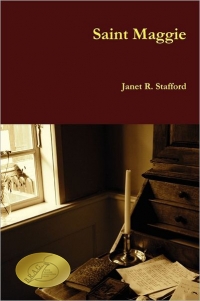
Janet Stafford BRAGI’d like to welcome back B.R.A.G. Medallion Honoree, Janet R. Stafford today to talk with me about her experiences in Self-publishing and what she has learned in her endeavor thus far. Janet was born in Albany, NY, but spent most of her childhood and all of her teen years in Parsippany, NJ – so she thinks of herself as a Jersey Girl. She went to Seton Hall University (South Orange, NJ) where she received a B.A. degree in Asian Studies. She also has a Master of Divinity degree and a Ph.D. in North American Religion and Culture, both from Drew University (Madison, NJ). She worked for eight years as an adjunct professor teaching classes in interdisciplinary studies and history. But Janet’s primary call has been serving six United Methodist churches over the past 24 years, where she has worked in the area of spiritual formation and ministries with children and youth. Her current passion is multi-generational worship and learning.

The publication of Janet’s first novel, Saint Maggie, led to the creation of a series by the same name. She followed up with Walk by Faith in 2013 and After the Storm in 2014. Heart Soul & Rock ‘N’ Roll, a contemporary romance, was published at the end of April 2015.

Janet, when did you decide you were going to self-publish?’

I had tried attracting a publisher and/or agent years ago, to no avail. At that point I gave up trying to publish and focused on creating dramatic materials for the churches in which I worked. I realized that self-publishing was a possibility when a friend of mine, Rich Melheim of Faith Inkubators, announced that he was publishing a book through Lulu. I thought, “Well, if Rich can do it, so can I!” So I polished SAINT MAGGIE and began my self-publishing adventure.

What has your experience been like along the way?

My experience has been a major learning curve! I’ve learned so much about publishing in general – everything from formatting and editing to cover design, to distribution and eBooks, to marketing and publicity. Self-publishing is not about writing one’s book. It’s about writing the book and everything else that goes into putting the book into the public’s hands. However, I’ve got to say that I am enjoying the experience. I’ve made some interesting goofs along the way, but every time I mess up, I learn something and am more empowered.

What are some of the challenges you have faced?

The big challenges have been marketing and publicity, and I freely admit that I still am not very good at either of them. I’m just not good at tooting my own horn. It’s hard for me to say “This is the most moving book you’ve ever read” or “This book will sweep you into the conflict and pain of the Civil War.” The Saint Maggie series is an inspiring story about a family, but it’s not going to change anyone’s life. My upcoming romance, HEART SOUL & ROCK ‘N’ ROLL, is fun and engaging, but it’s not going to bring about world peace. Advertising and marketing is all about exaggeration in order to get people’s attention, something I find disturbing and difficult to do. Also, marketing on social media, while free, takes a significant amount of time – time that I would rather spend writing. So the marketing and publicity aspects are quite challenging for me.

Saint Maggie Book with BRAG Medallion

What have you learned in this industry?

I have learned to do what’s best for me and my books. I started out with Lulu then tried a few other publishing/printing platforms, only to come back to Lulu. My reasons are simple: even though the books cost more to print through Lulu, I find that they give better, more personal service and I have easy access to my files. I even run copies for beta readers by uploading drafts to Lulu and printing them while keeping the material private. The process also helps me work on the cover. When the book is complete, I change the setting so that it will be available to the public, add my ISBN, and it’s ready.

I have also learned the value of old-fashioned public relations. One of my favorite things is to give talks and make public appearances. This past February I spoke to one group that was excited to have an author in their midst. Let’s be honest, most indie authors are unknowns, but if you offer to speak to a group for no charge, as long as you can bring your books to sell and sign, many book clubs, discussion groups, and community groups will be happy to have you. People want to pick authors’ minds, discover why we write, how we write, how we come up with characters, and so on. Best-selling authors don’t or can’t do this for local groups. But relatively unknown authors can. Groups and clubs appreciate it if you take the time to converse with them and sign books. It’s a slow-track in the world of publicity and marketing, but for me it’s the more rewarding track.

What are the do’s and don’ts of self-publishing?

1) DO find someone to help you with editing, story continuity, etc. If you can’t afford to purchase someone’s services, then find friends who are avid readers, or school teachers or college professors. Also find people who will be honest with you. You cannot do editing all on your own. I use volunteer beta readers at present.

2) DON’T believe deals that look too good to be true. A simple adage: if it looks too good to be true, it probably is too good to be true. There are countless people and agencies out there looking to separate you from your money. They will tell you that you’ll get x-number of readers or x-amount of publicity if you use their services for x-amount of money. But experience has taught me that there is no magic bullet. I have been taken a few times and I’d like spare you. Be judicious with your money.

3) DO celebrate with the few indie writers who have become well-known and/or wealthy; but DON’T allow their success to make you doubt your own value as an author. Remember, people who write best-sellers are a minority who probably had some phenomenal good luck and/or good friends in the right places. What about talent? They have it – but many little known or unknown authors have talent, too. Don’t forget that.

4) DO work on becoming a better writer. Read work by other authors, be critical when reviewing your drafts, and ask for helpful criticism from others.

What advice would you give to a writer who is considering the self-publishing route?

Know why you’re writing. If it is to get rich and famous, forget about it. You’ll quickly get discouraged when it doesn’t happen. However, if you’re writing because you need to and because you have a story or stories to tell, then go for it – but be prepared to do the hard work and don’t expect to be thrust into the wonderful world of a best-selling book. Instead, look for your rewards in the “small” things. At a recent book club, one reader gave me some helpful criticism of my second book, and then finished up by saying that she could see my growth as a writer throughout the three books. I loved that. Another reader told me on Facebook that I was her favorite author. Are you kidding, with all the other authors out there? That is some kind of compliment! Rewards should not be confined solely to income, book sales, popularity, or number of reviews. Find your joy in the process of writing and publishing, and in your readership.

What are the promotional techniques you use via social media and how much time a week do you spend promoting your work? What are the different sites you use to promote your book?

I use Facebook, Pinterest, and Twitter, and have a website for my micro-publishing company (I will be publishing work from another author soon) and one for me as an author. I’m also on Goodreads, but I’m inactive and really should drop it. I found it was just one site too many for me to handle.

Since I also work 25-30 hours a week as an assistant minister at a United Methodist church, ideally I want to devote 15 hours a week to research, writing, and publication. I’ve never really tracked how much time I spend on social media. I suppose now that I’ve got four books under my belt, I should log my time to see. My sense is that social media and website work can suck up a fair amount of time.

As for promotional techniques, I do a few things. For instance, I enjoy putting up impromptu games and offering a book as a prize to the first one to give the correct answer. I did that recently on Facebook with HEART SOUL & ROCK ‘N’ ROLL. On occasion, I run special deals on my author page. I will drop the price or ship for free. However, I don’t care to do deals on Amazon or Barnes & Noble, because it is klutzy to change pricing. Also, I don’t go in for things like KDP Select or Matchbook on Kindle – which probably explains why I don’t get much traction on Kindle or Amazon! But I do not like having to make my eBook “exclusive” to Kindle. For WALK BY FAITH and A TIME TO HEAL, I used a crowdfunding platform called Publish to get the word out and raise money for publishing expenses. Crowdfunding also raised awareness about the books. Occasionally, I have used advertising on the web through Yahoo or Google. The ads did get my work exposed to a wider audience, but I learned that you must watch the daily expenses, as they can pile up quickly.

Finally, I have done giveaways on Goodreads. These were comprised of an offer to give away ten books to ten people who enter the giveaway. I got tons of interest and gave away the ten books, but the follow-through from other potential readers was negligible. I am wary of doing too many giveaways – first of all because they cost money, and at present my company is always short of that! The second reason comes from seeing what has happened to music. Easy access to free music has led many people to expect that all music should be free, forgetting that someone had to create that song. The music did not spring forth from the ether. Of course, the work of musicians, authors, and other artists should not be priced out of the average person’s reach, but neither should a person’s creative work be taken for granted and expected to be free on a regular basis.

Where do you see this industry in five to ten years?

I don’t think of self-publishing as an “industry.” It seems to me that we are so many little ants out there creating books and trying to get readers’ attention. So perhaps self-publishing will become an industry as more small publishing companies and/or authors’ support groups come to the fore. At the present, self-publishing reminds me of the frontier – anything goes until the sheriff, pastor, librarian, and schoolmarm come to town.

If something can be improved upon in this industry, what do you think it should be?

Perhaps we need to have author support groups. Oh, I know writing groups are out there – but my “day job” (or more correctly, my “other vocation”) is demanding. I often work Saturdays, am always busy on Sundays, often at the office on weekday mornings and sometimes doing things on weekday evenings. So hooking up with a face-to-face group doesn’t work for me. But it would be helpful to have online groups where people could exchange experiences, give and get advice, and so on. Hey, maybe I should start one of those! Anyway, the emergence of more organization might make self-publishing an industry.

How long have you been an indie author?

I published SAINT MAGGIE in 2011, so I have been an indie author for four years. I’m a baby in the field! That said, I have published two more books in the Saint Maggie series, and have just launched my first romance. Whether or not I become a “best-seller,” I’m in this for the long run!

Author Link:

Pinterest

Facebook

Twitter @JanetRStafford

Squeaking Pips (my publishing company)

Website

indieBRAG

Interview with Author Kate Forsyth

02_Bitter Greens

Publication Date: September 23, 2014 Thomas Dunne Books Hardcover; 496p ISBN-10: 1250047536

Genre: Historical/Fantasy/Fairy-Tale Retellings

The amazing power and truth of the Rapunzel fairy tale comes alive for the first time in this breathtaking tale of desire, black magic and the redemptive power of love

French novelist Charlotte-Rose de la Force has been banished from the court of Versailles by the Sun King, Louis XIV, after a series of scandalous love affairs. At the convent, she is comforted by an old nun, Sœur Seraphina, who tells her the tale of a young girl who, a hundred years earlier, is sold by her parents for a handful of bitter greens…

After Margherita’s father steals parsley from the walled garden of the courtesan Selena Leonelli, he is threatened with having both hands cut off, unless he and his wife relinquish their precious little girl. Selena is the famous red-haired muse of the artist Tiziano, first painted by him in 1512 and still inspiring him at the time of his death. She is at the center of Renaissance life in Venice, a world of beauty and danger, seduction and betrayal, love and superstition.

Locked away in a tower, Margherita sings in the hope that someone will hear her. One day, a young man does.

Award-winning author Kate Forsyth braids together the stories of Margherita, Selena, and Charlotte-Rose, the woman who penned Rapunzel as we now know it, to create what is a sumptuous historical novel, an enchanting fairy tale retelling, and a loving tribute to the imagination of one remarkable woman.

Hello, Kate! It is a pleasure to chat with you today about your story, Bitter Greens. What a beautiful and creative premise. Rapunzel is a tale I have known since childhood…what inspires you about Rapunzel to begin with?

I have been fascinated with the Rapunzel fairy tale since I first read it as a little girl. I was always puzzled by the mysteries in the tale: why did the witch lock up the girl? Why did she have to climb up her hair to get into the tower? How did the girl’s hair get so long? Questions like that niggled at me, and so I began to think up possible explanations for them.

Shamefully, I have to admit I have never paid much attention to the writer (s) of the story and had no idea it was penned by women. What is it that fascinates you about their lives the most?

I am a storyteller as well as a writer, and so I’ve always been interested in the ways stories endure over time, told and retold and retold again. I became interested in finding out the origin of the tale in the early stages of planning my novel, and was hugely excited when I stumbled across the life story of Charlotte-Rose de Caumont de la Force, who wrote the version of the tale as it was first told while she was locked up in a convent after scandalizing the royal court at Versailles with her love affairs and refusal to bow to societal norms. She was such a fascinating woman and the parallels between her story and the fairy tale she wrote struck me at once.

What were some of the historical events that took place in the setting of this story?

BITTER GREENS moves between two historical settings. The first is Renaissance Venice, and takes in 16th witchcraft hunts, the devastation of the plague, and the extraordinary art of Tiziano Vercelli, best known in English as Titian. The second setting is the sumptuous royal court of 17th century France, ruled over by Louis XIV, the Sun King. Charlotte-Rose de la Force was his second cousin and a maid-of-honour serving the queen. During her life, she saw the cruel persecution of the French Protestants, c alled Huguenots, and the scandal of the Affair of the Poisons, which saw hundreds of people arrested and tortured on suspicion of Satanism and murder.

Selena stands out to me the most. What are her strengths and weaknesses? And in what way does she inspire-if she inspires that is…?

Kate: Selena is a Venetian courtesan and the witch of the tale. Selena witnessed the terrible punishment of her mother, after she was unfaithful to her patron, and so sets herself to enact revenge on those who took part. She studies ‘stregheria’, the Italian art of witchcraft, in an attempt to shape her own life. She is afraid of the passing of time and the coming of death, and so hates clocks and watches, but is also passionate, sensual, and determined.  Although she is strong and clever, she also has a strong streak of cruelty in her and locks girls up in a tower for her own nefarious purposes, so I’m not sure she can be seen as an inspiration!

Could you please give me an example of Renaissance life in Venice? Something romantic, perhaps?

Venice in the 16th century was a place of great wealth, beauty and culture.  Its streets were full of merchants from all over the world, all speaking their own tongues and wearing the clothes of their nation. Women were gorgeously dressed in silks and satins and cloth-of-gold, and wore totteringly high wooden chopines to protect their delicate silk slippers from the water that often overflowed from the canals.  Artists such as Michelangelo, Titian and Bellini created works of startling beauty, and every palace and cathedral was painted and ornamented to within an inch of their life. At Carnevale, men and women dressed up in their finest clothes and hid their faces behind masks so that they could wander the narrow streets and plazas of the many islands, free to love anyone they pleased. Many people began to wear masks all year long, in order to enjoy the freedom of anonymity, until the practice was outlawed in 1797. Mask-makers were revered, and had their own rules and their own guild.

What compels the old nun to tell Charlotte-Rose the tale who is sold by her parents for a handful of bitter greens? Is there a particular message she wants her to grasp?

I think Seraphina wants to help Charlotte-Rose learn to accept her fate with grace, and to make the most of the life she has been given. We cannot always choose what happens to us in our lives, but we can choose how we deal with it.

What is Charlotte’s personality like?

She is strong-willed, quick-witted, passionate, and very stubborn. She does her best to live a self-determined life, and finds the strictures of the patriarchal society in which she lives very difficult to negotiate. All she wants is to live and love as she chooses, and to write – yet these things are constantly being denied to her, and so she is frustrated and angry, particularly in the beginning of the book. She is also afraid and determined not to show it, and this makes her seem proud and even arrogant. She is also, I’m afraid, rather vain, but then she lives in the royal court of Versailles where everything is about show.

Is there one thing you find remarkable about Venice in 1512?

Venice had always been a city remarkable for its religious and cultural toleration, yet this began to change around this time. The world’s first ghetto was established in Venice in 1516, and other races and religions began to find themselves having their freedom curtailed as well. This was partly as a result of a long-waged war against Constantinople, and partly because of religious fervor caused by terrible outbreaks of the bubonic plague.

What was your process for this story and how long did you work on it?

Bitter Greens was a complex and challenging novel to write, and took me a long time to research. All in all, it took me seven years to write! I began by learning everything I could about the two periods my story was set in, and by studying the history of the Rapunzel fairy tale (I ended up doing a doctorate on this.) I then wrote each of the three narrative threads independently from each other, and then wove them together. It was like writing three novels instead of one!

What do you love most about writing?

Everything! I love the first period, when my mind is alive with story possibilities and I’m reading and researching and thinking and daydreaming. I love the actual writing process, and all the amazing serendipitous discoveries I make. And I love to edit too – that’s when the story really begins to fall into shape.

Who are your influences?

I think every single book I have loved – and there are hundreds of thousands of those!

Praise for Bitter Greens

“Kate Forsyth’s Bitter Greens is an enthralling concoction of history and magic, an absorbing, richly detailed, and heart-wrenching reimagining of a timeless fairytale.” —Jennifer Chiaverini, New York Times bestselling author of Mrs. Lincoln’s Rival

“See how three vividly drawn women cope with injustice, loneliness, fear, longing. See how they survive—or perpetrate—treachery. Surrender yourself to a master storyteller, to delicious detail and spunky heroines. Bitter Greens is a complex, dazzling achievement.” —Susan Vreeland, New York Times bestselling author of Clara and Mr. Tiffany and Girl in Hyacinth Blue

“A magical blend of myth and history, truth and legend, Bitter Greens is one of those rare books that keeps you reading long after the lights have gone out, that carries you effortlessly to another place and time, that makes you weep and laugh and wish you could flip forward to make sure it all ends happily ever after—but for the fact that if you did so, you might miss a line, and no line of this book should be missed.” —Lauren Willig, New York Times bestselling author of The Ashford Affair

“Kate Forsyth wields her pen with all the grace and finesse of a master swordsman. In Bitter Greens she conjures a lyrical fairytale that is by turns breathtaking, inspiring, poetic, and heartbreakingly lovely. Set like a jewel within the events of history, it is pure, peerless enchantment.”—New York Times bestselling author Deanna Raybourn

“Bitter Greens is pure enchantment–gripping and lyrical. From the high convent walls where a 17th century noblewoman is exiled, to a hidden tower which imprisons an innocent girl with very long hair, to the bitter deeds of a beautiful witch who cannot grow old–Kate Forsyth weaves an engrossing, gorgeously written tale of three women in search of love and freedom. A truly original writer, Forsyth has crafted an often terrifying but ultimately redemptive dark fairy tale of the heart.”—Stephanie Cowell, American Book Award-winning author of Claude & Camille

“Kate Forsyth’s Bitter Greens is not only a magnificent achievement that would make any novelist jealous, it’s one of the most beautiful paeans to the magic of storytelling that I’ve ever read.”—C.W. Gortner, author of The Queen’s Vow and The Confessions of Catherine de Medici

“Threads of history and folklore are richly intertwined to form this spellbinding story. Kate Forsyth has excelled herself with Bitter Greens. Compulsively unputtdownable.”—Juliet Marillier, national bestselling author of Flame of Sevenwaters and Heart’s Blood

Buy the Book

Amazon US Barnes & Noble IndieBound

About the Author

Kate Forsyth 1

Kate Forsyth wrote her first novel at the age of seven, and is now the internationally bestselling & award-winning author of thirty books, ranging from picture books to poetry to novels for both adults and children. She was recently voted one of Australia’s Favourite 20 Novelists, and has been called ‘one of the finest writers of this generation. She is also an accredited master storyteller with the Australian Guild of Storytellers, and has told stories to both children and adults all over the world.

Her most recent book for adults is a historical novel called ‘The Wild Girl’, which tells the true, untold love story of Wilhelm Grimm and Dortchen Wild, the young woman who told him many of the world’s most famous fairy tales. Set during the Napoleonic Wars, ‘The Wild Girl’ is a story of love, war, heartbreak, and the redemptive power of storytelling, and was named the Most Memorable Love Story of 2013.

She is probably most famous for ‘Bitter Greens’, a retelling of the Rapunzel fairy tale interwoven with the dramatic life story of the woman who first told the tale, the 17th century French writer, Charlotte-Rose de la Force. ‘Bitter Greens’ has been called ‘the best fairy tale retelling since Angela Carter’, and has been nominated for a Norma K. Hemming Award, the Aurealis Award for Best Fantasy Fiction, and a Ditmar Award.

Her most recent book for children is ‘Grumpy Grandpa’, a charming picture book that shows people are not always what they seem.

Since ‘The Witches of Eileanan’ was named a Best First Novel of 1998 by Locus Magazine, Kate has won or been nominated for numerous awards, including a CYBIL Award in the US. She’s also the only author to win five Aurealis awards in a single year, for her Chain of Charms series – beginning with ‘The Gypsy Crown’ – which tells of the adventures of two Romany children in the time of the English Civil War. Book 5 of the series, ‘The Lightning Bolt’, was also a CBCA Notable Book.

Kate’s books have been published in 14 countries around the world, including the UK, the US, Russia, Germany, Japan, Turkey, Spain, Italy, Poland and Slovenia. She is currently undertaking a doctorate in fairytale retellings at the University of Technology, having already completed a BA in Literature and a MA in Creative Writing.

Kate is a direct descendant of Charlotte Waring, the author of the first book for children ever published in Australia, ‘A Mother’s Offering to her Children’. She lives by the sea in Sydney, Australia, with her husband, three children, and many thousands of books.

For more information please visit Kate Forsyth’s website and blog. You can also find her on Facebook, Twitter, Pinterest, and Goodreads.