Interview with Julie McElwain

Julie MelwainI have the great pleasure and honor to introduce Julie McElwain to Layered Pages today, to talk with me about her book A Murder In Time. Julie is an award-winning journalist, who began her career as a business reporter at California Apparel News, a weekly Los Angeles-based fashion trade newspaper. She has freelanced for numerous publications from professional photographer’s magazines to those following the fashion industry. Currently, Julie is an editor for CBS Soaps In Depth, a national soap opera magazine covering the No. 1 daytime drama, The Young and the Restless. Julie lives in Long Beach, CA.

 Julie, please tell your audience about A Murder in Time.

A Murder In Time is about FBI agent Kendra Donovan, who goes rogue after her present day mission is botched. In her quest for justice, she infiltrates a costume ball at Aldridge Castle in England. When she encounters an assassin, she escapes through a passageway and encounters a terrifying phenomenon, which transports her back to 1815.

You could say that Kendra’s modern senses clash with Regency England’s sensibilities. She’s initially mistaken for a lady’s maid, but is quickly demoted to a below-stairs maid. When the body of a young girl is found brutally murdered, Kendra realizes that a serial killer is on the loose. Stripped of her twenty-first century tools, Kendra is forced to rely on her wits to unmask the murderer.

What are some of the courage and strengths of Kendra and possibly the isolation she may feel with these attributes?

As the offspring of two scientists who believed in positive eugenics, Kendra didn’t have a normal upbringing. Like an athlete, she spent her life “training” to excel in academics. Her intelligence has always set her apart from her peers, and made her feel isolated. She was only a young teenager when she went to college. Socially, she didn’t fit in with the older college students, which only made her feel more like a freak. When her parents abandoned her after she asserted her independence, Kendra was forced to develop a tough outer shell to survive. She became a loner, dedicated to proving herself in her chosen career, and deeply wary of emotional attachments because of her parents’ abandonment. As tragic as Kendra’s life was, I think it gave her the strength to deal with being transported to 1815, where she’s the ultimate outlier. I think a person with a more normal upbringing would have been driven insane or reduced to a quivering ball of fear!
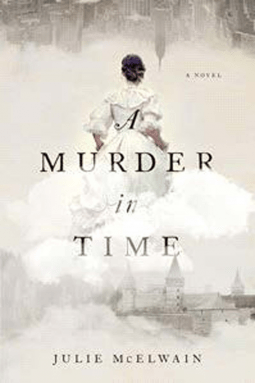
A murder in time

What is the mood or tone your characters portrays and how does this affect the story?

 There is a great deal of suspicion between Kendra and her nineteenth century counterparts, which adds to the tension. The Duke of Aldridge, Alec, and Sam Kelly are aware that Kendra lied about how she came to England. They have varying degrees of distrust. They also regard Kendra’s manners, speech patterns and behavior as peculiar, to say the least, but they put it down to her being an American. For her part, Kendra has a difficult time trusting them with her big secret, and that has her proceeding cautiously. And she worries about screwing up the space-time continuum, which is something she’s never had to worry about in her previous murder investigations for the FBI! She can’t help but be skeptical over this group’s contribution to the murder investigation. She was always more advanced than her peers, but with these people, she’s centuries more advanced. It’s not that she thinks she’s superior… but she kind of does. It will be a journey for her to reach a different conclusion.

 Who are your five top antagonist? What motivates them?

 Kendra’s father, Carl Donovan, is an early antagonist. He plays a small part in the overall story, but he is crucial in Kendra’s development as a human being. As a scientist, he prizes intellect above all else, and believes that Kendra stubbornly refused to live up to her potential. His black-and-white view always made Kendra feel unworthy, and therefore more determined to prove herself.

I consider Mrs. Danbury — the castle’s housekeeper — a wonderful antagonist. She’s like the Old Guard protecting the status quo. The world of aristocrats, servants, working class, and merchants is what she’s familiar with, and she finds Kendra’s bold behavior — her lack of deference to the hierarchy — to be bewildering and rather threatening.

I really don’t want to give away the murderer’s identity for someone who hasn’t read the book, so I will put the following men in the antagonist category, with Kendra bumping heads with each of them. Alec’s brother, Gabriel, is a self-pitying alcoholic. Mr. Harris is the youngest son of an earl, who was appointed the village vicar, a station that he thinks is beneath him. Mr. Morland lives in a nearby estate and is the local magistrate, whose chauvinistic attitude towards Kendra is typical of the era. Mr. Dalton is a former surgeon, who inherited a nearby estate, and is insulted to be considered a suspect in Kendra’s investigation. Finally, Captain Harcourt is Gabriel’s friend, and is hunting for an heiress to replenish his funds. All of these men are motivated to keep their secrets from coming to light. Of course, no one is more motivated than the murderer!

 What inspired you for your main character to be an FBI agent?

 I really wanted Kendra to be in some type of law enforcement. She needed to have a specialized skill set — the ability to read a crime scene, to understand criminal behavior, and to be able to defend herself. Being an FBI agent was very organic to the story, which involves a serial killer. But it also felt right, given Kendra’s background. Her parents are driven, ambitious scientists who are at the top of their field. While Kendra chose a different path, which led to a chasm between her and her parents, she is as ambitious and determined to prove herself, and wants to be at the top of her field. Being the youngest agent ever accepted by the Bureau certainly put her on that path!

 Why did you choose 1815 for the period Kendra falls back in time too?

 I’ve always found this period in history to be utterly fascinating. It parallels our own era in so many ways. The war with Napoleon had just ended and the Industrial Revolution was just beginning. New machines were taking away jobs, creating a lot of simmering tensions between the haves and have nots. It was a time of contrasts — with great wealth on one side, and terrible poverty on the other; a silliness in its celebrity culture and yet a seriousness in the political upheaval. Of course, I’m also a big Jane Austen fan, and have enjoyed reading romances set during this era… I just wanted to write a mystery that actually had a modern day heroine — sort of Jane Austen meets Criminal Minds.

Does Aldridge Castle really exist?

 No, but I’ve traveled throughout England, Scotland and Ireland, and one of my favorite things to do is tour old castles and great estates. Aldridge Castle is an amalgam of many of the fantastic places that I’ve visited, including Dublin Castle, Kensington Palace and Leeds Castle, just to name a few.

 How much research went into your story?

 I did tons of research! I probably own every reference and history book on the time period. There are many wonderful blogs and websites by romance writers who specialize in the Regency era, which were invaluable. I also have a library of forensics books and police procedurals, and I did a lot delving into the subjects of quantum physics, wormholes, and string theory. This may be a piece of fiction, but it was important to me to be as accurate as possible.

What do you like most about writing a time travel story?

 I really liked the idea of taking a smart, modern person and tossing them back in time. We have a tendency to think that we’re so much more intelligent than our ancestors. But if you take away our modern inventions, just how smart are we? Would we be able to survive? Once my DSL went out, and I was forced to use dial-up to get on the Internet for about a week. That darned near killed me! I loved putting someone as clever as Kendra, as self-sufficient and independent, in a world that was totally alien to her, and watching how she would cope.

The time travel element also allowed me to offer dual viewpoints. Kendra was as much a puzzle and an oddity to her nineteenth century counterparts as they were to her. I liked being able to view the early nineteenth century through modern eyes, while at the same time, look at our own twenty-first century culture through the lens of the nineteenth century. We don’t blink an eye anymore at using profanity in casual conversation, but that would have shocked and appalled most people in 1815.

Time travel is pivotal to the plot, but this is not a science fiction story. Of course, Kendra thinks about the mechanics of time travel — how could she not? — but I’m more interested in the human element, on how we’ve changed as a people… and how we’ve stayed the same.

Will there be a sequel?

 It depends on how well A Murder In Time does, but I’m currently working on a sequel — so cross your fingers!

Who are your influences in writing?

I’m an avid reader, and am inspired by many authors. Some of my favorites are Karen Slaughter, Lisa Gardener, Tami Hoag, Tess Gerritsen, Nora Roberts, Dean Koontz, Lee Child, Ariana Franklin, Amanda Quick… the list goes on. I tend to be pretty eclectic in what I read, but I veer towards mysteries and thrillers. Let’s just say, I get motivated by anyone who can spin a good tale.

Where can readers buy your book?

 Barnes & Noble and independent bookstores, as well as online retailers like Amazon.

Links: 

Author Facebook Page

Pegasus Books

Thank you, Julie! 

Dilemmas & Books: It Never Ends

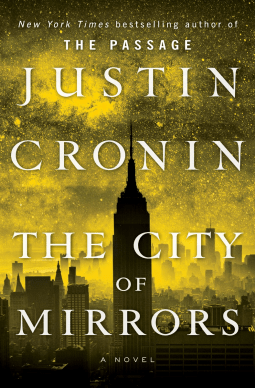
The City of mirrors

I got an ARC (Advance Reader’s Copy) for this. I read the first one and I need to read the second one before reading this one. Or I could just ask my Father and Brother about the second one since they read both books one and two. *laughing* So many books-seriously-and so little time! I love it!

Oh, heck! I am just going to go ahead and read it. I don’t think I can wait. Plus, I want to get my review up for it soon.

Book Description: The Twelve have been destroyed and the hundred-year reign of darkness that descended upon the world has ended. The survivors are stepping outside their walls, determined to build society anew—and daring to dream of a hopeful future.

But far from them, in a dead metropolis, he waits: Zero. The First. Father of the Twelve. The anguish that shattered his human life haunts him, and the hatred spawned by his transformation burns bright. His fury will be quenched only when he destroys Amy—humanity’s only hope, the Girl from Nowhere who grew up to rise against him.

One last time light and dark will clash, and at last Amy and her friends will know their fate.


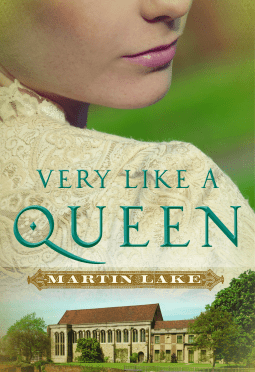
Review: Very Like A Queen by Martin Lake

Very much a queenAlice Petherton is well practiced at using her beauty and wits to survive in the Court of King Henry VIII. As the King’s favorite, she enjoys his protection, but after seeing the downfall of three of his wives, she’s determined to avoid the same fate. Alice must walk a fine line between mistress and wife.

She finds a powerful protector in Thomas Cromwell, and Alice has every reason to believe that she will continue to enjoy a life of wealth and comfort at Court…until she puts everything at risk by falling in love with a Frenchman, Nicholas Bourbon.

When Cromwell is executed, Alice loses her only ally and flees to France. There she hopes to live in peace with Nicholas. But Alice is lured into a perilous game of treason, and peace doesn’t last long. Will Alice get back the life and love she’s fought for? Or will she lose herself to the whims of a capricious monarch?

My review:

First, I’d like to thank NetGalley for providing a copy of this book. What first captured my attention was the title. I thought, how unusual and I liked it. Though with my busy schedule I read this novel in four days. I did NOT want to put it down. This is the first book I have read of Martin Lake and I am now a fan!

I love his portrayal of Cromwell! I actually like the man in this story. If you know the history, you know his demise and how Martin portrayed that was very powerful and believable. So many great men lost under Henry’s rule.

As I was reading the story I couldn’t help keep thinking that I am so glad I wasn’t alive or one of the members during King Henry VIII court. Yikes! The man’s moods were so up and down and vicious! As his health and eating habits became worse, the more suspicious and paranoid he became. What a miserable existence. One never knows what he will do to you if you made him mad!

I love Alice, though I would have liked to shake her sometimes! She couldn’t help but get herself in sticky situations! But she is a true testament of a survivor and wins the heart of many. I would like to read more about her.

There were several notable characters and locations in the story I enjoyed reading about. Nonsuch Palace, Dover Castle and the French Castles comes to mind and then there was Ralph Sadler, Suffolk. Cranmer, Norfolk-archival to Thomas Cromwell, Master Hans Holbein, Marillac, Katheryn Howard- to name a few…Brilliant character development there.

There is so much to this novel. I am adding this among my favorite Tudor stories. Truly a gem and so well written. I will be on the lookout for more books by Martin Lake!

I rated this book four stars.

Stephanie M. Hopkins

Interview with Author Kate Forsyth

02_Bitter Greens

Publication Date: September 23, 2014 Thomas Dunne Books Hardcover; 496p ISBN-10: 1250047536

Genre: Historical/Fantasy/Fairy-Tale Retellings

The amazing power and truth of the Rapunzel fairy tale comes alive for the first time in this breathtaking tale of desire, black magic and the redemptive power of love

French novelist Charlotte-Rose de la Force has been banished from the court of Versailles by the Sun King, Louis XIV, after a series of scandalous love affairs. At the convent, she is comforted by an old nun, Sœur Seraphina, who tells her the tale of a young girl who, a hundred years earlier, is sold by her parents for a handful of bitter greens…

After Margherita’s father steals parsley from the walled garden of the courtesan Selena Leonelli, he is threatened with having both hands cut off, unless he and his wife relinquish their precious little girl. Selena is the famous red-haired muse of the artist Tiziano, first painted by him in 1512 and still inspiring him at the time of his death. She is at the center of Renaissance life in Venice, a world of beauty and danger, seduction and betrayal, love and superstition.

Locked away in a tower, Margherita sings in the hope that someone will hear her. One day, a young man does.

Award-winning author Kate Forsyth braids together the stories of Margherita, Selena, and Charlotte-Rose, the woman who penned Rapunzel as we now know it, to create what is a sumptuous historical novel, an enchanting fairy tale retelling, and a loving tribute to the imagination of one remarkable woman.

Hello, Kate! It is a pleasure to chat with you today about your story, Bitter Greens. What a beautiful and creative premise. Rapunzel is a tale I have known since childhood…what inspires you about Rapunzel to begin with?

I have been fascinated with the Rapunzel fairy tale since I first read it as a little girl. I was always puzzled by the mysteries in the tale: why did the witch lock up the girl? Why did she have to climb up her hair to get into the tower? How did the girl’s hair get so long? Questions like that niggled at me, and so I began to think up possible explanations for them.

Shamefully, I have to admit I have never paid much attention to the writer (s) of the story and had no idea it was penned by women. What is it that fascinates you about their lives the most?

I am a storyteller as well as a writer, and so I’ve always been interested in the ways stories endure over time, told and retold and retold again. I became interested in finding out the origin of the tale in the early stages of planning my novel, and was hugely excited when I stumbled across the life story of Charlotte-Rose de Caumont de la Force, who wrote the version of the tale as it was first told while she was locked up in a convent after scandalizing the royal court at Versailles with her love affairs and refusal to bow to societal norms. She was such a fascinating woman and the parallels between her story and the fairy tale she wrote struck me at once.

What were some of the historical events that took place in the setting of this story?

BITTER GREENS moves between two historical settings. The first is Renaissance Venice, and takes in 16th witchcraft hunts, the devastation of the plague, and the extraordinary art of Tiziano Vercelli, best known in English as Titian. The second setting is the sumptuous royal court of 17th century France, ruled over by Louis XIV, the Sun King. Charlotte-Rose de la Force was his second cousin and a maid-of-honour serving the queen. During her life, she saw the cruel persecution of the French Protestants, c alled Huguenots, and the scandal of the Affair of the Poisons, which saw hundreds of people arrested and tortured on suspicion of Satanism and murder.

Selena stands out to me the most. What are her strengths and weaknesses? And in what way does she inspire-if she inspires that is…?

Kate: Selena is a Venetian courtesan and the witch of the tale. Selena witnessed the terrible punishment of her mother, after she was unfaithful to her patron, and so sets herself to enact revenge on those who took part. She studies ‘stregheria’, the Italian art of witchcraft, in an attempt to shape her own life. She is afraid of the passing of time and the coming of death, and so hates clocks and watches, but is also passionate, sensual, and determined.  Although she is strong and clever, she also has a strong streak of cruelty in her and locks girls up in a tower for her own nefarious purposes, so I’m not sure she can be seen as an inspiration!

Could you please give me an example of Renaissance life in Venice? Something romantic, perhaps?

Venice in the 16th century was a place of great wealth, beauty and culture.  Its streets were full of merchants from all over the world, all speaking their own tongues and wearing the clothes of their nation. Women were gorgeously dressed in silks and satins and cloth-of-gold, and wore totteringly high wooden chopines to protect their delicate silk slippers from the water that often overflowed from the canals.  Artists such as Michelangelo, Titian and Bellini created works of startling beauty, and every palace and cathedral was painted and ornamented to within an inch of their life. At Carnevale, men and women dressed up in their finest clothes and hid their faces behind masks so that they could wander the narrow streets and plazas of the many islands, free to love anyone they pleased. Many people began to wear masks all year long, in order to enjoy the freedom of anonymity, until the practice was outlawed in 1797. Mask-makers were revered, and had their own rules and their own guild.

What compels the old nun to tell Charlotte-Rose the tale who is sold by her parents for a handful of bitter greens? Is there a particular message she wants her to grasp?

I think Seraphina wants to help Charlotte-Rose learn to accept her fate with grace, and to make the most of the life she has been given. We cannot always choose what happens to us in our lives, but we can choose how we deal with it.

What is Charlotte’s personality like?

She is strong-willed, quick-witted, passionate, and very stubborn. She does her best to live a self-determined life, and finds the strictures of the patriarchal society in which she lives very difficult to negotiate. All she wants is to live and love as she chooses, and to write – yet these things are constantly being denied to her, and so she is frustrated and angry, particularly in the beginning of the book. She is also afraid and determined not to show it, and this makes her seem proud and even arrogant. She is also, I’m afraid, rather vain, but then she lives in the royal court of Versailles where everything is about show.

Is there one thing you find remarkable about Venice in 1512?

Venice had always been a city remarkable for its religious and cultural toleration, yet this began to change around this time. The world’s first ghetto was established in Venice in 1516, and other races and religions began to find themselves having their freedom curtailed as well. This was partly as a result of a long-waged war against Constantinople, and partly because of religious fervor caused by terrible outbreaks of the bubonic plague.

What was your process for this story and how long did you work on it?

Bitter Greens was a complex and challenging novel to write, and took me a long time to research. All in all, it took me seven years to write! I began by learning everything I could about the two periods my story was set in, and by studying the history of the Rapunzel fairy tale (I ended up doing a doctorate on this.) I then wrote each of the three narrative threads independently from each other, and then wove them together. It was like writing three novels instead of one!

What do you love most about writing?

Everything! I love the first period, when my mind is alive with story possibilities and I’m reading and researching and thinking and daydreaming. I love the actual writing process, and all the amazing serendipitous discoveries I make. And I love to edit too – that’s when the story really begins to fall into shape.

Who are your influences?

I think every single book I have loved – and there are hundreds of thousands of those!

Praise for Bitter Greens

“Kate Forsyth’s Bitter Greens is an enthralling concoction of history and magic, an absorbing, richly detailed, and heart-wrenching reimagining of a timeless fairytale.” —Jennifer Chiaverini, New York Times bestselling author of Mrs. Lincoln’s Rival

“See how three vividly drawn women cope with injustice, loneliness, fear, longing. See how they survive—or perpetrate—treachery. Surrender yourself to a master storyteller, to delicious detail and spunky heroines. Bitter Greens is a complex, dazzling achievement.” —Susan Vreeland, New York Times bestselling author of Clara and Mr. Tiffany and Girl in Hyacinth Blue

“A magical blend of myth and history, truth and legend, Bitter Greens is one of those rare books that keeps you reading long after the lights have gone out, that carries you effortlessly to another place and time, that makes you weep and laugh and wish you could flip forward to make sure it all ends happily ever after—but for the fact that if you did so, you might miss a line, and no line of this book should be missed.” —Lauren Willig, New York Times bestselling author of The Ashford Affair

“Kate Forsyth wields her pen with all the grace and finesse of a master swordsman. In Bitter Greens she conjures a lyrical fairytale that is by turns breathtaking, inspiring, poetic, and heartbreakingly lovely. Set like a jewel within the events of history, it is pure, peerless enchantment.”—New York Times bestselling author Deanna Raybourn

“Bitter Greens is pure enchantment–gripping and lyrical. From the high convent walls where a 17th century noblewoman is exiled, to a hidden tower which imprisons an innocent girl with very long hair, to the bitter deeds of a beautiful witch who cannot grow old–Kate Forsyth weaves an engrossing, gorgeously written tale of three women in search of love and freedom. A truly original writer, Forsyth has crafted an often terrifying but ultimately redemptive dark fairy tale of the heart.”—Stephanie Cowell, American Book Award-winning author of Claude & Camille

“Kate Forsyth’s Bitter Greens is not only a magnificent achievement that would make any novelist jealous, it’s one of the most beautiful paeans to the magic of storytelling that I’ve ever read.”—C.W. Gortner, author of The Queen’s Vow and The Confessions of Catherine de Medici

“Threads of history and folklore are richly intertwined to form this spellbinding story. Kate Forsyth has excelled herself with Bitter Greens. Compulsively unputtdownable.”—Juliet Marillier, national bestselling author of Flame of Sevenwaters and Heart’s Blood

Buy the Book

Amazon US Barnes & Noble IndieBound

About the Author

Kate Forsyth 1

Kate Forsyth wrote her first novel at the age of seven, and is now the internationally bestselling & award-winning author of thirty books, ranging from picture books to poetry to novels for both adults and children. She was recently voted one of Australia’s Favourite 20 Novelists, and has been called ‘one of the finest writers of this generation. She is also an accredited master storyteller with the Australian Guild of Storytellers, and has told stories to both children and adults all over the world.

Her most recent book for adults is a historical novel called ‘The Wild Girl’, which tells the true, untold love story of Wilhelm Grimm and Dortchen Wild, the young woman who told him many of the world’s most famous fairy tales. Set during the Napoleonic Wars, ‘The Wild Girl’ is a story of love, war, heartbreak, and the redemptive power of storytelling, and was named the Most Memorable Love Story of 2013.

She is probably most famous for ‘Bitter Greens’, a retelling of the Rapunzel fairy tale interwoven with the dramatic life story of the woman who first told the tale, the 17th century French writer, Charlotte-Rose de la Force. ‘Bitter Greens’ has been called ‘the best fairy tale retelling since Angela Carter’, and has been nominated for a Norma K. Hemming Award, the Aurealis Award for Best Fantasy Fiction, and a Ditmar Award.

Her most recent book for children is ‘Grumpy Grandpa’, a charming picture book that shows people are not always what they seem.

Since ‘The Witches of Eileanan’ was named a Best First Novel of 1998 by Locus Magazine, Kate has won or been nominated for numerous awards, including a CYBIL Award in the US. She’s also the only author to win five Aurealis awards in a single year, for her Chain of Charms series – beginning with ‘The Gypsy Crown’ – which tells of the adventures of two Romany children in the time of the English Civil War. Book 5 of the series, ‘The Lightning Bolt’, was also a CBCA Notable Book.

Kate’s books have been published in 14 countries around the world, including the UK, the US, Russia, Germany, Japan, Turkey, Spain, Italy, Poland and Slovenia. She is currently undertaking a doctorate in fairytale retellings at the University of Technology, having already completed a BA in Literature and a MA in Creative Writing.

Kate is a direct descendant of Charlotte Waring, the author of the first book for children ever published in Australia, ‘A Mother’s Offering to her Children’. She lives by the sea in Sydney, Australia, with her husband, three children, and many thousands of books.

For more information please visit Kate Forsyth’s website and blog. You can also find her on Facebook, Twitter, Pinterest, and Goodreads.


Book Review: Sinners and the Sea by Rebecca Kanner

02_Sinners and the SeaPublication Date: April 2, 2013 Howard Books Formats: Hardcover, Paperback, eBook, Audio CD

The young heroine in Sinners and the Sea is destined for greatness. Known only as “wife” in the Bible and cursed with a birthmark that many think is the brand of a demon, this unnamed woman lives anew through Rebecca Kanner. The author gives this virtuous woman the perfect voice to make one of the Old Testament’s stories come alive like never before.

Desperate to keep her safe, the woman’s father gives her to the righteous Noah, who weds her and takes her to the town of Sorum, a haven for outcasts. Alone in her new life, Noah’s wife gives him three sons. But living in this wicked and perverse town with an aloof husband who speaks more to God than to her takes its toll. She tries to make friends with the violent and dissolute people of Sorum while raising a brood that, despite its pious upbringing, develops some sinful tendencies of its own. While Noah carries out the Lord’s commands, she tries to hide her mark and her shame as she weathers the scorn and taunts of the townspeople.

But these trials are nothing compared to what awaits her after God tells her husband that a flood is coming—and that Noah and his family must build an ark so that they alone can repopulate the world. As the floodwaters draw near, she grows in courage and honor, and when the water finally recedes, she emerges whole, displaying once and for all the indomitable strength of women. Drawing on the biblical narrative and Jewish mythology, Sinners and the Sea is a beauti­fully written account of the antediluvian world told in cinematic detail.

My review:

I have to admit I grew up with the story of Noah but never really thought about his wife or what they might have really gone through while in the ark during the great flood. In the story of Noah, God sees great evil in the world and decides to wipe out mankind. However he found righteousness in a man named Noah. God wanted Noah to build an ark for him, his family and two of all living creatures so they could replenish this earth after the flood. And from the story in the Bible, we know Noah obeyed God’s commands given to him.

Noah had three sons named Shem, Ham and Japheth. And the Lord told Noah and his sons, “Be Fruitful and increase in number and fill the Earth.” (Genesis 9:1)

Sinners of the Sea is told in Noah’s Wife’s point of view. She shows a side of Noah that we might not often think of. We see him as he might have been with feelings, faults and so on… He wasn’t perfect but he did obey God and wanted to do right. But if you think about it, maybe those faults (that an ordinary person would think) that are portrayed in this story is due to his sole focus on God. And I think in many ways he could have been tormented by what he knew would happen to the people of the earth and this story shows that….

When Amy Bruno approached me about participating in the book tour, I have to be honest and say that the book cover is what first caught my eye and then as I read what the book was about and the fact it was fiction, I was more intrigued. I wanted to see how the author portrays Noah. And she portrays him a man of God and I was happy she did…..

I also admire the author’s character development and I believe she really captured the true culture and human conditions of the period. Many will read the book and feel the pace is a bit slower than they are used too but will find it intriguing all the same.

There were a couple of scenes towards the end that bothered me a little but I got through it okay. I’m not one for mythology added to bible stories, fiction or not. But I’m sure many will find it interesting…

I recommend that every adult read this book. I believe you will come away with something and that is for you to find out what it is on your own journey through this story.

Watch book trailer

Praise for Sinner and the Sea

“Rebecca Kanner has created an autobiography of Noah’s wife, and an imaginative one it is.” – American Jewish World

“[Kanner] gives an intelligent voice to Noah’s wife.” – Jewish Book Council

“First-time novelist Kanner has written an utterly absorbing novel, one that flows seamlessly.” – Historical Novel Society

“A fascinating look into a feral civilization of turmoil and hardship.” – Historical Novel Review

“A stirring, fascinating story written beautifully.” – Historical Fiction Connection

“Kanner beautifully evokes life on the claustrophobic, smelly vessel. Riveting… It will certainly spark hours of book club discussions.” – St. Paul Pioneer Press

Buy the Book

Amazon UKAmazon USAudible.comBarnes & NobleBook DepositoryBooks-a-MillioniTunes

About the Author

03_Rachel Kanner

Sinners and the Sea is Rebecca Kanner’s debut novel. Rebecca is a Twin Cities native and holds a Master of Fine Arts in Fiction Writing from Washington University in St. Louis. Her writing has won an Associated Writing Programs Award, a Loft mentorship Award and a 2012/2013 Minnesota State Arts Board Grant. Her personal essay, “Safety,” is listed as a Notable Essay in Best American Essays 2011. Her stories have been published in numerous journals including The Kenyon Review and The Cincinnati Review.

Along with other authors including Anita Diamant, Michael Cunningham, Joyce Carol Oates, Russell Banks and Ron Hansen, Rebecca will be featured in the upcoming title Truthful Fictions: Conversations with American Biographical Novelists.

You can learn more about Rebecca, and find links to selected stories and essays, at www.rebeccakanner.com. You can also find her on Facebook and Twitter.

Virtual Book Tour Schedule

Monday, April 14 Review & Giveaway at West Metro Mommy

Tuesday, April 15 Review at Cheryl’s Book Nook

Thursday, April 17 Review at A Bookish Girl

Friday, April 18 Review at Reading the Ages

Monday, April 21 Review at Booktalk & More Review at Judith Starkston

Wednesday, April 23 Review at Oh, for the Hook of a Book

Friday, April 25 Spotlight & Giveaway at Caroline Wilson Writes

Monday, April 28 Review at JulzReads

Tuesday, April 29 Review at The Most Happy Reader

Wednesday, April 30 Review & Giveaway at Book Lovers Paradise

Friday, May 2 Review at History from a Woman’s Perspective

Monday, May 5 Review & Giveaway at A Bookish Affair

Tuesday, May 6 Review at Book Nerd

Wednesday, May 7 Review at Ink Sugar Blog

Friday, May 9 Review at Our Wolves Den

Monday, May 12 Review at The Calico Critic

Tuesday, May 13 Review at From L.A. to LA

Wednesday, May 14 Review at Sharon’s Garden of Book Reviews

Thursday, May 15 Spotlight at The Tower of Babel

Friday, May 16 Review at Layered Pages

Monday, May 19 Review at A Bibliotaph’s Reviews

Wednesday, May 21 Review at My Reader’s Block

Friday, May 23 Review at Seaside Book Corner

Tuesday, May 27 Review at Svetlana’s Reads and Views

Thursday, May 29 Review at bookworm2bookworm’s Blog

Giveaway Link

To enter to win one of 2 copies of Sinners and the Sea or a $25 Amazon Gift Card, please complete the Rafflecopter giveaway form by clicking on the link above. Giveaway is open to US residents only.

Giveaway ends at 11:59pm on May 29th. You must be 18 or older to enter. Winners will be chosen via Rafflecopter on May 30th and notified via email. Winners have 48 hours to claim prize or new winner is chosen.

Sinners and the Sea_Tour Banner_FINAL2

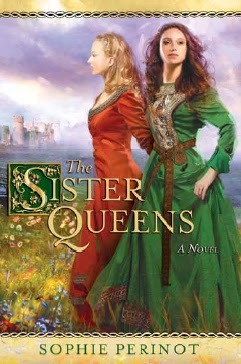
Review: The Sister Queens by Sophie Perinot

The Sister Queens is the second novel I have read about Marguerite and Eleanor, who both become Queens. The two sisters grew up together at their father’s-Count Raymond of Provence-court. They are separated at an early age to marry, they find their life as they know it completely changed and become two extraordinary women who face many challenges.

Marguerite marries King Louis of France and is often neglected by him. She struggles to fulfill her role as Queen by his side. The reason for her struggles is due to her domineering and often time’s cruel mother-in-law, Blanche of Castile. Blanche’s influence over her son is strong as is her involvement in the governance of France.

Eleanor, whose husband is King Henry III of England, is not considered a strong leader to his kingdom but is a good husband and adores her. But as the years go by their marriage becomes strained and Eleanor struggles to bring back that spark in their relationship.

Although this story centers on Marguerite and Eleanor, they have two other sisters- Beatrice and Sanchia- who married the brothers of King Henry and King Louis. Their marriages help bond the relationship between the two countries. The marriages of all the sisters were obviously for political advantage and more power. Which is intriguing to read about and I find that I admire their courage, strength and their amazing resilience to adapt to any situation they encounter.

At the beginning of each chapter you read a letter from Marguerite to Eleanor and vice versa- as they corresponded through the years. As I read their letters, I found myself enthralled with their devotion to each other. For me, the letters were the highlight of the story told.

The alternating point of views told by the two sisters was well developed and easy to follow along. One can tell Perinot takes pride in her work and it shows through the pages and the character’s voices as their lives unfold. The compelling interpretation of Marguerite and Eleanor is believable and admirable. Stories such as this are timeless and Perinot brings the 13th century back to life through this captivating novel. That is one of the reasons why I’m so drawn to historical fiction. I hold this story in high affection and it is certainly praiseworthy!

I rated this story four and a half stars.

Stephanie

Layered Pages