Interview with Author Pauline Montagna

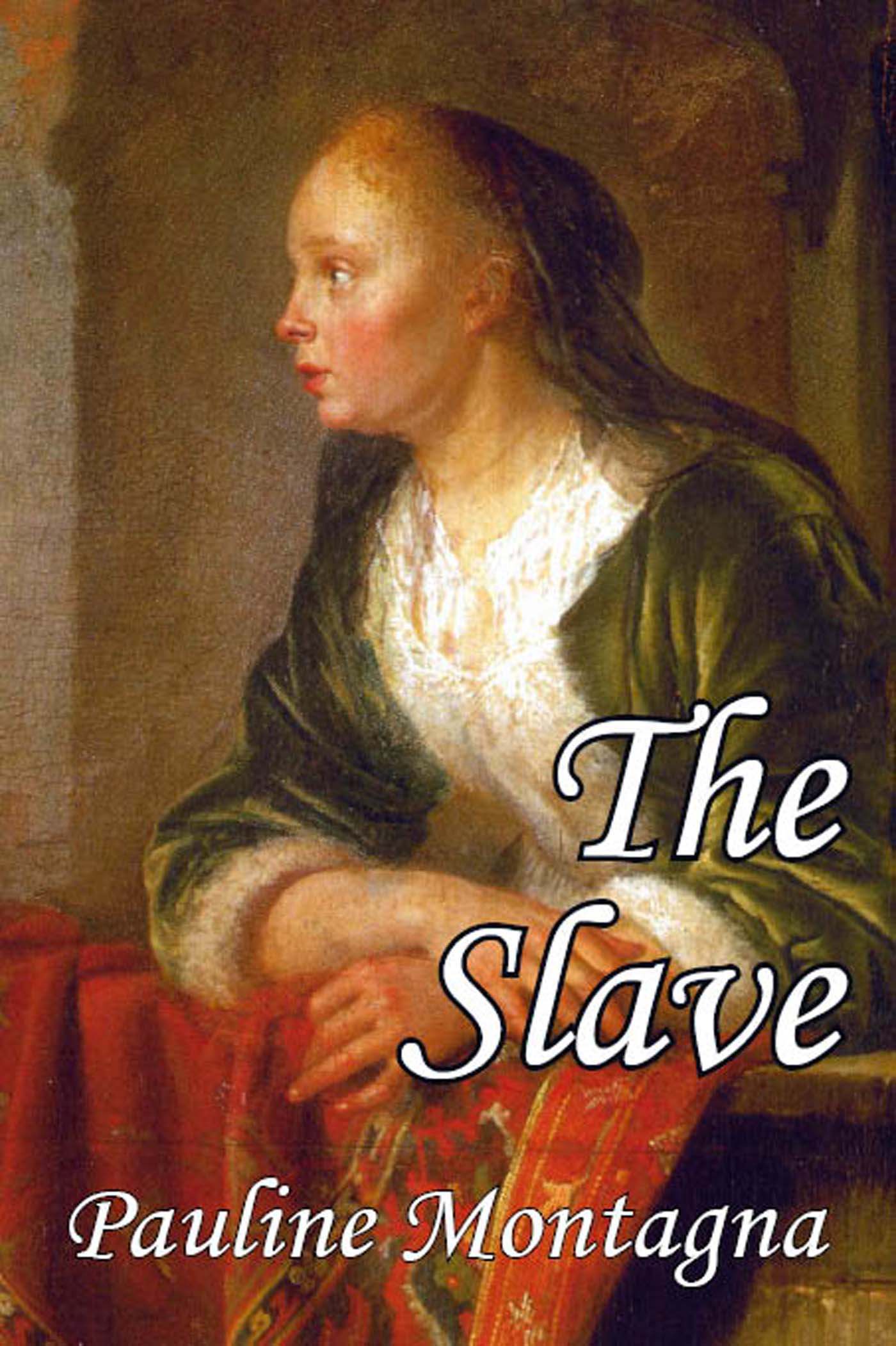
slave_cover

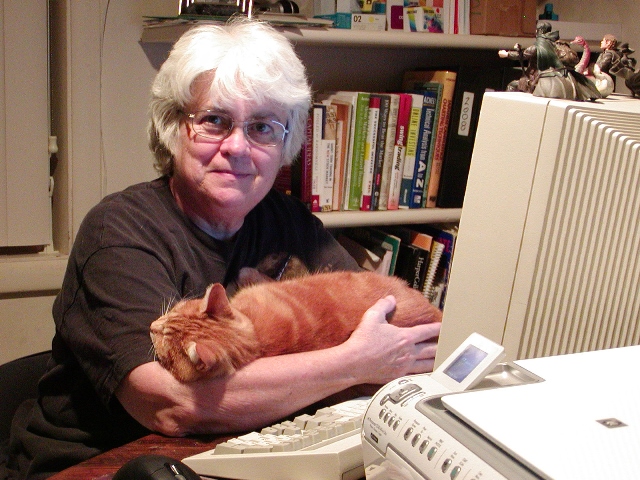
Pauline Montagna was born into an Italian family in Melbourne, Australia. After obtaining a BA in French, Italian and History, she indulged her artistic interests through amateur theatre, while developing her accounting skills through a wide variety of workplaces culminating in the Australian film industry. In her mid-thirties, Pauline returned to university and qualified as a teacher of English as Second Language, a profession she pursued while completing a Diploma of Professional Writing and Editing. She has now retired from teaching to concentrate on her writing. As well as The Slave, she has published a short story collection, Suburban Terrors.

Her website

Stephanie: Hello Pauline! Welcome to Layered Pages and thank you for chatting with me today. Please tell me a little about your book, ‘The Slave’?

Pauline: ‘The Slave’ is an historical romance set in fourteenth century Italy, the story of Aurelia, the sheltered daughter of Francesco Rubbini, a rising merchant with political ambitions. One day he returns from a buying trip to Venice with Batu, an Asian slave boy to whom Aurelia is inexorably drawn. In a bid to win a seat on the city council, Rubbini gains the patronage of the aristocratic de Graziano family by negotiating a lucrative marriage between Aurelia and their eldest son, Lorenzo, a man with a dangerous reputation. Batu insists on joining Aurelia in her new home for her protection, but his presence rouses violent passions in Lorenzo that Aurelia cannot understand, and which bind the three of them in an inescapable triangle of love and hate.

Stephanie: What made you choose fourteenth century Italy as your time period and place?

Pauline: If you had all the time in the world, think of all the stops you would love to make as you travel from Florence to Venice – Siena, Milan, Mantua, Bergamo, Verona, Padua, and so many more. These were once independent, democratic, mercantile city states which flourished from as early as the eleventh century. Unlike the political and economic basket case that Italy is today, back then it led the world and laid the foundations for the flowering of the Renaissance. I studied this period in university and it made me proud to be Italian.

However, this dynamism came at a price. Throughout this period, the city states themselves were volatile places. The towers of San Gimignano weren’t built for aesthetic reasons, but as defences against enemy families. Families fought against families, cities against cities. However, with their limited populations, the city states didn’t have the resources to support full-time armies so they hired mercenary armies. Before too long the mercenary leaders were fighting on their own account. By the fifteenth century, most of the city states had been taken over by one petty tyrant or another, but it was these petty tyrants who became the patrons of the Renaissance.

I chose to set my story in the fourteenth century in particular as it was a time of political and economic upheaval that saw the country ravaged by financial collapse, mercenary armies and the Black Death – all elements I needed to tell my story.

Stephanie: What was your inspiration for this story?

Pauline: I studied the Medieval Italian City States in my second year at university. However, I was actually majoring in French, and in our second year we attended lectures on French literature in French. The lectures were also being attended by a handsome Asian boy. Not actually enrolled in the subject, he sat at the back of the auditorium in regal isolation. I imagined he was an aristocratic refugee, forced out of Laos by the Communists, attending our lectures just to hear a familiar language. Though I certainly fancied him, I was much too shy to approach him, so instead he became fuel for my romantic fantasies where an Asian boy found himself a slave in Medieval Italy and in love with a nice Italian girl like me.

The story remained a fantasy to be revisited now and again over the years, but I couldn’t take it seriously as the basis of a novel until I discovered from a passing mention in Neal Ascherson’s book, ‘Black Sea’, that, in fact, though not as prevalent as it had been in Roman times, a slave trade still existed in this period under the auspices of the Venetian empire. Suddenly it had become plausible that an Asian boy could find himself a slave in Medieval Italy, and my adolescent fantasy could become a credible historical novel.

Stephanie: What are Aurelia strengths and weaknesses?

Pauline: With her sheltered upbringing in which she has been trained to be nothing more than a dutiful wife, Aurelia starts out as a naïve and timid girl. She feels intimidated by her ambitious father and neglected by her distant mother. Her only support is her nurse, Rosetta, who loves her as much as any mother could, but has no say in her fate. However, although she acquiesces to her father’s plans for her, even at an early age, Aurelia displays compassion and a quiet strength and courage. It is this strength and courage which maintains her when she is faced with situations that are frightening and incomprehensible to her in her innocence.

Stephanie: What are some of Aurelia father’s political ambitions?

Pauline: As a self-made man from the peasant classes, Rubbini’s only pathway to prestige and power is by rising up through the ranks of the government of his small city state. However, despite their exclusion from office, the old aristocracy still has the power of influence and patronage, and it is this patronage that Rubbini needs if he is to succeed. Succeed he does, but he finds his duties almost too onerous to bear when the Black Death strikes and his colleagues are loath to do anything about it that might interfere with trade. (Doesn’t that scenario sound familiar?)

Stephanie: What was some of the research involved for your story?

Pauline: As I already had a good grasp of the period from my university studies, most of the research I had to undertake was for specific information as the need arose – such as the Black Death and the events surrounding it, marriage practices, dance, dress, food, hunting, sword fighting, and, of course, Mongolian warriors.

However, it was this research that forced me to kill one of my favourite babies. For some reason, I had named my Asian boy Fet and, of course, over the years I had become attached to the name. However, as I read up about Mongolia I slowly came to the realisation that there was no ‘f’ in their language. In the end, not only did I have to change his name, but while I was at it I decided to change the names of almost all the characters. It called for a very careful and meticulous use of ‘Find and Replace.’

Stephanie: Was there a particular scene you found a challenge to write?

Pauline: The sword fighting scene was quite challenging as I’m not an aficionado of ‘derring-do.’ I not only had to learn the basic principles of fighting with the broad sword, but also try to work out the moves in the fight and then how to describe them in a comprehensible way.

However, by far the hardest scene for me to write was the first sex scene. In my first draft I skirted around the details, but my workshop group wouldn’t let me get away with that. They had waited until Chapter 42 for some action and they wanted more, thank you very much. So they sent me home to do it all again. I remember prowling about the house all afternoon trying to get into the right frame of mind.

Stephanie: What inspires you to write historical fiction?

Pauline: I write historical fiction because I’m inspired by history. I always have been and I can’t really explain why. I could take a punt and say that it’s because I was born in Australia, which has very little history, but my cultural roots are in Italy, which has, perhaps, too much history. I love doing historical research. I love spending time in libraries and reading old books, the older the better. I get exciting by finding odd titbits that I’ve never come across before, or making connections no one else has ever made. And I guess I love it because history is about people, and people are endlessly fascinating.

Stephanie: What advice would you give to someone who wants to write in this genre?

Pauline: When it comes to historical fiction, I’m a stickler for accuracy and authenticity. There are enough gaps in the records on which we can exercise our imaginations without warping the known facts. But accuracy is more than getting the date of a battle correct or the name of a piece of clothing. It’s also about how people thought and behaved.

We cannot impose on the people of the past our own sexual mores because we think restraint is boring, just as we can’t impose our modern attitudes to gender roles because we don’t like the way women were treated back then. If that’s how you feel, stick to writing contemporary romance, or if you must clothe your sexually promiscuous and feisty women in long skirts, be honest and call it Fantasy.

So I would advise someone who wants to write historical fiction to do their research. Go back to the original sources, go to a library and read books. Don’t rely on the internet, and other historical fiction for your information. If you must read fiction, read what was written at the time to get a sense of what your characters actually valued and thought, and not what you wish they did.

Stephanie: Who are your influences?

Pauline: I would say my biggest influence is the historical fiction of Mary Renault. Not only is her writing beautiful in itself, but she enters so thoroughly into the mindsets of her characters that a world completely different to our own seems perfectly natural. I have long nurtured an ambition to write about the Etruscans as well as she writes about the Ancient Greeks. I also love Ursula Le Guin, again for the beauty of her writing and her ability to create in her fantasy and science fiction profoundly real people in a real world. If I could write as well as these two I would die happy.

Stephanie: What book project are you currently working on?

Pauline: At the moment I’m focussing on self-promotion so I haven’t been writing for a while. However, as soon as ‘The Slave’ is properly launched, I hope to get back my writing.

Stephanie: Is there a message you would like to give to your readers?

Pauline: Well, as you did ask, I do have a special offer out now. Join my mailing list by May 31 and get your own free complimentary ebook copy of ‘The Slave.’


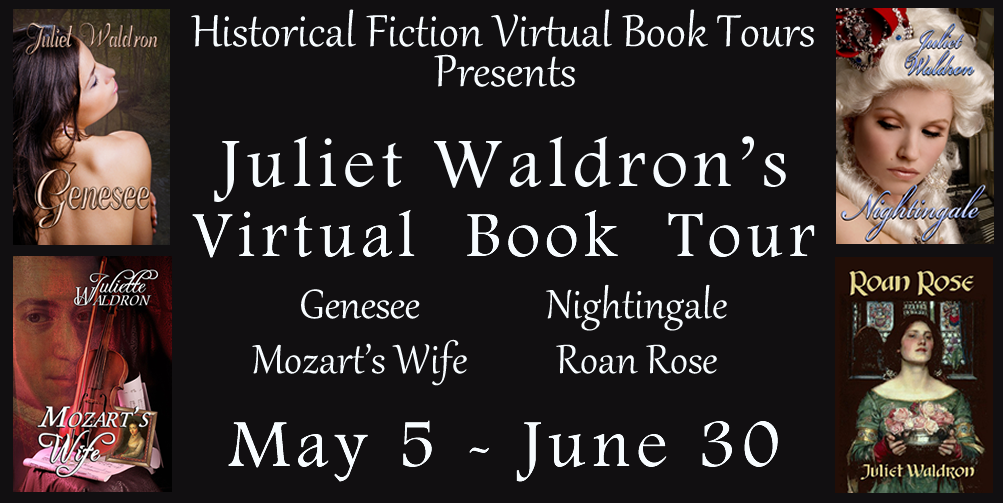
Interview with Juliet Waldron

???????????????????????????????

“Not all who wander are lost.” Juliet Waldron earned a B. A. in English, but has worked at jobs ranging from artist’s model to brokerage. Thirty years ago, after the boys left home, she dropped out of 9-5 and began to write, hoping to create a genuine time travel experience for herself–and for her readers. She loves her grand-girls and her kitties, likes to take long hikes, and reads historical/archeological non-fiction as well as reviewing for the Historical Novel Society. For summer adventure, she rides behind her husband of 50 years on his “bucket list” (black, and ridiculously fast) Hyabusa motorcycle.

You can find more information at www.julietwaldron.com or connect with Juliet on Facebook.

Stephanie: Hey Juliet! Tell me about your story, Nightingale.

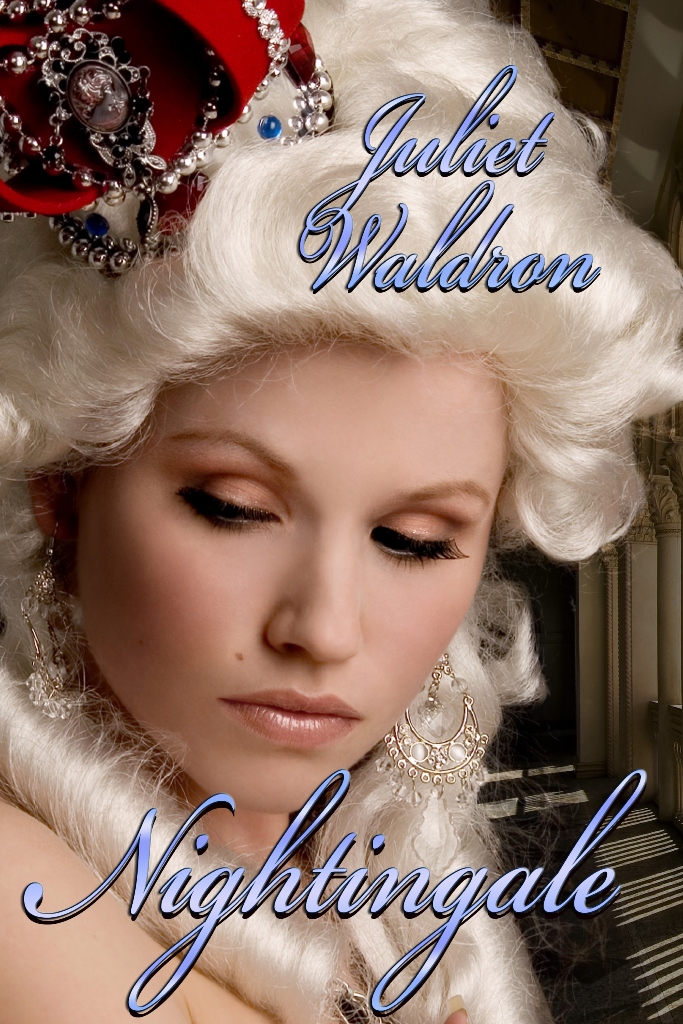
Juliet: This story grew from my fascination with Mozart. 18th Century Vienna was glamorous, dangerous and corrupt, and the pathway to fame on the operatic stage was not one that could be walked in innocence. Nightingale is the story of a young vocalist, Maria Klara, who desperately wishes to escape from her aristocratic, controlling patron. The heroine’s situation, BTW, as a nobleman’s mistress, was fairly common for singers at this time.

03_Nightingale

Stephanie: How did you come up with your title?

Juliet: In letters and documents from this time–when language was what we’d call “flowery”–I noticed that “nightingale” was used to compliment the reigning prima donnas.   A 19th Century music hall song about a kept woman laments, “She’s only a bird in gilded cage”, and this is exactly Klara’s situation.

Stephanie: What are Klara’s strengths and weaknesses?

Juliet: Klara is a sensual woman. She’s been raised to give her patron pleasure. Her love-affair with Milos gives her the impetus she’s needed to escape, but she is also tied to the life of fame, comfort and privilege she’s been living. Klara is proud, a characteristic which can be seen as both positive and negative. In the end, it is her belief in her own worth that enables her to dare to leave the Count and find her own path.

Stephanie: What made you decide to write this story?

Juliet: I’ve mentioned a fascination with Mozart. I’d written two novels about him, one from the POV of his wife, Constanze, and the other from the POV of a young mistress. I wanted to write a book which starred one of those prima donnas, the “glorious song birds*” Mozart is on record as having loved so passionately.   (* Amadeus)

Stephanie: What do you like most about Historical Fiction?

Juliet: Historical Fiction is way of discussing human nature as it once existed and as it still exists. As time passes, we learn more science and create technology, but on the basic emotional and reactive levels, we humans remain pretty much the same creature we always have been.  I enjoy trying to work out “the way we were” and comparing it with the way we live and love now.

Stephanie: What are the challenges to writing in this genre?

Juliet: I believe in working hard to create a genuine time travel experience for my readers. This can put some readers off, because what they actually want is a fantasy. The facts are that the past wasn’t always clean, safe or comfortable. For women, things were doubly hard. You only have to visit an old churchyard and see the grave of some aged gentleman surrounded by the graves of two or three wives and a score of infants to understand this.   Still, as a writer, you have to know where to draw a line and how to keep the reader engaged in the story you want to tell.

Stephanie: Who are your influences?

Juliet: I grew up reading writers like Margaret Irwin and Anya Seton, but my early favorite was—and still might be—Mary Renault. She’s my model, both for the high quality of her research and for her unrivaled ability to transport her readers to an almost alien time. Of more modern writers, I like Cecelia Holland, Margaret George and Arturo Perez-Reverte, who writes both classic historicals and swashbucklers, like his Captain Alatriste saga.

Stephanie: What was your writing process for this story?

Juliet: Nightingale came quickly, as I was so “full” of the Mozart research. Mozart’s story is such a sad one; I was ready to write something more romantic, with an HEA. Klara and her sweetheart, Milos, and the rest—the sadistic Count, the castrato teacher, Manzoli, are all amalgams of real historical characters I already “knew” very well.

Stephanie: What is up next for you?

Juliet: I’m working on a sequel to Red Magic, a historical romance which has a strong fantasy and action component.  Black Magic, set in 1818 in the Austrian Alps,will have much more fantasy in the form of a shape-shifter hero.

Stephanie: Is there a message you would like to give to your readers?

Juliet: Klara is an opera singer, an unfamiliar sort of heroine.  Think of her as a modern musical superstar and you’ll see that her problems are the same as those of today’s idols. She’s exploited and pushed around by forces both on the inside and on the outside.  Will she be able to renounce the heady temptations of stardom and try for true love?

Thanks so much, Stephanie, for the invitation to Layered Pages.

Praise for Nightingale

“As Klara is drawn deeper into love with Akos Almassy, the charismatic harpsichordist, she must come to a decision: chose her true love or stay with the twisted relationship, professional acclaim, and wealth she has with her patron…Much more than a romance, Nightingale offers a tantalizing view into the rarefied atmosphere of historical Vienna and the world of celebrity performers. It is part of Juliet Waldron’s trilogy of Viennese tales, so be sure to read Mozart’s Wife, and My Mozart…” – Judith Schara

“I was drawn into this tale by the lush prose, descriptions of clothing, jewelry, and details of Klara’s performances. Tension is maintained throughout as Klara fights to be free of her gilded cage. Waldron obviously knows her stuff when it comes to music and pure desire.” – Diane Scott Lewis

Buy the eBook

Amazon (US) Amazon (AU) Amazon (CA) Amazon (UK)

Virtual Book Tour Schedule

Monday, May 5 Interview at Layered Pages

Thursday, May 8 Review at Just One More Chapter (Mozart’s Wife)

Friday, May 9 Review at Closed the Cover (Genesee)

Monday, May 12 Spotlight at Tower of Babel

Monday, May 19 Interview at Closed the Cover

Wednesday, May 21 Interview at The Maiden’s Court

Monday, May 26 Review at Book Lovers Paradise (Mozart’s Wife)

Tuesday, May 27 Review at Historical Fiction Obsession (Genesee) Guest Post at Book Lovers Paradise (w/Kathy Fischer-Brown and Louise Turner)

Monday, June 2 Review at A Chick Who Reads (Nightingale)

Tuesday, June 3 Review at Historical Fiction Obsession (Roan Rose)

Wednesday, June 4 Review at The True Book Addict (Mozart’s Wife)

Thursday, June 5 Review at Svetlana’s Reads and Views (Mozart’s Wife)

Monday, June 9 Review at So Many Books, So Little Time (Roan Rose)

Tuesday, June 10 Review at Svetlana’s Reads and Views (Nightingale)

Thursday, June 12 Guest Post at Closed the Cover

Monday, June 16 Review at Just One More Chapter (Roan Rose)

Tuesday, June 17 Review at A Chick Who Reads (Mozart’s Wife)

Monday, June 23 Review at Peeking Between the Pages (Mozart’s Wife)

Tuesday, June 24 Review at A Bookish Affair (Mozart’s Wife)

Wednesday, June 25 Review at Layered Pages (Nightingale)

Thursday, June 26 Review at A Chick Who Reads (Roan Rose)

Friday, June 27 Review at Broken Teepee (Mozart’s Wife)

Saturday, June 28 Review at WTF Are You Reading? (Mozart’s Wife)

Monday, June 30 Review at WTF Are You Reading? (Nightingale)

Juliet Waldron_Tour Banner FINAL

Giveaway

To win a $20 Amazon Gift Card please complete the Rafflecopter giveaway form below. Giveaway is open to US residents only.

Giveaway ends at 11:59pm on June 30th. You must be 18 or older to enter.
Winner will be chosen via Rafflecopter on July 1st and notified via email.
Winner have 48 hours to claim prize or new winner is chosen.

Link to Rafflecopter Giveaway: http://www.rafflecopter.com/rafl/share-code/MzUyMmRmMzEyNWJhM2M1M2I1ZjgwZmVmZGZmMTBiOjExNA==/


What Fates Impose Book Blast

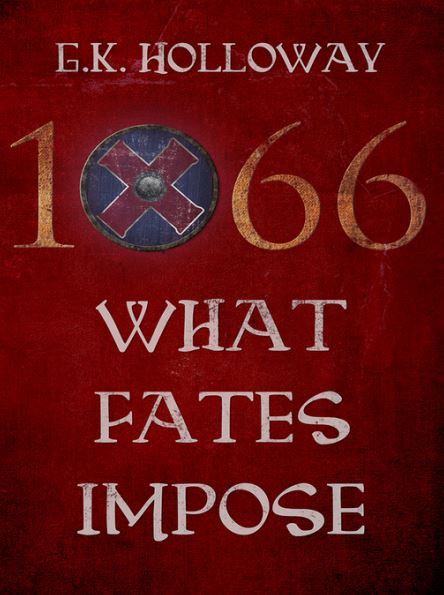
1066 What Fates Impose

Publication Date: March 4, 2013 Matador Publishing

King William then utters the following words to the room: ‘I appoint no one as my heir to the Crown of England, but leave it to the disposal of the Eternal Creator, whose I am and who orders all things. For I did not attain that high honour by hereditary right, but wrested it from the perjured King Harold in a desperate bloody battle.’

England is in crisis. King Edward has no heir and promises never to produce one. There are no obvious successors available to replace him, but quite a few claimants are eager to take the crown. While power struggles break out between the various factions at court, enemies abroad plot to make England their own. There are raids across the borders with Wales and Scotland.

Harold Godwinson, Earl of Wessex, is seen by many as the one man who can bring stability to the kingdom. He has powerful friends and two women who love him, but he has enemies will stop at nothing to gain power. As 1066 begins, England heads for an uncertain future. It seems even the heavens are against Harold.

Intelligent and courageous, can Harold forge his own destiny – or does he have to bow to what fates impose?

Buy the Book

Amazon UK Amazon US Book Depository iTunes Troubador Publishing Waterstones

About the Author

G.K. Holloway

I have been interested in history since I was a boy, which I suppose explains why, when I came across a degree course in History and Politics at Coventry University that looked tailor made for me, I applied right away.

In my first year at Coventry I lived in the halls of residence within a stone’s throw of the Leofric Hotel. In the opposite direction, just a short walk from my halls, is the bell tower that houses a clock, which when its bell chimes the hour, produces a half size model of naked Lady Godiva riding a horse for the titillation of tourists. Above her, Peeping Tom leans out of a window for a better view. In all of the three years I was there, it never once occurred to me that I would one day write a book featuring Earl Leofric and his famous wife, as key players.

After graduating I spent a year in Canada before I returned to England to train as a Careers Officer in Bristol. Later, I lived and worked in Gloucestershire as a Careers Officer and then in Adult Education as an Education Guidance worker.

After I met my wife, I moved back to Bristol to live and I worked at Bath Spa University as a Student Welfare Officer for a number of years. It was about this time I read a biography about King Harold II which fascinated me so much I read more and more about the man and the times. I found the whole pre-conquest period of England so interesting I couldn’t understand why no one had written a novel about it. So, I decided to write one myself. Now, after many years of study and time spent over a hot keyboard, I have finally produced that novel.

1066: What Fates Impose is the result of all that study and hard work and is the first book I’ve written. I am now working on a sequel.

Virtual Tour and Book Blast Schedule

Monday, April 14 Book Blast at Kincavel Korner Book Blast at Historical Fiction Connection

Tuesday, April 15 Book Blast at Passages to the Past Book Blast at Let Them Read Books

Wednesday, April 16 Review at Svetlana’s Reviews and Views Book Blast at To Read or Not to Read

Thursday, April 17 Book Blast at Closed the Cover Book Blast at Historical Tapestry

Friday, April 18 Book Blast at Time 2 Read Book Blast at The Bookworm

Monday, April 21 Review at Flashlight Commentary Book Blast at Griperang’s Bookmarks

Tuesday, April 22 Review & Giveaway at Broken Teepee Interview at Flashlight Commentary

Wednesday, April 23 Review at Oh, for the Hook of a Book Interview at The Maiden’s Court

Thursday, April 24 Interview at Oh, for the Hook of a Book Book Blast at The Lit Bitch

Friday, April 25 Review at Impressions in Ink Book Blast at Ink Sugar Blog Book Blast at The Mad Reviewer

Monday, April 28 Review at Kinx’s Book Nook Book Blast at Just One More Chapter

Tuesday, April 29 Review at CelticLady’s Reviews Book Blast at Historical Readings and Reviews

Wednesday, April 30 Review at Historical Tapestry Book Blast at Book Nerd

Thursday, May 1 Book Blast at Caroline Wilson Writes

Friday, May 2 Review at Curling Up By the Fire Review at Confessions of an Avid Reader Book Blast at A Book Geek Book Blast at Layered Pages

1066_Tour Banner _FINAL


My Guest and Author of the Amazon Bestseller, Martin Crosbie

Martin Crosbie 2

In a press release, Amazon referred to Martin Crosbie as one of their success stories of 2012. His self-publishing journey has been chronicled in Publisher’s Weekly, Forbes Online, and Canada’s Globe and Mail newspaper. Martin’s debut novel, My Temporary Life, has been downloaded over one hundred and fifty thousand times and became an Amazon bestseller. He is also the author of the Amazon bestsellers:

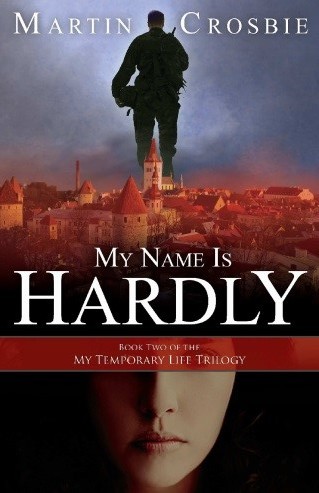
My Name Is Hardly-Book Two of the My Temporary Life Trilogy

Lies I Never Told-A Collection of Short Stories

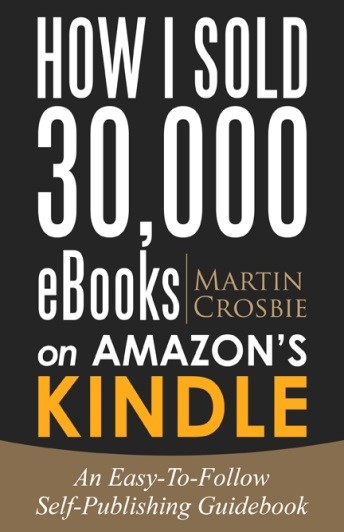
How I Sold 30,000 eBooks on Amazon’s Kindle-An Easy-To-Follow Self-Publishing Guidebook

Believing Again: A Tale of Two Christmases

Martin was born in the Highlands of Scotland and currently makes his home on the west coast of Canada. The third book in the My Temporary Life Trilogy is due for release in 2014.

Stephanie: I would like to welcome back Author Martin Crosbie. I consider Martin on of the gurus of self-publishing.

Hello Martin! I’m glad to have you visit Layered Pages again. It is always a pleasure to talk with you. You work tirelessly in the self-publishing community and that is much respected by many. I would like to say thank you for all you do and I would like to know how you find the time to do it all?

Martin: Hi Stephanie, thanks for having me back. It’s always fun to talk to you.

I realized some time ago that I had to change my ratio of writing/marketing. I’m proud to say that currently I’m sitting at about 50/50 and I’m pretty happy with that. I made a commitment three months ago to write a minimum one thousand new words every day and so far I’ve stuck with it. So, my priority every day is writing. Everything else has moved down the list.

Stephanie: That is fantastic and I have been cheering for you ever since you told me about your challenge.

Please tell me about the workshops you teach and give lectures at?

Martin: I teach a self-publishing weekend workshop. In a weekend my partner and I try to show authors how to produce a professional product without breaking the bank. We call it the Secrets of the Bestsellers Weekend.

Stephanie: Do you have another one coming up? Tell me about it.

Martin: The next Bestsellers Weekend is in November but I have a number of other events between now and then.

I’m teaching a free self-publishing workshop that the local library is sponsoring in May. Here’s the link: Surrey Libraries

I have two others in the coming months. I’m teaching at a writers retreat in Northern British Columbia. We’re in lockdown at a remote (not-so-secret) location and we’re going to write and talk about writing for four days. Rural Writers

And, I’m very proud to be opening the Whistler Readers and Writers Festival in October. I’ll be facilitating a one day workshop for attendees. The Vicious Circle

Stephanie: Was there a moment when you were giving a lecture that impacted in you some way or should I say, what has been your most profound moment in these speaking engagements?

Martin: During the past workshop that I taught in March, by the middle of the second day the tide turned. The authors attending were quoting phrases and facts that I’d given them on the first day and were nodding and buying into my philosophy. They were talking about making sure their manuscript was polished before publishing and hiring professional cover designers and most importantly, editors too. It felt really good to be in a roomful of writers who were all on the same page.

Stephanie: What are some of the compliments you have received from these lectures?

Martin: I guess the biggest compliment is that some of the authors come back. Several folks who attended my first workshop have come to others too. The greatest compliment though is seeing the success that writers are having once they publish. I see their books zipping up the rankings on Amazon and often overtaking my own work and hitting bestseller status.

As I’ve traveled to writers groups giving information on my workshops I’ve made a startling discovery. There are some very, very good books out there that are just waiting to be published. The quality of writing and creativity of the stories has blown my mind. I often tell writers to please alert me once their books are out and they probably think I’m saying it to be polite.

I’m not! I can’t wait to read some of their books once they go live.

Stephanie: What is the number one advice you give to a writer who is getting started and wants to self-publish?

Martin: Have patience and don’t publish until the work is ready. There’s no excuse for releasing sub-standard material. There are writers groups and beta-readers galore just waiting to help us. I have requests from readers asking about the third book in my trilogy all the time. I had a draft partially written last year but I stopped and started over. It’s my name on the cover and I won’t release a book until I know it’s the best I can produce. You’ll never regret waiting until you know that your work is the best you can produce.

Stephanie: Has there been any bumps along the way in your publishing career and was there a moment you wanted to through in the towel?

Martin: No. I’m doing what I always wanted to do – writing, connecting with readers and being paid for it every month. I’m very lucky.

Stephanie: What are some of the mistakes a self-publishing writer can avoid when using social media?

Martin: Treat your followers and Facebook friends as though they were your real-life, actual, dear friends. In other words, forget that you’re online. I wouldn’t walk up to one of my friends and say “buy my book”. Social networks have changed the way we interact but we don’t have to let them change the way communicate. Treating each other with respect is still the key to maintaining relationships – virtual and actual.

Stephanie: Where do you see this industry in five to ten years?

Martin: Right now, when I publish a book and upload it I feel as though my readers are just around the corner from me. They’re that close. Within a few years it’s going to feel as though they’re in the same room. I don’t what form that will take but the relationship between reader and writer is changing and the two are becoming closer. The escapism that we provide readers will always be there but the actual relationship has changed and that’s a good thing. It’s helped me and others get our work to our audience.

In terms of where the publishing industry will be that’s difficult to say. The only constant will be change. Things will continue to change and we’re going to be here enjoying every peak and valley along the way.

Stephanie: Before you go, is there a message you would like to give to your audience about your own work?

Martin: I’m very proud of my novels and I’d love for your readers to check them out but my bestselling book is currently my self-publishing guidebook. I keep the e-book pricing at $4.99, so it’s quite affordable. The key with this book is that it keeps changing. I released it in September and already have revised it once and will revise it again this summer and again at the end of the year. Each revision contains updated sites where you can promote your work, find editors, places to find free photos and images, and much more. Plus, I update some of the content in terms of what’s working and what isn’t too. So, if you purchase the book and I update the content Amazon will actually advise you that it’s been revised and direct you to the area where you can download the newer version for free. My goal is to have the most current self-publishing guidebook on the market all the time.

I’d love for your readers to check it out Self-Publishing Guidebook

Thank you, Martin!

Places you can find Martin:

Twitter

Facebook

Martin’s Website

email

Amazon Author Page

Martin’s self-publishing journey has been documented here:

Publisher’s Weekly Apr/2012

Globe and Mail Newspaper Apr/2012

Forbes Online Aug/2012

Here are just a few samples of many things people are saying about Martin’s books.

What readers are saying about Lies I Never Told-A Collection of Short Stories:

Lies I never told

Could not put this book down. I am amazed at the depth of feeling and emotion in his words. All of the stories are so different yet so connected at the emotional level. My only disappointment is that the stories were not longer. I really hope that this book is just a prelude of the novels to come. Martin grabs me from the first line and takes me on an emotional journey with all his characters.

Debbie Dore-Amazon review

Where Martin Crosbie found his voice is a mystery. His ability to create stories (here very brief ones) that explore the psyche of his chosen stand-in trope in such a way that within a few sentences you are so aware of the character’s life and feelings that he seems to be sitting beside you, in conversation with only you.

Grady Harp (Hall of Fame reviewer)-Goodreads review

What readers are saying about How I Sold 30,000 eBooks on Amazon’s Kindle-An Easy-To-Follow Self-Publishing Guidebook:

How I sold....

Yes, I was skeptical because I’ve read one or two of these books, and their suggestions are… let’s just say not that good. Last night, I skipped the intro and jumped right to the meat of the book. Chapter One was better, much better, than I had expected. But it was when he said, DON’T go out on Twitter and FB and shout “read my book” a thousand times a day that he convinced me that he was honest and knew what he was talking about. For anyone at the publishing stage or who wants to get there, so far 🙂 [I will always be a hardcore skeptic] this is a good reference on what to do, on how to build relationships instead of walls. If you’re not yet at the publishing stage, start now to build an audience and support group. And Martin C practices what he preaches, especially the part about supporting other authors. He followed me back on Twitter and friended me on FB.

NSW-Amazon Review

If you are a new writer this book is a must. I wish I had it when I first started writing. It is filled with easy to read and easy to understand information. However, even if you are an already published writer this book will offer you new information you might not have known. I found it helpful in so many ways. There are also links to various other sites that offer valuable info that is very difficult to find. Basically, “How I Sold 30,000 Ebooks on Amazon Kindle,” takes a lot of the guessing and hard work out of self publishing.

Roberta Kagan-Amazon Review

What readers are saying about My Name Is Hardly:

My name is hardly

Martin Crosbie’s remarkable storytelling talent is apparent throughout his most recent novel, “My Name Is Hardly.” The story seized me from the first paragraph and held me relentlessly until I’d come to the novel’s thoughtful and moving conclusion.

Kathleen Lourde-Amazon review

I have no doubt that when the last piece is in place, Crosbie’s work will stand tall as exemplary literary fiction, and a reproach to those who mourn the decline of the “gatekeepers” of commercial publishing. Any gate too small to let in Martin Crosbie should have been blown up a long time ago.

Steven Hart-Goodreads review

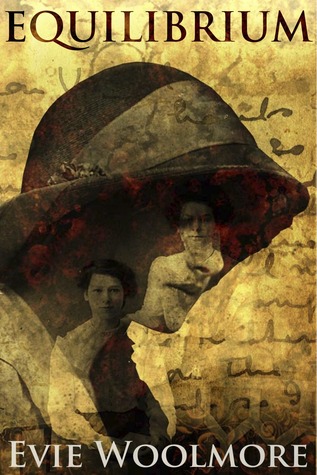
Review: Equilibrium by Evie Woolmore

Picture two

I am delighted to bring back old reviews that I have written on my old blogspot. Each month, I will be posting one in hopes to find new readers who will enjoy these books as much as I have. Equlibrium is one that I reviewed for the Historical Novel Society sometime back.

Published August 6th 2012 by allonymbooks

Equlibrium is an evocative tale of two sisters-Epiphany and Martha-who are mediums performing on stage in a theater in London, England in the early 1900’s. A Lady Adelia Lyward sees the performance and wants Epiphany to give her a private reading. She wanted to learn the truth of her brother’s death not knowing the sisters have a connection to her household. Martha was a housemaid to the Lyward’s two years previous and fell pregnant by Adelia’s husband, Lord Rafe Lyward. In disgrace Martha left the Lyward’s household, gave her child away and attempted suicide in the River Thames, she survived… But there is more to the Lyward’s household than meets the eye.

The beginning of the story starts slowly but I was pleasantly surprised as I read on to discover how the mystery surrounding Adelia’s brothers death is revealed. However, I would have liked to have seen the historical elements to be stronger and expanded further on-such as the social changes in England during this period and I wanted to have a clearer picture on the details as to why Adelia’s brother went to South Africa during the Boer War then what was told.

Overall this story is rich in complex characters with remarkable depth despite their shortcomings. Epiphany’s voice gave- what I believe- a comfort to those she was interacting with at times and I thought she gave the story a calmness and a delicate reality to this tragic and harsh story that was unfolding. I recommend Equilibrium to readers who enjoys historical fiction with spiritualism influences.

~Stephanie
Layered Pages

Interview with Author Elle Thalheimer

Ellee_Author_Photo

Ellee Thalheimer is an accomplished freelance travel writer, public speaker, and bicycle tourism proponent who believes there are few better ways to travel and transform than by bike. She co-founded the Portland Society, a nonprofit business alliance that connects professional women who are passionate about cycling; authored Lonely Planet’s Cycling Italy; and is a zealous lover of the Pacific Northwest. As the owner of Into Action Publications, her most recent projects include authoring Cycling Sojourner: A Guide to the Best Multi-day Tours in Oregon and co-authoring Hop in the Saddle: A Guide to Portland’s Craft Beer Scene, by Bike.

Stephanie: Hello, Ellee! Thank you for chatting with me today. Please tell me about your book, Cycling Sojourner.

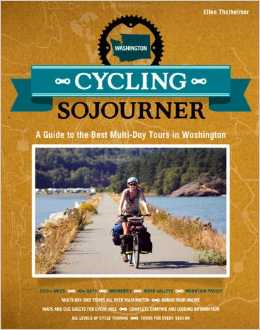
Ellee: As the second title in my cycle touring guidebook series, Cycling Sojourner: A Guide to the Best Multi-Day Tours in Washington reveals hard-to-find information about exploring Washington by bike. The book gives advice on how to tour the state’s remotest ribbons of road in the Okanagan, bikeable berry stands in the San Juan Islands, Walla Walla wine country tasting rooms best reached by bicycle, and routes across the Cascade Mountains that I hope will convert folks into helpless lovers of the Pacific Northwest.

Like a cycle touring concierge of sorts, Cycling Sojourner takes care of the logistics and removes obstacles between riders and two-wheeled adventures. I want cyclists to be able to just grab their bikes and go. Each of the book’s nine tours lays out nuts-and-bolts details, including cue sheets, maps, and information about weather, difficulty levels, camping and lodging options, and the various ways of getting to and from the ride’s start and end points.

But the soul of the book lies in the authors’ voices, which use storytelling, local history, and humor to elevate the text beyond just an everyday guidebook. The jovial, casual tone sets this series apart. I really wanted this book to be an inspirational muse that draws out the inner adventurer.

cycling

Stephanie: What inspired you to write a guide on cycle-touring?

Ellee: I used to work as a guidebook author for Lonely Planet and was hired as the single author on the Cycling Italy title. That was an experience of a lifetime. Before that, I was a cycling guide for Woman Tours. I had a unique skillset to be able to write my own guidebooks. When I realized that Oregon didn’t have any appreciable source of cycle touring information, despite the popularity, I decided to create Cycling Sojourner: A Guide to the Best Multi-Day Tours in Oregon. And then I ended up making another one for Portland: Hop in the Saddle: A Guide to Portland’s Craft Beer Scene, by Bike. And because Washington also has world-class cycle touring, I was inspired to make another guidebook for it. When I started writing the Oregon book, I never imagined that I would become a publisher and continue producing titles like an addict.

Stephanie: Do you cycle yourself? Is this guide based on your own experiences?

Elle: I’ve been cycling for two decades. I’m an avid commuter, mountain biker, road cyclist, cycle tourist, and I even raced cyclo-cross one year (never again, ouch). I hope to get into fat biking and family biking with my new daughter, Ruby, this summer.

Every mile of this guide was ridden by me or by one of the other authors. In the case of many cycling guidebooks, because of budget and time restrictions, publishers have authors drive some routes. When that happens, the quality of the coverage suffers. Books in the Cycling Sojourner series are dedicated to giving information from firsthand experience, as if a good friend, who happened to be an expert, was giving you advice.

Stephanie: Was there anything challenging about writing a guidebook?

Elle: Where shall I start? People like to say, “Wow! You’re job is to tootle around on a bike. Lucky!”

And I am very lucky. This is great work. However, the actual riding is a small percentage of the overall work put into the book. Every nit-picky detail has to be meticulously researched. You have to master the art of word economy and balance inspiration and practicality. Plus, when you are researching on the ground, your day doesn’t end with the beer after your ride. You have to sit at your tiny laptop and produce content and create descriptions while experiencing physical exhaustion.

Stephanie: What is the number one advice you would give when cycling?

Elle: When cycle touring, if your goal is to have fun, the key is to start the tour prepared, then be flexible no matter what comes your way. The beauty of a bike tour is that it’s not a packaged vacation. You may end up meeting people, doing things, or sleeping in places you did not expect. Wrenches get thrown into tours by weather, road closures, flat tires, or an unexpectedly fabulous town where you have to stay an extra night. If you aren’t rigid about how things should unfold, you’ll enjoy yourself much more.

Stephanie: Have you written any other guides? Will there be more?

Elle: I’ve contributed to a number of Lonely Planet guidebooks and was the single author on their Cycling Italy title. For Into Action Publications, my own imprint, I wrote Cycling Sojourner Oregon, co-authored Hop in the Saddle: A Guide to Portland’s Craft Beer Scene, by Bike, and was the main author on Cycling Sojourner Washington (I had a number of contributing authors for this last title).

As far as the Cycling Sojourner series goes, there are many potential titles I’m mulling over for the future.

Stephanie: What do you like most about writing?

Elle: Writing helps me process my experiences in the world, so when I emerge from my Writing Hole, I have a more dynamic understanding. Also, there is nothing as satisfying as creating a muscular description that zings or cutting the fat out of a paragraph, even if you love the individual bits you’re cutting.

Stephanie: Are there pictures in your guidebook and did you take them yourself?

Elle: The photos were taken by me, the other authors, and friends of the book.

Stephanie: When will this book be available and where can readers purchase it?

Elle: You can buy the book on my website at cyclingsojourner.com and also follow my blog about cycle touring. In addition, readers can purchase this book where books are sold, as well as REI. The book will be available from my website in April and from other vendors in May.

The Cycling Sojourner Site

Amazon

Guest Post with D. Grant Fitter

D. Grant Fitter

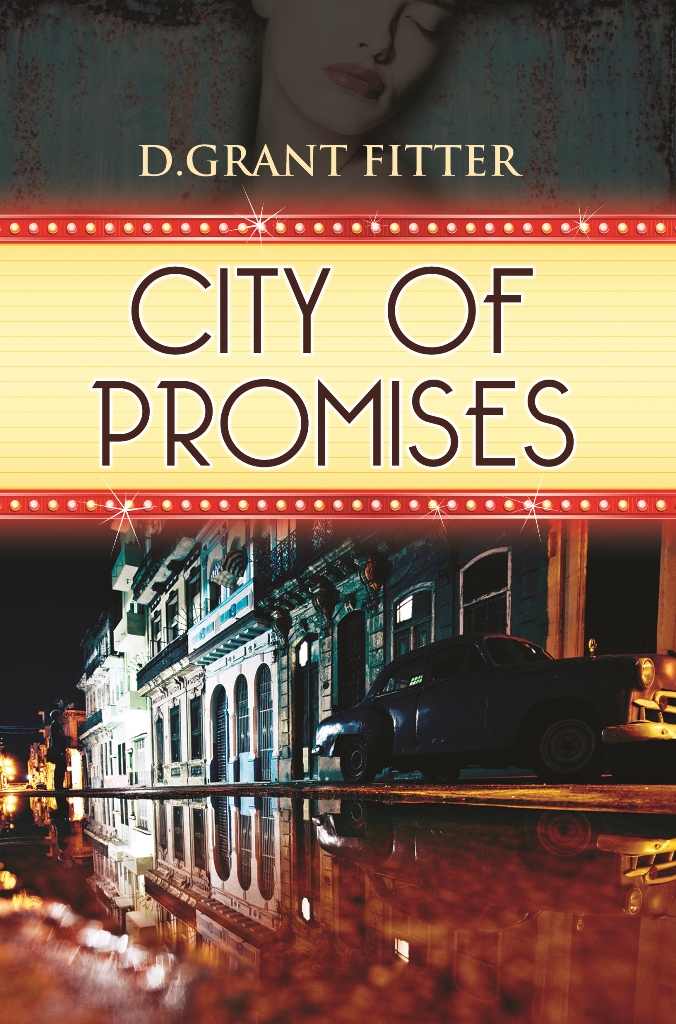
Stephanie: My guest today in Layered Pages is D. Grant Fitter and he is here to talk about his book, City of Promise and how the period in which the book is set in and his research.

D. Grant: Spanning eight years of the 1940s, City of Promises is set primarily in Mexico City, relies heavily on the flavor of Veracruz on the gulf coast, introduces the budding new playground of Acapulco on the Pacific and it was lots of fun to write.

Fun to write works aren’t really work at all and are almost always a product of inspiration.

People often describe the period and setting of my novel such things as surprising, unusual and unique. It is true that very little fiction has been written about life in Mexico City in the 1940s and I am not aware of anything done in English. By saying that is not to say the decade is not well captured and recorded through an abundance of other media. There is an absolute avalanche of living film, recorded music and historical archives to be gleefully buried in research.

Inspiration and fun really do go hand in hand.

Having that valuable bank of research is important to historical fiction writers, particularly if they are not writing a formulaic theme, enjoy doing research and if they strive to keep their characters, setting and storyline meticulously true to events of the time, as I have done with City of Promises. That backup also helps to keep the words flying from the mind as fast as the fingers can key them in. In my own case it also helped that I spent many years working and living in Mexico City, roaming the streets, admiring architecture, feeling the tremendous pulse of that city, developing a healthy appetite for participating in and understanding the culture and even having the experience of being held bargaining chip hostage by a very politically influential businessman. Such things helped me understand my true-life character’s lives and the life of my protagonist and his two supporting actors who are a conglomerate of many personalities I might have known.

What I am talking about here is closely connected to something learned over six semesters instructing adult creative writing courses.  Understanding our limits and concentrating on our strengths.

Understanding our limits and concentrating on our strengths may at first seem a little too obvious or superficial, but it isn’t. In my six semesters instructing adult creative writing courses, the most common reason given by students for paying their tuition for the course was that they had an idea for a novel eating away at them, but they were in need of a push to either get started or they were bogged down and in need of some inspiration to keep going. The same holds true for authors who join writing clubs and online forums. I see that discussion all the time. All too often it is apparent that many talented, aspiring authors are trying to force a story into a mold they do not know enough about. They weren’t writing to their strengths.

So yes, City of Promises is the natural result of my attraction to historical fiction, but loving historical fiction is not enough. I went to work writing to my strengths. I went to work on a very broad subject that I have come to know very well; that being my fascination with the Mexican culture which is so distant from our own, a curiosity to understand it, and story that I feel illuminates it.

 City of Promise

Publication Date: January 22, 2013 CreateSpace Formats: Paperback, eBook

Genre: Historical Fiction

Is there an economic value of one’s soul? “By divine good fortune I live in the most glamorous era of a famously enticing city. By obscene misfortune I’m shut out by its ruling elite.” Daring ways to make it big are on offer in Mexico City in the 1940s, but best watch your back! If Arturo Fuentes barters virtue to maneuver in on the action, will the consequence of his choices be too much to bear?

The rebirth of one of the world’s most colorful cities forms the rich backdrop for this historically discerning tale of treachery, intrigue and political corruption.

“My entire family was stuck for generations in that isolated village south of Veracruz where I was born. When you’re fourteen, know you are a dreamer and learn to be a schemer, you can’t stay and so you start planning for the day.”

In 1941, 21-year-old Arturo Fuentes followed the beat to Mexico City.

“There was so much going on!”

Bottles of rum in smoke filled bars, sultry women and impassioned conversation, music and bright show lights calling. Murder and corruption.

“A man moving up meets all kinds of people in that seductive city. Powerful men to boost your business prospects or a real dish who will change your life. Without women, life is without drama.”

“Arturo has goodness in his heart. I could tell in an instant. He was so easy to love. Arturo couldn’t sense the warning signs like a woman does. That pack of important politicos sucked him in! You can’t play their games and expect to walk away.”

“She was right! Each day my reasons for quitting got bigger and the ways out got smaller. I had to do what I had to do to save my soul.”

Praise for City of Promises

“… beautifully merging together historical fact with inspired fiction, this remarkable story is enlightening, illuminating and thoroughly compelling…” -Goodreads

“… a dazzling story of an eager young industrialist drawn to a myriad of big city temptations yielding experiences of tragedy, corruption, misfortune and prosperity …” – el Popular

“Fitter has efficiently dealt with time and place that makes the story come alive in the imaginations of the readers.” – Bookpleasures

Buy the Book

Amazon (eBook) Amazon (Paperback) Barnes & Noble (Nook) Smashwords

About the Author

D. Grant Fitter is a citizen of North America. Born in Ontario, Canada and educated in Colorado, USA, he is convinced he was Mexican in his previous life. How else to explain such a strong attraction to Mexico and all things Mexican, including his wife.

His business career includes long stints of work in Mexico before yielding to a pesky urge to pursue freelance journalism for seventeen years. Meanwhile, Fitter’s Mexican roots continued to call. City of Promises is the product of his curiosity to understand why the culture of our close neighbors is so distant from our own.

He lives in Toronto and whenever possible, in a sunny hillside casita in the colonial town of Taxco, Guerrero.

Author Links

Website Facebook Twitter Goodreads

Virtual Book Tour Schedule

Monday, April 14 Review at Svetlana’s Reads and Views

Wednesday, April 16 Review at Book Nerd

Friday, April 18 Interview at Caroline Wilson Writes

Monday, April 21 Spotlight & Giveaway at The Bookworm

Wednesday, April 23 Guest Post at Layered Pages

Thursday, April 24 Interview at From the TBR Pile

Thursday, May 1 Review at Book Journey

Monday, May 5 Review & Giveaway at Closed the Cover

Wednesday, May 7 Guest Post at Jorie Loves a Story

Thursday, May 8 Review & Giveaway at A Bookish Affair

Friday, May 9 Review at Jorie Loves a Story Guest Post & Giveaway at Historical Fiction Connection

Monday, May 12 Spotlight & Giveaway at Passages to the Past

Thursday, May 15 Review at Reviews by Molly

City of Promises_Tour Banner_FINAL


Meet My Main Character by Stephanie Moore Hopkins


I’ve been tagged by Rosanne E. Lortz, and now, I get to tell you a little bit about the main character in one of my writing projects.

121

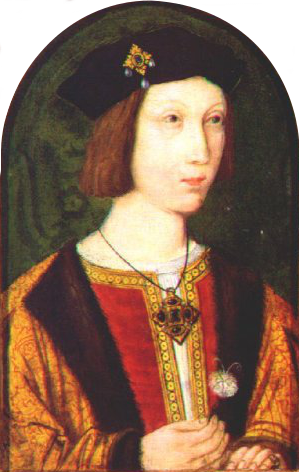
What is the name of your character? Is he/or she fictional or a historic person? I actually have four main characters thus far with fabulous supporting characters. My story will be a trilogy or quite possible a series. Having said that, the main focus is really on Arthur-who is fictional and lives in the present time. He is named after an historical prince of England/Wales named Author Tudor who was born in 1486 and died in the year of 1502. His parents were Henry VII and Elizabeth of York. Prince Arthur is remembered for being Katherine of Aragon’s first husband and was very sickly. But there is much more to that in his life. One I plan on exploring in my story.

When and where is the story set? Two places really….New York City, USA and Surrey, England in the present day.

What should we know about him/her? Arthur has had a great loss in his life that has prevented him or I should say-if you will-to open up to others and to develop relationships around him. He pretty much keeps to himself except for a small group of people. But the situations he embarks on will challenge him in that area of his life where he is forced to open up, mentally, spiritually and emotionally.

Arthur2

What is the main conflict? What messes up his or her life? This is a tough question. I’m not sure I can answer this entirely without giving the plot away…so I will give a glimpse. This is an alternate story about Prince Arthur of England. The story takes place in the modern day but reveals letters of the past. Letters that can change history and possibly destroy lives and change a whole country forever, if the letters were revealed to the world. There is so little on Arthur and as I have researched him and his father and the real conflicts of that time in history, I began to see a much bigger picture and thought of what if’s it happen another way….

Arthur, my modern day character, is needed in England to help an aunt he only met once. It has to do with the letters and the family estate. He has never left New York and is conflicted as to what to do….meanwhile things start to happen where he lives, that makes him decide that he needs to step up and find out what is going on and to help his aunt….

What is the personal goal of the character? The personal goal of Arthur is pretty much what I have mentioned above. To get to the bottom of what is going on….and to help his aunt and to protect the family legacy that he soon discovers.

1978748_10203040673958710_87680400_n

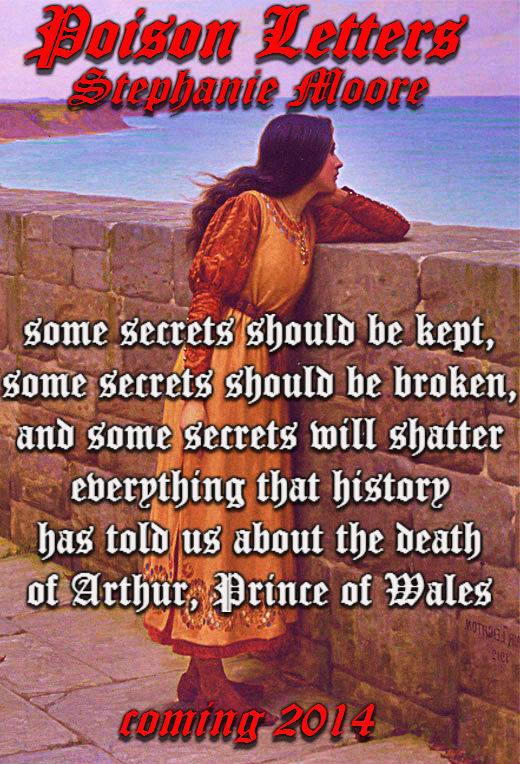
Is there a working title for this novel? And can we read more about it? My title for the book is, Poison Letters. I pretty much set the title before I even started to write….except for a few ideas for the plot. I think the title fits really well with the story based on the letters that have been hidden for several hundred years.

When can we expect the book to be published? Gosh, I was hoping to get it out this spring but life gets in the way and then I have changed my whole POV. I was writing it in the first person and it was not working for me or the story. So now I’m in the middle of re-writes. I am really hoping to get this book out by the end of this year. Crossing my fingers it might be sooner.

Thanks for visiting the post, and I will tag two historical fiction authors to answer these questions as well once I have contacted them and have their permission. They’ll be introducing their main character to you in a few days.

  1. Kelli Rea Klampe
  2. Stuart S. Laing

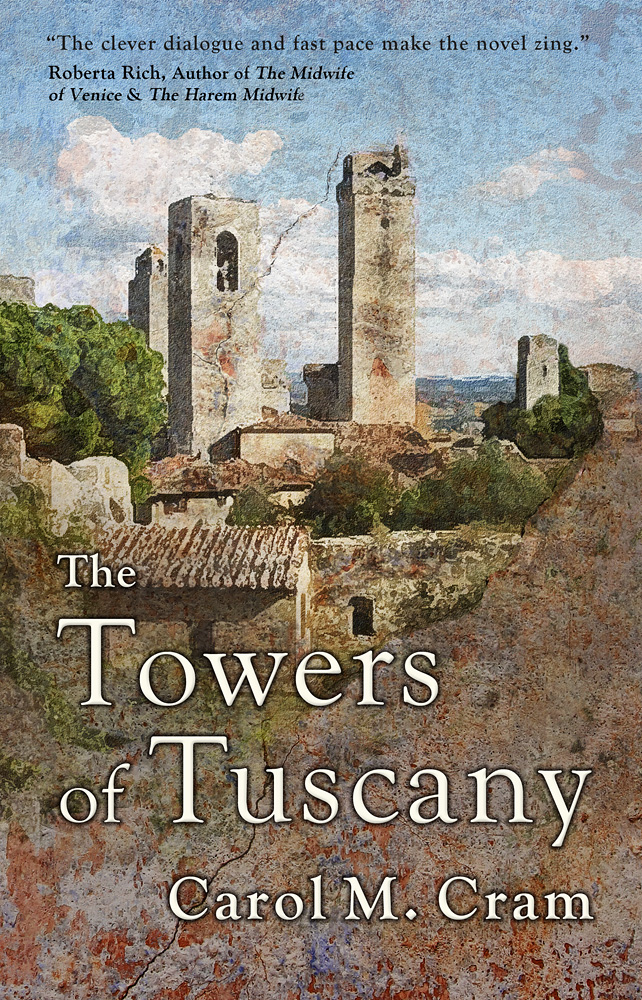
The Towers of Tuscany by Carol M. Cram -Book Blast

The-Towers-of-Tuscany2

Publication Date: January 23, 2014 New Arcadia Publishing Formats: Paperback, Ebook

Genre: Historical Fiction

Set amid the twisting streets and sunlit piazzas of medieval Italy, the Towers of Tuscany tells the story of a woman who dares to follow her own path in the all-male domain of the painter’s workshop. Sofia Barducci is born into a world where a woman is only as good as the man who cares for her, but she still claims the right to make her own mistakes. Her first mistake is convincing her father to let her marry Giorgio Carelli, a wealthy saffron merchant in San Gimignano, the Tuscan city of towers. Trained in secret by her father to create the beautifully-crafted panels and altarpieces acclaimed today as masterpieces of late medieval art, Sofia’s desire for freedom from her father’s workshop leads her to betray her passion and sink into a life of loveless drudgery with a husband who comes to despise her when she does not produce a son.

In an attack motivated by vendetta, Sofia’s father is crushed by his own fresco, compelling Sofia to act or risk the death of her soul. The choice she makes takes her on a journey from misery to the heights of passion—both as a painter and as a woman. Sofia escapes to Siena where, disguised as a boy, she paints again. When her work attracts the notice of a nobleman who discovers the woman under the dirty smock, Sofia is faced with a choice that nearly destroys her.

The Towers of Tuscany unites a strong heroine with meticulously researched settings and compelling characters drawn from the rich tapestry of medieval Italy during one of Europe’s most turbulent centuries. The stylishly written plot is packed with enough twists and turns to keep readers up long past their bedtimes.

READ AN EXCERPT.

Praise for The Towers of Tuscany

“The Towers of Tuscany is a delightful escape to the Siena we all love. Carol Cram has crafted a delicious story about a strong woman torn between her secret past, her love of painting and the forbidden charms of her rich patron. Hard to resist and highly recommended!” – Anne Fortier, Author of The Lost Sisterhood and the New York Times bestseller, Juliet

“Carol Cram’s lush descriptions and intriguing characters bring this dramatic tale of medieval Tuscany to life. If you love Italian art, a feisty heroine, and a page-turning plot, you will adore this novel.” – Deborah Swift, Author of A Divided Inheritance

“The Towers of Tuscany has all the elements of a wonderful historical novel―a talented, frustrated heroine, a treacherous, feckless husband, and a promise to a dying, much loved father who orders the heroine on a dangerous mission. Carol is a first rate storyteller. The research is well done. Every chapter displays a fine knowledge of painting technique of the 14th century, and customs and mores of the age. The details of dress, fabric, food, are flawless. The clever dialogue and fast pace make the novel zing along.” – Roberta Rich, Author of The Midwife of Venice and The Harem Midwife

“Sofia will set your heart racing as she attempts to find what we all, in our own ways, strive to seek: love, resolution, and artistic freedom. The legacy of this story will leave you yearning for more.” – Cathleen With, award-winning author of Having Faith in the Polar Girls’ Prison

Buy the Book

Amazon (Ebook) Amazon (Paperback) Barnes & Noble Book Depository IndieBound

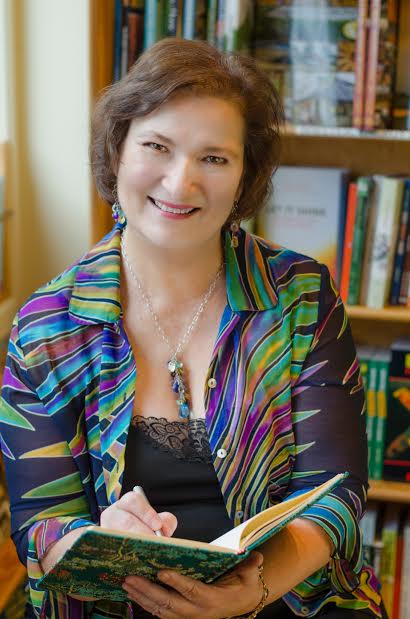
Carol-Cram1

About the Author

Carol M. Cram has enjoyed a great career as an educator, teaching at Capilano University in North Vancouver for over twenty years and authoring forty-plus bestselling textbooks on business communications and software applications. She holds an MA in Drama from the University of Toronto and an MBA from Heriot-Watt University in Edinburgh, Scotland. Carol is currently focusing as much of her attention as she can spare between walks in the woods on writing historical novels with an arts twist.

She and her husband, painter Gregg Simpson, share a life on beautiful Bowen Island near Vancouver, Canada.

Author Links

Website Blog Goodreads Facebook Twitter

Book Blast Schedule

Monday, April 7 Literary Chanteuse Bibliophilia, Please Cheryl’s Book Nook A Bibliotaph’s Reviews Confessions of an Avid Reader

Tuesday, April 8 Mari Reads Peeking Between the Pages History From a Woman’s Perspective

Wednesday, April 9 Susan Heim on Writing Oh, For the Hook of a Book

Thursday, April 10 Passages to the Past Book Lovers Paradise To Read or Not to Read Curling Up With a Good Book

Friday, April 11 Words and Peace The Mad Reviewer Historical Fiction Obsession

Saturday, April 12 Book Nerd Layered Pages Princess of Eboli Kelsey’s Book Corner

Sunday, April 13 West Metro Mommy The True Book Addict Caroline Wilson Writes

Giveaway

To enter to win one of 3 copies of The Towers of Tuscany please complete the Rafflecopter giveaway form below. Giveaway is open internationally. Enter here.

Giveaway ends at 11:59pm on April 13th. You must be 18 or older to enter. Winners will be chosen via Rafflecopter on April 14th and notified via email. Winner has 48 hours to claim prize or new winner is chosen.


H.H. Miller’s Book Blast

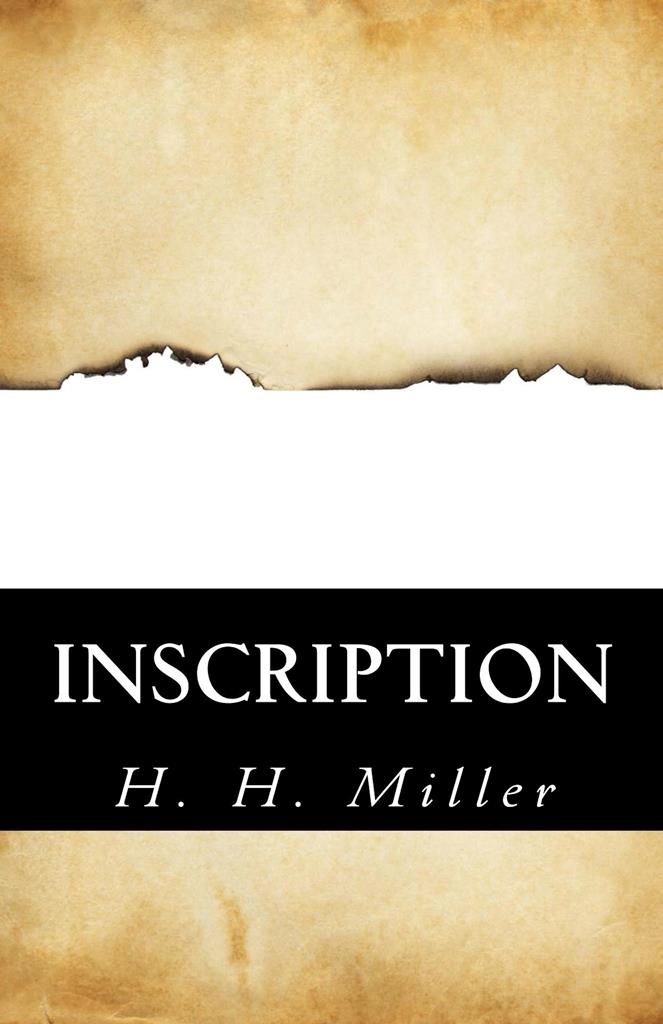
Inscription_Cover

Publication: January 9, 2014 H.H Miller Paperback; 278p ISBN-10: 0615944418

eBook; 700kb ASIN: B00HSBNW5Y

The year is 1851 and the Grand Guard is ravaging Mainland. Arrests. Floggings. Swift executions. Twenty-year-old Caris McKay, the beautiful heiress of Oakside Manor, is sent to live with distant relations until the danger has passed. It’s no refuge, however, as Lady Granville and her scheming son plot to get their hands on Caris’s inheritance with treachery and deceit.

Soon, alarming news arrives that the ruthless Captain James Maldoro has seized Oakside and imprisoned Caris’s beloved uncle. And now he’s after her.

Caris escapes with the help of Tom Granville, the enigmatic silver-eyed heir of Thornbridge. But when a cryptic note about a hidden fortune launches them on a perilous journey across Mainland, Caris and Tom must rely on wits, courage, and their growing love for each other if they hope to survive.

Filled with adventure, intrigue, and romance, Inscription will transport you to a historically fictional world you’ll never want to leave.

Buy the Book

Amazon (eBook) Amazon (Paperback) Barnes & Noble

About the Author

H_H_-Miller-Author-300x270

H. H. Miller is the author of the novel Inscription, a historically fictional romantic adventure. In real life, she’s content director at Stoke Strategy, a brand strategy firm in Seattle, Washington, where she specializes in transforming what some might call “boring” technology jargon into compelling, readable, memorable stories. Her favorite escape is Manzanita, Oregon – a place of beautiful beaches, wild storms, chilly nights around the bonfire (even in July), and time to enjoy life with her husband and three children.

For more information please visit H.H. Miller’s Facebook Page.

Book Blast Schedule

Monday, March 31 A Bookish Affair Closed the Cover Mina’s Bookshelf

Tuesday, April 1 Historical Fiction Connection

Wednesday, April 2 Book Nerd CelticLady’s Reviews

Thursday, April 3 Flashlight Commentary

Friday, April 4 The Mad Reviewer Oh, for the Hook of a Book

Saturday, April 5 Pages of Comfort

Sunday, April 6 So Many Books, So Little Time

Monday, April 7 Confessions of an Avid Reader History from a Woman’s Perspective

Tuesday, April 8 The True Book Addict Historical Fiction Obsession

Wednesday, April 9 Broken Teepee

Thursday, April 10 SOS Aloha Caroline Wilson Writes

Friday, April 11 Layered Pages

Saturday, April 12 Susan Heim on Writing Curling Up With a Good Book

Sunday, April 13 Passages to the Past

Enter Giveaway here

47799091-e138-40ca-80ee-573ef0d9f54e