Interview with Author Janet Stafford

I would like to introduce Author Janet Stafford, winner of the B.R.A.G Medallion.

Janet please tell us about your book, Saint Maggie.

Saint Maggie tells the story of a widow, Maggie Blaine, who has two teenaged daughters and runs a boarding house on the square of a NJ small town in the year 1860. Maggie’s collection of boarders is eclectic, ranging from an undertaker’s apprentice, an unsuccessful writer, an aspiring lawyer, and an elderly indigent Irishman. What really upsets town folk, though, is the fact that she also lives with her two closest friends, Nate and Emily, who are African-American. To make matters worse, Maggie begins to court Elijah Smith, the free-thinking, abolitionist editor of the town’s newspaper. (It’s a good thing the town doesn’t know that Emily, Nate, Eli and Maggie manage a stop on the Underground Railroad.) Enter Jeremiah Madison, the new Methodist minister. Maggie is asked to provide him with a room because there is nowhere else for him to lodge. Both Maggie and her church have high hopes for Jeremiah – and he appears to fulfill them: he is charming, respectable, and an inspiring pastor. But when he makes the acquaintance of Maggie’s niece, Leah, things take a wrong turn – and the town, the boarding house, and Maggie are abruptly ripped out of their predictable way of life.

Janet, I’m an avid reader of Historical Fiction I would like to know if there was a particular reason why you chose the 1860’s as the period of time to write about.

There is a very practical reason that this novel is set in the mid-nineteenth century: the historical event on which I based Saint Maggie occurred between 1858 and 1860. You’ll notice though that I did change the date of the events in my book to 1860-1861. That was deliberate. It gave me the opportunity to set the story on the cusp of the Civil War. I was writing the impact that betrayal, fear, anger and revenge had on the people of Blaineton. The upheaval in their town foreshadows what it will experience when war finally breaks out.


Were there any challenges you faced writing this story?

Creating a realistic, historically correct environment was a challenge. I think I learned how to use description and atmosphere while I was writing Saint Maggie. A writer friend of mine read an early draft and told me that she wanted to know what the characters were eating, what the houses looked like, what things smelled like, sounded like and tasted like. I remember thinking, “How am I going to do this?” It meant a couple things: doing more research and doing more writing. But it was good advice in the end.


What is some of the research you had to do for this book?

I was lucky in that I had done the bulk of the research for a graduate school paper. But once I started writing I had to do more! In all, I used primary sources such as newspaper articles, memoirs, a book on ministerial etiquette, a manual for organizing and holding camp meetings, hymn books, and a nineteenth-century cookbook as well as secondary sources about murder and execution, abolition and the Underground Railroad, and clergy ethics. I found Karen Halttunen’s book, Confidence Men and Painted Women and her essay, “Early American Murder Narratives: The Birth of Horror,” to be especially helpful because they gave me a frame of reference. Doing historical fiction not only means reading primary sources, but also understanding how historians interpret the era about which one is writing.


What is your next book project?

Right now I am involved in writing a screenplay for Saint Maggie. There is a possibility that it might become a movie, probably for television. However, I also have a group of fans who want a sequel. I had not considered writing a sequel, but I had left some things unanswered at the end of the novel. That’s life, though, isn’t it? Things keep happening. As a result, people are now asking what happens to Frankie, Maggie, Eli, and the others. I thought about it, realized that the characters have some more life in them and, frankly, now I’d like to see what happens! So after the script, I’ll most likely be working on a sequel.


What is your greatest strength as a writer?

Good question. I think it is curiosity. That is what got me writing the novel in the first place. All the time that I was working on the research paper, I was thinking, “What an interesting and disturbing story. I wonder how someone would turn this into a novel.” Curiosity also is what spurs me to wonder what drives certain characters and what their lives are like. My parents used to say I was a perpetual student. That’s not a bad thing for a writer.


What do you think contributes to making a writer successful in self-publishing?

Persistence! You don’t just write the book, sit back and collect the royalties. Going through the entire process from writing, to editing, to formatting (I did hire help there), publishing, and marketing/publicity has been an enormous education. It’s hard work. Making contacts and doing self-promotion is another must. I have to admit that I’m not very good at self-promotion – chalk it up to twenty years working in churches as an educator and assistant minister – but I’m learning how to do it without seeming egotistical. Will I be successful? I have no idea. But if someone has a good idea and a good book, it makes sense to try to get it out there. Don’t hide your light under a basket.


Who is your favorite author and why?

I am a huge Mark Twain fan. He was able to create vivid, believable characters and tell a good story. He had a wicked sense of humor, which sometimes could be quite dark. He also questioned the commonly accepted state of things, whether it was politics, religion, or life in general. What I like most is that his work transcends time. I have an old paperback of some of Twain’s unfinished writings. I crack up every time I read the “Unfinished Burlesque on Books of Etiquette,” especially the part describing how a “Strange Young Gentleman” should rescue “A Strange Young Lady” from a fire. It’s hilarious.


What is your favorite quote?

This quote from Socrates has resonated with me for quite a while: “An unexamined life is not worth living.”

I taught a college course that required the students to read Plato’s Apology. We talked about this quote every semester so it really sank into my brain. The upshot is that if you do not examine your life – what you do, what you say, what you believe – you will not grow to embrace your potential (or as Socrates might say, attain excellence). Simply put, you have to know who you are. Don’t just barge through life like a bull in a china shop.


Who or what inspired you to become an author?

If I go way back, I have to say it was my parents. They read to me and my sister all the time. They also took us to see movies and watched TV with us. In addition, they would tell us stories about their lives as kids and about their families. So I learned to love stories and storytelling at an early age. Then I started telling stories to my first grade classmates. I wrote my first “book” when I was in second or third grade. My parents encouraged me to follow my interest in storytelling, probably never thinking that I’d ever self-publish a book! I wish they were here now so I could say “thanks” to them. But somehow, I think they know I’m grateful.

BIOGRAPHY
                                        Janet R. Stafford


Janet R. Stafford was born in Albany, NY, but spent most of her childhood and all of her teen years in Parsippany, NJ – so she thinks of herself as a Jersey Girl. She went to Seton Hall University (South Orange, NJ) where she received a B.A. degree in Asian Studies. After getting her B.A., Janet worked as a secretary/administrative assistant for several companies. Years later, after finally giving into rather persistent nudging from the Almighty, she went to the theological school at Drew University (Madison, NJ) for an M.Div. degree, and ten years later returned to pursue a Ph.D. in North American Religion and Culture. Janet has served six churches over the past 20 years, working predominantly in the area of education, as well as ministry with children and youth. In 2001, she began teaching as an adjunct professor in the interdisciplinary Core Department at Fairleigh Dickinson University (Madison, NJ), and for the past two years has taught part-time for the History Department of at Kean University (Union, NJ).

For as long as she can remember, Janet has been making up and telling stories. She began writing these stories down as soon as she could form words on paper. However, dreams of being a writer faded as she entered her adult years and faced the facts of economic survival. Although she wrote, it was usually in the form of church-related papers, articles, curriculum materials, and publicity. However, almost three years ago, she felt that divine “nudging” again – this time to “tell the story.” The story she had was a draft of Saint Maggie, a fictional work based on a research paper she had written as a graduate student. Suddenly her worlds of religion, history, and fiction came together.

Janet lives in Hillsborough, NJ with an energetic Mini Australian Shepherd named Tippy. She enjoys spending her free time with her boyfriend, Dan, his daughter, son-in-law, and two grandsons, who know her as “Mimi.” Janet also loves going to Provincetown, MA to hang out with her sister


www.squeakingpips.com


We are delighted that Stephanie has chosen to interview Janet Stafford who is the author of Saint Maggie one of our medallion honorees at http://www.bragmedallion.com. To be awarded a B.R.A.G. MedallionTM, a book must receive unanimous approval by a group of our readers. It is a daunting hurdle and it serves to reaffirm that a book such as, Saint Maggie merits the investment of a reader’s time and money.


Thank you Janet Stafford and IndieBRAG for the pleasure of this wonderful interview!

Stephanie
Layered Pages

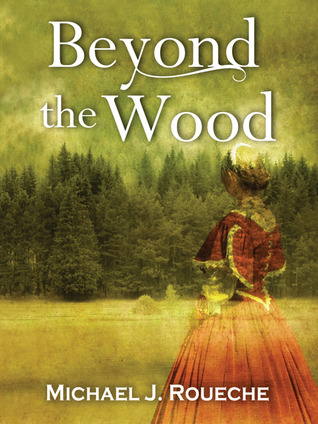
Beyond the Wood by Michael J. Roueche

“A book of treachery, peril, slackening resolve and thwarted love . . . and a little Southern Rebellion.

Romance has faded, and shame has weakened resolve. Mystery has shrouded the truth, and pride has matured into a world enveloped by rage and war. And the only constant is betrayal–and at times he is your sole companion. Yet, hope lingers . . .

Hank, a soldier for the Union, refuses retreat from his first bloodied action without proof he has been there, and he takes it from a dying enemy. Fed by the compassion he finds in the Confederate’s last letter and his own unsettled dreams and troubling memories, Hank imagines a romance that drives him relentlessly toward an impossible rendezvous. All the while, Elizabeth, the widow, struggles with burdens left by her husband, even as neighbors conspire against her. And what is she to make of this Union soldier, this enemy, so set on coming to her?”

Review:

As I first begun reading Beyond the wood I wasn’t sure what to expect, due to the fact that this story is not only a love story, but a story about the civil War and families divided. But as I continued and read further on, I was enthralled with the authors rendering of the characters, and the richness of the culture of the time the story was written in.

The character I admired most was Reid. Although, he plays a small role, his journey to discover his families past and the mystery of a small artifact that has been passed down to him is intriguing and inspiring to the story.

I recommend this book to those who would enjoy a love story during the American Civil War and to those who are intrigued with Southern History.

Stephanie
Layered Pages

Sunday Tip for Self-Publishing Authors: Cover Designs

The design of a book cover is so important for first impressions.It tells me the author cares for a strong presentation of their book. It also shows the author took the time and energy, before rushing to publish. A good cover invites one to open it and to explore it’s pages.

When a reader is in a bookstore, browsing the shelves, the first things they see is the cover. I have to admit I have come across some horrid book covers that turned me off completely to buying the book. I suggest finding a graphic designer who designs covers for writers. I know many of you complain about the cost and such. But if you are going to write a book and want to have it published and do well….you’re going to have to be willing to spend the money. It’s a tough business out there, so you might as well do it right the first time.

Stephanie
Layered Pages

Sunday Tip for Self-Publishing Authors/Writers

I would like to make a suggestion for all newly self-published authors that I would hope you would follow through. I highly recommend, when you publish your book, have book reviewers review your story other than just family and friends. You need someone objective and who could give you their honest opinion. I also give the same advice for your book that has yet to be published. Many reviewers will gladly read manuscripts and give advice on what they think needs further work.

Stephanie
Layeres Pages

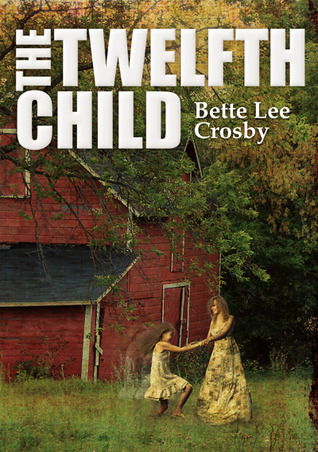
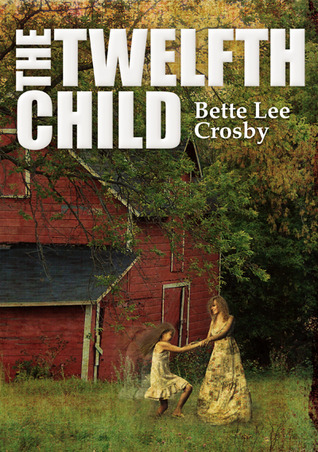
Review: The Twelfth Child by Bette Lee Crosby

“Trust, love and friendship—Abigail Anne Lannigan searched for these things all her life; now, when she is at the tail end of her years she teams up with a free-spirited young woman, a nobody from nowhere, who suddenly moves in across the street. It’s an unlikely friendship which comes under suspicion when a distant relative, claims embezzlement. One million dollars is missing and only Abigail knows the truth of what happened – but, she’ll never get the chance to tell.

The Twelfth Child, a novel rich with emotion, humor and tenderness, explores the splintered relationships of a Shenandoah Valley family and their willful daughter’s struggle to survive America’s Great Depression and overcome the past.”

Goodreads


My review:

The Twelfth Child is the second book I have read by Bette Crosby. Her unqiue style of writing is timeless and her character building is inspiring. I admired the protagonist Abigial and her resilience to life and situation. She is a character of strength and courage, we can all learn a lesson from.

Bette has such a way with words that you feel the happiness, love, hate, sadness, greed, and outrage of the characters. You know you’re reading a good story when you feel such emotions for the characters and their plight. They’re like real people you know and love.

This is a deeply moving story that touches the core of your heart. Bette truly is a talented writer and a wonderful story teller.

Stephanie
Layered Pages

I will be holding an interview with one of Bette’s characters, Destiny! You won’t want to miss it! More information coming soon!

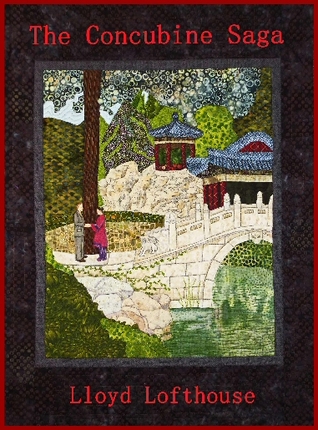
Concubine Saga by Lloyd Lofthouse

“No Westerner has ever achieved Robert Hart’s status and level of power in China. Driven by a passion for his adopted country, Hart became the “godfather of China’s modernism,” inspector general of China’s Customs Service, and the builder of China’s railroads, postal and telegraph systems and schools. However, his first real love is Ayaou, a young concubine. Sterling Seagrave, in Dragon Lady, calls her Hart’s sleep-in dictionary and says she was wise beyond her years. Soon after arriving in China in 1854, Hart falls in love with Ayaou, but his feelings for her sister go against the teachings of his Christian upbringing and almost break him emotionally. To survive he must learn how to live and think like the Chinese. He also finds himself thrust into the Opium Wars and the Taiping Rebellion, the bloodiest rebellion in human history, where he makes enemies of men such as the American soldier of fortune known as the Devil Soldier. During his early years in China, Robert experiences a range of emotion from bliss to despair. Like Damascus steel, he learns to be both hard and flexible, which forges his character into the great man he becomes. Full of humanity, passion, and moral honesty, The Concubine Saga is the deeply intimate story of Hart’s loyalty and love for his adopted land and the woman who captured his heart. Historical fiction potboiler, yes. But where The Concubine Saga truly shines is its thought-provoking passages on relationships, attitudes and cultural differences. The heated dialogue between Hart and Ayaou will especially touch a nerve for any westerner who has ever lived and loved in China…” Thomas Carter, photojournalist and author of “China: Portrait of a People”

Goodreads

My review:

When I first started to read this story, I found it a little difficult to read because I felt so dismayed over the the way of life of the Chinese and the men’s treatment of their women. I wasn’t sure I was going to be able to stomach it and continue. But I did continue and I’m glad I did….

As Robert first comes to China, I could only imagine the culture shocked he experienced. But he certainly embraces their way of life quickly and as the story unfolds he comes into power that is just incredible. I learned a great deal about China in the 1800’s by reading this story and I applaud Lofthouse for his vivid details and well researched novel.

I rated this novel three and a half stars.

Stephanie
Layered Pages

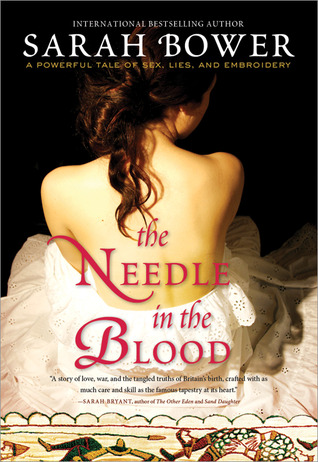
Review for The Needle in the Blood by Sarah Bower

Book Discription:

January 1067. Charismatic bishop Odo of Bayeux commissions a wall hanging, on a scale never seen before, to celebrate the conquest of Britain by his brother, William, Duke of Normandy. What he cannot anticipate is how utterly this will change his life-even more than the invasion itself.
His life becomes entangled with the women who embroider his hanging, especially Gytha-handmaiden to the fallen Saxon queen and his sworn enemy. But against their intentions, they fall helplessly in love. Friends become enemies, enemies become lovers; nothing in life or in the hanging is what it seems.

From Goodreads

My Review:

I was captivated by this story and The Needle in the Blood is the first historical fiction novel I have read about the Bayeux Tapestry. It has left me wanting to know more of it’s history. I enjoyed the characters in Sarah’s story and felt she did a wonderful job with the character building. I also felt her secondary characters really helped support this story and I enjoyed reading about their lives. I have to admit I’m not fond of reading a story in the present tense, but I feel Sarah pulled this off and I was intrigued with Sarah’s explanation to me of why she wrote the book this way. She said the story is written this way because it’s the way she “heard” the story coming to her. That on reflection she found it interesting as a means of making long distant history seem more immediate.

I recommend reading this story and hope that each reader finds a little something to come away with and would want to explore the history of this time period a little more. I rated this story three and a half stars.

Stephanie
Layered Pages

2012 Recommendation Summer Reading List

This list is based on the books that I have read for this year so far. They are in no particular order.


Top Ten Historical Fictions:

The Queens Pawn by Christy English
I am the Chosen King by Helen Hollick 
Folville’s Law by David Pilling
Her Highness, the Traitor by Susan Higginbotham
The Crown by Nancy Bilyeau
Jocasta by Victoria Grossack
Betrayal by Michele Kallio
White Heart by Sherry Jones
The Wedding Shroud by Elisabeth Storrs
The Twelfth Child by Bette Lee Crosby

Top four Contemporary Fictions:

The Hazards of Hunting While Heartbroken by Mari Passananti
Sugar Crash by Elena Aitken
Finding Emma by Steena Holmes
Her Last Letter by Nancy C. Johnson

The Needle in the Blood by Sarah Bower

Book Review Coming Soon!


Book Launch Party! The Twelfth Child by Bette Lee Crosby

TODAY’S THE DAY…The Book Launch Party is now in full swing for The Twelfth Child by Bette Lee Crosby – stop by my blog and learn how to join in the fun. Lots of prizes and giveaways – including a $25. Amazon Gift card. Check it out http://wp.me/pNOkn-r7

www.betteleecrosby.com

Stephanie