Self-Publishing: An Author’s Experiences

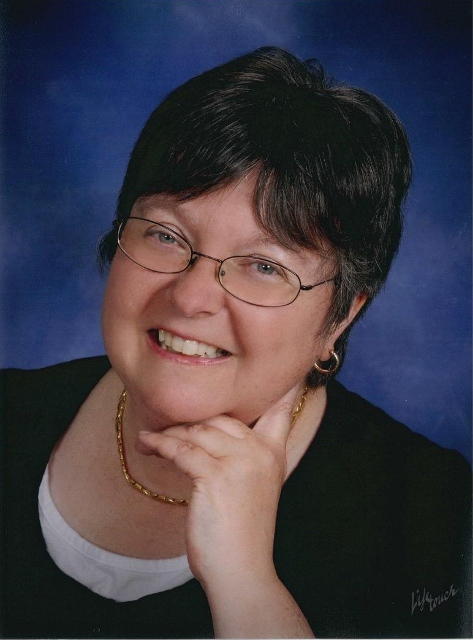
Janet Stafford BRAGI’d like to welcome back B.R.A.G. Medallion Honoree, Janet R. Stafford today to talk with me about her experiences in Self-publishing and what she has learned in her endeavor thus far. Janet was born in Albany, NY, but spent most of her childhood and all of her teen years in Parsippany, NJ – so she thinks of herself as a Jersey Girl. She went to Seton Hall University (South Orange, NJ) where she received a B.A. degree in Asian Studies. She also has a Master of Divinity degree and a Ph.D. in North American Religion and Culture, both from Drew University (Madison, NJ). She worked for eight years as an adjunct professor teaching classes in interdisciplinary studies and history. But Janet’s primary call has been serving six United Methodist churches over the past 24 years, where she has worked in the area of spiritual formation and ministries with children and youth. Her current passion is multi-generational worship and learning.

The publication of Janet’s first novel, Saint Maggie, led to the creation of a series by the same name. She followed up with Walk by Faith in 2013 and After the Storm in 2014. Heart Soul & Rock ‘N’ Roll, a contemporary romance, was published at the end of April 2015.

Janet, when did you decide you were going to self-publish?’

I had tried attracting a publisher and/or agent years ago, to no avail. At that point I gave up trying to publish and focused on creating dramatic materials for the churches in which I worked. I realized that self-publishing was a possibility when a friend of mine, Rich Melheim of Faith Inkubators, announced that he was publishing a book through Lulu. I thought, “Well, if Rich can do it, so can I!” So I polished SAINT MAGGIE and began my self-publishing adventure.

What has your experience been like along the way?

My experience has been a major learning curve! I’ve learned so much about publishing in general – everything from formatting and editing to cover design, to distribution and eBooks, to marketing and publicity. Self-publishing is not about writing one’s book. It’s about writing the book and everything else that goes into putting the book into the public’s hands. However, I’ve got to say that I am enjoying the experience. I’ve made some interesting goofs along the way, but every time I mess up, I learn something and am more empowered.

What are some of the challenges you have faced?

The big challenges have been marketing and publicity, and I freely admit that I still am not very good at either of them. I’m just not good at tooting my own horn. It’s hard for me to say “This is the most moving book you’ve ever read” or “This book will sweep you into the conflict and pain of the Civil War.” The Saint Maggie series is an inspiring story about a family, but it’s not going to change anyone’s life. My upcoming romance, HEART SOUL & ROCK ‘N’ ROLL, is fun and engaging, but it’s not going to bring about world peace. Advertising and marketing is all about exaggeration in order to get people’s attention, something I find disturbing and difficult to do. Also, marketing on social media, while free, takes a significant amount of time – time that I would rather spend writing. So the marketing and publicity aspects are quite challenging for me.
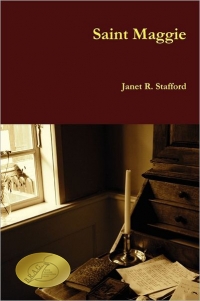
Saint Maggie Book with BRAG Medallion

What have you learned in this industry?

I have learned to do what’s best for me and my books. I started out with Lulu then tried a few other publishing/printing platforms, only to come back to Lulu. My reasons are simple: even though the books cost more to print through Lulu, I find that they give better, more personal service and I have easy access to my files. I even run copies for beta readers by uploading drafts to Lulu and printing them while keeping the material private. The process also helps me work on the cover. When the book is complete, I change the setting so that it will be available to the public, add my ISBN, and it’s ready.

I have also learned the value of old-fashioned public relations. One of my favorite things is to give talks and make public appearances. This past February I spoke to one group that was excited to have an author in their midst. Let’s be honest, most indie authors are unknowns, but if you offer to speak to a group for no charge, as long as you can bring your books to sell and sign, many book clubs, discussion groups, and community groups will be happy to have you. People want to pick authors’ minds, discover why we write, how we write, how we come up with characters, and so on. Best-selling authors don’t or can’t do this for local groups. But relatively unknown authors can. Groups and clubs appreciate it if you take the time to converse with them and sign books. It’s a slow-track in the world of publicity and marketing, but for me it’s the more rewarding track.

What are the do’s and don’ts of self-publishing?

1) DO find someone to help you with editing, story continuity, etc. If you can’t afford to purchase someone’s services, then find friends who are avid readers, or school teachers or college professors. Also find people who will be honest with you. You cannot do editing all on your own. I use volunteer beta readers at present.

2) DON’T believe deals that look too good to be true. A simple adage: if it looks too good to be true, it probably is too good to be true. There are countless people and agencies out there looking to separate you from your money. They will tell you that you’ll get x-number of readers or x-amount of publicity if you use their services for x-amount of money. But experience has taught me that there is no magic bullet. I have been taken a few times and I’d like spare you. Be judicious with your money.

3) DO celebrate with the few indie writers who have become well-known and/or wealthy; but DON’T allow their success to make you doubt your own value as an author. Remember, people who write best-sellers are a minority who probably had some phenomenal good luck and/or good friends in the right places. What about talent? They have it – but many little known or unknown authors have talent, too. Don’t forget that.

4) DO work on becoming a better writer. Read work by other authors, be critical when reviewing your drafts, and ask for helpful criticism from others.

What advice would you give to a writer who is considering the self-publishing route?

Know why you’re writing. If it is to get rich and famous, forget about it. You’ll quickly get discouraged when it doesn’t happen. However, if you’re writing because you need to and because you have a story or stories to tell, then go for it – but be prepared to do the hard work and don’t expect to be thrust into the wonderful world of a best-selling book. Instead, look for your rewards in the “small” things. At a recent book club, one reader gave me some helpful criticism of my second book, and then finished up by saying that she could see my growth as a writer throughout the three books. I loved that. Another reader told me on Facebook that I was her favorite author. Are you kidding, with all the other authors out there? That is some kind of compliment! Rewards should not be confined solely to income, book sales, popularity, or number of reviews. Find your joy in the process of writing and publishing, and in your readership.

What are the promotional techniques you use via social media and how much time a week do you spend promoting your work? What are the different sites you use to promote your book?

I use Facebook, Pinterest, and Twitter, and have a website for my micro-publishing company (I will be publishing work from another author soon) and one for me as an author. I’m also on Goodreads, but I’m inactive and really should drop it. I found it was just one site too many for me to handle.

Since I also work 25-30 hours a week as an assistant minister at a United Methodist church, ideally I want to devote 15 hours a week to research, writing, and publication. I’ve never really tracked how much time I spend on social media. I suppose now that I’ve got four books under my belt, I should log my time to see. My sense is that social media and website work can suck up a fair amount of time.

As for promotional techniques, I do a few things. For instance, I enjoy putting up impromptu games and offering a book as a prize to the first one to give the correct answer. I did that recently on Facebook with HEART SOUL & ROCK ‘N’ ROLL. On occasion, I run special deals on my author page. I will drop the price or ship for free. However, I don’t care to do deals on Amazon or Barnes & Noble, because it is klutzy to change pricing. Also, I don’t go in for things like KDP Select or Matchbook on Kindle – which probably explains why I don’t get much traction on Kindle or Amazon! But I do not like having to make my eBook “exclusive” to Kindle. For WALK BY FAITH and A TIME TO HEAL, I used a crowdfunding platform called Publish to get the word out and raise money for publishing expenses. Crowdfunding also raised awareness about the books. Occasionally, I have used advertising on the web through Yahoo or Google. The ads did get my work exposed to a wider audience, but I learned that you must watch the daily expenses, as they can pile up quickly.

Finally, I have done giveaways on Goodreads. These were comprised of an offer to give away ten books to ten people who enter the giveaway. I got tons of interest and gave away the ten books, but the follow-through from other potential readers was negligible. I am wary of doing too many giveaways – first of all because they cost money, and at present my company is always short of that! The second reason comes from seeing what has happened to music. Easy access to free music has led many people to expect that all music should be free, forgetting that someone had to create that song. The music did not spring forth from the ether. Of course, the work of musicians, authors, and other artists should not be priced out of the average person’s reach, but neither should a person’s creative work be taken for granted and expected to be free on a regular basis.

Where do you see this industry in five to ten years?

I don’t think of self-publishing as an “industry.” It seems to me that we are so many little ants out there creating books and trying to get readers’ attention. So perhaps self-publishing will become an industry as more small publishing companies and/or authors’ support groups come to the fore. At the present, self-publishing reminds me of the frontier – anything goes until the sheriff, pastor, librarian, and schoolmarm come to town.

If something can be improved upon in this industry, what do you think it should be?

Perhaps we need to have author support groups. Oh, I know writing groups are out there – but my “day job” (or more correctly, my “other vocation”) is demanding. I often work Saturdays, am always busy on Sundays, often at the office on weekday mornings and sometimes doing things on weekday evenings. So hooking up with a face-to-face group doesn’t work for me. But it would be helpful to have online groups where people could exchange experiences, give and get advice, and so on. Hey, maybe I should start one of those! Anyway, the emergence of more organization might make self-publishing an industry.

How long have you been an indie author?

I published SAINT MAGGIE in 2011, so I have been an indie author for four years. I’m a baby in the field! That said, I have published two more books in the Saint Maggie series, and have just launched my first romance. Whether or not I become a “best-seller,” I’m in this for the long run!

Author Link:

Pinterest

Facebook

Twitter @JanetRStafford

Squeaking Pips (my publishing company)

Website

indieBRAG

Interview with Author Kate Forsyth

02_Bitter Greens

Publication Date: September 23, 2014 Thomas Dunne Books Hardcover; 496p ISBN-10: 1250047536

Genre: Historical/Fantasy/Fairy-Tale Retellings

The amazing power and truth of the Rapunzel fairy tale comes alive for the first time in this breathtaking tale of desire, black magic and the redemptive power of love

French novelist Charlotte-Rose de la Force has been banished from the court of Versailles by the Sun King, Louis XIV, after a series of scandalous love affairs. At the convent, she is comforted by an old nun, Sœur Seraphina, who tells her the tale of a young girl who, a hundred years earlier, is sold by her parents for a handful of bitter greens…

After Margherita’s father steals parsley from the walled garden of the courtesan Selena Leonelli, he is threatened with having both hands cut off, unless he and his wife relinquish their precious little girl. Selena is the famous red-haired muse of the artist Tiziano, first painted by him in 1512 and still inspiring him at the time of his death. She is at the center of Renaissance life in Venice, a world of beauty and danger, seduction and betrayal, love and superstition.

Locked away in a tower, Margherita sings in the hope that someone will hear her. One day, a young man does.

Award-winning author Kate Forsyth braids together the stories of Margherita, Selena, and Charlotte-Rose, the woman who penned Rapunzel as we now know it, to create what is a sumptuous historical novel, an enchanting fairy tale retelling, and a loving tribute to the imagination of one remarkable woman.

Hello, Kate! It is a pleasure to chat with you today about your story, Bitter Greens. What a beautiful and creative premise. Rapunzel is a tale I have known since childhood…what inspires you about Rapunzel to begin with?

I have been fascinated with the Rapunzel fairy tale since I first read it as a little girl. I was always puzzled by the mysteries in the tale: why did the witch lock up the girl? Why did she have to climb up her hair to get into the tower? How did the girl’s hair get so long? Questions like that niggled at me, and so I began to think up possible explanations for them.

Shamefully, I have to admit I have never paid much attention to the writer (s) of the story and had no idea it was penned by women. What is it that fascinates you about their lives the most?

I am a storyteller as well as a writer, and so I’ve always been interested in the ways stories endure over time, told and retold and retold again. I became interested in finding out the origin of the tale in the early stages of planning my novel, and was hugely excited when I stumbled across the life story of Charlotte-Rose de Caumont de la Force, who wrote the version of the tale as it was first told while she was locked up in a convent after scandalizing the royal court at Versailles with her love affairs and refusal to bow to societal norms. She was such a fascinating woman and the parallels between her story and the fairy tale she wrote struck me at once.

What were some of the historical events that took place in the setting of this story?

BITTER GREENS moves between two historical settings. The first is Renaissance Venice, and takes in 16th witchcraft hunts, the devastation of the plague, and the extraordinary art of Tiziano Vercelli, best known in English as Titian. The second setting is the sumptuous royal court of 17th century France, ruled over by Louis XIV, the Sun King. Charlotte-Rose de la Force was his second cousin and a maid-of-honour serving the queen. During her life, she saw the cruel persecution of the French Protestants, c alled Huguenots, and the scandal of the Affair of the Poisons, which saw hundreds of people arrested and tortured on suspicion of Satanism and murder.

Selena stands out to me the most. What are her strengths and weaknesses? And in what way does she inspire-if she inspires that is…?

Kate: Selena is a Venetian courtesan and the witch of the tale. Selena witnessed the terrible punishment of her mother, after she was unfaithful to her patron, and so sets herself to enact revenge on those who took part. She studies ‘stregheria’, the Italian art of witchcraft, in an attempt to shape her own life. She is afraid of the passing of time and the coming of death, and so hates clocks and watches, but is also passionate, sensual, and determined.  Although she is strong and clever, she also has a strong streak of cruelty in her and locks girls up in a tower for her own nefarious purposes, so I’m not sure she can be seen as an inspiration!

Could you please give me an example of Renaissance life in Venice? Something romantic, perhaps?

Venice in the 16th century was a place of great wealth, beauty and culture.  Its streets were full of merchants from all over the world, all speaking their own tongues and wearing the clothes of their nation. Women were gorgeously dressed in silks and satins and cloth-of-gold, and wore totteringly high wooden chopines to protect their delicate silk slippers from the water that often overflowed from the canals.  Artists such as Michelangelo, Titian and Bellini created works of startling beauty, and every palace and cathedral was painted and ornamented to within an inch of their life. At Carnevale, men and women dressed up in their finest clothes and hid their faces behind masks so that they could wander the narrow streets and plazas of the many islands, free to love anyone they pleased. Many people began to wear masks all year long, in order to enjoy the freedom of anonymity, until the practice was outlawed in 1797. Mask-makers were revered, and had their own rules and their own guild.

What compels the old nun to tell Charlotte-Rose the tale who is sold by her parents for a handful of bitter greens? Is there a particular message she wants her to grasp?

I think Seraphina wants to help Charlotte-Rose learn to accept her fate with grace, and to make the most of the life she has been given. We cannot always choose what happens to us in our lives, but we can choose how we deal with it.

What is Charlotte’s personality like?

She is strong-willed, quick-witted, passionate, and very stubborn. She does her best to live a self-determined life, and finds the strictures of the patriarchal society in which she lives very difficult to negotiate. All she wants is to live and love as she chooses, and to write – yet these things are constantly being denied to her, and so she is frustrated and angry, particularly in the beginning of the book. She is also afraid and determined not to show it, and this makes her seem proud and even arrogant. She is also, I’m afraid, rather vain, but then she lives in the royal court of Versailles where everything is about show.

Is there one thing you find remarkable about Venice in 1512?

Venice had always been a city remarkable for its religious and cultural toleration, yet this began to change around this time. The world’s first ghetto was established in Venice in 1516, and other races and religions began to find themselves having their freedom curtailed as well. This was partly as a result of a long-waged war against Constantinople, and partly because of religious fervor caused by terrible outbreaks of the bubonic plague.

What was your process for this story and how long did you work on it?

Bitter Greens was a complex and challenging novel to write, and took me a long time to research. All in all, it took me seven years to write! I began by learning everything I could about the two periods my story was set in, and by studying the history of the Rapunzel fairy tale (I ended up doing a doctorate on this.) I then wrote each of the three narrative threads independently from each other, and then wove them together. It was like writing three novels instead of one!

What do you love most about writing?

Everything! I love the first period, when my mind is alive with story possibilities and I’m reading and researching and thinking and daydreaming. I love the actual writing process, and all the amazing serendipitous discoveries I make. And I love to edit too – that’s when the story really begins to fall into shape.

Who are your influences?

I think every single book I have loved – and there are hundreds of thousands of those!

Praise for Bitter Greens

“Kate Forsyth’s Bitter Greens is an enthralling concoction of history and magic, an absorbing, richly detailed, and heart-wrenching reimagining of a timeless fairytale.” —Jennifer Chiaverini, New York Times bestselling author of Mrs. Lincoln’s Rival

“See how three vividly drawn women cope with injustice, loneliness, fear, longing. See how they survive—or perpetrate—treachery. Surrender yourself to a master storyteller, to delicious detail and spunky heroines. Bitter Greens is a complex, dazzling achievement.” —Susan Vreeland, New York Times bestselling author of Clara and Mr. Tiffany and Girl in Hyacinth Blue

“A magical blend of myth and history, truth and legend, Bitter Greens is one of those rare books that keeps you reading long after the lights have gone out, that carries you effortlessly to another place and time, that makes you weep and laugh and wish you could flip forward to make sure it all ends happily ever after—but for the fact that if you did so, you might miss a line, and no line of this book should be missed.” —Lauren Willig, New York Times bestselling author of The Ashford Affair

“Kate Forsyth wields her pen with all the grace and finesse of a master swordsman. In Bitter Greens she conjures a lyrical fairytale that is by turns breathtaking, inspiring, poetic, and heartbreakingly lovely. Set like a jewel within the events of history, it is pure, peerless enchantment.”—New York Times bestselling author Deanna Raybourn

“Bitter Greens is pure enchantment–gripping and lyrical. From the high convent walls where a 17th century noblewoman is exiled, to a hidden tower which imprisons an innocent girl with very long hair, to the bitter deeds of a beautiful witch who cannot grow old–Kate Forsyth weaves an engrossing, gorgeously written tale of three women in search of love and freedom. A truly original writer, Forsyth has crafted an often terrifying but ultimately redemptive dark fairy tale of the heart.”—Stephanie Cowell, American Book Award-winning author of Claude & Camille

“Kate Forsyth’s Bitter Greens is not only a magnificent achievement that would make any novelist jealous, it’s one of the most beautiful paeans to the magic of storytelling that I’ve ever read.”—C.W. Gortner, author of The Queen’s Vow and The Confessions of Catherine de Medici

“Threads of history and folklore are richly intertwined to form this spellbinding story. Kate Forsyth has excelled herself with Bitter Greens. Compulsively unputtdownable.”—Juliet Marillier, national bestselling author of Flame of Sevenwaters and Heart’s Blood

Buy the Book

Amazon US Barnes & Noble IndieBound

About the Author

Kate Forsyth 1

Kate Forsyth wrote her first novel at the age of seven, and is now the internationally bestselling & award-winning author of thirty books, ranging from picture books to poetry to novels for both adults and children. She was recently voted one of Australia’s Favourite 20 Novelists, and has been called ‘one of the finest writers of this generation. She is also an accredited master storyteller with the Australian Guild of Storytellers, and has told stories to both children and adults all over the world.

Her most recent book for adults is a historical novel called ‘The Wild Girl’, which tells the true, untold love story of Wilhelm Grimm and Dortchen Wild, the young woman who told him many of the world’s most famous fairy tales. Set during the Napoleonic Wars, ‘The Wild Girl’ is a story of love, war, heartbreak, and the redemptive power of storytelling, and was named the Most Memorable Love Story of 2013.

She is probably most famous for ‘Bitter Greens’, a retelling of the Rapunzel fairy tale interwoven with the dramatic life story of the woman who first told the tale, the 17th century French writer, Charlotte-Rose de la Force. ‘Bitter Greens’ has been called ‘the best fairy tale retelling since Angela Carter’, and has been nominated for a Norma K. Hemming Award, the Aurealis Award for Best Fantasy Fiction, and a Ditmar Award.

Her most recent book for children is ‘Grumpy Grandpa’, a charming picture book that shows people are not always what they seem.

Since ‘The Witches of Eileanan’ was named a Best First Novel of 1998 by Locus Magazine, Kate has won or been nominated for numerous awards, including a CYBIL Award in the US. She’s also the only author to win five Aurealis awards in a single year, for her Chain of Charms series – beginning with ‘The Gypsy Crown’ – which tells of the adventures of two Romany children in the time of the English Civil War. Book 5 of the series, ‘The Lightning Bolt’, was also a CBCA Notable Book.

Kate’s books have been published in 14 countries around the world, including the UK, the US, Russia, Germany, Japan, Turkey, Spain, Italy, Poland and Slovenia. She is currently undertaking a doctorate in fairytale retellings at the University of Technology, having already completed a BA in Literature and a MA in Creative Writing.

Kate is a direct descendant of Charlotte Waring, the author of the first book for children ever published in Australia, ‘A Mother’s Offering to her Children’. She lives by the sea in Sydney, Australia, with her husband, three children, and many thousands of books.

For more information please visit Kate Forsyth’s website and blog. You can also find her on Facebook, Twitter, Pinterest, and Goodreads.