
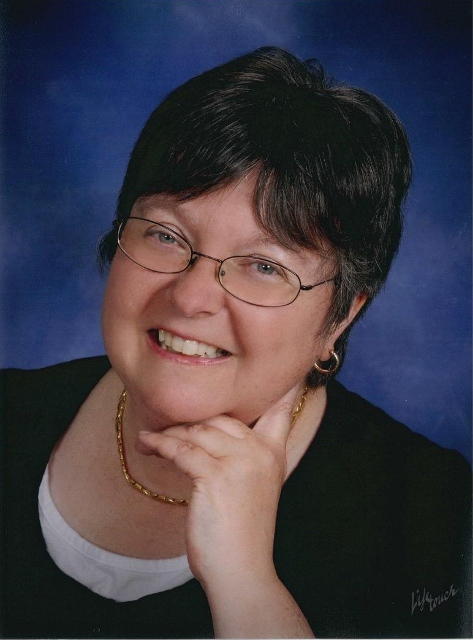
 I’d like to welcome back B.R.A.G. Medallion Honoree, Janet R. Stafford today to talk with me about her experiences in Self-publishing and what she has learned in her endeavor thus far. Janet was born in Albany, NY, but spent most of her childhood and all of her teen years in Parsippany, NJ – so she thinks of herself as a Jersey Girl. She went to Seton Hall University (South Orange, NJ) where she received a B.A. degree in Asian Studies. She also has a Master of Divinity degree and a Ph.D. in North American Religion and Culture, both from Drew University (Madison, NJ). She worked for eight years as an adjunct professor teaching classes in interdisciplinary studies and history. But Janet’s primary call has been serving six United Methodist churches over the past 24 years, where she has worked in the area of spiritual formation and ministries with children and youth. Her current passion is multi-generational worship and learning.
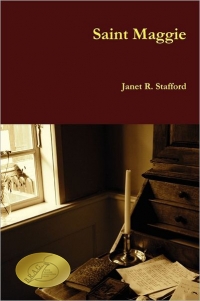
The publication of Janet’s first novel, Saint Maggie, led to the creation of a series by the same name. She followed up with Walk by Faith in 2013 and After the Storm in 2014. Heart Soul & Rock ‘N’ Roll, a contemporary romance, was published at the end of April 2015.
Janet, when did you decide you were going to self-publish?’
I had tried attracting a publisher and/or agent years ago, to no avail. At that point I gave up trying to publish and focused on creating dramatic materials for the churches in which I worked. I realized that self-publishing was a possibility when a friend of mine, Rich Melheim of Faith Inkubators, announced that he was publishing a book through Lulu. I thought, “Well, if Rich can do it, so can I!” So I polished SAINT MAGGIE and began my self-publishing adventure.
What has your experience been like along the way?
My experience has been a major learning curve! I’ve learned so much about publishing in general – everything from formatting and editing to cover design, to distribution and eBooks, to marketing and publicity. Self-publishing is not about writing one’s book. It’s about writing the book and everything else that goes into putting the book into the public’s hands. However, I’ve got to say that I am enjoying the experience. I’ve made some interesting goofs along the way, but every time I mess up, I learn something and am more empowered.
What are some of the challenges you have faced?
The big challenges have been marketing and publicity, and I freely admit that I still am not very good at either of them. I’m just not good at tooting my own horn. It’s hard for me to say “This is the most moving book you’ve ever read” or “This book will sweep you into the conflict and pain of the Civil War.” The Saint Maggie series is an inspiring story about a family, but it’s not going to change anyone’s life. My upcoming romance, HEART SOUL & ROCK ‘N’ ROLL, is fun and engaging, but it’s not going to bring about world peace. Advertising and marketing is all about exaggeration in order to get people’s attention, something I find disturbing and difficult to do. Also, marketing on social media, while free, takes a significant amount of time – time that I would rather spend writing. So the marketing and publicity aspects are quite challenging for me.
What have you learned in this industry?
I have learned to do what’s best for me and my books. I started out with Lulu then tried a few other publishing/printing platforms, only to come back to Lulu. My reasons are simple: even though the books cost more to print through Lulu, I find that they give better, more personal service and I have easy access to my files. I even run copies for beta readers by uploading drafts to Lulu and printing them while keeping the material private. The process also helps me work on the cover. When the book is complete, I change the setting so that it will be available to the public, add my ISBN, and it’s ready.
I have also learned the value of old-fashioned public relations. One of my favorite things is to give talks and make public appearances. This past February I spoke to one group that was excited to have an author in their midst. Let’s be honest, most indie authors are unknowns, but if you offer to speak to a group for no charge, as long as you can bring your books to sell and sign, many book clubs, discussion groups, and community groups will be happy to have you. People want to pick authors’ minds, discover why we write, how we write, how we come up with characters, and so on. Best-selling authors don’t or can’t do this for local groups. But relatively unknown authors can. Groups and clubs appreciate it if you take the time to converse with them and sign books. It’s a slow-track in the world of publicity and marketing, but for me it’s the more rewarding track.
What are the do’s and don’ts of self-publishing?
1) DO find someone to help you with editing, story continuity, etc. If you can’t afford to purchase someone’s services, then find friends who are avid readers, or school teachers or college professors. Also find people who will be honest with you. You cannot do editing all on your own. I use volunteer beta readers at present.
2) DON’T believe deals that look too good to be true. A simple adage: if it looks too good to be true, it probably is too good to be true. There are countless people and agencies out there looking to separate you from your money. They will tell you that you’ll get x-number of readers or x-amount of publicity if you use their services for x-amount of money. But experience has taught me that there is no magic bullet. I have been taken a few times and I’d like spare you. Be judicious with your money.
3) DO celebrate with the few indie writers who have become well-known and/or wealthy; but DON’T allow their success to make you doubt your own value as an author. Remember, people who write best-sellers are a minority who probably had some phenomenal good luck and/or good friends in the right places. What about talent? They have it – but many little known or unknown authors have talent, too. Don’t forget that.
4) DO work on becoming a better writer. Read work by other authors, be critical when reviewing your drafts, and ask for helpful criticism from others.
What advice would you give to a writer who is considering the self-publishing route?
Know why you’re writing. If it is to get rich and famous, forget about it. You’ll quickly get discouraged when it doesn’t happen. However, if you’re writing because you need to and because you have a story or stories to tell, then go for it – but be prepared to do the hard work and don’t expect to be thrust into the wonderful world of a best-selling book. Instead, look for your rewards in the “small” things. At a recent book club, one reader gave me some helpful criticism of my second book, and then finished up by saying that she could see my growth as a writer throughout the three books. I loved that. Another reader told me on Facebook that I was her favorite author. Are you kidding, with all the other authors out there? That is some kind of compliment! Rewards should not be confined solely to income, book sales, popularity, or number of reviews. Find your joy in the process of writing and publishing, and in your readership.
What are the promotional techniques you use via social media and how much time a week do you spend promoting your work? What are the different sites you use to promote your book?
I use Facebook, Pinterest, and Twitter, and have a website for my micro-publishing company (I will be publishing work from another author soon) and one for me as an author. I’m also on Goodreads, but I’m inactive and really should drop it. I found it was just one site too many for me to handle.
Since I also work 25-30 hours a week as an assistant minister at a United Methodist church, ideally I want to devote 15 hours a week to research, writing, and publication. I’ve never really tracked how much time I spend on social media. I suppose now that I’ve got four books under my belt, I should log my time to see. My sense is that social media and website work can suck up a fair amount of time.
As for promotional techniques, I do a few things. For instance, I enjoy putting up impromptu games and offering a book as a prize to the first one to give the correct answer. I did that recently on Facebook with HEART SOUL & ROCK ‘N’ ROLL. On occasion, I run special deals on my author page. I will drop the price or ship for free. However, I don’t care to do deals on Amazon or Barnes & Noble, because it is klutzy to change pricing. Also, I don’t go in for things like KDP Select or Matchbook on Kindle – which probably explains why I don’t get much traction on Kindle or Amazon! But I do not like having to make my eBook “exclusive” to Kindle. For WALK BY FAITH and A TIME TO HEAL, I used a crowdfunding platform called Publish to get the word out and raise money for publishing expenses. Crowdfunding also raised awareness about the books. Occasionally, I have used advertising on the web through Yahoo or Google. The ads did get my work exposed to a wider audience, but I learned that you must watch the daily expenses, as they can pile up quickly.
Finally, I have done giveaways on Goodreads. These were comprised of an offer to give away ten books to ten people who enter the giveaway. I got tons of interest and gave away the ten books, but the follow-through from other potential readers was negligible. I am wary of doing too many giveaways – first of all because they cost money, and at present my company is always short of that! The second reason comes from seeing what has happened to music. Easy access to free music has led many people to expect that all music should be free, forgetting that someone had to create that song. The music did not spring forth from the ether. Of course, the work of musicians, authors, and other artists should not be priced out of the average person’s reach, but neither should a person’s creative work be taken for granted and expected to be free on a regular basis.
Where do you see this industry in five to ten years?
I don’t think of self-publishing as an “industry.” It seems to me that we are so many little ants out there creating books and trying to get readers’ attention. So perhaps self-publishing will become an industry as more small publishing companies and/or authors’ support groups come to the fore. At the present, self-publishing reminds me of the frontier – anything goes until the sheriff, pastor, librarian, and schoolmarm come to town.
If something can be improved upon in this industry, what do you think it should be?
Perhaps we need to have author support groups. Oh, I know writing groups are out there – but my “day job” (or more correctly, my “other vocation”) is demanding. I often work Saturdays, am always busy on Sundays, often at the office on weekday mornings and sometimes doing things on weekday evenings. So hooking up with a face-to-face group doesn’t work for me. But it would be helpful to have online groups where people could exchange experiences, give and get advice, and so on. Hey, maybe I should start one of those! Anyway, the emergence of more organization might make self-publishing an industry.
How long have you been an indie author?
I published SAINT MAGGIE in 2011, so I have been an indie author for four years. I’m a baby in the field! That said, I have published two more books in the Saint Maggie series, and have just launched my first romance. Whether or not I become a “best-seller,” I’m in this for the long run!
Author Link:
Twitter @JanetRStafford


 Layered Pages