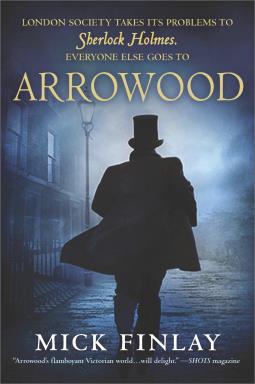
Book Review: Arrowood by Mick Finlay

Arrowwood new bookReview Arrowood by Mick Finlay

Harlequin (US & Canada)

MIRA

Historical Fiction

Pub Date 18 Jul 2017

Description

1895

London Society takes their problems to Sherlock Holmes. Everyone else goes to Arrowood.

The Afghan War is over and a deal with the Irish appears to have brought an end to sectarian violence, but Britain’s position in the world is uncertain and the gap between rich and poor is widening. London is a place where the wealthy party while the underclass are tempted into lives of crime, drugs and prostitution. A serial killer stalks the streets. Politicians are embroiled in financial and sexual scandals. The year is 1895.

The police don’t have the resources to deal with everything that goes on in the capital. The rich turn to a celebrated private detective when they need help: Sherlock Holmes. But in densely populated south London, where the crimes are sleazier and Holmes rarely visits, people turn to Arrowood, a private investigator who despises Holmes, his wealthy clientele and his showy forensic approach to crime. Arrowood understands people, not clues.

My thoughts:

Sherlock Holmes is not the only private detective in London and if he has competition, it still remains to be seen. Arrowood and Barnett are hard press for a client and when a woman appears at their office seeking help to find her brother, the two detectives reluctantly decide to help her. Before they know it, they find the case more of a challenge than they thought. One of their potential witnesses ends up dead early on in the investigation and things get really heated after that.

Arrowood is an arrogant, silly man in many ways in my opinion. He annoyed me to no end. I have a feeling this might be the author’s goal for this character. As least I hope since I’ve been brutally honest about how I feel about him. The question is Arrowood’s characterization important for the story? There were a few times I wanted Barnett to slap him stupid. Though I have to admit his method in finding clues and questioning witnesses is an interesting one. He seemed to pride himself in being the opposite of Sherlock and had no problems in expressing that-too often in my opinion. Having said that, there were times I felt sympathy for him. Maybe just a little. If it weren’t for Barnett, the story wouldn’t hold much weight for me. I wish Sherlock had come along to shake things up.

I would like to add that I felt there were too many characters in the story. At times, it was a bit of a challenge to keep up. However, I do understand that in order for detectives to solve a case, they must interact and talk to a lot of people. Still…

The ending was satisfactory. In a nutshell, this was just an okay read for me. I expected more…

I rated this book a generous three stars.

I obtained a copy of this book from the publishers through NetGalley.

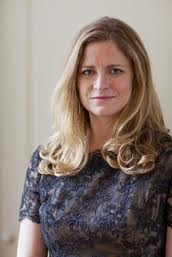
Stephanie M. Hopkins

DNF: Girl in Snow by Danya Kukafka

Girl in SnowGirl in Snow

by Danya Kukafka

When a beloved high schooler named Lucinda Hayes is found murdered, no one in her sleepy Colorado suburb is untouched—not the boy who loved her too much; not the girl who wanted her perfect life; not the officer assigned to investigate her murder. In the aftermath of the tragedy, these three indelible characters—Cameron, Jade, and Russ—must each confront their darkest secrets in an effort to find solace, the truth, or both.

************
My thoughts:

I was excited about starting this book over Labor Day weekend. I wasn’t working and had carefully chosen the books I wanted to read. Girl in Snow was second on my list. When I first started reading this book, I really found the characters interesting except for Lucinda. The story starts off with her being dead but you really don’t connect to her and you don’t feel sympathy-at least I didn’t.

As I got further in the story it started to fizzle and fizzle quick. I got about 20% in and realized this probably won’t be a finish read for me but I rallied on a little longer to see if it got better. Half way through the book, I gave up. When a person writes a thriller and there is nothing thrilling about it…ahem, go back to revisions! I know that sounds really harsh but it needed to be said. Don’t get me wrong, the premise is great and the characterization had potential for a physiological thriller but it missed its mark.

Another thing, I needed more dialogue and action coming from the characters! Showing in is very important in story-telling.

I am not rating this book since I did not finish it.

I received a copy of this book from the publishers through NetGalley. I feel bad for not liking this story but felt necessary to give my honest opinions why I did not finish the book.

Stephanie M. Hopkins

Characters in Motion with Historical Fiction Writer Judith Arnopp

Judith Arnopp II

Margaret Beaufort – The Beaufort Chronicles Books 1 – 3

Hi Stephanie, I am so happy to be part of your new series of blogs; thank you so much for including me.

As you know the characters in my books are historical figures from English history, mostly of the late medieval and Tudor period. They have all been written of before, many, many times but I enjoy adding my own version to the traditional view. Although I wouldn’t call myself a revisionist, I do like to find a different perspective. Instead of recording what they did, I like to consider why they did it. This is often difficult to judge from the outside; I like to hone in on the inner self and reveal the part of us that we often prefer to keep hidden from the world.

By far my most challenging protagonist so far has been Margaret Beaufort. Margaret appears in many novels set around the Wars of the Roses and is usually depicted as a negative character, a schemer and plotter. She has even been cast as a potential murderer of the missing princes in the Tower although my research has thrown up nothing to suggest that was so. My novels that comprise The Beaufort Chronicles illustrate the events of the Wars of the Roses through Margaret’s eyes, and trace the changes in her character as she grows from a child of eight to a woman of mature years, the mother and grandmother of kings and queens.

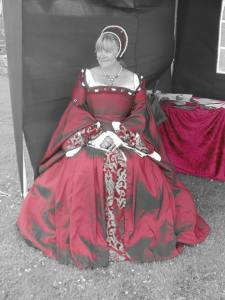
Before I began writing I had to consider why Margaret has been depicted so negatively and this research brought me to her portraits. The only surviving representations of Margaret were taken in later life, after her son won his crown. She presents a pious pose, in the attitude of prayer, or clutching a book, the symbol of great learning. I think this dour image may explain why she has not been the heroine of many novels but Margaret clearly wasn’t born old. Even old women have known youth and love. She was once young, records indicate she possessed a sense of humour, favoured red gowns, and had a great love of finery both in clothing and furnishings. Margaret’s resilience is astonishing. She puts me in mind of a beetle that can’t be crushed. Her journey from the child bride of Edmund Tudor to whom she bore a son at the age of thirteen, to the mother of the first Tudor king is really quite incredible.

At the beginning of the wars between Lancaster and York, Margaret and Henry were relatively insignificant members of the House of Lancaster. After Henry VI’s demise and the death of the Prince of Wales, Edward of Lancaster, Margaret and Henry were suddenly thrown into the spotlight. While Henry was exiled, Margaret began to fight her son’s battles – and she fought ceaselessly to that end for the rest of her life.

Under the reign of Edward IV she petitioned the king for her exiled son’s properties and titles to be restored. She was on the brink of obtaining this when Edward died suddenly in 1483 and England was cast once again into chaos. Margaret was at the centre of activities during Richard III’s acquisition of the crown, she served him loyally at first but at some point midway during his reign, she changed tack and began to plot with Elizabeth Woodville. Together they raised money and support for an army to bring Henry Tudor home. But, on the eve of the Battle of Bosworth Margaret had no idea what the outcome would be. Under house arrest she could only pray, her nerves in tatters as she waited to discover if her actions had resulted in triumph for the Tudors or in the death of her only son.

Most women, especially on the winning side, would be applauded for these actions, hailed as a heroine but Margaret is always seen rather differently. She has become the archetypal interfering mother in law, the cold hearted pious busy body, a critic of the etiquette of the royal court. To some extent these things are true but there was also another side. She was loyal, forgiving, careful of the welfare of her household, and a great benefactress of churches and colleges throughout the realm. I felt it appropriate that she be given the opportunity to present her own version of events.

Margaret prays a lot – most people did in the middle ages. She meditates. She likes to garden and is interested in healing, her still room is well supplied with remedies. She passed this habit on to her grandson, Henry VIII, who was terrified of contagion, and also liked to dose his household when they fell ill.

Margaret possessed a dry humour and I have embellished this in my books. She has a wicked wit, and when she chooses, she can make the most biting of replies. During her years of struggle she is often a victim but she plays the long game. She serves Elizabeth Woodville faithfully, gains her friendship, visits her in sanctuary and comes to know the royal children, including her future daughter in law, Elizabeth of York and the younger of the princes, Richard of Shrewsbury. After becoming involved in Buckingham’s rebellion her life was in King Richard’s hands but he chose leniency and placed her under house arrest, in the custody of her husband, Thomas Stanley. But she didn’t give up.  Margaret had absolute faith that God was on her side. When the time came for her to move against Richard III, she financed Henry, risking both her security and position. Without doubt, Margaret Beaufort is the most heroic women I have ever written about.

Her insecure environment sometimes makes her prickly, defensive and seemingly proud. In public she adopts a confidence that she doesn’t really feel. Each decision she makes, she makes blindly – the reader and I are privileged by hindsight and know she will triumph but when I am writing, I have to remember Margaret was on a knife edge, in dangerous times and her life was often in peril. Throughout The Beaufort Chronicles Margaret is isolated, in conflict with the world but she is possessed of such courage and strength that she achieves all her desires. On reaching her goal however, she discovers that fate isn’t done with her just yet.

Because I write in the first person, I am in a sense, stepping into Margaret’s shoes and moving through the events of the Wars of the Roses. When I am writing I become Margaret. I don’t always stick to the traditional motivations because I am writing from the inside. Her relationships are varied. Her devotion to her son, from whom she is exiled for fourteen years until the day after Bosworth, is unswerving. Although she serves Edward IV’s queen her loyalty to Lancaster does not change but self-preservation is her only way forward. Records indicate that she and Elizabeth Woodville worked together in Henry’s cause and I have developed the relationship into a cautious friendship. She wants to trust Elizabeth but she is wary, never sure. Margaret finds it difficult to trust anyone which is not surprising when you consider her experience.

After Henry finally made good his promise to marry Elizabeth of York, Margaret’s relationship with her daughter in law develops over time into friendship and admiration. This may not have been the case had Elizabeth not been so compliant for there is no doubt that Margaret liked to be in charge. She ordered how Henry’s court should be run, how the apartments should be furnished, how the children should be raised – and Elizabeth seems not to have minded too much, although there are a few instances when she rebelled, or stood her ground.

In my books it is Margaret’s innermost thoughts and opinions that flesh her character. For instance when she encounters someone or something she shares her private opinion with the reader, criticizes manners, the style of dress, assesses each man’s loyalty to her son, their possible usefulness in her quest. In these books Margaret’s opinions are the only ones that are relevant because she is telling her own story. This way, Margaret’s experiences (hopefully) become the reader’s and her joys, happiness, fears and grief are immediate.

Her relationship with her four husbands took some consideration on my part. Margaret was first married as an infant to John de la Pole, the seven year old son of the Earl of Suffolk. After the Earl’s disgrace, the marriage was annulled and she was married instead to Henry VI’s half-brother Edmund Tudor, Earl of Richmond who was in his mid-twenties. Her second marriage took place when she was just twelve or thirteen years old. Usually the marriage would not have been consummated but Edmund could not take possession of her lands until she bore a son. I could have taken the route of an unhappy forced union but there are no records of Margaret ever showing resentment toward Edmund; she spoke gently of him and in her will she asked to be interred with him at Grey Friars in Carmarthen but the request was ignored. Had she born him any ill will I don’t think she would have asked to be laid with him. I chose to develop the relationship. Edmund is her protector, her husband, the father figure she lacked, and Margaret forms a sort of teenage crush for a man her senior by around thirteen years. Some authors have chosen to demonize Edmund Tudor and turn him into a child abuser but it was the fifteenth century – a different world, we shouldn’t judge by modern day standards.

Her third husband, Henry Stafford, was her own choice. Not a love match but chosen for protection and to prevent her being married off politically for a second time. Although her son, Henry, remained in the custody of his uncle, Jasper Tudor, she and Stafford visited him several times in Wales and sent regular letters and gifts. Stafford died from wounds sustained at the Battle of Barnet where he fought for York. Their marriage seems to have been content, with a slight breach when he declined to fight for Lancaster but supported Edward IV. During this period I allowed Margaret to become stronger, more headstrong and determined to be accepted at the Yorkist court so she could win back her son’s lands.

Stafford’s death after the Battle of Barnet left her vulnerable and, once more at the mercy of fortune hunters, she made the tactical choice of allying herself with Thomas Stanley, a powerful baron, high in the king’s favour. This opened the way for Margaret at court and all that came after. There is very little about her relationship with Stanley but it seems they were tolerant of each other. They lived apart for much of the time but visited and remained on good terms. I had some fun with this relationship. Margaret took control of my pen and showed a Thomas who was a bit of a likeable fool with an abrasive manner and little patient with the niceties of court. He reveals to Margaret a sensuous side of her nature she had previously ignored, a complexity that she wrestles to come to terms with. At the time of their marriage they needed each other, once Henry became king and Margaret was no longer in need of Stanley’s influence or protection, their relationship settles into one of irritated tolerance.

Each step Margaret takes along the path to her destiny is littered with difficulties. Even after her son has won his crown and she has the highest position at his court, she is still beset with doubt. She and Henry find it hard to trust – little wonder at the mire of treason and betrayal they have negotiated. Henry Tudor’s reign, particularly the early part, is beset with uprisings, pretenders to his throne, traitors in his court. Neither he nor his mother can rest easy. Every curtain conceals a dagger, and every closed door hides another plot against them.

At one point Henry finds some consolation. He has three sons to follow him and he has just secured the longed for alliance with Spain by marrying his heir to the Infanta, Catherine of Aragon. The Tudor dynasty is at last secure, their bloodline stretching endlessly ahead. But, one by one, the children begin to die.

Child mortality was commonplace in the middle ages but devastating nonetheless. Having already lost a daughter, Elizabeth, in 1495, tragedy struck again. First, sixteen month old baby Edmund died in 1500. The royal couple would scarcely have recovered when their pride and joy, the royal heir, Prince Arthur of Wales died at Ludlow in 1502. Henry and Elizabeth with just one son to follow them, immediately began to try for another. A daughter was born to Elizabeth in 1503 but tragically Elizabeth herself did not survive. She was taken ill a few days later and died suddenly, her newborn daughter followed soon after. Henry Tudor was left with just one son, his heir who was later crowned King Henry VIII.

The king died in 1509. Seemingly, at the age of sixty-six, Margaret’s reason for living had ended and she survived him by just two months.

About Judith:

Judith lives on the coast of Wales in the UK with her husband John. She studied creative writing and Literature at university and went on to study for a master’s degree in medieval studies. She now combines those skills to craft historical novels, short stories and essays.

Judith Arnopp website

Amazon Profile Page
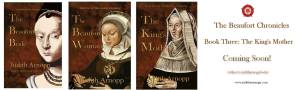
Judith A banner

Book Review: The Life She Was Given by Ellen Marie Wiseman

The Life She Was GivenOn a summer evening in 1931, Lilly Blackwood glimpses circus lights from the grimy window of her attic bedroom. Lilly isn’t allowed to explore the meadows around Blackwood Manor. She’s never even ventured beyond her narrow room. Momma insists it’s for Lilly’s own protection, that people would be afraid if they saw her. But on this unforgettable night, Lilly is taken outside for the first time–and sold to the circus sideshow.

More than two decades later, nineteen-year-old Julia Blackwood has inherited her parents’ estate and horse farm. For Julia, home was an unhappy place full of strict rules and forbidden rooms, and she hopes that returning might erase those painful memories. Instead, she becomes immersed in a mystery involving a hidden attic room and photos of circus scenes featuring a striking young girl.

At first, The Barlow Brothers’ Circus is just another prison for Lilly. But in this rag-tag, sometimes brutal world, Lilly discovers strength, friendship, and a rare affinity for animals. Soon, thanks to elephants Pepper and JoJo and their handler, Cole, Lilly is no longer a sideshow spectacle but the circus’s biggest attraction. . .until tragedy and cruelty collide. It will fall to Julia to learn the truth about Lilly’s fate and her family’s shocking betrayal, and find a way to make Blackwood Manor into a place of healing at last.

My thoughts:

If I remember correctly in the last few years I have read a total-including this one-three book that include a circus setting. These stories capture my attention for many reasons. Especially when the story takes place during the depression era in the early 20th Century. The Life She Was Given has a uniqueness to the story unlike the others I have read before it. It should be obvious what it is by reading the book description.

Normally, when I read stories this good, I devour it in a couple of days but I decided to savory this one. During the 1930’s and into the 40’s, the circus struggled to stay open due to the depression. Often times they had to make tough choices and this story shows some of that.  Often times they were cruel, heartbreaking and unnecessary decisions. I have to say that ignorance plays a big part in the decisions. Another theme in this story was the “freak Show,” and how these extraordinary people were treated. There are several other themes to this story that moved me and really portrays how cruel life can be. We all have many things to learn from this story and I highly recommend people read this book.

Wiseman’s ardent portrayal of an era, subject and setting, sets the stage for an unforgettable read.

I have rated this book five stars.

Stephanie M. Hopkins

Stay calm and support book bloggers

Cover Crush: Oil and Marble (A Novel of Leonardo and Michelangelo) by Stephanie Storey

Cover Crush banner

I am not a cover designer but I can agree that cover layouts play an important role in the overall presentation of stories and I must admit, often times I first judge a book by its cover.

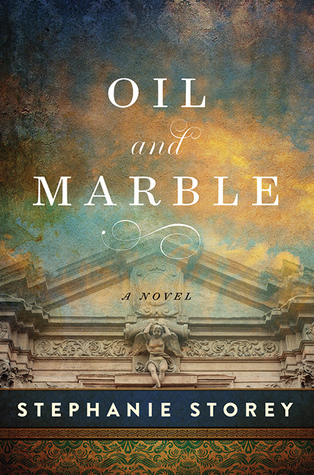
Oil and Marble A Novel of Leonardo and MichelangeloOil and Marble: A Novel of Leonardo and Michelangelo by Stephanie Storey

Hardcover, 320 pages

Published March 1st 2016 by Arcade Publishing

Legendary geniuses clash in both art and life in this “tremendously entertaining” novel of Leonardo da Vinci and Michelangelo (The New York Times).

For a few years at the very beginning of the sixteenth century, Leonardo da Vinci and Michelangelo Buonarroti both lived and worked in Florence. Leonardo was a charming, handsome fifty-year-old at the peak of his career. Michelangelo was a temperamental sculptor in his mid-twenties, desperate to make a name for himself.

Michelangelo is a virtual unknown when he wins the commission to carve what will become one of the most famous sculptures of all time: David. Even though his impoverished family shuns him for being an artist, he is desperate to support them. Living at the foot of his misshapen block of marble, Michelangelo struggles until the stone finally begins to speak. Working against an impossible deadline, he begins his feverish carving.

Meanwhile, Leonardo’s life is falling apart: he loses the hoped-for David commission; he can’t seem to finish any project; he is obsessed with his ungainly flying machine; he almost dies in war; his engineering designs disastrously fail; and he is haunted by a woman he has seen in the market—a merchant’s wife, whom he is finally commissioned to paint. Her name is Lisa, and she becomes his muse.

Leonardo despises Michelangelo for his youth and lack of sophistication. Michelangelo both loathes and worships Leonardo’s genius. Both will become immortal through their art.

Oil and Marble is the story of their nearly forgotten rivalry and “a rewarding read for art aficionados and fans of historical fiction” (Booklist). Here, Stephanie Storey brings early 16th-century Florence alive, bringing to life the minds and souls of two Renaissance masters with extraordinary empathy.

**********

My thoughts on the cover, title and premise:

I came across this book on Amazon and as an art history lover, I became intrigue with its cover. I recognized the style and hue immediately. How in the world have I not come across this book already, I ask myself? I love everything about the cover, title and premise. I look forward to reading the story to find out if it is as good as it looks.

Stephanie M. Hopkins

Cover Crush is a weekly series that originated with Erin at Flashlight Commentary. Her latest cover crush HERE

Other great book bloggers who cover crush:

Heather @ The Maiden’s Court

Magdalena @ A Bookaholic Swede-Coming soon

Holly @ 2 Kids and Tired Books-Coming soon

Colleen @ A Literary Vacation-Coming soon

Meghan @ Of Quills & Vellum-Coming soon

Stay calm and support book bloggers


Social Stratification in the Arts

by Mitchell James Kaplan

We want to believe in the tired cliché, La Boheme, the noble artist-as-rebel rejecting the vanity of status and the pecking order. This is of course a romantic notion – the artist as conscience, free of society’s hangups, liberated through self-expression. Its roots extend deeper than the romantic period, back to the medieval monastery – the ultimate opt-out for aristocrats who yearned for a more authentic life.

In reality, the society of artists is not different than any other society. Speaking only of literary society, which I know better than the others: there is an upper class of Nobel, Pulitzer, and Man Booker Prize winners. There’s an upper-middle class of best-selling authors. There’s a middle class that, like the middle class in the rest of society, has been dramatically shrinking through the last decades. In the publishing industry, this stratum is called the “mid-list.” And there’s the lower class of self-published authors – “lower-class,” that is, in the eyes of some conventionally published authors.

Authors can occasionally climb up this totem pole, but it isn’t easy. A parvenu has a hard time gaining acceptance in old-money circles. And then there are the nobles déchus, those whose Nobel prizes are growing dusty. They’re no longer earning, but they retain their pedigree. Perhaps the bottle speaks to them more, these days, than the Muse. Whatever. It doesn’t really matter what they write, anyway. No matter what they scribble, the critics will line up in praise. Their place on the totem pole is fixed.

Clearly, there are two status symbols that determine where an author fits in this social system, prizes and money. These markers serve two primary purposes: they determine the pecking order within the society of artists (who gets to express contempt for whom, and who gets to envy whom) and they help steer readers toward “books of quality.”

But what, exactly, is a book of quality? I’ll give you a hint. Study Literature at the college of your choosing. Get a PhD, even. You’ll get to read of lot of great books. But no one will be able to tell you why they’re great. On the day when you receive your degree, you still won’t be able to answer that most basic of questions any better than people who never finished college – or never even started – people like Maya Angelou, Truman Capote, Mark Twain, Charles Dickens, William Faulkner, and William Shakespeare.

Don’t get me wrong. Within the context of any culture, at a given moment, there may well be something like a consensus. Books that reflect the world-view of the educated class are going to win the prizes. Everyone likes a mirror, after all. At least, everyone who considers herself or himself to be beautiful. And books that express the yearnings and fears of the merchant and professional classes will earn their authors substantial material rewards. But none of this has anything to do with quality. Some of my favorite living authors have been the recipients of major prizes. Some are best-sellers. Some are unknown.

Quality is not measured in dollars or prizes. Quality is measured in the taste buds. You know it when you bite into it. And the good news is, there are still authors who care about quality more than status. But, as in every age, they are few and far between. And you may not find them where you would expect to find them. Sometimes, browsing in a used book store, I’ll pull out a tome that no one has seen in decades, start reading, and think, Wow, I never heard of this author. This is great. Maybe no one else ever heard of that author, either. Maybe no one ever will.

I think of Felix Mendelsohn, and how he revived the reputation of Johann Sebastian Bach. What would have happened to Bach, had Mendelsohn not come along? But then, Bach wrote for God, not for man. Maybe, just maybe, wherever he is – in the ground, in heaven – Bach doesn’t really care.

About Author:

Mitchell Kaplan Streawberry fields

Mitchell James Kaplan, a graduate of Yale University, is the author of the prize-winning novel, “By Fire, By Water.” He is currently putting the final touches on his second novel, “Same Stars, Different Constellations,” which is set in Brittania, Rome, and Judea in the first century.

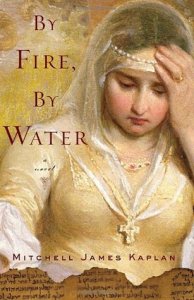
By Fire, By WaterAbout By Fire, By Water:

Paperback: 284 pages

Published May 18, 2010

Recipient of the Independent Publishers Award for Historical Fiction (Gold Medal), the Foreword Book of the Year Award for Historical Fiction (Bronze Medal), and an honorable mention in the category of General Fiction for the Eric Hoffer Award.

Luis de Santángel, chancellor to the court and longtime friend of the lusty King Ferdinand, has had enough of the Spanish Inquisition. As the power of Inquisitor General Tomás de Torquemada grows, so does the brutality of the Spanish church and the suspicion and paranoia it inspires. When a dear friend’s demise brings the violence close to home, Santángel is enraged and takes retribution into his own hands.  But he is from a family of conversos, and his Jewish heritage makes him an easy target. As Santángel witnesses the horrific persecution of his loved ones, he begins slowly to reconnect with the Jewish faith his family left behind. Feeding his curiosity about his past is his growing love for Judith Migdal, a clever and beautiful Jewish woman navigating the mounting tensions in Granada. While he struggles to decide what his reputation is worth and what he can sacrifice, one man offers him a chance he thought he’d lost…the chance to hope for a better world. Christopher Columbus has plans to discover a route to paradise, and only Luis de Santángel can help him.

Within the dramatic story lies a subtle, insightful examination of the crisis of faith at the heart of the Spanish Inquisition. Irresolvable conflict rages within the conversos in By Fire, By Water, torn between the religion they left behind and the conversion meant to ensure their safety. In this story of love, God, faith, and torture, fifteenth-century Spain comes to dazzling, engrossing life.

Available on Amazon HERE


Wish-List 5: Agatha Christie

Steph Pic retakeYesterday I intended to have second post to post that day and time got away from me and my daughter and I went to a late movie. The film we went to see was Birth of a Dragon and it was suburb! My daughter asked me why they don’t make more film like this. I told her Hollywood used to make in the day. We both agreed that we want to see more films with this quality. Anyhow, I am getting off track here. When we got home I was exhausted and decided to post my wish-list in the morning. It’s a good way to start off the weekend, don’t you think?
August 18th, I posted my review for The Woman on the Orient Express by Lindsay Jayne Ashford and it got me thinking I want to learn more about Agatha Christie. She was an extraordinary writer and woman as many know. Her works today this day still influence many writers and readers. Her mystery stories will never fade and she will continue to inspire many new writers. So, began my search on Amazon for books about her life and her journey of writing mystery. I hope you enjoy this list and please be sure to review my review of The Woman on the Orient Express.

Stephanie M. Hopkins

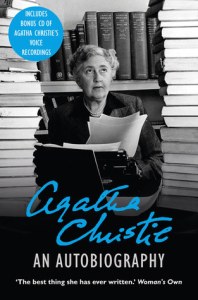
Agatha Christie An AutobiographyAgatha Christie: An Autobiography by Agatha Christie
Hardcover, 532 pages

When Agatha Christie died on 12 January 1976, she was known throughout the world as the Queen of Crime, unrivalled as the best-selling novelist of all time with two billion books sold in more than 100 languages. Though she kept her private life a mystery, for some years Agatha had secretly written her autobiography, and when it was published after her death, millions of her fans agreed – this was her best story!

From early childhood at the end of the 19th century, through two marriages and two World Wars, and her experiences both as a writer and on archaeological expeditions with her second husband, Max Mallowan, this book reveals the true genius of her legendary success with real passion and openness.

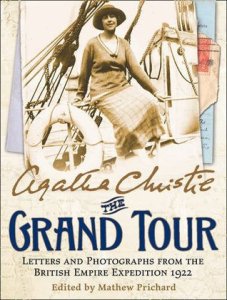
The Grand TourThe Grand Tour: Around the World with the Queen of Mystery by Agatha Christie
Paperback: 384 pages

Agatha Christie is the most widely published author of all time, outsold only by the Bible and Shakespeare. Now, in this fascinating travelogue of the prolific author’s yearlong trip around the British Empire in 1922, Christie provides the clues to the origins of the plots and locales of some of her bestselling mystery novels. Containing never-before-published letters and photos from her travels, and filled with intriguing details about the exotic locations she visited, The Grand Tour is an important book for Agatha Christie fans, revealing an unexpected side to the world’s most renowned mystery writer.

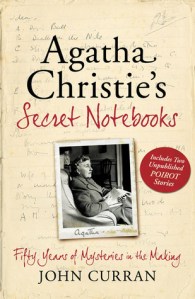
Agatha Christie's Secret Notebooks Fifty Years of Mysteries in the Making by John CurranAgatha Christie’s Secret Notebooks: Fifty Years of Mysteries in the Making by John Curran
Paperback: 496 pages

Agatha Christie’s Secret Notebooks is the fascinating exploration of the contents of Agatha Christie’s long hidden notebooks, including illustrations, analyses, and two previously unpublished Hercule Poirot short stories. Not only will Christie’s legions of ardent fans find a treasure chest of new material from the author of such classics as And Then There Were None, Murder on the Orient Express, and Death on the Nile, but Agatha Christie’s Secret Notebooks is also a must-read tutorial for writers who want to learn the intricacies of constructing crime novels.

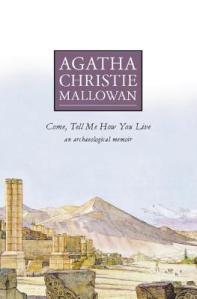
Come, Tell Me How You Live An Archaeological Memoir by Agatha Christie MallowanCome, Tell Me How You Live: An Archaeological Memoir by Agatha Christie Mallowan

Paperback: 205 pages

Over the course of her long, prolific career, Agatha Christie gave the world a wealth of ingenious whodunits and page-turning locked-room mysteries featuring Miss Marple, Hercule Poirot, and a host of other unforgettable characters. She also gave us Come, Tell Me How You Live, a charming, fascinating, and wonderfully witty nonfiction account of her days on an archaeological dig in Syria with her husband, renowned archeologist Max Mallowan. Something completely different from arguably the best-selling author of all time, Come, Tell Me How You Live is an evocative journey to the fascinating Middle East of the 1930s that is sure to delight Dame Agatha’s millions of fans, as well as aficionados of Elizabeth Peters’s Amelia Peabody mysteries and eager armchair travelers everywhere.

Agatha Christie at Home by Hilary MacaskillAgatha Christie at Home by Hilary Macaskill
Paperback: 144 pages

Agatha Christie was the author of over eighty novels and over a dozen plays, including The Mousetrap, the longest continuously running play in theatrical history. Her books have been translated into more languages than the works of Shakespeare.

Agatha Christie’s first home was at Ashfield in Torquay, a house that she retained for nearly half a century, until she sold it in 1938 in order to buy Greenway, her `dream house’ on the River Dart. She spent all her summers there till she died in 1976. It was, she wrote: `the loveliest house in the world.’ Now owned by the National Trust, Greenway was opened to the public in 2009.

Both Devon homes, which featured in several of her novels and stories, were central to Agatha’s life, but she also loved the process of acquiring and planning houses in other places – from Sunningdale to Baghdad: at one time, before the Second World War, she owned eight properties in London. Her enthusiasm for buying, restoring and decorating houses is one of the lesser-known aspects of her life, but one that was very important to her. Agatha Christie at Home – illustrated with photos of her life, her homes and of the Devon she loved – recounts this side of her life, and its author, Hilary Macaskill, writes about some of the houses Agatha Christie lived in, her relationship with the staff who ran them, and her love of domesticity.

Illustrated with rarely-seen archive images and evocative photographs of Greenway and the surrounding countryside, Agatha Christie at Home provides an insight into the life and work of a much-loved author.

***************

Brief Bio of Agatha from Amazon:

Agatha Christie was born in 1890 and created the detective Hercule Poirot in her debut novel, The Mysterious Affair at Styles (1920). She achieved wide popularity with The Murder of Roger Ackroyd (1926) and produced a total of eighty novels and short-story collections over six decades.

***************

Be sure to check out my wish-list from last month HERE -Alexander Pushkin to the Romanovs

Here are the wish lists from a few of my friends this month:

Erin @ Flashlight Commentary

Colleen @ A Literary Vacation-Coming soon!

Heather @ The Maiden’s Court

Magdalena @ A Bookaholic Swede

Holly @ 2 Kids and Tired

Bittersweet Confessions of A Book Blogger

Steph Pic retakeThis morning on Facebook I came across a video that a celebrity, Ashton Kutcher, shared about a man explaining what his son’s Down Syndrome was and how he responded about it. He felt he failed his son and pulled over on the side of the road to share his meaningful and heartfelt thoughts about it. One of the things he said was that “disabilities” are perception. We all have different things to teach. He is right!

I am going to share with you a small taste of something that is acutely hard for me to talk about and to be honest about for many reasons. When I was a young child in school, I had what the education system called, “A learning disability.” In my speech and how I processed things or lack of I should say. I struggled with comprehension and my speech affected my relationships with other children at school and often times at church. Needless to say, I had a negative experience to say the least. My mother continuously fought for me and tried her best for the schools to help. The school system failed me but once when we lived in Clearwater Florida, the elementary school I went to had a speech class and I loved it. The only thing that was hard was that the other children in my regular class knew why I was being pulled out of class and I was bullied horribly. I did have a tutor for years that helped me learn reading comprehension and to help me in other subjects and as I still struggled, I never gave up no matter how hard it was for me. Though I did keep much of my deep fascinations for stories, art, life, history, and how things worked inside me because I couldn’t express them outwardly for much of my life-except with my family. I was completely vulnerable and I admit, that creeps up from time to time even today.

In Clearwater at a church my father was on staff, we had a library filled with so many wonderful books. I would sneak in there sometimes when it was empty and pick a Nancy Drew book off the shelf and find a corner to read in. I struggled and often times soon forgot what I read. Even though no one was in the library, I would sheepishly look up to make sure no one saw me in case they asked me what I was reading. Then I started to make up my own stories in my head because that was easier for me. I needed that escape.

There was also a special education ministry that my mother ran at that church and I often went in the class to volunteer. Those were some of the best memories I have at that church. I still think about the people in that ministry and how they made me feel. I wasn’t judged. That was my happy place.

Middle school was a living hell for me and I would come home crying and plead with my mother so much, she pulled me out of school to home school me and that was the best thing for me. Even my “so-called” friends bullied me and called me horrible names and would opening laugh at me right in my face. Imagine being called, “Stupid and worthless everyday of your childhood?” Imagine what that does to a person. I stood there and took it, then afterwards I would shut my-self up anywhere I could and cried and anguished over life. For a while before I told my mother what was going on, I was so embarrassed to say anything, I would tell her everything was fine. I think I even told her I had several boyfriends. The saddest part is that I started to believe those kids. I felt stupid, ugly and worthless. It has taken over half my life to overcome that. The school would even put me in these, “special classes to get extra help” and the classes were really for behavior problem children. It was not to help with “learning disabilities.” I felt degraded even further. High school didn’t get better but that is another story. To this day, there are moments I struggle with speech and articulate my words verbally. I hear it in my mind but it doesn’t come out properly at times.

What is heartbreaking to me is often times I find myself using the words, disability and stupid or even idiot for that matter. Life is so precious and it is unfortunate that so many make lite of it and the cruelty of our actions is destructive in so many ways. Not only to ourselves but to others. Think about all the brilliant minds shut out of society because of their differences. Think about all the missed opportunities we could have had and have from those precious and gifted people society thinks stupid, or different. They don’t fit the mold so society must shun them. That is utterly unacceptable and cruel.

All those years I longed to express my creative ideas and thoughts and I didn’t know how. I was locked away for so long inside me and I only dreamed of one day that I might have the opportunity to shine and overcome. With hard work, determination, family and trust in God, I have overcome much and have the honor and privilege to work in the book industry and converse with some of the most brilliant and caring minds and souls. Who would have even thought possible?

Love life/Understand/Show compassion/Think before speaking and acting/Give meaning to your life. We all can learn from this.

**Please excuse the typos and grammatical errors. This is a first draft and is not meant to be written on a professional level but a personal one. Thank you.

Stephanie M. Hopkins

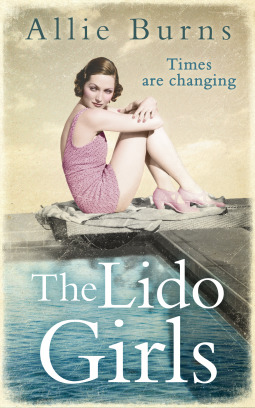
Cover Crush: The Lido Girls by Allie Burns

Cover Crush banner

I am not a cover designer but I can agree that cover layouts play an important role in the overall presentation of stories and I must admit, often times I first judge a book by its cover.

The Lido Girls IIThe Lido Girls by Allie Burns

HQ Digital

Historical Fiction, Women’s Fiction

Pub Date 02 Oct 2017

Description

Escape to the inter-war years in this emotional story where opportunity can be found at the pool-side in your local lido… Perfect for fans of Pam Evansand Gill Paul

Change is in the air…

London, 1930s:

Natalie Flacker is tempted by the glamour of the new keep fit movement, but when she is dismissed from her prestigious job in PE she loses the life she so carefully built. Echoes of the war’s destruction still reverberate through her life, and now she is homeless, jobless and without prospects.

But connections made on a summer holiday, with her best friend Delphi, create opportunities. When Natalie is offered a summer job at a lido at the seaside, she jumps at the chance. But is she up to the challenge of taking on a group of unfit women in need of her help?

Set against the backdrop of the beginnings of the pioneering keep fit movement; this is a feel-good reminder of just what’s possible when you find the courage to follow your heart.

Spend a very British summer with The Lido Girls!

My thoughts:

I love reading stories that take place in the early 20th Century and this cover is perfect for the premise.

Stephanie M. Hopkins

Cover Crush is a weekly series that originated with Erin at Flashlight Commentary. Her latest Cover Crush HERE

Other great book bloggers who cover crush:

Heather @ The Maiden’s Court

Magdalena @ A Bookaholic Swede

Holly @ 2 Kids and Tired Books

Colleen @ A Literary Vacation

Meghan @ Of Quills & Vellum-Coming soon

Bookish Happenings: Fancy These Two Beauties

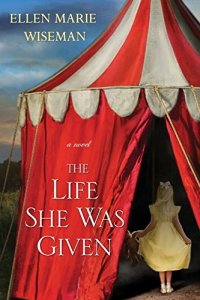
Me IIThis past weekend I started two new novels and I am loving it! They are both competing for my attention. This is a good omen seeing as I have been on the lookout for the next five-star book. Will I rate both of them five stars or not at all? You’ll have to wait to find out! It won’t be long seeing as I don’t want to stop reading them. Meanwhile, add these two to your reading pile. Oh, heck, add them and bump them up your list. Go on. Just do it. Enjoy!
Stephanie M. Hopkins

****************

The Life She Was Given(This one is not for review but I’ll review it anyways.)

Paperback, 356 pages

Published July 25th 2017 by Kensington Publishing Corporation

From acclaimed author Ellen Marie Wiseman comes a vivid, daring novel about the devastating power of family secrets–beginning in the poignant, lurid world of a Depression-era traveling circus and coming full circle in the transformative 1950s.

On a summer evening in 1931, Lilly Blackwood glimpses circus lights from the grimy window of her attic bedroom. Lilly isn’t allowed to explore the meadows around Blackwood Manor. She’s never even ventured beyond her narrow room. Momma insists it’s for Lilly’s own protection, that people would be afraid if they saw her. But on this unforgettable night, Lilly is taken outside for the first time–and sold to the circus sideshow.

More than two decades later, nineteen-year-old Julia Blackwood has inherited her parents’ estate and horse farm. For Julia, home was an unhappy place full of strict rules and forbidden rooms, and she hopes that returning might erase those painful memories. Instead, she becomes immersed in a mystery involving a hidden attic room and photos of circus scenes featuring a striking young girl.

At first, The Barlow Brothers’ Circus is just another prison for Lilly. But in this rag-tag, sometimes brutal world, Lilly discovers strength, friendship, and a rare affinity for animals. Soon, thanks to elephants Pepper and JoJo and their handler, Cole, Lilly is no longer a sideshow spectacle but the circus’s biggest attraction. . .until tragedy and cruelty collide. It will fall to Julia to learn the truth about Lilly’s fate and her family’s shocking betrayal, and find a way to make Blackwood Manor into a place of healing at last.

Moving between Julia and Lilly’s stories, Ellen Marie Wiseman portrays two extraordinary, very different women in a novel that, while tender and heartbreaking, offers moments of joy and indomitable hope.

About Author:

Ellen Marie Wiseman

A first-generation German American, Ellen Marie Wiseman discovered her love of reading and writing while attending first grade in one of the last one-room schoolhouses in NYS. She is a bestselling author whose novels have been translated into seventeen languages. Her debut novel, THE PLUM TREE, is loosely based on her mother’s stories about growing up in Germany during the chaos of WWII. THE PLUM TREE received much praise for its depiction of WWII and was named by Bookbub as One of Thirteen Books To Read if You Loved ALL THE LIGHT WE CANNOT SEE. Ellen’s second novel, WHAT SHE LEFT BEHIND, was named a Huffington Post Best Books of Summer 2015. Her third novel, COAL RIVER, was called “one of the most “unputdownable” books of 2015″ by The Historical Novel Review. Her fourth novel, THE LIFE SHE WAS GIVEN, will be released in July 2017. She lives on the shores of Lake Ontario with her husband and two spoiled Shih-tzus, Izzy and Bella. When she’s not busy writing, she loves spending time with her children and grandchildren. Find Ellen on Facebook.

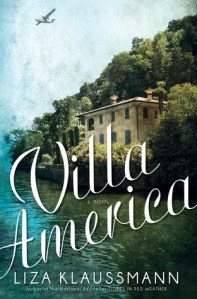
Villa America(This one is for review)

Hardcover, 426 pages

Published August 4th 2015 by Little, Brown and Company (first published April 23rd 2015)

A dazzling novel set in the Cap D’Antibes based on the real-life inspirations for Fitzgerald’s Tender is The Night.

In this gorgeous, glamorous, and affecting novel, Liza Klaussmann does for Sara and Gerald Murphy what Paula McLain and Michael Cunningham did for Ernest Hemingway and Virginia Woolf in The Paris Wife and The Hours. Villa America was in fact a real house on the French Riviera that Sara and Gerald Murphy built to escape to in the 1920’s. Members of a group of expat Americans, they were known for their fabulous parties and for making the Riviera into the glamorous place it is today. Their freewheeling days were filled with champagne and caviar, but these were people who kept secrets and who were, of course, heartbreakingly human.

This is a stunning story about the Lost Generation, about a marriage, about a golden age which could not last.

About Author:

Liza Klaussmann

Liza Klaussmann worked as a journalist for the New York Times for over a decade. She received a BA in Creative Writing from Barnard College, where she was awarded the Howard M. Teichman Prize for Prose. She lived in Paris for ten years and she recently completed with distinction an MA in Creative Writing at Royal Holloway, in London, where she lives. She is the great-great-great granddaughter of Herman Melville.

Stay calm and support book bloggers