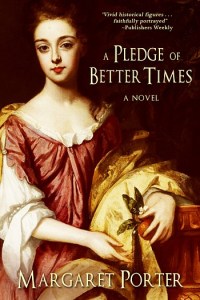
 Lady Diana de Vere, the heroine of A Pledge of Better Times, was born into an aristocratic and prominent family of the late 17th century. Her father is an earl, a courtier and trusted advisor to Charles II, a position he retains—for a time—under James II. The landscape of Diana’s life, therefore, consists of the royal palace of Whitehall in London—her extended family’s dwellings lie within the palace complex. In a very real sense she’s closed off from the common citizen, from ordinary life, apart from her interaction with servants. Her world is one of opulence and privilege, and also one of restricted movements. A large part of my research was visiting sites were familiar to her during her lifetime, which allowed me to envision her in the actual spaces she had occupied and to imagine her in the ones that no longer exist.
Her father, Lord Oxford, welcomes her questions and provides supportive guidance. Her mother, despite a scandalous past as a courtesan, is far less tolerant of what she perceives as Diana’s faults, and she’s determined that her daughter will achieve a wealthy and advantageous marriage. As a maid of honour to Queen Mary II, my secondary heroine, Diana finds a sort of freedom living away from home, following queen and court from Whitehall to Hampton Court to Kensington and back. Not only does her position remove her from her mother’s orbit, it enables a semi-clandestine courtship by Charles Beauclerk, son of King Charles II and actress Nell Gwyn. As married woman and duchess, Diana’s intelligence, independent spirit, and tendency to speak her mind create conflict on more than one occasion.
Diana’s habits and pursuits are typical of an aristocratic female of her time—needlework, music, dancing, and drawing. Religious instruction in her early life takes firm root, and her faith is a source of strength in difficult times, and supports her during life’s soul-searing tragedies. Her fondness for gardens and sewing and devotional writings make her the ideal companion for Queen Mary, who shares and fosters these interests.
Diana’s personality is a mixture of calm serenity, attractive to the troubled and often agitated Queen Mary, determination, and occasional tempestuousness. In her youth she has convictions but lacks empowerment, but as she matures she gains a certain amount of agency. She will exert herself to control or to remedy a situation, and then faces the consequences with resignation. Her loyalty to her queen, her duty to her family, and her fidelity to her husband are ruling attributes. But she can be prejudiced as well, and finds herself unable to warm to King William—she sees firsthand the distress he causes his wife through his frequent absences. Yet her husband secures His Majesty’s favour, and retaining it is paramount to him.
Diana’s greatest antagonist in early life is her own mother, who values her as an asset to exploit for the family’s advantage, and who hopes to sever her daughter’s relationship with “Nelly’s brat.” Queen Mary’s antagonist is her sister Princess Anne, who causes much grief and anger from insubordination and through her relationship with her confidante Sarah Churchill, the Countess and later the Duchess of Marlborough. The latter is not only an antagonist to the queen, she pulls strings to shatter one of Diana’s most cherished hopes. Sarah was born a commoner, and her unkindness towards Diana—an aristocrat from birth—arises from jealousy.
Charles, Diana’s suitor and eventual husband, faces antagonists at court and on the battlefield—as does her father. For them, the greatest personal antagonist is King James II. Each man strives in different ways to cope with the stubborn and imperious monarch, with varying degrees of success. King James, a Roman Catholic convert, is so fanatical about his religion that he disregards Parliamentary laws and protocols, and thus brings about his destruction. Lady Oxford, Diana’s mother, is antagonistic towards Charles, mocking him in public and in private. In her opinion, he’s an unworthy husband for a de Vere and lacks the money needed to restore the family’s fortunes.
My characters’ self-image is of great significance, with powerful impact upon plot and conflicts within the story. Royal blood flows through the veins of Charles Beauclerk, Duke of St. Ablans: his father and grandparents and prior ancestors were kings and queens of England. Yet his mother was the lowest of commoners. Nell Gwyn, raised in a brothel, sold oranges in the theatre and was an actress before the king made her his mistress. Charles can never feel completely comfortable at the royal court, especially after his father’s death. He chooses instead a voluntary exile in order to become a soldier. As an army officer, he believes, he can rise to prominence on his own merits. This ambition is unexpectedly undermined, and when he discovers by whom he does not react well.
As for Diana, she is a woman of sterling reputation and great depth, but most people in her world (and down through history) regard her primarily as a court beauty. The greatest painter of the day painted her—repeatedly—and she retained her looks till her dying day. Her mother believed that the girl’s lovely face destined her for a brilliant match rather than a match based on passion, affection, and compatibility. As a married woman, Diana wonders whether her beauty alone attracts her husband instead of other qualities she values in herself. Her beauty, like Charles’s bastardy, is isolating, troublesome, and a source of inner conflict. She tends to judge others as critically as she does herself, but that judgment is usually tempered by an effort to understand…something her husband is slower to do.
Lord Oxford, Diana’s father, has lived long and seen much. He tends to regard himself as a relic of the past, yet he’s pragmatic enough to be progressive when necessary. During the Civil Wars he was Royalist—twice he was imprisoned by Cromwell on suspicion of being a spy—and believes himself forever loyal to the Stuarts. When James II tests this loyalty in unexpected ways, his lordship’s conscience as a member of Parliament and as a Protestant force him to turn against his king and support the Williamite cause.
Queen Mary, for a variety of reasons, has low self-esteem and a poor self-image. Her uncle King Charles married her off to her Dutch first cousin, a complete stranger. But her dread and sorrow at leaving England for a foreign court gave way to a true and lasting love. She’s tortured by guilt over her repudiation of her father the King when her husband seizes the crown for himself. Although her claim to England’s throne is stronger than William’s, she regards herself as his inferior, unfit to rule, and willingly cedes all authority to him. Yet it is she who is—most unhappily—left in control of the nation while he’s away fighting his endless wars. At the same time she must deal with her recalcitrant sister Anne and the problematic Lady Marlborough. Adding to these woes is her husband’s infidelity, and the fact that his mistress is a courtier—and much less attractive than Mary.
For me, writing biographical historical fiction requires the weaving of three necessary strands to form a plot. First there’s the factual biographical record of the individuals depicted—gleaned from period diaries, newspaper accounts, portrait sittings, memoirs, family genealogies, and other primary sources. Then there’s the factual historical record of their times—what significant events did they participate in, how were they affected by events near or far, with whom were they likely to interact on a regular or irregular basis. And lastly, but in a way the most important for a fiction writer, is the imagination, the creative component that enables the author to invent.
The bare facts of biography can’t really reveal how a real-life individual felt at any given moment. The private aspects of life—personal opinions, passions, deepest feelings about self or others—are concealed areas of past lives, the least accessible aspects of the individuals. Especially if the characters are relatively obscure, as Diana and Charles are. I must therefore invent conversations, reactions, consequences for my characters. I have to draw conclusions from research that I hope bear a semblance of accuracy, but I can never lose sight of the fact that I am telling a story for the purpose of entertaining—informing about history and enlightening about the human condition are wonderful side benefits. That combination of elements made me love historical fiction in childhood, and they’ve kept me writing it throughout my adulthood!
A Pledge of Better Times
“Porter’s ambitious novel of 17th-century England is brimming with vivid historical figures and events . . . rigorously researched and faithfully portrayed.” ~ Publishers Weekly
“A true delight for fans of monarchy. . . Porter does a sensational job portraying the time period . . . the relationship between Charles and Diana is complex and interesting.” ~ The Examiner
“Elegant prose and vivid detail…sweeps you into late Stuart England.” ~ Marci Jefferson, author of Enchantress of Paris and Girl on the Golden Coin
 Because I was born into a family of readers and writers and scholars and travelers, there’s no mystery about how or why I found my profession. From a very early age I invented characters and composed scenes and stories in my head. At about 10 years old I first saw my own words printed–in the grammar school newsletter that I co-founded, typed, and published. Around the same time I decided to combine my theatrical and my writing ambitions, and adapted all my favourite youth novels into scripts.
Since then many, many more words have been published: novels, nonfiction articles on British history and travel and theatre, website content, book and film reviews, my M.A. thesis, advertising copy…and more.
Website Website
Twitter @MargaretAuthor
Blog Blog

 This week cover crush is The Woman in Cabin 10 by Ruth Ware. First book I have read of hers. I understand it she has another-In a Dark, Dark Wood-that is highly recommended.
 From New York Times bestselling author of the “twisty-mystery” (Vulture) novel In a Dark, Dark Wood, comes The Woman in Cabin 10, an equally suspenseful novel from Ruth Ware—this time, set at sea.
 When Gemma discovers a pair of ancient duelling pistols encrusted with rubies in the basement of the local museum, she is immediately intrigued…
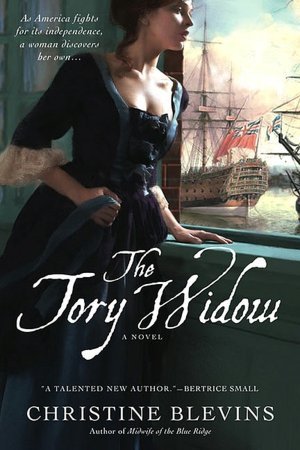 I absolutely adore American History and how this great nation was founded. I am really looking forward to reading this book and I LOVE the book cover! I think it’s perfect for the story and I am delighted to see a picture of a woman without her entire head missing from the layout! Okay, okay… I have to admit something. This book falls under the Genre-Romance as well as 18th Century Literature. I am not a fan of romance stories. Having said that, because of the cover and the historical influence of the story, I’m willing to give it a go.
 The Whole Art of Detection
 Stolen Beauty
 The Orphan’s Tale
 A Deadly Thaw
 The Trial of Marie Montrecourt
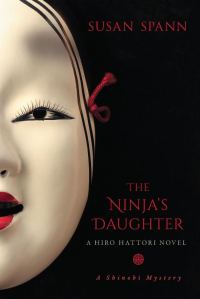 Book Description:
  Susan Spann is the author of three previous novels in the Shinobi Mystery series: Claws of the Cat, Blade of the Samurai, and Flask of the Drunken Master. She has a degree in Asian Studies and a lifelong love of Japanese history and culture. . When not writing, she works as a transactional attorney focusing on publishing and business law, and raises seahorses and rare corals in her marine aquarium.
 Andrea Zuvich is visiting me today to talk with me about her book, The Stuart Vampire and about the period in history she focuses on. Andrea is a seventeenth-century historian specialising in the House of Stuart (1603–1714), as well as a historical advisor and author of historical fiction. She is the host of the popular ‘The Seventeenth Century Lady’ blog. She has degrees in History and Anthropology. Zuvich has appeared on television and radio discussing the Stuarts and gives lectures on the dynasty throughout the UK. She was one of the original developers of and leaders on the Garden History Tours at Kensington Palace. Zuvich, a Chilean-American born in Philadelphia, Pennsylvania, now lives in England with her husband.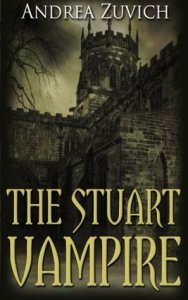

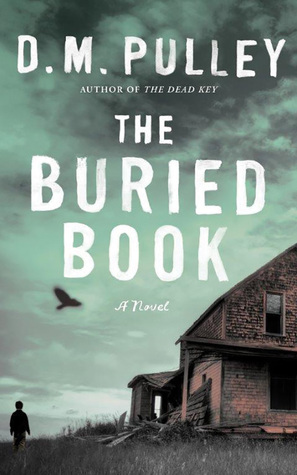 When Althea Leary abandons her nine-year-old son, Jasper, he’s left on his uncle’s farm with nothing but a change of clothes and a Bible.
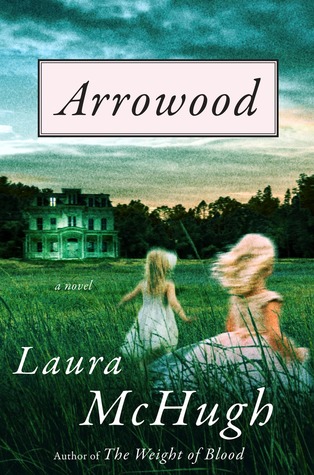 Arrowood is the most ornate and beautiful of the grand historical houses that line the Mississippi River in southern Iowa, where the days are long and humid and communities are small and closed. It has its own secrets and ghostly presence: It’s where Arden’s young twin sisters were abducted nearly twenty years ago—never to be seen again. Now, Arden has inherited Arrowood, and she returns to her childhood home determined to establish what really happened that traumatic summer. But the house and the surrounding town hold their secrets close—and the truth, when Arden finds it, is more devastating than she ever could have imagined.
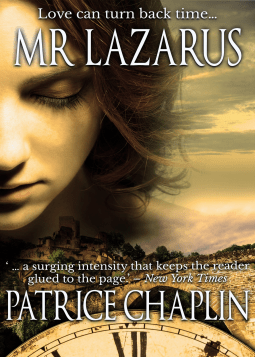 Mr Lazarus by Patrice Chaplin
 Layered Pages