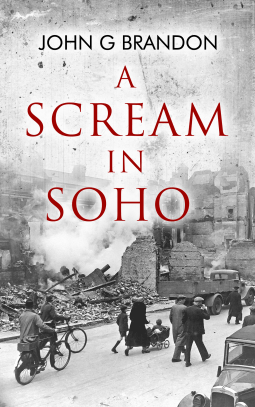
Cover Crush: A Scream in Soho by John G. Brandon

Cover Crush banner

Erin over at Flashlight Commentary is the one that came up with the cover crush idea and a few of us book bloggers loved it so much that we decided that every Thursday we would post a cover that we really love. Now I must say I haven’t been consistent in my posting cover crush and on the appointed day. Will get there eventually. Posts for my website has been scheduled pretty far out in advance.

Today I am sharing with you a book cover that really stands out to me and I feel gives the right attention to what the book is about. I love how It’s in black and white too! 

A Scream in SohoDescription

A Scream in Soho by John G. Brandon

German bombers are overhead and there is danger the streets of London.

A tall foreigner with strange ‘blind’ looking eyes triggers one of Detective Inspector McCarthy’s infamous ‘hunches’.

Later that night, during the pitch blackness of the wartime blackout, a piercing scream rends the air and Detective Inspector McCarthy is first on the scene to find a bloodied murder weapon, a woman’s lace handkerchief, but no victim to be seen.

As McCarthy attempts to unravel the mystery, the bodies start to pile up, and the whodunit becomes a more complex and colourful story of secret government plans, cross dressing German spies, and murderous dwarves.

McCarthy must move through the dark, seedy Soho underworld – peopled by Italian Gangsters and glamorous Austrian aristocrats alike – not only to find his murderer, but to save Britain’s defences against the Nazi threat.

Set in London during the early days of the Second World War, A Scream in Soho is an evocative and suspenseful London novel from the golden age of British detective fiction.

Check out this week’s cover crush over at 
Flashlight Commentary
2 Kids and Tired Books
A Bookaholic Swede
The Maidens Court

Interview with E.M. Powell

03_E.M.-Powell-197x300I’d like to welcome back E.M. Powell to Layered Pages. 

E.M. Powell’s medieval thrillers The Fifth Knight and The Blood of the Fifth Knight have been number-one Amazon bestsellers and on the Bild bestseller list in Germany.

Born into the family of Michael Collins (the legendary revolutionary and founder of the Irish Free State) and raised in the Republic of Ireland, she lives in north-west England with her husband, daughter and a Facebook-friendly dog.

She reviews fiction and non-fiction for the Historical Novel Society, blogs for English Historical Fiction Authors and is a contributing editor to International Thriller Writers’ The Big Thrill magazine.

Hi, E.M.! Thank you for chatting with me today. It is always a pleasure having you visit Layered Pages. Before we start talking about your book, tell me how you got into Historical Fiction and why you chose the 12 century as your period?

Hi Stephanie and a pleasure to chat with you as always!

As for how I got into Historical Fiction, I’m probably the same as many writers of it— I read it first. I loved some of Jean Plaidy’s novels when I was younger. I was also a fan of crime novels. The jackpot for me was when I first read Agatha Christie’s Death Comes as the End, her standalone historical mystery set in Ancient Egypt, which combined both of my favorite genres.  As for writing, my first attempt at a novel was a 120,000 page contemporary thriller with romantic elements, quite rightly rejected by agents and publishers many, many times. I needed to learn my craft.  In the process, I shifted from contemporary to historical because I loved historical worlds and I could expand my creative horizons.

I chose the 12th century because one of history’s most infamous murders, the murder of Archbishop Thomas Becket in Canterbury Cathedral, took place in 1170. That murder was the premise for my first published novel, my historical thriller, The Fifth Knight, which features my fictional hero, Sir Benedict Palmer.
02_The-Lord-of-Ireland

Please tell me the premise of your story.

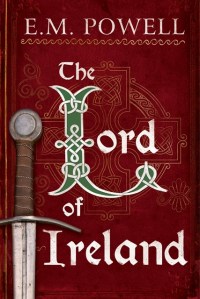
My latest release is book #3 in the Fifth Knight series, The Lord of Ireland. Palmer is called back into the service of his king, Henry II, once again.

Henry first arrived in Ireland in 1171. He had already sent troops there and he wanted to stamp his authority on it. But by 1185 it was in a state of major unrest, with native Irish kings and Henry’s Anglo-Norman barons who had taken Irish lands fighting it out for power. The King had an ingenious solution: make his eighteen year old son Lord of Ireland and send him over to sort it out. And that son was John. Yes—the John who would one day be Bad King John. Unknown to John, Henry has also sent his right-hand man, Palmer, to root out the traitors he fears are working to steal the land from him.

But Palmer is horrified when John disregards Henry’s orders and embarks on a campaign of bloodshed that could destroy the kingdom. Now Palmer has to battle the increasingly powerful Lord of Ireland. Power, in John’s hands, is a murderous force—and he is only just beginning to wield it.

What do you think of Prince John? He is an Historical figure people love to loath!

It says something about a British Royal when even Disney has a pop at them. John’s portrayal as a thumb-sucking lion prince in the classic animation Robin Hood is only one of many unflattering renditions of him.

Trouble is, they aren’t far off the mark. John acquired his terrible reputation by simply being John. Suffice to say, his campaign in Ireland was a disaster—a gift to me as a novelist. A further gift was that the King’s clerk, Gerald of Wales, went with John, leaving us many first-hand accounts of what went on.

John’s first act was to insult the Irish. A group of powerful Irish chieftains came to pay tribute to him as Henry’s representative, greeting him as their lord. John’s response? Well, according to Gerald, John ‘pulled some of them about by their beards, which were large and flowing according to the native custom.’ Suitably angered and very unimpressed, the Irish made for the court of one of the Irish kings, where they reported back on the insults and how John was ‘a mere youth…a stripling who only listened to youthful advice.’ Worse, they decided that rather than make peace with John, they would ‘plot to resist [John’s force]…guard the privileges of their ancient freedom’ with their lives, and ‘make pacts’ to resist him. Oh, John.

Meanwhile, John began making grants of land to his own friends— land that loyal supporters of Henry already held. The result, according to Gerald, was that those who were dispossessed ‘went over to the side of the enemy.’ There were losses of life on both sides. John (or rather, his more able men) made a few gains, but his forces were well and truly routed in equal amounts by some of the native Irish kings. His less able men drank, caroused and fought with each other. When John failed to pay them, they deserted.

One would have thought that John would have accepted some responsibility for his failings. But no. Instead, he went back to England and Henry, accusing one of Henry’s men of treacherous dealings with the Irish. That man was the Anglo-Norman Hugh de Lacy, Henry’s first Lord of Meath.

For those of who do not know what Anglo-Norman is, will you explain?

‘Anglo-Norman’ can mean the dialect of the Normans as used in England after the Norman Conquest of 1066. The ‘Anglo-Normans’ in the context of Irish history refers to those invaders/settlers who arrived in 1169 and after at the behest of Henry II and an Irish king, Diarmait Mac Murchada (Dermot MacMurrough). As well as ‘Anglo-Norman’, the incomers can be/have been described as Norman, Cambro‐Norman (those who came from Wales, such as the family of Gerald of Wales) and Anglo‐French. Contemporary Irish sources invariably described them as Saxain— the English.

What are the emotional triggers of your characters and how do they act on them?

Character development forms the backbone of a novel. Without it, you simply have Things Happening and no-one cares very much, no matter how high stakes those events are. I like to write character bios for all my main characters. That way, I know who those characters are and what drives them. It can be love, greed, ambition, loss, fear and whatever mix is needed.

What are your thoughts of Henry II?

Henry was a complex man, with huge energy and drive. There are terrible events that can be laid at his door, like Becket’s murder. His involvement in Ireland in the 12th century certainly had enormous and tragic implications for my homeland. But there is also much to admire about him. His reorganization of the judicial system, for instance, stands out. His Assize of Clarendon in 1166 established procedures of criminal justice, with courts and prisons for those awaiting trial with speedy and clear verdicts.

What’s up next for you?

I can’t say too much at the moment. I can however give a quite a large hint—Henry II’s criminal courts, anyone?

In your bio it says that you were born in the family of Michael Collins (the legendary revolutionary and founder of the Irish Free State). And recently I read a book where it touches on this subject in the early 20th century. I was really fascinated by it. Have you or will you write any stories that are inspired by those events?

Michael Collins was my great-grandmother’s brother. I am hugely proud to have such an important and influential figure in my family tree. As for writing about him, I hesitate to say never, but it’s not likely.

How much time do you spend writing and researching? What is the most rewarding thing to you about writing?

My working days as a writer are usually 10 – 12 hours long. Researching a historical novel, in my experience, takes about a third of the total time it takes to produce a 100,000 word book. Out of that time also has to come time for marketing, which I would estimate to be about half my working week. I don’t think those numbers would come as a surprise to any other historical novelist. As for rewarding, nothing beats a glowing review or a lovely e-mail from a reader. I’m so privileged to have had many of those—and the glow never wears off!

What do you hope reader come away with your stories?

I hope readers have been transported to another time and place and that they’re sorry to have left the characters behind. It’s also a bonus when somebody says they have been interested enough to afterwards delve into the real history.

Thank you, E.M.! Please come back to Layered Pages again! It was great chatting with you.

And you, Stephanie- I look forward to it! Thanks so much for hosting me.

AMAZON US | AMAZON UK | BARNES & NOBLE | BOOK DEPOSITORY |CHAPTERS

Find more information at E.M. Powell’s website and blog. You can also find her on FacebookTwitter, and Goodreads.


Interview with Kristen Harnisch!

author KHI’d like to welcome Author Kristen Harnisch today to talk with me about her book, The Vintner’s Daughter. Internationally published author Kristen Harnisch drew upon her extensive research and her experiences living in San Francisco and visiting the Loire Valley and Paris to create the stories for THE CALIFORNIA WIFE and her first novel, THE VINTNER’S DAUGHTER. Ms. Harnisch has a degree in economics from Villanova University and currently resides in Connecticut with her husband and three children.
Kristen, thank you for chatting with me today about your book, The Vintner’s Daughter! I enjoyed reading your story very much! Please tell your audience a little about the story.

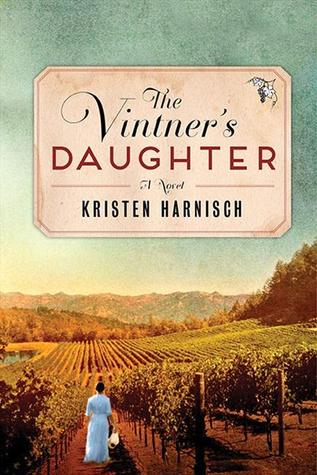
The Vintner’s Daughter is the story of Sara Thibault, a winemaker’s daughter, and her struggle to reclaim her family’s nineteenth-century Loire Valley vineyard. In 1895, through a series of tragic events, Sara is forced to flee her French village of Vouvray for America, on a journey that will take her across the Atlantic, to the slums of Manhattan’s Lower East Side, and out west to the rolling hills and sprawling vineyards of Napa, California. In Napa, Sara is determined to follow in her father’s footsteps as a master winemaker, but must face the one man who could either restore her family’s vineyard to her—or prosecute her for her crime.

How is your character(s) influenced by their setting?

In The Vintner’s Daughter, I often use setting to reflect the emotional state of my characters. For example, Sara is deeply attached to Saint Martin, her family’s estate in Vouvray. The vineyard, winery and ancestral home are where she played with her older sister and worked alongside her beloved father. Here she created some of her best childhood memories, learning how to cultivate and press grapes, craft wine and work to secure the best price for each vintage. She felt useful and cherished. When she’s forced to seek refuge at a cloistered convent in Manhattan, its dark stone hallways, austere lifestyle and strict schedules of this temporary home magnify Sara’s inner turmoil. She yearns to break free—and she eventually does.

What draws you in the most about winemaking and how you weaved this into your story?

I wrote The Vintner’s Daughter because I wanted to learn more about the art and science of making wine. Sixteen years ago, in October of 2000, I received the inspiration for the story while standing on the edge of a vineyard in Vouvray, France. The pristine rows of chenin blanc grapevines, the limestone caves, the whitewashed winery on my far left, and the abandoned watchman’s house on my right all captured my imagination. “This,” I thought to myself, “would be the perfect setting for a novel.”

Questions leapt to mind as I toured the Loire Valley cellars. Why have these families chosen to make wine for centuries? How do they choose the grapes they grow, how do they create fine wine, and what challenges do they encounter? The winemakers themselves answered some of my questions, but once I returned home, I also wanted to learn more about the history of the wine trade in California, where I had recently lived. I delved into French and California wine history books, read years of nineteenth-century trade papers such as The Pacific Wine and Spirit Review, consulted a master winemaker, reviewed old maps and photographs at The Napa County Historical Society and toured several family-owned Napa vineyards on foot and on bike. I was fascinated by what I discovered.

Every bottle of wine contains nearly three pounds of grapes and the vulnerability of this fruit is striking: over the last century and a half, grapes have fallen victim to pests, rodents, frost, mildew and Prohibition in the United States. Still, with a precise blend of hard labor, science and art, winemakers continue to perfect the wines that fill our glasses. I remain inspired and humbled by their efforts.

In The Vintner’s Daughter, I weave my knowledge of winemaking into Sara’s story and with my descriptions, I try to bring the reader into every scene—to taste, touch, see, smell and hear the beauty of the vineyards and the winemaking process as the characters do.

The Vintners Daughter by Kristen Harnisch II

What are Philippe Lemieux’s strengths and weaknesses?

Philippe is the product of a loving mother and an abusive, controlling father who favored his older brother, Bastien. After their mother died, Philippe left France to make his own way as a winemaker in America, settling as far away as possible from his father and brother—in Napa. He is an astute and trustworthy businessman and has made quick friends (and a few enemies) among his fellow winemakers. He’s had his share of indiscretions, but perhaps his biggest faults are that he’s too quick to judge and sometimes overly protective of those closest to him.

One of the themes in your story was about the Suffragette movement, can you tell us a little about that and why you chose to include that in your story?

The late 1800s were such an exciting time in American history because the women’s rights movement was gaining momentum. Our culture was experiencing a dramatic shift. Women were coming out of the kitchens and taking active roles in their family’s businesses or farms, or working in the city factories. In the last decade of the 1800s, although there was a vocal minority of women who pushed for the right to vote, most women were more concerned about their right to safe working conditions, to earn a fair wage and to open an individual bank account. They marched in their cities and towns to show their support and influence and after several decades, the legislature started to listen.

I chose to include details about the suffrage movement because, before conducting my research, I didn’t realize that the majority of suffragettes were also members of Women’s Christian Temperance Union, which supported a prohibition of alcohol. Sara, a winemaker, finds herself caught between her desire to fight for women’s rights and her commitment to protect the production and sale of wine. This conflict creates quite a dilemma for Sara in the story’s sequel, The California Wife.

What are your personal motivations in storytelling?

I was a banker for nine years before I decided to stay home and raise my children. That’s when I started to dream about writing a novel. In 2000, when I was inspired to write Sara’s story, I didn’t know how to write fiction! I took online writing classes and re-wrote the story ten times over fourteen years. It was one of the most time-consuming but rewarding leaps of faith I’ve ever taken. My motivations were simple: to challenge myself intellectually and to escape the laundry!

What are the changing emotions you have as a writer?

When I sit down to write a novel, I’m both excited and plagued with self-doubt. The only way to overcome this is to silence the voices in my head that continually ask, “What if it’s not as good as your last novel?” or “What if the critics hate it?” I focus on the story and making it the best I possibly can—and then I release it into the world. Beyond that, I have little control over how it’s received. This is the creative process!

What is your writing process?

When I write historical fiction, I start by researching the topics I’d like to cover, and many times I’ll uncover interesting real-life events that help me to construct the plot and conflict of the novel. Then I’ll make a haphazard attempt to outline the plot, which I’ll use as a guideline, but I prefer to dive in and start writing. I write in three-hour blocks, in the morning and/or late evening when the kids have gone to bed, and I usually don’t write scenes in order. Instead, I write about what excites me on that particular day—an argument between the characters, an earthquake, a shooting, a tender moment between characters—whatever I feel emotionally prepared to tackle. Coffee, afternoon tea and the occasional glass of wine in the evening all help the flow of creativity!

Where can reader buy your book? At your local bookseller, at Amazon.com, Audible, Barnes & Noble, Books-A-Million, or anywhere! The Vintner’s Daughter is available in paperback, e-book and audio book!

Find Kristen Online:

Webite

Facebook

Twitter


Review: By Helen’s Hand by Amalia Carosella

By Helen's Hand by Amalia CarosellaPublication Date: May 10, 2016
Lake Union Publishing
eBook & Paperback;

Genre: Historical Fiction

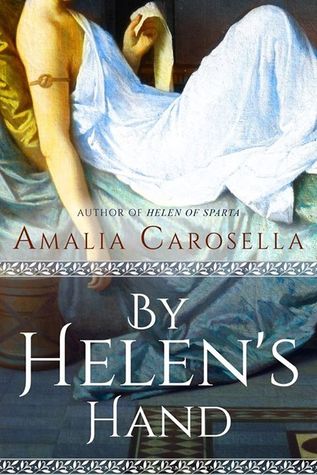
With divine beauty comes dangerous power.

Helen believed she could escape her destiny and save her people from utter destruction. After defying her family and betraying her intended husband, she found peace with her beloved Theseus, the king of Athens and son of Poseidon.

But peace did not last long. Cruelly separated from Theseus by the gods, and uncertain whether he will live or die, Helen is forced to return to Sparta. In order to avoid marriage to Menelaus, a powerful prince unhinged by desire, Helen assembles an array of suitors to compete for her hand. As the men circle like vultures, Helen dreams again of war—and of a strange prince, meant to steal her away. Every step she takes to protect herself and her people seems to bring destruction nearer. Without Theseus’s strength to support her, can Helen thwart the gods and stop her nightmare from coming to pass?

My Thoughts:

The story of Helen and Paris is an ancient tale blended with Greek Mythology. When I read the first book Helen of Sparta I couldn’t imagine how Carosella could bring a fresh take on the story or characters for that matter. But she did and delighted us all with a new look and By Helen’s Hand surprised me more than the first book. I was really taken back a little by Paris. Carosella gives a fresh take on him. At first I wasn’t sure how it was going to work but it did. You see I’ve never cared for him at all. The people in this story or the gods really never had any redeeming qualities in my opinion. Except for Theseus I should say. I adore him! Anyhow, this story explores Helen wanting to desperately escape her destiny and a young Paris who makes a name for himself.

Much of what Helen went through was so exhausting and I kept wondering how much more could she possibly go through! In other stories I’ve read about these two I was never convinced of the reasons why Helen would want to run away with Paris. How could he possibly help her if no one else could? I really can’t say more about this particular situation so you must read this story to find out.

My hats off to Carosella. It’s not easy blending myth with history and she does a splendid job with this tale. I am delighted she has brought back to life the story of Helen and Paris. A truly intriguing story with myth, betrayal, love, hate, intrigue and much more.

Stephanie M. Hopkins

Amazon (Kindle) | Amazon (Paperback) | Barnes & Noble | IndieBound

About the AuthorAmalia Carosella

Amalia Carosella graduated from the University of North Dakota with a bachelors degree in Classical Studies and English. An avid reader and former bookseller, she writes about old heroes and older gods. She lives with her husband in upstate New York and dreams of the day she will own goats (and maybe even a horse, too). For more information, visit her blog at www.amaliacarosella.com. She also writes fantasy and paranormal romance as Amalia Dillin.

You can also connect with Amalia on Facebook, Goodreads, and Twitter here and here.

Blog Tour Schedule

Monday, May 16
Tour Kick Off at Passages to the Past

Tuesday, May 17
Review at The Reading Queen

Wednesday, May 18
Review at Book Lovers Paradise

Thursday, May 19
Review at 100 Pages a Day

Monday, May 23
Review at Creating Herstory

Tuesday, May 24
Review at Book Nerd

Wednesday, May 25
Review at Let Them Read Books

Thursday, May 26
Review at Helen’s Daughter

Wednesday, June 1
Review at History From a Woman’s Perspective

Friday, June 3
Review at Oh, for the Hook of a Book!

Monday, June 6
Review at Ageless Pages Reviews

Wednesday, June 8
Interview at Oh, for the Hook of a Book!

Thursday, June 16
Review at Impressions In Ink

Friday, June 17
Review at Layered Pages

Monday, June 20
Review at Just One More Chapter

Wednesday, June 22
Review at CelticLady’s Reviews

Friday, June 24
Tour Wrap Up at Passages to the Past

Giveaway

To win a $40 Amazon Gift Card, sponsored by Amalia Carosella, please enter the giveaway via the GLEAM form below.

Rules

– Giveaway ends at 11:59pm EST on June 24th. You must be 18 or older to enter.
– Giveaway is open INTERNATIONALLY.
– Only one entry per household.
– All giveaway entrants agree to be honest and not cheat the systems; any suspect of fraud is decided upon by blog/site owner and the sponsor, and entrants may be disqualified at our discretion
– Winner has 48 hours to claim prize or new winner is chosen.

By Helen’s Hand

Wish-List 5: The American Civil War

As an American and a Southerner I have always been drawn to my countries history. Like all history there is good and the bad. I live in a state that is extremely rich in Civil War History and Southern Heritage. I have always been interested in the families of the south that live during the war and how it affected their lives. Recently my interest has deepened. I think it’s because I came across some documents or memories-if you will-that was written during the Reconstruction Period of the South. Since then that era has been on my mind. Then I was looking through some pictures of Madison, Georgia. A town in Georgia that Sherman and his army did not burn down on their march to the sea. Low and behold, a story of the south began to develop in my mind. So begins my research and reading of every novel and non-fiction book I can get my hands on about the civil war and the reconstruction.

Today, I share with you five historical fiction books of the era that is on my wish-list. Enjoy!

A Separate Country by Robert HicksA Separate Country by Robert Hicks

Set in New Orleans in the years after the Civil War, A Separate Country is based on the incredible life of John Bell Hood, arguably one of the most controversial generals of the Confederate Army–and one of its most tragic figures. Robert E. Lee promoted him to major general after the Battle of Antietam. But the Civil War would mark him forever. At Gettysburg, he lost the use of his left arm. At the Battle of Chickamauga, his right leg was amputated. Starting fresh after the war, he married Anna Marie Hennen and fathered 11 children with her, including three sets of twins. But fate had other plans. Crippled by his war wounds and defeat, ravaged by financial misfortune, Hood had one last foe to battle: Yellow Fever. A Separate Country is the heartrending story of a decent and good man who struggled with his inability to admit his failures-and the story of those who taught him to love, and to be loved, and transformed him.

The Outer Banks House by Diann DucharmeThe Outer Banks House by Diann Ducharme

As the wounds of the Civil War are just beginning to heal, one fateful summer would forever alter the course of a young girl’s life.

In 1868, on the barren shores of post-war Outer Banks North Carolina, the once wealthy Sinclair family moves for the summer to one of the first cottages on the ocean side of the resort village of Nags Head. Seventeen-year-old Abigail is beautiful, book-smart, but sheltered by her plantation life and hemmed-in by her emotionally distant family. To make good use of time, she is encouraged by her family to teach her father’s fishing guide, the good-natured but penniless Benjamin Whimble, how to read and write. And in a twist of fate unforeseen by anyone around them, there on the porch of the cottage, the two come to love each other deeply, and to understand each other in a way that no one else does.

But when, against everything he claims to represent, Ben becomes entangled in Abby’s father’s Ku Klux Klan work, the terrible tragedy and surprising revelations that one hot Outer Banks night brings forth threaten to tear them apart forever.

With vivid historical detail and stunning emotional resonance, Diann Ducharme recounts a dramatic story of love, loss, and coming of age at a singular and rapidly changing time in one of America’s most beautiful and storied communities.

Morgan_NorthStar_jkt_HC_FINAL_PRNT12_22.inddChasing the North Star by Robert Morgan

In his latest historical novel, bestselling author Robert Morgan brings to full and vivid life the story of Jonah Williams, who, in 1850, on his eighteenth birthday, flees the South Carolina plantation on which he was born a slave. He takes with him only a few stolen coins, a knife, and the clothes on his back–no shoes, no map, no clear idea of where to head, except north, following a star that he prays will be his guide.

Hiding during the day and running through the night, Jonah must elude the men sent to capture him and the bounty hunters out to claim the reward on his head. There is one person, however, who, once on his trail, never lets him fully out of sight: Angel, herself a slave, yet with a remarkably free spirit.

In Jonah, she sees her own way to freedom, and so sets out to follow him.

Bristling with breathtaking adventure, Chasing the North Star is deftly grounded in historical fact yet always gripping and poignant as the story follows Jonah and Angel through the close calls and narrow escapes of a fearsome world. It is a celebration of the power of the human spirit to persevere in the face of great adversity. And it is Robert Morgan at his considerable best.

Sisters of Shiloh by Kathy & Becky HepinstallSisters of Shiloh

In a war pitting brother against brother, two sisters choose their own battle.

Joseph and Thomas are fresh recruits for the Confederate Army, daring to join the wild fray that has become the seemingly endless Civil War, sharing everything with their fellow soldiers—except the secret that would mean their undoing: they are sisters.

Before the war, Joseph and Thomas were Josephine and Libby. But that bloodiest battle, Antietam, leaves Libby to find her husband, Arden, dead. She vows vengeance, dons Arden’s clothes, and sneaks off to enlist with the Stonewall Brigade, swearing to kill one Yankee for every year of his too-short life. Desperate to protect her grief-crazed sister, Josephine insists on joining her. Surrounded by flying bullets, deprivation, and illness, the sisters are found by other dangers: Libby is hurtling toward madness, haunted and urged on by her husband’s ghost; Josephine is falling in love with a fellow soldier. She lives in fear both of revealing their disguise and of losing her first love before she can make her heart known to him.

In her trademark “vibrant” (Washington Post Book World) and “luscious” (Atlanta Journal-Constitution) prose, Kathy Hepinstall joins with her sister Becky to show us the hopes of love and war, the impossible-to-sever bonds of sisterhood, and how what matters most can both hurt us and heal us.

Red River by Lalita TademyRed River by Lalita Tademy

From the New York Times bestselling author of Cane River comes the dramatic, intertwining story of two families and their struggles during the tumultuous years that followed the Civil War.

Here are some of the wishlists from a few of my friends this month:

Heather @ The Maiden’s Court

Magdalena @ A Bookaholic Swede 

Holly @ 2 Kids and Tired 

Erin @ Flashlight Commentary – To Come

Colleen @ A Literary Vacation 

Characters in Motion with Janet Wertman

I’d like to welcome Janet Wertman to Layered Pages today. Janet is taking part in my characters in Motion series and talks with us about her earliest draft of Jane the Quene. Be sure to check out her links below and click on her website to learn more about her.

*******

Janet WertmanFirst, let me thank you for this series and the opportunity to discuss Characters in Motion. It was a fun exercise for me – especially since it was a topic I struggled with. I didn’t get to create the story from my characters, I had to create my characters from the story…and likable ones at that!
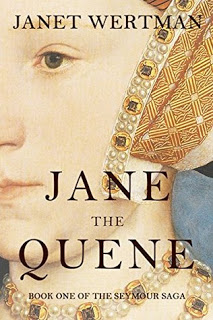
My debut novel, Jane the Quene, is the story of Jane Seymour, the third wife for whom Henry VIII executed Anne Boleyn. A lot of people know the basic facts, and virtually all of them are Team Anne.  But there is a way to tell Jane’s story that highlights its natural poignancy. That’s the story I wanted to tell, the one that would give Jane a team of her own – or at least acceptance.

The earliest drafts of the novel failed to do that. I wanted to make sure I got the story factually right, so I established my markers – very specific dates on which things happened – and I filled in the characters based on how they were reported to have acted at that time (I did have some wiggle room thanks to conflicting reports from inconsistent chroniclers, which let me pick and choose from a tapestry of stories that many had heard before, and reinterpret them in the way that felt right to me). As my writing books suggested, I told each scene from the point of view of the person most impacted in it …but that led to me giving voices to eight people – Jane, Henry, Edward, Cromwell, Anne Boleyn, Anne Seymour, even Mary. Jane’s voice and experience were lost, and the story was flat.

Then I found a great developmental editor who told me that I needed to forget the objective story and make it all about Jane’s personal experience. I could keep my timeline but I had to drastically cut the POVs. She originally suggested keeping only Jane’s voice, but I knew I needed a second someone to tell the other side of the story, someone who could detail the actual plotting that was taking place. Cromwell was the perfect choice – he was another vilified character with a poignant story (though the poignancy does not emerge until the close of this book), and he allowed me to reveal more of Henry (Jane saw him as good, Cromwell saw him as evil).

jane-the-queen-book-cover

From there, everything just fell into place. Since everything I wanted to say had to be filtered through Jane or Cromwell, I found myself showing more and telling less. Making each scene unfold slowly, with sensory details to anchor it. This was fiction after all and I was able to layer in the imagined private moments of Jane’s journey.  The September 1535 meeting in the gardens, the April 1536 hunting trip where Jane learns that Anne will die…these were the key pieces of the narrative. Invented, but still loosely based on facts (like the fact that Henry loved concocting medicines…the fact that hunting involved unmaking the deer and sharing the “good” organs on the spot…).  I had almost free rein with these, except for one particular pivotal scene: The December 1536 confluence of two blessed events (Mary’s return to court, London gathering on the frozen Thames to cheer on the royal procession to church) with two tragic ones (Jane’s father dying and another miscarriage). Luckily, everything worked (assuming a relatively speedy messenger!).

I’m finding the same challenges in the sequel: I am currently working on The Path to Somerset, which is the story of Edward Seymour (another vilified character with a poignant story…I have a pattern!) during the second three-set of Henry’s wives (Henry’s crazy years). Jane was about morality, Somerset is about power and risk. I am really enjoying getting to motivation in between the things we know happened…though I have to say I look forward to the editing process as I already know some places to be smoothed out a bit!

Janet Wertman

Author Links:

LINKS

Amazon US

Amazon UK

Amazon AU

For more information on Janet and her book Jane the Quene, go to her wonderful website, where she blogs on Tudor history.

Facebook Author Page

My Twitter

Jane’s Twitter (yes, she has her own – and tweets different stuff than I do!):

Pinterest

Google+ 

Be sure to check out Nancy Bilyeau’s  interview with Janet!


Book Review:June by Miranda Beverly-Whittemore

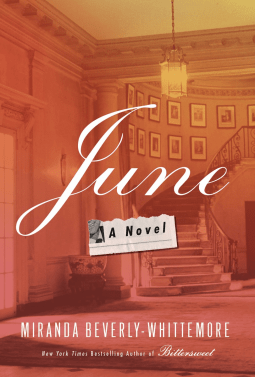
JumeTwenty-five-year-old Cassie Danvers is holed up in her family’s crumbling mansion in rural St. Jude, Ohio, mourning the loss of the woman who raised her—her grandmother, June. But a knock on the door forces her out of isolation. Cassie has been named the sole heir to legendary matinee idol Jack Montgomery’s vast fortune. How did Jack Montgomery know her name? Could he have crossed paths with her grandmother all those years ago? What other shocking secrets could June’s once-stately mansion hold?

Soon Jack’s famous daughters come knocking, determined to wrestle Cassie away from the inheritance they feel is their due. Together, they all come to discover the true reasons for June’s silence about that long-ago summer, when Hollywood came to town, and June and Jack’s lives were forever altered by murder, blackmail, and betrayal. As this page-turner shifts deftly between the past and present, Cassie and her guests will be forced to reexamine their legacies, their definition of family, and what it truly means to love someone, steadfastly, across the ages.

My thoughts:

I love stories where there is a dual timeline of events past and present. I found this story to be genuinely absorbing. Though I have to say in the beginning Cassie’s story intrigued me more than her grandmothers story, June. There are so many wonderful characters and characters you will want to throttle in this story and the glam of Hollywood stars, a rambling old home-Two Oaks that was spectacular in its heyday. Voices of the past haunting Cassie as she is faced with discovering her family’s legacy.

There is some twist to the plot and I have to say, I guessed what was going to happen but not in every detail of the plot. There were some surprises for me.

I found this story to be thoroughly enjoyable and atmospheric. I also enjoyed the authors details to Two Oaks and the roots planted there by not only the people that lived in the house but by the people in the town that affected their lives. I wouldn’t mind revisiting this story again one day.

I rated this book four stars!

Cover Crush: Time and Regret by M.K. Tod

Cover Crush banner

I admit, I judge a book by its cover. Overall presentation is important to pull a reader in. When I read a story I want to be completely immersed. A grand cover helps that along. Imagery and all-if you will. Check out this book description below and then be sure to read what I have to say about the cover and the premise!

Time and regret

About the book:

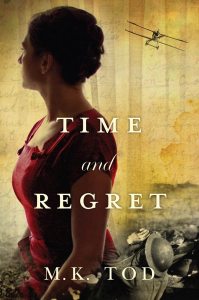
Time and Regret: When Grace Hansen finds a box belonging to her beloved grandfather, she has no idea it holds the key to his past—and to long-buried family secrets. In the box are his World War I diaries and a cryptic note addressed to her. Determined to solve her grandfather’s puzzle, Grace follows his diary entries across towns and battle sites in northern France, where she becomes increasingly drawn to a charming French man—and suddenly aware that someone is following her…

Through her grandfather’s vivid writing and Grace’s own travels, a picture emerges of a man very unlike the one who raised her: one who watched countless friends and loved ones die horrifically in battle; one who lived a life of regret. But her grandfather wasn’t the only one harboring secrets, and the more Grace learns about her family, the less she thinks she can trust them.

My thoughts:

I have to confess something. Yesterday when I first saw this book cover on Facebook, I was sipping a cup of hot tea and almost spilled it all over me. I kid you not. Such a dramatic and artful cover that has been beautifully crafted. The cover gives you a real sense of time and place of the era its written in. I was totally cover crushing over this yesterday and still am. My deepest respect to the designers.

When I read the book blurb I became more intrigued. I love reading stories that hold long buried secrets, the bond of family and in the mist of troubled times. This story has all the elements of a good read and I am REALLY looking forward to reading it.

Check out these other great cover crushes at my fellow book bloggers sites!

A Bookaholic Swede

Flashlight Commentary

2 Kids and Tired Books


Wish-List 5: Christian Fiction

I am a Christian but generally do not read Christian Fiction. There are very few authors who write in this genre well, in my opinion. Often I find these stories to be too preachy or unrealistic. Or the characters seem artificial to me. I want real life, raw, vivid situations, real human struggles, real emotions and happiness-yes-but believable. I don’t like sugar coated stories. I want to see characters overcome hardships in the face of evil. I want truth. I want to be inspired. 

I came across this titles on gooderads and I really like what I saw. Now I am really looking forward to reading these in the near future!

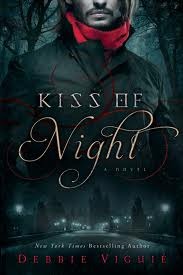
Kiss of NightCenturies ago, Raphael was a blasphemous knight who fought in the Crusades purely for his own mercenary benefit, and to satisfy his taste for killing. Now, condemned for his evil passions and hypocrisy, he wanders the earth a vampire, cursed with first-hand knowledge of the supernatural world he once denied existed. The powerful relic he still possesses from his days as a Crusader has been stolen by a rival vampire who has recruited an army of soulless underlings to aid him in spreading evil. At the time he learns this, Raphael has been hunting this vampire for nearly a century, and it seems the final battle is destined to take place in Prague.br For help in this quest, Raphael must enlist the aid of two humans, David and Susan, who suddenly find themselves immersed in a world they never imagined, entangled with supernatural forces they can’t control. Susan, in particular, finds herself conflicted as she struggles with her inexplicable attraction to Raphael. In the end, both Susan and Raphael will be called upon to exercise courage and faith, and in the process, the question, “What would happen if a vampire truly accepted God?” is answered.
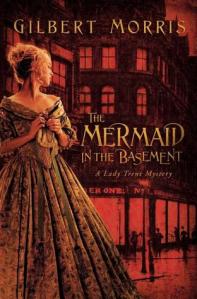
 

The Mermaid in the BasementA wealthy widow of a nobleman, daughter of a famous scientist, and skeptic who only trusts what can be proven.
Meet Serafina Trent. A woman about to take 19th Century London by storm.

It’s London, 1857, and everything is at stake for Serafina Trent. A woman of means . . . but not the typical Victorian lady who feels her place is to be seen and not heard. When her brother’s most recent female dalliance, a beautiful actress, is found murdered, all evidence points to him. Especially since the actress had just rejected him in a most public manner. Now everyone believes Clive is headed for the gallows. Everyone, that is, but Serafina.

Determined to prove her brother’s innocence, Serafina finds herself working with unlikely allies–including Dylan Tremayne, a passionate storyteller and actor with a criminal past. This novel will hold fans of mystery and history spellbound until the very last page.

Victorian England comes alive in this intriguing new series from one of Christian fiction’s favorite authors.


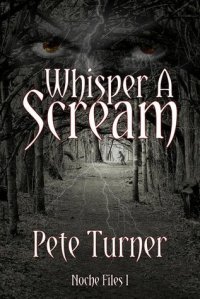
Whisper A Scream Noche Files II know evil exists, I met it face to face Solomon Noche is a therapist in the seemingly normal small town of Retselville, Kentucky dealing with displaced anger toward God after his family dies tragically. Nightmares encapsulate him where an ancient demonic cult sacrifices children in Retselville. Despite Sol’s protest, God chooses him to stop them. This discovery thrusts him into a journey where reality and psychosis blur as a nightmarish figure torments him with riddles and time-traveling horrors. The first riddle leads Sol to unearth a preacher’s journal from the 1800’s in a secret cellar in his yard. It details Elijah Darius’ mission to stop the cult and his eyewitness account of a demon named Miyah and its demand of child sacrifices to the ancient god Dagon. The journal intertwines with Sol’s life, and guides him to expose more secrets about Retselville, and the evil hidden history of the grounds where he works. As each riddle is solved, more horrors are uncovered including finding a sacrificial altar, a ritual dagger, and a well of children’s skulls. The closer he gets to the truth, the more sinister the secrets become as he believes all of Retselville may be part of the cult and their centuries’ old secrets. More than Sol’s life hangs in the balance, as Miyah tempts him with unfathomable choices. But resolves his only hope is in repentance as only God can save him and defeat this demon and its’ followers. Sol confronts Miyah in its appalling, fallen form a final time, in a battle beyond Retselville and Solomon Noche, but innumerable souls. Whisper A Scream is a supernatural thriller with demons, cults, and time-traveling nightmares. It becomes an intense thrill-ride of suspense, seizing you until the last page, with an addictive story that falls off the edge of horror. Dread seeps into your soul as you awaken to find yourself walking down the mysterious path with Sol and cower at the sights and sounds encountered. Pray your voice is heard as you WHISPER A SCREAM!
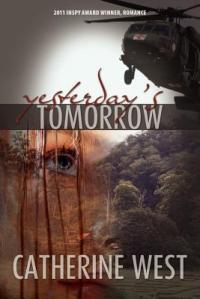
 

Yesterday's TomorrowVietnam, 1967.

Independent, career-driven journalist Kristin Taylor wants two things: to honor her father’s memory by becoming an award-winning overseas correspondent and to keep tabs on her only brother, Teddy, who signed up for the war against their mother’s wishes. Brilliant photographer Luke Maddox, silent and brooding, exudes mystery. Kristin is convinced he’s hiding something.

Willing to risk it all for what they believe in, Kristin and Luke engage in their own tumultuous battle until, in an unexpected twist, they’re forced to work together. Ambushed by love, they must decide whether or not to set aside their own private agendas for the hope of tomorrow that has captured their hearts.

A poignant love story set amidst the tumultuous Vietnam War.


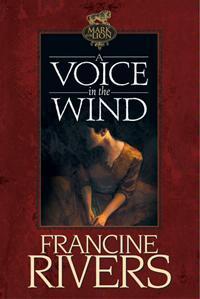
A Voice in the WindThe first book in the bestselling Mark of the Lion series, A Voice in the Wind brings readers back to the first century and introduces them to a character they will never forget—Hadassah. Torn by her love for a handsome aristocrat, this young slave girl clings to her faith in the living God for deliverance from the forces of decadent Rome.



INTERESTED IN MORE WISHLISTS?
CHECK OUT WHAT MY FRIENDS HAVE BOOKMARKED:

Erin at Flashlight Commentary
Magdalena at It’s a Mad Mad World
Heather at The Maiden’s Court
Colleen at A Literary Vacation 
Holly at 2 Kids and Tired

Interview with Author Laura Powell

Laura PowellI have the great pleasure of welcoming Laura Powell to Layered Pages today. Laura is a Features Commissioning Editor at the Daily Telegraph. She has written for The Guardian, Daily Mail, Mail on Sunday and various magazines. She was awarded a New Writer’s Bursary from Literature Wales and was named as one of Amazon’s Rising Stars. She grew up in South Wales and now lives in London. The Unforgotten is her first novel.
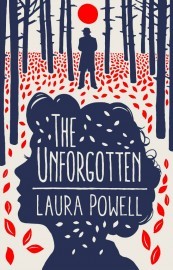
Laura, thank you so much for talking with me today about your book, The Unforgotten. What a stunning debut! I enjoyed your story and I love the complexities of your characters. Tell me how you came to write this story?

Thanks so much – it still feels funny to hear that other people have read about the world that lived in my head only for so long. I started writing it one Sunday afternoon when my then-boyfriend was in football practice. I’d been on Facebook and had seen an old face that brought back so many memories. Out of the blue I started writing a dark, sort-of love story about someone who was in a relationship but was never sure whether her feelings were returned or not. By the end of the day I’d written two chapters. I’ve since weaved in lots of other elements – murder, mental illness, moral dilemmas. But that bittersweet love story remains the core for me.

What is the premise of your story?

It’s a forbidden love story between a 15-year-old girl Betty and a 30-year-old journalist Gallagher set in 1950s Cornwall. They’re from different classes, different worlds – but their relationship becomes very deep, very fast. They meet when Gallagher arrives in the fishing village where Betty lives to report on a series of murders – but they soon make a discovery related to the murders. And they are each faced with a huge dilemma that tests their feelings for the other and questions their morality. The devastating consequences of that decision unravels over the next 50 years.

What is the mood or tone your characters portray and how does this affect the story?

It is very dark, bleak but there is also a hopefulness and a lightness to it, which I hope shines through. Though ultimately I’m a sucker for a weepy book or film so…

How is your character(s) influenced be their setting?

The main character, Betty, is 15 and has hardly ever left her hometown of St Steele – a fictional Cornish fishing village – aside from going to the occasional dance in the neighbouring town. She travels outside that area for the first time in her life in the book – first to St Ives, a real Cornish town. And later, to London. Taking her away from that setting makes her even more vulnerable than she always has been, but also really tests her, as she has been so insulated (geographically speaking) all her life.

The Unforgotten

How did you choose a Cornish fishing village of St Steele as the setting of your story? Is it a real place? And why did you choose the 1950’s as the period for your story?

I chose to write about Cornwall because it’s my favourite part of the country. I’m Welsh. I now live in London. And I studied in the West Midlands (Warwick). Yet I’ve been to Cornwall – usually St Ives – every year since I was born, sometimes twice or three times. I love the town, it is full of happy memories with friends and family, so it was wonderful to ‘live’ there in my head for so long when writing. Yet I didn’t want to be tied to a real place so I invented St Steele. It’s loosely based on a teeny cove called Porthgwidden in St Ives that is just gorgeous. Making it a fictional place gives you a lot more freedom to move around, and to pick up a building or a street and drop it elsewhere if that benefits the plot, rather than being tied down to the truths of history.

Please tell your audience a little about Dolores Broadbent.

Dolores is the third main character. She is the mother of Betty, the main character. And she runs the guest house in St Steele. She was by far the easiest character to write and I had such a clear vision of her – a little like Julianne Moore’s character in A Single Man (the beautiful Tom Ford-directed film with Colin Firth.) She is beautiful and glamorous and whimsical but damaged and broken. She once had any man she wanted, she wafted about and was carefree. But now she is older, widowed, with little money, failing looks and a daughter of 15 who is not at all as she was, she is finding it hard to come to terms with her lot and as a result, can be quite violent and brutal. I loved her complexity. I hope people have the same sympathy for her that I do.

What are the changing emotions you have as a writer?

I’ve probably gone through every feeling on the spectrum. But if I’m honest, the one thing I always feel is disappointed. I wonder why I wrote that terrible line, why this or that isn’t working as well as I’d like it to, I’m constantly critiquing my writing and pulling it apart. I’m a bit of a malcontent. But I’m teaching myself not to be. Slowly.

What are your personal motivations in story-telling?

To inhabit the world as clearly and fully as I inhabit the ‘real’ world.

What are you working on next?

Another book. I don’t want to say too much in case I jinx it but it’s dark and historical and layered with mystery that unravels over the years, based on a catastrophic fictional event in our pasts. The idea has been bubbling in my head for years and I’m really enjoying delving in!

What is your writing process?

I’m afraid it’s an approach I can’t recommend for others but it works for me – ‘feast and famine’ is probably the best description. I spend weeks obsessed with writing the book; I think about it, write every spare second I have, late into the night and early into the morning, I write bits on the Notes of my phone, on my laptop when I’m on buses and trains, on scrawled napkins in cafes, then back to my laptop that night. Even when I’m with friends I’m thinking about the book… Then I crash. And spend a few weeks sleeping, reading, working, living etc – before I begin writing again. This is just for the first and second drafts I should add – I’d go mad if I was like that permanently. The later editing processes are much more methodical and orderly and calming. But that early writing stage is all a bit, well, obsessive!

Where can readers buy our book?

Amazon, Waterstones or Freight Books. Here are the links! If you read it, I’d love to know what you think – I’m on Twitter @laurapow1

Sites:

Waterstones-The Unforgotten by Laura Powell

Amazon UK

Freight Books-The Unforgotten by Laura Powell