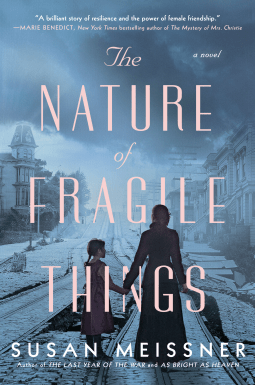
Sophie Whalen is a young Irish immigrant so desperate to get out of a New York tenement that she answers a mail-order bride ad and agrees to marry a man she knows nothing about. San Francisco widower Martin Hocking proves to be as aloof as he is mesmerizingly handsome. Sophie quickly develops deep affection for Kat, Martin’s silent five-year-old daughter, but Martin’s odd behavior leaves her with the uneasy feeling that something about her newfound situation isn’t right.
Then one early-spring evening, a stranger at the door sets in motion a transforming chain of events. Sophie discovers hidden ties to two other women. The first, pretty and pregnant, is standing on her doorstep. The second is hundreds of miles away in the American Southwest, grieving the loss of everything she once loved.
The fates of these three women intertwine on the eve of the devastating earthquake, thrusting them onto a perilous journey that will test their resiliency and resolve and, ultimately, their belief that love can overcome fear.
My thoughts:
The Nature of Fragile Things is without a doubt, my favorite book by Meissner. The different elements and themes are engaging and her story is unique, and although you are transported to time and place, you feel connected to the characters as if they were living today.
The 1906 San Francisco earthquake devastated the city and left well over 200,000 homeless and a high death toll. A fire broke out and quickly spread through parts of the city making it even more unsafe. Meissner’s historical telling of the earthquake and fire is wonderfully woven into the story.
What I liked most about Sophie is that she is a complex protagonist. She is not what you would call a goody-two-shoe heroine, but a woman with flaws and at times, doubt is cast about her motives and her life. Meissner steps out of the norm of one- dimensional characters I often see in stories. Readers need to see the characters battle their own demons, grow and learn from them. You get that and more from this story.
A compelling story blended with history and fiction.
I couldn’t put this book down.
Stephanie Hopkins
I obtained a copy from the Publishers through NetGalley for an honest review.
Expected publication: March 12th 2021 by Bookouture
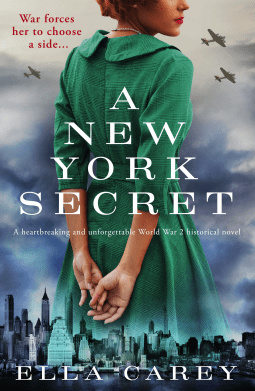
War forces her to choose a side…
1942, New York. As war rages in Europe, Lily Rose is grateful for her perfect life: a wealthy family who love her and a dream job working uptown as a restaurant chef. Times are changing for women and Lily is determined to run her own kitchen one day. She hopes handsome Tom Morelli, son of Sicilian immigrants, will be at her side. Together they work late, dreaming up delicious meals for New Yorkers struggling with wartime rationing and the threat of sons and sweethearts being called up…
Then Tom receives a devastating telegram that changes everything: he is drafted to fight in Italy.
Suddenly alone, Lily turns to her parents for support. But when her mother finds out about Tom, she is furious. When the war ends, Lily’s duty is to marry the man picked for her, keep house and raise children. They give her a heartbreaking ultimatum: end her relationship with Tom or lose her family and inheritance forever.
In the middle of the war, Lily is left in an impossible position. Will she choose to stay with her family and live the safe life she has always known, or will she follow her heart and her dreams?
My thoughts:
Often times we only read stories about war in the midst of battles and evasions. Ella Carey gives us a story about the families back home and the affect war has on them and the sacrifices they have to make. Like any war, people on the home front are thrust into uncertainties and adjusting to a new way of life, even if temporary. Is it really temporary?
Women were called to do “mens’ work” and this fact alone opened many opportunities and gave women a sense of pride and validity. We have much to thank them for…
Rationing food, gas and clothing became part of the necessary means and people had to find creative and alternatives to these commodities. While these things were taking place, there was also fear that gripped the nation for their love ones off fighting on the front lines.
These themes are woven throughout the story in an engrossing way that captivates the reader and gives one an appreciation for sacrifices that are made for the good of community.
I was completely enthralled with Lily’s strength and following her life during this period in history. All the characters, really, have a special role that gives this story depth and purpose.
What fun it was to read about the restaurant kitchen life and its culture.
A New York Secret is most definitely a thought-provoking, emotional story that portrays courage, hard choices, family, friendships in unlikely places and adversity.
Stephanie Hopkins
I obtained a copy from the Publishers through NetGalley for an honest review.
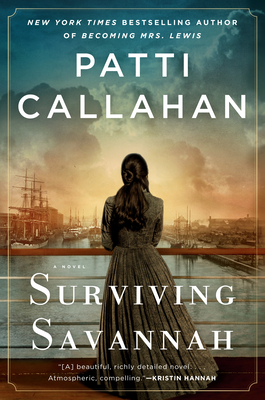
When Savannah history professor Everly Winthrop is asked to guest-curate a new museum collection focusing on artifacts recovered from the steamship Pulaski, she’s shocked. The ship sank after a boiler explosion in 1838, and the wreckage was just discovered, 180 years later. Everly can’t resist the opportunity to try to solve some of the mysteries and myths surrounding the devastating night of its sinking.
Everly’s research leads her to the astounding history of a family of eleven who boarded the Pulaski together, and the extraordinary stories of two women from this family: a known survivor, Augusta Longstreet, and her niece, Lilly Forsyth, who was never found, along with her child. These aristocratic women were part of Savannah’s society, but when the ship exploded, each was faced with difficult and heartbreaking decisions. This is a moving and powerful exploration of what women will do to endure in the face of tragedy, the role fate plays, and the myriad ways we survive the surviving.
My thoughts:
The Steamship Pulaski disaster is a true historic story. In 1838, there was an explosion on board at eleven pm at night and two-thirds of the lives were lost. The ship was about 30 miles off the coast of North Carolina and the ship sank within 45 minutes after the explosion. Can you image the utter chaos and the fight for survival? The utter fear of the women, men and children experienced was beyond horrific. As the story goes, through time, the fate of the lives lost were forgotten.
The historical story of Augusta Longstreet, and her niece, Lilly Forsyth was fascinating to follow. The plight that was handed to them and having to deal with it in life altering ways was extraordinary and powerful to read about. This story truly explores how life can change in an instance and the outcome is uncertain but one must never give up hope. Lily is a person I would love to read more about. Not only that but what the other families were going through during those fateful hours on the Pulaski and in the ocean.
Divers reported that they are believed to have found the wreckage of Pulaski from recovered items they salvaged from the wreck. Savannah professor Everly Winthrop was asked to study the artifacts and of that fateful period leading up to the disaster and afterwards. While she is working on the project, she was dealing with her own tragedy affecting her life in more ways than one.
This story is told in a dual time-line and I enjoyed many of the history elements throughout the story but felt at times the writing of the modern part was contrived. Also, Everly’s personal tragedy -where she eventually found closure- was too drawn out and I became irritated. I felt that part did not carry the overall modern day story well and it lacked structure and seemed forced, for a lack of better word. I found it hard to empathizes with her, but don’t misunderstand me, I’m fully aware that people grieve in different ways.
I did enjoy reading about Everly’s surroundings in Savannah because the city is known to me and her search for the artifacts, and finding out more about the families on the ship was intriguing.
I do love dual story-lines but I found myself thinking that I would have just preferred reading the historic aspects of the story without the modern part. Both need to be equally strong and it wasn’t which makes it difficult to follow the flow of the story with ease.
Despite a few of my misgivings, it is a good story and I’m confident that many readers will enjoy learning about the Pulaski through Surviving Savannah.
Stephanie Hopkins
I obtained a copy from the Publishers through NetGalley for an honest review.
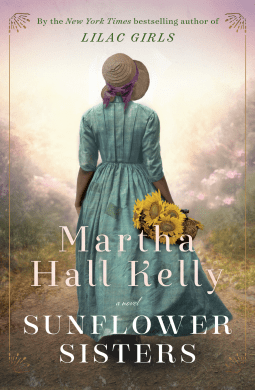
Lilac Girls, the 1.7-million-copy bestselling novel by Martha Hall Kelly, introduced readers to Caroline Ferriday, an American philanthropist who helped young girls released from Ravensbruck concentration camp. Now, in Sunflower Sisters, Kelly tells the story of her ancestor Georgeanna Woolsey, a Union nurse who joins the war effort during the Civil War, and how her calling leads her to cross paths with Jemma, a young enslaved girl who is sold off and conscripted into the army, and Ann-May Wilson, a southern plantation mistress whose husband enlists.
Georgeanne “Georgey” Woolsey isn’t meant for the world of lavish parties and demure attitudes of women of her stature. So, when the war ignites the nation, Georgey follows her passion for nursing during a time when doctors considered women a bother on the battlefront. In proving them wrong, she and her sister Eliza venture from New York to Washington, D.C., to Gettysburg and witness the unparalleled horrors of slavery as they become involved in the war effort.
In the South, Jemma is enslaved on the Peeler Plantation in Maryland, where she lives with her mother and father. Her sister, Patience, is enslaved on the plantation next door and both live in fear of LeBaron, an abusive overseer who tracks their every move. When Jemma is sold by the cruel plantation mistress Anne-May at the same time the Union army comes through, she sees a chance to finally escape–but only by abandoning the family she loves.
Anne-May is left behind to run Peeler Planation when her husband joins the Union Army and her cherished brother enlists with the Confederates. In charge of the household, she uses the opportunity to follow her own ambitions and is drawn into a secret Southern network of spies, finally exposing herself to the fate she deserves.
My Thoughts:
When I began to read this story, I must confess my feelings were not completely favorable. I’ve read and studied the American Civil War for quite some years and was looking for something I haven’t read before. As the story unfolded, I became less frustrated and was intrigued with how the author portray the character’s personalities. Needless to say, she doesn’t hold back.
Kelly marvelously shows us multi-dimensional people of the time. Which is important to have a better sense of mindsets and not told just in the perspective of the people who oppose them. Yes, it can be a slippery slope in today’s social norms but it is extremely counterproductive when people’s voices-all around-are silenced.
I was quite impressed with the realistic imagery of the Civil War background and the author’s portrayal of the evils of slavery. Heart-wrenching to say the least…
As the war continued, just about every household lost someone they loved. Death became commonplace and with Sunflower Sisters, you experience that fact, vividly.
The Civil War topic still holds to this day with powerful and emotional attitudes. There was a particular scene in the story where I felt the author was bringing up a subject that many don’t speak of openly. Powerful business men in the north of that time profited from slavery. Yes, they surely did as the sun rises. Still applies today, really. Slavery is the oldest institution in the world. The author also portrays quite a few prejudices by people in the north had towards people of color.
There was a couple themes in the story that reminded me of what C.S. Harris wrote in an interview I had with her a few years back. To turn the Civil War into a morality play in which one side equals good and the other evil serves only to distort history and perpetuate the dangerous divisions that still exist in our country over 150 years later.
Bravo, Martha Hall Kelly! You have written a story that provokes discussion and clarity on this sensitive subject. You give new meaning to the good, bad and ugly. Memorable characters and an unforgettable story that needed to be told.
Stephanie Hopkins
I obtained a copy from the Publishers through NetGalley for an honest review.
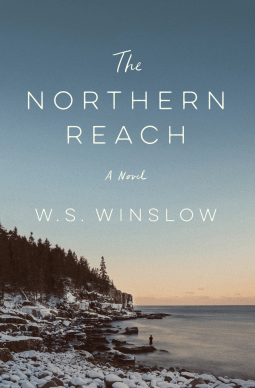
A heart-wrenching first novel about the power of place and family ties, the weight of the stories we choose to tell, and the burden of those we hide.
Frozen in grief after the loss of her son at sea, Edith Baines stares across the water at a schooner, under full sail yet motionless in the winter wind and surging tide of the Northern Reach. Edith seems to be hallucinating. Or is she? Edith’s boat-watch opens The Northern Reach, set in the coastal town of Wellbridge, Maine, where townspeople squeeze a living from the perilous bay or scrape by on the largesse of the summer folk and whatever they can cobble together, salvage, or grab.
At the center of town life is the Baines family, land-rich, cash-poor descendants of town founders, along with the ne’er-do-well Moody clan, the Martins of Skunk Pond, and the dirt farming, bootlegging Edgecombs. Over the course of the twentieth century, the families intersect, interact, and intermarry, grappling with secrets and prejudices that span generations, opening new wounds and reckoning with old ghosts.
My Thoughts:
First impressions are not always correct. In the beginning, I must confess the writing style and story structure threw me for a loop. When I started to feel something for a character or the family dynamic, the story moves on to the next and at times I became frustrated. Yes, I was having a rough go of it all. It was time to take a step back and reevaluate the story and purpose of the presentation and I’m glad I did.
One must remember that when reading about generational families or interconnected families-if you will, there will be multi-faceted plots. You will be taken deeply into a historical time-lines. There will be strong elements that can sway you from happy moments to darker times. In short, they evolve. Family bonds are complicated to say the least and the author marvelously portrays this fact. We might not like the characters or we will feel we are not getting enough from them but that is okay. The Northern Reach is an evocative story and will push boundaries you might not have expected to cross.
I did enjoy a quite few of the story-lines and the setting and I was intrigued with the character’s life story and I wanted to read more about them. Will we be reading more about these interesting people? I would like to very much! As the story continued, I began to have a better understanding of the set-up-if you will. There is strong character development and the setting gives you a stark, realistic view of the state of Maine and its’ towns. There is a particular social element in the story that is still considered a hot topic in today’s climate that I would really like to pick the authors brain about!
The author superbly portrays how people can make assumptions about other people and even more so in families. The Northern Reach is not a story of virtuous people, but they are down to the bone’s realistic of human nature and thought. In particular the attitudes of the Baines family and the people who marry into that family. At first, I found Edith Baines to be an intriguing woman, I soon discovered her to be just as flawed-if not more- like the rest of them. She was hardened by her life experiences and loss. Her attitude-I felt-towards her daughter-in-law Lilane was unjust. The women who made the most impression on me were Imelda, Alice, Liliane and Suzanne. I would like to read more about them.
An intriguing story wrought in hardships, cultural differences, family dysfunction, legacy and loss.
Stephanie Hopkins
I obtained a copy of this book through the publishers for an honest review.
Interview with W.S. Winslow coming up Friday, March 5th here a Layered Pages!
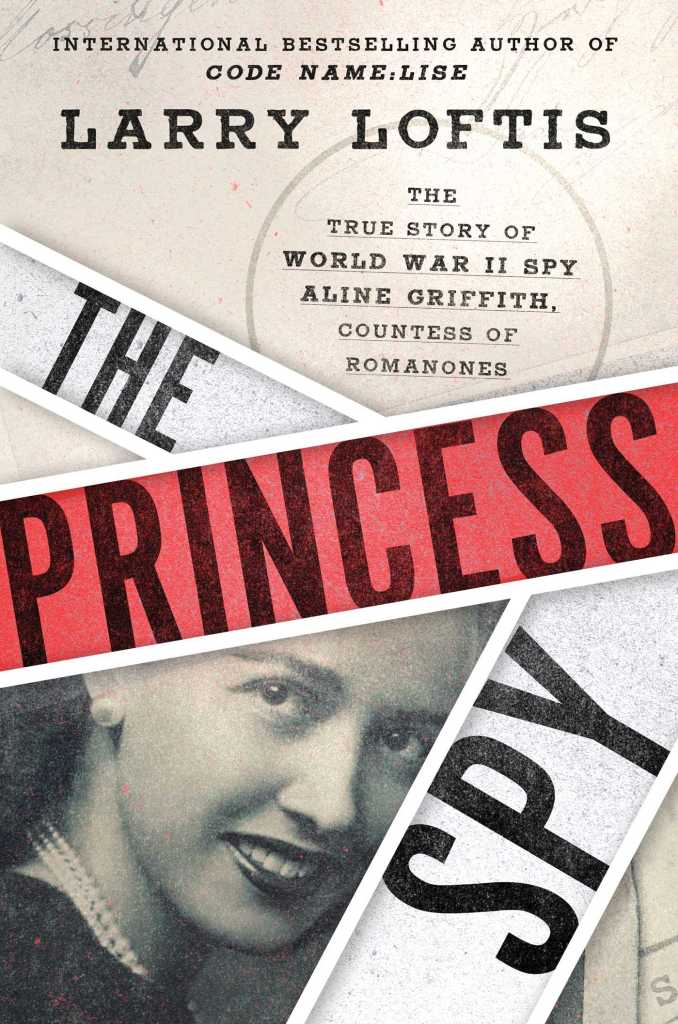
When Aline Griffith was born in a quiet suburban New York hamlet, no one had any idea that she would go on to live “a life of glamour and danger that Ingrid Bergman only played at in Notorious” (Time). As the US enters the Second World War, the young college graduate is desperate to aid in the war effort, but no one is interested in a bright-eyed young woman whose only career experience is modeling clothes.
Aline’s life changes when, at a dinner party, she meets a man named Frank Ryan and reveals how desperately she wants to do her part for her country. Within a few weeks, he helps her join the Office of Strategic Services—forerunner of the CIA. With a code name and expert training under her belt, she is sent to Spain to be a coder, but is soon given the additional assignment of infiltrating the upper echelons of society, mingling with high-ranking officials, diplomats, and titled Europeans, any of whom could be an enemy agent. Against this glamorous backdrop of galas and dinner parties, she recruits sub-agents and engages in deep-cover espionage to counter Nazi tactics in Madrid.
Even after marrying the Count of Romanones, one of the wealthiest men in Spain, Aline secretly continues her covert activities, being given special assignments when abroad that would benefit from her impeccable pedigree and social connections.
Filled with twists, romance, and plenty of white-knuckled adventures fit for a James Bond film, The Princess Spy brings to vivid life the dazzling adventures of a remarkable American woman who risked everything to serve her country.
My thoughts:
I’ve read a lot of World War II stories but I must say, The Princess Spy is the first book I’ve read, that really delves into the espionage world. The research alone that went into this book is impressive! I obtained a physical copy and enjoyed marking lots of details I want to go back and read and do a bit of my own research. I also enjoyed the images throughout the book. That was a nice touch and really helped bring it all to reality.
I don’t think I’ve paid attention to just how many different government agencies had spies in Europe during World War II until reading about it in these pages. Absoultuly fascinating and absorbing. I found it all incredible, really, because I’m still trying to wrap my head around the ins and outs of how it all worked. Could anyone? That said, Loftis does a marvelous job with drawing you in and gives you an understanding how much of it operated.
I’m impressed with Loftis taking on this project and telling Aline’s role during the war. Too often, throughout our history, women’s roles were largely ignored. She lived an astonishing life, and went from your average American girl to being a spy, and becoming friends with and related to the elitist society. I was amazed with how many people she knew and her, “schedule,” to say the least. The energy she had, I’m sure, is part of what made her a great spy. What a brave woman.
I immensely enjoyed reading about her friendship with Juanito Belmonte. He was a Spaniard and a wealthy Matader-Bullfighter who spotted Aline when she first arrived to Madrid and sought her out.
Before reading about Bullfighting in this book, I was turned off by the sport-if you will. Well, I’ve changed my mind and found the details of Bullfighting to being an art and intriguing.
Be sure to read the epilogue and notes at the back of the book. You’ll get more insight into the people Loftis wrote about and what he had left out.
A must read!
Stephanie Hopkins
My thanks to Artria Books for providing me with an ARC.
Published February 4th 2020 by Bethany House Publishers
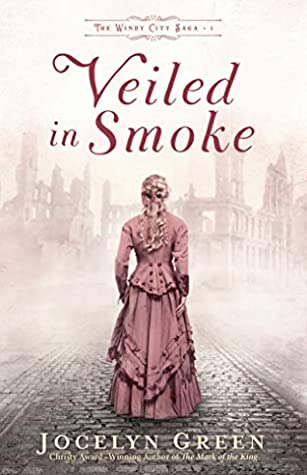
Meg and Sylvie Townsend manage the family bookshop and care for their father, Stephen, a veteran still suffering in mind and spirit from his time as a POW during the Civil War. But when the Great Fire sweeps through Chicago’s business district, they lose much more than just their store.
The sisters become separated from their father, and after Meg burns her hands in an attempt to save a family heirloom, they make a harrowing escape from the flames with the help of Chicago Tribune reporter Nate Pierce. Once the smoke clears away, they reunite with Stephen, only to learn soon after that their family friend not only died during the fire–he was murdered. Even more shocking, Stephen is charged with the crime and committed to the Cook County Insane Asylum.
Though homeless, injured, and suddenly unemployed, Meg must not only gather the pieces of her shattered life, but prove her father’s innocence before the asylum truly drives him mad.
My thoughts:
I’ve heard of the Great Fire in Chicago during that period but I don’t believe or can’t remember if I’ve read an historical fiction story that takes place during that time. I was delighted to come across, Veiled in Smoke and I had not read any of Green’s stories beforehand. Needless to say, I was unfamiliar with her work and was eager to delve in her world-building.
I have to say, while the introduction of the characters in the beginning was intriguing, the build-up to the day of the fire felt rushed and lacked a certain substance. I started to have doubts about this book but rallied on. The story didn’t take off until the fire broke out. At that very moment, I felt a shift in the structure of the storytelling and became immensely captivated. The telling of the fire itself and was outstanding and so realistic, you are completely transported to time and place.
I enjoyed reading about Meg and Sylvie’ life during this tragic event and the author does a marvelous job at creating sisterly tension and, at times, unease in their relationship. She also shows their love for each other, for their father and others.
Although different in many ways, Meg with her artistic ability and Sylvia with her love of books and independent in thought, they are both intelligent and they didn’t give up, despite their daunting predicaments. There are many life lessons to be learned with their story.
Banner by Stephanie Hopkins
Stephen’s suffering from Soldiers Heart AKA PTSD from his time as a POW in Andersonville is heartbreaking, yet, eye opening to read about. The Prison camp is reported to have been the largest prison for holding Union soldiers and its conditions are heartbreaking to say the least.
Having said that, there is a topic about how Andersonville was portrayed that I felt needed to be addressed in the story and wasn’t. I felt the subject a bit one sided and conveniently left out to drive a particular narrative about the South. The soldiers weren’t suffering entirely at the fault of people in charge of running the camps. The guards weren’t in much better shape due to the lack of supplies for all. As the war raged on, throughout the south, there was great suffering of starvation, death due to food shortages, water pollution, lack of clothing, disease, increase violence among the civilians, particularly to the females, and lack medicines. While it is known that the north managed prisons differently, both Union and Confederate, really, suffered deficiencies. There was also Lincoln’s blockade of the southern states that played a huge role in this problem.
I can’t say for certain what the author’s intentions were regarding this topic, but nonetheless, I have to say, this particular part slightly vexed me somewhat because I see this premise often in historical fiction and in our education system. That said, and to be fair, the author does give an indication of how the union prisoners treated each other in Andersonville and quite possibly she is portraying how a union solder’s mindset-at the time-probably was due to trauma experienced to drive the stories narrative. Another consideration is that writing a historical story is far more difficult than it appears. You can’t please everyone.
Years after the war, Stephen still struggles with PTSD. Then when Stephen is charged with a serious crime, that took place during the fire, and taken to the Cook Cunty Insane Asylum, would be anyone’s undoing. In one instance, when he arrived to the asylum, they reduced him to a number, stripping his identity to make him less human.
From previously reading about asylums during that period, I had already known what they were like but reading Stephen’s experience made it all too real and affected me in such a way, that even now, I’m still outraged and sadden over the ill treatment of patients in those places. It is absolutely appalling how he was treated and the lack of respect he was given for his service during the war. Even before he was put in that place. His struggles are deeply felt.
Despite what I said about the prison camp topic, I must confess that this is one of the better stories written I’ve read that takes place during post-civil war in the 19th Century. I have noted many passages that I found to be inspiring and I feel deeply about many of the characters.
Green weaves a compelling story of a family’s fight for survival and healing. She gives us a well-constructed insight into the lives of the characters, Stephen’s mental state and trauma the fire caused the city and its’ people. Overall, there are many elements to the story that make it a noble read.
Veiled in Smoke will be placed among my go-to 19th Century Historical Fiction reads and I look forward to reading the next book in this saga.
Stephanie Hopkins
I obtained a copy from the publishers through NetGalley.
Side note: If you are a fan of Little Woman by Louisa May Alcott, most likely you will enjoy this story a great deal!
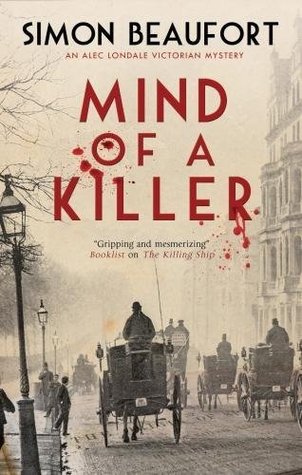
In London 1882, a new reporter for the Pall Mall Gazette, Alec Londale, comes across a house fire, that is not uncommon in those times, approaches the scene to watch the firemen hard at work to prevent the fire from spreading to the other houses. Looking around for someone to tell him who lives there and how the fire started, he approaches a woman, asking her questions. A body has been discovered. Alex begins to take notes and shortly after speaking with the first woman, another woman, who appears distraught, approaches him and ask him to meet her at a later date. She has information for him that can’t be shared at the scene. Alex is unobservant to her emotions and what she is saying or not saying. It is quite clear to him what she is and he dismisses her from his mind. Alex is young and is portrayed as a naive and green around the quills-if you will- about the ins and outs of being a reporter.
When the post-mortem on the fire victim comes back as something other than an accident, it isn’t long before a second body is found and this time the person’s throat is cut and then the bodies start to pile up.
Alex’s feisty female colleague, Hula Friederrichs is assigned to help him investigate the case. He isn’t happy about it but he needs all the help he can get! The further they investigate, they delve into the mystery and start to uncover a conspiracy so sinister, that it takes them to the upper classes of Victorian Society. The threat of their own lives become a reality as they get closer to the murder plot and they begin to question whom can they trust.
My fascination with the Victorian era’s class-based society, the stereotypes and double standards of the period, journalism, and the murder mystery genre prompted me to read this book. Those elements combined make for a gripping story. There is also the fact, I’m always curious how writers today portray the culture of the period.
Darwin’s theories are introduced in the story and taken to an unspeakable dark and evil height that will have you wondering how far will these people go to advance their objective. I don’t think I have ever been so thoroughly taken back by a theme that pushes the boundaries of this nature. In fact, it makes this story all too realistic and chilling.
Highly entertaining, and a thought-provoking read.
Stephanie Hopkins
I obtained a copy of Mind of a Killer from the publishers through NetGalley for an honest review.
Kindle Edition, 305 pagesPublished December 27th 2016 by Kensington
About the story:
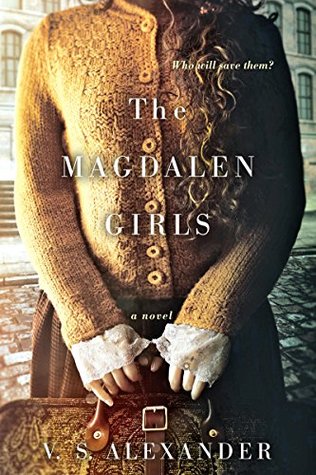
Dublin, 1962. Within the gated grounds of the convent of The Sisters of the Holy Redemption lies one of the city’s Magdalen Laundries. Once places of refuge, the laundries have evolved into grim workhouses. Some inmates are “fallen” women—unwed mothers, prostitutes, or petty criminals. Most are ordinary girls whose only sin lies in being too pretty, too independent, or tempting the wrong man. Among them is sixteen-year-old Teagan Tiernan, sent by her family when her beauty provokes a lustful revelation from a young priest.
Teagan soon befriends Nora Craven, a new arrival who thought nothing could be worse than living in a squalid tenement flat. Stripped of their freedom and dignity, the girls are given new names and denied contact with the outside world. The Mother Superior, Sister Anne, who has secrets of her own, inflicts cruel, dehumanizing punishments—but always in the name of love. Finally, Nora and Teagan find an ally in the reclusive Lea, who helps them endure—and plot an escape. But as they will discover, the outside world has dangers too, especially for young women with soiled reputations.
Told with candor, compassion, and vivid historical detail, The Magdalen Girls is a masterfully written novel of life within the era’s notorious institutions—and an inspiring story of friendship, hope, and unyielding courage.
A few of my thoughts:
Recently I discovered that my family has ancestry in Dublin Ireland and this book came to my mind. Strange how the mind works. I requested, “The Magdalen Girls” to review some time ago and to be honest, I’m not sure why I chose it because it wasn’t a subject, I was ready-mentally-to look in-depth. The Catholic Church has an extremely dark history and I don’t believe their theology/doctrine is entirely in line with the Holy Bible.
The story introduces three young girls, Teagan, Nora and Lea. Leading up to the moment Teagan and Nora were cast out of their homes and into the “care” of The Sister of the Holy Redemption.The cruelty of Mother Ann and the Nuns who carries out her orders is a clear reflection of the abuse, neglect, death, exploitation and forced, cruel hard labor that are not the teachings of Christ. These young girls’ situation there and of the others, lay heavily on my mind.
There are two priest that are front and center to Teagan’s “down fall”. Father Mark and Father Matthew. In short, I found Father Matthew not living up to his higher responsibility that God has commanded and instead he seceded the position to a mostly matriarchal attitude that was counterproductive to Christian life. His inability to counsel Father Mark and do right by the situation at hand really reflects my opinion above. They laid full responsibility of Mark’s sin on Teagan. That is not Christ like.
My main focus of this review is Tegan’s downfall because of the bold example the author shows of how the Priests influence its congregation and community. My focus on Teagan’s story- in no way- diminishes the others girls experience in that toxic environment.
I would have liked to have read a better build-up of the girl’s life before they entered, The Sister of the Holy Redemption. Other than that, it was a powerful premise, though a sad one.
Was there redemption in the story for the girls? That is for you to find out by reading the story.
I rated this book three stars and obtained a galley copy from the publishers through NetGalley.
Paris, 1939: Young and ambitious Odile Souchet has it all: her handsome police officer beau and a dream job at the American Library in Paris. When the Nazis march into Paris, Odile stands to lose everything she holds dear, including her beloved library. Together with her fellow librarians, Odile joins the Resistance with the best weapons she has: books. But when the war finally ends, instead of freedom, Odile tastes the bitter sting of unspeakable betrayal.
Montana, 1983: Lily is a lonely teenager looking for adventure in small-town Montana. Her interest is piqued by her solitary, elderly neighbor. As Lily uncovers more about her neighbor’s mysterious past, she finds that they share a love of language, the same longings, and the same intense jealousy, never suspecting that a dark secret from the past connects them.
A powerful novel that explores the consequences of our choices and the relationships that make us who we are—family, friends, and favorite authors—The Paris Library shows that extraordinary heroism can sometimes be found in the quietest of places.
My thoughts:
“Libraries are lungs, […] books the fresh air breathed in to keep the heart beating, to keep the brain imagining, to keep hope alive.” ― Janet Skeslien Charles, The Paris Library
The Paris Library is truly an unforgettable story. My favorite books are usually told in dual timelines. This story is without a doubt, my new favorite. If you are a lover of books and libraries, you must read, The Paris Library. I was completely spirited with abounding emotions. I laughed, cried, cheered, was enraged at injustice, and was thoroughly in my element with the librarians. I wanted-so much-to have tea with them and discuss literature and humanity. I wanted to be in their world surrounded with so many wonderful stories.
Not all is wonderful because of the war and personal struggles. That is what happens in life and this story portrays that in such a way, you realize that we all can learn from each other. Even so, it carries the narrative to great heights, shows you how deeply impacted the librarians were during the dark time of Word War II, and the lengths they went to keep reading alive.
I actually leaned about a few authors and books I am not familiar with and want to read them because of the people’s experience with them in this book.
The author’s style of writing appealed to me and there are countless of passages that I marked so that I can make a record of them in my journal. That is how much this story affected me.
Stories like this are what brings us together and forever changes our impressions on life and humanity.
A must read!
I rated this book five stars and obtained a copy of this book from the publishers for an honest review.


 Layered Pages