
Interview with Andrea Zuvich

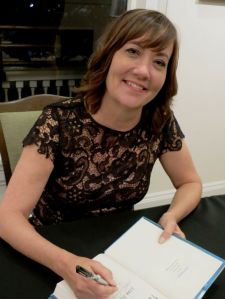
Andrea ZuvichAndrea Zuvich is visiting me today to talk with me about her book, The Stuart Vampire and about the period in history she focuses on. Andrea is a seventeenth-century historian specialising in the House of Stuart (1603–1714), as well as a historical advisor and author of historical fiction. She is the host of the popular ‘The Seventeenth Century Lady’ blog. She has degrees in History and Anthropology. Zuvich has appeared on television and radio discussing the Stuarts and gives lectures on the dynasty throughout the UK. She was one of the original developers of and leaders on the Garden History Tours at Kensington Palace. Zuvich, a Chilean-American born in Philadelphia, Pennsylvania, now lives in England with her husband.

Hi, Andrea! Thank you for chatting with me today about your book, The Stuart Vampire. Tell me a little about the premise.

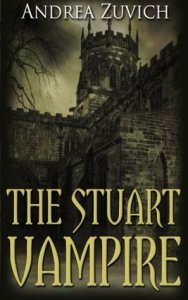
Thank you for having me on this great site! The Stuart Vampire follows the brief life of Henry Stuart, Duke of Gloucester, who was the youngest son of King Charles I (and therefore the youngest brother of King Charles II). Henry historically died from smallpox when he was twenty, and my story takes a decidedly paranormal turn from that point on and takes us along on Henry’s journey as he copes with his forced transformation into a vampire and he embarks on a mission to try to make something good out of this horrible curse. Along the way, he meets Susanna, the shocking inhabitants of the isolated village of Coffin’s Bishop, Sebastian (originally a mediaeval stonemason), among others.

Why 17th Century?

For me, the seventeenth century has it all and is yet grossly overlooked by both readers and authors (though I’m pleased to say I’ve seen a steady surge in interest from both in the past couple of years). The century was pretty controversial and one can still get heated arguments about topics from that time (i.e. whether or not it was lawful to execute King Charles I, what we should call the English Civil Wars, if we should recognize William and Mary as true sovereigns or usurpers… the list goes on and on). I love the aesthetics of this time period as well – the Baroque style is sometimes criticised for being over-exuberant and outrageously flamboyant – but I love it as, to me, it’s stunning and unashamed of displaying the gamut of human emotion.
The Stuart Vampire

Tell me a little about Charles II.

Ah, Charles II, hands-down the most popular of the Stuarts. Often called the “Merry Monarch”, he is best remembered for his rather prolific love life and for the Great Fire of London rather than for the political events during his reign – which included the Popish Plot of the 1670s, the Rye House Plot of 1683, the Secret Treaty of Dover with Louis XIV of France, etc. Charles II appears occasionally in The Stuart Vampire because he was an important figure in Henry’s life.

What are the emotional triggers of Contessa Griselda di Cuorenero and how does she act on them?

Griselda is the main antagonist of the book. Her biggest flaw is her obsession with her looks. She’s been fortunate to have beauty, but naturally this fades with time and it is the lengths to which she’ll go to in order to maintain this beauty that shows the depths of her vanity and evil. I can’t comment any further without giving anything away!

What is the courage and strengths of Henry Stuart? -and possibly the isolation he may feel with these attributes.

Henry has a strong sense of morality, and I think this is his strongest point. When he is around Griselda, she is a despicable individual and he knows he does not want to be like her. His longing to maintain his humanity is touching but at the same time makes him lonely. His devotion to and love for Susanna is another strength, and it’s the same for her. After a secret is revealed, Susanna tells Henry that “Our love will be the light and the darkness shall perish beneath the weight of it” – and that’s the strength of their relationship in a nutshell.

How is your character(s) influenced by their setting?

At one point, Henry leaves London and goes into the countryside, which does influence him – I think characters, like real people, do get influenced by their surroundings and those who surround them. The town of Coffin’s Bishop is a negative influence on Susanna, who does need to get away from that horrid place just for some peace of mind.

What is the greatest challenge of writing a story with Vampires in it?

Believability, especially from those who know me as a more serious historian. Most of my days are spent writing nonfiction history, but I’m very keen on making history accessible to as many people as possible as I don’t think it should only be for the academic community. When some people hear that I’ve written “a vampire story” they have a rude tendency to roll their eyes and/or chuckle, but the fact is, this story has made Henry Stuart known to a lot more people – people who have subsequently gone on to read more about the Stuarts, the English Civil Wars, the seventeenth century, and so on. I had one teenager contact me saying that solely because of The Stuart Vampire, she decided to get books about the Stuarts from her library to learn more about them – which is great! And that’s certainly nothing to snigger about.

Where can readers buy your book?

The Stuart Vampire is available in both paperback and eBook formats on Amazon, iBooks, Google Books, signed copies are available through my website, and the book will soon to be released as an audiobook on Audible. My other books are also available in these formats, but the two nonfiction books, A Year in the Life of Stuart Britain (hardback, 2016) and The Stuarts in 100 Facts (paperback, 2015) can be bought from any good bookseller.

Please tell me about yourself as an Historian.

History has been a very important aspect of my life since I was a little girl. I remember I was in the fourth grade and I knew I wanted to be a historian. I went to a community college during high school and then got my AA in History, and then I went to the University of Central Florida where I obtained two BA degrees – one in History and the other in Anthropology. After this, I got married and moved to the UK, and continued my history studies with Oxford University and Princeton University. That being said, there was absolutely no better training for me than actually delving into archives around the world – handling documents from the seventeenth century brought the history to life in ways that could never be done in a classroom. Indeed, by the time I had finished studying history in university, I was burned out, I almost couldn’t stand it anymore as formal study and the somewhat politically biased teaching wasn’t right for me. I had time off and fell in love with history again, by self-teaching with primary sources. Whilst living in London, I volunteered at Kensington Palace and later was one of the creators and leaders on their Garden History Tours, which was a very enlightening experience for me. Since 2010, I’ve run The Seventeenth Century Lady website which is devoted to all things seventeenth-century, with an emphasis on European history. I’ve been giving lectures on the Stuart period of 1603-1714 for several years now, and it’s a delight to do so.

Will you write other stories related to the paranormal?

It’s funny because I was never before interested in paranormal stories until The Stuart Vampire. That being said, I’ve had numerous readers who have responded favorably to this and many have asked for a continuation of Henry’s story – which does indeed interest me!

What are you currently working on?

I’ve just finished writing a short story set during the plague outbreak of 1630s Venice, and I’m also recording the audio version of The Stuart Vampire. I’m expecting a child due in October, so I hope to finish off two more historical fiction novels that I’ve been working on over the past few years (I started my novel about William and Mary in 2010, and my novel about a Restoration actress’s adventures in 2014) – we’ll see how that goes!

Often times the best inspiration comes within us. How do you flesh out your characters to drive the plot?

I write historical novels based on historical fact, and there are unknowns in any biography and I use my imagination – strictly based on in-depth study on that person’s behavior and character – to flesh out the story. I rather see the whole process as though the facts are the bones of a fish, and my job is to give educated guesses as to the rest – to flesh out the fish. Every author has their way of going about it, but I’m comfortable with this so I’ll keep on trucking.

Thank you, Andrea!

Thank you, Stephanie!

Please visit Andrea’s site here

Other Links:
Amazon Profile

Goodreads


Interview with Best-Selling Author Lynn Cullen

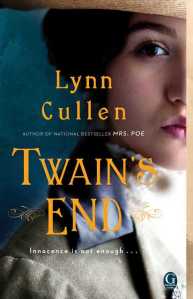
Lynn Cullen Twains EndI have the great pleasure of welcoming back Lynn Cullen to Layered Pages to talk with me about her current novel. Lynn’s recent novel, Mrs. Poe, a national bestseller, has been named a Target Book Club Pick, an NPR 2013 Great Read, an Oprah.com “Book that Makes Time Stand Still,” and an Indie Next List selection.  Her current release, Twain’s End, called “reputation squaring…incendiary” by the New York Times and “intelligently drawn” by Library Journal, is a People pick, an Indie Next selection, and a 2016 Townsend Prize finalist.  Cullen, named “the Bronte of our day” by the Huffington Post, grew up in Fort Wayne, Indiana.  She now lives in Atlanta surrounded by her large family, and, like Mark Twain, enjoys being bossed around by cats.
Hi, Lynn! Tell me about your story, Twain’s End.

Thank you for inviting me to chat with you about Twain’s End at Layered Pages, Stephanie.  I’m so happy to be with you here!  To get things started, at its core. Twain’s End is a tale of The Other Woman.  The real-life woman in the shadows in this case is Mark Twain’s secretary, Isabel Lyon.   But the story, Isabel Lyon is not competing for Twain’s heart and soul with his wife, Livy Clemens.  No, Isabel’s competition is much stiffer.  Isabel must battle with “Mark Twain,” the extraordinarily successful character the real life man, Samuel Clemens, created in his thirst for fame and adulation.  Isabel Lyon fell in love with the real man behind the legend, and ultimately, forced him to choose between her and the love of his public.

What made you decide to write this story?

I ‘m always interested in the underdog.  When I learned about Mark Twain’s tragic childhood, my antennae went up.  Among other horrific incidents that he experienced as a boy, he watched doctors dissect his own father through the keyhole of his parents’ bedroom door.  This episode said a lot about the toxic, hostile state of his parents’ marriage and about their extreme poverty.  It was unspeakably taboo for a wife to sell her own husband as a cadaver in those days.  How she must have hated the man to do so!  But as damaging as little Sammy’s boyhood was, I was more astonished by his brutal turning against his secretary, Isabel Lyon, after nearly seven years of devoted service.  She was more than an employee.  She traveled with him, entertained his daughters, oversaw the family medical needs, handled his social life and reporters, and oversaw the construction and furnishing of his home.  She even washed that white hair and bought those white suits! He told her, as well as friends and reporters, that she knew him better than anyone.  It was obvious to their friends that they were a couple.  Yet, a month after she married his business manager, Twain told those same people that Isabel was “a liar, a forger, a thief, a hypocrite, a drunkard, a sneak, a humbug, a traitor, a conspirator, a filthy-minded and salacious slut pining for seduction.” I wanted to know what caused the radical turnabout.

02_Twains-EndTell me a little about the research you did.

It’s important to me for my readers to know that everything they read in my novels could have actually happened–at least to my knowledge, they could have.  I like to take known events and flesh them out without changing the facts I have learned through painstaking research.  To give my readers confidence in the plausibility of my stories, I go to great lengths to track down the truth behind the legend.

To this end, I’ve found that there’s no substitute for traveling to the setting of every scene in my books.  For Twain’s End, combing through family writings and photographs gave me clues beyond reading dozens of Mark Twain biographies, as well.

The most helpful of sources was Isabel Lyon’s own diary, in which she kept a daily record of her life with the man she called “The King.”  I shaped many of the scenes in the book around her diary entries.

Tell me about Isabel V. Lyon.

Isabel is a remarkable example of someone trying to make the best out of the limited opportunities for women in the decades around the turn of the twentieth century.  She was born into a wealthy Eastern family but after her father’s death when she was a teenager, it was up to her to support herself and her mother.   The only work available to someone in her class was as a governess, at which she worked until Mark Twain hired her in her early thirties as a social secretary to his ailing wife.   She also made pincushions to sell in those pre-Etsy days.  Once working for the Clemenses, Isabel quickly became more than a secretary to the entire eccentric Clemens family, eventually assuming the role as mother when Livy died.  Yet within seven years, the family turned against her and ended up ensuring that her name was mud for all time.  I try to explain why and how this happened in my story.

What do you think of Clara Clemens?

It’s convenient to blame Clara for Twain’s abuse of Isabel Lyon and many Twain scholars revile Clara.  Yet, while I pull no punches in Twain’s End showing what a pill Clara truly was in real life, I actually feel sorry for her.  I hope to show in the story how her bizarre family life contributed to her instability.  I was just trying to report why she did the things she did, which was what I was trying to do with all my characters in the book.  I’m not trying to pass judgment them.  My job was to lay out the facts so that readers could decide how they feel.

Self-image is important in characters, how is this important to your characters?

Self-image was everything to Mark Twain.  Samuel Clemens had to maintain his persona as the amiable everyday family man, Mark Twain, if he was to keep the love of the world that he so craved.   As he matured, he attempted to write things closer to his heart but whenever he did, sales flagged.  The public did not welcome his dark side.  They wanted the creator of Tom Sawyer or nothing.

Talk about the courage and strength of your character. -and possibly the isolation your character may feel with these attributes.

I found it interesting that even after Twain and his daughter Clara took a scorched earth approach to publically slandering Isabel, she never fought back.  A large part of this might be due to Isabel’s understanding that she could never win a he said/she said battle with the world’s most beloved man, as Twain was at the time.   The other part, I feel, was that Isabel believed that her own good deeds would eventually vindicate her; surely the truth of her good character would have to come out.  It didn’t.  I wrote Twain’s End as an example of how innocence is sometimes not enough to clear someone’s name.

What are your favorite writings by Twain?

One of my favorites is a little known short story, “A True Story, Repeated Word for Word as I Heard It.”

Mark Twain calls his tale “true,” although of course it’s fictitious.  Yet there a very real truth hidden in this story–the truth about his own grief over the inhuman treatment the family slave received at his parents’ hands.   Twain’s End explores Twain’s relationship with this slave, Jennie, and how it might have affected his thinking.

Do you think any differently of him after researching him?

I went into writing this book with the same basic knowledge of the white-suited wit as any other American:  he was the funny guy who wrote Tom Sawyer and Huckleberry Finn and he rocked the color white before Colonel Sanders ever did.  My research revealed a much more complicated man.  I found that, as is the case

with many other humorists, below his hilarious surface, he was one very angry and melancholic man.  I ended up appreciating what Twain, the product of a difficult childhood, made of himself, and I savor his charisma and cleverness.  Although there is no denying his flaws—and he was at his very worst when striking out at Isabel–I have great sympathy for him as a fellow human.

How long did it take to write your story?

I wrote the story over a two-year period, traveling and researching while writing.  I go to scenes both before and after I’ve written them, and put in 8 – 12 hour days writing (with lots of snacking, walking, and bird-gazing tossed in.)

What are you currently working on?

My next book takes place during the Great Depression in 1934.  Famous people are in it… (to be continued.)

Thank you for the chat, Lynn! Please visit me at Layered Pages again!

It was a treat to talk with you, Stephanie.  Much love to you and the readers of Layered Pages!

For more information, please visit Lynn Cullen’s website. You can also find her on FacebookTwitterPinterest, and Goodreads.

Interview with Kristen Harnisch!

author KHI’d like to welcome Author Kristen Harnisch today to talk with me about her book, The Vintner’s Daughter. Internationally published author Kristen Harnisch drew upon her extensive research and her experiences living in San Francisco and visiting the Loire Valley and Paris to create the stories for THE CALIFORNIA WIFE and her first novel, THE VINTNER’S DAUGHTER. Ms. Harnisch has a degree in economics from Villanova University and currently resides in Connecticut with her husband and three children.

Kristen, thank you for chatting with me today about your book, The Vintner’s Daughter! I enjoyed reading your story very much! Please tell your audience a little about the story.

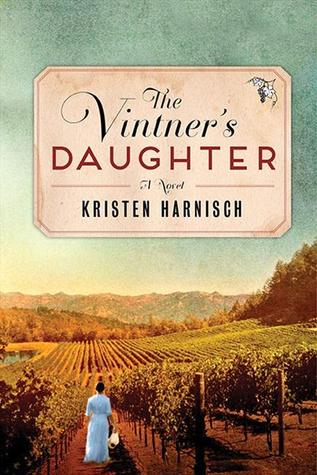
The Vintner’s Daughter is the story of Sara Thibault, a winemaker’s daughter, and her struggle to reclaim her family’s nineteenth-century Loire Valley vineyard. In 1895, through a series of tragic events, Sara is forced to flee her French village of Vouvray for America, on a journey that will take her across the Atlantic, to the slums of Manhattan’s Lower East Side, and out west to the rolling hills and sprawling vineyards of Napa, California. In Napa, Sara is determined to follow in her father’s footsteps as a master winemaker, but must face the one man who could either restore her family’s vineyard to her—or prosecute her for her crime.

How is your character(s) influenced by their setting?

In The Vintner’s Daughter, I often use setting to reflect the emotional state of my characters. For example, Sara is deeply attached to Saint Martin, her family’s estate in Vouvray. The vineyard, winery and ancestral home are where she played with her older sister and worked alongside her beloved father. Here she created some of her best childhood memories, learning how to cultivate and press grapes, craft wine and work to secure the best price for each vintage. She felt useful and cherished. When she’s forced to seek refuge at a cloistered convent in Manhattan, its dark stone hallways, austere lifestyle and strict schedules of this temporary home magnify Sara’s inner turmoil. She yearns to break free—and she eventually does.

What draws you in the most about winemaking and how you weaved this into your story?

I wrote The Vintner’s Daughter because I wanted to learn more about the art and science of making wine. Sixteen years ago, in October of 2000, I received the inspiration for the story while standing on the edge of a vineyard in Vouvray, France. The pristine rows of chenin blanc grapevines, the limestone caves, the whitewashed winery on my far left, and the abandoned watchman’s house on my right all captured my imagination. “This,” I thought to myself, “would be the perfect setting for a novel.”

Questions leapt to mind as I toured the Loire Valley cellars. Why have these families chosen to make wine for centuries? How do they choose the grapes they grow, how do they create fine wine, and what challenges do they encounter? The winemakers themselves answered some of my questions, but once I returned home, I also wanted to learn more about the history of the wine trade in California, where I had recently lived. I delved into French and California wine history books, read years of nineteenth-century trade papers such as The Pacific Wine and Spirit Review, consulted a master winemaker, reviewed old maps and photographs at The Napa County Historical Society and toured several family-owned Napa vineyards on foot and on bike. I was fascinated by what I discovered.

Every bottle of wine contains nearly three pounds of grapes and the vulnerability of this fruit is striking: over the last century and a half, grapes have fallen victim to pests, rodents, frost, mildew and Prohibition in the United States. Still, with a precise blend of hard labor, science and art, winemakers continue to perfect the wines that fill our glasses. I remain inspired and humbled by their efforts.

In The Vintner’s Daughter, I weave my knowledge of winemaking into Sara’s story and with my descriptions, I try to bring the reader into every scene—to taste, touch, see, smell and hear the beauty of the vineyards and the winemaking process as the characters do.

The Vintners Daughter by Kristen Harnisch II

What are Philippe Lemieux’s strengths and weaknesses?

Philippe is the product of a loving mother and an abusive, controlling father who favored his older brother, Bastien. After their mother died, Philippe left France to make his own way as a winemaker in America, settling as far away as possible from his father and brother—in Napa. He is an astute and trustworthy businessman and has made quick friends (and a few enemies) among his fellow winemakers. He’s had his share of indiscretions, but perhaps his biggest faults are that he’s too quick to judge and sometimes overly protective of those closest to him.

One of the themes in your story was about the Suffragette movement, can you tell us a little about that and why you chose to include that in your story?

The late 1800s were such an exciting time in American history because the women’s rights movement was gaining momentum. Our culture was experiencing a dramatic shift. Women were coming out of the kitchens and taking active roles in their family’s businesses or farms, or working in the city factories. In the last decade of the 1800s, although there was a vocal minority of women who pushed for the right to vote, most women were more concerned about their right to safe working conditions, to earn a fair wage and to open an individual bank account. They marched in their cities and towns to show their support and influence and after several decades, the legislature started to listen.

I chose to include details about the suffrage movement because, before conducting my research, I didn’t realize that the majority of suffragettes were also members of Women’s Christian Temperance Union, which supported a prohibition of alcohol. Sara, a winemaker, finds herself caught between her desire to fight for women’s rights and her commitment to protect the production and sale of wine. This conflict creates quite a dilemma for Sara in the story’s sequel, The California Wife.

What are your personal motivations in storytelling?

I was a banker for nine years before I decided to stay home and raise my children. That’s when I started to dream about writing a novel. In 2000, when I was inspired to write Sara’s story, I didn’t know how to write fiction! I took online writing classes and re-wrote the story ten times over fourteen years. It was one of the most time-consuming but rewarding leaps of faith I’ve ever taken. My motivations were simple: to challenge myself intellectually and to escape the laundry!

What are the changing emotions you have as a writer?

When I sit down to write a novel, I’m both excited and plagued with self-doubt. The only way to overcome this is to silence the voices in my head that continually ask, “What if it’s not as good as your last novel?” or “What if the critics hate it?” I focus on the story and making it the best I possibly can—and then I release it into the world. Beyond that, I have little control over how it’s received. This is the creative process!

What is your writing process?

When I write historical fiction, I start by researching the topics I’d like to cover, and many times I’ll uncover interesting real-life events that help me to construct the plot and conflict of the novel. Then I’ll make a haphazard attempt to outline the plot, which I’ll use as a guideline, but I prefer to dive in and start writing. I write in three-hour blocks, in the morning and/or late evening when the kids have gone to bed, and I usually don’t write scenes in order. Instead, I write about what excites me on that particular day—an argument between the characters, an earthquake, a shooting, a tender moment between characters—whatever I feel emotionally prepared to tackle. Coffee, afternoon tea and the occasional glass of wine in the evening all help the flow of creativity!

Where can reader buy your book? At your local bookseller, at Amazon.com, Audible, Barnes & Noble, Books-A-Million, or anywhere! The Vintner’s Daughter is available in paperback, e-book and audio book!

Find Kristen Online:

Webite

Facebook

Twitter


Interview with Author Laura Powell

Laura PowellI have the great pleasure of welcoming Laura Powell to Layered Pages today. Laura is a Features Commissioning Editor at the Daily Telegraph. She has written for The Guardian, Daily Mail, Mail on Sunday and various magazines. She was awarded a New Writer’s Bursary from Literature Wales and was named as one of Amazon’s Rising Stars. She grew up in South Wales and now lives in London. The Unforgotten is her first novel.
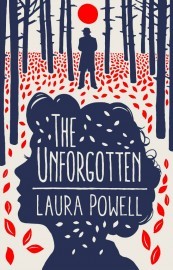

Laura, thank you so much for talking with me today about your book, The Unforgotten. What a stunning debut! I enjoyed your story and I love the complexities of your characters. Tell me how you came to write this story?

Thanks so much – it still feels funny to hear that other people have read about the world that lived in my head only for so long. I started writing it one Sunday afternoon when my then-boyfriend was in football practice. I’d been on Facebook and had seen an old face that brought back so many memories. Out of the blue I started writing a dark, sort-of love story about someone who was in a relationship but was never sure whether her feelings were returned or not. By the end of the day I’d written two chapters. I’ve since weaved in lots of other elements – murder, mental illness, moral dilemmas. But that bittersweet love story remains the core for me.

What is the premise of your story?

It’s a forbidden love story between a 15-year-old girl Betty and a 30-year-old journalist Gallagher set in 1950s Cornwall. They’re from different classes, different worlds – but their relationship becomes very deep, very fast. They meet when Gallagher arrives in the fishing village where Betty lives to report on a series of murders – but they soon make a discovery related to the murders. And they are each faced with a huge dilemma that tests their feelings for the other and questions their morality. The devastating consequences of that decision unravels over the next 50 years.

What is the mood or tone your characters portray and how does this affect the story?

It is very dark, bleak but there is also a hopefulness and a lightness to it, which I hope shines through. Though ultimately I’m a sucker for a weepy book or film so…

How is your character(s) influenced be their setting?

The main character, Betty, is 15 and has hardly ever left her hometown of St Steele – a fictional Cornish fishing village – aside from going to the occasional dance in the neighbouring town. She travels outside that area for the first time in her life in the book – first to St Ives, a real Cornish town. And later, to London. Taking her away from that setting makes her even more vulnerable than she always has been, but also really tests her, as she has been so insulated (geographically speaking) all her life.

The Unforgotten

How did you choose a Cornish fishing village of St Steele as the setting of your story? Is it a real place? And why did you choose the 1950’s as the period for your story?

I chose to write about Cornwall because it’s my favourite part of the country. I’m Welsh. I now live in London. And I studied in the West Midlands (Warwick). Yet I’ve been to Cornwall – usually St Ives – every year since I was born, sometimes twice or three times. I love the town, it is full of happy memories with friends and family, so it was wonderful to ‘live’ there in my head for so long when writing. Yet I didn’t want to be tied to a real place so I invented St Steele. It’s loosely based on a teeny cove called Porthgwidden in St Ives that is just gorgeous. Making it a fictional place gives you a lot more freedom to move around, and to pick up a building or a street and drop it elsewhere if that benefits the plot, rather than being tied down to the truths of history.

Please tell your audience a little about Dolores Broadbent.

Dolores is the third main character. She is the mother of Betty, the main character. And she runs the guest house in St Steele. She was by far the easiest character to write and I had such a clear vision of her – a little like Julianne Moore’s character in A Single Man (the beautiful Tom Ford-directed film with Colin Firth.) She is beautiful and glamorous and whimsical but damaged and broken. She once had any man she wanted, she wafted about and was carefree. But now she is older, widowed, with little money, failing looks and a daughter of 15 who is not at all as she was, she is finding it hard to come to terms with her lot and as a result, can be quite violent and brutal. I loved her complexity. I hope people have the same sympathy for her that I do.

What are the changing emotions you have as a writer?

I’ve probably gone through every feeling on the spectrum. But if I’m honest, the one thing I always feel is disappointed. I wonder why I wrote that terrible line, why this or that isn’t working as well as I’d like it to, I’m constantly critiquing my writing and pulling it apart. I’m a bit of a malcontent. But I’m teaching myself not to be. Slowly.

What are your personal motivations in story-telling?

To inhabit the world as clearly and fully as I inhabit the ‘real’ world.

What are you working on next?

Another book. I don’t want to say too much in case I jinx it but it’s dark and historical and layered with mystery that unravels over the years, based on a catastrophic fictional event in our pasts. The idea has been bubbling in my head for years and I’m really enjoying delving in!

What is your writing process?

I’m afraid it’s an approach I can’t recommend for others but it works for me – ‘feast and famine’ is probably the best description. I spend weeks obsessed with writing the book; I think about it, write every spare second I have, late into the night and early into the morning, I write bits on the Notes of my phone, on my laptop when I’m on buses and trains, on scrawled napkins in cafes, then back to my laptop that night. Even when I’m with friends I’m thinking about the book… Then I crash. And spend a few weeks sleeping, reading, working, living etc – before I begin writing again. This is just for the first and second drafts I should add – I’d go mad if I was like that permanently. The later editing processes are much more methodical and orderly and calming. But that early writing stage is all a bit, well, obsessive!

Where can readers buy our book?

Amazon, Waterstones or Freight Books. Here are the links! If you read it, I’d love to know what you think – I’m on Twitter @laurapow1

Sites:

Waterstones-The Unforgotten by Laura Powell

Amazon UK

Freight Books-The Unforgotten by Laura Powell


Interview with Meredith Allard

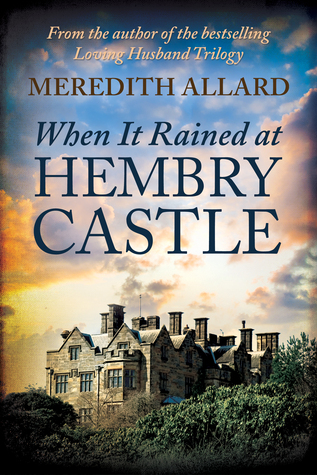
Meredith, thank you for chatting with me today about your book, When It Rained at Hembry Castle. Does Hembry Castle exist and if not, was there a real castle that was your inspiration?

Hembry Castle is very much a figment of my imagination, though two real life places served as the inspiration for the exterior: Scotney Castle and Wentworth Castle, both in England, of course. The picture on the book’s cover is of Scotney Castle. The interior of Hembry Castle was largely influenced by Pittock Mansion, which can be found in Portland, Oregon. Primarily, I used photos I found on Pinterest to help me describe the interior and exterior of Hembry Castle.

02_When-It-Rained-at-Hembry-Castle

Please tell me a little about your story.

When It Rained at Hembry Castle is a love story set in Victorian England. The novel is about Edward Ellis, a rising author, and Daphne Meriwether, the American niece of the 9th Earl of Staton. Daphne is new to England and she must learn how to live in the Downton Abbey-like world her father’s family lives in. It’s a blossoming romance for Edward and Daphne, and there’s some mystery thrown in involving Daphne’s uncle, Richard, the 9th Earl of Staton.

What are the common movements your main characters make?

All my novels are about characters who are or see themselves as outsiders in one way or another. In When It Rained at Hembry Castle, Daphne is very much an outsider, being an American in England who is unfamiliar with the aristocratic world her father grew up in. Edward is also an outsider of sorts. He’s the grandson of servants who is working hard to make his way as a writer. I think all of my main characters mean to do the right thing, but whether their choices are correct or not always remains to be seen.

What is the mood or tone your characters portray and how does this affect the story?

I think both Edward and Daphne are largely positive people. Neither one of them are prone to complaining and they try to make the best of whatever is thrown their way. I hope this adds a positive, hopeful tone to the story.

What are the emotional triggers of your characters and how do they act on them?

For Daphne, she’s triggered by her grandmother’s insistence that she conform to the aristocratic way of life. For Edward, he’s triggered by his love for Daphne and his frustration at the obstacle that is keeping them apart. Daphne humors her grandmother and on the outside she seems to be conforming, though she’s a bit of a rebel and isn’t as complacent as her grandmother thinks. Edward, in typical man fashion, does nothing, hoping the problem will go away.

What do you like most about writing stories that take place in the past?

I’ve loved history since I was in school, and I even toyed with the idea of majoring in history in college. Writing historical fiction is perfect for me because it a combination of the two things I’m most interested in—history and writing. I have a funny habit of writing stories set in times I’m not all that familiar with, which is fine because that’s part of the fun for me, researching the history. When It Rained at Hembry Castle is actually the exception to that because I was already pretty familiar with Victorian England.

Describe Victorian England in your eyes.

My knowledge of Victorian England came from my love of Dickens’ novels, which started for me in college, but when I researched the era as I was writing Hembry Castle I realized that the time was much more complicated than I first realized. Yes, there was the poverty and the darkness of Dickens’ descriptions, but it was also a time of great change. The Victorian era spanned nearly 70 years, and England in 1901 was very different than England in 1837. By the end of the Victorian era, we can begin to see inklings of the modern era that we live in today. Since Hembry Castle takes place from 1870-1872, the story is happening right in the middle of the Victorian era.

What are some of the romantic parts to the story readers can expect?

My stories tend to focus more on the falling in love aspect of romance. Edward and Daphne have a few obstacles they have to overcome in order to be together. Even acknowledging that they want to be together is the first hurdle. After they admit to themselves that they care for each other, Edward has a big secret he’s keeping from Daphne. How Daphne reacts to the secret remains to be seen.

How long did it take to write your story and where in your home do you hone in your craft?

Hembry Castle took me two years. I returned to college in 2014, and of course that takes a lot of my time. I had a lot of research to complete for this book, and it took me a little time to figure out the point of view. Normally, I write novels with either a one person or two person point of view, but I finally realized that Hembry needed to allow more characters their moment in the sun. Since I live in a small apartment, my computer is set up in my bedroom. I know they say don’t keep your work where you sleep, but oh well. I have a nice view from my bedroom window so it works for me.

What is up next for you?

Fans of my Loving Husband Trilogy will be happy to know that I’m writing the prequel to the series, called Down Salem Way. Like the first book in the series, Her Dear & Loving Husband, it takes place in Salem, Massachusetts during the Salem Witch Trials.

AMAZON US | AMAZON UK | BARNES & NOBLE | ITUNES | KOBO

03_Meredith-Allard

About the Author

Meredith Allard is the author of the bestselling novels The Loving Husband Trilogy, That You Are Here, Victory Garden, Woman of Stones, and My Brother’s Battle. Her newest release, the historical novel When It Rained at Hembry Castle, is a great read for fans of Downton Abbey.

Visit Meredith online at www.meredithallard.com. You can also connect with her on FacebookTwitterGoogle+,  Pinterest, and Goodreads.


Interview with Julie McElwain

Julie MelwainI have the great pleasure and honor to introduce Julie McElwain to Layered Pages today, to talk with me about her book A Murder In Time. Julie is an award-winning journalist, who began her career as a business reporter at California Apparel News, a weekly Los Angeles-based fashion trade newspaper. She has freelanced for numerous publications from professional photographer’s magazines to those following the fashion industry. Currently, Julie is an editor for CBS Soaps In Depth, a national soap opera magazine covering the No. 1 daytime drama, The Young and the Restless. Julie lives in Long Beach, CA.
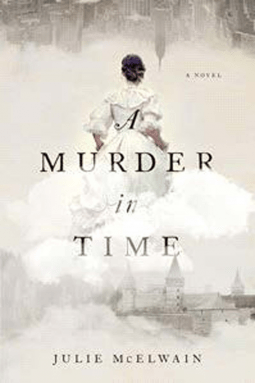
 Julie, please tell your audience about A Murder in Time.

A Murder In Time is about FBI agent Kendra Donovan, who goes rogue after her present day mission is botched. In her quest for justice, she infiltrates a costume ball at Aldridge Castle in England. When she encounters an assassin, she escapes through a passageway and encounters a terrifying phenomenon, which transports her back to 1815.

You could say that Kendra’s modern senses clash with Regency England’s sensibilities. She’s initially mistaken for a lady’s maid, but is quickly demoted to a below-stairs maid. When the body of a young girl is found brutally murdered, Kendra realizes that a serial killer is on the loose. Stripped of her twenty-first century tools, Kendra is forced to rely on her wits to unmask the murderer.

What are some of the courage and strengths of Kendra and possibly the isolation she may feel with these attributes?

As the offspring of two scientists who believed in positive eugenics, Kendra didn’t have a normal upbringing. Like an athlete, she spent her life “training” to excel in academics. Her intelligence has always set her apart from her peers, and made her feel isolated. She was only a young teenager when she went to college. Socially, she didn’t fit in with the older college students, which only made her feel more like a freak. When her parents abandoned her after she asserted her independence, Kendra was forced to develop a tough outer shell to survive. She became a loner, dedicated to proving herself in her chosen career, and deeply wary of emotional attachments because of her parents’ abandonment. As tragic as Kendra’s life was, I think it gave her the strength to deal with being transported to 1815, where she’s the ultimate outlier. I think a person with a more normal upbringing would have been driven insane or reduced to a quivering ball of fear!

A murder in time

What is the mood or tone your characters portrays and how does this affect the story?

 There is a great deal of suspicion between Kendra and her nineteenth century counterparts, which adds to the tension. The Duke of Aldridge, Alec, and Sam Kelly are aware that Kendra lied about how she came to England. They have varying degrees of distrust. They also regard Kendra’s manners, speech patterns and behavior as peculiar, to say the least, but they put it down to her being an American. For her part, Kendra has a difficult time trusting them with her big secret, and that has her proceeding cautiously. And she worries about screwing up the space-time continuum, which is something she’s never had to worry about in her previous murder investigations for the FBI! She can’t help but be skeptical over this group’s contribution to the murder investigation. She was always more advanced than her peers, but with these people, she’s centuries more advanced. It’s not that she thinks she’s superior… but she kind of does. It will be a journey for her to reach a different conclusion.

 Who are your five top antagonist? What motivates them?

 Kendra’s father, Carl Donovan, is an early antagonist. He plays a small part in the overall story, but he is crucial in Kendra’s development as a human being. As a scientist, he prizes intellect above all else, and believes that Kendra stubbornly refused to live up to her potential. His black-and-white view always made Kendra feel unworthy, and therefore more determined to prove herself.

I consider Mrs. Danbury — the castle’s housekeeper — a wonderful antagonist. She’s like the Old Guard protecting the status quo. The world of aristocrats, servants, working class, and merchants is what she’s familiar with, and she finds Kendra’s bold behavior — her lack of deference to the hierarchy — to be bewildering and rather threatening.

I really don’t want to give away the murderer’s identity for someone who hasn’t read the book, so I will put the following men in the antagonist category, with Kendra bumping heads with each of them. Alec’s brother, Gabriel, is a self-pitying alcoholic. Mr. Harris is the youngest son of an earl, who was appointed the village vicar, a station that he thinks is beneath him. Mr. Morland lives in a nearby estate and is the local magistrate, whose chauvinistic attitude towards Kendra is typical of the era. Mr. Dalton is a former surgeon, who inherited a nearby estate, and is insulted to be considered a suspect in Kendra’s investigation. Finally, Captain Harcourt is Gabriel’s friend, and is hunting for an heiress to replenish his funds. All of these men are motivated to keep their secrets from coming to light. Of course, no one is more motivated than the murderer!

 What inspired you for your main character to be an FBI agent?

 I really wanted Kendra to be in some type of law enforcement. She needed to have a specialized skill set — the ability to read a crime scene, to understand criminal behavior, and to be able to defend herself. Being an FBI agent was very organic to the story, which involves a serial killer. But it also felt right, given Kendra’s background. Her parents are driven, ambitious scientists who are at the top of their field. While Kendra chose a different path, which led to a chasm between her and her parents, she is as ambitious and determined to prove herself, and wants to be at the top of her field. Being the youngest agent ever accepted by the Bureau certainly put her on that path!

 Why did you choose 1815 for the period Kendra falls back in time too?

 I’ve always found this period in history to be utterly fascinating. It parallels our own era in so many ways. The war with Napoleon had just ended and the Industrial Revolution was just beginning. New machines were taking away jobs, creating a lot of simmering tensions between the haves and have nots. It was a time of contrasts — with great wealth on one side, and terrible poverty on the other; a silliness in its celebrity culture and yet a seriousness in the political upheaval. Of course, I’m also a big Jane Austen fan, and have enjoyed reading romances set during this era… I just wanted to write a mystery that actually had a modern day heroine — sort of Jane Austen meets Criminal Minds.

Does Aldridge Castle really exist?

 No, but I’ve traveled throughout England, Scotland and Ireland, and one of my favorite things to do is tour old castles and great estates. Aldridge Castle is an amalgam of many of the fantastic places that I’ve visited, including Dublin Castle, Kensington Palace and Leeds Castle, just to name a few.

 How much research went into your story?

 I did tons of research! I probably own every reference and history book on the time period. There are many wonderful blogs and websites by romance writers who specialize in the Regency era, which were invaluable. I also have a library of forensics books and police procedurals, and I did a lot delving into the subjects of quantum physics, wormholes, and string theory. This may be a piece of fiction, but it was important to me to be as accurate as possible.

What do you like most about writing a time travel story?

 I really liked the idea of taking a smart, modern person and tossing them back in time. We have a tendency to think that we’re so much more intelligent than our ancestors. But if you take away our modern inventions, just how smart are we? Would we be able to survive? Once my DSL went out, and I was forced to use dial-up to get on the Internet for about a week. That darned near killed me! I loved putting someone as clever as Kendra, as self-sufficient and independent, in a world that was totally alien to her, and watching how she would cope.

The time travel element also allowed me to offer dual viewpoints. Kendra was as much a puzzle and an oddity to her nineteenth century counterparts as they were to her. I liked being able to view the early nineteenth century through modern eyes, while at the same time, look at our own twenty-first century culture through the lens of the nineteenth century. We don’t blink an eye anymore at using profanity in casual conversation, but that would have shocked and appalled most people in 1815.

Time travel is pivotal to the plot, but this is not a science fiction story. Of course, Kendra thinks about the mechanics of time travel — how could she not? — but I’m more interested in the human element, on how we’ve changed as a people… and how we’ve stayed the same.

Will there be a sequel?

 It depends on how well A Murder In Time does, but I’m currently working on a sequel — so cross your fingers!

Who are your influences in writing?

I’m an avid reader, and am inspired by many authors. Some of my favorites are Karen Slaughter, Lisa Gardener, Tami Hoag, Tess Gerritsen, Nora Roberts, Dean Koontz, Lee Child, Ariana Franklin, Amanda Quick… the list goes on. I tend to be pretty eclectic in what I read, but I veer towards mysteries and thrillers. Let’s just say, I get motivated by anyone who can spin a good tale.

Where can readers buy your book?

 Barnes & Noble and independent bookstores, as well as online retailers like Amazon.

Links: 

Author Facebook Page

Pegasus Books

Thank you, Julie!