Characters in Motion with Martha Kennedy

Isolation and “Courage” in Martin of Gfenn

by Martha Kennedy

 “I realized then. Compassion requires the highest order of courage, not battle, not childbirth, not facing death. Those are easy. God designed us for them. Compassion, Martin. I never again suffered the darkness in my soul I had known all my life.”

 In medieval times physical courage was a big deal, the virtue of warriors, an attribute of crusading knights, romantic heroes such as the Knights of the Round Table, and real live men such as Richard the Lionhearted. This heroism was linked (as it is today) with the willingness to risk one’s life for something vague and worthy such as the True Cross (or Democracy). There were other kinds of courageous heroes, too, those whose heroism was manifest in their charity, for example Saint Francis and Saint Martin of Tours who, in imitation of Christ, gave their possessions to the poor and even (gasp!) kissed lepers. These examples of courage are public and dramatic, the stuff of legend and song.

As a writer, I’m not much interested in this dramatic kind of courage. I’m interested in the courage we all need to fully live the life that has been given to us. I am continually awed by the heroism of those who face a personal challenge in which they lose all they hold dear and yet emerge from the dark pit transcendent, confronting their lives, their futures, the world with compassion rather than bitterness. I am surrounded by these people every day, ordinary people with extraordinary courage. This is a major theme in Martin of Gfenn. Martin, the protagonist, is challenged to find the courage to live life as it has been given to him.

 Martin of Gfenn is set in mid-thirteenth century Switzerland. Martin is a young artist with tremendous talent and drive — and leprosy, a disease that disfigures, weakens and ultimately kills a person. In the middle ages, leprosy also had complex spiritual ramifications.

When his leprosy is discovered, Martin is only around nineteen years old, his life as a painter in front of him. He’s sent away from the Augustine Cloister. where he grew up and had begun his career, and he’s sent to the community of the community of the Knights of St. Lazarus — the Leper Knights — in the village of Gfenn two days walk away.
Christ being whipped_Lazarite church of Gfenn resized I

Naturally Martin is angry and sad, but he is also terrified that his leprosy will prevent him from painting — cripple his hands, blind him, eject him from society. He knows it will ultimately kill him, but it isn’t death that frightens him. He resists going to the leper community, fearing that if he surrenders to the reality of his affliction he can no longer paint. Determined to hide his illness, Martin becomes a successful mural painter in Zürich. His disease goes into remission, and he hopes against hope that the diagnosis was wrong. He experiences professional success and forms friendships, he is always profoundly alone, trapped in the fear that his illness, which goes into remission, will come back. He’s always afraid that he will be discovered and sent away or that he will no longer be physically able to paint. The combination of secrecy and fear leaves Martin psychically isolated, in terror of his future. Martin’s isolation ends only when he surrenders to his illness and joins other lepers at the leper hospital in the village of Gfenn.

He arrives at the community in the gray dismal days of November having been injured by hunters’ dogs who found him in the forest. At first, Martin is numb, defeated, seeing nothing around him but men waiting for death, living a cloistered life in which — Martin first believes — they are imprisoned. He sees his own future as an involuntary monk waiting to die.
St. Matthew and Angel_Ceiling_Lazarite Church at Gfenn resized I

The cloister is dismal and cold. The un-plastered, unfinished, unpainted walls of gray stone echo Martin’s misery, used as he is, as all would have been, to the brightly colored interior and exterior walls of medieval European cities. Learning that the buildings are new, the rough walls waiting for the right season to be plastered and finished, Martin founders in a sorrowful abyss of hopelessness. What might have been a project for Martin the Artist is nothing for Martin the Leper.

Martin reaches a psychological and physical crisis, collapsing on the floor of the unpainted chapel during the sanctification ceremony. He is delirious and fever-ridden for several weeks. During this time, everyone around him takes their turn caring for him. When he regains himself, he finds himself outside on a beautiful spring day. The first thing he sees are apple blossoms, beauty. Brother Heinrich is beside him on a bench beside the south wall of the chapel.

“I would…” Martin’s sentence broke off. “Could you get me something? I would like a piece of charcoal, a small one, some parchment? And a board? I would draw this scene, if I can.”

Brother Heinrich returned with all that Martin had asked for and found him sleeping. “It is best,” he said. He placed the board where Martin would see it, and placed the piece of charcoal in his hand.
Apostle John_ceiling_Lazarite Church at Gfenn resized II

When Martin woke, the sun was still high and the day still warm. Finding what Brother Heinrich had left, he sat up, and setting the board at an angle on his knee, held it with his left hand. He drew the branches in first blossom just as it was above him. Drawing filled his mind until there was no other world.

Martin slowly becomes part of the community at Gfenn, learning that “…where all are lepers none are lepers.” He makes friends with Brothers Hugo, Lothar and Heinrich and develops a complex and mutually rewarding bond with the Commander of the order. In the passing of time he is inspired to paint the chapel. In his box of tools, which he had named “La Mia Vita,” “My Life,”, he has some pigments left over from his painting days in Zürich and he finds more during his walks in the fens around the cloister. He begins a campaign to persuade the Commander to let him paint the walls of the now-plastered chapel, but he faces a challenge. The Commander is not sure WHY Martin is so determined to paint — is it for the glory of God or for the glory of Martin?
Christ in the center resized I

In afternoons spent reading to the Commander — who has all but lost his eyesight — Martin makes his pitch as well as he can. His main argument is that the people living at Gfenn should have the same beautiful images around them during worship that they had when they were living outside, that if any people in the world needed Christ’s message of hope, it is a community of lepers. Martin admits there is a personal component; he wants to paint while he is still able:

“For all your kindness, you have not heard me,” said Martin, softly. “Everything in my life, everything… I have read and interpreted and understood God’s word through these.” Martin held out his hands to the Commander, one hand robust, articulate and strong, the other rapidly losing its usefulness. “And through these I have worked to interpret it for others. I am terrified I will lose what little remains to me.”

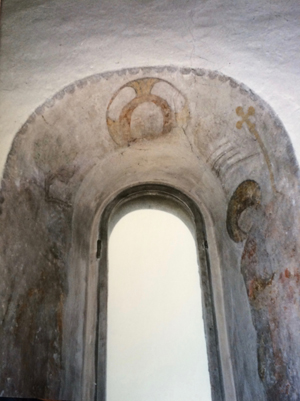
But, persuasive as his argument is, it doesn’t work. Finally, in December, a year after his crisis, Martin summons the courage to draw, in chalk, the images he would paint. He chooses the east window of the chapel, a window that represents the Light of the World, the body of Christ. His determination is inspired by the misery of those around him, his sudden awareness that in his paintings might bring hope to others.

He looked through the arched opening to the refectory where the others sat at the long table knitting scarves and bandages, mending felt slippers and cassocks. They worked awkwardly, struggling with twisted hands, crumpled fingers, half-blind eyes. Each action, each stitch, reminded them of what they could no longer do. Martin’s heart filled… “This is no good,” he thought. “We go now from one dark, sad room to another.” He clenched his fist in frustration and decided to wait no longer.

He chose the darkest day, the shortest of the year. After breakfast he went directly to the chapel, his pouch filled with the good black charcoal he had made and what remained of brightly colored pastels he had made in Zürich. Above the small arched window, he drew the head of Christ, the window forming the body of the Lord. To the left of Jesus, Martin drew John the Baptist; to Christ’s right, St. Lazarus the Leper leaning heavily on his crutch, shaded from the heat by an apple tree. Each movement of Martin’s hand took his thoughts to this wall and restored his life. If the Commander didn’t like it, Martin had only to wash it away.

Martin grinned without flinching when the numbness of his face reminded him he could only half smile. God existed outside of time, as St. Augustine had proven, but Martin did not have the illusion of forever with which healthy people live. He had almost lost one hand to this disease. He decided then that if the Commander allowed him to paint, he would work directly on the walls. He would not paint for the future, but for the moment.

When the residents go to the chapel for mass, some of them see the drawings around the window. They are stunned, thrilled, by what they regard as a miracle.

(Martin) heard someone gasp, “Commander, look!” But the Commander’s weak eyes could not make out the shapes around the window.

“What are you talking about? What is it?”

“The Lord, Commander!” Hans Ruedi pointed at the window, but even the faint light coming through the Body of Christ was too much for the Commander’s eyes and blinded him to the shapes, lines and colors around it.

“Just tell me, my son, what is it you see?”

Others came to the front of the church to see what Hans Ruedi had seen.

“It is a marvel,” a hoarse voice spoke in wonder. Martin’s argument was made.

Martin wrests from the Commander permission to paint the chapel and he is given a helper, a healthy boy, Hans Ruedi who becomes almost a son to Martin. The familiar images of the church gradually appear on the walls, first in the chancel and then all around the sanctuary. At the same time, little-by-little, Martin loses his physical abilities.

In due time, the Commander dies. Though the Lazarite Order mandates that Commanders must be lepers, the population of lepers in Europe has declined, and there is no one to take the Commander’s place. He is replaced by a man who has no sympathy for the leper residents. Prior Werner, fears, detests and avoids them, does not give mass to them, does not take their confession. They are isolated within their own community which is now being shared with the healthy poor. The Commander had once said to Martin, “…compassion requires the highest order of courage…” In the cowardice of Prior Werner, Martin finally understands why this is so.

In the darkest time, Martin’s paintings — and Martin painting — take the place of religious services for the few remaining leper residents who come daily to the chapel to watch him paint. In Martin’s perseverance, and the emerging images of a beloved story, they find hope. And Martin no longer fears the moment that he will no longer be able to paint. He fears that he will finish the walls.

He awoke shaking. He washed as well as he could, and went to the chapel to await the day. He hoped it would be fine and that the body of Christ would be lit by the sun. He stood beneath his paintings, remembering all he had dreamed and fought for just to paint them. Where was that man? He seemed so far away. On his walls, Christ was dying. At each step, he died a little more. He had no faith. He did not know what would happen to him; God’s son, and yet? “The human Lord is the only Lord who could love us,” thought Martin. “Only a God of flesh could feel what it means to be human, to carry death with you always, to be frightened, hopeless and resigned.”

Light took the horizon bringing a clear day. Turning his back to the window, Martin walked into the nave to begin work. He was halfway through the scene of Christ being lowered from the Cross. Christ’s eyes were black slits, his mouth a slash across his lower face. Martin stared, remembering different work, fluid lines, the elegant expression of a dragon at St. George’s feet, the soft blue eyes of a girl soon to be a bride. Martin awkwardly dipped his brush into the red earth that would cover the green under painting of the faces on the wall, but as he lifted it, the brush fell and splattered red paint everywhere. Martin tried picking it up, but his arm could not respond to his will.

He stepped down … and tried to gather his tools into the box, but that, too, was more than he could do and so, leaving everything behind, he walked outside into a world that had become suddenly spring.

Certain that he cannot continue, Martin “…went to Prior Werner’s latticed window and said, “Father, I can no longer paint. In any case, I could not have placed that poor man into the cold ground.” Martin takes his leave of the Prior and goes for a walk along the fens. His fear that he could no longer paint has long vanished, replaced by compassion for what he is painting and those for whom he paints.

***

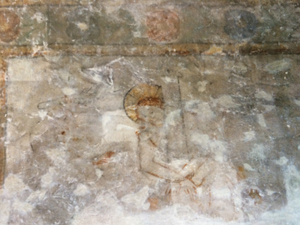
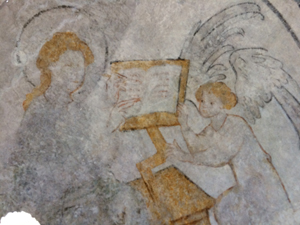
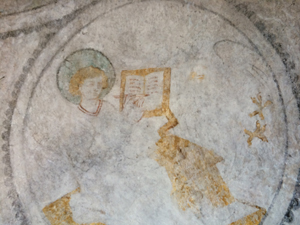
The Lazarite Church in the Swiss village of Gfenn is a real place and the paintings described in my novel — some of them — are really there. No one knows who painted them. I tried to depict them in the story as I saw them on the walls and ceilings of the church. I imagined the painter having been a leper, a resident of the community. Such a thing is not impossible, still Martin and all the others are fictional characters. Where I found historical facts, I used them as the scaffolding on which I’ve hung my story.
Martha Kennedy II

Martha Kennedy was born in Denver, Colorado. She attended Colorado Women’s College and the University of Colorado, Boulder where she earned a BA in English. She then went on to earn a master’s degree from the University of Denver, also in English. At the time, her main focus of interest was Godey’s Lady’s Book and her thesis looks at the first few years of the editorship of Sarah Josepha Hale and the role of the magazine in promoting work by American writers. For thirty years, Kennedy lived in the San Diego area and taught writing at the university and community college level. She has recently returned to Colorado and now lives in Monte Vista, a small town in the beautiful San Luis Valley.

In 1997, Kennedy made her second trip to Switzerland. She’d become intrigued by medieval history after reading two books — How the Irish Saved Civilization by Thomas Cahill (she bought the book thinking it was a joke) and A Distant Mirror by Barbara Tuchman. Having learned of the evangelical journey of the Irish monk, St. Columbanus with his colleague, St. Gall (who remained in what is now Switzerland and is Switzerland’s patron saint), Kennedy wanted very much to see the places in real life. That journey led her to the Lazariterkirche im Gfenn (the Church of the Knights of St. Lazarus in Gfenn). Though the church has nothing whatever to do with St. Gall, the history of the church inspired Kennedy to learn more about the Knights of St. Lazarus and to write the novel Martin of Gfenn. In the process, she became a Swiss medievalist historian.

Martin of Gfenn was named an Editor’s Choice book in the Indie Novel category by the Historical Novel Society in 2015 and long-listed for the Indie Award. It is also an B.R.A.G. Medallion Honoree.

Kennedy has published a second novel, Savior, which tells the story of a young man who goes on Crusade to save his soul which he believes is in the grip of Satan. Kennedy has also written a third novel, The Brothers’ Path, which looks at the effect of the Reformation on a family of brother living in the Canton of Zürich in the early 15th century during the ascendancy of Huldrych Zwingli. 

Website

Facebook

Blog

Amazon

B.R.A.G. Medallion Honoree

HNS Review

Historical Fiction & Meaning with Glen Craney

Glen Craney resized

I’d like to welcome Glen Craney to Layered Pages to talk with me about Historical Fiction & Meaning. Glen is an award-winning novelist, screenwriter, journalist, and lawyer. The Academy of Motion Pictures, Arts and Sciences has honored him with the Nicholl Fellowship prize for best new screenwriting. He is also a two-time indieBRAG Medallion Honoree and has three times been named a Foreword Reviews Book-of-the-Year Award Finalist. His debut novel, The Fire and the Light, was recognized as Best New Fiction by the National Indie Excellence Awards and as an Honorable Mention winner for Foreword’s BOTYA in historical fiction. His novels have taken readers to Occitania during the Albigensian Crusade, to the Scotland of Robert Bruce, to Portugal during the Age of Discovery, to the trenches of France during World War I, and to the American Hoovervilles of the Great Depression. He lives in southern California.

What are the periods of history focused on for your writing?

I’m an outlier, I guess. Most historical novelists tend to specialize, which makes sense for developing expertise and brand marketing. But I’ve always been drawn to a good story first, regardless of period. I blame my background in journalism. When I covered national politics with the Washington press corps, I chafed at being stuck on one beat. Because of this ranging curiosity, I’ve set novels in eras and places as varied as 13th-century Occitania, 14th-century Scotland, 15th-century Portugal, World War I, and the Great Depression in the United States. My current work-in-progress is an American Civil War story.

Why Historical Fiction?

I’ve always loved history. I had my imagination fired as a boy when a great uncle took me to the Kentucky battlefield where his father, a Union captain, had fought. Yet I never dreamed I’d one day be writing historical fiction. In college, a history professor suggested I become a medievalist. I laughed and thought the idea was absurd. But I’ve circled around from stints as a lawyer, a journalist, and a screenwriter. I’m partial to historical mysteries and uncertainties, and I’ve always had a soft spot for those whose voices have been suppressed or forgotten. Historical fiction gives one the freedom to fill in gaps and explore new explanations and theories.

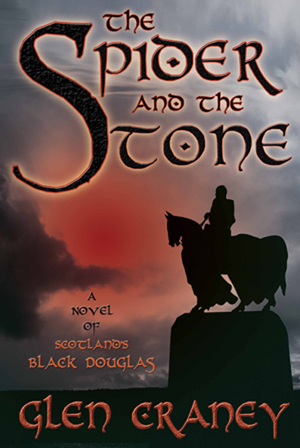
Spider and the stone Glen Craney Resize II

When did you know you wanted be a HF writer?

I had a flirtation with the movie business after winning the Nicholl Fellowship, an award given by the Academy of Motion Pictures, Arts and Sciences. I’m often told my novels have a cinematic quality; maybe that’s because I first learned the craft of screenwriting. I soon discovered two hard truths about Hollywood: 1) It’s difficult to get any movie produced, but particularly an intelligent, sophisticated one that stays true to historical events; and 2) the original writer’s vision inevitably gets lost in the shuffle of multiple writers and studio demands for taking dramatic license. So, I decided to write the historical stories dearest to me as books. Then, if the filmmakers come calling, I’ll always have my version preserved.

How much time do you spend on research? What sources do you use?

I’ve spent months, even years, on research for each novel. It’s the part of the process I enjoy most, making discoveries and watching the puzzle take form. I try to travel to the places I write about, too, often more than once. Walking battlefields and climbing castles feeds the subconscious and yields unexpected insights. I also like to muck around in the archives. Primary sources for medieval novels can be challenging, but for my novels set during the nineteenth and twentieth centuries, letters and files left by my characters have offered up a trove of nicknames, personality quirks, and motivations.

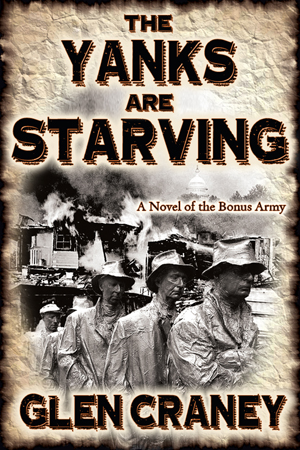
Yanks are starving Glen Craney Resize I

What do you feel is the importance of historical fiction?

Former GOP congresswoman Michele Bauchmann once said she went into politics after becoming enraged by Gore Vidal’s irreverent imagining of American icons such as Jefferson and Lincoln. Vidal must have welcomed Bauchmann’s umbrage with a wry grin. In my opinion, there can be no higher calling for an historical novelist than to rattle the cages of the powerful and expose history’s encrusted myths and hagiographies.

Before I decide to tackle a subject, I apply a three-pronged test: 1) Is it a great story? 2) Will it reveal or develop some new aspect about the period or person? and 3) Will it deal with issues relevant today? If you can satisfy two of the three conditions, you have a novel worth writing. If you find all three present, you’ll have a chance for one of those rare books that stands the test of time.

Who are your influences?

Because I’m always researching leads and possible projects, I read more nonfiction than fiction. Some of my favorite authors include William Manchester, Robert Caro, and David McCullough. On the fiction side, you can’t go wrong with Nigel Tranter or Sharon Kay Penman. Probably my earliest influence was the Classics Illustrated collection of comic books. My mother, a high school English teacher, would bring them home, and I would devour them. They were fantastic for introducing kids to the great works of literature.

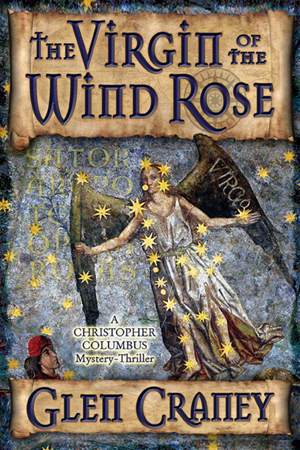
VirginEpubCover03 Glen Craney Resize I

 How much fiction (in your opinion) is best to blend with historical facts?

History itself is a fiction. If you don’t believe me, read historian Thomas DesJardin’s marvelous book, These Honored Dead: How the Story of Gettysburg Shaped American Memory. By retracing the hours and days immediately after Pickett’s Charge, Desjardin demonstrated that much of the battle’s lore in fact never happened. Eyewitness accounts were found unreliable and twisted by hearsay, to such an extent that many Union and Confederate veterans went to their graves years believing they had participated in events that never occurred. Desjardin’s book should be required reading for historical novelists.

My favorite maxim was set by Tim O’Brien, who wrote novels about the Vietnam War: “A thing may happen and be a total lie; another thing may not happen and be truer than the truth.” If you can offer a plausible alternative to the traditional historical narrative, simply alert the reader to the variances in your author’s note and justify your reasons for adopting them. That’s why it’s called historical fiction.

How do you feel the genre has progressed in the last ten years?

The indie publishing boom has breathed new life into the genre. Traditional publishers usually chase the latest fad, making it difficult for authors writing in less popular periods or with unique styles to break past the gatekeepers. Now we authors can get our books directly to readers while maintaining control over our content and cover design. It’s a golden age for those eager to take charge of their careers. And wonderful organizations like indieBRAG have done the angels’ work by putting a spotlight on the many superb indie authors out there. I do wish more Americans took historical fiction as seriously as the Brits do. I’m envious when I see how valued and esteemed historical novelists are held in the UK.

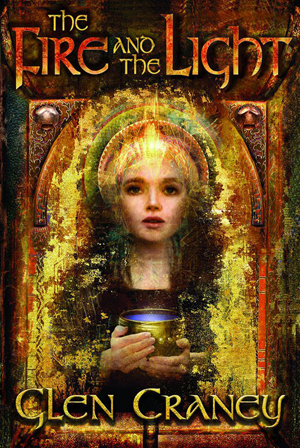
FireFrontCover Glen Craney Resize I

What are the important steps in writing HF?

Don’t write a story unless you have a passion for it. Champion your characters with the zeal of a trial lawyer pleading their cases before a jury. Learn the mythic structures of the classics–start by reading Carl Jung and Joseph Campbell–and develop the second sight of a sculptor who perceives the outline of his finished masterpiece in the unhewn block. Accuse history’s victors and comfort its losers. And never forget Shakespeare’s admonition: “It is a heretic that makes the fire, not she which burns in’t.”

What must you not do writing in this genre?

Two sins I see committed most often: Jarring point-of-view shifts and information dumping, especially in dialogue. After you’ve done so much research, you want to demonstrate your acquired knowledge about the subject. But you must avoid that temptation, and instead apply time-tested techniques for weaving backstory into the action. Informing the reader of historical context should be like slowly boiling a live chicken; turn the temperature up degree by degree, and by dinnertime, the bird is on the plate without a squawk. No one wants to endure a lecture.

When writing, do you use visuals to give you inspiration? Such as historical pictures of people, castles, towns and such? What about historical objects?

 I don’t collect pictures, but I do gather maps to orient myself to place and distances. And I find it helpful to play music evocative of the period while writing. I used Loreena McKennitt’s songs for my Scotland novel, troubadour music for my Cathar novel, and blues/jazz for my Depression-era novel.

Thank you, Glen!


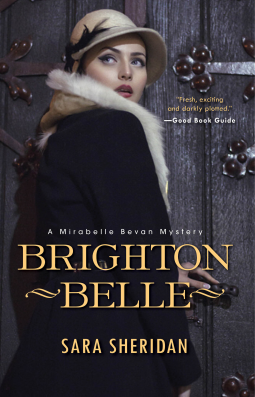
Cover Crush: Brighton Belle by Sara Sheridan

Brighten Belle

I will gladly admit I judge a book by its cover. Over all presentation is important to pull a reader in. Well, this reader that is. I cannot speak for others. When I read a story I want to be completely immersed. A grand cover helps that along. Imagery and all-if you will.

Brighton Belle’s cover sets the tone for the period in which the story is written in. This story is staged in post-world war II England. The woman’s clothing and her facial expression shows her intelligence, her attention to detail in her dress. How her face is turn and her expression shows she knows many secrets. The door she is either opening or closing has the old European style to it. Basically, the whole layout of the cover gives you a mysterious and atmospheric feel. I love it! How does the cover make you feel?

Here is the book description of the story:

In post-World War II England, former Secret Service operative Mirabelle Bevan becomes embroiled in a new kind of intrigue…

1951: In the popular seaside town of Brighton, it’s time for Mirabelle Bevan to move beyond her tumultuous wartime years and start anew. Accepting a job at a debt collection agency seems a step toward a more tranquil life.

But as she follows up on a routine loan to Romana Laszlo, a pregnant Hungarian refugee who’s recently come off the train from London, Mirabelle’s instincts for spotting deception are stirred when the woman is reported dead, along with her unborn child.

After encountering a social-climbing doctor with a sudden influx of wealth and Romana’s sister, who seems far from bereaved and doesn’t sound Hungarian, Mirabelle decides to dig deeper into the suspicious circumstances surrounding the death. Aided by her feisty sidekick–a fellow office worker named Vesta Churchill (“no relation to Winston,” as she explains)–Mirabelle unravels a web of evil that stretches from the Brighton beachfront to the darkest corners of Europe. Putting her own life at risk, she must navigate a lethal labyrinth of lies and danger to expose the truth.

Here are two other cover crush post from fellow book bloggers you might like to check out.

2 Kids and Tired Books

A Bookaholic Swede


Confessions of a Book Blogger with Holly

Holly size 1 300

Today on Layered Pages I’d like to welcome, a friend and fellow book blogger, Holly, to talk with me about blogging. She has some mighty interesting things to say on the subject!

 Holly, what is your blog’s name and address?

2 Kids and Tired Books 

When did you start a book blog and why?

I started my book blog in October of 2007.

I had a couple of friends who had blogs and I enjoyed reading them. I love to write and I’d missed having opportunities to write. So, one day in August of 2007, I just created a personal blog. Our extended family is literally worldwide so it was also a way to share our daily lives and pictures with them.

I have always loved reading and I realized that I would often read a book and later, not remember what I thought of it. So, the book blog grew out of my desire to remember what books I read and what I’d thought about them.

The reviewing part came about accidentally. As I posted my reviews, I met other reviewers through commenting and I discovered the world of review copies and ARCs. It exploded from there.

What are the kind of posts do you feature?

Mostly reviews. Occasionally a preview or highlight. Sometimes a giveaway. This year I’ve gotten to know some other book bloggers better and because of our associations, I’ve found more ideas for posts, including some monthly and weekly collaborations. It’s been a ton of fun and I’ve so enjoyed getting to know these terrific women. I’ve also added way too many books to my reading list because of them!

How often do you blog?

My goal is 3 times a week. My actual reading dropped last year because of some health issues so I haven’t been doing as many reviews. My goal is one review each week (usually on a Monday). Something bookish and funny, usually on a Wednesday. I do a weekly Cover Crush on Thursdays and a semi-regular, more personal Weekend Reflection post on Saturdays. Sometimes I meet all those goals, sometimes I don’t, occasionally I exceed them.

What are some of the positive feedback you have received?

Over the years, it’s been mostly positive. I’ve met some amazing people through blogging. Authors, publicists, fellow book bloggers.  Friendships and associations are the best parts of blogging.

On average, how many books do you review a year?

 Last year it was 39. My high since I started tracking was 163 in 2010. I don’t set any specific reading goals. I have learned that I enjoy reading more when I don’t have deadlines, even if it means reading fewer books.

What is your favorite genre?

I love historical fiction and Christian fiction. I want stories that resonate with characters that grow together as well as individually. I need an emotional connection. I seem drawn to books set in England during World War 2!

What is your less favorite?

Traditional romance novels. I don’t like the “bodice rippers” or books that seem to be simply excuses to write detailed sex scenes. Those aren’t romantic to me.

I don’t love horror/crime novels either, which is weird because I could watch a show like Bones, but I couldn’t stomach reading the novels the show is based on.

How do you feel about negative reviews?

I have a rant about negative reviews. Hopefully this will spare you that!

Negative reviews are normal. I think that honesty is important. When I read a review, I want to know what someone really thinks about a book. I don’t want a sanitized version of the jacket synopsis.

I don’t relish writing negative reviews, I don’t think anyone does. But a negative review doesn’t need to be an attack on an author. I have a disclaimer that says I don’t promise a positive review, but I promise an honest review and that while I will say what I don’t like about the book, I won’t attack the author.

It can’t be easy, as an author, to see negative reviews of something you’ve put your heart and soul into. Every writer has an idea in their mind of what they want their books to say and how they want them received. Every reader has expectations about books, whether from what is clearly printed on the back of the book, their own experiences or other reviews. To have every reader love and adore the book like they do is incredibly unrealistic for any author.

Sorry. Was that ranting?

When considering a book to review what do you look for?

If I see a book that only has 5 stars, I question it because my first assumption is that all of those reviews must be from the author’s family and friends.

When I am looking at reviews to see if I want to read a particular book, I actually look at the 2 and 4 star reviews because I think they are the most honest. I want to know how the reader felt. I appreciate knowing ahead of time if there is explicit sex or profanity because that will affect my decision to read it.

The cover plays a big part because it is usually the first thing I see and a striking cover will tempt me to read the synopsis.  Recommendations from friends carry a lot of weight too.

List three book covers you love.

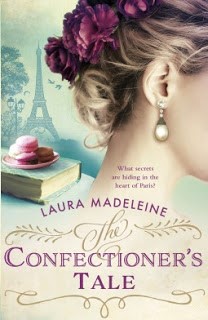
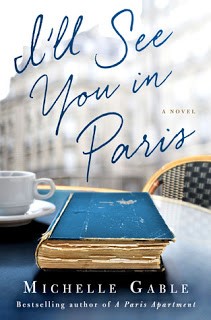
Covers are so important. Three more recent covers I’ve loved are:

Confectionaers tale

 I will see you in paris II

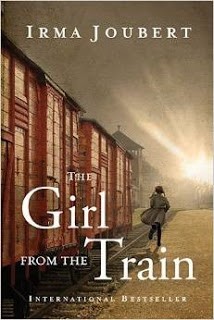
the girl on the train

How do you feel about authors using social media to speak out or badly of reviewers who did not give the author’s book a glowing review?

 It’s wrong. There is no reason in anything to be mean. Readers can review a book negatively without criticizing or bashing an author and authors need to be appreciative that people are reading their books, because even a negative review is publicity and there have been times that a negative review has caused me to look further into a particular book or author.

It serves no purpose to speak badly of anyone, reader or author, on social media. When I see authors go after reviewers who write negative reviews, whether on Amazon or Goodreads, it affects my impressions of them and will almost guarantee that I never read any of their books. In the same vein, a reviewer who is unnecessarily harsh and critical of an author can put that reviewer in a bad light as well.

Have you had any negative experience with blogging?

 I have had two specific experiences where authors took offense at negative reviews even when they claim to have respected my opinion. Each time they tried to tell me why my opinion was wrong. In the first one, it was the first negative review I’d written and I did go back and softened a couple of sentences because I realized in hindsight they were unnecessarily harsh, but I didn’t change my review. It did teach me a lesson and it’s where I realized that one can and should be kind even when writing a negative review.

In the second experience, the author and/or friends created blogger profiles simply to comment on my post and tell me my opinions about the book were wrong. Because I try very hard to be fair in my reviews that experience really put a damper on my desire to review for awhile.

Do you read more than one book at a time?

Occasionally. I’ve learned that I often need to be in a particular mood to read certain books. I might set one aside unfinished and pick up a different one. Sometimes I just switch back and forth. Most of the time though, I read one until it’s finished.

Do you read self-published books? If so which ones have you read this year so far?

Early on in reviewing, I accepted nearly every book that came my way. Many of those were self-published and many of those were not well written. I used to get a lot of free books from Amazon and most of those ended up being self-published. Too many of those were also not well written or even edited. I applaud and commend people for writing and publishing themselves. But, I wish more would go through an editing process with a professional. Every book needs editing and proofing. Every book.

Because of those experiences, I stepped away from self-published books. If a cover looked self-published, I didn’t even consider it. Becoming acquainted with indieBRAG has changed that for me. I’m learning that there are some fantastic self-published books and it’s important to get them out there and known.

What advice would you give to someone who is considering starting a blog?

Blogging takes time and passion.

Be thoughtful in your posts. Proofread and edit them. It takes time to build relationships with publicists and eventually receive free books. Places like Netgalley often require you to have an established blog presence. Review books you’ve already read and own, or find them at your library at first to build your blog.

Utilize places like Goodreads as well as Facebook and Twitter. If you like authors, follow them. Do some book-related memes. Weekly memes like Booking Through Thursday or Mailbox Monday has helped me get to know other bloggers and increase my readership. I’ve even participated in linky parties that help to get visibility for posts.

Get to know other bloggers. Read their posts, comment on their posts, and share their posts on social media. They will share yours. That is huge and building those relationships leads to so much more fulfilling blog experiences.

Awesome questions Stephanie! Thanks for the opportunity to chat. Loved it!

Thank you, Holly! Enjoyed our chat very much!

Stay calm and support book bloggers

Characters in Motion- Two Sides of a Coin

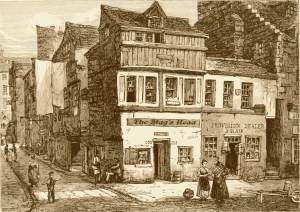
stags head

The location for this interview is the Stag’s Head Tavern at the rough end of Edinburgh’s Cowgate where Sergeant Angus MacIan and Hugh (Shug) Nicolls have taken their seats. Supplied with a tankard of the finest dark ale they welcome Mistress Moore-Hopkins.

Stephanie: Good afternoon gentlemen, thank you for inviting me to join you here (looks around and  suppresses a shiver of horror) I have brought cake. (She looks at two men, one in the   uniform of the Town Guard, the other dressed in rough, everyday clothes resembling a slightly down at the heels gentleman. Both are over six feet tall, powerfully built and looks slightly menacing. Sergeant MacIan is in his late fifties. Shug Nicolls, about thirty)

MacIan: It’s our pleasure, madam. I believe you have a few questions for us? I hope you don’t mind me saying, but it makes a nice change to have someone asking me questions for once!

Stephanie: Just a few, gentlemen. (Sips the offered tankard) Would it be possible for a glass of red wine? I’m not really an ale drinker.

Shug: (to the barmaid) Maisie, fetch Mistress Moore-Hopkins a claret, hen. Mind and put it in a clean glass!

Stephanie: Umm, thank you. Perhaps a slice of cake first, do we have a knife? (in the blink of an eye Shug produces a stiletto knife with a six-inch blade, just as quickly MacIan displays a dirk, twice as long and twice as broad, both are sharp enough to shave with) Err, thank you. So shall we begin?

MacIan and Shug: Aye, dad on!

Stephanie: A simple question to begin with. What are your normal habits in a standard day?

MacIan: Well, as the senior sergeant of Edinburgh’s ancient and respected Town Guard, my day consists of making sure that folk keep their noses clean, and don’t get up to any mischief. I do this through good old fashioned persuasion and kindness.

Shug: (laughing) Aye, and a fair amount o’ knocking heads together, eh! Dinnae listen tae his  nonsense missus. He’s the biggest rogue in a redcoat ye’ll meet here in toon!

Stephanie: Pardon?

MacIan: Nicolls! This wifie is frae the Colonies! Speak English or she’ll no’ ken what yer havering aboot! Aye, and less o’ yer cheek! Yer nae angel yersel’

Stephanie: (blank look)

Shug: Forgive me, madam. I was just suggesting that Sergeant MacIan is no stranger to bending the rules when it is called for. I’m not calling him a bad man though. There are those who would cut a throat for a few shillings, aye, and those that think themselves above the law because of their position in society! They consider themselves to be untouchable. MacIan here…well, let’s just say that he doesn’t think that’s right. So, when he needs to, he’ll bend the rules, or if you want me to be completely honest, he’s willing to break the rules into a hundred pieces to see the guilty pay for their sins!

Stephanie: And yourself?

Shug: All I can say is that everything I do, I do with the best of intentions. If Mr. Young asks me to help him in any way during his work, well, I am always happy to do my wee bit to assist.

Stephanie: Ah yes, Robert Young of Newbiggin. I believe you owe him your life?

MacIan: Aye that he does. Shug here, well he was going to hang for killing a man not two feet from where you sit. I was convinced that he was guilty of murder. Mr. Young however decided to look into the matter. Turns out, Nicolls here was the victim of a deadly assault. He had no choice but to defend himself. Let’s just say that the man who attacked him ended up on the floor at your feet with a meat cleaver in his head! Are you alright? You’ve gone awfully pale!

Stephanie: Thank you, I’m fine (looks at the floor) Really? Right here? Moving on! How are you    influenced by your setting?

Shug: You have to remember, missus, that this is a violent town at times. For the folk that live down here on the Cowgate, it can be dog eat dog at times. I’m not saying that everyone is bad, far from it! The vast majority of people would give you the shirt of their back if you needed it, but there are always those that see everyone else as a potential victim. I’ve lived my whole life on these streets. I learned early on that if you want to succeed, then you need to be able to look after yourself. Aye, and thanks to my dealings with Mr. Young, I’ve learned that there is satisfaction to be had by helping those weaker than yourself too.

MacIan: As for me? Well, I hail from Glen Fenstrae originally. Ran away to join the army when I was just a young man. Why? Because I thought the girl I loved didn’t love me! Turns out I was wrong, but I only learned that last year when I was blessed by our Lord and reunited with my  Marie. A wee bitty older, a wee bitty wiser, but still just as feisty as I remembered her. Anyway, I fought on the Continent and over in your Colonies, up along the Canadian border against the Frenchies. When I got too old for marching and fighting, I settled here in Edinburgh and joined the Guard. Now, what, ten years later? I’m still here! Like Nicolls, I see it as my duty to protect the weak and defenceless. If that means that I sometimes have to get a bit rough with ne’er-do-wells? Well, let’s just say that they brought it upon themselves.

Stephanie: Yes, I can understand that. You are both quite intimidating fellows; it has to be said. From what I have heard though, you are both honourable in your own way. May I ask what are the emotional triggers of your characters and how do they act on them?

MacIan: Thank you Mistress. Emotional triggers? For me? That would be knowing what’s right, and what’s wrong. Too many people seem unable to tell the difference! When I see someone who has suffered violence through no fault of their own, it raises my hackles. I try to stay within the law when dealing with those responsible. Just occasionally though, you need   to take a step over the line to see justice done.

Shug: And sometimes you need to get your feet wet, eh MacIan! But you don’t want to be hearing about that Mistress. Some things are best left out of this interview! What was the question? Oh aye, emotional triggers! Like MacIan here, there are some things that just annoy me. Rich men thinking they can do as they please with the poor, aye, that is something that gets my back up. Violence towards women and children? Let’s just say that if a man does that, then they had best pray that I don’t hear about it, or they’ll be sorry!

Stephanie: Would I be right in thinking that you are actually two sides of the same coin?

MacIan: (looking offended) Indeed you would not! I have nothing in common with this man. He’s nothing but a common thug!

Shug: (laughing) a thug, perhaps? But common? I think not. No. MacIan here is all about upholding the law, and seeing the guilty brought to trial. As for me? I do my best to avoid having any  dealing with the law if I can help it. The Town Guard have spent the last few years trying to find a way to put my neck in a noose on the Grassmarket! No, we have nothing in common.

Stephanie: I see. Very well, I shall allow my readers to make up their own minds about that then. One final question then. Self-image is important in your characters I would imagine. How do you hope that people see you?

MacIan: A year ago, I would have said that I was seen as a loyal servant of the town. A hard, but fair, member of the Guard, and someone that folk could turn to for assistance. These days? Aye, all of that, but more importantly, I’d like to be remembered as a good man to my Marie, and a good father to the daughter I never even knew I had until forty years after she was born! And not forgetting my grand-daughter and great-grand-daughter. Aye, just to be remembered as a family man! That would do me fine.

Shug: I’d settle for being seen as something more than a bar-room brawler! I know I don’t have the best reputation in town. Folk see me coming and think I’m about to rip their head off! Just because I have broken a few people along the way, others tend to see the worst in you. I see myself more as a victim of circumstance. I was born with nothing and everything I have, I  have had to work for. I would hope that my dealings with Mr. Young have allowed people to see that there is more to me than a one dimensional character whose only role is to turn up and break faces! Thankfully Mr. Young could see the man within. He has allowed me the opportunity to become a better man. That is why I am always there to keep a careful watch over him, his family and friends. He saved my life. Now I see it as my duty to protect theirs.

Stephanie: Well, thank you very much for your time gentlemen. I think I have all that I need here. Do you know the best route back to Leith? I have to catch the evening tide for Georgia!

Shug: I’ll rustle you up a coach, missus. Don’t worry yourself, we’ll make sure you don’t miss your boat. Would it be alright if I take this cake? I hate to see good cake go to waste!

Interview arranged by Stuart S. Laing, author of the Robert Young of Newbiggin Mysteries.

With thanks to the management and staff at the Stag’s Head for allowing the use of their premises.

Book Links:

Amazon US

In the UK, please visit

Amazon UK

Stuart Laing

Born and raised on the east coast of Scotland in the ancient Pictish Kingdom of Fife, Stuart Laing grew up looking across the Firth of Forth towards the spires and turrets of the city of Edinburgh and its castle atop its volcanic eyrie. He has always been fascinated by the history of Auld Reekie and has spent most of his life studying Scottish history in all its aspects whenever he finds the time between family, work and the thousand and one other things that seek to distract him. Despite the vast panorama of Scotland’s history, he always finds himself being drawn back to the cobbled streets of the Old Town. Those streets have provided the inspiration for his stories and characters. He would urge all visitors to Scotland’s ancient capital to (briefly) venture into one of the narrow closes running down from the Royal Mile to get a flavour of how alive with mischief, mayhem, love and laughter these streets once were.


The Love of a Good Thrill

A few fellow book bloggers and myself have started a new post series of books on our wish-list. This month I decided to list thrillers that I want to read. Who doesn’t love a good thrill? A few of these titles below I have recently acquired from NetGalley and I really look forward to reading them in the near future. What first attracted me to them was the book covers and the titles. Goes to show the importance of the over all layout of a book! Which thrillers books do you want to read?

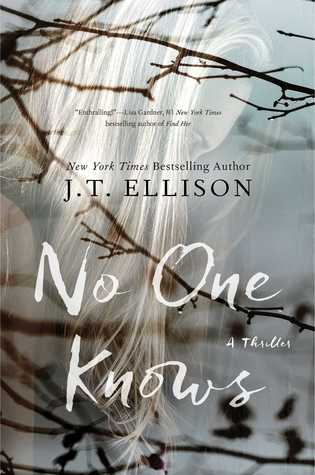
No one knows II

In an obsessive mystery as thrilling as The Girl on the Train and The Husband’s SecretNew York Times bestselling author J.T. Ellison will make you question every twist in her page-turning novel—and wonder which of her vividly drawn characters you should trust.

The day Aubrey Hamilton’s husband is declared dead by the state of Tennessee should bring closure so she can move on with her life. But Aubrey doesn’t want to move on; she wants Josh back. It’s been five years since he disappeared, since their blissfully happy marriage—they were happy, weren’t they?—screeched to a halt and Aubrey became the prime suspect in his disappearance. Five years of emptiness, solitude, loneliness, questions. Why didn’t Josh show up at his friend’s bachelor party? Was he murdered? Did he run away? And now, all this time later, who is the mysterious yet strangely familiar figure suddenly haunting her new life?

In No One Knows, the New York Times bestselling coauthor of the Nicholas Drummond series expertly peels back the layers of a complex woman who is hiding dark secrets beneath her unassuming exterior. This masterful thriller for fans of Gillian Flynn, Liane Moriarty, and Paula Hawkins will pull readers into a you’ll-never-guess merry-go-round of danger and deception. Round and round and round it goes, where it stops…no one knows.

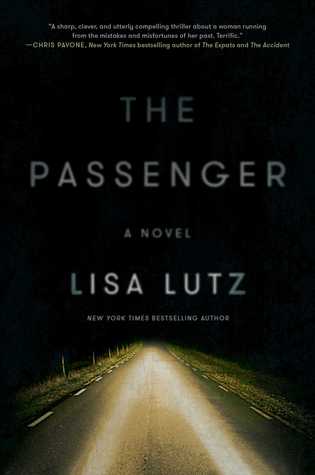
The Passenger

From the author of the New York Times bestselling Spellman Files series, Lisa Lutz’s latest blistering thriller is about a woman who creates and sheds new identities as she crisscrosses the country to escape her past: you’ll want to buckle up for the ride!

In case you were wondering, I didn’t do it. I didn’t have anything to do with Frank’s death. I don’t have an alibi, so you’ll have to take my word for it…

Forty-eight hours after leaving her husband’s body at the base of the stairs, Tanya Dubois cashes in her credit cards, dyes her hair brown, demands a new name from a shadowy voice over the phone, and flees town. It’s not the first time.

She meets Blue, a female bartender who recognizes the hunted look in a fugitive’s eyes and offers her a place to stay. With dwindling choices, Tanya-now-Amelia accepts. An uneasy―and dangerous―alliance is born.

It’s almost impossible to live off the grid today, but Amelia-now-Debra and Blue have the courage, the ingenuity, and the desperation, to try. Hopscotching from city to city, Debra especially is chased by a very dark secret…can she outrun her past?

With heart-stopping escapes and devious deceptions, The Passenger is an amazing psychological thriller about defining yourself while you pursue your path to survival. One thing is certain: the ride will leave you breathless

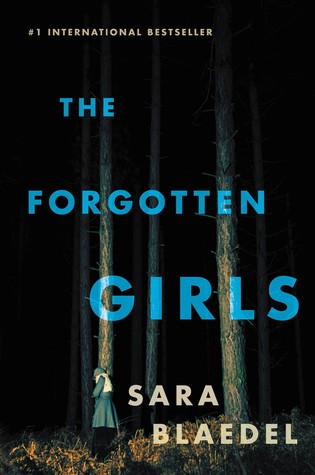
The Forgotten Girls

In a forest in Denmark, a ranger discovers the fresh corpse of an unidentified woman. A large scar on one side of her face should make the identification easy, but nobody has reported her missing. After four days, Louise Rick—the new commander of the Missing Persons Department—is still without answers. But when she releases a photo to the media, an older woman phones to say that she recognizes the woman as Lisemette, a child she once cared for in the state mental institution many years ago. Lisemette, like the other children in the institution, was abandoned by her family and branded a “forgotten girl.” But Louise soon discovers something more disturbing: Lisemette had a twin, and both girls were issued death certificates over 30 years ago. As the investigation brings Louise closer to her childhood home, she uncovers more crimes that were committed—and hidden—in the forest, and finds a terrible link to her own past that has been carefully concealed.

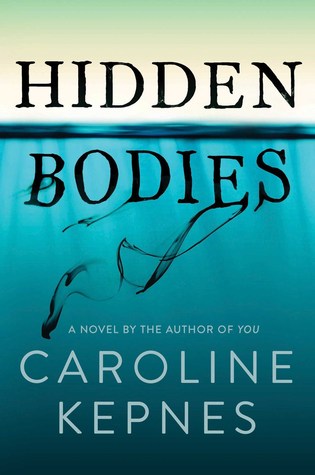
Hidden Bodies

In the compulsively readable follow-up to her widely acclaimed debut novel, You, Caroline Kepnes weaves a tale that Booklist calls “the love child of Holden Caulfield and Patrick Bateman.”

Hidden Bodies marks the return of a voice that Stephen King described as original and hypnotic, and through the divisive and charmingly sociopathic character of Joe Goldberg, Kepnes satirizes and dissects our culture, blending suspense with scathing wit.

Joe Goldberg is no stranger to hiding bodies. In the past ten years, this thirty-something has buried four of them, collateral damage in his quest for love. Now he’s heading west to Los Angeles, the city of second chances, determined to put his past behind him.

In Hollywood, Joe blends in effortlessly with the other young upstarts. He eats guac, works in a bookstore, and flirts with a journalist neighbor. But while others seem fixated on their own reflections, Joe can’t stop looking over his shoulder. The problem with hidden bodies is that they don’t always stay that way. They re-emerge, like dark thoughts, multiplying and threatening to destroy what Joe wants most: truelove. And when he finds it in a darkened room in Soho House, he’s more desperate than ever to keep his secrets buried. He doesn’t want to hurt his new girlfriend—he wants to be with her forever. But if she ever finds out what he’s done, he may not have a choice…

the girl in the ice

Her eyes are wide open. Her lips parted as if to speak. Her dead body frozen in the ice…She is not the only one.

When a young boy discovers the body of a woman beneath a thick sheet of ice in a South London park, Detective Erika Foster is called in to lead the murder investigation.

The victim, a beautiful young socialite, appeared to have the perfect life. Yet when Erika begins to dig deeper, she starts to connect the dots between the murder and the killings of three prostitutes, all found strangled, hands bound and dumped in water around London.

What dark secrets is the girl in the ice hiding?

As Erika inches closer to uncovering the truth, the killer is closing in on Erika.

The last investigation Erika led went badly wrong… resulting in the death of her husband. With her career hanging by a thread, Erika must now battle her own personal demons as well as a killer deadlier than any she’s faced before. But will she get to him before he strikes again?

A page-turning thriller packed with suspense. If you like Angela Marsons, Rachel Abbott and Karin Slaughter, discover Rob Bryndza’s new series today – at a special launch price.

Watch out for more from DCI Erika Foster

She’s fearless. Respected. Unstoppable. Detective Erika Foster will catch a killer, whatever it takes.

Check out these wish lists!

A Bookaholic Swede’s wish-list!

Flashlight Commentary’s wish-list

A Literary Vacation’s wish-list

2 Kids and Tired Books wish-list


Confessions of a Book Blogger with Colleen Turner!

Colleen Turner

Today on Confessions of a Book Blogger, I interview fellow book blogger and friend, Colleen Turner! To find out more about her, please be sure to visit her amazing website!

 Hi, Colleen! What is your blog’s name and address?

Hi Stephanie!

A Literary Vacation

When did you start a book blog and why?

I started A Literary Vacation on January 1st, 2015. I had been contributing reviews to a few different blogs for a number of years before then and thought “hey, why don’t I try creating my own blog?” It seemed the next logical step, and here I am!

What kind of posts do you feature?

I like to do as many reviews as possible but I’m not as fast a reader as I would like. So I also love to do guest posts and interviews with authors as well as spotlights on their books. This year I’ve started interacting more with some fabulous fellow bloggers (hi ladies!) and have gotten some great ideas for posts I’d like to do in the future, such as a monthly wish list post and cover crush posts on covers I can’t get enough of.

How often do you blog?

It varies month to month. I try to have a post go live everyday Monday-Friday but that doesn’t always happen. If I can’t make that I really shoot for three posts a week.

What are some of the positive feedback you have received?

I have been very lucky that I’ve had nothing but positive feedback and experiences so far as a blogger. I’ve had people compliment me on my reviews or the interviews I do, and have had a lot of wonderful authors, PR people and tour organizers be very gracious and thank me for working with them.  It has been a total win-win for me!

On average, how many books do you review a year?

50-55

What is your favorite genre?

Historical Fiction

What is your least favorite?

Westerns or pure Romances

How do you feel about negative reviews?

I think if the reviewer is being honest and respectful then I think they are important. Not everyone is going to love every book, and as a reader I want to know the good AND the bad that other readers found when reading a book I’m considering picking up. This is not an excuse to be intentionally rude or hurtful to an author and I will completely disregard a negative review that doesn’t explain what they disliked or just says “I hate this book” as quickly as a review that just says “great book”, but if it is well thought out and balanced it will hold more weight in my opinion.

When considering a book to review what do you look for?

I look for a catching synopsis, whether or not I’ve read and enjoyed a book by the author before, who they have endorsing it, and whether or not readers I know and respect have read and enjoyed it. And I can’t lie, I love an eye-catching cover!

What are three book covers you love?

Oh great question! Also a hard one as I’ve enjoyed so many. Recently I’ve loved the covers of…

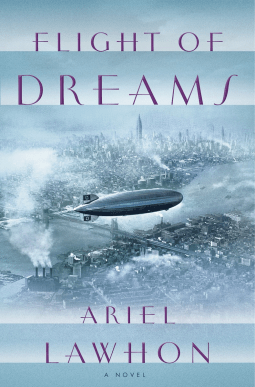
Flight of Dreams

The Conqueror’s Wife II

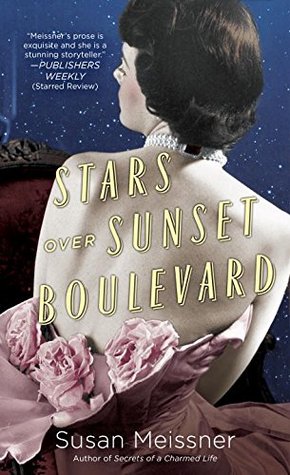
Stars Over Sunset Boulevard

I adore these cover!

How do you feel about authors using social media to speak out badly of reviewers who did not give the author’s book a glowing review?

I think that is just as bad as a reviewer leaving a rude or unhelpful negative review. For me, any author openly bashing a reviewer simply because they didn’t like their book is classless and a turnoff for me. I will typically make a point of not reading their books in the future as I don’t want to support that sort of behavior.

Have you had any negative experience with blogging?

Believe it or not no (at least not yet J ). I’ve had an author or two email me asking for a review and then not respond when I’ve offered to do a guest post or spotlight on their book instead, but nothing beyond that.

Do you read more than one book at a time?

I try not to. I like to give my full attention to whatever book I’m reading at any given time. However, sometimes I’m not really enjoying a book, so I’ll set it aside for a while and read bits and pieces between other books just to see if it will improve.

Do you read self-published books?

If so which ones have you read this year so far? I do sometimes, but not too often. I don’t believe I’ve read any yet this year. There isn’t any real reason for this, other than the covers and synopsis for the books I gravitate towards seem to be from traditional publishers.

What advice would you give to someone who is considering starting a blog?

Make sure you have the time and love to devote to it. It takes time to not only set up – and change up – the design of your blog but it takes a good amount of time to write posts, format them, and get them just right (at least for me…I tend to want to keep playing with it till it’s “perfect”!). You’re going to need time to share your posts around social media, respond to comments and author enquires and to of course read. So, long story short, you’ll need time. And if you are anything like me that is in short supply, so you want to make sure you’re spending it doing something you enjoy.

Thanks Stephanie!!

You’re welcome, Colleen! A pleasure! 

Good Reads by Ruta Sepety

Okay, so I will admit, sometimes I read young adult books when it has something of value to offer. Before you gasp in disgust over that statement, I do believe there is a variety of quality in young adult books out there. I am just particular in what I read in that age group. Here is two that really stands out to me and is sitting on my shelf at home patiently waiting to be read. I am really looking forward to getting to these two. My daughter has read, Between Shades of Gray and highly recommends it.

Between the shades of Gray

Lina is just like any other fifteen-year-old Lithuanian girl in 1941. She paints, she draws, she gets crushes on boys. Until one night when Soviet officers barge into her home, tearing her family from the comfortable life they’ve known. Separated from her father, forced onto a crowded and dirty train car, Lina, her mother, and her young brother slowly make their way north, crossing the Arctic Circle, to a work camp in the coldest reaches of Siberia. Here they are forced, under Stalin’s orders, to dig for beets and fight for their lives under the cruelest of conditions.

Lina finds solace in her art, meticulously–and at great risk–documenting events by drawing, hoping these messages will make their way to her father’s prison camp to let him know they are still alive. It is a long and harrowing journey, spanning years and covering 6,500 miles, but it is through incredible strength, love, and hope that Lina ultimately survives. Between Shades of Gray is a novel that will steal your breath and capture your heart.


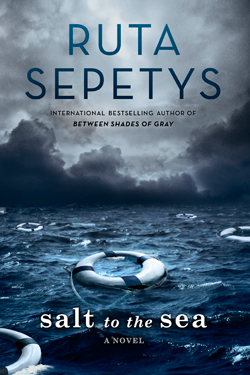
Salt to the sea

Winter, 1945. Four teenagers. Four secrets.

Each one born of a different homeland; each one hunted, and haunted, by tragedy, lies…and war.

As thousands of desperate refugees flock to the coast in the midst of a Soviet advance, four paths converge, vying for passage aboard the Wilhelm Gustloff, a ship that promises safety and freedom.

Yet not all promises can be kept.

Inspired by the single greatest tragedy in maritime history, bestselling and award-winning author Ruta Sepetys (Between Shades of Gray) lifts the veil on a shockingly little-known casualty of World War II. An illuminating and life-affirming

Hello New Books

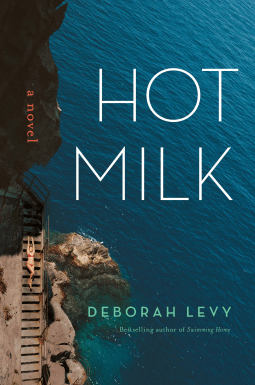
Hot Milk

Pub Date Jul 12, 2016

I have been sleuthing my mother’s symptoms for as long as I can remember. If I see myself as an unwilling detective with a desire for justice, is her illness an unsolved crime? If so, who is the villain and who is the victim?

Sofia, a young anthropologist, has spent much of her life trying to solve the mystery of her mother’s unexplainable illness. She is frustrated with Rose and her constant complaints, but utterly relieved to be called to abandon her own disappointing fledgling adult life. She and her mother travel to the searing, arid coast of southern Spain to see a famous consultant–their very last chance–in the hope that he might cure her unpredictable limb paralysis.

But Dr. Gomez has strange methods that seem to have little to do with physical medicine, and as the treatment progresses, Sofia’s mother’s illness becomes increasingly baffling. Sophia’s role as detective–tracking her mother’s symptoms in an attempt to find the secret motivation for her pain–deepens as she discovers her own desires in this transient desert community.

Hot Milk is a profound exploration of the sting of sexuality, of unspoken female rage, of myth and modernity, the lure of hypochondria and big pharma, and, above all, the value of experimenting with life; of being curious, bewildered, and vitally alive to the world.

Deborah Levy writes fiction, plays, and poetry. Her work has been staged by the Royal Shakespeare Company, widely broadcast on the BBC, and translated into fourteen languages. The author of highly praised novels including Swimming Home (shortlisted for the Man Booker Prize in 2012), The Unloved, and Billy and Girl, the story collection Black Vodka, and the essay Things I Don’t Want to Know, she lives in London.

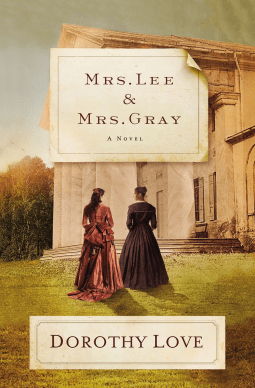
Mrs. Lee & Mrs. Gray

Pub Date Jun 14, 2016

Mary Anna Custis Lee is a great-granddaughter of Martha Washington, wife of Confederate General Robert E Lee, and heiress to Virginia’s storied Arlington house and General Washington’s personal belongings.

Born in bondage at Arlington, Selina Norris Gray learns to read and write in the schoolroom Mary and her mother keep for the slave children, and eventually becomes Mary’s housekeeper and confidante. As Mary’s health declines, Selina becomes her personal maid, strengthening a bond that lasts until death parts them.

Forced to flee Arlington at the start of the Civil War, Mary entrusts the keys to her beloved home to no one but Selina. When Union troops begin looting the house, it is Selina who confronts their commander and saves many of its historic treasures.

In a story spanning crude slave quarters, sunny schoolrooms, stately wedding parlors, and cramped birthing rooms, novelist Dorothy Love amplifies the astonishing true-life account of an extraordinary alliance and casts fresh light on the tumultuous years leading up to and through the wrenching battle for a nation’s soul.

A classic American tale, Mrs. Lee and Mrs. Gray is the first novel to chronicle this beautiful fifty-year friendship forged at the crossroads of America’s journey from enslavement to emancipation.

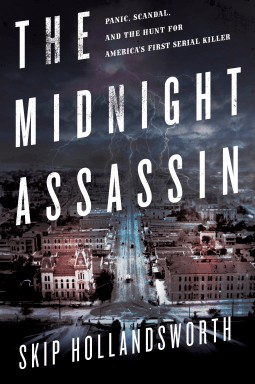
The Midnight Assassins

Pub Date Apr 5, 2016

A sweeping narrative history of a terrifying serial killer–America’s first–who stalked Austin, Texas in 1885

In the late 1800s, the city of Austin, Texas was on the cusp of emerging from an isolated western outpost into a truly cosmopolitan metropolis. But beginning in December 1884, Austin was terrorized by someone equally as vicious and, in some ways, far more diabolical than London’s infamous Jack the Ripper. For almost exactly one year, the Midnight Assassin crisscrossed the entire city, striking on moonlit nights, using axes, knives, and long steel rods to rip apart women from every race and class. At the time the concept of a serial killer was unthinkable, but the murders continued, the killer became more brazen, and the citizens’ panic reached a fever pitch.

Before it was all over, at least a dozen men would be arrested in connection with the murders, and the crimes would expose what a newspaper described as “the most extensive and profound scandal ever known in Austin.” And yes, when Jack the Ripper began his attacks in 1888, London police investigators did wonder if the killer from Austin had crossed the ocean to terrorize their own city.

With vivid historical detail and novelistic flair, Texas Monthly journalist Skip Hollandsworth brings this terrifying saga to life.


Book Stores Are Dangerous

So early this week my daughter wanted to go out to eat. As we were sitting at the table enjoying our meal and chatting about this and that, she suddenly blurts out she wants to go to B&N. Oh, no, I thought. Why wouldn’t I want to go, you ask? Err…because I have a serious problem when entering book stores. I cannot leave without a few books in hand. This can be a serious problem for book lovers and this year I set a budget of zero dollars to spend on books. I really need to catch up on some reads on my shelf and Kindle that have been waiting patiently for my attention. Alas, a couple weeks or so ago, I broke the budget and bought some bargain books. Sigh. You may remember that post. If not, click here to see. I know, no will power what-so-ever. I wonder if I am cursed.

Anyhow, my daughter tells me to stay with her while she browses and NOT to look at books. How in the world can I do THAT? And can you imagine the looks I would get from people? Following my daughter around a bookstore like a puppy dog? No way. Not doing it. Yes, I ended up following her around the store. Well, I was almost successful in not picking up a book until the end. But then we walked by the bargain section and these three beauties called out to me.

My daughter and I made quit a picture, I’m sure. I was grabbing books with one hand and my daughter grabs my other hand to pull me away. She thinks I need help. She may be right but there are worse things in life to obsess over. So take a look at my new purchases. Enjoy!

Stephanie M. Hopkins

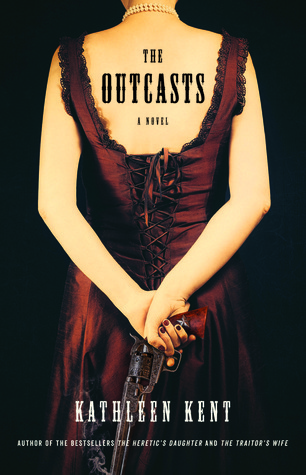
The Outcasts

It’s the 19th century on the Gulf Coast, a time of opportunity and lawlessness. After escaping the Texas brothel where she’d been a virtual prisoner, Lucinda Carter heads for Middle Bayou to meet her lover, who has a plan to make them both rich, chasing rumors of a pirate’s buried treasure.

Meanwhile Nate Cannon, a young Texas policeman with a pure heart and a strong sense of justice, is on the hunt for a ruthless killer named McGill who has claimed the lives of men, women, and even children across the frontier. Who–if anyone–will survive when their paths finally cross?

As Lucinda and Nate’s stories converge, guns are drawn, debts are paid, and Kathleen Kent delivers an unforgettable portrait of a woman who will stop at nothing to make a new life for herself.

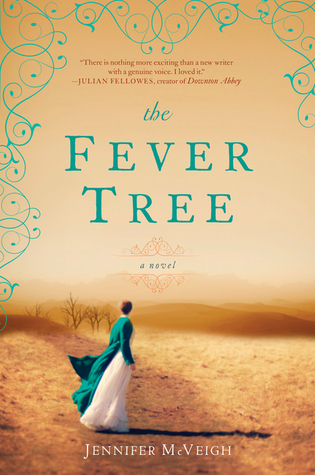
The Fever Tree

Frances Irvine, left destitute in the wake of her father’s sudden death, has been forced to abandon her life of wealth and privilege in London and emigrate to the Southern Cape of Africa. 1880 South Africa is a country torn apart by greed. In this remote and inhospitable land she becomes entangled with two very different men—one driven by ambition, the other by his ideals. Only when the rumor of a smallpox epidemic takes her into the dark heart of the diamond mines does she see her path to happiness.

But this is a ruthless world of avarice and exploitation, where the spoils of the rich come at a terrible human cost and powerful men will go to any lengths to keep the mines in operation. Removed from civilization and disillusioned by her isolation, Frances must choose between passion and integrity, a decision that has devastating consequences.

The Fever Tree is a compelling portrait of colonial South Africa, its raw beauty and deprivation alive in equal measure. But above all it is a love story about how—just when we need it most—fear can blind us to the truth.

Vintage

At Hourglass Vintage in Madison, Wisconsin, every item in the boutique has a story to tell . . . and so do the women who are drawn there.

Yellow Samsonite suitcase with ivory, quilted lining, 1950s…

Violet Turner had always dreamed of owning a shop like Hourglass Vintage. Though she knows the personal history behind each precious item she sells, Violet refuses to acknowledge her own past. When she is faced with the possibility of losing the store, she realizes that, as much as she wants to, she cannot save it alone.

Taffeta tea length wedding gown with scooped neckline and cap sleeves, 1952…

Eighteen-year-old April Morgan is nearly five months along in an unplanned pregnancy when her hasty engagement is broken. When she returns the perfect 1950s wedding dress, she discovers unexpected possibilities and friends who won’t let her give up on her dreams.

Orange sari made from silk dupioni with gold paisley design, 1968…

Betrayed by her husband, Amithi Singh begins selling off her old clothes, remnants of her past life. After decades of housekeeping and parenting a daughter who rejects her traditional ways, she fears she has nothing more ahead for her.

An engaging story that beautifully captures the essence of women’s friendship and love, Vintage is a charming tale of possibility, of finding renewal and hope when we least expect it.