Book Review: The Beautiful Daughters by Nicole Baart

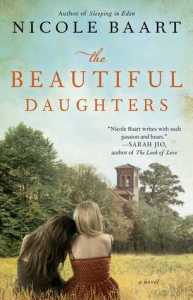
The Beautiful Daughters

Adrienne Vogt and Harper Penny were closer than sisters, until the day a tragedy blew their seemingly idyllic world apart. Afraid that they got away with murder and unable to accept who they had lost—and what they had done—Harper and Adri exiled themselves from small-town Blackhawk, Iowa, and from each other. Adri ran thousands of miles away to Africa while Harper ventured down a more destructive path closer to home.

Now, five years later, both are convinced that nothing could ever coax them out of the worlds in which they’ve been living. But unexpected news from home soon pulls Adri and Harper back together, and the two cannot avoid facing their memories and guilt head-on. As they are pulled back into the tangle of their fractured relationships and the mystery of Piperhall, the sprawling estate where their lives first began to unravel, secrets and lies behind the tragic accident are laid bare. The former best friends are forced to come to terms with their shared past and search for the beauty in each other while mending the brokenness in themselves.

Review:

When I finished with this story, I made several notes on some key points I want to share. When I came across this book on Netgalley, the cover captured my attention. It gave me an impression of a literary feel to it. When I began reading the first chapter, the feelings I had going into the story was not my first impressions. In that I was a bit disappointed. As I read on, none of the characters really stood out to me. I wanted more character development. I did not get the impression that Adri and Harper were closer than sisters. Their struggles and turmoil were well written. Through the whole story it deals with their guilt and Harpers abusive relationship that she was trying escape from, so the author did a good job building tension there.

What bothered me the most is that it took the whole entire story to get to the part of what happen to David when he was killed. But I guess I can see the authors intentions for that.

When Adri and Harper reunited, it felled flat to me. I was expecting a more powerful scene than what was written. Another thing I want to mention is that there needed to be more dialogue in the story. There were too many descriptive paragraphs about things that really didn’t matter or really help the overall character development or plot.

However, having said all this. I think it’s a great premise, I enjoyed it somewhat but I believe this story could have had greater potential. I am sure others have had a different experience with this story so I have rated it three stars.

Stephanie M. Hopkins

Historical Fiction & Meaning with Author E S Moxon

Elaine colour (3 of 12)

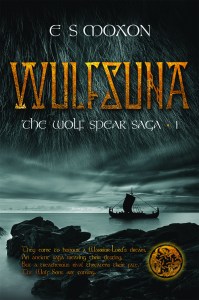
I’d like to welcome E S Moxon’s today to talk with me about Historical Fiction and its meaning. E.S. debut Saxon saga ‘WULFSUNA’ was published through SilverWood Books in January 2015 and Elaine is currently writing book 2 in the series. A member of the Historical Novel Society, she is an avid historian who has close links with local libraries and museums including Letocetum Roman Museum in Wall, Staffordshire, UK. She loves giving talks and is often accompanied by an Anglo-Saxon warrior! She is also a contributing author on the English Historical Fiction Authors blog.

 Of Anglo-Italian heritage, Elaine’s life has always involved languages and travel. Family holidays were spent exploring Britain’s multi-cultural past at ancient burial sites or stone circles and her Italian grandfather’s tales of the roguish adventures of his youth fuelled her passion for writing from a young age. A former holistic therapist, Elaine lives with her family in the Midlands, UK.

 What are the periods of history focused on for your writing?

I’m currently writing early-mid 5th Century (aka Dark Ages or Sub-Roman period) involving Saxons and Britons. ‘WULFSUNA’ is set in 433AD and book 2 (as yet unnamed) will be set in 460AD. Future books in the series will move into 9th and 11th Centuries and also include Vikings, Danes and Normans.

Why Historical Fiction?

I adore history! Every step we take has been trodden by countless other feet, all with stories to tell and the past informs so much of who we are today. Through my novels I can live in another time, take the reader to another time and hopefully encourage an interest of history in some, who had perhaps not previously considered it exciting or interesting.

When did you know you wanted be a HF writer?

I’ve always wanted to be a writer since I first picked up a pencil. As for knowing I wanted to be a HF writer, that is a recent discovery! I had written in other genres and formats and lost interest. However, I’ve always loved history. I was researching Rune stones, Old English (I love learning languages!) and Beowulf and a spark ignited. The ‘Wolf Spear Saga’ was born from two runic symbols and an idea to create my own legendary saga.

How much time do you spend on research? What sources do you use?

I estimate over half my ‘writing’ time is spent researching and absorbing knowledge from factual reading. Fortunately, I enjoy research! I find it inspiring, having had pieces of research lead to a new scene, or conversely been stuck in a scene that has led me to investigate a fascinating subject. I use books (bought and borrowed), articles (online and printed), documentaries, archaeological websites/papers, reenactment groups, the internet and physical visits to places. Some of my personal library collection includes books on wild flowers, trees, wild foods, herb lore, the kingdom of Mercia and histories of the Anglo-Saxons and Vikings. Reading as widely as possible is, I find, the best way to add depth to your work.

What do you feel is the importance of historical fiction?

For me, historical fiction should inform others through an enjoyable reading experience and explore lesser-known times/concepts within the ‘safety’ of fiction. There needs to be a degree of responsibility in HF as there are those who prefer to gain their historical knowledge from fiction rather than factual reading. Don’t underestimate its role in bringing the past to a new audience, or renewing interest.

Who are your influences?

Three books that influenced me most were ‘Hotel Du Lac’ by Anita Brookner, ‘To Kill a Mockingbird’ by Harper Lee and ‘Avalon’ by Anya Seton. I read all of them during my teens and each book has, in some way, helped me define my craft. Brookner’s characters are so real and her descriptions vivid; you feel the crisp air coming in off the lake and can easily visualize the eclectic gathering of guests at Hotel Du Lac. Likewise, Lee’s characters are full of life and there is an edge to the prose, created by a harsh subject seen through very young eyes. Seton’s ‘Avalon’ instantly transports you to a time shrouded in mist and legend, of a divided and foreign landscape now known as Britain. Modern influences include Dean Koontz (a master of the supernatural thriller) and Ben Kane for his dedication to historical accuracy, characterization and sumptuous prose.

How much fiction (in your opinion) is best to blend with historical facts?

Most of my characters are fictional, moving around in a real, historical landscape where their lives become dictated to by a legendary (fictional) saga. Writing HF definitely requires balance, to ensure the readers believe who and what they are reading about and also when. I research dates and events to know what is going on while my characters are involved in their own stories. I feel it is important they are aware of larger, real events as these could inform characters’ opinions and responses within my book. Also, to ignore historical fact might frustrate well-informed historical readers. Sometimes within my novels these factual and fictional paths cross and real historical fact collides with my characters, or at times is merely hinted at. The balance comes into play when I weigh up what impact the facts will have on my story, if any. Ultimately, the flow of my novel is paramount. For instance, by book 2 Hengest and Horsa have their own kingdom in the south-east of Britain. My ‘WULFSUNA’ in the west know of them and have formed opinions of what is happening. Neither side will meet as that is not the story, but to have ignored the existence of them would not have made the time and place of my own story so real.

How do you feel the genre has progressed in the last ten years?

HF has certainly grown in popularity in that time. I began work on ‘WULFSUNA’ back in 2009. The Staffordshire Hoard had only just been uncovered and had begun to stir a little intrigue into the dark ages. Aside from that, people’s interests lay elsewhere. Contemporary fiction was at a high and I was able to read a new Dean Koontz every few months as he was releasing new print hardbacks of his thrillers. Harry Potter was everywhere and the world was into magic. Bernard Cornwell was possibly the only well-known HF writer to me. Hilary Mantel stirred the nation and I think things began to tilt in our favour after that. I think HF has a long way to go yet.

What are the important steps in writing HF?

Aside from the general guidelines for writing, I would add that HF dictates you should research well, check facts and then check them again. Sources can be ambiguous or outdated, for instance if you are reading a very old print book and new evidence has since arisen. Archaeology is a fluid source and new things are being discovered each day. Be aware of new discoveries pertaining to your chosen era.

Set your period landscape well. Unlike contemporary stories, historical tales take place in a somewhat unknown land with structures, language and customs we would have difficulty recognizing today. Examine flora and fauna, wildlife, clothing, transport, farming and hunting techniques, foods and customs (and this is not an exhaustive list!). Know ‘where’ and ‘when’ you are at all times.

What must you not do writing in this genre?

Never make assumptions of the level of knowledge of your readers. Balance your writing to suit well-heeled history buffs as well as novices seeking a new adventure. This is a difficult one to master as you will never please everyone, however there are ways around it. Use a glossary of terms with translations for archaic place names or technical equipment: the buffs won’t need it and the novices can dip into it as a reference for unfamiliar words. Describe an object in the prose by mentioning its function and/or a more familiar name.

When writing, do you use visuals to give you inspiration? Such as historical pictures of people, castles, towns and such? What about historical objects?

I often set up an electronic folder where I drop pictures I’ve found that relate to my book in some way. They can be photographs of people that remind me of my characters, or landscapes evoking a feeling for a particular scene. (Yes, I have a folder containing my ‘dream cast’ of actors should anyone decide to make my book into a film!) Sometimes I take photographs while I’m out if I come across a view that depicts a scene I’m working on. I also draw maps of settlements and battle strategies and refer to old maps of the period. For instance, I have a document showing the ancient trade routes through Britain such as the Fosse Way, Watling Street and Icknield Street. I actually live by a section of Icknield Street and drive across it once or twice a week. To know ancient travellers were doing the same in their ox-drawn carts hundreds of years ago always gives me a thrill! For ‘WULFSUNA’ I did a walk through a local forest, hiding under bushes and imagining a battle fought through trees. I hope no one was watching at the time, but it was incredibly useful for mapping out the action!

I also work with Saxon reenactors, which allows me access to replica objects of the period – clothes, weapons and everyday tools. I know the weight of a chain mail shirt, a Saxon shield, sword and axe. I’ve worn a helmet so can identify the pros and cons of moving and fighting in one. And I’ve been shot at with rubber-tipped arrows, which wasn’t lethal but wasn’t too pleasant either! I am also beginning to collect my own Saxon costume. I made a peplos (Saxon tunic) and have bought some replica brooches. There is no substitute for handling these things first-hand, although this isn’t always possible for everything. Photographs of period objects can still provide inspiration and I often refer to images from museums and archaeological sites.
9781781322734-Perfect.indd

BOOK BLURB:

AD433. Torn apart when Rome abandoned Bryton, the Wulfsuna are a disparate tribe. Twenty years on, two long ships sail for the east fens to honour their Warrior-Lord’s dream and reunite with lost kin. Soon after landing however, a murderous betrayal divides loyalties, some craving revenge and others indignant on pursuing their Lord’s dream. Blood and brotherhood are tested to their deadly limits.


The discovery of a young Seer adds to the turmoil. Expelled from her village after foretelling of an attack by blue painted savages, the Wulfsuna are equally wary of the one they call ‘Nix’. None fear her more than Lord Wulfgar, who refuses to believe an ancient saga bearing his name, is weaving the Seer’s destiny into his own. But a treacherous rival threatens their fate and Wulfgar must accept the Seer’s magic may be all that can save them.

Published by SilverWood Books

Also available from Kobo and Amazon


Mid-Week Reading

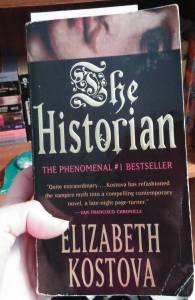
The Historian

One of the stories I am currently re-reading is, “The Historian.” by Elizabeth Kostova.  Since the first moment I read this novel a few years ago, I have always gone back to it. It fascinates me. My copy has 909 pages! So I absorb this lush story in small lavish dosages.

To you, perceptive reader, I bequeath my history…

Late one night, exploring her father’s library, a young woman finds an ancient book and a cache of yellowing letters addressed ominously to ‘My dear and unfortunate successor’. Her discovery plunges her into a world she never dreamed of – a labyrinth where the secrets of her father’s past and her mother’s mysterious fate connect to an evil hidden in the depths of history.

(Description from goodreads)

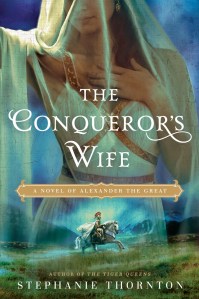
Review: The Conqueror’s Wife by Stephanie Thornton

02_The Conqueror's Wife

The Conqueror’s Wife: A Novel of Alexander the Great by Stephanie Thornton

Publication Date: December 1, 2015

NAL/Penguin Group LLC.

eBook, Paperback; 496 Pages

Genre: Historical Fiction

 330s, B.C.E., Greece: Alexander, a handsome young warrior of Macedon, begins his quest to conquer the ancient world. But he cannot ascend to power, and keep it, without the women who help to shape his destiny. His spirited younger half-sister, Thessalonike, yearns to join her brother and see the world. Instead, it is Alexander’s boyhood companion who rides with him into war while Thessalonike remains behind. Far away, crafty princess Drypetis will not stand idly by as Alexander topples her father from Persia’s throne. And after Alexander conquers her tiny kingdom, Roxana, the beautiful and cunning daughter of a minor noble, wins Alexander’s heart…and will commit any crime to secure her place at his side. Within a few short years, Alexander controls an empire more vast than the civilized world has ever known. But his victories are tarnished by losses on the battlefield and treachery among his inner circle. And long after Alexander is gone, the women who are his champions, wives, and enemies will fight to claim his legacy…

Review:

When this book came available to review, I knew I couldn’t pass this up. Not because I wanted to read another story of Alexander the Great, mind you. I have read enough of him and his atrocities. However, Thornton brings us a new story- a story of the strong women who surrounded him.

I would like to start with his mother-Olympias. She personifies a power hungry political in my opinion. A ruthless Queen where everyone is her pawn and how she manipulates her pawns is without mercy. Or is that just me? Needless to say, I don’t care for the women. I know many would argue with that statement. Thornton does such splendid work with Olympias’s characterization. She is just as I would imagine her to be…

I cared little of, Roxana. She left a bad taste in my mouth. But wow! What an unflinching narrative! Thornton evokes such strong dislike from her readers when reading about this women. I kept on waiting for her demise throughout the story. Or least I felt that way about Roxana. *laughing*

I adore Drypetis-a Persian princess-and Alexander’s sister, Thessalonike for many reasons. Then there is Hephaestion. *sigh* He was Alexanders second in command, best friend and lover. Probably the only person among the very few people Alexander trusted and completely loved. His narrative in the story is one I will never forget.

I cannot say enough about the characters, or their stories. Beautifully told and Thornton immerses you in an unforgettable period of our history and gives you a marvelous exploration of people living during that time. She keeps you so wrapped up in the conflict of the ancient world, culture and the conquest of Alexander that when you put the book down, you can almost still hear their voices and imagine their movements in your mind. This story is a masterpiece.

Stephanie M. Hopkins

AMAZON (KINDLE) | AMAZON (PAPERBACK) | BARNES & NOBLE | BOOK DEPOSITORY | INDIEBOUND

About the Author

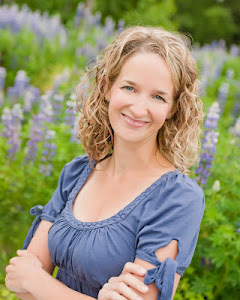
03_Stephanie Thornton

Stephanie Thornton is a writer and history teacher who has been obsessed with infamous women from ancient history since she was twelve. She lives with her husband and daughter in Alaska, where she is at work on her next novel. “The Secret History: A Novel of Empress Theodora,” “Daughter of the Gods: A Novel of Ancient Egypt,” and “The Tiger Queens: The Women of Genghis Khan” are available now. “The Conqueror’s Wife: A Novel of Alexander the Great” will hit the shelves in December 2015. For more information please visit Stephanie Thornton’s website. You can also find her on Facebook, Twitter, and Goodreads.


Weekend Happenings…

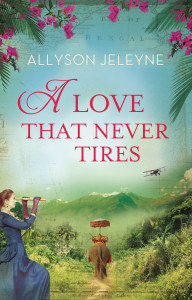
This weekend I have a lot going on. First there is preparing the house for family that are coming in town next week for Thanksgiving and then there is church on Sunday. If you know me, there is always reading plans in the mix. I am never far from a book. I am currently reading, A Love That Never Tires by Allyson Jeleyne. It is a Historical Romance and I generally do not read in this sub-genre unless it is an author’s work I know. However, I decided to take a chance with an unknown author to me. So far the setting of story seems to be true to the period but I have to admit, I am a bit put off by some of the sex scenes. For a reason I won’t mention until after I finish reading the story.

I want to wish you all a wonderful bookish weekend and please stay tuned to Layered Pages for lots of wonderful interviews, author guest post and much more!

A Love that Never Tires

‘Linley Talbot-Martin is a girl who likes to get her hands dirty. As the daughter of a famous archaeologist, she’s been everywhere and seen everything—except London. When the Talbot-Martin team travels there for her father’s investiture, Linley finally gets her wish. But when the time comes to trade her jodhpurs and work boots for silk gowns and kid gloves, she may be in over her head. Even though she can out-ride, out-shoot, and outsmart any girl in London society, Linley is destined to be the failure of the season. No one she meets cares about ancient pottery or lost Buddhist texts, and fundraising efforts for future expeditions keep coming up short. If the Talbot-Martin team doesn’t find money soon, they will be out of a job, and Linley will lose everything she holds dear. Patrick Wolford, Marquess of Kyre (pronounced ‘Keer’), is a man who knows his place. Well-connected and respected, he is everything everyone expects him to be, but beneath his façade, he is as neglected and crumbling as the family estate. Now the strain of keeping up appearances is taking its toll. The smart thing would be to marry the heiress nipping at his heels and be done with it, but when he meets Linley Talbot-Martin, who dares to shake up his seemingly proper world, he must choose between the life he’s always known and one he never dared to dream of.’

(Book description from Goodreads)

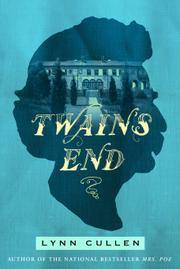
Upcoming Book Event: Twain’s End by Lynn Cullen

Twain's End By Lynn Cullen

Fox Tale Book Shoppe in Woodstock, Georgia is hosting Lynn Cullen, Author of Twain’s End this coming Saturday, October 24 at 5:00pm! For more information please visit Fox Tale’s website.

From the bestselling and highly acclaimed author of Mrs. Poe comes a fictionalized imagining of the personal life of America’s most iconic writer: Mark Twain. In March of 1909, Mark Twain cheerfully blessed the wedding of his private secretary, Isabel V. Lyon, and his business manager, Ralph Ashcroft. One month later, he fired both. He proceeded to write a ferocious 429-page rant about the pair, calling Isabel “a liar, a forger, a thief, a hypocrite, a drunkard, a sneak, a humbug, a traitor, a conspirator, a filthy-minded and salacious slut pining for seduction.” Twain and his daughter, Clara Clemens, then slandered Isabel in the newspapers, erasing her nearly seven years of devoted service to their family. How did Lyon go from being the beloved secretary who ran Twain’s life to a woman he was determined to destroy?

In Twain’s End, Lynn Cullen reimagines the tangled relationships between Twain, Lyon, and Ashcroft, as well as the little-known love triangle between Helen Keller, her teacher Anne Sullivan Macy, and Anne’s husband, John Macy, which comes to light during their visit to Twain’s Connecticut home in 1909. Add to the party a furious Clara Clemens, smarting from her own failed love affair, and carefully kept veneers shatter. Based on Isabel Lyon’s extant diary, Twain’s writings and letters, and events in Twain’s boyhood that may have altered his ability to love, Twain’s End explores this real-life tale of doomed love.


A Writer’s life with Hunter S. Jones

Den Hunter

I’d like to welcome Deb Hunter to Layered Pages today to talk with me about her writing. She writes fiction as Hunter S. Jones. She is a member of the prestigious Society of Authors founded by Lord Tennyson, Rivendell Writers Colony, Historical Writers’ Association, Historical Novel Society and the Atlanta Writer’s Club. Her Tudor History blog, Fear and Loathing in Tudor England, is a reader’s favorite. Originally from a Chattanooga, Tennessee, she currently lives in Atlanta, Georgia with her Scottish born husband. Her best seller, PHOENIX RISING, a fictional story of the last hour of Anne Boleyn is available on Amazon.com and at a bookstore near you.

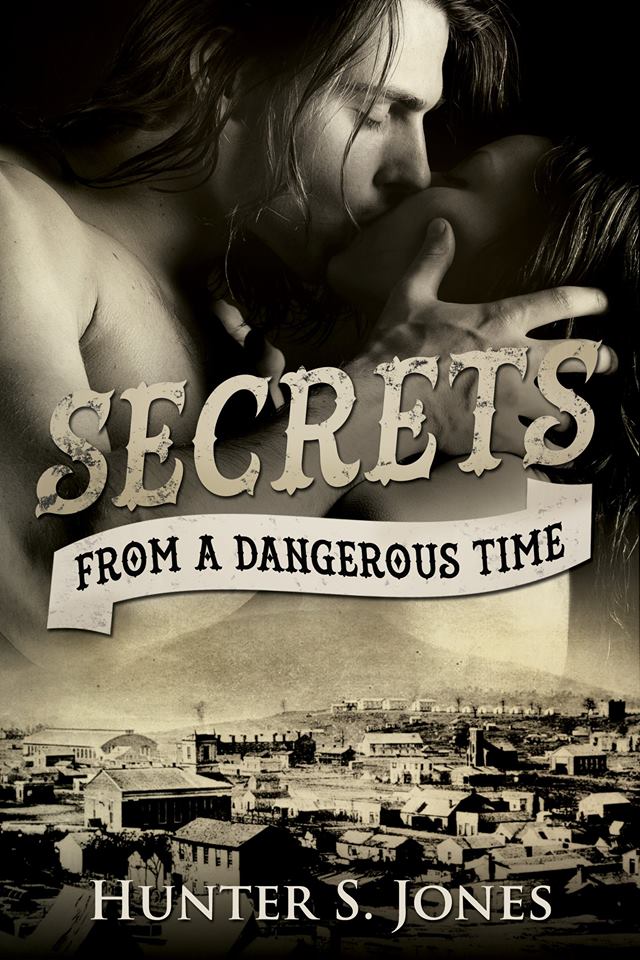
SECRETS from a DANGEROUS TIME is a multi-dimensional series set in post-Civil War Reconstruction in Chattanooga, Tennessee and the north Georgia. This series is an Amazon Exclusive available via MadeGlobal Publishing.

Why do you write?

Is there really an answer for this? I’m not certain if writing is a compulsion or an art form. It feels as if it’s a bit of both, doesn’t it? Writing is something I have always done. As a child I made up stories and plays for my cousins and friends to ‘play’. Some people dance, some paint, some are musicians and some of us write. Writing has always been a major part of my life. Great question. Thank you for asking.

Secrets

How has writing impacted your life?

You mean besides having no interaction with family or friends so you can research? Or, the part about chatting with strangers about imaginary people who you have created? Otherwise, I can’t say it’s impacted my life at all.

Actually, writing has had a wonderful impact on my life. Due to writing, I received a scholarship which assisted in paying for part of my undergrad degree, many moons ago. Along the way, I’ve worked with some incredible people and institutions. Writing and research have lead me to meet some of my best friends and helped in building friendships with quite a few people I admire greatly. Writing has shown me a path that I want to follow for the rest of my life. My own ‘Yellow Brick Road’, so to speak. I cannot wait to get to Oz, because the journey has been a revelation.

Let’s use my new series SECRETS from a DANGEROUS TIME and my novella PHOENIX RISING as an example. PHOENIX RISING is a story of Anne Boleyn. It introduced me to Claire Ridgway, Alison Weir, Susan Bordo, Elizabeth Fremantle and Nancy Bilyeau. I admire and respect these authors immensely. Working with them on my FEAR AND LOATHING IN TUDOR ENGLAND has been a dream come true.

Yet, after PHOENIX RISING and the success the book has brought, it would be expected that I follow with another Tudor era story, right? Well, it didn’t work that way for me. I was inundated with Tudor information and decided to write about something I knew little about, the post-Civil War era, known as Reconstruction. We all know the U.S. Civil War is documented and the stuff of legends. But, what secrets lie hidden in the Reconstruction Era?

In writing SECRETS from a DANGEROUS TIME, I took two family stories to build the series on; first my family was involved with the Cherokee Nation in the 1800s. Part of the family went to Oklahoma and part remained in Southeast Tennessee. The other fable is that we sold medicine in Chattanooga during the Reconstruction. So, I dive in head first and begin research, only to find out that little is documented for the era due to the volatile political and racial divide in the U.S. from 1867-1877. Not to be deterred, I have worked with the Chickamauga National Military Park, Chattanooga History Center, and the Atlanta History Center to better understand what everyday people experienced during this controversial period in U.S. History.

What I have discovered is that Chattanooga was a hospital center for the Confederacy at the first part of the Civil War. Due to the railroad system, wounded soldiers were shipped to Chattanooga to heal. As the tides of war turned, Chattanooga became a hospital center for the Union Army, again due to the railroads into the town.

As my research continued, I discovered that patented medicine at that time was a unique quantity. If you sold medicine after the war, you didn’t simply stand on a street corner and peddle your wares, nor did you mainly sell your medicine in a shop or pharmacy. Medicine companies or pharmacies would pay for medicine shows to tour parts of the Southeast to sell the medicine. These traveling medicine shows were the only entertainment everyday people in the rural South had at that time. When the musicians and entertainers came to a little town, it became a big event. These Southern medicine shows, and there were medicine shows in the Northern states as well, evolved into what we now call the Wild West shows of the late 1800s. In the early 20th century the traveling shows underwent another metamorphosis and became known as Vaudeville.

There’s much more but you will have to read my series to learn more. Although, SECRETS form a DANGEROUS TIME, it’s simply a history book. I’ve blended the drama of the era with the mystique of the South, tossed in romance and enough suspense to give the stories a contemporary feel. Who doesn’t love a steamy Victorian romance with enough history to make the story intriguing?

One more thing for you. When I decided to write a Victorian story, I looked into what was popular with Victorian readers. Serialized fiction was all the rage. Think Charles Dickens and The Pickwick Papers, Alexandre Dumas and The Three Musketeers. In America, Harriet Beecher Stowe, Henry James and Herman Melville wrote serialized stories.

Following their formats, I decided to write SECRETS form a DANGEROUS TIME and its stories in a series. I have even included photographs and maps which have never been published before, just as was done in Victorian series. All in all, this has been a labor of love and a dream project for someone who is both a literature and history proponent. I invite your readers to take this journey with me.

What advice would you give to beginner writers?

Follow your heart but don’t quite your day job!

Thank you so much for featuring me today!

Secrets from a Dangerous Time is listed as a fall 2015 featured release by Historical Magazine!

Follow her on social media at these sites:

Facebook

Twitter

Get the latest from the Dangerous Time series by following the Pinterest board


A Writer’s Life with Rosanne E. Lortz

Rosanne Lortz

I’d like to welcome back Rosanne E. Lortz (“Rose”) to talk with me today al little about what her writing means to her. Rosanne is a history lover, a book addict, a mom to four boys, and a native of Portland, Oregon. When she’s not writing, she teaches Latin and English composition and works as an editor at Madison Street Publishing. Her latest book, To Wed an Heiress, is a Regency romance/murder mystery loosely based on the characters and events of the Norman Conquest.

Why do you write?

I write because I love to create and because I love stories. Composing music, doing calligraphy, and are other ways of creating I have enjoyed and dabble in from time to time, but the story aspect of writing makes that creative pursuit a special one for me.

How has writing impacted your life?

It has given me a goal to strive for and something to feel proud of—it’s not easy to get a novel finished when you have four boys four and under. It has also connected me to a wonderful world of authors and readers via the internet. I love being able to interact with people on-line about their books and my books.

What advice would you give to beginner writers?

Don’t talk so much about wanting to write and spend all your time researching how to do it. Actually DO IT. One of the best ways to improve as a writer is to practice.

When do your best ideas come to you for a story?

When I’m reading history! I love reading primary sources and discovering heroes and heroines who need their stories to be told. Lately, I’ve also started to plot novels when I wake up in the middle of the night and can’t get back to sleep.

Be sure to check out my interview with Rosanne on Historical Fiction & Meaning!

Author Link:

Blog

Historical Fiction & Meaning with Rosanne E. Lortz

Rosanne Lortz

I’d like to welcome Rosanne E. Lortz (“Rose”) to talk with me today about what Historical Fiction means to her and the importance of the genre. Rosanne is a history lover, a book addict, a mom to four boys, and a native of Portland, Oregon. When she’s not writing, she teaches Latin and English composition and works as an editor at Madison Street Publishing. Her latest book, To Wed an Heiress, is a Regency romance/murder mystery loosely based on the characters and events of the Norman Conquest.

What are the periods of history focused on for your writing?

I write historical novels set during the Middle Ages or the Regency Era in England…and sometimes novels based on medieval events with Regency characters.

Why Historical Fiction?

I love the distance created by the past that brings heroic actions and important events into focus.

To Wed an Heiress Kindle Cover

When did you know you wanted be a HF writer?

Historical fiction was my favorite genre throughout childhood and my teen years. I always knew I wanted to write, and when I fell in love with historical research during college, it became apparent that becoming a historical novelist was inescapable.

How much time do you spend on research? What sources do you use?

For my medieval adventures, I typically am following the life of a real historical figure, so that requires more research than my Regencies (which are romance/murder mysteries). I start with secondary sources to orient myself and from there move on to the important primary sources which give the color to the novel. I usually do reading on the topic for a couple months ahead of time and then continue doing research as I’m writing.

What do you feel is the importance of historical fiction?

Historical fiction is the best way to excite interest in the past. It’s the gateway drug to history.

I Serve

Who are your influences?

Rosemary Sutcliff, Mary Renault, Edith Pargeter, Howard Pyle.

How much fiction (in your opinion) is best to blend with historical facts?

It depends on the story. I would never change a known historical fact to something incorrect, but anything plausible to fill in the gaps is fair game!

How do you feel the genre has progressed in the last ten years?

I enjoy the diversity of storytelling with first and third person narration, and it’s wonderful how historical fiction is now available about so many parts of the world and ages of history. I don’t appreciate that soft porn has become the norm for historical fiction and that it’s unusual to find a historical novel without explicit sexual situations.

What are the important steps in writing HF?

It’s important to orient yourself to the world you’re writing in before you begin writing so that you don’t make an important plot point hinge on something anachronistic. Other than that, I would say write it as you write best. If you’re a plotter, then write a detailed plot. If you’re a pantser, just go for it!

Road from the West

What must you not do when writing in this genre?

Never say never! All of the rules I’ve heard about writing can be broken effectively by someone skilled in the craft. But I suppose one thing I would caution against is judging historical characters by the culture that we ourselves live in instead of on their own terms.

When writing, do you use visuals to give you inspiration? Such as historical pictures of people, castles, towns and such? What about historical objects?

Yes, maps are very important for my medieval novels. I need to know where things are to be able to describe them accurately. I also look at pictures of places and people—whatever is available can be of great help.

Author Link:

Blog

Historical Fiction & Meaning with Margaret Porter

Margaret Porter with book

I’d like to welcome MARGARET PORTER to Layered Pages today to talk with me about Historical Fiction and what it means to her and the importance of such a fascinating genre. Margaret is the author of A Pledge of Better Times and eleven more British-set historical novels for multiple publishers, in both hardcover and paperback, including several bestsellers and award-winners. Many foreign language editions have been published.

She studied British history in the U.K. and returned to the U.S. to complete her theatre training, and after earning her M.A. in Radio-Television-Film worked as a freelance writer and producer for film and video projects. She worked on location for three feature films and a television series.

An occasional newspaper columnist and book reviewer, she has also written for lifestyle magazines. She contributes articles on British history and travel to numerous publications and blogs, and her photographs (travel, architectural, and nature) appear in a variety of print media and on websites. At national and regional writers’ conferences she presents workshops on historical research and writing techniques. A member of the Authors Guild, Novelists, Inc., Historical Novel Society, London Historians, and other organizations, she is listed in Who’s Who in America; Who’s Who in Authors, Editors and Poets; and Who’s Who in Entertainment.

Margaret returns to Great Britain annually to research her books, and is an avid world traveler. She and her husband live in New England with their two lively dogs, dividing their time between a book-filled house in a small city and a waterfront cottage located on one of the region’s largest lakes.

Margaret, what are the periods of history that you focus on for your writing?

My first eleven novels were all set in the second half of the Georgian era, late 18th or early 19th centuries. A Pledge of Better Times, my twelfth novel, takes place in the late Stuart era, from 1684 till about 1704, with a brief glimpse at the opening year of the George I’s reign. My historical work in progress (biographical) covers the individuals’ lives from 1770s to 1790s. The one following that is 1740s to 1760s.

Why Historical Fiction?

Because I’ve been reading it all my life, almost since I learned how to read. I enjoyed children’s stories set in the past, and I devoured YA historical biographical fiction. My first attempts at fiction, as a very young person, were all historical. Later, as an undergraduate, I studied Tudor and Stuart history in Britain—never realising that I would one day write a novel of the Stuart era. Later I became a specialist in the Georgian era as well, and the Regency.

When did you know you wanted be a Historical Fiction writer?

I think I must have been 10 years old or thereabouts. Some of my relatives were writers—scholars and academics and historians and biographers—so becoming a writer didn’t seem that far-fetched. I was the first novelist in our family, but now there are others.

PledgeCover400x600

How much time do you spend on research? What sources do you use?

I spend great quantities of time and effort on research. It can take years to thoroughly research my novels. Sometimes when in the process of writing one, I will research for a future one. Most of my sources are primary, many of them are in manuscript form (letters, memoirs, diaries, newspapers) and located in the great libraries of the world—the British Library in London, the library at the Victoria & Albert Museum, and various local history or institutional or private collections.

What do you feel is the importance of historical fiction?

First and foremost, a novel should entertain. It should also enlighten—about the human condition, about historical events, about the lives lived in the past and the choices individuals made based upon their circumstances in life and their needs. Immersion in past times is the reason I write and read historical fiction. Often historical events have a resonance with current events, and though the parallels might not be overtly drawn in a book, as writer and reader I am often aware of them.

How much fiction (in your opinion) is best blended with historical facts?

I inevitably follow the historical timeline. To me, it’s not constraining. Within it—for conversations, incidents, motivations—I use my imagination to the fullest. Because of my intensive study of history, I don’t particularly enjoy novels that mess about with past realities, with or without an Author’s Note explaining what was altered. (Unless it’s intended and marketed as alternate history—although I don’t really read in that genre.) I can’t begin to say what’s optimal, I just know what I prefer and I tend to seek out authors who basically do as I do.

How do you feel the genre has progressed in the last ten years?

There’s more selection. Still not enough choice in certain time periods. The emergence of many wonderful contemporary authors of historical fiction—my peers and friends and colleagues—has been a great gift. I appreciate the attention to subgenres—historical mystery, biographical historical fiction, military historical fiction—which is helpful from a reader perspective. Good marketing is key, and though for historical fiction it’s not fantastic (yet), certain publishers have tried hard to reach out to what is still a niche readership.

What are the important steps in writing Historical Fiction?

Determining what the writer most likes to read, because that’s where her or his enthusiasm will be greatest, and storytelling most effective. Choose an era that you love and understand, not just because it’s popular. Do the necessary research to make your novel reflective of the times, with regard to social history and lifestyles. Create characters—real or imagined—who are dynamic, conflicted, sympathetic, or the love-to-hate kind. Make them relatable to a modern readership without being anachronistic.

What must you not do when writing in this genre?

If you want to please this reader, your novel doesn’t have 21st century characters in historic costume. If you are writing about Tudors, don’t give them a Victorian sense of morality. Don’t neglect research. Don’t rely on cardboard characters. Don’t write down to your reader—those who seek out historical fiction are some of the smartest readers out there. They want to be immersed and swept away, so don’t disappoint them!

Do you use visuals to give you inspiration when writing? Such as historical pictures of people, castles, towns and such? What about historical objects?

Whether or not I am writing real people, I rely on portraits of people and places as they were at that time. When I visit locations featured in my books, I take hundreds of detailed photographs. I study maps of locations, floor plans of castles and houses and cottages. When I’m able, I try to find objects connected with my real-life characters, I study types of clothing worn by them. My theatrical training was helpful, I have performed in the costumes of every era I’ve written about. Sometimes I will re-create dishes or drinks they would have consumed. I listen to music of their time, discover what songs were popular, which poets and authors they would’ve read. My process is more than visual!

Who are your influences?

Any number of historical novelists. Anya Seton, Norah Lofts, Diana Norman, Jean Plaidy, Ken Follett, Georgette Heyer. I wouldn’t exactly say I’ve been influenced by Hilary Mantel, but I admired her work well before Wolf Hall and Bring up the Bodies. I don’t think I’m directly influenced by any current authors of historical fiction, but I certainly enjoy reading their books!

Author Links:

Website

Twitter

A Pledge of Better Times (Purchase links)

Amazon

indiebound

B&N

Books a Million

Kobo Books