Interview with Author Deborah Lincoln

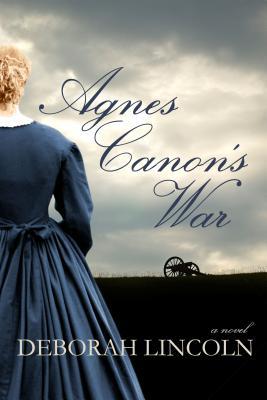
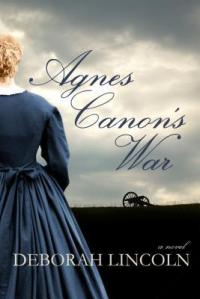
Agnes Cannons War

Publication Date: October 1, 2014 Blank Slate Press

Formats: eBook, Trade Paperback

Pages: 300

Genre: Historical Fiction

“I saw a woman hanged on my way to the Pittsburgh docks…”

Agnes Canon is tired of being a spectator in life, an invisible daughter among seven sisters, meat for the marriage market. The rivers of her Pennsylvania countryside flow west, and she yearns to flow with them, explore new lands, know the independence that is the usual sphere of men.

This is a story of a woman’s search for freedom, both social and intellectual, and her quest to understand what freedom means. She learns that freedom can be the scent and sound of unsettled prairies, the glimpse of a cougar, the call of a hawk. The struggle for freedom can test the chains of power, poverty, gender, or the legalized horror of slavery. And to her surprise, she discovers it can be found within a marriage, a relationship between a man and a woman who are equals in everything that matters.

It’s also the story of Jabez Robinson, a man who has traveled across the continent and seen the beauty of the country and the ghastliness of war, as he watches his nation barrel toward disaster. Faced with deep-seated social institutions and hard-headed intransigence, he finds himself helpless to intervene. Jabez’s story is an indictment of war in any century or country, and an admission that common sense and reasoned negotiation continue to fail us.

As Agnes and Jabez struggle to keep their community and their lives from crumbling about them, they must face the stark reality that whether it’s the freedom of an African from servitude, of the South from the North, or of a woman from the demands of social convention, the cost is measured in chaos and blood.

This eloquent work of historical fiction chronicles the building of a marriage against the background of a civilization growing – and dying – in the prelude to civil war.

Hello, Deborah! It is a pleasure chatting with you today and I would like to say that you have done an absolutely splendid job writing your story, Agnes Canon’s War. I finished reading it last week and I greatly admire your attention to the culture of the American nineteenth century. What first drew you to this period?

Thank you! I’m happy to be here and so glad you enjoyed ACW. I’ve had a fascination for the Civil War era ever since my visited Gettysburg when I was probably ten years old. So when a cousin compiled the basic facts about my great-great-grandparents, Agnes and Jabez Robinson, I was intrigued by their experiences during that war and wanted to know more about what they must have gone through.

I have to admit I haven’t read much about the Civil War era in the border state of Missouri. Why did you chose this setting for your story?

The main reason is that northwest Missouri is where my ancestors settled, and where their actual story played out. Agnes Canon’s War is based on fact, and I tried to keep the novel as true to the actual history as possible. The town of Lick Creek in the novel is actually the town of Oregon, Missouri, a delightful and very rural village north of St. Joseph, not far from the Missouri River. The bonus for me was that many people don’t know much about the Civil War west of the Mississippi, or how affected the people of Missouri were by fighting that disrupted their homes. It helps ACW stand out, I think, from most other novels about the Civil War.

What is one of the challenges Agnes faces while searching for the freedoms she longs for?

Margaret Fuller, America’s first feminist (she lived from 1810 to 1850) railed against all the challenges women in the nineteenth century faced. “Education,” she complains, “was not to prepare women for professions and public life but . . . that they may become better companions and mothers for men.” That kind of attitude was a huge stumbling block for any woman who hopes to determine her own future.

That’s a challenge we’re all familiar with. But I think one challenge that Agnes felt most keenly was the inability to travel alone. It simply wasn’t done for women to head off for the west the way Jabez did, to see and experience new places, unless she was accompanied by male relatives. That, to me, is a restriction that had to be suffocating for her.

Please tell your audience a little about Agnes and Jabez Robinson’s relationship in the beginning…

They were attracted, immediately, both of them. The encounter in Cincinnati was one of those jolts when you know there’s something there, something to fantasize about. Jabez, though he loved his first wife, had by then lost his passion for her, and Agnes’s strength and intelligence captivated him. I think in the early years, after his first wife’s death, they became friends. The idea that she would never marry had become a comfortable habit with Agnes; Jabez wasn’t sure he could convince her that independence and equality between a man and a woman can exist within a marriage. The depth of their friendship and love eventually overcame those impediments.

Besides the civil war what are some of the challenges happening during the nineteenth century? Like for example, education, how civilization is growing and so forth.

Ethnic upheavals may have been the most difficult challenge of those times. What to do with freed slaves, of course, was a gigantic challenge – many people, including Abraham Lincoln, hoped to relocate them to Africa or to Caribbean islands. But relations with Native Americans were also a challenge throughout the war. In 1862, thirty-eight Sioux warriors were hanged (on Lincoln’s orders), the largest mass execution in American history.

There were challenges in assimilating other groups, as well. The Irish were discriminated against, Catholics weren’t welcome in many neighborhoods or professions. California legally prohibited Chinese immigration while the railroads were recruiting Chinese workers. Rapid industrialization after the war only exacerbated the differences between the haves and the have-nots.

Please tell me a little about Agnes’s Father and his relationship with her.

Daniel Canon simply did not understand his daughter. For one thing, she wasn’t a boy. And he was devastated by the fact that there would be no sons for him, no one to carry his name and his bloodline. The most he could hope for was a grandson, and to his way of thinking, that’s the only thing daughters were good for. It became apparent that Agnes was his only hope, and she disappointed him. Submissiveness, piety, passivity – that’s what he wanted from her. And there was no way she was going to give him that.

What motivates Jabez to travel across the continent during the ghastliness of war and what are some of the social conditions he encounters?

Jabez was a wanderer, an adventurer – as Eliza (his first wife) said, a rogue. He was restless, wanted to see the world, experience the wild, test himself against hardship and test his medical skills against the vast variety of diseases and accidents. He would have encountered primitive living conditions, greed and discrimination and avarice among the gold seekers, but also the excitement of a growing and expanding country in its “teen” years – the sense that anything was possible. When he was drawn into the war against Mexico in the southwest he would have encountered cultures that would seem almost exotic to him – a variety of different native cultures and the centuries-old Spanish and Catholic mission cultures of southern California.

Was there a particular scene in your story difficult to write?

Several. One that I had trouble with, though, was the scene where the men from Lick Creek visited Missouri’s Senator David Rice Atchison. Atchison wanted them to join him in claiming Kansas for the southern interests. The scene was difficult because I wanted it to be realistic, so I used actual phrases that Atchison used in speeches, but I needed the dialog and interactions to be natural, not stiff. It was hard avoid turning some of the historical characters into caricatures.

Which character are you partial to and why?

I love Agnes. She’s smart and funny and sassy, and didn’t let tragedy destroy her. But I have a special afinity for a couple of the minor characters, particularly Dick and Rose McDonald, the African American couple who are quietly capable and determined. And I adore little James with his black arrowhead.

Will you be writing other stories that take place during this era?

I’m working on one that takes place in the 1864 to 1868 time period, mostly in Montana during its wild territory days. And I’m noodling around with the idea of a sequel to Agnes Canon’s War: Agnes’s life in the gilded years of the 1870s and 1880s.

Thank you, Deborah!

Thank you, so much, for hosting me.

03_Deborah-Lincoln-Author-300x220

Deborah Lincoln grew up in the small town of Celina, among the cornfields of western Ohio. She earned a bachelor’s degree in English from Michigan State University and a master’s degree in Library Science from the University of Michigan. She and her husband have three grown sons and live on the Oregon coast.

Of her passion for historical fiction, she says: “I’m fascinated by the way events—wars and cataclysms and upheavals, of course, but the everyday changes that wash over everyday lives—bring a poignancy to a person’s efforts to survive and prosper. I hate the idea that brave and intelligent people have been forgotten, that the hardships they underwent have dropped below the surface like a stone in a lake, with not a ripple left behind to mark the spot.”

Agnes Canon’s War is the story of her great great-grandparents, two remarkable people whose lives illustrate the joys and trials that marked America’s tumultuous nineteenth century.

For more information on Deborah Lincoln please visit her website. You can also find her on Facebook, Twitter, and Goodreads.

Praise for Agnes Canon’s War

“Impressively researched, it captures the brutality of the war in the West and the complicated, divided loyalties of the people who are caught up in it. Agnes Canon’s War will have readers anticipating the romance and dreading the battles in equal amounts.” -Steve Wiegenstein, author of Slant of Light and This Old World

“The characters are likeable, intelligent, humorous, spunky and passionate people whose zest for adventure is met and then some! Superb historical fiction this reviewer highly recommends.” – Historical Novel Society

“Agnes Canon’s War is brilliantly researched and written. Deborah Lincoln has successfully described the occurrences of the Civil War era in the border state of Missouri and the resultant emotions upon the inhabitants of the area. Many neighbors were bitterly opposed to one another, and severe heartache touched everyone. Lincoln’s writing places the reader in the midst of that turmoil. Her research is accurate and lends to a skillfully-designed background for Agnes Canon’s story. An example is her reference to Westport Landing. It is a little-known fact (even to most Missourians) that this original port on the Missouri River, located in the vicinity of today’s Grand and Main Streets, resulted in present-day Kansas City. This heartfelt book will likely impress even the most seasoned historians.” -William R. Reynolds, Jr. author of Andrew Pickens: South Carolina Patriot in the Revolutionary War and The Cherokee Struggle to Maintain Identity in the 17th and 18th Centuries

“Years ago in fiction workshop, this manuscript leaped out at me with the most memorable opening line I’d seen in forever: “I saw a woman hanged on my way to the Pittsburgh docks.”

On revisiting this story several years after my first beta-read of the whole novel, I was struck by how many details and scenes I remember. Historical fiction is not for the lazy writer. The tremendous amount of research that skilled writers weave into the narrative are simply amazing.

I’m afraid I’ll be guilty of plot spoilers if I mention some of my favorite scenes or the tragic events that really happened. I will say Jabez has a first wife, and Agnes befriends her to her dying day. That first wife has a fascination for what today would sound like New Age mysticism. Any reader who hates reading about war should keep going, because all sorts of intriguing historical issues and beliefs come to light in Agnes Canon’s world.

The prose is polished, the story spellbinding, the authenticity both inspiring and heartbreaking. Five stars!” -Carol Kean Blog, Book Reviews, Cosmic Rants

Buy the Book

Amazon

Barnes & Noble

Powell’s

Agnes Canon’s War Blog Tour Schedule

Monday, December 8 Review at Forever Ashley Review at Back Porchervations

Tuesday, December 9 Interview at Caroline Wilson Writes

Wednesday, December 10 Review at Too Fond

Friday, December 12 Review at Just One More Chapter Guest Post at Mina’s Bookshelf

Monday, December 15 Review at Luxury Reading

Wednesday, December 17 Review at Book Babe Guest Post at Let Them Read Books

Thursday, December 18 Review at Griperang’s Bookmarks

Friday, December 19 Review at Boom Baby Reviews Interview at Layered Pages
Agnes Canon's War book tour banner


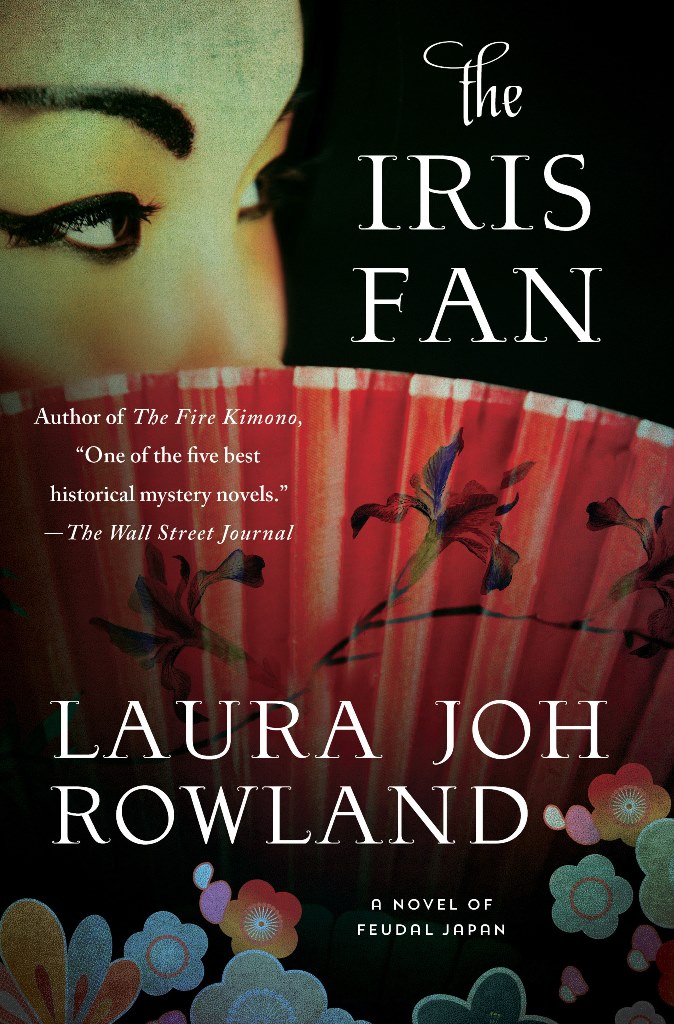
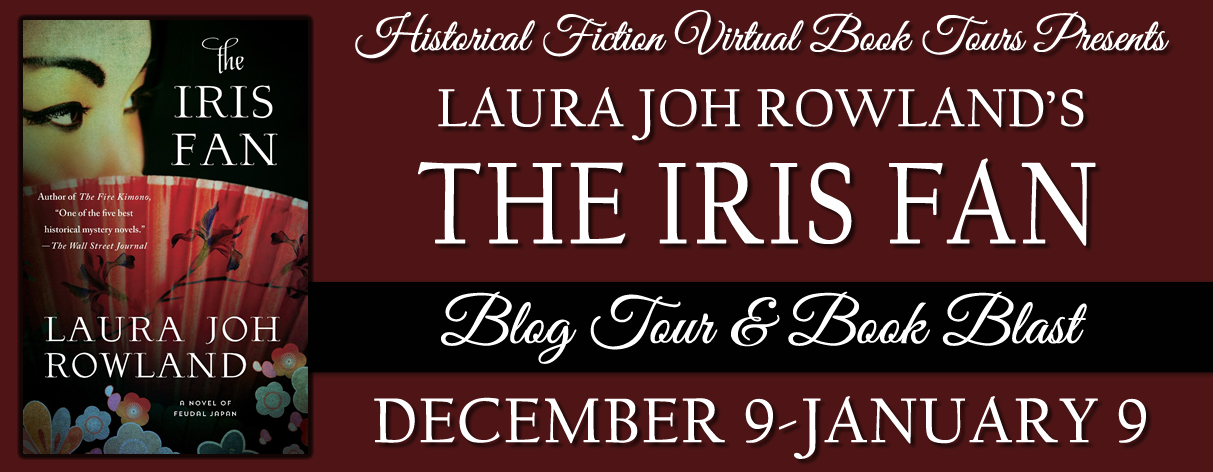
Book Blast: The Iris Fan by Laura Joh Rowland

02_The Iris Fan Cover

Publication Date: December 9, 2014 Minotaur Books Formats: eBook, Hardcover

Series: Sano Ichiro Mystery Series (Book 18) Genre: Historical Mystery

Japan, 1709. The shogun is old and ailing. Amid the ever-treacherous intrigue in the court, Sano Ichirō has been demoted from chamberlain to a lowly patrol guard. His relationship with his wife Reiko is in tatters, and a bizarre new alliance between his two enemies Yanagisawa and Lord Ienobu has left him puzzled and wary. Sano’s onetime friend Hirata is a reluctant conspirator in a plot against the ruling regime. Yet, Sano’s dedication to the Way of the Warrior—the samurai code of honor—is undiminished.

Then a harrowing, almost inconceivable crime takes place. In his own palace, the shogun is stabbed with a fan made of painted silk with sharp-pointed iron ribs. Sano is restored to the rank of chief investigator to find the culprit. This is the most significant, and most dangerous, investigation of his career. If the shogun’s heir is displeased, he will have Sano and his family put to death without waiting for the shogun’s permission, then worry about the consequences later. And Sano has enemies of his own, as well as unexpected allies. As the previously unimaginable death of the shogun seems ever more possible, Sano finds himself at the center of warring forces that threaten not only his own family but Japan itself.

Riveting and richly imagined, with a magnificent sense of time and place, The Iris Fan is the triumphant conclusion to Laura Joh Rowland’s brilliant series of thrillers set in feudal Japan.

The Sano Ichiro Mystery Series Titles

Shinjū Bundori The Way of the Traitor The Concubine’s Tattoo The Samurai’s Wife Black Lotus The Pillow Book of Lady Wisteria The Dragon King’s Palace The Perfumed Sleeve The Assassin’s Touch The Red Chrysanthemum The Snow Empress The Fire Kimono The Cloud Pavilion The Ronin’s Mistress The Incense Game The Shogun’s Daughter The Iris Fan

Buy the Book

Amazon US

Amazon UK

Barnes & Noble

Book Depository

IndieBound

About the Author

03_Laura Joh Rowland

Granddaughter of Chinese and Korean immigrants, Laura Joh Rowland grew up in Michigan and where she graduated with a B.S. in microbiology and a Master of Public Health at the University of Michigan. She is the author of sixteen previous Sano Ichiro thrillers set in feudal Japan. The Fire Kimono was named one of the Wall Street Journal’s “Five Best Historical Mystery Novels”; and The Snow Empress and The Cloud Pavilion were among Publishers Weekly’s Best Mysteries of the Year. She currently lives in New Orleans with her husband. She has worked as a chemist, microbiologist, sanitary inspector and quality engineer.

For more information please visit Laura’s website. You can also follow her on Facebook.

The Iris Fan Blog Tour & Book Blast Schedule

Tuesday, December 9 Book Blast, Excerpt, & Giveaway at Passages to the Past

Wednesday, December 10 Review at Oh, For the Hook of a Book Book Blast at Literary Chanteuse

Thursday, December 11 Review at Buried Under Books

Friday, December 12 Book Blast at Queen of All She Reads

Monday, December 15 Book Blast at Layered Pages

Tuesday, December 16 Review at Book Dilletante Interview at Dianne Ascroft’s Blog

Wednesday, December 17 Book Blast at CelticLady’s Reviews

Friday, December 19 Review at Unshelfish Book Blast at I’d So Rather Be Reading

Monday, December 22 Review at Broken Teepee

Tuesday, December 23 Review at Book Nerd

Monday, January 5 Review & Interview at Jorie Loves a Story

Wednesday, January 7 Review at Book Babe Review at Svetlana’s Reads and Views

04_The Iris Fan_Blog Tour & Book Blast Banner_FINAL


Book Review: The Seventh Link by Margaret Mayhew

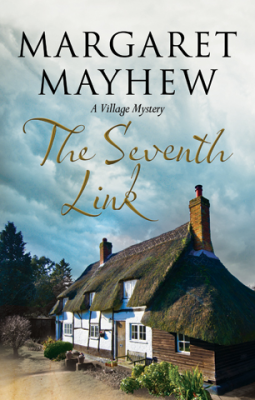
The Seventh Link

The village of Frog End may be peaceful, but that doesn’t mean that the Colonel’s life there is quiet not with his friendly but nosy neighbour Naomi, desperate to know what he is keeping in his new shed; the curious Miss Butler, who tracks his every move with her German U-boat captain s binoculars; and the attentions of the local vicar, who’s keen to involve him in church affairs. That is not forgetting the demands of the aloof, imperious cat Thursday, who seems to have adopted the Colonel. So the Colonel is pleased when his old friend Geoffrey Cheetham invites him up to the village of Buckby for the weekend, to coincide with a RAF reunion event. After depositing an outraged Thursday at the Cat Heaven cattery, he drives up, and meets his fellow guests at the Cheethams B&B: including a Lancaster bomber crew, reunited for the first time. But everything is not as it seems, and the Colonel finds himself taking on the reluctant role of sleuth once more when tragedy strikes . . .”

I was so delighted to pick this up. I do love a good mystery and I enjoyed this one. This story is more of a mystery at a slower pace but not in any way does the book lose your attention. I was thoroughly engrossed and had many thoughts on the story-line and was into each character and their situation. Although there was a couple of things I would have liked to seen a bit tighter and expanded on. First, half way through the story you learn something about the Colonel. A situation that he tends to get himself in to-quite often it seems- that Naomi-a nosy yet caring lady- points out. I feel that should have been introduced closer to the beginning to the story to give it more depth. Secondly, the ending did not end as I would expect it to and I’m still undecided if it worked for me. I have to say it ends differently than how most mysteries end.

I really did enjoy the overall story and found the plot to be brilliant and how the title fitted in with the story was well executed. And I enjoyed the history of the Bomber Command that the author included in the story. That was a wonderful addition to the plot. The author’s rendition and attention to that particular detail was well written and intriguing. World War II enthusiasts would be interested in this aspect of the story. A good read.

Stephanie Moore Hopkins

Review: A New York Christmas by Anne Perry

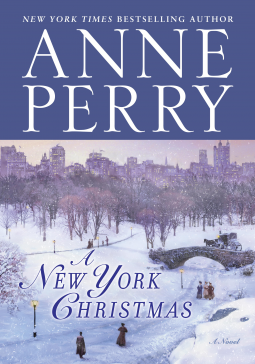
New York Christmas by Anne Perry

Anne Perry’s new Christmas novel is an irresistible tale of love, betrayal, greed, murder, and selfless devotion. For the first time, Perry’s annual yuletide offering is set in New York City—a sparkling young metropolis bursting with life, promise, and subtle menace. The year is 1904. Twenty-three-year-old Jemima Pitt, the daughter of Thomas Pitt, head of the Special Branch of the Metropolitan Police, is crossing the Atlantic as companion to Delphinia Cardew, who is to marry the aristocratic Brent Albright in a high-society New York wedding—a grand affair that will join together two fabulously wealthy families, titans of the international financial world. But Jemima senses a mysterious shadow darkening the occasion. Missing from the festivities is Delphinia’s mother, Maria, who is marked by disgrace. Nearly sixteen years ago, Maria abandoned young Delphinia and disappeared—and now the Albrights refuse to mention her name. But when Harley, the groom’s charismatic brother, asks Jemima to help him search for Maria and forestall the scandal that would surely follow if the prodigal parent turned up at the wedding, she agrees to assist him. From Hell’s Kitchen to Fifth Avenue, the Lower East Side to Central Park, Jemima trudges through strange, snowy streets, asking questions but getting few answers—and never suspecting that she is walking into mortal danger, from which not even a handsome young police officer named Patrick Flannery may be able to protect her. Once more, Anne Perry delivers a suspenseful, deeply moving novel that captures the essence of the holiday spirit.


********

A New York Christmas is the first book I’ve read of Anne Perry and I’m am so thrilled with this story. I have several other of her books on my shelf that I have yet to get to but now I’m more than eager to do so having read this story! Perry is a very talented writer and tells a marvelous story.

First I’d like to say that I really admire Perry’s style of writing and found it refreshing for the period her story takes place in. I’ve read a few books that was set in the early 1900’s and found the writing awkward and not well plotted. The story line flows beautifully and I enjoyed reading the mystery aspects to it. Not only that I enjoyed the character development and their interaction with each other was entertaining. I was thoroughly engrossed in the story and when I was finished. I wanted more.

This is the perfect book to read for the season and I highly recommend you do! When you sit down to read, wrap yourself up in a warm blanket, have a nice fire perhaps and a hot cup of your favorite coffee or tea. Be prepared to not want to get up from your rest until you are done reading this exciting story.

Stephanie Moore Hopkins

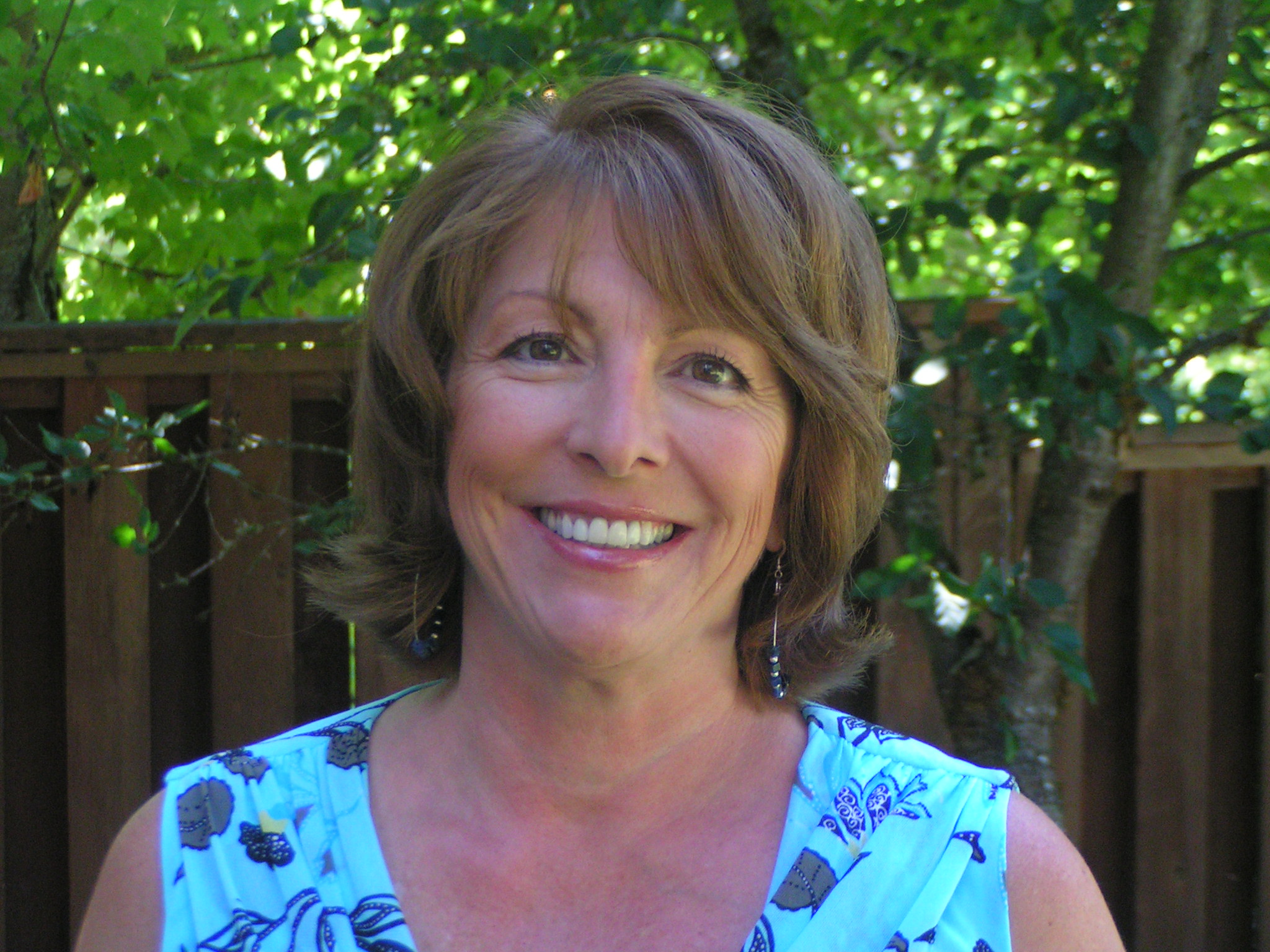
My guest Marcia Coffey Turnquist

MINOLTA DIGITAL CAMERA

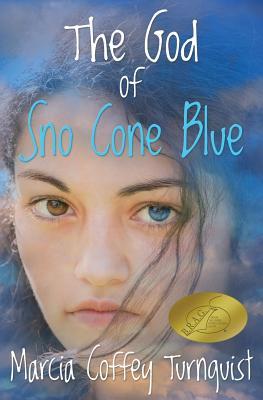
My guest, Marcia Coffey Turnquist is visiting with me today to talk about her writing. She is an author and journalist, is currently writing her second novel, Skipping the Light. Before venturing into the world of fiction, she spent 12 years as a news broadcaster, working her way back to her hometown of Portland, Oregon and KOIN-TV. Marcia decided to retire from broadcasting to raise the son and daughter who ultimately inspired The God of Sno Cone Blue. Her two children are all but grown now, the youngest just off to college and the other currently studying abroad. Marcia lives with her husband Ed in the soggy-but-green suburbs of Portland.

Marcia, why do you write?

Why do I write… why do I write… such a deceptively simple, but important question. First and foremost, because I love to write. I love the freedom and creativity, the chance to say what I want to say, and the inherent gift of an empty page. I love weaving words together, the rhythm of language, the way it pulls your mind forward, and the order of thought. And I especially love when magic happens, when you’re writing along, you know, just minding your own business and—whoosh!—something incredible happens, something wonderful and perfect and even divine comes into your head and you know it was meant to be. You just know it.

On the other hand, there are horrible-terrible, aggravating aspects to writing too: like the first draft you thought was beautiful until you realize it’s crap; like the hours spent outlining when you pulled out more hair than words; like the days when you try so hard to string thoughts together and barely make it to a full paragraph.

Still, there’s so much to love. Writing gives you a voice and the chance at a few ions of immortality. It leaves a history of your musings and mind travels. It means an opportunity to influence thought or stir emotion, spur people to action or to new understandings. Writers offer their readers escape, entertainment or just plain fun.

Sno Cold Blue

How has writing impacted your life?

My hope is by launching a second career! While I’m still working on that (with novel two underway) I can point to other ways writing has changed me. I’m probably smarter because of writing—I’m definitely smarter-mouthed! But seriously, the amount I’ve learned on several fronts in the past few years has been incredible: from self-publishing to marketing, from brainstorming to researching, from first draft to editing to absorbing feedback from my writers’ group. In spite of getting older—I’m now 54—my memory is better. I feel sharper than I did, say, a decade ago.

What advice would you give to beginner writers?

First, don’t give up. If you really desire to write, if you really love it and want to make something of it, be persistent, no matter how many rejections and disappointments, no matter how many hoops and obstacles, because it’s not easy, not in the least. Now, the biggest obstacle to writing may be income (or lack thereof), so that has to be a consideration. You may not earn money writing, especially at first. But if you can live with that (both literally and figuratively), then don’t let the other obstacles get in the way; don’t ever give up.

Second, be a wise listener. When you read, listen to the voice of the writer, and listen to your critics, whether they’re friends or professional editors. You’re bound to learn something. In other words, don’t be defensive, because we all have room for improvement. Hard as it is sometimes to take constructive criticism (I’m sometimes crushed for days) consider it a gift, not an insult. You’re not a hermit on an island—yay! You have friends (and professionals) willing to tell you what they think—yay! This doesn’t mean you have to agree with all of it, but give it thoughtful consideration. Chances are, you’ll find nuggets of truth that will do wonders for your work.

Third, write! And when you write, when you actually sit down and let your fingers fly, forget the editor in your head (or those pesky writer friends) and just write. Writing is like any skill: the more you do it, the better you get.

There’s an old story I like to tell that illustrates this point perfectly. I’ve known it so long I don’t remember where I first heard it, but here it goes: There was a research project involving a group of people and a bunch of clay. The researchers put half the people in one set and the other half in another.

To the first set of people they said: Each of you take some clay and a wheel and spin the best, most perfect clay pot you can spin. You have one month to reach your goal. At the end of that time, bring us your best, most perfect pot.

To the second group, they said: Here is a bunch of clay, each of you take a wheel and don’t worry about quality. Make as many pots as you can in one month. When the month is up, bring us your pots.

After one month, which group do you think made the best pots? Yes—the one that was told to make the most! There was no anxiety about making it their best, no sweating over perfection, only a chance to learn the skill.

So, the next time you’re writing, shaping those sentences like clay, and that pesky editor enters your head, throw the bum out! There’ll be time later on for your writer friends to crush you.

Marica’s Website


Jinty’s Lament (a very short story) by Stuart S. Laing

Staurts photo for short story


“Whaur’s that blimming cat got tae noo?” Jinty sighed as she stared around the edge of her door, peering out into the darkness of Fishmarket Close. “If yer no’ hame in ten minutes, ye kin hae a night on the tiles!” she warned the moonless night and absent feline before closing the door over and slowly shuffled on tired legs back across the tiny space which constituted her home. With a weary sigh at the dull pain in her chest and legs, reminders of every one of her eighty-three years, she gently lowered herself into an armchair almost as old as herself.

Nestling back into the mass of cushions which bolstered her thin, bone weary body, she gazed into the low burning flames of a handful of coals in the fireplace which provided the sole illumination in the room.

The warmth they provided was welcome, as was the scant light they gave out. The dancing shadows hid the dust and dirt which gathered on every surface no matter how often she cleaned, not that she did as often as she had in the past. That was back in the days when her husband Josiah had still lived. He had been gone for almost twenty years now leaving her heart-broken. The fruits of their union, two fine, strapping sons had attempted to help her around the house once. Their wives had tried to ease her burden but as time rolled on their visits became fewer and fewer and the gaps between them grew longer and longer. Now she would struggle to recall exactly when she had last seen hide or hair of them. Her sole company these days was a feline philanderer she named, with no real thought, simply Cat. Like most males, she had discovered, he could not be relied upon to be dependable. She had sat long into the night more times than she cared to count, sitting here in front of a dying fire, waiting for the scratching at the door or his impatient yowl which signified his return…..read more of this story here

A Few of my thoughts:

Stuart is a talented story teller. He is so descriptive with words and really captures the period and setting of his stories. And his characters are lively and have a lot of spunk! Jinty’s Lament is a prime example of that talent! I’m wondering if he will expand on this story. Hmm…..either way it’s fabulous! Three cheers to Stuart S. Laing and hoping he will write more about these fascinating characters!

Stuart S. Laing is also the author of A Robert Young of Newbiggin Mystery Books! You can find them on Amazon! Highly recommend!

Stephanie M. Hopkins

About Author:

Stuart Laing

Stuart S. Laing was born and raised on the east coast of Scotland in the ancient Pictish Kingdom of Fife Stuart grew up looking across the Firth of Forth towards the spires and turrets of the city of Edinburgh and its castle atop its volcanic eyrie.

He has always been fascinated by the history of Auld Reekie and has spent most of his life studying Scottish history in all its aspects whenever he finds the time between family, work and the thousand and one other things that seek to distract him.

Despite the vast panorama of Scotland’s history he always find himself being drawn back to the cobbled streets of the Old Town. Those streets have provided the inspiration for his stories and characters.

He would urge all visitors to Scotland’s ancient capital to (briefly) venture into one of the narrow closes running down from the Royal Mile to get a flavour of how alive with mischief, mayhem, love and laughter these streets once were.


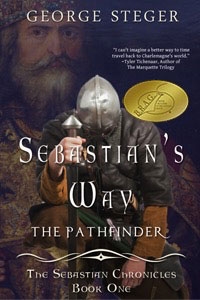
Sebastian’s Way: The Pathfinder by George Steger

Geroge Steger Book cover

B.R.A.G. Medallion Honoree

‘It is dangerous to be right in matters where the established authorities are wrong,” said Voltaire, aptly reflecting the theme of Sebastian’s Way, a powerful tale of two men , the High King Charlemagne, “the Thunderer,” who fights and reigns like his pagan enemies, and Sebastian, an intrepid young warrior whose vision challenges the king to forge a new path to peace. A provocative plunge into the Dark Ages, here is a saga of vicious religious wars between Christian Franks and pagan Saxons, a tale of the pain of love thwarted by the rigid mores of the times, a rich and colorful medieval stew full of pageantry and filled with the authentic stock of the times: savage warriors, groundbreaking clergy, salty peasants, and plenty of memorable maidens for those who like a good romance—a realistic yet imaginative time travel back to the reign of Europe’s greatest medieval monarch.’

Sunday Book Highlight

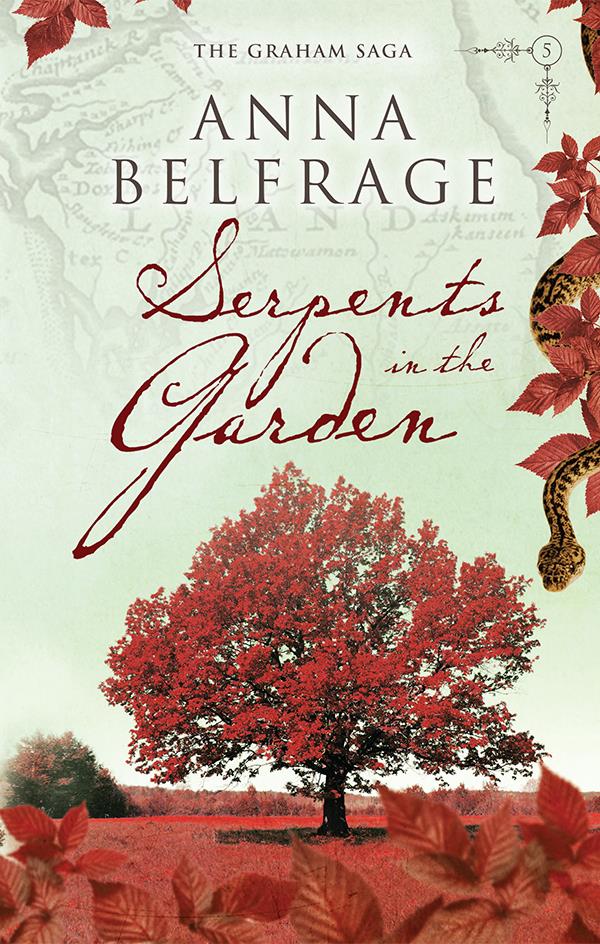
Serpent in the gardenAfter years of hard work, Matthew and Alex Graham have created a thriving home in the Colony of Maryland. About time, in Alex’s opinion, after far too many adventures she is really looking forward to some well-deserved peace and quiet.

A futile hope, as it turns out. Things start to heat up when Jacob, the third Graham son, absconds from his apprenticeship to see the world – especially as Jacob leaves behind a girl whom he has wed in a most irregular fashion.

Then there’s the infected matter of the fellow time traveller Alex feels obliged to help – no matter the risk. Worst of all, one day Philip Burley and his brothers resurface after years of absence. As determined as ever to make Matthew pay for every perceived wrong – starting with the death of their youngest brother – the Burleys play out a complicated cat and mouse game, and Alex is thrown back into an existence where her heart is constantly in her mouth, convinced as she is that one day the Burleys will achieve their purpose.

Excerpt:

It had to be said: Philip Burley had a certain flair to him, in everything from how he carried himself to how he was dressed, impeccable linen contrasting nicely with the deep blue of his dashing coat. That didn’t endear him one whit to Alex, and, in particular, not when he popped up most unexpectedly just as she was leaving the apothecary, her daughters trailing after her.

“Mrs Graham,” Philip said, bowing. Alex controlled the urge to turn on her heel and run. Never, ever show him how much he scares you, she admonished herself, just stare him in the eyes. Except that she didn’t want to, unnerved by the penetrating, assessing look in them – as if he was putting a value to her, estimating how much she might be worth should he sell her.

“Mr Burley, how unfortunate to find you still so very much alive.”

He laughed, shaking his head so his signatory lock of black hair fell over his left eye.

“Why, Mrs Graham, one could think you don’t like me much.”

“Like you? I hate your guts, Philip Burley, and to my dying day, I’ll regret not serving you toadstools the first time we met.”

His eyes lightened into impenetrable ice. “Well, you didn’t, did you? And so, here I am.” He glanced over her shoulder, studying her girls with interest. “See?” he said, directing himself to the Philip lookalike that had appeared beside him. “Quite pretty, aren’t they?”

Walter Burley grunted, his eyes stuck on Sarah.

“We’re partial to fair girls,” Philip said. “In particular to young, fair girls.”

“You …” Alex swung at him, Philip ducked, and came up grinning, eyes like flint.

“Don’t,” he warned, and, at a snap of his fingers, yet another Burley brother materialised, this one so badly scarred Alex knew he had to be Stephen. She threw a look over her shoulder, relaxing somewhat at finding the street busy. Should they try anything, she’d scream – or stab them with her new knitting needles. Still, they were far too close, with Walter more or less drooling over Sarah. When he made as if to touch her daughter, Alex flew at him, slapping him hard over his wrist.

“Don’t you lay a finger on her. Do that, and I’ll—”

“… do what, Mrs Graham?” Philip purred.

“Kill him,” she replied, staring into those eyes as firmly as she could. It only made him laugh.

 **********************************************************

Anna Belfrage photo 2

Anna Belfrage combines an exciting day-job as the CEO of a multinational listed group with her equally rewarding writing endeavours. When she isn’t writing a novel, she is probably working on a post or catching up on her reading. Or standing about on a crossroads and wondering why time isn’t unravelling at her feet… Other than work and writing, Anna finds time to bake and drink copious amounts of tea, preferably with a chocolaty nibble on the side. And yes, now and then she is known to visit a gym as a consequence…

For more info about Anna, visit her website or her Amazon page. You can also find her on her blog. Serpents in the Garden is available on Amazon US  and Amazon UK.

Spotlight: The Clever Mill Horse by Jodi Lew-Smith

01_The-Clever-Mill-Horse-Cover-662x1024

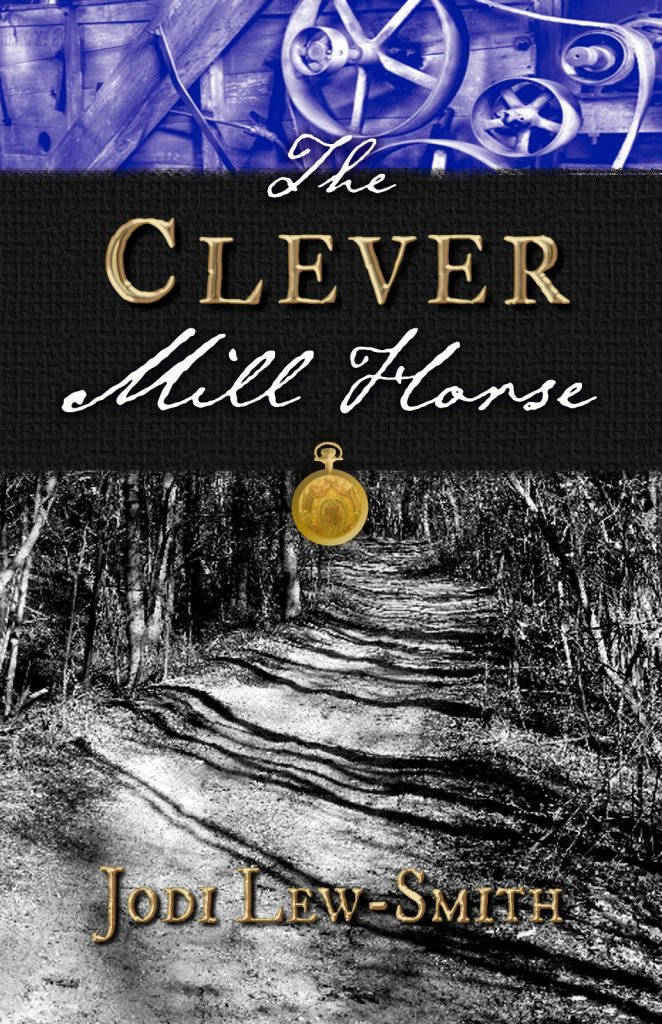
Publication Date: August 15, 2014 Caspian Press Formats: eBook, Paperback Pages: 424

Genre: Historical Fiction

Winner of the 2014 James River Writers Indie Novel Contest.

A young woman’s gift could weave together the fabric of a nation…

1810, upstate New York. 21-year-old Ella Kenyon is happiest gliding through the thick woods around her small frontier town, knife in hand, her sharp eyes tracking game. A gift for engineering is in her blood, but she would gladly trade it for more time in the forest. If only her grandfather’s dying wish hadn’t trapped her into a fight she never wanted.

Six years ago, Ella’s grandfather made her vow to finish his life’s work: a flax-milling machine that has the potential to rescue her mother, brother, and sister from the brutality of life with her drunkard father. The copious linen it yields could save her struggling town, subjugate the growing grip of southern cotton. Or it could be Ella’s downfall. If she’s not quick enough, not clever enough to succeed, more than her own life rests in the balance…

Praise for The Clever Mill Horse

“Jodi Lew-Smith’s The Clever Mill Horse is that rarest of all contemporary novels: an authentically old-fashioned adventure story, in all the best senses. Full of drama, humor, plot surprises, and, best of all, memorable characters, The Clever Mill Horse had me hooked from page one. Best of all, there’s a sequel coming. I can’t wait.” – Howard Frank Mosher, author of Where the Rivers Flow North

“In this delightful debut novel set in the early 19th century, a young woman fights to patent her flax-milling machine. . .An assured, cleverly plotted piece of historical fiction with an irrepressible female protagonist.” – Kirkus Reviews

“. . .intricately plotted and exceedingly well paced. . . filled with danger, science, and suspense, the story rings true with historical and natural detail. . . a complete and finely polished first novel.” – Foreword Reviews

Buy the Book

Amazon Nook Google Play Kobo

About the Author

02_Jodi-Lew-Smith-Author-199x300

Jodi Lew-Smith lives on a farm in northern Vermont with her patient husband, three wonderfully impatient children, a bevy of pets and farm animals, and 250 exceedingly patient apple trees which, if they could talk, would suggest that she stop writing and start pruning. Luckily they’re pretty quiet.

With a doctorate in plant genetics, she also lives a double life as a vegetable breeder at High Mowing Seeds. She is grateful for the chance to do so many things in one lifetime, and only wishes she could do them all better. Maybe in the next life she’ll be able to make up her mind.

For more about Jodi and about the lives and world of the characters in the novel, visit her website or blog. You can also connect with her on Facebook and Goodreads.

The Clever Mill Horse Blog Tour Schedule

Wednesday, November 12 Spotlight at Flashlight Commentary

Thursday, November 13 Guest Post & Giveaway at Passages to the Past

Monday, November 17 Review at 100 Pages a Day – Stephanie’s Book Reviews

Tuesday, November 18 Guest Post at Just One More Chapter

Friday, November 21 Spotlight at CelticLady’s Reviews Review at Oh, For the Hook of a Book

Monday, November 24 Spotlight at Mel’s Shelves

Tuesday, November 25 Spotlight at Book Nerd Character Interview at Boom Baby Reviews

Friday, November 28 Review at Readers’ Oasis Spotlight & Giveaway at Teddy Rose Book Reviews and More

Monday, December 1 Review at Book Babe Spotlight & Giveaway at Peeking Between the Pages

Wednesday, December 3 Review at Svetlana’s Reads and Views Review at With Her Nose Stuck in a Book Interview at Oh, For the Hook of a Book Spotlight at Layered Pages Spotlight & Giveaway at Historical Fiction Connection

Review: Past Encounters by Davina Blake

Publication Date: November 22, 2014 CreateSpace Paperback; 442p

Genre: Historical Fiction/Literary Fiction

Past Encounters book cover

England 1955.

The day Rhoda Middleton opens a letter from another woman, she becomes convinced her husband, Peter, is having an affair. But when Rhoda tracks the mysterious woman down, she discovers she is not Peter’s lover after all, but the wife of his best friend, Archie Foster. There is only one problem – Rhoda has never even heard of Archie Foster.

Devastated by this betrayal of trust, Rhoda tries to find out why Peter has kept this friendship a secret for so long. Her search leads her back to 1945, but as she gradually uncovers Peter’s wartime experiences she must wrestle with painful memories of her own. For Rhoda too cannot escape the ghosts of the past.

Taking us on a journey from the atmospheric filming of Brief Encounter, to the extraordinary Great March of prisoners of war through snow-bound Germany, PAST ENCOUNTERS explores themes of friendship, hope, and how in the end, it is the small things that enable love to survive.

Includes bonus material for reading groups.

************

It’s not too often I get to read books about the second world war or about people’s lives during that time period and when I do, I jump at the chance. The themes in this book contain real life experiences of prisoners of wars and the author does a great job in drawing out what the human condition must have been like at the time.

I found Peter and Rhonda to be fascinating yet complicated characters. I guess you can say their situation was a difficult one and there were secrets they were hiding from each other that made the situation even more difficult. To be honest I wasn’t sure how the author was going to reveal those secrets and how it would all tie together as a plot-if you will. Confusing I know, but that is how complex the story is. Again, the two are complicated characters.

Peter’s experiences in the POW camp were heartbreaking and so raw. One can tell that the author did her research.

I’m not sure I feel that Peter’s reasons for keeping his relationship with Archie a secret was right and even more so when his marriage with Rhonda was on uneven ground. I felt that is a betrayal even in the sense of cheating. Hard to explain really. One must read the book to understand what I mean….

Rhonda bothered me in many ways and I felt that she should have dealt with the situation head on from the very beginning…..having said that it really makes you think about the relationships you have in real life and the choices you make. This story really hit home for me and gave me a lot to think about.

I’m giving this story four stars. Highly recommend.

Praise for Past Encounters

“Her characters are so real that they linger in the mind long after the book is back on the shelf. Highly Recommended!” – The Historical Novels Review

Praise for Deborah Swift

“stellar historical fiction” -Orange Prize Nominee Ann Weisgarber

“compelling’” -Westmorland Gazette

“The past comes alive through impeccable research…and the sheer power of descriptive prose” -Lancashire Evening Post

Buy the Book

Amazon US Amazon UK

About the Author

Davina Blake used to be a set and costume designer for theatre and TV, during which time she developed a love of research which fueled her passion for the past. She holds an MA in Creative Writing from Lancaster University and also writes successful seventeenth century historicals under the pen name Deborah Swift. ‘Her characters are so real that they linger in the mind long after the book is back on the shelf. Highly recommended.’ The Historical Novels Review From Davina: ‘I was inspired to write ‘Past Encounters’ because I live close to the railway station where the iconic ‘Brief Encounter’ was filmed in 1945. I have often used the refreshment room that featured in the film when waiting for a train. I love a good cup of tea, preferably accompanied by a chocolate brownie!’

For more information visit Davina Blake’s website and blog. You can also find her on Twitter.

Past Encounters Blog Tour Schedule

Saturday, November 15 Spotlight & Giveaway at Passages to the Past

Sunday, November 16 Review at Library Educated

Monday, November 17 Review at Dianne Ascroft Blog Review at Flashlight Commentary

Tuesday, November 18 Review at Oh, For the Hook of a Book!

Wednesday, November 19 Review at Just One More Chapter

Thursday, November 20 Review at Ageless Pages Reviews

Friday, November 21 Review & Interview at Bookish

Saturday, November 22 Review at History From a Woman’s Perspective

Monday, November 24 Review at A Bookish Affair Review & Giveaway at Peeking Between the Pages

Tuesday, November 25 Guest Post at A Bookish Affair

Wednesday, November 26 Review at Book Nerd

Thursday, November 27 Interview at The Maiden’s Court

Saturday, November 29 Spotlight at What Is That Book About

Monday, December 1 Review at Layered Pages Review & Interview at Casual Readers
Tuesday, December 2 Review at My Reader’s Block Review at A Bibliotaph’s Reviews

Wednesday, December 3 Review at The Worm Hole Review at Diary of an Eccentric

Thursday, December 4 Review at Beth’s Book Reviews Guest Post at Historical Tapestry

Friday, December 5 Review at Bibliophilia, Please

Saturday, December 6 Review at Unshelfish Review at Historical Tapestry

Past Encounters banner