Interview with Author Cara Langston

02_Battle Hymns

Stephanie: Hello Cara! Thank you for chatting with me today. First off I would like to say I love your book title. Please tell me about your story and how you chose your title.

Cara: Thanks for having me here at Layered Pages!

Battle Hymns is the story of a young woman, Charlotte Donahue, whose life is forever changed by the attack on Pearl Harbor and the entrance of the United States into World War II. Her fiancé, Nick, enlists in the Army, and while Charlotte waits for him to return so they can marry, she volunteers as a nurses’ aide with the American Red Cross. It’s here she develops a passion for nursing and meets a wounded fighter pilot, Will, who helps her cope with many of the emotions that arise from Nick’s deployment.

Choosing the title was easy once Battle Hymns was on the short list, but I have to credit one of my friends for suggesting it in the first place. I love the title. It’s wistful, romantic, and clues readers into the war’s prominent role in the story. It also reflects the dichotomy of some of my themes—head vs. heart, home vs. career, life vs. death, etc.

Stephanie: Is this your first published work? And how did you come up with the premise?

Cara: Battle Hymns is my first published work. I’ve written other fictional pieces, but those manuscripts will never see the light of day if I can help it.

When I start brainstorming a new story, I generally begin with the time period or setting. In the case of Battle Hymns, I chose the 1940s after listening to a lot of classic Christmas music during the holiday season. It’s the only time of the year you can hear Bing Crosby, Irving Berlin, Judy Garland, and Lena Horne on the radio! The story blossomed from there as I developed characters that fit the time period.

Stephanie: Did you have to do a lot of research about the Second World War?

Cara: I certainly did a lot of research. My Google search history over the past five years is probably quite a sight. Thankfully we live in an era where so much useful information is posted online. You have to separate the wheat from the chaff, so to speak, but it’s an invaluable resource. I was able to read love letters from soldiers, view photos of the Army Medical Center in 1942, and study digitized non-fiction books that delved into certain WWII battles.

Stephanie: What interest you most about the period your story takes place in?

Cara: The people who lived through World War II sacrificed so much for the cause, whether they supported it from home or fought on the front lines. The U.S. has been a wartime nation for most of my adulthood, and yet as a civilian, it doesn’t affect my everyday life the way it affected Charlotte’s in 1943. We no longer have conscription and rationing.  The “total war” sacrifice is unique in that way. It’s what has always drawn me to this time period and one of the main reasons I wanted to tell this story.

Stephanie: What was your writing process like for this story?

Cara: I began writing this story nearly five years ago when I was in college. I finished half of the first draft in about seven months. Then I started my first full-time job, and Battle Hymns sat unfinished on a USB drive for two years. I picked it up again in 2012 when I moved to Texas with my husband and was between jobs for three months. Suddenly having that much free time gave me the motivation to finish the first draft. After that, it took about another year for re-writes, professional editing, formatting, and publishing.

Stephanie: Please tell me why you write historical fiction and if you have come across any challenges in this genre.

Cara: I write historical fiction because I love to read historical fiction, and I like to read historical fiction because it’s simultaneously entertaining and educational. With each book I read, I learn something new. I think it’s important to be knowledgeable about our history. Many lessons can be learned from it.

The most challenging aspect of writing historical fiction, I think, is finding the right balance between historical accuracy and conforming to 21st century values for your reader. For example, certain types of bigotry were more prevalent seventy years ago than today; how much of that should be portrayed?

Stephanie: What advice could you give to an aspiring author?

Cara: My advice would be not to rush your writing process. Eventually you get to the point where you’ve been working on the book for so long, and you get excited about the prospect of publishing, finding readers, having a cover design, etc. But you need to polish the final product before it can be marketed, so spend as much time as you need to get the story as perfect as it can be.

Stephanie: Where in your home do you like to write and how often do you write?

Cara: I’ve been moving too often to have a favorite place to write! My husband and I bought our first house together only three months ago, and although we have an office in which I plan to write, we haven’t purchased a desk just yet, so I write at the dining room table. I have a full-time job so I don’t write often enough. Lately I’ve been so busy that I’ve only gotten in 3-4 hours a week of writing time. At this rate it’ll take me another five years to finish my next novel!

Stephanie: Who are your influences and did you always know you wanted to be a writer?

Cara: I think I read too wide a variety of genres and authors to have any particular influences, at least none that come to mind. Instead I’m trying to develop my own style.

I haven’t always wanted to be a writer. When I was in high school, I wanted to be a journalist. Then I joined the school newspaper, and the advisor was so terrible that I swore off all writing after that. I convinced myself that I was an awful writer, so with the exception of necessary school essays, I avoided writing at all costs. It’s one of the primary reasons I decided to major in Finance in college. But throughout all this, I remained an avid reader, and eventually enough time passed that I was able to view writing more favorably. Now I love it!

Buy the Book

Apple iBooksBarnes & Noble (Nook)Smashwords

About the Author

03_Cara Langston

Cara is a novelist of historical fiction. She has two novels in the works. Battle Hymns is a historical romance set in Washington, D.C. from 1941 to 1943. It will be published on June 3, 2014. The Glassmaker’s Wife is a historical romance set in 1925 Chicago and is still very much in progress.

Cara has been an avid reader – especially of historical fiction, classics, and mystery novels – since she was young. She read all of the American Girl books when she was in 5th grade, even though her parents could not afford to buy her a doll. In middle school, she was obsessed with the only two Ann Rinaldi books in the school library. They taught her about the 1770 Boston Massacre and the Salem Witch Trials before her history classes ever did. And that was when Cara’s love of historical fiction was born. She didn’t begin writing, though, until her senior year at the University of Georgia, where she studied Finance and had already committed to a career in the corporate world. One day she will be able to quit working for The Man and focus on her writing. Until then, it pays the bills.

When she’s not writing or working, Cara enjoys drinking red wine, watching bad television, doing genealogical research, obsessing over the Duchess of Cambridge’s every outfit, and finding the best guacamole in Texas. Cara currently lives in Dallas, Texas with her husband and their dog.

For more information please visit Cara Langston’s website. You can also connect with her on FacebookTwitter, Goodreads, and Pinterest.

Virtual Book Tour Schedule

Monday, June 2 Review at History From a Woman’s Perspective Spotlight & Giveaway at Passages to the Past

Tuesday, June 3 Review at Booktalk & More

Wednesday, June 4 Review at Closed the Cover

Thursday, June 5 Interview at Closed the Cover

Friday, June 6 Review at 100 Pages a Day

Monday, June 9 Review at A Bibliotaph’s Reviews

Tuesday, June 10 Review at Lit Nerd

Wednesday, June 11 Interview at Lit Nerd

Friday, June 13 Review at History Undressed

Monday, June 16 Review at Flashlight Commentary

Tuesday, June 17 Interview at Flashlight Commentary

Wednesday, June 18 Review at Ageless Pages Reviews Interview at Layered Pages

Friday, June 20 Review at Too Fond Beth

Battle Hymns_Tour Banner_FINAL


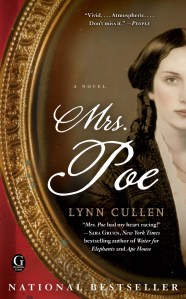
Book Review and Interview with Author Lynn Cullen

02_Mrs. Poe

A vivid and compelling novel about a woman who becomes entangled in an affair with Edgar Allan Poe—at the same time she becomes the unwilling confidante of his much-younger wife.

It is 1845, and Frances Osgood is desperately trying to make a living as a writer in New York; not an easy task for a woman—especially one with two children and a philandering portrait painter as her husband. As Frances tries to sell her work, she finds that editors are only interested in writing similar to that of the new renegade literary sensation Edgar Allan Poe, whose poem, “The Raven” has struck a public nerve.

She meets the handsome and mysterious Poe at a literary party, and the two have an immediate connection. Poe wants Frances to meet with his wife since she claims to be an admirer of her poems, and Frances is curious to see the woman whom Edgar married.

As Frances spends more and more time with the intriguing couple, her intense attraction for Edgar brings her into dangerous territory. And Mrs. Poe, who acts like an innocent child, is actually more manipulative and threatening than she appears. As Frances and Edgar’s passionate affair escalates, Frances must decide whether she can walk away before it’s too late…

Set amidst the fascinating world of New York’s literati, this smart and sexy novel offers a unique view into the life of one of history’s most unforgettable literary figures.

Stephanie: Hello Lynn! It truly is a pleasure chatting with you today! I really enjoyed your story, Mrs. Poe. What do your cast of characters have in common?

Lynn: Thank you so very much for inviting me to your blog. I’m thrilled for a chance to chat with you—and I’m so glad that you liked Mrs. Poe! H’m, interesting first question. I’d say that what the characters have the most in common is that they all want something they can’t have.   To me, one of the most fascinating things about being human is our constant craving for that which is just out of reach. Why do we always want what we can’t have? Not even the Garden of Eden was good enough for Eve. Poe and Frances Osgood were great vehicles through which to explore this common human drive for something more. They wanted fame, fortune, and great love, and it was just beyond their fingertips.

Stephanie: What fascinates you about Frances Osgood?

Lynn: I am bowled over that Frances Osgood tried to support herself and her two daughters with her poetry after her husband left her. She tried to do this in 1845, when only two or three women writers in the U.S. made enough money to live on—and they were newspaper columnists, not poets. Not even Poe was earning enough to live comfortably on his stories and poems. By the way, I learned that Poe was the first American writer to try to support himself solely with his fiction. Previous writers had inherited money, married well, or had other jobs or professions. Frankly, it didn’t work out very well for him. He was reduced to constantly begging for loans from friends and business associates. But back to Frances Osgood: I appreciate how she wrote about a woman’s role within society, and how she explores sexuality and motherhood—all heavily veiled for Victorian audiences, of course. I imagined her finding in Poe her soul mate, and wondered what it would have been like for her to be denied peace and happiness with him due to decisions they had made earlier in their lives.
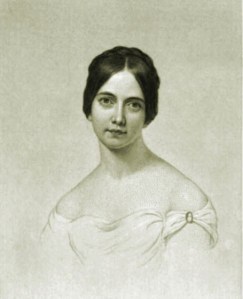
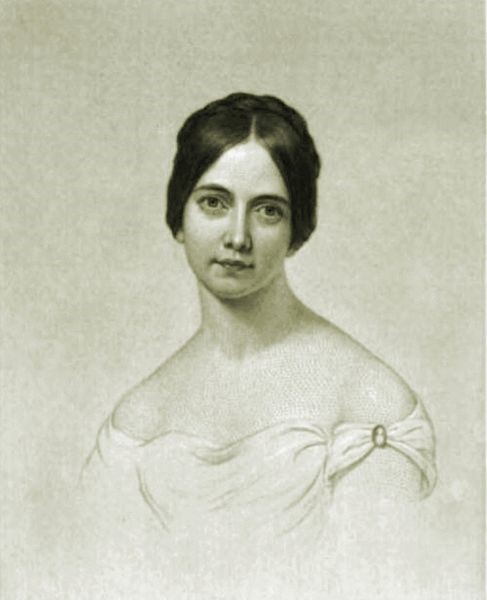
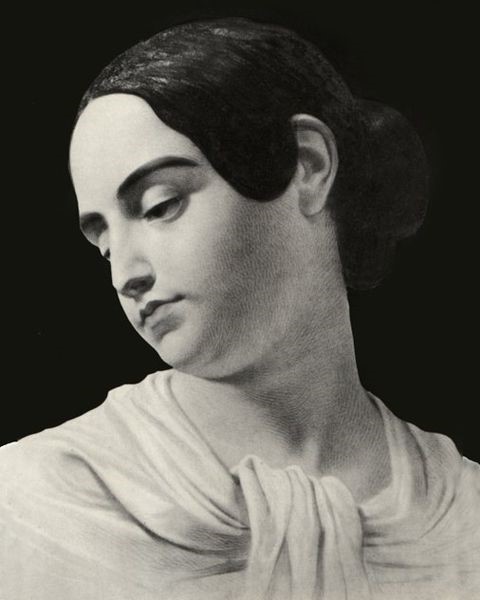
Frances Osgood

This is Frances Osgood around 1845, the year she was alleged to have had an affair with Edgar Allan Poe.

Stephanie: There seems to be a few misconceptions about Poe. Could you point a few of them out?

Lynn: The Poe who we think we know is not the Poe who his contemporaries experienced. He was gentlemanly, polite, and charismatic. He had a sexy voice–ladies swooned when he recited his poems—and was easy on the eyes. Society ladies all over New York, where he lived at the time of my story, clamored for his attention.
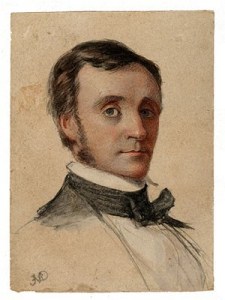
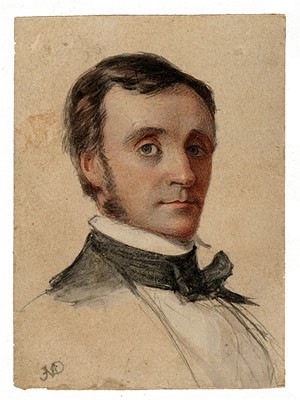
Poe

This portrait was drawn from life around 1845, the year he rose to fame with “The Raven.” The pictures of a baggy-eyed half-mad Poe, so familiar to modern readers, were taken in the last months of his life when he was ill—never the best time for one’s photo shoot. But they fit our common image of him, an image that came to us courtesy of his real-life enemy, Rufus Griswold.

In the most brazen smear job in literary history, Griswold concocted the dark legend of Poe soon after the Poe died. Poe’s aunt and mother-in-law, Maria Clemm, had sold all of Poe’s papers to Griswold—a baffling move since Griswold publicly bashed Poe on a regular basis. In fact, wondering why she would do such a thing greatly influenced my creation of Mrs. Poe. Why would she make a man who despised Poe his literary executor? Once Griswold had Poe’s papers in his hands, he doctored them to fit his toxic view of Poe and proceeded to write a biography that would stand alone for 25 years—long enough to destroy Poe’s reputation for the next century and a half. Few came out to defend Poe when Griswold published his slanderous biography. I believe that this is because Poe had burned all his social bridges for having had an affair with Frances Osgood. He had become social poison.

Stephanie: Please tell me about Poe’s wife? Was she a writer?

Lynn: Very little is known about Poe’s wife, which is exactly what made her so perfect for me as a novelist. While shaping my story, I could make her what I wanted her to be, strictly within the parameters of the facts, of course. She was indeed thirteen years old when she married Poe and was his first cousin. Many think that they never consummated their marriage. I believe that Poe loved her deeply, but in a brotherly way–he did call her “Sis.” She dabbled in poetry although she was an amateur. A poem of hers survives but, interestingly, not an officially confirmed portrait. The only picture of her is said to have been drawn immediately after her death. The legend goes that a neighbor hustled over to her deathbed when it was determined that there were no likenesses of her. Virginia had died of tuberculosis, which was then called “consumption,” an apt name since its victims wasted away, consumed by the disease.   To my mind, the subject of this portrait, which was handed down through the Poe family, is way too plump to be a consumption patient. I don’t believe it’s really Virginia, or, if it’s her, I don’t believe that it was done after her death. Because I don’t buy the legend of the portrait, I provided a different explanation of how the portrait came to be in my book. Hint: Frances Osgood’s husband happened to be a portraitist….
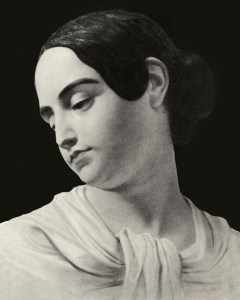
Poe's Wife

Stephanie: When did you first develop your plot? Did you know exactly how you wanted it to evolve? And how long did it take for you to write your story?

Lynn: I wrote the plot around the question, “How did Poe go from being the most celebrated man in New York upon the publication of ‘The Raven’ to being a social outcast within one year, 1845-1846?” I wrote it much as you read the book, making shocking discoveries along the way. The twists that you experience as a reader I actually experienced while writing it. The lives of Poe and Frances Osgood provided plenty of fodder for my story but I also had their works to draw from. I based my plot around what they were writing during the time of my tale. It took me about a year to write a first draft of Mrs. Poe, including the time it took to travel to every scene in the book. I wrote to exhaustion most days, as if my life depended on it, which it did. I was the sole supporter of my family at the time.

Stephanie: What are some of the positive things people have said about your story?

Lynn: Oh, gosh, people have been astonishingly wonderful.  I really can hardly believe it. Oprah made it a Book of the Week. NPR named it “Best of 2013.” Target chose it as their Target Book Club selection. But it’s the readers who take the time to write to me, telling me how much the story meant to them, who touch me the most. Their kindness and support never fails to amaze me. I am so grateful. I also got a kick out of a video blogger who said that he loved my book so much that he wanted to punch it in the face. He said that he wished that he had written it, which to me is the ultimate compliment. That’s how I feel about the books that I love best—I wish I had done them!

Stephanie: Is this your first published book?

Lynn: Well, no. I’ve been published for 23 years, although 14 of my books have been for children. Only my latest three have been for adults. I wrote for children when my kids were young—my career grew up when they did. I have no regrets about starting out in children’s books. I loved going to schools and talking with my readers. I am always impressed with how smart kids are.

Stephanie: What was your writing process for this story? Any research involved?

Lynn: Ha, my middle name is Research. I love researching and gladly travel to every single scene of my books. I would love to spend all my time reading up on my subjects and hanging out in archives and museums as well as haunting the places where my characters lived. The discovery aspect of research is so delicious! But alas, books don’t write themselves.   Early on in the research—make that within two months—I made myself start to write, basing my plot on the question I mentioned above about Poe’s meteoric rise and fall. I had an idea about where I was going with the story—I knew how the Poe-Osgood affair ended—and slowly worked my way to the conclusion. I tend to write chronologically. No skipping to the end for me. Writing my way to that last scene forces me to construct one page after the other. The ending is the carrot that I hold out for myself.

Stephanie: Did you discover anything about Poe’s life you didn’t know before?

Lynn: Beyond the usual misconceptions most Americans hold about Poe, I knew nothing about him before I started writing the book. Writing Mrs. Poe was an immersion course in all things Edgar. Every day was a new discovery and still I’m making them. Recently, at the Poe Museum in Richmond, Virginia, the curator, Christopher Semtner, pointed out that Maria Clemm’s stockings on display had spider-webs woven into them. Sure enough, they did. The lady had a witch’s stockings! How perfect for the woman who ended up destroying her own nephew’s reputation by selling his papers to his greatest enemy.

Stephanie: What are you currently working on?

Lynn: I’m working on a novel about Mark Twain, told from the perspective of the women in his life. Like Poe, he is not who most Americans think he is. Interestingly, his image was a product of his and his family’s careful shaping. The real man was much rougher around the edges.

Stephanie: Where in your home do you like to write and how often do you write?

Lynn: I write for about eight hours a day (if I can get it,) preferably in a lawn chair on my patio. My writing is often broken up by watching hummingbirds feed or bluebirds tending to their young…when I’m not dipping back inside for a snack.

Stephanie: What advice would you give to an inspiring author?

Lynn: Read constantly. Take courses on writing. Find readers whose opinions you trust and have them read your drafts—there isn’t a writer alive who can’t benefit from a second pair of eyes looking at their work.   Listen to sound advice on your writing and always, always, keep your mind open to learning how you can write better. And after doing all this, find joy in your writing. It will show in your work.

Stephanie: Thank you!

Lynn: Thank you very much. I appreciate your great questions! Such a pleasure to talk with you today.

My Review:

I have always wondered about Poe’s personal life and what drove him to write such stories. I didn’t know anything about his wife or his literary circles. I too had so many misconceptions about him before reading this novel. When I first discovered this book, I was completely intrigued with the book cover first off and when I discovered the premise of the story, I knew I HAD to read this book as soon as I could.

I have discovered Frances Osgood through this intriguing story and I enjoyed the interaction between Poe and Osgood. I felt Cullen did a splendid job developing her character and has left me wanting to know more about her.

When Mrs. Poe was introduced in the story, I could literally sense a troubled soul coming through the pages! What a complex, dark, frightening- yet-pitiful person she is. Fascinating and thrilling in a bizarre sort-of way.

I loved all the characters in this book and most of all, the interaction between Poe’s and Frances’s literary circles and their followers. And I have to say that Cullen brilliantly set the tone of the nineteenth century and an era of Victorian lifestyle and mindsets. I really cannot say enough about this book. You just have to read the story for yourself and be swept up into Poe’s world.

Stephanie Moore Hopkins

Buy the Book

Amazon (Kindle)Amazon (Paperback)Barnes & NobleBooks-a-MillionIndieBoundiTunesSimon & Schuster

About the Author
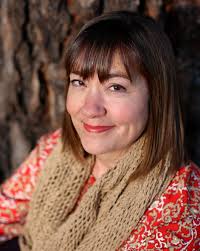
03_Lynn Cullen

Lynn Cullen grew up in Fort Wayne, Indiana, the fifth girl in a family of seven children. She learned to love history combined with traveling while visiting historic sites across the U.S. on annual family camping trips. She attended Indiana University in Bloomington and Fort Wayne, and took writing classes with Tom McHaney at Georgia State. She wrote children’s books as her three daughters were growing up, while working in a pediatric office and later, at Emory University on the editorial staff of a psychoanalytic journal. While her camping expeditions across the States have become fact-finding missions across Europe, she still loves digging into the past. She does not miss, however, sleeping in musty sleeping bags. Or eating canned fruit cocktail. She now lives in Atlanta with her husband, their dog, and two unscrupulous cats.

Lynn Cullen is the author of The Creation of Eve, named among the best fiction books of 2010 by The Atlanta Journal-Constitution and as an April 2010 Indie Next selection. She is also the author of numerous award-winning books for children, including the young adult novel I Am Rembrandt’s Daughter, which was a 2007 Barnes & Noble “Discover Great New Writers” selection, and an ALA Best Book of 2008. Her novel, Reign of Madness, about Juana the Mad, daughter of the Spanish Monarchs Isabella and Ferdinand, was chosen as a 2011 Best of the South selection by the Atlanta Journal Constitution and was a 2012 Townsend Prize finalist. Her newest novel, MRS. POE, examines the fall of Edgar Allan Poe through the eyes of poet Francis Osgood.

For more information please visit Lynn Cullen’s website and blog. You can also connect with her on Facebook, Twitter, Goodreads, and Pinterest.

Praise for Mrs. Poe

“Is it true that Edgar Allen Poe cheated on his tubercular, insipid young wife with a lady poet he’d met at a literary salon? Cullen makes you hope so.” –New York Times

“This fictional reenactment of the mistress of Edgar Allan Poe escorts you into the glittering world of New York in the 1840s…A bewitching, vivid trip into the heyday of American literary society.” –Oprah.com, Book of the Week

“Vivid…Atmospheric…Don’t miss it.” –People

“Nevermore shall you wonder what it might have been like to fall deeply in love with Edgar Allen Poe… Mrs. Poe nails the period.” –NPR

“A page-turning tale…Readers who loved Paula McLain’s The Paris Wife will relish another novel based on historical scandal and romance.” –Library Journal, starred review

“Immensely engaging…Set upon the backdrop of a fascinating era…this is not only a captivating story of forbidden lovers but an elaborately spun tale of NYC society.” –The Historical Novels Review

“A must-read for those intrigued by Poe, poetry and the latter half of nineteenth-century America.” –RT Book Reviews (4 stars)

Virtual Book Tour Schedule

Monday, May 19 Review at Oh, For the Hook of a Book Spotlight & Giveaway at Passages to the Past

Tuesday, May 20 Interview & Giveaway at Oh, For the Hook of a Book

Wednesday, May 21 Interview & Giveaway at Flashlight Commentary

Thursday, May 22 Review & Giveaway at The True Book Addict

Friday, May 23 Review at A Bookish Affair

Monday, May 26 Review at 100 Pages a Day Guest Post & Giveaway at A Bookish Affair

Tuesday, May 27 Review at A Chick Who Reads

Wednesday, May 28 Review at Turning the Pages

Friday, May 30 Review at Sharon’s Garden of Book Reviews

Monday, June 2 Review at Let Them Read Books Review & Giveaway at Book Lovers Paradise

Tuesday, June 3 Review at Kelsey’s Book Corner Guest Post & Giveaway at Let Them Read Books

Wednesday, June 4 Review & Giveaway at Reading Lark

Thursday, June 5 Review & Giveaway at Broken Teepee Interview at Jorie Loves a Story

Friday, June 6 Review at Jorie Loves a Story Interview & Giveaway at Historical Fiction Connection

Monday, June 9 Review at Historical Tapestry

Wednesday, June 11 Guest Post & Giveaway at Historical Tapestry

Thursday, June 12 Interview & Giveaway at Peeking Between the Pages

Friday, June 13 Review at Peeking Between the Pages

Monday, June 16 Review at Unabridged Chick Review at A Bibliotaph’s Reviews

Tuesday, June 17 Review & Interview at Layered Pages Interview & Giveaway at Unabridged Chick

Wednesday, June 18 Review at Svetlana’s Reads and Views
Mrs. Poe_Tour Banne_FINAL


Review: The Lost Duchess by Jenny Barden

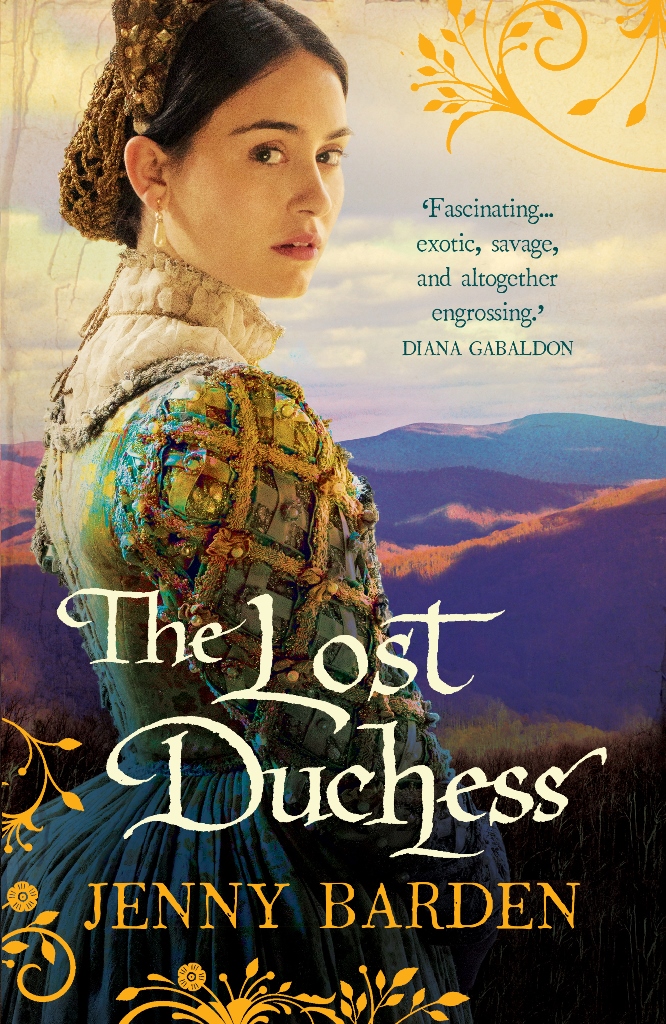
The Lost Duchess

My Review:

The Lost Duchess holds several meanings for me. I love my countries history and I’m fascinated with the early settlers who came to the new world. The history holds such a profound interest to me not only because I love knowing about people of the past,  how they lived and built a new world but because this countries founding history is engrained in my own family ancestry.

I have read several books about the early colonies where the story begins with the settlers already here. This story begins in England with a young lady named Emme who is a lady of Queen Elizabeth’s court in the sixteenth century. Emme falls prey to a titled man and desperate to escape him designs a plan to leave England and make the long journey to the new world. Emme endures many hardships along the way and quickly develops an attraction to one of the men sailing with her named Kit Doonan-who has happen to have quite a life to say the least. When they arrive to the new world they find themselves not only striving to learn and endure the everyday life of a world that is unknown to them but a race for survival.

Emme is a woman of courage and strength and a person to admire. I was truly caught up in her story and her plight. I couldn’t read fast enough to see what she would do next and the outcome of her decisions and actions.

This story also explores the lost colony of the Roanoke. One that I have always been intrigued with and I have always had my suspicions of what happen to the colony and I have to admit I was impressed with the author’s rendition of the story. I recommend you read this book to find out what it is….and you will be caught up in the adventure of Emme and Kit as much as I was.

I thoroughly enjoyed the pace of this story and the beautiful descriptions throughout. This story meant so much to me that I still have this book on my night stand. That says a lot right there…..and the book cover, beautiful!

Stephanie Moore Hopkins

Buy the Book

Amazon (AUS) Amazon (UK) Book Depository

About the Author

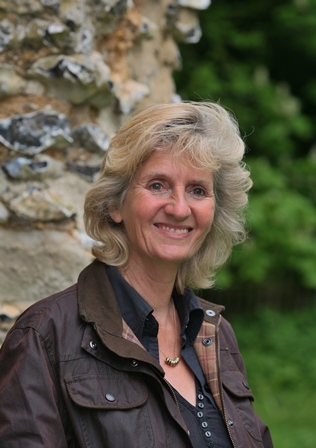
Jenny Barden

I’ve had a love of history and adventure ever since an encounter in infancy with a suit of armour at Tamworth Castle. Training as an artist, followed by a career as a city Jenny (Portrait 2) solicitor, did little to help displace my early dream of becoming a knight. A fascination with the Age of Discovery led to travels in South and Central America, and much of the inspiration for my debut came from retracing the footsteps of Francis Drake in Panama. The sequel centres on the first Elizabethan ‘lost colony’ of early Virginia. I am currently working on an epic adventure during the threat of invasion by the Spanish Armada.

My work has appeared in short story collections and anthologies and I’ve written for non-fiction publications including the Historical Novels Review. I am active in many organisations, having run the ‘Get Writing’ conferences for several years, and undertaken the co-ordination of the Historical Novel Society’s London Conference 2012. I am a member of that organisation as well as the Historical Writers’ Association, the Romantic Nevelists’ Association and the Society of Authors. I’ll be coordinating the RNA’s annual conference in 2014.

I have four children and now live on a farm in Dorset with my long suffering husband and an ever increasing assortment of animals.

I love travelling, art, reading and scrambling up hills and mountains (though I’m not so keen on coming down!).

Author Links

Website Facebook Twitter Jenny Barden’s Blog English Historical Fiction Authors Blog

Monday, May 26 Review & Giveaway at Let Them Read Books Book Blast at Reading the Ages Book Blast at Literary Chanteuse Book Blast at Bibliophilia, Please

Tuesday, May 27 Review at A Bibliotaph’s Reviews Book Blast at Flashlight Commentary Book Blast at To Read or Not to Read

Wednesday, May 28 Review at Carole’s Ramblings and Book Girl of Mur-y-Castell Book Blast at The Little Reader Library

Thursday, May 29 Book Blast at The Maiden’s Court Book Blast at Cheryl’s Book Nook Book Blast at Book Reviews & More by Kathy

Friday, May 30 Review at WTF Are You Reading? Book Blast at The Mad Reviewer Book Blast at Curling Up by the Fire

Saturday, May 31 Book Blast at From L.A. to LA Book Blast at Gobs and Gobs of Books

Sunday, June 1 Book Blast at Lily Pond Reads Book Blast at So Many Books, So Little Time

Monday, June 2 Review & Giveaway at The Tudor Enthusiast Book Blast at The Bookworm Book Blast at CelticLady’s Reviews

Tuesday, June 3 Review at Oh, For the Hook of a Book Book Blast at West Metro Mommy Book Blast at bookworm2bookworm’s Blog

Wednesday, June 4 Review at The Wormhole Interview at Oh, For the Hook of a Book Book Blast at Kelsey’s Book Corner

Thursday, June 5 Book Blast at Books and Benches Book Blast at Book Lovers Paradise

Friday, June 6 Interview at Dianne Ascroft Blog Book Blast at Kincavel Korner Book Blast at Caroline Wilson Writes

Saturday, June 7 Book Blast at Royal Reviews Book Blast at History Undressed

Sunday, June 8 Book Blast at Book Nerd

Monday, June 9 Review at A Chick Who Reads Book Blast at The Musings of a Book Junkie

Tuesday, June 10 Review at She Reads Novels Book Blast at Just One More Chapter Book Blast at History From a Woman’s Perspective

Wednesday, June 11 Review at Historical Fiction Obsession Book Blast at Books in the Burbs

Thursday, June 12 Book Blast at Big Book, Little Book Book Blast at Historical Fiction Notebook

Friday, June 13 Review at Susan Heim on Writing Review at Svetlana’s Reads and Views
Saturday, June 14 Book Blast at Hardcover Feedback Book Blast at One Book at a Time

Sunday, June 15 Book Blast at Passages to the Past

Monday, June 16 Review at Layered Pages Review at Starting Fresh Review at Ageless Pages Reviews

Tuesday, June 17 Review at The Lit Bitch Book Blast at Griperang’s Bookmarks

Wednesday, June 18 Review & Giveaway at Luxury Reading

Thursday, June 19 Review at A Bookish Affair Book Blast at Girl Lost in a Book

Friday, June 20 Review at Broken Teepee Review at Jorie Loves a Story Review at The Musings of ALMYBNENR Guest Post & Giveaway at A Bookish Affair

The Lost Duchess_Tour Banner_FINAL

Interview with Author Lindsay Stanberry-Flynn

the pian player's son v.8 flat

Stephanie: Welcome to Layered Pages, Lindsay and thank you for chatting with me today. Please tell me about your story, ‘The Piano Player’s Son and the period it takes place in.

Lindsay: Thank you for the opportunity to be on Layered Pages, Stephanie.

‘The Piano Player’s Son’ is contemporary and tells the story of a family with four grown up children. At the beginning of the novel, the father, Henry, dies, and the mother tells one of her daughters, Isabel, a secret that has been kept for thirty-five years. She also makes her promise not to tell anyone. The novel largely revolves around the fallout from the secret, and the repercussions as it gradually emerges.

I am interested in secrets and their impact. It often appears that it is the secret itself rather than the truth behind it that does the damage, especially when the person has died and can’t be asked questions. As Isabel says ‘Finding out undermines all the certainties.’

The story also concerns inheritance and the difficulties it can cause within a family. I’m not so interested in the inheritance of money but less obviously valuable things. People have told me about cases such as two sisters not speaking to each other again because one got the father’s watch and the other didn’t. It seems to be about something much deeper than the disputed item – more to do with an individual’s place in the family, their worth, how much they were valued. The item in the novel – as the title suggests – is a piano!

Stephanie: What a fascinating premise and one many of us, if not all, have experience in family life or in relationships in general. Bonds in families can be either weak or strong. Could you please tell me a little bit about Isabel’s bond with her sister and two brothers?

Lindsay: My writing usually explores some aspect of human relationships, particularly in moments of crisis. I find the family a rich source of material as it tends to be an intense world with the dynamics constantly shifting. The family can provide strong, life-affirming relationships, but can also cause bitterness and pain more enduring than other hurts in life. Siblings seem to hold a unique power to wound each other.

Isabel’s relationship with her brothers is not ideal. Rick has always treated her very much as the younger sister, a situation made worse by their father’s death. When she tries to talk to him that night, he stonewalls her and ‘for a second Isabel was a little girl hovering at her big brother’s door: Do you want to play? Shove off! I’m busy.’

Isabel has always found George, her younger brother, edgy and unpredictable. She is wary of him, although longs to be closer following their father’s death. George, however, remains elusive. She also can’t help feeling jealous because, George, a brilliant pianist, was their father’s favourite as a result, while she plays the piano too, but doesn’t feel her talent is recognised.

Isabel has always been close to younger sister, Grace. But the death opens up a divide between them. Grace takes out her anger and hurt that she wasn’t there when her father died on Isabel. Isabel, already keyed up, wants to retaliate, until she remembers ‘This was Grace she was about to heap abuse on. Grace, the baby sister she’d adored from the moment she’d first seen the black curls, the dark eyes peeping out of the crocheted shawl. She’d helped change her nappy, pushed her pram, rattled her toys, and lifted her out of the cot each morning.’ Their relationship is not permanently damaged by the events following their father’s death, but it certainly takes a battering.

Stephanie: Does Isabel’s promise to her mother to stay silent about the kept secret that was revealed to her affect her relationship with her mother and how so?

Lindsay: Isabel’s relationship with her mother, Eva, is profoundly affected by the secret and being forced to keep it quiet. Eva extracts the promise from her under duress, saying it was her father who wanted the secret kept. The situation is made worse because after the initial revelation, Eva refuses to discuss it again. Here is one exchange between the two:

‘You might feel comfortable with a secret like that, Mum, but I feel as if I’ve got liar branded on my forehead.’

‘Forget about it, Isabel. There’s a good girl.’

‘I can’t. You shouldn’t have told me if you didn’t want me to know.’

‘You made me tell you.’

‘I did no such thing!’

Eva picked up the cup and drank the coffee in one go. ‘I thought I could trust you,’ she said, her voice cold. ‘My darling Henry was gone. I didn’t know what I was saying.’

The fact that her mother has only revealed part of the secret makes the situation worse, and Isabel’s relationship with her will never be the same again.

Stephanie: Please tell me about the flaws of Isabel and how it has affected her life.

Lindsay: Isabel is quite a needy person, with an idealised view of her parents’ marriage, an idyllic union she seeks from her own marriage. This leads her to marry Brian, someone who is totally unsuitable for her, and convince herself she can make it work. When Brian has an affair and leaves her (before the start of the novel), she is inconsolable and vows to get him back. As well as being needy, she also likes to be needed. Although she sometimes feels put-upon because her siblings live elsewhere, and she is the one who ‘looks after’ their parents, secretly, she is pleased to have the responsibility.

Stephanie: Writing about family life, secrets and the human condition can be quite a challenge and finding that person’s individual uniqueness is a wonderful journey, I find. Were you any challenges you faced in this aspect of the writing?

Lindsay: Creating the characters for all the key players – the parents and the four children – was a challenge in itself. I also wanted Henry, the father, to be a major force in the novel, even though he is dead. I tried to do that through memories, other’s people’s perceptions of him (including a very old friend from when he was a boy who emerges from the past), his actions, which others recall, his music and a letter. I chose to make three of the four children point of view characters, so had to manipulate that. Rick came to me almost fully-formed. I had to work a bit harder with Isabel, and Grace needed a lot of development, following the first draft. Her character was shadowy, and initially her story wasn’t powerful enough or integrated into the main plot sufficiently. I think with subsequent drafts, I resolved that.

Stephanie: What was the inspiration for your story?

Lindsay: I’d heard rumours in my own family about secrets and disputed claims to inherit someone’s war medals. This gave me the twinned ideas of secrets and inheritance, which I then had to develop into my story. While many novels begin with a thread of an idea from real life, I think the best fiction often emerges when that thread is forged into something completely different from the original stimulus.

Stephanie: What was your writing process like for this story?

Lindsay: I wrote the first draft fairly quickly. I’d been thinking about it for some time and had developed the characters I wanted to include, so that initial draft didn’t cause too many problems (other the one I’ve mentioned with Grace). My first novel ‘Unravelling’ had a structure which moved backwards and forwards in time, so I decided to have a straightforward chronological line in this one.

The three point of view characters also presented themselves early on in the process.

I submitted the manuscript to an agent who was very positive, but made several suggestions, which I worked on. After subsequent drafts, I sent it to a literary consultancy for a critique. Again, I received some interesting feedback. Both the agent and critique thought I needed a stronger ending, so I worked on that. When I had developed and honed it to within an inch of its life(!), I entered the first three chapters for the Cinnamon Press novel writing award. It was on a shortlist of five – great excitement – and then the whole novel had to be submitted. After still more polishing, I sent it off – and it WON. The prize was publication.

Stephanie: Who are your influences?

Lindsay: That’s a difficult question! In some ways, anybody I’ve ever read, and I’ve been reading since I was a small child. There are a number of current writers whose work I enjoy, and inevitably, I’m influenced by them. I’d include: Rose Tremain, Helen Dunmore, Maggie O’Farrell, William Trevor, and Sebastian Barry. I like reading thrillers, as the tightness of the plotting, the need for the reader to keep reading is something I like to include in my writing, even though I don’t write thrillers. I also enjoy reading poetry. I suppose I’d like to have something of the thriller writer in my plotting, and something of the poet in my use of language.

Stephanie: Is there a message you would like to give your readers?

Lindsay: Secrets are dangerous: they can fester and worm their way to the surface years later. Think carefully before keeping one. Also, families can implode if relationships aren’t nurtured.

The book can be bought from Cinnamon Press

Amazon

Or ordered through all good bookshops

Thank you, again, Stephanie for the opportunity to explore some aspects of ‘The Piano Player’s Son’. I’ve certainly enjoyed revisiting the novel.

Author’s Website

SilverWood Books

Lindsay is not on Twitter, but SilverWood Books will be tweeting throughout the tour from @SivlerWoodBooks

About Author:

tn

After a career teaching English in further and higher education, Lindsay, now works as a writer and creative writing tutor. Her second novel The Piano Player’s Son was published in 2013 by Cinnamon Press after winning their novel writing award. Her first novel, Unravelling in 2010, has won several prizes including winner of the Chapter One Promotions Book Award and second prize in the International Rubery Book Award. Lindsay is working on her next novel, Phoenix. She has an MA in Creative Writing from Bath Spa University. Lindsay also writes short stories and flash fiction which have been published and successful in competitions, including Cinnamon Press, Fish Publishing, and the Asham Award.

ThePianoPlayer'sSon-BookTourLogo


Guest Post with Lindsay Stanberry-Flynn

the pian player's son v.8 flat

Research for ‘The Piano Player’s Son

‘The Piano Player’s Son’ is a contemporary novel, set mainly in England, and as such you wouldn’t think it needed much research. In some ways, that’s true, certainly in comparison with an historical novel, or a thriller – where you might need knowledge of police procedures – or a novel set in the Amazonian rainforest or the Arctic. But there are certain aspects of the novel where I definitely needed more knowledge of the subject than I already had.

The most significant is probably music. I enjoy listening to music, both classical and popular, but my knowledge and understanding is limited. I also don’t play a musical instrument. I played the recorder years ago at school and scratched away at a violin for a couple of years until my parents took pity on me and let me give up the lessons, but that’s all. I’ve always longed to play the piano (haven’t given up all hope!) and some years ago I had lessons, but the teacher moved away and that was it.

So, I knew that choosing a piano as my object of disputed inheritance was going to create problems for me. On the other hand, the piano was perfect. I didn’t want the argument to be about money or property, or anything that had great significance in financial terms. It had to be something that mattered to all the family, and as their dead father’s great love, the piano is of huge importance.

The piano is also the source of some of the rivalry that has always existed between the two brothers, Rick and George. George is a brilliant pianist, and as such seems to have gained greater closeness to his father. Rick, on the other hand, blames his failure to play as the reason for his father’s apparent lack of affection for him. The dispute about the piano provokes tension all the way through the novel, until the final explosive resolution.

I was helped in my research by my husband, who is a pianist. I plied him with questions about the problems of learning the piano, technique, musical scores, types of piano, the music itself and many more.

I listened to Beethoven’s Moonlight Sonata, a piece of significance in the novel, over and over again to get a feeling of its mood and power. I included other pieces that I enjoy, such as Debussy’s Nocturne. I wanted music to pervade the novel, as this is a musical family, and I needed to have the music running alongside the emotional drama. There’s also some fun music, such as Dolly Parton’s ‘Islands in the Stream’, but I couldn’t include the lyrics I wanted to, as musical copyright laws are stringent.

My other main research involved the novel’s settings. I chose places I know and love, and apart from Ischia, an island in the Bay of Naples (which I’ve been to three times), I revisited all the main places, particularly to identify characters’ homes. I found the perfect house for Rick in Rothbury, Northumberland, although obviously had to create the inside myself! It was gratifying when a book group told me the house seemed so real, they felt as if they had visited it.

I associated Rothbury so strongly with Rick and his family that when a real-life tragedy took place there and I wondered if I ought to change where he lived, I found I couldn’t. I’d planted him in Rothbury, and he definitely didn’t want to leave!

Rick is a keen runner, and I spent ages pouring over maps, plotting the route for his daily run. But I did wonder whether I’d failed in my research when I received this email from a friend: :

I’ve got halfway through The Piano Player’s Son – am enjoying it – but in my irritating way I had to check up on Rick’s jogging route.

He starts from a house on high ground overlooking the river and runs downhill into town. B6341

Runs through village and then out alongside the river and out by Cragside. B6344

Crosses the bridge at 4 miles along route.

Gets to disused railway at 5 miles.

Gets home – 8 miles.

One stride per second concerns me. I don’t know who advised you on this. A second is roughly the time it takes to say one thousand or one elephant etc Quite a long time.

A reasonable jogger will do ten minute miles over an eight mile distance. This equals 176 yards per minute, which equals 3 yards per second.

If he is doing one stride per second, his stride is about 9 feet or 106 inches

A slow jogger will do 12 minute miles which would give a stride length of 88 inches.

A study of Olympic sprinters (the longest striders of all) showed that a 6 foot tall top class sprinter would have a stride length of about 98 inches

If he takes 2 strides per second at a reasonable 45 inch stride, he would be doing just under 12 minute miles which would be tidy for a newcomer over such a distance/terrain/hills etc.

Yes, he is still a friend, but clearly I should have done more research!

***

www.lindsaystanberryflynn.co.uk

tn

About Author:

After a career teaching English in further and higher education, Lindsay, now works as a writer and creative writing tutor. Her second novel The Piano Player’s Son was published in 2013 by Cinnamon Press after winning their novel writing award. Her first novel, Unravelling in 2010, has won several prizes including winner of the Chapter One Promotions Book Award and second prize in the International Rubery Book Award. Lindsay is working on her next novel, Phoenix. She has an MA in Creative Writing from Bath Spa University. Lindsay also writes short stories and flash fiction which have been published and successful in competitions, including Cinnamon Press, Fish Publishing, and the Asham Award.

ThePianoPlayer'sSon-BookTourLogo


Guest post with Author Peni Jo Renner

????????????????????????

They slogged up Gallows Hill, forming a somber and silent queue as they took their places beneath the shade of the great oak tree. Dounton and his men lashed the two ladders together while the spectators assembled at the base of the hill. The hem of Rebecca’s mud-coated shift clung to her legs. Even without the chains, her feet felt as though they were leaden. These are my very last footfalls, she thought glumly. Ascending this cursed hill. Lord, let not my last thoughts be those of hatred and vengeance. The militia assembled, sticks poised above their snare drums as Ned dropped the ropes into a careless heap at the base of the tree. Then he clambered up the ladder and straddled the sturdy limb. Reverend Noyes again officiated, his voice resonating in the crisp autumn air. He invoked the name of God and then signaled the waiting militia to begin the execution call.

Martha Corey stepped forward with as much dignity as possible. She mumbled prayers as Dounton, puffing casually on his pipe, secured her arms and legs. Flinging her over his shoulder, he ascended the ladder and placed the noose around her neck. As she stood upon the wrung and Noyes asked for last words, she locked eyes with Rebecca. “God be with you, Martha Corey!” Rebecca cried, and Martha smiled sadly. The condemned woman proclaimed her innocence a last time before she was turned off the ladder.

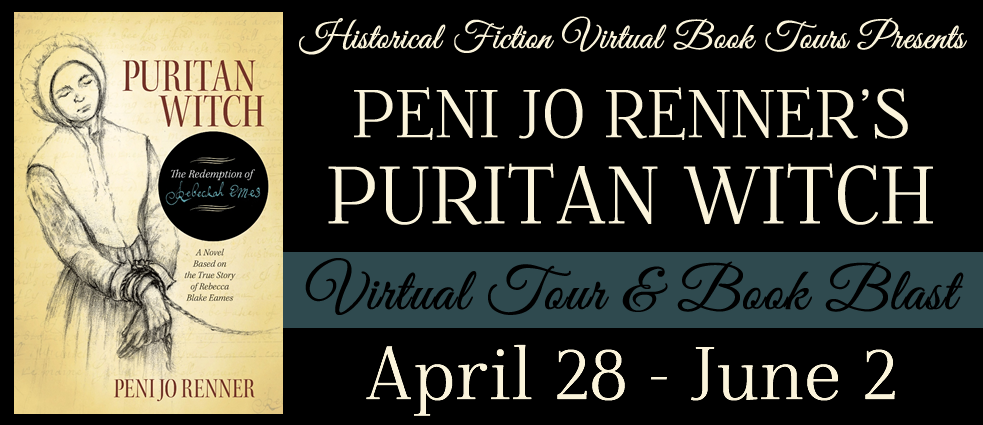
So goes one of the darker scenes in Puritan Witch; The Redemption of Rebecca Eames, my debut novel! Not only is it my first published book, but it is a true labor of love. Rebecca Blake Eames, my ninth great-grandmother, was one of over 140 people accused and imprisoned during the Salem Witchcraft Hysteria of 1692. We are fortunate that several documents of the times survived 2 fires and are still in existence. But unless one happens across Rebecca Eames in a genealogy search, her name is not as well-known as some involved during that horrific episode in American history.

It was during a genealogical search that I myself stumbled upon Rebecca and her story. Through www.Ancestry.com, I got in contact with a third cousin. We began emailing and immediately became close. She was the one to tell me about Rebecca Eames’ involvement with the Salem Witch Trials, a subject that always intrigued me. I told my cousin how I “used to write,” and I said, “It’s a shame I don’t write anymore; that would make a great novel!”
“So write one,” she said (or words to that effect.) And just like that, my love of writing, which had been dormant for nearly 25 years, was reawakened!

Puritan Witch has gotten several good reviews on www.amazon.com, www.bn.com and www.goodreads.com. I wrote it for those of us who have a rather short attention span; its 242 pages, less than 60,000 words and can be read in an afternoon. I’m really hoping others discover Puritan Witch and I hope they enjoy it. Like I said before, it was a labor of love to write, and a tribute to a beloved ancestress whose real-life ordeal was more horrific than I can ever imagine.

About Author:

03_Peni Jo Renner

Peni Renner is the author of “Puritan Witch: The Redemption of Rebecca Eames”, an award-winning historical novel based on the true-life account of Peni’s 9th great grandmother. The book is Renner’s first published work, and follows Eames’ life and struggles in 1692 Massachusetts during the Salem Witchcraft Trials.

Writing historical fiction has always been a lifelong dream of mine. I was discouraged for many years after receiving multiple rejection slips, and turned to other creative outlets like crocheting, quilting and cross-stitch for many years. Then I met a 3rd cousin of mine online who is also into genealogy and history. She told me we shared a common ancestor who was involved in the Salem Witchcraft Hysteria of 1692, and her story had never been told. My love of writing was rekindled and I began to research this ancestor, Rebecca Blake Eames. In August of 2012 I had the privilege of visiting her grave in Boxford, Massachusetts.

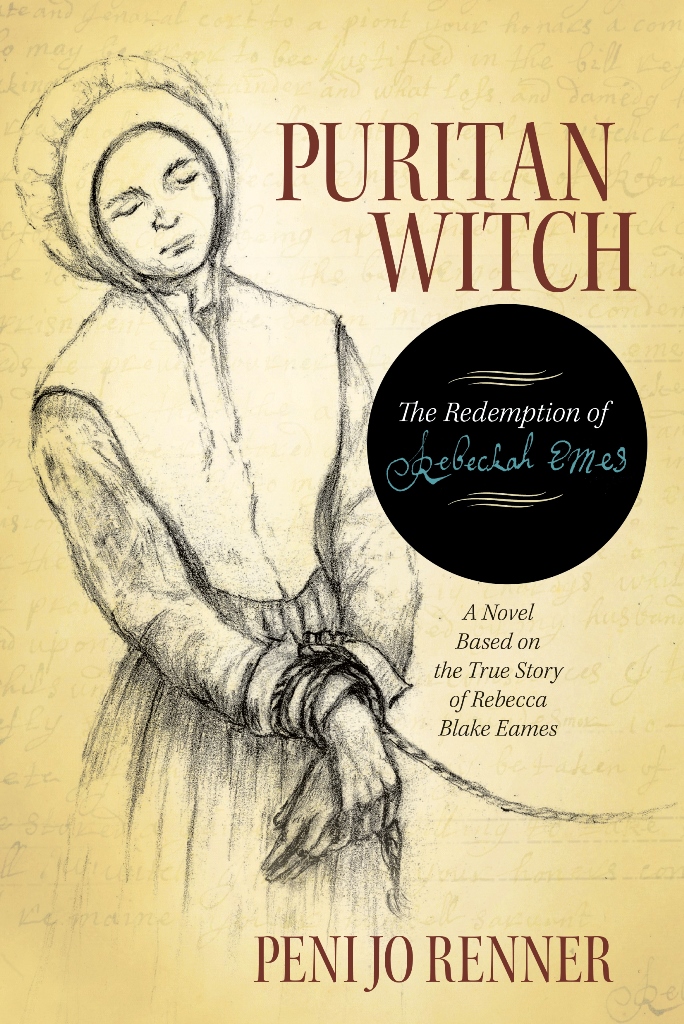
After months and months of research, writing, rewriting and revising, Puritan Witch came into being, featuring a lovely sketch done by my sister-in-law, Jane Sisk.

I have several other story ideas I am working on at the moment, all pertaining to interesting ancestors my 3rd cousin has introduced me to.

For more information please visit the Puritan Witch Facebook Page. You can also follow Peni Jo Renner on Twitter.

Virtual Tour & Book Blast Schedule

Monday, April 28 Book Blast at Broken Teepee Book Blast at Our Wolves Den

Tuesday, April 29 Book Blast at The Lit Bitch Book Blast at A Book Geek Book Blast at The Musings of ALMYBNENR Book Blast at Literary Chanteuse

Wednesday, April 30 Review & Giveaway at Closed the Cover

Thursday, May 1 Book Blast at Historical Fiction Obsession

Friday, May 2 Book Blast at Caroline Wilson Writes

Saturday, May 3 Book Blast at Griperang’s Bookmarks

Sunday, May 4 Book Blast at I’d Rather Be Reading

Monday, May 5 Book Blast at Kincavel Korner

Tuesday, May 6 Review at Just One More Chapter

Wednesday, May 7 Review at Books in the Burbs Book Blast at Kelsey’s Book Corner

Thursday, May 8 Book Blast at Curling Up with a Good Book

Friday, May 9 Spotlight & Giveaway at Passages to the Past Book Blast at Carpe Librum

Monday, May 12 Interview at Flashlight Commentary Book Blast at West Metro Mommy

Tuesday, May 13 Review & Interview at Oh, For the Hook of a Book Book Blast at Let Them Read Books

Wednesday, May 14 Book Blast at Historical Tapestry

Thursday, May 15 Review at A Bibliotaph’s Reviews Review at Impressions in Ink

Friday, May 16 Book Blast at Historical Fiction Connection

Monday, May 19 Review at Book Lovers Paradise

Tuesday, May 20 Review at 100 Pages a Day Book Blast at The Maiden’s Court

Wednesday, May 21 Book Blast at So Many Books, So Little Time

Thursday, May 22 Guest Post at Bibliophilic Book Blog

Friday, May 23 Review at Svetlana’s Reads and Views Book Blast at The Mad Reviewer Book Blast at Reviews by Molly
Saturday, May 24 Book Blast at Book Nerd

Monday, May 26 Review at History From a Woman’s Perspective

Tuesday, May 27 Review at WTF Are You Reading? Guest Post at Layered Pages

Wednesday, May 28 Book Blast at CelticLady’s Reviews

Friday, May 30 Review & Giveaway at The True Book Addict

Monday, June 2 Review & Giveaway at Peeking Between the Pages Book Blast at To Read or Not to Read

04_Puritan Witch_Tour Banner FINAL


Guest Post with Author R.L. Syme

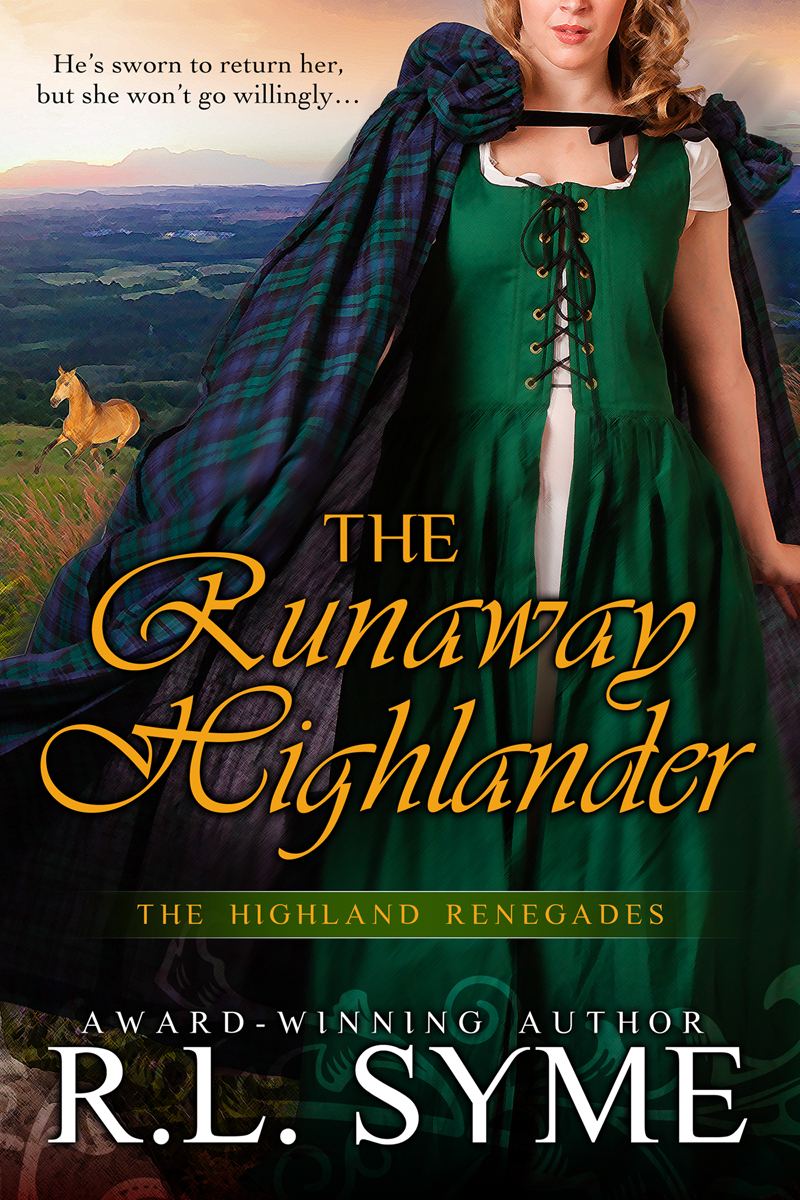
02_The Runaway Highlander

I would like to welcome, R.L. Syme to Layered Pages today. Author of the The Highland Renegades Series.

When I first conceived of The Runaway Highlander, I had one basic plot point. I knew that two minor characters escaped from the dungeon at Berwick. I knew that there was someone there to help them, but I didn’t know who that someone was yet. Then, I started writing character sheets and the connection between Anne de Cheyne became clear.

The de Cheyne family are a real historical family who really did have power in the Caithness region of the Highlands during this time period. There were some discussions in my research about fealty to England being the deciding factor for some of these lorships, and given that the Sinclair family already had ties to the historical de Cheyne family, I decided to flesh them out and meet them.

Anne de Cheyne was born out of the knowledge that, in The Outcast Highlander, Broccin Sinclair was engaged to Anne for most of his childhood. It made sense that, when she found out he was in Berwick and she was about to be sold into marriage, she would consider helping Broc escape from prison in exchange for his helping her escape from her bad marriage contract.

The research for this book was partly done when I researched the first book, because their timelines overlap and I wanted to stay true to the real events (big events) that were happening during the wars of Scottish independence taking place at the time. For the first book, I spent about six months buried in books and maps and library catalogs. So much fun. For this book, I reprised some of that research, but did a lot of locational searching.

I’d discovered the “Street View” version of Google Maps, so once I figured out exactly where these things were set, I used the street view to look at the surrounding areas in order to get a sense for the setting. That was a lot of fun. But lots of work. It’s amazing how much time it takes to go even just a mile or two in that kind of street view.

This particular genre, Scottish romance, requires a good amount of detail, so the discovery of Google Street View was really a fantastic one for me. However, this Fall, I’m going to be making my first research trip to Scotland and I’m absolutely ecstatic. I feel like the more authentic details (things like smells and touches) can really only be known if you’ve physically been in the space.

Of course, that provides a huge challenge to write well in this genre, because I haven’t been to Scotland yet. But I’ve done so much research and have been reading Scottish historical romances since I was a kid. So I definitely love the genre.

My favorite part of writing Scottish historical romance is actually the community of writers I belong to who all write Celtic romance. In the national Romance Writers of America organization, we have created a little home called Celtic Hearts Romance Writers, where we all love Celtic romance of all kinds. I’ve been the President over at CHRW for almost three years now, and on the Board for five. I adore Celtic Hearts and I’m so happy to get to have research conversations with my favorite Celtic authors, and hear about their work process and take workshops from them. It’s so rewarding.

The Highland Renegades Series

Book One: The Outcast Highlander Book Two: The Runaway Highlander Book Three: The Pirate Highlander — Coming Soon!

Buy the Book

Amazon UK Amazon US Barnes & Noble CreateSpace

About the Author

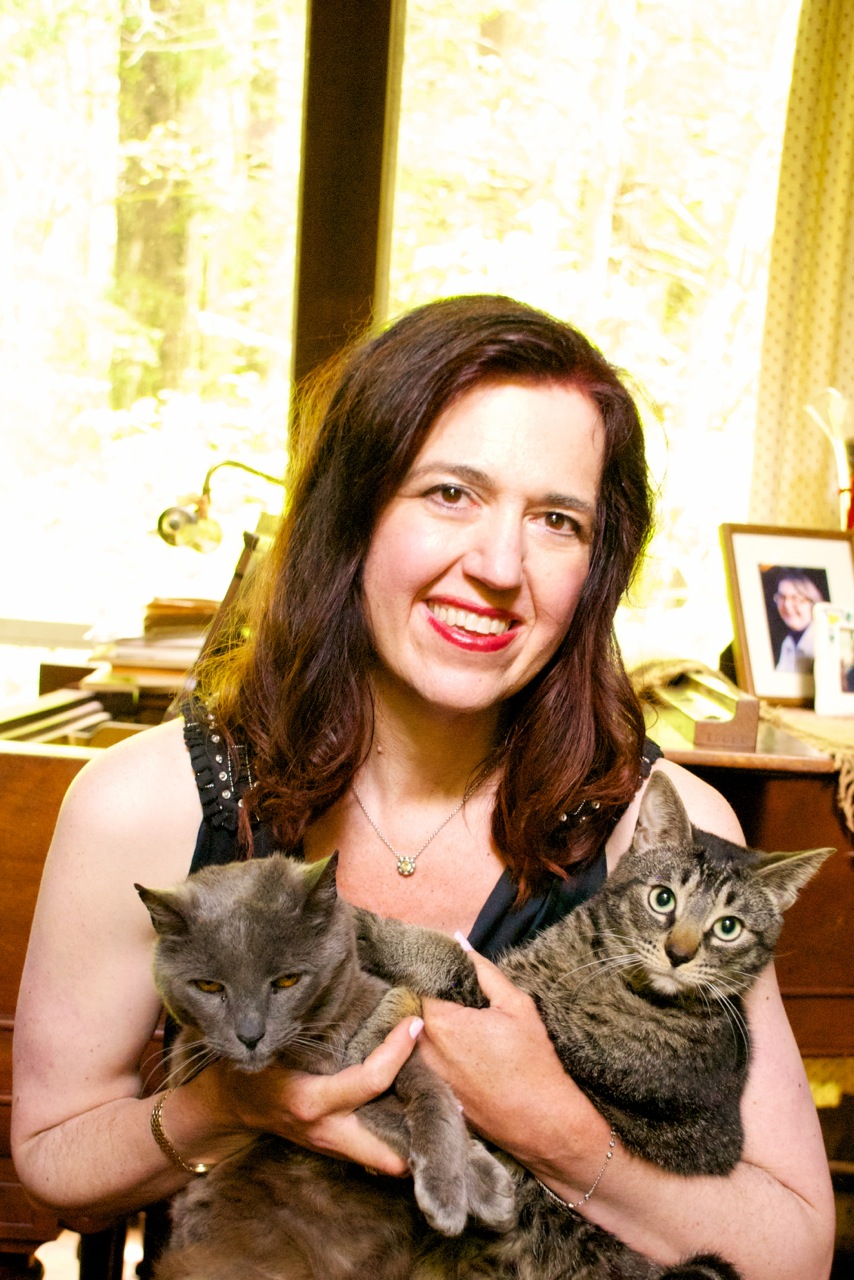
03_Becca Syme

R.L. Syme works at a youth theatre, teaching kids performing arts and musical performance classes/camps when she’s not writing. Otherwise, she’s putting her Seminary degree to good use writing romance novels. Let not all those systematic theology classes go to waste…

For more information please visit R.L. Syme’s website and blog. You can also connect with her on Facebook, Twitter, and Pinterest.

Virtual Book Tour Schedule

Wednesday, May 14 Spotlight & Giveaway at Passages to the Past

Thursday, May 15 Review at Bibliotica

Monday, May 19 Guest Post & Giveaway at Susan Heim on Writing

Tuesday, May 20 Review at A Bookish Girl (The Outcast Highlander)

Wednesday, May 21 Review at A Bookish Girl (The Runaway Highlander)

Thursday, May 22 Interview & Giveaway at A Bookish Girl

Friday, May 23 Guest Post at Layered Pages

Monday, May 26 Review at My Not So Vacant Bookshelf

Tuesday, May 27 Review at So Many Books, So Little Time

Thursday, May 29 Guest Post at Historical Fiction Connection

Friday, May 30 Review at Lily Pond Reads Review at From the TBR Pile

Monday, June 2 Review at The Mad Reviewer Review at Bibliophilia, Please

Tuesday, June 3 Review at The Most Happy Reader

Wednesday, June 4 Interview at The Most Happy Reader

Thursday, June 5 Review at A Bibliotaph’s Reviews

Friday, June 6 Review at Historical Fiction Obsession

Monday, June 9 Review at Svetlana’s Reads and Views
Wednesday, June 11 Review at Fic Central

Thursday, June 12 Review at Reviews by Molly Interview at Books and Benches

Friday, June 13 Review & Giveaway at To Read or Not to Read

04_The Runaway Highlander_Tour Banner_FINAL

Interview with Author Teresa Grant

TracyAuthorPhoto5.16.13

Teresa (Tracy) Grant studied British history at Stanford University and received the Firestone Award for Excellence in Research for her honors thesis on shifting conceptions of honor in late fifteenth century England. She lives in the San Francisco Bay Area with her young daughter and three cats. In addition to writing, Tracy works for the Merola Opera Program, a professional training program for opera singers, pianists, and stage directors. Her real life heroine is her daughter Mélanie, who is very cooperative about Mummy’s writing. Tracy is currently at work on her next book chronicling the adventures of Malcolm and Suzanne Rannoch.

Stephanie: Hello Tracy! Thank you for visiting Layered Pages again for a nice chat. Today I would like to talk a little about your book, The Berkeley Square Affair. Will you please tell me about your story?

Tracy: The Berkeley Square Affair opens in late November 1817 with my protagonists, Malcolm and Suzanne Rannoch, settled in London and theoretically retired from the espionage game, though even they know they can’t really leave it, and Suzanne is still haunted by the secrets she is keeping from her husband. Late one night, their friend, playwright Simon Tanner, climbs through the library window of their Berkeley Square house. Simon is bringing them a manuscript that appears to be an alternate version of Hamlet. He was attacked on his way to their house by men hired to recover the manuscript. For Malcolm and Suzanne a lost Shakespeare play is like touching Excalibur, but it soon appears the manuscript may also have more recent secrets encoded in its pages.

Stephanie: Malcolm and Suzanne face many dangers. What is their closest call in this story?

Tracy: Probably danger that is more psychological than physical. Malcolm learning that Suzanne was a Bonapartist spy during the Napoleonic Wars and working against him. It shakes their partnership to the core.

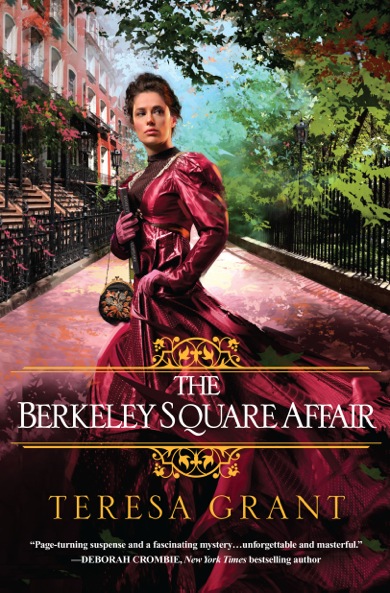
the berkeley square affair

Stephanie: Describe Malcolm in five words for me.

Tracy: Honorable spy in dishonorable game.

Stephanie: What are Suzanne’s strengths and how does she use them in helping people?

Tracy: Suzanne is very good at playing roles. She’s played one for her entire marriage to Malcolm, while at the same time in some ways she is more able to be herself with him than with anyone else. She is able to change roles quickly in the course of an investigation, whether subtly by shifting from political wife to mother of young children or more dramatically by donning a disguise. She has a knack for getting people to confide in her. She also has nerves of steel and is excellent at picking locks, both of which come in handy

Stephanie: Will there be another story involving Malcolm and Suzanne?

Tracy: Yes! I’m working on the next book in the series which takes place a few months after The Berkeley Square Affair and involves Laura Dudley, governess to the Rannoch children. Laura is found holding a gun beside the body of a duke she seemingly did not know. Malcolm and Suzanne are still dealing with the revelations in Berkeley Square and how their marriage and views of each other have shifted.

Stephanie: What advice could you give to writers on how to keep the suspense in a story?

Tracy: Try to put a reversal -at the end of each chapter.

Stephanie: Now let’s talk about your writing process a bit. Do you work with outlines or do you just write?

Tracy: I lay out my story on index cards (I used to use actual cards, now I use the corkboard in Scrivener). With Scrivener, I find I can start writing as I plot, because I can write scenes out of order. I always layout some of the plot and the major turning points before I start writing, but then I can begin to write scenes I know I will need and move them around as I work out the rest of the plot. I do multiple drafts.

Stephanie: Do you use visuals when writing? Like pictures to inspire you? Or do you listen to music, like some writers do?

Tracy: Yes to both! I find “casting” actors as my characters really helps me not just with how they look but with mannerisms, voice patterns, etc… I even use actors as images for real historical figures in my books. When I was writing Vienna Waltz, I find that really make the historical figures like Talleyrand come to life. I also look at a lot of pictures of settings. And I love to listen to music – usually classical (a lot of opera) and film scores along with some musicals.

Stephanie: How often so you write and how many words do you write at a time?

Tracy: I try to write every day or at least five days a week (some of those are weekend days), and I try to write at least 1000 words a day. A blank computer screen can be daunting, so when I sit down I tell myself I just have to write 100 words. Then I can take a break and look at Facebook or check email. I can pretty much always come up with 100 words. Then a quick break, then another 100. By the time I get to 400 or so I’m usually on a role. Breaking it up like this is also helpful for writing with a young child (my daughter is currently two and a half). I do work in bits and pieces at the play park, in a café, while she naps…

Stephanie: Now l have a question about reviews. What are some of the nicest things people have said about your books? What are some of the negative and how has that impacted you?

Tracy: One of my favorite reviews said my book read like a combination of Jane Austen and Len Deighton, which was so perfect because those were two inspirations for the series. I’ve also had some references to The Scarlet Pimpernel, another inspiration. I love it when reviewers enjoy the characters and the twists and turns of my plots. I try not to pay attention to the negatives because not every book will be to everyone’s taste and I need to focus on telling the kind of stories I like to tell in the best way I can.

Stephanie: Is there a message you would like to give to your readers?

Tracy: I’m so grateful to the readers who have taken Malcolm and Suzanne and their friends and family to heart. The support of those readers means to world to me – I love sharing these characters and the world I’ve created for them. And I love the fact that new readers are discovering the series with each book. Hearing from readers really can keep an author going on those days when (even 100 words at a time) the blank computer screen seems overwhelming.

Stephanie: Where can people buy your book?

Tracy: They should be in Barnes and Noble and other book stores and are also available on line through Barnes & Noble, Amazon, Indiebound IBooks, etc…[links are on my website if you can pull them or just refer readers there].

Stephanie: Thank you, Tracy!

Tracy: Thank you so much, Stephanie, for having me! It’s a treat to get to talk about my books!

Interview with Author Judith Arnopp

Judith Arnopp

In 2007 Judith Arnopp graduated from the University of Wales, Lampeter with a BA in English Literature and a Masters in Medieval Studies; she now combines those skills to write historical novels.

Her early books; Peaceweaver, The Forest Dwellers and The Song of Heledd concentrated on the Anglo- Saxon/ medieval period but in 2010 she published a short pamphlet of ‘Tudor’ stories entitled, Dear Henry: Confessions of the Queens. Some people loathed it but many loved it and she received endless requests for full length ‘Tudor’ novels.

For a while Judith buried herself once more in study, refreshing her already extensive knowledge of the period. The result was The Winchester Goose, the story of a prostitute from Southwark called Joanie Toogood whose harsh existence is contrasted with that of Henry’s fourth and fifth wives, Anne of Cleves and Katherine Howard. The Winchester Goose is a multi-narrative illustrating Tudor life from several, very different perspectives; a prostitute, a Spy, and a Lady-in-Waiting at the royal court.

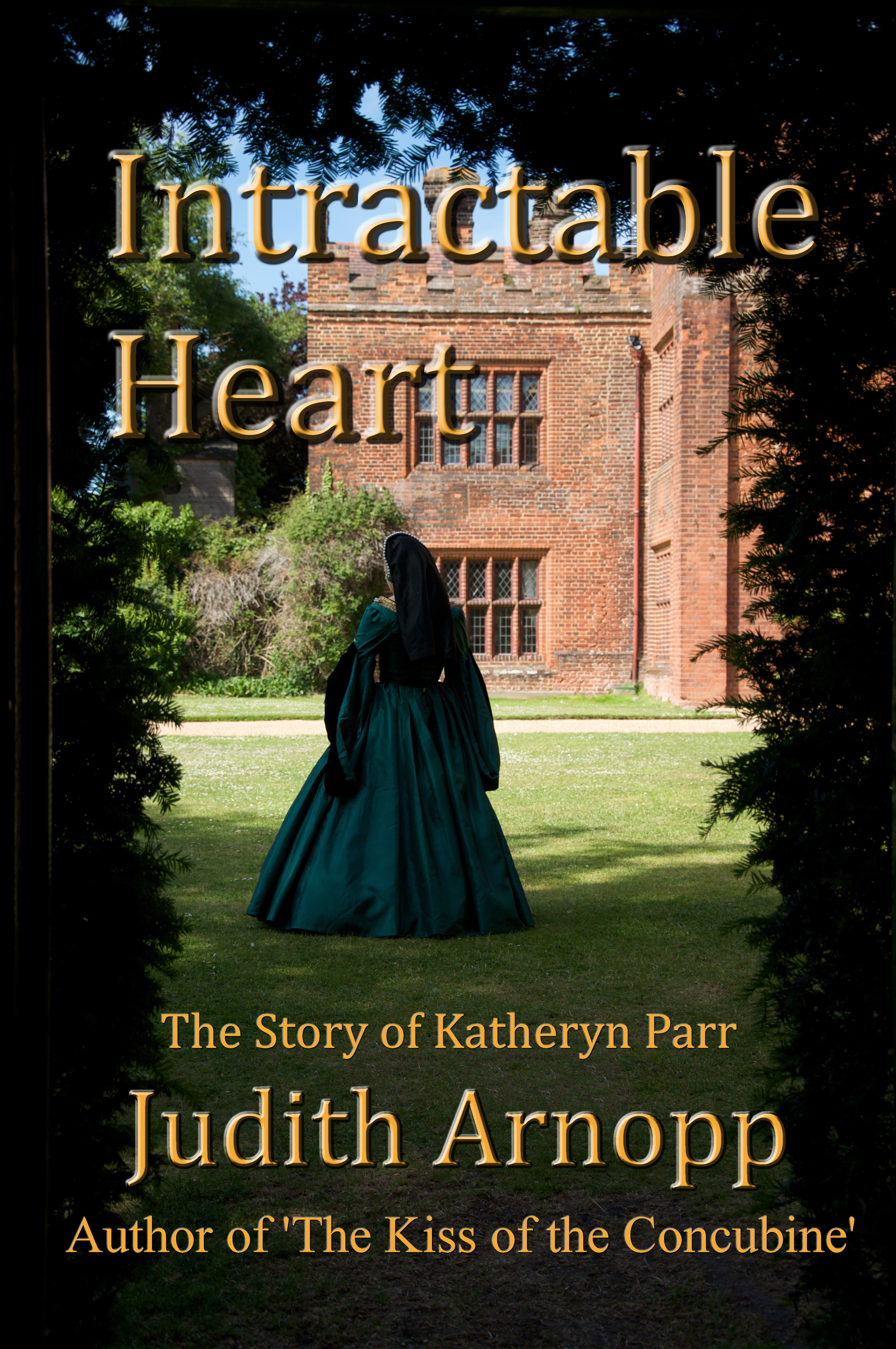
Judith’s next book The Kiss of the Concubine details the life of Anne Boleyn, told in the first person- present tense, the story takes you to the very heart of England’s most talked about queen. She is currently working on a third Tudor novel Intractable Heart, the tale of Henry’s sixth and last wife, Katherine Parr.

Judith also blogs about the Tudor period, both on her own blog-page and on the English Historical Fiction Author’s website. Her work reaches a world-wide audience and her following is steadily increasing.

As a self-published author Judith maintains direct control of her work and avoids the hassle involved with agents and publishers. Self-publishing speeds up the process but accuracy and attention to detail is paramount. Her small team is made up of three proof readers, an editor, and a cover designer all of whom work with Judith toward a finished product that is as polished as they can get it, but still they seek ultimate perfection.

Stephanie: Hello Judith! Welcome to Layered Pages and thank you for chatting with me today…I think it is fantastic you have been writing stories that take place during the Tudor era. My interest lie in that area currently and your latest book, “Intractable Heart” looks fantastic! Please tell me about your story?

Judith: I have tried to imagine how it might have felt to be a woman married to Henry VIII. With five of Henry’s ex-wives before her, Katheryn must have been all too aware of what becoming queen might entail yet she faced it bravely. She put aside her own desire to marry Thomas Seymour and instead married an ageing, cantankerous and dangerous man. She injected all her energies into becoming a good wife to Henry and a good Queen Consort for England and I think she did amazingly well. I wanted to illustrate that. I am not really interested in the rich trappings, the glitz and glamour of being royal; I like to strip that all away and reveal the person beneath, her thoughts, feelings, and desires. I hope I have managed that with Intractable Heart.

Stephanie: Next to Katherine of Aragon, Katheryn Parr is one of my favorites of Henry VIII wives. What are some of the misconceptions people have about her?

Judith: While I was writing The Kiss of the Concubine I couldn’t help but be drawn into reading about the other wives. Of course, I knew about Katheryn Parr from my student days and was surprised to discover she wasn’t the placid nursemaid type figure that she’d been depicted. The woman I read about at school entirely lacked the vitality of everyone’s favourite queen, Anne Boleyn, but the deeper I looked into Katheryn’s life, the more I liked her.

She was much younger than I’d thought, only thirty six when she died. She was also a strong woman and Henry respected her enough to set her up as regent over England when he went to war with France. Katheryn also was the first English queen to become a published writer; she wrote two books on religion and the church and was a strong supporter of the reformation. The title Intractable Heart is a phrase taken from her book Lamentations of a Sinner. Another aspect of her character that really stands out for me was her ability to ‘manage’ Henry.

Judith Arnopp latest book

Stephanie: As your story opens, Katheryn and her step children are held hostage at Snape Castle. What are some of the hardships she had to endure during her confinement?

Judith: To be perfectly frank, we don’t really know very much about it. History tells us there was a siege at Snape while she and her step-children were in residence but few written details of it remain. I had to research other recorded instances to learn of the deprivations and suffering of siege warfare. There were many instances of violence but we don’t know that anything like that occurred at Snape. That is my invention, as a writer of fiction I have to include some fictionalised events to enrich the story and to illustrate character development. In this case I was creating an answer to some of the mysteries of Margaret Neville’s life. As a girl she was betrothed to Ralph Bigod whose father, Francis, was hung in the aftermath of the Pilgrimage of Grace. She was never betrothed again, or married and she died quite young of an unspecified illness. I came up with my own fictional ideas as to why that might have been.

Stephanie: Treachery ran rabid in the Tudor court, what is the one thing that made Katheryn different from the other queens?

Judith: Her intelligence I think, although I don’t mean to say that the other wives were thick. I alluded earlier to Katheryn’s ability to ‘manage’ Henry, and she was the only queen to wriggle out of arrest and possible execution. A warrant was written out and signed by Henry but she got wind of it and managed to see the king before the arrest could be made. She seems to have sweet-talked her way out of it, and when Wriothesley and the guard came to take her to the Tower, Henry sent them about their business and her life was spared. I think Katheryn had the ability to keep her emotions in check and maintain a cool head in a heated situation.

Stephanie: Many have different opinions on Thomas Seymour. Whether they like him or not. What are your personal opinions of the kind of man he was?

Judith: I have a soft spot for Thomas, it probably shows. I think, as far as I can ascertain, Seymour wasn’t as bad as he was painted. After his execution there was such a public outcry that the council had to issue defamatory statements to convince the people that his death was deserved. So anything written after his death needs to be taken with a pinch of salt.

I think he probably had a good dose of ‘second son syndrome’ and was jealous of his brother’s power. He was so determined to get that which he didn’t have, that he failed to appreciate what he did possess. Lord High Admiral is not something to be scoffed at and he had manors and lands a plenty. It seems he was never satisfied and continually strove to climb higher and become ever richer and more powerful.

Whether he loved Katheryn or not is open to debate. He mourned her death and went a little crazy afterwards. His alleged relationship with Elizabeth is no worse than that of any other extra marital affair. I think we have to be careful not to judge him by modern day standards and remember that it wasn’t child abuse; Elizabeth was of marriageable age. His crime was messing with a royal princess; she was too close to the throne. I tend to agree with Elizabeth’s summing up of Thomas Seymour: ‘a man of great wit and very little judgment’, if indeed, she ever actually said that.

Stephanie: Katheryn’s work was published and she very devout in her faith. Is her work available today to the public? And what can we learn from her?

Judith: I know some of it is available because I have a copy of Brandon G. Withrow’s book, Katherine Parr: a guided tour of the life and thoughts of a reformation queen. It has excerpts and some insightful notes on her beliefs. Most of it is pretty dry reading but I think it is quite revealing of her opinions and the inner workings of her mind. If nothing else, reading her book (or skimming if I am honest) did provide an excellent and very personal title for my novel.

Stephanie:What was Henry’s daughter, Elizabeth’s relationship with Katheryn really like? I hear so many different opinions.

Judith: Well, we can never be entirely sure but I think it was very good. All Henry’s children spoke well of Katheryn and illustrated love and a consideration that there was no need to express if they hadn’t wished to. There were many letters and gifts exchanged, all of which illustrate a strong bond. There was a cooling off between Katheryn and Mary due to religion and the speed with which she remarried after the king’s death but they were reconciled later. With Elizabeth in particular, especially if the reports of her and Thomas Seymour are true, she seems to have been particularly close. We don’t know what was said in private but after Elizabeth was sent away from Chelsea they continued to communicate regularly, there doesn’t seem to have been a major breach. In my opinion this again shows she was a strong woman, able to rise above such things, or perhaps able to understand that Elizabeth was young and vulnerable. It seems to be Thomas that she was not able to wholly forgive.

She educated Henry’s children, finding eminent tutors for Edward who leaned to toward Lutherism. She tried to get Mary change her traditional methods of worship but didn’t push her. She also took Henry’s niece and Seymour’s ward, Jane Grey, under her wing. But, most interestingly of all, Elizabeth was with Katheryn during the regency and it may have been the queen who showed the young Elizabeth that women could rule alone in a world of men. Something which would stand her in very good stead.

Stephanie: What were some of the influences Katheryn had over Henry that his other wives didn’t?

Judith: She read to Henry, and soothed him when his leg was playing up; that much is true although she would never had changed his dressing or put salve on his wound as I have read in some novels. I think her ability to take his mind from his problems was her greatest influence over him.

She was also very clever. When her life was on the line, instead of weeping and wailing or tearing out her hair, she outwitted him. Accused of trying to instruct the king, she argued that on the contrary she had been trying to take his mind off his painful ulcer. The next time Henry tried to trick her into argument she claimed that, as a woman, she was in no position to argue theological topics with someone so obviously her intellectual superior. Very shrewd move.

Also, instead of resenting his children, she embraced them and showed him that, actually, the family he already had was made up of three rather brilliant people. Her influence on them was much greater than she is given credit for. In their later years they may have displayed what we see today as tendencies toward megalomania but they were monarchs, and Tudor monarchs at that. We shouldn’t judge them.

Stephanie: What is up next for you?

Judith: A holiday I hope. Even just a home break from work for a short time. I hadn’t intended to begin writing Intractable Heart until this summer but when our house sale fell through in the middle of last year, I was so miserable I buried myself in work without a proper rest after publishing The Kiss of the Concubine. I am due a lovely long luxurious break but I am sure while I am taking it I will be plotting. I have thought about Elizabeth of York and the Perkin Warbeck affair …but time will tell.

Stephanie: How has your career as a self-publishing author been and what advice could you give to others who are thinking of taking this choice in how they publish their work?

Judith: It has been hard work but it certainly got easier once I stopped looking for agents and publishers. I had an agent for a while but they all want to change you into a commercial entity. I don’t want to be a puppet; I don’t write to make huge sums of money, I just want to make a living doing the thing I love to do for the people who love my work. I like to keep it real. For me, by far the hardest thing is the marketing. I am naturally very shy and to push my work under people’s noses and make them read it is the most difficult thing ever.

Stephanie: Is there a message you would like to give to your readers?

Judith: Read an independent author, even if it is only once a month. Give them a chance. Read the free sample on Amazon before you buy it, what is there to lose? Maybe start off with trying one of mine. J

Stephanie: Where can readers buy your book?

Judith: Amazon is the best place to start, or direct from the FeedaRead website. Since I have a great regard for trees my books are print-on-demand and also available on Kindle (for a much lower price.)

Stephanie: Thank you, Judith! It has been a pleasure chatting with you today.

Judith: Thank you for having me, Stephanie, I hope we can do it again soon.

Amazon links to, “Intractable Heart.”

UK Link

US Link

Judith Arnopp’s published work includes:

Peaceweaver

The Forest Dwellers

The Song of Heledd

The Winchester Goose: at the court of Henry VIII

The Kiss of the Concubine: a story of Anne Boleyn

Dear Henry: Confessions of the Queens

A Tapestry of Time

Intractable Heart

Other Links:

Website

Blog

Amazon Author Page

English Historical Fiction Authors

Interview with Author Pauline Montagna

slave_cover

Pauline Montagna was born into an Italian family in Melbourne, Australia. After obtaining a BA in French, Italian and History, she indulged her artistic interests through amateur theatre, while developing her accounting skills through a wide variety of workplaces culminating in the Australian film industry. In her mid-thirties, Pauline returned to university and qualified as a teacher of English as Second Language, a profession she pursued while completing a Diploma of Professional Writing and Editing. She has now retired from teaching to concentrate on her writing. As well as The Slave, she has published a short story collection, Suburban Terrors.

Her website

Stephanie: Hello Pauline! Welcome to Layered Pages and thank you for chatting with me today. Please tell me a little about your book, ‘The Slave’?

Pauline: ‘The Slave’ is an historical romance set in fourteenth century Italy, the story of Aurelia, the sheltered daughter of Francesco Rubbini, a rising merchant with political ambitions. One day he returns from a buying trip to Venice with Batu, an Asian slave boy to whom Aurelia is inexorably drawn. In a bid to win a seat on the city council, Rubbini gains the patronage of the aristocratic de Graziano family by negotiating a lucrative marriage between Aurelia and their eldest son, Lorenzo, a man with a dangerous reputation. Batu insists on joining Aurelia in her new home for her protection, but his presence rouses violent passions in Lorenzo that Aurelia cannot understand, and which bind the three of them in an inescapable triangle of love and hate.

Stephanie: What made you choose fourteenth century Italy as your time period and place?

Pauline: If you had all the time in the world, think of all the stops you would love to make as you travel from Florence to Venice – Siena, Milan, Mantua, Bergamo, Verona, Padua, and so many more. These were once independent, democratic, mercantile city states which flourished from as early as the eleventh century. Unlike the political and economic basket case that Italy is today, back then it led the world and laid the foundations for the flowering of the Renaissance. I studied this period in university and it made me proud to be Italian.

However, this dynamism came at a price. Throughout this period, the city states themselves were volatile places. The towers of San Gimignano weren’t built for aesthetic reasons, but as defences against enemy families. Families fought against families, cities against cities. However, with their limited populations, the city states didn’t have the resources to support full-time armies so they hired mercenary armies. Before too long the mercenary leaders were fighting on their own account. By the fifteenth century, most of the city states had been taken over by one petty tyrant or another, but it was these petty tyrants who became the patrons of the Renaissance.

I chose to set my story in the fourteenth century in particular as it was a time of political and economic upheaval that saw the country ravaged by financial collapse, mercenary armies and the Black Death – all elements I needed to tell my story.

Stephanie: What was your inspiration for this story?

Pauline: I studied the Medieval Italian City States in my second year at university. However, I was actually majoring in French, and in our second year we attended lectures on French literature in French. The lectures were also being attended by a handsome Asian boy. Not actually enrolled in the subject, he sat at the back of the auditorium in regal isolation. I imagined he was an aristocratic refugee, forced out of Laos by the Communists, attending our lectures just to hear a familiar language. Though I certainly fancied him, I was much too shy to approach him, so instead he became fuel for my romantic fantasies where an Asian boy found himself a slave in Medieval Italy and in love with a nice Italian girl like me.

The story remained a fantasy to be revisited now and again over the years, but I couldn’t take it seriously as the basis of a novel until I discovered from a passing mention in Neal Ascherson’s book, ‘Black Sea’, that, in fact, though not as prevalent as it had been in Roman times, a slave trade still existed in this period under the auspices of the Venetian empire. Suddenly it had become plausible that an Asian boy could find himself a slave in Medieval Italy, and my adolescent fantasy could become a credible historical novel.

Stephanie: What are Aurelia strengths and weaknesses?

Pauline: With her sheltered upbringing in which she has been trained to be nothing more than a dutiful wife, Aurelia starts out as a naïve and timid girl. She feels intimidated by her ambitious father and neglected by her distant mother. Her only support is her nurse, Rosetta, who loves her as much as any mother could, but has no say in her fate. However, although she acquiesces to her father’s plans for her, even at an early age, Aurelia displays compassion and a quiet strength and courage. It is this strength and courage which maintains her when she is faced with situations that are frightening and incomprehensible to her in her innocence.

Stephanie: What are some of Aurelia father’s political ambitions?

Pauline: As a self-made man from the peasant classes, Rubbini’s only pathway to prestige and power is by rising up through the ranks of the government of his small city state. However, despite their exclusion from office, the old aristocracy still has the power of influence and patronage, and it is this patronage that Rubbini needs if he is to succeed. Succeed he does, but he finds his duties almost too onerous to bear when the Black Death strikes and his colleagues are loath to do anything about it that might interfere with trade. (Doesn’t that scenario sound familiar?)

Stephanie: What was some of the research involved for your story?

Pauline: As I already had a good grasp of the period from my university studies, most of the research I had to undertake was for specific information as the need arose – such as the Black Death and the events surrounding it, marriage practices, dance, dress, food, hunting, sword fighting, and, of course, Mongolian warriors.

However, it was this research that forced me to kill one of my favourite babies. For some reason, I had named my Asian boy Fet and, of course, over the years I had become attached to the name. However, as I read up about Mongolia I slowly came to the realisation that there was no ‘f’ in their language. In the end, not only did I have to change his name, but while I was at it I decided to change the names of almost all the characters. It called for a very careful and meticulous use of ‘Find and Replace.’

Stephanie: Was there a particular scene you found a challenge to write?

Pauline: The sword fighting scene was quite challenging as I’m not an aficionado of ‘derring-do.’ I not only had to learn the basic principles of fighting with the broad sword, but also try to work out the moves in the fight and then how to describe them in a comprehensible way.

However, by far the hardest scene for me to write was the first sex scene. In my first draft I skirted around the details, but my workshop group wouldn’t let me get away with that. They had waited until Chapter 42 for some action and they wanted more, thank you very much. So they sent me home to do it all again. I remember prowling about the house all afternoon trying to get into the right frame of mind.

Stephanie: What inspires you to write historical fiction?

Pauline: I write historical fiction because I’m inspired by history. I always have been and I can’t really explain why. I could take a punt and say that it’s because I was born in Australia, which has very little history, but my cultural roots are in Italy, which has, perhaps, too much history. I love doing historical research. I love spending time in libraries and reading old books, the older the better. I get exciting by finding odd titbits that I’ve never come across before, or making connections no one else has ever made. And I guess I love it because history is about people, and people are endlessly fascinating.

Stephanie: What advice would you give to someone who wants to write in this genre?

Pauline: When it comes to historical fiction, I’m a stickler for accuracy and authenticity. There are enough gaps in the records on which we can exercise our imaginations without warping the known facts. But accuracy is more than getting the date of a battle correct or the name of a piece of clothing. It’s also about how people thought and behaved.

We cannot impose on the people of the past our own sexual mores because we think restraint is boring, just as we can’t impose our modern attitudes to gender roles because we don’t like the way women were treated back then. If that’s how you feel, stick to writing contemporary romance, or if you must clothe your sexually promiscuous and feisty women in long skirts, be honest and call it Fantasy.

So I would advise someone who wants to write historical fiction to do their research. Go back to the original sources, go to a library and read books. Don’t rely on the internet, and other historical fiction for your information. If you must read fiction, read what was written at the time to get a sense of what your characters actually valued and thought, and not what you wish they did.

Stephanie: Who are your influences?

Pauline: I would say my biggest influence is the historical fiction of Mary Renault. Not only is her writing beautiful in itself, but she enters so thoroughly into the mindsets of her characters that a world completely different to our own seems perfectly natural. I have long nurtured an ambition to write about the Etruscans as well as she writes about the Ancient Greeks. I also love Ursula Le Guin, again for the beauty of her writing and her ability to create in her fantasy and science fiction profoundly real people in a real world. If I could write as well as these two I would die happy.

Stephanie: What book project are you currently working on?

Pauline: At the moment I’m focussing on self-promotion so I haven’t been writing for a while. However, as soon as ‘The Slave’ is properly launched, I hope to get back my writing.

Stephanie: Is there a message you would like to give to your readers?

Pauline: Well, as you did ask, I do have a special offer out now. Join my mailing list by May 31 and get your own free complimentary ebook copy of ‘The Slave.’