H.H. Miller’s Book Blast

Inscription_Cover

Publication: January 9, 2014 H.H Miller Paperback; 278p ISBN-10: 0615944418

eBook; 700kb ASIN: B00HSBNW5Y

The year is 1851 and the Grand Guard is ravaging Mainland. Arrests. Floggings. Swift executions. Twenty-year-old Caris McKay, the beautiful heiress of Oakside Manor, is sent to live with distant relations until the danger has passed. It’s no refuge, however, as Lady Granville and her scheming son plot to get their hands on Caris’s inheritance with treachery and deceit.

Soon, alarming news arrives that the ruthless Captain James Maldoro has seized Oakside and imprisoned Caris’s beloved uncle. And now he’s after her.

Caris escapes with the help of Tom Granville, the enigmatic silver-eyed heir of Thornbridge. But when a cryptic note about a hidden fortune launches them on a perilous journey across Mainland, Caris and Tom must rely on wits, courage, and their growing love for each other if they hope to survive.

Filled with adventure, intrigue, and romance, Inscription will transport you to a historically fictional world you’ll never want to leave.

Buy the Book

Amazon (eBook) Amazon (Paperback) Barnes & Noble

About the Author

H_H_-Miller-Author-300x270

H. H. Miller is the author of the novel Inscription, a historically fictional romantic adventure. In real life, she’s content director at Stoke Strategy, a brand strategy firm in Seattle, Washington, where she specializes in transforming what some might call “boring” technology jargon into compelling, readable, memorable stories. Her favorite escape is Manzanita, Oregon – a place of beautiful beaches, wild storms, chilly nights around the bonfire (even in July), and time to enjoy life with her husband and three children.

For more information please visit H.H. Miller’s Facebook Page.

Book Blast Schedule

Monday, March 31 A Bookish Affair Closed the Cover Mina’s Bookshelf

Tuesday, April 1 Historical Fiction Connection

Wednesday, April 2 Book Nerd CelticLady’s Reviews

Thursday, April 3 Flashlight Commentary

Friday, April 4 The Mad Reviewer Oh, for the Hook of a Book

Saturday, April 5 Pages of Comfort

Sunday, April 6 So Many Books, So Little Time

Monday, April 7 Confessions of an Avid Reader History from a Woman’s Perspective

Tuesday, April 8 The True Book Addict Historical Fiction Obsession

Wednesday, April 9 Broken Teepee

Thursday, April 10 SOS Aloha Caroline Wilson Writes

Friday, April 11 Layered Pages

Saturday, April 12 Susan Heim on Writing Curling Up With a Good Book

Sunday, April 13 Passages to the Past

Enter Giveaway here

47799091-e138-40ca-80ee-573ef0d9f54e


My Guest, Author M.M Bennetts

M.m Bennetts

History, poetry, music and horses probably sums it up.  M.M. Bennetts, although expecting to study piano and music, studied mediaeval history at Boston University and at the University of St. Andrews.

For some twenty years, she was a book critic for the Pulitzer Prize-winning newspaper, The Christian Science Monitor, specialising in history and fiction…She is one of the editors of Castles, Customs and Kings ~ True Tales by English Historical Fiction Authors, as well as the author of two novels set amidst the turmoil of the Napoleonic wars:  May 1812 and Of Honest Fame.  And a third novel, Or Fear of Peace, also set in the period, is in the works…

She lives in southern England, where it rains a great deal, and she is most astonishingly fond of cakey.  Honestly.  

Stephanie: Hello, M.M.! Thank you for visiting me today on Layered Pages. I am delighted to be chatting with you about your book, Of Honest Fame. I’m currently reading your book and it is not often I read a story that takes place in the time 19th Century. However, I am really enjoying the story and find myself wanting to spend all day reading. Please tell your audience a little about your story.

M.M.: First off, Steph, may I please thank you for having me here today. It’s such a pleasure to be able to talk to you about my novel, Of Honest Fame.

Naturally, I should like to able to say something really winning or impressive here, but that would be complete weasel fur.

I got the images and ideas for the opening scenes years ago, when I was in Paris, having a meal in the large dining room-kitchen of this ground floor restaurant in the Isle de St Louis—which was far from the Paris of cafes.

(Yes, I’m a foodie.)

Then, days later I was in Rye, East Sussex, marveling at the pebbled surface of Mermaid Street, and immersed as ever in the Napoleonic era—which is my specialism. And the opening montage of action and imagery and characters were just there. And I saw it all so vividly. So I wrote it down on the back of several used envelopes and left it to grow.

And grow it did.

There wasn’t a plan. Or a plot—well I did write them and no sooner did I write them and think myself very clever with all my neat tied up ends, than some character or other which I’d not imagined would appear and wouldn’t shut up…so I’d rip up the plan, throw it over my shoulder onto the floor and the dog would, er, eradicate it.

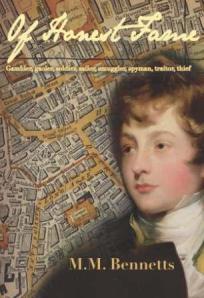
And then I found the title, or the title found me in that verse of Byron’s: “The drying up a single tear has more of honest fame than in shedding seas of gore.” And I thought, whoa! Must have that. And it such an amazing question—what is honest fame? Particularly in an age which glorified the military machine?
Oh Honest Fame book cover

Stephanie: What was your inspiration for this book and what fascinates you most about this time period?

M.M.: Well, I’ve kind of given you a bit of the inspiration already…but to follow on from that: Again without wanting to sound completely up myself, I’ve always loved those novels where you don’t really know who the good guys are, you have to work that out—Dickens was so great at that in A Tale of Two Cities and Our Mutual Friend. And I just love that ambiguity. So I wanted to write that evolution of character, but for several characters…

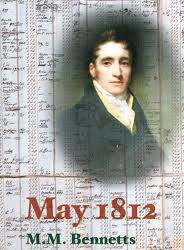
But this is where it gets a bit funny. When I was researching the previous book, May 1812, I had come across this blank denial that there even had been British espionage at this time. And I was always shaking my head and thinking, “Funny! That doesn’t seem possible.” Because I knew that the French secret police were second to none. So I was really expected to believe that we were here, saying, “Oh no worries. We’re English gentlemen, we don’t behave like that.” Hello? I don’t think so.

And other people seemed to have reached a similar conclusion. Hence books and research started appearing which proved we were up to it all the way to the back teeth. Honestly, the research unfolded more than I could ever have made up in my wildest dreams. And as it did, well, the book kept reflecting all of that. It couldn’t help it.

But what has become so inspiring and fantastic to me over time is the quality of the men who joined forces to defeat one of the most powerful and effective military states—Napoleon and Napoleonic France. He was a military genius—and his adversaries were most of them pretty mediocre fellows. They were indifferent kings and emperors, he scared the buttons off their breeches! They weren’t financial wizards, their governments despaired over them, they had rubbishy weapons, and they didn’t have a clue. But they pulled their boots on, you know, and they did the hard thing, and they defeated him. I admire that!

Stephanie: What first sparked your interest in studying Napoleonic Europe?

M.M.: I was a mediaevalist and I strayed—though I had previously studied the French Revolution, but kind of in general. I lived on an ancient estate near St. Andrews. And the big house was one of the first by the brothers Adam and I was entranced by the architecture. And then the art and the music sucked me further in…and it happened.

I just kept getting drawn down these research aisles and I have absolutely no control over following unanswered historical question. I just can’t help myself; I have to know the answer. I have to understand.
May 1812 Book Cover

Stephanie: How does Lord Castlereagh chose his agents to spy for him and what is the background they come from?

M.M.: Without meaning to sound glib or cagey, it just seems to have happened based upon whom one knew and whom one trusted.  So there’s lots of nepotism–Lord Castlereagh relied heavily on his younger brother, Charles Vane Stewart, who was an aide to Wellington for a long time in the Peninsula–and it was Charles who would write to his brother telling him exactly what Wellington thought and what problems he was honestly dealing with, rather than what the ‘official’ version was. Later he sent his brother, Charles, to the Allied command in 1813 in Prussia for the same reason.

There was also a thing called the Irish Office, which had initially been set up to deal with the French-supported insurgencies in Ireland which Castlereagh had been instrumental in crushing back at the end of the 18th century.  And this was being run by one Sir Charles Flint.

However, long after the French threat seems to have been quelled in Ireland, it was the Irish Office who were running the surveillance of French agents in Britain.  And Flint was occasionallly sent abroad with huge amounts of dosh for bribery and all that–but this really offended many of the Tory high command, because how could a chap without a title be trusted?  I’m not kidding.

So whilst there are those extra-ordinary spymasters like Sir Joseph Banks, it was very much a pick your own, pay your own, have massive funds to bribe your own, do-it-yourself amongst those you trusted.

The Royal Navy were up to their ears in it, as was the Foreign Office, and also the Post Office in Lombard Street, at the time, was opening any post that had any hint of a foreign author…and copying the letter and scrutinising it–so they were aware of anyone in the emigre circles countrywide who might have Napoleonic sympathies.

But it also frequently went hideously wrong.  I should just mention that, here

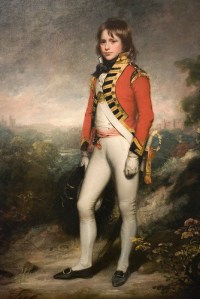
Stephanie: Could you give me a little background about the, “boys,” life and how he became a spy?
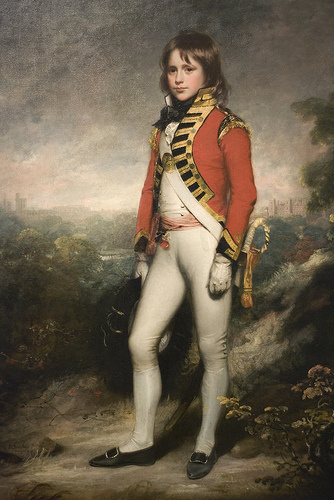
boy soldier

M.M.: Well, I shouldn’t.  That’s part of the mystery-thriller, isn’t it?  And if I told you, it wouldn’t be a mystery…though I trust it’s slightly clearer than pea soup by the end of Of Honest Fame.

The one thing I will say is that our ideas about childhood had all been swept away by this war of wars.  They sent boys to sea as young as ten–and that wasn’t considered abuse, that was considered he had a bed to sleep in, a trade and was fed daily.

The boys were sent into the army as drummers and fife-players and they were often targeted deliberately by the French marksmen, because they kept the troops marching forward or carried the colours.  And being an orphan and fending for oneself was sadly normal in these lands where war was wiping out the adult population–and that’s very true of London during the period too.  We think of all those street urchins in Dickens.  They were a perennial feature of London–street Arabs is what they were called through the ages.

Stephanie: Somehow I knew you would say that! One must try! The boy is such a wonderful and complex character. What are the key elements of history you like to include in your stories?  

M.M.: Total immersion.  We like, as historians, to put our subjects in little boxes.  We have music history, we have art history, we have political history, we have economic history, we have royal history, we have military history, we have literature, we have popular culture… But have you ever noticed, we don’t live like that?  Real life is a mushed up mess.  It’s all of that put in a blender and turned into a life smoothie and it all slops together, sometimes well, and other times, yikes!

And that’s what happens as I’m writing.  It all of it comes pouring out.  It’s not neat, it’s not necessarily tidy.  It’s all of it.

So when I found that Prussia had been ravaged by the French troops in the months before the Russian campaign of 1812 that had to go in.  I was astonished by what I read and learned from the eye-witness accounts.  It’s life–all of it–rambunctious, honourable, messy, good, colourful, aching, terrible, raw and beautiful.

Stephanie: I agree with you 100%! History is so fascinating and when you write about it, there is so much to explore and talk about. I have admiration for your knowledge and love for history. What was some of the research involved for this book?

M.M.: Oh my giddy aunt, there was so much! I am such a pestilential terrier.

If I’d had any idea what I was getting into when I started, I would have headed for the hills, I swear.   Everything led to something else. And I cannot help myself. So even though I’d probably read upwards of 50-150 books before I got started, done site visits, studied the historic maps, even as I was working on it, I kept coming up against walls. And I have to know and understand everything!

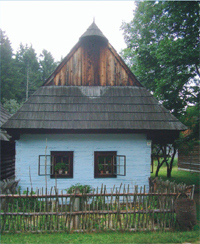
Like what were peasant’s houses like in Bohemia in 1812? Well, I needed to know to write about it, you see? And turned out to be unbelievably tricksy! Because most of those ancient homes had been destroyed by Communist occupation—and you’ll never believe what happened! I was stuck in Bath, with my train canceled and canceled for three hours, and got talking with a woman—the way one does—and she turned out to be an architect from Slovakia. I told her my difficulty eventually—as we were squashed like lemmings up against the wall of the train that eventually did leave—and she found me pictures of traditional buildings, told me about the components of the unusual whitewash they used, everything! It was amazing and wonderful!

And I was so chuffed, because no matter what–I must get everything right for you, if I can. That’s my job! To write it so clearly, so immediately, that it’s not that you’re reading—no, you’re in the room! You can taste it, smell it, live it.
dedinsky20dom_1

Stephanie: Was there a particular scene in your story that was a challenge to write?

M.M.: There were masses. I was completely gobsmacked and daunted.

On the research journey I had discovered so much sadness, so much devastation—we don’t automatically associate historic wars and heroic Napoleonic uniforms with a massive refugee problem for example—but with war, you have refugees. And with a whole Continent at war, that’s one big refugee crisis—they hid in the forests and woods and mountains, in bands, whole villages of people together…

I mean, every town or village that had a battle in it, that whole village or town, all of those people would be refugees. But 200 years ago, they didn’t count them. And I wanted you to see, but to see with your heart. So that was often emotionally tough. But equally, you know, I wanted to write love amongst this ruination, love, transformation, the drying of those tears.

Stephanie: Is there one thing you learned while writing your book? (About yourself or your writing.)

M.M.: Ha ha ha! That however I may delude myself, I am not in charge of the process! In order to write these things, I have to get so quiet, and just listen. I must get myself and my snark out of the way, and let these characters and these ideas and the poetry of language unfold themselves to me. And I write. I listen, I listen, and I write and rewrite and rewrite until I’ve got it perfect.

And there are few lengths to which I will not go to get it right. And if that means, as it did, that a scene I had set in Vienna–I had done ALL the research. I even knew the actual pattern and colour of the curtains in the room. All of which had to be chucked because the fellow wasn’t in Vienna at the time–he was in Linz about which I knew absolutely nothing not even where it was—and Vienna hit the floor to be Jack Russelled.

Stephanie: How long have you been a writer and when was your first published work?

M.M.: I started publishing poetry when I was a teen, I think.   Some literary magazine stuff. And then I started writing for the Christian Science Monitor in the late 80s, primarily as a book critic.

Stephanie: I noticed in your bio that you are a dressage rider and accomplished pianist. I firmly believe that other than reading, exercise and the arts strengthen the mind as well. Do you feel these activates have helped you with your writing?

M.M.: They both do. The music—well, I’ve played since I was five, so I can’t truly imagine life without it. And I was hooked on Beethoven by time I was eight. So really, I’ve always had my head halfway stuck in his world, so it wasn’t really a switch more of an expansion.

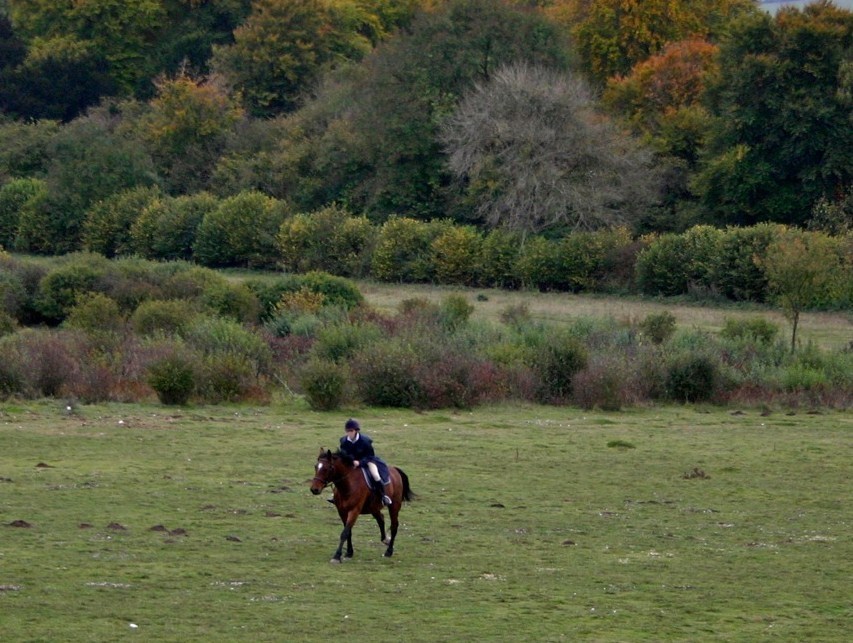
The cross country riding is freedom. I ‘m happiest outdoors (except in the torrential rain).

And to be honest, too, the riding has been quite literally translated onto the page. Anytime you read in a book of mine about a horse, that’s real horse, and a real happening which will have happened to me. But it’s also given me a sense of how slowly life happens in a horse-dependent society, how physically strong these men were who spent 10-20 hours in the saddle; what it’s like to ride through chucking it down rain in a force 8 gale… (Mad! And a little bit grand.)

Stephanie: Are you working on a book project now?

M.M.: I’ve done the research. And have started the next book—which is follow on to Of Honest Fame titled Or Fear of Peace.   (I didn’t mean to. In my tiny furry mind, I had other plans…)

But it’s only fair to say I am the world’s worst starter. I write the beginning. It’s not bad. I rewrite the beginning. I think about it. I think it’s stoopid. And I realise that’s not the beginning. The beginning is earlier. I start again. I write a new beginning. This is much, much better. I hate this one too. And it’s not the beginning. The beginning starts much earlier. So eventually I have a lot of almost the middle, and I’m still working on the beginning.   But—here’s the good news: I do know the ending! Ish.

Stephanie: What advice could you give to an aspiring writer?

M.M.: Learn. Never stop learning. Never stop turning to the greats to learn what they can teach you about plot, structure, style, language, and character, all of it which makes that organic whole of the novel. And learn the rules—the grammar, the punctuation, the hammer and nails of your trade. You can’t build a house if you don’t know how to use the hammer, nails, saw, spirit level and so on. Never stop learning.

Oh, and every novel is different. The question is never how did I do the last one, the question is how do I write this one?

Stephanie: Is there a message you would like to give to your readers?

M.M.: Let me take you there. To 1812. To 1813. To this world I know probably better than our own. Let me take you there.

Stephanie: Where can people buy your books?

M.M.: Everything is available on Amazon, either in the US or the UK. And thank you all so very much. I do hope, more than anything you know, that should you buy the books and read them, that you enjoy them. Because that to me is the world. That is the reason why.

Stephanie: Thank you, M.M. and now that we have had a lovely chat it is time for tea and cake.

Tea with M.m

M.M.: Yes, please. Now what shall we start with, scones with clotted cream and strawberry jam or straight to the cake? Because that is a fine Victoria Sponge on the table…and the St. Clements cake is looking rather more-ish as well.

And thank you very much for inviting me, because I’ve had a smashing time talking with you…

Amazon UK


Amazon US


Book Trailer


Blackwell’s Paradice Book Blast


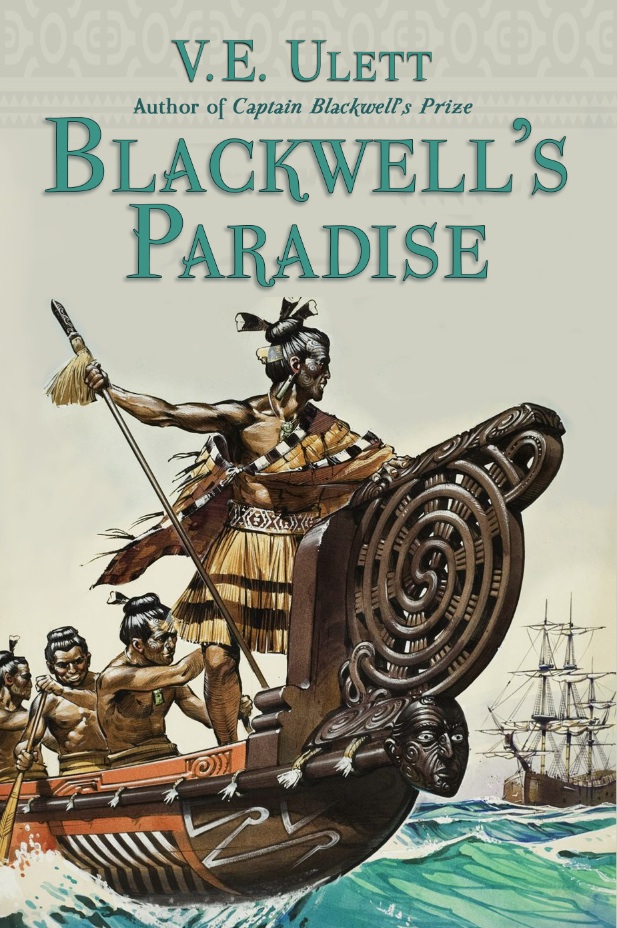
Blackwells-Paradise1

Blackwell’s Paradise by V.E. Ulett

Publication Date: January 8, 2014 Old Salt Press LLC Formats: Ebook, Paperback

Series: Blackwell’s Adventures, Volume II Genre: Historical Adventure/Naval HF

Relive the pleasure of falling into the past with the author of Captain Blackwell’s Prize, in Volume II of Blackwell’s Adventures.

The repercussions of a court martial and the ill-will of powerful men at the Admiralty pursue Royal Navy captain James Blackwell into the Pacific, where danger lurks around every coral reef. Even if Captain Blackwell and Mercedes survive the venture into the world of early nineteenth century exploration, can they emerge unchanged with their love intact. The mission to the Great South Sea will test their loyalties and strength, and define the characters of Captain Blackwell and his lady in Blackwell’s Paradise.

Praise for Blackwell’s Paradise

“Not for the faint hearted – Captain Blackwell pulls no punches! Prepare for a right roaring romp in the company of two of the most captivating characters in historical fiction.” – Alaric Bond, author of Turn A Blind Eye, and the Fighting Sail Series

Buy the Book

Amazon (eBook) Amazon (Paperback) Barnes & Noble (Nook) Barnes & Noble (Paperback) Book Depository iTunes

About the Author

VE-Ulett-214x300

A longtime resident of California, V.E. Ulett is an avid reader as well as writer of historical fiction.

Proud to be an Old Salt Press author, V.E. is also a member of the National Books Critics Circle and an active member and reviewer for the Historical Novel Society.

As the long war in Europe comes to its conclusion, so does Captain Blackwell’s career in the Royal Navy in BLACKWELLS’ HOMECOMING, a story of the dangers and rewards of desire.

Author Links

Website Goodreads Old Salt Press

Enter Book Giveaway Here


The Berkeley Square Affair by Author Teresa Grant

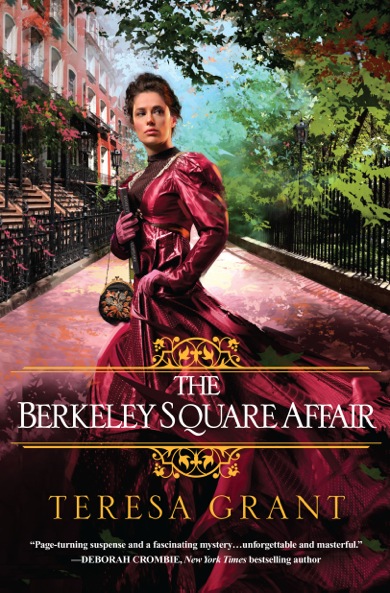
the berkeley square affair

“Page-turning suspense and a fascinating mystery…unforgettable and masterful.”  –Deborah Crombie, New York Times bestselling author

A stolen treasure may hold the secret to a ghastly crime. . .Ensconced in the comfort of their elegant home in London’s Berkeley Square, Malcolm and Suzanne Rannoch are no longer subject to the perilous life of intrigue they led during the Napoleonic Wars. Once an Intelligence Agent, Malcolm is now a Member of Parliament, and Suzanne is one of the city’s most sought-after hostesses. But a late-night visit from a friend who’s been robbed may lure them back into the dangerous world they thought they’d left behind . . Playwright Simon Tanner had in his possession what may be a lost version of Hamlet, and the thieves were prepared to kill for it. But the Rannochs suspect there’s more at stake than a literary gem–for the play may conceal the identity of a Bonapartist spy–along with secrets that could force Malcolm and Suzanne to abandon their newfound peace and confront their own dark past…

Website

5.15.13TracyMelPortrait

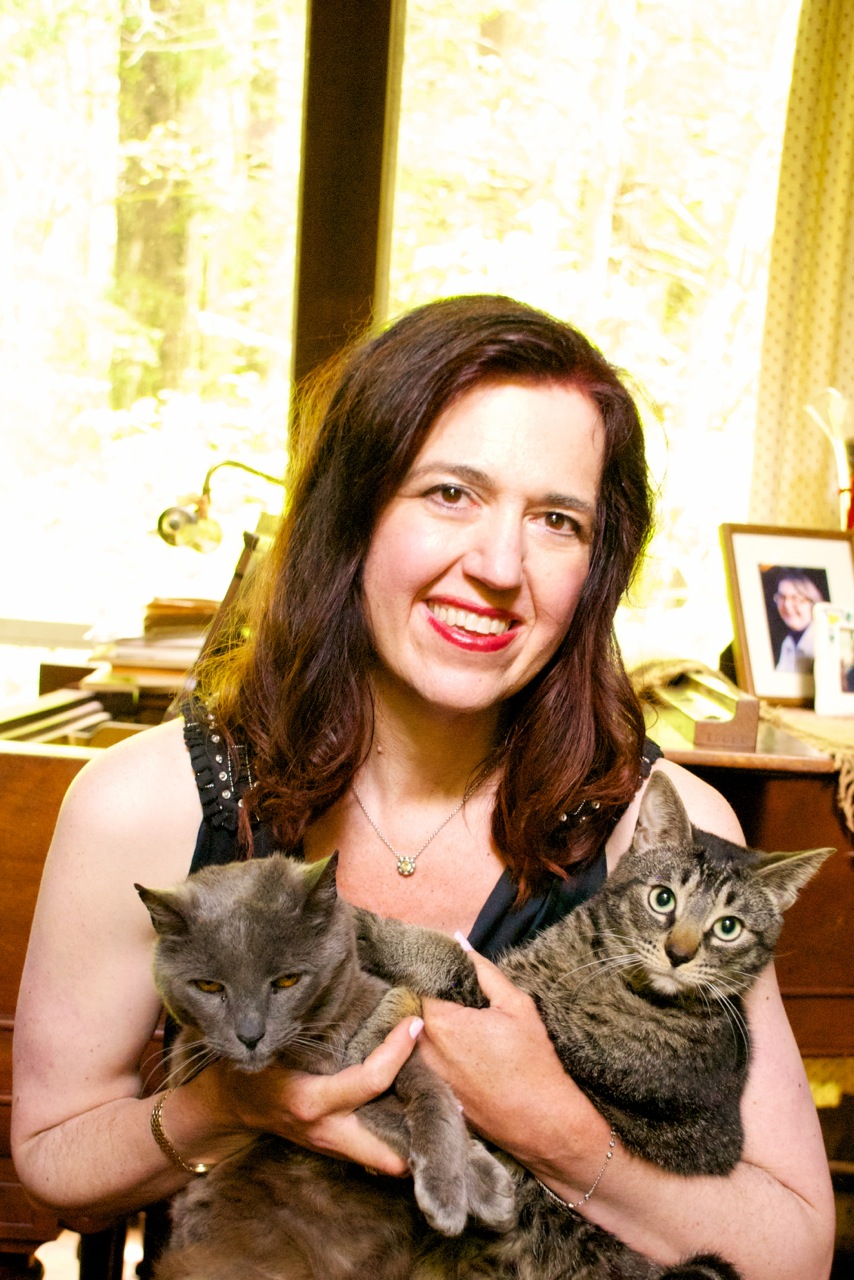
Author Teresa (Tracy) Grant with daughter


Stephanie: Are your characters, Malcolm and Suzanne Rannoch fictional people? In your story, how did they meet?

Teresa: Malcolm and Suzanne are fictional, though many of the characters in the book are real people. In this book, Malcolm and Suzanne have been married for five years. They met during the Peninsular War, when Malcolm, on an intelligence mission in the Cantabrian Mountains, rescued Suzanne who was stranded after her family had been killed in an attack by French soldiers.  At least that’s how it seems. The truth is rather more complicated, and one of Suzanne’s greatest fears is that that truth will come to light…

Stephanie: What do you find most intriguing about the time period the story takes place?

Teresa: I’ve always loved the Regency/Napoleonic era. Reading Jane Austen and then Georgette Heyer began my love of this era. The more I learn about it, the more intriguing I find it. It’s an era on the cusp of change, between the bawdy 18th century and the more restrained Victorian era, between the French Revolution and the industrial Revolution, between the classical and romantic eras in music and art.

Stephanie: What was your inspiration for this book?

Teresa: I often can’t pinpoint the exact moment I got an idea for a book, but in this case I do know.  I was driving with my daughter Mélanie to the birthday party of the daughter of friends who was turning one. At the time, Mélanie’s own first birthday seemed far in the future and she’s now past two, which tells you something about the amount of time between the genesis of a book and ti’s publication. As I drove along winding country roads, I was thinking about Shakespeare, and I suddenly got the idea of how I could incorporate a Shakespeare play into a spy story set in 1817. Using Hamlet seemed singularly appropriate and themes of fathers and sons, lovers who may be working for the enemy, and the younger generation unraveling the secrets of their parents tied into story I wanted to tell about Malcolm & Suzanne.

Author Bio:

TracyAuthorPhoto5.16.13

Teresa (Tracy) Grant studied British history at Stanford University and received the Firestone Award for Excellence in Research for her honors thesis on shifting conceptions of honor in late fifteenth century England. She lives in the San Francisco Bay Area with her young daughter and three cats. In addition to writing, Tracy works for the Merola Opera Program, a professional training program for opera singers, pianists, and stage directors. Her real life heroine is her daughter Mélanie, who is very cooperative about Mummy’s writing. Tracy is currently at work on her next book chronicling the adventures of Malcolm and Suzanne Rannoch.

Stephanie: Be on the lookout for my full interview with Teresa (Tracy) Grant on May 19th here on Layered Pages.

Interview with Ruth Hull Chatlien

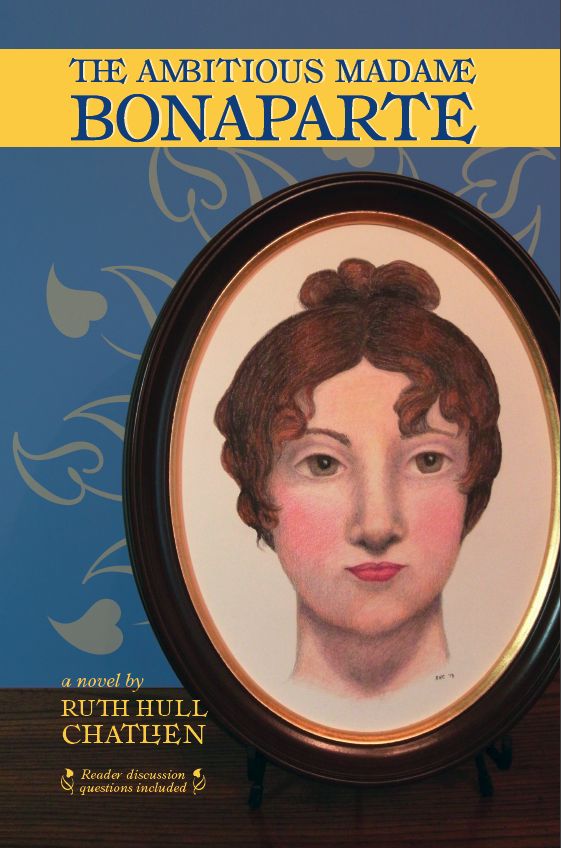
The Ambitious Madame Bonaparte

Book Description:

As a clever girl in stodgy, mercantile Baltimore, Betsy Patterson dreams of a marriage that will transport her to cultured Europe. When she falls in love with and marries Jerome Bonaparte, she believes her dream has come true—until Jerome’s older brother Napoleon becomes an implacable enemy.

Based on a true story, The Ambitious Madame Bonaparte is a historical novel that portrays this woman’s tumultuous life. Elizabeth Patterson Bonaparte, known to history as Betsy Bonaparte, scandalized Washington with her daring French fashions; visited Niagara Falls when it was an unsettled wilderness; survived a shipwreck and run-ins with British and French warships; dined with presidents and danced with dukes; and lived through the 1814 Battle of Baltimore. Yet through it all, Betsy never lost sight of her primary goal—to win recognition of her marriage.

Stephanie: Hello, Ruth! Welcome to Layered Pages and thank you for chatting with me today. What are Betsey’s strengths and weaknesses?

Ruth: I think Betsy’s greatest strength was her incredible determination. She overcame things that might have crushed someone with less fortitude. But as with most people, her greatest strength was also one of her greatest weaknesses. She wasn’t a flexible woman, and she clung to a particular, narrow vision of what her life should be long after most people would have reevaluated their goals.

Stephanie: Historically how does Jerome’s role play a part in Napoleon’s ambitions?

Ruth: To understand the role that Jerome played in Napoleon’s ambitions, it’s necessary to recall that Europe in the 1800s was very different from today. There was no Germany as we know it but rather a number of independent German states. These were part of the Holy Roman Empire, a loose confederation of states in Central Europe that had existed since the 900s. In Napoleon’s time, it included Austria (France’s great enemy) and was ruled by the Austrian emperor, Francis II. Part of Napoleon’s grand design was to woo German states away from the Holy Roman Empire and into a new Confederation of the Rhine—thus strengthening his empire and weakening that of Francis. Napoleon wanted Jerome to aid in this plan by marrying a German princess and becoming the ruler of a German kingdom. After defeating Austria at Austerlitz, Napoleon did succeed in creating his confederation and bringing about the dissolution of the Holy Roman Empire. However, the Germans’ loyalty to Napoleon never ran very deep, and the confederation fell apart after the disaster of the Russian campaign.

Stephanie: Is there a particular scene you found a challenge to write?

Ruth: The shipwreck scene was a challenge because I’ve never lived through anything like that. I read several accounts of shipwrecks—looking especially for incidents caused by ships running onto sandbars—before I felt confident enough to construct the sequence of events.

Stephanie: What was the research involved?

Ruth: I started by reading five nonfiction books about Betsy Bonaparte. I also read biographies of Jerome, Napoleon, Dolley Madison, and the Caton sisters. A number of books helped me acquire information about Baltimore architecture, an excursion to Niagara Falls in 1800, period dress, the War of 1812, and forms of transportation. And I traveled to Baltimore to visit historic homes, Fort McHenry, a 19th century warship, and the Maryland Historical Society.

Stephanie: What do you like most about writing historical fiction?

Ruth: I love finding out more about the context of historical character’s lives and imagining how both the details of their daily routine and the great events of their time affected them. And I love finding that perfect detail that serves my story in ways beyond what I imagined. For example, one day, I stumbled across the story that the 15-year-old Jerome had emotionally manipulated his older brother into giving him the sword used at the Battle of Marengo. That sword became an invaluable prop in my story.

Stephanie: What interested you most about this period?

Ruth:It was fascinating to see how relatively unsophisticated, uncultured, and disrespected the United States was in that time period. We tend to look at the past through our present lens of being a great superpower and a far-reaching cultural influence. But in the early 1800s, Europeans considered the United States to be an insignificant backwater. That was one of the reasons Napoleon refused to consider that Betsy might be an appropriate wife for his brother.

Stephanie: What are some of the fictional aspects to this story?

Ruth: I didn’t make up any of the major events of Betsy’s life, but within the broad sweep of those events, many specific episodes are fictionalized. For example, Betsy and Jerome did really travel to Niagara when it was still wilderness, but there are no recorded details of that journey. I had to research what their likely mode of travel would be, and I invented all the encounters they had during the excursion. Similarly, I knew that Betsy claimed to have received a prophecy as a child, but I found no record of what the exact prophecy was. I made up the content to suit the needs of my story.

Stephanie: What book project are you currently working on?

Ruth: My writing has taken a backseat the last four months while I’ve undergone treatment for Stage 1 breast cancer. Now that I’ve completed radiation, I’ve started to research my next novel, which is based on the true story of a woman who was taken captive during one of the most brutal Indian wars in U.S. history. Her world is a far cry from Betsy’s, but the two women share the quality of being fierce survivors. Now that I’m a survivor myself, that theme has a strong meaning for me.

Stephanie: Is there a message you would like to give to your readers?

Ruth: I love hearing from readers, and I’m open to doing call-ins with book clubs who are reading the novel. People can contact me at the following sites:

my blog: ruthhullchatlienbooks.com

my Facebook page: https://www.facebook.com/ruthhullchatlien

Buy the Book

Amazon (Paperback) Amazon (Kindle) Barnes & Noble (Paperback) Barnes & Noble (Nook)

About the Author

Ruth Hull Chatlien

Ruth Hull Chatlien has been a writer and editor of educational materials for twenty-five years. Her specialty is U.S. and world history. She is the author of Modern American Indian Leaders and has published several short stories and poems in literary magazines. The Ambitious Madame Bonaparte is her first published novel.

She lives in northeastern Illinois with her husband, Michael, and a very pampered dog named Smokey. When she’s not writing, she can usually be found gardening, knitting, drawing, painting, or watching football.

Virtual Book Tour Schedule

Monday, March 31 Review at Unabridged Chick Review at Flashlight Commentary

Tuesday, April 1 Review at A Bookish Affair Interview at Flashlight Commentary

Wednesday, April 2 Review at HF Book Muse-News Interview at Layered Pages

Thursday, April 3 Review at Sharon’s Garden of Book Reviews Review & Giveaway at Broken Teepee Interview at Unabridged Chick

Friday, April 4 Review at Scandalous Women

Monday, April 7 Review at The Maiden’s Court Review at Oh, for the Hook of a Book

Tuesday, April 8 Review at The Lit Bitch Review at CelticLady’s Reviews Interview at Oh, for the Hook of a Book

Wednesday, April 9 Review & Giveaway at Peeking Between the Pages

Thursday, April 10 Review at Ageless Pages Reviews Review at Historical Fiction Obsession Interview & Giveaway at Let Them Read Books

Friday, April 11 Review at Let Them Read Books Review at The True Book Addict

TAMB_Tour Banner


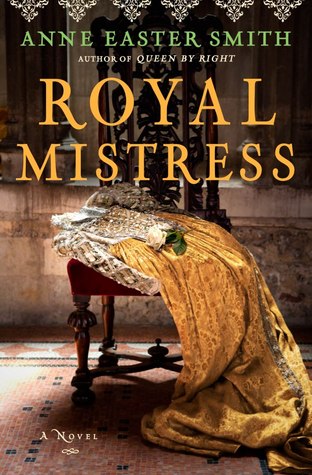
Review: Royal Mistress by Anne Easter Smith

Royal Mistress

Anne Easter Smith is one of my favorite authors. She writes stories that take place in one the time periods in England I enjoy reading about. When I saw this book as a goodreads giveaway, I was so excited to discover I had won it. As soon as I received it in the mail, I was literally jumping for joy. This story takes place during Edward IV rule of England. For those who know the history, even though he was married to a beautiful woman and had many children by her, he had an appetite for woman and he often strayed…..

This story is about a silk merchant’s daughter, Jane Lambert. Who is beautiful and marries the man her father has chosen for her. It is an unhappy marriage and her husband focus is solely on growing his business and he neglects nurturing his relationship with Jane.

Alas, her marriage does not stop her flirtation with other men and she soon captures the eye of Will Hastings. Will is captivated by her and knows that his King will be as well.

So begins Jane’s and Edward’s affair and soon after their relationship gets in the way of Edwards leadership. There is so much more to this story and I loved the characterization and how the story flowed. The author gives you a real sense of the court life and how people lived in England during that time. This book will not disappoint you. I highly recommend.

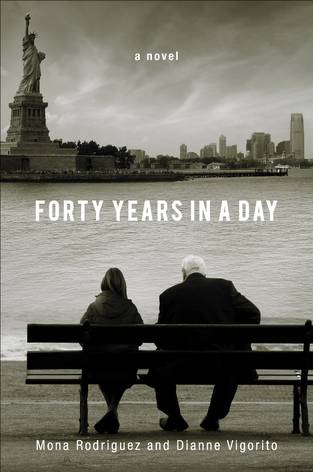
Review: Forty Years In A Day by Mona Rodriquez and Dianne Vigorito

Forty years in a day book cover

A woman name Victoria who lives in Italy with her children and alcoholic husband decides one day to escape her marriage after years of abuse by him and immigrate to Hell’s Kitchen, New York. She didn’t know until years later that her husband had died on the day she and her children left.  After finding out he was gone, she finally could move on with her life. This story captures their lives and takes you through the hardships they face.

It is not often I read books where the story takes place in the early 20th century and I was truly captivated by the character’s lives.  The scenes in this story explore family bond, loss, poverty, abuse, survival and new beginnings. You will be drawn to the character’s inner strengths within themselves and to their dealings with family and life situations.

The central character Victoria is a brilliant example of how woman of her time fought for survival and how she gave everything she worked and struggled for to her family. The authors, Mona and Dianne- give a realistic picture and wonderful insight into how Hell’s Kitchen was during this period.

I had the pleasure of interviewing Author Mona Rodriquez for Historical Fiction Virtual Book Tour back in 2013 and I was kindly given a copy of the book. Before reading this story, I was not familiar with Hell’s Kitchen, New York City or have I ever visited the city before last year. Back in November 2013, I went to New York for the Self-Publishing Expo to represent indieBRAG. My sister who has worked in the city, knows her way around and came along with me. Our last day there we were sitting in a restaurant down the street on the corner where our hotel was, to my surprise and amazement she told me that this area we were in is known as, Hell’s Kitchen.  So I began to tell her a little about Forty Years in a Day and how much the story impacted me.

You can learn more about this book by read my interview with Mona here

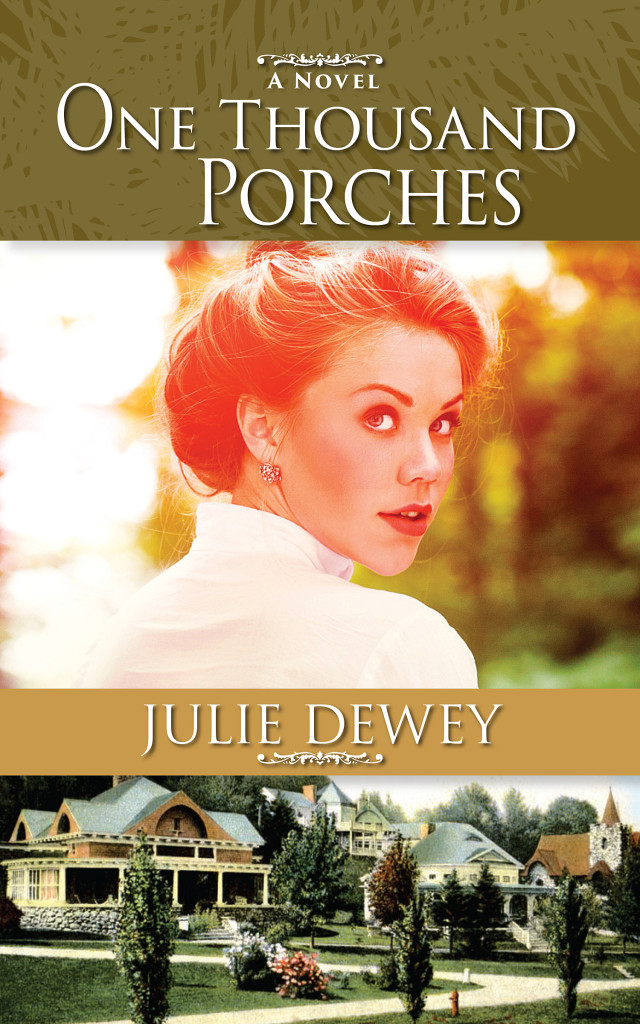
One Thousand Porches Book Blast

One-Thousand-Porches-640x1024

A heartwarming story about family, love, and perseverance, One Thousand Porches chronicles the lives of tuberculosis sufferers and their family members at a sanitarium in Sarnac Lake, NY. A beautiful story that is meant to inspire and uplift readers through the cast of characters that are genuinely kind human beings, readers have called One Thousand Porches “illuminating” and “historically significant”. Down the Kindle Ebook for FREE on March 20th!

In celebration of the release of One Thousand Porches we are giving away 2 paperback copies and a $25 Amazon Gift Card.

Link to Giveaway

One Thousand Porches by Julie Dewy Publication Date: November 1, 2013 CreateSpace Format: e-book, Paperback

Set in the majestic yet untamed Adirondack Mountains of New York more than a century ago, an extraordinary story unfolds about a little known town called Saranac Lake. The town is home to a man with a disease known as consumption, white plague, or as some called it, the red death. It is here that Doctor Edward Livingston Trudeau finds a hopeful cure for tuberculosis in the form of open air. Trudeau’s patients vary in age, gender, class, and race, but they have one thing in common. They must all choose to embrace life, even in the face of death, if they wish to heal at the sanitarium.

Christine, a woman at the helm of her family, has already lost two children to the dreaded plague. But when her daughter, Collette, contracts the disease, she is determined to keep her alive. Venturing into unknown territory, Christine risks her own health and that of her unborn child, as well as her marriage, to help her daughter seek a cure that to many is absurd. Christine embarks upon a life-changing journey as she moves from caregiver to patient. In the face of adversity she must find the courage to sustain herself.

When Lena, a factory worker and mother of three, begins coughing up blood she is faced with a decision no mother wants to make. She either stays with her family and risks her own death, or leaves her loved ones behind while she goes off in hope of a cure at the ‘Sans’.

Big Joe, once a strong man for a traveling circus, seeks a quiet place to live out his final days in hiding. When he is sent to the Sanitarium, he is terrified to learn he will be housed with fellow circus performers for he is a hunted man. Gaunt and thin, he can only hope no one from his past recognizes him in his current state. Little Amy, a six year old child, must care for her entire family of seven, all whom are afflicted with different forms of plague. When she is diagnosed with a very rare form herself, she is sent to the Sanitarium and put under the care of Dr. Trudeau. Alone and afraid, Amy faces her fears and allows herself to dream of a future. With a cast of characters so vivid, One Thousand Porches is a heartwarming and engaging story that will instill hope and faith in even the most pessimistic reader.

About Author:

Julie-Dewey-150x150

Julie Dewey is a novelist living in Central New York with her family. Her daughter is a Nashville crooner and her son is a boxer, her husband is an all-around fabulous guy with gorgeous blue eyes that had her at first glance. Julie enjoys anything creative, she loves to make jewelry and is passionate about gemstones. When she isn’t writing, she can be found in her office decoupaging, stamping, knitting, working with metal, or scrapping.

Buy the Book

Interview with Simon Stirling

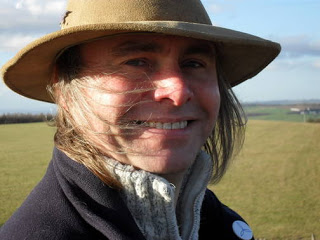
simon

Simon Stirling hails from Birmingham, England.  He went to Glasgow University, but left early to take part in a new play on the London fringe (written by John A. Bird, who went on to found The Big Issue).  Simon then spent three years training as an actor at LAMDA, during which time he got his first literary agent.  For the next decade or so he wrote scripts for theatre and various television drama series, picking up a Writer’s Guild Award for his work on “Between the Lines” and writing what is probably the rudest episode ever of “Casualty”!  In more recent years he has worked as a script consultant and scriptwriting tutor, and for two years he was Youth and Community Director at the Roses Theatre, Tewkesbury.  Many years of research went into his first two historical nonfiction books, The King Arthur Conspiracy (2012) and Who Killed William Shakespeare? (2013) – both published by The History Press – and his current project, “The Grail: Relic of an Ancient Religion” for Moon Books.  He now lives in Worcestershire, in the heart of Shakespeare country, with his wife Kim, who was born in Stratford-upon-Avon. They were married on the Isle of Iona in 2002.

Simon keeps a blog with regular updates on his research and adventures in publishing:

www.artandwill.blogspot.co.uk

Stephanie: Hello, Simon! Thank you for chatting with me today! As a Shakespeare enthusiast, I am always intrigued with anything to do with him and was delighted you wrote a book about him. Please tell me a little about your book, Who Killed William Shakespeare?

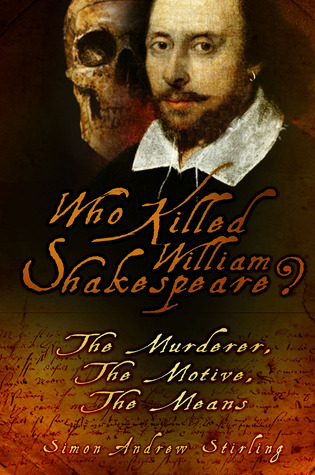
Simon: Hello, Stephanie!  “Who Killed William Shakespeare?” was first published last year by The History Press.  It’s my second book for them.  I’d spent a little over 25 years researching Shakespeare’s life and times – starting with a particular interest in the character of Lady Macbeth (where did she come from?) and then gradually widening out from Shakespeare’s middle years to take in his youth and retirement.  When I met up with my editor at The History Press to discuss the publication of my first book (“The King Arthur Conspiracy” – 2012) I was hoping we’d have time to chat about the Shakespeare project I’d mentioned to her.  We didn’t, but I did notice that she had written in her notes, “Who killed William Shakespeare?”

When I’d first mentioned the project to her, I’d outlined very briefly what I had discovered about Shakespeare’s life and the three stages (childhood and youth, middle age, retirement and death) which I was keen to cover.  The fact that she had zeroed in on his sudden death told me that this was what the publishers would be most interested in (although I still managed to cover the rest of his life in the book) and, whether she realized it or not, she’d given me my title!

who killed ws

Stephanie: That is really intriguing. Your research must have been quite extensive. Could you tell me a little about it? Was there anything you discovered that you did not know before?

Simon: The research started the traditional way: reading any books I could get hold of about Shakespeare.  But I found them all rather disappointing.  None of them really told me who Shakespeare was.  After many years, I began to realize that this is one of the great stumbling blocks in Shakespeare studies.  We know quite a lot about Shakespeare, but many scholars prefer to pretend that we don’t.  And that got my antennae twitching.

I combined what you might call “mainstream” or “orthodox” Shakespeare research with more detailed investigations into the region he came from – which also happens to be my home region.  Most Shakespeare biographers pop up to Stratford to look around and then head straight back to London.  They’re really only interested in Shakespeare-in-London.  But the best material about him, his contacts, his family network, his background, etc., is to be found in the Midlands.  For example: we know that the 18-year old Shakespeare was first given a special license to marry “Annam Whateley” of Temple Grafton (a parish near Stratford), and that the next day a license was issued stipulating that Shakespeare would marry “Anne Hathwey” of Stratford.  For years, scholars have insisted that Anne Whateley (his first betrothed) didn’t exist – but a search of local records turned up a will which names her.

The biggest surprise came in the form of a skull.  I had been chasing up a local story, published by a Victorian clergyman, which insisted that Shakespeare’s skull had been stolen from his grave in Stratford and ended up in a private family crypt under another church altogether.  But it was only when I’d started writing my book that I discovered that this skull really did exist.  What is more, it shows various injuries which match those visible on the portraits of Shakespeare.  And these injuries both confirmed and added to the theory I had already formed about how Shakespeare died.  So that was a shocking moment – discovering that the Victorian vicar was (partly) right.  Shakespeare’s skull is NOT in Stratford!

Stephanie: Now that is really interesting! How long did it take you to write, Who Killed William Shakespeare? And what was your inspiration?

Simon: I’m not really sure how long it took.  For years, I was trying to write a sort of detailed novel about Shakespeare in 1605-6.  It would have covered the Gunpowder Plot (to which Shakespeare was connected in a number of alarming ways), the birth of his illegitimate son, Sir William Davenant, and the writing of “Macbeth”.  Then, little by little, I extended the scope of the project and decided to write it as non-fiction.  There were dozens of false starts.  But the manuscript for the final book actually took about nine months to write.  Some of that time, though, was spent doing very detailed comparisons of the skull, the Shakespeare portraiture, and a death mask which was probably of Shakespeare and is now in Germany.  I reckon I must have spent about two months in all, studying the similarities of these various images and objects and creating graphics which point up the comparisons.

As for the inspiration, that’s kind of complex.  I ended up believing that an enormous injustice had been done to Shakespeare, and it continues to this day.  He wasn’t alone in this: many of his friends, relatives and associates were Catholic, and they suffered horribly.  So if anything drove me in writing the book, it was the desire to right a dreadful wrong.  Shakespeare was murdered (in fact, I’ve since discovered that this was anything but secret), and the facts of his life have been systematically covered up since in order to invent a false Shakespeare, a patriotic Protestant.  That’s why so many scholars pretend that we know very little about him.  The truth is more shocking – but it also explains the man and his work, as well as his violent death.

Stephanie: Well, I am glad you wrote it as non-fiction and that is no easy task. I can’t wait to read your book! I agree with you. I have heard many stories of injustice about him and it is infuriating at times, I admit.

Have you read all his plays? His sonnets?

Simon: One way or another, yes (including a “lost” play of his).  But for the book itself, I didn’t really bother very much with his history plays (they weren’t terribly relevant), and there are others I left out because they would have cluttered up the narrative.  A few poems (“The Phoenix and the Turtle”, for example) were also side-lined, but that was really just because of space, or the lack thereof.

Stephanie: Which sonnet is your favorite?

Simon: The sonnets are fascinating – they’re more personal than letters, though I sometimes felt that I was reading somebody’s emails!  Picking a favourite is very difficult: they cover such a long span (from about 1592 up till at least 1606), and the subject matter is so varied.  If I had a favourite, it would probably be Sonnet 126, which is “unfinished” (the final couplet was never published) and was, I think, addressed to his infant son or godson, William Davenant, who was illegitimate, but whose birth in late February 1606 made up for the death of Shakespeare’s son and heir, Hamnet, ten years earlier.

Stephanie: My favorite play is the Twelfth Night and Hamlet. Which one is yours and why?

Simon: I ought to say “Macbeth”, because that was the starting point for so much of my research.  But the fact is that it took me many years to learn how to enjoy reading Shakespeare (the key was to understand his latent Catholicism: suddenly, every poem and play became very readable, and intensely emotional, once I’d latched on to that forbidden information; I remember watching a very good movie version of “Titus Andronicus” and having my usual response of, “Well, that meant nothing to me” – and then spending a year or so researching Catholicism in Shakespeare’s England, and then watching the same movie again, and I was in floods of tears throughout).  The play I found myself enjoying the most when I was working on “Who Killed William Shakespeare?”, though, was “Pericles”.  I found it a really colourful, heart-warming experience.  It was the first of Shakespeare’s plays of reconciliation, the first of his “romances” or tragi-comedies, and it was hugely popular with the Catholic community.  I think I can see why.  It promises salvation, of a sort, after many horrors.

Stephanie: Now, about you and what you read for pleasure. Who are your influences?

Simon: Well, I’m a pretty big fan of William Shakespeare!  But while I was growing up, the stories of Alan Garner really grabbed me.  He always wrote brilliantly, and his stories became more mature as he went on (he’s still alive, I should add).  In my teens, I discovered his very short novel, “Red Shift”, which remains my personal favourite.  Nobody – apart from Shakespeare, perhaps – has ever managed to squeeze so much meaning into so few words.  That book taught me that you should never go overboard with description.  Keep it simple and to the point.  Too much description cheats the reader.  Less is more.

Stephanie: I agree about going overboard with description and less is more. It certainly is an art to write that way.

How often do you write and where in your home do you write?

Simon: I write every day, if I can.  Using a laptop, I can write pretty much anywhere.  But we only have a small house, and my main work station is in the main room.  I have my back to the television, but if I’m working late into the night I’ll often have the TV on in the background, just so that the room isn’t too quiet.

Stephanie: Coffee or tea?

Simon: Coffee in the morning, and plenty of it: strong and black (I broke my old cafetiere a few days ago, and my wife made sure she’d bought me a new one by the following morning; she knows how important it is to me!).  But in the afternoon or evening, tea.  I have a very big mug, about the size of two normal mugs, which I drink my tea out of.  And I only have a splash of goat’s milk in my tea.  Cow’s milk really isn’t very good these days.

Stephanie: Historical fiction or non-fiction? Or both?

Simon: Non-fiction.  Most of my reading is research, one way or another, and while you can soak up atmosphere from fiction, I prefer hard facts.  The other problem is that my background as a dramatist means that I still mentally “adapt” novels for the screen whenever I’m reading them, which is annoying.  But I suppose the main thing is that I see reading as ongoing education.  Novels are a form of escapism, which means that I don’t really trust them.

Stephanie: Favorite read(s)?

Simon: Depends what I’m working on.  Sometimes, it’ll be something scientific (Simon Singh’s “Big Bang”, for example, which is a brilliant history of cosmology; I wrote a script for the Open University, here in the UK, back in the 90s, and we introduced the nation to the COBE satellite and the discovery of cosmic background radiation – it was good to read about how that all fitted in to the history of our understanding of the universe).  I also find biographies intriguing, because they’re so difficult to do well, and so when I find one I think is really excellent (like Kate Williams’ “England’s Mistress”, about Emma, Lady Hamilton, or W.H. Murray’s “Rob Roy MacGregor”) I’ll tend to recommend it.  Also, I would always recommend Evelyn Farr’s “Marie-Antoinette and Count Fersen: The Untold Love Story”.  That’s a book I’d love to have written.

Stephanie:  What would you like to say to your readers?

Simon: The research (into King Arthur and William Shakespeare) isn’t finished.  I’m expecting to unveil a “new” Shakespeare portrait during a public lecture I’ll be giving at Goldsmiths, University of London, in March, and that portrait appears to confirm what my research has revealed about Shakespeare’s death.  Plus, we’ll be able to access the actual skull, later this year, so there’s a lot more news to come.  Both my books could be thought of as primers – they’re introductions to the subject, and they both present a very different story to what you’ve heard previously, but most exciting of all is the fact that, as the research continues, more and more details get filled in, and I really look forward to updating my readers on the outcomes of these investigations.  So if you want a head start – read the books, and you’ll be ready for the new information as it emerges!

Stephanie: Where can readers buy your book?

Simon: There seem to be quite a lot of places around the world that are stocking it – you can even buy it in Lagos!  But there’s always Amazon, of course, and it is available both in hardback and Kindle.

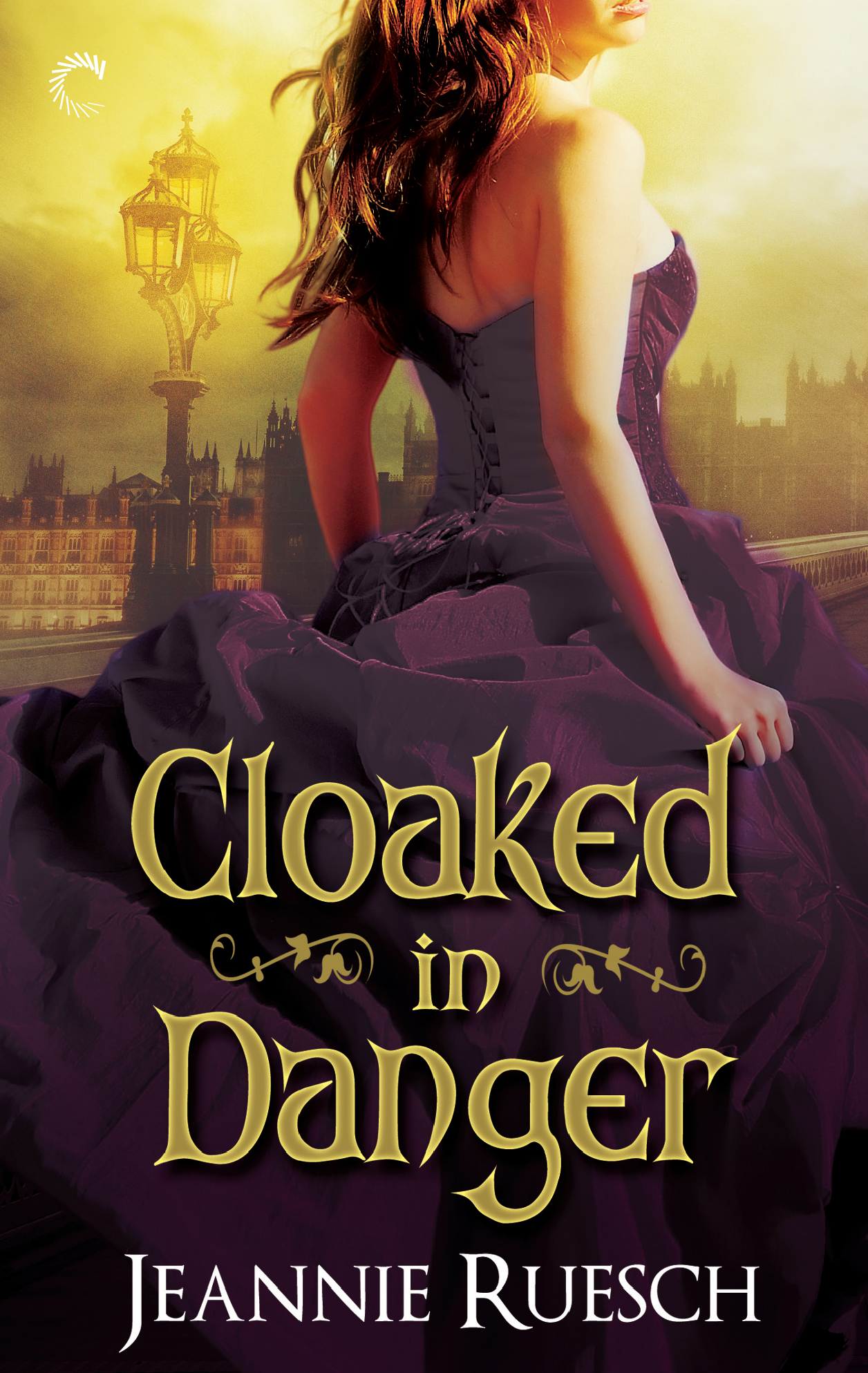
Jeannie Ruesch’s Facebook Launch Party for Cloaked in Danger

Cloaked in Danger book cover

What: Jeannie Ruesch’s Facebook Launch Party for Cloaked in Danger

When:
Monday, January 27.  3:00 – 7:00pm PST
About Cloaked in Danger
Publication Date: January 27, 2014 Carina Press eBook ASIN: B00F93X7ZI

Aria Whitney has little in common with the delicate ladies of London  society. Her famous father made his fortune hunting archaeological  treasures, and her rustic upbringing has left her ill prepared for a  life of parties and frippery. But when Gideon Whitney goes missing in  Egypt, Aria must embrace the unknown. Armed with only the short list of  highborn men who’d backed her father’s venture, she poses as a woman  looking for a husband. She doesn’t intend to find one.

Adam Willoughby, Earl of Merewood, finds London’s strangest new  debutante fascinating, but when he catches her investigating his  family’s secrets, he threatens to ruin her reputation. He doesn’t intend to enjoy it so much.

When their lustful indiscretion is discovered, Adam finds that he  regrets nothing. But now, as Aria’s father’s enemy draws near, Adam must convince his betrothed that she can trust him with her own  secrets…before it’s too late.

About Jeannie Ruesch

Jeannie Ruesch wrote her first story at the age of the six, prompting her to give up an illustrious, hours-long ambition of becoming a Dallas Cowboy Cheerleader and declare that writing was her destiny. That journey to  destiny took a few detours along the way, including a career in  marketing and design.

Her first novel, a fairy-tale like historical romance, was published  in 2009, but the darker side of life had always captivated her. So after a dinner conversation with friends about the best way to hide a dead body, she  knew she had to find a way to incorporate suspense into her writing.  (The legal outlet for her fascination.) Today, she continues writing what she loves to read – stories of history, romance and suspense. She lives in  Northern California with her husband, their son and an 80 pound lapdog lab named Cooper.

She is also the creator of the WIP Notebook, a writer’s tool to help stay organized while you write, which you can find at her website. You can also follow her on Facebook, Twitter, Goodreads and Pinterest.

Cloaked in Danger LBP Banner