Interview with Author Teresa Neumann

Stephanie: Born and raised in Iowa, Teresa Neumann and her husband now live in Oregon’s Willamette Valley, a beautiful place they and their children have called home for several decades. In addition to writing and interacting with her readers, Teresa loves to travel (to Italy, of course) and fiddling on her violin with other musicians. You can find Teresa’s books on Amazon, or on her website at http://www.teresaneumann.com
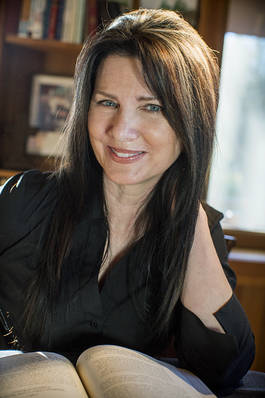
 

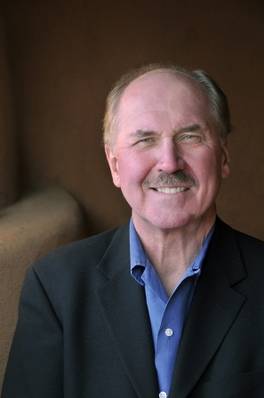
 Author Teresa Neumann


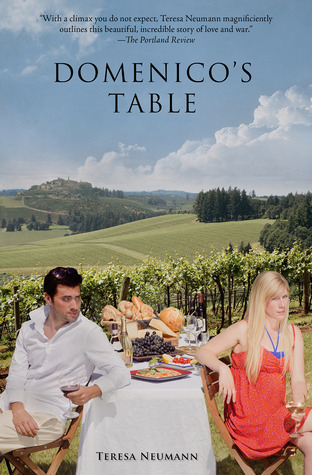
Teresa, it is a pleasure to be interviewing you! Your first novel, Bianca’s Vineyard was absolutely wonderful and moving. Please tell your readers about, Domenico’s Table.


Teresa: Although Domenico’s Table – the post-war sequel to Bianca’s Vineyard – is about a different branch of the Bertozzi family, it is also inspired by a true story.  


One of the main characters in DT is our cousin Domenico Sacchelli, the gregarious proprietor of a stunning bed and breakfast property he inherited from his grandparents situated in the mountains of Tuscany overlooking the Ligurian Sea. His pizzas, made with his own olive oil and cheeses in a wood oven, are to die for.


I was inspired to write the book during our first visit to Domenico’s farmhouse, or fattoria, which he rents out every summer to a former Nazi soldier who had stormed the mountain during the war and commandeered his home. Domenico was a child at the time, but he recalls the terror of that day when he and his family barely escaped with their lives from the onslaught.


The fact is, many Italians continue to bear deep resentments and anger towards Germany because of atrocities that occurred during the war. Little wonder then, that when Domenico first began renting out his fattoria to the German soldier and his family, it created quite a stir among his neighbors. Domenico would joke that he was simply being smart and “turning the table” on the Germans by making money off their former enemies, but over the years the two men developed a friendship.


I took this remarkable story and added an international ensemble of fictional characters, some heavy doses of drama and intrigue, loads of dreamy Italian locations, tension-filled romance, and a sprinkling of light-heartedness and came up with Domenico’s Table.


Stephanie: It certainly is a remarkable story. I’m currently reading your novel and I’m enjoying it so much! I feel as if I’ve drawn so close to your characters and they feel as if they’re family.


I’m sure your readers-who have not read your sequel as of yet- want to know…Are any of the characters in Bianca’s Vineyard in Domenico’s Table?


Teresa: Yes, but dare I mention who without spoiling the surprise? Let’s just say that Bianca Corrotti is the narrator in Domenico’s Table, as she was in Bianca’s Vineyard, and that the “mystery” of Armida’s locket is resolved in the sequel.


Speaking of characters, I should let readers know that Rem Malloy – a delightful Italian-American tour operator – is organizing a Bianca’s Vineyard & Domenico’s Table Book Tour in Italy next year. His highly acclaimed Seattle-based travel company, Italy4Real, is currently solidifying an itinerary that will include several days in Tuscany where we will meet some of the characters in my books, see locations mentioned in them, visit Armida’s gravesite, and perhaps even have a dinner at Domenico’s fattoria on Monte Montignoso, hosted by the intrepid chef himself. Rem wants to keep tours small — no more than 8 people. Anyone interested can contact him at 1-800-554-5170 or email him at info@italy4real.com  Just ask about the Bianca’s Vineyard Tour.
 

teresa neumann sequel


Stephanie: You give vivid details of what war was like during that period and for the people. What was your research like? Where you able to speak with anyone who lived during that time? Or were there letters you were able to look over?


Teresa: In addition to travelling frequently to Italy to visit family, we also have family and friends in Germany. Their help was invaluable when it came to research and translations. I was also able to interview my husband’s elderly Italian cousins who lived through the war before they passed away. What a privilege that was! Other family members in Tuscany spent days showing us many of the sites and monuments pertinent to the war, such as the infamous Sant’Anna and locations along the Gothic Line.


Stephanie: How wonderful to be able to travel to Italy. I’ve always wanted to go there.


How long did it take you to write Domenico’s Table?


Teresa: It helped that I had a good idea for the sequel before I began, but still, it took about a year to write and get it into print.


Stephanie: Were there any challenges?


Teresa: Certemente! With BV the plot was there for the telling. I simply wrote the story of my husband’s grandparents as it actually happened, filling in here and there where I needed to. But with DT, I had to develop the plot to a much greater degree, which stretched me as a writer.


Tying the loose ends together from the first book and yet doing it in a way that would allow the sequel to be a stand-alone novel, was another challenge.


The most daunting challenge of all, I believe, is getting the final manuscript to publication and then marketing it. There are deadlines to deal with and so many minute, permanent decisions that – once the book is in print – can’t be changed. I love meeting and mingling with my readers, but marketing my own work is still a foreign concept, which is why I am eternally grateful for my precious reviewers and Goodread fans!


Stephanie: What is the hardest aspect of writing historical fiction?


Teresa: I love research – perhaps too much. It’s easy to get bogged down in facts, and although it’s essential to be historically accurate, if factuality comes at the expense of characterization, it can dull the reading experience considerably. After all, if someone only wants the facts they’ll read a textbook on the subject. Historical fiction is, in the end, about story. It’s a delirious blend of fact and fiction; a sort of melding of the left brain and the right brain. So, I have to work hard at fleshing out my characters and making facts come alive for my readers.


Stephanie: Research can be time consuming but well worth it.


What are some of the fiction parts to the story?


Teresa: The basis of Domenico’s Table, as mentioned above, is inspired by a true story. The rest – the German soldier and his haunting past, his granddaughter and her American stepsister – have been fictionalized.


It’s true that Domenico’s father had to hide in their chestnut tree to escape detection when the Nazi’s stormed their mountain, but the story of his mother and their neighbor is not.


Readers often ask me about Marco, Domenico’s handsome co-laborer at the bed and breakfast. His looks and persona are based on our real cousin Marco, who was a Milanese model for some time, but is now a happily married father living in Rome. The rest, however, is fictionalized.


Stephanie: Marco is one of my favorites! Is there a novel you are currently working on?


Teresa: Yes, and it’s set in the early 1970’s. The main character is Italian-American, but it takes place entirely in California. The title of the book may be a bit misleading – A Year in the Company of Freaks – but to all my faithful Italian-American readers out there, trust me, I’m sure you’ll still relate to it.


Stephanie: Sounds wonderful! I can’t wait to read it!


What is your favorite historical event?


Teresa: WWII, because all of humanity’s inherent shortcomings and virtues came together on such a grand, global, gory scale. My father and uncles served in that war and their stories never cease to amaze me. America’s Civil War is also a source of great intrigue. My ancestors fought each other over the North-South divide, so maybe it’s a personal thing, although I must admit I’ve always had an odd fascination with military history in general.


Stephanie: It looks like we have a lot in common with our family tree as far as family fighting in wars. Military history is very fascinating.


What is your favorite all time novel and why?


Teresa: There are so many great classic and modern novels to choose from, Stephanie, how can I pick just one?!


Stephanie: I can’t pick one! It’s a tough question!


Teresa: Of all the books I’ve read recently, my favorite is The Shoemaker’s Wife by Adriana Trigiani. Granted, I’m a sucker for all things Italian, but her novel in several parts is quite nearly a masterpiece.


I cut my teeth on Tolstoy, Dostoyevsky, Dickens, and Hardy, so they were my first literary loves. Milton’s Paradise Lost blew my mind. Was completely smitten with Sigrid Undset’s Nobel prize-winning trilogy Kristin Lavransdatter.


Thinking of the Civil Was, I was reminded that Southern writers are my favorite! I think a truly great novel will mess with your head. You’ll think about it for days and it will not only resonate in your soul for the rest of your life, but it becomes a mental landmark in your worldview. I can’t hear about tornado tragedies, for example, without thinking of Leif Enger’s Peace Like a River. I should also mention that I rank Southern stories and
writers — Tennessee Williams, Flannery O’Connor, The Help and The Divine Secrets of the Ya-Ya Sisterhood — as among the best literary talent this country has to offer. I find them utterly irresistible and they almost never fail to captivate me.


So if I can only pick one all-time favorite novel, for the above reasons the prize would go to Les Miserables, by Victor Hugo. I mean, Jean Valjean? Javert? Fantine? The story and its characters are simply timeless, as are the themes of hope, redemption and restoration.


Stephanie: Teresa, it has been a pleasure chatting with you today! Thank you for your time!
 

Author David Morell Interview & Book Review:

Stephanie: David, I really enjoyed reading your novel. It’s one of the best mystery thrillers I have read in a very long time. Not only did you depict London during the 19th century brilliantly, but portrayed how crimes were solved during that time without all the technology we have today. The murder scenes and action scenes are very detailed and intense. How did you shape the actions of your story from beginning to end? Were they difficult to write? Were there any challenges?

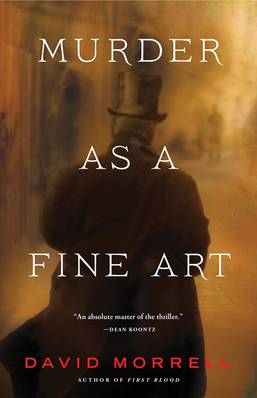
Murder as a fine art book cover

David: Thank you, Stephanie. Murder as a Fine Art is based on the idea that someone replicates the original Ratcliffe Highway murders, using Thomas De Quincey’s vivid description of them in his sensational essay “On Murder Considered as one of the Fine Arts.” Logic suggested that I needed to begin with the new version of the murders.  Then I needed to introduce my two Scotland Yard detectives and show them using early crime-scene-analysis techniques.  Finally I needed to have them suspect De Quincey (notorious for his memoir, Confessions of an English Opium-Eater), at which point I could introduce him and his wonderful daughter, Emily, whose personalities then controlled the story. The biggest challenge was developing an antagonist that would be a worthy opponent to De Quincey.  After all, De Quincey invented the word “subconscious” and anticipated Freud’s psychoanalytic theories by a half-century. The killer needed to have a complex psychological profile so that the reader would feel that only De Quincey could see to his core. De Quincey influenced Edgar Allan Poe, who in turn inspired Sir Arthur Conan Doyle to create Sherlock Holmes, so I decided to put De Quincey at the start of the detective tradition.  It was a very exciting project.

Stephanie: What are some of the fictional aspects of the story?

David: The main fictional element is the replication of the original Ratcliffe Highway murders, which paralyzed all of England back in 1811 but weren’t repeated in 1854, as happens in my novel.  Otherwise there’s a considerable amount of fact. Thomas De Quincey (an absolutely fascinating literary personality of the period) is presented accurately. Ryan and Becker, the two Scotland Yard detectives, are based on actual detectives of the time. Lord Palmerston is presented as he was, complete with his immense political scheming. Coldfield Baths prison existed as I describe it, complete with the boxes in the cells and the handles that needed to be turned thousands of times before a prisoner was allowed to eat.  Britain’s economy was indeed based on the opium trade, and laudanum (a mixture of alcohol and opium) was indeed in every medicine cabinet. Even infants were given it. The evidence suggests that many people in the Victorian era were drug addicts, although the concept of physical and mental addiction didn’t exist then. I tried to make the novel as factual as possible.

Stephanie: What was some of the research involved? How long did it take you to write your story?

David: Murder as a Fine Art was a three-year project. The research took 2 years, but for some of that period I was also writing.  De Quincey wrote thousands of pages of essays, memoirs, and fiction. I re-read them many times until I could be a ventriloquist for him.  Next I researched his life, eventually becoming Internet friends with his two biographers, Robert Morrison and Grevel Lindop. Then, I accumulated shelves of books about 1854 London and the Victorian era. My goal was to make readers truly feel that they were on those harrowing fogbound streets.  I needed to know what the pavement was made of, what sorts of coins were in people’s pockets, and how much a woman’s clothes weighed (37 pounds). Finally I used my academic background (I was a literature professor at the University of Iowa) to research novels in the 1850s so that I could use techniques from that period, in effect writing an imitation Victorian novel.

Stephanie: What are some of the response you have received about your book?

David: The reviews have been excellent.  Entertainment Weekly called Murder as Fine Art “a masterful blend of fact and fiction, evoking 1854 London with such finesse that you’ll hear the hooves clattering on cobblestones, the racket of dustmen, and the shrill call of vendors.” Publishers Weekly described it as “an epitome of the intelligent page turner.” The Associated Press described it as “a literary thriller that pushes the envelope of fear.” The Washington Post said, “Murder is rarely this much fun.” The New York Times Sunday Book Review, Suspense Magazine, Mystery Scene, the Providence Sunday Journal—these and others were all enthusiastic.

Stephanie: What is the most single challenging thing about writing historical fiction?

David: Often historical novels are costume dramas that retain modern attitudes and dialogue.  In contrast, I wanted Murder as a Fine Art to be an accurate reflection of 1854 London.  Because De Quincey anticipated Freud’s theories, I could legitimately include psychological analysis, but otherwise the thoughts and attitudes in the book are specific to the 1850s in London.  With each scene, I was constantly on guard against anachronisms.  One section involved a lock, and my research led me to discover that locks were quite different in 1854, bolted to the surface of the inside of a door rather than inserted into the body of the door.  This became an important plot point.  Basically I couldn’t take anything for granted.  Every detail needed to be investigated.

Stephanie: What is your next book project?

David: Many readers have asked me to write a second novel about Thomas De Quincey and his amazing daughter, Emily. I normally don’t write sequels, but in this case, I have a lot more to say about them as well as about London in the 1850s.

Stephanie: What advice would you give to an aspiring author?

David: I teach writing at various conferences around the country and have a writing book, The Successful Novelist that discusses what I learned in my 41 years as a published author. One of my favorite mantras is “Don’t imitate. Be a first-rate version of yourself and not a second-rate version of another author.” Another mantra is “Don’t chase the market. You’ll never catch it. Instead write the book that you were meant to write.”

Stephanie: Thank you David for this lovely interview! It was an honor!

 My review: I was completely blown away with this novel! So intense, brilliant and intelligently written. The story line was so captivating and the author did a marvelous job depicting this time in England’s history. Rich in mystery, crime, intrigue, and this story really explores the mind of a killer and the people who are trying to catch him.  I’m normally a reader of the medieval times but when this book came along for this wonderful book tour, I could not pass it up and I’m glad I didn’t. I highly recommend this story and have rated it five stars!

Stephanie

Link to Tour Schedule: http://hfvirtualbooktours.com/murderasafineartvirtualtour/ Twitter Hashtag: #MurderAsAFineArtTour

About MURDER AS A FINE ART
Publication Date:  May 7, 2013 Mulholland Books Hardcover; 368p ISBN-10: 0316216798
GASLIT LONDON IS BROUGHT TO ITS KNEES IN DAVID MORRELL’S BRILLIANT HISTORICAL THRILLER.
Thomas De Quincey, infamous for his memoir Confessions of an English  Opium-Eater, is the major suspect in a series of ferocious mass murders  identical to ones that terrorized London forty-three years earlier.
The blueprint for the killings seems to be De Quincey’s essay “On Murder  Considered as One of the Fine Arts.” Desperate to clear his name but  crippled by opium addiction, De Quincey is aided by his devoted daughter Emily and a pair of determined Scotland Yard detectives.
In  Murder as a Fine Art, David Morrell plucks De Quincey, Victorian London, and the Ratcliffe Highway murders from history. Fogbound streets become a battleground between a literary star and a brilliant murderer, whose  lives are linked by secrets long buried but never forgotten.
Praise for MURDER AS A FINE ART
“Murder As a Fine Art by David Morrell is a masterpiece—I don’t use that word  lightly—a fantastic historical thriller, beautifully written,  intricately plotted, and populated with unforgettable characters. It  brilliantly recreates the London of gaslit streets, fogs, hansom cabs,  and Scotland Yard. If you liked The Alienist, you will absolutely love  this book. I was spellbound from the first page to last.”
—Douglas Preston, #1 bestselling author of The Monster of Florence
“London 1854, noxious yellow fogs, reeking slums, intrigues in high places,  murders most foul, but instead of Sherlock Holmes solving crimes via the fine art of deduction, we have the historical English Opium-Eater  himself, Thomas De Quincey. David Morrell fans — and they are Legion —  can look forward to celebrating Murder As a Fine Art as one of their  favorite author’s strongest and boldest books in years.”
—Dan Simmons, New York Times bestselling author of Drood and The Terror
“Morrell’s use of De Quincey’s life is amazing. I literally couldn’t put it down: I felt as though I were in Dickens when he described London’s fog and in  Wilkie Collins when we entered Emily’s diary. There were beautiful  touches all the way through. Murder As a Fine Art is a triumph.”
—Robert Morrison, author of The English Opium-Eater: A Biography of Thomas De Quincey
“I enjoyed Murder As a Fine Art immensely. I admired the way Morrell  deftly took so much material from De Quincey’s life and wove it into the plot, and also how well he created a sense of so many dimensions of  Victorian London. Quite apart from its being a gripping thriller!”
—Grevel Lindop, author of The Opium-Eater: A Biography of Thomas De Quincey
About the Author
David Morell
David Morrell is a Canadian novelist from Kitchener, Ontario, who has been  living in the United States for a number of years. He is best known for  his debut 1972 novel First Blood, which would later become a successful  film franchise starring Sylvester Stallone. More recently, he has been  writing the Captain America comic books limited-series The Chosen.
For more information on David Morrell and his novels, please visit the official website.  You can also follow David on Facebook, Twitter and Google+.
Murder As A Fine Art banner


Interview with Author Gayle Feyrer

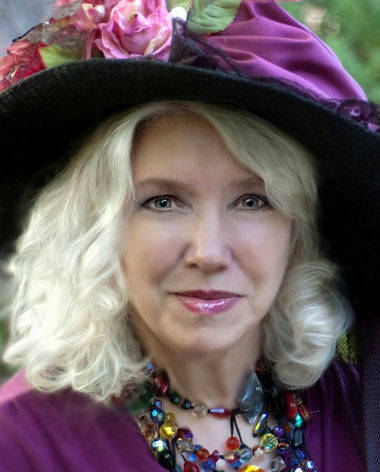
Author Gayle feyrer


Stephanie: Please help me welcome, Author Gayle Feyrer.  Hello Gayle! Please tell me about your book, Floats the Dark Shadow.

 
Gayle: The novel is set in Belle Époque Paris.  It was a golden age—but I show more of its dark and decadent side.  My American heroine, Theodora Faraday has had some rough years, but she’s still an innocent abroad.  Theo’s living her dream, discovering herself as an artist in what was then the most exciting city in the world.  She’s fallen in love with her cousin, one of a group of poets called the Revenants.  The dream becomes a nightmare when children she knows vanish and are found murdered.  Theo believes a sleazy Satanist committed the crimes.  My detective, Michel Devaux, thinks one of the Revenants is the murderer.  Theo and Michel work at odds and finally together to capture the villain, who believes he’s the reincarnation of Gilles de Rais, once Joan of Arc’s lieutenant and later the most prolific and evil serial killer in French history.


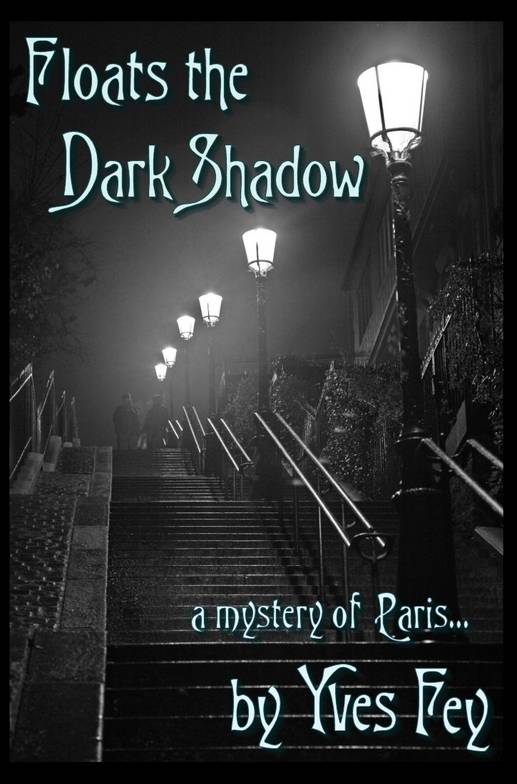
Floats the Dark Shadow


Stephanie: What was the inspiration for your story?


Gayle: The first inspiration was Paris.  I’d wanted to set a book there for years, somewhere between the birth of Impressionism and the first years of the 20th Century.  In researching the era I was most drawn to the Fin de Siècle, Belle Époque years.

But I spent almost a year with the wrong story and the wrong characters.  My heroine didn’t want to be an artist, she wanted to be a journalist, and we battled.  I had a perfectly acceptable plot that refused to take life.  I was feeling quite desperate and was scrabbling around for what else I might like to write even though I didn’t want to give up Paris.  I remembered an earlier fascination with Gilles de Rais, but I didn’t want to write a medieval historical.  Then I thought Copy Cat!  Once I had my villain, everything else fell into place very quickly, at least as a concept.  I still had to write it.


Stephanie: What genre does this fall under and what interested you most writing in this genre?


Gayle: Mystery—more specifically historical mystery.  And I usually call it a literary mystery to let people know it isn’t a quickie read.  But it’s also a good historical – Paris is very much a character, the art and poetry, the history of violence behind the era.  Michel is a child of the Paris Commune, which was bloodier than the French Revolution.  There are cameo appearances by famous writers, artists, and occultists.

I’ve never been much of a “write what you know” person.  You have to know the thoughts and feelings of your characters, and understand their world, but I want to time travel to different times and places.


Stephanie: Have you written books in other genres? 

 
Gayle: I wrote four historical romances, very dark and steamy, probably too dark in general for the genre, at least at the time.  One was set in Renaissance Florence during the conflict between the Borgias and Savonarola.  I did a Robin and Marian tale where Marian is a spy for Eleanor of Acquitaine and recruits Robin.  Then I did two Elizabethans.
I wanted to a romance set in Paris in the Belle Époque, maybe a wilder Gigi, but was told that Paris wasn’t romantic, why didn’t I do Scotland.


Stephanie: What book project are you working on now?
Gayle: I’m at work on the sequel to Floats the Dark Shadow, which keeps getting longer and more complex with more voices chiming in.  It’s set during the furor of the Dreyfus Affair, but that’s just a piece of the story.  It deals with all kinds of prejudice, against Jews, gays, women – and the relatively less bigoted attitude toward blacks.  For emotional drama, I’ve got one secret affair busting up and another one starting.  There’s hunt for the not insane (we hope) sister locked in an asylum.  There are several murders and an attempted assassination.  Even a strand of the occult thread from the last book will have its moment to glitter.


Stephanie: Who designs your book covers?

 
Gayle: One of the great things about working with BearCat was being able to realize my book almost exactly as I pictured it.  Early on, I discovered the perfect image, the photo by Michel Colson that we used.  I was still thinking of submitting to traditional publishers at that point, so I just wanted to use it on my website and hope they’d listen when I said I wanted it for the cover.  I’m an artist, but I can’t do architecture like the Montmartre stairs in the photo.  I found Trinigan, the Art Nouveau font I used in my trailer, and then on the cover.  Beth Tashery Shannon designs the covers and interiors for BearCat, and for her own book design company, Frogtown Bookmaker.  We worked together to create the perfect atmosphere. It’s really too early to think about book 2, but I couldn’t help hunting for inspiration.  I was going to ask Michel Colson for another photo for the new book, but the multiple plot lines made choosing an image really difficult.  Then I stumbled on a strangely sinister carousel picture, with three horses.  I’m playing with that myself to make it even creepier.


Stephanie: What is your writing process like? Do you have a favorite spot in your home you like to write?

 
Gayle: I have a set of ideas for the next novel, which rise and fall in attractiveness as I think about what I can do with them.  Once I pick the most compelling one – or it picks me – I do an outline and research.  After that, I pretty much do what you aren’t supposed to do – go chapter by chapter and get it as perfect as I can.  If inspiration strikes, I do occasional leaps forward, or dodge something really difficult (action scenes, really gruesome murders), but I don’t do a rough draft, I polish as I go.  My early stuff is often so horrid I really, really can’t stand it, or so snarled I have to untangle it to even be able to think again.  I work until the dialogue and setting come to life.  Once that happens, it’s too much fun not to keep working, so I usually have something pretty close to what ends up in the finished book before I move on.  Of course, I polish endlessly, and stuff has to be cut, or added, but write the finished book as I go is my approach.  Most other writers blanch when I tell them that.

For a while, I had a cramped space behind the kitchen.  It was okay, but there was no room to sprawl, and I’m pretty messy – papers and books everywhere.  We redid the garage into a studio.  It’s gorgeous, with burgundy walls and a turquoise ceiling.  Now I write there, do my art, bead, and make perfumes.


Stephanie: When did you know you wanted to be a writer?


Gayle: I started writing when I was about twelve and did so intermittently for a long time before I decided that I loved it and that it was probably my strongest talent.  I first majored in pictorial arts.  Drawing and painting are much more soothing pursuits, but escaping into the written worlds I create is more enthralling.

When I was a kid, I longed to be a ballerina, then an actress.  I still love doing readings.


Stephanie: What is your favorite genre to read?


Gayle: My favorite entertainments are mysteries and thrillers.  I concentrate on historical mystery because it’s my genre, but I read contemporary settings too.  I much prefer dark and intense, but take a break every now and then with something lighter or a different genre.  I like fantasy, and I like paranormal elements and throw them into the mix.
I don’t read as much new literature as I should, but I do go back to my favorite classics.


Stephanie: What is the last truly great book you have read? What did you like best about it?

 
Gayle: I loved Megan Abbott’s Die A Little, which I think will be a classic of the genre.  It’s unusual in focusing on the two women, with the brother/husband the prize they battle over.  It does Noir beautifully – literally, as it’s very poetic.  Psychologically it’s subtly, exquisitely twisted.

I adored The Night Circus.   Erin Morgenstern created a unique world and a unique web-like structure.  I loved entering those fabulous tents never knowing what strange delight awaited me within.

At least once a decade, I reread The Lord of the Rings, which is a 20th century masterpiece.  It’s a profound achievement not given full credit for its power because it’s fantasy.  I actually love deliciously flashy prose – witness my two other choices – but Tolkien is gorgeous without being flashy.  For me, it’s the greatest Everyman story ever.  I cry at the end every time I read it.


Stephanie: What advice would you give to an inspiring author?


Write what you love.  What sells is anyone’s guess.  Discover your own way of working.  Learn the rules – then break them.


 Stephanie: What is your favorite quote?

 
Gayle: Being a Libra I can’t seem to settle on just one.

In honor of Oscar Wilde, I’ll pick the classic, “I can resist anything but temptation.”

For fellow writers, there’s the one attributed to Gene Fowler, “Writing is easy:  All you do is sit starting at a blank sheet of paper until drops of blood form on your forehead.”


Stephanie: Where can readers buy a copy of your book?


Gayle: Floats the Dark Shadow is available at Amazon and Barnes and Noble.  Amazon author page link below.  It can also be ordered through your local book store.


Author’s link:

http://yvesfey.com/

https://www.amazon.com/author/yvesfey


Thank you, Gayle!  

Stephanie

Layered Pages


Reviews Coming Soon!

As the Summer draws closer, I have several reviews coming up. Many of them are a part of the Historical Fiction Virtual Book Tours. In which I have the honor of participating in. I have discovered so many wonderful reads through this company and it has been a wonderful experience. Below is a glance of a review coming up in June that I’m looking forward to sharing with you all and is a newly released novel that I highly recommend.


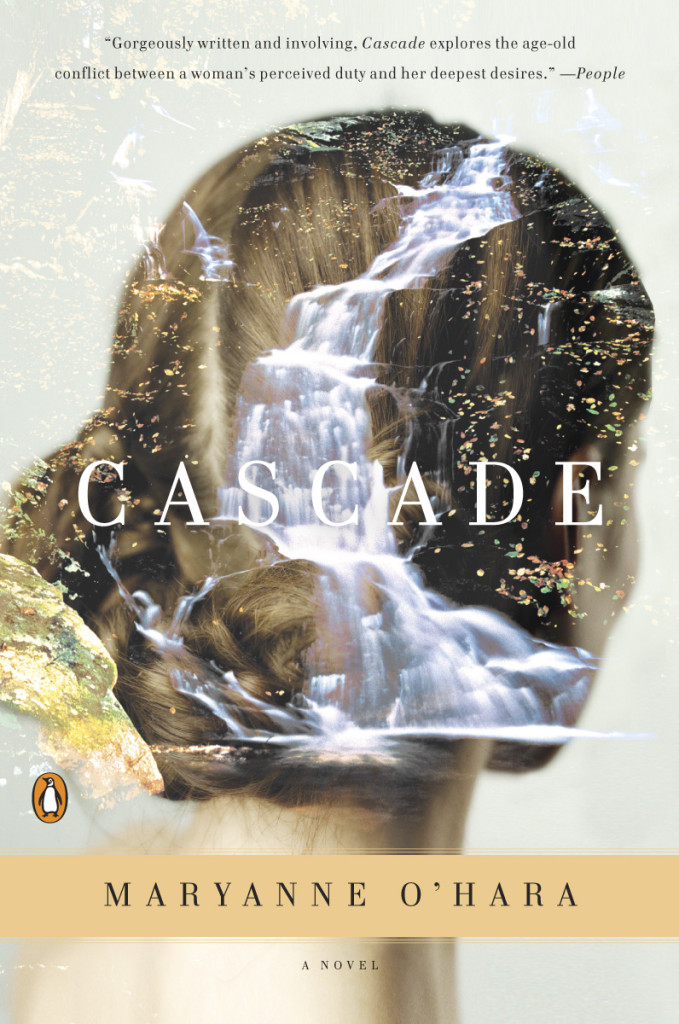
cascade

Love, loss and conflicting loyalties and promises- this story sweeps you into the 1930’s, a town in Cascade, Massachusetts. Who is fighting for their very own survival of a flood that is to create a reservoir for, Boston. A women-Desdemona, who has made promises to her dying father and bound to the man she married. Yet she yearns to for a life of an artist and falls for a young Jewish man. Author Maryanne O’Hara brings you raw emotions in her characters, their lives and gives you a sense of timeless love and beauty. My review coming soon!


Stephanie

The Fifth Knight by E.M. Powell

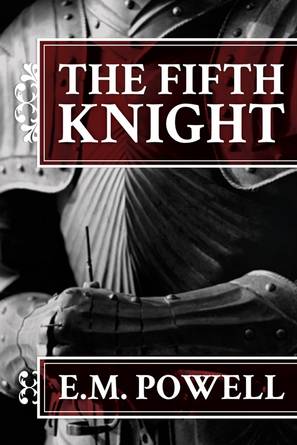
the fifth knight

Publication Date: January 22, 2013
Thomas & Mercer Publishing
Paperback; 390p
ISBN-10: 1611099331

To escape a lifetime of poverty, mercenary Sir Benedict Palmer agrees to one final, lucrative job: help King Henry II’s knights seize the traitor Archbishop Thomas Becket at Canterbury Cathedral. But what begins as a clandestine arrest ends in cold-blooded murder. And when Fitzurse, the knights’ ringleader, kidnaps Theodosia, a beautiful young nun who witnessed the crime, Palmer can sit silently by no longer. For not only is Theodosia’s virtue at stake, so too is the secret she unknowingly carries—a secret he knows Fitzurse will torture out of her. Now Palmer and Theodosia are on the run, strangers from different worlds forced to rely only on each other as they race to uncover the hidden motive behind Becket’s grisly murder—and the shocking truth that could destroy a kingdom.

My review:

To be honest I didn’t expect to enjoy this story as much as I did. This story is definitely what I call a suspenseful thriller. This was a page turner from beginning to end. I know a little of the history that the author writes in this story and I was curious about it when she added a fifth knight. I thought, “How interesting and did she pull this off?” Well, she certainly does, so well in fact that it is believable and intriguing. Everything about this story draws you in. The characters, plot and the beautifully blended historical aspects to the fiction and when you thought you knew the secret that was unfolding, there is a twist you don’t see coming. The author attention to detail is impeccable and realistic that a few of the murder scenes were very dramatic and a bit graphic for my taste. The time period that this story is set in is one of my favorites and I enjoyed the Powell’s rendering of it. She sets the tone for what true historical fiction should read like.

About the Author

E. M. Powell was born and raised in Ireland, a descendant of Irish revolutionary Michael Collins. At University College, Cork, she discovered a love of Anglo-Saxon and medieval English during her study of literature and geography. She is a member of Romance Writers of America, the Manchester Irish Writers, the Historical Novel Society, and International Thriller Writers. A reviewer for the Historical Novel Society, she lives today in Manchester, England, with her husband and daughter.

For more information, please visit E.M. Powell’s website and blog.  You can also connect with her on Facebook, Twitter and Goodreads.

Virtual Book Tour Schedule

Tuesday, April 16 Review at Confessions of an Avid Reader

Wednesday, April 17 Review at Sir Read-a-Lot

Thursday, April 18 Review at Turning the Pages

Friday, April 19 Interview & Giveaway at Sir Read-a-Lot

Monday, April 22 Review & Giveaway at Flashlight Commentary

Tuesday, April 23 Review at Oh, For the Hook of a Book!

Wednesday, April 24 Interview & Giveaway at Oh, For the Hook of a Book!

Thursday, April 25 Review at The Lit Bitch Interview at Bibliophilic Book Blog

Friday, April 26 Guest Post at Historical Fiction Connection

Monday, April 29 Review at A Book Geek

Tuesday, April 30 Guest Post at Kinx’s Book Nook

Wednesday, May 1 Review & Giveaway at Book Addict Katie

Thursday, May 2 Review & Giveaway at Just One More Chapter

Friday, May 3 Review at The Musings of a Book Junkie

Monday, May 6 Review at Layered Pages Review at Overflowing Bookshelves

Tuesday, May 7 Review at Raging Bibliomania

Wednesday, May 8 Review at West Metro Mommy

Thursday, May 9 Review at So Many Books, So Little Time

Friday, May 10 Review & Giveaway at Broken Teepee

Bon Appetit!

Recently I cooked one of my favorite French dishes. Ratatouille and Supremes De Volaille A Brun. This time I made some changes to the recipe and put the two together as a meal. I hope Julia wouldn’t be too disturbed by this! As far as the Ratatouille, I followed the recipe to the law. It’s not as perfect looking as I’m sure Julia would have made it but it sure was yummy! Ratatouille is an Eggplant Casserole with tomatoes, onions, peppers and zucchini. It’s served good with chicken, beef or lamb.

IMG_0398

Supremes De Volaille A Brun is a chicken sautéed in butter. Instead of using flour, I used Panko Bread Crumbs. It gives it more texture. For the Butter sauce, you use clarified butter, minced parsley, and lemon juice! It’s fabulous and so tasty!

IMG_0397

And when it’s all done! Below is the final piece! Food is like art! I added white rice to this dish and served French crusty bread along with it. It goes really well together!

IMG_0401

You can get these recipes’ in Julia Child’s book called, “Mastering the Art of French Cooking.”

Stephanie

Review: Rocamora by Donald Michael Platt

Rocamora book cover

About ROCAMORA

*2012 Finalist International Book Awards for Historical

Fiction

Publication Date: September 26, 2011

Raven’s Wing Books

Paperback; 408p
ISBN-10: 1618070150

Rocamora, a novel of 17th century Spain, is based on the life of Vicente de Rocamora, who struggles to make his place in a Spain obsessed with limpieza de sangre, purity of blood untainted by Jew, Moor, or recent convert.

Poet, swordsman, and master of disguise, at the insistence of his family, Vicente enters the Dominican Order and is soon thrust into the scheming political and clerical hierarchies that at Court.

Vicente becomes Confessor and Spiritual Director for King Philip IV’s teenage sister, the beautiful Infanta Doña María, five years younger than he, protégé and possible successor of Inquisitor General Sotomayor, and an invaluable assistant to the King’s chief minister, the Count-Duke de Olivares.

Vicente needs all his skills and cunning to survive assassination by a growing list of ruthless foes in both Church and Court, solve a centuries-old riddle to quell rumors of his own impurity of blood, and above all suppress his love for the seemingly unattainable María.

Rocamora Book Trailer: http://www.youtube.com/watch?v=RXZthhY6OtI

My review for,”Rocamora”

I have not read very many novels that center around 17th Century Spain, so I don’t know a whole lot about the culture and history. But as you read this story, one can tell this novel is certainly rich with history and has sparked my interest in learning more. One of the great things about Historical Fiction is if the author can pull enough fiction into to it to make it believable and Platt as done that. Well written and beautifully crafted, complex characters, court intrigue, bold themes. Some are dark and graphic but I was able to handle that alright. Fantastic plot with a-ahem-interesting ending. This novel will most definitely entertain you and many of you will admire Vicente, even though you might not approve of his choices. He is a wonderful, intelligent, brave and interesting man.

Through this tale I have learned a lot more of the Roman Church during this period and look forward to doing a little research of my own. My Spanish is a bit rusty, so I had some trouble with the Spanish words through-out. It was a small distraction for me but by no means did it take away from the story. I highly recommend and I can’t wait to read, “House of Rocamora!” below is some information about it. Check it out!

About HOUSE OF ROCAMORA

House of R

Publication Date: November 19, 2012

Raven’s Wing Books

Paperback; 346p
ISBN-10:1618070916

A new life and a new name … House of Rocamora, a novel of the 17th century, continues the exceptional life of roguish Vicente de Rocamora, a former Dominican friar, confessor to the Infanta of Spain, and almost Inquisitor General.

After Rocamora arrives in Amsterdam at age forty-two, asserts he is a Jew, and takes the name, “Isaac,” he revels in the freedom to become whatever he chooses for the first time in his life. Rocamora makes new friends, both Christian and Jew, including scholars, men of power and, typically, the disreputable. He also acquires enemies in the Sephardic community who believe he is a spy for the Inquisition or resent him for having been a Dominican.

As Isaac Israel de Rocamora, he studies Medicine at Leyden and, at age forty-six, receives a license to practice. That same year Rocamora weds twenty-five year old Abigail Touro, and together they raise a large family. During his time in Amsterdam, Rocamora has a bizarre encounter with Rembrandt, serves the House of Orange as physician, and advises Spinoza before the philosopher’s excommunication. He survives a murder attempt, learns from the great English physician Harvey, and a surprise visit from a childhood friend leads to an unusual business venture.

Life is never routine or dull for Rocamora. The intrigues start with his arrival in Amsterdam and do not end until he takes his last breath.

About the Author

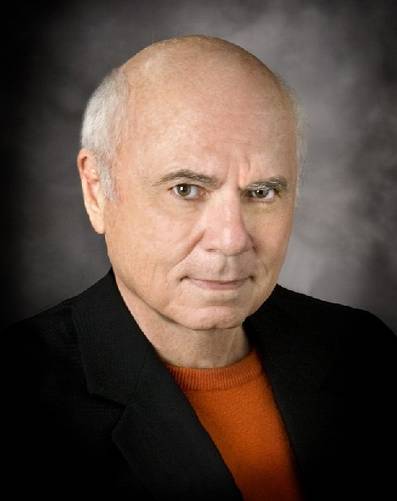
Donald

Born and raised inside San Francisco, I graduated from Lowell High School and received my B.A. in History from the University of California at Berkeley and won a batch of literary cash awards while in graduate school at San Jose State.

When I moved to southern California, I began my professional writing career. I sold to the TV series, MR. NOVAK, ghosted YOUR HAIR AND YOUR DIET for health food guru, Dan Dale Alexander, and wrote for and with diverse producers, among them as Harry Joe Brown, Sig Schlager, Albert J. Cohen, and Al Ruddy as well as Paul Stader Sr., dean of Hollywood stuntman and stunt/2nd unit director. Also, options were taken on my unpublished WWII fighter ace novel and several treatments.

After living in Florianópolis, Brazil, setting of my horror novel A GATHERING OF VULTURES, Dark Hart 2007, Briona Glen 2012, I moved to Florida where I wrote as a with: VITAMIN ENRICHED, pub.1999, for Carl DeSantis, founder of Rexall Sundown Vitamins; and THE COUPLE’S DISEASE, Finding a Cure for Your Lost “Love” Life, pub. 2002, for Lawrence S. Hakim, MD, FACS, Head of Sexual Dysfunction Unit at the Cleveland Clinic.

Currently, I reside in Winter Haven,

Florida. My magnum opus historical novel, ROCAMORA, set in 17th century Spain and Amsterdam during their Golden Ages, was released by RAVEN’S WING BOOKS at the end of December 2008. It has been republished by Briona Glen, September 2011. My completed sequel HOUSE OF ROCAMORA was published by Briona Glen November 2012, and I am polishing a completed novel set in the 9th century Carolingian Empire about another unusual historical character, Bodo, the Apostate.

www.donaldmichaelplatt.com

Rocamora banner

Link to Tour Schedule: http://hfvirtualbooktours.com/donaldmichaelplattvirtualtour/
Twitter Hashtag: #DonaldMichaelPlattVirtualTour

Review: Seduction by M.J. Rose

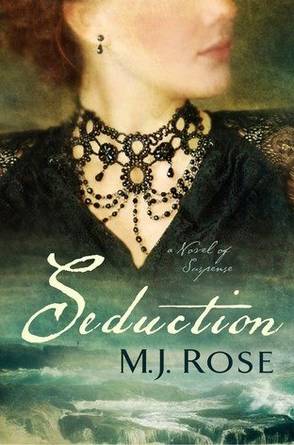
seduction book cover

Publication Date:  May 7, 2013
Atria Books
Hardcover; 384p
ISBN-10: 1451621507
SYNOPSIS: From the author of The Book of Lost Fragrances comes a haunting novel about a grieving woman who discovers the lost journal of novelist Victor Hugo, awakening a mystery that spans centuries.

In 1843, novelist Victor Hugo’s beloved nineteen-year-old daughter drowned. Ten years later, Hugo began participating in hundreds of séances to reestablish contact with her. In the process, he claimed to have communed with the likes of Plato, Galileo, Shakespeare, Dante, Jesus—and even the Devil himself. Hugo’s transcriptions of these conversations have all been published. Or so it was believed.

Recovering from her own losses, mythologist Jac L’Etoile arrives on the Isle of Jersey—where Hugo conducted the séances—hoping to uncover a secret about the island’s Celtic roots. But the man who’s invited her there, a troubled soul named Theo Gaspard, has hopes she’ll help him discover something quite different—Hugo’s lost conversations with someone called the Shadow of the Sepulcher.

What follows is an intricately plotted and atmospheric tale of suspense with a spellbinding ghost story at its heart, by one of America’s most gifted and imaginative novelists.


My Review:

I was so delighted to be able to participate in this book tour. I have not read any of M.J. Rose before and she now has a new fan. What an interesting and intense premise for a story, one I’ve not quite read. There are so many wonderful characters in this story. One of them being Victor Hugo. An author who lived in the nineteenth century. All I really knew about him was his extraordinary talent for storytelling and have read several of his novels. This tale gives you a look into his personal life. His daughter lost her life and I believe he was always haunted by her death. Years later, He began dabbling in séances hoping to contact her. By doing so, he opens a window to an evil force.

In the present, Jac L’Etoile-a women who is recovering from a loss as well-travels to the Isle of Jersey at the request of an old friend. Jac is a mythologist and is wanting to uncover mysteries and secrets of the island. She and her friend discover journals that was written by Victor Hugo.

There is so much more to this story, but I don’t want to give anything away. As your reading this story, you feel as if you are finding an unexpected gift in every page. Hard to describe really. I was instantly absorbed with the imaginative writing. Beautiful prose throughout, suspenseful, descriptive, romantic, mystical- but realistic at the same time- and haunting. I was completely memorized by this tale.

I really admire an author who writes characters in such a way you can connect to them on some level. Even some of the characters’ you will have a love/ hate regard for them. After reading this story, I want to read the whole series now. I highly recommend this brilliantly written novel. I’m giving it a five star rating.

Stephanie

About the Author

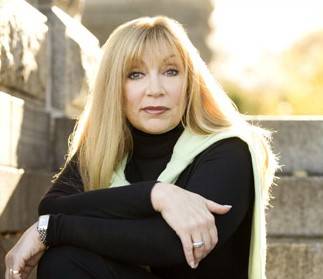
M.J. Rose

M.J. Rose is the international best selling author of eleven novels and two non-fiction books on marketing. Her fiction and non-fiction has appeared in many magazines and reviews including Oprah Magazine. She has been featured in the New York Times, Newsweek, Time, USA Today and on the Today Show, and NPR radio. Rose graduated from Syracuse University, spent the ’80s in advertising, has a commercial in the Museum of Modern Art in NYC and since 2005 has run the first marketing company for authors – Authorbuzz.com.  The television series PAST LIFE, was based on Rose’s novels in the Renincarnationist series. She is one of the founding board members of

International Thriller Writers and runs the blog- Buzz, Balls & Hype.  She is also the co-founder of Peroozal.com and BookTrib.com.

Rose lives in CT with her husband the musician and composer, Doug Scofield, and their very spoiled and often photographed dog, Winka.

For more information on M.J. Rose and her novels, please visit her WEBSITE. You can also find her on Facebook and Twitter.

Link to Tour Scheadule: http://hfvirtualbooktours.com/seductionvirtualtour/
Twitter Hashtag: #SeductionVirtualTour

 seduction tour banner

Review: Roses Have Thorns by Sandra Byrd

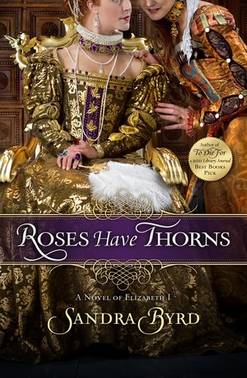
roses have thorns


About ROSES HAVE THORNS

Publication Date: April 9, 2013

Simon & Schuster/Howard Boo

ks
Paperback; 336p
ISBN-10: 1439183163

From the acclaimed author of To Die For comes a stirring novel told that sheds new light on Elizabeth I and her court. Like Philippa Gregory and Alison Weir, Sandra Byrd has attracted countless fans for evoking the complexity, grandeur, and brutality of the Tudor period. In her latest tour de force, she poses the question: What happens when serving a queen may cost you your marriage–or your life?

In 1565, seventeen-year-old Elin von Snakenborg leaves Sweden on a treacherous journey to England. Her fiancé has fallen in love with her sister and her dowry money has been gambled away, but ahead of her lies an adventure that will take her to the dizzying heights of Tudor power. Transformed through marriage into Helena, the Marchioness of Northampton, she becomes the highest-ranking woman in Elizabeth’s circle. But in a court that is surrounded by Catholic enemies who plot the queen’s downfall, Helena is forced to choose between her unyielding monarch and the husband she’s not sure she can trust–a choice that will provoke catastrophic consequences.

Vividly conjuring the years leading up to the beheading of Mary Queen of Scots, Roses Have Thorns is a brilliant exploration of treason, both to the realm and to the heart.

Praise for Roses Have Thorns

“In Roses Have Thorns Sandra Byrd has given the reader another amazing Elin to tell the intimate story of England’s greatest queen, Elizabeth I. What a unique point of view and deeply moving story Helena von Snakenborg provides. Byrd is especially adept at blending political and private lives. This is a timeless women’s friendship novel as well as a poignant love story to cherish–both the roses and the thorns.” (Karen Harper, New York Times bestselling author of Mistress of Mourning)

“There is something golden about this tale of Elin, an eager young woman in a strange land, diligent in her duty but alive to love. A tale gracefully told, even as it renders the terrors of treachery that form the crucible of Elin’s hard-won wisdom. A heartfelt story of loyalty, longing, life-long friendship, and the many seasons of the heart.” (Barbara Kyle, author of The Queen’s Gamble and Blood Between Queens)

“Beautiful prose and masterful research combine to bring this fascinating tale to life, treating the reader to fully realized characters and providing an original window through which we can view Elizabeth’s court. Ms. Byrd’s work will stand as an unforgettable contribution to Tudor fiction.” (D.L. Bogdan, author of The Forgotten Queen)

Layered Pages Review:


Roses Have Thorns is the third novel I have read of Sandra’s and I have thoroughly enjoyed everyone single one of them. With each book, I say, “No, this one is my favorite.” I can’t decide!  She not only gives you wonderful, strong characters but gives you a fascinating and fresh look into the Tudor dynasty. What I like most about her stories is that she does not add brutal and graphic scenes but gives you a rich and vivid picture of how Tudor life was like. Which Sandra has tastefully crafted and has proven you don’t have to have to have all that to write a thrilling and intriguing story.

I really admire the young Elin-the heroine- who later becomes Helena, the Marchioness of Northampton and the second most powerful women in all of England. She earns the trust and loyalty of the Queen. She loves her family and she encourages and lifts up everyone around her.

Her second husband, Thomas is an interesting character. I truly believe he loves Helena, but throughout the story I felt that there was something off about him, that he was hiding something. You’ll have to read the story to find out!

I’ve read so many stories of Queen Elizabeth’s life and her relationship with Lord Robert and I must admit that was becoming tiresome. Sandra gives you just a hint to what their relationship was like, which was refreshing! She didn’t go on and on about it.

Sandra, paints beautiful and wonderful scenes of what court life must have been like during Queen Elizabeth rule. Her portrayal of all her characters are superbly done and she entertains you from beginning to end. I love reading a story that you don’t want to tear your eyes from. You want to immerse yourself in the history and court life. This story is perfect for everyone and more so for new readers of the Tudor period. Five stars for Roses Have Thorns!


About the Author


sandra byrd

Sandra Byrd has published more than three dozen books in the fiction and nonfiction markets, including the first book in her Tudor series, To Die For: A Novel of Anne Boleyn.  Her second book, The Secret Keeper: A Novel of Kateryn Parr, illuminates the mysteries in the life of Henry’s last wife.

For more than a decade Sandra has shared her secrets with the many new writers she edits, mentors, and coaches. She lives in the Seattle, Washington, area with her husband and two children. For more Tudor tidbits, please visit www.sandrabyrd.com. Follow Sandra Byrd on Facebook, Twitter and Pinterest.

roses have throns tour banner

Link to Tour Schedule: http://hfvirtualbooktours.com/roseshavethornsvirtualtour/
Twitter Hashtag: #RosesHaveThornsVirtualTour


Book Deal Announcement!

One of my absolutely favorite authors, Nancy Bilyeau recently released the second book,” The Chalice” as part of her fantastic  Sister Joanna series, which I highly recommend. But if you haven’t read the first book in the series, “The Crown”. One week from today -Friday, April 12th- it will be the Amazon Kindle Daily Deal offered at ONLY $1.99 for just 24 hours! So mark your calendar and spread the word!


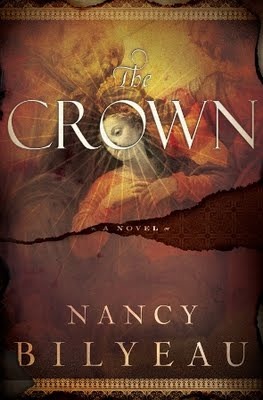
the crown