Interview with Author Mona Rodriguez

Forty years in a day book cover

Hello Mona! I read Forty Years In A Day and was absolutely intrigued with your story. Could you please tell your audience about your book?

Mona: Thank you, Stephanie, for hosting us today. It’s a pleasure. Our story begins in Italy, 1900. After years of torment and neglect, Victoria and her four small children immigrate to Hell’s Kitchen, New York, to escape her alcoholic, abusive husband. On the day they leave, he tragically dies, but she does not learn of his death for several years—a secret that puts many lives on hold.

​

Quickly, they realize America’s streets are not paved with gold, and the limits of human faith and stamina are tested time and time again. Poverty, illness, death, kidnapping, and the reign of organized crime are just some of the crosses they bear.

Victoria’s eldest son, Vincenzo, is the sole surviving member of the family and shares a gut-wrenching account of their lives with his daughter during a visit to Ellis Island on his ninetieth birthday. He explains how the lives of he and his siblings have been secretly intertwined with an infamous Irish mob boss and ends his unsettling disclosure with a monumental request that leaves Clare speechless.

The story takes the Montanaro family through several decades, providing the reader an opportunity to stand in the shoes of a past generation and walk in search of their hopes and dreams. It is layered with the struggles and successes of each family member, illuminating the fact that human emotions have been the same throughout generations; the difference is how people are molded and maneuvered by the times and their situations.

Stephanie: Is this story based on anyone you know or who you have come across?

Mona: The characters are based on family members, both deceased and living. I’ve had this particular story churning in my head for many years, sparked by the stories of my family’s past. Forty Years In A Day begins in 1900 and follows the incredible journey of a young mother and her four children as they escape from Italy into the streets of Hell’s Kitchen, New York. That woman was my grandmother. The story ends with a woman who knows the father of her children is living a double life with another, but she loves him so much that she overlooks the arrangement rather than forfeit the man. Those were my parents. In between are the stories that I had heard from family members, intertwined with a twist of fiction and sensationalism to have some fun.


Stephanie:  Were there any challenges you faced while writing this story?

Mona: There were many challenges that I had faced undertaking this project. First and foremost, I had the idea of the story in my head before I had the skills to share it. I’m a mathematician and an environmentalist so this challenged the other side of my brain. While writing is something I always admired, to me, the passion was in the story and the writing was the vessel to get it told.

Second, people ask me how much of our book is realistic; especially family members who want to know if this is the actual story of what had happened. They try to draw a parallel between family members’ personalities and our characters’ personalities. The truth is that no one can totally piece together that puzzle of tales; there are parts to every family’s story that were pushed under the rug for fear it would tarnish the family’s reputation. The elders think they are doing their family justice by taking some of the more scandalous stories with them to the grave. When, as a writer, you realize all this, you are forced to conjure your own conclusions from the pieces of stories that you gather.

Third, I coauthored the book with my cousin Dianne Vigorito. She gave me the support and validation I needed to pursue this project. I was lucky to find a family member to work with, and she had an immediate interest in the idea. She grew up hearing the same crazy stories, some of which were almost unbelievable, that were told by our ancestors.  Working with another has taught me the power of more than one and the art of compromise.

Stephanie: Was there a particular scene you felt difficult to write?

Mona: The story of Vinny and Ava represents my parent’s story and the story that resonates closest to my heart. When they were alive, I had discovered secrets about their past that they didn’t want my siblings and me to know. When they died, I felt more compelled to delve into their past, but no one could (or would) tell me the whole story. I realized that I should have asked more questions when they were alive, been more adamant to learn the truth. I questioned aunts and uncles, but I sensed there were bits of their lives, and everyone’s in our story, that would never be unearthed. The story of Vinny and Ava is conjured from the pieces of stories I had put together, and my interpretation, especially emotionally, of what had happened between my parents.

Stephanie: What was the inspiration for your story?

Mona: We don’t realize what our ancestors went through to make life better for themselves and for us. What they faced was incredible—the living conditions, poverty, disease—and their work ethic was admirable. Although I had started with the intention of writing a story about my father’s family, it turned into a novel. There was so much more I wanted people to know about this fascinating era.


Stephanie How long did it take to write, Forty Years In A Day?

Mona: I started by writing down the stories I had heard and interviewing the elders that were still alive. It took seven years—researching, attending seminars, workshops, conferences, and reading everything from books on how to write dialogue to reading mainstream fiction and rereading classics. I also studied the history and lifestyles of the era.  Dianne and I worked on our own, and we also worked together several days a week, collaborating, rewriting, and editing. I had a story to tell and I knew it had to be told.


Stephanie: You did a fantastic job with your research. It’s truly a beautiful and thought provoking story. And I believe it’s written in such a way that the story transcends you into that period and gives you a wonderful picture of the human conditions.  


Is there a sentiment you hope readers come away with after reading your story?

Mona: Forty Years In A Day is more than an immigration story about an Italian family; it epitomizes the immigration experience and coming to America in the early 1900s. It reignites curiosity and admiration for what our ancestors had endured and accomplished to make our lives better. There are many themes that run throughout the story—the loss and rebound of hope, honesty, perseverance, forgiveness, survival, the list goes on—but I think the main theme is the importance of family. Forty Years In A Day also reminds us that every family has hidden secrets and that the choices one person makes echoes through generations.

Stephanie: The different themes in your story was well written and I felt that some of them hit home with me. Your story has given me a lot to think about. Especially about family and relationships.


Is there a character that you feel connected to in any way?

Mona: I have a connection to all the characters, but the one I admire the most is Victoria. She was an amazing woman who wanted to do the right thing for her children. Without giving away the story, I often wonder how she summoned the strength to do what she did, and if I would have been so courageous. She did it not so much for herself, but for her children. She was the ultimate mother.

Stephanie: I admired Victoria as well. She certainly pulled at my heart strings. What book project is up next for both?

Mona: There are six cousins at the end of our story. The idea is to take that next generation into the next era.

Stephanie: Ooo…I’m really looking forward to reading your next book! What advice would you give to an aspiring author?

Mona: Read the works of authors you enjoy and respect, study and practice the craft, and try to develop a personal style and formula for success.  When reading a diverse collection of books, you take away, along with the story, a little of each author’s craft.

Thank you, Mona!

About the Authors

Mona & Dianne


Mona Rodriguez coauthored Forty Years in a Day with her cousin Dianne Vigorito.
Throughout their lives, they had heard many stories from family members that
were fascinating, sometimes even unbelievable, and decided to piece together
the puzzle of tales. Through research and interviews, their goal was to create
a fictional story that follows a family through several decades, providing the
reader an opportunity to stand in the shoes of a past generation and walk in
search of their hopes and dreams. What they realize in the process is that
human emotions have been the same throughout generations – the difference is
how people are molded and maneuvered by the times and their situations.

Mona Rodriguez has her MS in environmental Management from Montclair State
University. She is presently a trustee on the board of directors of a nonprofit
foundation created to benefit a local public library and community. She lives
with their husband in New Jersey, and they have two grown sons.

For more information, please visit the official website.

http://www.fortyyearsinaday.com/

BOOK TRAILER:  http://www.youtube.com/watch?v=AfJ5p4qCzmM&feature=youtu.be
forty years in  a day tour banner

Link to Tour Schedule: http://hfvirtualbooktours.com/fortyyearsinadaytour/
Twitter Hashtag: #FortyYearsTour
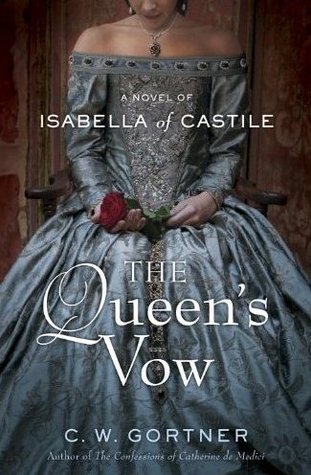
Review: The Queen’s Vow by C.W. Gortner

The Queen's Vow

No one believed I was destined for greatness.

So begins Isabella’s story, in this evocative, vividly imagined novel about one of history’s most famous and controversial queens—the warrior who united a fractured country, the champion of the faith whose reign gave rise to the Inquisition, and the visionary who sent Columbus to discover a New World. Acclaimed author C. W. Gortner envisages the turbulent early years of a woman whose mythic rise to power would go on to transform a monarchy, a nation, and the world.

Young Isabella is barely a teenager when she and her brother are taken from their mother’s home to live under the watchful eye of their half-brother, King Enrique, and his sultry, conniving queen. There, Isabella is thrust into danger when she becomes an unwitting pawn in a plot to dethrone Enrique. Suspected of treason and held captive, she treads a perilous path, torn between loyalties, until at age seventeen she suddenly finds herself heiress of Castile, the largest kingdom in Spain. Plunged into a deadly conflict to secure her crown, she is determined to wed the one man she loves yet who is forbidden to her—Fernando, prince of Aragon.

As they unite their two realms under “one crown, one country, one faith,” Isabella and Fernando face an impoverished Spain beset by enemies. With the future of her throne at stake, Isabella resists the zealous demands of the inquisitor Torquemada even as she is seduced by the dreams of an enigmatic navigator named Columbus. But when the Moors of the southern domain of Granada declare war, a violent, treacherous battle against an ancient adversary erupts, one that will test all of Isabella’s resolve, her courage, and her tenacious belief in her destiny.

From the glorious palaces of Segovia to the battlefields of Granada and the intrigue-laden gardens of Seville, The Queen’s Vow sweeps us into the tumultuous forging of a nation and the complex, fascinating heart of the woman who overcame all odds to become Isabella of Castile.

Praise for The Queen’s Vow

“A masterwork by a skilled craftsman . . . Make a vow to read this book.”—New York Journal of Books

“A beautifully crafted piece of historical fiction . . . Gortner’s vivid details blend with his deeply intensive research to re-create Isabella and Castile in a way that the reader will find compelling and immersive, bringing not just the Queen but the whole nation to life.”—RT Book Reviews

“A fascinating story . . . Through his creative and spellbinding storytelling, Gortner’s readers come to know Isabella intimately in mind, heart and body as she lives through a tumultuous time, her intense longing to be the determiner of her own unique destiny.”—Wichita Falls Times Record News

“A novel of triumph as Isabella vanquishes her enemies one by one . . . [She is] a very human and appealing character.”—The Roanoke Times

“Politically charged, passionate . . . [a] well-researched, intriguing historical.”—Bookreporter


Review:


If you are looking for the perfect introduction to Isabella of Castile, then this is the story for you. At an early age she shows such potential of being the women she has yet to be become. She is an extraordinary women who often faced danger, betrayal, and uncertainties of who she can trust. I greatly admire her intelligence and determination. There are bigger forces at work in this story that I was drawn to other than Isabella becoming Queen in my opinion. I often wonder if later on in her rule of Spain, if she wasn’t so much influenced by the men around her- would she still have acted on the decisions that were made about the Jewish people. Would have all that have been prevented? But I believe she struggled with this greatly and did not relish in the killings of the Jews. Religious persecution started long before her time and has continued through the ages. This is definitely an intense period that Gortner writes about and I believe he has given us a realistic and brilliant portrayal.

There is a banner I posted on a review group saying. ”There is no mistaking a real book when one meets it. It is like falling in love.” That is exactly how I feel about The Queen’s Vow. I highly recommend this novel and hope you will enjoy it as much as I did.

Stephanie

Layered Pages

http://hfvirtualbooktours.com/thequeensvowvirtualtour/


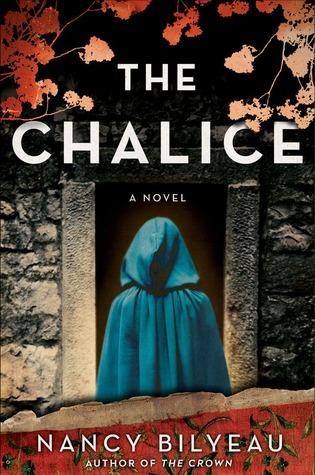
Review: The Chalice by Nancy Bilyeau

the chalice

Nancy Bilyeau is building a solid series with her second book centered around Joanna Stafford, a novice who is forced to build a new life for herself after the dissolution of Dartford Priory. While the first book was very good, The Chalice is brimming with even more intrigue and insight into the clash of religion and state during the tumultuous reign of Henry VIII.

Bilyeau is able to bring the great struggle to life through her creation of conflicted characters trying to maintain their principles and beliefs in a time that is at best confused and at worst at odds with the wish of her heroine to live a simple life of devotion. The author’s scholarship is evident in the vivid detail and entwined plot lines of the story.

This last book has left me even more interested to see what will become of Joanna Stafford as she follows a tenuous path through the upheaval of her personal life in the political landscape.

Reviewed by Elizabeth Peterson Seidle

Layered Pages Review Team Member

Interview with Author Trini Amador

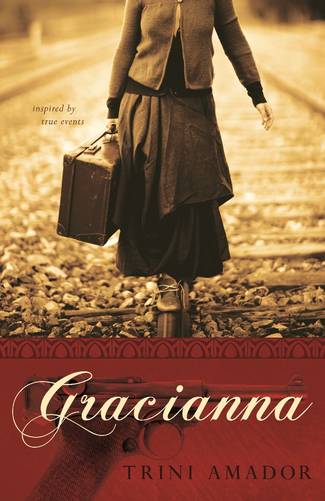
Gracianna


Hello, Trini. I am currently reading, Gracianna and it is a beautiful story. Please tell your audience a little about it and what inspired you to write it.

Hi Stephanie and thanks so much for inviting me to Layered Pages. I really appreciate your work.  I was inspired to write Gracianna because my great-grandmother, Gracianna, used to say to be “thankful” when I was little. At four-years old how can a little boy understand that concept? But over the years I wondered about its meaning. As I say, to many folks, one may not be able to fully understand what “gratitude” really means until we are in our 40’s or 50’s or even older.  

What are some of the true aspects in your book?

The story is bookended… the very open of the story and the very end are factual. And interspersed throughout the book are many, many factual elements.  When I was a very young boy I was found walking around my grandmother’s living room with a loaded German Luger in my hand.  While doing research for the book I learned that my aunt met her grandmother Gracianna’s sister, who I had not heard of and remembers seeing the “mark,” the “tattoo” under her forearm.  She remembers the whispers and that it was not polite to point it out.  My grandfather was a shepherd when he came to the US with his wife. The story of the coin (as an IOU) in the book is all true.

Was there research involved?

Yes, there was tons and tons research! Everything from learning the myth of the Pyrenees Mountains to learning details of World War II, the French Resistance and Auschwitz. I traveled to the Basque Country – my great-grandmothers homeland to get the feel of the topography, (steep) culture (hard work, food and wine) and feeling (a contradiction of the old and the new). That took me to Paris. I learned about the occupation and the attitude of the Parisians and France as a whole. It was depressing.   I sat in the middle of the city taking it all in and then imagined the panzers and half-tracks rolling down the streets. I studied the Le Meurice Hotel, a grand dame hotel whose history is undeniable. I wanted to ensure readers considered what it must have been like for frolicking glitterati of Paris to have been there one day and the entire European Nazi Command rattling through its halls the next.

Then there was Auschwitz. My research took me to Warsaw and Krakow. It was bitter cold. The day I arrived at the concentration camp it was sunny but still bitterly cold. Everyone I came in contact with had a red nose and cheeks. One’s breath fell from the weight of its moisture. The area was devoid of emotion. It was sullen, silent and sunny…but frozen. I could not imagine the desperation. But I tried to convey the feeling I had that day.

What is the most challenging thing about writing stories that take place in the past?

For me writing about to day or the past is the same. Am I able to convey the emotion appropriately? Can my reader appreciate what the character is feeling?  Am I appropriately delivering an evocative scenario? Is it real? Is it relevant? Believable? Does it move the story forward? Is it compelling? Is it interesting?

What was the most challenging scene you wrote and why?

Wow, there were several but one that comes to mind, without spoiling the story line was the very traumatic experience that Gracianna experienced when she was eight years old. Born, “Father Unknown,” Gracianna’s mother was her only link to the future. But when her mother had complications in childbirth everything changed. I dug deep to find an experience that I could relate to in my own life that helped me to express the depth of fear, anger and hurt that she may have experienced.

 Is there a character in your story you relate to the most as far as personality?

It’s funny. Readers that know me have recently told me that they see me in Gracianna. I did not write the story from that perspective. In reality I think I am reflected in parts of each character.

What is your next book project?

Why Stephanie… you are incorrigible. My publisher and others are encouraging me to write the sequel to the Gracianna story. But I have already written an outline for a book that depicts an experience that I had when I was in the music business in Hollywood in the early 90’s. My editor, Hillel Black, who has edited 20 New York Times best sellers has also expressed his interest in working with me again as well. What a joy! I may have to write another book just to have the chance to collaborate with Hillel again.

What genre do you like most?

I enjoy reading short stories. I enjoy to feeling a story develop quickly and get to the point. The opposite of what I just wrote. I knew the story I was telling but I purposefully tried not to get there too fast. This piece need a long introduction to clearly understand the characters and their motivation. I wanted the reader to fully appreciate why they would act the way they would in the future.

What is the truly last great book you have read and that inspired you?

I am inspired by anything that F. Scott Fitzgerald wrote. I love the pacing and the clarity and the delivery. There are some linkages between Gatsby and my story. Constance, Gracianna’s sister had many of the characteristics of Daisy Buchanan. She was an attractive and bubbly, shallow and selfish unaware how her actions could affect anyone. Both became acutely aware of their actions along the way.

What is your favorite quote?

…from Chilkoot Charlie’s in Anchorage, Alaska, “Where we cheat the other guys and pass the savings on to you.” 🙂

Thanks for inviting me, Stephanie!

Thank you, Trini!


Trini


Trini Amador  vividly remembers the day he found a loaded German Luger tucked away in a nightstand while wandering through his great-grandmother’s home in  Southern California. He was only four years old at the time, but the  memory remained and he knew he had to explore the story behind the gun.  This experience sparked a journey towards Gracianna, Amador’s debut  novel, inspired by true events and weaving reality with imagination.  It’s a tale drawing from real-life family experiences.

Mr. Amador is a traveled global marketing “insighter.” He is a  sought-after guru teaching multinational brand marketers to understand  how customer and consumer segments behave based on their needs, values,  motivations, feeling and values. He has trained over five thousand brand marketers on how to grow brands in over 20 countries in the last 15  years. His counseling has been valued at global brands including General Electric, Microsoft, AT&T, Yahoo!, Sun Microsystems, Google, Jack  Daniel’s, The J.M. Smucker Co., DuPont, Mattel, and Rodale, Inc..

Amador is also a founding partner with his wife and children of  Gracianna Winery, an award-winning winery located in Healdsburg,  California. The winery also pays tribute to the Amador Family’s maternal grandmother, Gracianna Lasaga. Her message of being thankful lives on  through them. The Gracianna winery strives to keep Gracianna’s gratitude alive through their wine. Learn more at: www.gracianna.com, like Gracianna Winery on Facebook or follow them on Twitter @GraciannaWinery.

Amador resides in Sonoma County with his family.


Link to Tour Schedule: http://hfvirtualbooktours.com/graciannavirtualtour/
Twitter Hashtag: #GraciannaTour


Gracianna banner


Review: The White Princess by Philippa Gregory

the white princess


The White Princess opens as the news of the battle of Bosworth is brought to Princess Elizabeth of York, who will learn not only which rival royal house has triumphed, Tudor or York, but also which suitor she must marry: Richard III her lover, or Henry Tudor her enemy.

A princess from birth, Elizabeth fell in love with Richard III, though her mother made an arranged betrothal for her with the pretender to the throne: Henry Tudor. When Henry defeats Richard against all odds, Elizabeth has to marry the man who murdered her lover in battle, and create a new royal family with him and his ambitious mother: Margaret Beaufort, The Red Queen. But, while the new monarchy can win, it cannot, it seems, hold power in an England which remembers the House of York with love.

The new king’s greatest fear is that somewhere, outside England, a prince from the House of York is waiting to invade and re-claim the throne for the house of York. Fearing that none of his new allies can be trusted, Henry turns to his wife to advise him, all the time knowing that her loyalties must be divided. When the young man who would be king finally leads his army and invades England, it is for Elizabeth to decide whether she recognizes him as her brother and a claimant to the throne, or denies him in favor of the husband she is coming to love.

Description from Goodreads.


Expected publication: July 23rd 2013 by Touchstone


My review:

There were a few things in this story that stood out and I found interesting considering some of the history facts or speculations- if you will- that I know. In Gregory’s story Elizabeth of York and Richard lll were lovers. I don’t know a whole lot of details during this period but from what I heard there is evidence that Richard was extremely fond of Elizabeth, but not to the extent of being lovers.

Henry and his mother (Margaret Beaufort) were often times harsh, belittling, and unfeeling towards Elizabeth. That did not sit well with me at all. I felt that if Elizabeth would only wise up to the fact that she indeed had power, and if she would only discover it... (Did she discover that you ask? That is something you will have to find out.) I came to the conclusion early on in the story that maybe one of the reasons why she was treated as she was by her husband and mother-in-law…. was because they knew what power she could possibly wield and kept her down because of it. That is one way to look at it.

Gregory gives an interesting perspective of Henry’s character and it was a real issue for me. He became agitated, fearful and obsessed with being de throne. His behavior reminded me of someone on the edge of losing it completely. As I continued reading on I kept on thinking, “If Henry’s name or his obsession and fear of a pretender who could possibly over throw him was mentioned one more time I was wanting to jump right in the book and give him a good shake and a what for!

The overall dynamics of Henry, Margaret Beaufort and Elizabeth’s relationship is bold and complicated- in this story- to say the least. I did rather liked how Elizabeth’s character developed towards the end and the outcome of that. Elizabeth’s thoughts and feelings toward her husband and mother-in-law is certainly a complex one and she is someone I think we could all learn a thing or two from. Although it is in the present tense, it was interesting to read this story in her point of view. I felt it could have been presented to the reader a bit stronger than written.

History in my view tends to be subjective. Whether how an historian or an historical fiction writer is interpreting the past, the key is to make it believable. In historical fiction- readers asked themselves, “Could this have possibly have happen this way and does it blend well with the fictional aspects of the story?” “Or is it historically accurate?” As an avid reader of history and historical fiction-this story I did not always get that feeling, if you will. Although, in the author’s notes, Gregory says, “This book is written on a number of levels. It is a fiction about a mystery-so two steps from any historically recorded facts; but at the heart of it are some historical facts that you can rely on, or study for yourself.” So I will leave it up to you-the reader-to form your own opinions.

How this story was written and the characterization certainly has given me food for thought and I look forward to doing further research to draw my own conclusions. I recommend this novel to people who enjoy lite Historical Fiction.

Stephanie


Review: Call Me Zelda by Erika Robuck

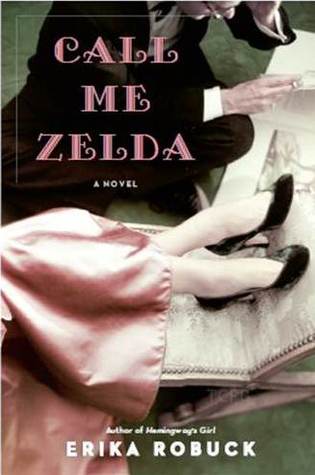
call me zelda

Committed to a Baltimore psychiatric hospital in 1932, Zelda vacillates between lucidity and madness as she fights to forge an identity independent of her famous husband. She discovers a sympathetic ear in her nurse Anna Howard, who finds herself drawn into the Fitzgerald’s tumultuous lives and wonders which of them is the true genius. But in taking greater emotional risks to save Zelda, Anna may end up paying a far higher price than she ever intended.

In this thoroughly researched, deeply moving novel, Erika Robuck explores the boundaries of female friendship, the complexity of marital devotion, and the sources of both art and madness.


Review:


Confession: I’ve never read a Fitzgerald novel – not even The Great Gatsby. I had no idea that Zelda Fitzgerald was a talent in her own right, let alone that she had published a novel of her own. Their early years were so glamourized, and I had happily settled down for a recounting of their early, glamorous years full of maddening creativity and parties. But then – then, I heard a broken Mrs. Fitzgerald say “call me Zelda,” and with one look from her piercing eyes I was drawn quietly into Anna’s story of being nurse and friend to the famous writer’s wife.


I say Anna’s story because it is her story. This is not a book portraying an in-depth look at Zelda’s life. It’s about what comes after the party, the glamour, the ravages of broken bodies and minds, the horrors of world war and the suppression of creativity. Anna is a paradox of a character: she is strong yet susceptible – not in a cutesy heroine way – but in a true way. She has lost her husband and child, yet finds fulfillment and meaning in her work. Her work with Zelda consumes her, at first because she yearns for escape, then because she comes to love Zelda as a dear friend. Anna’s friendship becomes a necessary balm to Zelda’s soul. As Zelda retreats deeper into the dark places of her mind and away from Anna, the big question is, will Anna choose to not merely exist, but live?


Call Me Zelda touches on many themes, but Robuck makes them flow together seamlessly – or rather flow in the often jarring and crazy timing in which life produces them. The characters and setting descriptions are true to the period. Despite the numerous obstacles the characters face, I came away believing that there is beauty found in life’s mangled messes and hope for redemption in the brokenness.


Reviewed by Beth Bulow

Layered Pages Review Team Member


Review: The Chosen Shell by Katherine Sartori

The Chosen Shell

After the onslaught from a vocal and sometimes impertinent media about the troubled state of the Vatican and Catholicism, Katherine Sartori’s The Chosen Shell is a nice surprise. It is not as in-your-face flashy as some books and television series like the Borgia’s are, though that is not to say that there are not a few gritty scenes. The sincerity and genuineness of Satori’s voice comes through the narrative in a way that does not cover up what so many non-believers (and some believers) find hypocritical in the church’s teachings versus its practices and attitudes expressed in the daily life’s of its followers, nuns and leaders.

The Chosen Shell is fiction and memoir combined. Because of this and the subject matter, the life of an introverted troubled teenager who on the cusp of a turning into an adult decides to become a nun, the flow of the novel was at times a bit slow. There were times I wanted the story to move along. The Chosen Shell is not a literary novel, but it could have been, and could be, if Sartori expanded on the other characters and allowed them to bring out more of the main character, Celie, through action or dialogue.

I absolutely love Satori’s description of San Francisco and Muir Woods having visited both places a number of times. I felt at home, like I was part of the action. I also liked Sartori’s description of the convent and other places Celie and other nuns gathered. It is a world that I wanted to learn about; Sartori is a diligent charismatic guide.

I loved about the novel was the way Sartori incorporates the writing life into the narrative, from the time she was a school girl in school through to the end. Celie feels and acts like a writer in the novel. I empathized with her struggle to maintain her voice even as her identity as an author is threatened by her vocation.

The Chosen Shell is a gem, one that I would highly recommend. I would give it on Goodreads 4-4.5 stars.

Reviewed by Susan Berry

Layered Pages Review Team Member

Reviews for 2014

Pretty soon I will be working on the list of books I will be reviewing for 2014. If you’re interested in me reviewing your lovely novel, give me a shout out! Remember, I favor Historical Fiction (no erotica, witchcraft or paranormal) and I will only be accepting 12 books for review! Oh, and one more thing….I’m adding Christian Fiction to the list! Thanks!


layeredpages@yahoo.com for my review guidelines!


Stephanie

Layered Pages

Review: Interred with Their Bones by Jennifer Lee Carrell

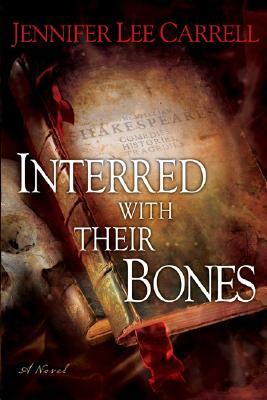
Interred with their bones

What do you say when an author combines Shakespeare with a mystery that traverses two different lifetimes? And it’s the author’s first work of fiction, no less? Amazing. Could it have been better? Of course. There’s not many works that cannot stand to be improved.

For lovers of Shakespeare, as I am, Interred is a delight, as Carrell includes copious amount of detail about the writer, his life and works, the on-going debate as to his identity, and the search for works that could be attributed to him. Athenaide’s “Hamletonian” estate, including the trick of hidden passageways that lay behind fireplaces, was a nice bonus.

The mystery part seemed almost to be a part of the back story, Shakespeare the motivating force of the book. Hints of this were found in the sudden appearance of a British detective inspector (in American terms – a plain clothes police detective) in the States and the way Athenaide’s housekeeper ended up collapsing in the driveway. A little warning or foundation for these, and others like them, would have helped smooth over the rough edges. My other main concern was the pile up bodies and Kate’s somewhat lack of concern of whom might be doing it – a continuing naiveté that should have been dispelled after the second body?

That being said, I loved Kate in that she made me want to go out and conduct research and read some Shakespeare. The ending was better than most mysteries, which seem to end with all the threads tied, all the issues resolved. It was also a surprise, which seemed to pull the mystery out of the back story and merge it with the Shakespearean elements.

Overall, I would give it 3.5 stars, if Goodreads accepted half stars.

Reviewed by Susan Berry

Layered Pages Review Team Member

Review: Cascade by Maryanne O’Hara

cascade

Love, loss and conflicting loyalties and promises- this story sweeps you into the 1930’s, a town in Cascade, Massachusetts. Who is fighting for their very own survival of a flood that is to create a reservoir for Boston. A women-Desdemona, who has made promises to her dying father and bound to the man she married. Yet she yearns to for a life of an artist and falls for a young Jewish man. Author Maryanne O’Hara brings you raw emotions in her characters, their lives and gives you a sense of timeless love and beauty. I have to admit when I opened the first page and started reading, I had a hard time getting into it. So I stepped away for a few days and went back to it. Because I literally had just finished a book that was set in the 19 Century and I picked this one up immediately afterwards.  Not the best idea in the world….once I picked it up again, the story drawled me in and I was memorized. I truly admire the authors writing style and her way with characterization. The story all around is just beautiful-like I mentioned above and I highly recommend this novel.

Stephanie

About the Author

Maryanne O'Hara

Maryanne O’Hara was the longtime associate fiction editor at the award-winning literary journal Ploughshares. She received her MFA from Emerson College fifteen years ago, and wrote short fiction that was widely published before committing to the long form. She lives on a river near Boston.

http://www.maryanneohara.com/

CascadeTourBannerFINAL1_zpsa7f9bbc0