 I’d like to welcome back E.M. Powell to Layered Pages.
E.M. Powell’s medieval thrillers The Fifth Knight and The Blood of the Fifth Knight have been number-one Amazon bestsellers and on the Bild bestseller list in Germany.
Born into the family of Michael Collins (the legendary revolutionary and founder of the Irish Free State) and raised in the Republic of Ireland, she lives in north-west England with her husband, daughter and a Facebook-friendly dog.
She reviews fiction and non-fiction for the Historical Novel Society, blogs for English Historical Fiction Authors and is a contributing editor to International Thriller Writers’ The Big Thrill magazine.
Hi, E.M.! Thank you for chatting with me today. It is always a pleasure having you visit Layered Pages. Before we start talking about your book, tell me how you got into Historical Fiction and why you chose the 12 century as your period?
Hi Stephanie and a pleasure to chat with you as always!
As for how I got into Historical Fiction, I’m probably the same as many writers of it— I read it first. I loved some of Jean Plaidy’s novels when I was younger. I was also a fan of crime novels. The jackpot for me was when I first read Agatha Christie’s Death Comes as the End, her standalone historical mystery set in Ancient Egypt, which combined both of my favorite genres. As for writing, my first attempt at a novel was a 120,000 page contemporary thriller with romantic elements, quite rightly rejected by agents and publishers many, many times. I needed to learn my craft. In the process, I shifted from contemporary to historical because I loved historical worlds and I could expand my creative horizons.
I chose the 12th century because one of history’s most infamous murders, the murder of Archbishop Thomas Becket in Canterbury Cathedral, took place in 1170. That murder was the premise for my first published novel, my historical thriller, The Fifth Knight, which features my fictional hero, Sir Benedict Palmer.
Please tell me the premise of your story.
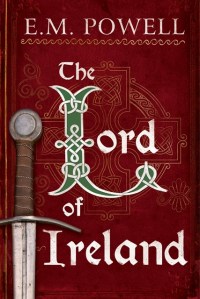
My latest release is book #3 in the Fifth Knight series, The Lord of Ireland. Palmer is called back into the service of his king, Henry II, once again.
Henry first arrived in Ireland in 1171. He had already sent troops there and he wanted to stamp his authority on it. But by 1185 it was in a state of major unrest, with native Irish kings and Henry’s Anglo-Norman barons who had taken Irish lands fighting it out for power. The King had an ingenious solution: make his eighteen year old son Lord of Ireland and send him over to sort it out. And that son was John. Yes—the John who would one day be Bad King John. Unknown to John, Henry has also sent his right-hand man, Palmer, to root out the traitors he fears are working to steal the land from him.
But Palmer is horrified when John disregards Henry’s orders and embarks on a campaign of bloodshed that could destroy the kingdom. Now Palmer has to battle the increasingly powerful Lord of Ireland. Power, in John’s hands, is a murderous force—and he is only just beginning to wield it.
What do you think of Prince John? He is an Historical figure people love to loath!
It says something about a British Royal when even Disney has a pop at them. John’s portrayal as a thumb-sucking lion prince in the classic animation Robin Hood is only one of many unflattering renditions of him.
Trouble is, they aren’t far off the mark. John acquired his terrible reputation by simply being John. Suffice to say, his campaign in Ireland was a disaster—a gift to me as a novelist. A further gift was that the King’s clerk, Gerald of Wales, went with John, leaving us many first-hand accounts of what went on.
John’s first act was to insult the Irish. A group of powerful Irish chieftains came to pay tribute to him as Henry’s representative, greeting him as their lord. John’s response? Well, according to Gerald, John ‘pulled some of them about by their beards, which were large and flowing according to the native custom.’ Suitably angered and very unimpressed, the Irish made for the court of one of the Irish kings, where they reported back on the insults and how John was ‘a mere youth…a stripling who only listened to youthful advice.’ Worse, they decided that rather than make peace with John, they would ‘plot to resist [John’s force]…guard the privileges of their ancient freedom’ with their lives, and ‘make pacts’ to resist him. Oh, John.
Meanwhile, John began making grants of land to his own friends— land that loyal supporters of Henry already held. The result, according to Gerald, was that those who were dispossessed ‘went over to the side of the enemy.’ There were losses of life on both sides. John (or rather, his more able men) made a few gains, but his forces were well and truly routed in equal amounts by some of the native Irish kings. His less able men drank, caroused and fought with each other. When John failed to pay them, they deserted.
One would have thought that John would have accepted some responsibility for his failings. But no. Instead, he went back to England and Henry, accusing one of Henry’s men of treacherous dealings with the Irish. That man was the Anglo-Norman Hugh de Lacy, Henry’s first Lord of Meath.
For those of who do not know what Anglo-Norman is, will you explain?
‘Anglo-Norman’ can mean the dialect of the Normans as used in England after the Norman Conquest of 1066. The ‘Anglo-Normans’ in the context of Irish history refers to those invaders/settlers who arrived in 1169 and after at the behest of Henry II and an Irish king, Diarmait Mac Murchada (Dermot MacMurrough). As well as ‘Anglo-Norman’, the incomers can be/have been described as Norman, Cambro‐Norman (those who came from Wales, such as the family of Gerald of Wales) and Anglo‐French. Contemporary Irish sources invariably described them as Saxain— the English.
What are the emotional triggers of your characters and how do they act on them?
Character development forms the backbone of a novel. Without it, you simply have Things Happening and no-one cares very much, no matter how high stakes those events are. I like to write character bios for all my main characters. That way, I know who those characters are and what drives them. It can be love, greed, ambition, loss, fear and whatever mix is needed.
What are your thoughts of Henry II?
Henry was a complex man, with huge energy and drive. There are terrible events that can be laid at his door, like Becket’s murder. His involvement in Ireland in the 12th century certainly had enormous and tragic implications for my homeland. But there is also much to admire about him. His reorganization of the judicial system, for instance, stands out. His Assize of Clarendon in 1166 established procedures of criminal justice, with courts and prisons for those awaiting trial with speedy and clear verdicts.
What’s up next for you?
I can’t say too much at the moment. I can however give a quite a large hint—Henry II’s criminal courts, anyone?
In your bio it says that you were born in the family of Michael Collins (the legendary revolutionary and founder of the Irish Free State). And recently I read a book where it touches on this subject in the early 20th century. I was really fascinated by it. Have you or will you write any stories that are inspired by those events?
Michael Collins was my great-grandmother’s brother. I am hugely proud to have such an important and influential figure in my family tree. As for writing about him, I hesitate to say never, but it’s not likely.
How much time do you spend writing and researching? What is the most rewarding thing to you about writing?
My working days as a writer are usually 10 – 12 hours long. Researching a historical novel, in my experience, takes about a third of the total time it takes to produce a 100,000 word book. Out of that time also has to come time for marketing, which I would estimate to be about half my working week. I don’t think those numbers would come as a surprise to any other historical novelist. As for rewarding, nothing beats a glowing review or a lovely e-mail from a reader. I’m so privileged to have had many of those—and the glow never wears off!
What do you hope reader come away with your stories?
I hope readers have been transported to another time and place and that they’re sorry to have left the characters behind. It’s also a bonus when somebody says they have been interested enough to afterwards delve into the real history.
Thank you, E.M.! Please come back to Layered Pages again! It was great chatting with you.
And you, Stephanie- I look forward to it! Thanks so much for hosting me.
AMAZON US | AMAZON UK | BARNES & NOBLE | BOOK DEPOSITORY |CHAPTERS
Find more information at E.M. Powell’s website and blog. You can also find her on Facebook, Twitter, and Goodreads.
 I’d like to welcome Author Kristen Harnisch today to talk with me about her book, The Vintner’s Daughter. Internationally published author Kristen Harnisch drew upon her extensive research and her experiences living in San Francisco and visiting the Loire Valley and Paris to create the stories for THE CALIFORNIA WIFE and her first novel, THE VINTNER’S DAUGHTER. Ms. Harnisch has a degree in economics from Villanova University and currently resides in Connecticut with her husband and three children.
 Publication Date: May 10, 2016

 A Separate Country by Robert Hicks
 Chasing the North Star by Robert Morgan
 Red River by Lalita Tademy
 First, let me thank you for this series and the opportunity to discuss Characters in Motion. It was a fun exercise for me – especially since it was a topic I struggled with. I didn’t get to create the story from my characters, I had to create my characters from the story…and likable ones at that!
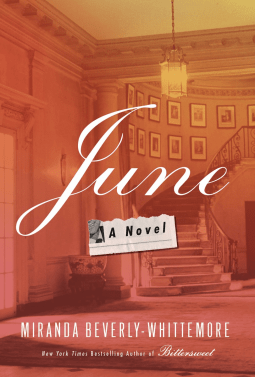 Twenty-five-year-old Cassie Danvers is holed up in her family’s crumbling mansion in rural St. Jude, Ohio, mourning the loss of the woman who raised her—her grandmother, June. But a knock on the door forces her out of isolation. Cassie has been named the sole heir to legendary matinee idol Jack Montgomery’s vast fortune. How did Jack Montgomery know her name? Could he have crossed paths with her grandmother all those years ago? What other shocking secrets could June’s once-stately mansion hold?

 Centuries ago, Raphael was a blasphemous knight who fought in the Crusades purely for his own mercenary benefit, and to satisfy his taste for killing. Now, condemned for his evil passions and hypocrisy, he wanders the earth a vampire, cursed with first-hand knowledge of the supernatural world he once denied existed. The powerful relic he still possesses from his days as a Crusader has been stolen by a rival vampire who has recruited an army of soulless underlings to aid him in spreading evil. At the time he learns this, Raphael has been hunting this vampire for nearly a century, and it seems the final battle is destined to take place in Prague.br For help in this quest, Raphael must enlist the aid of two humans, David and Susan, who suddenly find themselves immersed in a world they never imagined, entangled with supernatural forces they can’t control. Susan, in particular, finds herself conflicted as she struggles with her inexplicable attraction to Raphael. In the end, both Susan and Raphael will be called upon to exercise courage and faith, and in the process, the question, “What would happen if a vampire truly accepted God?” is answered.
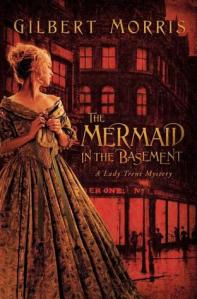 A wealthy widow of a nobleman, daughter of a famous scientist, and skeptic who only trusts what can be proven.
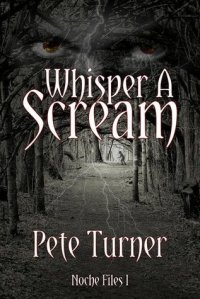 I know evil exists, I met it face to face Solomon Noche is a therapist in the seemingly normal small town of Retselville, Kentucky dealing with displaced anger toward God after his family dies tragically. Nightmares encapsulate him where an ancient demonic cult sacrifices children in Retselville. Despite Sol’s protest, God chooses him to stop them. This discovery thrusts him into a journey where reality and psychosis blur as a nightmarish figure torments him with riddles and time-traveling horrors. The first riddle leads Sol to unearth a preacher’s journal from the 1800’s in a secret cellar in his yard. It details Elijah Darius’ mission to stop the cult and his eyewitness account of a demon named Miyah and its demand of child sacrifices to the ancient god Dagon. The journal intertwines with Sol’s life, and guides him to expose more secrets about Retselville, and the evil hidden history of the grounds where he works. As each riddle is solved, more horrors are uncovered including finding a sacrificial altar, a ritual dagger, and a well of children’s skulls. The closer he gets to the truth, the more sinister the secrets become as he believes all of Retselville may be part of the cult and their centuries’ old secrets. More than Sol’s life hangs in the balance, as Miyah tempts him with unfathomable choices. But resolves his only hope is in repentance as only God can save him and defeat this demon and its’ followers. Sol confronts Miyah in its appalling, fallen form a final time, in a battle beyond Retselville and Solomon Noche, but innumerable souls. Whisper A Scream is a supernatural thriller with demons, cults, and time-traveling nightmares. It becomes an intense thrill-ride of suspense, seizing you until the last page, with an addictive story that falls off the edge of horror. Dread seeps into your soul as you awaken to find yourself walking down the mysterious path with Sol and cower at the sights and sounds encountered. Pray your voice is heard as you WHISPER A SCREAM!
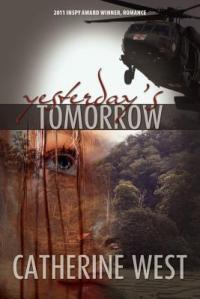 Vietnam, 1967.
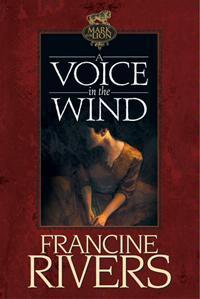 The first book in the bestselling Mark of the Lion series, A Voice in the Wind brings readers back to the first century and introduces them to a character they will never forget—Hadassah. Torn by her love for a handsome aristocrat, this young slave girl clings to her faith in the living God for deliverance from the forces of decadent Rome.
 I have the great pleasure of welcoming Laura Powell to Layered Pages today. Laura is a Features Commissioning Editor at the Daily Telegraph. She has written for The Guardian, Daily Mail, Mail on Sunday and various magazines. She was awarded a New Writer’s Bursary from Literature Wales and was named as one of Amazon’s Rising Stars. She grew up in South Wales and now lives in London. The Unforgotten is her first novel.