Reader’s Log 056: Current Reads and Contemplation

I finished Children of the Book: A Memoir of Reading Together by Ilana Kurshan. The book has been published but I haven’t turned in my review yet because there is something the author briefly mentions about a group of people that made me pause and I’m trying to work out how I’m going to address this issue objectively. I will say I wish she had fleshed it out a bit better to get a clearer picture and that is part of the problem I’m having with the passage. Also, the author’s narrative often moves rather quickly onto other things… Okay, that is all I’m going to say about the subject until I release my review. Be sure to be on the lookout for it!

The books I’m currently reading are enjoyable thus far and I recommend them to consider reading. In this post, I will show three of them and the fourth book will be for another post because it is a very complex topic that I will be talking about in depth.

I hope you all have a wonderful weekend of resting and reading.

Stephanie

Daughter of Egypt by Marie Benedict

Not yet published Expected Date: March 24, 2026 – I have a review copy from the pubs.

1920’s London was enthralled by the discovery of the treasure-filled tomb of Pharaoh Tutankhamun. Filled with priceless statues, jewels, and the gold-encased mummy of the boy Pharaoh himself, the burial site unleashed a fascination with the ancient world and revolutionized the world of archeology.

The discovery was made by Lord Carnarvon of Highclere Castle and his associate, famed archeologist Howard Carter. What no one knows is that without the pioneering spirit of Lady Evelyn Herbert, Carnarvon’s daughter, the tomb might never have been found. As a young woman, Evelyn was fascinated by the story of Hatshepsut, a woman who had to assume the guise of a man in order to rule Egypt. Although she brought peace and prosperity to Egypt, her male successors ruthlessly and thoroughly erased her name from history.

Lady Evelyn’s ambition to find the tomb of Egypt’s first woman ruler exposes her to life-threatening danger and pits her against archeologists who refuse to believe the tomb can be found―and certainly not by a woman. Refusing to give up, Evelyn is on the verge of success when she is suddenly forced to make an agonizing choice between loyalty to her beloved father and Carter and realizing the dream of a lifetime.

About the author:

Marie Benedict is the New York Times and USA Today bestselling author of The Mitford Affair, Her Hidden Genius, The Mystery of Mrs. Christie, The Only Woman in the Room, Lady Clementine, Carnegie’s Maid, The Other Einstein, and the novella, Agent 355. With Victoria Christopher Murray, she co-wrote the Good Morning America Book Club pick The Personal Librarian and the Target Book of the Year The First Ladies. 
Her books have been translated into thirty languages, and selected for the Barnes & Noble Book Club, Target Book Club, Costco Book Club, Indie Next List, and LibraryReads List. 
Up next is the February 11, 2025 release, The Queens of Crime, the thrilling story of Agatha Christie’s legendary rival, mystery writer Dorothy Sayers, the race to solve a real-life murder, and the power of friendship among women.
And in April, her first children’s book will released, a middle grade historical adventure co-written with Courtney Sheinmel called The Secrets of the Lovelace Academy.
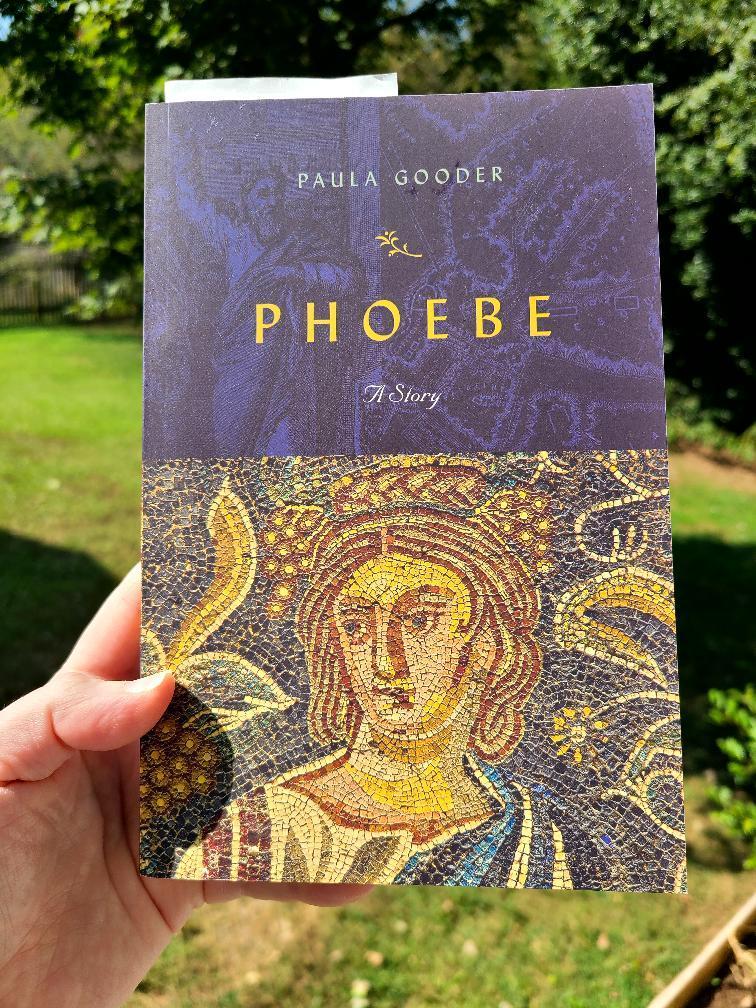
Phoebe by Paula Gooder

Published September 4, 2018

Sometime around 56 AD, the apostle Paul wrote to the church in Rome. He entrusted this letter to Phoebe, whom he describes as the deacon of the church at Cenchreae and a patron of many. But who was this remarkable woman? Biblical scholar and popular author and speaker Paula Gooder imagines Phoebe’s story—who she was, the life she lived, and her first-century faith—and in doing so opens up Paul’s world, giving a sense of the cultural and historical pressures that shaped his thinking and the faith of the early church. After the narrative, Gooder includes an extensive notes section with comments on the historical context, biographical details, cultural practices, and more. Rigorously researched, this is a book for anyone who wants to engage more deeply and imaginatively with Paul’s theology.

About the author:

Paula Gooder is a speaker and writer on the Bible, particularly on the New Testament. She began her working life, teaching for twelve years in ministerial formation first at Ripon College Cuddesdon, Oxford and then at the Queen’s Foundation for Ecumenical Theological Education in Birmingham. Following this she spent around eight years as a speaker and writer in biblical studies travelling the country and seeking to communicate the best of biblical scholarship in as accessible a way as possible, after that she spent six years working for the Bible Society as their Theologian in Residence and then for the Birmingham Diocese as their Director of Mission Learning and Development. She is currently the Chancellor of St Paul’s Cathedral in London.
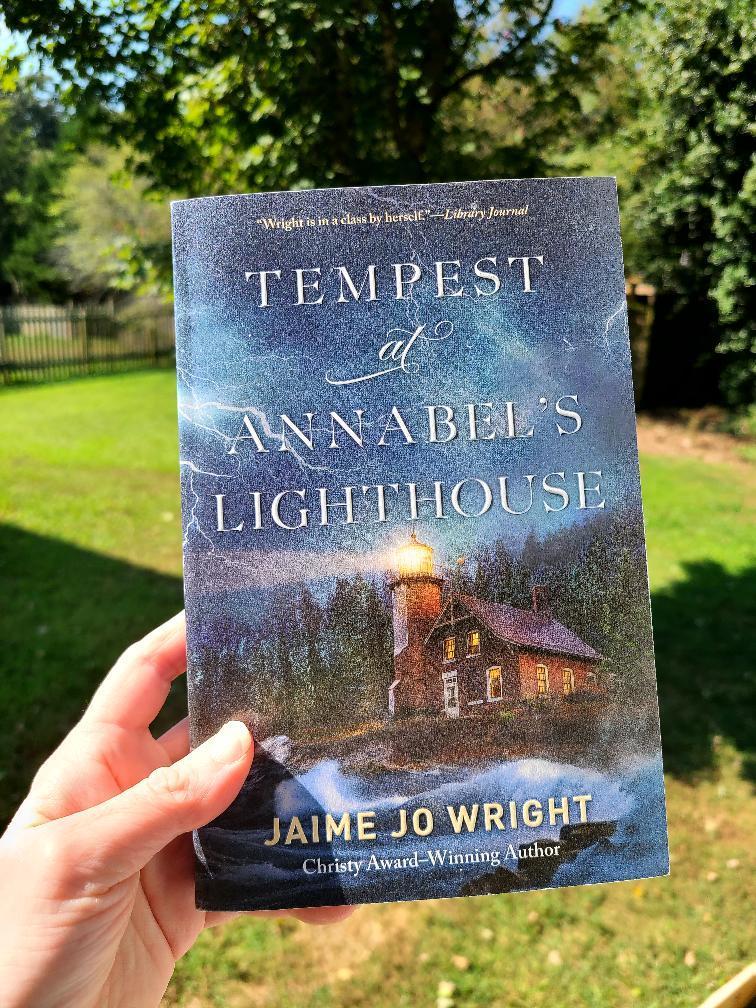
Tempest at Annabel’s Lighthouse by Jaime Jo Wright

Published April 1, 2025

In 1874, a battered woman awakens atop a forgotten gravesite by Lake Superior. Identified only by the locket around her neck inscribed with the name Rebecca, she seeks refuge with an elderly lighthouse keeper named Edgar. But as Rebecca struggles to remember who she is, she finds herself haunted by the lingering memories of Annabel, a mysterious woman who perished in the unforgiving waves of Lake Superior years earlier. With the spirit of Annabel seemingly reawakened, and an unknown adversary on the hunt to silence Rebecca once and for all, there is more at stake than just reclaiming her own memories. Rebecca must reclaim Annabel’s as well.

In the present day, author and researcher Shea Radclyffe escapes to the lighthouse outside a historic mining town in Michigan, seeking clarity about her failing marriage. Instantly drawn to the lighthouse’s landlord, Shea contends with the vengeful legend of Annabel’s ghost and a superstitious community that has buried the secrets surrounding a decade-old murder. As the secrets harbored around Annabel’s lighthouse unravel, Shea must navigate a fight of torn loyalty, self-discovery, and the haunting forces of love and a vengeance that should have drowned a century before.

About the author:

Daphne du Maurier and Christy Award-Winning author, Jaime Jo Wright resides in the hills of Wisconsin writing suspenseful, mysteries stained with history’s secrets.
Reader’s Log 051: The First Man in Rome by Colleen McCullough

I’m currently traveling my way through the Empires of Ancient Assyria, Babylon and the Persians. These studies are pretty intense and a few of my reading materials take liberties or have a running theme (if you will) that has a zero foundation. That said, I’m gaining quite a bit more insight into people’s cultures in ancient times by comparative studies. I will be sure to go more into that another time.

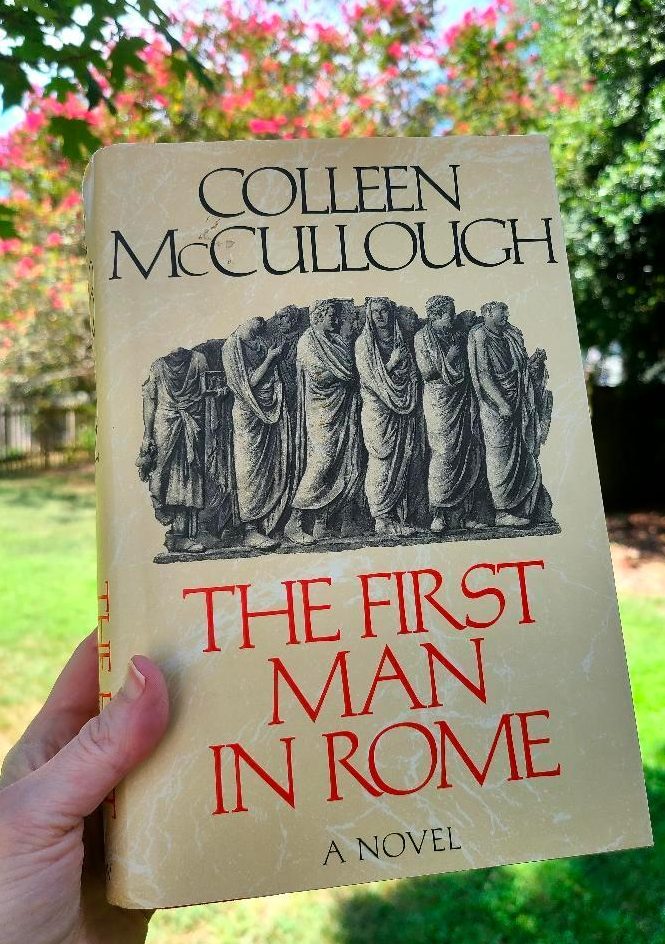
At the end of next year -or maybe sooner- I will be traveling forward again to the first century but before I do that, I want to study a bit more on Rome right before the first century. Also, I’ve been searching books on Rome that I haven’t read yet and I do include historical fiction as well. Last week, I came across Colleen McCullough’s books and I remembered I have the first book in her Rome series that has been sitting on my book shelf for quite some time. The book is huge and there are 896 pages! I’m still going to add it to my reading for next year but I know I will have to take a lot of notes. Despite the amount of pages and annotating, I’m excited about reading the story. Colleen McCullough is best known for her book, “The Thorn Birds.” I do believe McCullough wrote something like eleven books?

Stephanie

Masters of Rome #1

896 pages, Hardcover

First published September 28, 1990 by William Morrow & Company in New York City

The reader is swept into the whirlpool of pageantry, passion, splendor, chaos and earth-shattering upheaval that was ancient Rome. Here is the story of Marius, wealthy but lowborn, and Sulla, aristocratic but penniless and debauched — extraordinary men of vision whose ruthless ambition will lay the foundations of the most awesome and enduring empire known to humankind.

A towering saga of great events and mortal frailties, it is peopled with a vast, and vivid cast of unforgettable men and women — soldiers and senators, mistresses and wives, kings and commoners — combined in a richly embroidered human tapestry to bring a remarkable era to bold and breathtaking life.

Reader’s Log 048: Latest Book Haul

There have been a few books on my book wish-list that I have been wanting to get to for my ancient history studies. I have already read several books on Assyria, Hellenistic period, Babylon and have moved on to the Persians. As you can see, I was jumping around a little bit. However, I’ve come to the realization that I will be studying these empires for quite a while and decided to get the next three books on my wish-list. Previously, I was just going to read at least three books on each of these empires from different authors but I feel it is not enough for the writing projects I’m working on.

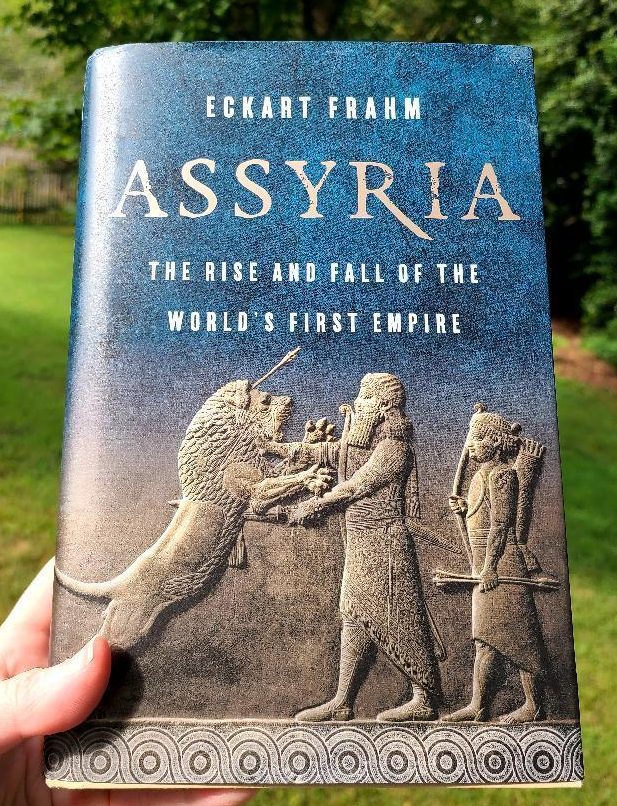
I received the three books that are below in the mail two days ago and have already started on Assyria by Eckart Frahm. I began with his introduction-which is important to read-and have read several chapters so far. Despite a couple of disagreements, I have from reading Eckart’s intro, his writing is engaging and his knowledge of the Assyrians is impressive. I look forward to seeing how he fleshes out his claims on the points I disagree with. I will remain cryptic on what they are for the time being. That said, if you’ve read the book you probably can guess what they are.

Check out my previous book haul HERE

Stephanie

Assyria: The Rise and Fall of the World’s First Empire by Eckart Frahm

At its height in 660 BCE, the kingdom of Assyria stretched from the Mediterranean Sea to the Persian Gulf. It was the first empire the world had ever seen. Here, historian Eckart Frahm tells the epic story of Assyria and its formative role in global history. Assyria’s wide-ranging conquests have long been known from the Hebrew Bible and later Greek accounts. But nearly two centuries of research now permit a rich picture of the Assyrians and their empire beyond their vast libraries and monumental sculptures, their elaborate trade and information networks, and the crucial role played by royal women. 

 Although Assyria was crushed by rising powers in the late seventh century BCE, its legacy endured from the Babylonian and Persian empires to Rome and beyond. Assyria is a stunning and authoritative account of a civilization essential to understanding the ancient world and our own.

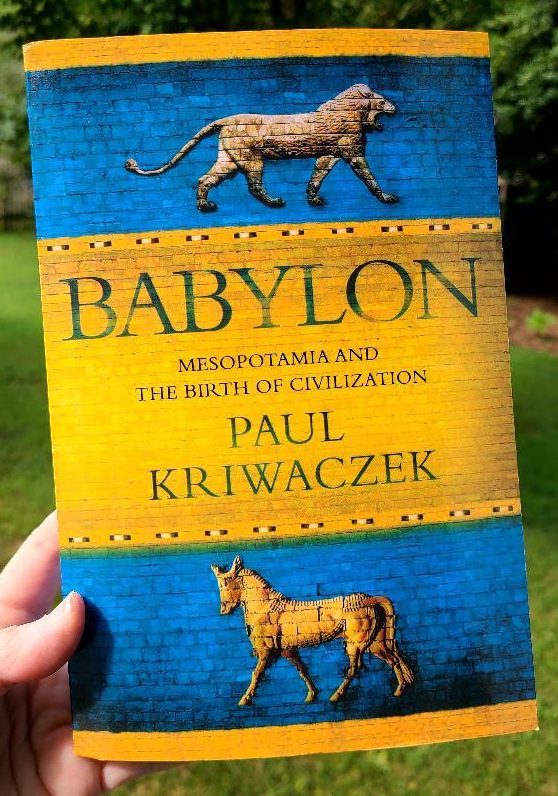
Babylon: Mesopotamia and the Birth of Civilization by Paul Kriwaczek

Civilization was born eight thousand years ago, between the floodplains of the Tigris and Euphrates rivers, when migrants from the surrounding mountains and deserts began to create increasingly sophisticated urban societies. In the cities that they built; half of human history took place.

In Babylon, Paul Kriwaczek tells the story of Mesopotamia from the earliest settlements seven thousand years ago to the eclipse of Babylon in the sixth century BCE. Bringing the people of this land to life in vibrant detail, the author chronicles the rise and fall of power during this period and explores the political and social systems, as well as the technical and cultural innovations, which made this land extraordinary. At the heart of this book is the story of Babylon, which rose to prominence under the Amorite king Hammurabi from about 1800 BCE. Even as Babylon’s fortunes waxed and waned, it never lost its allure as the ancient world’s greatest city.

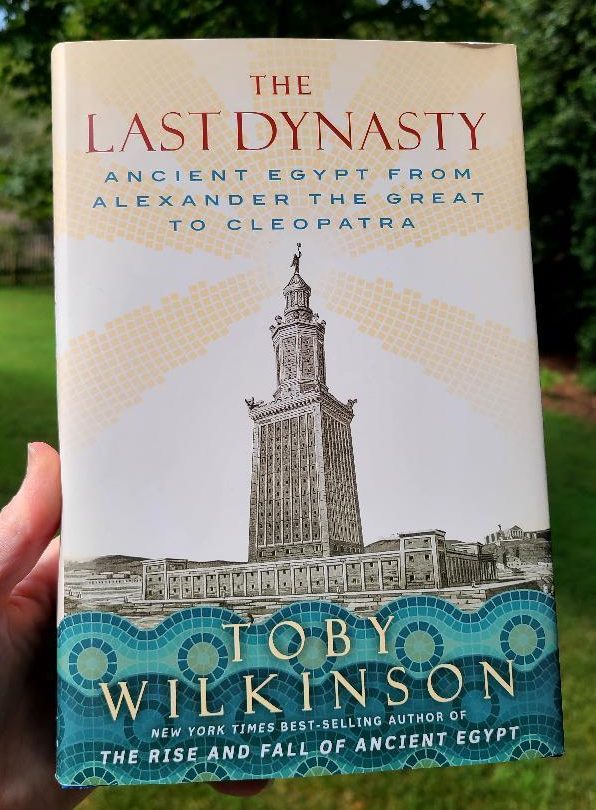
The Last Dynasty: Ancient Egypt from Alexander the Great to Cleopatra by Toby Wilkinson

When Alexander the Great arrived in Egypt, he overthrew the hated Persian overlords and was welcomed as a saviour. He repaid them by showing due reverence to their long-held traditions. After his death, as the Greek empire broke up and his closest advisers squabbled over the spoils, a Macedonian general named Ptolemy seized the Egyptian throne, ushering in a new dynasty that would last for 300 years.

What followed was as dramatic and compelling as any period in Egyptian history. The unique blend of Greek and Egyptian cultures led to an unprecedented flowering of learning, as the new city of Alexandria became home to the Great Library, the largest in the ancient world, that attracted the brightest minds. Wars, incest, double-dealing, foreign empires and huge wealth all followed, but the rise of the Roman empire would eventually bring the Ptolemaic era crashing to a close.

Helped by the latest archaeological discoveries and using original papyrus documents, Toby Wilkinson uncovers a story that can only now be fully told. From courtly life to the role of women, from international trade to the tensions between native Egyptians and incoming Greeks, all aspects of life are here.

Reader’s Log 042: Books on Cyrus the Great

Ancient history is fascinating and so relevant to our present time. Once one takes a deep give into cultures and the rise and falls of civilizations, you see patterns of these events more clearly. This has been my experience since I’ve started this journey and I see so many events that are happening today in a different light. This has led me to read more about the Persian, Hellenistic, and the Hasmonean periods to the the beginning of the Roman period BC. Over my lifetime I feel like I’ve only done surface studies of these periods and I want to be more than just a generalist of these histories. Since I’ve decided to go this route, I realize I need to be a bit more methodical in my research. Which isn’t always easy since there are so many paths in the details one uncovers that can easily lead you down a rabbit hole!

Today, I thought I would share three books about Cyrus the Great that I have on my wish-list. I’ve always been intrigued by him, particularly because he freed the Jews from their Babylonian exile.

I’m curious about comparing these books as well as seeing what each writer has to say about Cyrus. Most likely, I will take my time with these readings and take breaks.

Stephanie

Discovering Cyrus: The Persian Conqueror Astride the Ancient World by Reza Zaghamee

Some of the most fascinating human epochs lie in the borderlands between history and mystery. So, it is with the life of Cyrus the Great, founder of the Persian Empire in the sixth century BCE. By conquest or gentler means, he brought under his rule a dominion stretching from the Aegean Sea to the Hindu Kush and encompassing some tens of millions of people. All across this immense imperium, he earned support and stability by respecting local customs and religions, avoiding the brutal ways of tyranny, and efficiently administering the realm through provincial governors. The empire would last another two centuries, leaving an indelible Persian imprint on much of the ancient world. The Greek chronicler Xenophon, looking back from a distance of several generations, wrote: “Cyrus did indeed eclipse all other monarchs, before or since.” The vision of the biblical prophet known as Second Isaiah anticipates Cyrus’ repatriation of Jews living in exile in Babylon with these words of the Lord: “He is my shepherd and will accomplish all that I please.”

Despite what he achieved and bequeathed, much about Cyrus remains uncertain. Persians of his era had no great respect for the written word and kept no annals. The most complete accounts of his life were composed by Greeks. More fragmentary or tangential evidence takes many forms – among them, archaeological remains, administrative records in subject lands, and the always tricky stuff of legend.

Given these challenges, Discovering Cyrus: The Persian Conqueror Astride the Ancient World is a remarkable feat of portraiture. In his vast sweep, Reza Zarghamee draws on sources of every kind, painstakingly assembling detail, and always weighing evidence carefully where contradictions arise. He describes the background of the Persian people, the turbulence of the times, and the roots of Cyrus’ policies. His account of the imperial era itself delves into religion, military methods, commerce, court life, and much else besides. The result is a living, breathing Cyrus standing atop a distant world that played a key role in shaping our own.

Cyrus the Great: A Life from Beginning to End by Hourly History

Cyrus II of Persia was one of the greatest leaders that the world had ever known; he was the one in whose footsteps other empire builders would follow. From Alexander the Great to countless Roman emperors and Ottoman sultans—it was the mighty shoes of Cyrus that they all attempted to fill.

More than merely a successful conqueror, Cyrus the Great is known just as much for being a great liberator as he is known for his conquests. He was even credited in the Bible as the one who freed the Jews from their long-held Babylonian exile. By the time of his death, Cyrus controlled more land and people than anyone before him. Under his dominion were countless principalities, nationalities, ethnicities, and religions of all kinds. In contrast to many other powerful rulers, Cyrus did not seek to oppress his subjects or interfere with their way of life, religions, or local customs. It is for this reason that, as great as his temporal conquests may have been, the benevolence of Cyrus the Great’s leadership stands as his greatest attribute of all.

The life of Cyrus the Great remains as an unparalleled testament in the annals of history.

Cyrus the Great: The Life and Legacy of the King Who Founded the Achaemenid Persian Empire by Charles River Editors

“I am Cyrus the king, an Achaemenian.” – An inscription found at the Persian capital of Pasargadae

At one point in antiquity, the Achaemenid Persian Empire was the largest empire the world had ever seen, but aside from its role in the Greco-Persian Wars and its collapse at the hands of Alexander the Great, it has been mostly overlooked. When it has been studied, the historical sources have mostly been Greek, the very people the Persians sought to conquer. Needless to say, their versions were biased.

It was not until excavations in the region during the 20th century that many of the relics, reliefs, and clay tablets that offer so much information about Persian life could be studied for the first time. Through archaeological remains, ancient texts, and work by a new generation of historians, a picture can today be built of this remarkable civilization and their most famous leaders.

When considering this empire’s rulers, the two most often referenced are Xerxes, the leader of the Persian invasion of Greece which caused the heroic sacrifice of the Spartans and their allies at Thermopylae, or Cyrus the Great, the man who created the empire. While he was one of the most influential men in the ancient world, research on Cyrus the Great is simultaneously fascinating and frustrating. The Persians’ ancestors did not write (in fact, in their epic poems and myths, they claim that it was something taught to man by demons and therefore something to be avoided), and though the Iranians had taken up writing in their governmental and administrative functions by the time Cyrus lived, the kings still did not learn to write. Put simply, it was considered a functional skill, but not of the greatest importance.

As a result, while plenty of ancient sources mention the great Persian king, Persian sources themselves are rare, and those sources that do exist, such as the Babylonian Chronicle, are largely dry and state only the basic facts and large events. By contrast, Greek sources about Cyrus embrace the artistic aspect of their work so highly that the accuracy often comes into question, and sometimes deep scrutiny is necessary to attempt to separate the fact from the fiction. In the end, the full truth about Cyrus and his reign may never be truly understood.

Of course, this reality has deepened the mystique that surrounds Cyrus even to this day, and it has elevated his status from conqueror and king to enlightened humanist monarch and ideal ruler. In fact, a modern misconception based on the Cyrus Cylinder has labeled him the first proponent of civil rights, though this is somewhat of an exaggeration. The argument hinges on the Cylinder being a unique artifact in listing the ideology by which Cyrus intended to rule, but it equally ignores the fact that such declarations were commonplace among kings of the ancient Near East and more a tool of monarchal propaganda than a sweeping declaration of human rights.

That said, Cyrus was a fair and rational leader, particularly compared to the many brutal kings and warlords of ancient times. The high praise he received, even from his enemies, must certainly not be dismissed, and the admiration directed toward him came from many other exceptional individuals, including Alexander the Great, a bitter enemy of the empire Cyrus founded. Whatever the underlying issues, the incredible achievements of Cyrus distinguish him as one of the greatest kings in history, and his life, conquests, reforms, and rule continue to be of great interest over 2,500 years later.

Cyrus the Great: The Life and Legacy of the King Who Founded the Achaemenid Persian Empire looks at the life of the Persian leader and the major legacy he left. Along with pictures depicting important people, places, and events, you will learn about Cyrus the Great like never before.

Reader’s Log 039: Books for Further Study of Ancient History

Over Memorial weekend, I read quite a bit and have been listening to an audio book while working on a few art projects. These past few days has been reflective and I’m also busy with outlining a few ancient history articles I want to write. There is much work to be done on them and I have an extensive amount of research and studying to do. I’m thrilled with this endeavor and I’m looking forward to seeing where it leads me. In this post, I’m sharing a couple short books I read and one I started two days ago. This does not include my NetGalley reads or what I’m currently listening to. That may come in a later post.

Stephanie

The Time Between the Old and New Testament: A Zondervan Digital Short by Henry H. Halley

First published July 24, 2012

Derived from Halley’s Bible Handbook, a world-renowned, accessible guide to the Bible now in its 25th edition, this digital short sketches the history of the time between the Old and New Testaments. The rise of the Greek and then Roman Empires, the Maccabees, Herod’s Temple, the Sanhedrin—this introduction to a fascinating era not covered in the Bible includes all of the above and more. Useful for Bible students wanting to better understand the cultural context of the New Testament and for readers interested in Middle Eastern and early European history, The Time Between the Old and New Testaments shines light on a key period in world and religious history.

The Jewish People and the Holy Land: A Zondervan Digital Short by Henry H. Halley

First published July 24, 2012

Derived from Halley’s Bible Handbook, a world-renowned, accessible guide to the Bible now in its 25th edition, this digital short sketches the history of the Jewish people in the Holy Land from the time of Jesus until the present day. Useful for students of the Bible and church history, The Jewish People and the Holy Land will also fascinate readers wanting to better understand the historic roots of the modern state of Israel.

Currently Reading:

Pharisees, Scribes and Sadducees in Palestinian Society

by Anthony J. Saldarin

Widely praised in its original edition and now part of the Biblical Resource Series, this volume offers a superb discussion of the role of the Pharisees, scribes, and Sadducees in Palestinian Jewish society. Applying a sociological approach to the biblical and literary sources, Anthony Saldarini accurately portrays these three most prominent groups of educated leaders in Jewish society and describes their relationship to other Jewish social movements from 200 B.C.E. to 100 C.E. Featuring a new foreword by James C. VanderKam, Pharisees, Scribes, and Sadducees in Palestinian Society will remain a standard point of reference for the continuing study of Judaism and Christian backgrounds.

Reader’s Log 034: Assyrians and Babylonians

Hello! I hope you all are having a lovely morning.

Having recently read, “Babylonia” by Costanza Casati and with my current studies of Biblical Culture backgrounds -which usually take years because I tend to go down rabbit holes with history studies-I decided to look at nonfiction reading of the history of the Assyrians and Babylonians. Now, growing up in Sunday School and reading the Bible, I’ve already learned quite a bit about them in the context of wars and interactions with the Hebrews one might say.

Here are three books I discovered and I’m currently reading the first one. I typically choose at least three books with subjects. I may add more the Babylonians once I’ve gotten through these. Also, Joel with Expedition Bible on YouTube has a great archaeological video on the discovery of Nineveh. Expedition Bible is among my favorite YouTube Channels. .

Have you read stories of the Assyrians and Babylonians?

Stephanie

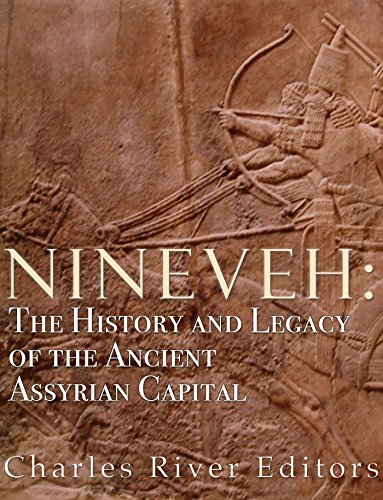
Nineveh: The History and Legacy of the Ancient Assyrian Capital by Charles River Editors

73 pages, Kindle Edition

Published- January 18, 2016 by Charles River Editors

*Includes pictures *Includes ancient descriptions of Nineveh *Includes debate over whether Nineveh was home of the Hanging Gardens of Babylon *Includes online resources and a bibliography for further reading *Includes a table of contents “I captured 46 towns…by consolidating ramps to bring up battering rams, by infantry attacks, mines, breaches and siege engines.” – Sennacherib When scholars study the history of the ancient Near East, several wars that had extremely brutal consequences (at least by modern standards) often stand out. Forced removal of entire populations, sieges that decimated entire cities, and wanton destruction of property were all tactics used by the various peoples of the ancient Near East against each other, but the Assyrians were the first people to make war a science. When the Assyrians are mentioned, images of war and brutality are among the first that come to mind, despite the fact that their culture prospered for nearly 2,000 years. Like a number of ancient individuals and empires in that region, the negative perception of ancient Assyrian culture was passed down through Biblical accounts, and regardless of the accuracy of the Bible’s depiction of certain events, the Assyrians clearly played the role of adversary for the Israelites. Indeed, Assyria (Biblical Shinar) and the Assyrian people played an important role in many books of the Old Testament and are first mentioned in the book of “And the beginning of his kingdom was Babel and Erech, and Akkad, and Calneh, in the land of Shinar. Out of that land went forth Ashur and built Nineveh and the city Rehoboth and Kallah.” (Gen. 10:10-11). Although the Biblical accounts of the Assyrians are among the most interesting and are often corroborated with other historical sources, the Assyrians were much more than just the enemies of the Israelites and brutal thugs. Among all the cities that thrived in the ancient Near East, few can match the opulence and ostentatiousness of Nineveh, the capital of the Assyrian Empire for much of the seventh century BCE. During that time, it became known for its mighty citadels, grand palaces, beautiful gardens, and even its zoos. In fact, the beauty of Nineveh, especially its gardens, impressed later writers so much that they assigned its gardens as one of the original Seven Wonders of the World, except unfortunately for Nineveh’s memory, the location was placed in Babylon. The confusion that assigned one of the Wonders of the World to Babylon instead of Nineveh is in fact a large part of Nineveh’s history – it was a great city during its time, but incessant warfare brought the metropolis to oblivion and eventually its history was forgotten or distorted. An examination of Nineveh demonstrates that in many ways it was the victim of the people who built it. When Nineveh was at its height, they controlled an empire that encompassed Egypt, Anatolia, Mesopotamia, and parts of Iran. Eventually, the Assyrians overextended themselves and their enemies overthrew them and destroyed much of their cities. Nineveh became lost for centuries, only mentioned in fragments by classical Greek historians, but modern archaeological methods were able to bring the lost city back to life in the nineteenth century. Today, through a combination of archaeological reports, classical Greek accounts, and ancient cuneiform inscriptions, the chronology of Nineveh can be reconstructed. An examination reveals that Nineveh played a vital role in the religious and political history of the ancient Near East and despite suffering immense damage at the hands of the Assyrians’ enemies, continued to function as an important city for several centuries after the Assyrian Empire collapsed.

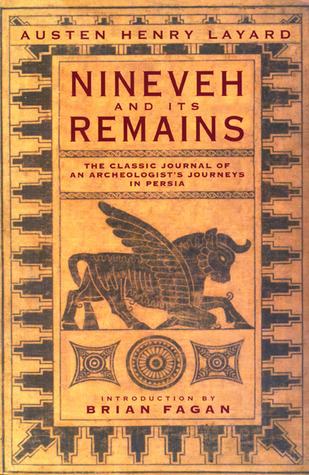
Nineveh and Its Remains by Austen Henry Layard, Brian M. Fagan (Introduction)

432 pages

First published January 1, 1849 by Lyons Pr

An intoxicating stew of compelling characters and sudden crises during the discovery of the ancient ruins of Nineveh by the foremost archeologist of his time.

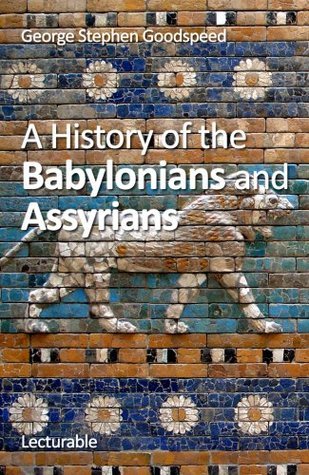
A History of the Babylonians and Assyrians by George Stephen Goodspeed

Format 295 pages, Kindle Edition

Published: January 24, 2013 by Lecturable

“Who were the people by whose energy this region was transformed into so fair and flourishing a land, at a time when elsewhere, with hardly an exception, the upward course of humanity did not yet reveal any trace of orderly and civilized conditions? What are their antecedents, and whence did they come to occupy the alluvial plain?” – George Stephen Goodspeed

“In these regions of Mesopotamia and Babylonia, so diversified in physical characteristics, the one essential unifying element was the rivers. To them a large section of the land owed its existence; the fertility and the prosperity of the whole was dependent upon them; they were the chief means of communication, the main channels of trade, the distributors of civilization. It was in recognition of this that the ancient inhabitants called the Euphrates ‘the life of the land,’ and the Tigris ‘the bestower of blessing.'” – G.S.G.

Introduction – The Lands of the Euphrates and Tigris. The Excavations in Babylonia and Assyria. The Language and Literature. Chronology and History. The City States of Babylonia and Their Unification under Babylon to 2000 B.C. – The Dawn of History. Movements toward Expansion and Unification. Civilization of Old Political and Social Life. Civilization of Old Literature, Science, Art, and Religion. The Times of Khammurabi of Babylon. 2300-2100 B.C. The Rise of Assyria and its Struggles with Kassite Babylonia – The Kassite Conquest of Babylonia and the Appearance of Assyria. 2000-1500 B.C. The Early Conflicts of Babylonia and Assyria. 1500-1150 B.C. Civilization and Culture in the Kassite Period. The Times of Tiglathpileser I. 1100 B.C. The Ascendancy of Assyria – The Ancient World at the Beginning of the First Millennium. 1000 B.C. Ashurnacirpal III and the Conquest of Mesopotamia. 885-860 B.C. The Advance into Syria and the Rise of from Shalmaneser II to the Fall Of His House. 860-745 B.C. The Assyrian Revival. Tiglathpileser III and Shalmaneser IV. 745-722 B.C. The Assyrian Empire at Its Height. Sargon II. 722-705 B.C. The Struggle for Imperial Unity. Sennacherib. 705-681 B.C. Imperial Expansion and Division. Esarhaddon. 681-668 B.C. The Last Days of Splendor. Ashurbanipal 668-626 B.C. The Fall of Assyria. 626-606 B.C. The New Babylonian (or Kaldean) Empire – The Heirs of Assyria. Nebuchadrezzar and His Successors. Babylonia under the Kaldeans. The Fall of Babylon.