Interview with Author Elizabeth Fremantle

Elizabeth F

Elizabeth Fremantle holds a first class degree in English and an MA in Creative Writing from Birkbeck College London. She has contributed as a fashion editor to various publications including Vogue, Elle and The Sunday Times. QUEEN’S GAMBIT is her debut novel and is the first in a Tudor trilogy. The second novel, SISTERS OF TREASON, will be released in 2014. She lives in London.

For more about Elizabeth and her future projects see www.elizabethfremantle.com.  You can also find her on Facebook, Twitter and Goodreads.

Hello Elizabeth! Welcome and thank you for chatting with me today. Please tell me about your book, Queen’s Gambit. I’ve heard nothing but wonderful things about your story.

Elizabeth Hello to you, and thank you so much for hosting QUEEN’S GAMBIT on your blog. I’m obviously delighted that you have heard such good things about it. When you launch a first novel it’s impossible to imagine how people will react, so the lovely things people have said are a source of great joy.

QUEEN’S GAMBIT tells the story of Katherine Parr, the wife who ‘survived’ Henry VIII, describing the period from when she first catches the eye of the King until the demise of her disastrous fourth marriage. It is told from three points of view: that of Katherine Parr, her doctor Robert Huicke and her maid Dot Fownten, giving a prism of perspectives on the Tudor court at a time of great turbulence.

When did you fist become interested in this period and when did you know you wanted to write your story?

I have always enjoyed reading history and read Jean Plaidy voraciously as a child, which is when the seeds were sown for my own historical fiction. It was when I first read Stephan Zweig’s two wonderful historical biographies (of Marie Antoinette and Mary Queen of Scots) in my early twenties that my desire to discover more about the lives of women from history was born. However having studied English as a degree, I felt I wasn’t qualified to write about history. So my first (unpublished) novels were contemporary fiction but I failed to find my voice, until I decided to try my hand at writing the past. Once I began work on QUEEN’S GAMBIT everything seemed to fall into place – it was as if I’d unlocked something in myself and began to realize that much of what I had learned reading English was also history. It all comes down the study of texts.
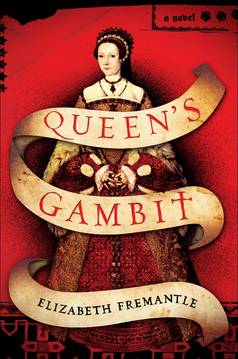
Queens Gambit

What is some of the research you did and what fascinates you most about the royal court surrounding this story?

So much of my research is textual and there are some extraordinary biographies of Katherine Parr but I also explored renaissance etiquette books, recipe books and social histories as I felt it was of great importance to create as close to an authentic world for my characters to inhabit. I spend a great deal of time wandering around old houses and castles, trying to imagine myself back in time. A course I took in Tudor and Stuart clothing, looking at all aspects of dress, from its construction to its symbolic value, was invaluable as I have used clothing to represent the restricted lives of women in the book. Research is an on-going process and inspiration can come from the most unlikely places. A documentary series about Amish women, for example, gave me insights into the lives and beliefs of Tudor women, as they operate under some of the same social restrictions.

As for the court, it is the constant sense of impermanence and danger that I find particularly fascinating. These people, however privileged, were living on a constant knife-edge and I wanted to articulate that in QUEEN’S GAMIT.

You have certainly done a lot of research and I’m sure it’s paid off. I love visiting old homes and hope to visit castles one day. I often wonder at times how the people at court could stand it for so long and the pressure they were constantly under….

Katherine Parr is my favourite among King Henry’s wives.  What sets your book apart from others about her? And were there any challenges writing about her?

Katherine Parr was a gift in the sense that her life is a perfect narrative arc with drama, romance and ultimately tragedy. I have tried to show her as the vibrant, politically astute and intelligent woman she was, rather than the dull nursemaid that history has remembered her as. But one of the things that interested me most about her is the essential contradiction in her character, in that she, a clever, canny woman, makes a disastrous decision in the name of love. For me this is what makes her story resonate with modern women.

To be honest, I have never read another novel about Katherine Parr, only historical biographies, so I am not the person to ask about comparisons, but each novelist will have created her in her own particular way. What I have tried to do is get beneath her skin and understand how she might have thought and felt (how might it have truly felt to be the wife of such a tyrant) whilst adhering as much as possible to the historical facts as we know them.

What is the most challenge thing to write about Historical Fiction and what advice would you give someone who is considering writing in this genre?

I suppose the challenge is getting the balance of fiction and history. For me it was important to remain faithful to history but it is the inner worlds of characters that make for good fiction and creating characters, even those based on real people, is an act of imagination. I find having a restrictive framework of history to work within forces you to explore different narrative possibilities more deeply, but it can be frustrating at times. In QUEEN’S GAMBIT, for example, a main character dies half-way through the narrative – that is something I couldn’t change and had to find a way for that death to make sense within the arc of the story.

My advice is to do all your research, then set it aside and write your story without trying to pack it full of evidence of your knowledge. One of the greatest complements I have received is that QUEEN’S GAMBIT wears its research lightly.

How long did it take you to write your story? Will you write others that take place in this period?

From start to finish QUEEN’S GAMBIT took about eighteen months but it came at the end of a ten-year period of writing fiction (an MA in Creative Writing and three unpublished novels). I had said to myself that I would have to stop if I didn’t find a publisher for it. Happily it has worked out for the good and I have realized that the wilderness years all contributed to honing my skill as a writer.

I have written the second in my Tudor trilogy. SISTERS OF TREASON is out next year and is about the two younger sisters of Lady Jane Grey, a pair of girls who were born dangerously close to the throne at a time of great instability. It begins in Mary Tudor’s bloody reign but when Elizabeth comes to the throne things become increasingly difficult for the Grey girls. In SISTERS OF TREASON, though we don’t revisit any of the main characters from QUEEN’S GAMBIT we are reacquainted with some of the characters in the background, and of course the two Tudor princess, watching their rise to the throne and the consequences of this.

Tough question. What are your thoughts on the Reformation and how the Church of England was established?

I find it impossible to have a straightforward opinion on this because in many ways the Reformation was a force for good, in that it counteracted a deeply corrupt Catholic church and offered ordinary people a way to think, read and learn about faith in a personal and intimate way. Some of the violent acts perpetrated in the name of religious reform though, were unconscionable. But then again religion and politics were inextricably linked in those days and faith was used as a means to control people. You only have to think of the horrors of the Spanish Inquisition or the 280 odd Reformers who were burned in Mary Tudor’s reign to understand that terrible things were done in the name of both Catholicism and reform, but such acts were political at heart. It does make me deeply sad though, when I visit the ruins of the great monasteries and abbeys in England and wonder about the violent erasure of a tradition that had persisted for centuries and all the beauty and tradition that was lost forever.

I agree with you. How often do you get a chance to read for pleasure and what is the name of the book you have just read?

All reading is a pleasure for me, even if it is work, but I am on holiday at the moment, with a stack of novels on my Kindle to read without having to make notes.  The book I am reading today is Blood Royal by Vanora Bennett, about Catherine de Valois and I’m thoroughly enjoying it.

Are you a paperback or r-reader sort-of gal?

Elizabeth: I have a reader for convenience and for reading when I’m traveling but I do prefer a good paperback if I’m honest.

Same here. I love my e-readers but prefer a paperback. Do you write reviews for all the books you read?

If there were time enough…

Also, if I particularly enjoy a book I often want to share that with other people even if it’s just via a Tweet. I don’t think wholly negative reviews are helpful, unless there is something very specific to say. But then I’m a writer so I would think that.

Where is your favourite reading/writing spot in your home?

I have a study, filled to the gunnels with books and I sit at my desk beside the window to write, with my dogs by my side to keep my company. As for reading, my favourite place is in bed, in the morning!

Stephanie: I to have my desk by the window. It’s a beautiful spot to write. There is a beautiful Maple Tree right outside my window and just beyond that great big Holly Bushes….and love all my books around me and my dog loves to sit beside me when writing.

 Elizabeth it was a pleasure chatting with you! Thank you!
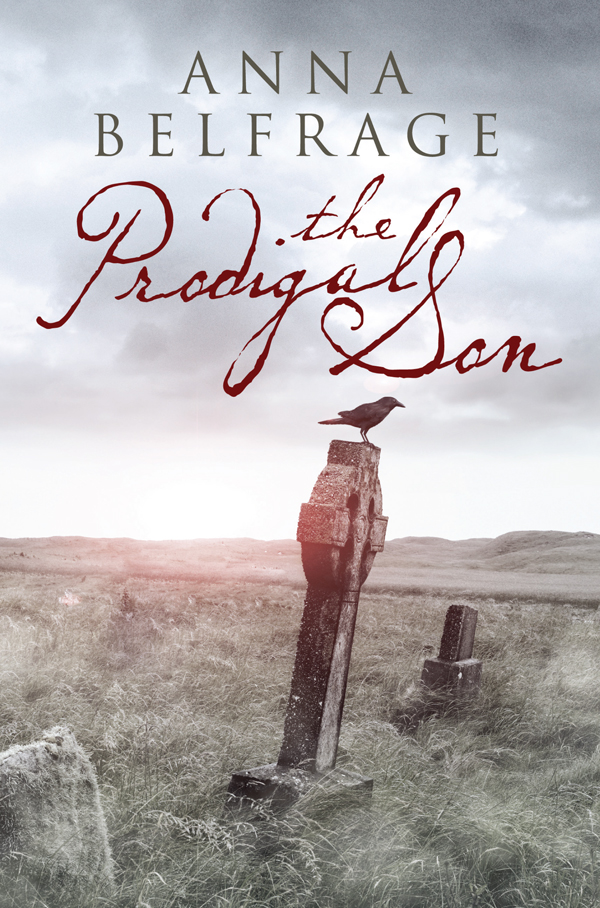
 

Review: The Prodigal Son by Anna Belfrage

The Prodigal Son

He risks everything for his faith – but will he be able to pay the price? Safely returned from an involuntary stay on a plantation in Virginia, Matthew Graham finds the Scottish Lowlands torn asunder by religious strife. His Restored Majesty, Charles II, requires all his subjects to swear fealty to him and the Church of England, riding roughshod over any opposition. In Ayrshire, people close ranks around their evicted Presbyterian ministers. But disobedience comes at a heavy price and Alex becomes increasingly more nervous as to what her Matthew is risking by his support of the clandestine ministers – foremost amongst them the charismatic Sandy Peden. Privately, Alex considers Sandy an enervating fanatic and all this religious fervour is totally incomprehensible to her. So when Matthew repeatedly sets his faith and ministers before his own safety he puts their marriage under severe strain. The situation is further complicated by the presence of Ian, the son Matthew was cruelly duped into disowning several years ago. Now Matthew wants Ian back and Alex isn’t entirely sure this is a good thing. Things are brought to a head when Matthew places all their lives in the balance to save his dear preacher from the dragoons. How much is Matthew willing to risk? How much will he ultimately lose? The Prodigal Son is the third in Anna Belfrage’s historical time slip series, which includes the titles The Rip in the Veil and Like Chaff in the Wind.


My review:

I really admire Belfrage’s use of voice and language. She makes it so that the characters are well developed and thought provoking. And I admire how her characters interact with each other and does a good job expressing their emotions. Her dialog is also engaging and flows really well.

She gives wonderful details of the domestic life of the time the story is written in and details of what they had to endure in the regards to the government’s (Charles ll of England) unreasonable rule. There were laws or should I say-Charles ll required his subjects to conform to the Church of England- on how they were to worship which as you know made it extremely difficult on the people. And that is putting it mildly.

Mathew Graham has risked much to support and protect his minister, Sandy Peden. And his family has suffered for that. I did not always agree with him and was often times frustrated with the decisions he was making. But having said that, he is one of my favorite characters in this story. I believe Mathew truly loves his family and has adjusted quite well to the fact that his wife-Alex-is from the future. I’m sure he is more tolerate to her ideas and beliefs than what most men during that time would have been.

Sandy Peden is a pious and fanatical minister who I actually enjoyed reading about in this story. He is opinionated- thinks women have their place and feels Mathew should put his wife in that place and has no problem telling him so. It is obvious he does not approve of her one bit. But she certainly matched wit for wit with Sandy. I do admire how Sandy is a survivor and he stands by what he believes and does not give into being told how he is to worship and what organized faith he is lawfully suppose too follow. Very entertaining….he adds a lot to this story.

Alex is a strong woman who is from the future and I believe her knowledge has really helped her and yet sometimes it was a hindrance for her, I think. I do however think she adapted quite well in the 17th century for someone being so forward thinking and modern of course. She does have a stubborn streak to her but so does her husband. I really enjoyed seeing the way they interacted with each other. Their relationship is really dynamic. And I do admire their strong sense of family and values. Alex does something in this story that I truly respect her for. But I cannot tell you! You will just have to read the book to find out!

I really have enjoyed this series so far and I look forward to continuing to read them! The Graham family are definitely among my favorite families to read about! I am giving this story a four and a half star rating and I highly recommend this whole series to people who are looking for a quality written time slip.


Stephanie

Layered Pages


About the Author

anna belfrage


I was raised abroad, on a pungent mix of Latin American culture, English history and Swedish traditions. As a result I’m multilingual and most of my reading is historical – both non-fiction and fiction.

I was always going to be a writer – or a historian, preferably both. Instead I ended up with a degree in Business and Finance, with very little time to spare for my most favorite pursuit. Still, one does as one must, and in between juggling a challenging career I raised my four children on a potent combination of invented stories, historical debates and masses of good food and homemade cakes. They seem to thrive … Nowadays I spend most of my spare time at my writing desk. The children are half grown, the house is at times eerily silent and I slip away into my imaginary world, with my imaginary characters. Every now and then the one and only man in my life pops his head in to ensure I’m still there. I like that – just as I like how he makes me laugh so often I’ll probably live to well over a hundred.

I was always going to be a writer. Now I am – I have achieved my dream.

For more information, please visit Anna Belfrage’s WEBSITE.

Layered Pages latest interview with Anna Befrage : https://layeredpages.com/2013/07/09/1350/

Links to where you can purchase her stories:

http://www.amazon.com/The-Prodigal-Son-Anna-Belfrage/dp/1780885741/ref=sr_1_5?ie=UTF8&qid=1376163215&sr=8-5&keywords=The+Prodigal+Son

http://www.amazon.com/Like-Chaff-Wind-Anna-Belfrage/dp/1780884702/ref=sr_1_1?ie=UTF8&qid=1376163168&sr=8-1&keywords=like+chaff+in+the+wind

http://www.amazon.com/A-Rip-Veil-Anna-Belfrage/dp/1780882424/ref=sr_1_1?ie=UTF8&qid=1376163127&sr=8-1&keywords=A+rip+in+the+veil

Interview with Author Mona Rodriguez

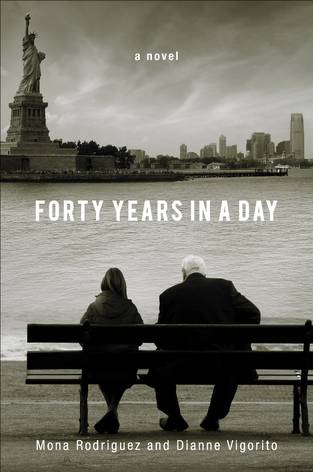
Forty years in a day book cover

Hello Mona! I read Forty Years In A Day and was absolutely intrigued with your story. Could you please tell your audience about your book?

Mona: Thank you, Stephanie, for hosting us today. It’s a pleasure. Our story begins in Italy, 1900. After years of torment and neglect, Victoria and her four small children immigrate to Hell’s Kitchen, New York, to escape her alcoholic, abusive husband. On the day they leave, he tragically dies, but she does not learn of his death for several years—a secret that puts many lives on hold.

Quickly, they realize America’s streets are not paved with gold, and the limits of human faith and stamina are tested time and time again. Poverty, illness, death, kidnapping, and the reign of organized crime are just some of the crosses they bear.

Victoria’s eldest son, Vincenzo, is the sole surviving member of the family and shares a gut-wrenching account of their lives with his daughter during a visit to Ellis Island on his ninetieth birthday. He explains how the lives of he and his siblings have been secretly intertwined with an infamous Irish mob boss and ends his unsettling disclosure with a monumental request that leaves Clare speechless.

The story takes the Montanaro family through several decades, providing the reader an opportunity to stand in the shoes of a past generation and walk in search of their hopes and dreams. It is layered with the struggles and successes of each family member, illuminating the fact that human emotions have been the same throughout generations; the difference is how people are molded and maneuvered by the times and their situations.

Stephanie: Is this story based on anyone you know or who you have come across?

Mona: The characters are based on family members, both deceased and living. I’ve had this particular story churning in my head for many years, sparked by the stories of my family’s past. Forty Years In A Day begins in 1900 and follows the incredible journey of a young mother and her four children as they escape from Italy into the streets of Hell’s Kitchen, New York. That woman was my grandmother. The story ends with a woman who knows the father of her children is living a double life with another, but she loves him so much that she overlooks the arrangement rather than forfeit the man. Those were my parents. In between are the stories that I had heard from family members, intertwined with a twist of fiction and sensationalism to have some fun.


Stephanie:  Were there any challenges you faced while writing this story?

Mona: There were many challenges that I had faced undertaking this project. First and foremost, I had the idea of the story in my head before I had the skills to share it. I’m a mathematician and an environmentalist so this challenged the other side of my brain. While writing is something I always admired, to me, the passion was in the story and the writing was the vessel to get it told.

Second, people ask me how much of our book is realistic; especially family members who want to know if this is the actual story of what had happened. They try to draw a parallel between family members’ personalities and our characters’ personalities. The truth is that no one can totally piece together that puzzle of tales; there are parts to every family’s story that were pushed under the rug for fear it would tarnish the family’s reputation. The elders think they are doing their family justice by taking some of the more scandalous stories with them to the grave. When, as a writer, you realize all this, you are forced to conjure your own conclusions from the pieces of stories that you gather.

Third, I coauthored the book with my cousin Dianne Vigorito. She gave me the support and validation I needed to pursue this project. I was lucky to find a family member to work with, and she had an immediate interest in the idea. She grew up hearing the same crazy stories, some of which were almost unbelievable, that were told by our ancestors.  Working with another has taught me the power of more than one and the art of compromise.

Stephanie: Was there a particular scene you felt difficult to write?

Mona: The story of Vinny and Ava represents my parent’s story and the story that resonates closest to my heart. When they were alive, I had discovered secrets about their past that they didn’t want my siblings and me to know. When they died, I felt more compelled to delve into their past, but no one could (or would) tell me the whole story. I realized that I should have asked more questions when they were alive, been more adamant to learn the truth. I questioned aunts and uncles, but I sensed there were bits of their lives, and everyone’s in our story, that would never be unearthed. The story of Vinny and Ava is conjured from the pieces of stories I had put together, and my interpretation, especially emotionally, of what had happened between my parents.

Stephanie: What was the inspiration for your story?

Mona: We don’t realize what our ancestors went through to make life better for themselves and for us. What they faced was incredible—the living conditions, poverty, disease—and their work ethic was admirable. Although I had started with the intention of writing a story about my father’s family, it turned into a novel. There was so much more I wanted people to know about this fascinating era.


Stephanie How long did it take to write, Forty Years In A Day?

Mona: I started by writing down the stories I had heard and interviewing the elders that were still alive. It took seven years—researching, attending seminars, workshops, conferences, and reading everything from books on how to write dialogue to reading mainstream fiction and rereading classics. I also studied the history and lifestyles of the era.  Dianne and I worked on our own, and we also worked together several days a week, collaborating, rewriting, and editing. I had a story to tell and I knew it had to be told.


Stephanie: You did a fantastic job with your research. It’s truly a beautiful and thought provoking story. And I believe it’s written in such a way that the story transcends you into that period and gives you a wonderful picture of the human conditions.  


Is there a sentiment you hope readers come away with after reading your story?

Mona: Forty Years In A Day is more than an immigration story about an Italian family; it epitomizes the immigration experience and coming to America in the early 1900s. It reignites curiosity and admiration for what our ancestors had endured and accomplished to make our lives better. There are many themes that run throughout the story—the loss and rebound of hope, honesty, perseverance, forgiveness, survival, the list goes on—but I think the main theme is the importance of family. Forty Years In A Day also reminds us that every family has hidden secrets and that the choices one person makes echoes through generations.

Stephanie: The different themes in your story was well written and I felt that some of them hit home with me. Your story has given me a lot to think about. Especially about family and relationships.


Is there a character that you feel connected to in any way?

Mona: I have a connection to all the characters, but the one I admire the most is Victoria. She was an amazing woman who wanted to do the right thing for her children. Without giving away the story, I often wonder how she summoned the strength to do what she did, and if I would have been so courageous. She did it not so much for herself, but for her children. She was the ultimate mother.

Stephanie: I admired Victoria as well. She certainly pulled at my heart strings. What book project is up next for both?

Mona: There are six cousins at the end of our story. The idea is to take that next generation into the next era.

Stephanie: Ooo…I’m really looking forward to reading your next book! What advice would you give to an aspiring author?

Mona: Read the works of authors you enjoy and respect, study and practice the craft, and try to develop a personal style and formula for success.  When reading a diverse collection of books, you take away, along with the story, a little of each author’s craft.

Thank you, Mona!

About the Authors

Mona & Dianne


Mona Rodriguez coauthored Forty Years in a Day with her cousin Dianne Vigorito.
Throughout their lives, they had heard many stories from family members that
were fascinating, sometimes even unbelievable, and decided to piece together
the puzzle of tales. Through research and interviews, their goal was to create
a fictional story that follows a family through several decades, providing the
reader an opportunity to stand in the shoes of a past generation and walk in
search of their hopes and dreams. What they realize in the process is that
human emotions have been the same throughout generations – the difference is
how people are molded and maneuvered by the times and their situations.

Mona Rodriguez has her MS in environmental Management from Montclair State
University. She is presently a trustee on the board of directors of a nonprofit
foundation created to benefit a local public library and community. She lives
with their husband in New Jersey, and they have two grown sons.

For more information, please visit the official website.

http://www.fortyyearsinaday.com/

BOOK TRAILER:  http://www.youtube.com/watch?v=AfJ5p4qCzmM&feature=youtu.be

forty years in  a day tour banner

Link to Tour Schedule: http://hfvirtualbooktours.com/fortyyearsinadaytour/
Twitter Hashtag: #FortyYearsTour

Review: The Chalice by Nancy Bilyeau

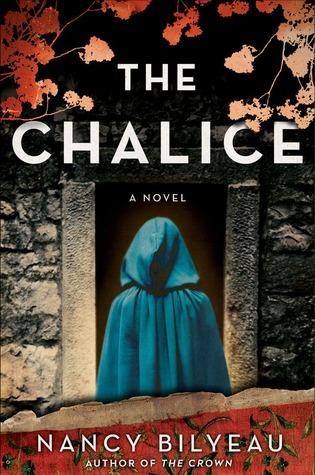
the chalice

Nancy Bilyeau is building a solid series with her second book centered around Joanna Stafford, a novice who is forced to build a new life for herself after the dissolution of Dartford Priory. While the first book was very good, The Chalice is brimming with even more intrigue and insight into the clash of religion and state during the tumultuous reign of Henry VIII.

Bilyeau is able to bring the great struggle to life through her creation of conflicted characters trying to maintain their principles and beliefs in a time that is at best confused and at worst at odds with the wish of her heroine to live a simple life of devotion. The author’s scholarship is evident in the vivid detail and entwined plot lines of the story.

This last book has left me even more interested to see what will become of Joanna Stafford as she follows a tenuous path through the upheaval of her personal life in the political landscape.

Reviewed by Elizabeth Peterson Seidle

Layered Pages Review Team Member

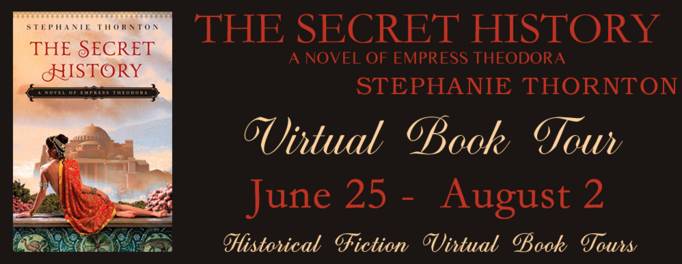
Book Review: The Secret History by Stephanie Thornton

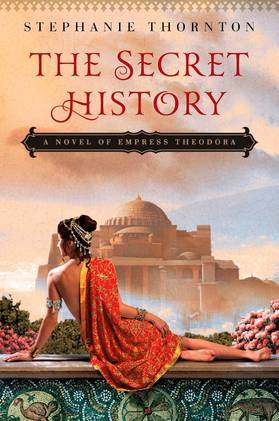
the secret history book cover

Publication Date: July 2, 2013
NAL Trade
Paperback; 448p
ISBN-10: 045141778X

Where Theodora went, trouble followed…

In sixth century Constantinople, one woman, Theodora, defied every convention and all the odds, and rose from being a common theater tart to become empress of a great kingdom, the most powerful woman the Roman Empire would ever know. But the woman whose image was later immortalized in glittering mosaic was, in fact, a scrappy, clever, conniving, flesh-and-blood woman full of sensuality and spirit whose real story is as surprising as any ever told…

When her father dies suddenly, Theodora and her sisters face starvation on the streets. Determined to survive, Theodora makes a living any way she can—first on her back with every man who will have her, then on the stage of the city’s infamous amphitheater in a scandalous dramatization of her own invention. When her daring performance grants her a back-door entry into the halls of power, she seizes the chance to win a wealthy protector—only to face heartbreak and betrayal.

Ever resilient, Theodora rises above such trials and by a twist of fate, meets her most passionate admirer yet: the Emperor’s nephew. She will thrive as his confidant and courtesan, but many challenges lie ahead. For one day, this man will hand her a crown. And all the empire will wonder—is she bold enough, shrewd enough, and strong enough to keep it.

Where to begin in this review was the question when I first begun to write this. There are so many highlights to this story and what can be discussed on different viewpoints. Here is only a glimpse of my thoughts and feelings. Theodora is my new favorite heroine who will capture your attention from the beginning and leave you with wanting the story of her life to continue. She is an incredible and courageous women who inspired one not to give up on what life might throw at you and she is the model of a strong, vibrant woman. I’m looking forward to more of Thornton’s stories to come. I hope you enjoy my review below and I’m sure this story will give you newfound appreciation for the wonderful stories writers bring to their readers.

My review:

Historical Fiction is the echo of the past. Where the writer draws you in its fold and as you explore the timeless treasures it has to offer, you want to hold on tight to the- what if’s and the voices that resound through the pages. Thornton gives you that and much more…Every word, every emotion and thought awakens new senses and transcends you back to sixth-century Constaninpole.

She writes a wonderful backdrop of how the city must have looked and the daily life of its people. You can imagine how the different scents of spices must have smelled like at the markets, hear the street merchants as they sell their wares, the cries of babies wanting to feed and the beggar’s unrelenting voices as they beg for food and coin. Not only that- her story is rich with wonderful historical detail and beautiful characters. The love of Theodora and Justinian is one I will never forget. They are forever in my heart.

From what I gather -this is Thornton’s first published novel. She is a history teacher who has been drawn-to put it lightly- with infamous women from ancient history since she was a young girl. It definitely shows throughout this novel! An exceptional story that has left me with what can only be describe as adoration and inspired anew.

Stephanie

Layered Pages

Link to Tour Schedule: http://hfvirtualbooktours.com/thesecrethistoryvirtualtour/
Twitter Hashtag: #SecretHistoryTour

the secret history banner

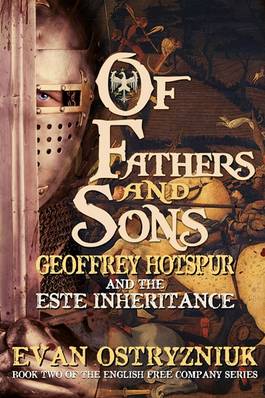
Interview with Author Evan Ostryznuik

Stephanie: Hello Evan, thank you for chatting with me today. Please tell me about your book, “Of Fathers and Sons.”

Evan: A pleasure to be here. Well, the novel takes place in 1395 in northern Italy, where tensions among the great regional powers were running high – the schism in the Catholic Church had not yet closed; Florence and Milan were gearing up for another war; Venice was starting to show interest in the mainland; in other words, there was a fine balance of power in the region and just about any conflict could ignite a war that would engulf the whole peninsula. The ruler of the strategically located Marquisate of Ferrara had just died and left a minor in his place. This uncertainty was enough to attract the attention of the great powers, and each of them knew that the territory’s occupation by one or another power would tip that fragile balance. Also, the Este family was popular as wise rulers and excellent soldiers, and so keeping them as an ally was good policy. This is the broad picture. Specifically, the story is about how that minor, the twelve-year-old Niccolo d’Este, fought his uncle and tried to overcome his own insecurities and challenges. And the English Free Company arrives to help.

evans book

Stephanie: Sounds really fascinating and I enjoy reading novels that take place during that time period in history. What was your inspiration for this story?


Evan: The inspiration for this story came from the Este Inheritance itself, which included not just land and lakes, but also a legacy of strong and wise rule. The boy had a lot to live up to. Until this time, the city of Ferrara and its surrounding area comprised more or less a backwater in Italian politics, but the Este family was able transform this marginal territory into one of the great Renaissance centers, politically, socially and culturally. They introduced a number of administrative innovations that secure their, fostered economic progress, and patronized progressive thinkers. The events of 1395, specifically the civil war between the two main branches of the Este family, were pivotal in this regard. Not just the fate of the city was involved, but also the legacy of the Este family, since had things turned out differently, Ferrara would have likely taken another direction or been absorbed by one of the neighboring powers. There was a lot riding on this war.

Also, the fact that a child on the cusp of adolescence was at the heart of intrigue gave me a change to pursue writing about the High Middle Ages from a different angle. Character interactions have to be plotted with especial care to make them convincing, juvenile understanding and expectations had to be considered and integrated into the plot, and even parents must be found a role. In some ways, Geoffrey Hotspur is just a boy himself.

Stephanie: How long did it take you to write this novel?

Evan: Since Of Fathers and Sons is a part of a series, I could say that they novel can be traced back to the literary birth of Geoffrey Hotspur 3-4 years ago. It grew out of the great mass of research I did on the 14th-15th centuries. The actual setting of this story down on paper took about a year, after several fits and starts. While I have the story lodged in my head, finding the right voice required several shots at the target.

Stephanie: What was some of the research involved?

Evan: I was fortunate to get my hands on a few key texts that really helped bring to life the Este clan and the Marquisate of Ferrara, which meant that I had few gaps to fill with what I like to call ‘oblique research’. By this I mean reading up on related period settings, families, events, and the like and making educated assumptions about how my story might have looked like. All genuine historians do this, since the historical record is never close to being complete or satisfying. I always find the researching for a novel a lot of fun, whether access is easy or difficult. I not only learn so much about the people and the period, but so many ideas for the novel manifest themselves from the research – details, information, relationships, and even dialog just pour themselves into the gaps of the story’s structure. I think, like most writers, I could spin the story out indefinitely and it would be no less engrossing.

Stephanie: What are some of the fictional aspects?

Evan: The two leaders of the English Free Company are fictional, or rather they are composites of a number of historical personages. To some degree, they are archetypes. Just read Chaucer! As a result, their journey is necessarily fictional, although the setting and the major events of their adventure are well grounded in historical reality. The point is to reflect the zeitgeist as closely as possible through an independent literary agent. No historical figure was ever able to visit all the great moments of their time! Geoffrey Hotspur and his companion can do that and bring both the events and those who truly made them to vibrant light.

Stephanie: What intrigues you the most about Geoffrey Hotspur and John of Gaunt?

Evan: What most intrigues me about these men is their relationship to fatherhood and patriarchy. Hotspur is an orphan of unknown provenance and a ward of Gaunt, while the great duke had a troubled relationship with his own son, the eventual King Henry IV and was poor father figure to the last Plantagenet king, his nephew Richard II. The tensions inherent in patriarchal relationships, particularly in the Middle Ages, are some of the main themes of the English Free Company series. Geoffrey in particular is troubled by it, for reasons of fear and insecurity, and as a result many of his decisions and views are strongly colored by this question. Both men had strong determined characters, yet long-term success always seemed to elude them. Family was crucial, but difficult. The role of the father was particularly important at this time and crucial in the lives of his sons. A poor or unsuccessful father could have dire consequences for the entire family and its descendants.

Stephanie: Will there be a third book in this series?

There will be a third, fourth and fifth book of the series! The next adventure of Geoffrey Hotspur follows hard on the heels of this one, but takes place in exotic locales in the Outremer, or the Levant. 1396 was the year of the very last European Crusade in the Holy Land, and there is no way Geoffrey is going to miss it! Hospitaller knights, Hungarian lords, Grand Constables of France, and poor squires with gather to drive the Ottoman Turks out of Christendom.

Stephanie: How exciting! What is the most challenging aspect of writing Historical Fiction?

Evan: The most challenging aspect of writing Historical Fiction is filling in the blank spots. Finding the stories is easy. The historical record is by nature fragmentary, especially for the Middle Ages, and so I must make convincing, educated assumptions about so many things. Some are inferred, such as personal motivations, based on the historical consequences. For example, battlefield tactics, which are crucial to my novels, have been recorded, but the application of these tactics by this or another company sometimes require backward projection based on the result of the battle or the observations of contemporary chroniclers. On more than one occasion I have had to delete large chunks of text because what I wrote either could not fit in with what History had to say or was contradicted by a newly discovered piece of research.

Stephanie: When did you first begin to write and knew you wanted to be an author?  

Evan: Funny enough, in elementary school I began creating stories through pictures with no words attached. I would take a sheet of 8.5X11 and draw a scene of…whatever. Then I would take more paper and draw the same collection of figures and setting in another way, and again, until I had a sort of film that I would tape together to produce a single visual narrative. This was fun until the teacher said enough was enough and I had to get back to work. Proper writing I did not start until college, when I would write short stories and vignettes from my life, mainly for myself, but also for others to be amused. I continued writing these vignettes until after I completed my doctorate at Cambridge, when I gave myself that challenge of writing a novel based on my interests in history. I did, and no one wanted to publish it. However, the very process of writing generated many other ideas for different novels and stories, which I found very gratifying. Now, the ideas are running out of control!

Stephanie: What advice would you give to someone who wanted to write in this genre?

Evan: Getting the facts straight is the most obvious suggestion, but if I hard to offer a single piece of key advice regarding historical fiction, I would have to say that the writer had better make sure that his or her story cannot take place at any other era. Otherwise, it loses its purpose. What I mean by that is that character, setting, motivations, mentality, even speech needs to be grounded in the historical period. Always fear anachronisms. If the work is sloppy or unconvincing, the author will swiftly lose credibility. This threat is particularly great for historical fiction because nothing can be taken for granted. The reader wants to believe he or she is proverbially going back in time. Other genres have their own challenges, but they are less dependent on good, hard technical research. Fantasy and science fiction can have whatever set of internally logical rules they want; contemporary fiction is easy to portray by virtue of direct experience; detective novels have well established structures. For historical fiction, you are only as good as your research and your ability to transfer it convincingly to the blank page.

Stephanie: What is your favorite quote?

Evan: This is a tough question because I live in fear of unconscious plagiarism. But one that has stuck with me for its humor and hard truth is a few words attributed to Oscar Wilde: “Be yourself; everyone else is already taken.”

Stephanie: Evan, it was an honor to chat with you! Thanks!

evanEvan Ostryzniuk was born and raised on the prairies of western Canada. After graduating   from the University of Saskatchewan with a B.A. in History and Modern Languages and an M.A. in Modern History, Evan crossed the ocean to do post-graduate work at the University of Cambridge, concluding four years of research with a doctoral thesis on the Russian Revolution. He then found his way to Eastern Europe, where he took up positions as a magazine editor, university lecturer and analyst in the financial services sector before rising in the ranks of the local publishing industry to become Editor-in-Chief of a popular weekly.

Evan Ostryzniuk currently resides in Kyiv, Ukraine near a very large candy factory. He has travelled extensively, including the locations of his novels. Of Fathers and Sons: Geoffrey Hotspur and the Este Inheritance is his second novel.

http://www.evanostryzniuk.com/[SH1]

Link to Tour Schedule: http://hfvirtualbooktours.com/offathersandsonsvirtualtour/
Twitter Hashtag: #FathersAndSonsTour

evans tour banner