

For a while now, I’ve taken a deeper dive into Church history including the early church, Protestantism, Eastern Orthodoxy and other church denominations. I’ve also been study cultural backgrounds of ancient Judaism, the intertestamental period and Hellenistic Jews of the first century. It’s a lot to unpack. I know. I do happen to have a method and organization of my study and notes. Before I took this journey, I had mostly done surface studies and reading on these subjects.
I’m currently reading/studying, “The Early Church: From Ignatius to Augustine by George Hodges and up next I be reading, “What It Means to Be Protestant: The Case for an Always-Reforming Church by Gavin Ortlund, I follow Ortlund’s teachings on YouTube and it is a goal of mine to read all his written works.
I highly recommend this journey.
Stephanie Hopkins
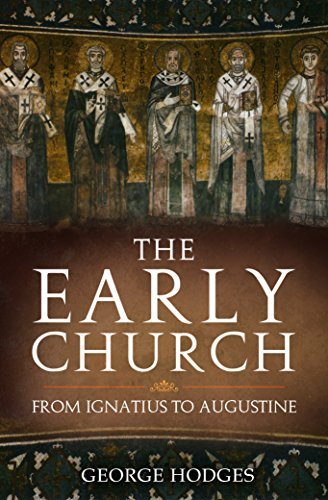
The Early Church: From Ignatius to Augustine by George Hodges
In the first century A.D., the roots of the early Church began to spread across the Roman world.
But who were its leaders?
And how did it survive through waves of hostility and oppression?
George Hodges, in this fascinating history, explains how the early Church developed from its lowly and persecuted origins of the first century through to becoming the main religion of the Roman Empire and the various kingdoms that succeeded it.
Hodges provides a full picture of the Roman Empire and its religion at this time, explaining how the Church was able to gain a foothold, how heresy nearly tore it apart and how many men and women sacrificed their own lives to protect the faith.
He uncovers why by the third century the Church began to develop into a settled and definite organization, with leaders, like Cyprian and Cyril, who assisted their followers, convened at gatherings like the Council of Nicaea to agree on doctrinal matters and how monasticism developed in both the East and West.
Finally, Hodges explains how the Church was able survive the collapse of the Roman Empire, a state that had begun to protect and support the Church after Constantine’s conversion in 312. The Church was forced to contend with the power vacuum of the tumultuous fourth and fifth centuries and to make allies and convert the pagans who were threatening them.
The Early Church: From Ignatius to Augustine is a brilliant history of the late Roman Empire and how the Christian Church developed within it.
George Hodges was an American theologian and dean of the Episcopal Theological School at Cambridge Massachusetts. The Independent stated that many of his works were reissued during his lifetime due to “the high esteem in which his religious messages are held by the reading public.” This work was first published in 1915 and he died in 1919.
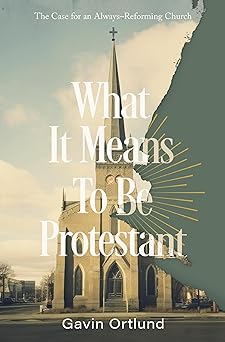
What It Means to Be Protestant: The Case for an Always-Reforming Church by Gavin Ortlund
These days many evangelicals are exploring the more sacramental, liturgical, and historically-conscious church traditions, including Roman Catholicism and Eastern Orthodoxy. This hunger for historical rootedness is a welcome phenomenon–but unfortunately, many assume that this need can only be met outside of Protestant contexts.??
In What it Means to Be Protestant, Gavin Ortlund draws from both his scholarly work in church history and his personal experience in ecumenical engagement to offer a powerful defense of the Protestant tradition. Retrieving classical Protestant texts and arguments, he exposes how many of the contemporary objections leveled against Protestants are rooted in caricature. Ultimately, he shows that historic Protestantism offers the best pathway to catholicity and historical rootedness for Christians today??
In his characteristically charitable and irenic style, Ortlund demonstrates that the 16th century Reformation represented a genuine renewal of the gospel. This does not entail that Protestantism is without faults. But because it is built upon the principle of semper reformanda (always reforming), Protestantism is capable of reforming itself according to Scripture as the ultimate authority. This scholarly and yet accessible book breaks new ground in ecumenical theology and will be a staple text in the field for many years to come.

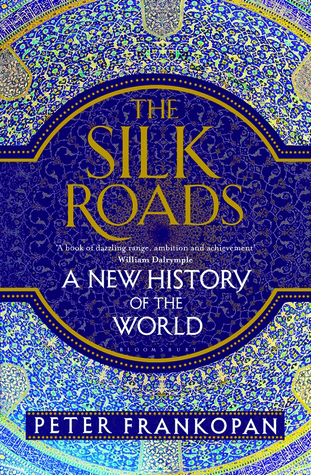 “This is history on a grand scale, with a sweep and ambition that is rare… A proper historical epic of dazzling range and achievement.” —William Dalrymple, The Guardian
  Layered Pages