Interview with Author Lorna Fergusson

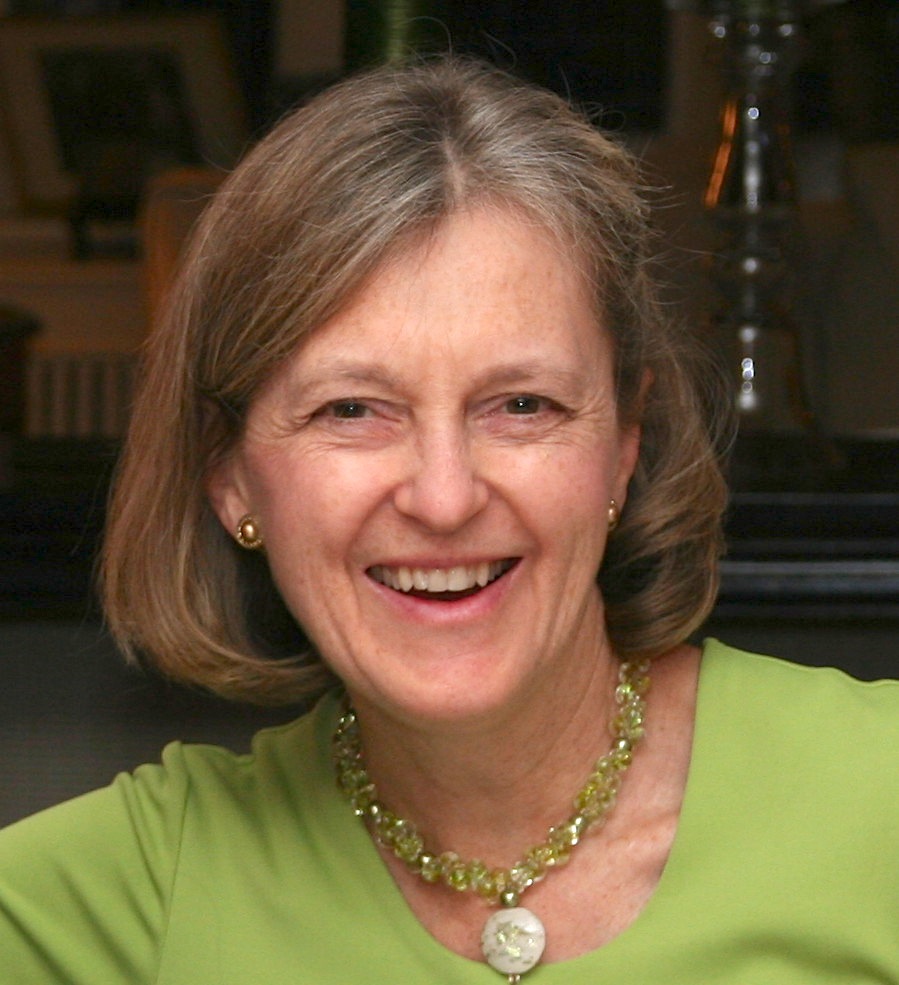
OLYMPUS DIGITAL CAMERA

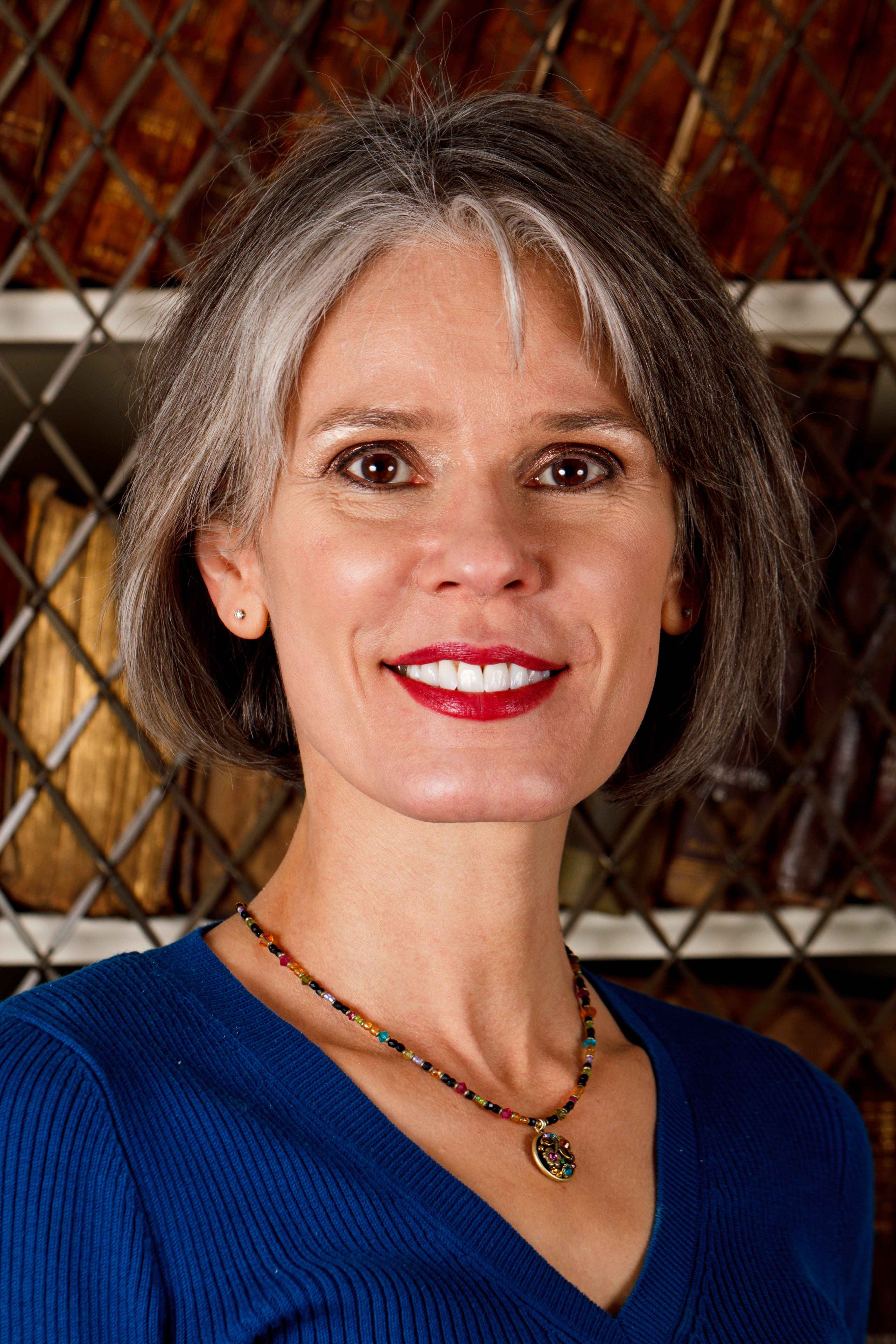
Born and brought up in the north of Scotland, Lorna Fergusson studied English at Aberdeen and Oxford Universities. She now runs Fictionfire Literary Consultancy. In addition to her own workshops, she teaches creative writing at the University of Winchester’s Writers’ Festival and for various Oxford University writing programmes. Her novel The Chase was originally published by Bloomsbury and is now published under her own imprint, Fictionfire Press. Her stories have won an Ian St James Award, been shortlisted for the Bridport Prize and long listed for the Fish Short Story Prize. Her unpublished children’s novel Hinterland reached the shortlist of four for Pan Macmillan’s Write Now prize. Her chapter on Pre-Writing appears in Studying Creative Writing, in the Creative Writing Series published by The Professional and Higher Partnership. Her story ‘Reputation’, longlisted in the Historical Novel Society’s short story award 2012, appears in the e-anthology TheBeggar at the Gate. She is working on a collection of historical short stories and a novel, the opening of which has recently won Words with Jam magazine’s First Page Competition. She has just won the Historical Novel Society’s London 2014 Conference Short Story Award with her story ‘Salt’.

Stephanie: I am so delighted to be interviewing Author Lorna Fergusson about her book, The Chase.

Hello, Lorna! It is truly a pleasure to be chatting with you today.

Lorna: Thanks Stephanie! I’m delighted to be here – thank you so much for inviting me.

Stephanie: Congratulations on the HNS Short Story Award. That is absolutely wonderful! Before we officially start this interview about your book, The Chase, could you tell me a little about ‘Salt’?

Lorna: I come from the north of Scotland and the story is inspired by memories of my grandmother, who was a ‘herring lassie’ at the time when the herring trade was huge. The fish were known as ‘the silver darlings’. The men went out to sea and the women followed the fishing fleet to gut the catch and pack it in barrels. Incredibly hard work and not in the least bit glamorous! My grandmother was working in Great Yarmouth, on the east coast of England, at the start of World War 1 and something she said about that experience when I was a little girl is what triggered the story.

Stephanie: How wonderful to have such amazing memories and to share them. I would love to hear more about your grandmother sometime…

Your story, The Chase, sounds amazing! I love stories like this and I have lots of questions and I MUST read your story soon. Please tell your audience a little about it and what genre it falls under.

Lorna: The story is about an English couple, Netty and Gerald Feldwick, who move to the Dordogne region of France. Gerald has fallen in love with a house there, deep in the woods near the village of Malignac. Netty is less happy about the move and is soon oppressed by the house, which is imbued with an almost supernatural sense of the past. We learn that their real reason for leaving England is to try to escape memories of a traumatic loss. They need to heal their marriage.

In France, they meet a range of characters, some English like themselves, some French, including the wealthy owner of a nearby château and a local wine farmer. Netty becomes friendly with a Cambridge professor who has retired to a cottage nearby. Gerald returns temporarily to England – and while he’s there he does something that will only add to Netty’s pain.

As the shadows close in and Netty learns the truth about her husband, her state of long-suffering passivity is about to change …

As for genre, well, that’s always been a tricky question to answer! It’s ‘literary fiction’, I suppose, though that can be an off-putting description. It has thriller, suspense and mystery aspects, along with satire of the English expatriate community and the social class system. The Chase has been compared to Daphne du Maurier – who famously wrote Rebecca – because the atmosphere of place and the sinister brooding quality is there, and also to Joanne Harris, who wrote Chocolat, because of the descriptions of the sensory pleasure of living in France. It’s Chocolat, with a darker bite!
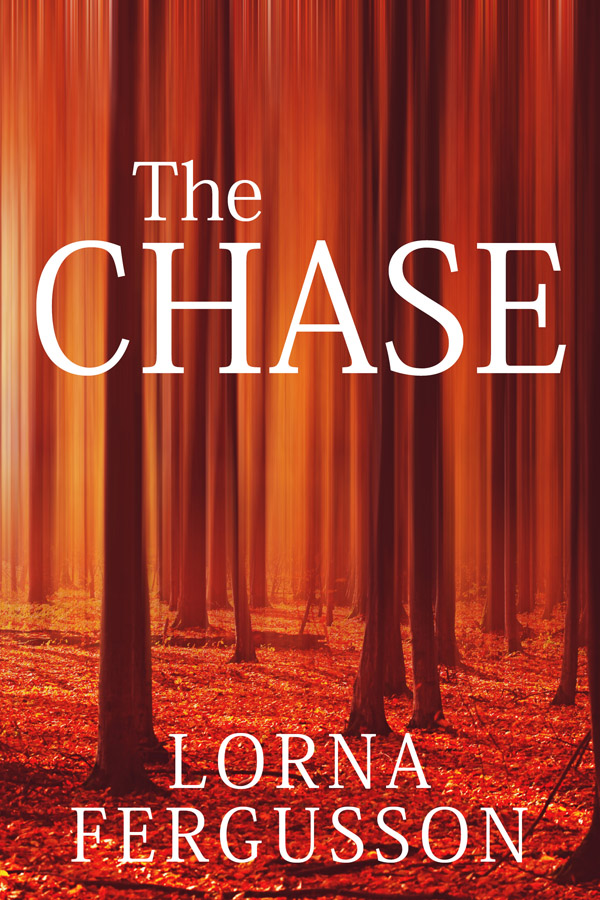
The Chase_MEDIUM

Stephanie: Why did you choose the Dordogne region of south western France in 1989 for your period and setting? And please tell me, if it won’t give anything away, how the past is revealed to Gerald Feldwick and his wife Netty?

Lorna: I chose the Dordogne region because for several years my husband and I part-owned a house there. Le Périer stood on a hillside overlooking a vineyard – that’s the view I had when I flung open the shutters and sat at my desk to write! We grew to know the area very well, and I was fascinated by the rich layers of history all around, from prehistoric caves to Roman ruins, to medieval castles. Our house had an old bread oven built into the back wall of the kitchen and we were told the German soldiers used to get their bread there during the occupation of the region in World War II. I wanted to celebrate the richness of the location from its natural beauties to the pleasures of its food and drink. 1989 was a time when even more English people than usual were choosing to have holiday homes there or even move out there permanently, so there were villages which were like little England. The English and French have had a long-term relationship in that part of France, going back to the Middle Ages. There are castles there which changed hands repeatedly during the Hundred Years’ War.

In the novel, it’s Netty who is more sensitive to the echoes of the past, when she converses with the Professor or visits Claudine Bellenger, the châtelaine of Bel Arbre. She senses the dark memories of Le Sanglier – is almost haunted by them, you might say …

Stephanie: What is an example of the house’s history they live in and how old is the house?

Lorna: Le Sanglier, we learn, was built as a hunting lodge just prior to the French Revolution, by the Comte de Saint Eymet – and he got up to fairly nefarious activities there. What Netty and Gerald don’t know is that the location has been the site of dramatic events for centuries. The novel opens with the caves beneath it being painted with images of the animals of the hunt, like the famous cave at Lascaux. Only the reader knows those caves are there.

Stephanie: The past covers a pretty wide range of history from the Roman period, through the Hundred Years’ War, the French Revolution period, to the early nineteenth century and the Second World War. Was there extensive research involved for you to cover these periods? Or were some of them mentioned briefly in your story? And what is one of the ways the past affects the people living on the land in the modern period of your story?

Lorna: I did quite a lot of research, especially on the Roman aspect and the French Revolution, partly by reading, partly by visiting places such as the Roman Tour de Vésone in Périgueux and the museum there. Each of these periods features as an inset narrative, a self-contained short story – but I enjoyed relating those periods to the modern era by showing the ruin of a Roman temple, the descendants of a character featured in the Revolutionary period – and even the consequences of what happens in the World War II episode. I wanted to show that everything is connected and everything repeats itself.

Stephanie: Please describe Gerald and Netty’s relationship. And what are their strengths and weaknesses?

Lorna: Their relationship is in serious trouble, even though they’ve loved one another for a long time. I wanted to explore the effects of trauma – how individuals deal with loss, plus the paradox that grief can tear people apart rather than bring them together. Netty and Gerald have very different ways of handling their situation. Gerald is a doer and a talker – he has energy and drive but is self-pitying and lacks dignity, Netty feels. Netty is buttoned-up and passive – but there’s a lot going on beneath the surface. She has a lot of anger brewing. She is also sensitive and creative; during the course of the story she learns a lot about who she really is – and she doesn’t always like that person.

Stephanie: Could you give an example of what their relationship is like with their children?

Lorna: I don’t want to go into too much detail, but alienation and secrets play their parts!

Stephanie: Please introduce me to Professor Rutherford Appleby. What is he a professor of and what is his role in the story? And does he know the history of the land?

Lorna: Professor Rutherford Appleby is genial and sensible and he understands Netty better than her husband does. He’s a kind of wise old uncle figure – but Netty has to learn he isn’t perfect either. He’s a Professor of Comparative Mythology and understands not only the history of place but the history of beliefs about place. He’s particularly expert in the Gallo-Roman history of that part of France and has chosen to retire there because he knows it so well.

Stephanie: In my questionnaire to you, you told me beautifully how you came to write your story and I absolutely love what you said. Could you please tell your audience what that is?

Lorna: The Chase is, first of all, an expression of love for France and for a special time in my life. The story came to me out there, via a vision of its ending. I started to explore what would bring the characters I visualised to such a pass, and the whole novel developed from there. I incorporated images of hunting and of tapestry to illustrate the tension between death and life, between destruction and creation. I focussed on how hard it is for people who love each other to handle loss – how people cope, or don’t cope, in different ways. My characters question the very notion of a benign order to the world and they demonstrate that even when you try to escape your past, the past is always with you.

Stephanie: Who are your influences? And what are you currently reading?

Lorna: My influences are probably too many to mention! I love writers who create a sense of place, definitely. I studied English Literature and specialised in Medieval English, so have an affinity with that, which meant I loved writing the Hundred Years’ War vignette in The Chase! Currently I’m reading an excellent non-fiction work, Philip Marsden’s Rising Ground, which is about the search for the spirit of place and why places are so important to us and have been throughout history. He lives in Cornwall and describes it so well – and Cornwall is one of my favourite places in the world.

Stephanie: How much time do you spend writing and where in your home do you like to write?

Lorna: I write in my study upstairs, which is a lovely room fast disappearing behind ramparts of books and piles of paper! It’s painted ivory white and a Greek island blue, which I find both restful and stimulating. As for time, well, there’s never enough. I run a literary consultancy so spend much of my time thinking about, editing and responding to other people’s fiction! When I do write, it tends to be in the middle of the night, because I’m quite an owl. It’s usually past 3 a.m. before I go to bed.

Stephanie: How has writing played an important role in your life?

Lorna: Writing is central – it’s central to my sense of who I am and what I’m here for. I can’t remember a time when I didn’t want to be a writer and even when I’m not being productive, I think like a writer – I notice things, formulate things in my head, jot notes and phrases on scraps of paper which then get lost, and wonder ‘What if …?’ all the time!

Stephanie: Thank you, Lorna! Your story sounds absolutely wonderful and I look forward to reading it soon!

Reviews:

‘Lorna Fergusson weaves a vivid but dark tale set in the beautiful Dordogne, where past and present fuse in a page-turning mystery. I could go back to this again and again.’ Alison Weir, novelist and historian

‘Superbly written, ambitious in scope, morally complex, emotionally challenging, this is a real page-turner.’ Linda Gillard

‘Steeped in the atmosphere, history and excitement of France … It is definitely the sort of book that is difficult to put down.’ Living France magazine

‘Lorna Fergusson has a natural gift for telling a story – think of Daphne du Maurier.’ Scotsman newspaper

The Chase is available as a paperback and an ebook and also on Kobo

Fictionfire Literary Consultancy

Fictionfire Press

Lorna’s blog, Literascribe

YouTube

Facebook and Facebook Fictionfire-Inspiration-for-Writers

Twitter: @LornaFergusson
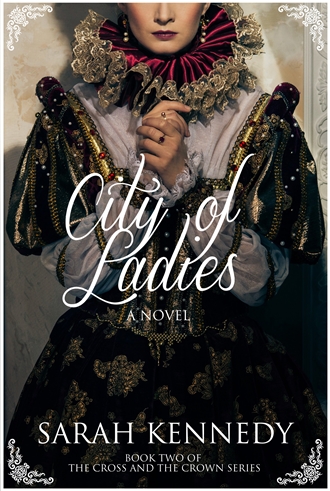


City of Ladies by Sarah Kennedy

Sarah Kennedy's Book Cover

Expected publication: October 14th 2014 by Knox Robinson Publishing

Catherine Havens has found herself in a unique position as a married former nun.  She seems to have beaten all of the odds against her and now has possession of the home lost by her mother’s family.  She has a husband and two children, a boy to inherit the property and an infant daughter.  But her husband’s aspirations run to the court, and he determines to get his wife a place with the king’s cast-off daughters.  The younger, Protestant Elizabeth is his target, and to have Catherine in service to her seems to be the realization of his dreams.

But Mary Tudor is still alive and well—and her submission to her father remains a question.  Her presence does not jeopardize Catherine—until she appears at Hatfield House and claims the loyalty to the Roman Catholic faith that still pulls at Catherine’s heart.

Catherine Havens still loves learning.  She loves reading and healing.  She loves her husband and her children.  But she also still loves her old faith, which is now embodied in the person of the king’s older daughter.

What choice does she have—to defy her husband and lose her children and her home?  Or defy the king’s daughter and lose her true self?”

Sarah Kennedy

Sarah Kennedy is the author of The Cross and the Crown series from Knox Robinson Publishers. She has published seven books of poems and is the recipient of a National Endowment for the Arts grant, a National Endowment for the Humanities grant, and a Virginia Commission for the Arts Individual Artist Fellowship.

Sarah Kennedy


Sunday’s Book Highlight

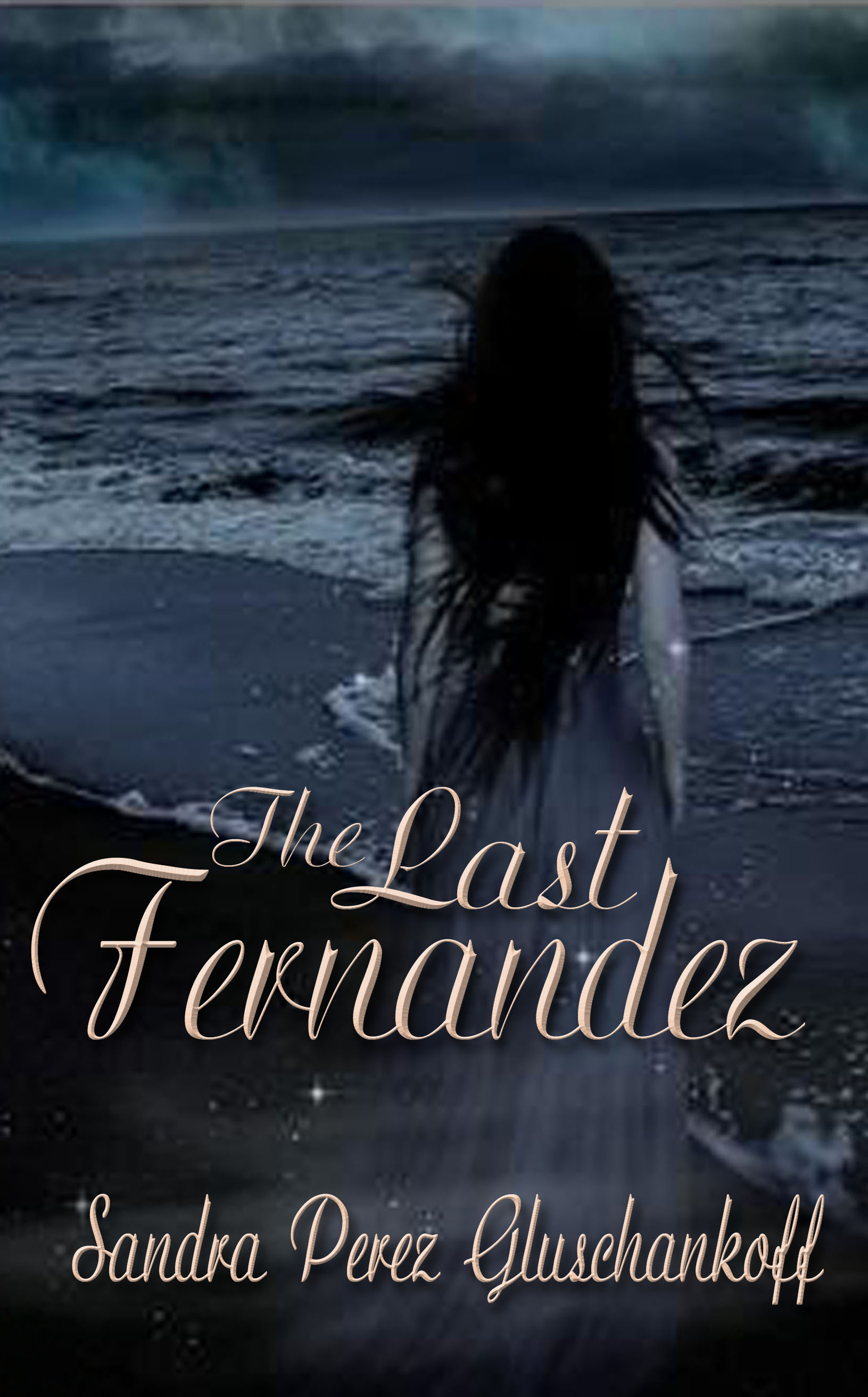
Fernandez front cover final

Little Angelina always dreamt about adventures in a faraway land. What she never imagined was that those dreams would take her to the past… her past.

After being inexplicably removed from her family in a small fishing town in Argentina, six year-old Angelina is sent to a Catholic convent, where she spends her next twelve years. During her lonely days at the convent, she finds solace in the company of a mysterious presence, by the name of Sarah Fernandez, which gradually reels her into the life of a marrano family living at the end of the Fifteenth Century in Cordoba, Spain. As Angelina embeds herself in the life of the Fernandez family, she understands that the presence is not a product of her imagination. Rather, Sara is the link to her secret past and her only hope for survival. Set amid the notorious Spanish Inquisition and the murderous Dirty War in Argentina of the late 1970s, two women, more than four centuries apart, transcend the barriers of time and fight political and religious persecution to ensure the survival of their lineage. The Last Fernandez is a story about courage, passionate love, unspeakable betrayal, and hope.

Sandra P Gluschanoff

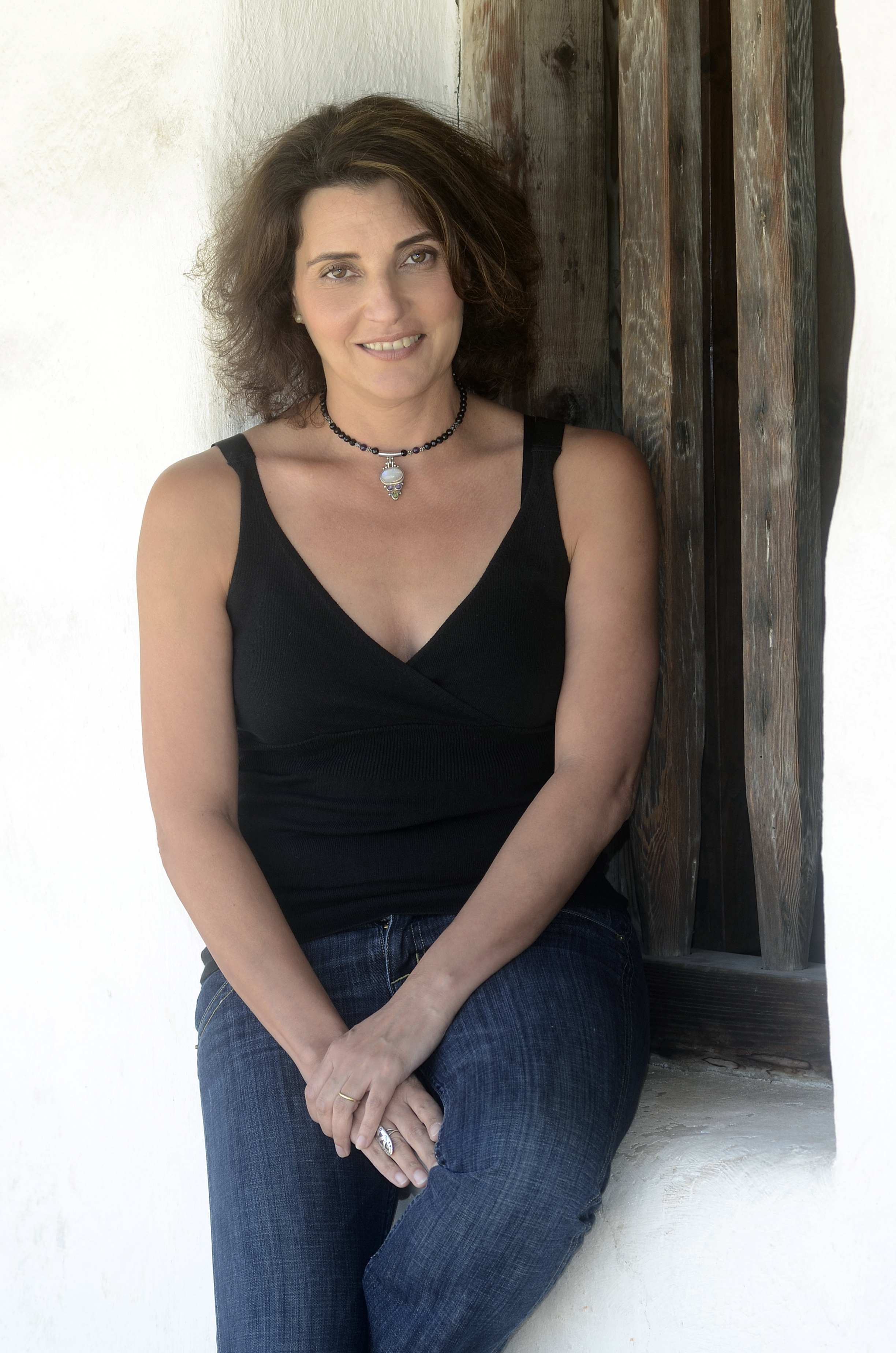
I was born and raised in Argentina. A descendant of immigrants from several corners of the globe, different languages, colors and food were my every day. So, was silence and fear as my childhood happened during the years of the dirty war, the military regime. While my academic background is in psychoanalysis (a Freudian girl, gotta love the divan!), anthropology, Judaic studies, and Hebrew language teaching, my interest turned to writing. Through the years I have written a number of screenplays, I have served as a Judge for the Brass Brad Screenwriting Mentorship Award and in 2012 I was honored to be part of the judging panel for the University of California Santa Barbara Student Screenwriting Competition.

Before writing my first novel The Last Fernandez, I kept busy as a freelance writer and script consultant.

Website

Book available through:

Every online book seller.

Amazon

Barnes & Noble

SmashWords


My Guest Author Valerie Willman

valerie_260x384-203x300

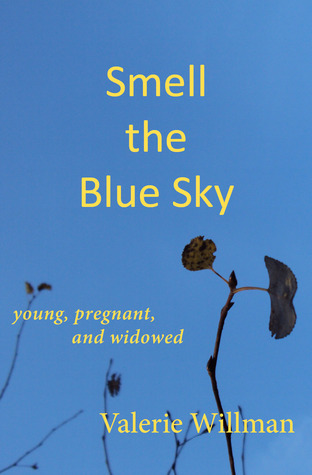
Valerie Willman is the author of Smell the Blue Sky: young, pregnant, and widowed, winner of the B.R.A.G. Medallion for Top Indie-Published Books. She co-chairs the Mid-Valley Chapter of Willamette Writers and teaches various workshops on writing, and on grief, such as “Booze and Chocolate Aren’t the Only Ways to Cope: Turning negative emotions into art.” She’s a successful freelance editor through her company, Yellow Pen Editing, and is also a certified bereavement facilitator, and licensed massage therapist.

Valerie has served in the United States Army, owns land in Costa Rica, and lives with three big dogs, two kids, and one Turk. She’s walked the length of two marathons—on purpose—and loves olives, chai, and chocolate.

You can find more about Valerie on her website and on Facebook

Why do you write?

I’ve answered this question to others, and to myself, many times throughout the years, and the answer actually seems to change each time it’s asked. I think this is probably because, while all the answers are true, I am more aligned with that reason at that particular time.

For instance, today the reason I write is because it’s a way to both experience life and to express that experience to others. All of the other jobs I do, or did in the past, are about service to others. And writing still is that for me. I write for others. To educate them. To inspire them. To make them laugh. To remind them that there are others out there in the wide, wide world that think and breathe like they do. To banish loneliness. To instill connectivity.

How has writing impacted your life?

It’s given me more confidence, which ironically is not true while I’m actually doing the writing. While I’m writing I’m wondering if how I’m saying what I’m saying is accurately and effectively getting what is inside of me out onto the page, and mostly believing that I’m failing at that. But then once it’s finished and published, I can say, “Hey, look what I did!” and it feels pretty neat. Also, having published works allows me to do that service thing I talked about—using a book to work from when I teach a class, or to read from during a public speaking gig.

Smell the blue sky

What advice would you give beginning writers?

If fiction is your thing, I honestly recommend participating in Nanowrimo. It taught me once and for all that I do have time to write every day, and that my inner-critic/editor can go bleep himself. Writing fast and hard effectively turns off that voice that says you’re doing it wrong.

If you’re writing a memoir, you can—and are expected to—compress time. This isn’t an autobiography of your whole life, just a snapshot of it that has a beginning, middle, and end that asks a dramatic story question.

If you are writing non-fiction, ask yourself, “How can/will this help my audience?” It’ll guide you to a better Table of Contents.

The more general advice is to have fun, read a lot, and go to writing conferences! Also, find yourself some rituals that can get you quickly into the game (i.e. writing your book/essay/blogpost) each day.

One last thing: mentors are great. You can connect to writers through Skype, social media, email, or old-fashioned snail mail. Or maybe you live in a city that is rich with authors you can have a cup of coffee with. If that sounds terrifying to you (as lots of writers are introverts), there are podcasts and websites everywhere that can “mentor” you just fine. One of my favorites is The Creative Penn.

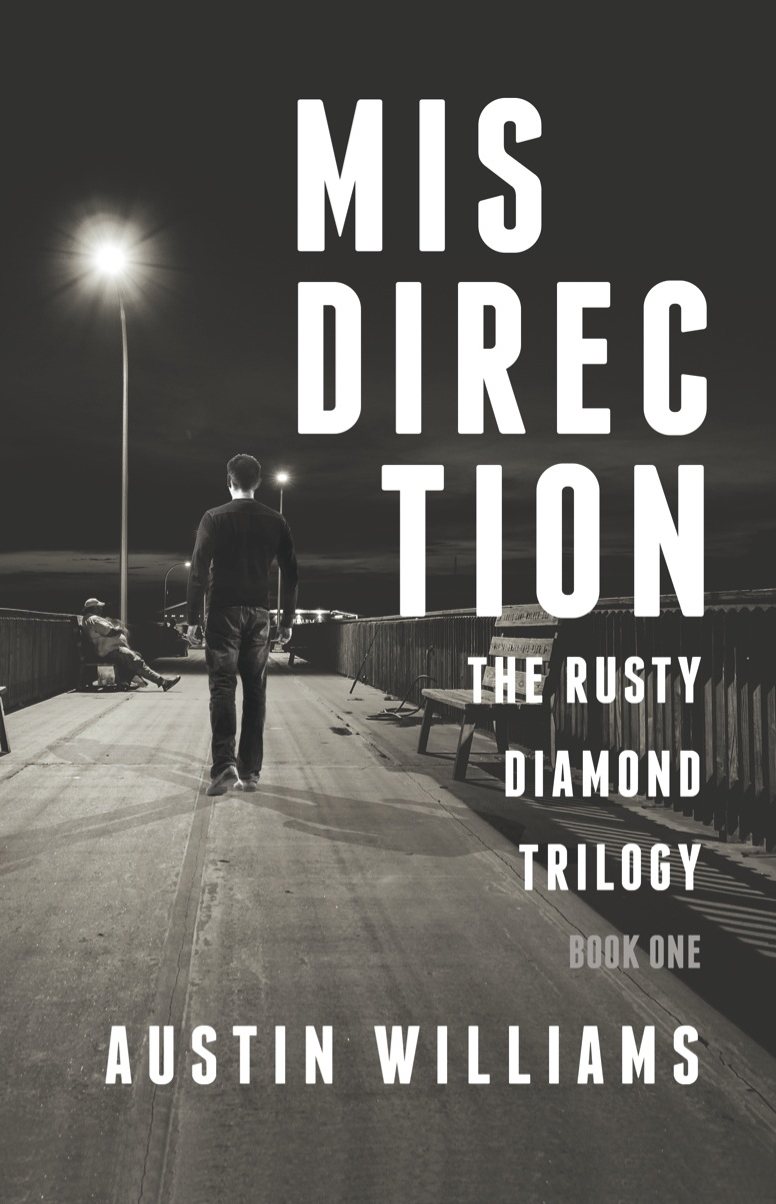
Spotlight: Misdirection by Austin Williams

02_Misdirection

Publication Date: June 22, 2014 Diversion Books Formats: eBook, Paperback

Genre: Thriller, Mystery, Crime Fiction Series: The Rusty Diamond Trilogy (Book One)

A street magician needs more than sleight-of-hand to survive getting embroiled in a murder case in this blistering novel of suspense, perfect for fans of Harlan Coben and George Pelecanos.

After years of chasing fame and hedonistic excess in the bright lights of Las Vegas, Rusty “The Raven” Diamond has returned home to Ocean City to piece his life back together. When he finds himself an innocent suspect in his landlord’s brutal murder, Rusty abandons all hope of maintaining a tranquil existence. Acting on impulse, he digs into the investigation just enough to anger both the police and a local drug cartel.

As the unsolved case grows more complex, claiming new victims and inciting widespread panic, Rusty feels galvanized by the adrenaline he’s been missing for too long. But his newfound excitement threatens to become an addiction, leading him headfirst into an underworld he’s been desperately trying to escape.

Austin Williams creates an unforgettable protagonist in Rusty, a flawed but relatable master of illusion in very real danger. As the suspense builds to an explosively orchestrated climax, Williams paints a riveting portrait of both a city—and a man—on the edge.

Buy the Book

Amazon USBarnes & Noble | iTunes | Kobo

About the Author

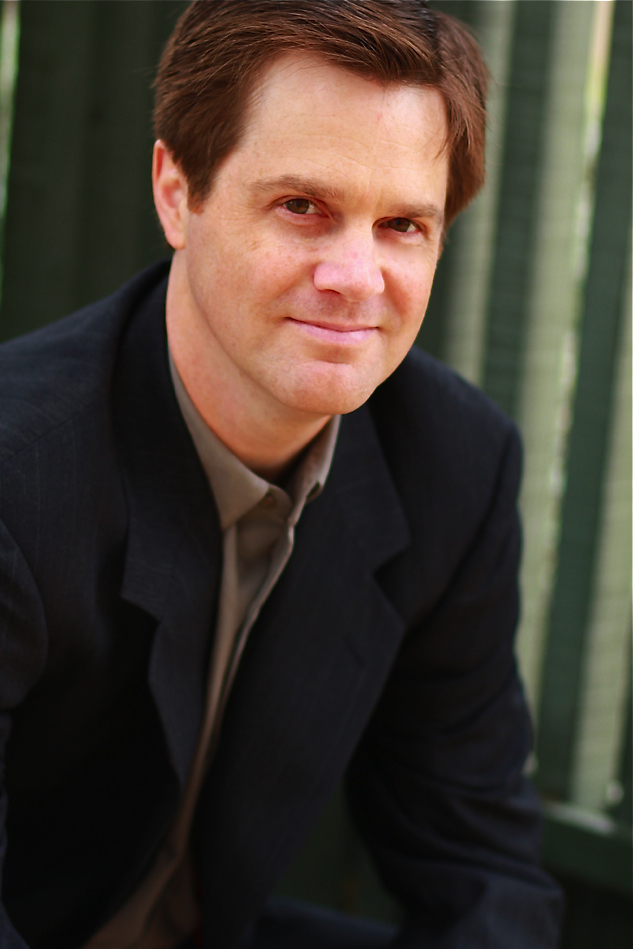
03_Austin Williams

The new thriller by Austin Williams, Misdirection, is now available from Diversion Books. It is the first novel of The Rusty Diamond Trilogy. Williams is the author of the acclaimed suspense novels Crimson Orgy and The Platinum Loop. He is the co-author (with Erik Quisling) of Straight Whisky: A Living History of Sex, Drugs and Rock ‘n’ Roll on the Sunset Strip. He lives in Los Angeles.

Follow Austin Williams on Twitter and Goodreads.

Misdirection Blog Tour Schedule

Monday, September 22 Review at The Bookworm

Tuesday, September 23 Review at Sitting in the Stacks

Wednesday, September 24 Spotlight at Tales of a Book Addict

Thursday, September 25 Review at Reading Room Book Reviews

Monday, September 29 Spotlight & Giveaway at Peeking Between the Pages

Tuesday, September 30 Review at The Librarian Fatale

Wednesday, October 1 Review at Any Good Book Review & Giveaway at The Crime Scene

Tuesday, October 2 Review at The Discerning Reader

Friday, October 3 Interview at Any Good Book

Monday, October 6 Review at Me and My Books Review & Interview at Back Porchervations

Tuesday, October 7 Spotlight at Layered Pages

Wednesday, October 8 Spotlight at Flashlight Commentary

Thursday, October 9 Review at Boom Baby Reviews Review & Interview at A Cup Of Tea & A Big Book

Monday, October 13 Review & Giveaway at Book Reviews & More by Kathy

Tuesday, October 14 Spotlight at CelticLady’s Reviews

Wednesday, October 15 Review at Book Nerd

Friday, October 17 Review at Svetlana’s Reads and Views Review at Beth’s Book Reviews

04_Misdirection_Blog Tour Banner_FINAL


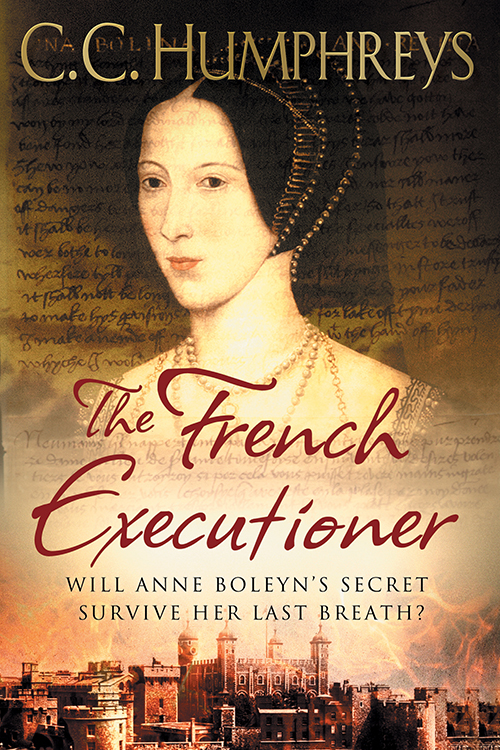
The French Executioner by C.C. Humphreys

9781402272349-PR

About the Book: The year is 1536, and notorious French executioner Jean Rombaud is brought in by Henry VIII to behead Anne Boleyn, the condemned Queen of England. But on the eve of her execution, Rombaud becomes enchanted with the ill-fated queen and swears a vow to her: to bury her six-fingered hand, a symbol of her rumored witchery, at a sacred crossroads.

Yet in a Europe ravaged by religious war, the hand of this infamous Protestant icon is so powerful a relic that many will kill for it. Bloodthirsty warriors, corrupt church fathers, Vikings, alchemists, and sullied noblemen alike vie for the prize as Rombaud, a man loyal to the grave, struggles to honor his promise.

From sea battles to lusty liaisons, from the hallucinations of St. Anthony’s fire to the fortress of an apocalyptic messiah, The French Executioner sweeps readers into a breathtaking story of courage, the pursuit of power, and loyalty at whatever cost.

What was the most surprising thing you discovered in your research for the novel?

This is a good question.

The French Executioner was my very first novel. Thus I had no real idea how to write one and assumed that one needed to know absolutely everything about a book before you began to write it. (I have since discovered that such obsessive research can be a form of procrastination and now only read for about three months, trusting that the novel and especially the characters will teach me what I need to study as I go along!) Also, I didn’t believe that I would ever truly summon the will (and courage) to actually start. So I spent a lot of time in second hand bookstores scanning shelves, thinking: If I ever do write that book about Anne Boleyn’s Executioner – which I probably never will – but if I do I will put everything into it I want to write about! Ooh, look at this book about slave galleys. I’d want a battle with them. Ooh, here’s one on the Black Mass. That’s definitely in!

So, in the six ears between having the idea for the novel (Anne Boleyn begs her executioner to take her six fingered hand when he takes her head and get rid of it. What happened next) and beginning to write it, I acquired a large library of books I read on various subjects.

The most surprising thing? It was a book about St. Antony’s Fire. This was the mass hallucination that would take villages when the villagers ate bread made from rye, that had been infected by the grain disease ergot – later to be synthesized into LSD. The poor people would eat the bread, and anyone who did would start having terrible contractions and massive hallucinations a few hours later. They would not know what it really was so assumed the Devil had come to take them to his fires. There are reports from all over Europe but the disease began to disappear with better crop techniques in the 18th century. However there was one outbreak in 1952 in a village in France. I bought that book, read it, shuddered – a lot of people died – then used it in my novel, as some of my characters get caught up in the Fire.

Horrible – but very colorful. My main villain is the Archbishop of Siena – a corrupt, decadent, highly educated killer. His hallucinations – full of Biblical and Satanic figures – were especially interesting to write!

image004

C.C. Humphreys is the author of eight historical novels. The French Executioner, which was his first novel and a runner-up for the CWA Steel Dagger for Thrillers award in 2002, has never before been published in the U.S. The sequel, The Curse of Anne Boleyn, will be published in the U.S. in May 2015.

Humphreys has acted all over the world and appeared on stages ranging from London’s West End to Hollywood’s Twentieth Century Fox. He is also an accomplished swordsman and fight choreographer. For more information, visit http://cchumphreys.com/

Praise for The French Executioner

“Set against the backdrop of the Protestant Reformation, his superbloody Princess Bride-like adventure is, at its heart, a tale of redemption, well-earned and hard-won.” – Library Journal

“This unusual tale conjures visions of an Errol Flynn-type Hollywood swashbuckler…the tale’s well-told, engagingly written, and includes a colorful immersion into a time when life was cheap and danger or death literally waited around every corner. A gory but fascinating…look at the world in the early 16th century.” -Kirkus


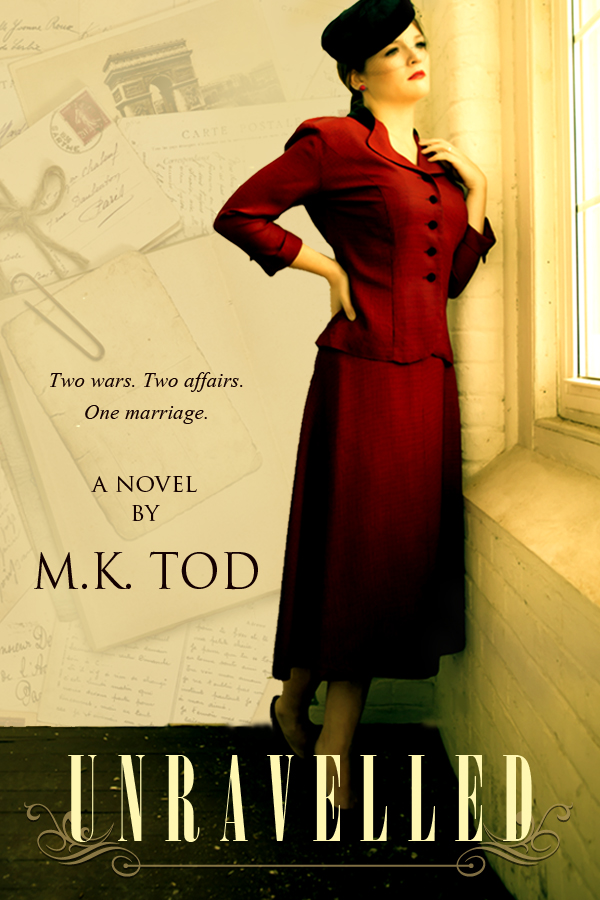
Sunday’s Book Highlight: Unraveled by M.K. Tod

Unravelled Front Cover Final II

UNRAVELLED: Two wars. Two affairs. One marriage.

In October 1935, Edward Jamieson’s memories of war and a passionate love affair resurface when an invitation to a WWI memorial ceremony arrives. Though reluctant to visit the scenes of horror he has spent years trying to forget, Edward succumbs to the unlikely possibility of discovering what happened to Helene Noisette, the woman he once pledged to marry. Travelling through the French countryside with his wife Ann, Edward sees nothing but reminders of war. After a chance encounter with Helene at the dedication ceremony, Edward’s past puts his present life in jeopardy.

When WWII erupts a few years later, Edward is quickly caught up in the world of training espionage agents, while Ann counsels grieving women and copes with the daily threats facing those she loves. And once again, secrets and war threaten the bonds of marriage.

With events unfolding in France, England and Canada, UNRAVELLED is a compelling novel of love, duty and sacrifice set amongst the turmoil of two world wars.

Reviews

“A sweeping story of love and war with much of the style of Brief Encounter and the passionate intensity of Birdsong. The novel moves from poignant reminiscence, to the carnage of the trenches, to the unravelling of life and memory.” Jenny Barden, author of Mistress of the Sea

“M.K. Tod’s skilful debut novel spanning two world wars deftly illuminates the subtle stirrings of the human heart as movingly as it depicts the horrors of battle.” Barbara Kyle author of Blood Between Queens

“An engrossing historical saga. With narrative insight, compassion and a strong sense of time and place, M.K. Tod observes the inner workings of a marriage as it’s affected by the uncertainty and tumult of both world wars.” Sarah Johnson, Historical Novel Society Book Review Editor

“Ms. Tod’s extensive research shows and provides Unravelled with solid information and authority – and the framework for a touching love story. An eloquent saga that I will not soon forget. I highly recommend it.” Judith Schara Caldwell

“Unravelled is a page turner and then some. Passionate, exciting, and intense, this book depicts the profound effects of both wars on people and focuses on the marriage and family life of the Jamiesons. I was moved to tears a few times.” Suko

“Truly this is a beautifully crafted story, full of emotion, detail and history that will keep readers entranced for hours. A stunning debut effort, sure to be on the top of several must read lists.” Gaele, an Amazon Top 500 Reviewer

Mary Todd

M.K. Tod writes historical fiction and blogs about all aspects of the genre at A Writer of History. Her debut novel, UNRAVELLED: Two wars. Two affairs. One marriage. is available in paperback from Amazon (USCanada and elsewhere), and in e-book formats from AmazonNookKoboGoogle Play and on iTunes. Her second novel, LIES TOLD IN SILENCE was released in July 2014 and is available at the same retailers. Prior to writing historical fiction, Mary had a successful business career. She can be contacted on Facebook, Twitter and Goodreads.

Retail Links

iTunes

Amazon

Amazon e-book

Amazon. ca

B&N Nook

Kobo Books

Google Play


Review: The French Executioner by C.C. Humphreys

The French Executioner

Pub Date   Oct 1 2014

Review:

Jean Rombaud and executioner brought over from France by Henry VIII to behead Henry’s second wife, Anne Boleyn. The day before her execution Anne request something of Jean and he makes a promise to her that will change the course of his life…..

This story takes you across Europe, in dungeons to slave galleys….and along the way Jean meets the most interesting companions and they find themselves in constant danger. In my opinion the author has achieved and expressed an artistic uniqueness in prose, scenery and action. There are extraordinary events that takes place throughout the story. There was one disturbing scene in particular that I have to admit, I had to skim over. But it did not sway me to put down the book. There are many portrayals of Anne Boleyn and I have to admit I haven’t read her in this light before. Having said that, Anne’s role in this story is easily recognizable and the author’s brief portrayal of her in the beginning sets the tone and backdrop for this intriguing story. When this story is read by my friends, I will be extremely interested in their thoughts of a particular way the author writes about Anne….you will know what I mean when you read the story. The art of writing historical fiction is to make sure the story holds the modern audience attention and the author has certainly achieved this. I am rating this story five stars for originality, lots of action, an incredible intense plot, dynamic character development and vivid scenery. Love everything about it!

Stephanie Moore Hopkins

Interview with Author Kate Forsyth

02_Bitter Greens

Publication Date: September 23, 2014 Thomas Dunne Books Hardcover; 496p ISBN-10: 1250047536

Genre: Historical/Fantasy/Fairy-Tale Retellings

The amazing power and truth of the Rapunzel fairy tale comes alive for the first time in this breathtaking tale of desire, black magic and the redemptive power of love

French novelist Charlotte-Rose de la Force has been banished from the court of Versailles by the Sun King, Louis XIV, after a series of scandalous love affairs. At the convent, she is comforted by an old nun, Sœur Seraphina, who tells her the tale of a young girl who, a hundred years earlier, is sold by her parents for a handful of bitter greens…

After Margherita’s father steals parsley from the walled garden of the courtesan Selena Leonelli, he is threatened with having both hands cut off, unless he and his wife relinquish their precious little girl. Selena is the famous red-haired muse of the artist Tiziano, first painted by him in 1512 and still inspiring him at the time of his death. She is at the center of Renaissance life in Venice, a world of beauty and danger, seduction and betrayal, love and superstition.

Locked away in a tower, Margherita sings in the hope that someone will hear her. One day, a young man does.

Award-winning author Kate Forsyth braids together the stories of Margherita, Selena, and Charlotte-Rose, the woman who penned Rapunzel as we now know it, to create what is a sumptuous historical novel, an enchanting fairy tale retelling, and a loving tribute to the imagination of one remarkable woman.

Hello, Kate! It is a pleasure to chat with you today about your story, Bitter Greens. What a beautiful and creative premise. Rapunzel is a tale I have known since childhood…what inspires you about Rapunzel to begin with?

I have been fascinated with the Rapunzel fairy tale since I first read it as a little girl. I was always puzzled by the mysteries in the tale: why did the witch lock up the girl? Why did she have to climb up her hair to get into the tower? How did the girl’s hair get so long? Questions like that niggled at me, and so I began to think up possible explanations for them.

Shamefully, I have to admit I have never paid much attention to the writer (s) of the story and had no idea it was penned by women. What is it that fascinates you about their lives the most?

I am a storyteller as well as a writer, and so I’ve always been interested in the ways stories endure over time, told and retold and retold again. I became interested in finding out the origin of the tale in the early stages of planning my novel, and was hugely excited when I stumbled across the life story of Charlotte-Rose de Caumont de la Force, who wrote the version of the tale as it was first told while she was locked up in a convent after scandalizing the royal court at Versailles with her love affairs and refusal to bow to societal norms. She was such a fascinating woman and the parallels between her story and the fairy tale she wrote struck me at once.

What were some of the historical events that took place in the setting of this story?

BITTER GREENS moves between two historical settings. The first is Renaissance Venice, and takes in 16th witchcraft hunts, the devastation of the plague, and the extraordinary art of Tiziano Vercelli, best known in English as Titian. The second setting is the sumptuous royal court of 17th century France, ruled over by Louis XIV, the Sun King. Charlotte-Rose de la Force was his second cousin and a maid-of-honour serving the queen. During her life, she saw the cruel persecution of the French Protestants, c alled Huguenots, and the scandal of the Affair of the Poisons, which saw hundreds of people arrested and tortured on suspicion of Satanism and murder.

Selena stands out to me the most. What are her strengths and weaknesses? And in what way does she inspire-if she inspires that is…?

Kate: Selena is a Venetian courtesan and the witch of the tale. Selena witnessed the terrible punishment of her mother, after she was unfaithful to her patron, and so sets herself to enact revenge on those who took part. She studies ‘stregheria’, the Italian art of witchcraft, in an attempt to shape her own life. She is afraid of the passing of time and the coming of death, and so hates clocks and watches, but is also passionate, sensual, and determined.  Although she is strong and clever, she also has a strong streak of cruelty in her and locks girls up in a tower for her own nefarious purposes, so I’m not sure she can be seen as an inspiration!

Could you please give me an example of Renaissance life in Venice? Something romantic, perhaps?

Venice in the 16th century was a place of great wealth, beauty and culture.  Its streets were full of merchants from all over the world, all speaking their own tongues and wearing the clothes of their nation. Women were gorgeously dressed in silks and satins and cloth-of-gold, and wore totteringly high wooden chopines to protect their delicate silk slippers from the water that often overflowed from the canals.  Artists such as Michelangelo, Titian and Bellini created works of startling beauty, and every palace and cathedral was painted and ornamented to within an inch of their life. At Carnevale, men and women dressed up in their finest clothes and hid their faces behind masks so that they could wander the narrow streets and plazas of the many islands, free to love anyone they pleased. Many people began to wear masks all year long, in order to enjoy the freedom of anonymity, until the practice was outlawed in 1797. Mask-makers were revered, and had their own rules and their own guild.

What compels the old nun to tell Charlotte-Rose the tale who is sold by her parents for a handful of bitter greens? Is there a particular message she wants her to grasp?

I think Seraphina wants to help Charlotte-Rose learn to accept her fate with grace, and to make the most of the life she has been given. We cannot always choose what happens to us in our lives, but we can choose how we deal with it.

What is Charlotte’s personality like?

She is strong-willed, quick-witted, passionate, and very stubborn. She does her best to live a self-determined life, and finds the strictures of the patriarchal society in which she lives very difficult to negotiate. All she wants is to live and love as she chooses, and to write – yet these things are constantly being denied to her, and so she is frustrated and angry, particularly in the beginning of the book. She is also afraid and determined not to show it, and this makes her seem proud and even arrogant. She is also, I’m afraid, rather vain, but then she lives in the royal court of Versailles where everything is about show.

Is there one thing you find remarkable about Venice in 1512?

Venice had always been a city remarkable for its religious and cultural toleration, yet this began to change around this time. The world’s first ghetto was established in Venice in 1516, and other races and religions began to find themselves having their freedom curtailed as well. This was partly as a result of a long-waged war against Constantinople, and partly because of religious fervor caused by terrible outbreaks of the bubonic plague.

What was your process for this story and how long did you work on it?

Bitter Greens was a complex and challenging novel to write, and took me a long time to research. All in all, it took me seven years to write! I began by learning everything I could about the two periods my story was set in, and by studying the history of the Rapunzel fairy tale (I ended up doing a doctorate on this.) I then wrote each of the three narrative threads independently from each other, and then wove them together. It was like writing three novels instead of one!

What do you love most about writing?

Everything! I love the first period, when my mind is alive with story possibilities and I’m reading and researching and thinking and daydreaming. I love the actual writing process, and all the amazing serendipitous discoveries I make. And I love to edit too – that’s when the story really begins to fall into shape.

Who are your influences?

I think every single book I have loved – and there are hundreds of thousands of those!

Praise for Bitter Greens

“Kate Forsyth’s Bitter Greens is an enthralling concoction of history and magic, an absorbing, richly detailed, and heart-wrenching reimagining of a timeless fairytale.” —Jennifer Chiaverini, New York Times bestselling author of Mrs. Lincoln’s Rival

“See how three vividly drawn women cope with injustice, loneliness, fear, longing. See how they survive—or perpetrate—treachery. Surrender yourself to a master storyteller, to delicious detail and spunky heroines. Bitter Greens is a complex, dazzling achievement.” —Susan Vreeland, New York Times bestselling author of Clara and Mr. Tiffany and Girl in Hyacinth Blue

“A magical blend of myth and history, truth and legend, Bitter Greens is one of those rare books that keeps you reading long after the lights have gone out, that carries you effortlessly to another place and time, that makes you weep and laugh and wish you could flip forward to make sure it all ends happily ever after—but for the fact that if you did so, you might miss a line, and no line of this book should be missed.” —Lauren Willig, New York Times bestselling author of The Ashford Affair

“Kate Forsyth wields her pen with all the grace and finesse of a master swordsman. In Bitter Greens she conjures a lyrical fairytale that is by turns breathtaking, inspiring, poetic, and heartbreakingly lovely. Set like a jewel within the events of history, it is pure, peerless enchantment.”—New York Times bestselling author Deanna Raybourn

“Bitter Greens is pure enchantment–gripping and lyrical. From the high convent walls where a 17th century noblewoman is exiled, to a hidden tower which imprisons an innocent girl with very long hair, to the bitter deeds of a beautiful witch who cannot grow old–Kate Forsyth weaves an engrossing, gorgeously written tale of three women in search of love and freedom. A truly original writer, Forsyth has crafted an often terrifying but ultimately redemptive dark fairy tale of the heart.”—Stephanie Cowell, American Book Award-winning author of Claude & Camille

“Kate Forsyth’s Bitter Greens is not only a magnificent achievement that would make any novelist jealous, it’s one of the most beautiful paeans to the magic of storytelling that I’ve ever read.”—C.W. Gortner, author of The Queen’s Vow and The Confessions of Catherine de Medici

“Threads of history and folklore are richly intertwined to form this spellbinding story. Kate Forsyth has excelled herself with Bitter Greens. Compulsively unputtdownable.”—Juliet Marillier, national bestselling author of Flame of Sevenwaters and Heart’s Blood

Buy the Book

Amazon US Barnes & Noble IndieBound

About the Author

Kate Forsyth 1

Kate Forsyth wrote her first novel at the age of seven, and is now the internationally bestselling & award-winning author of thirty books, ranging from picture books to poetry to novels for both adults and children. She was recently voted one of Australia’s Favourite 20 Novelists, and has been called ‘one of the finest writers of this generation. She is also an accredited master storyteller with the Australian Guild of Storytellers, and has told stories to both children and adults all over the world.

Her most recent book for adults is a historical novel called ‘The Wild Girl’, which tells the true, untold love story of Wilhelm Grimm and Dortchen Wild, the young woman who told him many of the world’s most famous fairy tales. Set during the Napoleonic Wars, ‘The Wild Girl’ is a story of love, war, heartbreak, and the redemptive power of storytelling, and was named the Most Memorable Love Story of 2013.

She is probably most famous for ‘Bitter Greens’, a retelling of the Rapunzel fairy tale interwoven with the dramatic life story of the woman who first told the tale, the 17th century French writer, Charlotte-Rose de la Force. ‘Bitter Greens’ has been called ‘the best fairy tale retelling since Angela Carter’, and has been nominated for a Norma K. Hemming Award, the Aurealis Award for Best Fantasy Fiction, and a Ditmar Award.

Her most recent book for children is ‘Grumpy Grandpa’, a charming picture book that shows people are not always what they seem.

Since ‘The Witches of Eileanan’ was named a Best First Novel of 1998 by Locus Magazine, Kate has won or been nominated for numerous awards, including a CYBIL Award in the US. She’s also the only author to win five Aurealis awards in a single year, for her Chain of Charms series – beginning with ‘The Gypsy Crown’ – which tells of the adventures of two Romany children in the time of the English Civil War. Book 5 of the series, ‘The Lightning Bolt’, was also a CBCA Notable Book.

Kate’s books have been published in 14 countries around the world, including the UK, the US, Russia, Germany, Japan, Turkey, Spain, Italy, Poland and Slovenia. She is currently undertaking a doctorate in fairytale retellings at the University of Technology, having already completed a BA in Literature and a MA in Creative Writing.

Kate is a direct descendant of Charlotte Waring, the author of the first book for children ever published in Australia, ‘A Mother’s Offering to her Children’. She lives by the sea in Sydney, Australia, with her husband, three children, and many thousands of books.

For more information please visit Kate Forsyth’s website and blog. You can also find her on Facebook, Twitter, Pinterest, and Goodreads.


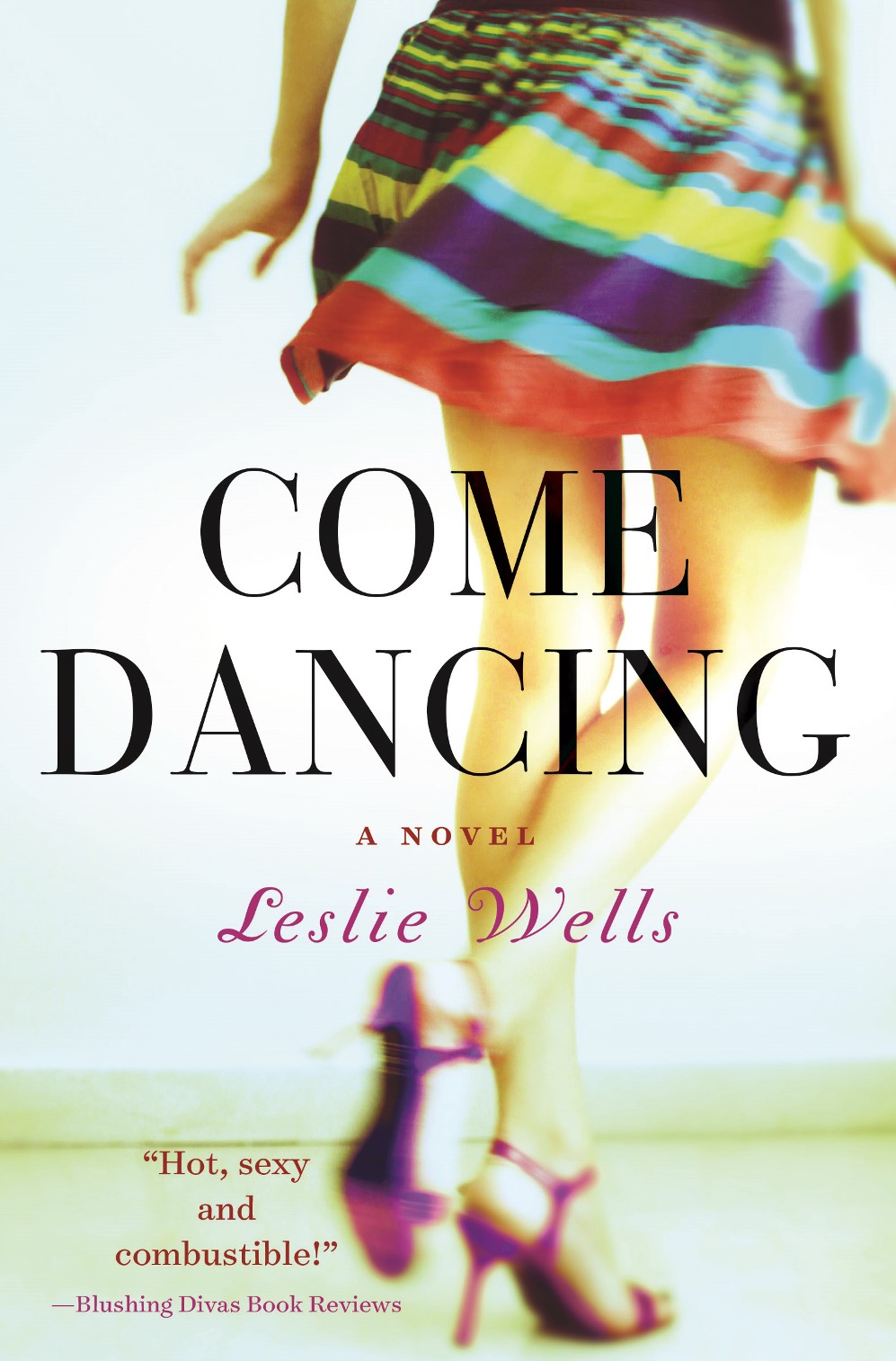
Spotlight: Come Dancing by Leslie Wells

02_Come Dancing

Publication Date: June 8, 2014 Allium Press Formats: eBook, Paperback

Genre: Contemporary Romance

Julia is a book-loving publisher’s assistant. Jack is a famous British rock star. “Opposites attract” is an understatement.

It’s 1981. Twenty-four-year-old Julia Nash has recently arrived in Manhattan, where she works as a publisher’s assistant. She dreams of becoming an editor with her own stable of bestselling authors—but it is hard to get promoted in the recession-clobbered book biz.

Julia blows off steam by going dancing downtown with her best friend, Vicky. One night, a hot British guitarist invites them into his VIP section. Despite an entourage of models and groupies, Jack chooses Julia as his girl for the evening—and when Jack Kipling picks you, you go with it. The trouble is … he’s never met a girl like her before. And she resists being just one in a long line.

Jack exposes her to new experiences, from exclusive nightclubs in SoHo to the Chateau Marmont in Hollywood; from mind-bending recording sessions to wild backstage parties. Yet Julia is afraid to fall for him. Past relationships have left her fragile; one more betrayal just might break her.

As she fends off her grabby boss and tries to move up the corporate ladder, Julia’s torrid relationship with Jack takes her to heights she’s never known—and plunges her into depths she’s never imagined.

With a fascinating inside look at publishing, this entertaining story of a bookish young woman’s adventures with a rock superstar is witty, moving, and toe-curlingly steamy.

Come Dancing Bonus Scenes

Scene One | Scene Two

Praise for Come Dancing

“Leslie Wells brings to life all the eclectic, edgy style of New York City at the dawn of the 1980s as she spins a story of spine-tingling romance and the complex issues that can threaten a relationship. Through her effervescent writing style she catapults the reader into a world of excess and indulgence, while delving into some honest and heartfelt struggles along the way. … Come Dancing is a love story with lots of heart and plenty of heat.”

—Casee Marie, Literary Inklings Book Reviews

“5 Blushing Stars!! Come Dancing is quite the story. I loved this story and could not put it down. I got lost in the story, imagining the rock stars and their groupies partying it up, while finding themselves and falling in love. Opposites certainly do attract and make for an explosive time! You will love the many layers of Jack; you will also want to smack him at times too. Julia will have you rooting for the underdog and wishing she had a better clothes fund 🙂 Through it all, the many naysayers and people out to split them up, they make it work! Fate seems to finally take its stand and allows for this fairytale story to end the way it should—hot, sexy and combustible!”

–Kellie, Blushing Divas Book Reviews

“I’m never sure what to expect when I venture away from historical fiction, but I found Leslie Wells’ Come Dancing quite enjoyable. Though more contemporary than my usual fare, I think the novel has a lot of heart and is a story many people will be able to relate to.

By far, my favorite aspects of the piece were the atmospheric qualities of the narrative. This is a New York before cell phones and digital cameras. It has different rhythm to it and follows a social structure that is entirely different from the New York of today. There is a contrast in that, something both familiar and almost foreign that really appealed to me.

There is a tangible affection between Julia and Jack which I truly appreciated, and I admired the journey their relationship takes over the course of the story. . .. A pleasant fiction, Come Dancing is brimming with both humor and heart. A realistic romance that is sure to entertain.”

–Erin, Flashlight Commentary Book Blog

Buy the Book

Amazon US | Amazon UK | Barnes & Noble | Book Depository | IndieBound

About the Author

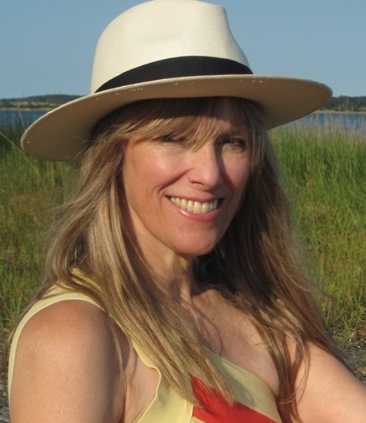
03_Leslie Wells Credit © Leslie Wells

Leslie Wells left her small Southern town in 1979 for graduate school in Manhattan, after which she got her first job in book publishing. She has edited forty-eight New York Times bestsellers in her over thirty-year career, including thirteen number one New York Times bestsellers. Leslie has worked with numerous internationally known authors, musicians, actors, actresses, television and radio personalities, athletes, and coaches. She lives on Long Island, New York.

Author Links

Website | Blog | Facebook | Google+ | Goodreads

Sign Up for Leslie Wells’s Newsletter.

Come Dancing Blog Tour Schedule

Monday, September 8 Review at Blushing Divas Book Reviews

Tuesday, September 9 Review & Giveaway at SOS Aloha

Wednesday, September 10 Review & Excerpt at What’s On the Bookshelf

Thursday, September 11 Spotlight at Sizzling Hot Books

Friday, September 12 Review & Giveaway at The Boyfriend Bookmark

Monday, September 15 Review at Tea Cups and Book Love Review & Giveaway at Peeking Between the Pages

Tuesday, September 16 Review, Interview & Giveaway at A Dirty Book Review

Wednesday, September 17 Interview at Romance Book Junkies

Thursday, September 18 Review & Excerpt at Shelly’s Book Blog

Friday, September 19 Review at Must Read Books or Die

Tuesday, September 23 Review at Flashlight Commentary

Wednesday, September 24 Review at Book Nerd

Thursday, September 25 Spotlight & Giveaway at Paranormal Book Club

Sunday, September 28 Review at Devilishly Delicious Book Blog

Monday, September 29 Review at Lustful Literature

Wednesday, October 1 Guest Post at Bibliophilia, Please Spotlight at Layered Pages

Monday, October 6 Review & Giveaway at A Bookish Affair Review & Excerpt at Jorie Loves a Story

Tuesday, October 7 Review at Turning the Pages Interview at Jorie Loves a Story

Wednesday, October 8 Review at The Life & Times of a Book Addict

Friday, October 10 Review at Satisfaction for Insatiable Readers

Tuesday, October 14 Review & Excerpt at Michelle & Leslie’s Book Picks

Wednesday, October 22 Interview at Room with Books

Thursday, October 23 Review at Lusty Penguin Reviews

Monday, October 27 Review at So Many Books, So Little Time

Tuesday, October 28 Spotlight at Just One More Chapter

Thursday, October 30 Review at The Danish Bookaholic

04_Come Dancing_Blog Tour Banner_FINAL