Paula Lofting brings the reader an enthralling story! Sons of The Wolf, the first to a series of novels that leads up to the Norman Conquest. Of a man named Wulfhere who lived during the rule of Edward the Confessor. The lands that he holds come from the king. Wulfhere also serves my favorite male heroines in history, Harold Godwinson. Harold is the Earl of Wessex and extremely powerful and has great influence in the realm. Wulfhere is a warrior who loves his family and has a soft spot for his daughters. When Harold tells him must give his daughter, Freyda to his sworn enemy-horrid Lord Helghi- son to marry. He becomes angry but nonetheless he must agree to Harold’s wishes. For Harold grows tired of the never ending hatred between his two lords. But all is not well and Wulfhere must do all he can to save his daughter from the dangers he knows will happen if she falls in the grasps of Lord Helghi and there is a even bigger threat that could change his family forever.
As this brilliant story unfolds I found myself so engrossed with the characters plight and emotions I felt like these events were happening to my own family. Saying this story has well developed characters does not do it justice. It goes beyond that…Lofting really gets to the core of the human condition and pulls you into a world of the past that leaves you wanting to explore more of these fascinating people in history.
The first few pages grabbed me and didn’t let go and now I’m anxiously awaiting for the sequel to this remarkable story. Sons of the Wolf is definitely a novel of what the highest quality of Historical Fiction should be and I highly recommend!
I rated this story five stars!!
Stephanie
Layered Page
Author Archives: layeredpages
Review: Shadow on the Crown by Patricia Bracewell
Patricia Bracewell brings her readers a beautifully crafted story of Emma of Normandy. The year is 1002 and as the sister of the Duke of Normandy, Lady Emma, must do what is decided for her. As a political pawn she is sent to England to marry, King Æthelred and becomes his Queen. The life she does not want but a path she must take nonetheless. She makes the best of her situation for her husband finds her a nuisance and court life is daunting and dangerous. As time goes by she makes new friends who discovers her generosity and compassion for others. However, there are enemies who will stop at nothing to see her fall and Emma struggles with a growing love to a man she cannot have.
Bracewell’s engaging debut novel sets the standard for what good, quality literature should be and I thoroughly enjoyed her rendition of this period of English history. She not only gives you a wonderful blend of history and fiction but captures the human condition, the culture, and the struggles of England’s royal court life. She gives each character a distinct voice-which I find refreshing. She writes about one of my favorite female heroines in history, Emma. A women-though flawed- of strength, compassion and generosity. I’m looking forward to more of Bracewell’s stories!
I rated this story five stars!
Stephanie
Layered Pages
Book Review: Equilibrium by Evie Woolmore
Equlibrium is an evocative tale of two sisters-Epiphany and Martha-who are mediums performing on stage in a theater in London, England in the early 1900’s. A Lady Adelia Lyward sees the performance and wants Epiphany to give her a private reading. She wanted to learn the truth of her brothers death not knowing the sisters have a connection to her household. Martha was a housemaid to the Lyward’s two years previous and fell pregnant by Adelia’s husband, Lord Rafe Lyward. In disgrace Martha left the Lyward’s household, gave her child away and attempted suicide in the River Thames, she survived… But there is more to the Lyward’s household then meets the eye.
The beginning of the story starts slowly but I was pleasantly surprised as I read on to discover how the mystery surrounding Adelia’s brothers death is revealed. However, I would have liked to have seen the historical elements to be stronger and expanded further on-such as the social changes in England during this period and I wanted to have a clearer picture on the details as to why Adelia’s brother went to South Africa during the Boer War then what was told.
Overall this story is rich in complex characters with remarkable depth despite their shortcomings. Epiphany’s voice gave- what I believe- a comfort to those she was interacting with at times and I thought she gave the story a calmness and a delicate reality to this tragic and harsh story that was unfolding. I recommend Equilibrium to readers who enjoys historical fiction with spiritualism influences.
~Stephanie
Layered Pages
Interview with Author Patricia Bracewell
Patricia, congrats on your debut novel, Shadow on the Crown and thank you the pleasure of an interview. I was so delighted to receive an ARC of your book and I absolutely loved your story! You wrote about one of my favorite female heroines and time period in history. Could you please tell your audience about your story?
Thank you, Stephanie. I’m honored to be interviewed and thrilled that you liked my book. Shadow on the Crown is about a remarkable historical figure, Emma of Normandy, who was sent to England in 1002 as the peaceweaving bride of the king, Æthelred II. Thrust into a hostile court filled with intrigue, suspicion and the constant fear of attack by Viking raiders, Emma must negotiate the moods of a haunted king and the schemes of powerful men in order to secure for herself a position as something more than just a royal hostage. The choices that she makes shape not only her own future, but the future of England as well.
Emma falls in love with someone other than the King. Without giving who it was away, could you please tell me if their relationship was real or fictional?
The relationship in my book is purely fictional, although it wouldn’t have been impossible. Who can say? It is an echo, though, of a real event that occurred in the 9th century when a Frankish princess wed an Anglo-Saxon king and then…well, interesting things happened.
Were there any research challenges you faced?
There were several challenges, and one of the biggest was discovering the facts of Emma’s life. Her birth date, her land holdings, her role in Æthelred’s court and household, her relationships with her husband’s children by his first wife – none of that was of interest to the historians of the time. What we know of it is all conjecture drawn from wills, charters, the Anglo-Saxon Chronicle, and, frankly, hearsay that’s been passed off as fact. It’s like trying to draw someone’s face when all you can see is their shadow.
What led you to write about Emma?
I first read about Emma in an on-line bulletin board about a dozen years ago. I considered myself fairly knowledgeable about English royalty, yet I found myself reading about a queen I’d never heard of who married two different kings of England and who had also been mother to two kings of England. I began to research, and the more I learned about Emma the more fascinated I became, and the more astonished I was that she had been relegated to little more than a footnote in history. I wanted to write a book that would make her name just as familiar as those of the Tudor queens.
Yes. This novel is the first of a trilogy about Emma of Normandy, and I am working on the sequel now. I’m taking my time, because the next two books will cover the final, turbulent years of the reign of Æthelred II, and there are huge opportunities for dramatic tension and conflict.
The jacket designer was Kristen Haff. She has a website that displays many of the book covers that she’s done for Penguin. I hope she posts mine there because I think she did a marvelous job. The photographer was Richard Jenkins, who is based in the U.K.
Take a deep breath and throw yourself into the research, but when it comes time to write your book, remember that you are a storyteller, not a historian. Be true to the history, but always remember that a good story is about people and their emotions, their relationships and their conflicts; it’s not about historical minutiae, however accurate it may be. Don’t get lost in it.
I must have been about twelve when I decided that I wanted to write novels, but it seemed like nothing more than a girl’s impossible dream. In college my Creative Writing professor was not terribly encouraging, and I realized that being able to write well did not necessarily make one a novelist or even a writer. I put that dream aside and focused on earning a living as a teacher, but the desire to write never went away. When I finally decided to scratch that itch, I focused first on essays, then short stories, and finally I turned to my first love – the novel. I produced two manuscripts that are now sitting in a box on the top shelf of my closet, and then I began work on Shadow.
That’s a really hard question to answer, as I’m sure you know. Today’s favorite, out of the thousands of books I’ve read in my life, would be Kissing the Witch by Emma Donoghue. It’s a re-spinning of thirteen familiar fairy tales in a way that is surprising and a little subversive. Donoghue’s writing is radiant.
What are you currently reading?
I’m reading an ARC of A Teaspoon of Earth and Sea by fellow Penguin author Dina Nayeri. Her book debuts the same day as mine. It’s about a young woman who has to find a way to survive in a harsh, repressive world – not unlike Emma. But Dina’s book is set in 1980’s Iran. I’m also listening to an audio book: Nancy Bilyeau’s Tudor mystery The Crown. Just now we’re wandering the maze of corridors in the Tower of London.
My “To Read” stack is taller than I am! Up next, Parlor Games, Maryka Biaggio’s historical novel set at the turn of the last century. But please don’t think I only read female authors! I’ve just finished reading books by Bernard Cornwell, Robert Low and Oscar Wilde, all of which I enjoyed very much.
Patricia Bracewell grew up in Los Angeles where her love of stories led to college degrees in Literature, a career as a high school English teacher, and a yearning to write. She has travelled extensively in Europe, Asia and South America, both for research and for pleasure. She enjoys gardening, tennis, and, of course, reading, and she is a passable guitarist and folksinger, although her writing leaves her little time these days for practice. She lives in Northern California where she met and married her Canadian husband and where they raised their two sons.
Links:
http: //www.patriciabracewell.com
http://www.medievalists.net/2010/11/28/why-medieval-with-patricia-bracewell/
https://www.facebook.com/PatriciaBracewellAuthor
https://twitter.com/patbracewell
Thanks you!
Stephanie
Interview with Author Ellen Marie Wiseman
A deeply moving and masterfully written story of human resilience and enduring love, The Plum Tree follows a young German woman through the chaos of World War II and its aftermath.
“Bloom where you’re planted,” is the advice Christine Bolz receives from her beloved Oma. But seventeen-year-old domestic Christine knows there is a whole world waiting beyond her small German village. It’s a world she’s begun to glimpse through music, books—and through Isaac Bauerman, the cultured son of the wealthy Jewish family she works for.
Yet the future she and Isaac dream of sharing faces greater challenges than their difference in stations. In the fall of 1938, Germany is changing rapidly under Hitler’s regime. Anti-Jewish posters are everywhere, dissenting talk is silenced, and a new law forbids Christine from returning to her job—and from having any relationship with Isaac. In the months and years that follow, Christine will confront the Gestapo’s wrath and the horrors of Dachau, desperate to be with the man she loves, to survive—and finally, to speak out.
Set against the backdrop of the German home front, this is an unforgettable novel of courage and resolve, of the inhumanity of war, and the heartbreak and hope left in its wake.
Ellen, as I read your book I was so touched and brought to tears by your story. What was the foundation for your story?
The Plum Tree is loosely based on my family’s experiences during WWII. My mother grew up in Nazi Germany, the eldest of five children in a poor, working-class family. When WWII broke out, my grandfather was drafted into the Wehrmacht and sent to the Russian front, where he was captured and sent to a POW camp in Siberia. Eventually he escaped, but for two years, my mother and her family had no idea if he was dead or alive until he showed up on their doorstep one day. During the four years my grandfather was off fighting, my grandmother repaired damaged military uniforms to bring in a small income. She stood in ration lines for hours on end, made sugar out sugar beets, and bartered beechnuts for cooking oil. She cooked on a wood stove, made clothes out of cotton sheets, and raised chickens and vegetables to keep her children fed. Under the cover of night, she put food out for passing Jewish prisoners and listened to illegal foreign radio broadcasts—both crimes punishable by death. She put blackout paper over the house windows so the enemy wouldn’t see their light and when the air raid sirens went off night after night, she ran down the street to hide with her terrified children inside a bomb shelter.
These stories and more were the inspiration behind The Plum Tree.
Your character Christine has inspired me to be a better person and to stand more firmly in my faith and my walk of life. Is there a person in your life/family that inspired you to write about her in your story?
I guess I would have to say my mother. She always inspires me to be strong. She lived through WWII in Germany, came to America alone at the age of 21 to marry an American soldier, and survived and escaped an abusive marriage. Then, after my sister suffered a severe head-injury in a car accident that left her unable to communicate in any way, my mother took care of her at home—for twenty-three years. Through it all, my mother was, and still is, the first person to take food to a sick neighbor, the best mother and grandmother anyone could ask for, and the strongest woman I know. Even while her heart was breaking, she gave me a rock to stand on.
There is clearly several messages in your story that readers will grasp. Is there a main message that you want readers to come away with that might change their lives?
One of my main intentions in writing The Plum Tree was to get people to realize that retrospective condemnation is easy, that collective guilt as opposed to individual guilt is senseless, that being German doesn’t mean you were a Nazi. Few people know that at its peak, the Nazi party consisted of only 10% of the German population. My hope in writing my novel was that people would begin to look at the Germans of that time on a case-by-case basis, instead of painting them all with the same brush. I think that lesson might be even more important today as our world is getting smaller and more diverse. Everyone should stop and realize they don’t know what other people have been through before they pass judgement.
There are many deeply and emotional scenes in your story. Which scene did you find most difficult to write?
I would have to say the most difficult scenes to write were in the concentration camp, specifically when Isaac and Christine first get to Dachau and families are being separated by the guards. I can’t imagine how utterly devastating it must have been to have your child ripped from your arms. I’m not sure I would have survived it.
Where there any research challenges?
No challenges really, but it was a little bit of a trick to get the timeline of the war and the Holocaust right, due to the story covering nearly seven years. I guess the only real challenge was trying to keep myself from getting lost in the research because I was fascinated by the subject matter. I had to make myself stop reading and get back to writing!
What book project do you have coming up next or are currently working on?
Right now I’m working on my second novel. It’s about a young woman who discovers a former insane asylum attic filled with suitcases left behind by patients who checked into the institution but never checked out.
What are you currently reading?
The Rules of Inheritance by Claire Bidwell Smith.
What do you plan on reading next?
The Unfinished Garden by Barbara Claypole White
E-book or Paperback?
Paperback!
Coffee or tea?
Tea. Black
Author Bio & Links:
Ellen Marie Wiseman was born and raised in Three Mile Bay, a tiny hamlet in Northern New York, A first generation American, Ellen has traveled frequently to visit her family in Germany, where she fell in love with the country’s history and culture. She lives peacefully on the shores of Lake Ontario with her husband and three dogs.
Thank you Ellen!
Stephanie
2013 Reading List
Here are just a few of the Novels I want to read this year! Of course there are so much more titles I want to read, too many to list! But I will be adding to this list throughout the year. I have listed them in no particular order. Some of these I’m reading for review. If your a Historical Novel Author and would like me to consider reviewing your novel, you can contact me at layeredpages@yahoo.com
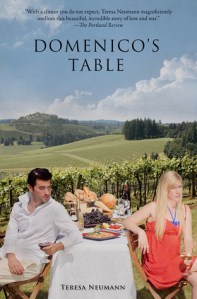
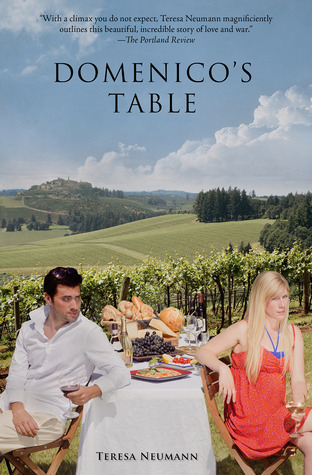
4. Bianca’s Vineyard byTeresa Neumann (for review)
5. The Sister Queen by Sophie Perinot (for review)
6. Pale Rose of England by Sandra Worth
7. The Violets of March by Sarah Jio
8. The Shoemaker’s Wife by Adriana Trigiani
9. Saint Maggie by Janet R. Stafford (for review)
10.The King’s Grace by Anne Easter Smith
11.Queen by Right by Anne Easter Smith
12. Ripples in the Sand by Helen Hollick (for review)
13. The Jewel of Medina by Sherry Jones
14. Blue Asylum by Kathy Hepinstall
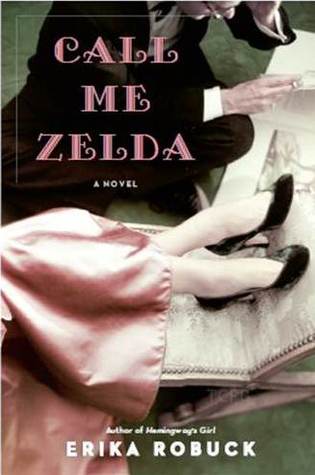
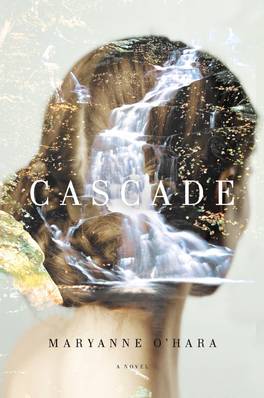
15. Cascade by Maryanne O’Hara
16. Accidents of Providence by Stacia Brown
17. The Painted Girls by Cathy Marie Buchanan
18. Mrs. Lincoln’s Dressmaker by Jennifer Chiaverini
19. The Nine Day Queen by Ella March Chase
20. The twelve Rooms of the Nile by Enid Shomer
21. Lady of Ashes by Christine Trent
22. The Agincourt Bride by Joanna Hickson (UK Release)
23. Illumination by Matthew Plampin
24. The Last Runaway by Tracy Chevalier
25. 1356: A Novel by Bernard Cornwell
26. The Midwife’s Tale by Sam Thomas
27. Mistress of My Fate by Hallie Rubenhol
28. The Aviator’s Wife by Melanie Benjamin
29. Parlor Games by Maryka Biaggio
30. Summerset Abbey by TJ Brown
31. The Forgotten Queen by D.L. Bogdan
32. The Ambassador’s Daughter by Pam Jenoff
33. The Chalice by Nancy Bilyeau (for review)
34. A Place Beyond Courage by Elizabeth Chadwick
35. To Defy a King by Elizabeth Chadwick
36. Lady of the English by Elizabeth Chadwick
37. Exiles by David Pilling
38. Roses Have Thorns by Sandra Byrd (for review)
39. The Queen’s Vow by C.W Gortner
40. Seduction by M.J Rose (for review)
Stephanie
Layered Pages
Interview with Sarah Butterfield
I would like to introduce Sarah Butterfield. Sarah is a blogger and an avid reader who has a passion for History.
What is your favourite all time book?
Thank you Sarah!
Review: Son’s and Daughters by Karen Wasylowski
I enjoyed this story immensely. Son’s and Daughters is delightfully crafted and different from any continuation of Pride & Prejudice that I have read thus far. There are humorous, witty- as well as- serious dialogue aspects to this story. The plot is engaging,well written and Karen shows strong emotions in her characters. I found myself reading late into the night, not wanting to put the book down. I look forward to reading more of Karen’s stories! I highly recommend this book to Jane Austen fans! You’ll love it!
I rated this book four stars!
Stephanie
Layered Pages
Interview with Author Christy English
I have the pleasure to share this wonderful interview with you! This is my second interview with Author Christy English. Welcome Christy to Layered Pages once again.
Christy, please tell you audience about How To Tame a Willful Wife.
HOW TO TAME A WILLFUL WIFE is a love story about two strong-willed people who slowly learn to live together as equals. Now this is a Regency romance, and the lead gentleman, Anthony, is an earl, so equality is not a concept he is comfortable with, to say the least. His wife, Caroline, won’t settle for less, though, and this leads to a lot of strife.
I have taken Shakespeare’s The Taming of the Shrew and turned it on its head, so that it is the man being tamed. Of course, what really happens is that in the midst of their sparring and their lovemaking, Caroline and Anthony actually learn to talk to each other, and begin to build a real marriage. A happy one.
Is this your first regency period story you have written?
It is, and I have loved every minute of it! I have read Regencies all my life, but this novel was the first time I ever tried my hand at it. It was so much fun.
Where there any challenges?
Learning to write a new genre is very challenging, but I loved it. I found that many my flowery, long-winded descriptions had to go, much to the joy of my editor. LOL Also, I needed to increase the conflict in this novel, so that Caroline and Anthony are constantly in jeopardy. They do not always flee for their lives by any means, but the tension has to be built from one moment to the next, from one scene to the next, until the end when they finally come together and settle their differences for the last time.
One of my flaws as a writer, one I am working to overcome, is that I don’t like to watch my characters suffer. I said in a previous interview that it feels like I am torturing a puppy, and the puppy is me. LOL Of course, my characters are always strong enough to take any plot twists I dish out, and I get to explore their strength as I watch them exercise it. So conflict is a good thing.
Tell us about those hot love scenes… were they hard to write?
For some reason, every novel I have ever written is heavy on love scenes. They creep into every book, and I just let them enter in. I don’t try to stop them, because I interrupt the flow at my peril. There have been times, as in TO BE QUEEN, when my editor had me trim down a love scene, but for the most part, they get to stay in the books. One thing I love best about writing Regency romances is that all my love scenes get to stay where they are.
Love scenes are interesting. Some people really enjoy them and some people skip them. I hope my book has enough going on that it will appeal to both kinds of readers.
What book project are you working on next?
I am revising books 2 and 3 of this series. I am having such an amazing time re-working Shakespeare’s comedies, and watching as the seed of his genius gives birth to an entirely new plot.
Book 2 in this series, which should be out late next summer, is LOVE ON A MIDSUMMER NIGHT in which Pembroke, Anthony’s hard drinking, womanizing best friend, has to rescue the woman who jilted him ten years before. It’s the story of the taming of a rake, and it is a lot of fun. Or I suppose I should say, I had a lot of fun writing it. I am obviously biased LOL!
What are you currently reading?
I have been so enmeshed in launching HOW TO TAME A WILLFUL WIFE while revising LOVE ON A MIDSUMMER NIGHT that my reading has slowed down to a snail’s pace. I had the pleasure of reading Heather Webb’s BECOMING JOSEPHINE and now I am reading CALEB’S CROSSING by Geraldine Brooks. Though not a prolific a reader at the moment, I have found some beautiful pieces to savor.
What do you plan on reading next?
CLOUD ATLAS. I am going to enjoy diving into that.
Review: The Plum Tree by Ellen Marie Wiseman
“A deeply moving and masterfully written story of human resilience and enduring love, The Plum Tree follows a young German woman through the chaos of World War II and its aftermath.
“Bloom where you’re planted,” is the advice Christine Bolz receives from her beloved Oma. But seventeen-year-old domestic Christine knows there is a whole world waiting beyond her small German village. It’s a world she’s begun to glimpse through music, books—and through Isaac Bauerman, the cultured son of the wealthy Jewish family she works for.
Yet the future she and Isaac dream of sharing faces greater challenges than their difference in stations. In the fall of 1938, Germany is changing rapidly under Hitler’s regime. Anti-Jewish posters are everywhere, dissenting talk is silenced, and a new law forbids Christine from returning to her job—and from having any relationship with Isaac. In the months and years that follow, Christine will confront the Gestapo’s wrath and the horrors of Dachau, desperate to be with the man she loves, to survive—and finally, to speak out.
Set against the backdrop of the German home front, this is an unforgettable novel of courage and resolve, of the inhumanity of war, and the heartbreak and hope left in its wake.”
Review:
The Plum Tree by Ellen Marie Wiseman is without a doubt one of the best books I have read this year! Her prose is beautiful and inspiring, the characters story is heart-stirring and will capture emotions so deep in you that you will be forever changed. I highly recommend this story to all!
Expected publication: December 25th 2012
I have the pleasure of an interview with Ellen Marie Wiseman on Thursday, January the 3rd here on Layered Pages. I will be discussing with her in further depth about her novel.
Stephanie
Layered Pages