Review: The Crown by Nancy Bilyeau


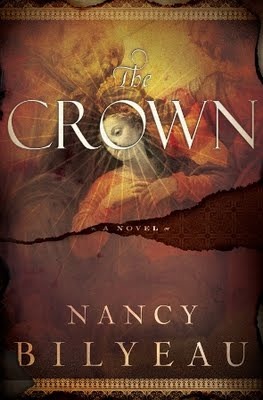
The Crown is a truly wonderful read, historical fiction at its best. This is the story of Joanna Stafford, a cunning woman and novice nun no less. Nancy Bilyeau manages to create a work which is richly detailed and engaging without losing her audience into tedium. Joanna is tasked to find a missing crown believed to hold certain powers in order to save her father from the tower of London. Her search is tangled up with the lives of important figures from Henry VIII reign, as well as the challenges facing the church at the time. The characters which Joanna encounters on this mission are all well developed, unlike many novels where the main character’s shine comes from the dullness of her competition. Bilyeau keeps you in anticipation through the mysteries, conspiracy, and journey with a masterful interconnection of the details and storyline. While not probably an entirely novel storyline, being set among the monasteries and priories gives this work provides a unique perspective on the time.

The story keeps you on the edge of your seat and just when you think that you know where things are headed and how the story will end, Ms. Bilyeau changes the game. Hopefully this sets the stage for a sequel, because I need to know what lies ahead for Joanna Stafford. I highly recommend The Crown to fans of historical fiction, religious conspiracy/mystery, and sixteenth century England.
 
Brandy Strake
Review Team Member

Interview with Sarah Bruce Kelly


Sarah, I applaud you for writing such a beautiful and brilliant story! When I read Vivaldi’s Muse, I couldn’t put it down! Could you please tell your readers about your story?


Absolutely! Set in early 18th-century Venice, Vivaldi’s Muse explores the life of Anna “Annina” Girò, Antonio Vivaldi’s longtime protégée. When I first came across the seeds of this story over a decade ago, in my research on Vivaldi’s operas, I was immediately intrigued. The more digging I did into the details of Annina’s and Antonio’s relationship, the more hooked I became. Here is the story that emerged after my years of research, in a nutshell:


Annina first falls under the spell of the fiery and intriguing prete rosso (red-haired priest) at a young age, when Vivaldi is resident composer at the court of Mantua, her hometown. Stifled by the problems of her dysfunctional family, she has long dreamed of pursuing operatic stardom, and her attraction to the enchanting Venetian maestro soon becomes inseparable from that dream.

She eventually joins him in Venice, but her road to theatrical success is rife with obstacles such as malicious rival singers, disparaging impresarios, and unscrupulous noble patrons. Rumors about the nature of her relationship with her beloved mentor, Vivaldi, abound and lead to dire problems yet, ironically, draw them closer together. But her growing guilt about her secret longing for him, complicated by her inherent fears of rejection and abandonment, threaten to poison their relationship from within. In the end she discovers that their love for each other has grown into something that transcends their personal relationship¾and she finds true love when she least expects it.

It’s very clear that you did extensive research for your story. Please tell me a little about what was involved in your research.

My research for Vivaldi’s Muse spanned about ten years and included travels to Northern Italy and Austria, as well as a drive through the Alps. During this time I tracked down and translated countless historical documents, from which I gathered a wealth of information. Sorting through and putting together this mountain of information was quite an adventure in itself, involving many “Aha” moments, when certain puzzling situations began to take on some clarity. It was sort of like putting together a giant puzzle which, while often challenging, was also extremely exciting.

Your characterization of Annina and Antonio is remarkable and you did a fantastic job bringing the early eighteenth-century opera back to life in your story.What did you find the most challenging to write about of the past and your characters?

I started with sort of a trial run of the story a few years ago, when I published my YA novel The Red Priest’s Annina, which relates Annina’s early years in Venice and is told entirely from her perspective. That novel was better received than I could have imagined, as much among adults as young readers, both male and female. I received calls, emails, and notes from people of all ages and persuasions and from all over the world, telling me how much they loved the story and how they couldn’t put it down. The one criticism I heard over and over was “It ended too soon! I want to know the rest of the story!”

As daunting as the task seemed at the time, I knew I had to re-write and expand the story from the perspectives of certain key characters. I also knew I had to delve much more deeply into the culture and politics of the opera world in early 18th-century Venice. Very little research had previously been done on this little niche of music history, so my quest involved more hunting down of obscure documents and piecing together my findings. My goal was to re-create as realistically as possible the distinctive social and musical culture of Venice in the 1720s and 30s.

My biggest challenge was finding Vivaldi’s voice, since I planned for much of Vivaldi’s Muse to be told from his perspective. I eventually achieved this by re-reading, over and over, everything he’d ever written and by immersing myself in his music. His music is so intimate, so revealing of his personality, that the more I listened the more I got to know him.

What are some of the fictional aspects to your story?

My goal in writing Vivaldi’s Muse was to reveal the true story of Vivaldi’s and Anna Girò’s relationship, a story which had never before been told in its entirety or with any basis in documented fact. As a result, all the major events in Vivaldi’s Muse are real and documented. A few minor characters, and one fairly major character (Gigi), are fictional, as I explain in a “Message to the Reader” at the end of the book. These imagined characters portray the kinds of people who no doubt would have been part of Antonio’s and Annina’s world, and in many ways they enhance the dramatic impact of the story.

As for dialogue, some is paraphrased from documents, but obviously there is no way to know exactly what people who lived nearly 300 years ago said to each other on a daily basis. So while I would not call the dialogue “fictional,” most of it grew from my interpretation of how particular characters would react to certain situations.


What book project are you working on now?

My current project is another work of historical fiction based on real people and events. I’m still in the research stage, but from the information I’ve gathered so far a story is starting to take shape. The setting is the court of Mantua around the turn of the 16th century, where a mysterious relationship develops between a young noblewoman and her favorite court composer. I don’t want to reveal too much yet except to say that the story involves marital infidelity and murder–two subjects I have not dealt with in my previous novels.

What advice would you give to an aspiring author?

Read, read, read, especially topics and genres that interest you the most. Keep a notebook of ideas that appeal to you, no matter how random or far-fetched they may seem. You’ll come back to that notebook time and again in the course of planning your story. Once you have a plan, write every day. Keep a list of scene ideas and work on developing those scenes, one by one. If you aspire to write historical fiction, realize that a great deal of research will be required. Not only must you be sure of all the facts about your characters and events, but you’ll want to familiarize yourself with the daily life and customs of the time and place. The more authentic your characters and setting are, the more engaged readers will be in your story.

Now on a more personal side? What are you currently reading?

Adventures in Two Worlds by A. J. Cronin

What do you plan on reading next?

I plan to re-read one of my all-time favorites: George Orwell’s 1984

What is your favorite literary genre?

Historical Fiction, but as you can see I enjoy other genres as well, especially the Classics.

When and where do you like to read?

Mostly evenings and weekends, lounging on my living room sofa.

In which format do you prefer to read in? Paperback or e-book?

Definitely paper! To me it’s just not as cozy to curl up with an e-reader.

What is your favorite quote?

“Truth is stranger than fiction, but it is because Fiction is obliged to stick to possibilities; Truth isn’t.”

~Mark Twain

Sarah thank you for your time and it was a pleasure to chat with you as always!


Author Bio:

Sarah Bruce Kelly’s passion for Vivaldi’s music began at the age of four, when her father brought home one of the first LP recordings of The Four Seasons. Her devotion to music continued to grow and manifest itself during her ensuing years of piano and voice lessons and performances.

Sarah pursued her musical studies with private teachers through her college years, while studying English literature and developing her writing skills. In 1979 she earned a Bachelor’s degree in English from the University of Richmond. Marriage and family soon followed, along with freelance work as singer and pianist.

In 1986 Sarah opened a private teaching studio, and in 1998 she returned to the University of Richmond to pursue a Masters degree in Liberal Arts, which she completed in 2002. Her research for a paper on Vivaldi’s opera career led her to the fascinating but little known story of his longtime student and friend, Annina Girò. Sarah’s deep interest in this story prompted her to continue her studies at the University of Virginia, where she earned a Master of Arts in Music degree in 2005.

In her quest for historical accuracy in telling Annina’s story, Sarah has learned Italian, roamed the streets of Venice and Vienna, and consulted 18th-century music scholars. Currently, she teaches Italian and Music History at Coastal Carolina University and Music and Latin at a private school.

Sarah has two grown children, Frankie and Mary Catherine, and lives near the South Carolina coast with her husband, Frank. She is the author of Vivaldi’s Muse as well as two historical novels for young adults: Jazz Girl and The Red Priest’s Annina.


The Gilded Lily by Deborah Swift


England, 1660. Ella Appleby believes she is destined for better things than slaving as a housemaid and dodging the blows of her drunken father. When her employer dies suddenly, she seizes her chance–taking his valuables and fleeing the countryside with her sister for the golden prospects of London. But London may not be the promised land she expects. Work is hard to find, until Ella takes up with a dashing and dubious gentleman with ties to the London underworld. Meanwhile, her old employer’s twin brother is in hot pursuit of the sisters.

Review:

I found this story to be a bittersweet tale of what happens to people when they make choices in life and have to deal with the outcome. Throughout this story, Ella makes bad choices and her behavior is shocking towards her sister, Sadie. As you’re reading this story you wonder how Ella redeems herself and at the same time can’t help admire her for her will to survive no matter the situation. I have to admit I was a little apprehensive at times about turning the page to see what happens next

The dialogue is well-written and the story is beautifully crafted. Swift obviously did extensive research for her story and it is true to the period of time the story takes place. I highly recommend this story and I have rated it five stars!

Stephanie
Layered Pages

Publication Date: November 27, 2012 | St. Martin’s Griffin | 480p

Author Bio:

DEBORAH SWIFT, a set and costume designer for the BBC, lives in Windermere, England. THE LADY’S SLIPPER, shortlisted for The Impress Novelists Prize in 2007, was inspired by her own discovery of the rare orchid during a summer walk. For more information on Deborah Swift and her novels, please visit her website at www.deborahswift.co.uk.

Review: Nobody’s Slave by Tim Vicary

Nobody’s Slave is a book about slavery and the consequences of it on everyone concerned. It is a story about Africans, Europeans, human suffering and cruelty, but also of hope and judgement. When I first started reading it, it had the ring of Roots, but very soon it diverged. The message of this author was different.

The story was well told, and both the protagonists, Tom and Madu are both well-etched characters and their stories run parallel to each other, till the very end. The other characters are also very balanced and fit well into the story. The story winds right through Africa, Spain, and England, not to mention the time at sea, and provides a delightful contrast to each other. The book itself winds to a close with a note of hope and understanding which is very heartening, though nowhere close to historical.

I honestly cannot see any flaws with the book, which takes us on a roller coaster of emotions, from the depth of despair to the heights of hope. I would recommend this to anyone interested in this genre or history or just to everybody at all. The focal point of the book is that slavery was practiced by all societies and it was equally bad no matter who practiced it.

I really enjoyed this book and look forward to reading other books by the author. I give this book 4 / 5 stars.
Kavitha
Review Team Member

Review: The Red Gate by Richard Sutton


The Red Gate
By: Richard Sutton
The Red Gate by Richard Sutton is a great example of how family history can be made intriguing and interesting! The novel starts with an unexplained drowning and a rainy funeral. These events are just the catalyst that sets off a chain of unexpected events leading to the discovery of an ancient secret that threatens the future of a family if exposed to the world. Everything has to do with a little bead that Finn finds, it is the key to a much greater and significant family history that is buried under the land owned by Finn and his father.
Richard Sutton produces an excellent novel that is well written and full of emotion. The book is descriptive and lyrical making it a joy to read as well as keeping the readers interest from waning. The reader can feel the hardship of the characters as well as the warmth of a family who supports one another. The characters were well written and really brought the novel to life. The Red Gate is a historical fiction novel that has been clearly well researched, there is so much Irish heritage throughout out the story it makes the reader want to pick up and move to the Emerald Isle.
I give this book four stars! An excellent read for anyone who enjoys historical fiction as well as Irish family heritage.
 
Rachel Massaro
Review Team Member

Review: To Die For by Sandra Byrd

This is a story of Anne Boleyn’s rise in King Henry VIII court to her banishment and her final breath in this world. As the history goes we know how she dies. Sandra gives you a fresh new look at Anne’s life before, during court that draws you into a world of affection, loyalty, betrayal and Reformation.

This story will have you completely enthralled with the court life and intrigue with the political and religion aspects. This story was told in the view of Meg Wyatt. A long time friend of Anne. Who stays with her until the very end.

I highly recommend this story and feel that Sandra’s reader will not be let down!

Stephanie
Layered Pages Review Team Leader

Review Oleanna by Julie Rose

Reading Oleanna was like taking a breath of fresh air. Julie has crafted a compelling story that takes place in Norway in 1905 and evokes a strong tie between a family and everyday life of the farm they work and live on. She also creates a strong sense of place and culture that blends beautifully with the story.

Oleanna and her sister Elisabeth are the last of their family. The remaining two brothers have left for America, leaving them behind. The farm is all the sisters really have ever known and the world around them is changing before their eyes. On the border of their farm arrives a man named Anders. Oleanna and him share a bond. Will Oleanna and Anders find their place in the world together or will they give in to the grief they have both known and be lost to each other forever? To find out, I highy recommend reading this captivating story.

Stephanie
Layered Pages Review Team Leader

Review: EL Rey by Ginger Myrick

El Rey is a deeply emotional tale that sweeps you into the depths of love one often does not experience. Myrick’s characters will touch you to the core. She gives you an enriched story of endearing love that never ends and captures the essence of the human heart.

This story is set in 16th century Portugal and Spain. It is much more than a love story. It’s also a time of the plague, war and the Spainsh Inquistion.

What I admire most is the characters resilience and resolve to withstand the tragic circumstance life has dealt them. I highly recommend this story!

For more information about this book, please visit here: http://www.goodreads.com/book/show/13115126-el-rey

Stephanie
Layered Pages

Review: Companion of Lady Holmshire by Debbie Brown


Debra Brown’s debut novel brings readers a sweet story with charming characters, quaint settings and a unique plot. The Companion of Lady Holmeshire is a historical fiction set in Victorian England. Ms. Brown brings us an unconventional matriarch for the period; a noble woman taking in and attempting to elevate a servant girl into the upper echelons of society. This gives the book the feel of an adult fairytale and keeps the mood of the story uplifted.


The characters of the story are well developed. Emma Carrington is adorable as the servant girl and the reader easily sides with her and the Earl of Holmeshire as the storyline develops. This plot has romance, betrayal, mystery, danger and redemption. The mystery is not completely unpredictable, but the ending is still a surprise while wrapping up all of the loose ends neatly.

Some historical fiction can be heavy and complicated by the depth of research involved. This book was easy to read, enjoyable, and relaxed while maintaining the quality descriptions characteristic of historical fiction. I would recommend this to readers interested in the Victorian period; those who enjoy a good underdog prevails theme; and anyone who appreciates a mystery. 


Brandy Strake

Interview with Best-selling Author Sandra Byrd

I have the pleasure honor to introduce Sandra Byrd.


Sandra, I had the pleasure of reviewing, “To Die For” and “The Secret Keeper” for you. Could you please tell your audience a little about both books?

Sure! All of the books in the Ladies in Waiting series are told from the point of view of one of the queen’s ladies.  In To Die For: A Novel of Anne Boleyn, the story is told from Meg Wyatt’s point of view.  Sister of poet (and Anne-chaser) Thomas Wyatt, Meg Wyatt really did exist, was really one of Anne’s ladies, and did accompany her all through her life till the very bitter end.  I did have to fictionalize much of her life, but stayed true to the facts when I could. 

In The Secret Keeper: A Novel of Kateryn Parr, the story is told from the point of view of Juliana St. John. Juliana is fictional because I wanted to extend the story beyond the life of Kateryn Parr, and for another of Kateryn’s “ladies” to have her story told as well.  You’ll have to read it to find out who that is! 

I felt like telling the stories from the point of view of a lady – not a servant, too low-born to know secrets or have influence – but a real friend, would allow us to see the queen beyond the gown and crown.


What is the single most powerful challenge when it comes to writing about the past?


Remaining true to both the principles of good story telling and historical facts as they are known.  I am passionate about history, but I try to remember that it is a historical novel, novel being the noun and historical being the modifier.  I don’t take historical liberties lightly, because I want the reader who is steeped in history to take the novel as credible.  But in the end, the story is the boss.


How long did it take you to write both books?

It takes me about 18 months or so for the first book, because I am building my resources in the era, and the about a year for each one afterward, writing and editing inclusive.  But I’ve already read quite a bit in the period, so I’m not really starting at ground zero.


Who designed your book covers?

The wonderful, talented Bruce Gore, Art Director for Howard Books.


What is your favorite/least favorite scene you wrote about in Secret Keeper and why?


My favorite scene is the actually a chapter, the final chapter.  I won’t say more for fear of spoiling things.
As for least favorite, there is a scene in which one character is attacked, and that was painful to write.  But I wasn’t going to shy away from it, because it has cultural relevance then and now.  Even the very high born, like the Lady Elizabeth, were relatively powerless to stop unwanted behavior, so how then could any other woman protect herself?  Especially women without a male protector.  Kateryn Parr had to marry Henry.  That was that.  It was an era in which women had little power, but they were crafty and courageous with what they were given, or took, and I admire that.  To soften some of the scenes, or Anne Askew’s martyrdom, would be to downplay the courage it took those women to face life and death without flinching.


How did you research Tudor England and the lives of your characters? What are some of the resources you used?

I visited England of course, the places where many of the scenes took place, and some of the archives.  I used a large variety of credible secondary sources, many of which can be found listed in the back of the books.  And when I had a question that I needed a “real live” person to help me with, I asked Lauren Mackay, a wonderful research assistant and author in her own right.  I am a lifelong reader and love of historical fiction and nonfiction, especially as regards England, so I had a background to bring to it, too.
 
Will you be writing anymore stories about the Tudors?
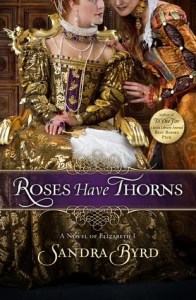
The final Ladies in Waiting book, Roses Have Thorns: A Novel of Elizabeth I, launches in April.    I love Elizabeth and hope that readers will enjoy the story, told from the point of view of Helena, Marchioness of Northampton, a young woman from Sweden whose story I had never heard told.

 
When do your best ideas come to you?

When my mind is at rest, or when I’m doing some menial but physically demanding task, like cleaning the kitchen or jogging.  Or while reading good nonfiction, or watching great movies or TV.  This is why I never read or watch fiction set in the era in which I am currently writing, or about to write in.  If something in my novel duplicates something in another, then I know it was happenstance, or grew from both of us reading the same sources.  It puts my mind at rest.

What advice would you give to an aspiring author?

Choose  good material with which to work.  It’s like providing yourself with the finest ingredients before mixing up a recipe.  If you use old eggs and stale butter it’s not going to taste good no matter the skills of the chef.

What is your favorite quote?
I don’t know that I have one favorite, but I read a quote today on author Susan Meissner’s facebook page: “There will be a time when you believe everything is finished. That will be the beginning.” ~Louis L’Amour 
Author Bio:

After earning her first rejection at the age of thirteen, bestselling author Sandra Byrd has now published more than forty books. Her adult fiction debut, Let Them Eat Cake, was a Christy Award finalist, as was her first historical novel, To Die For: A Novel of Anne Boleyn. To Die For was also named by Library Journal as a Best Books Pick for 2011. The Secret Keeper: A Novel of Kateryn Parr, was published in June, 2012 and will be followed by Roses Have Thorns: A Novel of Elizabeth I in April, 2013.
A former textbook acquisitions editor, Sandra has also published many nonfiction articles and books. She is also passionate about helping new writers develop their talent and their work toward traditional or self publication. As such, she has mentored and coached hundreds of new writers and continues to coach dozens to success each year.
Please visit www.sandrabyrd.com
 
 
Thank you Sandra for this lovely interview! It was a pleasure!
 
Stephanie
Layered Pages