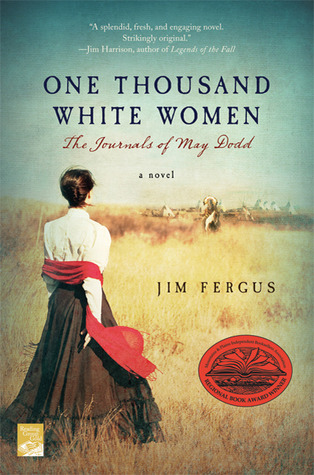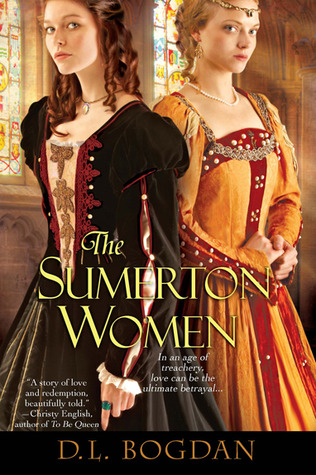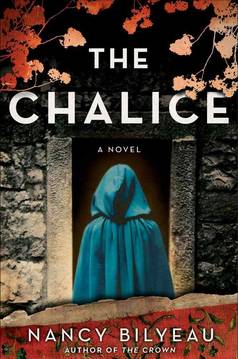
I’ve just finished a really good book that I was asked to review: Searching For Captain Wentworth by Jane Odiwe. I have to say, I felt very lucky to have been given the opportunity to read the book. I thoroughly enjoyed it.
Author Archives: layeredpages
Darcy’s Decision by Maria Grace
Having renewed my acquaintance with Jane Austen by rereading several of her masterworks including Pride and Prejudice in the last year, it was with joyful anticipation I began to read Maria Grace’s Darcy’s Decision. I was not disappointed! Grace’s delightful tour de force introduces the reader to Austen’s Darcy as he inherits Pemberley and works toward becoming its best master ever. I simply could not put it down. I found myself reading long into the night trying to figure out how Darcy would handle the most delicate matter concerning his young sister Georgiana. A quick glance at the chapter titles gives the reader a good idea of the challenges Darcy will face. Such chapter titles include: To Whom Much is Given; Bad Company corrupts Good Company; and Folly is Bound Up in the Heart of a Child.
Layered Pages Book Reviews
Wow! What a wild ride! When I was first asked to review Lost and Found, I wasn’t sure what to expect. Service Dogs? Kidnappings? Autism? Medical drama? I was a little concerned about how all of those were going to relate to one another, but my concerns were unfounded because once this story got rolling, I was completely swept away. Shojai melded all of these things together in a nearly seamless flow.
Written in third person, the narration alternates between different perspectives. The primary character, September Day, has a past that colors a lot of her decisions. Although details about her past were slow in coming, by the end of the story, her character really comes full circle, and I felt like I really understood her and her motivations as a character.
The secondary characters were well-rounded too. Officer Combs, a cop battered by undeserved scandal, added a great layer to the story without falling into the romance trap, which was really refreshing. The most refreshing thing, however, was the service dog Shadow’s perspective. I thought that it was really sweet & endearing, and it really did seem like how a dog would speak if they used words. Shojai’s knowledge of canines shines in Shadow’s narration.
The plot itself was full of tension, suspense and several nail-biting moments. All of the events felt believable but still held that “I can’t believe it” feeling. Two of the most intriguing aspects of the plot are the treatment & life of those with an autistic child and the German Shepard service dogs. I really appreciated how well she handled the autism aspect. It was tasteful and conveyed respect for those with autism and those who care for them.
If you are looking for suspense & crime drama with a twist, then Lost and Found is a read for you. 4 stars.
Beth Bulow
Review Team Member
Maria Grace’s novella The Future Mrs. Darcy is a variation of Austen’s Pride and Prejudice. It introduces the readers to the Bennet family in a way that clarifies the character and foibles of the family. Grace has a knack for recreating Austen’s world and breathing life into her characters. The Future Mrs. Darcy is the second in THE GOOD PRINCIPLES series which is aptly named. I found myself reading long into the night to see how the Bennet family would deal the recalcitrant Lydia. While the storyline is different from Pride and Prejudice, Grace remains true to Austen’s creations. I found it quite fun to see favorite characters in a different story. I am looking forward to reading more in the series. I heartily recommend The Future Mrs. Darcy to Jane Austen fans everywhere.
Author Michele Kallio
Review Team Member
How I hadn’t heard about this book before now, I have no idea. Now I feel that it is my duty to let others know about it. This was an exciting story about survival in the most extreme circumstances.
Grace’s father is missing, and presumed dead. But she feels that he’s still out there somewhere. It just might take some time to find him in the thousands of acres of wild where he disappeared. Her years of wilderness training couldn’t be more useful.
My favorite part of this book is the writing style. S.R. Johannes has a unique voice which is carried through her characters. Each one, either hero or villain, is a perfect fit with their surroundings.
Each chapter begins with a survival skill, but as the book progresses, the tips become less wilderness safety, and more paranoid and defensive, giving clues to the direction of the story. There is certainly no lack of suspense. I could feel the puzzle pieces fitting together, each clue leading to the bigger picture.
So, help me spread the word! Untraceable is a great read! 4 Stars!!
Lindsay Galloway
Review Team Member
More reviews coming up tomorrow here on Layered Pages! Stay tuned!
Stephanie
Layered Pages
Review: The Cross and The Dragon by Kim Rendfeld
Rachel Massaro
Review Team Member
New & Upcoming Book Releases 2012
Wednesday Reviews
Kavitha
Layered Pages Review Team Member
Wednesday Reviews
Jo Ann Butler’s debut historical fiction novel, Rebel Puritan, is inspired by her 8th great-grandmother, Herodias Long. Butler blends historical fact and fiction in Rebel Puritan so seamlessly the reader never feels the novel is semi-biographical.
Herod Long is 12 years old when tragedy strikes her family. Her family, farmers in Burlescome, England, are near destitution when her father and oldest brother perish from the bubonic plague. Herod, her mother and brother, Will, are left with a holding they cannot work by themselves.
This dilemma is resolved by Herod’s mother, who invites her oldest daughter and her family to work the farm. Unfortunately for Herod, her mother’s plans do not include her. Herod and her mother have an acrimonious relationship. Herod is a bit of a dreamer and her mother has no fondness for dreamers.
Herod, another mouth to feed and an unreliable worker, is sent to London to serve her mother’s sister. Herod knows what happens to girls who are bonded out or sent away – few return home.
Herod arrives in London to discover Alice Clark, her mother’s sister, is a cold woman. Herod is considered little more than a slave 6 days a week, working from dawn til sunset for a woman who complains incessantly and threatens to turn her out penniless for the next infraction. Servitude to this miserly and cruel aunt is Herod’s future for the next five years.
Puritanism, the tentacles of which were newly arrived in Burlescome, is firmly entrenched in London. Herod attends church all day Sunday with her aunt and uncle and chafes under the extremism.
It is important to understand Puritanism as it effects much of Herod’s life. Puritans were a group of Protestants who were unhappy with the Church of England. They believed in following the laws set out in the Bible without deviation. They also believed in the doctrine of predestination – God has chosen at birth the Elect who will enter heaven and those who are not of the Elect are damned for eternity. No one knows whether they are the chosen, therefore, Puritans worked hard for the glory of God.
It was a harsh lifestyle. The premise of Puritanism was to strip away all material and traditional aspects of the Church of England and practice extreme piety. Puritans were under constant scrutiny by fellow congregation members. Deviation from piety was dealt with swiftly by disapproval and discipline. Hell, fire and brimstone was the primary sermon.
Persecution in England prompted a massive immigration to New England, where communities were formed. These communities adhered to principles of Puritanism strictly. Those found in contravention were subject to banishment, corporal punishment and even, in some cases, death by hanging.
Now back to Herod. Her aunt and uncle operated a tailor’s shop. One day when she was minding the counter, a young man came in. Herodios was enthralled and contrived to establish a relationship. This is the man she would marry in great haste (without divulging her true age of 13) so she could escape and immigrate to New England.
Life in New England and with her husband isn’t the deliverance she craves. Scraping a living off the land is harsh and her husband, John Hicks, brutal. Puritanism reigns. Herod becomes friends with dissenters within the community, liaisons with repercussions.
Rebel Puritan is a novel of a young girl who struggles to find dignity and freedom within her world; a world in which women have few rights and are subject to male domination. Her efforts bring both success and tragedy. But her determination never fails.
Herod and her world come to life through Butler with her imaginative and gritty details. For example, I felt I lived through Herod in a dugout home on a treed lot in a small community in New England where every action was scrutinized.
Butler is skilled at evoking the realisms, hardships, hard-won victories and inevitable decisions a woman faced in 17th Century England and America. The numerous characters who populate Rebel Puritan have flesh and bones.
I recommend Jo Ann Butler’s Rebel Puritan without reservation. I eagerly await receipt the continuation of Herod Long’s life in Reputed Wife, to be released later this fall.
My rating: 4.5/5 Stars (Most Excellent)
Darlene Elizabeth Williams
http://darleneelizabethwilliamsauthor.com/hfreviews/rebel-puritan-by-jo-ann-butler-historical-fiction-novel-review/
The story is well developed and engaging. As a summer beach read this is wonderful and I was moved to tears by the close of the book. I found the descriptions to be full and vivid. The mystery within the story adds a nice touch. It was well constructed and not completely predictable. The cover art however, was a huge disappointment. I think that this was a missed opportunity. After all the wonderful events that unfold within the pages, a more engaging cover would have been good. I would recommend this book to anyone looking for a lite beach read, as well as those with an interest in the 1940’s.
Review: The Secret Keeper by Sandra Byrd
The Secret Keeper is the first of Sandra Byrd’s books I’ve read and I thoroughly enjoyed it. Sandra brings a new and rare story of Katheryn Parr. She is a person in English history that I have not read much about and now I’m intrigued by her. This story is told by Juliana St. John’s perspective, a daughter of a Knight.
Meanwhile King Henry VIII falls in love with Katheryn and wants to marry her. Despite loving Sir Thomas Seymour, she marries Henry and becomes the sixth and final wife to Henry and is doting to his children. She loves them and in many ways brings them closer to their father. She is a good Christian, intelligent, delicate yet strong, elegant, kind and very giving. It is her desire to influence Henry in matters of the realm and religious beliefs and she gets herself in a sticky situation when she supports Anne Askew, a reformer. This puts herself and her ladies in danger.
I have an interview with Author Sandra Byrd on October 22. Make sure to mark your calendars! You won’t want to miss it!
Review: The Miracle Inspector by Helen Smith
While weaving the separate strands of this story into a cohesive tapestry Smith endears us to the main couple through her descriptions of their everyday lives, thoughts, and dreams. Simultaneously, an understanding of Lucas’s family history evolves among the pages revealing a tumultuous, if slightly scandalous, past. The details of Lucas and Angela’s planned escape from this new London smacks of accounts of refugee outflows from war torn third world countries. It is this rendering of a modern western society reduced to “an oppressive place where poetry has been forced underground, theatres and schools are shut, and women are not allowed to work outside the home” which spurs thoughts on how life could change in an instant if we allow fear to overcome rationality.
Smith has won a well-deserved Arts Council Award for The Miracle Inspector. I would recommend this book to readers looking for an unconventional love story, or those interested in themes about overcoming oppression. Also, for the descriptions of poetry and art, this book would appeal to those with an interested in performing and activist arts.
Brandy Strake
Layered Pages Review Team Member
Interview with Author Sarah Bower
I’m glad you enjoyed reading NEEDLE, Stephanie, and thanks again for the lovely review you posted on Layered Pages. As I’ve written elsewhere, the Bayeux Tapestry is something we take very much for granted in the UK. It’s like the wallpaper to our history, if you like. What originally made me sit up and take notice of it in a different way was a TV show hosted by Simon Schama, in which he described one famous image in the Tapestry, of a woman and child fleeing a burning house, as being the first image in western art of what war does to civilians. That was the starting point for my novel. It then began to take more concrete form when I discovered that, although very little is known for certain about the Tapestry (making it fertile ground for the fiction writer!), current thinking suggests it was made in England, by English embroiderers, but for a Norman patron. It seemed to me that this created interesting tensions for me to explore.
Were there any challenges in researching for your novel?
I studied medieval history at university, so the historical research wasn’t quite so much of a challenge as finding out about the mechanics of how the Tapestry was made. I can scarcely sew on a button, so learning about medieval embroidery (because Tapestry is a misnomer – the work is, in fact, an embroidery) was a steep learning curve for me! That said, researching the life of Odo was also problematic because he is quite a shadowy figure in history despite his high profile at the time of the Norman Conquest. There are no full-length biographies of him, and little of his correspondence survives, just one or two letters between him and Archbishop Lanfranc. We don’t even know for sure when he was born or where he grew up. In another way, however, this made him a perfect protagonist for the novel because it enabled me to invent far more freely than if he had been a better documented historical figure.
Were there any scenes you found more difficult to write than others?
Oh, the sex scenes! They are always the hardest for me. I recently heard an interview with John Banville, in which he described the difficulty of writing sex scenes as being the bridging of the gap between noble sentiments and absurd actions. I don’t think I could put it better myself. I’m relieved, and flattered, that readers have, on the whole, been kind about this aspect of the novel because, with a hero and heroine like Odo and Gytha, sex was clearly going to play a central role in their relationship, even though I struggled, at first, to force them into a more abstemious mould. On average, I think each sex scene took me about two weeks to write – and that was just the first draft! I guess they take about two minutes to read. Nor do I find that aspect of writing gets any easier with practice.
Did writing this story teach you anything and what is it?
Although published after SINS OF THE HOUSE OF BORGIA in the US, NEEDLE is my first novel, and in that respect, it taught me a lot about the need for resilience, patience and self-belief if you are to complete a novel successfully, and then find a publisher for it. I had no idea how tough both these things are until I embarked on the process!
Regarding the specific subject matter of this book, it served to remind me that we have been a multicultural society here in the UK for well over a thousand years. If only more medieval history was taught in our schools, perhaps people would be less anxious about and more welcoming of those who still come here from all the different corners of the world and contribute so much to making us who we are. That is one reason why I chose to write the book in a way which tries to be even-handed to both conquered and conquerors, acknowledging that both sides were traumatised by the experience, and both have contributed hugely to our language, culture, law, politics and social structure.
Who designed the book cover?
The US edition cover was designed in-house, I believe, by my publishers. I think it’s gorgeous and am absolutely delighted with it.
Who is your publisher?
Sourcebooks Landmark, who also published SINS OF THE HOUSE OF BORGIA.
What do you consider the most challenging about writing a novel or about writing in general?
As I have indicated in an earlier reply, I think the biggest challenge of writing a novel is the time it takes. Each of my novels has taken me, on average, three years to complete, from beginning the background reading and planning to having a final draft I think is good enough to be shared with readers. This knowledge makes getting started quite a difficult and nerve-wracking experience. I do rather envy writers I know who can complete a book in months rather than years. I’m afraid I rarely write in the white heat of inspiration but creep along at a snail’s pace, groping in the dark and hoping I find the right way. A tutor on my creative writing MA course once said, ‘Only write a novel if everything else fails,’ a sentiment with which I am in total accord! Writing novels is incredibly difficult. On the other hand, there is great reward and excitement to be had from engaging with readers who always find things in your work you didn’t know were there and thus give your book a kind of life of its own which is so much more than you can give it yourself as the author.
Have you ever had writer’s block? If so, what do you do about it?
I’m not sure I really believe in writer’s block. Writing is my job. Do lawyers or nurses or refuse collectors get blocked? No. So why should professional writers be any different? Of course, it’s not always easy to gear oneself up for the imaginative effort involved in novel writing, but if that’s the case, I generally find I have some other kind of writing to do, or writing-related work such as teaching and mentoring other writers. For the imaginative work, I do think one has to be attuned to one’s emotional and mental state, even one’s physical health, in order to be prepared for the obstacles these things can throw up. One has to be aware that on a good day one might write a thousand words or more, but on a less good day it might be just a sentence.
That said, I know some writers do experience blocks in a very real sense, so perhaps I’ve just been lucky so far!
What is your next book project?
I have a contemporary thriller in the pipeline, and have just begun work on a companion piece to it. Although the new book will be more of a love story than a thriller, they have in common the fact that both are about people whose identity is different to the one they were born with and how this affects their lives. Both are also set on the east coast of England, the new one near Whitby, where Dracula landed of course!
What advice would you give to an aspiring author?
Well, if everything has failed and you find you have no option, you need patience, resilience and bloody-mindedness if you are going to keep going and succeed. You also need to be able to divide yourself into the writer, working in private, possibly not washing or even getting dressed for days, and the public persona who has to get out there, don the killer heels and lipstick, and sell her wares. In this regard, I find it helps to think of myself as a small marketing company set up to sell the novels of Sarah Bower. That way I can put some psychological distance between myself as writer and myself as a public figure. The business side of writing is assuming more and more importance for most of us as the publishing industry fragments and fewer and fewer novelists can expect to be published via the traditional route, by a big publishing house with a team of editors and marketing staff to put behind the book. We are increasingly having to become our own editors, proof readers and salespeople.
What is your favourite quote?
Oh dear, this is a difficult one, there are so many good ones and I have so many different favourites. So let’s go with the quote from Olive Schreiner’sFrom Man to Man which I use as an epigraph to THE NEEDLE IN THE BLOOD: ‘Has the pen or pencil dipped so deep in the blood of the human race as the needle?’
Bio:
Sarah Bower is a prize-winning novelist and short story writer. She is a regular contributor to the Historical Novels Reviewhistoricalnovelsociety.org/magazines/ , Ink, Sweat and Tearswww.inksweatandtears.co.uk/, andWords With Jamwww.wordswithjam.co.uk/. She works as a mentor to other writers, and teaches creative writing at the University of East Anglia, the Open University and the Unthank School of Writing. She holds an MA in creative writing from the University of East Anglia where she is now based in her role as co-ordinator of the mentorship scheme for literary translators run by the British Centre for Literary Translation.
Sarah is the author of THE NEEDLE IN THE BLOOD and SINS OF THE HOUSE OF BORGIA (originally published in the UK as THE BOOK OF LOVE) Her work has been published in eight countries. She lives in Suffolk, in Eastern England.
Sarah tweets @SarahBower and you also may find her on Facebook.
Thank you Sarah for the pleasure of an interview! It was an honor!
Stephanie
Thank you, Stephanie, for asking me. It’s been a pleasure to answer your questions.
Sarah