Book Spotlight: Sugar The World Corrupted: From Slavery to Obesity James Walvin

SugarSugar

The World Corrupted: From Slavery to Obesity James Walvin

The modern successor to Sweetness and Power, James Walvin’s Sugar is a rich and engaging work on a topic that continues to change our world.

How did a simple commodity, once the prized monopoly of kings and princes, become an essential ingredient in the lives of millions, before mutating yet again into the cause of a global health epidemic? Prior to 1600, sugar was a costly luxury, the domain of the rich. But with the rise of the sugar colonies in the New World over the following century, sugar became cheap, ubiquitous and an everyday necessity. Less than fifty years ago, few people suggested that sugar posed a global health problem.  And yet today, sugar is regularly denounced as a dangerous addiction, on a par with tobacco. While sugar consumption remains higher than ever—in some countries as high as 100lbs per head per year—some advertisements even proudly proclaim that their product contains no sugar. How did sugar grow from prize to pariah? Acclaimed historian James Walvin looks at the history of our collective sweet tooth, beginning with the sugar grown by enslaved people who had been uprooted and shipped vast distances to undertake the grueling labor on plantations.  The combination of sugar and slavery would transform the tastes of the Western world. Masterfully insightful and probing, James Walvin reveals the relationship between society and sweetness over the past two centuries—and how it explains our conflicted relationship with sugar today.

James Walvin is the author of several books on slavery and modern social history. including Crossings and A Jamaican Plantation. He is a Fellow of the Royal Society of Literature and in 2008 he was awarded an OBE for services to scholarship. He lives in England.

I rate the cover five stars now if I can get my hands on a copy of this book! Everything about the premise interest me! -Stephanie M. Hopkins

Pegasus Books

The Gilded Age

The late 19th Century and early 20th Century are a deep fascination of mine and I have studied the history for years as part of my own research for my WIP’s. I was delighted when Janet Stafford posted these two posts-below-on her site, “Squeaking Pips.” I’ve read her articles on the Gilded Age several times and I was impressed and intrigued with what she wrote and how concise she is with her knowledge in the era.

Janet Stafford is an author with the wonderful, “Saint Maggie Series” I recommend. She and I are currently working on a project so moving that in the first phase of it, I was moved to tears. What is the project that has me so worked up? More to come on that soon! Meanwhile, please be sure to take the time to read both posts and comments are appreciated. We would love to hear your thoughts! -Stephanie M. Hopkins

The Gilded Age

gilded-age-cover-1873

In 1873, Mark Twain and Charles Dudley Warner published a book that became the name of an era: The Gilded Age.  This period, generally believed to be between 1870 and 1900, was marked by rapid industrialization, economic growth, and immigration, most notably in the North and West. The South, however, after defeat in the Civil War and the punishment of the Reconstruction, suffered from economic depression. This is an important difference to note. The successes and excesses of the Gilded Age did not touch the United States in its entirety.

Twain and Dudley’s book is set in the United States at the very beginning of the Gilded Age. Marvin Felheim[i], who wrote the introduction to my yellowed paperback copy of the book, notes that the story’s primary criticism was focused on “the greed and lust – for land, for money, for power – of an alliance of Western land speculators, Eastern capitalists, and corrupt officials who dominated the society and appreciably altered its character.”[ii] He goes on to say:

The “Gilded Age” was a “peaceful” era following the horrors of the Civil War. The North, industrialized and righteous, had won. One consequence was the westward extension of institutions representing its victorious value system. Expansion was in the air. Capital was available and bankers were looking avidly for investments. The West, with all its rich potentialities, both of wealth and adventure, lay ready to be exploited. Colonel Sellers’ [a principle character] ambitious schemes were not merely the idle dreams of a satirist’s euphoric imagination: they represented the hopes and beliefs of a nation.[iii]

It is true wages for the average worker rose during this period. However, there was a dark side to all this growth and expansion, and that was an alarming disparity in income and wealth. Briefly put, the gulf between the wealthy class and everyone else began to widen. According to Steve Fraser…Read more HERE

Whispers of the Gilded Age in SEEING THE ELEPHANT

Gold Bars

To recap, the Gilded Age was a period in the United States that roughly spanned 1870-1900. An era of rising industrialization, urbanization, and immigration, it also saw a rising disparity between the wealthiest Americans and those who were “regular” folks.

Although it was a time of conspicuous consumption, some industrialists sought to moderate their public image by engaging in civic works, such as the building of libraries, hospitals, schools, and other institutions beneficial to the populace. In that era, the wealthy still feared hell – and if they didn’t, at least they were willing to hedge their bets by doing something good for those who had little.

The big wigs (or “big bugs,” as Eli calls them) were living well, but many workers in the Gilded Age routinely got injured or killed on the job and had little in the way of compensation. Is it any wonder that this era also saw the rise of the union movement?

New discoveries in science drove improve patient treatment and housing. A reform movement, led by Dorothea Dix, sought to change mental “hospitals” from dank jails where “patients” were put in chains and lived in their own filth to healthy environments that embraced more humane treatment methods.

I enjoyed putting early whispers of the changing landscape in American society into the fourth book in the Saint Maggie series. In 1864, they are felt in the little town of Blaineton, New Jersey. So, when Maggie and her family return to their hometown, they find not only their own lives changing, but also the life of their town, and these changes are borne out in the following storylines…Read more HERE

***Illustration: Cover of the first edition of The Gilded Age by Mark Twain and Charles Dudley Warner, 1873


Cover Crush: Every Single Note by Lisa Genova

I am not a cover designer but I can agree that cover layouts play an important role in the overall presentation of stories and I must admit, often times I first judge a book by its cover.

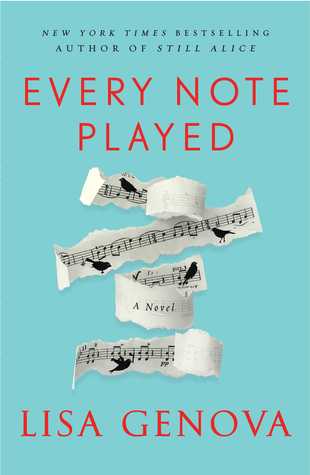
Every Note PlayedAbout the Book:

Hardcover, 320 pages
Published March 20th 2018 by Scout Press

An accomplished concert pianist, Richard received standing ovations from audiences all over the world in awe of his rare combination of emotional resonance and flawless technique. Every finger of his hands was a finely calibrated instrument, dancing across the keys and striking each note with exacting precision. That was eight months ago.

Richard now has ALS, and his entire right arm is paralyzed. His fingers are impotent, still, devoid of possibility. The loss of his hand feels like a death, a loss of true love, a divorce—his divorce.

He knows his left arm will go next.

Three years ago, Karina removed their framed wedding picture from the living room wall and hung a mirror there instead. But she still hasn’t moved on. Karina is paralyzed by excuses and fear, stuck in an unfulfilling life as a piano teacher, afraid to pursue the path she abandoned as a young woman, blaming Richard and their failed marriage for all of it.

When Richard becomes increasingly paralyzed and is no longer able to live on his own, Karina becomes his reluctant caretaker. As Richard’s muscles, voice, and breath fade, both he and Karina try to reconcile their past before it’s too late.

Poignant and powerful, Every Note Played is a masterful exploration of redemption and what it means to find peace inside of forgiveness.

Cover Crush is a weekly series that originated with Erin at Flashlight Commentary.

My thoughts:

 I love the clean lines, color choice and how the cover designer took images of torn sheet music and created a look as if the paper was dancing or flowing across the layout. I’ve added this book to my to-read list. 

Stephanie M. Hopkins

Other great cover crushes from my fellow book bloggers: 

Magdalena at A Bookaholic Swede
Colleen at A Literary Vacation
Heather at The Maiden’s Court
Holly at 2 Kids and Tired
Meghan at Of Quills & Vellum


Bookish Happenings!

Me in March 2018

Today I was going to post my review of The House on Foster Hill by Jaime Jo Wright but it doesn’t look like it’s going to happen. I’m hoping tomorrow to post my review and finish up a couple of review drafts. I’ve been trying to catch up on my backlog of reviews and let me tell you it is a LOT of work! When will I be caught up? To tell you the truth, I’m not sure. The industry needs more book bloggers and readers!


The House on Foster Hill

There are so many wonderful things about why a person should read every day. On March 31 I wrote on Facebook, “I love stories and the growth of one’s self that comes from the craft. Words are beautiful. Words are harsh. Words are emotional and often times they feel unforgiving and undeserving. Words together tell us about many things. What we come away with those words matter greatly. Remember, each reader experiences something different and sometimes the same.” This is just glimpse at what the written words means to readers and writers. I’ve thought about expanding the quote and perhaps write an essay on the topic. What do you think? The quote certainly gives a good outline to start with. Okay, I’m rambling. I blame the lack of coffee this morning. Ha!

I want to encourage you to carve out time in your day to pick up a book and read a few lines, pages and if you can, a couple of chapters. Then take the time to reflect on what you read and maybe jot your thoughts down on paper. This is a great exercise and will add meaning to your life. *Smiles*

Have a beautiful day and don’t forget to read from a book today and every day!

Stephanie M. Hopkins

How Does One Make Money Blogging?

LAP it Facebook Banner

Today I am blogging over at L.A.P. it Marketing and I’m talking about how one makes money blogging! -Stephanie M. Hopkins

Read the Post HERE 


Part IV: The Day Of Storms by Stuart S. Laing

The Day of Storms Final

Photo by Maxine Stewart

I’ve challenged Author Stuart S. Laing to write a story inspired by this photo shared on Facebook a few weeks ago and he accepted my challenge and wrote a short story called The Day of Storms that takes place in The Kingdom of Fife, Scotland, February 5th 1794. Today is Part IV and the final chapter and in this short story, you will meet Sarah, Rebecca Hopkins and a band of ruthless smugglers.

**********

“There’s a door here!” Sarah hissed in a harsh whisper as she watched the candle flame dance in a sudden draught as she crouched by stacked barrels of brandy. As Rebecca joined her she used the flickering flame to guide her as she methodically moved slowly along the seemingly solid wall of smooth stone blocks. The numbing terror which had all but frozen her evaporated as Rebecca’s growing excitement was transmitted to her.
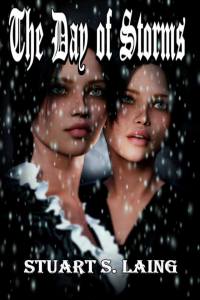
The Day of Storms Story cover“There!” she almost shouted in triumph as she clutched Rebecca’s arm. Holding the candle close to the wall she pointed out a barely discernible crack in the mortar binding the stones together. Several minutes later after painstakingly poking and prodding Rebecca’s finger found the hidden latch and a section of wall soundlessly swung slowly backwards to reveal a short stone lined tunnel. Directing the light of her lantern along its forty-foot length she revealed it ended in a stout door.

Without hesitation they scurried along the narrow length until their hands were pressed against the ancient oak planks of the door secured by a simple heavy iron bolt. Beyond it they could hear the crashing waves. Rebecca dragged back the bolt and pulled the door inwards to allow freezing spray to splash over them. Wiping the ice-cold water from her face Rebecca pushed aside an artificial curtain of seaweed clearly meant to hide the door from view to find herself only a few feet above the rolling waves pounding the quay. Above her head a wooden jetty extended fifty feet out into the stormy seas. Below her a small rowing boat thudded again and again against the quay as the waves endlessly rolled in.

“This is how we escape,” she shouted over the tumult of wind and wave as she sat herself on the tunnel mouth and carefully lowered herself into the small boat which rocked alarmingly below her. It took only a glance to see that the boat was secured to a mooring ring by a set of stone stairs leading up from the water to the quayside only a dozen yards to the left. That mooring rope had slowly been coming loose allowing the boat to happily be driven below the jetty. With frozen fingers she secured that rope to prevent the boat breaking loose entirely.

“There’s steps just a few yards away,” she shouted to Sarah as spray stung her eyes and soaked her to the bone. “We can simply pull ourselves along using this rope. We don’t even need to try and row. Come down, we are free!”

“Not yet,” Sarah said coldly. “Pass me the lantern. There is something I need to do first to prevent them following us.” As a perplexed Rebecca handed the iron lantern up Sarah turned and rushed back down the tunnel ignoring her sister’s frantic pleas to get in the boat.

Only a moment later she returned holding one of the small barrels of gunpowder leaving a trail behind her. Tossing the now all but empty barrel out over her sister’s head she knelt using her body to block the wind howling down the tunnel as she used the lantern flame to ignite the long wide trail of powder. Even as it flashed into life and rushed towards the cellar she had turned and all but threw herself into the boat by her sister.

“For God’s sake, pull that rope!” she screamed as her own hands frantically dragged the sodden cable with every ounce of strength she possessed to force the small craft away from below the tunnel mouth.

They had moved less than half way towards the promised escape offered by the stone steps before a horrendous roar tore the night apart. Instinctively they dropped low in the boat as a fountain of smoke and flame erupted volcanically from the tunnel mouth like dragon’s breath. With their ears ringing and all but scared witless they cast huge eyes back towards the tunnel now belching out thick clouds of smoke while flames briefly flickered along the underside of the jetty before sea spray extinguished them.

“What did you do?” Rebecca gasped as she began to pull once more on the rope.

“I thought that if I could start a fire in the cellar they wouldn’t be able to follow us. I didn’t think that would happen though.” As they neared the stone steps to the quayside she said, “What do we do if they are waiting for us?”

“Pray they are too busy trying to put out the blaze you started in their cellar,” Rebecca managed to reply as she all but fell onto the soaking steps and helped her sister ashore while waves sent spray washing over them. “Let’s just get up onto the quay and then get home, even if we have to walk every step of the way. Father can come back tomorrow and deal with the smugglers…”

Her voice died away as she reached the quay to find it illuminated as brightly as noon on a summer’s day. All along the quay people were tumbling from their homes to stand aghast amid the falling snow as every face stared without comprehension at the fiery gap in the street where the tavern had stood. Now all that remained was tumbled walls, broken beams and dancing flames shooting high into the snowy sky. The cottages on either side had escaped with no worse damage than broken shutters and tiles dislodged from their roofs. The Dolphin tavern had however simply ceased to exist.

Coming slowly through the crowd gathered on the quay came the absent coachman leading the horses. Catching sight of the sisters he hastened to their side to say brightly, “I found the horses, m’lady. What’s been going on here then? ‘Ere, you are both soaking wet. You should have stayed in the coach till I got back. This ain’t no night to be standing in the snow.”

Rebecca released a slow sigh before saying, “Give us a leg up. My sister and I are riding home. Feel free to follow. But you’re walking!”

A minute later Anstruther was left behind, the only evidence of their adventures a dwindling twinkle of fire and smoke before the snow hid it from sight. Then there was only the sound of hooves crunching through snow and the prospect of a cold ride home.

The End

Stuart LaingBorn and raised on the east coast of Scotland in the ancient Pictish Kingdom of Fife Stuart grew up looking across the Firth of Forth towards the spires and turrets of the city of Edinburgh and its castle atop its volcanic eyrie.

He has always been fascinated by the history of Auld Reekie and has spent most of his life studying Scottish history in all its aspects whenever he finds the time between family, work and the thousand and one other things that seek to distract him.

Despite the vast panorama of Scotland’s history, he always finds himself being drawn back to the cobbled streets of the Old Town. Those streets have provided the inspiration for his stories and characters.

He would urge all visitors to Scotland’s ancient capital to (briefly) venture into one of the narrow closes running down from the Royal Mile to get a flavour of how alive with mischief, mayhem, love and laughter these streets once were.

Author Website 

Stuart’s books on Amazon 

Part I

Part II

Part III



Cover Crush: The Library by Stuart Kells

Cover Crush banner

I am not a cover designer but I can agree that cover layouts play an important role in the overall presentation of stories and I must admit, often times I first judge a book by its cover.

The LibraryAbout the Book:

Hardcover, 224 pages

Expected publication: April 10th 2018 by Counterpoint Press

A love letter to libraries and to their makers and protectors, a celebration of books as objects, and an account of how the idea of the library continues to possess our imagination

Libraries are much more than mere collections of volumes. The best are magical, fabled places whose fame has become part of the cultural wealth they are designed to preserve.

Some still exist today; some are lost, like those of Herculaneum and Alexandria; some have been sold or dispersed; and some never existed, such as those libraries imagined by J.R.R Tolkien, Umberto Eco, and Jorge Luis Borges, among others.

Ancient libraries, grand baroque libraries, scientific libraries, memorial libraries, personal libraries, clandestine libraries: Stuart Kells tells the stories of their creators, their prizes, their secrets and their fate. To research this book, Kells traveled around the world with his young family like modern day ‘Library Tourists.’ Kells discovered that all the world’s libraries are connected in beautiful and complex ways, that in the history of libraries, fascinating patterns are created and repeated over centuries. More importantly, he learned that stories about libraries are stories about people, containing every possible human drama.

The Library is a fascinating and engaging exploration of libraries as places of beauty and wonder. It’s a celebration of books as objects, a celebration of the anthropology and physicality of books and bookish space, and an account of the human side of these hallowed spaces by a leading and passionate bibliophile.

Cover Crush is a weekly series that originated with Erin at Flashlight Commentary.

My thoughts:

There really isn’t much to say about this book cover that isn’t already obvious to book lovers! Hands down when there are books or a picture of a library presented on the cover layout, it’s fantastic!

Stephanie M. Hopkins

Other great cover crushes from my fellow book bloggers: 

Magdalena at A Bookaholic Swede
Colleen at A Literary Vacation
Heather at The Maiden’s Court
Holly at 2 Kids and Tired
Meghan at Of Quills & Vellum


Bookish Happenings

Me in March 2018

Last Friday evening I stopped by the Book Exchange in Marietta, Georgia to find some 20th Century titles to add to my collection that I have not read yet or wanted to revisit. As I said in a previous post about The Book Exchange, that store is a treasure trove! I could spend hours in there! What 20th Century books would you like to read or revisit? -Stephanie M. Hopkins


This slideshow requires JavaScript.


SAVE THE DATE!

Author Mike Torreano is to have a book signing for his new western mystery, The Renewal, on April 8, from 2:30-5 in Colorado Springs at Holy Trinity Anglican Church, 13990 Gleneage Dr. 80921.

Same spot as the book signing for The Reckoning, so come on out and enjoy some time with friends and neighbors. You can either order a book from Amazon and bring it or he will have plenty. Come and say hi!

Here’s an excerpt-

The Renewal By Mike Torreano

Ike found Lorraine at the other end of the food tables, hemmed in by several women, all chattering about what a beautiful day it was to have a spring festival. He’d certainly gotten lucky when he married her. Ike stopped short for a moment, admiring how she brought life to everything and everyone she met. That wasn’t his way, although she’d tried to encourage him to be more social. He just wasn’t a good learner, he guessed. It made him appreciate her even more. He was about to go back for more food when one of the women standing nearby noticed him.

“Mr. Ike, how nice you could join us. Ladies, let’s make a place for one of the handsomest men in town.”

The compliment came from Eleanor Whitaker, the mayor’s wife. Ike had never thought himself handsome, so he stammered a short reply. “Thank you. I was just thinking how you all added to the beauty of the day.” Where that came from he didn’t know, but it prompted giggles and broad smiles from the women.

Lorraine hurried over to him. “Now, you all just give my man a wide berth. He’s so darned good looking that if you got any closer, I’m sure you’d keel over.”
A flush spread up Ike’s neck.

One of the women asked, “Well, seeing as Ike’s not available, how about his good-looking brother? Is Rob in the men’s raffle today?” She caught Lorraine’s eye. “He can put his shoes under my table any time.”

My interview with Mike Torreano HERE

About the Author:

Mike T

Mike Torreano has a military background and is a student of history and the American West.

His western mystery, The Reckoning, was released September 2016 by The Wild Rose Press and the sequel, The Renewal, is due to be released soon. He’s working on the next western now and he also has a coming-of-age Civil War novel looking for a publisher.

Mike’s written for magazines and newspapers. An experienced editor, he’s taught University English and Journalism. He’s a member of the Historical Novel Society, Pikes Peak Writers, Rocky Mountain Fiction Writers, Western Writers of America and several other western writing groups. He brings his readers back in time with him as he recreates life in 19th century America.

Author Website

The Renewal is available on Amazon for Pre-Order.

L.A.P. it Marketing LLC

LAP it Facebook Banner


Book Review: Grief Cottage by Gail Godwin

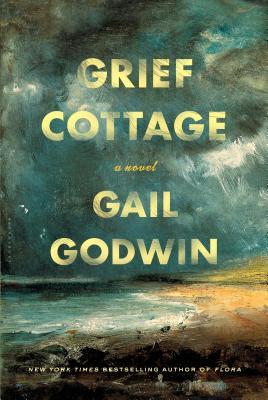
Grief CottageGrief Cottage by Gail Godwin

Bloomsbury USA

General Fiction (Adult)

Pub Date 06 Jun 2017

After his mother’s death, eleven-year-old Marcus is sent to live on a small South Carolina island with his great aunt, a reclusive painter with a haunted past. Aunt Charlotte, otherwise a woman of few words, points out a ruined cottage, telling Marcus she had visited it regularly after she’d moved there thirty years ago because it matched the ruin of her own life. Eventually she was inspired to take up painting so she could capture its utter desolation.

The islanders call it “Grief Cottage,” because a boy and his parents disappeared from it during a hurricane fifty-years before. Their bodies were never found and the cottage has stood empty ever since. During his lonely hours while Aunt Charlotte is in her studio painting and keeping her demons at bay, Marcus visits the cottage daily, building up his courage by coming ever closer, even after the ghost of the boy who died seems to reveal himself. Full of curiosity and open to the unfamiliar and uncanny given the recent upending of his life, he courts the ghost boy, never certain whether the ghost is friendly or follows some sinister agenda.

Grief Cottage is the best sort of ghost story, but it is far more than that–an investigation of grief, remorse, and the memories that haunt us. The power and beauty of this artful novel wash over the reader like the waves on a South Carolina beach.

My thoughts:

The story has strong characters and the protagonist, Marcus, is an old soul or how old was he really telling this story? I was never quite sure and at times I felt like there was too much telling rather than showing. He doesn’t have childhood friends really and he relates to adults more than children his own age. His Aunt Charlotte-who takes him in after his mother dies- is quite an odd bird and values her privacy in extreme ways.

While the premise is an interesting one, I found it hard to get into and it took me sometime to finish the book. When I finally got to the ending it just seemed to end abruptly and I was dissatisfied, as I was hoping there would be a strong climax to the story. How is this a thriller ghost story? I didn’t come away with that feeling at all. The conflicts seemed muted to me.

On a positive note, much of the story is atmospheric and the setting is quite good.

I am sad to report I gave this book two stars.

I obtained a review copy from the publishers through NetGalley for my honest opinion.

Stephanie M. Hopkins