
Hi Stephanie. Thanks for giving me the opportunity to ruminate on my favorite character Tostig, who does his best to justify his position in THE SONS OF GODWINE and FATAL RIVALRY.
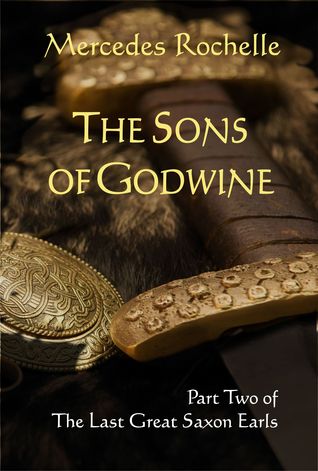
Tostig reminds me, in a way, of Judas Iscariot, the perennial traitor. No matter what his motivations, our villain’s reputation is blackened forever by future generations. But like Judas, Tostig had his reasons for what he did, and once in a while a closer look might serve to mitigate the circumstances. This is why I chose to write these two volumes in first person. I don’t think there is any better way to interpret what is going on inside his head.
I think that from the first, Tostig grew up in the shadow of his older brother. They were only a couple of years apart, but it’s widely accepted that Harold was his mother’s favorite. And Swegn was his father’s favorite. Still, if you can believe Editha’s Monk of St. Bertin who wrote the Life of King Edward (Vita Edwardi Regis), Tostig was every bit the heroic figure that Harold was: “Both had the advantage of distinctly handsome and graceful persons, similar in strength as we gather; and both were equally brave…And Earl Tostig himself was endowed with very great and prudent restraint—although he was occasionally a little over-zealous in attacking evil—and with bold and inflexible constancy of mind…And to sum up their characters for our readers, no age and no province has reared two mortals of such worth at the same time.” As this book was completed after 1066—and before the death of Queen Editha—it’s hard to reconcile this description of Tostig with the traitor everyone loves to hate. Throughout his life, Tostig was apparently Edith’s favorite—and the king’s, as well. When Tostig was forced to go into exile, King Edward parted with him most reluctantly and loaded him with gifts.
Tostig really didn’t come into his own, so to speak, until 1055 when he was made Earl of Northumbria. By then, Harold had been an earl since c.1045. As we know, the Northumbrians were a tempestuous bunch and apparently old Siward, Dane though he was, ruled with an iron fist. Tostig was both an outsider and a southerner, and it’s amazing that he even lasted ten years. He was criticized for his own harsh rule, but the real trouble didn’t start until taxes were raised precipitously in 1065.
So what went wrong between the two brothers? By all accounts, relations between Harold and Tostig were civil until the Northumbrian rebellion of 1065. But I think there were other factors at play that might have caused stress between them. What about the Welsh campaign of 1063? Historians tell us that it was a joint invasion between Harold (who came by sea) and Tostig (who came overland). They met somewhere around the island of Anglesey and pushed south, driving everyone before them until they captured and decapitated Gruffydd ap Llewelyn. Many historians laud Harold’s genius and point to this successful venture, but who gives Tostig any credit? I can’t see how there was much plunder to be had, and indeed, it is suggested that the infamous tax hike was needed to pay for this campaign.
There’s another possible reason to explain the new taxes. Historian Peter Rex suggests that reform in the royal household in the 1060s extended to “a move, possibly inspired by Earl Harold, to require that the north pay more towards the upkeep if its own government.” Since the Witan was dominated by Harold, it “would explain why Tostig blamed Harold for the revolt and accused him of conspiring against him.” (Harold II, The Doomed Saxon King).
The Northumbrian rebellion precipitated a crisis in more ways than one. While Tostig was in the south hunting with the king, his disgruntled thegns banded together and totally wiped out more than 200 of the earl’s housecarls, raided his treasury, murdered his supporters, and declared Morcar, son of Aelfgar, to be their new earl. They then proceeded to march south, devastating Tostig’s lands on their way to confront King Edward with their demands. Harold was brought in to mediate, but the rebels declared they would never take Tostig back, putting Harold in an impossible position. Negotiations went back and forth as the rebels became more and more unmanageable. King Edward wanted to raise the fyrd and chastise the offenders, but Harold urged restraint, considering the time of year (October) and the difficulty of forcing Tostig’s rule on unwilling subjects.
And what of Tostig through all this? He must have chafed while his brother negotiated for him, and when it was clear that Harold was not going to support him, he flew into a rage and accused his brother of fomenting the rebellion. As the Vita Edwardi Regis said, “But Harold, rather too generous with oaths (alas!), cleared this charge too with oaths.” I doubt that Tostig believed him, especially as things went from bad to worse and the king was eventually obliged to accept the rebels’ terms. Not only did Tostig lose his earldom, the rebels insisted that he be outlawed from the county. Was that the best his brother could do for him?
King Edward took the loss of royal authority very badly, and he soon fell into a decline that precipitated his death two months later. By then, Tostig was long gone, nursing his wounded pride and probably contemplating the means by which he would return. I imagine he had every reason to assume that King Edward would find a way to bring him back. The king’s death must have been a terrible blow; Tostig may not even have realized he was ill. Once Harold took the crown, did Tostig assume his brother would finally help him? That was less certain, and once his brother married the sister of Earl Morcar, his hopes must have been dashed altogether.
So in reality, Tostig only had one option open to him: the same option taken by his father and his own brother in 1052—the option used successfully at least twice by Aelfgar, Morcar’s father. He would have to recover his earldom by force of arms. This was almost to be expected, and I don’t know why Harold was surprised when it happened. Was the new king so obsessed with Duke William that he forgot to consider Tostig’s claim? Or did he simply underestimate his little brother? Assuredly, Tostig’s aborted invasion in May of 1066 was easily repulsed; perhaps Harold thought he had dealt with this nuisance once and for all. Alas for him and all of England, he was sorely mistaken. Harald Hardrada and Tostig’s invasion of the north drew the king and his indispensable housecarls away from the coast they had guarded so rigorously. If only Harold could have found a way to compensate Tostig for his lost earldom, perhaps things would have been much different when William the Bastard landed unopposed at Pevensey.
About Author:
 My first novel, A Greater World is set in Australia, but opens in England. Two characters, Elizabeth Morton, a middle-class woman approaching her thirties, unmarried after the death of her fiancé in the First World War, and Michael Winterbourne, a lead miner and war survivor, jilted by his fiancée, are each forced by personal tragedies to take a passage to Australia and a new life.
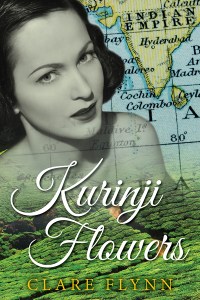 Ginny Dunbar in Kurinji Flowers, a London debutante, is destined for a ‘good marriage’ when an abusive relationship makes her the object of a society scandal. Rushed into a marriage of convenience, she is soon on a ship bound for India and a new life as a tea planter’s wife. India has a big effect on Ginny. She has nothing in common with most of the other expatriate Brits and their shallow lives which revolve around the club – tennis, bridge games, gossip and gymkhanas. She is fascinated but fearful of the indigenous Indian population and so is caught between two cultures – until a love affair and a growing passion for painting change her life.
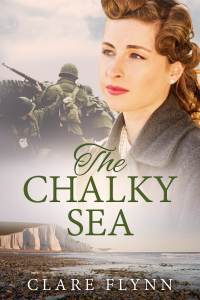 My latest novel, The Chalky Sea, is set in England in a small seaside town on the Sussex coast. For Gwen Collingwood, her home town becomes an alien place with the advent of World War 2, when the peaceful backwater becomes the front line in the Luftwaffe’s bombing campaigns. Gwen’s life transforms from that of bored housewife into a woman with a purpose. By the end of the novel she has discovered love, friendship, self-reliance and self-respect.
 My last extract is from Letters from a Patchwork Quilt. Jack Brennan is dragged off a ship as he is about to sail to America and instead finds himself in what feels like a hell on earth in industrial Middlesbrough.
 Two and a half hours to Boise. Margie and Wes had already gone over the calls from their last game, the weather forecast for today’s matchup, and the story of how three of Wes’s sisters had met their husbands. He said she could take a nap if she wanted, and he’d enjoy the scenery, but she was too wound up from coffee and nerves to sleep. The last time they’d umpired in that stadium, she never stopped hearing it from the home-team dugout—the insults, the catcalls, the words she couldn’t say in front of her mother. “Baseball guys cuss,” Mom might say. “What the frig did you expect?”
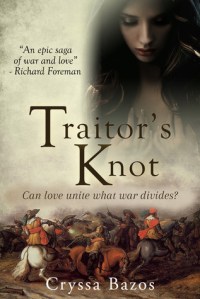 Traitor’s Knot, is the story of two fictional characters, James Hart, a former Royalist officer, and Elizabeth Seaton, a herbalist, who fall in love against the backdrop of the English Civil War.
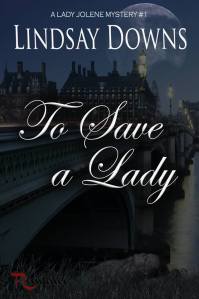 In the case set forth in To Save a Lady she easily proves to the investigating officer, Thomas Spencer, there was no way his prime suspect, Miss Julia Patrick, could have murdered the young man. He then offers his, without his superiors’ knowledge, assistance in bringing the criminal(s) to justice.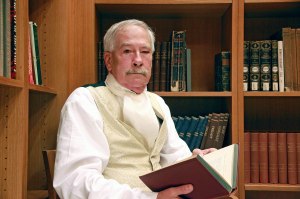

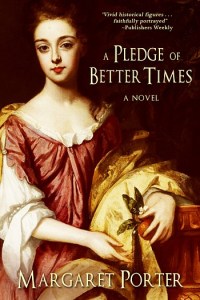 Lady Diana de Vere, the heroine of A Pledge of Better Times, was born into an aristocratic and prominent family of the late 17th century. Her father is an earl, a courtier and trusted advisor to Charles II, a position he retains—for a time—under James II. The landscape of Diana’s life, therefore, consists of the royal palace of Whitehall in London—her extended family’s dwellings lie within the palace complex. In a very real sense she’s closed off from the common citizen, from ordinary life, apart from her interaction with servants. Her world is one of opulence and privilege, and also one of restricted movements. A large part of my research was visiting sites were familiar to her during her lifetime, which allowed me to envision her in the actual spaces she had occupied and to imagine her in the ones that no longer exist.
 Because I was born into a family of readers and writers and scholars and travelers, there’s no mystery about how or why I found my profession. From a very early age I invented characters and composed scenes and stories in my head. At about 10 years old I first saw my own words printed–in the grammar school newsletter that I co-founded, typed, and published. Around the same time I decided to combine my theatrical and my writing ambitions, and adapted all my favourite youth novels into scripts.
 First, let me thank you for this series and the opportunity to discuss Characters in Motion. It was a fun exercise for me – especially since it was a topic I struggled with. I didn’t get to create the story from my characters, I had to create my characters from the story…and likable ones at that!


 Layered Pages