Characters in Motion with Historical Fiction Writer Judith Arnopp

Judith Arnopp II

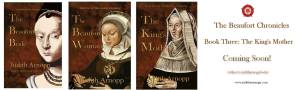
Margaret Beaufort – The Beaufort Chronicles Books 1 – 3

Hi Stephanie, I am so happy to be part of your new series of blogs; thank you so much for including me.

As you know the characters in my books are historical figures from English history, mostly of the late medieval and Tudor period. They have all been written of before, many, many times but I enjoy adding my own version to the traditional view. Although I wouldn’t call myself a revisionist, I do like to find a different perspective. Instead of recording what they did, I like to consider why they did it. This is often difficult to judge from the outside; I like to hone in on the inner self and reveal the part of us that we often prefer to keep hidden from the world.

By far my most challenging protagonist so far has been Margaret Beaufort. Margaret appears in many novels set around the Wars of the Roses and is usually depicted as a negative character, a schemer and plotter. She has even been cast as a potential murderer of the missing princes in the Tower although my research has thrown up nothing to suggest that was so. My novels that comprise The Beaufort Chronicles illustrate the events of the Wars of the Roses through Margaret’s eyes, and trace the changes in her character as she grows from a child of eight to a woman of mature years, the mother and grandmother of kings and queens.

Before I began writing I had to consider why Margaret has been depicted so negatively and this research brought me to her portraits. The only surviving representations of Margaret were taken in later life, after her son won his crown. She presents a pious pose, in the attitude of prayer, or clutching a book, the symbol of great learning. I think this dour image may explain why she has not been the heroine of many novels but Margaret clearly wasn’t born old. Even old women have known youth and love. She was once young, records indicate she possessed a sense of humour, favoured red gowns, and had a great love of finery both in clothing and furnishings. Margaret’s resilience is astonishing. She puts me in mind of a beetle that can’t be crushed. Her journey from the child bride of Edmund Tudor to whom she bore a son at the age of thirteen, to the mother of the first Tudor king is really quite incredible.

At the beginning of the wars between Lancaster and York, Margaret and Henry were relatively insignificant members of the House of Lancaster. After Henry VI’s demise and the death of the Prince of Wales, Edward of Lancaster, Margaret and Henry were suddenly thrown into the spotlight. While Henry was exiled, Margaret began to fight her son’s battles – and she fought ceaselessly to that end for the rest of her life.

Under the reign of Edward IV she petitioned the king for her exiled son’s properties and titles to be restored. She was on the brink of obtaining this when Edward died suddenly in 1483 and England was cast once again into chaos. Margaret was at the centre of activities during Richard III’s acquisition of the crown, she served him loyally at first but at some point midway during his reign, she changed tack and began to plot with Elizabeth Woodville. Together they raised money and support for an army to bring Henry Tudor home. But, on the eve of the Battle of Bosworth Margaret had no idea what the outcome would be. Under house arrest she could only pray, her nerves in tatters as she waited to discover if her actions had resulted in triumph for the Tudors or in the death of her only son.

Most women, especially on the winning side, would be applauded for these actions, hailed as a heroine but Margaret is always seen rather differently. She has become the archetypal interfering mother in law, the cold hearted pious busy body, a critic of the etiquette of the royal court. To some extent these things are true but there was also another side. She was loyal, forgiving, careful of the welfare of her household, and a great benefactress of churches and colleges throughout the realm. I felt it appropriate that she be given the opportunity to present her own version of events.

Margaret prays a lot – most people did in the middle ages. She meditates. She likes to garden and is interested in healing, her still room is well supplied with remedies. She passed this habit on to her grandson, Henry VIII, who was terrified of contagion, and also liked to dose his household when they fell ill.

Margaret possessed a dry humour and I have embellished this in my books. She has a wicked wit, and when she chooses, she can make the most biting of replies. During her years of struggle she is often a victim but she plays the long game. She serves Elizabeth Woodville faithfully, gains her friendship, visits her in sanctuary and comes to know the royal children, including her future daughter in law, Elizabeth of York and the younger of the princes, Richard of Shrewsbury. After becoming involved in Buckingham’s rebellion her life was in King Richard’s hands but he chose leniency and placed her under house arrest, in the custody of her husband, Thomas Stanley. But she didn’t give up.  Margaret had absolute faith that God was on her side. When the time came for her to move against Richard III, she financed Henry, risking both her security and position. Without doubt, Margaret Beaufort is the most heroic women I have ever written about.

Her insecure environment sometimes makes her prickly, defensive and seemingly proud. In public she adopts a confidence that she doesn’t really feel. Each decision she makes, she makes blindly – the reader and I are privileged by hindsight and know she will triumph but when I am writing, I have to remember Margaret was on a knife edge, in dangerous times and her life was often in peril. Throughout The Beaufort Chronicles Margaret is isolated, in conflict with the world but she is possessed of such courage and strength that she achieves all her desires. On reaching her goal however, she discovers that fate isn’t done with her just yet.

Because I write in the first person, I am in a sense, stepping into Margaret’s shoes and moving through the events of the Wars of the Roses. When I am writing I become Margaret. I don’t always stick to the traditional motivations because I am writing from the inside. Her relationships are varied. Her devotion to her son, from whom she is exiled for fourteen years until the day after Bosworth, is unswerving. Although she serves Edward IV’s queen her loyalty to Lancaster does not change but self-preservation is her only way forward. Records indicate that she and Elizabeth Woodville worked together in Henry’s cause and I have developed the relationship into a cautious friendship. She wants to trust Elizabeth but she is wary, never sure. Margaret finds it difficult to trust anyone which is not surprising when you consider her experience.

After Henry finally made good his promise to marry Elizabeth of York, Margaret’s relationship with her daughter in law develops over time into friendship and admiration. This may not have been the case had Elizabeth not been so compliant for there is no doubt that Margaret liked to be in charge. She ordered how Henry’s court should be run, how the apartments should be furnished, how the children should be raised – and Elizabeth seems not to have minded too much, although there are a few instances when she rebelled, or stood her ground.

In my books it is Margaret’s innermost thoughts and opinions that flesh her character. For instance when she encounters someone or something she shares her private opinion with the reader, criticizes manners, the style of dress, assesses each man’s loyalty to her son, their possible usefulness in her quest. In these books Margaret’s opinions are the only ones that are relevant because she is telling her own story. This way, Margaret’s experiences (hopefully) become the reader’s and her joys, happiness, fears and grief are immediate.

Her relationship with her four husbands took some consideration on my part. Margaret was first married as an infant to John de la Pole, the seven year old son of the Earl of Suffolk. After the Earl’s disgrace, the marriage was annulled and she was married instead to Henry VI’s half-brother Edmund Tudor, Earl of Richmond who was in his mid-twenties. Her second marriage took place when she was just twelve or thirteen years old. Usually the marriage would not have been consummated but Edmund could not take possession of her lands until she bore a son. I could have taken the route of an unhappy forced union but there are no records of Margaret ever showing resentment toward Edmund; she spoke gently of him and in her will she asked to be interred with him at Grey Friars in Carmarthen but the request was ignored. Had she born him any ill will I don’t think she would have asked to be laid with him. I chose to develop the relationship. Edmund is her protector, her husband, the father figure she lacked, and Margaret forms a sort of teenage crush for a man her senior by around thirteen years. Some authors have chosen to demonize Edmund Tudor and turn him into a child abuser but it was the fifteenth century – a different world, we shouldn’t judge by modern day standards.

Her third husband, Henry Stafford, was her own choice. Not a love match but chosen for protection and to prevent her being married off politically for a second time. Although her son, Henry, remained in the custody of his uncle, Jasper Tudor, she and Stafford visited him several times in Wales and sent regular letters and gifts. Stafford died from wounds sustained at the Battle of Barnet where he fought for York. Their marriage seems to have been content, with a slight breach when he declined to fight for Lancaster but supported Edward IV. During this period I allowed Margaret to become stronger, more headstrong and determined to be accepted at the Yorkist court so she could win back her son’s lands.

Stafford’s death after the Battle of Barnet left her vulnerable and, once more at the mercy of fortune hunters, she made the tactical choice of allying herself with Thomas Stanley, a powerful baron, high in the king’s favour. This opened the way for Margaret at court and all that came after. There is very little about her relationship with Stanley but it seems they were tolerant of each other. They lived apart for much of the time but visited and remained on good terms. I had some fun with this relationship. Margaret took control of my pen and showed a Thomas who was a bit of a likeable fool with an abrasive manner and little patient with the niceties of court. He reveals to Margaret a sensuous side of her nature she had previously ignored, a complexity that she wrestles to come to terms with. At the time of their marriage they needed each other, once Henry became king and Margaret was no longer in need of Stanley’s influence or protection, their relationship settles into one of irritated tolerance.

Each step Margaret takes along the path to her destiny is littered with difficulties. Even after her son has won his crown and she has the highest position at his court, she is still beset with doubt. She and Henry find it hard to trust – little wonder at the mire of treason and betrayal they have negotiated. Henry Tudor’s reign, particularly the early part, is beset with uprisings, pretenders to his throne, traitors in his court. Neither he nor his mother can rest easy. Every curtain conceals a dagger, and every closed door hides another plot against them.

At one point Henry finds some consolation. He has three sons to follow him and he has just secured the longed for alliance with Spain by marrying his heir to the Infanta, Catherine of Aragon. The Tudor dynasty is at last secure, their bloodline stretching endlessly ahead. But, one by one, the children begin to die.

Child mortality was commonplace in the middle ages but devastating nonetheless. Having already lost a daughter, Elizabeth, in 1495, tragedy struck again. First, sixteen month old baby Edmund died in 1500. The royal couple would scarcely have recovered when their pride and joy, the royal heir, Prince Arthur of Wales died at Ludlow in 1502. Henry and Elizabeth with just one son to follow them, immediately began to try for another. A daughter was born to Elizabeth in 1503 but tragically Elizabeth herself did not survive. She was taken ill a few days later and died suddenly, her newborn daughter followed soon after. Henry Tudor was left with just one son, his heir who was later crowned King Henry VIII.

The king died in 1509. Seemingly, at the age of sixty-six, Margaret’s reason for living had ended and she survived him by just two months.

About Judith:

Judith lives on the coast of Wales in the UK with her husband John. She studied creative writing and Literature at university and went on to study for a master’s degree in medieval studies. She now combines those skills to craft historical novels, short stories and essays.

Judith Arnopp website

Amazon Profile Page
Judith A banner

Bittersweet Confessions of A Book Blogger

Steph Pic retakeThis morning on Facebook I came across a video that a celebrity, Ashton Kutcher, shared about a man explaining what his son’s Down Syndrome was and how he responded about it. He felt he failed his son and pulled over on the side of the road to share his meaningful and heartfelt thoughts about it. One of the things he said was that “disabilities” are perception. We all have different things to teach. He is right!

I am going to share with you a small taste of something that is acutely hard for me to talk about and to be honest about for many reasons. When I was a young child in school, I had what the education system called, “A learning disability.” In my speech and how I processed things or lack of I should say. I struggled with comprehension and my speech affected my relationships with other children at school and often times at church. Needless to say, I had a negative experience to say the least. My mother continuously fought for me and tried her best for the schools to help. The school system failed me but once when we lived in Clearwater Florida, the elementary school I went to had a speech class and I loved it. The only thing that was hard was that the other children in my regular class knew why I was being pulled out of class and I was bullied horribly. I did have a tutor for years that helped me learn reading comprehension and to help me in other subjects and as I still struggled, I never gave up no matter how hard it was for me. Though I did keep much of my deep fascinations for stories, art, life, history, and how things worked inside me because I couldn’t express them outwardly for much of my life-except with my family. I was completely vulnerable and I admit, that creeps up from time to time even today.

In Clearwater at a church my father was on staff, we had a library filled with so many wonderful books. I would sneak in there sometimes when it was empty and pick a Nancy Drew book off the shelf and find a corner to read in. I struggled and often times soon forgot what I read. Even though no one was in the library, I would sheepishly look up to make sure no one saw me in case they asked me what I was reading. Then I started to make up my own stories in my head because that was easier for me. I needed that escape.

There was also a special education ministry that my mother ran at that church and I often went in the class to volunteer. Those were some of the best memories I have at that church. I still think about the people in that ministry and how they made me feel. I wasn’t judged. That was my happy place.

Middle school was a living hell for me and I would come home crying and plead with my mother so much, she pulled me out of school to home school me and that was the best thing for me. Even my “so-called” friends bullied me and called me horrible names and would opening laugh at me right in my face. Imagine being called, “Stupid and worthless everyday of your childhood?” Imagine what that does to a person. I stood there and took it, then afterwards I would shut my-self up anywhere I could and cried and anguished over life. For a while before I told my mother what was going on, I was so embarrassed to say anything, I would tell her everything was fine. I think I even told her I had several boyfriends. The saddest part is that I started to believe those kids. I felt stupid, ugly and worthless. It has taken over half my life to overcome that. The school would even put me in these, “special classes to get extra help” and the classes were really for behavior problem children. It was not to help with “learning disabilities.” I felt degraded even further. High school didn’t get better but that is another story. To this day, there are moments I struggle with speech and articulate my words verbally. I hear it in my mind but it doesn’t come out properly at times.

What is heartbreaking to me is often times I find myself using the words, disability and stupid or even idiot for that matter. Life is so precious and it is unfortunate that so many make lite of it and the cruelty of our actions is destructive in so many ways. Not only to ourselves but to others. Think about all the brilliant minds shut out of society because of their differences. Think about all the missed opportunities we could have had and have from those precious and gifted people society thinks stupid, or different. They don’t fit the mold so society must shun them. That is utterly unacceptable and cruel.

All those years I longed to express my creative ideas and thoughts and I didn’t know how. I was locked away for so long inside me and I only dreamed of one day that I might have the opportunity to shine and overcome. With hard work, determination, family and trust in God, I have overcome much and have the honor and privilege to work in the book industry and converse with some of the most brilliant and caring minds and souls. Who would have even thought possible?

Love life/Understand/Show compassion/Think before speaking and acting/Give meaning to your life. We all can learn from this.

**Please excuse the typos and grammatical errors. This is a first draft and is not meant to be written on a professional level but a personal one. Thank you.

Stephanie M. Hopkins

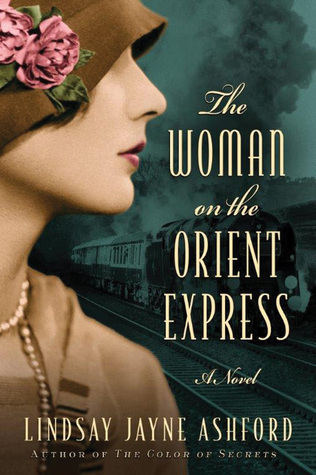
Book Review: The Woman on the Orient Express by Lindsay Jayne Ashford

The Woman on the Orient Express IIThe Woman on the Orient Express

by Lindsay Jayne Ashford

Published September 20th 2016 by Lake Union Publishing

Hoping to make a clean break from a fractured marriage, Agatha Christie boards the Orient Express in disguise. But unlike her famous detective Hercule Poirot, she can’t neatly unravel the mysteries she encounters on this fateful journey.

Agatha isn’t the only passenger on board with secrets. Her cabinmate Katharine Keeling’s first marriage ended in tragedy, propelling her toward a second relationship mired in deceit. Nancy Nelson—newly married but carrying another man’s child—is desperate to conceal the pregnancy and teeters on the brink of utter despair. Each woman hides her past from the others, ferociously guarding her secrets. But as the train bound for the Middle East speeds down the track, the parallel courses of their lives shift to intersect—with lasting repercussions.

Filled with evocative imagery, suspense, and emotional complexity, The Woman on the Orient Express explores the bonds of sisterhood forged by shared pain and the power of secrets.

My thoughts:

Agatha Christie is an iconic author of writing mystery and her works still influence many writers and readers today. She is famous for her characters, Hercule Poirot and Miss Jane Marple. The story she wrote that has left an impression on me is, Murder on the Orient Express. When I came across The Woman on the Orient Express, I was immediately intrigued and knew that I must read this story soon. Alas, the book has been sitting on my shelf for some time calling out my name in dire neglect!

Here is a book blurb of Murder on the Orient Express:

“The murderer is with us – on the train now…”

Just after midnight, the famous Orient Express is stopped in its tracks by a snowdrift. By morning, the millionaire Samuel Ratchett lies dead in his compartment, stabbed a dozen times, his door locked from the inside. One of his fellow passengers must be the murderer.

Isolated by the storm and with a killer in their midst, detective Hercule Poirot must find the killer amongst a dozen of the dead man’s enemies, before the murderer decides to strike again…”

Lindsay Jayne Ashford story has Agatha Christie boarding the Orient Express making her way to the middle east. I had no idea that Christie in real life traveled to those places and that really captured my attention even more. I wanted to read what it was like before terrorism exploded in the middle east (Baghdad and Mesopotamia) and being seen through an Engish woman was a nice touch. Christie was an extraordinary woman to say the least and The Woman on the Orient Express shows this.

Her relationships with Katherine Keeling and Nancy Nelson was inspiring to read about. All three of them were unique woman who had secrets about their lives they were afraid to reveal. As they were brought together by the train, they found themselves needing each other more than they would have thought. Another aspect of the story that stuck out to me was the authors description of the middle east and the people that lives there.

This story was beautiful told and the pace of the story was perfect for the era the story takes place in. The author even weaves fiction with fact perfectly and her character development was strong.

I have rated this book four stars and I look forward to reading more from this author.

Stephanie M. Hopkins

Stay calm and support book bloggers


Cover Crush: The Septembers of Shiraz by Dalia Sofer

Cover Crush banner

I am not a cover designer but I can agree that cover layouts play an important role in the overall presentation of stories and I must admit, often times I first judge a book by its cover.

***************

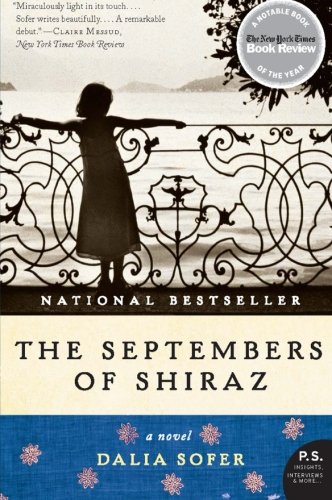
The Septembers of ShirazThe Septembers of Shiraz by Dalia Sofer
In the aftermath of the Iranian revolution, rare-gem dealer Isaac Amin is arrested, wrongly accused of being a spy. Terrified by his disappearance, his family must reconcile a new world of cruelty and chaos with the collapse of everything they have known. As Isaac navigates the terrors of prison, and his wife feverishly searches for him, his children struggle with the realization that their family may soon be forced to embark on a journey of incalculable danger.

My thoughts: 

I love everything about this book cover. The title, and the layout. The premise is a profound one and tells of struggles, cruelty and the terror of war and the aftermath. This is a story I’d like to read soon.

Stephanie M. Hopkins

*************

Cover Crush is a weekly series that originated with Erin at Flashlight Commentary. Her latest cover crush HERE

Other great book bloggers who cover crush:

Heather @ The Maiden’s Court

Magdalena @ A Bookaholic Swede

Holly @ 2 Kids and Tired Books

Colleen @ A Literary Vacation

Meghan @ Of Quills & Vellum

Stay calm and support book bloggers

Cover Crush: When It’s Over by Barbara Ridley

Cover Crush banner

I am not a cover designer but I can agree that cover layouts play an important role in the overall presentation of stories and I must admit, often times I first judge a book by its cover.

***********

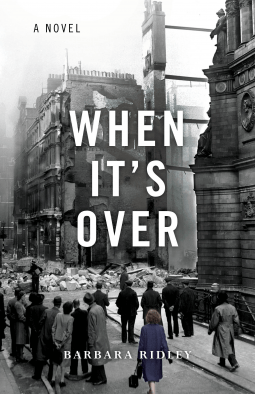
When It's OverWhen It’s Over by Barbara Ridley

She Writes Press/ Historical Fiction/ Pub Date 26 Sep 2017

Coming of age in Prague in the 1930s, Lena Kulkova is inspired by the left-wing activists who resist the rise of fascism. She meets Otto, a refugee from Hitler’s Germany, and follows him to Paris to work for the Republican side in the Spanish Civil War. As the war in Spain ends and a far greater war engulfs the continent, Lena gets stuck in Paris with no news from her Jewish family, including her beloved baby sister, left behind in Nazi-occupied Czechoslovakia. Otto, meanwhile, has fled to a village in England, and urges Lena to join him, but she can’t obtain a visa.

When Lena and Otto are finally reunited, the safe haven Lena has hoped for doesn’t last long. Their relationship becomes strained, and Lena is torn between her loyalty to Otto and her growing attraction to Milton, the son of the eccentric Lady of the Manor. As the war continues, she yearns to be reunited with her sister, while Milton is preoccupied with the political turmoil that leads to the landslide defeat of Churchill in the 1945 election.

Based on a true story, When It’s Over is a moving, resonant, and timely read about the lives of war refugees, dramatic political changes, and the importance of family, love, and hope.

My Thoughts:

The first thing that drew my attention to this book was actually the title. It spoke to me in different ways. First it hit me personally and then of course when I read the premise it drew me in on a history level-if that makes any sense. This goes to show that even titles, and book covers can have an emotional impact on a person. The layout itself has meaning and a time of war, fascism, encounters, relationships, and turmoil.

For those of you who are readers, you can request this book on NetGalley.

***********

Cover Crush is a weekly series that originated with Erin at Flashlight Commentary. Erin’s latest Cover Crush HERE

Other great book bloggers who cover crush:

Heather @ The Maiden’s Court

Magdalena @ A Bookaholic Swede

Holly @ 2 Kids and Tired Books

Colleen @ A Literary Vacation

Meghan @ Of Quills & Vellum

Anthropologist & Historical Fiction Writers: How are they linked?

me-iiAs a child I was inquisitive and longed for adventure. When I was ten years old or a little younger, I dreamed of being an archaeologist. I remember my friends and I at lunch recess digging in the sand for fossils. As I got older, I still wanted to know more about the past, thus began my deep love for history and anthropology.
There are different types of scientific fields.  Scientists from various fields many times work together to find answers and to uncover the past. They use hypothesis, evidence, technology for solving problems, and ask questions on what they observe to help them come to some sort of conclusion. We know that not everything we question has answers which leads us to different avenues to explore.

When scientists investigate and come to conclusions they usually write a scientific paper of their findings; then they publish their work. When scientists publish their work, not everyone will agree with their findings resulting in more questions and discussions. I would say it takes as much courage to be a scientist as it does an historical fiction writer because they will be both judged on the accuracy of written history.

How are the two linked? The definition of anthropology is the “study of human societies and cultures and their development.” Anthropologists study different aspects of humans from the past; how they lived, worked, cultivated the land, and so on. Anthropologists provide vital information on human existence.

Truths and or hypothesizes are revealed when we look to the past. The past speaks to us in many ways. The history of cultures and the human condition reveal these realities. A good historical fiction writer gives us tangible material to bring the past to life. In their research they must look to the past and study the civilizations and cultures-very much like anthropology.

Stephanie M. Hopkins


Historical Fiction Matters

me-iiIt is no surprise I love historical fiction. I am a history enthusiast and there is nothing like escaping to the past and exploring how people lived long ago. We often find ourselves not so different from them. Or how history repeats itself in more ways than one. Historical Fiction Writers today brings those voices to life so we might share a bond with them or better yet, learn from them. There is so much we have inherited from them. Not only our cultures, religions, social norms and wanting acceptance but a deep feeling of survival and planting more roots for the future.

We must know history to understand and to grow. Knowledge is power. We must also study history so we may not to repeat past mistakes of our forbearers. Which we tend to do regardless. The human condition is extraordinary and an enigma.

Historical Fiction does matter.

Stephanie M. Hopkins

Listening Instead Of Reading

I can’t believe I am saying this but I haven’t done a whole lot of reading in the last week or so. Instead I have been listening to audio books. It’s not my usual norm. You see, I don’t often listen to them. I prefer reading to listening. Anyhow, I have found two interesting audio books. I am curious as to how I will review them when the time comes.

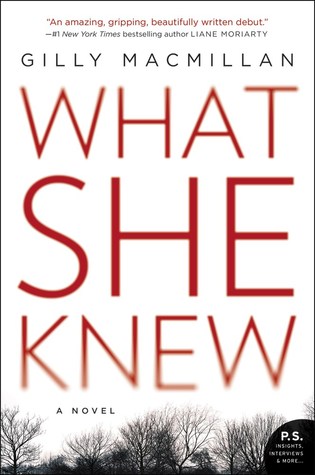
what-she-knewWhat She Knew by Gilly Macmillan

In her enthralling debut, Gilly Macmillan explores a mother’s search for her missing son, weaving a taut psychological thriller as gripping and skillful as The Girl on the Train and The Guilty One.

In a heartbeat, everything changes…

Rachel Jenner is walking in a Bristol park with her eight-year-old son, Ben, when he asks if he can run ahead. It’s an ordinary request on an ordinary Sunday afternoon, and Rachel has no reason to worry—until Ben vanishes.

Police are called, search parties go out, and Rachel, already insecure after her recent divorce, feels herself coming undone. As hours and then days pass without a sign of Ben, everyone who knew him is called into question, from Rachel’s newly married ex-husband to her mother-of-the-year sister. Inevitably, media attention focuses on Rachel too, and the public’s attitude toward her begins to shift from sympathy to suspicion.

As she desperately pieces together the threadbare clues, Rachel realizes that nothing is quite as she imagined it to be, not even her own judgment. And the greatest dangers may lie not in the anonymous strangers of every parent’s nightmares, but behind the familiar smiles of those she trusts the most.

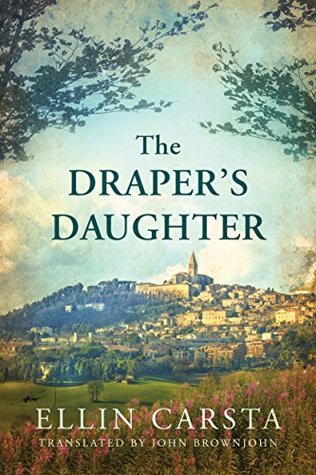
the-drapers-daughterThe Draper’s Daughter by Ellin Carsta

A thrilling historical novel by the author of The Secret Healer.

Cologne, 1351: Elisabeth and Stephen Hardenstein are twins, but they could not be more different. While Elisabeth is inspired by the family business, absorbing everything her father shows her about the cloth trade, Stephen enjoys a leisurely life and pays little attention to their father’s teachings. Elisabeth recognizes her true vocation as a tradeswoman, and though the odds are stacked against her, she pursues her passion.

When the twins’ father suffers a tragic stroke, the tables turn. Suddenly Stephen is interested in running the draper’s shop his father left behind, and he takes the lead in managing the family business. But Elisabeth can’t sit idly by and watch as he makes bad decisions and accumulates debts. Stephen pushes her to marry as soon as possible, even proposing a suitor, but Elisabeth has her own ideas about matters of the heart. Are her talents in the art of negotiation enough to win her both the job of her dreams and the man she truly loves?

stay-calm-and-support-book-bloggers

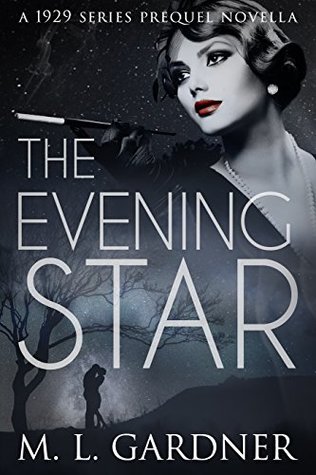
The Evening Star: A 1929 Series Prequel Novella (The 1929 Series Book 0) by M. L. Gardner

Are you familiar with M.L. Gardner? She is the best-selling author of the 1929 series. If you love stories from this era, you should check them out. They are popular. I have a few of them on my Kindle and I just downloaded this one. The Evening Star is currently 99 cents on the Amazon US Kindle. The cover is stunning!

Stephanie M. Hopkins

the-evening-star

About the Book:

The Evening Star is a 1929 Series Prequel Novella. See how it all started for one couple in this dynamic series and begin your journey into the world of 1929.

Caleb Jenkins wasn’t looking for the love of his life. After selling his grandfather’s farm in Massachusetts, he was only searching for a place to start over and forget his past. In his travels through Georgia, he meets Arianna Bellamy, a woman with modern ideas, struggling beneath the confines of old-fashioned values and strict parents.

She begins to buckle under the weight of the responsibility that’s been placed on her. Caleb sees a kindred spirit in her yearning to be free and has to fight to get beneath the iron exterior that Arianna has built for her own protection. As he starts to unravel her complicated nature, he shows her a life she knew existed but had always been denied. Caleb suggests that they run off together to New York. With the firm hold her family has on her, Arianna must make a choice between love and obligation.

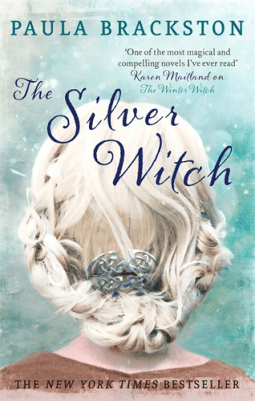
Cover Crush: The Silver Witch by Paula Brackston

Cover Crush banner

I am not a cover designer but I can agree that cover layouts play an important role in the overall presentation of books and I must admit, often times I first judge a book by its cover.

the-silver-witch-iiThe Silver Witch: A Novel 

Pub Date: February 2, 2016

A year after her husband’s sudden death, ceramic artist Tilda Fordwells finally moves into the secluded Welsh cottage that was to be their new home. She hopes that the tranquil surroundings will help ease her grief, and lessen her disturbing visions of Mat’s death. Instead, the lake in the valley below her cottage seems to spark something dormant in her – a sensitivity, and a power of some sort. Animals are drawn to her, electricity shorts out when she’s near, and strangest of all, she sees a new vision; a boatful of ancient people approaching her across the water.

On this same lake in Celtic times lived Seren, a witch and shaman. She was respected but feared, kept separate from the community for her strange looks. When a vision came to her of the Prince amid a nest of vipers she warned of betrayal from one of his own. Prince Brynach both loved and revered her, but could not believe someone close to him wished him harm, even as the danger grew.

In her own time, Tilda’s grief begins to fade beside her newfound powers and a fresh love. When she explores the lake’s ancient magic and her own she discovers Seren, the woman in her vision of the boat. Their two lives strangely mirror each other’s, suggesting a strong connection between the women. As Tilda comes under threat from a dark power, one reminiscent of Seren’s prophecy, she must rely on Seren and ancient magic if death and disaster are not to shatter her life once more. Paula Brackston does it once again with The Silver Witch crafting an enchanting tale as timeless as it is engrossing.

**********

This cover is so pleasing to the eye. I love the colors, and the simplicity of it. The premise of the story sounds fascinating and look forward to checking it out sometime!

Stephanie M. Hopkins

**********

More Great Cover Crushes!

Cover Crush is a weekly series that originated with Erin at Flashlight Commentary.

Other great book bloggers who cover crush:

Heather @ The Maiden’s Court

Magdalena @ A Bookaholic Swede

Holly @ 2 Kids and Tired Books

Colleen @ A Literary Vacation

More cover crushes over at indieBRAG!