Interview with Author Trini Amador

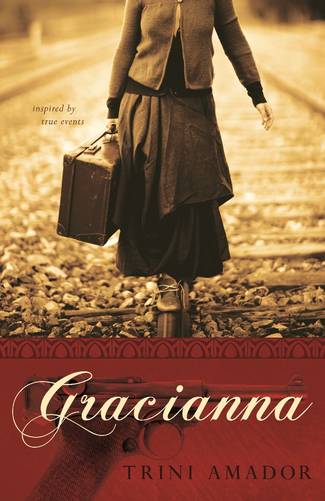
Gracianna


Hello, Trini. I am currently reading, Gracianna and it is a beautiful story. Please tell your audience a little about it and what inspired you to write it.

Hi Stephanie and thanks so much for inviting me to Layered Pages. I really appreciate your work.  I was inspired to write Gracianna because my great-grandmother, Gracianna, used to say to be “thankful” when I was little. At four-years old how can a little boy understand that concept? But over the years I wondered about its meaning. As I say, to many folks, one may not be able to fully understand what “gratitude” really means until we are in our 40’s or 50’s or even older.  

What are some of the true aspects in your book?

The story is bookended… the very open of the story and the very end are factual. And interspersed throughout the book are many, many factual elements.  When I was a very young boy I was found walking around my grandmother’s living room with a loaded German Luger in my hand.  While doing research for the book I learned that my aunt met her grandmother Gracianna’s sister, who I had not heard of and remembers seeing the “mark,” the “tattoo” under her forearm.  She remembers the whispers and that it was not polite to point it out.  My grandfather was a shepherd when he came to the US with his wife. The story of the coin (as an IOU) in the book is all true.

Was there research involved?

Yes, there was tons and tons research! Everything from learning the myth of the Pyrenees Mountains to learning details of World War II, the French Resistance and Auschwitz. I traveled to the Basque Country – my great-grandmothers homeland to get the feel of the topography, (steep) culture (hard work, food and wine) and feeling (a contradiction of the old and the new). That took me to Paris. I learned about the occupation and the attitude of the Parisians and France as a whole. It was depressing.   I sat in the middle of the city taking it all in and then imagined the panzers and half-tracks rolling down the streets. I studied the Le Meurice Hotel, a grand dame hotel whose history is undeniable. I wanted to ensure readers considered what it must have been like for frolicking glitterati of Paris to have been there one day and the entire European Nazi Command rattling through its halls the next.

Then there was Auschwitz. My research took me to Warsaw and Krakow. It was bitter cold. The day I arrived at the concentration camp it was sunny but still bitterly cold. Everyone I came in contact with had a red nose and cheeks. One’s breath fell from the weight of its moisture. The area was devoid of emotion. It was sullen, silent and sunny…but frozen. I could not imagine the desperation. But I tried to convey the feeling I had that day.

What is the most challenging thing about writing stories that take place in the past?

For me writing about to day or the past is the same. Am I able to convey the emotion appropriately? Can my reader appreciate what the character is feeling?  Am I appropriately delivering an evocative scenario? Is it real? Is it relevant? Believable? Does it move the story forward? Is it compelling? Is it interesting?

What was the most challenging scene you wrote and why?

Wow, there were several but one that comes to mind, without spoiling the story line was the very traumatic experience that Gracianna experienced when she was eight years old. Born, “Father Unknown,” Gracianna’s mother was her only link to the future. But when her mother had complications in childbirth everything changed. I dug deep to find an experience that I could relate to in my own life that helped me to express the depth of fear, anger and hurt that she may have experienced.

 Is there a character in your story you relate to the most as far as personality?

It’s funny. Readers that know me have recently told me that they see me in Gracianna. I did not write the story from that perspective. In reality I think I am reflected in parts of each character.

What is your next book project?

Why Stephanie… you are incorrigible. My publisher and others are encouraging me to write the sequel to the Gracianna story. But I have already written an outline for a book that depicts an experience that I had when I was in the music business in Hollywood in the early 90’s. My editor, Hillel Black, who has edited 20 New York Times best sellers has also expressed his interest in working with me again as well. What a joy! I may have to write another book just to have the chance to collaborate with Hillel again.

What genre do you like most?

I enjoy reading short stories. I enjoy to feeling a story develop quickly and get to the point. The opposite of what I just wrote. I knew the story I was telling but I purposefully tried not to get there too fast. This piece need a long introduction to clearly understand the characters and their motivation. I wanted the reader to fully appreciate why they would act the way they would in the future.

What is the truly last great book you have read and that inspired you?

I am inspired by anything that F. Scott Fitzgerald wrote. I love the pacing and the clarity and the delivery. There are some linkages between Gatsby and my story. Constance, Gracianna’s sister had many of the characteristics of Daisy Buchanan. She was an attractive and bubbly, shallow and selfish unaware how her actions could affect anyone. Both became acutely aware of their actions along the way.

What is your favorite quote?

…from Chilkoot Charlie’s in Anchorage, Alaska, “Where we cheat the other guys and pass the savings on to you.” 🙂

Thanks for inviting me, Stephanie!

Thank you, Trini!


Trini


Trini Amador  vividly remembers the day he found a loaded German Luger tucked away in a nightstand while wandering through his great-grandmother’s home in  Southern California. He was only four years old at the time, but the  memory remained and he knew he had to explore the story behind the gun.  This experience sparked a journey towards Gracianna, Amador’s debut  novel, inspired by true events and weaving reality with imagination.  It’s a tale drawing from real-life family experiences.

Mr. Amador is a traveled global marketing “insighter.” He is a  sought-after guru teaching multinational brand marketers to understand  how customer and consumer segments behave based on their needs, values,  motivations, feeling and values. He has trained over five thousand brand marketers on how to grow brands in over 20 countries in the last 15  years. His counseling has been valued at global brands including General Electric, Microsoft, AT&T, Yahoo!, Sun Microsystems, Google, Jack  Daniel’s, The J.M. Smucker Co., DuPont, Mattel, and Rodale, Inc..

Amador is also a founding partner with his wife and children of  Gracianna Winery, an award-winning winery located in Healdsburg,  California. The winery also pays tribute to the Amador Family’s maternal grandmother, Gracianna Lasaga. Her message of being thankful lives on  through them. The Gracianna winery strives to keep Gracianna’s gratitude alive through their wine. Learn more at: www.gracianna.com, like Gracianna Winery on Facebook or follow them on Twitter @GraciannaWinery.

Amador resides in Sonoma County with his family.


Link to Tour Schedule: http://hfvirtualbooktours.com/graciannavirtualtour/
Twitter Hashtag: #GraciannaTour


Gracianna banner


Review: The White Princess by Philippa Gregory

the white princess


The White Princess opens as the news of the battle of Bosworth is brought to Princess Elizabeth of York, who will learn not only which rival royal house has triumphed, Tudor or York, but also which suitor she must marry: Richard III her lover, or Henry Tudor her enemy.

A princess from birth, Elizabeth fell in love with Richard III, though her mother made an arranged betrothal for her with the pretender to the throne: Henry Tudor. When Henry defeats Richard against all odds, Elizabeth has to marry the man who murdered her lover in battle, and create a new royal family with him and his ambitious mother: Margaret Beaufort, The Red Queen. But, while the new monarchy can win, it cannot, it seems, hold power in an England which remembers the House of York with love.

The new king’s greatest fear is that somewhere, outside England, a prince from the House of York is waiting to invade and re-claim the throne for the house of York. Fearing that none of his new allies can be trusted, Henry turns to his wife to advise him, all the time knowing that her loyalties must be divided. When the young man who would be king finally leads his army and invades England, it is for Elizabeth to decide whether she recognizes him as her brother and a claimant to the throne, or denies him in favor of the husband she is coming to love.

Description from Goodreads.


Expected publication: July 23rd 2013 by Touchstone


My review:

There were a few things in this story that stood out and I found interesting considering some of the history facts or speculations- if you will- that I know. In Gregory’s story Elizabeth of York and Richard lll were lovers. I don’t know a whole lot of details during this period but from what I heard there is evidence that Richard was extremely fond of Elizabeth, but not to the extent of being lovers.

Henry and his mother (Margaret Beaufort) were often times harsh, belittling, and unfeeling towards Elizabeth. That did not sit well with me at all. I felt that if Elizabeth would only wise up to the fact that she indeed had power, and if she would only discover it... (Did she discover that you ask? That is something you will have to find out.) I came to the conclusion early on in the story that maybe one of the reasons why she was treated as she was by her husband and mother-in-law…. was because they knew what power she could possibly wield and kept her down because of it. That is one way to look at it.

Gregory gives an interesting perspective of Henry’s character and it was a real issue for me. He became agitated, fearful and obsessed with being de throne. His behavior reminded me of someone on the edge of losing it completely. As I continued reading on I kept on thinking, “If Henry’s name or his obsession and fear of a pretender who could possibly over throw him was mentioned one more time I was wanting to jump right in the book and give him a good shake and a what for!

The overall dynamics of Henry, Margaret Beaufort and Elizabeth’s relationship is bold and complicated- in this story- to say the least. I did rather liked how Elizabeth’s character developed towards the end and the outcome of that. Elizabeth’s thoughts and feelings toward her husband and mother-in-law is certainly a complex one and she is someone I think we could all learn a thing or two from. Although it is in the present tense, it was interesting to read this story in her point of view. I felt it could have been presented to the reader a bit stronger than written.

History in my view tends to be subjective. Whether how an historian or an historical fiction writer is interpreting the past, the key is to make it believable. In historical fiction- readers asked themselves, “Could this have possibly have happen this way and does it blend well with the fictional aspects of the story?” “Or is it historically accurate?” As an avid reader of history and historical fiction-this story I did not always get that feeling, if you will. Although, in the author’s notes, Gregory says, “This book is written on a number of levels. It is a fiction about a mystery-so two steps from any historically recorded facts; but at the heart of it are some historical facts that you can rely on, or study for yourself.” So I will leave it up to you-the reader-to form your own opinions.

How this story was written and the characterization certainly has given me food for thought and I look forward to doing further research to draw my own conclusions. I recommend this novel to people who enjoy lite Historical Fiction.

Stephanie


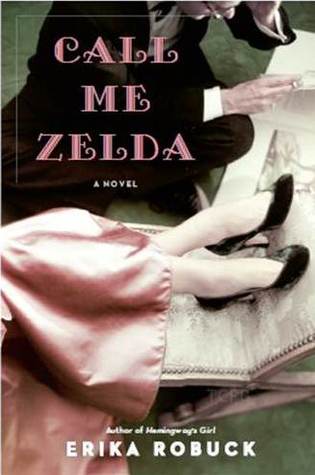
Review: Call Me Zelda by Erika Robuck

call me zelda

Committed to a Baltimore psychiatric hospital in 1932, Zelda vacillates between lucidity and madness as she fights to forge an identity independent of her famous husband. She discovers a sympathetic ear in her nurse Anna Howard, who finds herself drawn into the Fitzgerald’s tumultuous lives and wonders which of them is the true genius. But in taking greater emotional risks to save Zelda, Anna may end up paying a far higher price than she ever intended.

In this thoroughly researched, deeply moving novel, Erika Robuck explores the boundaries of female friendship, the complexity of marital devotion, and the sources of both art and madness.


Review:


Confession: I’ve never read a Fitzgerald novel – not even The Great Gatsby. I had no idea that Zelda Fitzgerald was a talent in her own right, let alone that she had published a novel of her own. Their early years were so glamourized, and I had happily settled down for a recounting of their early, glamorous years full of maddening creativity and parties. But then – then, I heard a broken Mrs. Fitzgerald say “call me Zelda,” and with one look from her piercing eyes I was drawn quietly into Anna’s story of being nurse and friend to the famous writer’s wife.


I say Anna’s story because it is her story. This is not a book portraying an in-depth look at Zelda’s life. It’s about what comes after the party, the glamour, the ravages of broken bodies and minds, the horrors of world war and the suppression of creativity. Anna is a paradox of a character: she is strong yet susceptible – not in a cutesy heroine way – but in a true way. She has lost her husband and child, yet finds fulfillment and meaning in her work. Her work with Zelda consumes her, at first because she yearns for escape, then because she comes to love Zelda as a dear friend. Anna’s friendship becomes a necessary balm to Zelda’s soul. As Zelda retreats deeper into the dark places of her mind and away from Anna, the big question is, will Anna choose to not merely exist, but live?


Call Me Zelda touches on many themes, but Robuck makes them flow together seamlessly – or rather flow in the often jarring and crazy timing in which life produces them. The characters and setting descriptions are true to the period. Despite the numerous obstacles the characters face, I came away believing that there is beauty found in life’s mangled messes and hope for redemption in the brokenness.


Reviewed by Beth Bulow

Layered Pages Review Team Member


Review: The Chosen Shell by Katherine Sartori

The Chosen Shell

After the onslaught from a vocal and sometimes impertinent media about the troubled state of the Vatican and Catholicism, Katherine Sartori’s The Chosen Shell is a nice surprise. It is not as in-your-face flashy as some books and television series like the Borgia’s are, though that is not to say that there are not a few gritty scenes. The sincerity and genuineness of Satori’s voice comes through the narrative in a way that does not cover up what so many non-believers (and some believers) find hypocritical in the church’s teachings versus its practices and attitudes expressed in the daily life’s of its followers, nuns and leaders.

The Chosen Shell is fiction and memoir combined. Because of this and the subject matter, the life of an introverted troubled teenager who on the cusp of a turning into an adult decides to become a nun, the flow of the novel was at times a bit slow. There were times I wanted the story to move along. The Chosen Shell is not a literary novel, but it could have been, and could be, if Sartori expanded on the other characters and allowed them to bring out more of the main character, Celie, through action or dialogue.

I absolutely love Satori’s description of San Francisco and Muir Woods having visited both places a number of times. I felt at home, like I was part of the action. I also liked Sartori’s description of the convent and other places Celie and other nuns gathered. It is a world that I wanted to learn about; Sartori is a diligent charismatic guide.

I loved about the novel was the way Sartori incorporates the writing life into the narrative, from the time she was a school girl in school through to the end. Celie feels and acts like a writer in the novel. I empathized with her struggle to maintain her voice even as her identity as an author is threatened by her vocation.

The Chosen Shell is a gem, one that I would highly recommend. I would give it on Goodreads 4-4.5 stars.

Reviewed by Susan Berry

Layered Pages Review Team Member

Reviews for 2014

Pretty soon I will be working on the list of books I will be reviewing for 2014. If you’re interested in me reviewing your lovely novel, give me a shout out! Remember, I favor Historical Fiction (no erotica, witchcraft or paranormal) and I will only be accepting 12 books for review! Oh, and one more thing….I’m adding Christian Fiction to the list! Thanks!


layeredpages@yahoo.com for my review guidelines!


Stephanie

Layered Pages

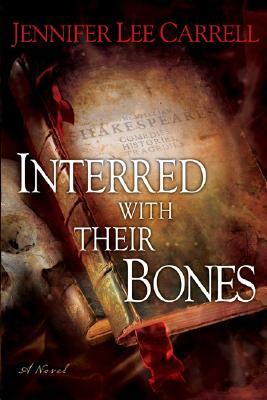
Review: Interred with Their Bones by Jennifer Lee Carrell

Interred with their bones

What do you say when an author combines Shakespeare with a mystery that traverses two different lifetimes? And it’s the author’s first work of fiction, no less? Amazing. Could it have been better? Of course. There’s not many works that cannot stand to be improved.

For lovers of Shakespeare, as I am, Interred is a delight, as Carrell includes copious amount of detail about the writer, his life and works, the on-going debate as to his identity, and the search for works that could be attributed to him. Athenaide’s “Hamletonian” estate, including the trick of hidden passageways that lay behind fireplaces, was a nice bonus.

The mystery part seemed almost to be a part of the back story, Shakespeare the motivating force of the book. Hints of this were found in the sudden appearance of a British detective inspector (in American terms – a plain clothes police detective) in the States and the way Athenaide’s housekeeper ended up collapsing in the driveway. A little warning or foundation for these, and others like them, would have helped smooth over the rough edges. My other main concern was the pile up bodies and Kate’s somewhat lack of concern of whom might be doing it – a continuing naiveté that should have been dispelled after the second body?

That being said, I loved Kate in that she made me want to go out and conduct research and read some Shakespeare. The ending was better than most mysteries, which seem to end with all the threads tied, all the issues resolved. It was also a surprise, which seemed to pull the mystery out of the back story and merge it with the Shakespearean elements.

Overall, I would give it 3.5 stars, if Goodreads accepted half stars.

Reviewed by Susan Berry

Layered Pages Review Team Member

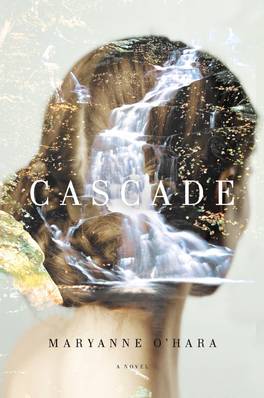
Review: Cascade by Maryanne O’Hara

cascade

Love, loss and conflicting loyalties and promises- this story sweeps you into the 1930’s, a town in Cascade, Massachusetts. Who is fighting for their very own survival of a flood that is to create a reservoir for Boston. A women-Desdemona, who has made promises to her dying father and bound to the man she married. Yet she yearns to for a life of an artist and falls for a young Jewish man. Author Maryanne O’Hara brings you raw emotions in her characters, their lives and gives you a sense of timeless love and beauty. I have to admit when I opened the first page and started reading, I had a hard time getting into it. So I stepped away for a few days and went back to it. Because I literally had just finished a book that was set in the 19 Century and I picked this one up immediately afterwards.  Not the best idea in the world….once I picked it up again, the story drawled me in and I was memorized. I truly admire the authors writing style and her way with characterization. The story all around is just beautiful-like I mentioned above and I highly recommend this novel.

Stephanie

About the Author

Maryanne O'Hara

Maryanne O’Hara was the longtime associate fiction editor at the award-winning literary journal Ploughshares. She received her MFA from Emerson College fifteen years ago, and wrote short fiction that was widely published before committing to the long form. She lives on a river near Boston.

http://www.maryanneohara.com/

CascadeTourBannerFINAL1_zpsa7f9bbc0

Interview with Author Evan Ostryznuik

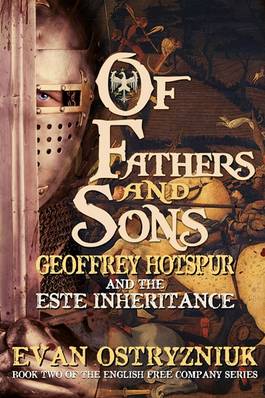
Stephanie: Hello Evan, thank you for chatting with me today. Please tell me about your book, “Of Fathers and Sons.”

Evan: A pleasure to be here. Well, the novel takes place in 1395 in northern Italy, where tensions among the great regional powers were running high – the schism in the Catholic Church had not yet closed; Florence and Milan were gearing up for another war; Venice was starting to show interest in the mainland; in other words, there was a fine balance of power in the region and just about any conflict could ignite a war that would engulf the whole peninsula. The ruler of the strategically located Marquisate of Ferrara had just died and left a minor in his place. This uncertainty was enough to attract the attention of the great powers, and each of them knew that the territory’s occupation by one or another power would tip that fragile balance. Also, the Este family was popular as wise rulers and excellent soldiers, and so keeping them as an ally was good policy. This is the broad picture. Specifically, the story is about how that minor, the twelve-year-old Niccolo d’Este, fought his uncle and tried to overcome his own insecurities and challenges. And the English Free Company arrives to help.
evans book

Stephanie: Sounds really fascinating and I enjoy reading novels that take place during that time period in history. What was your inspiration for this story?


Evan: The inspiration for this story came from the Este Inheritance itself, which included not just land and lakes, but also a legacy of strong and wise rule. The boy had a lot to live up to. Until this time, the city of Ferrara and its surrounding area comprised more or less a backwater in Italian politics, but the Este family was able transform this marginal territory into one of the great Renaissance centers, politically, socially and culturally. They introduced a number of administrative innovations that secure their, fostered economic progress, and patronized progressive thinkers. The events of 1395, specifically the civil war between the two main branches of the Este family, were pivotal in this regard. Not just the fate of the city was involved, but also the legacy of the Este family, since had things turned out differently, Ferrara would have likely taken another direction or been absorbed by one of the neighboring powers. There was a lot riding on this war.

Also, the fact that a child on the cusp of adolescence was at the heart of intrigue gave me a change to pursue writing about the High Middle Ages from a different angle. Character interactions have to be plotted with especial care to make them convincing, juvenile understanding and expectations had to be considered and integrated into the plot, and even parents must be found a role. In some ways, Geoffrey Hotspur is just a boy himself.

Stephanie: How long did it take you to write this novel?

Evan: Since Of Fathers and Sons is a part of a series, I could say that they novel can be traced back to the literary birth of Geoffrey Hotspur 3-4 years ago. It grew out of the great mass of research I did on the 14th-15th centuries. The actual setting of this story down on paper took about a year, after several fits and starts. While I have the story lodged in my head, finding the right voice required several shots at the target.

Stephanie: What was some of the research involved?

Evan: I was fortunate to get my hands on a few key texts that really helped bring to life the Este clan and the Marquisate of Ferrara, which meant that I had few gaps to fill with what I like to call ‘oblique research’. By this I mean reading up on related period settings, families, events, and the like and making educated assumptions about how my story might have looked like. All genuine historians do this, since the historical record is never close to being complete or satisfying. I always find the researching for a novel a lot of fun, whether access is easy or difficult. I not only learn so much about the people and the period, but so many ideas for the novel manifest themselves from the research – details, information, relationships, and even dialog just pour themselves into the gaps of the story’s structure. I think, like most writers, I could spin the story out indefinitely and it would be no less engrossing.

Stephanie: What are some of the fictional aspects?

Evan: The two leaders of the English Free Company are fictional, or rather they are composites of a number of historical personages. To some degree, they are archetypes. Just read Chaucer! As a result, their journey is necessarily fictional, although the setting and the major events of their adventure are well grounded in historical reality. The point is to reflect the zeitgeist as closely as possible through an independent literary agent. No historical figure was ever able to visit all the great moments of their time! Geoffrey Hotspur and his companion can do that and bring both the events and those who truly made them to vibrant light.

Stephanie: What intrigues you the most about Geoffrey Hotspur and John of Gaunt?

Evan: What most intrigues me about these men is their relationship to fatherhood and patriarchy. Hotspur is an orphan of unknown provenance and a ward of Gaunt, while the great duke had a troubled relationship with his own son, the eventual King Henry IV and was poor father figure to the last Plantagenet king, his nephew Richard II. The tensions inherent in patriarchal relationships, particularly in the Middle Ages, are some of the main themes of the English Free Company series. Geoffrey in particular is troubled by it, for reasons of fear and insecurity, and as a result many of his decisions and views are strongly colored by this question. Both men had strong determined characters, yet long-term success always seemed to elude them. Family was crucial, but difficult. The role of the father was particularly important at this time and crucial in the lives of his sons. A poor or unsuccessful father could have dire consequences for the entire family and its descendants.

Stephanie: Will there be a third book in this series?

There will be a third, fourth and fifth book of the series! The next adventure of Geoffrey Hotspur follows hard on the heels of this one, but takes place in exotic locales in the Outremer, or the Levant. 1396 was the year of the very last European Crusade in the Holy Land, and there is no way Geoffrey is going to miss it! Hospitaller knights, Hungarian lords, Grand Constables of France, and poor squires with gather to drive the Ottoman Turks out of Christendom.

Stephanie: How exciting! What is the most challenging aspect of writing Historical Fiction?

Evan: The most challenging aspect of writing Historical Fiction is filling in the blank spots. Finding the stories is easy. The historical record is by nature fragmentary, especially for the Middle Ages, and so I must make convincing, educated assumptions about so many things. Some are inferred, such as personal motivations, based on the historical consequences. For example, battlefield tactics, which are crucial to my novels, have been recorded, but the application of these tactics by this or another company sometimes require backward projection based on the result of the battle or the observations of contemporary chroniclers. On more than one occasion I have had to delete large chunks of text because what I wrote either could not fit in with what History had to say or was contradicted by a newly discovered piece of research.

Stephanie: When did you first begin to write and knew you wanted to be an author?  

Evan: Funny enough, in elementary school I began creating stories through pictures with no words attached. I would take a sheet of 8.5X11 and draw a scene of…whatever. Then I would take more paper and draw the same collection of figures and setting in another way, and again, until I had a sort of film that I would tape together to produce a single visual narrative. This was fun until the teacher said enough was enough and I had to get back to work. Proper writing I did not start until college, when I would write short stories and vignettes from my life, mainly for myself, but also for others to be amused. I continued writing these vignettes until after I completed my doctorate at Cambridge, when I gave myself that challenge of writing a novel based on my interests in history. I did, and no one wanted to publish it. However, the very process of writing generated many other ideas for different novels and stories, which I found very gratifying. Now, the ideas are running out of control!

Stephanie: What advice would you give to someone who wanted to write in this genre?

Evan: Getting the facts straight is the most obvious suggestion, but if I hard to offer a single piece of key advice regarding historical fiction, I would have to say that the writer had better make sure that his or her story cannot take place at any other era. Otherwise, it loses its purpose. What I mean by that is that character, setting, motivations, mentality, even speech needs to be grounded in the historical period. Always fear anachronisms. If the work is sloppy or unconvincing, the author will swiftly lose credibility. This threat is particularly great for historical fiction because nothing can be taken for granted. The reader wants to believe he or she is proverbially going back in time. Other genres have their own challenges, but they are less dependent on good, hard technical research. Fantasy and science fiction can have whatever set of internally logical rules they want; contemporary fiction is easy to portray by virtue of direct experience; detective novels have well established structures. For historical fiction, you are only as good as your research and your ability to transfer it convincingly to the blank page.

Stephanie: What is your favorite quote?

Evan: This is a tough question because I live in fear of unconscious plagiarism. But one that has stuck with me for its humor and hard truth is a few words attributed to Oscar Wilde: “Be yourself; everyone else is already taken.”

Stephanie: Evan, it was an honor to chat with you! Thanks!

evanEvan Ostryzniuk was born and raised on the prairies of western Canada. After graduating   from the University of Saskatchewan with a B.A. in History and Modern Languages and an M.A. in Modern History, Evan crossed the ocean to do post-graduate work at the University of Cambridge, concluding four years of research with a doctoral thesis on the Russian Revolution. He then found his way to Eastern Europe, where he took up positions as a magazine editor, university lecturer and analyst in the financial services sector before rising in the ranks of the local publishing industry to become Editor-in-Chief of a popular weekly.

Evan Ostryzniuk currently resides in Kyiv, Ukraine near a very large candy factory. He has travelled extensively, including the locations of his novels. Of Fathers and Sons: Geoffrey Hotspur and the Este Inheritance is his second novel.

http://www.evanostryzniuk.com/[SH1]

Link to Tour Schedule: http://hfvirtualbooktours.com/offathersandsonsvirtualtour/
Twitter Hashtag: #FathersAndSonsTour
evans tour banner

Interview with Author Teresa Neumann

Stephanie: Born and raised in Iowa, Teresa Neumann and her husband now live in Oregon’s Willamette Valley, a beautiful place they and their children have called home for several decades. In addition to writing and interacting with her readers, Teresa loves to travel (to Italy, of course) and fiddling on her violin with other musicians. You can find Teresa’s books on Amazon, or on her website at http://www.teresaneumann.com


 Author Teresa Neumann


Teresa, it is a pleasure to be interviewing you! Your first novel, Bianca’s Vineyard was absolutely wonderful and moving. Please tell your readers about, Domenico’s Table.


Teresa: Although Domenico’s Table – the post-war sequel to Bianca’s Vineyard – is about a different branch of the Bertozzi family, it is also inspired by a true story.  


One of the main characters in DT is our cousin Domenico Sacchelli, the gregarious proprietor of a stunning bed and breakfast property he inherited from his grandparents situated in the mountains of Tuscany overlooking the Ligurian Sea. His pizzas, made with his own olive oil and cheeses in a wood oven, are to die for.


I was inspired to write the book during our first visit to Domenico’s farmhouse, or fattoria, which he rents out every summer to a former Nazi soldier who had stormed the mountain during the war and commandeered his home. Domenico was a child at the time, but he recalls the terror of that day when he and his family barely escaped with their lives from the onslaught.


The fact is, many Italians continue to bear deep resentments and anger towards Germany because of atrocities that occurred during the war. Little wonder then, that when Domenico first began renting out his fattoria to the German soldier and his family, it created quite a stir among his neighbors. Domenico would joke that he was simply being smart and “turning the table” on the Germans by making money off their former enemies, but over the years the two men developed a friendship.


I took this remarkable story and added an international ensemble of fictional characters, some heavy doses of drama and intrigue, loads of dreamy Italian locations, tension-filled romance, and a sprinkling of light-heartedness and came up with Domenico’s Table.


Stephanie: It certainly is a remarkable story. I’m currently reading your novel and I’m enjoying it so much! I feel as if I’ve drawn so close to your characters and they feel as if they’re family.


I’m sure your readers-who have not read your sequel as of yet- want to know…Are any of the characters in Bianca’s Vineyard in Domenico’s Table?


Teresa: Yes, but dare I mention who without spoiling the surprise? Let’s just say that Bianca Corrotti is the narrator in Domenico’s Table, as she was in Bianca’s Vineyard, and that the “mystery” of Armida’s locket is resolved in the sequel.


Speaking of characters, I should let readers know that Rem Malloy – a delightful Italian-American tour operator – is organizing a Bianca’s Vineyard & Domenico’s Table Book Tour in Italy next year. His highly acclaimed Seattle-based travel company, Italy4Real, is currently solidifying an itinerary that will include several days in Tuscany where we will meet some of the characters in my books, see locations mentioned in them, visit Armida’s gravesite, and perhaps even have a dinner at Domenico’s fattoria on Monte Montignoso, hosted by the intrepid chef himself. Rem wants to keep tours small — no more than 8 people. Anyone interested can contact him at 1-800-554-5170 or email him at info@italy4real.com  Just ask about the Bianca’s Vineyard Tour.


teresa neumann sequel


Stephanie: You give vivid details of what war was like during that period and for the people. What was your research like? Where you able to speak with anyone who lived during that time? Or were there letters you were able to look over?


Teresa: In addition to travelling frequently to Italy to visit family, we also have family and friends in Germany. Their help was invaluable when it came to research and translations. I was also able to interview my husband’s elderly Italian cousins who lived through the war before they passed away. What a privilege that was! Other family members in Tuscany spent days showing us many of the sites and monuments pertinent to the war, such as the infamous Sant’Anna and locations along the Gothic Line.


Stephanie: How wonderful to be able to travel to Italy. I’ve always wanted to go there.


How long did it take you to write Domenico’s Table?


Teresa: It helped that I had a good idea for the sequel before I began, but still, it took about a year to write and get it into print.


Stephanie: Were there any challenges?


Teresa: Certemente! With BV the plot was there for the telling. I simply wrote the story of my husband’s grandparents as it actually happened, filling in here and there where I needed to. But with DT, I had to develop the plot to a much greater degree, which stretched me as a writer.


Tying the loose ends together from the first book and yet doing it in a way that would allow the sequel to be a stand-alone novel, was another challenge.


The most daunting challenge of all, I believe, is getting the final manuscript to publication and then marketing it. There are deadlines to deal with and so many minute, permanent decisions that – once the book is in print – can’t be changed. I love meeting and mingling with my readers, but marketing my own work is still a foreign concept, which is why I am eternally grateful for my precious reviewers and Goodread fans!


Stephanie: What is the hardest aspect of writing historical fiction?


Teresa: I love research – perhaps too much. It’s easy to get bogged down in facts, and although it’s essential to be historically accurate, if factuality comes at the expense of characterization, it can dull the reading experience considerably. After all, if someone only wants the facts they’ll read a textbook on the subject. Historical fiction is, in the end, about story. It’s a delirious blend of fact and fiction; a sort of melding of the left brain and the right brain. So, I have to work hard at fleshing out my characters and making facts come alive for my readers.


Stephanie: Research can be time consuming but well worth it.


What are some of the fiction parts to the story?


Teresa: The basis of Domenico’s Table, as mentioned above, is inspired by a true story. The rest – the German soldier and his haunting past, his granddaughter and her American stepsister – have been fictionalized.


It’s true that Domenico’s father had to hide in their chestnut tree to escape detection when the Nazi’s stormed their mountain, but the story of his mother and their neighbor is not.


Readers often ask me about Marco, Domenico’s handsome co-laborer at the bed and breakfast. His looks and persona are based on our real cousin Marco, who was a Milanese model for some time, but is now a happily married father living in Rome. The rest, however, is fictionalized.


Stephanie: Marco is one of my favorites! Is there a novel you are currently working on?


Teresa: Yes, and it’s set in the early 1970’s. The main character is Italian-American, but it takes place entirely in California. The title of the book may be a bit misleading – A Year in the Company of Freaks – but to all my faithful Italian-American readers out there, trust me, I’m sure you’ll still relate to it.


Stephanie: Sounds wonderful! I can’t wait to read it!


What is your favorite historical event?


Teresa: WWII, because all of humanity’s inherent shortcomings and virtues came together on such a grand, global, gory scale. My father and uncles served in that war and their stories never cease to amaze me. America’s Civil War is also a source of great intrigue. My ancestors fought each other over the North-South divide, so maybe it’s a personal thing, although I must admit I’ve always had an odd fascination with military history in general.


Stephanie: It looks like we have a lot in common with our family tree as far as family fighting in wars. Military history is very fascinating.


What is your favorite all time novel and why?


Teresa: There are so many great classic and modern novels to choose from, Stephanie, how can I pick just one?!


Stephanie: I can’t pick one! It’s a tough question!


Teresa: Of all the books I’ve read recently, my favorite is The Shoemaker’s Wife by Adriana Trigiani. Granted, I’m a sucker for all things Italian, but her novel in several parts is quite nearly a masterpiece.


I cut my teeth on Tolstoy, Dostoyevsky, Dickens, and Hardy, so they were my first literary loves. Milton’s Paradise Lost blew my mind. Was completely smitten with Sigrid Undset’s Nobel prize-winning trilogy Kristin Lavransdatter.


Thinking of the Civil Was, I was reminded that Southern writers are my favorite! I think a truly great novel will mess with your head. You’ll think about it for days and it will not only resonate in your soul for the rest of your life, but it becomes a mental landmark in your worldview. I can’t hear about tornado tragedies, for example, without thinking of Leif Enger’s Peace Like a River. I should also mention that I rank Southern stories and
writers — Tennessee Williams, Flannery O’Connor, The Help and The Divine Secrets of the Ya-Ya Sisterhood — as among the best literary talent this country has to offer. I find them utterly irresistible and they almost never fail to captivate me.


So if I can only pick one all-time favorite novel, for the above reasons the prize would go to Les Miserables, by Victor Hugo. I mean, Jean Valjean? Javert? Fantine? The story and its characters are simply timeless, as are the themes of hope, redemption and restoration.


Stephanie: Teresa, it has been a pleasure chatting with you today! Thank you for your time!


Author David Morell Interview & Book Review:

Stephanie: David, I really enjoyed reading your novel. It’s one of the best mystery thrillers I have read in a very long time. Not only did you depict London during the 19th century brilliantly, but portrayed how crimes were solved during that time without all the technology we have today. The murder scenes and action scenes are very detailed and intense. How did you shape the actions of your story from beginning to end? Were they difficult to write? Were there any challenges?

Murder as a fine art book cover

David: Thank you, Stephanie. Murder as a Fine Art is based on the idea that someone replicates the original Ratcliffe Highway murders, using Thomas De Quincey’s vivid description of them in his sensational essay “On Murder Considered as one of the Fine Arts.” Logic suggested that I needed to begin with the new version of the murders.  Then I needed to introduce my two Scotland Yard detectives and show them using early crime-scene-analysis techniques.  Finally I needed to have them suspect De Quincey (notorious for his memoir, Confessions of an English Opium-Eater), at which point I could introduce him and his wonderful daughter, Emily, whose personalities then controlled the story. The biggest challenge was developing an antagonist that would be a worthy opponent to De Quincey.  After all, De Quincey invented the word “subconscious” and anticipated Freud’s psychoanalytic theories by a half-century. The killer needed to have a complex psychological profile so that the reader would feel that only De Quincey could see to his core. De Quincey influenced Edgar Allan Poe, who in turn inspired Sir Arthur Conan Doyle to create Sherlock Holmes, so I decided to put De Quincey at the start of the detective tradition.  It was a very exciting project.

Stephanie: What are some of the fictional aspects of the story?

David: The main fictional element is the replication of the original Ratcliffe Highway murders, which paralyzed all of England back in 1811 but weren’t repeated in 1854, as happens in my novel.  Otherwise there’s a considerable amount of fact. Thomas De Quincey (an absolutely fascinating literary personality of the period) is presented accurately. Ryan and Becker, the two Scotland Yard detectives, are based on actual detectives of the time. Lord Palmerston is presented as he was, complete with his immense political scheming. Coldfield Baths prison existed as I describe it, complete with the boxes in the cells and the handles that needed to be turned thousands of times before a prisoner was allowed to eat.  Britain’s economy was indeed based on the opium trade, and laudanum (a mixture of alcohol and opium) was indeed in every medicine cabinet. Even infants were given it. The evidence suggests that many people in the Victorian era were drug addicts, although the concept of physical and mental addiction didn’t exist then. I tried to make the novel as factual as possible.

Stephanie: What was some of the research involved? How long did it take you to write your story?

David: Murder as a Fine Art was a three-year project. The research took 2 years, but for some of that period I was also writing.  De Quincey wrote thousands of pages of essays, memoirs, and fiction. I re-read them many times until I could be a ventriloquist for him.  Next I researched his life, eventually becoming Internet friends with his two biographers, Robert Morrison and Grevel Lindop. Then, I accumulated shelves of books about 1854 London and the Victorian era. My goal was to make readers truly feel that they were on those harrowing fogbound streets.  I needed to know what the pavement was made of, what sorts of coins were in people’s pockets, and how much a woman’s clothes weighed (37 pounds). Finally I used my academic background (I was a literature professor at the University of Iowa) to research novels in the 1850s so that I could use techniques from that period, in effect writing an imitation Victorian novel.

Stephanie: What are some of the response you have received about your book?

David: The reviews have been excellent.  Entertainment Weekly called Murder as Fine Art “a masterful blend of fact and fiction, evoking 1854 London with such finesse that you’ll hear the hooves clattering on cobblestones, the racket of dustmen, and the shrill call of vendors.” Publishers Weekly described it as “an epitome of the intelligent page turner.” The Associated Press described it as “a literary thriller that pushes the envelope of fear.” The Washington Post said, “Murder is rarely this much fun.” The New York Times Sunday Book Review, Suspense Magazine, Mystery Scene, the Providence Sunday Journal—these and others were all enthusiastic.

Stephanie: What is the most single challenging thing about writing historical fiction?

David: Often historical novels are costume dramas that retain modern attitudes and dialogue.  In contrast, I wanted Murder as a Fine Art to be an accurate reflection of 1854 London.  Because De Quincey anticipated Freud’s theories, I could legitimately include psychological analysis, but otherwise the thoughts and attitudes in the book are specific to the 1850s in London.  With each scene, I was constantly on guard against anachronisms.  One section involved a lock, and my research led me to discover that locks were quite different in 1854, bolted to the surface of the inside of a door rather than inserted into the body of the door.  This became an important plot point.  Basically I couldn’t take anything for granted.  Every detail needed to be investigated.

Stephanie: What is your next book project?

David: Many readers have asked me to write a second novel about Thomas De Quincey and his amazing daughter, Emily. I normally don’t write sequels, but in this case, I have a lot more to say about them as well as about London in the 1850s.

Stephanie: What advice would you give to an aspiring author?

David: I teach writing at various conferences around the country and have a writing book, The Successful Novelist that discusses what I learned in my 41 years as a published author. One of my favorite mantras is “Don’t imitate. Be a first-rate version of yourself and not a second-rate version of another author.” Another mantra is “Don’t chase the market. You’ll never catch it. Instead write the book that you were meant to write.”

Stephanie: Thank you David for this lovely interview! It was an honor!

 My review: I was completely blown away with this novel! So intense, brilliant and intelligently written. The story line was so captivating and the author did a marvelous job depicting this time in England’s history. Rich in mystery, crime, intrigue, and this story really explores the mind of a killer and the people who are trying to catch him.  I’m normally a reader of the medieval times but when this book came along for this wonderful book tour, I could not pass it up and I’m glad I didn’t. I highly recommend this story and have rated it five stars!

Stephanie

Link to Tour Schedule: http://hfvirtualbooktours.com/murderasafineartvirtualtour/ Twitter Hashtag: #MurderAsAFineArtTour

About MURDER AS A FINE ART
Publication Date:  May 7, 2013 Mulholland Books Hardcover; 368p ISBN-10: 0316216798
GASLIT LONDON IS BROUGHT TO ITS KNEES IN DAVID MORRELL’S BRILLIANT HISTORICAL THRILLER.
Thomas De Quincey, infamous for his memoir Confessions of an English  Opium-Eater, is the major suspect in a series of ferocious mass murders  identical to ones that terrorized London forty-three years earlier.
The blueprint for the killings seems to be De Quincey’s essay “On Murder  Considered as One of the Fine Arts.” Desperate to clear his name but  crippled by opium addiction, De Quincey is aided by his devoted daughter Emily and a pair of determined Scotland Yard detectives.
In  Murder as a Fine Art, David Morrell plucks De Quincey, Victorian London, and the Ratcliffe Highway murders from history. Fogbound streets become a battleground between a literary star and a brilliant murderer, whose  lives are linked by secrets long buried but never forgotten.
Praise for MURDER AS A FINE ART
“Murder As a Fine Art by David Morrell is a masterpiece—I don’t use that word  lightly—a fantastic historical thriller, beautifully written,  intricately plotted, and populated with unforgettable characters. It  brilliantly recreates the London of gaslit streets, fogs, hansom cabs,  and Scotland Yard. If you liked The Alienist, you will absolutely love  this book. I was spellbound from the first page to last.”
—Douglas Preston, #1 bestselling author of The Monster of Florence
“London 1854, noxious yellow fogs, reeking slums, intrigues in high places,  murders most foul, but instead of Sherlock Holmes solving crimes via the fine art of deduction, we have the historical English Opium-Eater  himself, Thomas De Quincey. David Morrell fans — and they are Legion —  can look forward to celebrating Murder As a Fine Art as one of their  favorite author’s strongest and boldest books in years.”
—Dan Simmons, New York Times bestselling author of Drood and The Terror
“Morrell’s use of De Quincey’s life is amazing. I literally couldn’t put it down: I felt as though I were in Dickens when he described London’s fog and in  Wilkie Collins when we entered Emily’s diary. There were beautiful  touches all the way through. Murder As a Fine Art is a triumph.”
—Robert Morrison, author of The English Opium-Eater: A Biography of Thomas De Quincey
“I enjoyed Murder As a Fine Art immensely. I admired the way Morrell  deftly took so much material from De Quincey’s life and wove it into the plot, and also how well he created a sense of so many dimensions of  Victorian London. Quite apart from its being a gripping thriller!”
—Grevel Lindop, author of The Opium-Eater: A Biography of Thomas De Quincey
About the Author
David Morell
David Morrell is a Canadian novelist from Kitchener, Ontario, who has been  living in the United States for a number of years. He is best known for  his debut 1972 novel First Blood, which would later become a successful  film franchise starring Sylvester Stallone. More recently, he has been  writing the Captain America comic books limited-series The Chosen.
For more information on David Morrell and his novels, please visit the official website.  You can also follow David on Facebook, Twitter and Google+.
Murder As A Fine Art banner