Interview with Sarah Butterfield

I would like to introduce Sarah Butterfield. Sarah is a blogger and an avid reader who has a passion for History.

Sarah, are you currently in school studying history?

I am indeed! I have always enjoyed reading history for pleasure, but it wasn’t my first choice for a degree. As well as history, I have a passion for science and have A-Levels (English higher education qualifications) in physics, chemistry and biology. I wanted to study molecular physics at degree level, but failed three times to pass with a high enough mark in advanced maths. After a lot of thinking, I decided not to admit defeat, and instead to work at gaining the appropriate qualifications in history to study that at degree level instead. Looking at my life now, with my excellent marks and success on this path, it is the best decision I ever made.

What will you be doing with your degree?

I am planning to stay on at university when I have completed my BA degree to gain a Masters.
 

Please tell your audience about your blog.

Sarah’s History is a place where I write factual articles about interesting people and events in history, mainly medieval, with book reviews and a few opinion posts thrown in. I blog a lot about anniversaries of births, deaths, executions, battles and so on. Things that interest me, and hopefully other people! I have hosted one guest post, have another guest lined up for January, and am willing to host any other guests.

What are you currently reading?

I am currently reading Sophie Perinot’s novel, “The Sister Quuen’s,” about the Provencal sisters Eleanor and Marguerite. It is set in the thirteenth century and is a novelised life story of the queens of France and England. I have not read very much of it yet but am enjoying it very much. I am also reading Wallace’s nonfiction about the European Reformation for my current university modules.


What will you be reading next?

I am planning on reading a book called Cromwell to Cromwell by Schofield, which is a study of the English Reformation.


What is your favourite all time book?

My favourite book is, Douglas Adam’s, “Hitchhiker’s Guide to the Galaxy.”

 
How long does it take you to read a book?

It really does depend on whether it is fiction or not. I can usually spend a week to ten days on a novel, less if I really like it! Nonfiction takes a little longer because I tend to read them slower and take in the information.

Which format do you prefer to read in, paperback or ebook?

My partner bought me a kindle for my birthday in March and I really love it for novels. It is so much easier for commuting and reading in bed. I do not have any nonfiction on it, though. So, I prefer my nonfiction in paper or hard back format but my novels in ebook format. I’ve also discovered lots of great new authors through kindle-only releases and freebies.

What is your opinion on how reviewers are viewed today by authors and readers?

Oh, wow. I have quite a strong opinion about this. I think there is nothing more off putting about an author than their behaviour towards negative reviewers. Just this year, I have seen attacks on reviewers that are really quite appalling; I’ve been subjected to one myself, in fact. If an author publishes their work, then they obviously want people to read it. Some people that read it will then want to tell people about it. There’s nothing unusual about that. Seeing an author then go on to link bad reviews, along with spiteful words, calls to arms and accusing the reviewer of a personal attack is horrible. I’ve seen blog posts about reviewers that makes me think, “why do you hate your readers? Why do you accuse them of illiteracy / stupidity / attacking you?” Of course, some reviews are not as good as others, but readers are generally clever enough to sort the wheat from the chaff. There are authors out there that I refuse to read now because of their online behaviour. To accuse a reviewer of bullying, writing blog posts, linking bad reviews and generally whining in public is bullying in itself, really.

I will never forget the reaction of one of my author friends to a two star review. “Thank goodness!” she said. “Some balance! I was worried people would think my good reviews were all plants!”

The truth is, people don’t trust a book with all good reviews, because it does look suspicious. Take with the good with the bad, and your readers will love you for it.
 

What are your opinions about self-publishing vs. mainstream publishing?

I used to think that self-publishing was mainly for rubbish books that could not get published any other way. How blind! Of course, some self-published books are not great, but the same can be said for traditional publishing. Two of the best books I’ve read this year, ‘Before the Storm’ by Melanie Clegg and ‘Betrayal’ by Michele Kallio, were both self-published. Now, I think that self-publishing is a good option for some great authors to be noticed, and I am not so quick to dismiss it. If the book is up my street and the author has done nothing to draw negative attention to themselves, I’ll read it regardless of publishing method. Self-published books tend to be cheaper too, which is always a bit of a bonus!

 
What is your favourite time in English History?

The thirteenth century, no contest. John, Henry III and Edward are all fascinating men in very different ways. The two queen Eleanors, Provence and Castile, also interest me greatly. There’s the civil wars, Magna Carta, a boy king, Louis of France’s attempt to steal England, Simon de Montfort’s grab for power, Lewes and Evesham, the conquest of Wales, wars with Scotland, unrest with France…. Seriously, what is there not to love about this period?

Who is your favourite monarch?

Ooh, this is a tough call between Henry III and Edward I. Can I have both? Of course I can’t! OK, I will say… Edward, Henry’s son, because he really was everything a medieval warrior king should be.


Will you be writing a novel?

It is not in my immediate plans, to be perfectly honest. I am a student, blogger and a mum of three, so my time is pretty well spent already! Never say never though. I love to write, blogging is my favourite thing to do, so it is something I may look at doing in the future.
 

Coffee or tea?

I’m going to be a typical Brit and say tea. Milk but NO sugar!

 
Sarah’s Links:
 
 Sarah’s blog, Sarah’s History, can be found at http://sarahshistoryblog.wordpress.com

Sarah’s facebook page can be found at http://facebook.com/sarahshistoryblog

Sarah can be followed on twitter: http://twitter.com/thirteenthCsara

Sarah can be friended on goodreads: http://goodreads.com/thirteenthCsara


Thank you Sarah!

Stephanie
Layered Pages

Review: Son’s and Daughters by Karen Wasylowski


This story follows Fitzwilliam Darcy and his cousin Colonel Fitwillaim and their family. You see their children grow to young adults in this story and their struggles with relationships (even with each other) and their parents. Darcy and Fitzwilliam have to make difficult decisions regarding their family but at the same time you see their love, sacrifices and understanding….

I enjoyed this story immensely. Son’s and Daughters is delightfully crafted and different from any continuation of Pride & Prejudice that I have read thus far. There are humorous, witty- as well as- serious dialogue aspects to this story.  The plot is engaging,well written and Karen shows strong emotions in her characters. I found myself reading late into the night, not wanting to put the book down. I look forward to reading more of Karen’s stories! I highly recommend this book to Jane Austen fans! You’ll love it!

I rated this book four stars!

Stephanie
Layered Pages

Interview with Author Christy English

I have the pleasure to share this wonderful interview with you! This is my second interview with Author Christy English. Welcome Christy to Layered Pages once again.


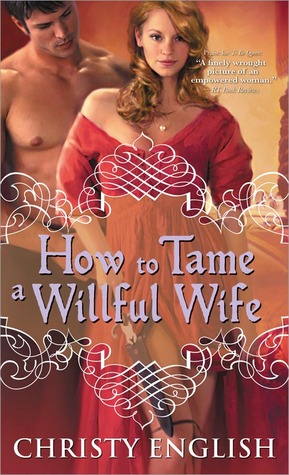
Christy, please tell you audience about How To Tame a Willful Wife.

HOW TO TAME A WILLFUL WIFE is a love story about two strong-willed people who slowly learn to live together as equals. Now this is a Regency romance, and the lead gentleman, Anthony, is an earl, so equality is not a concept he is comfortable with, to say the least. His wife, Caroline, won’t settle for less, though, and this leads to a lot of strife.

I have taken Shakespeare’s The Taming of the Shrew and turned it on its head, so that it is the man being tamed. Of course, what really happens is that in the midst of their sparring and their lovemaking, Caroline and Anthony actually learn to talk to each other, and begin to build a real marriage. A happy one.

Is this your first regency period story you have written?

It is, and I have loved every minute of it! I have read Regencies all my life, but this novel was the first time I ever tried my hand at it. It was so much fun.

Where there any challenges?

Learning to write a new genre is very challenging, but I loved it. I found that many my flowery, long-winded descriptions had to go, much to the joy of my editor. LOL Also, I needed to increase the conflict in this novel, so that Caroline and Anthony are constantly in jeopardy. They do not always flee for their lives by any means, but the tension has to be built from one moment to the next, from one scene to the next, until the end when they finally come together and settle their differences for the last time.

One of my flaws as a writer, one I am working to overcome, is that I don’t like to watch my characters suffer. I said in a previous interview that it feels like I am torturing a puppy, and the puppy is me. LOL Of course, my characters are always strong enough to take any plot twists I dish out, and I get to explore their strength as I watch them exercise it. So conflict is a good thing.

Tell us about those hot love scenes… were they hard to write?


For some reason, every novel I have ever written is heavy on love scenes. They creep into every book, and I just let them enter in. I don’t try to stop them, because I interrupt the flow at my peril. There have been times, as in TO BE QUEEN, when my editor had me trim down a love scene, but for the most part, they get to stay in the books. One thing I love best about writing Regency romances is that all my love scenes get to stay where they are.

Love scenes are interesting. Some people really enjoy them and some people skip them. I hope my book has enough going on that it will appeal to both kinds of readers.

What book project are you working on next?

I am revising books 2 and 3 of this series. I am having such an amazing time re-working Shakespeare’s comedies, and watching as the seed of his genius gives birth to an entirely new plot.
Book 2 in this series, which should be out late next summer, is LOVE ON A MIDSUMMER NIGHT in which Pembroke, Anthony’s hard drinking, womanizing best friend, has to rescue the woman who jilted him ten years before. It’s the story of the taming of a rake, and it is a lot of fun. Or I suppose I should say, I had a lot of fun writing it. I am obviously biased LOL!

What are you currently reading?

I have been so enmeshed in launching HOW TO TAME A WILLFUL WIFE while revising LOVE ON A MIDSUMMER NIGHT that my reading has slowed down to a snail’s pace. I had the pleasure of reading Heather Webb’s BECOMING JOSEPHINE and now I am reading CALEB’S CROSSING by Geraldine Brooks. Though not a prolific a reader at the moment, I have found some beautiful pieces to savor.

What do you plan on reading next?

CLOUD ATLAS. I am going to enjoy diving into that.


Thank you Christy for this lovely interview!
 
 
Stephanie
Layered Pages


Review:
 
 
Christy does it again with this wonderful re-telling of, “Taming of the Shrew.” This is one romance novel I couldn’t put down! I normally don’t read romance that often and this story was wonderfully told! I have enjoyed every single one of Christy’s novel and I knew she would be fabulous. Wonderful character building and the story-line was fast-paced, entertaining, engrossing, and a delight to read! I really enjoy reading stories with strong female characters and this story gives you that. This is quite simply the best of the best. A must read!
 
 
Stephanie

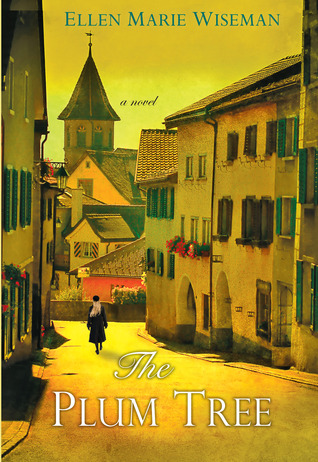
Review: The Plum Tree by Ellen Marie Wiseman

A deeply moving and masterfully written story of human resilience and enduring love, The Plum Tree follows a young German woman through the chaos of World War II and its aftermath.

“Bloom where you’re planted,” is the advice Christine Bolz receives from her beloved Oma. But seventeen-year-old domestic Christine knows there is a whole world waiting beyond her small German village. It’s a world she’s begun to glimpse through music, books—and through Isaac Bauerman, the cultured son of the wealthy Jewish family she works for.

Yet the future she and Isaac dream of sharing faces greater challenges than their difference in stations. In the fall of 1938, Germany is changing rapidly under Hitler’s regime. Anti-Jewish posters are everywhere, dissenting talk is silenced, and a new law forbids Christine from returning to her job—and from having any relationship with Isaac. In the months and years that follow, Christine will confront the Gestapo’s wrath and the horrors of Dachau, desperate to be with the man she loves, to survive—and finally, to speak out.

Set against the backdrop of the German home front, this is an unforgettable novel of courage and resolve, of the inhumanity of war, and the heartbreak and hope left in its wake.”

Review:

The Plum Tree by Ellen Marie Wiseman is without a doubt one of the best books I have read this year! Her prose is beautiful and inspiring, the characters story is heart-stirring and will capture emotions so deep in you that you will be forever changed. I highly recommend this story to all!

Expected publication: December 25th 2012

I have the pleasure of an interview with Ellen Marie Wiseman on Thursday, January the 3rd here on Layered Pages. I will be discussing with her in further depth about her novel.

Stephanie
Layered Pages

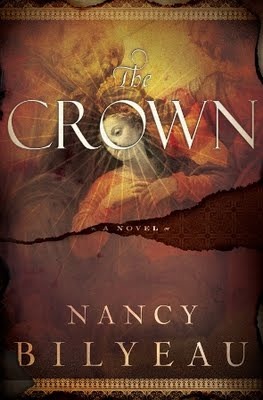
Review: The Crown by Nancy Bilyeau


The Crown is a truly wonderful read, historical fiction at its best. This is the story of Joanna Stafford, a cunning woman and novice nun no less. Nancy Bilyeau manages to create a work which is richly detailed and engaging without losing her audience into tedium. Joanna is tasked to find a missing crown believed to hold certain powers in order to save her father from the tower of London. Her search is tangled up with the lives of important figures from Henry VIII reign, as well as the challenges facing the church at the time. The characters which Joanna encounters on this mission are all well developed, unlike many novels where the main character’s shine comes from the dullness of her competition. Bilyeau keeps you in anticipation through the mysteries, conspiracy, and journey with a masterful interconnection of the details and storyline. While not probably an entirely novel storyline, being set among the monasteries and priories gives this work provides a unique perspective on the time.

The story keeps you on the edge of your seat and just when you think that you know where things are headed and how the story will end, Ms. Bilyeau changes the game. Hopefully this sets the stage for a sequel, because I need to know what lies ahead for Joanna Stafford. I highly recommend The Crown to fans of historical fiction, religious conspiracy/mystery, and sixteenth century England.
 
Brandy Strake
Review Team Member

Interview with Sarah Bruce Kelly


Sarah, I applaud you for writing such a beautiful and brilliant story! When I read Vivaldi’s Muse, I couldn’t put it down! Could you please tell your readers about your story?


Absolutely! Set in early 18th-century Venice, Vivaldi’s Muse explores the life of Anna “Annina” Girò, Antonio Vivaldi’s longtime protégée. When I first came across the seeds of this story over a decade ago, in my research on Vivaldi’s operas, I was immediately intrigued. The more digging I did into the details of Annina’s and Antonio’s relationship, the more hooked I became. Here is the story that emerged after my years of research, in a nutshell:


Annina first falls under the spell of the fiery and intriguing prete rosso (red-haired priest) at a young age, when Vivaldi is resident composer at the court of Mantua, her hometown. Stifled by the problems of her dysfunctional family, she has long dreamed of pursuing operatic stardom, and her attraction to the enchanting Venetian maestro soon becomes inseparable from that dream.

She eventually joins him in Venice, but her road to theatrical success is rife with obstacles such as malicious rival singers, disparaging impresarios, and unscrupulous noble patrons. Rumors about the nature of her relationship with her beloved mentor, Vivaldi, abound and lead to dire problems yet, ironically, draw them closer together. But her growing guilt about her secret longing for him, complicated by her inherent fears of rejection and abandonment, threaten to poison their relationship from within. In the end she discovers that their love for each other has grown into something that transcends their personal relationship¾and she finds true love when she least expects it.
It’s very clear that you did extensive research for your story. Please tell me a little about what was involved in your research.

My research for Vivaldi’s Muse spanned about ten years and included travels to Northern Italy and Austria, as well as a drive through the Alps. During this time I tracked down and translated countless historical documents, from which I gathered a wealth of information. Sorting through and putting together this mountain of information was quite an adventure in itself, involving many “Aha” moments, when certain puzzling situations began to take on some clarity. It was sort of like putting together a giant puzzle which, while often challenging, was also extremely exciting.

Your characterization of Annina and Antonio is remarkable and you did a fantastic job bringing the early eighteenth-century opera back to life in your story.What did you find the most challenging to write about of the past and your characters?

I started with sort of a trial run of the story a few years ago, when I published my YA novel The Red Priest’s Annina, which relates Annina’s early years in Venice and is told entirely from her perspective. That novel was better received than I could have imagined, as much among adults as young readers, both male and female. I received calls, emails, and notes from people of all ages and persuasions and from all over the world, telling me how much they loved the story and how they couldn’t put it down. The one criticism I heard over and over was “It ended too soon! I want to know the rest of the story!”

As daunting as the task seemed at the time, I knew I had to re-write and expand the story from the perspectives of certain key characters. I also knew I had to delve much more deeply into the culture and politics of the opera world in early 18th-century Venice. Very little research had previously been done on this little niche of music history, so my quest involved more hunting down of obscure documents and piecing together my findings. My goal was to re-create as realistically as possible the distinctive social and musical culture of Venice in the 1720s and 30s.

My biggest challenge was finding Vivaldi’s voice, since I planned for much of Vivaldi’s Muse to be told from his perspective. I eventually achieved this by re-reading, over and over, everything he’d ever written and by immersing myself in his music. His music is so intimate, so revealing of his personality, that the more I listened the more I got to know him.

What are some of the fictional aspects to your story?

My goal in writing Vivaldi’s Muse was to reveal the true story of Vivaldi’s and Anna Girò’s relationship, a story which had never before been told in its entirety or with any basis in documented fact. As a result, all the major events in Vivaldi’s Muse are real and documented. A few minor characters, and one fairly major character (Gigi), are fictional, as I explain in a “Message to the Reader” at the end of the book. These imagined characters portray the kinds of people who no doubt would have been part of Antonio’s and Annina’s world, and in many ways they enhance the dramatic impact of the story.

As for dialogue, some is paraphrased from documents, but obviously there is no way to know exactly what people who lived nearly 300 years ago said to each other on a daily basis. So while I would not call the dialogue “fictional,” most of it grew from my interpretation of how particular characters would react to certain situations.


What book project are you working on now?

My current project is another work of historical fiction based on real people and events. I’m still in the research stage, but from the information I’ve gathered so far a story is starting to take shape. The setting is the court of Mantua around the turn of the 16th century, where a mysterious relationship develops between a young noblewoman and her favorite court composer. I don’t want to reveal too much yet except to say that the story involves marital infidelity and murder–two subjects I have not dealt with in my previous novels.

What advice would you give to an aspiring author?

Read, read, read, especially topics and genres that interest you the most. Keep a notebook of ideas that appeal to you, no matter how random or far-fetched they may seem. You’ll come back to that notebook time and again in the course of planning your story. Once you have a plan, write every day. Keep a list of scene ideas and work on developing those scenes, one by one. If you aspire to write historical fiction, realize that a great deal of research will be required. Not only must you be sure of all the facts about your characters and events, but you’ll want to familiarize yourself with the daily life and customs of the time and place. The more authentic your characters and setting are, the more engaged readers will be in your story.

Now on a more personal side? What are you currently reading?

Adventures in Two Worlds by A. J. Cronin

What do you plan on reading next?

I plan to re-read one of my all-time favorites: George Orwell’s 1984

What is your favorite literary genre?

Historical Fiction, but as you can see I enjoy other genres as well, especially the Classics.

When and where do you like to read?

Mostly evenings and weekends, lounging on my living room sofa.

In which format do you prefer to read in? Paperback or e-book?

Definitely paper! To me it’s just not as cozy to curl up with an e-reader.

What is your favorite quote?

“Truth is stranger than fiction, but it is because Fiction is obliged to stick to possibilities; Truth isn’t.”

~Mark Twain

Sarah thank you for your time and it was a pleasure to chat with you as always!


Author Bio:

Sarah Bruce Kelly’s passion for Vivaldi’s music began at the age of four, when her father brought home one of the first LP recordings of The Four Seasons. Her devotion to music continued to grow and manifest itself during her ensuing years of piano and voice lessons and performances.

Sarah pursued her musical studies with private teachers through her college years, while studying English literature and developing her writing skills. In 1979 she earned a Bachelor’s degree in English from the University of Richmond. Marriage and family soon followed, along with freelance work as singer and pianist.

In 1986 Sarah opened a private teaching studio, and in 1998 she returned to the University of Richmond to pursue a Masters degree in Liberal Arts, which she completed in 2002. Her research for a paper on Vivaldi’s opera career led her to the fascinating but little known story of his longtime student and friend, Annina Girò. Sarah’s deep interest in this story prompted her to continue her studies at the University of Virginia, where she earned a Master of Arts in Music degree in 2005.

In her quest for historical accuracy in telling Annina’s story, Sarah has learned Italian, roamed the streets of Venice and Vienna, and consulted 18th-century music scholars. Currently, she teaches Italian and Music History at Coastal Carolina University and Music and Latin at a private school.

Sarah has two grown children, Frankie and Mary Catherine, and lives near the South Carolina coast with her husband, Frank. She is the author of Vivaldi’s Muse as well as two historical novels for young adults: Jazz Girl and The Red Priest’s Annina.

 

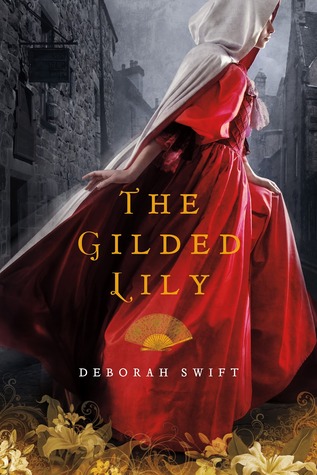
The Gilded Lily by Deborah Swift


England, 1660. Ella Appleby believes she is destined for better things than slaving as a housemaid and dodging the blows of her drunken father. When her employer dies suddenly, she seizes her chance–taking his valuables and fleeing the countryside with her sister for the golden prospects of London. But London may not be the promised land she expects. Work is hard to find, until Ella takes up with a dashing and dubious gentleman with ties to the London underworld. Meanwhile, her old employer’s twin brother is in hot pursuit of the sisters.

Review:

I found this story to be a bittersweet tale of what happens to people when they make choices in life and have to deal with the outcome. Throughout this story, Ella makes bad choices and her behavior is shocking towards her sister, Sadie. As you’re reading this story you wonder how Ella redeems herself and at the same time can’t help admire her for her will to survive no matter the situation. I have to admit I was a little apprehensive at times about turning the page to see what happens next

The dialogue is well-written and the story is beautifully crafted. Swift obviously did extensive research for her story and it is true to the period of time the story takes place. I highly recommend this story and I have rated it five stars!

Stephanie
Layered Pages

Publication Date: November 27, 2012 | St. Martin’s Griffin | 480p

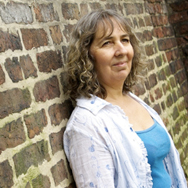
Author Bio:

DEBORAH SWIFT, a set and costume designer for the BBC, lives in Windermere, England. THE LADY’S SLIPPER, shortlisted for The Impress Novelists Prize in 2007, was inspired by her own discovery of the rare orchid during a summer walk. For more information on Deborah Swift and her novels, please visit her website at www.deborahswift.co.uk.

Review: Nobody’s Slave by Tim Vicary

Nobody’s Slave is a book about slavery and the consequences of it on everyone concerned. It is a story about Africans, Europeans, human suffering and cruelty, but also of hope and judgement. When I first started reading it, it had the ring of Roots, but very soon it diverged. The message of this author was different.

The story was well told, and both the protagonists, Tom and Madu are both well-etched characters and their stories run parallel to each other, till the very end. The other characters are also very balanced and fit well into the story. The story winds right through Africa, Spain, and England, not to mention the time at sea, and provides a delightful contrast to each other. The book itself winds to a close with a note of hope and understanding which is very heartening, though nowhere close to historical.

I honestly cannot see any flaws with the book, which takes us on a roller coaster of emotions, from the depth of despair to the heights of hope. I would recommend this to anyone interested in this genre or history or just to everybody at all. The focal point of the book is that slavery was practiced by all societies and it was equally bad no matter who practiced it.

I really enjoyed this book and look forward to reading other books by the author. I give this book 4 / 5 stars.
Kavitha
Review Team Member

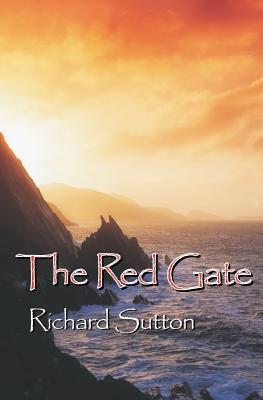
Review: The Red Gate by Richard Sutton


The Red Gate
By: Richard Sutton
The Red Gate by Richard Sutton is a great example of how family history can be made intriguing and interesting! The novel starts with an unexplained drowning and a rainy funeral. These events are just the catalyst that sets off a chain of unexpected events leading to the discovery of an ancient secret that threatens the future of a family if exposed to the world. Everything has to do with a little bead that Finn finds, it is the key to a much greater and significant family history that is buried under the land owned by Finn and his father.
Richard Sutton produces an excellent novel that is well written and full of emotion. The book is descriptive and lyrical making it a joy to read as well as keeping the readers interest from waning. The reader can feel the hardship of the characters as well as the warmth of a family who supports one another. The characters were well written and really brought the novel to life. The Red Gate is a historical fiction novel that has been clearly well researched, there is so much Irish heritage throughout out the story it makes the reader want to pick up and move to the Emerald Isle.
I give this book four stars! An excellent read for anyone who enjoys historical fiction as well as Irish family heritage.
 
Rachel Massaro
Review Team Member

Review: To Die For by Sandra Byrd

This is a story of Anne Boleyn’s rise in King Henry VIII court to her banishment and her final breath in this world. As the history goes we know how she dies. Sandra gives you a fresh new look at Anne’s life before, during court that draws you into a world of affection, loyalty, betrayal and Reformation.

This story will have you completely enthralled with the court life and intrigue with the political and religion aspects. This story was told in the view of Meg Wyatt. A long time friend of Anne. Who stays with her until the very end.

I highly recommend this story and feel that Sandra’s reader will not be let down!

Stephanie
Layered Pages Review Team Leader