Interview with Author Sarah Bower

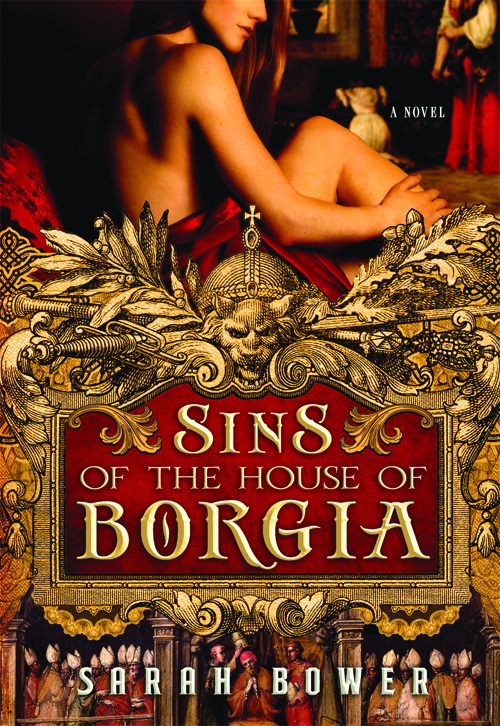
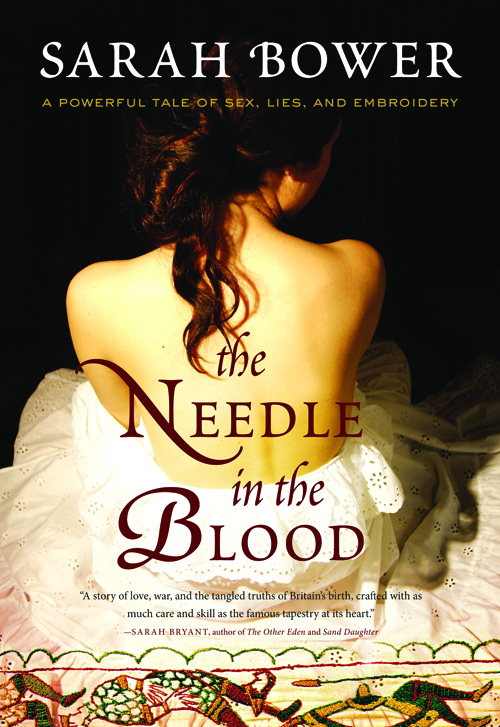
What a honor it is to interview Author Sarah Bower. Sarah is an International Best Selling Author of, The Needle in the Blood & The Sins of the House of Borgia.
Sarah, I really enjoyed reading your novel, The Needle in the Blood. Could you please tell us a little about your book and what interested you the most about this story?

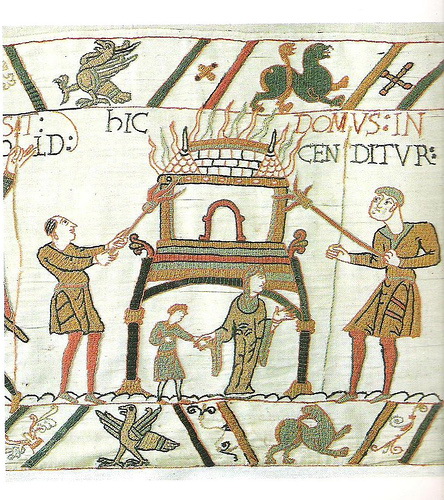
I’m glad you enjoyed reading NEEDLE, Stephanie, and thanks again for the lovely review you posted on Layered Pages. As I’ve written elsewhere, the Bayeux Tapestry is something we take very much for granted in the UK. It’s like the wallpaper to our history, if you like. What originally made me sit up and take notice of it in a different way was a TV show hosted by Simon Schama, in which he described one famous image in the Tapestry, of a woman and child fleeing a burning house, as being the first image in western art of what war does to civilians. That was the starting point for my novel. It then began to take more concrete form when I discovered that, although very little is known for certain about the Tapestry (making it fertile ground for the fiction writer!), current thinking suggests it was made in England, by English embroiderers, but for a Norman patron. It seemed to me that this created interesting tensions for me to explore.


Were there any challenges in researching for your novel?

I studied medieval history at university, so the historical research wasn’t quite so much of a challenge as finding out about the mechanics of how the Tapestry was made. I can scarcely sew on a button, so learning about medieval embroidery (because Tapestry is a misnomer – the work is, in fact, an embroidery) was a steep learning curve for me! That said, researching the life of Odo was also problematic because he is quite a shadowy figure in history despite his high profile at the time of the Norman Conquest. There are no full-length biographies of him, and little of his correspondence survives, just one or two letters between him and Archbishop Lanfranc. We don’t even know for sure when he was born or where he grew up. In another way, however, this made him a perfect protagonist for the novel because it enabled me to invent far more freely than if he had been a better documented historical figure.


Were there any scenes you found more difficult to write than others?

Oh, the sex scenes! They are always the hardest for me. I recently heard an interview with John Banville, in which he described the difficulty of writing sex scenes as being the bridging of the gap between noble sentiments and absurd actions. I don’t think I could put it better myself. I’m relieved, and flattered, that readers have, on the whole, been kind about this aspect of the novel because, with a hero and heroine like Odo and Gytha, sex was clearly going to play a central role in their relationship, even though I struggled, at first, to force them into a more abstemious mould. On average, I think each sex scene took me about two weeks to write – and that was just the first draft! I guess they take about two minutes to read. Nor do I find that aspect of writing gets any easier with practice.


Did writing this story teach you anything and what is it?

Although published after SINS OF THE HOUSE OF BORGIA in the US, NEEDLE is my first novel, and in that respect, it taught me a lot about the need for resilience, patience and self-belief if you are to complete a novel successfully, and then find a publisher for it. I had no idea how tough both these things are until I embarked on the process!

Regarding the specific subject matter of this book, it served to remind me that we have been a multicultural society here in the UK for well over a thousand years. If only more medieval history was taught in our schools, perhaps people would be less anxious about and more welcoming of those who still come here from all the different corners of the world and contribute so much to making us who we are. That is one reason why I chose to write the book in a way which tries to be even-handed to both conquered and conquerors, acknowledging that both sides were traumatised by the experience, and both have contributed hugely to our language, culture, law, politics and social structure.


Who designed the book cover?

The US edition cover was designed in-house, I believe, by my publishers. I think it’s gorgeous and am absolutely delighted with it.


Who is your publisher?

Sourcebooks Landmark, who also published SINS OF THE HOUSE OF BORGIA.


What do you consider the most challenging about writing a novel or about writing in general?

As I have indicated in an earlier reply, I think the biggest challenge of writing a novel is the time it takes. Each of my novels has taken me, on average, three years to complete, from beginning the background reading and planning to having a final draft I think is good enough to be shared with readers. This knowledge makes getting started quite a difficult and nerve-wracking experience. I do rather envy writers I know who can complete a book in months rather than years. I’m afraid I rarely write in the white heat of inspiration but creep along at a snail’s pace, groping in the dark and hoping I find the right way. A tutor on my creative writing MA course once said, ‘Only write a novel if everything else fails,’ a sentiment with which I am in total accord! Writing novels is incredibly difficult. On the other hand, there is great reward and excitement to be had from engaging with readers who always find things in your work you didn’t know were there and thus give your book a kind of life of its own which is so much more than you can give it yourself as the author.

Have you ever had writer’s block? If so, what do you do about it?

I’m not sure I really believe in writer’s block. Writing is my job. Do lawyers or nurses or refuse collectors get blocked? No. So why should professional writers be any different? Of course, it’s not always easy to gear oneself up for the imaginative effort involved in novel writing, but if that’s the case, I generally find I have some other kind of writing to do, or writing-related work such as teaching and mentoring other writers. For the imaginative work, I do think one has to be attuned to one’s emotional and mental state, even one’s physical health, in order to be prepared for the obstacles these things can throw up. One has to be aware that on a good day one might write a thousand words or more, but on a less good day it might be just a sentence.
That said, I know some writers do experience blocks in a very real sense, so perhaps I’ve just been lucky so far!

What is your next book project?

I have a contemporary thriller in the pipeline, and have just begun work on a companion piece to it. Although the new book will be more of a love story than a thriller, they have in common the fact that both are about people whose identity is different to the one they were born with and how this affects their lives. Both are also set on the east coast of England, the new one near Whitby, where Dracula landed of course!

What advice would you give to an aspiring author?

Well, if everything has failed and you find you have no option, you need patience, resilience and bloody-mindedness if you are going to keep going and succeed. You also need to be able to divide yourself into the writer, working in private, possibly not washing or even getting dressed for days, and the public persona who has to get out there, don the killer heels and lipstick, and sell her wares. In this regard, I find it helps to think of myself as a small marketing company set up to sell the novels of Sarah Bower. That way I can put some psychological distance between myself as writer and myself as a public figure. The business side of writing is assuming more and more importance for most of us as the publishing industry fragments and fewer and fewer novelists can expect to be published via the traditional route, by a big publishing house with a team of editors and marketing staff to put behind the book. We are increasingly having to become our own editors, proof readers and salespeople.

What is your favourite quote?

Oh dear, this is a difficult one, there are so many good ones and I have so many different favourites. So let’s go with the quote from Olive Schreiner’sFrom Man to Man which I use as an epigraph to THE NEEDLE IN THE BLOOD: ‘Has the pen or pencil dipped so deep in the blood of the human race as the needle?’

Bio:

Sarah Bower is a prize-winning novelist and short story writer. She is a regular contributor to the Historical Novels Reviewhistoricalnovelsociety.org/magazines/ , Ink, Sweat and Tearswww.inksweatandtears.co.uk/, andWords With Jamwww.wordswithjam.co.uk/. She works as a mentor to other writers, and teaches creative writing at the University of East Anglia, the Open University and the Unthank School of Writing. She holds an MA in creative writing from the University of East Anglia where she is now based in her role as co-ordinator of the mentorship scheme for literary translators run by the British Centre for Literary Translation.

Sarah is the author of THE NEEDLE IN THE BLOOD and SINS OF THE HOUSE OF BORGIA (originally published in the UK as THE BOOK OF LOVE) Her work has been published in eight countries. She lives in Suffolk, in Eastern England.

Sarah tweets @SarahBower and you also may find her on Facebook.

Thank you Sarah for the pleasure of an interview! It was an honor! 

Stephanie


Thank you, Stephanie, for asking me. It’s been a pleasure to answer your questions.

Sarah


Wednesday Book Reviews

The Queen’s Pleasure by Brandy Purdy
Brandy Purdy writes a story about Robert Dudley who meets Amy Robsart-a daughter of a squire-and falls in love with her. Despite his family’s misgivings of the match he soon marries her. Not long after, Robert’s love for Amy fades and he wants to return to court. When Elizabeth becomes Queen of England, Robert’s ambition grows and so does his resentment towards his marriage to Amy. Roberts’s loyalties seem to move to whoever is in power at the moment and throughout the story he shows no quilt or remorse for his actions. When Amy turns up dead, suspicion falls on Dudley and people question whether the Queen was involved.

This story focuses on Robert’s wife, Amy & Queen Elizabeth’s point of view. Even though Roberts view is lacking, Purdy writes in great detail of Roberts emotional, physical and mental abuse to Amy and his constant demands of Elizabeth. Robert completely disgusted me and what sadden me the most was that he left Amy shut up in various manners across the countryside for long periods of time-alone- not caring for her well-being while he was at court living the royal life and misleading Elizabeth about his relationship he has with his wife.

The lack of dialog in the beginning of the story made it difficult to read and I felt parts of it was getting a little repetitive and could have been shortened. However, Purdy does a superb job exploring the mind of an abused wife.

In-spite of already knowing about Amy’s mysterious death, it wasn’t any easier reading about it again. The circumstances surrounding her death is still a mystery and we know very little about Amy and her marriage to Robert. Purdy gives us a clear and painful perspective of how it could have been for her. I applaud Purdy for strong character building and even though I was mentally exhausted after reading this story… it was a gripping & emotional read. I recommend this story to readers who enjoy reading about the Tudors and wanting to explore more of Amy’s life.

3.5 Stars

Stephanie

What She Knew by K.R. Hughes
(Picture Unavailable) 

Wow! Just wow! What She Knew by K.R. Hughes and T.L. Burns has left me speechless and wanting more! What She Knew is a story that based on what would happen if on that fateful night in August of 1962 if Marilyn would have lived. There are so many famous names in this book from the entire Kennedy family to Frank Sinatra and the rat pack. K.R. Hughes and T.L. Burns do an excellent job of spinning a story and keeping the reader in suspense while they read about all of these famous characters. The reader will really feel as if they have stepped into the middle of the Camelot. The story will keep you guessing right until the very end…right until the day of November 22, 1963.

I was excited to receive this book to review, I am such a big Marilyn Monroe girl and any book that I could read about her I do. This story was written based entirely off of a “What if” question and boy does it pull every conspiracy theory over the night the Marilyn Monroe died, how she died, and why she died into light. It was no secret that she had an affair with president and it was no secret that many different people wanted her out of the way but why? What did she know that made her such a liability? K.R. Hughes and T.L Burns had created a story that leaves the reader wondering just how much of what they have written is true or how much of it is make believe.

I give this book 4.5 stars!
Rachel Massaro

Layered Pages Wednesday Reviews

Vivaldi’s Muse by Sarah Grace Kelly

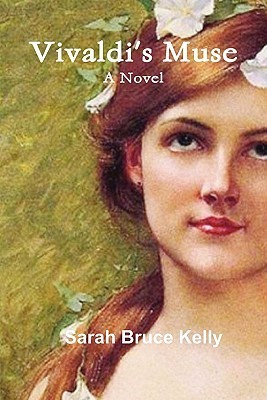
Vivaldi’s Muse is an eloquently told story of a young woman named Annina Giro who lives in the early eighteenth century, and who has aspirations of becoming an opera singer. A wealthy count becomes her sponsor and she travels to Vienna to study music. She quickly falls in love with Antonio Vivaldi, a priest who is a composer for the opera, and soon she becomes his protegee. They are inseparable and form a special bond that is so rare in this world–you will be captivated.

I am impressed with what can only be described as impeccable detail in this story. Sarah takes you back to the Renaissance period and gives you an enchanting picture. Her portrayal of the characters was so masterfully done that I felt a strong emotional tie to each of them. I was quickly drawn in and immersed in the opera life of that time and the relationship between Annina and Antonio. I was disappointed when the story came to an end.

Sarah truly is a talented author and she writes with such grace and style. I will continue to follow her work and I look forward to finding out what her next book project is. I highly recommend this story to all of those who are avid readers of historical fiction. This novel will not let you down.

Stephanie
Layered Pages


Sons of the Wolf by Paula Lofting

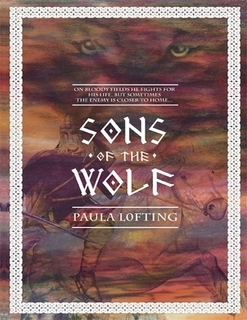
Sons of the Wolf tells the story of Wulfhere, a Sussex thegn, living during the reign of Edward the Great, in the years leading up to the Norman conquest. A landholder whose land holdings come directly from the King, Wulfhere also owes service go Harold Godwinson, the powerful Earl of Wessex. Wulfhere is a fierce warrior who is also devoted to his growing family, and when the book opens we meet him returning home from battle with the Scots in the year 1054.
After surviving the horrible battle at Dunsinane Hill, Wulfhere only wants to settle at home, tend to his lands and enjoy his family. Of course fate has other plans. Wulfhere and his family’s lives soon get quite complicated and Wulfhere is put in the position of trying to keep his family safe while also not compromising his honor or loyalty to Earl Harold or the King.
The author based Wulfhere on real person, recorded in the Domsday Book, as she did with Helghi, Wulfhere’s neighbor and sworn enemy whose fate seems to be tied to Wulfhere’s. Unfortunately, only the sketchiest details were recorded about Wulfhere and Helghi, so Paula Lofting used her imagination and her knowledge of history to fill in the blanks – creating a vivid, detailed and realistic world full of complex and interesting characters. I liked her characters – both the fictional ones and the non-fictional. I really liked the more personal scope of the story and its focus on Wulfhere and his family and their struggles to love each other amidst conflict and misunderstandings. Wulfhere also participates in major historical events, owing fyrd service to the King, but overall the story doesn’t have the sweeping feel of many historical novels set in Anglo Saxon England. And I find that a welcome change. Paula’s characters feel like real people, with complex human emotions, motivations and, sometimes, failings.

The book itself is beautifully packaged, with rich and colorful cover art, and drawings at the beginning of each section. The author also includes pronunciation and place names guides, as well as a glossary of unfamiliar terms, all of which was very helpful. I would have liked a map to reference as well.

Sons of the Wolf is the first in a series of novels about the Norman conquest of England, and I am very excited to read more about Wulfhere and his family – and their place in history. I enjoyed this novel very much and found it a quick and easy read, one that I will undoubtedly want to read again.

(Four and one-half stars)

Sarah Giacalone


Amber Treasure by Richard Denning


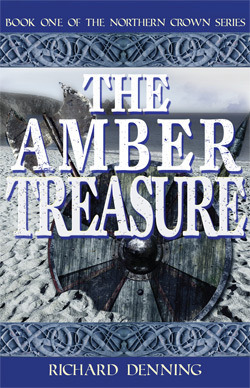
Right off, I was impressed with the extensive research done in preparing for this writing in order to remain true to the time period. The story takes you on a journey of the tumultuous travels of a great sword. While this story does indeed feature several great swords, it is the story within, of a boy growing into a man, which grips your heart. The characters of the villa and their allies are well developed and endearing. Descriptions of the countryside, towns, people and battles are detailed enough to transport the reader into battle, and inspire sympathy for the boys, without being overly gruesome. While at times the storyline was slow, Denning succeeds in attaching the reader’s curiosity to the character’s quest and fates in order to carry you through these slow spots.

I would recommend this book to those interested in the dark ages, important battles in history, and war stories in general. The ending makes clear that this is not intended to be a stand-alone volume and as such those looking for a new series to read will be satisfied as well.

Brandy Strake


Once A Priest by Ed Griffin-Cover unavailable


This book is a biography of a man brought up in a Catholic household. He goes on to become a priest with the goal of helping people, but with time, gets disillusioned with the practices and rituals of the Catholic Church. How he deals with leaving the priesthood, and finds a worthier way to help people is the premise of this book.

The beginning is choppy as the author chooses to give small snippets of information from his background. Instead of flowing smoothly, the text jars on you for a couple of chapters, but it gets much smoother after that. This is basically an autobiography of one man which runs through different themes, but in the end showcases a life well lived. The narrative is catchy and retains interest in spite of the choppy beginning, and has enough twists and turns to retain the reader’s interest.

The author describes in personal detail how the rules of the Catholic Church affected him, effectively showing all the problems of the Church. What really struck me about this book is that there is neither any venom directed towards the church nor is the church absolved of its many crimes. It is a very balanced account of the struggle of one man to see the light.
Another aspect discussed is the kind of brainwashing that takes place in religious societies. One of the strongest points made by this book is that right or wrong is relative. Religions have black and white rules, but the author realized that nothing was so simple. This gave him strength to make the right decision for himself.

There were some really poignant moments described beautifully, and a detailed look is taken at the civil rights movement in USA from the eyes of one man. But the ending chapters get a little less focused with discussion of his youth and going back and forth in time, which starts grating a little.

Overall, a good book and I give 3 out of 5 stars for this. It is really readable, and an excellent and inspirational book.

Kavitha


The Bond by Karen Magill- Cover unavailable

The Bond by Karen Magill is a paranormal love story that is neat, compact, and condensed into 88 fast paced pages. The Bond follows the story of two characters, Laura Neill and Julian Rule, who are both almost simultaneously struck by cars while crossing the street. Being far away from each other when tragedy strikes thy both experience out of body experiences, connecting their souls together. But, when danger enter Laura’s life it will be up to Julian to try to save her, will he be able too?

I enjoyed the way that The Bond was written. Karen Magill’s writing style in this short story is condensed and fast paced. The chapters are short and the plot is moved along with no nonsense. However, I do wish Magill would have expanded the story more to include more description and detail. Magill introduces us to some interesting characters in this story and I found myself wanting to know more about the characters and their backgrounds. I wanted the story to evolve slower than it did but I found myself still turning pages wanting to know what would happen to Laura, Julian, and their families.

I would give The Bond by Karen Magill 3 stars


Rachel Massaro

Layered Pages Review Team: http://layeredpages.blogspot.com/2012/07/layered-pages-review-team.html

If you are interested in Layered Pages to review your book, please email Stephanie at, layeredpages@yahoo.com.

Wednesday Reviews

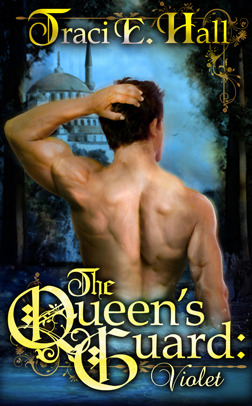
The Queen’s Guard by Traci E. Hall

The year is 1147, and Lady Isabella de Lacey is traveling to Jerusalem with Queen Eleanor, King Louis of France, and his army of crusaders as a member of the Queen’s Guard. Having first arrived in Constantinople, the Queen has Isabella spy on Raoul Laskaris, Emperor Manuel’s closest guard, not knowing that Raoul is acting as a spy for Manuel.

Isabella is fiercely loyal to the Queen, because she saved Isabella from an abusive husband and will give her life to protect her. Knowing she could possibly lose her life, she must find out what the Emperor wants with King Louis. Raoul and Isabella form an attraction to one another that they both try to deny. Throughout the story, they face many obstacles that bring them closer together.

The author weaves a well-written story of political intrigue, espionage, attempted murder and mystery. There were so many twists and turns to the story that at first I wasn’t sure how the plot was going to come together, and I was pleasantly surprised as I read on.

What really stood out for me in this book was the Queens Guard, a group of talented women the Queen chose to protect her. I enjoyed the author’s rendering of the strong, individualized personalities of each of the women. What is so unique about them is their relationship with the Queen; they are like daughters to her and share a special bond. While there is not anything in history to support the idea that Queen Eleanor had Guards that were women, the focus of the close-knit group of women was a clever invention. I highly recommend this book.

4 stars

You can also find my review on http://historicalnovelsociety.org/rev…

Stephanie
Layered Pages


Narrow Marsh by A.R. Dance-Cover currently unavailable

Narrow Marsh by A.R. Dance is a different type of historical fiction than I usually read. I typically don’t read about the “common” man—my normal fare for novels set in England are about a royal personality—so when the opportunity arose to review a book about a man growing up in Nottingham of 1811, a time when the wages were low & the hours were long. Workers had very little rights, and while some might be willing to live this way, that is not true for William Daniels, the main character. For me, the plot is where Dance excelled in this novel. The tension between the upper and lower classes is what kept the story rolling, as well as the forbidden relationship between William and a certain young lady. I also appreciated that although this was a time period that I have read little about, nothing was confusing or misleading. It was a very light read, but at the same time, very informative. My one qualm about the novel was that I didn’t always feel what the characters were feeling. I knew that William was in love, but I didn’t always feel it. At times there was a bit more telling than showing. I feel like some of that just has to happen in historical fiction, otherwise the book would be forever long, but it was something that I noticed while reading. Narrow Marsh was a nice departure from some of the romance-heavy historical novels out there. This one is definitely not focused on the romance, and, overall, it was refreshing for that very reason.


3.5 stars

Beth Bulow
Layered Pages Review Team

Wednesday Reviews

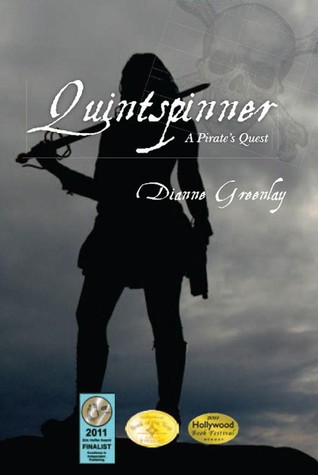
Quintspinner: A Prates Quest by Dianne Greenlay

A Pirates Quest is the beginning story of 16 year old Tess Willoughby, a world sheltered yet intelligent daughter of a Doctor in 1717 London. Through a series of unpredictable events, Tess comes into the possession of a collection of rings called Spinners and she is drawn into a destiny that she may not have wanted and definitely did not expect.


This book is a mixture of light and dark, funny and serious, originality and predictability, farmers and pirates. Right when you think you have a grasp of what it’s going to be like, some big and unexpected event will sweep you along further into the story.

Overall this book was a fun ride with an appeal for young adult and adult audiences. The writing style, while a bit simplistic, is easily overcome by the intrigue of the story. The story does fluctuate between predictable and unbelievable and the characters were a bit unpolished, but this was a wonderful debut novel to just kick back and relax with over the weekend.

I rate this book 3 and a half stars.

Mary McAllister

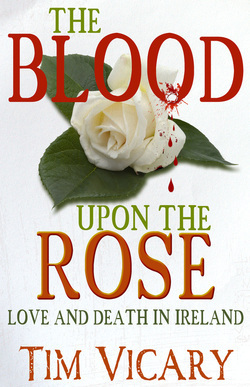
The Blood Upon The Rose by Tim Vicary

This book deals with the story of the Irish Independence and the formation and activities of the IRA and effectively brings out divided personal loyalties in the bigger picture of political unrest. The time period has been well researched and the characters fit well into the background.

The feel of Ireland in the 1920s is very strong, and is the mainstay of the entire book. The despair of the local people, the determination of the British authorities to stamp out Irish nationalism and the anger of the IRA in dealing with such high handedness is very realistic and interesting. The characters are well etched out and the middle of the book becomes very interesting as the plots start to twist and turn and the characters get more complex. The book was suspenseful and kept me wondering what was happening next. Until the very finish, there was no indication of how it would end. The love story fits snugly into the background and flows very naturally.

However, on the downside, there were some clichéd stories. The war torn assassin, the radical idealist who is in love with a rebel girl, an aristocratic girl rebelling against her destiny are all ideas that have been explored before countless times, but the author manages to breathe fresh life into them. At some points in the story, there is a show of misogyny that could have been avoided.

I give this book a 3.5 of 5 stars. This is highly recommended for anyone interested in a fictional depiction of the background of the Irish – English conflict in the last century.

Kavita


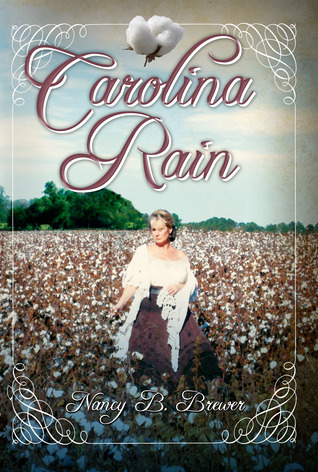
Carolina Rain by Nancy B. Brewer
“Open the pages of Carolina Rain and step on to the streets of an era gone by.

Carolina Rain is not just a read, but an experience. You will smell the magnolia trees, feel the sun on your face and taste the bittersweet tears of a beautiful young girl coming of age at the dawning of the Civil War.

Theodosia Elizabeth Sanders, “Lizzie” was born October 6, 1842, but in many ways, she is no different than a modern young woman of our era. Her open heart is filled with hope and a desire for love. Yet, her innocence makes her a target for the less than trustworthy. See how this remarkable young woman rises above all prejudices to embrace the hearts of her true friends.

Carolina Rain a fiction novel based on history, is a real page turner, filled with the intimate details and an eyewitness accounts of The War Between The States.”

Carolina really touched home with me. Not only because of the subject matter but because I feel so connected to Lizzie. She is Southern, loves her family and friends, she never gives up, she cares deeply about helping others and loves the South.
Nancy truly has captured the essence of the South and the way of life during the 1800’s. I felt as if I was transported in time and experienced the 1800’s for myself. The character building is so strong I believe there is not one character I dislike, even the unsavory ones. I’m really looking forward to the next book in this series.
Stephanie
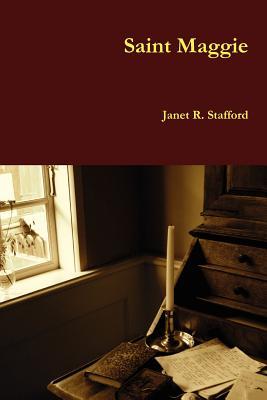
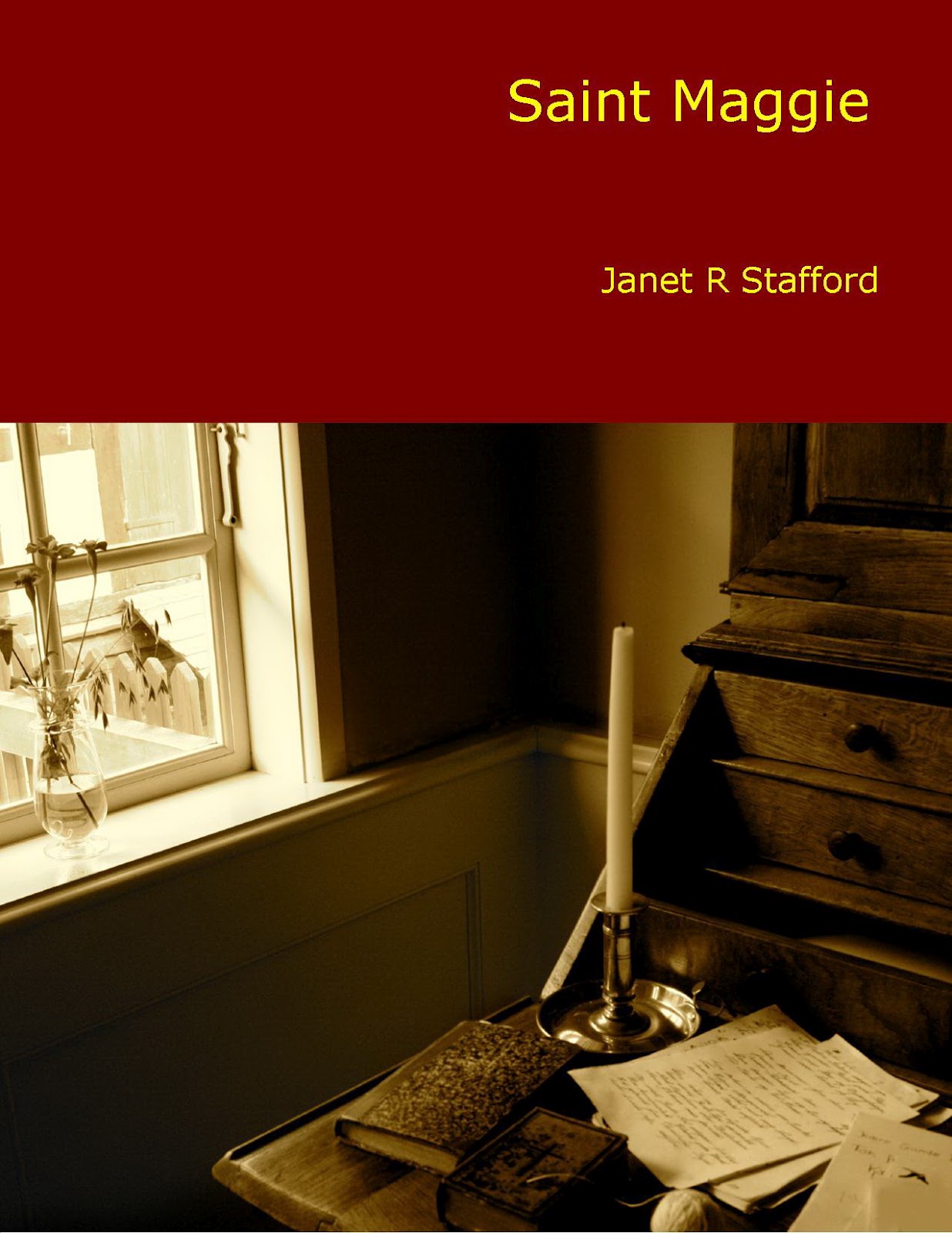
Saint Maggie by Janet R. Stafford
Saint Maggie, by Janet R. Stafford, is an intriguing story of scandal with believable and colorful characters. This Antebellum Period piece introduced many controversies that continue to be relevant to this day: woman’s rights, race relations, controversies in the church, and how society responds to life events.

The main plot of the story is the scandal of a minister and the effects of the scandal on the towns’ people and their faith. In addition to the main plot, various subplots were introduced that enriched the story and increased my interest in the characters. Ms. Stafford, wrote on the relations between African Americans and whites during the Antebellum Era including the Underground Railroad, abolition, and prejudices. In addition, Ms. Stafford briefly touched on the beginnings of the woman suffrage movement in the US.

Ms. Stafford weaves a story where well developed characters give life to the story. Maggie, the main character and narrator of the story, is an independent woman that struggles with social conventions. Through her eyes and journal we learn of the many other characters in the book: Jeremiah Madison, the young local minister that is defeated by his demons and becomes the scandal of the town; Eli, Maggie’s supportive and spirited Quaker husband; Emily and Nate, Maggie’s dear African-American friends; the rest of Maggie’s family from her strong and intelligent daughters to her spoiled niece and pompous then humbled brother; Cassie, the troubled maid with a checkered past; and the ‘outcasts’ of the boarding house. Cassie was for me the most intriguing of characters with the limited development of her checkered past, I will certainly look more into antebellum Five Points, NYC to learn more of the lives of the people inhabiting the area.

With regard to style, Saint Maggie is a fiction work with a story that flows well excepting the few segments that included a great deal of scripture quotes, I found the quotes redundant and distracting from the point of the storyline. The descriptions are well detailed. The dialogue varied from comical to dramatic with additional insights to the story via Maggie’s journal. The diction was contemporary with some hints to the Antebellum Period that were shown in descriptions of mannerism and the dialogue between characters.

The book has a rather simple cover design, an image of books, a candle and a desk, that didn’t necessarily paint a picture to what the story is about. With regard to the layout, there is no table of contents, which I think the book would benefit from since there is a reference/definition section at the end of the novel that is helpful to a reader with limited knowledge of Christianity.

Overall, I greatly enjoyed the book and would recommend it to others. In the future, I will look for more pieces by this author.

Rated four and a half stars.

Jennifer Schusterman
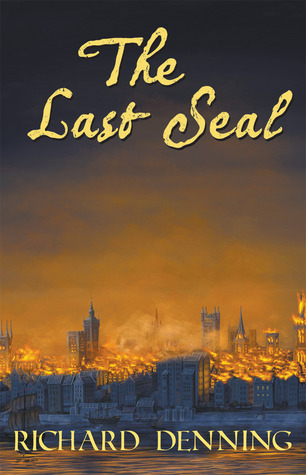
The Last Seal by Richard Denning


The Last Seal, a YA novel blends historical fiction with horror and fantasy. This unusual combination produces a fast paced thriller where the protagonist wrestles against Dantalion, the sinister demon. This enemy of heroic proportions seduces followers with the promise of limitless riches and power. The admission price? Only their immortal soul. After a gruesome opening, the story unfolds with plenty of twists, turns, red herrings, and gore.
Ben Silver an orphaned, angst-ridden teen makes an excellent protagonist against this formidable adversary. In early September, 1666, after a particularly humiliating caning by the headmaster of his boarding school, Ben decides to run away. His escape places him in a vortex of danger, intrigue, and confusion. He encounters a young thief, a bookseller, and a physician and struggles to determine who is friend and who is foe. I particularly enjoyed the character of the thief and how Ben comes to rely on the youth’s hard-scrabble skills, ingenuity, and determination.
The Great Fire of London provides a vivid backdrop of tension. As the conflagration inches closer, the stakes increase. The heat, smell, sound, and taste of the fire thrum with heart-hyping tension. Difficult circumstances force expedient choices. Denial, fear, wishful, thinking and fanaticism cloud judgment.
Will the legacy of evil defeat the legacy of integrity? Will Ben make the heroic sacrifice? Or, will he too fall under the demon’s spell? Read the Last Seal to find out.
I give this book 4 stars.
Gayle Swift
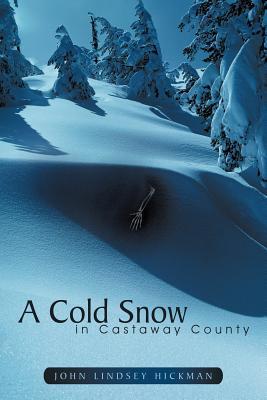
A Cold Snow in Castaway County by John Lindsay Hickman

A Cold Snow in Castaway County by John Lindsey Hickman is the quintessential murder mystery mixed with a dose of life learned lessons. Dell Hinton leaves the Boston PD for the quite forests of Castaway County, Maine. His old friend and the local minister convinces him to run for the position of sheriff. Dell quickly learns that being a sheriff is a great deal different from being a police officer. He inherits more than just a fiery secretary and a department full of deputies, Dell also inherits a ten year unsolved murder case.

Hickman creates a quick read story that jumps from murder mystery conspiracy theories to the love life of a man who is learning to become a county sheriff. Hickman creates characters that are easy to understand. The reader will know about the characters likes and dislikes. A Cold Snow in Castaway Country has a plot that will leave the reader wondering if Dell will ultimately solve the cold case. While there were some slow parts in the story that I felt did not support the overall plot, but I know that Hickman wrote the story so that the reader really knew the life that Dell Hinton was building for himself in Castaway County, Maine. I thought he did a great job of bringing the reader into the cold case. Hickman made me want to keep on reading to find out if Dell will help put the Billy Snow murder case finally to rest.
Rachel Massaro
(Picture unavailable for, A Wrench in the Plans by RaeAnne Hadley)-Review below


Josephine Lingenfelter or “Jo” to her friends is a mechanic and horse breeder, but somehow she and her boss Steve end up in the middle of a murder and start investigating to find out who killed their friend. The book takes them to Mexico, London, Russia and Italy and throughout their investigation Jo and Steve are admitting they’ve fallen in love with each other.

I enjoyed the book, even though I would have liked more dialogue. There was too much description of everything, which slowed the story down, and quite often a similar description was repeated a few pages later. This was the second book in the series and since I didn’t read the first one, I didn’t feel as if I really got to know the characters. There wasn’t enough back story since it’s assumed that the reader already knows about them.

There were several spelling mistakes that were distracting at times, but overall I liked the book.

I give this 3 stars.
Wendy Nelson

(Picture unavailable for, Mystique Rising by Karen Magill)-Review below


I liked the premise of this book, with or without the small amount of a paranormal aspect, and it was a quick read. Unfortunately, there were way too many characters introduced throughout the book and too many points of view to really be able to care about any of the characters. I spent a lot of time trying to remember who everyone was and how they fit into the story.

For example, the author introduced character names without any explanation as to who they were, until much later in the story. This led me to back track in the book and try to find where this character had been initially introduced, and in most cases I was unable to find an introduction.

I believe the author’s intention was to have Kaya be the center character, but there wasn’t enough information about her, and her thoughts and feelings to give her center stage. By changing the point of view, especially mid page, I was unable to learn enough of her thoughts and feelings to care about her, or anyone else. A limited number of characters, and different points of view restricted to chapters rather than mid chapter, might allow for a more consistent story.

A lot of Deus ex machina was used by the author, so there was no real struggle, as every problem automatically had a solution through some kind of divine intervention. When Kaya struggled with something, or was faced with challenge, she either had a vision, she all of a sudden could speak to her deceased father who gave her the answers, or someone automatically showed up to save her. The conflict in the story was lacking since every issue was resolved quickly and easily.

As a reader, I like having that edge of your seat feeling, waiting to see what might happen, but half way through the book, I knew I wouldn’t have that since every issue had an automatic intervention. I wasn’t anxious to turn the page and see what happened next since I already knew it would be resolved in a sentence or two.


The author tried to convey timing by putting a few headings on top of the chapters as to when something occurred. I believe this made things confusing. For example, instead of “12 months previous” the author might try including a year at the beginning of the chapter, such as June 1999 in California

Some of the chapters didn’t have a time frame, and I was unsure as to when the event was really happening. Were we in the past, present or future from the previous chapter’s events? If the event order is important, then the reader should be told exactly when it was happening to avoid confusion.

The events weren’t really believable, even within the paranormal framework. The author didn’t do enough world building to make me believe that this could truly be happening. There wasn’t enough background information and detail on past events for the extremeness of the book. For example, when and how did PARR become so big that they had the right to execute people for listening to Rock and Roll? There may have been a sentence or two about it, but that was it, and since listening to rock and roll is hardly an executable offense, there needs to be a detailed reason for it, or at least a detailed build up of how it came to be, even if there isn’t a good reason or excuse logically.


Another example, somehow Kaya and LUPO have a ton of money to use to fight this cause, although the reader has no idea how or where it came from. They just have it to do with what they please. Do they have corporate backers? Is Kaya independently wealthy? These are just a few of the things that make this story hard to believe.

There were enough grammatical errors in the book to be distracting. Missing words, tense issues, and spelling were the biggest examples.

This book has a lot of potential, and the premise was very interesting, given the fact that we spend a lot of our time, in the real world, fighting for specific rights. With more world building and character development, I’d really like to see more of Kaya and her group of rock and roll advocates.
Wendy Nelson


Layered Pages Wednesday Reviews

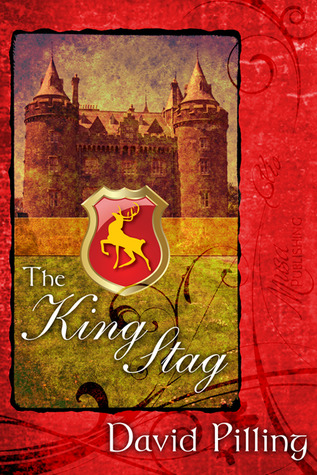
The King Stag by David Pilling
With Edward II (poor guy) out of the way, Mortimer (the horrid man) and Isabella (I still wonder about her) now rules England. Isabella’s son, the King, Edward III (hope he turns out good), is now a young man and wants to rule England. His rightful place. Meanwhile, Sir John Swale (my hero) and Elizabeth Clinton (lovely lady) are in exile and Swale wants to return home to England. The King Stag is a fantastic lead up to Exiles (The John Swale Chronicles) #3.

As I was reading this story I was thinking about how Mortimer is not good for Isabella and why doesn’t she see right through him? And I was thinking too that Isabella is not stupid in the least, she probably knows what she is doing by using Mortimer for her own agenda. It could really go several different ways I guess. That is one of the great things about reading. One can broaden ones imagination about the characters and what their real motives are. There are only a few authors I think writes Historical Fiction-Medieval to my liking and David is among them. Where was I? Oh, yes! Back to my review…

The character building is fantastic! There is a lot of action in every corner! David wonderfully portrays Medieval England, the royal family and court life. Castles and sword fighting, and royal intrigue! What’s not to love?

I highly recommend The King Stag!

I rated this book four stars.

Stephanie
Layered Pages/Team Leader
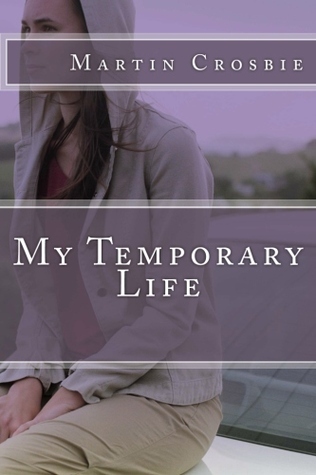
My Temporary Life by Martin Crosbie
My Temporary Life by Martin Crosbie will tug at the heart strings of all who read it. In his debut novel Crosbie has written a coming of age story that shows how not only the main character, Malcolm Wilson but those in his life, can rise above neglect, abuse, and bullying. I enjoyed reading the story and getting to know the characters. My Temporary Life is set both in Scotland and in Canada so it was interesting for me to read about the differences between the two countries from the way the natives talk to the way they dressed, to the way the landscapes and the buildings look. Crosbie did a great job of really putting the reader into the story.


Overall, My Temporary Life, was a compelling story some parts of the story were a little slow for my taste but there were parts that I couldn’t stop “turning the pages”. Malcolm Wilson wants to be the hero of his life and struggles throughout different situations to do just that. Malcolm shows the reader that no matter what hand that life deals you there is a way to rise above your circumstances and to help others. Malcolm proves to be the hero by the end of the story and also shows the reader that no matter how “temporary” a situation may be, you never forget where you come from or where your home is.

I rated this book three and a half stars.

Rachel Massaro
Layered Pages Review Team Member


Character Interview with Destiny Fairchild (The Twelfth Child) and a Book Giveaway!

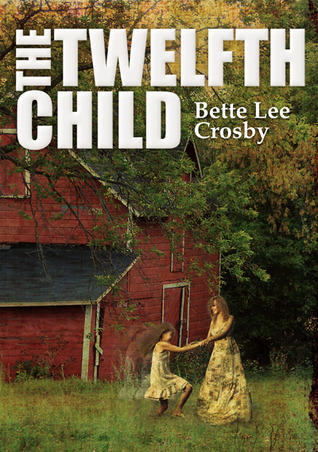
I’m honored to introduce Destiny Fairchild, a character in Bette Crosby’s new book, The Twelfth Child. 


Destiny, in The Twelfth Child, the author mentions that your mother abandoned you when you were only nine years old, how much of that do you remember?

I remember a lot more than I talk about. Back then, times were hard and when Mama was feeling ugly I’d try to stay clear of her, especially if she was drinking whiskey. One morning she woke me up and told me we’re going to the Food Mart—which shocked the pants off me because Mama hated Food Mart. When we got home she set the bag of groceries on the table and said something about how that would hold me for awhile. That afternoon, dressed up with red lipstick and a flowered dress, she walked out the door and never came back.

Did you consider that maybe she’d had an accident or was killed?

At first that’s exactly what I thought, but there were plenty of times when Mama didn’t come home for a night or two, so I didn’t get real worried until two weeks had gone by. Then I went looking in her closet and saw all the good dresses were gone along with the locket her daddy had given her. The only things left behind were a pair of dungarees and two shirts with paint splatters. That’s when I knew Mama wasn’t ever coming back.

What about your father?

I never even knew who he was. Mama said the scoundrel ran off a week after I was born.

What did you do once you discovered your mother wasn’t coming back?

I stayed there by myself for awhile, hoping Mama would change her mind and come home. Then Mister Robinson, the landlord, came looking for rent money and I didn’t have any. Missus Clark who lived down the hall from us let me stay there in exchange for my doing the chores. When she passed on, her sister Maggie let me live with her and do cleaning chores.

You became very good friends with Abigail Anne Lannigan, but she was more than twice your age, what did a friendship like that offer you?

Friendship is about what you give, not what you get. I loved Abigail and she loved me too. She loved me way more than Mama did.

Abigail’s nephew, Elliott, claims that your friendship was nothing more than a ruse to swindle his aunt out of her money. What’s your answer to this accusation?

He’s lying. I never once asked his aunt for a dime. I didn’t want her money, I was happy just to have her love. He’s the one, who was after her money and the saddest part is that he didn’t give a hoot about her. After Abigail died, he didn’t shed one tear, instead he came around asking when the will was gonna be read.

Abigail’s twin brother sold the family farm for over a million dollars and when he died, he left everything to Abigail—do you know what happened to that money?

I don’t believe she ever had a million dollars. She sure didn’t have that money in her bank account, I know ‘cause I did most of her banking. Abigail was comfortable enough, but she was a long way from what you’d call rich.

You claim Abigail was your best friend, do you think you ever failed her?

Yes, I think I failed her when I didn’t believe she was dying. She tried time and again to tell me, but I didn’t want to hear any part of it. I think Abigail would have died a happier woman if she knew Elliott could never get his grubby hands on her house or any of her things.

If you could talk to Abigail again, what would you say?

First I’d tell her how much I love her, although I think she already knows that. And second I’d tell her the truth about that little leather bag she kept underneath her pillow – she always thought her strength came from that lucky charm, but the truth is that all along her strength simply came from her heart.

What is your most prized possession?

That picture of me and Abigail with our painted pink toenails.

Is that the biggest gift Abigail ever gave you?

Abigail gave me lots of gifts, one time she even gave me twenty-five thousand dollars! That was more money than I’d ever had in my entire life, but it wasn’t the best gift. The biggest and best gift she ever gave me was her whole heart, and I’d like to think I gave her the same in return.

Do you think the author portrayed you accurately?

I think so. There’s always secrets a person has buried so deep they don’t even know they’re there, I think Bette Lee Crosby found Abigail’s secrets and I have a sneaky feeling she’s going to uncover mine in this next book she’s writing.


Giveaway Guidelines:

To enter to win Bette’s fabulous book, The twelfth Child, please enter your name, email and comment below in the comment area. The giveaway ends on Friday July 27th and the winner will be announced on Monday, July 30th.

I highly recommend entering to win Bette’s book, The Twelfth Child. It is truly and a wonderful story and will move you deeply.

Thank you Destiny and Bette for this intriguing and fun interview!

Stephanie
Layered Pages

Interview with Author Janet Stafford

I would like to introduce Author Janet Stafford, winner of the B.R.A.G Medallion.

Janet please tell us about your book, Saint Maggie.

Saint Maggie tells the story of a widow, Maggie Blaine, who has two teenaged daughters and runs a boarding house on the square of a NJ small town in the year 1860. Maggie’s collection of boarders is eclectic, ranging from an undertaker’s apprentice, an unsuccessful writer, an aspiring lawyer, and an elderly indigent Irishman. What really upsets town folk, though, is the fact that she also lives with her two closest friends, Nate and Emily, who are African-American. To make matters worse, Maggie begins to court Elijah Smith, the free-thinking, abolitionist editor of the town’s newspaper. (It’s a good thing the town doesn’t know that Emily, Nate, Eli and Maggie manage a stop on the Underground Railroad.) Enter Jeremiah Madison, the new Methodist minister. Maggie is asked to provide him with a room because there is nowhere else for him to lodge. Both Maggie and her church have high hopes for Jeremiah – and he appears to fulfill them: he is charming, respectable, and an inspiring pastor. But when he makes the acquaintance of Maggie’s niece, Leah, things take a wrong turn – and the town, the boarding house, and Maggie are abruptly ripped out of their predictable way of life.

Janet, I’m an avid reader of Historical Fiction I would like to know if there was a particular reason why you chose the 1860’s as the period of time to write about.

There is a very practical reason that this novel is set in the mid-nineteenth century: the historical event on which I based Saint Maggie occurred between 1858 and 1860. You’ll notice though that I did change the date of the events in my book to 1860-1861. That was deliberate. It gave me the opportunity to set the story on the cusp of the Civil War. I was writing the impact that betrayal, fear, anger and revenge had on the people of Blaineton. The upheaval in their town foreshadows what it will experience when war finally breaks out.


Were there any challenges you faced writing this story?

Creating a realistic, historically correct environment was a challenge. I think I learned how to use description and atmosphere while I was writing Saint Maggie. A writer friend of mine read an early draft and told me that she wanted to know what the characters were eating, what the houses looked like, what things smelled like, sounded like and tasted like. I remember thinking, “How am I going to do this?” It meant a couple things: doing more research and doing more writing. But it was good advice in the end.


What is some of the research you had to do for this book?

I was lucky in that I had done the bulk of the research for a graduate school paper. But once I started writing I had to do more! In all, I used primary sources such as newspaper articles, memoirs, a book on ministerial etiquette, a manual for organizing and holding camp meetings, hymn books, and a nineteenth-century cookbook as well as secondary sources about murder and execution, abolition and the Underground Railroad, and clergy ethics. I found Karen Halttunen’s book, Confidence Men and Painted Women and her essay, “Early American Murder Narratives: The Birth of Horror,” to be especially helpful because they gave me a frame of reference. Doing historical fiction not only means reading primary sources, but also understanding how historians interpret the era about which one is writing.


What is your next book project?

Right now I am involved in writing a screenplay for Saint Maggie. There is a possibility that it might become a movie, probably for television. However, I also have a group of fans who want a sequel. I had not considered writing a sequel, but I had left some things unanswered at the end of the novel. That’s life, though, isn’t it? Things keep happening. As a result, people are now asking what happens to Frankie, Maggie, Eli, and the others. I thought about it, realized that the characters have some more life in them and, frankly, now I’d like to see what happens! So after the script, I’ll most likely be working on a sequel.


What is your greatest strength as a writer?

Good question. I think it is curiosity. That is what got me writing the novel in the first place. All the time that I was working on the research paper, I was thinking, “What an interesting and disturbing story. I wonder how someone would turn this into a novel.” Curiosity also is what spurs me to wonder what drives certain characters and what their lives are like. My parents used to say I was a perpetual student. That’s not a bad thing for a writer.


What do you think contributes to making a writer successful in self-publishing?

Persistence! You don’t just write the book, sit back and collect the royalties. Going through the entire process from writing, to editing, to formatting (I did hire help there), publishing, and marketing/publicity has been an enormous education. It’s hard work. Making contacts and doing self-promotion is another must. I have to admit that I’m not very good at self-promotion – chalk it up to twenty years working in churches as an educator and assistant minister – but I’m learning how to do it without seeming egotistical. Will I be successful? I have no idea. But if someone has a good idea and a good book, it makes sense to try to get it out there. Don’t hide your light under a basket.


Who is your favorite author and why?

I am a huge Mark Twain fan. He was able to create vivid, believable characters and tell a good story. He had a wicked sense of humor, which sometimes could be quite dark. He also questioned the commonly accepted state of things, whether it was politics, religion, or life in general. What I like most is that his work transcends time. I have an old paperback of some of Twain’s unfinished writings. I crack up every time I read the “Unfinished Burlesque on Books of Etiquette,” especially the part describing how a “Strange Young Gentleman” should rescue “A Strange Young Lady” from a fire. It’s hilarious.


What is your favorite quote?

This quote from Socrates has resonated with me for quite a while: “An unexamined life is not worth living.”

I taught a college course that required the students to read Plato’s Apology. We talked about this quote every semester so it really sank into my brain. The upshot is that if you do not examine your life – what you do, what you say, what you believe – you will not grow to embrace your potential (or as Socrates might say, attain excellence). Simply put, you have to know who you are. Don’t just barge through life like a bull in a china shop.


Who or what inspired you to become an author?

If I go way back, I have to say it was my parents. They read to me and my sister all the time. They also took us to see movies and watched TV with us. In addition, they would tell us stories about their lives as kids and about their families. So I learned to love stories and storytelling at an early age. Then I started telling stories to my first grade classmates. I wrote my first “book” when I was in second or third grade. My parents encouraged me to follow my interest in storytelling, probably never thinking that I’d ever self-publish a book! I wish they were here now so I could say “thanks” to them. But somehow, I think they know I’m grateful.

BIOGRAPHY
                                        Janet R. Stafford


Janet R. Stafford was born in Albany, NY, but spent most of her childhood and all of her teen years in Parsippany, NJ – so she thinks of herself as a Jersey Girl. She went to Seton Hall University (South Orange, NJ) where she received a B.A. degree in Asian Studies. After getting her B.A., Janet worked as a secretary/administrative assistant for several companies. Years later, after finally giving into rather persistent nudging from the Almighty, she went to the theological school at Drew University (Madison, NJ) for an M.Div. degree, and ten years later returned to pursue a Ph.D. in North American Religion and Culture. Janet has served six churches over the past 20 years, working predominantly in the area of education, as well as ministry with children and youth. In 2001, she began teaching as an adjunct professor in the interdisciplinary Core Department at Fairleigh Dickinson University (Madison, NJ), and for the past two years has taught part-time for the History Department of at Kean University (Union, NJ).

For as long as she can remember, Janet has been making up and telling stories. She began writing these stories down as soon as she could form words on paper. However, dreams of being a writer faded as she entered her adult years and faced the facts of economic survival. Although she wrote, it was usually in the form of church-related papers, articles, curriculum materials, and publicity. However, almost three years ago, she felt that divine “nudging” again – this time to “tell the story.” The story she had was a draft of Saint Maggie, a fictional work based on a research paper she had written as a graduate student. Suddenly her worlds of religion, history, and fiction came together.

Janet lives in Hillsborough, NJ with an energetic Mini Australian Shepherd named Tippy. She enjoys spending her free time with her boyfriend, Dan, his daughter, son-in-law, and two grandsons, who know her as “Mimi.” Janet also loves going to Provincetown, MA to hang out with her sister


www.squeakingpips.com


We are delighted that Stephanie has chosen to interview Janet Stafford who is the author of Saint Maggie one of our medallion honorees at http://www.bragmedallion.com. To be awarded a B.R.A.G. MedallionTM, a book must receive unanimous approval by a group of our readers. It is a daunting hurdle and it serves to reaffirm that a book such as, Saint Maggie merits the investment of a reader’s time and money.


Thank you Janet Stafford and IndieBRAG for the pleasure of this wonderful interview!

Stephanie
Layered Pages

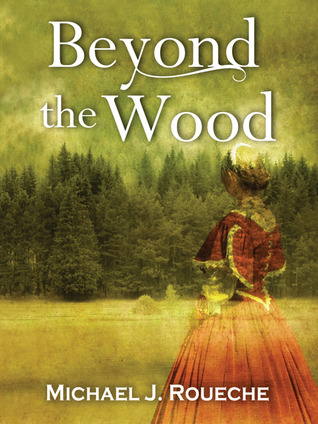
Beyond the Wood by Michael J. Roueche

“A book of treachery, peril, slackening resolve and thwarted love . . . and a little Southern Rebellion.

Romance has faded, and shame has weakened resolve. Mystery has shrouded the truth, and pride has matured into a world enveloped by rage and war. And the only constant is betrayal–and at times he is your sole companion. Yet, hope lingers . . .

Hank, a soldier for the Union, refuses retreat from his first bloodied action without proof he has been there, and he takes it from a dying enemy. Fed by the compassion he finds in the Confederate’s last letter and his own unsettled dreams and troubling memories, Hank imagines a romance that drives him relentlessly toward an impossible rendezvous. All the while, Elizabeth, the widow, struggles with burdens left by her husband, even as neighbors conspire against her. And what is she to make of this Union soldier, this enemy, so set on coming to her?”

Review:

As I first begun reading Beyond the wood I wasn’t sure what to expect, due to the fact that this story is not only a love story, but a story about the civil War and families divided. But as I continued and read further on, I was enthralled with the authors rendering of the characters, and the richness of the culture of the time the story was written in.

The character I admired most was Reid. Although, he plays a small role, his journey to discover his families past and the mystery of a small artifact that has been passed down to him is intriguing and inspiring to the story.

I recommend this book to those who would enjoy a love story during the American Civil War and to those who are intrigued with Southern History.

Stephanie
Layered Pages

Sunday Tip for Self-Publishing Authors: Cover Designs

The design of a book cover is so important for first impressions.It tells me the author cares for a strong presentation of their book. It also shows the author took the time and energy, before rushing to publish. A good cover invites one to open it and to explore it’s pages.

When a reader is in a bookstore, browsing the shelves, the first things they see is the cover. I have to admit I have come across some horrid book covers that turned me off completely to buying the book. I suggest finding a graphic designer who designs covers for writers. I know many of you complain about the cost and such. But if you are going to write a book and want to have it published and do well….you’re going to have to be willing to spend the money. It’s a tough business out there, so you might as well do it right the first time.

Stephanie
Layered Pages