Wish-List: Books on the Christian Faith

I’ve been on the search for books on Systematic Theology, further Biblical teachings of Christ’s ministry and Christian application with a non-Calvinistic view point and came across Norman L. Geisler. I found information saying he is considered “moderate Calvinist,” and that he is not a “Five Point Calvinist.” I find that to be somewhat reassuring in my search for the reading material I’m looking for. I am definitely willing to give his books a read. You see, I’m not a Calvinist nor am I a protestant. That said, I am not closed minded from reading different viewpoints; I’m just looking for particular studies for the moment. Mater of fact, I respect and listen to a lot of what protestants have to say.

Also, I’m planning on reading the books in my father’s library on Systematic Theology as well as adding to my own library.

First, what is Systematic Theology according to Oxford Languages? The theology is “a form of theology in which the aim is to arrange religious truths in a self-consistent whole.” In a nutshell, the systematic view is to give an orderly format of the doctrines of Christian faith. And let me tell you, I have seen and heard many different viewpoints. Below are a few books by Geisler that I’m interested in reading.
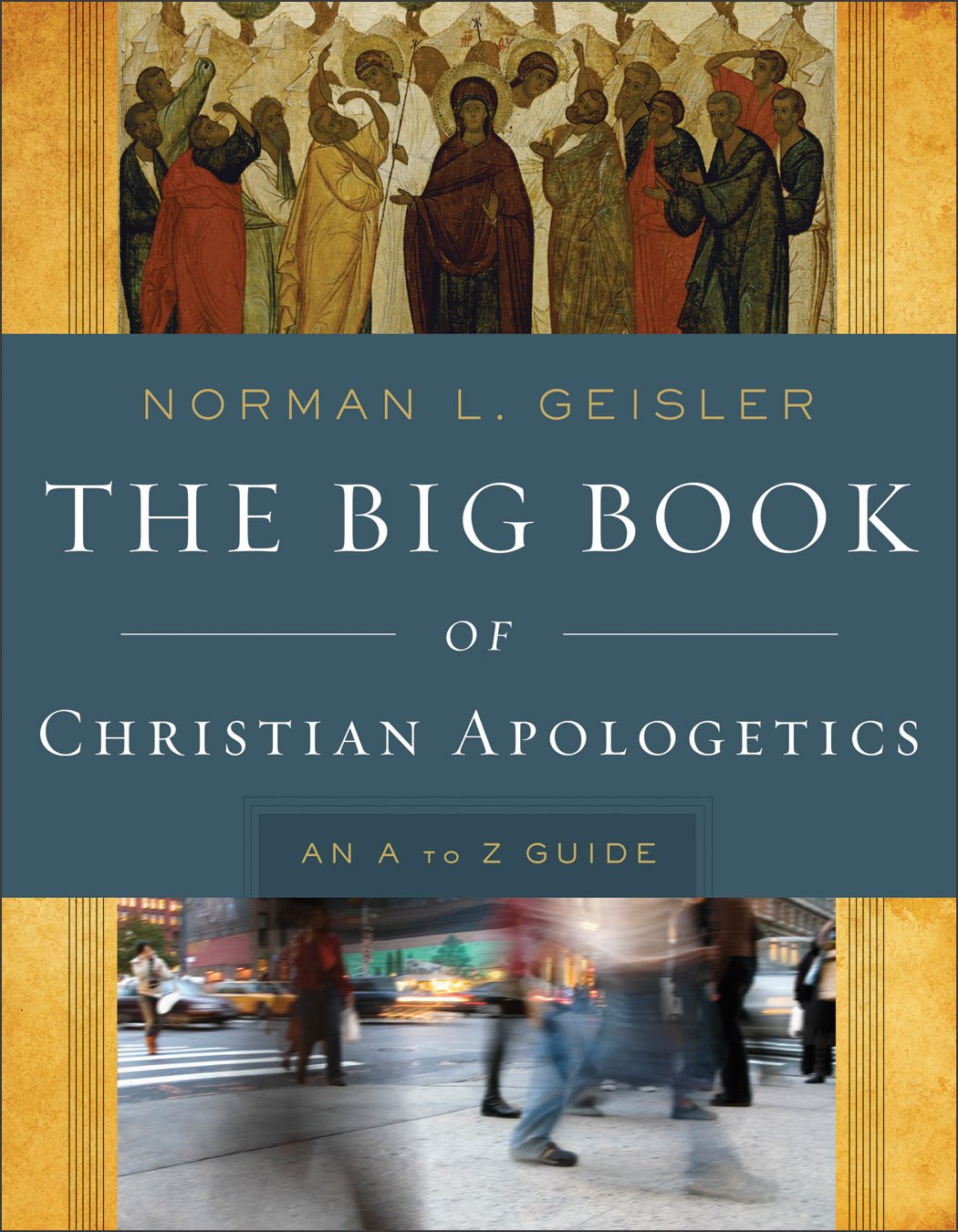
The Big Book of Christian Apologetics: An A to Z Guide (A to Z Guides) 

The Big Book of Christian Apologetics is a comprehensive resource designed to equip motivated believers with information to help defend and explain their faith. Examining nearly every key issue, person, and concept related to Christian apologetics, this book clarifies difficult biblical passages, clearly explains various philosophical systems and concepts, examines contemporary issues and challenges, and offers classic apologetic arguments, all with the aim of giving readers the background to intelligently and persuasively talk about their Christian faith with skeptics. An expertly abridged version of the Baker Encyclopedia on Christian Apologetics, this resource brings leading apologist Norman L. Geisler’s seminal work to the masses.

A Popular Survey of the New Testament 

Understanding the New Testament is a daunting but exciting task. Our world is so different from that of the first century. Yet it is important to understand the context and content of the New Testament if we are to be faithful followers. Now in paper, this survey addresses the who, what, where, when, why, and how questions that readers of the Bible may have, such as: How can we tell if what is written in the New Testament is true history or just mythology? When were these books written and why? and What can today’s believers get out of letters addressed to people who lived two millennia ago? Written in an easy, informal style, this survey is accessible and enjoyable to anyone who wants to better understand the New Testament.
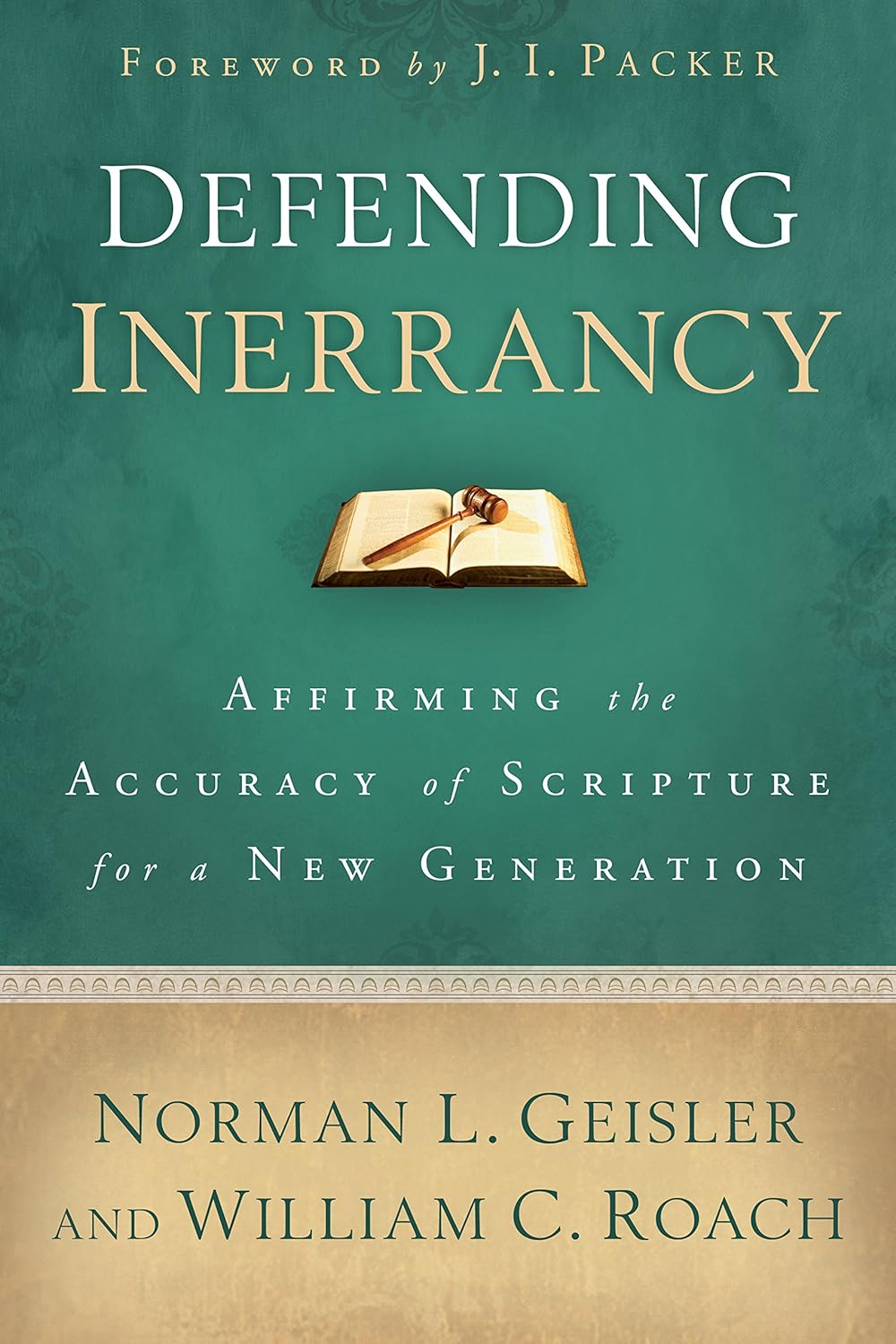
Defending Inerrancy: Affirming the Accuracy of Scripture for a New Generation

According to the authors, the doctrine of inerrancy has been standard, accepted teaching for more than 1,000 years. In 1978, the famous “Chicago Statement” on inerrancy was adopted by the Evangelical Theological Society, and for decades it has been the accepted conservative evangelical doctrine of the Scriptures. However, in recent years, some prominent evangelical authors have challenged this statement in their writings.

Now eminent apologist and bestselling author Norman L. Geisler, who was one of the original drafters of the “Chicago Statement,” and his coauthor, William C. Roach, present a defense of the traditional understanding of inerrancy for a new generation of Christians who are being assaulted with challenges to the nature of God, truth, and language. Pastors, students, and armchair theologians will appreciate this clear, reasoned response to the current crisis.

Note: Also, I would like to mention a book of his I’ve had on my wish-list and at first, the author’s name escaped my memory. I’m delighted to know he has written the book along with Frank Turek of whom I know his work.

I Don’t Have Enough Faith to Be an Atheist (Foreword by David Limbaugh) 

Geisler and Turek argue that Christianity requires the least faith of all worldviews because it is the most reasonable. A valuable aid to those interested in examining the reasonableness of the Christian faith.

Christian Church History

In a post not too long ago, I mentioned that I’m deeply involved in Bible studies-such as theology and the early Christian church history and other history research. In the latter for example, I’m focusing much on ancient cultural backgrounds; including the Old Testament and New Testament.

What led me to do a deep dive study in early Christianity history was a YouTube video by AOC Network. The channel has a video on the early Christians and it inspired me and deeply moved me to learn more about Christians in the first and second century AD. I approached my father about this subject and we talked about specifics and he handed me a book, Church History in Plain English by Bruce L. Shelley. He also printed off summaries of information on several saints during that time. I believe from his Logos  Bible study subscription. Such a great resource that many ministers, students of theology and laypeople use. Logos in Greek means word. I also asked him if he could give me more information on the Reformers. Since then I have added quite a few books about the Reformers to my reading pile. That subject is for other blog post topics.

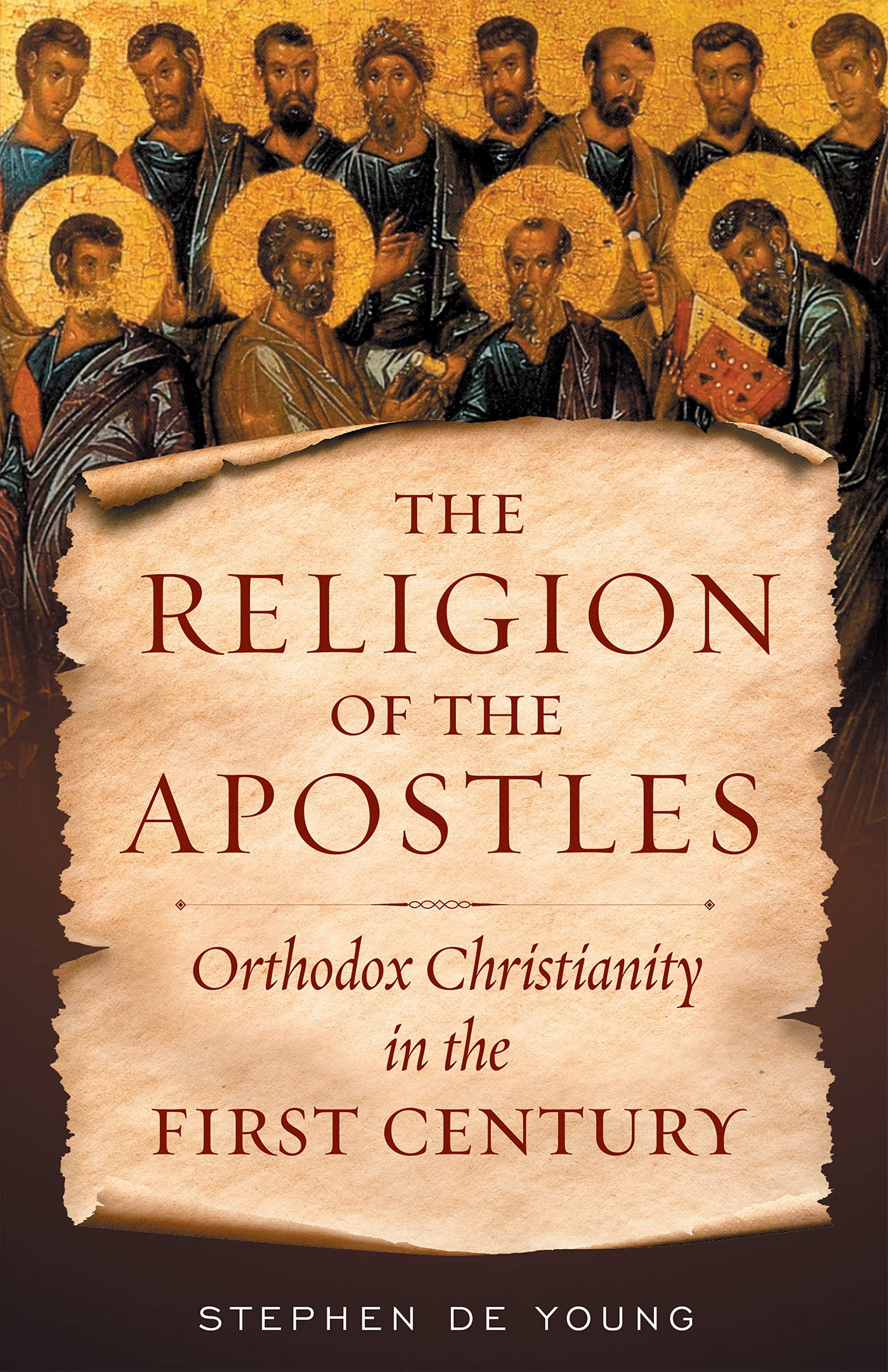
As I started reading Church History in Plain English and read about the Saints, I felt a strong feeling of emotion within me and I began to other sources of research on the Christian Orthodox Church. I look forward to sharing more of my spiritual journey with you all in this endeavor. For now, check out the book description for Church History in Plain English and another book on, The Religion of the Apostles (Orthodox Christianity in the First Century) by Stephen De Young I have added to my to-read pile.Many of you might be inspired to check them out.

Stephanie Hopkins

God Bless

Church History in Plain English by Bruce L. Shelley

With more than 275,000 copies sold, this is the story of the Church for today’s readers. The third edition of Shelley’s classic one-volume history of the church brings the story of Christianity into the twenty-first century. This latest edition of the book takes a close look at the rapid growth of evangelical and Pentecostal Christianity in the southern hemisphere, addresses the decline in traditional mainline denominations, examines the influence of technology on the spread of the gospel, and discusses how Christianity intersects with other religions in countries all over the world.

The concise book provides an easy-to-read guide to church history, with intellectual substance. The new edition of Church History in Plain Language promises to be the new standard for readable Church History.

The Religion of the Apostles (Orthodox Christianity in the First Century) by Stephen De Young

Rev. Dr. Stephen De Young, creator of the popular The Whole Counsel of God blog and podcast, traces the lineage of Orthodox Christianity back to the faith and witness of the apostles, which was rooted in a first-century Jewish worldview. The Religion of the Apostles presents the Orthodox Christian Church of today as a continuation of the religious life of the apostles, which in turn was a continuation of the life of the people of God since the beginning of creation.

Christian Theology

In my last blog post, I mentioned that I was deeply involved in Bible studies-such as theology and the early Christian church history and other history research. In the latter, I meant to say my additional research, or study if you will, was centered on ancient cultural backgrounds. Last year I was gifted by my father the NIV Cultural Backgrounds Study Bible. This is my third study Bible I have acquired and I am thrilled to have this edition to my growing theology library. My father also gifted me the Holman Illustrated Guild to Biblical Geography (reading the Land) by Paul H, Wright. In addition, I am blessed to be studying from my father’s theology library as well. Including his NIV commentaries of each book of the Bible.

When I was a child my first Bible was the King James version and on June 14, 1994, I received my first NIV study Bible from my parents. That particular version is the NIV Disciple’s Study Bible.

What I love about the NIV Cultural Backgrounds Study Bible I was gifted last year, is a richer look behind the scenes that I was looking for with my current Bible studies. I will most likely acquire the New King James version at some point in time. I can’t wait! Another version I want to read is the Geneva Bible. This Bible is significant of the Bible into English during the 16th century English Protestantism. Thankfully my father has a copy.

Recently I’ve also started to use my Bible App as another form of Bible reading. To listen through the Bible in a year and then repeat every year. At times, I will read along with one of my Bibles. I find that helps me with staying in the word and memorization. Other tools that help me for a better understanding during my Bible studies and research are the Oxford Bible Atlas and Holman’s Bible Dictionary. In a later post I will be sharing other theological and cultural books I’m studying from. If you are interested in historical backgrounds and a better or deeper understanding of context, I highly recommend the books above to start with.

Stephanie Hopkins

Christian Theology

It has been quite a while since I’ve last read books on Christian Theology and I feel even more compelled today to come back to this genre.

I’m curious about the books I have listed below and will be reading them at some point in time. Have you heard of these books? Have you read any of them?

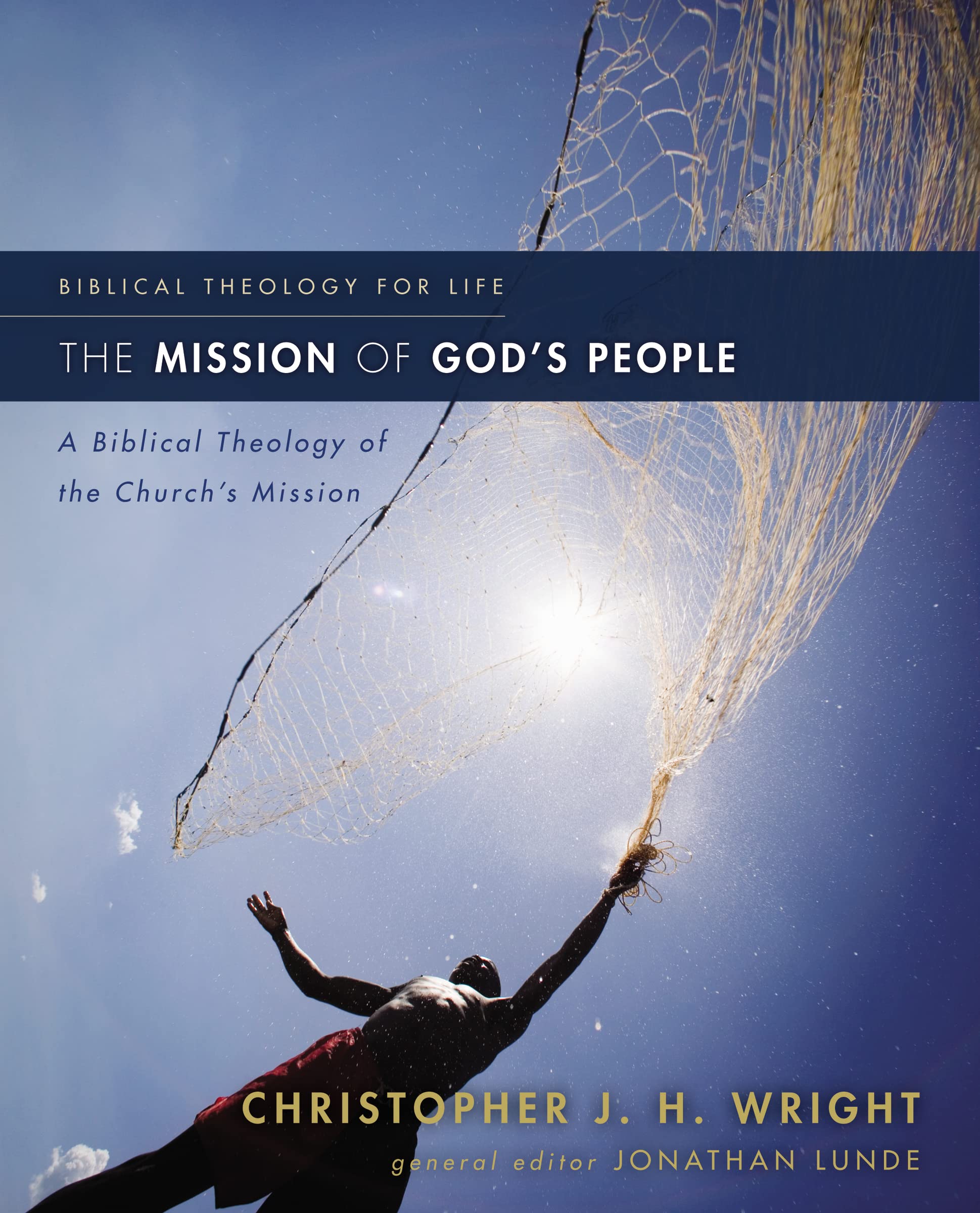
The Mission of God’s People: A Biblical Theology of the Church’s Mission (Biblical Theology for Life) by Christopher J. H. Wright

In, The Mission of God’s People, Wright shows how God’s big-picture plan directs the purpose of God’s people, the church. Wright emphasizes what the Old Testament teaches Christians about being the people of God. He addresses questions of both ecclesiology and missiology with topics like “called to care for creation,” “called to bless the nations,” “sending and being sent,” and “rejecting false gods.” As part of the Biblical Theology for Life Series, this book provides pastors, teachers, and lay learners with first-rate biblical study while at the same time addressing the practical concerns of contemporary ministry. The Mission of God’s People promises to enliven and refocus the study, teaching, and ministry of those truly committed to joining God’s work in the world.

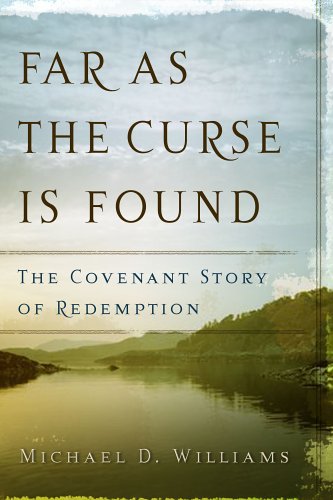
Far as the Curse Is Found: The Covenant Story of Redemption by Michael D. Williams

God’s covenant with his people is an unfolding historical drama with personal and earthly dimensions that are often overlooked. In this study of the meaning and scope of the covenant, Michael D. Williams highlights the goodness of the physical realm and God’s redemptive intentions for his creation.

The Attributes of God by A.W. Pink

This classic work of Arthur W. Pink invites readers to discover the truth about seventeen attributes of God, including his sovereignty, immutability, patience, love, faithfulness, and much more.

More about The Attributes of God:

Bible scholar Arthur W. Pink became a prolific and highly influential evangelical author over the course of the twentieth century, beginning with his monthly magazine Studies in Scriptures. Many of his books began as articles in this small publication, including The Attributes of God. In this work, Pink sets out to reveal the true character of God. He believes that in order to truly know God, we must first submit to God and follow in his footsteps. The people that do know their God shall be strong (Dan. 11:32).

It is the author’s hope that those who listen to these words shall be blessed and see their lives transformed by the power of God.