Scripture provides believers with the tools that equips us for daily guidance (read 2 Timothy 3:16-17), spiritual growth, strength (read Philippians 2:13), and wisdom to live out the life that God has called us to live for His glory, what is pleasing to Him and His will through Jesus Christ our Lord (read Ephesians 4:11-16, Hebrew 13:20-21).
The earliest time I can remember writing down Bible verses was in the early 90’s. I know it was much earlier than that because of growing up in church and memorizing Scripture even in the 80’s. I remember the 90’s most clearly because my aunt (my dad’s sister) gifted me a spiral journal notebook with a Bible verse on the front of the cover and I still have it. I would write verses that really spoke to me and wanted to memorize to always have with me in my mind and heart.
Through the decades I wasn’t always consistent with this practice until recently, and now I write out verses every day. Spending daily quiet time in His word has strengthened my faith, has given me a deeper understanding of His calling, and it brings me great joy, peace, calmness, perseverance, purpose and healing.
For the month of April, I wrote out verses in my daily calendar about self-control and I thought it would be a great idea to post about which verses really stood out to me. Out of the thirty days in April, I chose three verses to highlight.
11 For the grace of God has appeared that offers salvation to all people. 12 It teaches us to say “No” to ungodliness and worldly passions, and to live self-controlled, upright and godly lives in this present age, 13 while we wait for the blessed hope—the appearing of the glory of our great God and Savior, Jesus Christ, 14 who gave himself for us to redeem us from all wickedness and to purify for himself a people that are his very own, eager to do what is good. – Titus 2:11-14 (NIV)
1 Therefore, I urge you, brothers and sisters, in view of God’s mercy, to offer your bodies as a living sacrifice, holy and pleasing to God—this is your true and proper worship. 2 Do not conform to the pattern of this world, but be transformed by the renewing of your mind. Then you will be able to test and approve what God’s will is—his good, pleasing and perfect will. – Romans 12:1-2 (NIV)
4 Through these he has given us his very great and precious promises, so that through them you may participate in the divine nature, having escaped the corruption in the world caused by evil desires. 5 For this very reason, make every effort to add to your faith goodness; and to goodness, knowledge; 6 and to knowledge, self-control; and to self-control, perseverance; and to perseverance, godliness; 7 and to godliness, mutual affection; and to mutual affection, love. – 2 Peter 1:4-7 (NIV)
I would like to encourage you to start this faith journey with God. When you do, each and every time you open your Bible, first pray and ask Him to open your heart to His word for wisdom and understanding in the name of Jesus.
May’s Scripture writing is about “Contentment.”
Today is the day for salvation, my friends. Jesus paid your sin debt by shedding His blood on the cross, so that you will have eternal life. If you haven’t accepted Jesus as your savior, I pray that you’ll ask Him to forgive your sins and come into your life, believe in His finish work on the cross, and His resurrection. For there is no greater love than what he did for us.
John 3:16 says: “For God so loved the world that He gave His one and only Son, that whoever believes in Him shall not perish but have eternal life,”
1 John 1:9 says: “If we confess our sins, he is faithful and just and will forgive us our sins and purify us from all unrighteousness”
Acts 3:19 says:“Repent, then, and turn to God, so that your sins may be wiped out, that times of refreshing may come from the Lord,”
Romans 10:9 says: “If you declare with your mouth, ‘Jesus is Lord,’ and believe in your heart that God raised him from the dead, you will be saved”
Today, I’m sharing the Bible studies I’m working through and the journey this year has truly been a blessing in my life. I’m also reading the Bible chronologically this year for the first time ever. What a difference it has made already in the in-depth studying I’ve been conducting for three plus years now. I discuss my studies in other posts, so I hope you check those out. Also last year, I took a deep dive in women’s roles and ministry in the Bible and women ministries today in modern times. I’m continuing that study and have found it rewarding in my life.
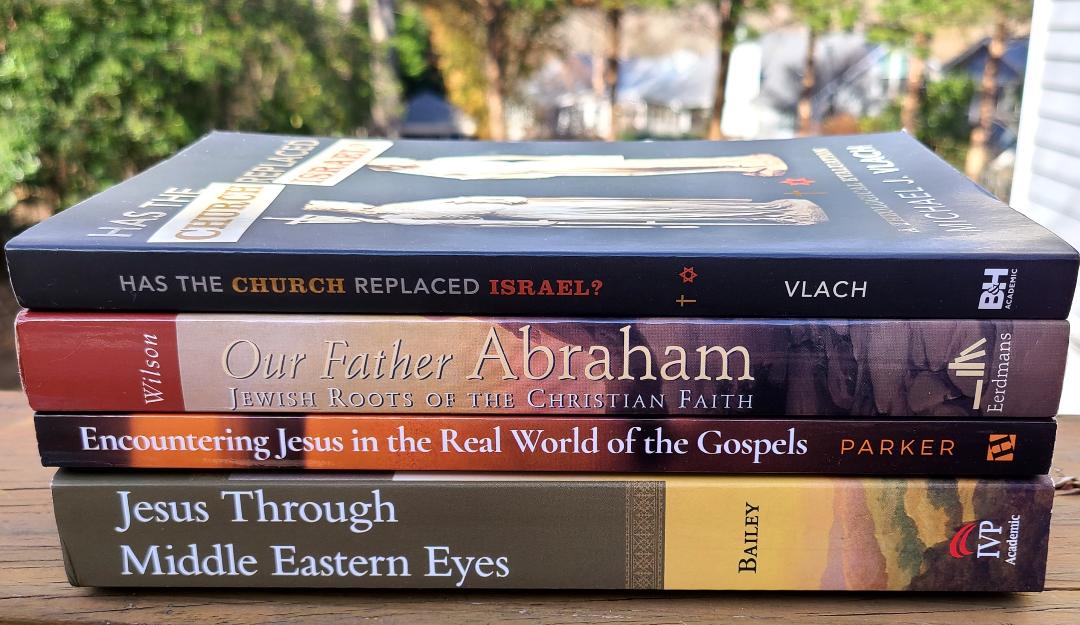
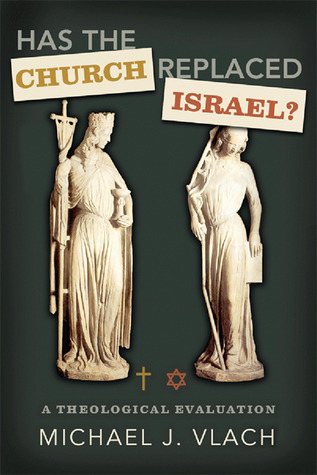
The books you see in this posts, are the ones I’m currently reading through. The first one on the book stack “Has the Church Replaced Israel” by “Michael J. Vlack takes a look at the theological evaluation of the different arguments and the author’s conclusion of this much heated debate in our current church environment. That said, this has been a long standing debate throughout history, but has become front in center in the last couple years due to the Israel/Gaza war.
About the book:
The relationship between Israel and the Church continues to be a controversial topic led by this Does the church replace, supersede, or fulfill the nation of Israel in God’s plan, or will Israel be saved and restored with a unique identity and role?
In Has the Church Replaced Israel? Author Michael J. Vlach evaluates the doctrine of replacement theology (also known as supersessionism) down through history but ultimately argues in favor of the non-supersessionist position. Thoroughly vetting the most important hermeneutical and theological issues related to the Israel/church relationship, Vlach explains why, “there are compelling scriptural reasons in both testaments to believe in a future salvation and restoration of the nation Israel.”
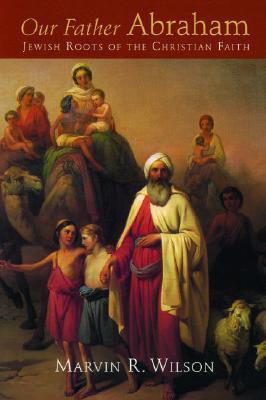
I read “Our Father Abraham” by Marvin R. Wilson a few years ago now and thought I would give it another read through. This book is from my father’s theological library and the book is a wonderful read.
About the book:
Although the roots of Christianity run deep into Hebrew soil, many Christians are regrettably uninformed about the rich Hebrew heritage of the church. This volume delineates the link between Judaism and Christianity, between the Old and the New Testament, and calls Christians to reexamine their Hebrew roots so as to effect a more authentically biblical lifestyle.
As an introduction to the world of Hebrew thought, Our Father Abraham is biblical, historical, and cultural in nature. At the same time, the writing is personal and passionate, reflecting Marvin Wilson’s own spiritual pilgrimage and his extensive dialogue with Jews. The book (1) develops a historical perspective on the Jewish origins of the church, (2) sets forth the importance and nature of Hebrew thought, (3) discusses how the church can become more attuned to the Hebraic mind-set of Scripture, and (4) offers practical suggestions for interaction between Jews and Christians.
The study questions at the end of each chapter enhance the book’s usefulness as a text and also make it suitable for Bible-study and discussion groups. All Christians–and Jews too–will profit from Wilson’s sensible treatments of biblical texts, his thorough understanding of both the Christian and the Jewish faith, and his honest historical analysis of the general failure of the Christian church to acknowledge and understand its relation to Judaism.
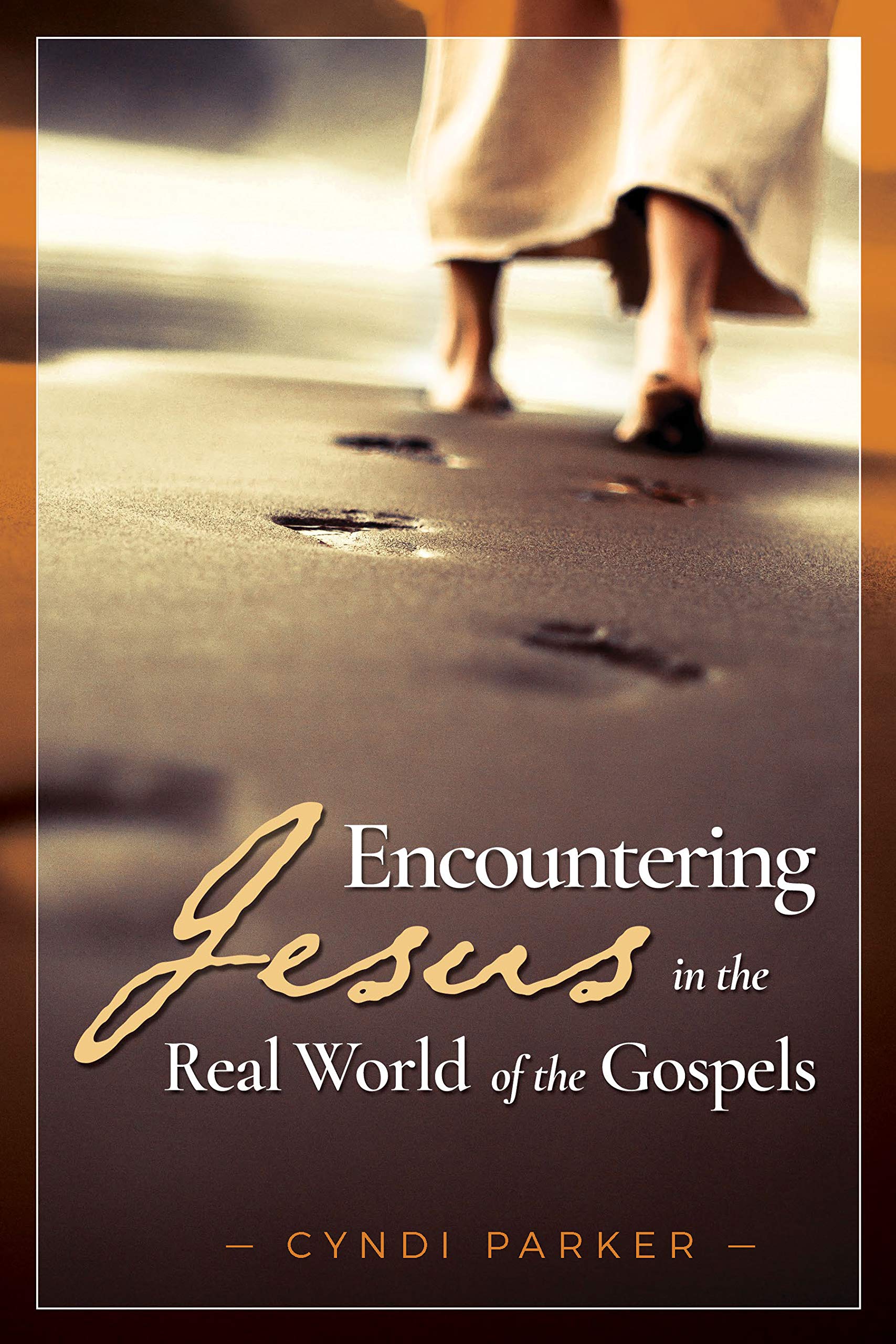
I’m trying to remember how I came across “Encountering Jesus in the Real World of the Gospel” by Cyndi Parker. As I typed that thought out, it came to me I might have heard about this book from Dr. Carmen J. Imes. Whatever the case, I remember downloading a sample to read before making commitment on purchasing the book. As you can see, I bought the book and I’m really enjoying what Parker has to say.
About the book:
Encountering Jesus in the Real World of the Gospels draws readers into a deeper understanding of ancient Israel and first-century Judaism—the clothing, setting, political climate, and more—all to better understand Jesus’ ministry. Instead of reading the Gospels through twenty-first-century eyes, author Cyndi Parker introduces readers to the larger context with the weight of the Old Testament behind them. This is an approachable and conversational book that introduces the reader to the complex human world of Jesus. Have you ever wondered if it is important that Jesus grew up in Nazareth but moved his public ministry to Capernaum, even though Jerusalem was the capital of Jewish thought? Does it seem strange to you that Pharisees, Sadducees, and Essenes held significantly divergent religious views, even though they were all Jewish? In this book, Cyndi Parker guides us through the intriguing drama of history that created the context of first-century Judaism. She extends an invitation to readers to take a new look at the long drama of God’s interactions with humanity that reach a climax in the life of Jesus. Encountering Jesus in the Real World of the Gospels focuses on the complexities of the political, social, literary, and religious context of the Gospels. The purpose is to advance readers’ understanding of the Gospels and help them encounter Jesus, the disciples, and crowds as real people in a real place at a time vastly different from today. Come explore the land of ancient Israel with its dramatic history, culture, and religion. Includes many images, maps, photos, and drawings throughout!
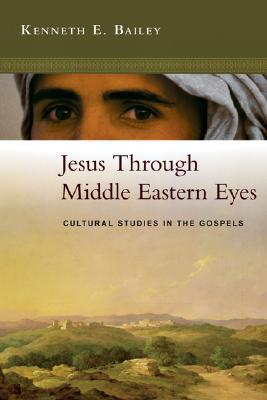
Jesus Though Middle Eastern Eyes (Cultural Studies In The Gospels) by Kenneth R. Bailey is a phenomenal read. So far, I’ve read three parts. I will definitely be reading other books by this author and I highly recommend this one.
About the book:
Beginning with Jesus’ birth, Ken Bailey leads you on a kaleidoscopic study of Jesus throughout the four Gospels. Bailey examines the life and ministry of Jesus with attention to the Lord’s Prayer, the Beatitudes, Jesus’ relationship to women, and especially Jesus’ parables. Through it all, Bailey employs his trademark expertise as a master of Middle Eastern culture to lead you into a deeper understanding of the person and significance of Jesus within his own cultural context. With a sure but gentle hand, Bailey lifts away the obscuring layers of modern Western interpretation to reveal Jesus in the light of his actual historical and cultural setting. This entirely new material from the pen of Ken Bailey is a must-have for any student of the New Testament. If you have benefited from Bailey’s work over the years, this book will be a welcome and indispensable addition to your library. If you are unfamiliar with Bailey’s work, this book will introduce you to a very old yet entirely new way of understanding Jesus.
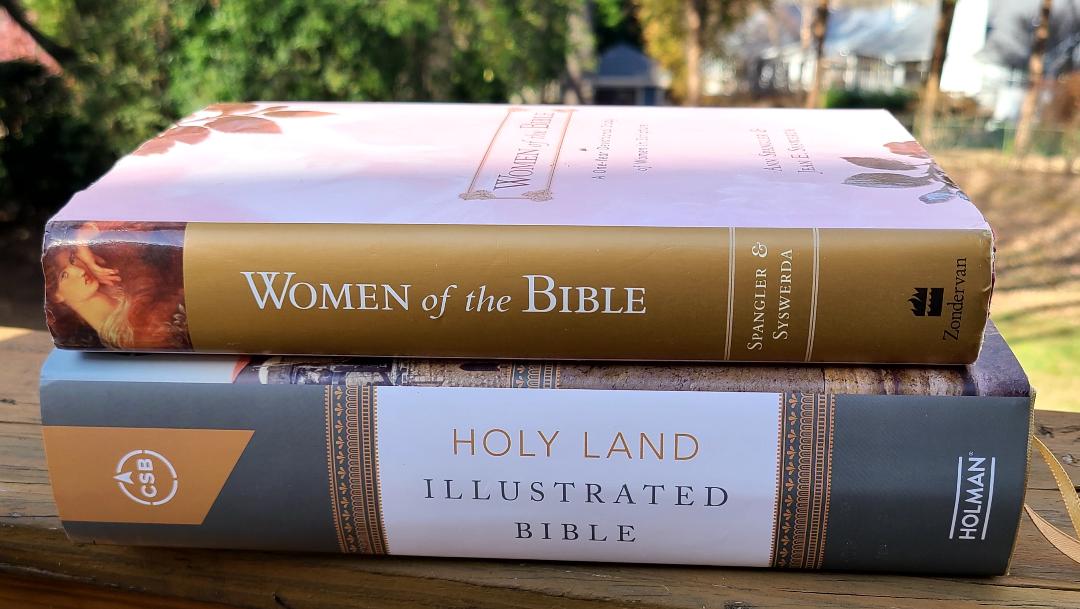
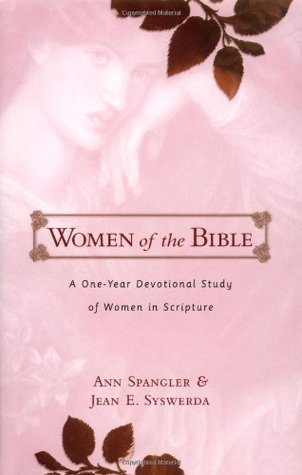
I came across “Women of the Bible” by Ann Spangler & Syswerda down in the basement in a container. This book is a family member’s and was thrilled they said I can use it. The book is a one-year devotional study of women in Scripture, and I an tweaking it a bit to fit in my method of study.
About the book:
Women of the Bible focuses on fifty-two remarkable women in Scripture — women whose struggles to live with faith and courage are not unlike our own. Far from being cardboard characters, these women encourage us through their failures as well as their successes. You’ll see how God acted in surprising and wonderful ways to draw them — and you — to himself. This year-long devotional offers a unique method to help you slow down and savor the story of God’s unrelenting love for his people, offering a fresh perspective that will nourish and strengthen your personal communion with him.
The Bible I am using to study and read along with “Women of the Bible” is the “Holy Land Illustrated Bible, which is among my favorite Bibles I have. The Bible is a hardcover with black lettering, full-color design, and contains articles, photos, illustrations, and easy-to-read Scripture. Hands down, this is one of my favorite Bibles to date. I would also like to stress, the other books on this post does not in anyway, shape or form, replace the Bible. Being in the word comes first always.
About this Bible:
Visit the Holy Land and other sacred biblical sights alongside the accompanying biblical text without ever leaving home.
The CSB Holy Land Illustrated Bible is a visually immersive Bible reading experience featuring over 1,100 images, maps, and illustrations to provide greater insight and understanding of the people, places, and things of Scripture. Book specific introductions provide the setting and circumstances of writing for each book, and every image includes a descriptive caption to help better understand what is pictured. Also included are more than 275 full-length commentary articles and 40+ “Digging Deeper” callouts strategically placed throughout the Bible for further exploration.
FEATURES The CSB Holy Land Illustrated Bible features the highly readable, highly reliable text of the Christian Standard Bible® (CSB). The CSB stays as literal as possible to the Bible’s original meaning without sacrificing clarity, making it easier to engage with Scripture’s life-transforming message and to share it with others.
Part II of my faith studies of 2026 will be posted sometime in July.
Stephanie
Today is the day for salvation, my friends. Jesus paid your sin debt by shedding His blood on the cross, so that you will have eternal life. If you haven’t accepted Jesus as your savior, I pray that you’ll ask Him to forgive your sins and come into your life, believe in His finish work on the cross, and His resurrection. For there is no greater love than what he did for us. John 3:16 says, “For God so loved the world that He gave His one and only Son, that whoever believes in Him shall not perish but have eternal life.”
I’ve been on the search for books on Systematic Theology, further Biblical teachings of Christ’s ministry and Christian application with a non-Calvinistic view point and came across Norman L. Geisler. I found information saying he is considered “moderate Calvinist,” and that he is not a “Five Point Calvinist.” I find that to be somewhat reassuring in my search for the reading material I’m looking for. I am definitely willing to give his books a read. You see, I’m not a Calvinist nor am I a protestant. That said, I am not closed minded from reading different viewpoints; I’m just looking for particular studies for the moment. Mater of fact, I respect and listen to a lot of what protestants have to say.
Also, I’m planning on reading the books in my father’s library on Systematic Theology as well as adding to my own library.
First, what is Systematic Theology according to Oxford Languages? The theology is “a form of theology in which the aim is to arrange religious truths in a self-consistent whole.” In a nutshell, the systematic view is to give an orderly format of the doctrines of Christian faith. And let me tell you, I have seen and heard many different viewpoints. Below are a few books by Geisler that I’m interested in reading.
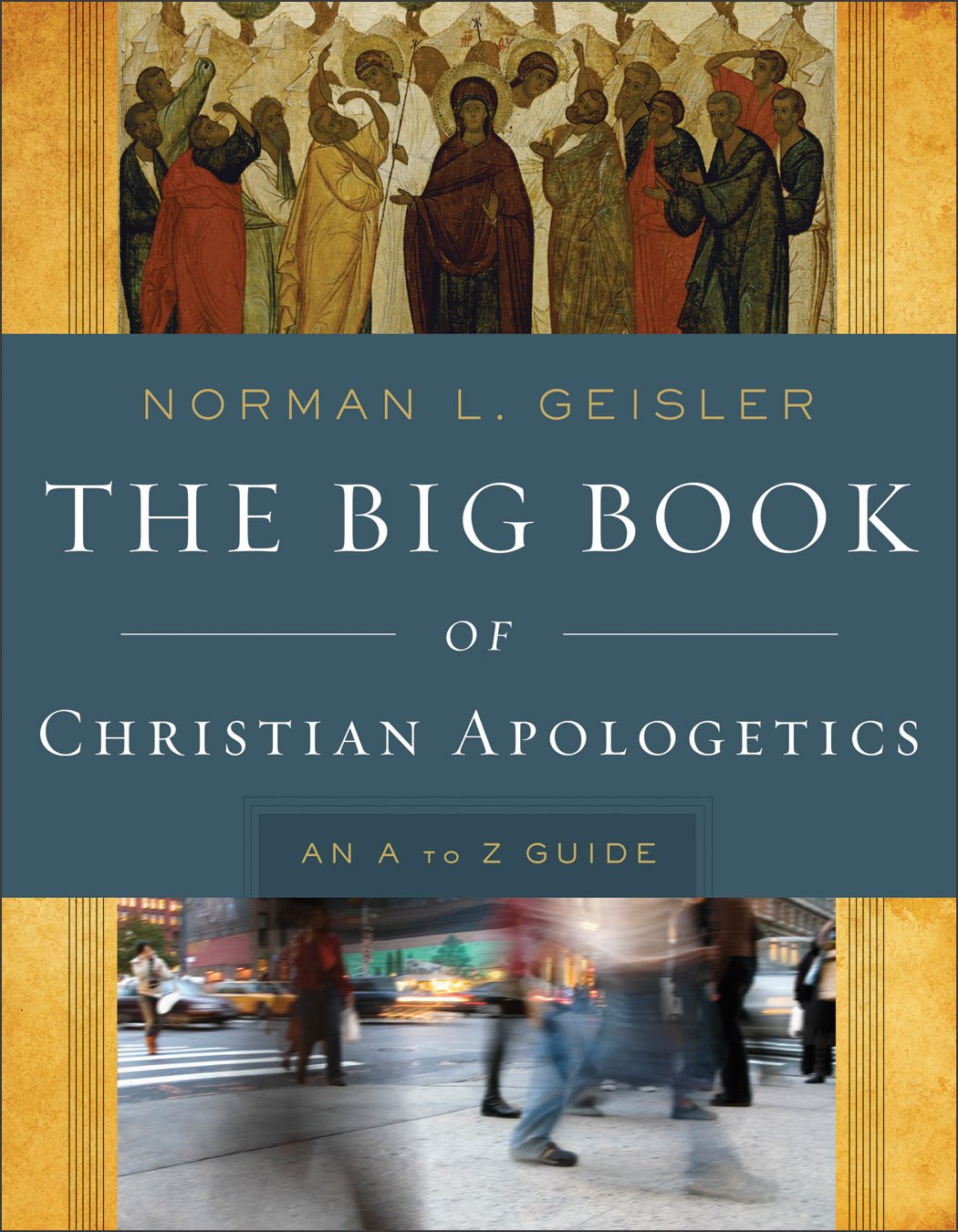
The Big Book of Christian Apologetics: An A to Z Guide (A to Z Guides)
The Big Book of Christian Apologetics is a comprehensive resource designed to equip motivated believers with information to help defend and explain their faith. Examining nearly every key issue, person, and concept related to Christian apologetics, this book clarifies difficult biblical passages, clearly explains various philosophical systems and concepts, examines contemporary issues and challenges, and offers classic apologetic arguments, all with the aim of giving readers the background to intelligently and persuasively talk about their Christian faith with skeptics. An expertly abridged version of the Baker Encyclopedia on Christian Apologetics, this resource brings leading apologist Norman L. Geisler’s seminal work to the masses.
A Popular Survey of the New Testament
Understanding the New Testament is a daunting but exciting task. Our world is so different from that of the first century. Yet it is important to understand the context and content of the New Testament if we are to be faithful followers. Now in paper, this survey addresses the who, what, where, when, why, and how questions that readers of the Bible may have, such as: How can we tell if what is written in the New Testament is true history or just mythology? When were these books written and why? and What can today’s believers get out of letters addressed to people who lived two millennia ago? Written in an easy, informal style, this survey is accessible and enjoyable to anyone who wants to better understand the New Testament.
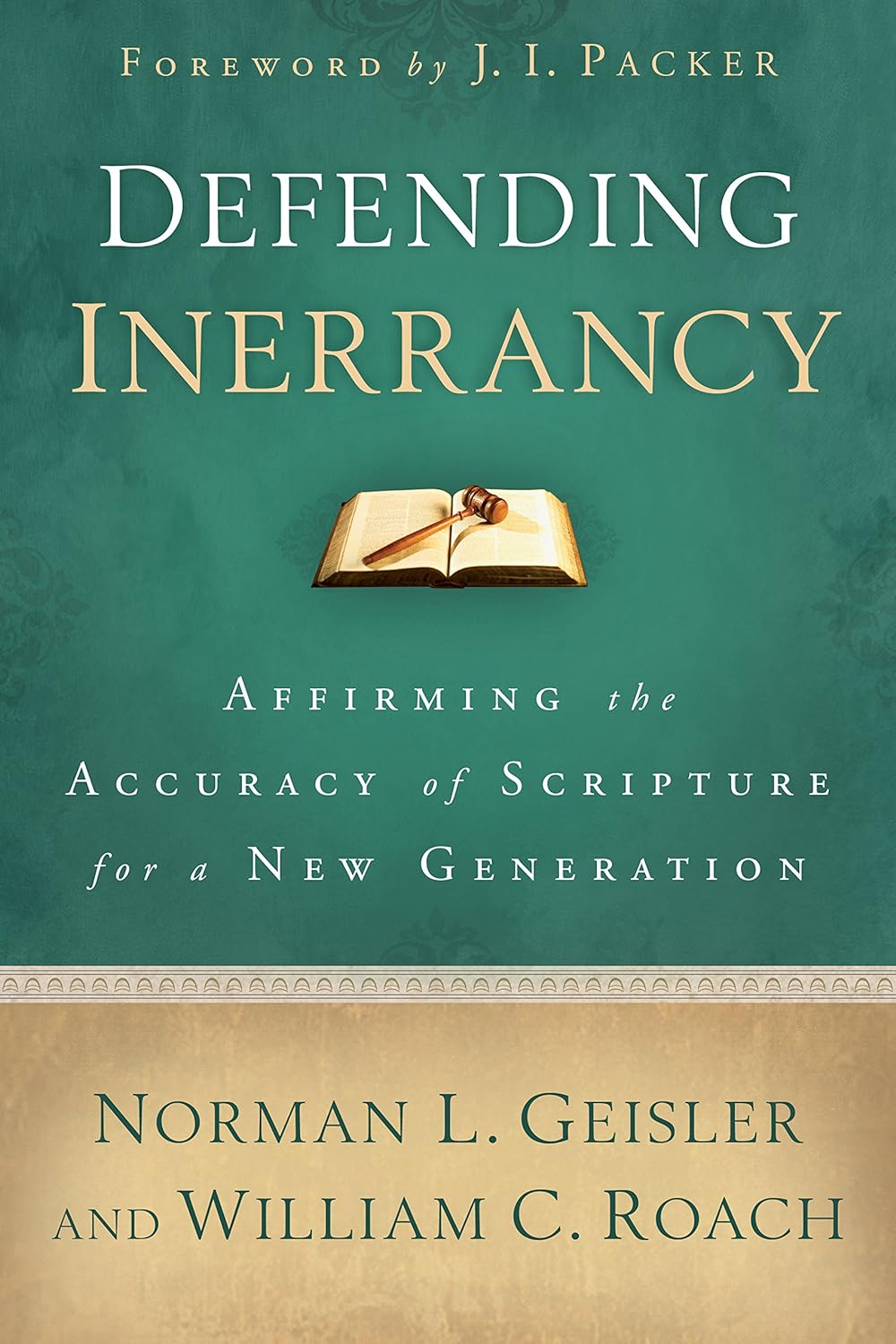
Defending Inerrancy: Affirming the Accuracy of Scripture for a New Generation
According to the authors, the doctrine of inerrancy has been standard, accepted teaching for more than 1,000 years. In 1978, the famous “Chicago Statement” on inerrancy was adopted by the Evangelical Theological Society, and for decades it has been the accepted conservative evangelical doctrine of the Scriptures. However, in recent years, some prominent evangelical authors have challenged this statement in their writings.
Now eminent apologist and bestselling author Norman L. Geisler, who was one of the original drafters of the “Chicago Statement,” and his coauthor, William C. Roach, present a defense of the traditional understanding of inerrancy for a new generation of Christians who are being assaulted with challenges to the nature of God, truth, and language. Pastors, students, and armchair theologians will appreciate this clear, reasoned response to the current crisis.
Note: Also, I would like to mention a book of his I’ve had on my wish-list and at first, the author’s name escaped my memory. I’m delighted to know he has written the book along with Frank Turek of whom I know his work.
I Don’t Have Enough Faith to Be an Atheist (Foreword by David Limbaugh)
Geisler and Turek argue that Christianity requires the least faith of all worldviews because it is the most reasonable. A valuable aid to those interested in examining the reasonableness of the Christian faith.
In my last blog post, I mentioned that I was deeply involved in Bible studies-such as theology and the early Christian church history and other history research. In the latter, I meant to say my additional research, or study if you will, was centered on ancient cultural backgrounds. Last year I was gifted by my father the NIV Cultural Backgrounds Study Bible. This is my third study Bible I have acquired and I am thrilled to have this edition to my growing theology library. My father also gifted me the Holman Illustrated Guild to Biblical Geography (reading the Land) by Paul H, Wright. In addition, I am blessed to be studying from my father’s theology library as well. Including his NIV commentaries of each book of the Bible.
When I was a child my first Bible was the King James version and on June 14, 1994, I received my first NIV study Bible from my parents. That particular version is the NIV Disciple’s Study Bible.
What I love about the NIV Cultural Backgrounds Study Bible I was gifted last year, is a richer look behind the scenes that I was looking for with my current Bible studies. I will most likely acquire the New King James version at some point in time. I can’t wait! Another version I want to read is the Geneva Bible. This Bible is significant of the Bible into English during the 16th century English Protestantism. Thankfully my father has a copy.
Recently I’ve also started to use my Bible App as another form of Bible reading. To listen through the Bible in a year and then repeat every year. At times, I will read along with one of my Bibles. I find that helps me with staying in the word and memorization. Other tools that help me for a better understanding during my Bible studies and research are the Oxford Bible Atlas and Holman’s Bible Dictionary. In a later post I will be sharing other theological and cultural books I’m studying from. If you are interested in historical backgrounds and a better or deeper understanding of context, I highly recommend the books above to start with.