Reader’s Log 033: Cultural and Biblical Background Studies Book Haul

At Christmas time I got four books on my cultural and biblical background study wish-list and super excited about them. Some of you may know I have been studying biblical cultural backgrounds for a more in-depth look at the ancient world for a while now. As modern-day people we tend to look at biblical scripture, ancient society’s ideas and norms and beliefs with modern day eyes. It helps to have a better look at how things were for a clearer and richer understanding of the Bible and the early Christian’s lives. It is most likely that if you are a seminary student getting a BA in Religious Studies, you may be reading some if not all these books. If not, I highly recommend you read them.  
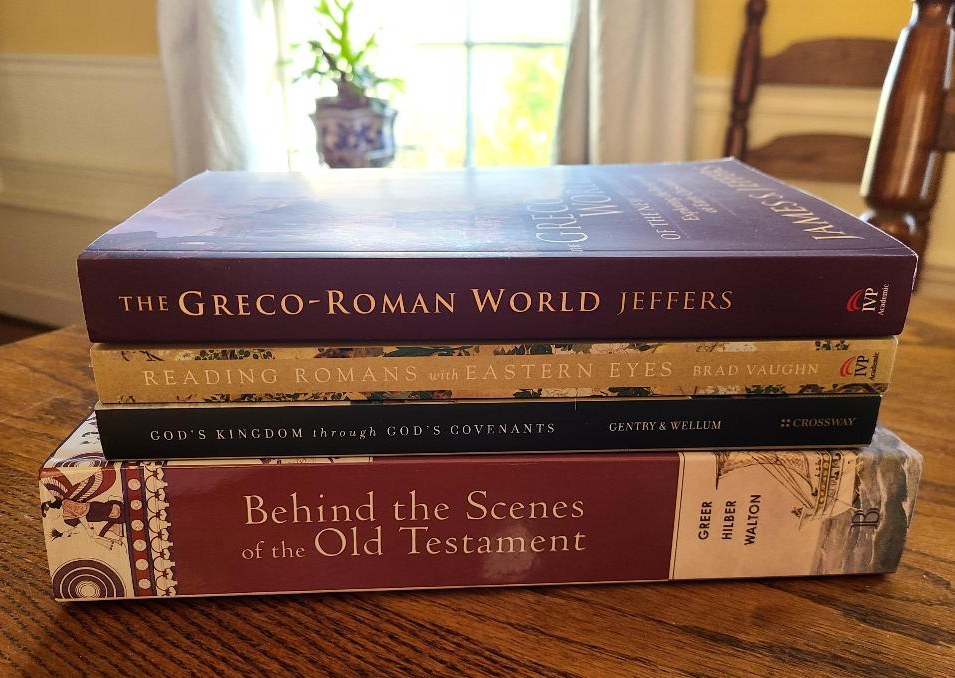
I’m currently reading the first book mention below and it is wonderful. There is so many facts I already know about the Greco-Roman period in the 1st and second 2nd period but they are being expanded on in this book. After I read and study all of these books, I will be ordering four more from my wish-list. Most likely it will be next year. However, I’m thinking about creating a master wish-list of books for these types of studies and post them. That may be a useful resource for those of you who are interested.

Side note: The Behind the Scenes of the Old Testament: Cultural, Social, and Historical Contexts book is heavy like a text book. Aren’t the covers lovely!

Stephanie
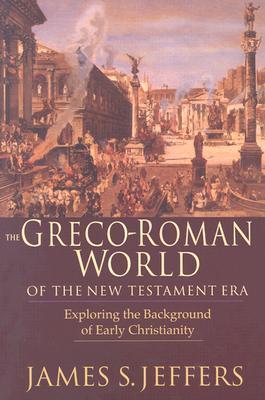
The Greco-Roman World of the New Testament Era: Exploring the Background of Early Christianity by James S. Jeffers

What was life like for first-century Christians? Imagine a modest-sized Roman home of a well-to-do Christian household wedged into a thickly settled quarter of Corinth. In the lingering light of a summer evening, men, women and children, merchants, working poor and slaves, a mix of races and backgrounds have assembled in the dimly lit main room are spilling into the central courtyard. This odd assortment of gathered believers–some thirty in number–are attentive as the newly arrived and travel-weary emissary from Paul reads from the papyrus scroll he has brought from their apostolic mentor. But if you were to be transported to this scene you would perhaps be overwhelmed by a flood of unexpected difference. The voice of the reader recedes as through open windows the din and clamor of the city assaults your ears. Hooves clunk and cart wheels grind and echo from the street while drivers shout, vendors call and neighbors gather and converse. And later, as you accompany a family through darkened and dangerous streets to their third-story tenement apartment, you might try to mask your shock at the cramped and unsafe conditions. In the Greco-Roman World of the New Testament Era James Jeffers provides an informative and scenic tour of daily life during the time of Jesus and the apostles. He affords “you-are-there” glimpses of everything from legal codes to dinner foods, from social hierarchy to apartment living, from education to family dynamics. His eye-opening book will advance your understanding of the New Testament and early Christianity and enrich your reading and application of the Bible.
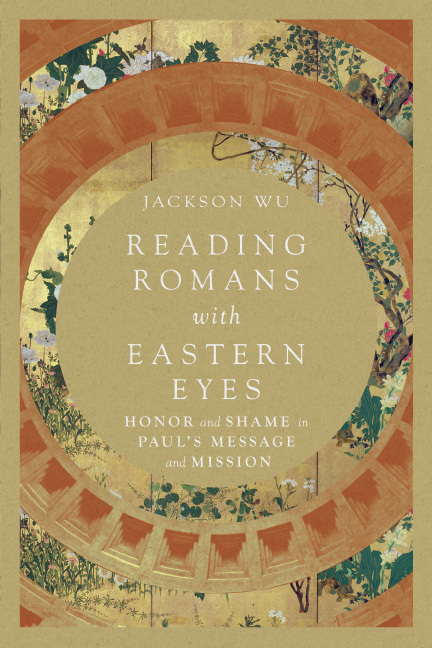
Reading Romans with Eastern Eyes: Honor and Shame in Paul’s Message and Mission by Jackson Wu

Combining research from Asian scholars with his many years of experience living and working in East Asia, Jackson directs our attention to Paul’s letter to the Romans. He argues that some traditional East Asian cultural values are closer to those of the first-century biblical world than common Western cultural values. In addition, he adds his voice to the scholarship engaging the values of honor and shame in particular and their influence on biblical interpretation.

As readers, we bring our own cultural fluencies and values to the text. Our biases and backgrounds influence what we observe—and what we overlook. This book helps us consider ways we sometimes miss valuable insights because of widespread cultural blind spots.

In Reading Romans with Eastern Eyes, Jackson demonstrates how paying attention to East Asian culture provides a helpful lens for interpreting Paul’s most complex letter. When read this way, we see how honor and shame shape so much of Paul’s message and mission.
God’s Kingdom through God’s Covenants: A Concise Biblical Theology by Peter J. Gentry, Stephen J. Wellum

In this abridgement of the groundbreaking book Kingdom through Covenant, a biblical scholar and a theologian offer readers an accessible overview of the overarching structure of the Bible. Tracing the significance of the concept of “covenant” through both the Old and New Testaments, this book charts a middle way between covenant theology and dispensationalism―exploring the covenantal framework undergirding the history of redemption.
Behind the Scenes of the Old Testament: Cultural, Social, and Historical Contexts by Jonathan S. Greer (Editor), John W. Hilber (Editor), John H. Walton (Editor)

This authoritative volume brings together a team of world-class scholars to cover the full range of Old Testament backgrounds studies in a concise, up-to-date, and comprehensive manner. With expertise in various subdisciplines of Old Testament backgrounds, the authors illuminate the cultural, social, and historical contexts of the world behind the Old Testament. They introduce readers to a wide range of background materials, covering history, geography, archaeology, and ancient Near Eastern textual and iconographic studies.

Meant to be used alongside traditional literature-based canonical surveys, this one-stop introduction to Old Testament backgrounds fills a gap in typical introduction to the Bible courses. It contains over 100 illustrations, including photographs, line drawings, maps, charts, and tables, which will facilitate its use in the classroom.

Reader’s Log 029: Church History

For a while now, I’ve taken a deeper dive into Church history including the early church, Protestantism, Eastern Orthodoxy and other church denominations. I’ve also been study cultural backgrounds of ancient Judaism, the intertestamental period and Hellenistic Jews of the first century. It’s a lot to unpack. I know. I do happen to have a method and organization of my study and notes. Before I took this journey, I had mostly done surface studies and reading on these subjects.

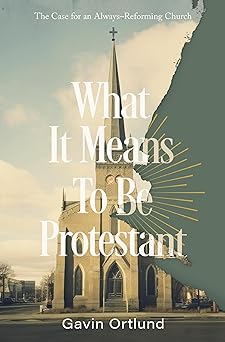
I’m currently reading/studying, “The Early Church: From Ignatius to Augustine by George Hodges and up next I be reading, “What It Means to Be Protestant: The Case for an Always-Reforming Church by Gavin Ortlund, I follow Ortlund’s teachings on YouTube and it is a goal of mine to read all his written works.  

I highly recommend this journey.

Stephanie Hopkins

The Early Church: From Ignatius to Augustine by George Hodges

In the first century A.D., the roots of the early Church began to spread across the Roman world.

But who were its leaders?

And how did it survive through waves of hostility and oppression?

George Hodges, in this fascinating history, explains how the early Church developed from its lowly and persecuted origins of the first century through to becoming the main religion of the Roman Empire and the various kingdoms that succeeded it.

Hodges provides a full picture of the Roman Empire and its religion at this time, explaining how the Church was able to gain a foothold, how heresy nearly tore it apart and how many men and women sacrificed their own lives to protect the faith.

He uncovers why by the third century the Church began to develop into a settled and definite organization, with leaders, like Cyprian and Cyril, who assisted their followers, convened at gatherings like the Council of Nicaea to agree on doctrinal matters and how monasticism developed in both the East and West.

Finally, Hodges explains how the Church was able survive the collapse of the Roman Empire, a state that had begun to protect and support the Church after Constantine’s conversion in 312. The Church was forced to contend with the power vacuum of the tumultuous fourth and fifth centuries and to make allies and convert the pagans who were threatening them.

The Early Church: From Ignatius to Augustine is a brilliant history of the late Roman Empire and how the Christian Church developed within it.

George Hodges was an American theologian and dean of the Episcopal Theological School at Cambridge Massachusetts. The Independent stated that many of his works were reissued during his lifetime due to “the high esteem in which his religious messages are held by the reading public.” This work was first published in 1915 and he died in 1919.

What It Means to Be Protestant: The Case for an Always-Reforming Church by Gavin Ortlund

These days many evangelicals are exploring the more sacramental, liturgical, and historically-conscious church traditions, including Roman Catholicism and Eastern Orthodoxy. This hunger for historical rootedness is a welcome phenomenon–but unfortunately, many assume that this need can only be met outside of Protestant contexts.??

In What it Means to Be Protestant, Gavin Ortlund draws from both his scholarly work in church history and his personal experience in ecumenical engagement to offer a powerful defense of the Protestant tradition. Retrieving classical Protestant texts and arguments, he exposes how many of the contemporary objections leveled against Protestants are rooted in caricature. Ultimately, he shows that historic Protestantism offers the best pathway to catholicity and historical rootedness for Christians today??

In his characteristically charitable and irenic style, Ortlund demonstrates that the 16th century Reformation represented a genuine renewal of the gospel. This does not entail that Protestantism is without faults. But because it is built upon the principle of semper reformanda (always reforming), Protestantism is capable of reforming itself according to Scripture as the ultimate authority. This scholarly and yet accessible book breaks new ground in ecumenical theology and will be a staple text in the field for many years to come.

Reader’s Log 022: The Supernatural Genre and Spiritual Warfare

I woke up this morning reflecting on our world’s current events and my faith in God weighs the outcome on how I respond to these current events. The world’s troubles are always on my mind, like I’m sure it is for everyone. We are living in unsettling times. When I pray to God, I ask for peace and understanding. I pray for courage, strength, protection, healing, and stronger faith in my daily walk with Christ. I pray this for others as well. If it weren’t for my Christian Faith, I don’t believe I would have made it this far in life.

I’ve also been thinking a lot about how would I respond to the US elections outcome this coming November. Whatever the outcome, I pray for a peaceful transfer of power in our government and how our citizens and the world response. I pray that our government officials will truly care about the people’s welfare. These things have me thinking about spiritual warfare as well and how we as Christians should rest in God’s strength and stand on God’s promise, how important it is to know God’s word and to put on the full armor of God. When people come to know Christ as their Lord and savior, spiritual warfare can become intense. I’ve recently thought about books I’ve read on spiritual warfare. The Bible-of course-is number one.

As a reader, I love stories and I read many different genres. I believe it is important for people of Faith to read widely for many reasons. Some brothers and sisters in Christ may disagree with me on that score but I’m okay with that. God knows my heart and I firmly believe that reading widely makes us better people and as we expand our minds, we have a better understanding other people’s world views, struggles and situations in life. Reading enhances our critical thinking thus giving us the knowledge and the tools to help us in life with relationships to others. Anyhow, reading widely is another subject for another time.

Today, I want to share two books I read in the early 90’s and again in the late 90’s on spiritual warfare by Frank E. Peretti. I have my father’s paperback copies. Since they are early editions, and have become a bit fragile, I’m having handle them carefully. Though I believe they will still be okay to read in and may do so again soon. If you haven’t read them, whether you are a Christ follower or not, I highly recommend you read these books. They are prevalent to our humanity and our society as a whole.

Stephanie

This Present Darkness by Frank E. Peretti

First Published – January 1, 1986 by Crossway Books

Ashton is just a typical small town. But when a skeptical reporter and a prayerful pastor begin to compare notes, they suddenly find themselves fighting a hideous New Age plot to subjugate the townspeople, and eventually the entire human race.

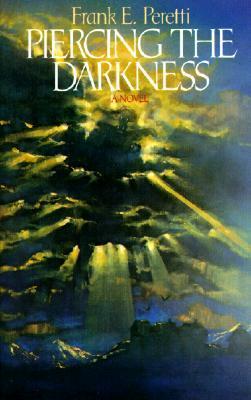
Piercing the Darkness by Frank E. Peretti

First published January 1, 1989

The light shines in the darkness, and the darkness has not overcome it.

John 1:5 (ESV)

It all begins in Bacon’s Corner, a tiny farming community far from the interstate . . . An attempted murder, a case of mistaken-or is it covered up? -identity, and a ruthless lawsuit against a struggling Christian school. Sally Beth Roe, a young loner, a burnout, a kind of “leftover hippie, “finds herself caught in the middle of these bizarre events, fleeing for her life while trying to recall her dark past.

Across a vast panorama of heart-stopping action, Sally Roe’s journey is a penetrating portrayal of our times, a reflection of our wanderings, and a vivid reminder of the redemptive power of the Cross. A companion volume to This Present Darkness, readers have purchased over two million copies of Piercing the Darkness since its publication in 1989.

**********

The Armor of God

10 Finally, be strong in the Lord and in his mighty power. 11 Put on the full armor of God, so that you can take your stand against the devil’s schemes. 12 For our struggle is not against flesh and blood, but against the rulers, against the authorities, against the powers of this dark world and against the spiritual forces of evil in the heavenly realms. 13 Therefore put on the full armor of God, so that when the day of evil comes, you may be able to stand your ground, and after you have done everything, to stand. 14 Stand firm then, with the belt of truth buckled around your waist, with the breastplate of righteousness in place, 15 and with your feet fitted with the readiness that comes from the gospel of peace. 16 In addition to all this, take up the shield of faith, with which you can extinguish all the flaming arrows of the evil one. 17 Take the helmet of salvation and the sword of the Spirit, which is the word of God.18 And pray in the Spirit on all occasions with all kinds of prayers and requests. With this in mind, be alert and always keep on praying for all the Lord’s people.

Ephesians 6:10-18 (NIV)

Wish-List: Books on the Christian Faith

I’ve been on the search for books on Systematic Theology, further Biblical teachings of Christ’s ministry and Christian application with a non-Calvinistic view point and came across Norman L. Geisler. I found information saying he is considered “moderate Calvinist,” and that he is not a “Five Point Calvinist.” I find that to be somewhat reassuring in my search for the reading material I’m looking for. I am definitely willing to give his books a read. You see, I’m not a Calvinist nor am I a protestant. That said, I am not closed minded from reading different viewpoints; I’m just looking for particular studies for the moment. Mater of fact, I respect and listen to a lot of what protestants have to say.

Also, I’m planning on reading the books in my father’s library on Systematic Theology as well as adding to my own library.

First, what is Systematic Theology according to Oxford Languages? The theology is “a form of theology in which the aim is to arrange religious truths in a self-consistent whole.” In a nutshell, the systematic view is to give an orderly format of the doctrines of Christian faith. And let me tell you, I have seen and heard many different viewpoints. Below are a few books by Geisler that I’m interested in reading.

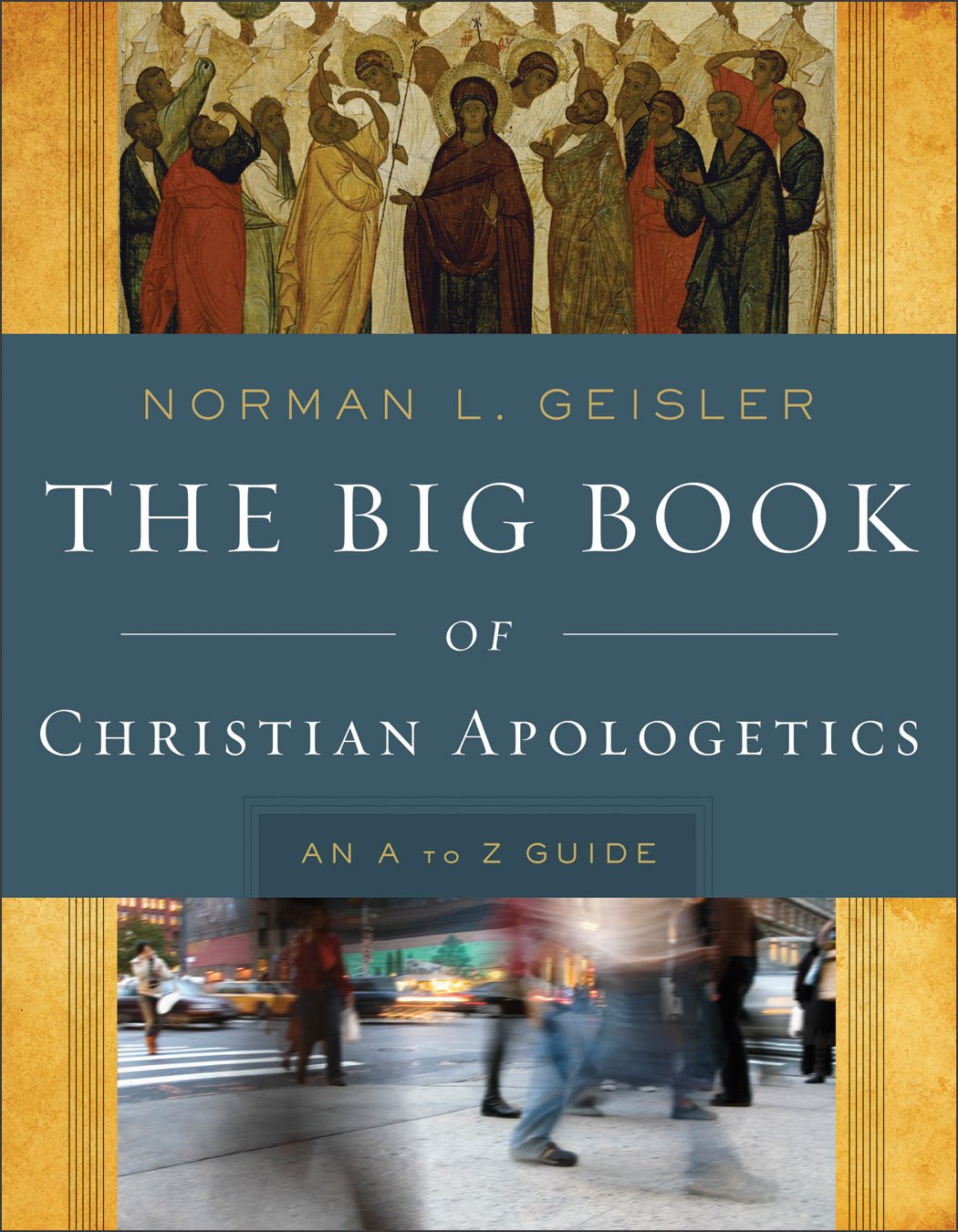
The Big Book of Christian Apologetics: An A to Z Guide (A to Z Guides) 

The Big Book of Christian Apologetics is a comprehensive resource designed to equip motivated believers with information to help defend and explain their faith. Examining nearly every key issue, person, and concept related to Christian apologetics, this book clarifies difficult biblical passages, clearly explains various philosophical systems and concepts, examines contemporary issues and challenges, and offers classic apologetic arguments, all with the aim of giving readers the background to intelligently and persuasively talk about their Christian faith with skeptics. An expertly abridged version of the Baker Encyclopedia on Christian Apologetics, this resource brings leading apologist Norman L. Geisler’s seminal work to the masses.

A Popular Survey of the New Testament 

Understanding the New Testament is a daunting but exciting task. Our world is so different from that of the first century. Yet it is important to understand the context and content of the New Testament if we are to be faithful followers. Now in paper, this survey addresses the who, what, where, when, why, and how questions that readers of the Bible may have, such as: How can we tell if what is written in the New Testament is true history or just mythology? When were these books written and why? and What can today’s believers get out of letters addressed to people who lived two millennia ago? Written in an easy, informal style, this survey is accessible and enjoyable to anyone who wants to better understand the New Testament.

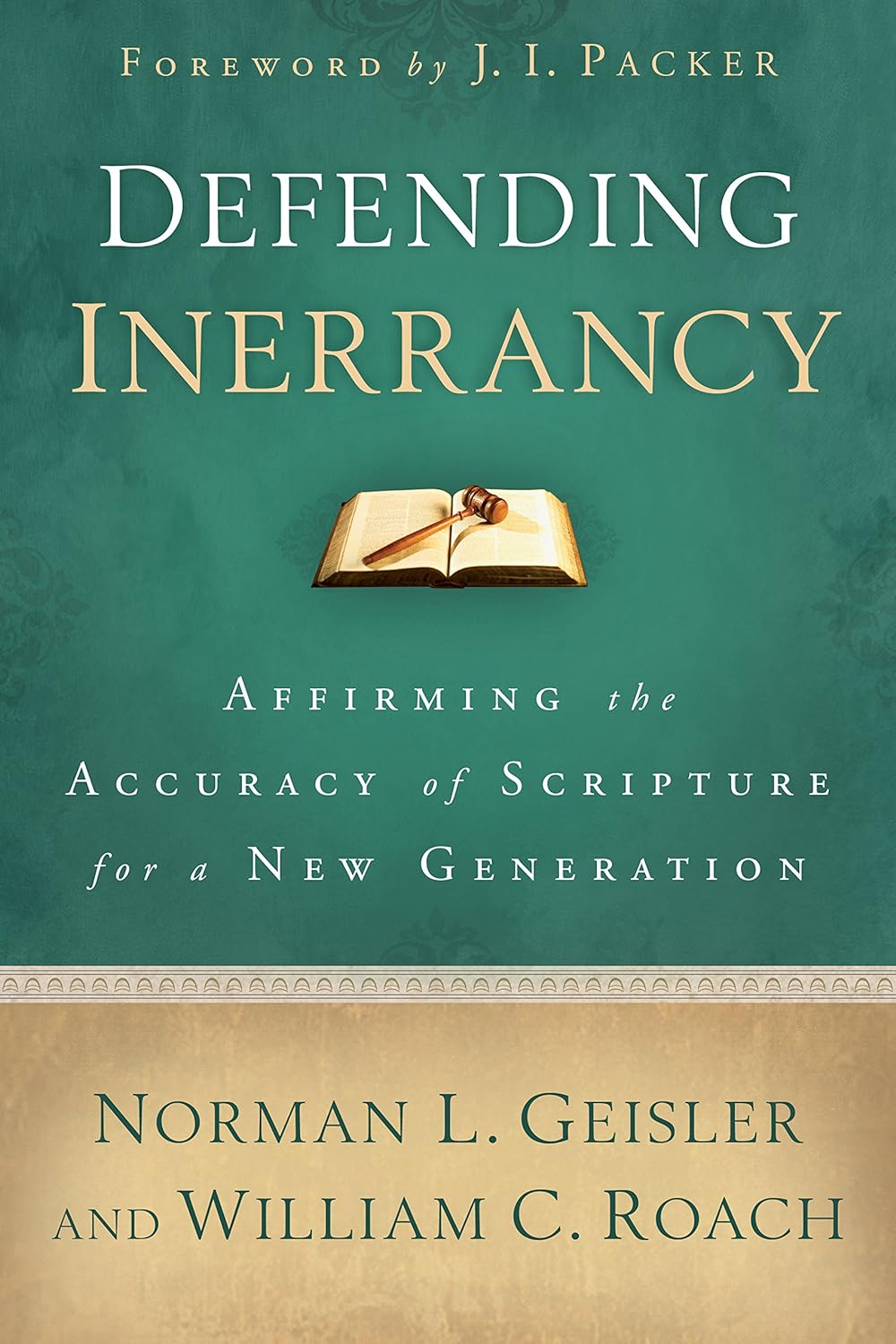
Defending Inerrancy: Affirming the Accuracy of Scripture for a New Generation

According to the authors, the doctrine of inerrancy has been standard, accepted teaching for more than 1,000 years. In 1978, the famous “Chicago Statement” on inerrancy was adopted by the Evangelical Theological Society, and for decades it has been the accepted conservative evangelical doctrine of the Scriptures. However, in recent years, some prominent evangelical authors have challenged this statement in their writings.

Now eminent apologist and bestselling author Norman L. Geisler, who was one of the original drafters of the “Chicago Statement,” and his coauthor, William C. Roach, present a defense of the traditional understanding of inerrancy for a new generation of Christians who are being assaulted with challenges to the nature of God, truth, and language. Pastors, students, and armchair theologians will appreciate this clear, reasoned response to the current crisis.

Note: Also, I would like to mention a book of his I’ve had on my wish-list and at first, the author’s name escaped my memory. I’m delighted to know he has written the book along with Frank Turek of whom I know his work.

I Don’t Have Enough Faith to Be an Atheist (Foreword by David Limbaugh) 

Geisler and Turek argue that Christianity requires the least faith of all worldviews because it is the most reasonable. A valuable aid to those interested in examining the reasonableness of the Christian faith.

Christian Church History

In a post not too long ago, I mentioned that I’m deeply involved in Bible studies-such as theology and the early Christian church history and other history research. In the latter for example, I’m focusing much on ancient cultural backgrounds; including the Old Testament and New Testament.

What led me to do a deep dive study in early Christianity history was a YouTube video by AOC Network. The channel has a video on the early Christians and it inspired me and deeply moved me to learn more about Christians in the first and second century AD. I approached my father about this subject and we talked about specifics and he handed me a book, Church History in Plain English by Bruce L. Shelley. He also printed off summaries of information on several saints during that time. I believe from his Logos  Bible study subscription. Such a great resource that many ministers, students of theology and laypeople use. Logos in Greek means word. I also asked him if he could give me more information on the Reformers. Since then I have added quite a few books about the Reformers to my reading pile. That subject is for other blog post topics.

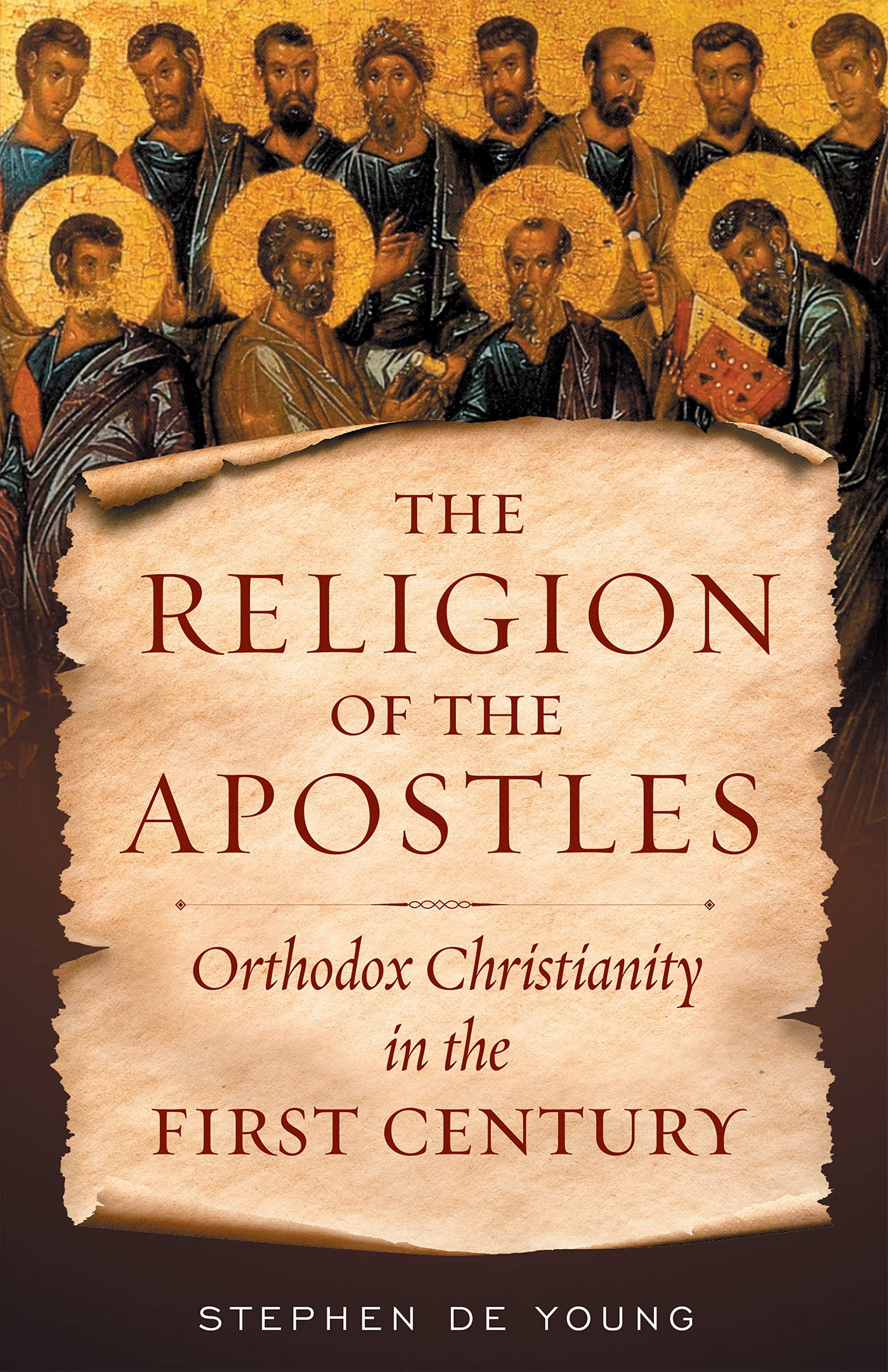
As I started reading Church History in Plain English and read about the Saints, I felt a strong feeling of emotion within me and I began to other sources of research on the Christian Orthodox Church. I look forward to sharing more of my spiritual journey with you all in this endeavor. For now, check out the book description for Church History in Plain English and another book on, The Religion of the Apostles (Orthodox Christianity in the First Century) by Stephen De Young I have added to my to-read pile.Many of you might be inspired to check them out.

Stephanie Hopkins

God Bless

Church History in Plain English by Bruce L. Shelley

With more than 275,000 copies sold, this is the story of the Church for today’s readers. The third edition of Shelley’s classic one-volume history of the church brings the story of Christianity into the twenty-first century. This latest edition of the book takes a close look at the rapid growth of evangelical and Pentecostal Christianity in the southern hemisphere, addresses the decline in traditional mainline denominations, examines the influence of technology on the spread of the gospel, and discusses how Christianity intersects with other religions in countries all over the world.

The concise book provides an easy-to-read guide to church history, with intellectual substance. The new edition of Church History in Plain Language promises to be the new standard for readable Church History.

The Religion of the Apostles (Orthodox Christianity in the First Century) by Stephen De Young

Rev. Dr. Stephen De Young, creator of the popular The Whole Counsel of God blog and podcast, traces the lineage of Orthodox Christianity back to the faith and witness of the apostles, which was rooted in a first-century Jewish worldview. The Religion of the Apostles presents the Orthodox Christian Church of today as a continuation of the religious life of the apostles, which in turn was a continuation of the life of the people of God since the beginning of creation.

Christian Theology

In my last blog post, I mentioned that I was deeply involved in Bible studies-such as theology and the early Christian church history and other history research. In the latter, I meant to say my additional research, or study if you will, was centered on ancient cultural backgrounds. Last year I was gifted by my father the NIV Cultural Backgrounds Study Bible. This is my third study Bible I have acquired and I am thrilled to have this edition to my growing theology library. My father also gifted me the Holman Illustrated Guild to Biblical Geography (reading the Land) by Paul H, Wright. In addition, I am blessed to be studying from my father’s theology library as well. Including his NIV commentaries of each book of the Bible.

When I was a child my first Bible was the King James version and on June 14, 1994, I received my first NIV study Bible from my parents. That particular version is the NIV Disciple’s Study Bible.

What I love about the NIV Cultural Backgrounds Study Bible I was gifted last year, is a richer look behind the scenes that I was looking for with my current Bible studies. I will most likely acquire the New King James version at some point in time. I can’t wait! Another version I want to read is the Geneva Bible. This Bible is significant of the Bible into English during the 16th century English Protestantism. Thankfully my father has a copy.

Recently I’ve also started to use my Bible App as another form of Bible reading. To listen through the Bible in a year and then repeat every year. At times, I will read along with one of my Bibles. I find that helps me with staying in the word and memorization. Other tools that help me for a better understanding during my Bible studies and research are the Oxford Bible Atlas and Holman’s Bible Dictionary. In a later post I will be sharing other theological and cultural books I’m studying from. If you are interested in historical backgrounds and a better or deeper understanding of context, I highly recommend the books above to start with.

Stephanie Hopkins