Reader’s Log 068: Upcoming Nonfiction Reads

Read Lots and Read Widely

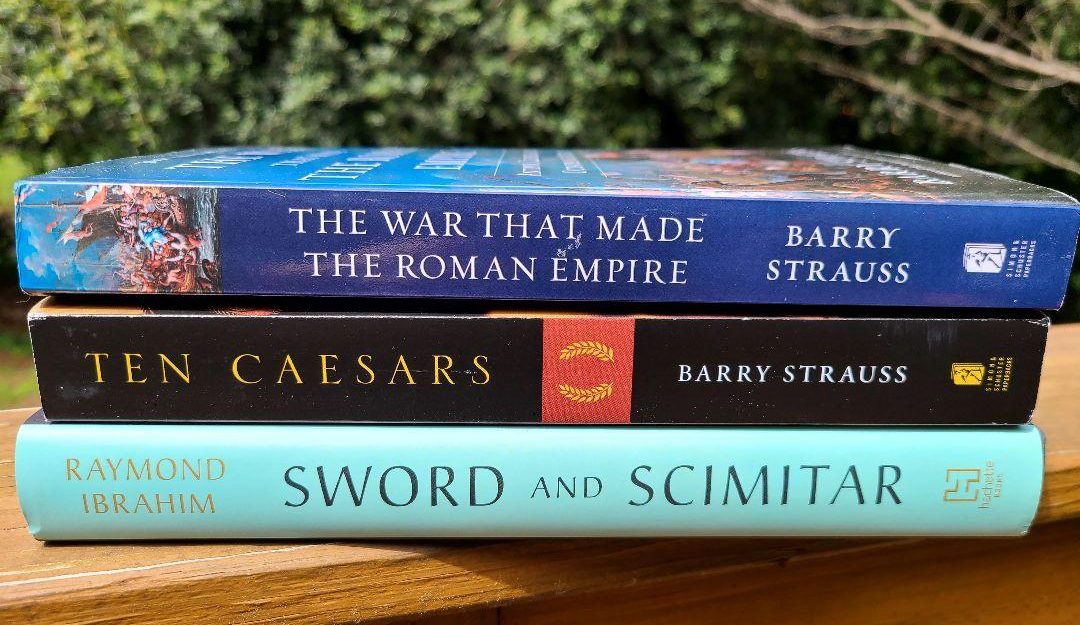
I am thrilled about reading these nonfiction books this late spring and through the summer. They have been on my wish-list for some time now and one of the many things I like about Strauss’s and Ibrahim’s works are how accessible they are to readers across the board-if you will.

If you would like to check out interviews with these historians, first check out Konstantin Kisin and Francis Foster at Triggernometry interview with Strauss, and interview the interview Ibrahim.
Are you a nonfiction reader? How often do you read nonfiction?

Stephanie
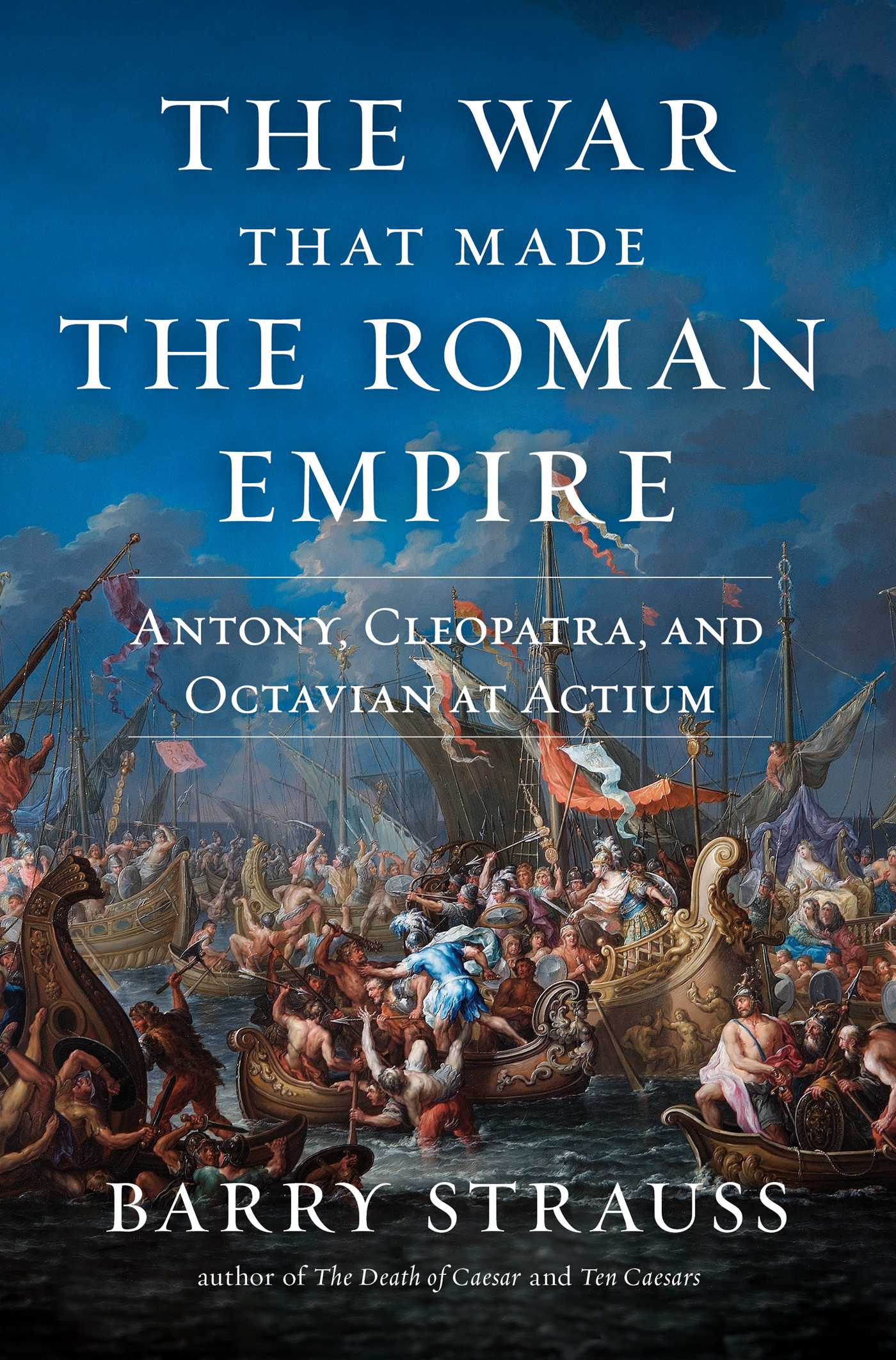
The War That Made the Roman Empire: Antony, Cleopatra, and Octavian at Actium by Barry S. Strauss

Published March 21, 2023 by Simon & Schuster

Following Caesar’s assassination and Mark Antony’s defeat of the conspirators who killed Caesar, two powerful men remained in Rome—Antony and Caesar’s chosen heir, young Octavian, the future Augustus. When Antony fell in love with the most powerful woman in the world, Egypt’s ruler Cleopatra, and thwarted Octavian’s ambition to rule the empire, another civil war broke out. In 31 BC one of the largest naval battles in the ancient world took place—more than 600 ships, almost 200,000 men, and one woman—the Battle of Actium. Octavian prevailed over Antony and Cleopatra, who subsequently killed themselves.

The Battle of Actium had great consequences for the empire. Had Antony and Cleopatra won, the empire’s capital might have moved from Rome to Alexandria, Cleopatra’s capital, and Latin might have become the empire’s second language after Greek, which was spoken throughout the eastern Mediterranean, including Egypt.

In this “superbly recounted” ( The National Review ) history, Barry Strauss, ancient history authority, describes this consequential battle with the drama and expertise that it deserves. The War That Made the Roman Empire is essential history that features three of the greatest figures of the ancient world.
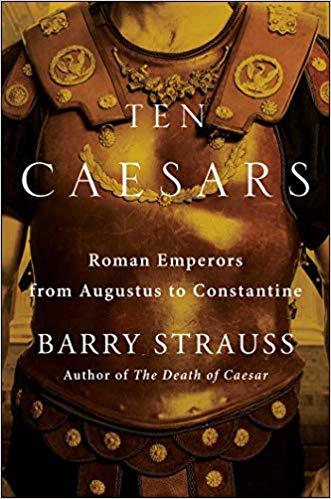
Ten Caesars: Roman Emperors from Augustus to Constantine by Barry S. Strauss

Published March 5, 2019 by Simon & Schuster

Barry Strauss tells the story of the Roman Empire from rise to reinvention, from Augustus, who founded the empire, to Constantine, who made it Christian and moved the capital east to Constantinople.

During these centuries Rome gained in splendor and territory, then lost both. By the fourth century, the time of Constantine, the Roman Empire had changed so dramatically in geography, ethnicity, religion, and culture that it would have been virtually unrecognizable to Augustus. Rome’s legacy remains today in so many ways, from language, law, and architecture to the seat of the Roman Catholic Church. Strauss examines this enduring heritage through the lives of the men who shaped it: Augustus, Tiberius, Nero, Vespasian, Trajan, Hadrian, Marcus Aurelius, Septimius Severus, Diocletian and Constantine.
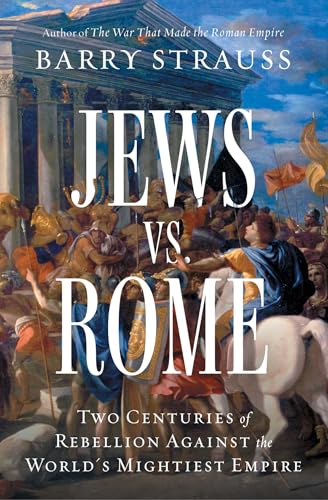
Jews vs. Rome: Two Centuries of Rebellion Against the World’s Mightiest Empire by Barry S. Strauss

Expected publication (Paperback) August 18, 2026 by Simon & Schuster

I have pre-ordered the paperback. Can’t wait to get it in the mail!

A new history of two centuries of Jewish revolts against the Roman Empire, drawing on recent archeological discoveries and new scholarship by leading historian Barry Strauss.

Jews vs. Rome is a gripping account of one of the most momentous eras in human the two hundred years of ancient Israel’s battles against Rome that reshaped Judaism and gave rise to Christianity. Barry Strauss vividly captures the drama of this era, highlighting the courageous yet tragic uprisings, the geopolitical clash between the empires of Rome and Persia, and the internal conflicts among Jews.

Between 63 BCE and 136 CE, the Jewish people launched several revolts driven by deep-seated religious beliefs and resentment towards Roman rule. Judea, a province on Rome’s eastern fringe, became a focal point of tension and rebellion. Jews vs. Rome recounts the three major the Great Revolt of 66–70 CE, which led to the destruction of Jerusalem and the Temple, culminating in the Siege of Masada, where defenders chose mass suicide over surrender; the Diaspora Revolt, ignited by heavy taxes across the Empire; and the Bar Kokhba Revolt. We meet pivotal figures such as Simon Bar Kokhba but also some of those lesser-known women of the era like Berenice, a Jewish princess who played a major role in the politics of the Great Revolt and was improbably the love of Titus—Rome’s future emperor and the man who destroyed Jerusalem and the Temple.

Today, echoes of those battles resonate as the Jewish nation faces new challenges and conflicts. Jews vs. Rome offers a captivating narrative that connects the past with the present, appealing to anyone interested in Rome, Jewish history, or the compelling true tales of resilience and resistance.
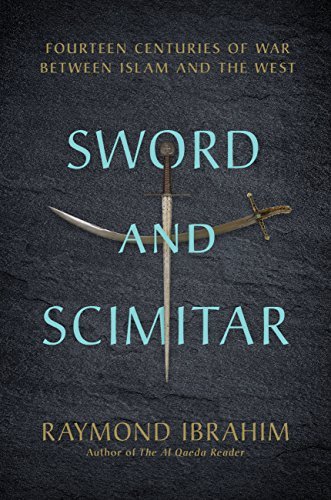
Sword and Scimitar: Fourteen Centuries of War between Islam and the West by Raymond Ibrahim

Published August 28, 2018 by Grand Central Publishing

A sweeping history of the often-violent conflict between Islam and the West, shedding a revealing light on current hostilities

The West and Islam–the sword and the scimitar–have clashed since the mid-seventh century, when, according to Muslim tradition, the Byzantine emperor rejected Prophet Muhammad’s order to abandon Christianity and convert to Islam, unleashing a centuries-long jihad on Christendom.

Sword and Scimitar chronicles the significant battles that arose from this ages-old Islamic jihad, beginning with the first major Islamic attack on Christian land in 636, through the occupation of the Middle East that prompted the Crusades and the far-flung conquests of the Ottoman Turks, to the European colonization of the Muslim world in the 1800s, when Islam largely went on the retreat–until its reemergence in recent times. Using original sources in Arabic, Greek, Latin, and Turkish, preeminent historian Raymond Ibrahim describes each battle in vivid detail and explains the effect the outcome had on larger historical currents of the age and how the military lessons of the battle reflect the cultural fault-lines between Islam and the West.

The majority of these landmark battles are now forgotten or considered inconsequential. Yet today, as the West faces a resurgence of this enduring Islamic jihad, Sword and Scimitar provides the needed historical context to understand the current relationship between the West and the Islamic world, and why the Islamic State is merely the latest chapter of an old history.
Reader’s Log 041: The West and Islam

For many years now, I’ve been quietly studying Islam starting with its origins to the present day and have maybe told two or three people in my acquaintance. When it comes to religions, cults and religious laws and culture, I tend to do deep dives into these areas. After all, studying religions is the backbone of knowing about civilizations and cultures throughout history. In all honestly, you can’t have one without the other. I discovered Raymond Ibrahim’s works a while ago and I’ve been following his interviews and his YouTube channel. I tend to do this with scholar’s and historian’s nonfiction works I’m considering reading. That is to say, I want to know a bit about their background before I invest my time and money. I do read books on said topics from writer’s I might disagree with or hold a different religious background. I’m looking forward to reading the three books listed below in the near future for further study and I’m curious about the takeaways I will have from them. The Two Swords of Christ is coming out in November of this year.

Stephanie

Sword and Scimitar: Fourteen Centuries of War between Islam and the West by Raymond Ibrahim, Victor Davis Hanson (Foreword)

A sweeping history of the often-violent conflict between Islam and the West, shedding a revealing light on current hostilities

The West and Islam–the sword and the scimitar–have clashed since the mid-seventh century, when, according to Muslim tradition, the Byzantine emperor rejected Prophet Muhammad’s order to abandon Christianity and convert to Islam, unleashing a centuries-long jihad on Christendom.

Sword and Scimitar chronicles the significant battles that arose from this ages-old Islamic jihad, beginning with the first major Islamic attack on Christian land in 636, through the occupation of the Middle East that prompted the Crusades and the far-flung conquests of the Ottoman Turks, to the European colonization of the Muslim world in the 1800s, when Islam largely went on the retreat–until its reemergence in recent times. Using original sources in Arabic, Greek, Latin, and Turkish, preeminent historian Raymond Ibrahim describes each battle in vivid detail and explains the effect the outcome had on larger historical currents of the age and how the military lessons of the battle reflect the cultural faultlines between Islam and the West.

The majority of these landmark battles are now forgotten or considered inconsequential. Yet today, as the West faces a resurgence of this enduring Islamic jihad, Sword and Scimitar provides the needed historical context to understand the current relationship between the West and the Islamic world, and why the Islamic State is merely the latest chapter of an old history.
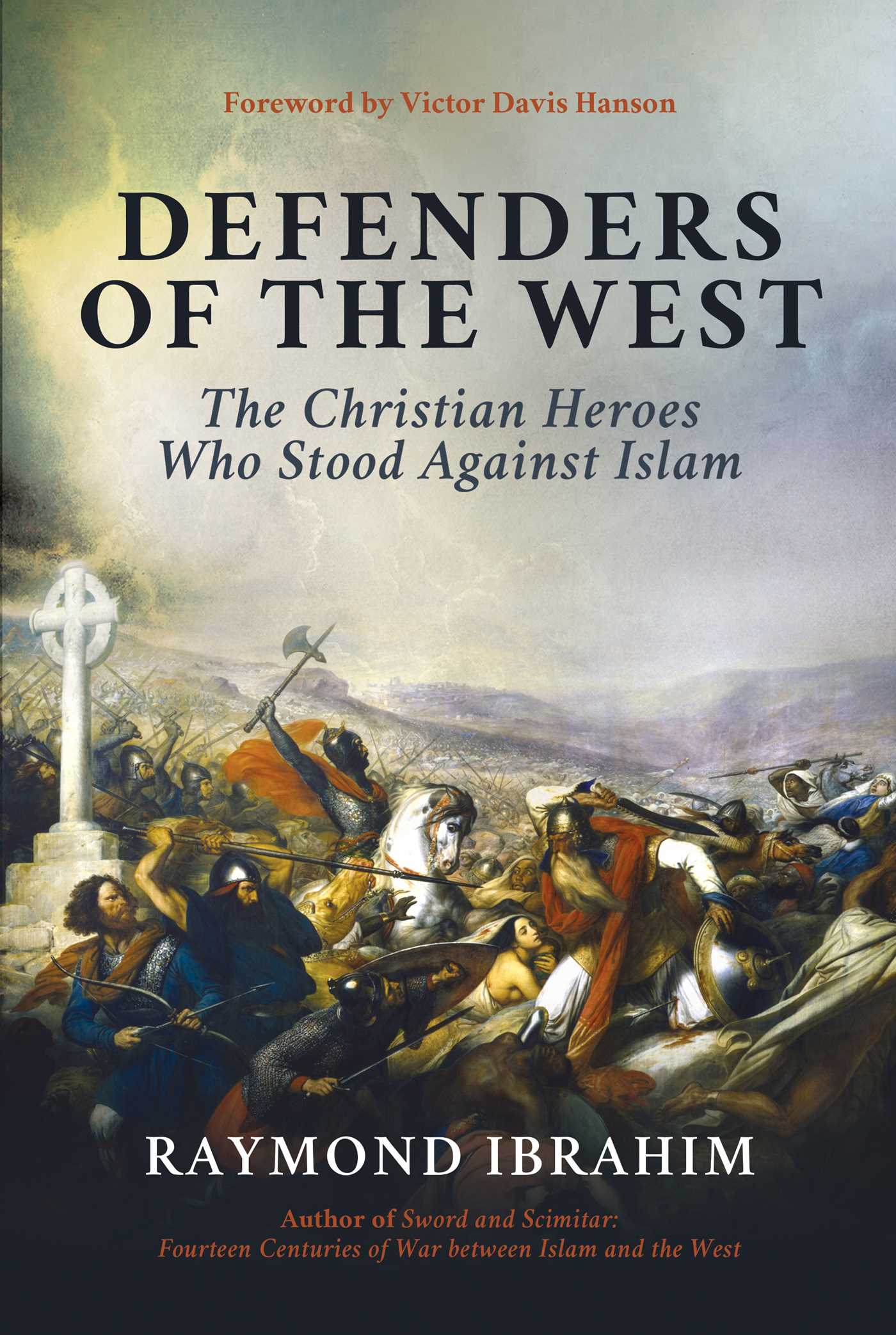
Defenders of the West: The Christian Heroes Who Stood Against Islam by Raymond Ibrahim

A riveting account of the lives and epic battles of eight Western defenders against violent Islamic jihad that sheds much-needed light on the enduring conflict with radical Islam.

In Defenders of the West, the author of Sword and Scimitar follows up with vivid and dramatic profiles of eight extraordinary warriors—some saints, some sinners—who defended the Christian West against Islamic invasions. Discover the real Count Dracula, Spain’s El Cid, England’s Richard Lionheart, and many other historical figures, whose true and original claim to fame revolved around their defiant stance against jihadist aggression. With sixteen full color pages of photos and illustrations, Defenders of the West is an instructive and inspiring read. Whereas Sword and Scimitar revolved around decisive battles, this book revolves around decisive men.

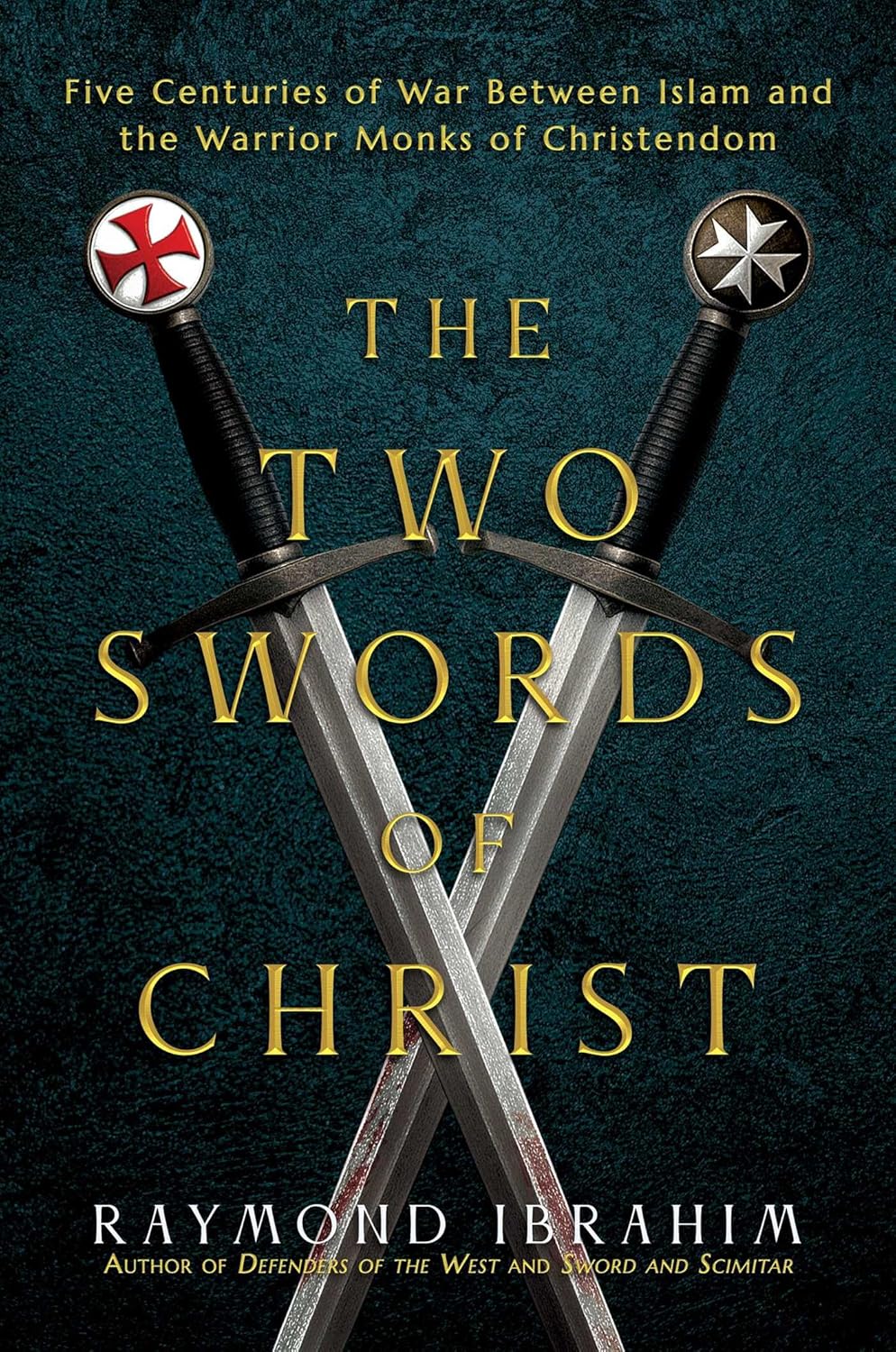
The Two Swords of Christ: Five Centuries of War between Islam and the Warrior Monks of Christendom by Raymond Ibrahim

Pub Date: November 25, 2025 and is available for pre-order on Amazon.

The definitive account of the warrior-monks who stood as Christendom’s shield against centuries of relentless Islamic aggression and a superlative example of Muscular Christianity for an era marred by effete and effeminized forms of the faith.

In this magisterial history, Raymond Ibrahim chronicles the long and brutal conflict between Islam and the West through the eyes and lives of Christendom’s original commando forces: the knights of the Temple and Hospital. These warrior monks, whose unprecedented fusion of piety and militancy remains unmatched to this day, played a pivotal—though overlooked if not suppressed—role in defending Christian civilization against the onslaught of Islamic forces during the Crusades and beyond.

Drawing on an exhaustive study of primary sources, and infused with his signature blend of rigorous scholarship and compelling storytelling, Ibrahim’s groundbreaking work far transcends the typical constraints of modern academic retellings, debunks widely held myths (such as the persistent claim that the Templars evolved into the Freemasons), and uncovers the theological foundation that gave rise to and provided justification for these military orders. In line with Christ’s now ignored directive that “two swords” are “enough” (Luke 22:38), these two brotherhoods wielded both spiritual and martial power to safeguard the faith.

WARNING: Brimming with epic battles, stunning heroism, and self-sacrificial martyrdom against the savage hordes of Islam, The Two Swords of Christ—the third installment of Ibrahim’s trilogy (following Sword and Scimitar and Defenders of the West)—stands as his fiercest and most violent narrative to date.

About Author:

(Bio and Picture from goodreads)

RAYMOND IBRAHIM is a widely published author, public speaker, and Middle East and Islam expert. His books include Crucified Again: Exposing Islam’s New War on Christians (2013) and The Al Qaeda Reader (2007). His writings, translations, and observations have appeared in a variety of publications, including Fox News, Financial Times, Jerusalem Post, Los Angeles Times, New York Times Syndicate, United Press International, USA Today, Washington Post, Washington Times, and Weekly Standard; scholarly journals, including the Almanac of Islamism, Chronicle of Higher Education, Jane’s Islamic Affairs Analyst, Middle East Quarterly, and Middle East Review of International Affairs; and popular websites, such as American Thinker, the Blaze, Bloomberg, Christian Post, FrontPage Magazine, Gatestone Institute, the Inquisitr, Jihad Watch, NewsMax, National Review Online, PJ Media, VDH’s Private Papers, and World Magazine. He has contributed chapters to several anthologies and been translated into various languages.

Ibrahim guest lectures at universities, including the National Defense Intelligence College, briefs governmental agencies, such as U.S. Strategic Command and the Defense Intelligence Agency, provides expert testimony for Islam-related lawsuits, and has testified before Congress regarding the conceptual failures that dominate American discourse concerning Islam and the worsening plight of Egypt’s Christian Copts. Among other media, he has appeared on MSNBC, Fox News, C-SPAN, PBS, Reuters, Al-Jazeera, Blaze TV, CBN, NPR, and dozens of radio interviews.

Ibrahim’s dual-background—born and raised in the U.S. by Coptic Egyptian parents born and raised in the Middle East—has provided him with unique advantages, from equal fluency in English and Arabic, to an equal understanding of the Western and Middle Eastern mindsets, positioning him to explain the latter to the former. His interest in Islamic civilization was first piqued when he began visiting the Middle East as a child in the 1970s. Interacting and conversing with the locals throughout the decades has provided him with an intimate appreciation for that part of the world, complementing his academic training.

Raymond received his B.A. and M.A. (both in History, focusing on the ancient and medieval Near East, with dual-minors in Philosophy and Literature) from California State University. There he studied closely with noted military-historian Victor Davis Hanson. He also took graduate courses at Georgetown University’s Center for Contemporary Arab Studies—including classes on the history, politics, and economics of the Arab world—and studied Medieval Islam and Semitic languages at Catholic University of America. His M.A. thesis examined an early military encounter between Islam and Byzantium based on arcane Arabic and Greek texts.

Ibrahim’s resume includes serving as Associate Director of the Middle East Forum and working as a Reference Assistant at the Near East Section of the Library of Congress, where he was often contacted by, and provided information to, defense and intelligence personnel involved in the fields of terrorism and area studies, as well as the Congressional Research Service.

He resigned from both positions in order to focus exclusively on researching and writing and is currently a Shillman Fellow at the David Horowitz Freedom Center, an associate fellow at the Middle East Forum, a Hoover Institution Media Fellow (2013), and a CBN News contributor.