Ancient history is fascinating and so relevant to our present time. Once one takes a deep give into cultures and the rise and falls of civilizations, you see patterns of these events more clearly. This has been my experience since I’ve started this journey and I see so many events that are happening today in a different light. This has led me to read more about the Persian, Hellenistic, and the Hasmonean periods to the the beginning of the Roman period BC. Over my lifetime I feel like I’ve only done surface studies of these periods and I want to be more than just a generalist of these histories. Since I’ve decided to go this route, I realize I need to be a bit more methodical in my research. Which isn’t always easy since there are so many paths in the details one uncovers that can easily lead you down a rabbit hole!
Today, I thought I would share three books about Cyrus the Great that I have on my wish-list. I’ve always been intrigued by him, particularly because he freed the Jews from their Babylonian exile.
I’m curious about comparing these books as well as seeing what each writer has to say about Cyrus. Most likely, I will take my time with these readings and take breaks.
Stephanie
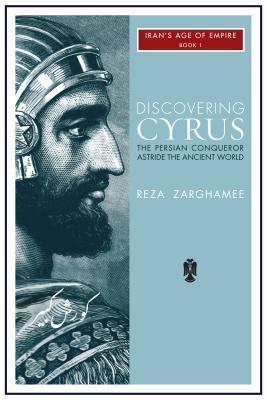
Discovering Cyrus: The Persian Conqueror Astride the Ancient World by Reza Zaghamee
Some of the most fascinating human epochs lie in the borderlands between history and mystery. So, it is with the life of Cyrus the Great, founder of the Persian Empire in the sixth century BCE. By conquest or gentler means, he brought under his rule a dominion stretching from the Aegean Sea to the Hindu Kush and encompassing some tens of millions of people. All across this immense imperium, he earned support and stability by respecting local customs and religions, avoiding the brutal ways of tyranny, and efficiently administering the realm through provincial governors. The empire would last another two centuries, leaving an indelible Persian imprint on much of the ancient world. The Greek chronicler Xenophon, looking back from a distance of several generations, wrote: “Cyrus did indeed eclipse all other monarchs, before or since.” The vision of the biblical prophet known as Second Isaiah anticipates Cyrus’ repatriation of Jews living in exile in Babylon with these words of the Lord: “He is my shepherd and will accomplish all that I please.”
Despite what he achieved and bequeathed, much about Cyrus remains uncertain. Persians of his era had no great respect for the written word and kept no annals. The most complete accounts of his life were composed by Greeks. More fragmentary or tangential evidence takes many forms – among them, archaeological remains, administrative records in subject lands, and the always tricky stuff of legend.
Given these challenges, Discovering Cyrus: The Persian Conqueror Astride the Ancient World is a remarkable feat of portraiture. In his vast sweep, Reza Zarghamee draws on sources of every kind, painstakingly assembling detail, and always weighing evidence carefully where contradictions arise. He describes the background of the Persian people, the turbulence of the times, and the roots of Cyrus’ policies. His account of the imperial era itself delves into religion, military methods, commerce, court life, and much else besides. The result is a living, breathing Cyrus standing atop a distant world that played a key role in shaping our own.
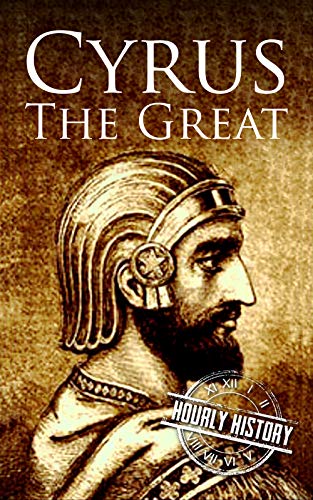
Cyrus the Great: A Life from Beginning to End by Hourly History
Cyrus II of Persia was one of the greatest leaders that the world had ever known; he was the one in whose footsteps other empire builders would follow. From Alexander the Great to countless Roman emperors and Ottoman sultans—it was the mighty shoes of Cyrus that they all attempted to fill.
More than merely a successful conqueror, Cyrus the Great is known just as much for being a great liberator as he is known for his conquests. He was even credited in the Bible as the one who freed the Jews from their long-held Babylonian exile. By the time of his death, Cyrus controlled more land and people than anyone before him. Under his dominion were countless principalities, nationalities, ethnicities, and religions of all kinds. In contrast to many other powerful rulers, Cyrus did not seek to oppress his subjects or interfere with their way of life, religions, or local customs. It is for this reason that, as great as his temporal conquests may have been, the benevolence of Cyrus the Great’s leadership stands as his greatest attribute of all.
The life of Cyrus the Great remains as an unparalleled testament in the annals of history.
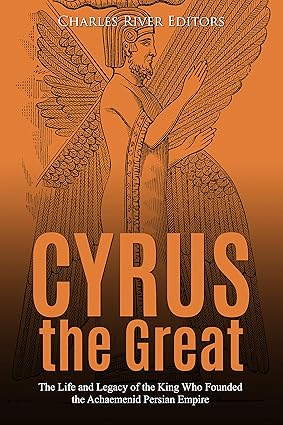
Cyrus the Great: The Life and Legacy of the King Who Founded the Achaemenid Persian Empire by Charles River Editors
“I am Cyrus the king, an Achaemenian.” – An inscription found at the Persian capital of Pasargadae
At one point in antiquity, the Achaemenid Persian Empire was the largest empire the world had ever seen, but aside from its role in the Greco-Persian Wars and its collapse at the hands of Alexander the Great, it has been mostly overlooked. When it has been studied, the historical sources have mostly been Greek, the very people the Persians sought to conquer. Needless to say, their versions were biased.
It was not until excavations in the region during the 20th century that many of the relics, reliefs, and clay tablets that offer so much information about Persian life could be studied for the first time. Through archaeological remains, ancient texts, and work by a new generation of historians, a picture can today be built of this remarkable civilization and their most famous leaders.
When considering this empire’s rulers, the two most often referenced are Xerxes, the leader of the Persian invasion of Greece which caused the heroic sacrifice of the Spartans and their allies at Thermopylae, or Cyrus the Great, the man who created the empire. While he was one of the most influential men in the ancient world, research on Cyrus the Great is simultaneously fascinating and frustrating. The Persians’ ancestors did not write (in fact, in their epic poems and myths, they claim that it was something taught to man by demons and therefore something to be avoided), and though the Iranians had taken up writing in their governmental and administrative functions by the time Cyrus lived, the kings still did not learn to write. Put simply, it was considered a functional skill, but not of the greatest importance.
As a result, while plenty of ancient sources mention the great Persian king, Persian sources themselves are rare, and those sources that do exist, such as the Babylonian Chronicle, are largely dry and state only the basic facts and large events. By contrast, Greek sources about Cyrus embrace the artistic aspect of their work so highly that the accuracy often comes into question, and sometimes deep scrutiny is necessary to attempt to separate the fact from the fiction. In the end, the full truth about Cyrus and his reign may never be truly understood.
Of course, this reality has deepened the mystique that surrounds Cyrus even to this day, and it has elevated his status from conqueror and king to enlightened humanist monarch and ideal ruler. In fact, a modern misconception based on the Cyrus Cylinder has labeled him the first proponent of civil rights, though this is somewhat of an exaggeration. The argument hinges on the Cylinder being a unique artifact in listing the ideology by which Cyrus intended to rule, but it equally ignores the fact that such declarations were commonplace among kings of the ancient Near East and more a tool of monarchal propaganda than a sweeping declaration of human rights.
That said, Cyrus was a fair and rational leader, particularly compared to the many brutal kings and warlords of ancient times. The high praise he received, even from his enemies, must certainly not be dismissed, and the admiration directed toward him came from many other exceptional individuals, including Alexander the Great, a bitter enemy of the empire Cyrus founded. Whatever the underlying issues, the incredible achievements of Cyrus distinguish him as one of the greatest kings in history, and his life, conquests, reforms, and rule continue to be of great interest over 2,500 years later.
Cyrus the Great: The Life and Legacy of the King Who Founded the Achaemenid Persian Empire looks at the life of the Persian leader and the major legacy he left. Along with pictures depicting important people, places, and events, you will learn about Cyrus the Great like never before.





 Layered Pages