Acquiring books and reading them are entirely two different hobbies. I must say in the last few years, I have been working on curating my home library and working out what criteria I want to set to grow my stacks.
Many books I’ve donated over the decades and many I have kept. I must confess there were a few books I’ve regretted donating but have found copies at library sales that I added back to my book stack. There are also books that are out of print I want to acquire again or read for the first time. The hunt is on and the journey is exciting!
In this book stack series, I’m going to be sharing books I’ve previously read and review from Netgalley and want to obtain a physical copy for my home library. I have found a few over the years already but no time like the present to blog about this journey. May this series inspire you and perhaps you will discover books you want to add to your stacks. First up…
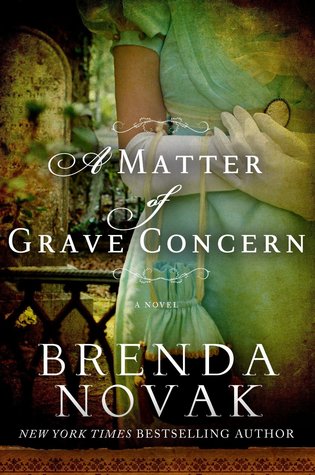
Going all the way back to 2014 for my first pick to share is, “A Matter of Grave Concern by Brenda Novak”. I remember enjoying this story, found the themes intriguing and would definitely like to read it again and add it to my library. I need to go see if this was a stand alone or if this turned out to be a book series. The book title highlighted above is a link to my review here on Layered Pages. By the way…I love the book cover!
About the Book:
When Maximillian Wilder hides his noble identity and joins the notorious body snatchers known as the London Supply Company, the last thing on his mind is love. He’s worried about Madeline, his vanished half-sister, who was last seen in the company of Jack Hurtsill, the gang’s conscienceless leader. Raiding graveyards, stealing corpses, and selling them to medical colleges as dissection material is dirty work, but Max knows he must gain Jack’s trust. He’s determined to find out what happened to Madeline—and to bring Jack to justice if she was murdered for the coin her body could earn.
Beautiful, spirited Abigail Hale, daughter of the surgeon at Aldersgate School of Medicine, detests the challenging, hard-bargaining Max almost as much as Jack. But she must procure the necessary specimens if she is to save the college and her father’s career. She believes she is going to be successful—until Jack double-crosses her. Then she’s swept into a plot of danger and intrigue, one where Max must intervene to protect her, no matter the risk to his plan…or his heart.
Secrets of the Stones is the second book on my backlog I’ve read since starting back reviewing books. I went way back on my list with this one. I can’t get over that it is from 2016! How in the world did I miss this? I know the answer but still…Glad I chose this to review next. Catching up with one book at a time. Be sure to read some of my thoughts on the story below.
Book Description:
Within the mysteries of the body, especially those who have been murdered, 18th-century anatomist Dr. Thomas Silkstone specializes in uncovering the tell-tale clues that lead towards justice… Newly released from the notorious asylum known as Bedlam, Lady Lydia Farrell finds herself in an equally terrifying position–as a murder suspect–when she stumbles upon the mutilated body of Sir Montagu Malthus in his study at Boughton Hall.
Meanwhile Dr. Thomas Silkstone has been injured in a duel with a man who may or may not have committed the grisly deed of which Lydia is accused. Despite his injury, Thomas hopes to clear his beloved’s good name by conducting a postmortem on the victim. With a bit of detective work, he learns that Montagu’s throat was slit by no ordinary blade, but a ceremonial Sikh dagger from India–a clue that may be connected to the fabled lost mines of Golconda. From the mysterious disappearance of a cursed diamond buried with Lydia’s dead husband, to the undying legend of a hidden treasure map, Thomas must follow a trail of foreign dignitaries, royal agents–and even more victims–to unveil the sinister and shocking secrets in the stones…
My Thoughts:
I absolutely love a good historical mystery thriller and this one fits the bill. I believe this story is the sixth in the series and I started with this one first. Why am I always doing that? Sigh. I don’t know. Well, I’m happy to report that after reading this book I want to go back and read the first five.
Eighteenth century anatomy interest me in several areas. Particularly the dissection of the human bodies and their analysis on how they died and perhaps leading to why and other considerations from scientific purview. The author certainly has a lot of material to work with when writing about crimes and mysteries in the eighteen-century due to the general public’s discovery of deaths through the publication of newspapers and such.
Dr. Thomas Silkstone is a fascinating character to say the least. He used scientist evidence and clues to help solve crimes. Which is refreshing when looking at how crimes are often concluded by ignorance, no evidence, convenience, mob rule and pure speculation throughout history. It makes me shudder to think how many innocent people have been convicted of crimes they did not comment and the punishments and the lifetime imprisonments they have endured.
I must admit, I was fascinated with the aspect of Silkstone’s method in investigating the crimes commented more so than his romantic involvement with Lydia- at first, I couldn’t see the attraction. Towards the end, she grew on me a little despite being in the background quite a bit more than I expected.
In this story, Lydia seemed to have the worse luck and finds herself in continual trouble at every turn. As I read this story I couldn’t help wonder if this was the case in the previous books. I cannot attest to the development of Lydia’s character since I haven’t read the other books in the series but I have my suspicions that she may be portrayed as a fragile woman and constantly needs recusing-you know, “Damsel in distress”. Towards the end of the story, there was an instance where Lydia was in the presence of Silkstone’s colleagues and one of the colleague’s brother discussing the crime(s) and their wary of Lydia’s “sensibilities” irked me a bit as they chose their words carefully or omitted them in her presence. Was it out of the “polite society” of the time, or was it because men considered women the “weaker sex” and felt the need to shelter them? Or it could be just plain out of respect for her that they guarded their tongue. I’m still undecided on that score. I will say that death was all too common during those times as it is in our century and women are made of tougher stuff than we are often given credit for in many situations. I can assure you this is not a slight on the author’s story-telling what-so-ever. On the contrary, she portrayed that quite well in the scene and has given me a lot of food for thought about certain topics and cultural norms when it comes to stuff like this. Again, keep in mind I’m not too certain of Lydia’s characterization.
I must say there were a lot of characters to keep up with and at times I was frustrated with that fact. Nonetheless, this story was well written, entertaining and a brilliant historical mystery read. As the clues were stacking up, the danger escalating, there was very little left to chance as Silkstone raced to solve the mystery before more people were murdered.
I must caution the reader and mention that there are gruesome details in how the crimes were commented. Beware of that fact.
Overall, the author does well in presenting multiple motivations for murder to have you fully immersed in the story to find out the conclusion.
Without a doubt, historical fiction mystery lovers will enjoy this adventure.
Stephanie Hopkins
I obtained a galley copy of this book from the publishers through NetGalley for an honest review.
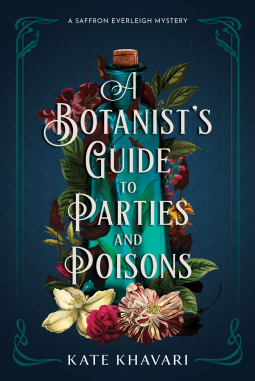
Kate Khavar’s debut book is the first book on my netgalley backlog list I’ve read since recently starting back reviewing books. This is one of those stories I’m torn about. More of my thoughts below…
Book Description:
Saffron Everleigh is in a race against time to free her wrongly accused professor before he goes behind bars forever. Perfect for fans of Deanna Raybourn and Anna Lee Huber, Kate Khavari’s debut historical mystery is a fast paced, fearless adventure.
London, 1923. Newly minted research assistant Saffron Everleigh attends a dinner party for the University College of London. While she expects to engage in conversations about the university’s large expedition to the Amazon, she doesn’t expect Mrs. Henry, one of the professors’ wives to drop to the floor, poisoned by an unknown toxin. Dr. Maxwell, Saffron’s mentor, is the main suspect, having had an explosive argument with Dr. Henry a few days prior. As evidence mounts against Dr. Maxwell and the expedition’s departure draws nearer, Saffron realizes if she wants her mentor’s name cleared, she’ll have to do it herself. Joined by enigmatic Alexander Ashton, a fellow researcher, Saffron uses her knowledge of botany as she explores steamy greenhouses, dark gardens, and deadly poisons. Will she be able to uncover the truth or will her investigation land her on the murderer’s list?
My Thoughts:
I believe it is safe to say that the book cover and title caught my attention first to this story.
Saffron Everleigh is quite the character. One moment you want to shake her and the next you want to hug her. She tends to be a bit reckless and puts herself in dangerous situations without thinking it through. Eveleigh is a woman of intelligence in a male dominated field and has to work even harder to been taken seriously. You see the struggle through the story and she doesn’t give up but her reckless actions wasn’t helping much for her I kept thinking. When I thought she’s finally learned her lesson she goes and does another life altering dangerous thing and puts herself and a colleague’s life on the line. I must say I had wondered how she was going to get out of that sticky situation to say the least!
While I wasn’t feeling the chemistry between Saffron and Alexander, I did enjoy their interactions and talking through the what ifs on who is the perpetrator.
While I felt a few details and characters could have been fleshed out a little bit better and the pacing was slow at times, this was an entertaining story. As for this story being a series, I’m hoping what I felt needs to be approved upon happens in the books after this one.
I did enjoy the Botany aspects of the story very much.
Stephanie
Side Bar: I may get to the other books in this series at some point in time. I would like to keep up with Saffron and seeing what other trouble she might get into.
A big thank you to Crooked Lane books for a galley copy through Netgalley for an honest review.
Today is a start of a new week and there is a lot going on at my YouTube channel. I am also making some changes-which evolving, expanding on projects and ideas is a good thing. Having a creative outlet is good for the soul. I am still learning and growing with YouTube and this has been a worthwhile journey. The bonus is that I have the opportunity to share craft ideas and inspiration with the crafting community. As my schedule changes, I do my best to adjust as I go along. I decided it would be a good idea to post on Mondays, a lineup up of videos planned for the week and which days they will be uploaded. This idea is also fun so one can see what is happening on the channel. There will be four videos uploaded this week and each one is unique and gives the viewer many ideas, tips and tricks.
This week’s video Lineup:
Tues. 10th: Update on the Scrappy Snippet Roll Challenge
Wed. 11th: Wild Card Wednesday
Fri. 13th: Yarn Bowl Tutorial
Sat. 14th: September Stitch Book- This month’s prompts are leaves and dots. See Saturday the 7th’s video for what you’ll need for this project.
“Mixed Media Art is taking different elements and bringing them together to tell a story. A telling of a deeper meaning of one’s creative soul.” -Stephanie M. Hopkins
In the last two previous posts, I discussed new beginnings and a never-ending compilation of books. I had taken a bit of an extended leave in blogging and reviewing books. The blogging part at least was random at best however. My blog post titled, “A Never-Ending Compilation of Books Part I,” is about my long overdue visit to NetGalley. You see, I haven’t reviewed books in a long time. I wasn’t even sure I was ever going to again. I had my reasons but that is no longer relevant.
Deciding not to select, accept or request new books to review until I either went through my backlog to decide if I wanted to catch up on a few or decide if I still wanted to review them quickly changed! Sigh. It’s a book enthusiast curse me thinks. At least that is my poor attempt of an excuse. Maybe or maybe not. I have an idea. Hear me out please and don’t judge. I know there are a few of you out there that are in the same state of mind (Insert laugh). I got to thinking, perhaps I could accept or requests slowly while working on my backlog. Did I execute that idea? You bet. Shameful-I Know-but in my defense, I requested a few to see what would happen as an experiment thinking there is not a chance on a bookshelf, I would be approved to review them. Well to my utter shock, I was approved for four of them except two! Those still may go through. Maybe. One never knows with NetGalley. It’s a bit of a lottery it seems like at times, except for the publishers that auto-approve you. I’m actually quite surprised I’m still auto-approved by several publishers considering I have been inactive in reviewing for a very long time. Someone is surely smiling down on me and I’m grateful and thankful that I still may have standing in the reviewing books circle or at best a fresh start. Cheering!
Below is a slideshow of the first group of books I’m going to review. This includes books from my backlog. So far, I’ve finish “The Bad Neighbor by Jenifer Ruff” and I’m almost finished reading, “The Resistance Bakery by Siobhan Curham. Off to an excellent start I must say!
Side Bar: I thought it would be fun to start a reader’s log. Something new and a little different.
It has been quite sometime since I browsed NetGalley for new and upcoming titles and it was delightful to search and discover books to add to my sorely neglected wish-list or to consider reviewing. I felt as if I was visiting a long-lost friend and we literally picked up where we left off as if it didn’t seem we were ever separated but for a short time.
I came across five books that sparked an interest and I look forward to further investigating and perhaps read in the future. Hopefully, read sooner rather than later. For now, I must purchase a new Kindle so that I may access my books on NetGalley. I definitely want to work on catching up to date on books that need to be reviewed or books I need to decide if I still want to review them before accepting new ones. Meanwhile, I’ll gleefully explore their galley of books to blog about and perhaps read one day.
Do these below titles interest you as well? There are so many reasons why these stories interest me and can’t wait to talk more about them!
Stephanie Hopkins
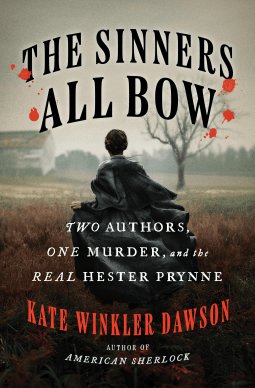
The Sinners All Bow
Two Authors, One Murder, and the Real Hester Prynne by Kate Winkler Dawson
Description
Acclaimed journalist, podcaster, andtrue–crime historian Kate Winkler Dawson tells the true story of the scandalous murder investigation that became the inspiration for both Nathaniel Hawthorne’s The Scarlet Letter and the first true-crime book published in America.
On a cold winter day in 1832, Sarah Maria Cornell was found dead in a quiet farmyard in a small New England town. When her troubled past and a secret correspondence with charismatic Methodist minister Reverend Ephraim Avery was uncovered, more questions emerged. Was Sarah’s death a suicide…or something much darker? Determined to uncover the real story, Victorian writer Catharine Read Arnold Williams threw herself into the investigation as the trial was unfolding and wrote what many claims to be the first American true-crime narrative, Fall River. The murder divided the country and inspired Nathaniel Hawthorne’s The Scarlet Letter—but the reverend was not convicted, and questions linger to this day about what really led to Sarah Cornell’s death. Until now.
In The Sinners All Bow, acclaimed true-crime historian Kate Winkler Dawson travels back in time to nineteenth-century small-town America, emboldened to finish the work Williams started nearly two centuries before. Using modern investigative advancements—including “forensic knot analysis” and criminal profiling (which was invented fifty-five years later with Jack the Ripper)—Dawson fills in the gaps of Williams’s research to find the truth and bring justice to an unsettling mystery that speaks to our past as well as our present, anchored by three women who subverted the script they were given.
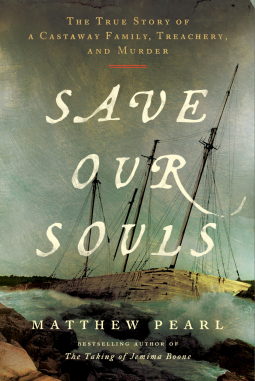
Save Our Souls
The True Story of a Castaway Family, Treachery, and Murder by Matthew Pearl
Description
From the bestselling author of The Taking of Jemima Boone, the unbelievable true story of a real-life Swiss Family Robinson (and their dog) who faced sharks, shipwreck, and betrayal.
On December 10, 1887, a shark fishing boat disappeared. On board the doomed vessel were the Walkers—the ship’s captain Frederick, his wife Elizabeth, their three teenage sons, and their dog—along with the ship’s crew. The family had spotted a promising fishing location when a terrible storm arose, splitting their vessel in two and leaving those onboard adrift on the perilous sea.
When the castaways awoke the next morning, they discovered they had been washed ashore—on an island inhabited by a large but ragged and emaciated man who introduced himself as Hans. Hans appeared to have been there for a while and could quickly educate the Walkers and their crew on the island’s resources. But Hans had a secret . . . and as the Walker family gradually came to learn more, what seemed like a stroke of luck to have the mysterious man’s assistance became something ominous, something darker.
Like David Grann and Stacy Schiff, Matthew Pearl unveils one of the most incredible yet little-known historical true stories, and the only known instance in history of an actual family of castaways. Save Our Souls asks us to consider who we might become if we found ourselves trapped on a deserted island.
A Feast of Folklore
The Bizarre Stories Behind British Food
by Ben Gazur
Description
Folklorist Ben Gazur guides you through the dark alleys of British history to uncover how our food habits have been passed down through generations of folklore.
Who was the first person to throw salt over their shoulder? Why do we think carrots can help us see in the dark? When did we start holding village fairs to honour gigantic apple pies? Or start hurling ourselves down hills in pursuit of a wheel of cheese? Gazur investigates the origins of famous food superstitions as well as much more bizarre and lesser-known tales too, from what day the devil urinates on blackberries to how to stop witches using eggshells as escape boats.
Hilarious and fascinating, A Feast of Folklore will introduce you to the gloriously eccentric folk who aren’t often noticed by historians. Here lies a smorgasbord of their dark remedies and deadly delicacies, waiting to be discovered.
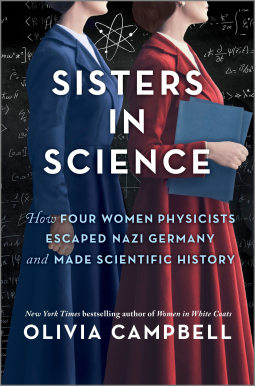
Sisters in Science
How Four Women Physicists Escaped Nazi Germany and Made Scientific History by Olivia Campbell
Description
The true story of four women pioneers in physics during World War II and their daring escape out of Nazi Germany
In the 1930s, Germany was a hotbed of scientific thought. But after the Nazis took power, Jewish and female citizens were forced out of their academic positions. Hedwig Kohn, Lise Meitner, Hertha Sponer and Hildegard Stücklen were eminent in their fields, but they had no choice but to flee due to their Jewish ancestry or anti-Nazi sentiments.
Their harrowing journey out of Germany became a life-and-death situation that required Herculean efforts of friends and other prominent scientists. Lise fled to Sweden, where she made a groundbreaking discovery in nuclear physics, and the others fled to the United States, where they brought advanced physics to American universities. No matter their destination, each woman revolutionized the field of physics when all odds were stacked against them, galvanizing young women to do the same.
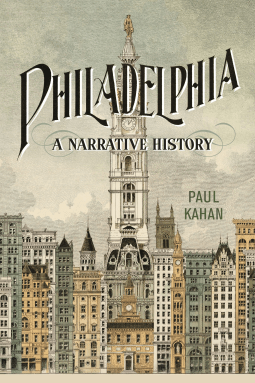
Philadelphia (A Narrative History) by Paul Kahan
Pub Date Oct 29 2024
Description
Philadelphia is famous for its colonial and revolutionary buildings and artifacts, which draw tourists from far and wide to gain a better understanding of the nation’s founding. Philadelphians, too, value these same buildings and artifacts for the stories they tell about their city. But Philadelphia existed long before the Liberty Bell was first rung, and its history extends well beyond the American Revolution. In Philadelphia: A Narrative History, Paul Kahan presents a comprehensive portrait of the city, from the region’s original Lenape inhabitants to the myriad of residents in the twenty-first century.
As any history of Philadelphia should, this book chronicles the people and places that make the city unique: from Independence Hall to Eastern State Penitentiary, Benjamin Franklin and Betsy Ross to Cecil B. Moore and Cherelle Parker. Kahan also shows us how Philadelphia has always been defined by ethnic, religious, and racial diversity—from the seventeenth century, when Dutch, Swedes, and Lenapes lived side by side along the Delaware; to the nineteenth century, when the city was home to a vibrant community of free Black and formerly enslaved people; to the twentieth century, when it attracted immigrants from around the world. This diversity, however, often resulted in conflict, especially over access to public spaces. Those two themes— diversity and conflict— have shaped Philadelphia’s development and remain visible in the city’s culture, society, and even its geography. Understanding Philadelphia’s past, Kahan says, is key to envisioning future possibilities for the City of Brotherly Love.
Paul Kahan is an expert on U.S. political, economic, and diplomatic history. He earned his Ph.D. in U.S. history from Temple University and lives outside of Philadelphia with his family.
I’ve taken quite an extended leave of blogging and writing posts. That is not to say I haven’t been reading, writing or creating art. On the contrary, my journey steered me to a road of a deeper and more meaningful contemplation and study. The endeavor also brought reflection on how and when I was ready to blog again. This past Monday was the start and I began with sharing an art theme of “Weave” that I’m conducting on my YouTube channel and my thoughts on the project.
I have been a blogger for many years and it has had its highs and lows. It is thus for many, I’m sure. That subject may be for another time. While the absence of posting on this public forum may have injured my viewership, it has in no way dampened my love of sharing art, crafts, stories, and the written word nor does it discourage me to start anew while being aware of the time it will take to renew or reach an audience of like minds. I look forward to this new journey with you and may it inspire you.
Without further delay, I’m sharing two books I’m currently reading and highly recommend them to all you history lovers. What an adventure!
Stephanie Hopkins
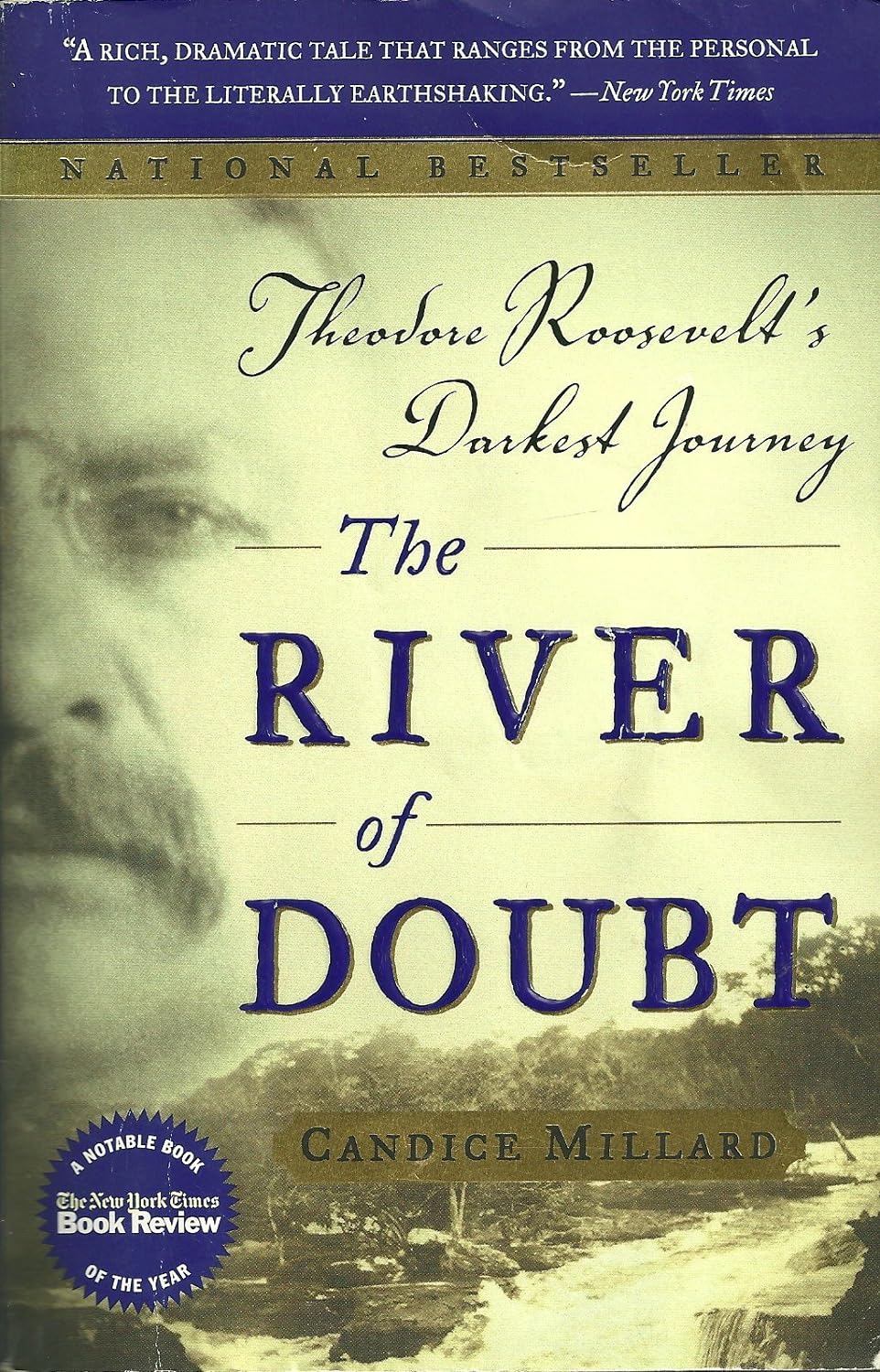
The River of Doubt: Theodore Roosevelt’s Darkest Journey by Candice Millard
Book Description:
At once an incredible adventure narrative and a penetrating biographical portrait, The River of Doubt is the true story of Theodore Roosevelt’s harrowing exploration of one of the most dangerous rivers on earth.
The River of Doubt—it is a black, uncharted tributary of the Amazon that snakes through one of the most treacherous jungles in the world. Indians armed with poison-tipped arrows haunt its shadows; piranhas glide through its waters; boulder-strewn rapids turn the river into a roiling cauldron.
After his humiliating election defeat in 1912, Roosevelt set his sights on the most punishing physical challenge he could find, the first descent of an unmapped, rapids-choked tributary of the Amazon. Together with his son Kermit and Brazil’s most famous explorer, Cândido Mariano da Silva Rondon, Roosevelt accomplished a feat so great that many at the time refused to believe it. In the process, he changed the map of the western hemisphere forever.
Along the way, Roosevelt and his men faced an unbelievable series of hardships, losing their canoes and supplies to punishing whitewater rapids, and enduring starvation, Indian attack, disease, drowning, and a murder within their own ranks. Three men died, and Roosevelt was brought to the brink of suicide. The River of Doubt brings alive these extraordinary events in a powerful nonfiction narrative thriller that happens to feature one of the most famous Americans who ever lived. From the soaring beauty of the Amazon rain forest to the darkest night of Theodore Roosevelt’s life, here is Candice Millard’s dazzling debut.
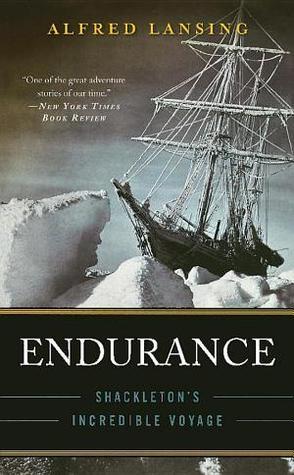
Endurance: Shackleton’s Incredible Voyage
byAlfred Lansing
Book Description:
The harrowing tale of British explorer Ernest Shackleton’s 1914 attempt to reach the South Pole, one of the greatest adventure stories of the modern age.
In August 1914, polar explorer Ernest Shackleton boarded the Endurance became locked in an island of ice. Thus, began the legendary ordeal of Shackleton and his crew of twenty-seven men. When their ship was finally crushed between two ice floes, they attempted a near-impossible journey over 850 miles of the South Atlantic’s heaviest seas to the closest outpost of civilization.
In Endurance, the definitive account of Ernest Shackleton’s fateful trip, Alfred Lansing brilliantly narrates the harrowing and miraculous voyage that has defined heroism for the modern age.
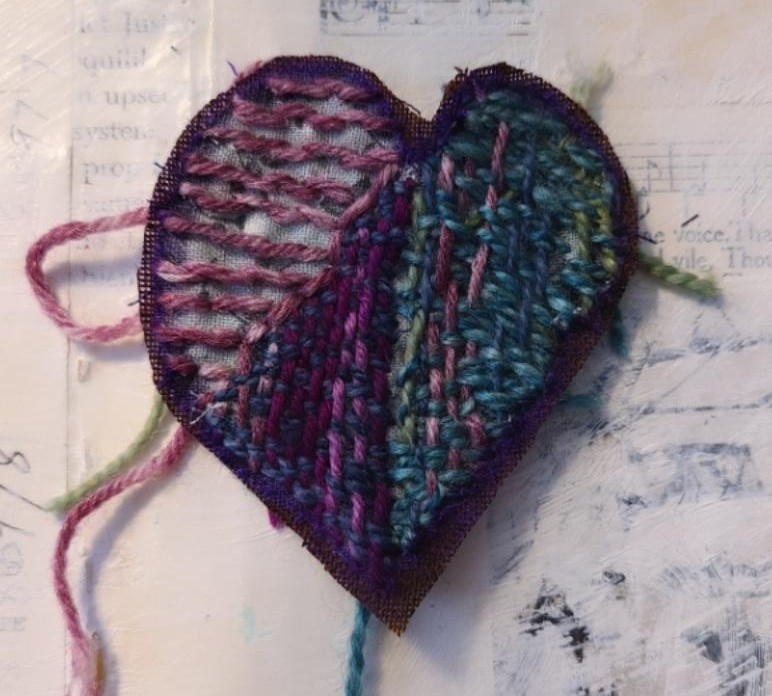
This month on my YouTube channel we’ve been exploring weave stitching and creating various applications of the stitch. Despite only scratching the surface of this medium, we’ve covered a lot of ground and the ideas are flowing. Today, I’m sharing the image of a weaved piece I’ve started exploring this weekend. I’ve called it “Mending Heart” and this heart has different meanings. Most importantly the mending by weaving and stitching bringing the heart to completion or rather wholeness, gives a sense of spiritual healing-if you will.
The YouTube link to Part I of Mending Heart is HERE
There are seasons in our lives when our hardships often feel overwhelming and sometimes, we lose sight at what God’s plans has for us. We get caught up in our struggles, doubts, feelings of hopelessness, and then despair can seep in our hearts. We become consumed with tiredness and weakness in our burdens, our hearts can harden and we can lose sight and we become focused on the wrong things that are temporary. We become focused on self and our troubles and that leads us away from Him. Instead be encouraged to turn to God in faith, continual prayer for healing and trust in His time and plan for our lives. God wants and longs for us to turn to Him for everything. In Matthew chapter 11:28 says, “Come to me, all you who are weary and burdened, and I will give you rest. And in 1 Peter 5:7 says, “Cast all your anxiety on Him because He cares for you.” In 2 Corinthians 4:17-18 says, “For our light and momentary troubles are achieving for us an eternal glory that far outweighs them all. So, we fix our eyes not on what is seen, but on what is unseen. For what is seen is temporary, but what is unseen is eternal.”
Prayer: O mighty God, you are our refuge and fortress in whom we trust. We praise you even in the time of trouble. You are loving and faithful. Hear our voice and be merciful to us O Lord, for our hope is in you. For your word says in Matthew 7:7-8, “Ask and it will be given to you; seek and you will find; knock and the door will be opened to you. For everyone who asks receives; the one who seeks finds; and to the one who knocks, the door will be opened.” We humbly ask you fill us with your Holy Spirit to protect us, guide us casting out all our doubts and sorrow for we give it all to you. We put our trust in you, O Lord. May we seek you in all of our ways. May your Spirit renew our minds, fill us your healing power and thanksgiving. May your Spirit surround us with deliverance for we stand on your promises. We ask all of these things in Jesus Holy name. Amen!
What has really helped me in my prayers and daily walk with Christ is to spend time with God in prayer and in His word. If there is something in your life that you are struggling with but you’re not sure how pray, the Bible can guide you with your prayers and help you build your relationship with God. Ask God to give you direction in your prayers. Ask Him to show you the way. We must become like children and seek Him with open hearts. He loves us so much.
Oftentimes, I like to write down my prayers and verses that help me in all areas of my life. There are so many passages and stories of overcoming hardships and thanksgiving in the Bible to help us.
Jesus answered, “It is written: ‘Man shall not live on bread alone, but on every word that comes from the mouth of God.” Matthew 4:4
“Your word is a lamp for my feet, a light on my path.” Psalms 119:105
“And we also thank God continually because, when you received the word of God, which you heard from us, you accepted it not as a human word, but as it actually is, the word of God, which is indeed at work in you who believe.” 1 Thessalonians 2:13
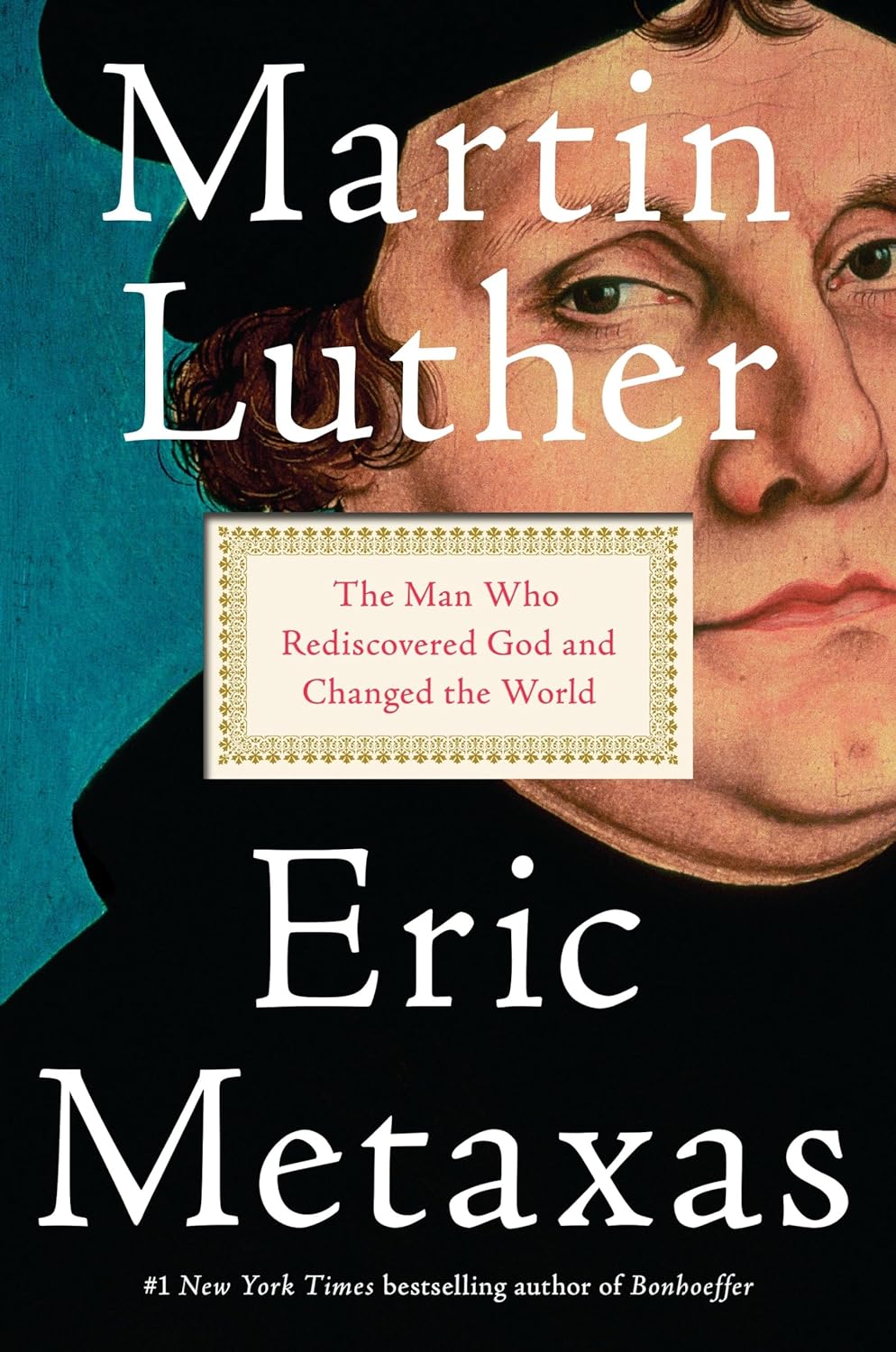
Some of you may know I’m currently reading, Martin Luther: The Man Who Rediscovered God and Changed the World by Eric Metaxas and I’m enjoying the biography so much, I’m taking my time and reading slowly through the pages. I’ve already marked quite a few passages for my annotating. Metaxas’s detailed account of Martin’s life and the period is exceptionally written. As I have been reading this book, I decided I must read all his works and shortly after, I remembered I have a paperback copy of, Amazing Grace: William Wilberforce and the Heroic Campaign to End Slavery! I will be reading that story next! I’ve had that book a few years and I know the history through other sources. I do remember leafing through its pages and reading a bit here and there. I had intended to read it straight away and I’m not sure what happened! No time like the present, I say. Maybe it was meant to be. Regardless, I’m delighted to already own two of Metaxas’s works.
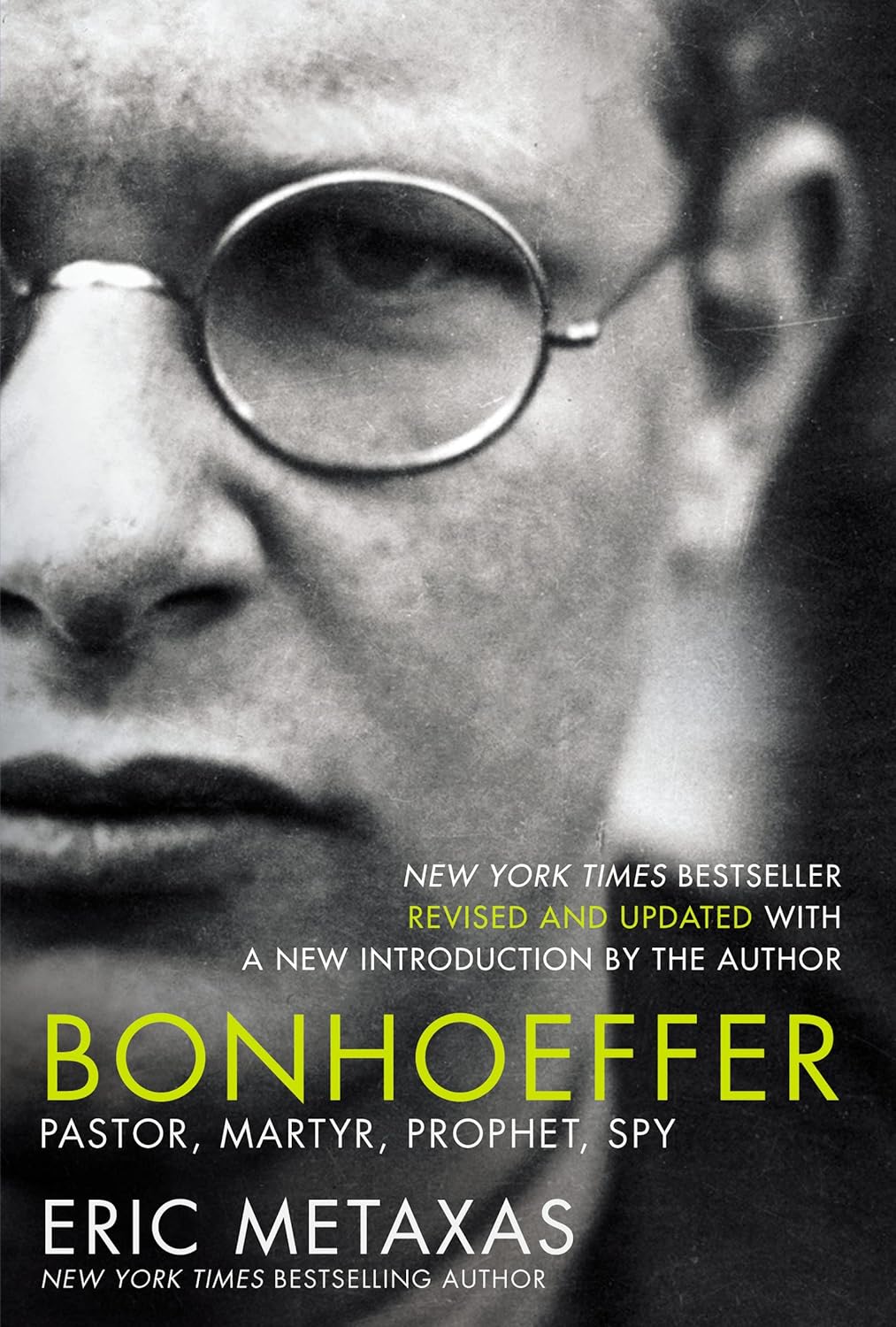
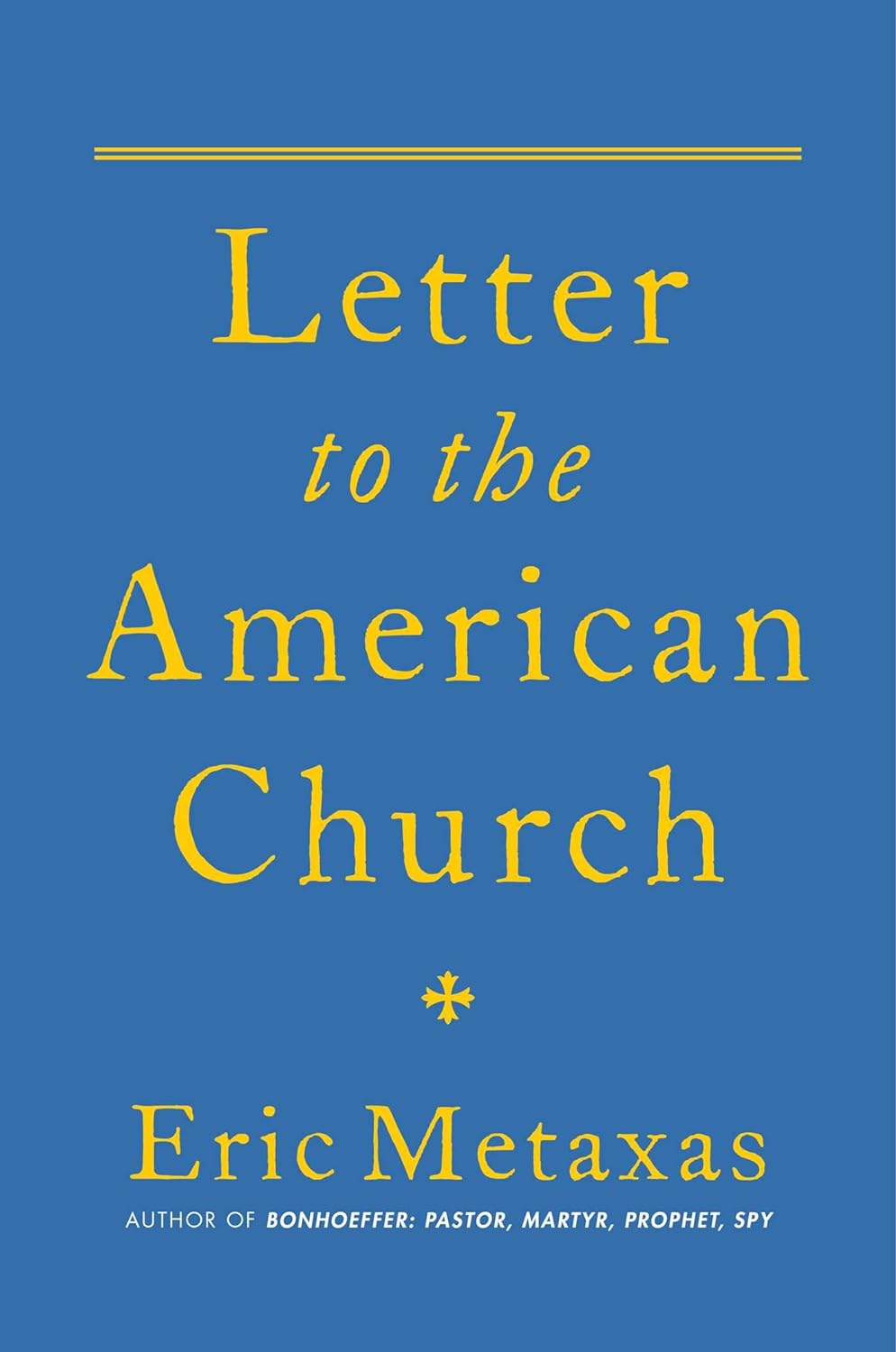
After reading both books mentioned above, there are two other books I’ve already chosen to read. I discovered and Bonhoeffer: Pastor, Martyr, Prophet, Spy and Letter to the American Church on YouTube. Metaxas’s channel and his guest appearance at churches and various interviews suddenly appeared this past Tuesday on my feed. Algorithms are useful at times, interesting and a bit unsettling all at the same time.
Stephanie
Bonhoeffer: Pastor, Martyr, Prophet, Spy
Who better to face the greatest evil of the 20th century than a humble man of faith?
As Adolf Hitler and the Nazis seduced a nation, bullied a continent, and attempted to exterminate the Jews of Europe, a small number of dissidents and saboteurs worked to dismantle the Third Reich from the inside. One of these was Dietrich Bonhoeffer, a pastor and author.
In this New York Times bestselling biography, Eric Metaxas takes both strands of Bonhoeffer’s life–the theologian and the spy–and draws them together to tell a searing story of incredible moral courage in the face of monstrous evil.
In Bonhoeffer, Metaxas presents the fullest account of Bonhoeffer’s life, including his:
heart-wrenching decision to leave the safe haven of America to return to Hitler’s Germany
involvement in the famous Valkyrie plot and in “Operation 7,” the effort to smuggle Jews into neutral Switzerland
lifelong dedication to sharing the tenets of his faith
This edition, revised and with a new introduction from the author, shares the deeply moving story through previously unavailable documents, including personal letters, detailed journal entries, and firsthand personal accounts to reveal never-before-seen dimensions of Bonhoeffer’s life and work.
Letter to the American Church
In an earnest and searing wake-up call, the author of the bestseller Bonhoeffer: Pastor, Martyr, Prophet, Spy warns of the haunting similarities between today’s American church and the German church of the 1930s. Echoing Bonhoeffer’s prophetic call, Eric Metaxas exhorts his fellow Christians to repent of their silence in the face of evil before it is too late.
“Silence in the face of evil is itself evil.
Not to speak is to speak.
Not to act is to act.
God will not hold us guiltless.”
Can it really be God’s will that His children be silent at a time like this? Decrying the cowardice that masquerades as godly meekness, Eric Metaxas summons the Church to battle.
The author of a bestselling biography of Dietrich Bonhoeffer, Metaxas reveals the haunting similarities between today’s American Church and the German Church of the 1930s. Echoing the German martyr’s prophetic call, he exhorts his fellow Christians to repent of their silence in the face of evil.
An attenuated and unbiblical “faith” based on what Bonhoeffer called “cheap grace” has sapped the spiritual vitality of millions of Americans. Paying lip service to an insipid “evangelism,” they shrink from combating the evils of our time. Metaxas refutes the pernicious lie that fighting evil politicizes Christianity. As Bonhoeffer and other heroes of the faith insisted, the Church has an irreplaceable role in the culture of a nation. It is our duty to fight the powers of darkness, especially on behalf of the weak and vulnerable.
Silence is not an option. God calls us to defend the unborn, to confront the lies of cultural Marxism, and to battle the globalist tyranny that crushes human freedom. Confident that this is His fight, the Church must overcome fear and enter the fray, armed with the spiritual weapons of prayer, self-sacrifice, and love.
About the Author:
Eric Metaxas is the #1 New York Times bestselling author of Bonhoeffer, Martin Luther, If You Can Keep It, Miracles, Seven Women, Seven Men, and Amazing Grace. His books have been translated into more than twenty-five languages. His writing has appeared in the Wall Street Journal, the New York Times, and the New Yorker, and Metaxas has appeared as a cultural commentator on CNN, Fox News, and MSNBC. He is the host of The Eric Metaxas Radio Show, a daily nationally syndicated show aired in 120 U.S. cities and on TBN. Metaxas is also the founder of Socrates in the City, the acclaimed series of conversations on “life, God, and other small topics,” featuring Malcolm Gladwell, Ambassador Caroline Kennedy, Baroness Caroline Cox, and Dick Cavett, among many others. He is a senior fellow and lecturer at large at the King’s College in Manhattan, where he lives with his wife and daughter.









 Layered Pages