Interview with Best-Selling Author C.S. Harris

me-iiI’d like to welcome C. S. Harris today to talk with me about her new release, Good Time Coming, novel of the American Civil War. C.S. is the bestselling author of more than twenty novels including the Sebastian St. Cyr Regency mystery series and the standalone historical Good Time Coming. Under her own name, Candice Proctor, she is also the author of seven historical novels and a nonfiction historical study of women in the French Revolution. As C.S. Graham she writes the Tobie Guinness contemporary thriller series.

A Former academic with a PhD in European history, Candice has also worked as an archaeologist at a variety of sites around the world and spent much of her life abroad, living in Spain, Greece, England, France, Jordan, and Australia. She now makes her home in New Orleans with her husband, retired Army intelligence officer Steve Harris, and an ever-expanding number of cats.

Hi, Candice! Thank you for talking with me today about your newly release novel, Good Time Coming. It is a true honor to be talking about what I think is the most important work of fiction of the American Civil War I have read this year and in a long time. Please tell your audience about the premise of your story?

c-s-harrisHi Stephanie, thanks so much, and thanks for having me! Good Time Coming is the story of Amrie St. Pierre, a young girl forced to grow up fast in Civil War-torn Louisiana. This is a side of war we don’t often hear about—the struggle faced by the women and children left alone to survive in the face of starvation, disease, and the ravages of an invading army. War looks very different when seen through the eyes of a child learning hard truths about personal strength, friendship, and the shades of good and evil that exist within us all.

Rarely do I hear people talking about what the women endured during this war. I believe many are uncomfortable talking about it for many reasons. Neither do many people realize the starvation that was taking place because of the blockades and soldiers taking food for their own needs. You really touched on this and I am glad you did. Were there any moments while writing about this that you thought that it might not be well received? Also, what were your own emotions about this while writing your story?

When I first started thinking about this book, I simply wanted to tell a story about a dramatic, compelling aspect of the Civil War I felt had been neglected for some strange reason. (Yes, you can call me naive!) I’d never lived in the South until I moved to New Orleans shortly before Katrina, so I had no idea just how horrible the war was for the women and children of Louisiana until I started reading their surviving letters, diaries, and memoirs. Although I’m a historian and therefore should have known more than most about the brutal realities of warfare, I was frankly stunned. I was also disturbed to realize just how effectively the truth has been glossed over and hidden.

All nations mythologize their past, but I have a sneaky suspicion Americans do it more than most. The brutal realities of our Civil War don’t fit well with the stories we Americans like to tell ourselves, so we tend to ignore them—or try to. Slavery was a vile institution, and anyone who tries to excuse it (as some, amazingly, still do) by saying most slaves were well treated hasn’t read the numerous extant journals and letters of the period, or the Slave Narratives from the Depression-era Federal Writers’ Project. The simple truth is that slaves worked because they were whipped. Full stop. And because a statistical percentage of any population has sociopathic tendencies, any institution that allows one group of people absolute power over others is a recipe for sadism. At the same time, it’s important to remember that the North did not go to war against the South to end slavery. Their war aim was to preserve the Union, and their motive was the same one that led to the Mexican-American War and the virtual extermination of the Native Americans. The army that marched against the South was the same army that perpetrated the massacres of Native American women and children at Sacramento River and Harvey and countless other sites, a well-understood reality that terrified Southern civilians. To turn the Civil War into a morality play in which one side equals good and the other evil serves only to distort history and perpetuate the dangerous divisions that still exist in our country over 150 years later.

But breaking that taboo and telling a story that portrays what really happened is dangerous for a writer. I knew the book would probably provoke discussion; I didn’t realize it would be so controversial that it would be hard to get published. As for its effects on me, writing this book was a wrenching, highly emotional experience. It’s a powerful story and I still cry when I reread it. I poured my heart and soul into this book, and I am not the same person I was before I started it—it was that life altering.

good-time-coming-ii

I believe you have truly captured the diversity of people and social standings and showed different views of the war in a concise way. The attitudes of the war and government were so complex. It wasn’t as straightforward as people would like to believe. Without giving too much away will you tell your audience a little about how you portrayed people’s attitudes during that time?

I carefully studied the people who were living in St. Francisville and Bayou Sara before the war and made a determined effort to be true to their profiles (many of the minor characters in the book are real historical figures). A surprising number of residents were recent immigrants either from the North or Europe. There were a few wealthy, large plantation owners, but most people were small farmers, shopkeepers and tradesmen who owned no slaves. Some, inevitably, were eager for war (as was the case at the outbreak of WWI, most people assumed the war would be over quickly and their side was sure to win). Many were swept up in a patriotic fervor that sounds eerily similar to that of the Revolution. Others, like Amrie’s father, opposed secession but felt compelled to step forward and defend their homes and families. And some, like Amrie’s uncle, a West Point graduate, made the agonizing decision to remain in the Union army and fight their own people.

And then there’s the fact that a huge percentage of the people in the area were enslaved. The antebellum South was also home to over a quarter of a million gens de couleur libres or “free people of color.” Louisiana, especially, had a large population of free African-Americans. Some owned plantations and slaves themselves. Some formed units that fought for the Confederacy; others formed the Corps d’Afrique and fought for the Union. As the war continued and more and more slaves walked off the plantations, those numbers increased.

The longer the war went on, life became increasingly desperate, and society simply broke down. What happened to the people of the area during those years had repercussions that lasted for generations. For many decades after the Civil War, the Feliciana Parishes (in Louisiana, the civil administrative districts known elsewhere as counties are called parishes) had by far the highest murder rate in the country—higher even than the wild, wild West! To be frank, in a very real sense I don’t think it has recovered yet.

What are some emotional triggers for Amrie and her mother and how do they act on them?

One of the things that made the war particularly hard on Southern women was the fact that nineteenth-century Southern culture really did treat women differently—and expected them to behave differently. For example, it was not unusual for women in the North to become schoolteachers and nurses, but that was not true in the South; in fact, it was powerfully discouraged. So when the men all marched off to war (and died at a shocking rate: something like a quarter of the male population) it was even more of a stretch for their women to take over the farms and start running shops. Amrie St. Pierre is what we would today call a tomboy, while her mother defied expectations as a young woman by attending medical lectures in New Orleans (women were allowed to attend lectures even though they could not be licensed as doctors). Yet despite these advantages, they still face enormous hardships in an increasingly dangerous world. And of course one of the truths this story confronts is the reality of rape in war and how Southern women handled that. Two important themes are women finding strengths they don’t know they possess, and the bonds that can form amongst a community of women undergoing hardship together.

Please tell us a little about the supporting characters.

One of the most interesting characters for me to write was Amrie’s mother, Kate St. Pierre. At the beginning of the book Amrie sees her the way all children tend to see their mothers, with little understanding of the hardships and strains Kate is facing. But as the war goes on and Amrie grows up, their relationship subtly shifts, and Amrie begins to realize just how much there is to admire about her mother—and the ways in which they are and are not alike. The mother-daughter dynamic is always a powerful one, and when it is played out against the strains of war and extreme hardship, it’s fascinating.

A very different character is Adelaide Dunbar, Amrie’s grandmother. Adelaide is a hard woman who has done some terrible things in her life (Amrie discovers just how terrible as the story progresses), and yet she has an inner grit that can’t help but inspire respect. She forms a distinct contrast to Castile Boudreaau, a freed slave who serves as something of a mentor to Amrie. He’s an evolved soul who has already lived through so much pain and hardship that he has the calm and wisdom that Amrie lacks—and sorely needs as the war progresses. I could go on and on, talking about Finn, Amrie’s childhood friend, and Hilda Meyers, the enigmatic German shopkeeper; they’re all so real to me that since I’ve finished the book I find I miss them the way you miss friends you haven’t seen in a while.

For those who are not familiar with Civil War battle sites like Port Hudson, Bayou Sara, and Camp Moore, could you talk a little about that?

It’s hard to overstate the strategic importance of the Mississippi River in the Civil War. The Union knew that if they could take the river, they would effectively cut the Confederacy in two and stop the influx of cattle, horses, and other vital supplies coming into the South from Texas. Once New Orleans fell, the last two Confederate strongholds on the river were Port Hudson and Vicksburg, which became the scenes of horrific sieges. The once prosperous town of St. Francisville and its port, Bayou Sara, lay in between the two, so they suffered grievously from the depredations of Union troops trying to overrun both those two fortifications and Camp Moore, an important Confederate training ground that lay just to the east. The entire area was constantly raided and burned, and guerilla attacks on Union supply lines led to brutal acts of retaliation against area civilians. The things done to the women and children of Louisiana were abominable.

This is a big leap from your Regency England St. Cyr series. What prompted you to write this story and will there be any more like this from you? I hope so!

One of the hazards of keeping a series going for years and years is that there’s a risk of the writer becoming complacent or bored working always with the same characters, setting, and types of stories. For a while I was also writing a contemporary thriller series (under the name C. S. Graham), but I’m a slow writer and it almost killed me trying to keep two series going at the same time. So for me, standalones like this are a better solution.

I’ve actually wanted to write this book for over a decade, ever since I wrote a historical mystery set in occupied New Orleans (Midnight Confessions: currently out of print but due to be reissued soon under my real name, Candice Proctor). That’s when I first learned something about how hard the war had been on the civilian population of Louisiana, and I started thinking about looking at those events through the unblinkingly honest eyes of a child. Then Katrina hit, and one of the ways I survived those first horrible months of living in a devastated city was by reminding myself of how the residents of other destroyed cities throughout history pulled together to survive and rebuild. And that experience put a new spin on the story I wanted to tell.

I’m currently writing a novella set in Kent during World War II that will be part of an anthology by four authors called The Jacobite’s Watch. This is a new venture for me in two ways: it’s a time period I’ve never tried before, and I’ve never written a novella. I do think it’s important for a writer to keep challenging herself.

How would your characters describe you?

Ha! That’s an interesting question. I guess it would depend on the character. Amrie and I have much in common—she has a lot of my faults along with a number of characteristics I’d like to have but don’t. Ironically it wasn’t until I was reading the galleys for the published book that I realized Amrie’s mother is in many ways a blending of my own mother and grandmother with parts of me, too. I suspect all writers do this—put parts of themselves in their characters, including parts they don’t have but wish they did.

How much time and research did you spend on Good Time Coming and what was the process in getting a publisher to take it on?

I researched this book for years. I read hundreds of letters, memoirs, and journals, along with countless histories on various aspects of the war. I visited the historic sites that are important in the story—Port Hudson and Camp Moore, Jackson and the site of the vanished town of Bayou Sara. I even bought a weekend house not far from St. Francisville, between Jackson and Clinton! I went to Civil War battle reenactments, toured plantations and slave quarters, and spent days and days in dusty museums learning everything I could about how things were done and what objects actually looked like. And then I sat down and wrote the manuscript in five months in a white heat of eighteen-hour days, seven days a week. I’m normally a painfully slow writer, but this book just came pouring out of me.

Because I’d never written anything like this before—a coming-of-age story told from the first person viewpoint of a young girl—I was more than a bit apprehensive about my ability to do the story justice. But I honestly believe it is the best book I have ever written, and my agent was so excited when I sent it to her. Then she sent it out, and we received the most glowing, lyrical rejection letters ever penned. The problem was the subject matter—the effect of the Civil War on Southern civilians, plus, oddly, the issue of rape. New York editors were afraid to touch it. There’s a reason this book was published in England.

What do you feel is the importance of historical fiction?

As a professional historian, I find it frightening how little so many people know about the past. History has so much to teach us, not only about past events but also about human nature. As the saying goes, history may not repeat itself, but it does rhyme (a truism attributed to Mark Twain although he actually wrote something slightly different). For those who may not enjoy reading nonfiction histories, well-researched historical fiction offers an accessible window to the past.

Who are your influences?

I’ve long believed that the books we read as children influence us the most, and as a child I read Mark Twain, Robert Louis Stevenson, Rudyard Kipling, and Alexandre Dumas. Plus we lived in Europe when I was young, and our weekends and summers were spent crawling around crumbling castles, abbeys, and Roman ruins. So it’s no surprise I grew up fascinated by history, and that when I started writing I gravitated to historicals.

Other writers that undoubtedly had an influence on this book are James Lee Burke, both because of his insight into human nature and his lyrically beautiful prose, and of course Harper Lee. It’s impossible to write about a young girl coming of age in the South without consciously or unconsciously referencing Scout.

When writing, do you use visuals to give you inspiration?

I’ve never been one of those writers who makes collages with photos of characters, houses, clothes, etc. But I do like to go to the places I’ll be writing about and look at objects—a Civil War surgeon’s instruments, for example, or a real nineteenth-century homemade bow (I was so excited when I actually found one hanging on the wall of an outbuilding of a St. Francisville plantation house; they were common in the South in the years after the Civil War because former Confederate soldiers were not allowed to own guns).  I tramped all over the extensive battlefields of Fort Hudson, waded through the swamps of Cat Island, and stood in St. Francisville’s churchyard to watch the annual reenactment of what they call the Day the War Stopped (a commemoration of the time Federal and Confederate Masons joined together to give a Union captain a Masonic funeral). When I sit down to write, those are the things I draw on.

What is your writing process and how much time during the day do you write?

I do the bulk of my research before I start writing because I find my plots and characters grow out of what I’m reading and learning. I’ve heard some authors say they plot first and then research only what they need as they’re writing, so they don’t “waste time” learning what they’ll never use. The problem with that approach is that it risks turning history into mere window dressing. When I’m writing, if I come upon something I need but don’t know, I will stop and look it up. I’ve spent half a day chasing down information to get one word right—it’s the hazard of having been a history professor.

Ever since Katrina (when I had no choice) I’ve learned to love writing my books by hand in a legal pad. Recent studies have shown that there is something about holding a pen that stimulates the creative parts of your brain, so I’m not just imagining it. When I finish a chapter, I type it up, print it out, then find a comfortable chair to reread and edit. I constantly go back and edit the chapters I’ve written, so that by the time I finish a manuscript it is virtually in its final state. Yet I have a good friend who composes entirely on her computer, never edits until she’s finished, and never prints out her manuscripts. À chacun son goût.

As for how much of my day I spend on writing, I feel as if I’m always working, that I’m never free to just relax the way someone with a 9-5 job can. The problem with working for yourself is that you feel as if you should always be working. And yet because you’re operating on this long deadline—in my case, usually a year to write a 440-page manuscript—it’s all too easy to waste time, to tell yourself you need to think more about your plot or that the article about sociopaths you want to read is “research.” And then there’s the Internet. Publishers push their writers to be active on Facebook and Twitter, but I think it’s a mistake—soooo many writers I know are now locked in a constant battle against the distraction of social media. It’s a huge time sink.

There was a time I was rigorously self-disciplined. Now, not so much.

What is up next for you?

The twelfth book in the Sebastian St. Cyr series, Where the Dead Lie, will be out in April 2017, and I’ve almost finished #13 (which unfortunately still doesn’t have a title). Then I’ll be moving on to #14, which does have a title: Who Slays the Wicked (love that title!). The anthology with the World War II novella I mentioned will probably be out in 2018. And I’ve also been revising four of my out-of-print historicals; they should all be available early next year.

Where can readers buy your books?

The Sebastian St. Cyr series is available in virtually all outlets in the States and online elsewhere. Good Time Coming is available in hardcover and e-book through various outlets online and can also be ordered through independent bookstores.

Author Links:

Website

Twitter:  @csharris2

Facebook

Amazon

Book Review: Dead Silence (Stillwater Trilogy #1) by Brenda Novak

dead-silenceThere’s a body buried behind a Mississippi farmhouse

Grace Montgomery knows who it is, and she knows why it happened. She was only thirteen the night it all went wrong. And now, like then, she has no choice but to keep her mouth shut.

Grace left the town of Stillwater thirteen years ago, trying to forget, trying to make good. As an assistant D.A. in Jackson, she’s finally achieved the success that was supposed to change her life. But it hasn’t so she’s come back to confront her own history. Which means returning to the farmhouse now owned by her brother and facing the people of Stillwater, a number of whom suspect the truth.

Widower Kennedy Archer is one of those people. He’s running for mayor and needs to stay as far away from Grace as possible. And yetshe’s an enigma he can’t resist. Even though her enemies are close to finding out what really happened and that could ruin them both.

***********

me-iiMy thoughts:

I connected with Brenda Novak a few years ago on Facebook and even though I followed her post, I hadn’t read her books. Until recently. Dead Silence is the third book I have read by her and I must say, she writes a heck of a story. Having said that, I am not a romance reader or reviewer. Sometimes I make an allowance. The story has to have more than just romance and the plot has to be solid. I do love a good crime thriller and mystery, so her stories fit that bill nicely. I also have to admire how she is not heavy on the romance but gives you realistic relationship situations.

Dead Silence is the first book in the Stillwater Trilogy and I’m really looking forward to the next book. I think what first appealed to me about this book was the setting. As a southerner myself, I am always on the lookout for stories that take place in the South. The second thing that drew my attention was the premise. A body buried on a farm and the family is trying to forget but how can they when the body is buried on their property and they know why? One of the family members Grace-who was probably affected the most-left years ago to only return and face the secrets her family tried to bury along with the body and a town who is suspicious of what happened. Now that makes for a great story!

When she returned to town, she did not expect to stay long or get find a connection in the most likely of men-Widower Kennedy Archer. I enjoyed their interaction and how they come to grips with their problems and how their relationship develops. I look forward to reading more about them in the next book and will be cheering for them!

Last but not least, I really thought Novak did a great job with the supporting characters and they really enriched the story and I thought the small town feel she gives you was perfectly told.

I rated this book three and a half stars!

Stephanie M. Hopkins

stay-calm-and-support-book-bloggers

Manic Monday & Bookish Happenings

me-iiAs we all know Mondays can be pretty manic but nonetheless I was looking forward to it. Why? Because I want to share all my bookish happening for last week and over the weekend! What can be more exciting for a book blogger? Well, besides reading books and discovering new books to read. Every single day!

Today I am combining two post. Last week- due to the Holidays- I did not post Bookish Happenings. However, last week was a great Thanksgiving at indieBRAG with lots of wonderful guest post from our award winning authors. Be sure to check them out here.

In the last week and over the weekend I received several ARC’s from NetGalley and I am so excited about them. Here is the list:

  1. Bardwell’s Folly: A Love Story by Sandra Hutchinson
  2. We Were the Lucky Ones by Georgia Hunter
  3. The kaiser’s Last Kiss by Alan Judd
  4. Out of Reach by Elizabeth McGregor
  5. His Kidnapper’s Shoes by Maggie James.

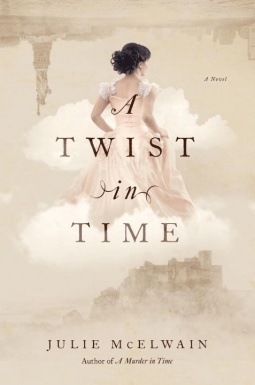
For my reading pleasure this week I am hoping to get to, A Twist in Time by Julie McElwain. Julie is one of my favorite new authors and I have had the pleasure chatting with her about her first book last year.

a-twist-in-time-ii

*************

Here is a few of my fellow book blogger’s book highlights from last week! Be sure to check them out. These bloggers are dedicated to their craft of sharing stories and a big support to the book world. I highly recommend you follow their blogs. #supportbookbloggers

return-to-taylors-crossing-iiHeather’s interview with award winning author Janie Dempsey Watts at Maiden’s Court, here.

Colleen’s book review of The Girl on the Train by Paula Hawkins at A Literary Vacation, here.

Magdalena’s book review of The Forgetting Time by Sharon Guskin at A Bookacholic Swede, here.

Erin’s book review of The battle of Seattle by Douglas Bond at Flashlight Commentary, here.

all-i-want-for-christmasHolly’s All I Want for Christmas…Review at 2 Kids and Tired Books, here.
And my feature Layered Pages post from last week, Wish-List 5: A little of This & A little of That, here.

**********

Thank you for visiting Layered Pages today. It is always a treat to be able to talk about books with you all. Be sure to stay tuned all week long for more great posts. Happy reading and God Bless.

Stephanie M. Hopkins

stay-calm-and-support-book-bloggers

Cover Crush: To Marry an English Lord: Tales of Wealth and Marriage, Sex and Snobbery by Gail MacColl
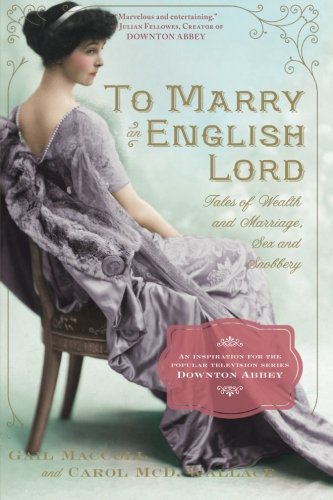
to-marry-an-english-lordTo Marry an English Lord: Tales of Wealth and Marriage, Sex and Snobbery by Gail MacColl

From the Gilded Age until 1914, more than 100 American heiresses invaded Britannia and swapped dollars for titles–just like Cora Crawley, Countess of Grantham, the first of the Downton Abbey characters Julian Fellowes was inspired to create after reading To Marry An English Lord. Filled with vivid personalities, gossipy anecdotes, grand houses, and a wealth of period details–plus photographs, illustrations, quotes, and the finer points of Victorian and Edwardian etiquette–To Marry An English Lord is social history at its liveliest and most accessible.

************

My thoughts on the cover. Title and premise:

I’ve said this before and I will say it again. I am not a cover designer but I can agree that cover layouts play an important role in the overall presentation of books and I must admit I first judge a book by its cover.

I am no means a romance reader. Having said that, I will make certain allowances to that and I think this story has much more than the usual romance we often find in books. The title and cover caught my attention. I love the elegance of the cover and the soft colors. The dress is absolutely stunning. The cover kind-of reminds me of Downton Abby a little and I do adore reading stories from the Gilded Age. When I read the premise, I thought, “Yes, this looks right up my alley.” I am definitely adding this to my wish-list.

Stephanie M. Hopkins

Cover Crush is a weekly series that originated with Erin at Flashlight Commentary.

Other great book bloggers who cover crush: 

Heather @ The Maiden’s Court-coming soon

Magdalena @ A Bookaholic Swede

Holly @ 2 Kids and Tired Books 

Colleen @ A Literary Vacation -Coming soon

More cover crushes over at indieBRAG!

Book Review: The Guests on South Battery (Tradd Street #5) by Karen White

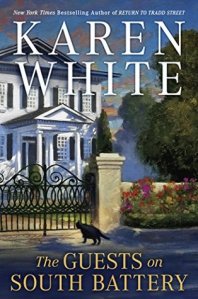
the-guests-on-south-batteryWith her extended maternity leave at its end, Melanie Trenholm is less than thrilled to leave her new husband and beautiful twins to return to work, especially when she’s awoken by a phone call with no voice on the other end—and the uneasy feeling that the ghostly apparitions that have stayed silent for more than a year are about to invade her life once more.

 But her return to the realty office goes better than she could have hoped, with a new client eager to sell the home she recently inherited on South Battery. Most would treasure living in one of the grandest old homes in the famous historic district of Charleston, but Jayne Smith would rather sell hers as soon as possible, guaranteeing Melanie a quick commission.

Despite her stroke of luck, Melanie can’t deny that spirits—both malevolent and benign—have started to show themselves to her again. One is shrouded from sight, but appears whenever Jayne is near. Another arrives when an old cistern is discovered in Melanie’s backyard on Tradd Street.

 Melanie knows nothing good can come from unearthing the past. But some secrets refuse to stay buried….

**********

My Thoughts:

Old homes fascinate me. As I come across one, I often wonder about the people who lived there, what their lives were like and what the inside of the homes look like. I love visiting the historic district of Charleston! Its not often I get to. So when I discovered this series, I was thrilled! The first book, The House on Tradd Street is by far my favorite in the series. I have read the first three books and skipped over the fourth one to read The Guest on South battery. I did not do that intentionally, mind you. When this came up for review at NetGalley, I immediately requested it.

In the first couple of characters or so, I found the story to be interesting and I felt the main characters were a bit different than the first three books in the series. At first I contributed that to that fact that maybe it’s because Jack and Melanie are now married and have two children. Or that because her relationships with her mother and father have changed. But as I read on, that wasn’t the only reason the story-line had changed for me. I am sad to report it wasn’t for the good.

What bothered me the most about Melanie in this story was, she is very uptight on small things that don’t really matter and ignores things that do matter. Or maybe she is just being overly cautious and her insecurities are getting the better of her? Not entirely sure. Melanie’s personality is all over the place and her relationship/marriage with Jack wasn’t believable to me and I couldn’t figure out what they saw in each other anymore. Jack was quite changed as well but not as bad as Melanie. I didn’t like her one bit in this story. The other characters were-just- okay. I liked Melanie’s mother-Ginnette-much better.

The best parts of this story was when there was talk of the old homes and the people who lived there. Also, Jack’s research into the home of Melanie’s client they were trying to fix up and potentially sell. I enjoyed reading that most of all.

Overall, I felt this story was weaker than the first three and I found it too predictable. I had the plot all figured out half way through and I was disappointed with the ending. Hopefully there will be another book in this series and it will be stronger and less predictable.

I have rated this story, two stars.

I obtained a review copy from the publishers through NetGalley, for an honest review.

Stephanie M. Hopkins

Wish-List 5: A Little of This & A Little of That

Today I have a bag of mix titles on my wish-list: 5 this month. I guess you can say I have a collective taste in books! Enjoy!

Be sure to take a look at these fabulous books and check below for my Wish-List 5: Dublin Murder Squad and other great Wish-List from my fellow book bloggers below.

calico-palaceCalico Palace (Rediscovered Classics)

This thrilling story of the California gold rush is not about the forty-niners, the prospectors who came rushing to the San Francisco area in 1849, but about the men and women who were there when it all began with the first discovery of gold in 1848, when San Francisco was a village of 900 people. These were the people who went up to the hills and came back staggering under the weight of the treasure they carried, and who began transforming San Francisco from a shantytown into one of the most brilliant cities in the world.

This novel tells the unforgettable story of how these people walked into one of the most spectacular adventures in the world’s history. They saw the first samples of gold brought to the quartermaster, who said they were flakes of yellow mica. They were there when the first people who saw the gold were laughed at and called “crackbrains.” And they laid the foundation of the golden empire before the first forty-niners got there. Some of them could not meet the demands of this strange new world; others grew stronger and shared the greatness of the country they had helped build. Calico Palace is their story brought to vivid life.

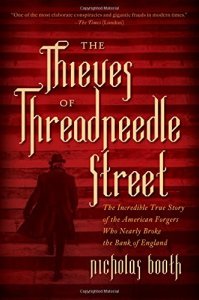
the-thieves-of-threadneedle-street-the-incredible-true-story-of-the-american-forgers-who-nearly-broke-the-bank-of-englandThe Thieves of Threadneedle Street: The Incredible True Story of the American Forgers Who Nearly Broke the Bank of England 

In the summer of 1873, four American forgers went on trial at the Old Bailey ― London’s iconic law court ― for the greatest fraud the world had ever seen. The attempted crime: stealing five million dollars from the Bank of England from under the noses of its unsuspecting officials. In The Thieves of Threadneedle Street, Nicholas Booth tells the extraordinary true story of the forgers’ earliest escapades in Chicago, Louisville, and Manhattan, culminating with the heist at the world’s leading financial institution, the Bank of England. At the heart of the story is the charming criminal genius Austin Bidwell who, on the brink of escaping with his fortune, saw his luck finally run out.

They were apprehended after a manhunt across three continents. There were double crosses and miraculous escapes. There were chases across rural Ireland, through Scottish cities, across the Atlantic on ships heading toward Manhattan and ― most exotic of all ― Cuba, where the most elusive thief would eventually be captured, only to escape again. Hot on their trail was William Pinkerton, “the greatest detective in America,” scion of the famous detective agency.

With its cast of improbable villains, curious coincidences, and extraordinary adventures, it is an astounding international caper with twists and turns that often defy belief. It includes a colorful cast of supporting characters ― crooked policemen, corrupt officials, bribable warders, and love interests of varying hues of respectability: femme fatales, innocent lovers, hookers, and dupes. With access to previously unopened archives, Nicholas Booth has unearthed the greatest untold crime saga of the Victorian Era.

the-pawn-patrick-bowers-filesThe Pawn (Patrick Bowers Files) 

Special Agent Patrick Bowers had only met one man who made him truly afraid. Until now. When he’s called to North Carolina to consult on the case of an area serial killer, he finds himself in a deadly game. Cunning and lethal, the killer is always one step ahead of the law, and he’s about to strike again. It will take all of Bowers’s instincts and training to stop this man who calls himself the Illusionist. And just when the pieces start to come together, Bowers realizes they’re not quite adding up. Can he unravel the pattern and save the next victim? Or will the Illusionist win the game by taking one of his opponent’s pieces? Thrilling, chilling, and impossible to put down, The Pawn will hold suspense lovers in its iron grip until the very last page.

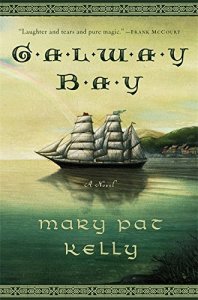
galway-bayGalway Bay

In a hidden Ireland where fishermen and tenant farmers find solace in their ancient faith, songs, stories, and communal celebrations, young Honora Keeley and Michael Kelly wed and start a family. Because they and their countrymen must sell both their catch and their crops to pay exorbitant rents, potatoes have become their only staple food.

But when blight destroys the potatoes three times in four years, a callous government and uncaring landlords turn a natural disaster into The Great Starvation that will kill one million. Honora and Michael vow their children will live. The family joins two million other Irish refugees–victims saving themselves–in the emigration from Ireland.

Danger and hardship await them in America. Honora, her unconventional sister Máire, and their seven sons help transform Chicago from a frontier town to the “City of the Century.” The boys go on to fight in the Civil War and enlist in the cause of Ireland’s freedom.

Spanning six generations and filled with joy, sadness, and heroism, GALWAY BAY sheds brilliant light on the ancestors of today’s forty-four million Irish Americans–and is a universal story you will never forget.

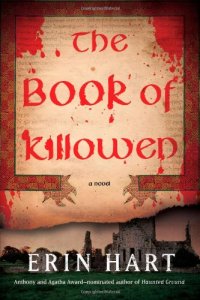
the-book-of-killowenThe Book of Killowen 

What sort of book is worth a man’s life? After a year away from working in the field, archaeologist Cormac Maguire and pathologist Nora Gavin are back in the bogs, investigating a ninth-century body found buried in the trunk of a car. They discover that the ancient corpse is not alone—pinned beneath it is the body of Benedict Kavanagh, missing for mere months and familiar to television viewers as a philosopher who enjoyed destroying his opponents in debate. Both men were viciously murdered, but centuries apart—so how did they end up buried together in the bog?

While on the case, Cormac and Nora lodge at Killowen, a nearby artists’ colony, organic farm, and sanctuary for eccentric souls. Digging deeper into the older crime, they become entangled in high-stakes intrigue encompassing Kavanagh’s death while surrounded by suspects in his ghastly murder. It seems that everyone at Killowen has some secret to protect.

Set in modern-day Ireland, The Book of Killowen reveals a new twist on the power of language—and on the eternal mysteries of good and evil.

Here are some of the wish lists from a few of my friends this month:

Colleen @ A Literary Vacation

Heather @ The Maiden’s Court

Magdalena @ A Bookaholic Swede

Holly @ 2 Kids and Tired

Erin @ Flashlight Commentary

stay-calm-and-support-book-bloggers

Manic Monday: Books & More Books

me-iiAs we all know Mondays can be pretty manic but nonetheless I was looking forward to it. Why? Because I want to share all my bookish happening for the weekend! What can be more exciting for a book blogger? Well, besides reading books and discovering new books to read. Every single day!

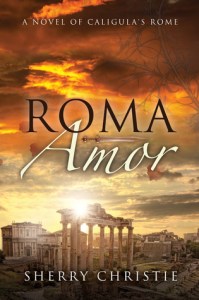
This week is the Thanksgiving Holiday and I have so much to share with you all throughout the week. This past weekend, I was a guest at the indieBRAG Blog, sharing my Thanksgiving tradition. I want to encourage you all to read that post.On Saturday I received a new book in the mail from a book giveaway. Yay! The book is, Roma Amor by Sherry Christie. I have not read any books by her before. So I am curious about her stories.

roma-amor

For my reading pleasure- this past weekend- I read, Dead Silence (Stillwater #1) by Brenda Novak in one day! I devoured it! Great read! I am really looking forward to the next book in this Trilogy. Another book I was reading from and still am is, Ruler of the Night by Davis Morrell. Fantastic read! I am enjoying it very much and I knew I would. Morrell’s Opium-Eater (Thomas De Quincey trilogy) a Victorian mystery trilogy, is truly brilliant.

Thank you for visiting Layered Pages today. It is always a treat to be able to talk about books with you all. Be sure to stay tuned all week long for more great posts. Happy reading and God Bless.

Stephanie M. Hopkins

************

dead-silence

Grace Montgomery knows who it is, and she knows why it happened. She was only thirteen the night it all went wrong. And now, like then, she has no choice but to keep her mouth shut.

Grace left the town of Stillwater thirteen years ago, trying to forget, trying to make good. As an assistant D.A. in Jackson, she’s finally achieved the success that was supposed to change her life. But it hasn’t so she’s come back to confront her own history. Which means returning to the farmhouse now owned by her brother and facing the people of Stillwater, a number of whom suspect the truth.

Widower Kennedy Archer is one of those people. He’s running for mayor and needs to stay as far away from Grace as possible. And yet she’s an enigma he can’t resist. Even though her enemies are close to finding out what really happened and that could ruin them both.

stay-calm-and-support-book-bloggers

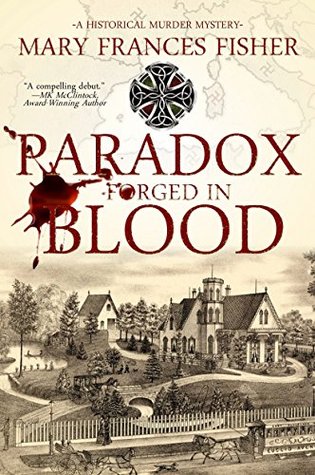
Cover Crush:Paradox Forged in Blood by Mary Frances Fisher
Cover Crush banner

paradox-forged-in-bloodParadox Forged in Blood by Mary Frances Fisher

A murder on Millionaire’s Row.
A killer’s chilling words, “Shh. I know where you live.”
A woman tormented by her guilt-ridden past.

A historical murder mystery, Paradox Forged in Blood is set in Cleveland, Ohio, during the late 1930s. Four decades after the murder of socialite Louis Sheridan, the cold case is resurrected with receipt of new evidence that transports detectives back to Nazi Germany. The only living witness, Ellen O’Malley, must confront a haunting secret and her complicit actions.

***********

My thoughts on the cover and premise:

I’ve said this before and I will say it again. I am not a cover designer but I can agree that cover layouts play an important role in the overall presentation of books and I must admit I first judge a book by its cover.

I think the cover is perfect for the premise of the story. The blood spattered on the cover certainly gives it a dramatic flair.

I love a good murder mystery and I am highly interested in the setting and period for the story. A cold case is an intriguing part of this story and I can’t wait to discover what the detectives find in Nazi Germany. Bumping up this book on my to-read list!

***********

Cover Crush is a weekly series that originated with Erin at Flashlight Commentary.

Other great book bloggers who cover crush: 

Heather @ The Maiden’s Court-coming soon

Magdalena @ A Bookaholic Swede

Holly @ 2 Kids and Tired Books 

Colleen @ A Literary Vacation -Coming soon

Be sure to check out Colleen’s latest indieBRAG’s cover crush here

More cover crushes over at indieBRAG!

stay-calm-and-support-book-bloggers

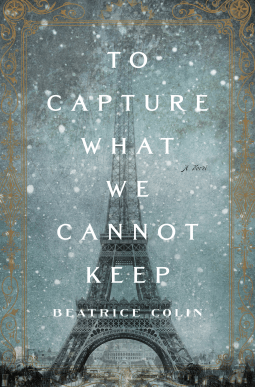
Book Review: To Capture What We Cannot Keep by Beatrice Colin

to-capture-what-we-cannot-seeIn February 1887, Caitriona Wallace and Émile Nouguier meet in a hot air balloon, floating high above Paris, France–a moment of pure possibility. But back on firm ground, their vastly different social strata become clear. Cait is a widow who because of her precarious financial situation is forced to chaperone two wealthy Scottish charges. Émile is expected to take on the bourgeois stability of his family’s business and choose a suitable wife. As the Eiffel Tower rises, a marvel of steel and air and light, the subject of extreme controversy and a symbol of the future, Cait and Émile must decide what their love is worth.
Seamlessly weaving historical detail and vivid invention, Beatrice Colin evokes the revolutionary time in which Cait and Émile live–one of corsets and secret trysts, duels and Bohemian independence, strict tradition and Impressionist experimentation. To Capture What We Cannot Keep, stylish, provocative, and shimmering, raises probing questions about a woman’s place in that world, the overarching reach of class distinctions, and the sacrifices love requires of us all.

My Thoughts:

As I’m sure most of the people in the world know of the Eiffel Tower in Paris, France. It has always been a deep fascination for me. I have to admit growing up I questioned why it was built but never really wondered at who built it and the ingenuity that went into it. As I got a bit older, I did think on that and about the people who built the tower. I was delighted when this book came along. During that era, the tower became the largest man-made structure in the world. As it was being constructed, many people doubted it’s success. The tower-of course-proved its grandeur.

In To Capture What We Cannot Keep we meet Émile Nouguier, the engineer and co-designer of the Tower. He meets a Scottish woman Cait-who is a chaperone for two rich, spoiled older young adults. Throughout the story of Emile’s, Cait and her charges become the center focus and how life deals with them. Or rather how they deal with life. We are also introduced to a supporting cast of a collective group of people.

The storyline of the tower being built was genius and the author gives such wonderful insight of the process. Alas, the overall plot dragged for me about almost half way through and I felt the relationship between Cait and Emile was poorly told. I kept wondering when it was going to happen! The Romance that is….I wasn’t convinced of the appeal they had for each other or the love for that matter. The main characters frustrated me, and the story left me just wanting to read about the Tower, Paris, the art world and nothing else.

Having said that, many parts of the story was atmospheric and resonated Paris of that time. The author did a good job getting you into that world and attitudes of the people. There are also some morality issues that play a part in this book and the character’s predicaments were rather interesting.

I rated this book three Stars.

Reviews of this book by other bloggers:

Stephanie M. Hopkins

Tuesday Book Spree: I Got Books On The Mind

me-iiToday, I have a lot of work to do but I will be fitting in a LOT of reading time. I’m getting books to review faster than I can read them! That tends to happen with people who are totally obsessed with stories. We can’t get enough and we can’t say, “no”, very often! A problem most book bloggers don’t mind having even though it can’t get a bit hectic. I will prevail!

Anyhow, three more books have come in to review and I woke up with several request from publishers in my email. Still haven’t decided what to do about the later. I might have to put those on the back burner for now. Then there is my own writing. I must make time in the day for that. There will come a point where I will have to start saying, “no,” more often so I can fit more time in for my own stories. I hate to turn people down but, well-writers- you know how it goes.

Books are a wonderful way to escape, to travel to destinations you can’t in reality, to build imagery in your mind and to live a thousand lives over and over…Good stories give you such a strong sense of place and time. I want to encourage all of my visitors to pick up a book this week and lose yourself into another world. Be sure to check out the books below I have to show you. Thank you for visiting Layered Pages today and happy reading!

By the way…you might be seeing a new book review from me!

Stephanie M. Hopkins

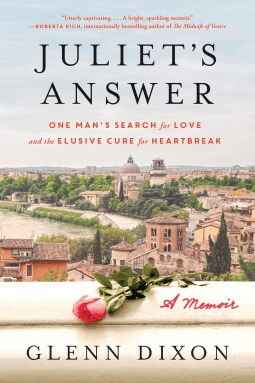
juliets-answer-iiJuliet’s Answer by Glenn Dixon

Pub Date 07 Feb 2017 

Eat, Pray, Love meets The Rosie Project in this fresh, heartwarming memoir by a man who travels to Verona and volunteers to answer letters addressed to Shakespeare’s Juliet, all in an attempt to heal his own heartbreak.

When Glenn Dixon is spurned by love, he packs his bags for Verona, Italy. Once there, he volunteers to answer the thousands of letters that arrive addressed to Juliet—letters sent from lovelorn people all over the world to Juliet’s hometown; people who long to understand the mysteries of the human heart.

Glenn’s journey takes him deep into the charming community of Verona, where he becomes involved in unraveling the truth behind Romeo and Juliet. Did these star-crossed lovers actually exist? Why have they remained at the forefront of hearts and minds for centuries? And what can they teach us about love?

When Glenn returns home to Canada and resumes his duties as an English teacher, he undertakes a lively reading of Romeo and Juliet with his students, engaging them in passions past and present. But in an intriguing reversal of fate and fortune, his students—along with an old friend—instruct the teacher on the true meaning of love, loss, and moving on.

An enthralling tale of modern-day love steeped in the romantic traditions of eras past, this is a memoir that will warm your heart.

death-at-st-vedastDeath at St. Vedast by Mary Lawrence

Pub Date 27 Dec 2016

During the tempestuous reign of Henry VIII, London alchemist Bianca Goddard has seen up close what keeps a man alive—and what can kill him. A good thing, for she will need all her knowledge to keep a friend away from the gallows . . .

Bianca and her husband John are delighted to share in the glad fortune of their friend, Boisvert, the silversmith, who is to wed Odile, the wealthy widow of a goldsmith. But a pall is cast over the upcoming nuptials when the body of a pregnant woman is found beneath the bell tower of St. Vedast, the very church where the betrothed are to be married.

Tragedy strikes again at the couple’s reception, when Odile suddenly drops dead in the middle of the wedding feast. The constable suspects Boisvert poisoned his new bride for her money, but there’s not a trace of poison in her food or wine. Could the two deaths be connected? To prove their friend’s innocence, Bianca will need to employ her knowledge of alchemy—for if she can determine how the bride was killed, she may find the person responsible for her murder—before another victim is added to the death toll . . .

the-magdalen-girls-iiThe Magdalen Girls by V.S. Alexander

Pub Date 27 Dec 2016

Dublin, 1962. Within the gated grounds of the convent of The Sisters of the Holy Redemption lies one of the city’s Magdalen Laundries. Once places of refuge, the laundries have evolved into grim workhouses. Some inmates are “fallen” women—unwed mothers, prostitutes, or petty criminals. Most are ordinary girls whose only sin lies in being too pretty, too independent, or tempting the wrong man. Among them is sixteen-year-old Teagan Tiernan, sent by her family when her beauty provokes a lustful revelation from a young priest.

Teagan soon befriends Nora Craven, a new arrival who thought nothing could be worse than living in a squalid tenement flat. Stripped of their freedom and dignity, the girls are given new names and denied contact with the outside world. The Mother Superior, Sister Anne, who has secrets of her own, inflicts cruel, dehumanizing punishments—but always in the name of love. Finally, Nora and Teagan find an ally in the reclusive Lea, who helps them endure—and plot an escape. But as they will discover, the outside world has dangers too, especially for young women with soiled reputations.