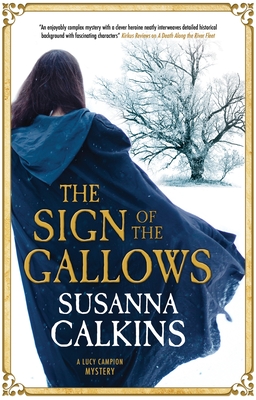
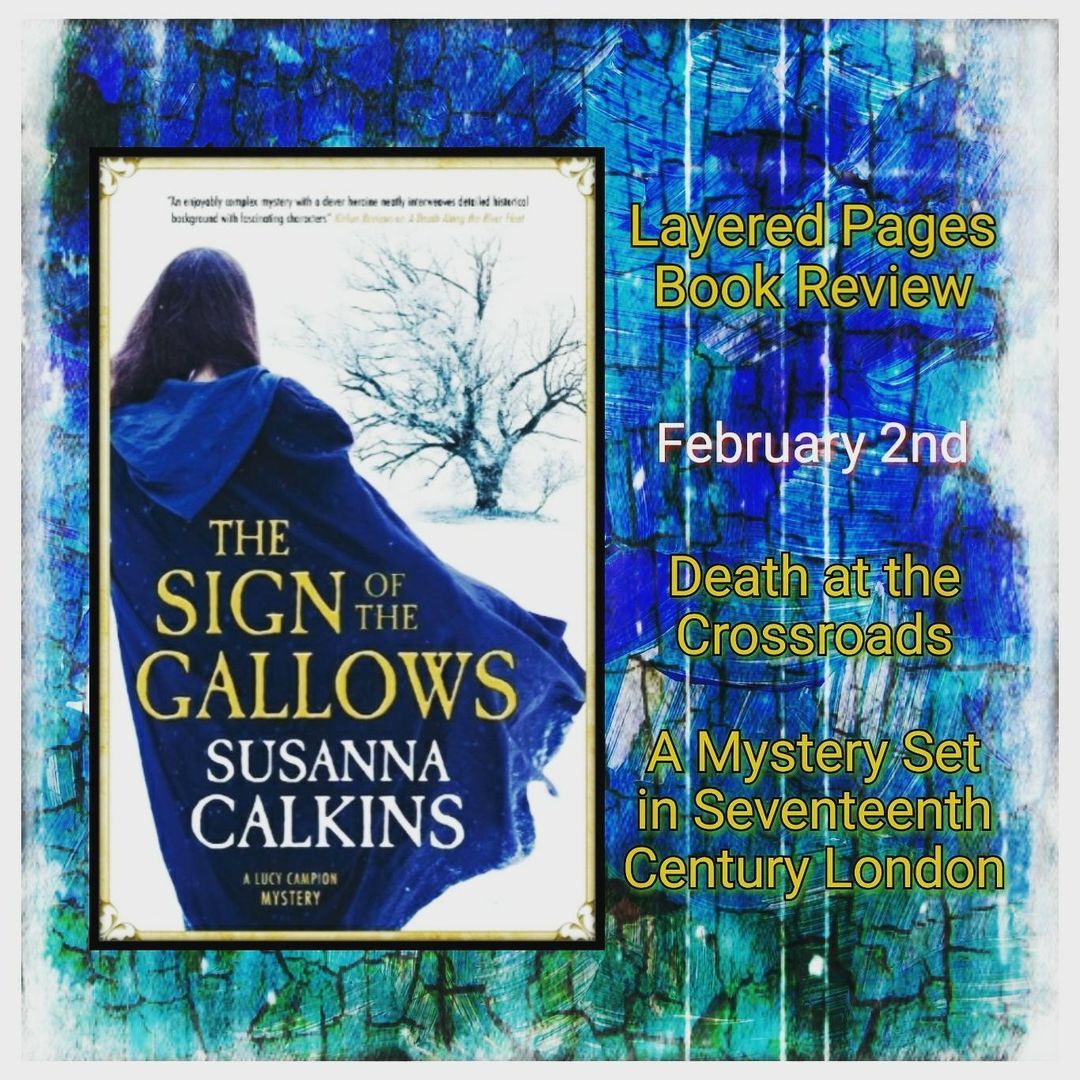
Book Review: The Sign of the Gallows (A Lucy Campion Mysteries, #5) by Susanna Calkins

About the book:

London, 1667. On her way to a new market to peddle her True Accounts and Strange News, printer’s apprentice Lucy Campion quickly regrets her decision to take the northwestern road. Dark and desolate, the path leads her to the crossroads – and to the old hanging tree. She doesn’t believe in ghosts, but she’s not sure ghosts don’t believe in her. But before she even reaches the crossroads, she’s knocked off her feet by two men in a hurry. What were they running from? To her dismay, she soon discovers for herself: there, dangling from the tree, is the body of a man. Did he commit self-murder, or is there something darker afoot? The more Lucy learns, the more determined she is to uncover the truth. But this time, even the help and protection of magistrate’s son Adam, and steadfast Constable Duncan, may not be enough to keep her safe from harm . . .

My thoughts:

Seventeenth Century, London was a calamity to say the least! With the century brought the Great fire of London, the plague and co-conspirators plotting to blow up the Houses of Parliament including the King. My word, I’d say that in itself is brutal enough. However, there are other dark forces at work.

Author Susanna Calkins brings the century to life through her Campion series of murder, mayhem and intrigue. Lucy, finds herself in the center of another murder investigation and the search for the murderer reveals that there are darker forces at work.

Lucy is an apprentice-of sorts for a printer and bookseller, Master Aubrey. While all his staff are important to his business, I find Lucy to be the most spirited and undoubtedly clever at telling stories and selling book. I believe Aubrey know Lucy’s value and its why I think he gives her a pass quite to bit to aid in the investigation.  She is quite the social warrior and truly cares for people.

I’m really pleased with the support system Lucy’s has among her friends and formal employees, the Hardgraves. I admire the Hargraves respect and affection they have for Lucy despite their class distinction. What lively, caring and intelligent people.
Banner and painting by Stephanie Hopkins

Every single character in the story is fascinating and fun to read about, even the villains. Calkins does a marvelous job in showing the reasons people act on things due to their own situations in life. Regardless if we agree with them or not, its important to know the reasons. The human mind is an extortionary and often times, dark place. We can learn much from it.   

The investigation in the murder at the crossroads had lots of great twist and turns and it was an enjoyable read and one feels caught in trying to figure out who done it right along Lucy and the others.

The two men she ran into before making her way to the crossroads are something else. While their actions are suspicious at best, their grievance is understandable as the story unfolds.

I appreciate the story-line of Aubrey’s print shop and the reading material he sells. It has inspired me to look further into how books were printed during the 17th century.

I started this series at book four because I agreed to review it and find myself wanting to go back and read the first book and on…Despite that, I believe from the two books I’ve read, they are good stand-alone stories.

Calkins is a creative and imaginative story-teller and she weaves a story marvelously at a wonderful pace that keeps you engrossed. -Stephanie Hopkins

I obtained a galley copy from the publishers through NetGalley for an honest review.

Review: A Death Along the River Fleet (Lucy Campion Mysteries #4) by Susanna Calkins
January: Book Round-Up

This year’s reading started off with a bang! I got through ten books and that is a current record for me. It has been a long time since I’ve read that many in a month. This is encouraging since my goal is to read 100 books this year. Who knows? I might surpass that goal. My original goal was to read a book a week but I knew I could read more than that with the great selection of books that are coming out and what novels I have on my shelf at home.

I am also making a point to read books that I would normally not pick up. Two of the books are young adults’ books. I must confess, I didn’t enjoy them as much as I thought I would. The story-telling just wasn’t to my taste and I struggled to stay focused. Having said that, I’m not giving up the genre. My daughter has a few on her shelf that I want to give a go at.

Today I’m sharing the books I read this month. Two of them where audio books I listened to through YouTube. Three of the books I’ve read before and I’ve read them more than four times! There will be four books reviews in total. My review for, The Garden of Spite and The Signs of the Gallows will be posted next week.

Last but not least, Robert Frost’s Selected Poems, which I adore. If you want to practice writing poetry, read Frost and other poets. Reading Poetry teaches language, ideas and meaning. Writing poetry allows us to explore the world that reaches beyond the limitations of our senses. There is a whole other world out there that poetry gives us.  One can say that about reading it as well. The subject of poetry is an endless delight of wonders. -Stephanie Hopkins

Images may be subjected to copyright. In order to use art images or any content on Layered Pages platform, please ask permission from Stephanie Hopkins

Coming up tomorrow at Layered Pages: Image of the Month and Poetry!

By the Water’s Edge Art Work by Stephanie Hopkins

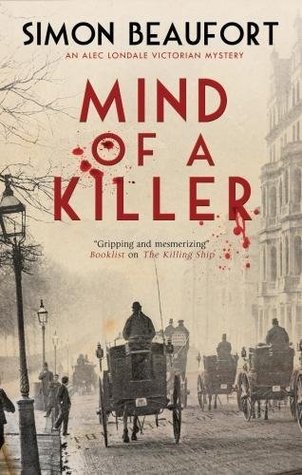
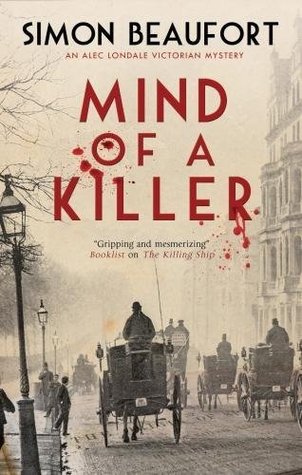
Book Review: Mind of a Killer (Alec Lonsdale #1) by Simon Beaufort

In London 1882, a new reporter for the Pall Mall Gazette, Alec Londale, comes across a house fire, that is not uncommon in those times, approaches the scene to watch the firemen hard at work to prevent the fire from spreading to the other houses.  Looking around for someone to tell him who lives there and how the fire started, he approaches a woman, asking her questions. A body has been discovered. Alex begins to take notes and shortly after speaking with the first woman, another woman, who appears distraught, approaches him and ask him to meet her at a later date. She has information for him that can’t be shared at the scene. Alex is unobservant to her emotions and what she is saying or not saying. It is quite clear to him what she is and he dismisses her from his mind. Alex is young and is portrayed as a naive and green around the quills-if you will- about the ins and outs of being a reporter.

When the post-mortem on the fire victim comes back as something other than an accident, it isn’t long before a second body is found and this time the person’s throat is cut and then the bodies start to pile up.

Alex’s feisty female colleague, Hula Friederrichs is assigned to help him investigate the case. He isn’t happy about it but he needs all the help he can get! The further they investigate, they delve into the mystery and start to uncover a conspiracy so sinister, that it takes them to the upper classes of Victorian Society. The threat of their own lives become a reality as they get closer to the murder plot and they begin to question whom can they trust.

My fascination with the Victorian era’s class-based society, the stereotypes and double standards of the period, journalism, and the murder mystery genre prompted me to read this book. Those elements combined make for a gripping story. There is also the fact, I’m always curious how writers today portray the culture of the period.

Darwin’s theories are introduced in the story and taken to an unspeakable dark and evil height that will have you wondering how far will these people go to advance their objective. I don’t think I have ever been so thoroughly taken back by a theme that pushes the boundaries of this nature. In fact, it makes this story all too realistic and chilling.

Highly entertaining, and a thought-provoking read.

Stephanie Hopkins

I obtained a copy of Mind of a Killer from the publishers through NetGalley for an honest review.

What World Building Includes

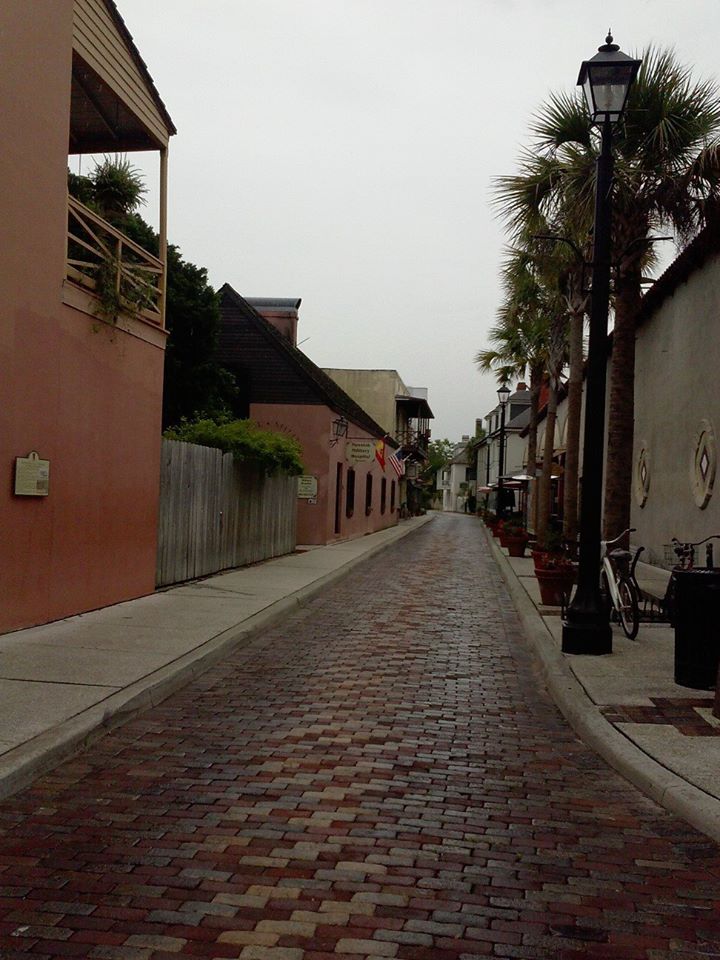
Photo by Stephanie Hopkins

A Reader’s Perceptive

World building serves the purpose to establish, time period, location, landscape, climate, and cultural surroundings. Its foundation of these elements is important for the reader to be transported in the character’s world. By accomplishing this, a writer must research and understand the world they are creating. Saying where your story takes place and adding a few notable locations, and buildings, doesn’t cut it. Make the reader believe they are there.

Use the Senses

You want your readers to be fully engaged in your story. It is a must!

Examples: Do your readers hear the horse’s hoofs on the cobble stone road drawing near? Do they see the dense fog rolling in the city’s streets? Does the reader know the culture’s way of dress, social class norms and rules? What are the events happening in the period they are living in? Such as, how things are made, talked about, and what is the population like? How do they get along or what are their resources? The list goes on…

I read a great story recently but didn’t feel transported to the time period. Which made it harder to understand the character’s actions. World building is vital.

Stephanie Hopkins

Layered Pages Top 2020 Reads

Favorite Books Read in 2020

Last year my Goodreads challenge was to read twenty fiction books. I surpassed that goal and read thirty. However, I read more than thirty books. Beyond that was research books for my writing project and other research projects. I did not count those on goodreads because I’m continually referring to them.

The fiction books below are my top favorite reads, though not in a particular order. This year’s reading goal is much bigger. I will be talking about that more a little later on. What were your favorite 202 reads? -Stephanie Hopkins

Top Favorites

Dreamland by Nancy Bilyeau

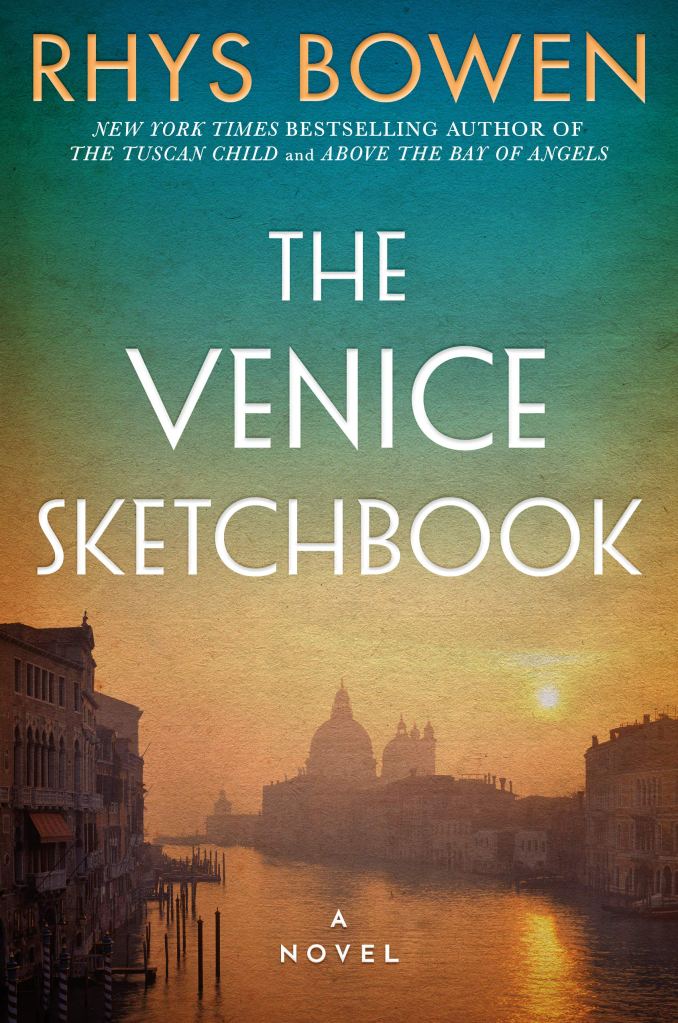
The Venice Sketchbook by Rhys Bowen

The Lost Village by Camilla Sten

Migrations by Charlotte McConaghy

The Jane Austen Society by Natalie Jenner

The Drowning Kind by Jennifer McMahon

Be sure to check these titles out on Goodreads and Amazon!

Favorite Covers:

Here are my favorite covers out of the bunch. Which covers do you like?

New Book Release: Madam C.J. Walker by Erica L. Ball

Congrats to Erica L. Ball’s

book publication of, “Madam C.J. Walker

The Making of an American Icon!”

I discovered Madam C.J. Walker a few years ago during my in-depth study of 19th Century Post Civil War. I thought at the time that it would be wonderful to watch a movie or read a book based on her life. I wanted to know more about this woman. Her story needs to be told. To my delight, I learned that Author Erica L. Ball wrote about Walker and have added the book to my reading list. I have not read any of Ball’s published works but have learned that she is a professor of History and Black Studies. Very cool.  -Stephanie Hopkins

About the book:

Rowman & Littlefield

Biographies & Memoirs | History | Nonfiction (Adult)

Pub Date 15 Jan 2021

Description

Madam C. J. Walker—reputed to be America’s first self-made woman millionaire—has long been celebrated for her rags-to-riches story. Born to former slaves in the Louisiana Delta in the aftermath of the Civil War, married at fourteen, and widowed at twenty, Walker spent the first decades of her life as a laundress, laboring in conditions that paralleled the lives of countless poor and working-class African American women. By the time of her death in 1919, however, Walker had refashioned herself into one of the most famous African American figures in the nation: the owner and president of a hair-care empire and a philanthropist wealthy enough to own a country estate near the Rockefellers…

In this biography, Erica Ball places this remarkable and largely forgotten life story in the context of Walker’s times.

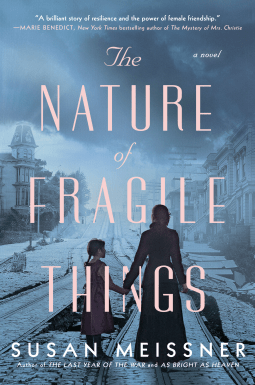
The Nature of Fragile Things by Susan Meissner

The 1906 earthquake in San Francisco has been an interest of mine for quite some time. The earthquake only lasted less than minute but the devastation was complete. The fires that broke out due to the quake were disastrous, leaving half the cities’ residence homeless and thousands, dead. I’m looking forward to seeing how Meissner weaves this unfortunate historic event into her story. Thank you, Berkley and NetGalley for a copy of this powerful story. -Stephanie

The Nature of Fragile Things by Susan Meissner

Berkley Publishing Group

Historical Fiction | Women’s Fiction

Pub Date 02 Feb 2021  

Description

April 18, 1906: A massive earthquake rocks San Francisco just before daybreak, igniting a devouring inferno. Lives are lost, lives are shattered, but some rise from the ashes forever changed.

Sophie Whalen is a young Irish immigrant so desperate to get out of a New York tenement that she answers a mail-order bride ad and agrees to marry a man she knows nothing about. San Francisco widower Martin Hocking proves to be as aloof as he is mesmerizingly handsome. Sophie quickly develops deep affection for Kat, Martin’s silent five-year-old daughter, but Martin’s odd behavior leaves her with the uneasy feeling that something about her newfound situation isn’t right.

Then one early-spring evening, a stranger at the door sets in motion a transforming chain of events. Sophie discovers hidden ties to two other women. The first, pretty and pregnant, is standing on her doorstep. The second is hundreds of miles away in the American Southwest, grieving the loss of everything she once loved.

The fates of these three women intertwine on the eve of the devastating earthquake, thrusting them onto a perilous journey that will test their resiliency and resolve and, ultimately, their belief that love can overcome fear.

From the acclaimed author of The Last Year of the War and As Bright as Heaven comes a gripping novel about the bonds of friendship and mother love, and the power of female solidarity.

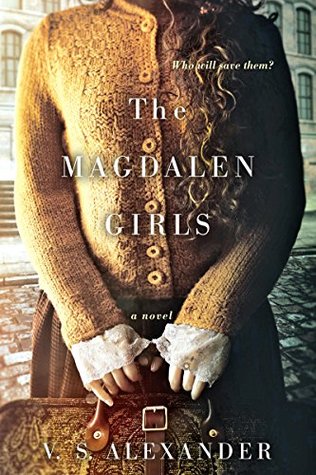
Book Review: The Magdalen Girls by V.S. Alexander

Kindle Edition, 305 pagesPublished December 27th 2016 by Kensington

About the story:

Dublin, 1962. Within the gated grounds of the convent of The Sisters of the Holy Redemption lies one of the city’s Magdalen Laundries. Once places of refuge, the laundries have evolved into grim workhouses. Some inmates are “fallen” women—unwed mothers, prostitutes, or petty criminals. Most are ordinary girls whose only sin lies in being too pretty, too independent, or tempting the wrong man. Among them is sixteen-year-old Teagan Tiernan, sent by her family when her beauty provokes a lustful revelation from a young priest.

Teagan soon befriends Nora Craven, a new arrival who thought nothing could be worse than living in a squalid tenement flat. Stripped of their freedom and dignity, the girls are given new names and denied contact with the outside world. The Mother Superior, Sister Anne, who has secrets of her own, inflicts cruel, dehumanizing punishments—but always in the name of love. Finally, Nora and Teagan find an ally in the reclusive Lea, who helps them endure—and plot an escape. But as they will discover, the outside world has dangers too, especially for young women with soiled reputations.

Told with candor, compassion, and vivid historical detail, The Magdalen Girls is a masterfully written novel of life within the era’s notorious institutions—and an inspiring story of friendship, hope, and unyielding courage. 

A few of my thoughts:

Recently I discovered that my family has ancestry in Dublin Ireland and this book came to my mind. Strange how the mind works. I requested, “The Magdalen Girls” to review some time ago and to be honest, I’m not sure why I chose it because it wasn’t a subject, I was ready-mentally-to look in-depth. The Catholic Church has an extremely dark history and I don’t believe their theology/doctrine is entirely in line with the Holy Bible.

The story introduces three young girls, Teagan, Nora and Lea. Leading up to the moment Teagan and Nora were cast out of their homes and into the “care” of The Sister of the Holy Redemption. The cruelty of Mother Ann and the Nuns who carries out her orders is a clear reflection of the abuse, neglect, death, exploitation and forced, cruel hard labor that are not the teachings of Christ. These young girls’ situation there and of the others, lay heavily on my mind.

There are two priest that are front and center to Teagan’s “down fall”. Father Mark and Father Matthew. In short, I found Father Matthew not living up to his higher responsibility that God has commanded and instead he seceded the position to a mostly matriarchal attitude that was counterproductive to Christian life. His inability to counsel Father Mark and do right by the situation at hand really reflects my opinion above. They laid full responsibility of Mark’s sin on Teagan. That is not Christ like.

My main focus of this review is Tegan’s downfall because of the bold example the author shows of how the Priests influence its congregation and community. My focus on Teagan’s story- in no way- diminishes the others girls experience in that toxic environment.

I would have liked to have read a better build-up of the girl’s life before they entered, The Sister of the Holy Redemption. Other than that, it was a powerful premise, though a sad one.

Was there redemption in the story for the girls? That is for you to find out by reading the story.

I rated this book three stars and obtained a galley copy from the publishers through NetGalley.

Stephanie Hopkins

Book Review: The Paris Library by Janet Skeslien Charles

Paris, 1939: Young and ambitious Odile Souchet has it all: her handsome police officer beau and a dream job at the American Library in Paris. When the Nazis march into Paris, Odile stands to lose everything she holds dear, including her beloved library. Together with her fellow librarians, Odile joins the Resistance with the best weapons she has: books. But when the war finally ends, instead of freedom, Odile tastes the bitter sting of unspeakable betrayal.

Montana, 1983: Lily is a lonely teenager looking for adventure in small-town Montana. Her interest is piqued by her solitary, elderly neighbor. As Lily uncovers more about her neighbor’s mysterious past, she finds that they share a love of language, the same longings, and the same intense jealousy, never suspecting that a dark secret from the past connects them.

A powerful novel that explores the consequences of our choices and the relationships that make us who we are—family, friends, and favorite authors—The Paris Library shows that extraordinary heroism can sometimes be found in the quietest of places.

My thoughts:

“Libraries are lungs, […] books the fresh air breathed in to keep the heart beating, to keep the brain imagining, to keep hope alive.” ― Janet Skeslien Charles, The Paris Library

The Paris Library is truly an unforgettable story. My favorite books are usually told in dual timelines. This story is without a doubt, my new favorite. If you are a lover of books and libraries, you must read, The Paris Library. I was completely spirited with abounding emotions. I laughed, cried, cheered, was enraged at injustice, and was thoroughly in my element with the librarians. I wanted-so much-to have tea with them and discuss literature and humanity. I wanted to be in their world surrounded with so many wonderful stories.

Not all is wonderful because of the war and personal struggles. That is what happens in life and this story portrays that in such a way, you realize that we all can learn from each other. Even so, it carries the narrative to great heights, shows you how deeply impacted the librarians were during the dark time of Word War II, and the lengths they went to keep reading alive.  

I actually leaned about a few authors and books I am not familiar with and want to read them because of the people’s experience with them in this book.

The author’s style of writing appealed to me and there are countless of passages that I marked so that I can make a record of them in my journal. That is how much this story affected me.

Stories like this are what brings us together and forever changes our impressions on life and humanity.

A must read!

I rated this book five stars and obtained a copy of this book from the publishers for an honest review.

Stephanie Hopkins

Conversing About Novellas

I’ve committed 2021 to be a year of catching up-somewhat-on my back list of books that have been patiently waiting on me. Well, maybe not too patiently. The new year brings new reading goals, habits and a fresh start on many things. This week, I have pondered the idea of adding more novellas to my ever-growing pile of books I want to absorb.

There are various opinions about reading novellas. Some say it is a waste of time and leaves you unsatisfied, but I beg to differ. I admire the writer who takes on the task of weaving a story with fewer words. Often times when having read a six-hundred-page novel, I wanted more. So, there you are. It is not, in truth, about the number of pages but what you make of them and allowing your imagination to explore the what-ifs. -Stephanie Hopkins

Our Souls at Night by Kent Haruf

Published May 28th 2015 by Alfred A. Knopf

A spare yet eloquent, bittersweet yet inspiring story of a man and a woman who, in advanced age, come together to wrestle with the events of their lives and their hopes for the imminent future.

In the familiar setting of Holt, Colorado, home to all of Kent Haruf’s inimitable fiction, Addie Moore pays an unexpected visit to a neighbor, Louis Waters. Her husband died years ago, as did his wife, and in such a small town they naturally have known of each other for decades; in fact, Addie was quite fond of Louis’s wife. His daughter lives hours away in Colorado Springs, her son even farther away in Grand Junction, and Addie and Louis have long been living alone in houses now empty of family, the nights so terribly lonely, especially with no one to talk with.

Their brave adventures – their pleasures and their difficulties – are hugely involving and truly resonant, making Our Souls at Night the perfect final installment to this beloved writer’s enduring contribution to American literature

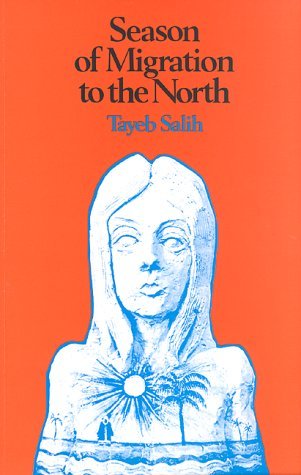
Season of Migration to the North by Tayeb Salih

Published January 1st 1970 by Heinemann (first published 1966)

After years of study in Europe, the young narrator of Season of Migration to the North returns to his village along the Nile in the Sudan. It is the 1960s, and he is eager to make a contribution to the new postcolonial life of his country. Back home, he discovers a stranger among the familiar faces of childhood—the enigmatic Mustafa Sa’eed. Mustafa takes the young man into his confidence, telling him the story of his own years in London, of his brilliant career as an economist, and of the series of fraught and deadly relationships with European women that led to a terrible public reckoning and his return to his native land.

But what is the meaning of Mustafa’s shocking confession? Mustafa disappears without explanation, leaving the young man—whom he has asked to look after his wife—in an unsettled and violent no-man’s-land between Europe and Africa, tradition and innovation, holiness and defilement, and man and woman, from which no one will escape unaltered or unharmed.

Season of Migration to the North is a rich and sensual work of deep honesty and incandescent lyricism. In 2001 it was selected by a panel of Arab writers and critics as the most important Arab novel of the twentieth century. 

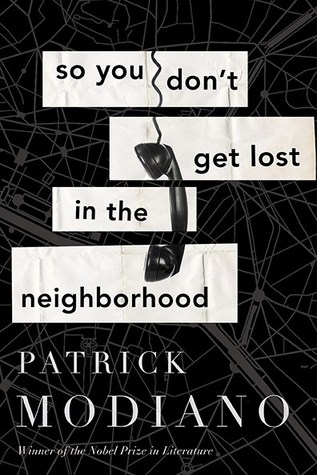
So You Don’t Get Lost in the Neighborhood by Patrick Modiano, Euan Cameron (Translation)

Published September 15th 2015 by Houghton Mifflin Harcourt

A haunting novel of suspense from the winner of the 2014 Nobel Prize in Literature

In the stillness of his Paris apartment, Jean Daragane has built a life of total solitude. Then a surprising phone call shatters the silence of an unusually hot September, and the threatening voice on the other end of the line leaves Daragane wary but irresistibly curious. Almost at once, he finds himself entangled with a shady gambler and a beautiful, fragile young woman, who draw Daragane into the mystery of a decades-old murder. The investigation will force him to confront the memory of a trauma he had all but buried.

With So You Don’t Get Lost in the Neighborhood Patrick Modiano adds a new chapter to a body of work whose supreme psychological insight and subtle, atmospheric writing have earned him worldwide renown — including the Nobel Prize in Literature. This masterly novel, now translated into twenty languages, penetrates the deepest enigmas of identity and compels us to ask whether we ever know who we truly are.

The Lifted Veil by George Eliot

The Penelopiad by Margaret Atwood

The Slow Regard of Silent Things by Patrick Rothfuss

The Uncommon Reader by Alan Bennett

What are some novellas on your to-read list?