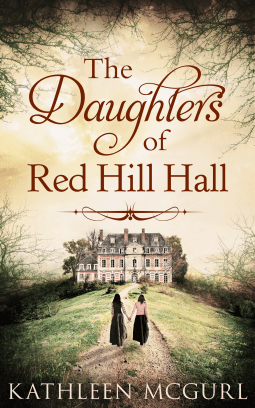
Book Review: The Daughters Of Red Hill Hall by Kathleen McGurl

The daughter of red hill hallWhen Gemma discovers a pair of ancient duelling pistols encrusted with rubies in the basement of the local museum, she is immediately intrigued…

On a fateful night in 1838 two sisters were found shot in the cellars of Red Hill Hall. And when Gemma begins to delve deeper into their history she begins to realise that the secrets of that night are darker than anyone had ever imagined.

As the shocking events of the past begin to unravel, Gemma’s own life starts to fall apart. Loyalties are tested and suddenly it seems as if history is repeating itself, as Gemma learns that female friendships can be deadly…

My Thoughts:

The Daughters of Red Hill Hall has dual story lines that weave together wonderfully. This story has a great plot and the pace was perfect. There are some surprises and twist along the way and I found myself emotional invested in the characters. I really admire McGurl’s focus on the relationship between Rebecca and Sarah. She also shows that not everything is what it seems and what resentment and jealousy can do to people. I wondered just how far she would go with this and I was really astounded the way things turned out.

An old case of dueling pistols is brilliant! My hats off to the author.

I’ve rated this book three and a half stars.

I received a copy of this book through NetGalley for an honest review.

Stephanie N. Hopkins

Wish-List 5: A Little of This & A Little of That

This month I am not sticking to any particular theme. I am in the mood to add a variety of stories to my never ending wish-list. The question is, will I ever get to my list? I think so. Matter of fact I have read a few already this year. Not bad but I need to read more. As they say, there is never enough time in the day. There is night time of course but one must get some sleep every once in a while. I hope you enjoy checking out this list and I hope some will be of interest to you. Enjoy! 

The Whole Art of DetectionThe Whole Art of Detection

Lost Mysteries of Sherlock Holmes

by Lyndsay Faye

Expected Publish Date: March 7, 2017

Internationally bestselling author Lyndsay Faye was introduced to the Sherlock Holmes mysteries when she was ten years old and her dad suggested she read Sir Arthur Conan Doyle’s short story “The Adventure of the Speckled Band.” She immediately became enamored with tales of Holmes and his esteemed biographer Dr. John Watson, and later, began spinning these quintessential characters into her own works of fiction—from her acclaimed debut novel, Dust and Shadow, which pitted the famous detective against Jack the Ripper, to a series of short stories for the Strand Magazine, whose predecessor published the very first Sherlock Holmes short story in 1891.

Faye’s best Holmes tales, including two new works, are brought together in The Whole Art of Detection, a stunning collection that spans Holmes’s career, from self-taught young upstart to publicly lauded detective, both before and after his faked death over a Swiss waterfall in 1894. In “The Lowther Park Mystery,” the unsociable Holmes is forced to attend a garden party at the request of his politician brother and improvises a bit of theater to foil a conspiracy against the government. “The Adventure of the Thames Tunnel” brings Holmes’s attention to the baffling murder of a jewel thief in the middle of an underground railway passage. With Holmes and Watson encountering all manner of ungrateful relatives, phony psychologists, wronged wives, plaid-garbed villains, and even a peculiar species of deadly red leech, The Whole Art of Detection is a must-read for Sherlockians and any fan of historical crime fiction with a modern sensibility.

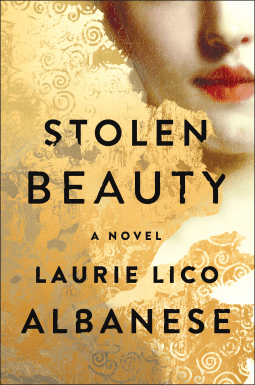
Stolen BeautyStolen Beauty

A Novel

by Laurie Lico Albanese

Expected Publish Date: Feb 7, 2017

From the dawn of the twentieth century to the devastation of World War II, this exhilarating novel of love, war, art, and family gives voice to two extraordinary women and brings to life the true story behind the creation and near destruction of Gustav Klimt’s most remarkable paintings.

In the dazzling glitter of 1903 Vienna, Adele Bloch-Bauer—young, beautiful, brilliant, and Jewish—meets painter Gustav Klimt. Wealthy in everything but freedom, Adele embraces Klimt’s renegade genius as the two awaken to the erotic possibilities on the canvas and beyond. Though they enjoy a life where sex and art are just beginning to break through the façade of conventional society, the city is also exhibiting a disturbing increase in anti-Semitism, as political hatred foments in the shadows of Adele’s coffee house afternoons and cultural salons.

Nearly forty years later, Adele’s niece Maria Altmann is a newlywed when the Nazis invade Austria—and overnight, her beloved Vienna becomes a war zone. When her husband is arrested and her family is forced out of their home, Maria must summon the courage and resilience that is her aunt’s legacy if she is to survive and keep her family—and their history—alive.

Will Maria and her family escape the grip of Nazis’ grip? And what will become of the paintings that her aunt nearly sacrificed everything for?

Impeccably researched and a “must-read for fans of Kristin Hannah’s The Nightingale and Paula McLain’s Circling the Sun” (Christina Baker Kline, #1New York Times bestselling author), Stolen Beauty intertwines the tales of two remarkable women across more than a hundred years. It juxtaposes passion and discovery against hatred and despair, and shines a light on our ability to love, to destroy, and above all, to endure.

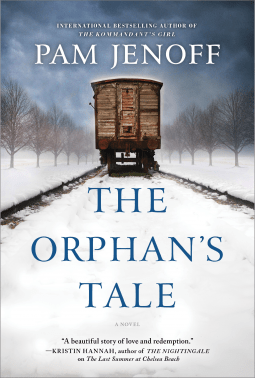
The Orphan's TaleThe Orphan’s Tale

by Pam Jenoff

Expected Publish Date: Feb 21, 2017

The Nightingale meets Water for Elephants in this powerful novel of friendship and sacrifice, set in a traveling circus during World War II, by international bestselling author Pam Jenoff.

Seventeen-year-old Noa has been cast out in disgrace after becoming pregnant by a Nazi soldier during the occupation of her native Holland. Heartbroken over the loss of the baby she was forced to give up for adoption, she lives above a small German rail station, which she cleans in order to earn her keep.

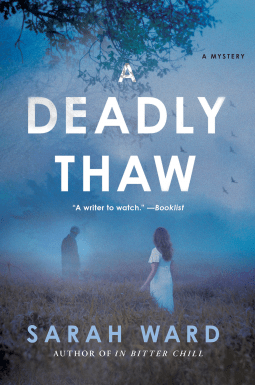
A Deadly ThawA Deadly Thaw

by Sarah Ward

Expected Publish Date: Sep 27, 2016

Lena Grey is found guilty of murdering her husband, who was found smothered in their bed. She offers no defense, and serves fourteen long years in prison. But within months of her release nearly two decades later, his body is found in a disused morgue, recently killed. Who was the man she killed before, and why did she lie about his identity?

Detective Inspector Francis Sadler and his Derbyshire team try to discover how such a well-orchestrated deception could have occurred. DC Connie Childs is convinced that something greater than marital strife caused the murders, but before Lena can be questioned further, she vanishes. Back in Lena’s childhood home, her sister Kat, a therapist, is shocked by her sister’s duplicity. When she begins to receive mysterious packages from a young man claiming to know her sister’s location, Kat is drawn into her own investigation of her family’s well-hidden secrets. As her inquiries begin to collide with the murder investigation, a link to the sisters’ teenage lives emerges, and the line between victim and perpetrator becomes blurred in this tightly-plotted, compelling novel perfect for fans of Deborah Crombie and Sharon Bolton.

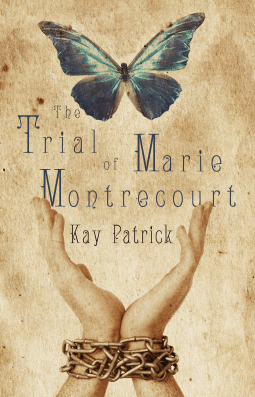
The Trial of Marie MontrecourtThe Trial of Marie Montrecourt

by Kay Patrick

Expected Publish Date: May 28, 2016

1899 and Marie Montrecourt arrives in Harrogate from France, an eighteen-year-old, penniless orphan, facing an uncertain future and knowing little of her past. Meanwhile in London, Evelyn Harringdon is dealing with the death of his father, one of the most influential men in Parliament and a hero of the first Boer War.

It would seem that these two events have little in common but they are linked by a scandal, one that is deeply buried in the past.

As Marie struggles to find a place for herself in her new life she is drawn into the fight for women’s rights, while Evelyn discovers that political corruption threatens to ruin his family’s good name. It is his obsession with discovering the truth that brings him into contact with Marie – a meeting that will prove dangerous for them both. They are prisoners of the past, and Evelyn’s attempt at atonement sets Marie on a path which will lead her into making a terrible choice. It’s one which will transform her from an innocent young woman into the central player in a notorious murder trial…

Here are some of the wishlists from a few of my friends this month:

Colleen @ A Literary Vacation

Heather @ The Maiden’s Court 

Magdalena @ A Bookaholic Swede

Holly @ 2 Kids and Tired

Erin @ Flashlight Commentary 


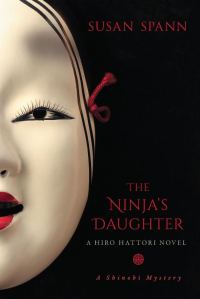
Book Review: The Ninja’s Daughter by Susan Spann

02_The-Ninjas-Daughter-1Book Description:

Autumn, 1565: When an actor’s daughter is murdered on the banks of Kyoto’s Kamo River, master ninja Hiro Hattori and Portuguese Jesuit Father Mateo are the victim’s only hope for justice.

As political tensions rise in the wake of the shogun’s recent death, and rival warlords threaten war, the Kyoto police forbid an investigation of the killing, to keep the peace–but Hiro has a personal connection to the girl, and must avenge her. The secret investigation leads Hiro and Father Mateo deep into the exclusive world of Kyoto’s theater guilds, where they quickly learn that nothing, and no one, is as it seems. With only a mysterious golden coin to guide them, the investigators uncover a forbidden love affair, a missing mask, and a dangerous link to corruption within the Kyoto police department that leaves Hiro and Father Mateo running for their lives.

My thoughts:

The Ninja’s Daughter was a real treat to read. I don’t think I have read a story that takes place in Japan during the 16th Century before. The culture, social norms, customs, class distinctions during that period are really fascinating and Spann really shows that in this story. Not only that but the political and social conflicts were interesting as well.

Spann does a great job in keeping her readers engaged with the story and the mystery of who killed Emi. The Kyoto police do not feel that her death is worth an investigation and Hiro Hattori and Father Mateo are determined to find the killer. What a dual those two make. I loved the interaction between them and how they uncover the killer and so on.

This story makes a good stand-alone but I look forward to reading more Hiro’s and Mateo’s life from the previous books.

I rated this story three stars.

About the Author

03_Susan-SpannSusan Spann is the author of three previous novels in the Shinobi Mystery series: Claws of the Cat, Blade of the Samurai, and Flask of the Drunken Master. She has a degree in Asian Studies and a lifelong love of Japanese history and culture. . When not writing, she works as a transactional attorney focusing on publishing and business law, and raises seahorses and rare corals in her marine aquarium.

For more information, please visit Susan Spann’s website. You can also follow her on FacebookTwitter, and Goodreads.

Interview with Andrea Zuvich

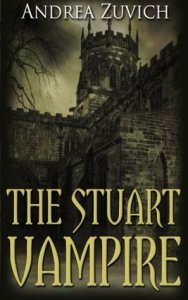
Andrea ZuvichAndrea Zuvich is visiting me today to talk with me about her book, The Stuart Vampire and about the period in history she focuses on. Andrea is a seventeenth-century historian specialising in the House of Stuart (1603–1714), as well as a historical advisor and author of historical fiction. She is the host of the popular ‘The Seventeenth Century Lady’ blog. She has degrees in History and Anthropology. Zuvich has appeared on television and radio discussing the Stuarts and gives lectures on the dynasty throughout the UK. She was one of the original developers of and leaders on the Garden History Tours at Kensington Palace. Zuvich, a Chilean-American born in Philadelphia, Pennsylvania, now lives in England with her husband.

Hi, Andrea! Thank you for chatting with me today about your book, The Stuart Vampire. Tell me a little about the premise.

Thank you for having me on this great site! The Stuart Vampire follows the brief life of Henry Stuart, Duke of Gloucester, who was the youngest son of King Charles I (and therefore the youngest brother of King Charles II). Henry historically died from smallpox when he was twenty, and my story takes a decidedly paranormal turn from that point on and takes us along on Henry’s journey as he copes with his forced transformation into a vampire and he embarks on a mission to try to make something good out of this horrible curse. Along the way, he meets Susanna, the shocking inhabitants of the isolated village of Coffin’s Bishop, Sebastian (originally a mediaeval stonemason), among others.

Why 17th Century?

For me, the seventeenth century has it all and is yet grossly overlooked by both readers and authors (though I’m pleased to say I’ve seen a steady surge in interest from both in the past couple of years). The century was pretty controversial and one can still get heated arguments about topics from that time (i.e. whether or not it was lawful to execute King Charles I, what we should call the English Civil Wars, if we should recognize William and Mary as true sovereigns or usurpers… the list goes on and on). I love the aesthetics of this time period as well – the Baroque style is sometimes criticised for being over-exuberant and outrageously flamboyant – but I love it as, to me, it’s stunning and unashamed of displaying the gamut of human emotion.

The Stuart Vampire

Tell me a little about Charles II.

Ah, Charles II, hands-down the most popular of the Stuarts. Often called the “Merry Monarch”, he is best remembered for his rather prolific love life and for the Great Fire of London rather than for the political events during his reign – which included the Popish Plot of the 1670s, the Rye House Plot of 1683, the Secret Treaty of Dover with Louis XIV of France, etc. Charles II appears occasionally in The Stuart Vampire because he was an important figure in Henry’s life.

What are the emotional triggers of Contessa Griselda di Cuorenero and how does she act on them?

Griselda is the main antagonist of the book. Her biggest flaw is her obsession with her looks. She’s been fortunate to have beauty, but naturally this fades with time and it is the lengths to which she’ll go to in order to maintain this beauty that shows the depths of her vanity and evil. I can’t comment any further without giving anything away!

What is the courage and strengths of Henry Stuart? -and possibly the isolation he may feel with these attributes.

Henry has a strong sense of morality, and I think this is his strongest point. When he is around Griselda, she is a despicable individual and he knows he does not want to be like her. His longing to maintain his humanity is touching but at the same time makes him lonely. His devotion to and love for Susanna is another strength, and it’s the same for her. After a secret is revealed, Susanna tells Henry that “Our love will be the light and the darkness shall perish beneath the weight of it” – and that’s the strength of their relationship in a nutshell.

How is your character(s) influenced by their setting?

At one point, Henry leaves London and goes into the countryside, which does influence him – I think characters, like real people, do get influenced by their surroundings and those who surround them. The town of Coffin’s Bishop is a negative influence on Susanna, who does need to get away from that horrid place just for some peace of mind.

What is the greatest challenge of writing a story with Vampires in it?

Believability, especially from those who know me as a more serious historian. Most of my days are spent writing nonfiction history, but I’m very keen on making history accessible to as many people as possible as I don’t think it should only be for the academic community. When some people hear that I’ve written “a vampire story” they have a rude tendency to roll their eyes and/or chuckle, but the fact is, this story has made Henry Stuart known to a lot more people – people who have subsequently gone on to read more about the Stuarts, the English Civil Wars, the seventeenth century, and so on. I had one teenager contact me saying that solely because of The Stuart Vampire, she decided to get books about the Stuarts from her library to learn more about them – which is great! And that’s certainly nothing to snigger about.

Where can readers buy your book?

The Stuart Vampire is available in both paperback and eBook formats on Amazon, iBooks, Google Books, signed copies are available through my website, and the book will soon to be released as an audiobook on Audible. My other books are also available in these formats, but the two nonfiction books, A Year in the Life of Stuart Britain (hardback, 2016) and The Stuarts in 100 Facts (paperback, 2015) can be bought from any good bookseller.

Please tell me about yourself as an Historian.

History has been a very important aspect of my life since I was a little girl. I remember I was in the fourth grade and I knew I wanted to be a historian. I went to a community college during high school and then got my AA in History, and then I went to the University of Central Florida where I obtained two BA degrees – one in History and the other in Anthropology. After this, I got married and moved to the UK, and continued my history studies with Oxford University and Princeton University. That being said, there was absolutely no better training for me than actually delving into archives around the world – handling documents from the seventeenth century brought the history to life in ways that could never be done in a classroom. Indeed, by the time I had finished studying history in university, I was burned out, I almost couldn’t stand it anymore as formal study and the somewhat politically biased teaching wasn’t right for me. I had time off and fell in love with history again, by self-teaching with primary sources. Whilst living in London, I volunteered at Kensington Palace and later was one of the creators and leaders on their Garden History Tours, which was a very enlightening experience for me. Since 2010, I’ve run The Seventeenth Century Lady website which is devoted to all things seventeenth-century, with an emphasis on European history. I’ve been giving lectures on the Stuart period of 1603-1714 for several years now, and it’s a delight to do so.

Will you write other stories related to the paranormal?

It’s funny because I was never before interested in paranormal stories until The Stuart Vampire. That being said, I’ve had numerous readers who have responded favorably to this and many have asked for a continuation of Henry’s story – which does indeed interest me!

What are you currently working on?

I’ve just finished writing a short story set during the plague outbreak of 1630s Venice, and I’m also recording the audio version of The Stuart Vampire. I’m expecting a child due in October, so I hope to finish off two more historical fiction novels that I’ve been working on over the past few years (I started my novel about William and Mary in 2010, and my novel about a Restoration actress’s adventures in 2014) – we’ll see how that goes!

Often times the best inspiration comes within us. How do you flesh out your characters to drive the plot?

I write historical novels based on historical fact, and there are unknowns in any biography and I use my imagination – strictly based on in-depth study on that person’s behavior and character – to flesh out the story. I rather see the whole process as though the facts are the bones of a fish, and my job is to give educated guesses as to the rest – to flesh out the fish. Every author has their way of going about it, but I’m comfortable with this so I’ll keep on trucking.

Thank you, Andrea!

Thank you, Stephanie!

Please visit Andrea’s site here

Other Links:

Amazon Profile

Goodreads


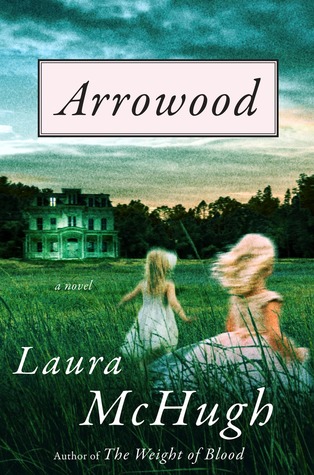
Review: Arrowood by Laura McHugh

ArrowoodArrowood is the most ornate and beautiful of the grand historical houses that line the Mississippi River in southern Iowa, where the days are long and humid and communities are small and closed. It has its own secrets and ghostly presence: It’s where Arden’s young twin sisters were abducted nearly twenty years ago—never to be seen again. Now, Arden has inherited Arrowood, and she returns to her childhood home determined to establish what really happened that traumatic summer. But the house and the surrounding town hold their secrets close—and the truth, when Arden finds it, is more devastating than she ever could have imagined.

**********

My thoughts:

As Arden returns to her ancestor’s home-Arrowood- in Southern Iowa the author describes an imposing second empire style with three stories in a town called, Keokuk that had once seen grandeur in its days. A town that was once was and now is where great houses had/has its own distinctive architecture mark on it. Where lingering pain inflicted on the family long ago and still holds deep, dark secrets.

This story has such a strong sense of time and place. I contribute that to the author’s impeccable description of imagery, the landscape and the emotions she invokes from her characters. Where tragedy and secrets from the past haunt the present.

The tragedy of Arden and her family losing her twin sisters was gut wrenching and Arden needing to find out what really happen to her little sisters and putting to rest some of the heart ache that came afterwards is brilliantly told. What is even more heart breaking is discovering that everything you thought turns out not what you imagined happened to them. How Arden deals with that is extraordinary.

Laura McHugh has really breathed life into her characters and brings her readers a captivating story. One I will never forget and one I would like to revisit again one day. I can’t say enough about this book and how it impacted me emotionally. I highly recommend this story and have rated it five stars.

I obtained a copy of this book through NetGalley for an honest review.

Stephanie M. Hopkins

Characters in Motion: Bestselling Author Margaret Porter

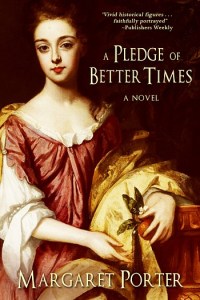
A Pledge of better timesLady Diana de Vere, the heroine of A Pledge of Better Times, was born into an aristocratic and prominent family of the late 17th century. Her father is an earl, a courtier and trusted advisor to Charles II, a position he retains—for a time—under James II. The landscape of Diana’s life, therefore, consists of the royal palace of Whitehall in London—her extended family’s dwellings lie within the palace complex. In a very real sense she’s closed off from the common citizen, from ordinary life, apart from her interaction with servants. Her world is one of opulence and privilege, and also one of restricted movements. A large part of my research was visiting sites were familiar to her during her lifetime, which allowed me to envision her in the actual spaces she had occupied and to imagine her in the ones that no longer exist.

Her father, Lord Oxford, welcomes her questions and provides supportive guidance. Her mother, despite a scandalous past as a courtesan, is far less tolerant of what she perceives as Diana’s faults, and she’s determined that her daughter will achieve a wealthy and advantageous marriage. As a maid of honour to Queen Mary II, my secondary heroine, Diana finds a sort of freedom living away from home, following queen and court from Whitehall to Hampton Court to Kensington and back. Not only does her position remove her from her mother’s orbit, it enables a semi-clandestine courtship by Charles Beauclerk, son of King Charles II and actress Nell Gwyn. As married woman and duchess, Diana’s intelligence, independent spirit, and tendency to speak her mind create conflict on more than one occasion.

Diana’s habits and pursuits are typical of an aristocratic female of her time—needlework, music, dancing, and drawing. Religious instruction in her early life takes firm root, and her faith is a source of strength in difficult times, and supports her during life’s soul-searing tragedies. Her fondness for gardens and sewing and devotional writings make her the ideal companion for Queen Mary, who shares and fosters these interests.

Diana’s personality is a mixture of calm serenity, attractive to the troubled and often agitated Queen Mary, determination, and occasional tempestuousness. In her youth she has convictions but lacks empowerment, but as she matures she gains a certain amount of agency. She will exert herself to control or to remedy a situation, and then faces the consequences with resignation. Her loyalty to her queen, her duty to her family, and her fidelity to her husband are ruling attributes. But she can be prejudiced as well, and finds herself unable to warm to King William—she sees firsthand the distress he causes his wife through his frequent absences. Yet her husband secures His Majesty’s favour, and retaining it is paramount to him.

Diana’s greatest antagonist in early life is her own mother, who values her as an asset to exploit for the family’s advantage, and who hopes to sever her daughter’s relationship with “Nelly’s brat.” Queen Mary’s antagonist is her sister Princess Anne, who causes much grief and anger from insubordination and through her relationship with her confidante Sarah Churchill, the Countess and later the Duchess of Marlborough. The latter is not only an antagonist to the queen, she pulls strings to shatter one of Diana’s most cherished hopes. Sarah was born a commoner, and her unkindness towards Diana—an aristocrat from birth—arises from jealousy.

Charles, Diana’s suitor and eventual husband, faces antagonists at court and on the battlefield—as does her father. For them, the greatest personal antagonist is King James II. Each man strives in different ways to cope with the stubborn and imperious monarch, with varying degrees of success. King James, a Roman Catholic convert, is so fanatical about his religion that he disregards Parliamentary laws and protocols, and thus brings about his destruction. Lady Oxford, Diana’s mother, is antagonistic towards Charles, mocking him in public and in private. In her opinion, he’s an unworthy husband for a de Vere and lacks the money needed to restore the family’s fortunes.

My characters’ self-image is of great significance, with powerful impact upon plot and conflicts within the story. Royal blood flows through the veins of Charles Beauclerk, Duke of St. Ablans: his father and grandparents and prior ancestors were kings and queens of England. Yet his mother was the lowest of commoners. Nell Gwyn, raised in a brothel, sold oranges in the theatre and was an actress before the king made her his mistress. Charles can never feel completely comfortable at the royal court, especially after his father’s death. He chooses instead a voluntary exile in order to become a soldier. As an army officer, he believes, he can rise to prominence on his own merits. This ambition is unexpectedly undermined, and when he discovers by whom he does not react well.

As for Diana, she is a woman of sterling reputation and great depth, but most people in her world (and down through history) regard her primarily as a court beauty. The greatest painter of the day painted her—repeatedly—and she retained her looks till her dying day. Her mother believed that the girl’s lovely face destined her for a brilliant match rather than a match based on passion, affection, and compatibility. As a married woman, Diana wonders whether her beauty alone attracts her husband instead of other qualities she values in herself. Her beauty, like Charles’s bastardy, is isolating, troublesome, and a source of inner conflict. She tends to judge others as critically as she does herself, but that judgment is usually tempered by an effort to understand…something her husband is slower to do.

Lord Oxford, Diana’s father, has lived long and seen much. He tends to regard himself as a relic of the past, yet he’s pragmatic enough to be progressive when necessary. During the Civil Wars he was Royalist—twice he was imprisoned by Cromwell on suspicion of being a spy—and believes himself forever loyal to the Stuarts. When James II tests this loyalty in unexpected ways, his lordship’s conscience as a member of Parliament and as a Protestant force him to turn against his king and support the Williamite cause.

Queen Mary, for a variety of reasons, has low self-esteem and a poor self-image. Her uncle King Charles married her off to her Dutch first cousin, a complete stranger. But her dread and sorrow at leaving England for a foreign court gave way to a true and lasting love. She’s tortured by guilt over her repudiation of her father the King when her husband seizes the crown for himself. Although her claim to England’s throne is stronger than William’s, she regards herself as his inferior, unfit to rule, and willingly cedes all authority to him. Yet it is she who is—most unhappily—left in control of the nation while he’s away fighting his endless wars. At the same time she must deal with her recalcitrant sister Anne and the problematic Lady Marlborough. Adding to these woes is her husband’s infidelity, and the fact that his mistress is a courtier—and much less attractive than Mary.

For me, writing biographical historical fiction requires the weaving of three necessary strands to form a plot. First there’s the factual biographical record of the individuals depicted—gleaned from period diaries, newspaper accounts, portrait sittings, memoirs, family genealogies, and other primary sources. Then there’s the factual historical record of their times—what significant events did they participate in, how were they affected by events near or far, with whom were they likely to interact on a regular or irregular basis. And lastly, but in a way the most important for a fiction writer, is the imagination, the creative component that enables the author to invent.

The bare facts of biography can’t really reveal how a real-life individual felt at any given moment. The private aspects of life—personal opinions, passions, deepest feelings about self or others—are concealed areas of past lives, the least accessible aspects of the individuals. Especially if the characters are relatively obscure, as Diana and Charles are. I must therefore invent conversations, reactions, consequences for my characters. I have to draw conclusions from research that I hope bear a semblance of accuracy, but I can never lose sight of the fact that I am telling a story for the purpose of entertaining—informing about history and enlightening about the human condition are wonderful side benefits. That combination of elements made me love historical fiction in childhood, and they’ve kept me writing it throughout my adulthood!

A Pledge of Better Times

“Porter’s ambitious novel of 17th-century England is brimming with vivid historical figures and events . . . rigorously researched and faithfully portrayed.” ~  Publishers Weekly

“A true delight for fans of monarchy. . . Porter does a sensational job portraying the time period . . . the relationship between Charles and Diana is complex and interesting.” ~ The Examiner

“Elegant prose and vivid detail…sweeps you into late Stuart England.” ~ Marci Jefferson, author of Enchantress of Paris and Girl on the Golden Coin

margaretporterthumb1Because I was born into a family of readers and writers and scholars and travelers, there’s no mystery about how or why I found my profession. From a very early age I invented characters and composed scenes and stories in my head. At about 10 years old I first saw my own words printed–in the grammar school newsletter that I co-founded, typed, and published. Around the same time I decided to combine my theatrical and my writing ambitions, and adapted all my favourite youth novels into scripts.

Since then many, many more words have been published: novels, nonfiction articles on British history and travel and theatre, website content, book and film reviews, my M.A. thesis, advertising copy…and more.

Website Website

Twitter @MargaretAuthor

Blog Blog

Wish-List 5: Sebastian St. Cyr Series by C.S. Harris

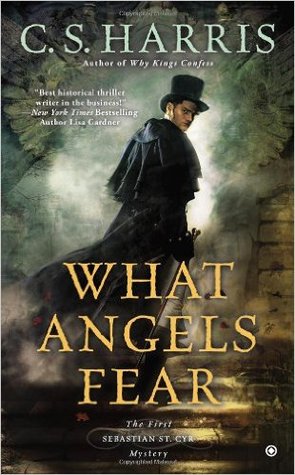
I adore mystery and historical Fiction combined into a story. Today I am sharing with you, the Sebastian St. Cyr Series by C.S. Harris. I am currently reading, What Angels Fear and hope to continue with the other books this year. So little time! Anyhow, below are the ones I want to get to next plus the one I’m reading right now. What is on your wish-list? 

What angles fearWhat Angels Fear -Currently Reading

It’s 1811, and the threat of revolution haunts the upper classes of King George III’s England. Then a beautiful young woman is found raped and savagely murdered on the altar steps of an ancient church near Westminster Abbey. A dueling pistol discovered at the scene and the damning testimony of a witness both point to one man, Sebastian St. Cyr, Viscount Devlin, a brilliant young nobleman shattered by his experience in the Napoleonic Wars.

Now a fugitive running for his life, Sebastian calls upon his skill as an agent during the war to catch the killer and prove his own innocence. In the process, he accumulates a band of unlikely allies, including the enigmatic beauty Kat Boleyn, who broke Sebastian’s heart years ago. In Sebastian’s world of intrigue and espionage, nothing is as it seems, yet the truth may hold the key to the future of the British monarchy, as well as to Sebastian’s own salvation…

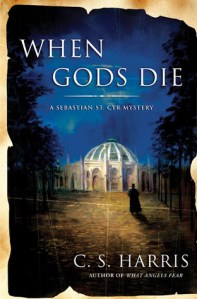
When Gods DieWhen Gods Die

Brighton, England, 1811. The beautiful wife of an aging Marquis is found dead in the arms of the Prince Regent. Draped around her neck lies an ancient necklace with mythic origins-and mysterious ties to Sebastian St. Cyr, Viscount Devlin. Haunted by his past, Sebastian investigates both the Marchioness’s death and his own possible connection to it-and discovers a complex pattern of lies and subterfuge. With the aid of his lover, Kat Boleyn, and a former street urchin now under his protection, Sebastian edges closer to the killer. And when one murder follows another, he confronts a conspiracy that threatens his own identity…and imperils the monarchy itself.

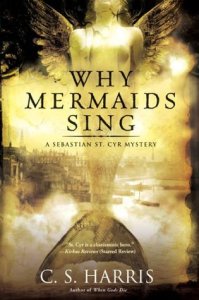
Why Mermaids SingWhy Mermaids Sing

It’s September 1811, and someone is killing the wealthy young sons of London’s most prominent families. Partially butchered, with strange objects stuffed into their mouths, their bodies are found dumped in public places at dawn. When the grisly remains of Alfred, Lord Stanton’s eldest son are discovered in the Old Palace Yard beside the House of Lords, the local magistrate turns to Sebastian St. Cyr, Viscount Devlin, for help.

Ranging from the gritty world of Thames-side docks to the luxurious drawing rooms of Mayfair, Sebastian finds himself confronting his most puzzling–and disturbing–case yet. With the help of his trusted allies–young servant Tom, Irish doctor Paul Gibson, and his lover Kat Boleyn–Sebastian struggles to decipher a cryptic set of clues that link the scion of a banking family to the son of a humble Kentish vicar. For as one killing follows another, Sebastian discovers he is confronting a murderer with both a method and a purpose to his ritualized killings, and that the key to it all may lie in the enigmatic stanzas of a haunting poem…and in a secret so dangerous that men are willing to sacrifice their own children to keep the truth from becoming known.

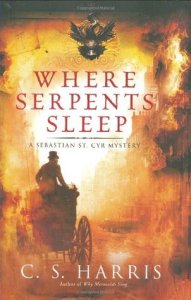
Where serpents sleepWhere Serpents Sleep

London, 1812. The brutal slaughter of eight young prostitutes in a house of refuge near Covent Garden leaves only one survivor- and one witness: Hero Jarvis, reform-minded daughter of the Prince Regent’s cousin, Lord Jarvis. When the Machiavellian powerbroker quashes any official inquiry that might reveal his daughter’s unorthodox presence, Hero launches an investigation of her own and turns to Sebastian St. Cyr, Viscount Devlin, for help.

Working in an uneasy alliance, Hero and Sebastian follow a trail of clues leading from the seedy brothels and docksides of London’s East End to the Mayfair mansions of a noble family with dark secrets to hide. Risking both their lives and their reputations, the two must race against time to stop a killer whose ominous plot threatens to shake the nation to its very core.

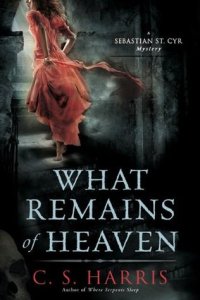
What Remains of heavenWhat Remains of Heaven

Another gripping mystery in the series that has won six starred reviews, set in the glittering yet dangerous world of 1812 London, where nobleman and former spy Sebastian St. Cyr courts personal disaster in his effort to expose a murderer.
The latest request for help from Sebastian St. Cyr, Viscount Devlin–from the Archbishop of Canterbury, no less–is undeniably intriguing: The bodies of two men have been found in an ancient crypt, their violent deaths separated by decades. One is the Bishop of London, the elderly Archbishop’s favored but controversial successor. The identity of the other seems lost in time, although his faded velvet attire marks him as gentleman of the eighteenth century.

To Sebastian’s consternation, the last person to see the Bishop alive was Miss Hero Jarvis, a woman whose already strained relationship with St. Cyr has been complicated by a brief, unexpectedly passionate encounter. It also soon becomes obvious that her powerful father has reasons of his own for wanting the Bishop out of the way. In an investigation that leads from the back alleys of Smithfield to the power corridors of whitehall, Sebastian amasses a list of suspects that ranges from some of the Prince Regent’s closest cronies to William Franklin, embittered son of famous American patriot Ben Franklin. Each step Sebastian takes toward the killer brings him closer to a devastating truth that could ultimately force him to question who–and what–he really is.

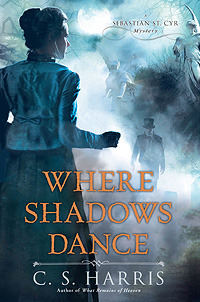
Where Shadows DanceWhere Shadows Dance

Regency London: July 1812. How do you set about solving a murder no one can reveal has been committed?

That’s the challenge confronting C.S. Harris’s aristocratic soldier-turned-sleuth Sebastian St. Cyr when his friend, surgeon and “anatomist” Paul Gibson, illegally buys the cadaver of a young man from London’s infamous body snatchers. A rising star at the Foreign Office, Mr. Alexander Ross was reported to have died of a weak heart. But when Gibson discovers a stiletto wound at the base of Ross’s skull, he can turn only to Sebastian for help in catching the killer.

Described by all who knew him as an amiable young man, Ross at first seems an unlikely candidate for murder. But as Sebastian’s search takes him from the Queen’s drawing rooms in St. James’s Palace to the embassies of Russia, the United States, and the Turkish Empire, he plunges into a dangerous shadow land of diplomatic maneuvering and international intrigue, where truth is an elusive commodity and nothing is as it seems.

Meanwhile, Sebastian must confront the turmoil of his personal life. Hero Jarvis, daughter of his powerful nemesis Lord Jarvis, finally agrees to become his wife. But as their wedding approaches, Sebastian can’t escape the growing realization that not only Lord Jarvis but Hero herself knows far more about the events surrounding Ross’s death than they would have him believe.

Then a second body is found, badly decomposed but bearing the same fatal stiletto wound. And Sebastian must race to unmask a ruthless killer who is now threatening the life of his reluctant bride and their unborn child.

And of course…. the rest of the series!

Here are some of the wishlists from a few of my friends this month:

Heather @ The Maiden’s Court 

Magdalena @ A Bookaholic Swede 

Holly @ 2 Kids and Tired 

Erin @ Flashlight Commentary – Coming soon

Colleen @ A Literary Vacation 


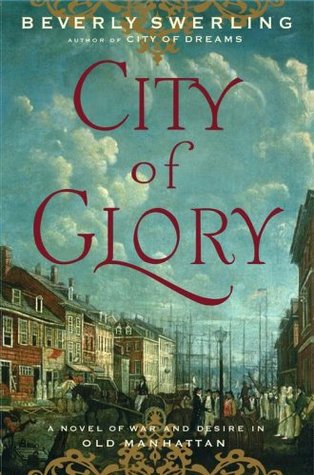
Cover Crush: City of Glory by Beverly Swerling

City of GloryThis week I came across this author and book cover on social media and ever since, I have been drawn to it. The premise & hisory itself is something I am highly interested in and one I hope to read soon. The story takes place in Old New York and the cover shows a city of promise and thriving with life. I love the colors, design!

(This is the second book in the series: Old New York 2)

***********

Set against the dramatic backdrop of America’s second war for independence, Beverly Swerling’s gripping and intricately plotted sequel to the much-loved “City of Dreams” plunges deep into the crowded streets of old New York. Poised between the Manhattan woods and the sea that is her gateway to the world, the city of 1812 is vibrant but raw, a cauldron where the French accents of Creole pirates mingle with the brogues of Irish seamen, and shipments of rare teas and silks from Canton are sold at raucous Pearl Street auctions. Allegiances are more changeable than the tides, love and lust often indistinguishable, the bonds of country weak compared to the temptation of fabulous riches from the East, and only a few farseeing patriots recognize the need not only to protect the city from the redcoats, but to preserve the fragile Constitutional union forged in 1787.

Joyful Patrick Turner, dashing war hero and brilliant surgeon, loses his hand to a British shell, retreats to private life, and hopes to make his fortune in the China trade. To succeed he must run the British blockade; if he fails, he will lose not only a livelihood, but the beautiful Manon, daughter of a Huguenot jeweler who will not accept a pauper as a son-in-law. When stories of a lost treasure and a mysterious diamond draw him into a treacherous maze of deceit and double-cross, and the British set Washington ablaze, Joyful realizes that more than his personal future is at stake. His adversary, Gornt Blakeman, has a lust for power that will not be sated until he claims Joyful’s fiancee as his wife and half a nation as his personal fiefdom. Like the Turners before him, Joyful must choose: his dreams or hiscountry.

Swerling’s vividly drawn characters illuminate every aspect of the teeming metropolis: John Jacob Astor, the wealthiest man in America, brings the city’s first Chinese to staff his palatial Broadway mansion; Lucretia Carter, wife of a respectable craftsman, makes ends meet as an abortionist serving New York’s brothels; Thumbless Wu, a mysterious Cantonese stowaway, slinks about on a secret mission; and the bewitching Delight Higgins, proprietress of the town’s finest gambling club, lives in terror of the blackbirding gangs who prey on runaway slaves. They are all here, the butchers and shipwrights, the doctors and scriv-eners, the slum dwellers of Five Points and the money men of the infant stock exchange…conspiring by day and carousing by night, while the women must hide their loyalties and ambitions, their very wills, behind pretty sighs and silken skirts.

Cover Crush banner

Cover Crush is a weekly series that originated with Erin at Flashlight Commentary. Be sure to check out these great cover crushes and bloggers this week. The Maiden’s CourtFlashlight CommentaryA Bookaholic Swede.

Interview with Best-Selling Author Lynn Cullen

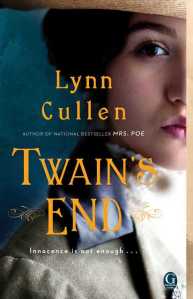
Lynn Cullen Twains EndI have the great pleasure of welcoming back Lynn Cullen to Layered Pages to talk with me about her current novel. Lynn’s recent novel, Mrs. Poe, a national bestseller, has been named a Target Book Club Pick, an NPR 2013 Great Read, an Oprah.com “Book that Makes Time Stand Still,” and an Indie Next List selection.  Her current release, Twain’s End, called “reputation squaring…incendiary” by the New York Times and “intelligently drawn” by Library Journal, is a People pick, an Indie Next selection, and a 2016 Townsend Prize finalist.  Cullen, named “the Bronte of our day” by the Huffington Post, grew up in Fort Wayne, Indiana.  She now lives in Atlanta surrounded by her large family, and, like Mark Twain, enjoys being bossed around by cats.

Hi, Lynn! Tell me about your story, Twain’s End.

Thank you for inviting me to chat with you about Twain’s End at Layered Pages, Stephanie.  I’m so happy to be with you here!  To get things started, at its core. Twain’s End is a tale of The Other Woman.  The real-life woman in the shadows in this case is Mark Twain’s secretary, Isabel Lyon.   But the story, Isabel Lyon is not competing for Twain’s heart and soul with his wife, Livy Clemens.  No, Isabel’s competition is much stiffer.  Isabel must battle with “Mark Twain,” the extraordinarily successful character the real life man, Samuel Clemens, created in his thirst for fame and adulation.  Isabel Lyon fell in love with the real man behind the legend, and ultimately, forced him to choose between her and the love of his public.

What made you decide to write this story?

I ‘m always interested in the underdog.  When I learned about Mark Twain’s tragic childhood, my antennae went up.  Among other horrific incidents that he experienced as a boy, he watched doctors dissect his own father through the keyhole of his parents’ bedroom door.  This episode said a lot about the toxic, hostile state of his parents’ marriage and about their extreme poverty.  It was unspeakably taboo for a wife to sell her own husband as a cadaver in those days.  How she must have hated the man to do so!  But as damaging as little Sammy’s boyhood was, I was more astonished by his brutal turning against his secretary, Isabel Lyon, after nearly seven years of devoted service.  She was more than an employee.  She traveled with him, entertained his daughters, oversaw the family medical needs, handled his social life and reporters, and oversaw the construction and furnishing of his home.  She even washed that white hair and bought those white suits! He told her, as well as friends and reporters, that she knew him better than anyone.  It was obvious to their friends that they were a couple.  Yet, a month after she married his business manager, Twain told those same people that Isabel was “a liar, a forger, a thief, a hypocrite, a drunkard, a sneak, a humbug, a traitor, a conspirator, a filthy-minded and salacious slut pining for seduction.” I wanted to know what caused the radical turnabout.
02_Twains-EndTell me a little about the research you did.

It’s important to me for my readers to know that everything they read in my novels could have actually happened–at least to my knowledge, they could have.  I like to take known events and flesh them out without changing the facts I have learned through painstaking research.  To give my readers confidence in the plausibility of my stories, I go to great lengths to track down the truth behind the legend.

To this end, I’ve found that there’s no substitute for traveling to the setting of every scene in my books.  For Twain’s End, combing through family writings and photographs gave me clues beyond reading dozens of Mark Twain biographies, as well.

The most helpful of sources was Isabel Lyon’s own diary, in which she kept a daily record of her life with the man she called “The King.”  I shaped many of the scenes in the book around her diary entries.

Tell me about Isabel V. Lyon.

Isabel is a remarkable example of someone trying to make the best out of the limited opportunities for women in the decades around the turn of the twentieth century.  She was born into a wealthy Eastern family but after her father’s death when she was a teenager, it was up to her to support herself and her mother.   The only work available to someone in her class was as a governess, at which she worked until Mark Twain hired her in her early thirties as a social secretary to his ailing wife.   She also made pincushions to sell in those pre-Etsy days.  Once working for the Clemenses, Isabel quickly became more than a secretary to the entire eccentric Clemens family, eventually assuming the role as mother when Livy died.  Yet within seven years, the family turned against her and ended up ensuring that her name was mud for all time.  I try to explain why and how this happened in my story.

What do you think of Clara Clemens?

It’s convenient to blame Clara for Twain’s abuse of Isabel Lyon and many Twain scholars revile Clara.  Yet, while I pull no punches in Twain’s End showing what a pill Clara truly was in real life, I actually feel sorry for her.  I hope to show in the story how her bizarre family life contributed to her instability.  I was just trying to report why she did the things she did, which was what I was trying to do with all my characters in the book.  I’m not trying to pass judgment them.  My job was to lay out the facts so that readers could decide how they feel.

Self-image is important in characters, how is this important to your characters?

Self-image was everything to Mark Twain.  Samuel Clemens had to maintain his persona as the amiable everyday family man, Mark Twain, if he was to keep the love of the world that he so craved.   As he matured, he attempted to write things closer to his heart but whenever he did, sales flagged.  The public did not welcome his dark side.  They wanted the creator of Tom Sawyer or nothing.

Talk about the courage and strength of your character. -and possibly the isolation your character may feel with these attributes.

I found it interesting that even after Twain and his daughter Clara took a scorched earth approach to publically slandering Isabel, she never fought back.  A large part of this might be due to Isabel’s understanding that she could never win a he said/she said battle with the world’s most beloved man, as Twain was at the time.   The other part, I feel, was that Isabel believed that her own good deeds would eventually vindicate her; surely the truth of her good character would have to come out.  It didn’t.  I wrote Twain’s End as an example of how innocence is sometimes not enough to clear someone’s name.

What are your favorite writings by Twain?

One of my favorites is a little known short story, “A True Story, Repeated Word for Word as I Heard It.”

Mark Twain calls his tale “true,” although of course it’s fictitious.  Yet there a very real truth hidden in this story–the truth about his own grief over the inhuman treatment the family slave received at his parents’ hands.   Twain’s End explores Twain’s relationship with this slave, Jennie, and how it might have affected his thinking.

Do you think any differently of him after researching him?

I went into writing this book with the same basic knowledge of the white-suited wit as any other American:  he was the funny guy who wrote Tom Sawyer and Huckleberry Finn and he rocked the color white before Colonel Sanders ever did.  My research revealed a much more complicated man.  I found that, as is the case

with many other humorists, below his hilarious surface, he was one very angry and melancholic man.  I ended up appreciating what Twain, the product of a difficult childhood, made of himself, and I savor his charisma and cleverness.  Although there is no denying his flaws—and he was at his very worst when striking out at Isabel–I have great sympathy for him as a fellow human.

How long did it take to write your story?

I wrote the story over a two-year period, traveling and researching while writing.  I go to scenes both before and after I’ve written them, and put in 8 – 12 hour days writing (with lots of snacking, walking, and bird-gazing tossed in.)

What are you currently working on?

My next book takes place during the Great Depression in 1934.  Famous people are in it… (to be continued.)

Thank you for the chat, Lynn! Please visit me at Layered Pages again!

It was a treat to talk with you, Stephanie.  Much love to you and the readers of Layered Pages!

For more information, please visit Lynn Cullen’s website. You can also find her on FacebookTwitterPinterest, and Goodreads.

Cover Crush: Goddess of Fire by Bharti Kirchner

Cover Crush banner

I happened upon the book cover below by checking out another book on a publisher’s facebook page. I was drawn to it immediately! Such vibrant and vivid detail and the cover fits the title perfectly. One can tell the cover resonates a dramatic and compelling story of centuries long ago and I would love to be transported back into that time. Hoping to read Goddess of Fire soon!

This cover is receiving a five stars from me!

Goddess of Fire

Goddess of Fire by Bharti Kirchner

Moorti – widowed at just 17 and about to be burned on her husband’s funeral pyre – is saved from the fire by a mysterious Englishman. Taken to safety and given employment by her saviour Job Charnock, Moorti, renamed Maria, must embrace her new life amongst the English traders.

But the intelligent and talented Maria is not content to be a servant for the rest of her life, and seizes the opportunity to learn English. This, she hopes, will bring her closer to the kind and gentle Job. But with so many obstacles in her path, will she be able to overcome adversity and danger in the pursuit of her dreams?

Filled with the heat and beauty of India, Maria’s story of compassion, hope and love lingers long after the final page.

************

Be sure to check out my Wish-List 5: The American Civil War!

Check out this week’s other cover crush over at

Flashlight Commentary-Cover Crush

2 Kids and Tired Books-Cover Crush

A Bookaholic Swede-Cover Crush

The Maidens Court-Coming soon