Review: Inceptio by Alison Morton

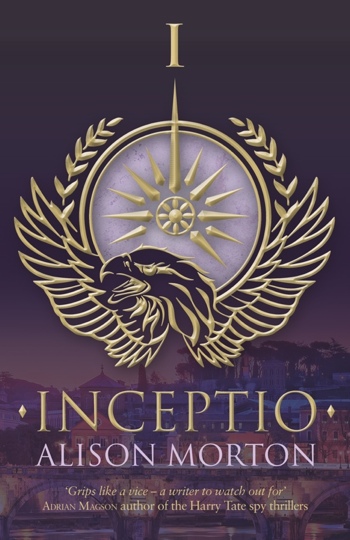
Incepto

New York, present day, alternate reality. Karen Brown, angry and frightened after a kidnap attempt, has a choice – being eliminated by government enforcer Jeffery Renschman or fleeing to mysterious Roma Nova, her dead mother’s homeland in Europe.

Founded sixteen centuries ago by Roman exiles and ruled by women, Roma Nova gives Karen safety, at a price, and a ready-made family. Just as she’s finding her feet, a shocking discovery about her new lover, special forces officer Conrad Tellus, isolates her.

But the enforcer has crossed to Europe to pursue her. Unable to rely on anybody else, she undergoes intensive training, develops fighting skills and becomes an undercover cop. But crazy with bitterness at his past failures, Renschman sets a trap for her, knowing she has no choice but to spring it…

Review:

Inceptio is a story unlike what I have read before. I do enjoy reading alternate history but this is quite different from what I am used too. I must admit, in the beginning I had a hard time getting through it but as it picked up I found many aspects of the theme interesting and intriguing- if you will. The style of writing and dialog is new to me. Maybe because I am so used to medieval history and non-fiction. The protagonist-Karen Brown is someone who I haven’t decided what I think of. I would have also liked to know more about her fathers business and how it ties into the story…

Conrad is an  interesting character and Renschman is a character you will love to hate. Although I would really like to know more about why he is so bent on destroying Karen. It seems like there is more than just wanting her father’s business. But having said that, I’m sure the sequel will go more into that.

I believe many readers will enjoy the uniqueness to this story and I recommend this to young adults and anyone who likes a thriller with an alternate history twist.

Stephanie

alison blog tour banner

Guest post with Alison Morton

Alison Morton

I would like to introduce Author Alison Morton. Alison grew up in Tunbridge Wells, a former spa town in South East England, and worked in the City of London, dealt in coins and antique jewellery, head-hunted chief executives, served as a reserve military officer and owned a translation company. She completed a bachelor’s degree in French, German and Economics and several years later a masters’ in history. She now lives in France with her husband.


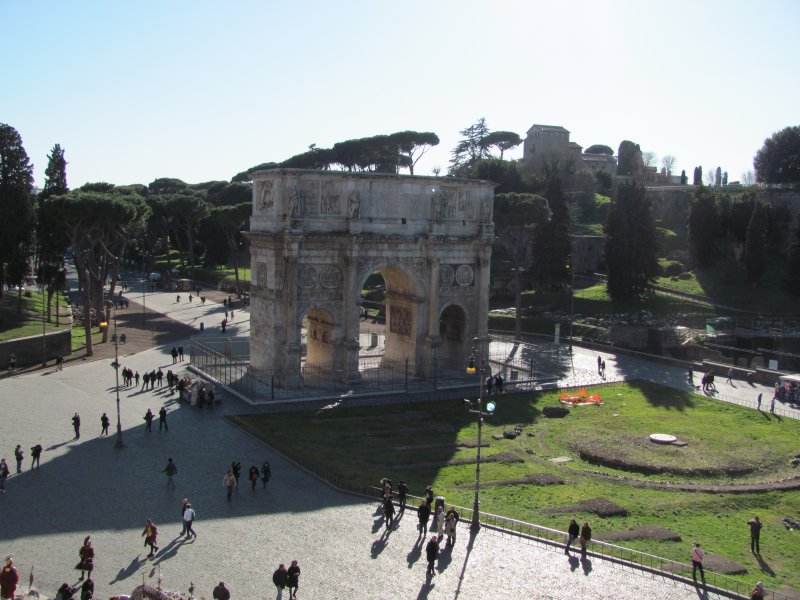
A ‘Roman nut’ since age 11, she has visited sites throughout Europe including the alma mater, Rome. But it was the mosaics at Ampurias (Spain) that started her wondering what a modern Roman society would be like if run by women…

 Alison pic of rome

A wordsmith much of her life – playwright (aged 7), article writer, local magazine editor and translator – she came to novel writing in reaction to a particularly dire film.

‘I could do better that that,’ she whispered in the darkened cinema.

‘So why don’t you?’ came her spouse’s reply.

Three months later, she had completed the first draft of INCEPTIO, the first in her series of Roma Nova thrillers.


INCEPTIO was shortlisted for the 2013 International Rubery Book Award and awarded a B.R.A.G. MedallionTM in September 2013. The next in the series, PERFIDITAS, was published October 2013.  Alison is working on the third book SUCCESSIO.


Writing history stories “alternately”


Stepping into a book’s world is always the start of an exciting adventure, especially going back to the past to hear the clash and smash of an ancient Roman battle, admire the frocks and pelisses of Jane Austen’s Bath or even smell the stench of Victorian slums. But what if that past is an “alternate” one where history developed differently?


What if King Harold had won the Battle of Hastings in 1066? Or George Washington had failed to cross the Delaware River on Christmas night in 1776? If Boudicca had won the Battle of Watling Street and thrown the Romans out of Britain? Or that firm favourite, if Hitler had won the Second World War? More intriguing is when something that seems obscure at the time turns out to have a massive impact, e.g. the thought not occurring to Tim Berners-Lee to link up hypertext and the embryonic Internet to ease CERN scientists’ daily working lives to produce the world wide web, or, even more simply, if hadn’t rained the night before Agincourt.


So what defines alternate history?
A story can take place can take place in the past, present or future, but the point of divergence (POD) from the standard timeline must be in the past. The diverted timeline can’t be changed back by a time machine, technical gizmo or waking up and finding it’s all been a dream, or possibly a nightmare! And lastly, the narrative should show some of the consequences of the change and describe how the alternate world works.


In my Roma Nova thrillers, the trigger in the past was the final brutal suppression of paganism by Christian Roman emperor Theodosius in 395 AD that sent four hundred non-Christian Romans north to find a safe place to live. Over the following sixteen centuries, the late fourth century colony battled its way through history to become Roma Nova, a high tech, financial mini-state that retained and developed Roman values, but with a twist.  And Roma Nova’s very existence has altered the rest of the world’s history.


Stories with Romans are usually about famous emperors, epic battles, depravity, intrigue, wicked empresses and a lot of sandals, tunics and swords. But imagine the Roman theme projected sixteen hundred years further forward into the 21st century where my thriller stories of INCEPTIO and PERFIDITAS take place…


What is the most difficult thing about writing stories set in an alternate history timeline?


Reaching into the past means getting inside the heads of the characters, imagining what they see in their everyday world, what they smell, eat and touch. For stories set in a different country, writers can visit the places the characters would live in, smell the sea, touch the plants, walk under the hot blue sky, or freeze in a biting wind. But if a writer invents that country, then the task is doubled; no sources and no research visits.


Not only history, but geography and social, economic and political development must be worked out carefully; this sounds dry, but every living person is a product of their local conditions. And to keep the story plausible, it must develop in a historically logical way. I firmly believe you have to know your history before you can attempt “alternating” it!


As with all history-based fiction, research must be worn lightly and not dumped on the reader. One way to stay plausible and keep the reader engaged is to infuse, but not flood, the story with detail that reinforces the original setting the writer has introduced.  Even though INCEPTIO and PERFIDITAS are set in the 21st century, the Roman characters still say things like ‘I wouldn’t be in your sandals (not shoes) when he finds out.’  And there are honey-coated cookies (honey was big in the ancient Roman world), not bagels, in the police squad room.


Above all, when writing in an unfamiliar setting the characters should display normal emotions and behaviour. Human beings of all ages and cultures have similar needs, hurts and joys, often expressed in alienating or (to us) peculiar ways.  But the emotions of a romantic relationship are the same whether set in ancient Rome, the reign of Henry VIII or the 21st century.


Ultimately, alternate history allows your imagination to explore outside the confines of the set timeline and to introduce conflict and challenges to history in your own terms. And that’s a lot of fun!

 Incepto

INCEPTIO (Roma Nova I)


New York, present day, alternate reality. Karen Brown, angry and frightened after surviving a kidnap attempt, has a harsh choice – being eliminated by government enforcer Jeffery Renschman or fleeing to mysterious Roma Nova, her dead mother’s homeland in Europe.


Founded sixteen centuries ago by Roman exiles and ruled by women, Roma Nova gives Karen safety, at a price, and a ready-made family in a strange culture she often struggles with. Just as she’s finding her feet, a shocking discovery about her new lover, Special Forces officer Conrad Tellus, isolates her.


And the enforcer, Renschman, is stalking her in her new home and nearly kills her. Recovering, she is desperate to find out why Renschman is hunting her so viciously. Unable to rely on anybody else, she undergoes intensive training, develops fighting skills and becomes an undercover cop. But crazy with bitterness at his past failures, Renschman sets a trap for her, knowing she has no choice but to spring it…

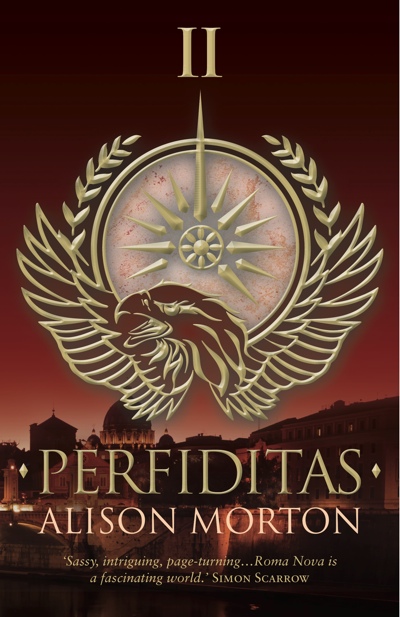
 Perfiditas II

PERFIDITAS (Roma Nova II)


Captain Carina Mitela of the Praetorian Guard Special Forces is in trouble – one colleague has tried to kill her and another has set a trap to incriminate her in a conspiracy to topple the government of Roma Nova. Founded sixteen hundred years ago by Roman dissidents and ruled by women, Roma Nova barely survived a devastating coup d’état thirty years ago. Carina swears to prevent a repeat and not merely for love of country.


Seeking help from a not quite legal old friend could wreck her marriage to the enigmatic Conrad. Once proscribed and operating illegally, she risks being terminated by both security services and conspirators. As she struggles to overcome the desperate odds and save her beloved Roma Nova and her own life, she faces the ultimate betrayal…


INCEPTIO is available as a paperback and ebook here and PERFIDITAS as paperback and ebook here. Also through your local bookstore as a paperback and from other online retailers.


Book trailer PERFIDITAS:  http://alison-morton.com/blog/perfiditas-book-trailer/


Social media:

You can read more about Alison, Romans, alternate history and writing here on her blog at www.alison-morton.com

or on Facebook: http://www.facebook.com/AlisonMortonAuthor

INCEPTIO page: https://www.facebook.com/Inceptiothriller

PERFIDITAS page: http://www.facebook.com/Perfiditas

Twitter: https://twitter.com/alison_Morton


Inerview with Author Deborah Swift

Author  Deborah Swift

Stephanie: Deborah Swift used to work in the theatre and at the BBC as a set and costume designer, before studying for an MA in Creative Writing in 2007. She lives in a beautiful area of Lancashire near the Lake District National Park.  She is the author of The Lady’s Slipper and is a member of the Historical Writers Association, the Historical Novel Society, and the Romantic Novelists Association.


Hello Deborah! It is a pleasure to chat with you again. Please tell me about your book, A Divided Inheritance. 


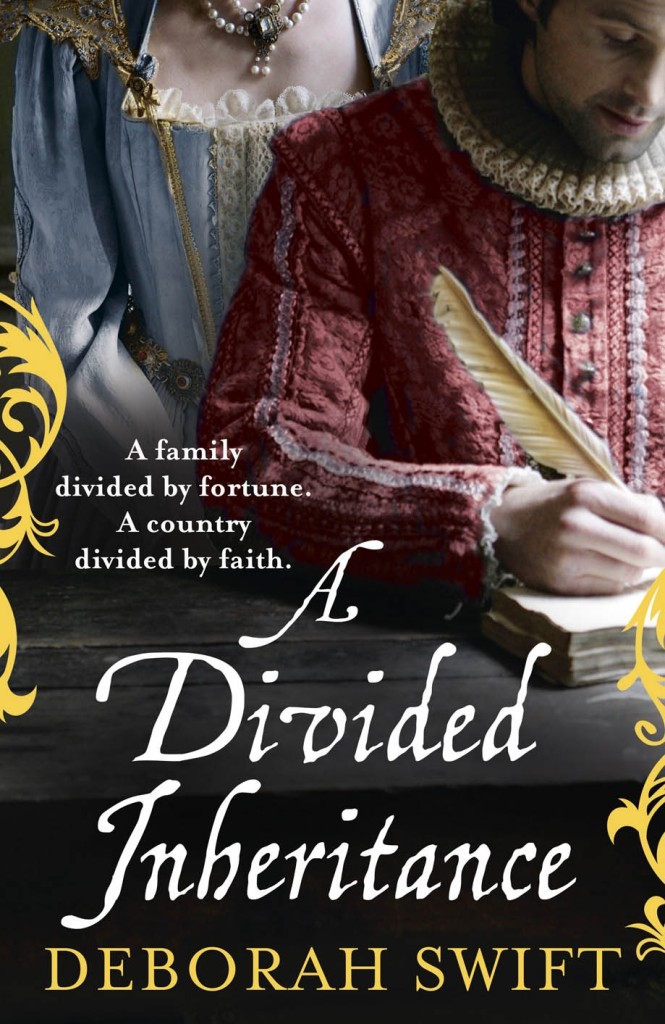
A Divided Inheritance is about Elspet Leviston, a lace-trader’s daughter who loses her inheritance to a mysterious cousin – the hot-headed swordsman Zachary Deane. Elspet must leave her beloved English home and go to Seville to confront him. On the way she finds courage persistence, and much greater self-reliance. She also finds love in unexpected places.

 deborah's book

Stephanie: How much research was involved and will you please tell me a little about it?


Each of my novels takes about eighteen months. For this novel I researched by using archives and museums for the part set in London, and then I travelled to Seville to take photographs and visit locations for the Spanish part of the book. I also corresponded with various experts on swordplay, the almost-forgotten Morisco culture, and the art of lace-making.


Stephanie: What was your inspiration for this story?


I wanted a strong female protagonist, but found it was hard to give my heroine much of importance to do in the shuttered society of seventeenth century London. In the end I decided I would have to make her grow strong through the events of the book. This proved to be a much more satisfying arc to write.

At the same time as I was mulling over this, I came across a fascinating book about 17th century fencing masters and thought it would be interesting to research women who fought using rapiers and to find out more about whether any women used these training techniques. I have an interest in this through practising swordplay through martial arts. The particular Spanish training method I was researching is an esoteric system designed to produce a kind of ‘Renaissance man’ – or in this case, woman. I was also interested in a period of history in Spain where there was massive cultural change and Phillip II expelled a large population of Spanish citizens – an act that divided families and was to impoverish Spain for generations. So this seemed an ideal backdrop for my family drama.

Stephanie: Tell me a little about Elspet Leviston. What are her strengths and weaknesses?


At the beginning of the book she fits into a role cast for her by her old-fashioned scholarly father. When things go wrong she must find persistence and courage to get what she wants. Her journey leads her to discover there are many ways to live, and opens her eyes to new possibilities.


Stephanie: If your story was to become a movie. Which actor/actress would you like to see playing the lead character from your book?


I was very impressed with the film ‘Alatriste’ which I watched for some of my research into the Spanish fighting arts, and so I’d go for Viggo Mortensen. I also loved him in Lord of the Rings. For the female lead role I would choose Anne Hathaway who when she played Jane Austen had the quality of Englishness appropriate for my female lead Elspet Leviston..


Stephanie: Where is your favorite place in your home to write?


Generally I write from my home office on an ancient computer, but my favourite time of year is the summer when you can find me with my stack of notebooks and research books in our garden summerhouse.


Stephanie: Do you have a favorite coffee or tea by your side while writing?


Tetley tea and a chocolate brownie (I hope!)


Stephanie: Who are your influences?


Anything and everything. I read voraciously – all sorts of things, not just historical. I’m in a book club too, so I read stuff for that. I analyse what works and what doesn’t in terms of storytelling to try to improve my craft. I like listening to radio and reading poetry too, so I guess it all seeps in somehow.


Stephanie: What book project are you currently working on?


I’m working on a Teen novel about a real 17th century character. I’ve never attempted a teen novel before, but thought it would be nice to tempt some younger readers with a love of English history!


Stephanie: Where can readers buy your book?


e-book from Amazon US http://www.amazon.com/A-Divided-Inheritance-ebook/dp/B00CYM19CA/

e-book from Amazon UK http://www.amazon.co.uk/A-Divided-Inheritance-Deborah-Swift-ebook/dp/B00CYM19CA/


UK Paperback from Amazon UK or bookshops http://www.amazon.co.uk/A-Divided-Inheritance-Deborah-Swift/dp/033054344X/

US Paperback from Book Depository http://www.bookdepository.co.uk/Divided-Inheritance-Deborah-Swift/9780330543446


Many thanks to Stephanie!

You can find me on twitter @swiftstory

Or at www.deborahswift.com


Link to Tour Schedule: http://hfvirtualbooktours.com/adividedinheritancetour
Twitter Hashtag: #DividedInheritanceTour

banner for deborahs tour


Review: Confessions of Marie Antoinette: A novel by Juliet Grey

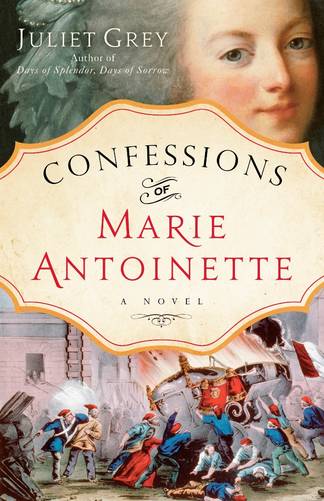
Confessions

Publication Date: September 24, 2013
Ballantine Books
Paperback; 464p
ISBN: 0345523903

Review:

Versailles, 1789.

The Confessions of Marie Antoinette is a deeply moving and emotional story, which provides new insights into the period during which the French royal family was held hostage and into the last moments of Marie Antoinette’s life. Juliet Grey’s story emphasizes real historical events and provides perceptive and haunting descriptions of the king and Queen’s demise. The story is told in Marie Antoinette’s point of view and Grey creates a convincing portrait of Marie and her devotion as a wife, mother, queen and the lengths she goes to protect those roles as best as she can. There are vivid and heart wrenching descriptions of the revolution and Grey gives a clear picture of rage and determination of the people.

This novel is third of a brilliant trilogy and I say that because it has been a long time since I have enjoyed a trilogy so much. As the story goes we know that Marie was a spendthrift and her subjects saw a selfish women with lots of food and clothes while others starved. However, from what I came away with in this trilogy, was that if Marie never bought that stuff those businesses would have been even worse off. I believe she truly felt she was helping them.

Writing good historical fiction is an art. Writing a master piece takes undoubted skill and talent that reaches into the very depth of the reader’s soul. Grey has accomplished both and I believe, “Confessions”, has truly changed me and brought to surface an emotion inside of me that has been quiet for some time. I was beyond deeply moved. My perceptive of Marie and the French people of that period is forever changed. Grey writes with a deep feeling of loss, betrayal, love, and devotion. I cannot express enough how I much I enjoyed reading this story. Words cannot achieve that emotion. I HIGHLY recommend to all!

Stephanie M. Hopkins

My interview with Grey is coming up tomorrow on Layered Pages. So please be sure to return! You won’t want to miss what she has to say!

Juliet Grey

Juliet Grey is the author of Becoming Marie Antoinette and Days of Splendor, Days of Sorrow. She has extensively researched European royalty and is a particular devotee of Marie Antoinette, as well as a classically trained professional actress with numerous portrayals of virgins, vixens, and villainesses to her credit. She and her husband divide their time between New York City and southern Vermont.

For more information please visit www.becomingmarie.com.  You can also find Juliet Grey on Facebook.

Link to Tour Schedule: http://hfvirtualbooktours.com/confessionsofmarieantoinettevirtualtour
Twitter Hashtag: #ConfessionsOfMATour

Banner for Confessions

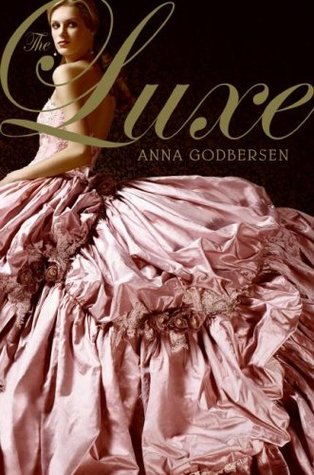
Review: The Luxe (Luxe, #1) by Anna Godsbersen

luxe

When the Holland’s find out that their perfect 19th century New York high society, life is no longer secure. Everything depends on the eldest daughter, Elizabeth Holland to save what is left of their good name or will she follow her heart and choose true love instead.

There was so much scandal, romance and betrayal, I could not put the book down! This exiting period is filled with secrets and intrigue and is the perfect book for me. To the gorgeous gowns and stunning balls to the romance and mystery that surrounds them. The Luxe is well written and it appears to be historically accurate.

Reviewed by Savannah

Interview with Author Elizabeth Fremantle

Elizabeth F

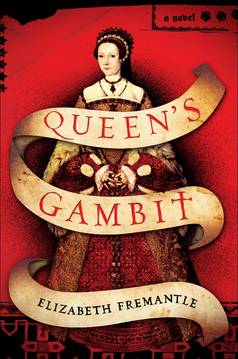
Elizabeth Fremantle holds a first class degree in English and an MA in Creative Writing from Birkbeck College London. She has contributed as a fashion editor to various publications including Vogue, Elle and The Sunday Times. QUEEN’S GAMBIT is her debut novel and is the first in a Tudor trilogy. The second novel, SISTERS OF TREASON, will be released in 2014. She lives in London.

For more about Elizabeth and her future projects see www.elizabethfremantle.com.  You can also find her on Facebook, Twitter and Goodreads.

Hello Elizabeth! Welcome and thank you for chatting with me today. Please tell me about your book, Queen’s Gambit. I’ve heard nothing but wonderful things about your story.

Elizabeth Hello to you, and thank you so much for hosting QUEEN’S GAMBIT on your blog. I’m obviously delighted that you have heard such good things about it. When you launch a first novel it’s impossible to imagine how people will react, so the lovely things people have said are a source of great joy.

QUEEN’S GAMBIT tells the story of Katherine Parr, the wife who ‘survived’ Henry VIII, describing the period from when she first catches the eye of the King until the demise of her disastrous fourth marriage. It is told from three points of view: that of Katherine Parr, her doctor Robert Huicke and her maid Dot Fownten, giving a prism of perspectives on the Tudor court at a time of great turbulence.

When did you fist become interested in this period and when did you know you wanted to write your story?

I have always enjoyed reading history and read Jean Plaidy voraciously as a child, which is when the seeds were sown for my own historical fiction. It was when I first read Stephan Zweig’s two wonderful historical biographies (of Marie Antoinette and Mary Queen of Scots) in my early twenties that my desire to discover more about the lives of women from history was born. However having studied English as a degree, I felt I wasn’t qualified to write about history. So my first (unpublished) novels were contemporary fiction but I failed to find my voice, until I decided to try my hand at writing the past. Once I began work on QUEEN’S GAMBIT everything seemed to fall into place – it was as if I’d unlocked something in myself and began to realize that much of what I had learned reading English was also history. It all comes down the study of texts.

Queens Gambit

What is some of the research you did and what fascinates you most about the royal court surrounding this story?

So much of my research is textual and there are some extraordinary biographies of Katherine Parr but I also explored renaissance etiquette books, recipe books and social histories as I felt it was of great importance to create as close to an authentic world for my characters to inhabit. I spend a great deal of time wandering around old houses and castles, trying to imagine myself back in time. A course I took in Tudor and Stuart clothing, looking at all aspects of dress, from its construction to its symbolic value, was invaluable as I have used clothing to represent the restricted lives of women in the book. Research is an on-going process and inspiration can come from the most unlikely places. A documentary series about Amish women, for example, gave me insights into the lives and beliefs of Tudor women, as they operate under some of the same social restrictions.

As for the court, it is the constant sense of impermanence and danger that I find particularly fascinating. These people, however privileged, were living on a constant knife-edge and I wanted to articulate that in QUEEN’S GAMIT.

You have certainly done a lot of research and I’m sure it’s paid off. I love visiting old homes and hope to visit castles one day. I often wonder at times how the people at court could stand it for so long and the pressure they were constantly under….

Katherine Parr is my favourite among King Henry’s wives.  What sets your book apart from others about her? And were there any challenges writing about her?

Katherine Parr was a gift in the sense that her life is a perfect narrative arc with drama, romance and ultimately tragedy. I have tried to show her as the vibrant, politically astute and intelligent woman she was, rather than the dull nursemaid that history has remembered her as. But one of the things that interested me most about her is the essential contradiction in her character, in that she, a clever, canny woman, makes a disastrous decision in the name of love. For me this is what makes her story resonate with modern women.

To be honest, I have never read another novel about Katherine Parr, only historical biographies, so I am not the person to ask about comparisons, but each novelist will have created her in her own particular way. What I have tried to do is get beneath her skin and understand how she might have thought and felt (how might it have truly felt to be the wife of such a tyrant) whilst adhering as much as possible to the historical facts as we know them.

What is the most challenge thing to write about Historical Fiction and what advice would you give someone who is considering writing in this genre?

I suppose the challenge is getting the balance of fiction and history. For me it was important to remain faithful to history but it is the inner worlds of characters that make for good fiction and creating characters, even those based on real people, is an act of imagination. I find having a restrictive framework of history to work within forces you to explore different narrative possibilities more deeply, but it can be frustrating at times. In QUEEN’S GAMBIT, for example, a main character dies half-way through the narrative – that is something I couldn’t change and had to find a way for that death to make sense within the arc of the story.

My advice is to do all your research, then set it aside and write your story without trying to pack it full of evidence of your knowledge. One of the greatest complements I have received is that QUEEN’S GAMBIT wears its research lightly.

How long did it take you to write your story? Will you write others that take place in this period?

From start to finish QUEEN’S GAMBIT took about eighteen months but it came at the end of a ten-year period of writing fiction (an MA in Creative Writing and three unpublished novels). I had said to myself that I would have to stop if I didn’t find a publisher for it. Happily it has worked out for the good and I have realized that the wilderness years all contributed to honing my skill as a writer.

I have written the second in my Tudor trilogy. SISTERS OF TREASON is out next year and is about the two younger sisters of Lady Jane Grey, a pair of girls who were born dangerously close to the throne at a time of great instability. It begins in Mary Tudor’s bloody reign but when Elizabeth comes to the throne things become increasingly difficult for the Grey girls. In SISTERS OF TREASON, though we don’t revisit any of the main characters from QUEEN’S GAMBIT we are reacquainted with some of the characters in the background, and of course the two Tudor princess, watching their rise to the throne and the consequences of this.

Tough question. What are your thoughts on the Reformation and how the Church of England was established?

I find it impossible to have a straightforward opinion on this because in many ways the Reformation was a force for good, in that it counteracted a deeply corrupt Catholic church and offered ordinary people a way to think, read and learn about faith in a personal and intimate way. Some of the violent acts perpetrated in the name of religious reform though, were unconscionable. But then again religion and politics were inextricably linked in those days and faith was used as a means to control people. You only have to think of the horrors of the Spanish Inquisition or the 280 odd Reformers who were burned in Mary Tudor’s reign to understand that terrible things were done in the name of both Catholicism and reform, but such acts were political at heart. It does make me deeply sad though, when I visit the ruins of the great monasteries and abbeys in England and wonder about the violent erasure of a tradition that had persisted for centuries and all the beauty and tradition that was lost forever.

I agree with you. How often do you get a chance to read for pleasure and what is the name of the book you have just read?

All reading is a pleasure for me, even if it is work, but I am on holiday at the moment, with a stack of novels on my Kindle to read without having to make notes.  The book I am reading today is Blood Royal by Vanora Bennett, about Catherine de Valois and I’m thoroughly enjoying it.

Are you a paperback or r-reader sort-of gal?

Elizabeth: I have a reader for convenience and for reading when I’m traveling but I do prefer a good paperback if I’m honest.

Same here. I love my e-readers but prefer a paperback. Do you write reviews for all the books you read?

If there were time enough…

Also, if I particularly enjoy a book I often want to share that with other people even if it’s just via a Tweet. I don’t think wholly negative reviews are helpful, unless there is something very specific to say. But then I’m a writer so I would think that.

Where is your favourite reading/writing spot in your home?

I have a study, filled to the gunnels with books and I sit at my desk beside the window to write, with my dogs by my side to keep my company. As for reading, my favourite place is in bed, in the morning!

Stephanie: I to have my desk by the window. It’s a beautiful spot to write. There is a beautiful Maple Tree right outside my window and just beyond that great big Holly Bushes….and love all my books around me and my dog loves to sit beside me when writing.

 Elizabeth it was a pleasure chatting with you! Thank you!


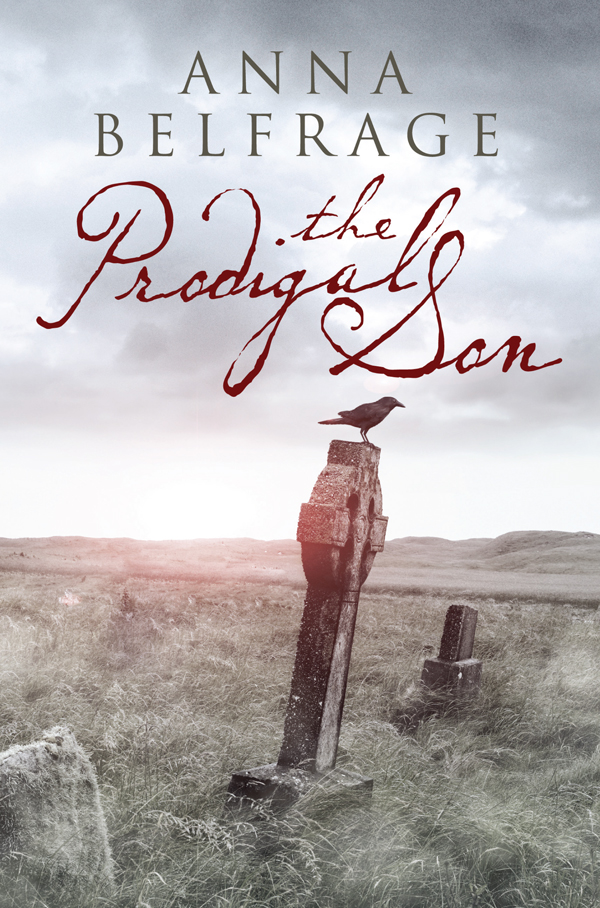
Review: The Prodigal Son by Anna Belfrage

The Prodigal Son

He risks everything for his faith – but will he be able to pay the price? Safely returned from an involuntary stay on a plantation in Virginia, Matthew Graham finds the Scottish Lowlands torn asunder by religious strife. His Restored Majesty, Charles II, requires all his subjects to swear fealty to him and the Church of England, riding roughshod over any opposition. In Ayrshire, people close ranks around their evicted Presbyterian ministers. But disobedience comes at a heavy price and Alex becomes increasingly more nervous as to what her Matthew is risking by his support of the clandestine ministers – foremost amongst them the charismatic Sandy Peden. Privately, Alex considers Sandy an enervating fanatic and all this religious fervour is totally incomprehensible to her. So when Matthew repeatedly sets his faith and ministers before his own safety he puts their marriage under severe strain. The situation is further complicated by the presence of Ian, the son Matthew was cruelly duped into disowning several years ago. Now Matthew wants Ian back and Alex isn’t entirely sure this is a good thing. Things are brought to a head when Matthew places all their lives in the balance to save his dear preacher from the dragoons. How much is Matthew willing to risk? How much will he ultimately lose? The Prodigal Son is the third in Anna Belfrage’s historical time slip series, which includes the titles The Rip in the Veil and Like Chaff in the Wind.


My review:

I really admire Belfrage’s use of voice and language. She makes it so that the characters are well developed and thought provoking. And I admire how her characters interact with each other and does a good job expressing their emotions. Her dialog is also engaging and flows really well.

She gives wonderful details of the domestic life of the time the story is written in and details of what they had to endure in the regards to the government’s (Charles ll of England) unreasonable rule. There were laws or should I say-Charles ll required his subjects to conform to the Church of England- on how they were to worship which as you know made it extremely difficult on the people. And that is putting it mildly.

Mathew Graham has risked much to support and protect his minister, Sandy Peden. And his family has suffered for that. I did not always agree with him and was often times frustrated with the decisions he was making. But having said that, he is one of my favorite characters in this story. I believe Mathew truly loves his family and has adjusted quite well to the fact that his wife-Alex-is from the future. I’m sure he is more tolerate to her ideas and beliefs than what most men during that time would have been.

Sandy Peden is a pious and fanatical minister who I actually enjoyed reading about in this story. He is opinionated- thinks women have their place and feels Mathew should put his wife in that place and has no problem telling him so. It is obvious he does not approve of her one bit. But she certainly matched wit for wit with Sandy. I do admire how Sandy is a survivor and he stands by what he believes and does not give into being told how he is to worship and what organized faith he is lawfully suppose too follow. Very entertaining….he adds a lot to this story.

Alex is a strong woman who is from the future and I believe her knowledge has really helped her and yet sometimes it was a hindrance for her, I think. I do however think she adapted quite well in the 17th century for someone being so forward thinking and modern of course. She does have a stubborn streak to her but so does her husband. I really enjoyed seeing the way they interacted with each other. Their relationship is really dynamic. And I do admire their strong sense of family and values. Alex does something in this story that I truly respect her for. But I cannot tell you! You will just have to read the book to find out!

I really have enjoyed this series so far and I look forward to continuing to read them! The Graham family are definitely among my favorite families to read about! I am giving this story a four and a half star rating and I highly recommend this whole series to people who are looking for a quality written time slip.


Stephanie

Layered Pages


About the Author

anna belfrage


I was raised abroad, on a pungent mix of Latin American culture, English history and Swedish traditions. As a result I’m multilingual and most of my reading is historical – both non-fiction and fiction.

I was always going to be a writer – or a historian, preferably both. Instead I ended up with a degree in Business and Finance, with very little time to spare for my most favorite pursuit. Still, one does as one must, and in between juggling a challenging career I raised my four children on a potent combination of invented stories, historical debates and masses of good food and homemade cakes. They seem to thrive … Nowadays I spend most of my spare time at my writing desk. The children are half grown, the house is at times eerily silent and I slip away into my imaginary world, with my imaginary characters. Every now and then the one and only man in my life pops his head in to ensure I’m still there. I like that – just as I like how he makes me laugh so often I’ll probably live to well over a hundred.

I was always going to be a writer. Now I am – I have achieved my dream.

For more information, please visit Anna Belfrage’s WEBSITE.

Layered Pages latest interview with Anna Befrage : https://layeredpages.com/2013/07/09/1350/

Links to where you can purchase her stories:

http://www.amazon.com/The-Prodigal-Son-Anna-Belfrage/dp/1780885741/ref=sr_1_5?ie=UTF8&qid=1376163215&sr=8-5&keywords=The+Prodigal+Son

http://www.amazon.com/Like-Chaff-Wind-Anna-Belfrage/dp/1780884702/ref=sr_1_1?ie=UTF8&qid=1376163168&sr=8-1&keywords=like+chaff+in+the+wind

http://www.amazon.com/A-Rip-Veil-Anna-Belfrage/dp/1780882424/ref=sr_1_1?ie=UTF8&qid=1376163127&sr=8-1&keywords=A+rip+in+the+veil

Interview with Author Mona Rodriguez

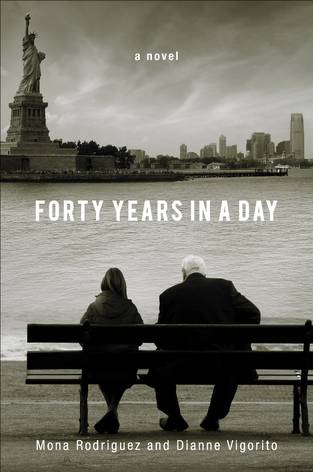
Forty years in a day book cover

Hello Mona! I read Forty Years In A Day and was absolutely intrigued with your story. Could you please tell your audience about your book?

Mona: Thank you, Stephanie, for hosting us today. It’s a pleasure. Our story begins in Italy, 1900. After years of torment and neglect, Victoria and her four small children immigrate to Hell’s Kitchen, New York, to escape her alcoholic, abusive husband. On the day they leave, he tragically dies, but she does not learn of his death for several years—a secret that puts many lives on hold.

Quickly, they realize America’s streets are not paved with gold, and the limits of human faith and stamina are tested time and time again. Poverty, illness, death, kidnapping, and the reign of organized crime are just some of the crosses they bear.

Victoria’s eldest son, Vincenzo, is the sole surviving member of the family and shares a gut-wrenching account of their lives with his daughter during a visit to Ellis Island on his ninetieth birthday. He explains how the lives of he and his siblings have been secretly intertwined with an infamous Irish mob boss and ends his unsettling disclosure with a monumental request that leaves Clare speechless.

The story takes the Montanaro family through several decades, providing the reader an opportunity to stand in the shoes of a past generation and walk in search of their hopes and dreams. It is layered with the struggles and successes of each family member, illuminating the fact that human emotions have been the same throughout generations; the difference is how people are molded and maneuvered by the times and their situations.

Stephanie: Is this story based on anyone you know or who you have come across?

Mona: The characters are based on family members, both deceased and living. I’ve had this particular story churning in my head for many years, sparked by the stories of my family’s past. Forty Years In A Day begins in 1900 and follows the incredible journey of a young mother and her four children as they escape from Italy into the streets of Hell’s Kitchen, New York. That woman was my grandmother. The story ends with a woman who knows the father of her children is living a double life with another, but she loves him so much that she overlooks the arrangement rather than forfeit the man. Those were my parents. In between are the stories that I had heard from family members, intertwined with a twist of fiction and sensationalism to have some fun.


Stephanie:  Were there any challenges you faced while writing this story?

Mona: There were many challenges that I had faced undertaking this project. First and foremost, I had the idea of the story in my head before I had the skills to share it. I’m a mathematician and an environmentalist so this challenged the other side of my brain. While writing is something I always admired, to me, the passion was in the story and the writing was the vessel to get it told.

Second, people ask me how much of our book is realistic; especially family members who want to know if this is the actual story of what had happened. They try to draw a parallel between family members’ personalities and our characters’ personalities. The truth is that no one can totally piece together that puzzle of tales; there are parts to every family’s story that were pushed under the rug for fear it would tarnish the family’s reputation. The elders think they are doing their family justice by taking some of the more scandalous stories with them to the grave. When, as a writer, you realize all this, you are forced to conjure your own conclusions from the pieces of stories that you gather.

Third, I coauthored the book with my cousin Dianne Vigorito. She gave me the support and validation I needed to pursue this project. I was lucky to find a family member to work with, and she had an immediate interest in the idea. She grew up hearing the same crazy stories, some of which were almost unbelievable, that were told by our ancestors.  Working with another has taught me the power of more than one and the art of compromise.

Stephanie: Was there a particular scene you felt difficult to write?

Mona: The story of Vinny and Ava represents my parent’s story and the story that resonates closest to my heart. When they were alive, I had discovered secrets about their past that they didn’t want my siblings and me to know. When they died, I felt more compelled to delve into their past, but no one could (or would) tell me the whole story. I realized that I should have asked more questions when they were alive, been more adamant to learn the truth. I questioned aunts and uncles, but I sensed there were bits of their lives, and everyone’s in our story, that would never be unearthed. The story of Vinny and Ava is conjured from the pieces of stories I had put together, and my interpretation, especially emotionally, of what had happened between my parents.

Stephanie: What was the inspiration for your story?

Mona: We don’t realize what our ancestors went through to make life better for themselves and for us. What they faced was incredible—the living conditions, poverty, disease—and their work ethic was admirable. Although I had started with the intention of writing a story about my father’s family, it turned into a novel. There was so much more I wanted people to know about this fascinating era.


Stephanie How long did it take to write, Forty Years In A Day?

Mona: I started by writing down the stories I had heard and interviewing the elders that were still alive. It took seven years—researching, attending seminars, workshops, conferences, and reading everything from books on how to write dialogue to reading mainstream fiction and rereading classics. I also studied the history and lifestyles of the era.  Dianne and I worked on our own, and we also worked together several days a week, collaborating, rewriting, and editing. I had a story to tell and I knew it had to be told.


Stephanie: You did a fantastic job with your research. It’s truly a beautiful and thought provoking story. And I believe it’s written in such a way that the story transcends you into that period and gives you a wonderful picture of the human conditions.  


Is there a sentiment you hope readers come away with after reading your story?

Mona: Forty Years In A Day is more than an immigration story about an Italian family; it epitomizes the immigration experience and coming to America in the early 1900s. It reignites curiosity and admiration for what our ancestors had endured and accomplished to make our lives better. There are many themes that run throughout the story—the loss and rebound of hope, honesty, perseverance, forgiveness, survival, the list goes on—but I think the main theme is the importance of family. Forty Years In A Day also reminds us that every family has hidden secrets and that the choices one person makes echoes through generations.

Stephanie: The different themes in your story was well written and I felt that some of them hit home with me. Your story has given me a lot to think about. Especially about family and relationships.


Is there a character that you feel connected to in any way?

Mona: I have a connection to all the characters, but the one I admire the most is Victoria. She was an amazing woman who wanted to do the right thing for her children. Without giving away the story, I often wonder how she summoned the strength to do what she did, and if I would have been so courageous. She did it not so much for herself, but for her children. She was the ultimate mother.

Stephanie: I admired Victoria as well. She certainly pulled at my heart strings. What book project is up next for both?

Mona: There are six cousins at the end of our story. The idea is to take that next generation into the next era.

Stephanie: Ooo…I’m really looking forward to reading your next book! What advice would you give to an aspiring author?

Mona: Read the works of authors you enjoy and respect, study and practice the craft, and try to develop a personal style and formula for success.  When reading a diverse collection of books, you take away, along with the story, a little of each author’s craft.

Thank you, Mona!

About the Authors

Mona & Dianne


Mona Rodriguez coauthored Forty Years in a Day with her cousin Dianne Vigorito.
Throughout their lives, they had heard many stories from family members that
were fascinating, sometimes even unbelievable, and decided to piece together
the puzzle of tales. Through research and interviews, their goal was to create
a fictional story that follows a family through several decades, providing the
reader an opportunity to stand in the shoes of a past generation and walk in
search of their hopes and dreams. What they realize in the process is that
human emotions have been the same throughout generations – the difference is
how people are molded and maneuvered by the times and their situations.

Mona Rodriguez has her MS in environmental Management from Montclair State
University. She is presently a trustee on the board of directors of a nonprofit
foundation created to benefit a local public library and community. She lives
with their husband in New Jersey, and they have two grown sons.

For more information, please visit the official website.

http://www.fortyyearsinaday.com/

BOOK TRAILER:  http://www.youtube.com/watch?v=AfJ5p4qCzmM&feature=youtu.be

forty years in  a day tour banner

Link to Tour Schedule: http://hfvirtualbooktours.com/fortyyearsinadaytour/
Twitter Hashtag: #FortyYearsTour

Review: The Queen’s Vow by C.W. Gortner

The Queen's Vow

No one believed I was destined for greatness.

So begins Isabella’s story, in this evocative, vividly imagined novel about one of history’s most famous and controversial queens—the warrior who united a fractured country, the champion of the faith whose reign gave rise to the Inquisition, and the visionary who sent Columbus to discover a New World. Acclaimed author C. W. Gortner envisages the turbulent early years of a woman whose mythic rise to power would go on to transform a monarchy, a nation, and the world.

Young Isabella is barely a teenager when she and her brother are taken from their mother’s home to live under the watchful eye of their half-brother, King Enrique, and his sultry, conniving queen. There, Isabella is thrust into danger when she becomes an unwitting pawn in a plot to dethrone Enrique. Suspected of treason and held captive, she treads a perilous path, torn between loyalties, until at age seventeen she suddenly finds herself heiress of Castile, the largest kingdom in Spain. Plunged into a deadly conflict to secure her crown, she is determined to wed the one man she loves yet who is forbidden to her—Fernando, prince of Aragon.

As they unite their two realms under “one crown, one country, one faith,” Isabella and Fernando face an impoverished Spain beset by enemies. With the future of her throne at stake, Isabella resists the zealous demands of the inquisitor Torquemada even as she is seduced by the dreams of an enigmatic navigator named Columbus. But when the Moors of the southern domain of Granada declare war, a violent, treacherous battle against an ancient adversary erupts, one that will test all of Isabella’s resolve, her courage, and her tenacious belief in her destiny.

From the glorious palaces of Segovia to the battlefields of Granada and the intrigue-laden gardens of Seville, The Queen’s Vow sweeps us into the tumultuous forging of a nation and the complex, fascinating heart of the woman who overcame all odds to become Isabella of Castile.

Praise for The Queen’s Vow

“A masterwork by a skilled craftsman . . . Make a vow to read this book.”—New York Journal of Books

“A beautifully crafted piece of historical fiction . . . Gortner’s vivid details blend with his deeply intensive research to re-create Isabella and Castile in a way that the reader will find compelling and immersive, bringing not just the Queen but the whole nation to life.”—RT Book Reviews

“A fascinating story . . . Through his creative and spellbinding storytelling, Gortner’s readers come to know Isabella intimately in mind, heart and body as she lives through a tumultuous time, her intense longing to be the determiner of her own unique destiny.”—Wichita Falls Times Record News

“A novel of triumph as Isabella vanquishes her enemies one by one . . . [She is] a very human and appealing character.”—The Roanoke Times

“Politically charged, passionate . . . [a] well-researched, intriguing historical.”—Bookreporter


Review:


If you are looking for the perfect introduction to Isabella of Castile, then this is the story for you. At an early age she shows such potential of being the women she has yet to be become. She is an extraordinary women who often faced danger, betrayal, and uncertainties of who she can trust. I greatly admire her intelligence and determination. There are bigger forces at work in this story that I was drawn to other than Isabella becoming Queen in my opinion. I often wonder if later on in her rule of Spain, if she wasn’t so much influenced by the men around her- would she still have acted on the decisions that were made about the Jewish people. Would have all that have been prevented? But I believe she struggled with this greatly and did not relish in the killings of the Jews. Religious persecution started long before her time and has continued through the ages. This is definitely an intense period that Gortner writes about and I believe he has given us a realistic and brilliant portrayal.

There is a banner I posted on a review group saying. ”There is no mistaking a real book when one meets it. It is like falling in love.” That is exactly how I feel about The Queen’s Vow. I highly recommend this novel and hope you will enjoy it as much as I did.

Stephanie

Layered Pages

http://hfvirtualbooktours.com/thequeensvowvirtualtour/


Review: The Chalice by Nancy Bilyeau

the chalice

Nancy Bilyeau is building a solid series with her second book centered around Joanna Stafford, a novice who is forced to build a new life for herself after the dissolution of Dartford Priory. While the first book was very good, The Chalice is brimming with even more intrigue and insight into the clash of religion and state during the tumultuous reign of Henry VIII.

Bilyeau is able to bring the great struggle to life through her creation of conflicted characters trying to maintain their principles and beliefs in a time that is at best confused and at worst at odds with the wish of her heroine to live a simple life of devotion. The author’s scholarship is evident in the vivid detail and entwined plot lines of the story.

This last book has left me even more interested to see what will become of Joanna Stafford as she follows a tenuous path through the upheaval of her personal life in the political landscape.

Reviewed by Elizabeth Peterson Seidle

Layered Pages Review Team Member