

Differentiating between red herrings and explicit content for shock value or book sales in mystery-thrillers.
Today, I thought I would share a book I’m currently reading and discuss a little about difficult passages that may be disturbing, or what one may feel is inappropriate. Oftentimes, a reader can come across a scene where they wished they hadn’t read or wish they had just skipped over entirely. But what should one do if they’re reviewing a book for the publisher or author and come across this problem? Should they just give up on the book entirely, or power through it, hoping for the best? Personally, I really think it depends on a few things.
Firstly, it depends on the type of reader you are and what you can handle or not handle. I’ve noticed through the decades the different stages I’ve gone through with reading material. What I will tolerate, what I deemed appropriate or inappropriate. What disturbs me and so forth… Like, is it just for shock value for book sales or does it serve a purpose to drive plot of the story? Does it attest to the character’s human nature and lifestyle? What are the purposes of these scenes?
There can also be that the theme or scene-if you will-upsets one’s psyche on a personal level. One must consider these things when reading physiological thrillers and literature as a whole. If you are a reader who reads widely, even then one can have limits and there is nothing wrong with that; one must use discernment in all things.
I’m currently reviewing an ARC of, “The Last Room on the Left” by Leah Konen at the invite via email from the publishers, and I’ve come across two difficult but brief scenes I could have-in all honestly- done without. It seriously had me pause and considered if I wanted to finish this story or not. The next morning, I reflected more on whether or not to continue with the story. The pause had me ask myself the question whether or not the difficult but brief scenes were a red herring or just shock value. As I read further, I came to the conclusion that they are definitely red herrings. To be honest, the old me would have probably given up on the book entirely. I’m glad I didn’t in this case and I believe the author did a good job with writing these scenes without dragging it out. They serve the right purpose in story-telling, in my opinion.
If you come across scenes when reading books for review, what is the standard you set for yourself, and do you ask or consider the questions I mentioned above?
Edit: My review for, “The Last Room on the Left” by Leah Konen will be posted on January 4, 2025.
Stephanie
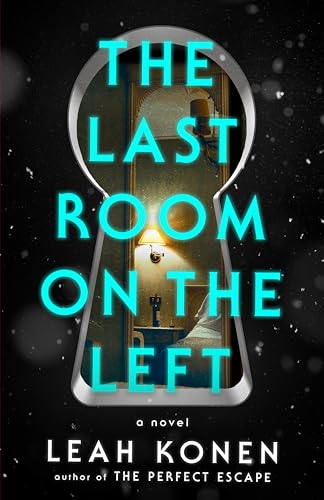
The Last Room on the Left by Leah Konen
Expected publication January 14, 2025 by G.P. Putnam’s Sons – Penguin Random House
Kerry’s life is in shambles: Her husband has left her, her drinking habit has officially become a problem, and though the deadline for her big book deal—the one that was supposed to change everything—is looming, she can’t write a word. When she sees an ad for a caretaker position at a revitalized roadside motel in the Catskills, she jumps at the chance. It’s the perfect getaway to finish her book and start fresh.
But as she hunkers down in a blizzard, she spots something through the window: a pale arm peeking out from a heap of snow. Trapped in the mountains and alone with a dead, frozen body, Kerry must keep her head and make it out before the killer comes for her too. But is the deadly game of cat-and-mouse all in her mind? The body count begs to differ . . .
 Layered Pages