
Schedule your on-line book launch with L.A.P. it Marketing and BookDoggy will offer a free add and a short video message describing your work!
For more information contact Stephanie at lapitmarketing@yahoo.com

For more information contact Stephanie at lapitmarketing@yahoo.com

Happy day! I’m just going to dive right in about these fabulous giveaways. Novel Expressions is giving away a $100 Amazon Gift Card! Amazing! To enter click HERE on Novel Expressions Facebook Page. You have until December 15th to enter and be sure to read the rules to qualify. So, what are you waiting for? Go on now….
Over at the Layered Pages Facebook there is a book giveaway for The Value of You: The Guide to Living Boldly and Joyfully Through the Power of Core Values by Christopher D Connors HERE. You have until December 15th to enter and like I said above please be sure to read the rules to qualify.
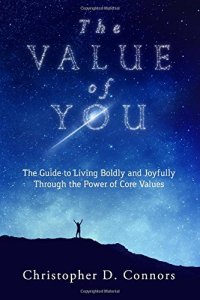
Where are you going? Where have you been? What are you doing about it NOW? As you think through these questions, I encourage you to make your move and reclaim the life you’ve always dreamed about. It’s yours if you really want it. But you’ll need more than just a burning desire. You need a game plan that is built on a rock-solid foundation of core values. Our generation has lost its way. In the fast-paced, instant-gratification world we live in, we’ve lost our direction. It is values that provide us direction and purpose on the journey to living the life of our dreams.
Values like confidence, faith, courage and hard work are key to living life on your terms. Know this my friend—it’s not only about the end goal. It’s the journey you take to get there. Because it is the journey that defines us in the end. The Value of You is a journey into the core values that give light to our human experience. Values lead us to interior freedom, peace of mind, happiness and success. Each chapter is filled with creative stories of famous people like J.K. Rowling, Simone Biles, Captain Charles “Sully” Sullenberger and Amy Schumer, as well as lesser known, yet remarkable heroes such as Dr. Liviu Librescu, Chris Singleton and Welles Crowther. Each chapter is a core value that describes the core features, explains obstacles to living the value, results of living the value and a personal game plan with practical guidance to help you make the value your own. We live in an ever-changing world with adversity and challenges. Values are the constant that position us for happiness and success. Values are a way of life. Start your journey today!
***************
Thanks for visiting Layered Pages today and please help spread the word about these giveaways!
Stephanie M. Hopkins
When I first started writing, I took a historical fiction course and I still remember the advice that the instructor gave us, which can apply to any fiction: Consider how the character moves around the page. This breathes life into the character as he/she goes about the business of achieving their personal story quest. I quickly found out that it was not enough for them do random actions; instead, the action should do double duty to reflect back on character.
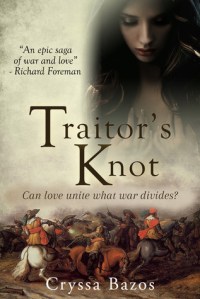 Traitor’s Knot, is the story of two fictional characters, James Hart, a former Royalist officer, and Elizabeth Seaton, a herbalist, who fall in love against the backdrop of the English Civil War.
James hasn’t been able to put the war behind him. After the execution of King Charles I, the regicide Parliamentarians are now in control of the country. James refuses to swear allegiance to the new regime, nor will he return home to Coventry to repair his severed relationship with his father. Everyone in Warwick knows him as the ostler of the Chequer and Crowne, but few realize that he’s the highwayman who has been preying on Roundheads.
The first scene that I wrote with that advice in mind is still in my novel today. The scene has been modified through subsequent drafts, but this particular piece survived as it initially written:
“The war’s over, lad. Put it behind you, and look to the future before it’s too late.”
James studied his chipped tankard. “You have tables to clean.”
Henry merely snorted and left.
Put it behind him? He’d have to accept defeat first. James traced his thumb along the hairline cracks in his cup, then rotated it until he found a smooth, unblemished curve. If only he saw this section, would he fool himself into believing the tankard was undamaged? Frowning, he took another swig of ale. The brew failed to wash the bitterness away.’
Here is a man who spent long, bitter years fighting for the king, but now he’s forced to accept that the usurpers have taken over the country. James has had to pretend to pick up the pieces, but he can’t let go of the past. He’s had to swallow his pride while biding his time for the return of the new king, Charles II, to regain his crown. James’s apparent compliance to the new regime is as precarious as that tankard, and any moment he will shatter.
James’s frustration is manifested in many ways. After being rejected by Elizabeth and having to deal with annoying enquiries from the new constable, Lieutenant Hammond, James’s agitation escalates through the scene. At first, as he’s grooming his horse, his brush strokes are harsher than normal:
‘James reached for a brush and started running it through Sovereign’s coat with brisk strokes. He made several passes before the horse tossed his head and took a step back. “Easy,” James said, and grasped him by the halter. When the horse continued to agitated, James grimaced and eased the pressure.’
Later on the scene, when Henry tries to drill into his head, ‘The war is over, and nothing you do will change the fact that these Roundheads control our lives, from that horse brush you’re holding to the ale that flows through my kegs.” James’s temper boils over:
“I will not accept that,” James snapped and whipped the brush into the bucket. The tin rattled and nearly tipped. “If I could, I’d have gone back to Coventry, belly exposed, to take my kicks there. I am not a beaten dog…’”
He then kicks the bucket and sends it clattering across the straw.
But it’s not all teeth grinding frustration for James. Even in a quieter moment of reflection, I use his actions to demonstrate that:
‘Through there were a number of chores he needed to finish in the barn before he turned in, he couldn’t muster the will to leave. Instead, he picked up a long twig and started drawing shapes in the ground with its tip. It was only when the door opened and Elizabeth stepped outside that he realized he had been waiting for her.’
My heroine, Elizabeth Seton, is a young woman who has had her family ripped apart during the war. She and her mother have been shunned in her community after her father was killed during a failed Royalist uprising. After her mother passes away, she is determined to carve out a new life out for herself and moves to Warwick to live with her aunt.
Elizabeth is subtler in how she walks around the page, but her actions reflect her character. Being a healer, she’s keenly attuned to the sense of touch. When she first sees her aunt’s stillroom, she connects to the wonders through touch.
‘Elizabeth’s fingertips brushed over the labels: monkshood, foxglove, and sweet woodruff. I could lose myself in this place. A thrill rippled through her.’
Even her aunt’s coveted collection of herbal recipes is handled with reverence, and as she examines the volume, she’s careful not to crease the pages.
The first time that Elizabeth finds herself alone with James, she’s on a riverbank working out her frustration by throwing rocks in the river. Later, when he’s managed to take her hand, she responds to the awakening of new emotions:
‘His touch was warm and stirring, the contact intimate. His fingers explored her palm, following the gentle curves to its hollow, then lingering on the tips of her fingers. The way his fingers brushed over her skin felt as she imagined a kiss to be.’
Elizabeth is a woman who has to maneuver between living within the rigid constricts of society and expressing her individuality. I often show this in a number of ways, from the way she dresses (she opts for a blue woolen skirt, over more serviceable greys or browns) to even how she deals with her hair.
Women at that time would have worn a coif with hair sedately bound. Elizabeth is no different, however, there is always one dark lock that will not be pinned back or confined, and she is often trying to tuck it behind her ear. I intended this to represent Elizabeth’s streak of independence. While she attempts to subdue it, its nature is otherwise.
Even a first meet market scene provides an opportunity to show her individuality. When James sees Elizabeth wending her way through the market, he notices what draws her attention amongst the stalls:
‘While fancy ribbons and laces had not attracted her interest, a stack of pamphlets and chapbooks made the difference.’
Literacy was growing amongst women during this century, but her interests would have still marked her as unique, and James was struck by this.
I believe it’s important to reveal characters through a variety of different ways, not just through dialogue. How they walk around the page and their reflective actions often reveal more than any declarations they make.
About Author:

Cryssa Bazos is an award winning historical fiction writer and 17th century enthusiast with a particular interest in the English Civil War. She is a member of the Historical Novel Society, the Romantic Novelist Association and is a co-editor and contributor of the English Historical Fiction Authors blog. Her debut novel, Traitor’s Knot, is published by Endeavour Press. For more stories, visit her blog.
Social media links:
Twitter: @CryssaBazos
Traitor’s Knot is available:
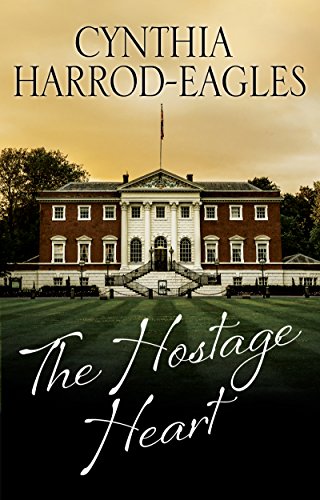 The Hostage Heart by Cynthia Harrod-Eagles
Publisher: Severn House Publishers
Pub Date: November 1, 2017
Pages: 193
Available on Amazon
Emotionally hurt in the past, a job in a large country house seems to be Emma’s best option for staying single and safe…
When Emma Ruskin becomes governess to 10-year-old Poppy Ackroyd, the haughty Ackroyd family all treat her with contempt – particularly Gavin, the effortlessly superior eldest son.
Yet Emma realises that Gavin alone genuinely cares for Poppy and their unexpected rapport flatters and alarms her – surely he is out of her league?
But then disaster strikes when Emma and Poppy are snatched by kidnappers. Imprisoned and terrified, Emma knows they will be killed if the ransom isn’t paid – unless Gavin can get to them first…
First published as Dangerous Love, and originally under a pseudonym, this is a new edition with a new introduction from the author.

I am not a cover designer but I can agree that cover layouts play an important role in the overall presentation of stories and I must admit, often times I first judge a book by its cover.
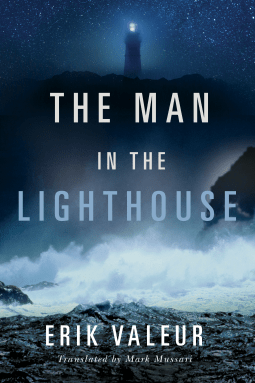 The Man in the Lighthouse
Pub Date 14 Mar 2017
All his life, Viggo Larssen has been haunted by the same troubling dream, which he calls the Omen—a vision of a woman beckoning to him from the surface of a churning sea. Now, as he broods over his shipwrecked existence in a remote lighthouse off the outermost coast of Denmark, he is about to be borne backward by the current to a past he thought he had escaped forever.
On the Danish mainland, the widowed mother of the nation’s prime minister mysteriously vanishes from her prestigious nursing home. As the police search for clues, evidence mounts that her disappearance is tied to an unsolved crime from Viggo’s childhood. Told through the eyes of multiple characters from Viggo’s old neighborhood, Erik Valeur’s dark, serpentine mystery is a profound meditation on the persistence of memory, the power of dreams, and the secrets we hide from one another—and ourselves.
My Thoughts:
I don’t read a lot of Scandinavian Literature but I do watch a lot of Scandinavian shows. So when I spotted this story, I thought this would be something to look into. The cover is certainty has a brooding, dark tone feel about it. It shows how at times, the sea can be unforgiving-if you will. Imagine being shipwrecked upon those rocks. This cover is dramatic and I believe fits the premise. Adding this book to my never ending reading pile!
Stephanie M. Hopkins
***********
Cover Crush is a weekly series that originated with Erin at Flashlight Commentary.
Other great book bloggers who cover crush:
Heather @ The Maiden’s Court
Magdalena @ A Bookaholic Swede
Holly @ 2 Kids and Tired Books
Colleen @ A Literary Vacation

 I’d like to welcome C. S. Harris today to talk with me about her new release, Good Time Coming, novel of the American Civil War. C.S. is the bestselling author of more than twenty novels including the Sebastian St. Cyr Regency mystery series and the standalone historical Good Time Coming. Under her own name, Candice Proctor, she is also the author of seven historical novels and a nonfiction historical study of women in the French Revolution. As C.S. Graham she writes the Tobie Guinness contemporary thriller series.
A Former academic with a PhD in European history, Candice has also worked as an archaeologist at a variety of sites around the world and spent much of her life abroad, living in Spain, Greece, England, France, Jordan, and Australia. She now makes her home in New Orleans with her husband, retired Army intelligence officer Steve Harris, and an ever-expanding number of cats.
Hi, Candice! Thank you for talking with me today about your newly release novel, Good Time Coming. It is a true honor to be talking about what I think is the most important work of fiction of the American Civil War I have read this year and in a long time. Please tell your audience about the premise of your story?
 Hi Stephanie, thanks so much, and thanks for having me! Good Time Coming is the story of Amrie St. Pierre, a young girl forced to grow up fast in Civil War-torn Louisiana. This is a side of war we don’t often hear about—the struggle faced by the women and children left alone to survive in the face of starvation, disease, and the ravages of an invading army. War looks very different when seen through the eyes of a child learning hard truths about personal strength, friendship, and the shades of good and evil that exist within us all.
Rarely do I hear people talking about what the women endured during this war. I believe many are uncomfortable talking about it for many reasons. Neither do many people realize the starvation that was taking place because of the blockades and soldiers taking food for their own needs. You really touched on this and I am glad you did. Were there any moments while writing about this that you thought that it might not be well received? Also, what were your own emotions about this while writing your story?
When I first started thinking about this book, I simply wanted to tell a story about a dramatic, compelling aspect of the Civil War I felt had been neglected for some strange reason. (Yes, you can call me naive!) I’d never lived in the South until I moved to New Orleans shortly before Katrina, so I had no idea just how horrible the war was for the women and children of Louisiana until I started reading their surviving letters, diaries, and memoirs. Although I’m a historian and therefore should have known more than most about the brutal realities of warfare, I was frankly stunned. I was also disturbed to realize just how effectively the truth has been glossed over and hidden.
All nations mythologize their past, but I have a sneaky suspicion Americans do it more than most. The brutal realities of our Civil War don’t fit well with the stories we Americans like to tell ourselves, so we tend to ignore them—or try to. Slavery was a vile institution, and anyone who tries to excuse it (as some, amazingly, still do) by saying most slaves were well treated hasn’t read the numerous extant journals and letters of the period, or the Slave Narratives from the Depression-era Federal Writers’ Project. The simple truth is that slaves worked because they were whipped. Full stop. And because a statistical percentage of any population has sociopathic tendencies, any institution that allows one group of people absolute power over others is a recipe for sadism. At the same time, it’s important to remember that the North did not go to war against the South to end slavery. Their war aim was to preserve the Union, and their motive was the same one that led to the Mexican-American War and the virtual extermination of the Native Americans. The army that marched against the South was the same army that perpetrated the massacres of Native American women and children at Sacramento River and Harvey and countless other sites, a well-understood reality that terrified Southern civilians. To turn the Civil War into a morality play in which one side equals good and the other evil serves only to distort history and perpetuate the dangerous divisions that still exist in our country over 150 years later.
But breaking that taboo and telling a story that portrays what really happened is dangerous for a writer. I knew the book would probably provoke discussion; I didn’t realize it would be so controversial that it would be hard to get published. As for its effects on me, writing this book was a wrenching, highly emotional experience. It’s a powerful story and I still cry when I reread it. I poured my heart and soul into this book, and I am not the same person I was before I started it—it was that life altering.

I believe you have truly captured the diversity of people and social standings and showed different views of the war in a concise way. The attitudes of the war and government were so complex. It wasn’t as straightforward as people would like to believe. Without giving too much away will you tell your audience a little about how you portrayed people’s attitudes during that time?
I carefully studied the people who were living in St. Francisville and Bayou Sara before the war and made a determined effort to be true to their profiles (many of the minor characters in the book are real historical figures). A surprising number of residents were recent immigrants either from the North or Europe. There were a few wealthy, large plantation owners, but most people were small farmers, shopkeepers and tradesmen who owned no slaves. Some, inevitably, were eager for war (as was the case at the outbreak of WWI, most people assumed the war would be over quickly and their side was sure to win). Many were swept up in a patriotic fervor that sounds eerily similar to that of the Revolution. Others, like Amrie’s father, opposed secession but felt compelled to step forward and defend their homes and families. And some, like Amrie’s uncle, a West Point graduate, made the agonizing decision to remain in the Union army and fight their own people.
And then there’s the fact that a huge percentage of the people in the area were enslaved. The antebellum South was also home to over a quarter of a million gens de couleur libres or “free people of color.” Louisiana, especially, had a large population of free African-Americans. Some owned plantations and slaves themselves. Some formed units that fought for the Confederacy; others formed the Corps d’Afrique and fought for the Union. As the war continued and more and more slaves walked off the plantations, those numbers increased.
The longer the war went on, life became increasingly desperate, and society simply broke down. What happened to the people of the area during those years had repercussions that lasted for generations. For many decades after the Civil War, the Feliciana Parishes (in Louisiana, the civil administrative districts known elsewhere as counties are called parishes) had by far the highest murder rate in the country—higher even than the wild, wild West! To be frank, in a very real sense I don’t think it has recovered yet.
What are some emotional triggers for Amrie and her mother and how do they act on them?
One of the things that made the war particularly hard on Southern women was the fact that nineteenth-century Southern culture really did treat women differently—and expected them to behave differently. For example, it was not unusual for women in the North to become schoolteachers and nurses, but that was not true in the South; in fact, it was powerfully discouraged. So when the men all marched off to war (and died at a shocking rate: something like a quarter of the male population) it was even more of a stretch for their women to take over the farms and start running shops. Amrie St. Pierre is what we would today call a tomboy, while her mother defied expectations as a young woman by attending medical lectures in New Orleans (women were allowed to attend lectures even though they could not be licensed as doctors). Yet despite these advantages, they still face enormous hardships in an increasingly dangerous world. And of course one of the truths this story confronts is the reality of rape in war and how Southern women handled that. Two important themes are women finding strengths they don’t know they possess, and the bonds that can form amongst a community of women undergoing hardship together.
Please tell us a little about the supporting characters.
One of the most interesting characters for me to write was Amrie’s mother, Kate St. Pierre. At the beginning of the book Amrie sees her the way all children tend to see their mothers, with little understanding of the hardships and strains Kate is facing. But as the war goes on and Amrie grows up, their relationship subtly shifts, and Amrie begins to realize just how much there is to admire about her mother—and the ways in which they are and are not alike. The mother-daughter dynamic is always a powerful one, and when it is played out against the strains of war and extreme hardship, it’s fascinating.
A very different character is Adelaide Dunbar, Amrie’s grandmother. Adelaide is a hard woman who has done some terrible things in her life (Amrie discovers just how terrible as the story progresses), and yet she has an inner grit that can’t help but inspire respect. She forms a distinct contrast to Castile Boudreaau, a freed slave who serves as something of a mentor to Amrie. He’s an evolved soul who has already lived through so much pain and hardship that he has the calm and wisdom that Amrie lacks—and sorely needs as the war progresses. I could go on and on, talking about Finn, Amrie’s childhood friend, and Hilda Meyers, the enigmatic German shopkeeper; they’re all so real to me that since I’ve finished the book I find I miss them the way you miss friends you haven’t seen in a while.
For those who are not familiar with Civil War battle sites like Port Hudson, Bayou Sara, and Camp Moore, could you talk a little about that?
It’s hard to overstate the strategic importance of the Mississippi River in the Civil War. The Union knew that if they could take the river, they would effectively cut the Confederacy in two and stop the influx of cattle, horses, and other vital supplies coming into the South from Texas. Once New Orleans fell, the last two Confederate strongholds on the river were Port Hudson and Vicksburg, which became the scenes of horrific sieges. The once prosperous town of St. Francisville and its port, Bayou Sara, lay in between the two, so they suffered grievously from the depredations of Union troops trying to overrun both those two fortifications and Camp Moore, an important Confederate training ground that lay just to the east. The entire area was constantly raided and burned, and guerilla attacks on Union supply lines led to brutal acts of retaliation against area civilians. The things done to the women and children of Louisiana were abominable.
This is a big leap from your Regency England St. Cyr series. What prompted you to write this story and will there be any more like this from you? I hope so!
One of the hazards of keeping a series going for years and years is that there’s a risk of the writer becoming complacent or bored working always with the same characters, setting, and types of stories. For a while I was also writing a contemporary thriller series (under the name C. S. Graham), but I’m a slow writer and it almost killed me trying to keep two series going at the same time. So for me, standalones like this are a better solution.
I’ve actually wanted to write this book for over a decade, ever since I wrote a historical mystery set in occupied New Orleans (Midnight Confessions: currently out of print but due to be reissued soon under my real name, Candice Proctor). That’s when I first learned something about how hard the war had been on the civilian population of Louisiana, and I started thinking about looking at those events through the unblinkingly honest eyes of a child. Then Katrina hit, and one of the ways I survived those first horrible months of living in a devastated city was by reminding myself of how the residents of other destroyed cities throughout history pulled together to survive and rebuild. And that experience put a new spin on the story I wanted to tell.
I’m currently writing a novella set in Kent during World War II that will be part of an anthology by four authors called The Jacobite’s Watch. This is a new venture for me in two ways: it’s a time period I’ve never tried before, and I’ve never written a novella. I do think it’s important for a writer to keep challenging herself.
How would your characters describe you?
Ha! That’s an interesting question. I guess it would depend on the character. Amrie and I have much in common—she has a lot of my faults along with a number of characteristics I’d like to have but don’t. Ironically it wasn’t until I was reading the galleys for the published book that I realized Amrie’s mother is in many ways a blending of my own mother and grandmother with parts of me, too. I suspect all writers do this—put parts of themselves in their characters, including parts they don’t have but wish they did.
How much time and research did you spend on Good Time Coming and what was the process in getting a publisher to take it on?
I researched this book for years. I read hundreds of letters, memoirs, and journals, along with countless histories on various aspects of the war. I visited the historic sites that are important in the story—Port Hudson and Camp Moore, Jackson and the site of the vanished town of Bayou Sara. I even bought a weekend house not far from St. Francisville, between Jackson and Clinton! I went to Civil War battle reenactments, toured plantations and slave quarters, and spent days and days in dusty museums learning everything I could about how things were done and what objects actually looked like. And then I sat down and wrote the manuscript in five months in a white heat of eighteen-hour days, seven days a week. I’m normally a painfully slow writer, but this book just came pouring out of me.
Because I’d never written anything like this before—a coming-of-age story told from the first person viewpoint of a young girl—I was more than a bit apprehensive about my ability to do the story justice. But I honestly believe it is the best book I have ever written, and my agent was so excited when I sent it to her. Then she sent it out, and we received the most glowing, lyrical rejection letters ever penned. The problem was the subject matter—the effect of the Civil War on Southern civilians, plus, oddly, the issue of rape. New York editors were afraid to touch it. There’s a reason this book was published in England.
What do you feel is the importance of historical fiction?
As a professional historian, I find it frightening how little so many people know about the past. History has so much to teach us, not only about past events but also about human nature. As the saying goes, history may not repeat itself, but it does rhyme (a truism attributed to Mark Twain although he actually wrote something slightly different). For those who may not enjoy reading nonfiction histories, well-researched historical fiction offers an accessible window to the past.
Who are your influences?
I’ve long believed that the books we read as children influence us the most, and as a child I read Mark Twain, Robert Louis Stevenson, Rudyard Kipling, and Alexandre Dumas. Plus we lived in Europe when I was young, and our weekends and summers were spent crawling around crumbling castles, abbeys, and Roman ruins. So it’s no surprise I grew up fascinated by history, and that when I started writing I gravitated to historicals.
Other writers that undoubtedly had an influence on this book are James Lee Burke, both because of his insight into human nature and his lyrically beautiful prose, and of course Harper Lee. It’s impossible to write about a young girl coming of age in the South without consciously or unconsciously referencing Scout.
When writing, do you use visuals to give you inspiration?
I’ve never been one of those writers who makes collages with photos of characters, houses, clothes, etc. But I do like to go to the places I’ll be writing about and look at objects—a Civil War surgeon’s instruments, for example, or a real nineteenth-century homemade bow (I was so excited when I actually found one hanging on the wall of an outbuilding of a St. Francisville plantation house; they were common in the South in the years after the Civil War because former Confederate soldiers were not allowed to own guns). I tramped all over the extensive battlefields of Fort Hudson, waded through the swamps of Cat Island, and stood in St. Francisville’s churchyard to watch the annual reenactment of what they call the Day the War Stopped (a commemoration of the time Federal and Confederate Masons joined together to give a Union captain a Masonic funeral). When I sit down to write, those are the things I draw on.
What is your writing process and how much time during the day do you write?
I do the bulk of my research before I start writing because I find my plots and characters grow out of what I’m reading and learning. I’ve heard some authors say they plot first and then research only what they need as they’re writing, so they don’t “waste time” learning what they’ll never use. The problem with that approach is that it risks turning history into mere window dressing. When I’m writing, if I come upon something I need but don’t know, I will stop and look it up. I’ve spent half a day chasing down information to get one word right—it’s the hazard of having been a history professor.
Ever since Katrina (when I had no choice) I’ve learned to love writing my books by hand in a legal pad. Recent studies have shown that there is something about holding a pen that stimulates the creative parts of your brain, so I’m not just imagining it. When I finish a chapter, I type it up, print it out, then find a comfortable chair to reread and edit. I constantly go back and edit the chapters I’ve written, so that by the time I finish a manuscript it is virtually in its final state. Yet I have a good friend who composes entirely on her computer, never edits until she’s finished, and never prints out her manuscripts. À chacun son goût.
As for how much of my day I spend on writing, I feel as if I’m always working, that I’m never free to just relax the way someone with a 9-5 job can. The problem with working for yourself is that you feel as if you should always be working. And yet because you’re operating on this long deadline—in my case, usually a year to write a 440-page manuscript—it’s all too easy to waste time, to tell yourself you need to think more about your plot or that the article about sociopaths you want to read is “research.” And then there’s the Internet. Publishers push their writers to be active on Facebook and Twitter, but I think it’s a mistake—soooo many writers I know are now locked in a constant battle against the distraction of social media. It’s a huge time sink.
There was a time I was rigorously self-disciplined. Now, not so much.
What is up next for you?
The twelfth book in the Sebastian St. Cyr series, Where the Dead Lie, will be out in April 2017, and I’ve almost finished #13 (which unfortunately still doesn’t have a title). Then I’ll be moving on to #14, which does have a title: Who Slays the Wicked (love that title!). The anthology with the World War II novella I mentioned will probably be out in 2018. And I’ve also been revising four of my out-of-print historicals; they should all be available early next year.
Where can readers buy your books?
The Sebastian St. Cyr series is available in virtually all outlets in the States and online elsewhere. Good Time Coming is available in hardcover and e-book through various outlets online and can also be ordered through independent bookstores.
Author Links:
Twitter: @csharris2

In a press release, Amazon referred to Martin Crosbie as one of their success stories of 2012. His self-publishing journey has been chronicled in Publisher’s Weekly, Forbes Online, and Canada’s Globe and Mail newspaper. Martin’s debut novel, My Temporary Life, has been downloaded over one hundred and fifty thousand times and became an Amazon bestseller. He is also the author of the Amazon bestsellers:
My Name Is Hardly-Book Two of the My Temporary Life Trilogy
Lies I Never Told-A Collection of Short Stories
How I Sold 30,000 eBooks on Amazon’s Kindle-An Easy-To-Follow Self-Publishing Guidebook
Believing Again: A Tale of Two Christmases
Martin was born in the Highlands of Scotland and currently makes his home on the west coast of Canada. The third book in the My Temporary Life Trilogy is due for release in 2014.
Stephanie: I would like to welcome back Author Martin Crosbie. I consider Martin on of the gurus of self-publishing.
Hello Martin! I’m glad to have you visit Layered Pages again. It is always a pleasure to talk with you. You work tirelessly in the self-publishing community and that is much respected by many. I would like to say thank you for all you do and I would like to know how you find the time to do it all?
Martin: Hi Stephanie, thanks for having me back. It’s always fun to talk to you.
I realized some time ago that I had to change my ratio of writing/marketing. I’m proud to say that currently I’m sitting at about 50/50 and I’m pretty happy with that. I made a commitment three months ago to write a minimum one thousand new words every day and so far I’ve stuck with it. So, my priority every day is writing. Everything else has moved down the list.
Stephanie: That is fantastic and I have been cheering for you ever since you told me about your challenge.
Please tell me about the workshops you teach and give lectures at?
Martin: I teach a self-publishing weekend workshop. In a weekend my partner and I try to show authors how to produce a professional product without breaking the bank. We call it the Secrets of the Bestsellers Weekend.
Stephanie: Do you have another one coming up? Tell me about it.
Martin: The next Bestsellers Weekend is in November but I have a number of other events between now and then.
I’m teaching a free self-publishing workshop that the local library is sponsoring in May. Here’s the link: Surrey Libraries
I have two others in the coming months. I’m teaching at a writers retreat in Northern British Columbia. We’re in lockdown at a remote (not-so-secret) location and we’re going to write and talk about writing for four days. Rural Writers
And, I’m very proud to be opening the Whistler Readers and Writers Festival in October. I’ll be facilitating a one day workshop for attendees. The Vicious Circle
Stephanie: Was there a moment when you were giving a lecture that impacted in you some way or should I say, what has been your most profound moment in these speaking engagements?
Martin: During the past workshop that I taught in March, by the middle of the second day the tide turned. The authors attending were quoting phrases and facts that I’d given them on the first day and were nodding and buying into my philosophy. They were talking about making sure their manuscript was polished before publishing and hiring professional cover designers and most importantly, editors too. It felt really good to be in a roomful of writers who were all on the same page.
Stephanie: What are some of the compliments you have received from these lectures?
Martin: I guess the biggest compliment is that some of the authors come back. Several folks who attended my first workshop have come to others too. The greatest compliment though is seeing the success that writers are having once they publish. I see their books zipping up the rankings on Amazon and often overtaking my own work and hitting bestseller status.
As I’ve traveled to writers groups giving information on my workshops I’ve made a startling discovery. There are some very, very good books out there that are just waiting to be published. The quality of writing and creativity of the stories has blown my mind. I often tell writers to please alert me once their books are out and they probably think I’m saying it to be polite.
I’m not! I can’t wait to read some of their books once they go live.
Stephanie: What is the number one advice you give to a writer who is getting started and wants to self-publish?
Martin: Have patience and don’t publish until the work is ready. There’s no excuse for releasing sub-standard material. There are writers groups and beta-readers galore just waiting to help us. I have requests from readers asking about the third book in my trilogy all the time. I had a draft partially written last year but I stopped and started over. It’s my name on the cover and I won’t release a book until I know it’s the best I can produce. You’ll never regret waiting until you know that your work is the best you can produce.
Stephanie: Has there been any bumps along the way in your publishing career and was there a moment you wanted to through in the towel?
Martin: No. I’m doing what I always wanted to do – writing, connecting with readers and being paid for it every month. I’m very lucky.
Stephanie: What are some of the mistakes a self-publishing writer can avoid when using social media?
Martin: Treat your followers and Facebook friends as though they were your real-life, actual, dear friends. In other words, forget that you’re online. I wouldn’t walk up to one of my friends and say “buy my book”. Social networks have changed the way we interact but we don’t have to let them change the way communicate. Treating each other with respect is still the key to maintaining relationships – virtual and actual.
Stephanie: Where do you see this industry in five to ten years?
Martin: Right now, when I publish a book and upload it I feel as though my readers are just around the corner from me. They’re that close. Within a few years it’s going to feel as though they’re in the same room. I don’t what form that will take but the relationship between reader and writer is changing and the two are becoming closer. The escapism that we provide readers will always be there but the actual relationship has changed and that’s a good thing. It’s helped me and others get our work to our audience.
In terms of where the publishing industry will be that’s difficult to say. The only constant will be change. Things will continue to change and we’re going to be here enjoying every peak and valley along the way.
Stephanie: Before you go, is there a message you would like to give to your audience about your own work?
Martin: I’m very proud of my novels and I’d love for your readers to check them out but my bestselling book is currently my self-publishing guidebook. I keep the e-book pricing at $4.99, so it’s quite affordable. The key with this book is that it keeps changing. I released it in September and already have revised it once and will revise it again this summer and again at the end of the year. Each revision contains updated sites where you can promote your work, find editors, places to find free photos and images, and much more. Plus, I update some of the content in terms of what’s working and what isn’t too. So, if you purchase the book and I update the content Amazon will actually advise you that it’s been revised and direct you to the area where you can download the newer version for free. My goal is to have the most current self-publishing guidebook on the market all the time.
I’d love for your readers to check it out Self-Publishing Guidebook
Thank you, Martin!
Places you can find Martin:
Martin’s self-publishing journey has been documented here:
Globe and Mail Newspaper Apr/2012
Here are just a few samples of many things people are saying about Martin’s books.
What readers are saying about Lies I Never Told-A Collection of Short Stories:
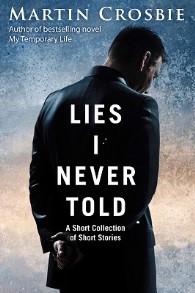
Could not put this book down. I am amazed at the depth of feeling and emotion in his words. All of the stories are so different yet so connected at the emotional level. My only disappointment is that the stories were not longer. I really hope that this book is just a prelude of the novels to come. Martin grabs me from the first line and takes me on an emotional journey with all his characters.
Debbie Dore-Amazon review
Where Martin Crosbie found his voice is a mystery. His ability to create stories (here very brief ones) that explore the psyche of his chosen stand-in trope in such a way that within a few sentences you are so aware of the character’s life and feelings that he seems to be sitting beside you, in conversation with only you.
Grady Harp (Hall of Fame reviewer)-Goodreads review
What readers are saying about How I Sold 30,000 eBooks on Amazon’s Kindle-An Easy-To-Follow Self-Publishing Guidebook:
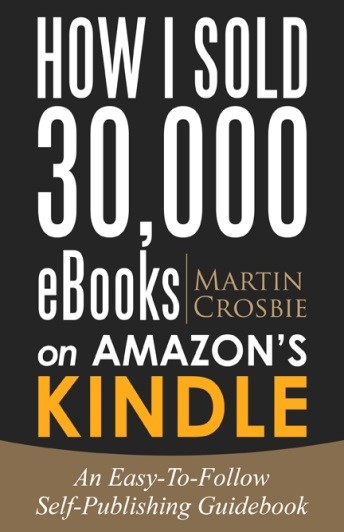
Yes, I was skeptical because I’ve read one or two of these books, and their suggestions are… let’s just say not that good. Last night, I skipped the intro and jumped right to the meat of the book. Chapter One was better, much better, than I had expected. But it was when he said, DON’T go out on Twitter and FB and shout “read my book” a thousand times a day that he convinced me that he was honest and knew what he was talking about. For anyone at the publishing stage or who wants to get there, so far 🙂 [I will always be a hardcore skeptic] this is a good reference on what to do, on how to build relationships instead of walls. If you’re not yet at the publishing stage, start now to build an audience and support group. And Martin C practices what he preaches, especially the part about supporting other authors. He followed me back on Twitter and friended me on FB.
NSW-Amazon Review
If you are a new writer this book is a must. I wish I had it when I first started writing. It is filled with easy to read and easy to understand information. However, even if you are an already published writer this book will offer you new information you might not have known. I found it helpful in so many ways. There are also links to various other sites that offer valuable info that is very difficult to find. Basically, “How I Sold 30,000 Ebooks on Amazon Kindle,” takes a lot of the guessing and hard work out of self publishing.
Roberta Kagan-Amazon Review
What readers are saying about My Name Is Hardly:
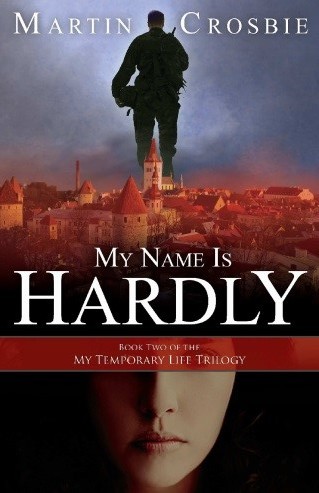
Martin Crosbie’s remarkable storytelling talent is apparent throughout his most recent novel, “My Name Is Hardly.” The story seized me from the first paragraph and held me relentlessly until I’d come to the novel’s thoughtful and moving conclusion.
Kathleen Lourde-Amazon review
I have no doubt that when the last piece is in place, Crosbie’s work will stand tall as exemplary literary fiction, and a reproach to those who mourn the decline of the “gatekeepers” of commercial publishing. Any gate too small to let in Martin Crosbie should have been blown up a long time ago.
Steven Hart-Goodreads review
 Layered Pages