Confessions of A Book Blogger

Stay calm and support book bloggers

Book Bloggers are a unique breed of readers. Our passion for reading and sharing that passion runs deep within us. We have to express ourselves in this form of medium. We live a thousand lives through reading. We adore the written word. We not only do it for ourselves, but for other readers like us.

Book Blogging isn’t always easy and we need help from the authors we shine a light on. We want our favorite authors to succeed and reaching out to as many readers as possible. By doing this, it takes both the authors and bloggers to support each other. Often times I hear authors talk about on social media how they aren’t reaching the audience they want. So here is what I have to say about that.

Authors, you want to increase your audience on social media? There are several ways in doing that. Today, I’m going to talk about supporting the book blogger. You see, we are a major part of your social media success.

Check list for supporting book bloggers:

  1. Be patient: Book Bloggers have day jobs and families to take care of to.
  2. When you appear as a guest on their blogs, take note of it and save the post link(s). Share and tweet that post on a regular basis.
  3. Be sure to always thank a book blogger for their support. Maybe even send them a copy of your book or bookmarks. We love those and will most likely spread the word on social media when an author does this. Another great marketing tool.
  4. Book Bloggers are not your everyday reader. Most of us are book reviewers and professional readers. We are required to give an honest analyses of books we review. This is the norm. So it needs to be expected.
  5. Follow blogger’s websites, twitter profile and Facebook pages. See what they are up too on goodreads. Engage regularly with book bloggers.
  6. If you have a disagreement with a blogger, do not further engage or get on social media and smear their name. This will only hurt you and your book sales. Just move on. It’s only one person out of millions.
  7. When you appear as a guest on blogs or if they review as part of a tour, please comment on the post and thank them. Show to their audience you care and appreciate their hard work in hosting you.
  8. When others comment on the post, thank them as well. Engage.

There is that word again. Engage. Do it the right way and you will reap the rewards.

Next up on Confessions of a Book Blogger, I will be discussing how Bloggers should support authors. To be posted on February 16th.

Stephanie M. Hopkins

Titles I have Recently Added To My Reading List

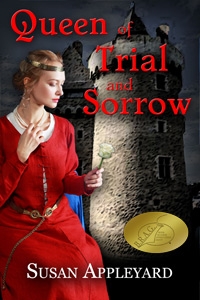
B.R.A.G. Medallion Honoree:

Queen of sorrow

Elizabeth Woodville was the wife of King Edward IV and the mother of the Princes in the Tower. As an impoverished widow she was wooed and won by the handsome young king and believed her dreams had come true. But she was soon swept up in the War of the Roses, enduring hardship and danger as her husband struggled to keep his throne. When he died Elizabeth was unable to protect her family against the ruthless ambitions of the man he trusted above all others. It was the king’s brothers, the unstable Duke of Clarence and the loyal Duke of Gloucester, who would prove to be Elizabeth’s most dangerous enemies.

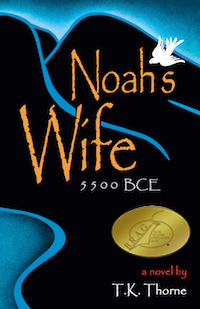
B.R.A.G. Medallion Honoree:

NOAHS-WIFE

Noah’s Wife transports readers to an ancient time and place, while exploring timeless issues—family relationships, autism, religious freedom, and cultural change. Told from the unique perspective of a young girl with a form of autism known now as Asperger’s, this is the award-winning story of Noah’s wife, Na’amah.

“A novel inspired by the biblical story of Noah’s flood, Thorne’s version weaves myth, history, and archeological findings with her vivid imagination, wisdom, and humor into an epic tale you will not forget.”

Na’amah wishes only to be a shepherdess on her beloved hills in ancient Turkey—a desire shattered by the hatred of her powerful brother and the love of two men. Her savant abilities and penchant to speak truth force her to walk a dangerous path in an age of change—a time of challenge to the goddess’ ancient ways, when cultures clash and the earth itself is unstable. When foreign raiders kidnap her, Na’amah’s journey to escape and return home becomes an attempt to save her people from the

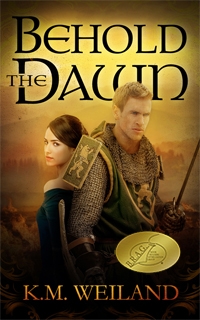
Behold the Dawn BRAG

B.R.A.G. Medallion Honoree:

Marcus Annan, a knight famed for his prowess in the deadly tourney competitions, thought he could keep the bloody secrets of his past buried forever. But when a mysterious crippled monk demands Annan help him wreak vengeance on a corrupt bishop, Annan is forced to leave the tourneys and join the Third Crusade in the Holy Land.

Wounded in battle and hunted on every side, he agrees to marry—in name only—the traumatized widow of an old friend, in order to protect her from the obsessive pursuit of a mutual enemy. Together, they escape an infidel prison camp and flee the Holy Land. But, try as he might, he cannot elude the past—or his growing feelings for the Lady Mairead. Amidst the pain and grief of a war he doesn’t even believe in, he is forced at last to face long-hidden secrets and sins and to bare his soul to the mercy of a God he thought he had abandoned years ago.

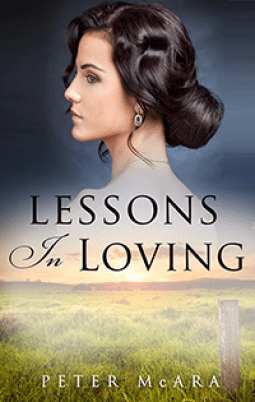
Lessons In Loving by Peter McAra

Lessons in learning

Wanted: Governess. Properly qualified in English, to instruct male pupil in rural location.

Sydney, 1902. Desperate for a job, Kate Courtney travels to the faraway New England Ranges to interview for a governess position. She is greeted by wealthy landowner, ruggedly handsome Tom Fortescue, and is shocked to find that her new charge isn’t a small boy—but the grown man.

It was Tom’s mother’s dying wish that he finds a refined, elegant, English bride to marry. But a country man with country manners can never win a lady fair. Tom needs Kate to smooth away his rough edges, make him desirable to the English rose he wants to marry.

But the more time Kate and Tom spend together, the closer they become, and Tom has to decide between the dreams of his childhood, and the reality that is right in front of him.

My thoughts:

I am not a fan of Historical Romance and I rarely pick them up to read. Unless it has something more to offer than just sex scene fillers (as I call them), I am just not interested. I am delighted I decided to pick up, Lessons in Loving. What first captured my attention was the cover, a male writer and this, “…is shocked to find that her new charge isn’t a small boy—but the grown man.” I haven’t read that sort of plot twist before! I thought, “Oh, this is going to be good.”

When I began to read the story, I started to have a little doubt. I felt the beginning was not strong enough but as I read on, the story-line became stronger and I was pleased with the character development and dialogue. I am delighted to report that this story does not have sex scene fillers and I devoured this book quickly.

I did however want to knock the handsome Tom Fortescue over the head a few times but hey, his stupid choices at times makes for an entertaining read. I wouldn’t mind reading more about him.

I did like how Kate took charge in the beginning of the story, though I felt she could be a bit too trusting at times but how things turn out might surprise you.

Charming story-a tad bit predictable- but, interesting characters, enjoyed reading the interaction between Kate and Tom, lovely settings and an intriguing plot. I will be looking for more books by this author.

I rated this story: Three Stars.

Stephanie M. Hopkins


Weekend Happenings…

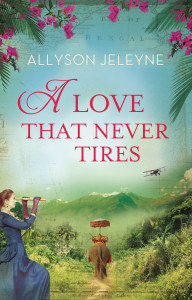
This weekend I have a lot going on. First there is preparing the house for family that are coming in town next week for Thanksgiving and then there is church on Sunday. If you know me, there is always reading plans in the mix. I am never far from a book. I am currently reading, A Love That Never Tires by Allyson Jeleyne. It is a Historical Romance and I generally do not read in this sub-genre unless it is an author’s work I know. However, I decided to take a chance with an unknown author to me. So far the setting of story seems to be true to the period but I have to admit, I am a bit put off by some of the sex scenes. For a reason I won’t mention until after I finish reading the story.

I want to wish you all a wonderful bookish weekend and please stay tuned to Layered Pages for lots of wonderful interviews, author guest post and much more!

A Love that Never Tires

‘Linley Talbot-Martin is a girl who likes to get her hands dirty. As the daughter of a famous archaeologist, she’s been everywhere and seen everything—except London. When the Talbot-Martin team travels there for her father’s investiture, Linley finally gets her wish. But when the time comes to trade her jodhpurs and work boots for silk gowns and kid gloves, she may be in over her head. Even though she can out-ride, out-shoot, and outsmart any girl in London society, Linley is destined to be the failure of the season. No one she meets cares about ancient pottery or lost Buddhist texts, and fundraising efforts for future expeditions keep coming up short. If the Talbot-Martin team doesn’t find money soon, they will be out of a job, and Linley will lose everything she holds dear. Patrick Wolford, Marquess of Kyre (pronounced ‘Keer’), is a man who knows his place. Well-connected and respected, he is everything everyone expects him to be, but beneath his façade, he is as neglected and crumbling as the family estate. Now the strain of keeping up appearances is taking its toll. The smart thing would be to marry the heiress nipping at his heels and be done with it, but when he meets Linley Talbot-Martin, who dares to shake up his seemingly proper world, he must choose between the life he’s always known and one he never dared to dream of.’

(Book description from Goodreads)

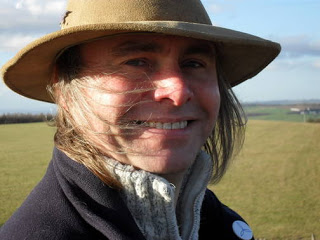
Interview with Simon Stirling

simon

Simon Stirling hails from Birmingham, England.  He went to Glasgow University, but left early to take part in a new play on the London fringe (written by John A. Bird, who went on to found The Big Issue).  Simon then spent three years training as an actor at LAMDA, during which time he got his first literary agent.  For the next decade or so he wrote scripts for theatre and various television drama series, picking up a Writer’s Guild Award for his work on “Between the Lines” and writing what is probably the rudest episode ever of “Casualty”!  In more recent years he has worked as a script consultant and scriptwriting tutor, and for two years he was Youth and Community Director at the Roses Theatre, Tewkesbury.  Many years of research went into his first two historical nonfiction books, The King Arthur Conspiracy (2012) and Who Killed William Shakespeare? (2013) – both published by The History Press – and his current project, “The Grail: Relic of an Ancient Religion” for Moon Books.  He now lives in Worcestershire, in the heart of Shakespeare country, with his wife Kim, who was born in Stratford-upon-Avon. They were married on the Isle of Iona in 2002.

Simon keeps a blog with regular updates on his research and adventures in publishing:

www.artandwill.blogspot.co.uk

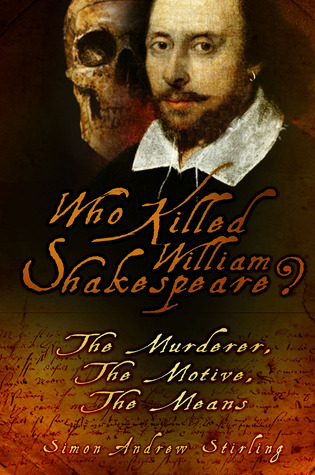
Stephanie: Hello, Simon! Thank you for chatting with me today! As a Shakespeare enthusiast, I am always intrigued with anything to do with him and was delighted you wrote a book about him. Please tell me a little about your book, Who Killed William Shakespeare?

Simon: Hello, Stephanie!  “Who Killed William Shakespeare?” was first published last year by The History Press.  It’s my second book for them.  I’d spent a little over 25 years researching Shakespeare’s life and times – starting with a particular interest in the character of Lady Macbeth (where did she come from?) and then gradually widening out from Shakespeare’s middle years to take in his youth and retirement.  When I met up with my editor at The History Press to discuss the publication of my first book (“The King Arthur Conspiracy” – 2012) I was hoping we’d have time to chat about the Shakespeare project I’d mentioned to her.  We didn’t, but I did notice that she had written in her notes, “Who killed William Shakespeare?”

When I’d first mentioned the project to her, I’d outlined very briefly what I had discovered about Shakespeare’s life and the three stages (childhood and youth, middle age, retirement and death) which I was keen to cover.  The fact that she had zeroed in on his sudden death told me that this was what the publishers would be most interested in (although I still managed to cover the rest of his life in the book) and, whether she realized it or not, she’d given me my title!
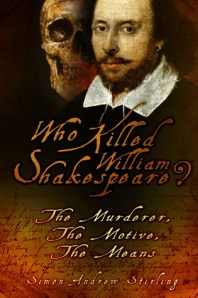
who killed ws

Stephanie: That is really intriguing. Your research must have been quite extensive. Could you tell me a little about it? Was there anything you discovered that you did not know before?

Simon: The research started the traditional way: reading any books I could get hold of about Shakespeare.  But I found them all rather disappointing.  None of them really told me who Shakespeare was.  After many years, I began to realize that this is one of the great stumbling blocks in Shakespeare studies.  We know quite a lot about Shakespeare, but many scholars prefer to pretend that we don’t.  And that got my antennae twitching.

I combined what you might call “mainstream” or “orthodox” Shakespeare research with more detailed investigations into the region he came from – which also happens to be my home region.  Most Shakespeare biographers pop up to Stratford to look around and then head straight back to London.  They’re really only interested in Shakespeare-in-London.  But the best material about him, his contacts, his family network, his background, etc., is to be found in the Midlands.  For example: we know that the 18-year old Shakespeare was first given a special license to marry “Annam Whateley” of Temple Grafton (a parish near Stratford), and that the next day a license was issued stipulating that Shakespeare would marry “Anne Hathwey” of Stratford.  For years, scholars have insisted that Anne Whateley (his first betrothed) didn’t exist – but a search of local records turned up a will which names her.

The biggest surprise came in the form of a skull.  I had been chasing up a local story, published by a Victorian clergyman, which insisted that Shakespeare’s skull had been stolen from his grave in Stratford and ended up in a private family crypt under another church altogether.  But it was only when I’d started writing my book that I discovered that this skull really did exist.  What is more, it shows various injuries which match those visible on the portraits of Shakespeare.  And these injuries both confirmed and added to the theory I had already formed about how Shakespeare died.  So that was a shocking moment – discovering that the Victorian vicar was (partly) right.  Shakespeare’s skull is NOT in Stratford!

Stephanie: Now that is really interesting! How long did it take you to write, Who Killed William Shakespeare? And what was your inspiration?

Simon: I’m not really sure how long it took.  For years, I was trying to write a sort of detailed novel about Shakespeare in 1605-6.  It would have covered the Gunpowder Plot (to which Shakespeare was connected in a number of alarming ways), the birth of his illegitimate son, Sir William Davenant, and the writing of “Macbeth”.  Then, little by little, I extended the scope of the project and decided to write it as non-fiction.  There were dozens of false starts.  But the manuscript for the final book actually took about nine months to write.  Some of that time, though, was spent doing very detailed comparisons of the skull, the Shakespeare portraiture, and a death mask which was probably of Shakespeare and is now in Germany.  I reckon I must have spent about two months in all, studying the similarities of these various images and objects and creating graphics which point up the comparisons.

As for the inspiration, that’s kind of complex.  I ended up believing that an enormous injustice had been done to Shakespeare, and it continues to this day.  He wasn’t alone in this: many of his friends, relatives and associates were Catholic, and they suffered horribly.  So if anything drove me in writing the book, it was the desire to right a dreadful wrong.  Shakespeare was murdered (in fact, I’ve since discovered that this was anything but secret), and the facts of his life have been systematically covered up since in order to invent a false Shakespeare, a patriotic Protestant.  That’s why so many scholars pretend that we know very little about him.  The truth is more shocking – but it also explains the man and his work, as well as his violent death.

Stephanie: Well, I am glad you wrote it as non-fiction and that is no easy task. I can’t wait to read your book! I agree with you. I have heard many stories of injustice about him and it is infuriating at times, I admit.

Have you read all his plays? His sonnets?

Simon: One way or another, yes (including a “lost” play of his).  But for the book itself, I didn’t really bother very much with his history plays (they weren’t terribly relevant), and there are others I left out because they would have cluttered up the narrative.  A few poems (“The Phoenix and the Turtle”, for example) were also side-lined, but that was really just because of space, or the lack thereof.

Stephanie: Which sonnet is your favorite?

Simon: The sonnets are fascinating – they’re more personal than letters, though I sometimes felt that I was reading somebody’s emails!  Picking a favourite is very difficult: they cover such a long span (from about 1592 up till at least 1606), and the subject matter is so varied.  If I had a favourite, it would probably be Sonnet 126, which is “unfinished” (the final couplet was never published) and was, I think, addressed to his infant son or godson, William Davenant, who was illegitimate, but whose birth in late February 1606 made up for the death of Shakespeare’s son and heir, Hamnet, ten years earlier.

Stephanie: My favorite play is the Twelfth Night and Hamlet. Which one is yours and why?

Simon: I ought to say “Macbeth”, because that was the starting point for so much of my research.  But the fact is that it took me many years to learn how to enjoy reading Shakespeare (the key was to understand his latent Catholicism: suddenly, every poem and play became very readable, and intensely emotional, once I’d latched on to that forbidden information; I remember watching a very good movie version of “Titus Andronicus” and having my usual response of, “Well, that meant nothing to me” – and then spending a year or so researching Catholicism in Shakespeare’s England, and then watching the same movie again, and I was in floods of tears throughout).  The play I found myself enjoying the most when I was working on “Who Killed William Shakespeare?”, though, was “Pericles”.  I found it a really colourful, heart-warming experience.  It was the first of Shakespeare’s plays of reconciliation, the first of his “romances” or tragi-comedies, and it was hugely popular with the Catholic community.  I think I can see why.  It promises salvation, of a sort, after many horrors.

Stephanie: Now, about you and what you read for pleasure. Who are your influences?

Simon: Well, I’m a pretty big fan of William Shakespeare!  But while I was growing up, the stories of Alan Garner really grabbed me.  He always wrote brilliantly, and his stories became more mature as he went on (he’s still alive, I should add).  In my teens, I discovered his very short novel, “Red Shift”, which remains my personal favourite.  Nobody – apart from Shakespeare, perhaps – has ever managed to squeeze so much meaning into so few words.  That book taught me that you should never go overboard with description.  Keep it simple and to the point.  Too much description cheats the reader.  Less is more.

Stephanie: I agree about going overboard with description and less is more. It certainly is an art to write that way.

How often do you write and where in your home do you write?

Simon: I write every day, if I can.  Using a laptop, I can write pretty much anywhere.  But we only have a small house, and my main work station is in the main room.  I have my back to the television, but if I’m working late into the night I’ll often have the TV on in the background, just so that the room isn’t too quiet.

Stephanie: Coffee or tea?

Simon: Coffee in the morning, and plenty of it: strong and black (I broke my old cafetiere a few days ago, and my wife made sure she’d bought me a new one by the following morning; she knows how important it is to me!).  But in the afternoon or evening, tea.  I have a very big mug, about the size of two normal mugs, which I drink my tea out of.  And I only have a splash of goat’s milk in my tea.  Cow’s milk really isn’t very good these days.

Stephanie: Historical fiction or non-fiction? Or both?

Simon: Non-fiction.  Most of my reading is research, one way or another, and while you can soak up atmosphere from fiction, I prefer hard facts.  The other problem is that my background as a dramatist means that I still mentally “adapt” novels for the screen whenever I’m reading them, which is annoying.  But I suppose the main thing is that I see reading as ongoing education.  Novels are a form of escapism, which means that I don’t really trust them.

Stephanie: Favorite read(s)?

Simon: Depends what I’m working on.  Sometimes, it’ll be something scientific (Simon Singh’s “Big Bang”, for example, which is a brilliant history of cosmology; I wrote a script for the Open University, here in the UK, back in the 90s, and we introduced the nation to the COBE satellite and the discovery of cosmic background radiation – it was good to read about how that all fitted in to the history of our understanding of the universe).  I also find biographies intriguing, because they’re so difficult to do well, and so when I find one I think is really excellent (like Kate Williams’ “England’s Mistress”, about Emma, Lady Hamilton, or W.H. Murray’s “Rob Roy MacGregor”) I’ll tend to recommend it.  Also, I would always recommend Evelyn Farr’s “Marie-Antoinette and Count Fersen: The Untold Love Story”.  That’s a book I’d love to have written.

Stephanie:  What would you like to say to your readers?

Simon: The research (into King Arthur and William Shakespeare) isn’t finished.  I’m expecting to unveil a “new” Shakespeare portrait during a public lecture I’ll be giving at Goldsmiths, University of London, in March, and that portrait appears to confirm what my research has revealed about Shakespeare’s death.  Plus, we’ll be able to access the actual skull, later this year, so there’s a lot more news to come.  Both my books could be thought of as primers – they’re introductions to the subject, and they both present a very different story to what you’ve heard previously, but most exciting of all is the fact that, as the research continues, more and more details get filled in, and I really look forward to updating my readers on the outcomes of these investigations.  So if you want a head start – read the books, and you’ll be ready for the new information as it emerges!

Stephanie: Where can readers buy your book?

Simon: There seem to be quite a lot of places around the world that are stocking it – you can even buy it in Lagos!  But there’s always Amazon, of course, and it is available both in hardback and Kindle.

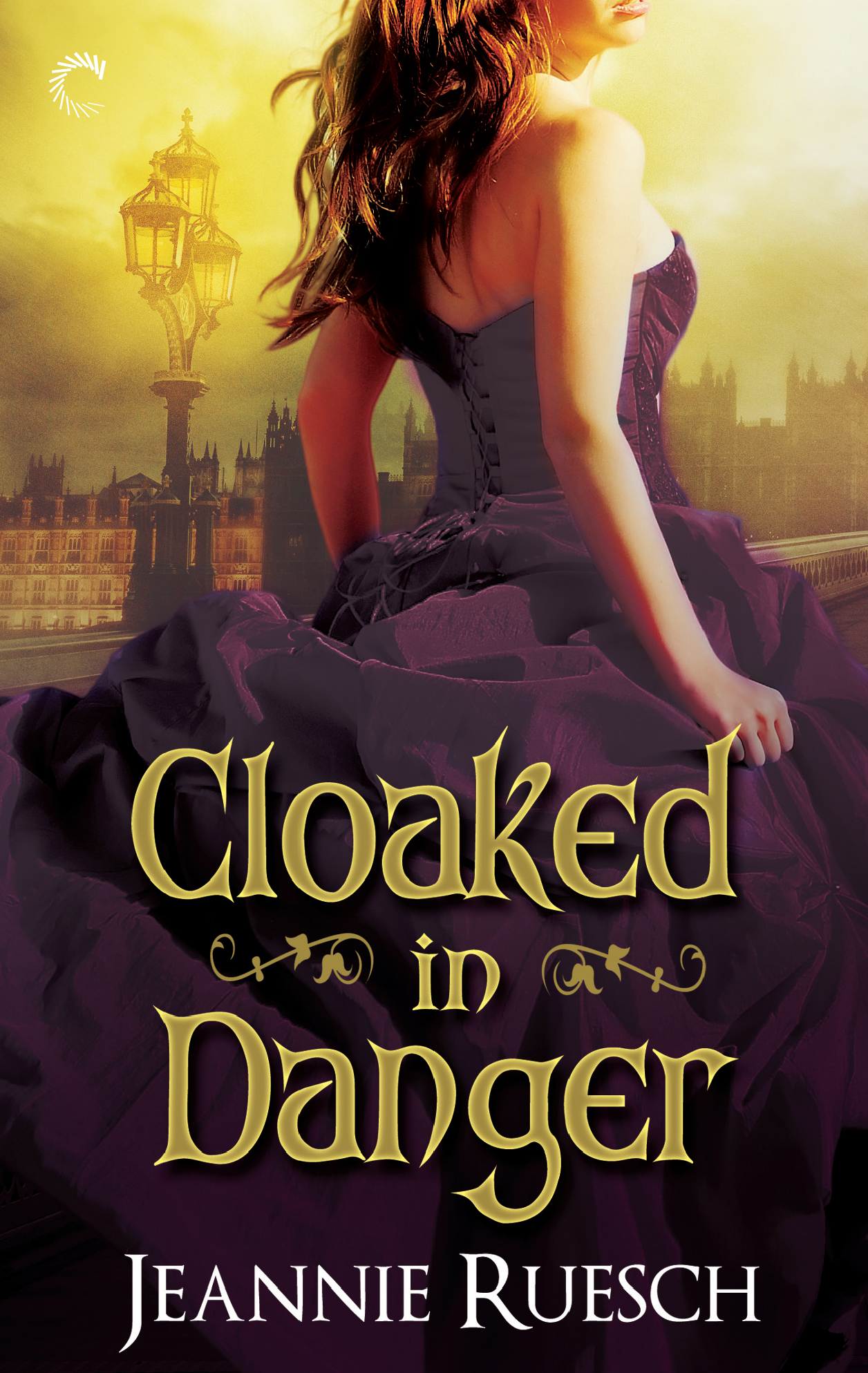
Jeannie Ruesch’s Facebook Launch Party for Cloaked in Danger

Cloaked in Danger book cover

What: Jeannie Ruesch’s Facebook Launch Party for Cloaked in Danger

When:
Monday, January 27.  3:00 – 7:00pm PST
About Cloaked in Danger
Publication Date: January 27, 2014 Carina Press eBook ASIN: B00F93X7ZI

Aria Whitney has little in common with the delicate ladies of London  society. Her famous father made his fortune hunting archaeological  treasures, and her rustic upbringing has left her ill prepared for a  life of parties and frippery. But when Gideon Whitney goes missing in  Egypt, Aria must embrace the unknown. Armed with only the short list of  highborn men who’d backed her father’s venture, she poses as a woman  looking for a husband. She doesn’t intend to find one.

Adam Willoughby, Earl of Merewood, finds London’s strangest new  debutante fascinating, but when he catches her investigating his  family’s secrets, he threatens to ruin her reputation. He doesn’t intend to enjoy it so much.

When their lustful indiscretion is discovered, Adam finds that he  regrets nothing. But now, as Aria’s father’s enemy draws near, Adam must convince his betrothed that she can trust him with her own  secrets…before it’s too late.

About Jeannie Ruesch

Jeannie Ruesch wrote her first story at the age of the six, prompting her to give up an illustrious, hours-long ambition of becoming a Dallas Cowboy Cheerleader and declare that writing was her destiny. That journey to  destiny took a few detours along the way, including a career in  marketing and design.

Her first novel, a fairy-tale like historical romance, was published  in 2009, but the darker side of life had always captivated her. So after a dinner conversation with friends about the best way to hide a dead body, she  knew she had to find a way to incorporate suspense into her writing.  (The legal outlet for her fascination.) Today, she continues writing what she loves to read – stories of history, romance and suspense. She lives in  Northern California with her husband, their son and an 80 pound lapdog lab named Cooper.

She is also the creator of the WIP Notebook, a writer’s tool to help stay organized while you write, which you can find at her website. You can also follow her on Facebook, Twitter, Goodreads and Pinterest.

Cloaked in Danger LBP Banner

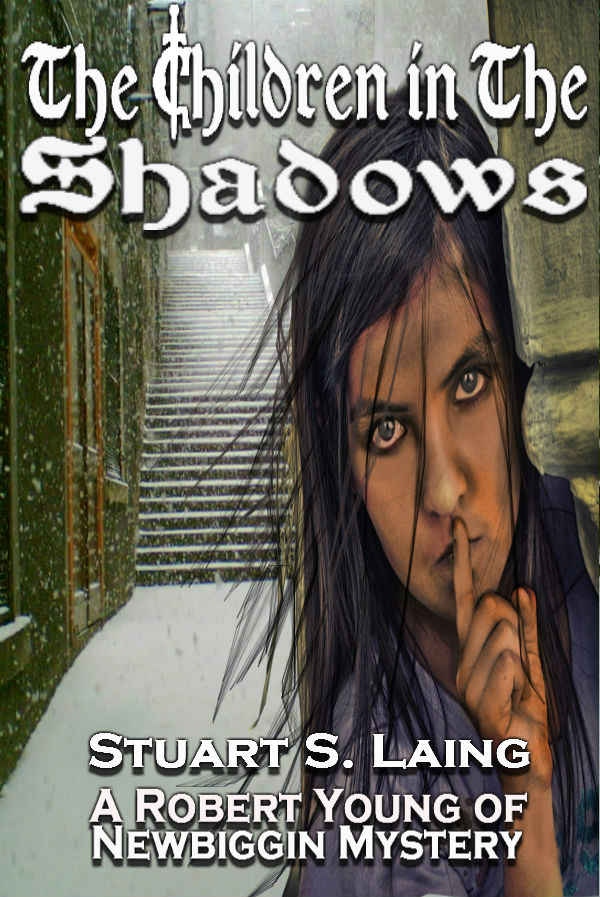
Interview with Author Stuart S. Laing

Stuart Laing

Born in 1966 and raised on the east coast of Scotland in the ancient Pictish Kingdom of Fife. Stuart has been married to the love of his life for 20 years and they have blessed with a daughter. Completing the household is a cat which is also female leaving him heavily outnumbered. He has always been fascinated by the history of Edinburgh and has spends most of his adult life studying Scottish history in all its aspects but always find himself being drawn back to the cobbled streets of the Old Town. He would urge all visitors to Scotland’s ancient capital to (briefly) venture into one of the narrow closes running down from the Royal Mile to get a flavour of how alive with mischief, mayhem, love and laughter these streets once were.

Stephanie: Thank you for chatting with me today, Stuart. It is always a pleasure. You have written so many wonderful stories. Today I want to talk with you about, The Children in the Shadows. Great title by the way. Tell me a little about your story.

Stuart: While Robert and his friends and family attend an engagement party the murder of a young girl casts a grim pall over the evening. Everyone seems convinced that the woman who carried the body into the town Guardhouse is guilty and no investigation is necessary. Robert is pressed to do what he can to help the woman and by doing so he opens up a can of worms that certain people in high office want closed for their own reasons.

The story also allowed me to shine more of a light on the female characters who come to the fore in this. I have always sought to allow them to be as strong and outspoken as they wanted to be and in TCiTS they seize the opportunity with both fair hands.

Alice Galbraith especially truly came into her own when she decides she is going to solve the crime. While this decision places her in great danger as she is kidnapped by the murderer she is not the type of girl who is prepared to set back and wait to be rescued.

Faith also plays a strong part in the book. It serves both as comfort at times of sorrow and inspiration to stay the course and bring the guilty to justice.

Stuarts book cover

Stephanie: What was your inspiration?

Stuart: There has been much said in the British media over recent years regarding ‘people trafficking’ and ‘economic migrants’ from Eastern Europe coming to our shores in search of a better life as though this was something new. Throughout the 18th Century people from the Scottish Highlands had been trickling southwards to find hopefully a better life in the cities of the central Lowlands. Glasgow and Edinburgh had probably hundreds of Gaels struggling to eke out a new life for themselves by 1745 alone. I took that fact and mixed it with my fictional creation of a heartless man who lures children from the Highlands with promises of a happy and wealthy future only to put them to work in the worst sort of brothel.

It was the sad fact that such places existed and the fact that the victims were hidden from sight that gave me the title. That and the fact that certain people wanted the children to remain hidden in the shadows so that their own sins would remain unseen.

Stephanie: Tell me a little about Captain Travers.

Stuart: Charles Travers is a young man aged 25. Formerly an officer in the regular army who sold his commission and returned to his hometown where he was able to secure the position of captain in Edinburgh’s Town Guard. He is looked upon as a popular figure but other than Robert has no’one he can call a true friend. His single interest is solving crimes and this has been to the detriment of his social life. He has allowed nothing else to come before that and it was through work that he first met and then became close friends with Robert. Romance has never really figured in his thoughts.

His parents died when he was a child and he had been raised by an elderly relative who passed away while he was in the army so has no family left.

It was while he was attending Kitty’s to make an arrest that he met Miss Estelle Cannonby who he fell in love with at first sight. He is convinced she is his soul mate and the woman he wishes to make his wife.

Stephanie: What is the most dangerous encounter that Robert Young, Captain Travers have had?

Stuart: For Charles it is when he corners the murderer in A Pound of Flesh in the climactic scene when he finds himself unarmed facing a desperate man armed with a pistol. He tries to persuade him to surrender but…

Robert has largely managed to avoid placing his life in real danger, although like Charles he is there when the killer is confronted in ApoF. However his luck runs out dramatically in The Children in The Shadows when he discovers the identity of the man responsible for exploiting children. Rather than wait for Charles and the Town Guard he attempts to capture the man himself trusting in his own skill with a rapier. His skills may not be all that he hoped however!

Stephanie: Out of all the characters you have written about, which one are you most partial to?

Stuart: Arghhh! Does it have to be only one? Obviously I have to say Robert Young himself as the driving force of the stories but I love his wife Euphemia who has to deal with worrying about him when he is investigating a dastardly crime while looking after two young children. I also have a real fondness for Sergeant MacIan of the Town Guard who believes in ‘traditional’ methods of policing while dear Captain Travers prefers a modern, analytical approach to a crime scene. One character who is always an absolute pleasure to write is Alice Galbraith, a high class prostitute who delights in causing mischief for Robert and Captain Travers whenever she speaks to them. She is not a malicious character in any way, more just a saucy minx with a wicked sense of humour. She really came into her own in the most recent book The Children in The Shadows where she revealed herself to be much more than just an amusing supporting character. Even as I wrote her scenes I was cheering her on.

Stephanie: Is there a scene you wrote where you burst out laughing? If so, do tell.

Stuart: There is a short scene in A Pound of Flesh where Captain Travers and Robert visit Kitty’s (a gentleman’s club for games of chance and meeting young ladies of negotiable affections) to arrest a dubious character. He is busily engaging with two ‘ladies’ in a bedroom and while they arrest him the women, naked as the day they were born, applaud their efforts while they cringe with embarrassment. It was just one of those little scenes that is both important as it leads to a break in the investigation and just amusing for the sheer awful embarrassment for the men as they try to arrest the villain while doing their best not to stare at the naked flesh on display.

Stephanie: Where in your home is your favorite place to write? Do you have a favorite coffee or tea by your side when you write?

Stuart: Normally my armchair with my netbook perched on my lap. I like the small size of the netbook compared to a full size laptop when I am writing. Now, coffee or tea? The eternal conundrum! I tend to stick with coffee when writing but a mug, never a cup, of strong tea is always welcome. Just don’t add sugar!

Stephanie: I write at my desk, living room, kitchen and sometimes in my bed early in the morning. When writing, what is your process?

Stuart: I generally work out the full plot from beginning to end before I write the first word, I even work out a chapter by chapter guide of who does what, when and where in advance. However…pretty much as soon as I get past the first chapter things start to move, if not in a completely different direction, then in a way which I had not planned in advance. Generally only the very beginning and the end will remain unchanged. The crime and the criminal will be as I planned but anything else between the first and last page tends to weave its own path. Characters have a bad habit of doing their own thing. When I am actually writing though I prefer to have the TV switched off and have music playing in the background. Mumford and Sons, Marillion and the Scottish band from the 1980’s Big Country all feature fairly regularly on my writing playlist.

Stephanie: Yes, I agree. Characters do tend to do their own thing. I have noticed a lot of writers like having music on while writing. I’m must be strange, because I need complete silence and no distractions. How many books a year on average do you read?

Stuart: A rough estimate would be somewhere in the region of 50-60 full length books a year on average. I generally read at least one novel a week and goodness only knows how many short stories!

Stephanie: That is about the amount I read. Good number of books. What advice would you give to someone who wanted to try their hand at writing?

Stuart: Do it! Work out your basic storyline, plot and main characters and then just write. It doesn’t matter if you miss words or letters or even have gaps in the plot in that first draft, just get your idea down on paper (or on the computer screen these days) Once you have written that first draft then you can go back over it and catch the things you missed first time around. The single most important piece of advice I could possibly give is simply this. Do it! And have fun while you are doing it! Is that two pieces of advice? Do it and have fun!

Stephanie: Agreed!  

What is up next for you?

Stuart: I am nearing completion of the fourth Robert Young tale, so I think it is safe to say he doesn’t die when he confronts the cad in TCiTS. It has the working title of Major Weir’s Dark Legacy and is about an ongoing argument between two elderly booksellers. When one is murdered and the other found standing over the body with a knife in hand Charles is prepared to see things as an open and shut case. His attention is focussed on an upcoming wedding and he doesn’t want any distractions to get in the way of that. Robert, at his wife’s insistence agrees to do what he can for the accused. Meanwhile a sneak thief is plaguing the town, Robert’s adopted daughter Effie has discovered boys and a demon raising lunatic from the past haunts the dark rooms of an empty mansion.

 Stephanie: How exciting!  

Is there a message you would like to give to your readers?

Stuart: I think the only message I would dare try to give to my readers is that no matter how grim things may seem at the moment, there is always a light at the end of the tunnel. With some of my characters that light is provided by their belief in Jesus Christ as their Savior. Others settle for the contents of a bottle! What I hope readers would take from my books is that our troubles, even on the darkest days can be overcome. I would suggest that faith was a better source of hope than a bottle though!

Stephanie: Where can readers buy your book?

Stuart: All three novels are available on Amazon in ebook and paperback. A short story featuring the regular cast is also available for the Kindle.

http://www.amazon.co.uk/Stuart-S.-Laing/e/B007B5H19U/ref=ntt_athr_dp_pel_1


Review: Confessions of Marie Antoinette: A novel by Juliet Grey

Confessions

Publication Date: September 24, 2013
Ballantine Books
Paperback; 464p
ISBN: 0345523903

Review:

Versailles, 1789.

The Confessions of Marie Antoinette is a deeply moving and emotional story, which provides new insights into the period during which the French royal family was held hostage and into the last moments of Marie Antoinette’s life. Juliet Grey’s story emphasizes real historical events and provides perceptive and haunting descriptions of the king and Queen’s demise. The story is told in Marie Antoinette’s point of view and Grey creates a convincing portrait of Marie and her devotion as a wife, mother, queen and the lengths she goes to protect those roles as best as she can. There are vivid and heart wrenching descriptions of the revolution and Grey gives a clear picture of rage and determination of the people.

This novel is third of a brilliant trilogy and I say that because it has been a long time since I have enjoyed a trilogy so much. As the story goes we know that Marie was a spendthrift and her subjects saw a selfish women with lots of food and clothes while others starved. However, from what I came away with in this trilogy, was that if Marie never bought that stuff those businesses would have been even worse off. I believe she truly felt she was helping them.

Writing good historical fiction is an art. Writing a master piece takes undoubted skill and talent that reaches into the very depth of the reader’s soul. Grey has accomplished both and I believe, “Confessions”, has truly changed me and brought to surface an emotion inside of me that has been quiet for some time. I was beyond deeply moved. My perceptive of Marie and the French people of that period is forever changed. Grey writes with a deep feeling of loss, betrayal, love, and devotion. I cannot express enough how I much I enjoyed reading this story. Words cannot achieve that emotion. I HIGHLY recommend to all!

Stephanie M. Hopkins

My interview with Grey is coming up tomorrow on Layered Pages. So please be sure to return! You won’t want to miss what she has to say!

Juliet Grey

Juliet Grey is the author of Becoming Marie Antoinette and Days of Splendor, Days of Sorrow. She has extensively researched European royalty and is a particular devotee of Marie Antoinette, as well as a classically trained professional actress with numerous portrayals of virgins, vixens, and villainesses to her credit. She and her husband divide their time between New York City and southern Vermont.

For more information please visit www.becomingmarie.com.  You can also find Juliet Grey on Facebook.

Link to Tour Schedule: http://hfvirtualbooktours.com/confessionsofmarieantoinettevirtualtour
Twitter Hashtag: #ConfessionsOfMATour

Banner for Confessions

Review: The Prodigal Son by Anna Belfrage

The Prodigal Son

He risks everything for his faith – but will he be able to pay the price? Safely returned from an involuntary stay on a plantation in Virginia, Matthew Graham finds the Scottish Lowlands torn asunder by religious strife. His Restored Majesty, Charles II, requires all his subjects to swear fealty to him and the Church of England, riding roughshod over any opposition. In Ayrshire, people close ranks around their evicted Presbyterian ministers. But disobedience comes at a heavy price and Alex becomes increasingly more nervous as to what her Matthew is risking by his support of the clandestine ministers – foremost amongst them the charismatic Sandy Peden. Privately, Alex considers Sandy an enervating fanatic and all this religious fervour is totally incomprehensible to her. So when Matthew repeatedly sets his faith and ministers before his own safety he puts their marriage under severe strain. The situation is further complicated by the presence of Ian, the son Matthew was cruelly duped into disowning several years ago. Now Matthew wants Ian back and Alex isn’t entirely sure this is a good thing. Things are brought to a head when Matthew places all their lives in the balance to save his dear preacher from the dragoons. How much is Matthew willing to risk? How much will he ultimately lose? The Prodigal Son is the third in Anna Belfrage’s historical time slip series, which includes the titles The Rip in the Veil and Like Chaff in the Wind.


My review:

I really admire Belfrage’s use of voice and language. She makes it so that the characters are well developed and thought provoking. And I admire how her characters interact with each other and does a good job expressing their emotions. Her dialog is also engaging and flows really well.

She gives wonderful details of the domestic life of the time the story is written in and details of what they had to endure in the regards to the government’s (Charles ll of England) unreasonable rule. There were laws or should I say-Charles ll required his subjects to conform to the Church of England- on how they were to worship which as you know made it extremely difficult on the people. And that is putting it mildly.

Mathew Graham has risked much to support and protect his minister, Sandy Peden. And his family has suffered for that. I did not always agree with him and was often times frustrated with the decisions he was making. But having said that, he is one of my favorite characters in this story. I believe Mathew truly loves his family and has adjusted quite well to the fact that his wife-Alex-is from the future. I’m sure he is more tolerate to her ideas and beliefs than what most men during that time would have been.

Sandy Peden is a pious and fanatical minister who I actually enjoyed reading about in this story. He is opinionated- thinks women have their place and feels Mathew should put his wife in that place and has no problem telling him so. It is obvious he does not approve of her one bit. But she certainly matched wit for wit with Sandy. I do admire how Sandy is a survivor and he stands by what he believes and does not give into being told how he is to worship and what organized faith he is lawfully suppose too follow. Very entertaining….he adds a lot to this story.

Alex is a strong woman who is from the future and I believe her knowledge has really helped her and yet sometimes it was a hindrance for her, I think. I do however think she adapted quite well in the 17th century for someone being so forward thinking and modern of course. She does have a stubborn streak to her but so does her husband. I really enjoyed seeing the way they interacted with each other. Their relationship is really dynamic. And I do admire their strong sense of family and values. Alex does something in this story that I truly respect her for. But I cannot tell you! You will just have to read the book to find out!

I really have enjoyed this series so far and I look forward to continuing to read them! The Graham family are definitely among my favorite families to read about! I am giving this story a four and a half star rating and I highly recommend this whole series to people who are looking for a quality written time slip.


Stephanie

Layered Pages


About the Author

anna belfrage


I was raised abroad, on a pungent mix of Latin American culture, English history and Swedish traditions. As a result I’m multilingual and most of my reading is historical – both non-fiction and fiction.

I was always going to be a writer – or a historian, preferably both. Instead I ended up with a degree in Business and Finance, with very little time to spare for my most favorite pursuit. Still, one does as one must, and in between juggling a challenging career I raised my four children on a potent combination of invented stories, historical debates and masses of good food and homemade cakes. They seem to thrive … Nowadays I spend most of my spare time at my writing desk. The children are half grown, the house is at times eerily silent and I slip away into my imaginary world, with my imaginary characters. Every now and then the one and only man in my life pops his head in to ensure I’m still there. I like that – just as I like how he makes me laugh so often I’ll probably live to well over a hundred.

I was always going to be a writer. Now I am – I have achieved my dream.

For more information, please visit Anna Belfrage’s WEBSITE.

Layered Pages latest interview with Anna Befrage : https://layeredpages.com/2013/07/09/1350/

Links to where you can purchase her stories:

http://www.amazon.com/The-Prodigal-Son-Anna-Belfrage/dp/1780885741/ref=sr_1_5?ie=UTF8&qid=1376163215&sr=8-5&keywords=The+Prodigal+Son

http://www.amazon.com/Like-Chaff-Wind-Anna-Belfrage/dp/1780884702/ref=sr_1_1?ie=UTF8&qid=1376163168&sr=8-1&keywords=like+chaff+in+the+wind

http://www.amazon.com/A-Rip-Veil-Anna-Belfrage/dp/1780882424/ref=sr_1_1?ie=UTF8&qid=1376163127&sr=8-1&keywords=A+rip+in+the+veil

Interview with Author Mona Rodriguez

Forty years in a day book cover

Hello Mona! I read Forty Years In A Day and was absolutely intrigued with your story. Could you please tell your audience about your book?

Mona: Thank you, Stephanie, for hosting us today. It’s a pleasure. Our story begins in Italy, 1900. After years of torment and neglect, Victoria and her four small children immigrate to Hell’s Kitchen, New York, to escape her alcoholic, abusive husband. On the day they leave, he tragically dies, but she does not learn of his death for several years—a secret that puts many lives on hold.

Quickly, they realize America’s streets are not paved with gold, and the limits of human faith and stamina are tested time and time again. Poverty, illness, death, kidnapping, and the reign of organized crime are just some of the crosses they bear.

Victoria’s eldest son, Vincenzo, is the sole surviving member of the family and shares a gut-wrenching account of their lives with his daughter during a visit to Ellis Island on his ninetieth birthday. He explains how the lives of he and his siblings have been secretly intertwined with an infamous Irish mob boss and ends his unsettling disclosure with a monumental request that leaves Clare speechless.

The story takes the Montanaro family through several decades, providing the reader an opportunity to stand in the shoes of a past generation and walk in search of their hopes and dreams. It is layered with the struggles and successes of each family member, illuminating the fact that human emotions have been the same throughout generations; the difference is how people are molded and maneuvered by the times and their situations.

Stephanie: Is this story based on anyone you know or who you have come across?

Mona: The characters are based on family members, both deceased and living. I’ve had this particular story churning in my head for many years, sparked by the stories of my family’s past. Forty Years In A Day begins in 1900 and follows the incredible journey of a young mother and her four children as they escape from Italy into the streets of Hell’s Kitchen, New York. That woman was my grandmother. The story ends with a woman who knows the father of her children is living a double life with another, but she loves him so much that she overlooks the arrangement rather than forfeit the man. Those were my parents. In between are the stories that I had heard from family members, intertwined with a twist of fiction and sensationalism to have some fun.


Stephanie:  Were there any challenges you faced while writing this story?

Mona: There were many challenges that I had faced undertaking this project. First and foremost, I had the idea of the story in my head before I had the skills to share it. I’m a mathematician and an environmentalist so this challenged the other side of my brain. While writing is something I always admired, to me, the passion was in the story and the writing was the vessel to get it told.

Second, people ask me how much of our book is realistic; especially family members who want to know if this is the actual story of what had happened. They try to draw a parallel between family members’ personalities and our characters’ personalities. The truth is that no one can totally piece together that puzzle of tales; there are parts to every family’s story that were pushed under the rug for fear it would tarnish the family’s reputation. The elders think they are doing their family justice by taking some of the more scandalous stories with them to the grave. When, as a writer, you realize all this, you are forced to conjure your own conclusions from the pieces of stories that you gather.

Third, I coauthored the book with my cousin Dianne Vigorito. She gave me the support and validation I needed to pursue this project. I was lucky to find a family member to work with, and she had an immediate interest in the idea. She grew up hearing the same crazy stories, some of which were almost unbelievable, that were told by our ancestors.  Working with another has taught me the power of more than one and the art of compromise.

Stephanie: Was there a particular scene you felt difficult to write?

Mona: The story of Vinny and Ava represents my parent’s story and the story that resonates closest to my heart. When they were alive, I had discovered secrets about their past that they didn’t want my siblings and me to know. When they died, I felt more compelled to delve into their past, but no one could (or would) tell me the whole story. I realized that I should have asked more questions when they were alive, been more adamant to learn the truth. I questioned aunts and uncles, but I sensed there were bits of their lives, and everyone’s in our story, that would never be unearthed. The story of Vinny and Ava is conjured from the pieces of stories I had put together, and my interpretation, especially emotionally, of what had happened between my parents.

Stephanie: What was the inspiration for your story?

Mona: We don’t realize what our ancestors went through to make life better for themselves and for us. What they faced was incredible—the living conditions, poverty, disease—and their work ethic was admirable. Although I had started with the intention of writing a story about my father’s family, it turned into a novel. There was so much more I wanted people to know about this fascinating era.


Stephanie How long did it take to write, Forty Years In A Day?

Mona: I started by writing down the stories I had heard and interviewing the elders that were still alive. It took seven years—researching, attending seminars, workshops, conferences, and reading everything from books on how to write dialogue to reading mainstream fiction and rereading classics. I also studied the history and lifestyles of the era.  Dianne and I worked on our own, and we also worked together several days a week, collaborating, rewriting, and editing. I had a story to tell and I knew it had to be told.


Stephanie: You did a fantastic job with your research. It’s truly a beautiful and thought provoking story. And I believe it’s written in such a way that the story transcends you into that period and gives you a wonderful picture of the human conditions.  


Is there a sentiment you hope readers come away with after reading your story?

Mona: Forty Years In A Day is more than an immigration story about an Italian family; it epitomizes the immigration experience and coming to America in the early 1900s. It reignites curiosity and admiration for what our ancestors had endured and accomplished to make our lives better. There are many themes that run throughout the story—the loss and rebound of hope, honesty, perseverance, forgiveness, survival, the list goes on—but I think the main theme is the importance of family. Forty Years In A Day also reminds us that every family has hidden secrets and that the choices one person makes echoes through generations.

Stephanie: The different themes in your story was well written and I felt that some of them hit home with me. Your story has given me a lot to think about. Especially about family and relationships.


Is there a character that you feel connected to in any way?

Mona: I have a connection to all the characters, but the one I admire the most is Victoria. She was an amazing woman who wanted to do the right thing for her children. Without giving away the story, I often wonder how she summoned the strength to do what she did, and if I would have been so courageous. She did it not so much for herself, but for her children. She was the ultimate mother.

Stephanie: I admired Victoria as well. She certainly pulled at my heart strings. What book project is up next for both?

Mona: There are six cousins at the end of our story. The idea is to take that next generation into the next era.

Stephanie: Ooo…I’m really looking forward to reading your next book! What advice would you give to an aspiring author?

Mona: Read the works of authors you enjoy and respect, study and practice the craft, and try to develop a personal style and formula for success.  When reading a diverse collection of books, you take away, along with the story, a little of each author’s craft.

Thank you, Mona!

About the Authors

Mona & Dianne


Mona Rodriguez coauthored Forty Years in a Day with her cousin Dianne Vigorito.
Throughout their lives, they had heard many stories from family members that
were fascinating, sometimes even unbelievable, and decided to piece together
the puzzle of tales. Through research and interviews, their goal was to create
a fictional story that follows a family through several decades, providing the
reader an opportunity to stand in the shoes of a past generation and walk in
search of their hopes and dreams. What they realize in the process is that
human emotions have been the same throughout generations – the difference is
how people are molded and maneuvered by the times and their situations.

Mona Rodriguez has her MS in environmental Management from Montclair State
University. She is presently a trustee on the board of directors of a nonprofit
foundation created to benefit a local public library and community. She lives
with their husband in New Jersey, and they have two grown sons.

For more information, please visit the official website.

http://www.fortyyearsinaday.com/

BOOK TRAILER:  http://www.youtube.com/watch?v=AfJ5p4qCzmM&feature=youtu.be

forty years in  a day tour banner

Link to Tour Schedule: http://hfvirtualbooktours.com/fortyyearsinadaytour/
Twitter Hashtag: #FortyYearsTour