Characters in Motion with Wendy J. Dunn

Often times the best inspiration comes within us. How do you flesh out your characters to drive the plot?

How do I flesh out my characters to drive my plots?  I could answer this very simply, by saying inspiration, of course, is the key to all my writing, but to answer this truthfully, I must talk about the real key unlocking this inspiration, a story beginning on the day of my tenth birthday. That day, a school friend gave me a child’s book of English history and changed my life forever. At ten, I desperately needed a hero, a guiding light to help me navigate through those difficult growing up years. Because of a chapter in this book, Elizabeth I became my first hero; my search to know more about her introduced me to my second hero, her mother, Anne Boleyn. They both gave me examples of strong and determined women – women who claimed their voices and true identities in a time when women were told to be silent and remember their inferiority.

Dear Heart How Like You This

As a child and teenager, I was also told to be silent and that my worth did not equal that of the males in my world. I was told it was a waste of time to educate girls. Learning about Anne and Elizabeth taught me otherwise. Their stories were the beginning of my understanding that I was not the one at fault, but my world – a world where I learned not only to navigate my ‘woman’s life’ but also one mapped out by patriarchy.

My interest in Elizabeth I and Anne Boleyn soon grew to embrace the whole Tudor period, and grew into a passion turning me into a writer. I not only hold Elizabeth and Anne responsible for my two Anne Boleyn novels (Dear Heart, How Like You This? and The Light in the Labyrinth), Falling Pomegranate Seeds: Duty of Daughters, the first book my Katherine of Aragon trilogy, a novel I hope to see published this year, but also my doctorate.

While my novels are shaped through vast research, I am first and foremost a writer of fiction. My stories are initially ignited by research and then imagined, or dreamed, onto the page. This ‘dreaming’ draws from the compost of my own life experience, which makes me empathise with my characters, especially that of my female characters; this empathy helps me flesh them out. My human experience, faced as a woman, is one common to all humanity: I have experienced rejection, sorrow, love. I have also known what is to hate, but if there is one thing my life has taught me, it is hate gets us nowhere. Writing has been a wonderful tool to help me let go of hate. I don’t even hate Henry VIII. One of the reasons I revisited Anne Boleyn’s story in The Light in the Labyrinth was because I wanted to be more fair to him. I don’t like him, but I don’t hate him; writing Kate Carey’s story helped me to pity him.

I once heard the very lovely and talented Australian author Sophie Masson say, ‘A writer is a lifelong learner’. How true that is; writers learn from observing and thinking about their world. When we write, our thinking goes to another, far, far deeper level. This deep place is where magic happens, through the writer’s engagement with imagination – a magic that builds a bridge between the writer and the reader. But it is more than this. Every time I embark on a new, novel writing adventure, I rediscover the truth of Kundera’s claim that creating a novel ignites a catalyst for change (2006).

The Light in the Labyrinth

For me, this catalyst of change not only happens through the practice of writing, but also through engagement with stories of women from long ago. It is by telling these stories, I realize, yet again, what being a feminist is all about – and how all my writing comes from my standpoint as a woman. Reclaiming the voices of women of the past illuminates for me that the battle for gender equality is one not won – and that women (and men) must keep fighting to achieve it. Women of the first world must fight not only for ourselves, but also for our sisters who live in oppressive cultures where women and female babies are killed because they are regarded as worthless and replaceable. This fight is not one to be won through violence – but through the education of both girls and boys. It is my hope that by giving voice to Tudor women through the construction of fiction, young adult women will engage with my stories and reflect about the possibilities for their own lives.

It goes without saying, despite the passing of hundreds of years since the last Tudor monarch drew her final breath, patriarchy still rules our world. I feel deeply about my historical women. It breaks my heart to think of how Anne and Katherine of Aragon ended their lives – simply because the man they loved had the power to destroy them. It breaks my heart that this still happens in 2016. Last year, in Australia, two women a week were murdered by someone who once professed to love them. The majority of the murderers were men. It is one of the greatest tragedies of our time that there are men who see their female partners and children as possessions – possessions they have the right to destroy.

I flesh out my characters through passion. I’m passionate about giving my historical women voices – not only because they were too often silenced and refused justice during their lives, but because giving them voices also gives me a voice.

I live in hope if enough women speak up about their lives then we might yet discover the truth of Muriel Rukeyser’s words: ‘What would happen if one woman told the truth about her life? The world would split open’ (Cited by Gandolfo  2008, p 142).

 Smile, I hear again my imagined Anne Boleyn speaking in my mind, telling me she would like the final word:

Defiled is my name full sore

Through cruel spite and false report,

That I may say for evermore,

Farewell, my joy! Adieu comfort!

For wrongfully ye judge of me

Unto my fame a mortal wound,

Say what ye list, it will not be,

Ye seek for that can not be found.”

REFERENCES:

Gandolfo, E  2008, ‘Feminist Fictionmaking’, New Writing, vol. 5, no. 2, pp. 140-149.

Kundera, M  2003, The Art of the Novel, Reprint Edition, Harper, Perennial Modern Classics, New York.

Wendy Dunn

Wendy J. Dunn is an Australian writer who has been obsessed by Anne Boleyn and Tudor History since she was ten-years-old. She is the author of two Tudor novels: Dear HeartHow Like You This?, the winner of the 2003 Glyph Fiction Award and 2004 runner up in the Eric Hoffer Award for Commercial Fiction, and The Light in the Labyrinth, her first young adult novel. Her third Tudor novel, Falling Pomegranate Seeds, will be published with Madeglobal sometime in 2016.

While she continues to have a very close and spooky relationship with Sir Thomas Wyatt, the elder (Tom told the story of Anne Boleyn in Dear HeartHow Like You This?), serendipity of life now leaves her no longer wondering if she has been channeling Anne Boleyn and Sir Tom for years in her writing, but considering the possibility of ancestral memory. Her own family tree reveals the intriguing fact that her ancestors – possibly over three generations – had purchased land from both the Boleyn and Wyatt families to build up their own holdings. It seems very likely Wendy’s ancestors knew the Wyatts and Boleyns personally.

Born in Melbourne, Australia, Wendy is married and the mother of three sons and one daughter—named after a certain Tudor queen, surprisingly, not Anne.

After successfully completing her MA (Writing) at Swinburne University Wendy became a tutor for the same course. She gained her PhD (Human Society) in 2014.

Website

Facebook

Goodreads

*All reviews, interviews, guest posts and promotions are original works of the people involved. In order to use any part of the material from this site, please ask for permission from Stephanie M. Hopkins-Layered Pages. *
Wish-List Five: Sherlock Holmes

As an avid read and my love for searching for a good read, I have a list several miles long of books I want to get my hands on. A few of my fellow bloggers and I decided to share with our audience those books every month. This month for the five I have chosen on my wish-list are themed. I have always been a big Sherlock fan and I came across some books this week that I can’t believe I have not read! I love that writers have continued to publish stories about Sherlock. His relationships and the people he involves himself with to solve crimes is extraordinary! Let’s get started!

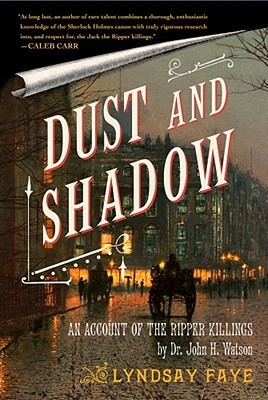
Dust and shadow

From the gritty streets of 19th century London, the loyal and courageous Dr. Watson offers a tale unearthed after generations of lore: the harrowing story of Sherlock Holmes’s attempt to hunt down Jack the Ripper.

As England’s greatest specialist in criminal detection, Sherlock Holmes is unwavering in his quest to capture the killer responsible for terrifying London’s East End. He hires an “unfortunate” known as Mary Ann Monk, the friend of a fellow streetwalker who was one of the Ripper’s earliest victims; and he relies heavily on the steadfast and devoted Dr. John H. Watson. When Holmes himself is wounded in Whitechapel during an attempt to catch the savage monster, the popular press launches an investigation of its own, questioning the great detective’s role in the very crimes he is so fervently struggling to prevent. Stripped of his credibility, Holmes is left with no choice but to break every rule in the desperate race to find the madman known as “the Knife” before it is too late.

A study in silks


In a Victorian era ruled by a council of ruthless steam barons, mechanical power is the real monarch and sorcery the demon enemy of the Empire. Nevertheless, the most coveted weapon is magic that can run machines — something Evelina has secretly mastered. But rather than making her fortune, her special talents could mean death or an eternity as a guest of Her Majesty’s secret laboratories. What’s a polite young lady to do but mind her manners and pray she’s never found out?

But then there’s that murder. As Sherlock Holmes’s niece, Evelina should be able to find the answers, but she has a lot to learn. And the first decision she has to make is whether to trust the handsome, clever rake who makes her breath come faster, or the dashing trick rider who would dare anything for her if she would only just ask.


The Sherlockian by Graham Moore

In December 1893, Sherlock Holmes-adoring Londoners eagerly opened their Strand magazines, anticipating the detective’s next adventure, only to find the unthinkable: his creator, Arthur Conan Doyle, had killed their hero off. London spiraled into mourning — crowds sported black armbands in grief — and railed against Conan Doyle as his assassin.

Then in 1901, just as abruptly as Conan Doyle had “murdered” Holmes in “The Final Problem,” he resurrected him. Though the writer kept detailed diaries of his days and work, Conan Doyle never explained this sudden change of heart. After his death, one of his journals from the interim period was discovered to be missing, and in the decades since, has never been found. Or has it?

When literary researcher Harold White is inducted into the preeminent Sherlock Holmes enthusiast society, The Baker Street Irregulars, he never imagines he’s about to be thrust onto the hunt for the holy grail of Holmes-ophiles: the missing diary. But when the world’s leading Doylean scholar is found murdered in his hotel room, it is Harold — using wisdom and methods gleaned from countless detective stories — who takes up the search, both for the diary and for the killer.

Secret Letters by Leah Scheier

Inquisitive and observant, Dora dreams of escaping her aristocratic country life to solve mysteries alongside Sherlock Holmes. So when she learns that the legendary detective might be her biological father, Dora jumps on the opportunity to travel to London and enlist his help in solving the mystery of her cousin’s ransomed love letters. But Dora arrives in London to devastating news: Sherlock Holmes is dead. Her dreams dashed, Dora is left to rely on her wits — and the assistance of an attractive yet enigmatic young detective — to save her cousin’s reputation and help rescue a kidnapped heiress along the way.

Steeped in Victorian atmosphere and intrigue, this gripping novel heralds the arrival of a fresh new voice in young adult literature.

The Case of the Missing Marquess by Nancy Springer

When Enola Holmes, sister to the detective Sherlock Holmes, discovers her mother has disappeared, she quickly embarks on a journey to London in search of her. But nothing can prepare her for what awaits. Because when she arrives, she finds herself involved in the kidnapping of a young marquess, fleeing murderous villains, and trying to elude her shrewd older brothers — all while attempting to piece together clues to her mother’s strange disappearance. Amid all the mayhem, will Enola be able to decode the necessary clues and find her mother?

There are so many more I discovered so I might have to do another wish list five in the near future of Sherlock reads! -Stephanie M. Hopkins


Check out The Maiden’s Court Wish-List 5: Spies in World War II

A Bookaholic Swede’s April Wish List: Sherlock Holmes

Flashlight Commentary’s Wishlist Reads: April 2016

A Literary Vacation’s Wish List-The Below Stairs Life

2 Kids and Tired Books’ Wish-list…Celebrities

Interview with Meredith Allard

Meredith, thank you for chatting with me today about your book, When It Rained at Hembry Castle. Does Hembry Castle exist and if not, was there a real castle that was your inspiration?

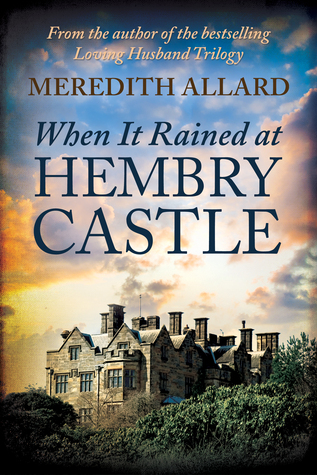
Hembry Castle is very much a figment of my imagination, though two real life places served as the inspiration for the exterior: Scotney Castle and Wentworth Castle, both in England, of course. The picture on the book’s cover is of Scotney Castle. The interior of Hembry Castle was largely influenced by Pittock Mansion, which can be found in Portland, Oregon. Primarily, I used photos I found on Pinterest to help me describe the interior and exterior of Hembry Castle.

02_When-It-Rained-at-Hembry-Castle

Please tell me a little about your story.

When It Rained at Hembry Castle is a love story set in Victorian England. The novel is about Edward Ellis, a rising author, and Daphne Meriwether, the American niece of the 9th Earl of Staton. Daphne is new to England and she must learn how to live in the Downton Abbey-like world her father’s family lives in. It’s a blossoming romance for Edward and Daphne, and there’s some mystery thrown in involving Daphne’s uncle, Richard, the 9th Earl of Staton.

What are the common movements your main characters make?

All my novels are about characters who are or see themselves as outsiders in one way or another. In When It Rained at Hembry Castle, Daphne is very much an outsider, being an American in England who is unfamiliar with the aristocratic world her father grew up in. Edward is also an outsider of sorts. He’s the grandson of servants who is working hard to make his way as a writer. I think all of my main characters mean to do the right thing, but whether their choices are correct or not always remains to be seen.

What is the mood or tone your characters portray and how does this affect the story?

I think both Edward and Daphne are largely positive people. Neither one of them are prone to complaining and they try to make the best of whatever is thrown their way. I hope this adds a positive, hopeful tone to the story.

What are the emotional triggers of your characters and how do they act on them?

For Daphne, she’s triggered by her grandmother’s insistence that she conform to the aristocratic way of life. For Edward, he’s triggered by his love for Daphne and his frustration at the obstacle that is keeping them apart. Daphne humors her grandmother and on the outside she seems to be conforming, though she’s a bit of a rebel and isn’t as complacent as her grandmother thinks. Edward, in typical man fashion, does nothing, hoping the problem will go away.

What do you like most about writing stories that take place in the past?

I’ve loved history since I was in school, and I even toyed with the idea of majoring in history in college. Writing historical fiction is perfect for me because it a combination of the two things I’m most interested in—history and writing. I have a funny habit of writing stories set in times I’m not all that familiar with, which is fine because that’s part of the fun for me, researching the history. When It Rained at Hembry Castle is actually the exception to that because I was already pretty familiar with Victorian England.

Describe Victorian England in your eyes.

My knowledge of Victorian England came from my love of Dickens’ novels, which started for me in college, but when I researched the era as I was writing Hembry Castle I realized that the time was much more complicated than I first realized. Yes, there was the poverty and the darkness of Dickens’ descriptions, but it was also a time of great change. The Victorian era spanned nearly 70 years, and England in 1901 was very different than England in 1837. By the end of the Victorian era, we can begin to see inklings of the modern era that we live in today. Since Hembry Castle takes place from 1870-1872, the story is happening right in the middle of the Victorian era.

What are some of the romantic parts to the story readers can expect?

My stories tend to focus more on the falling in love aspect of romance. Edward and Daphne have a few obstacles they have to overcome in order to be together. Even acknowledging that they want to be together is the first hurdle. After they admit to themselves that they care for each other, Edward has a big secret he’s keeping from Daphne. How Daphne reacts to the secret remains to be seen.

How long did it take to write your story and where in your home do you hone in your craft?

Hembry Castle took me two years. I returned to college in 2014, and of course that takes a lot of my time. I had a lot of research to complete for this book, and it took me a little time to figure out the point of view. Normally, I write novels with either a one person or two person point of view, but I finally realized that Hembry needed to allow more characters their moment in the sun. Since I live in a small apartment, my computer is set up in my bedroom. I know they say don’t keep your work where you sleep, but oh well. I have a nice view from my bedroom window so it works for me.

What is up next for you?

Fans of my Loving Husband Trilogy will be happy to know that I’m writing the prequel to the series, called Down Salem Way. Like the first book in the series, Her Dear & Loving Husband, it takes place in Salem, Massachusetts during the Salem Witch Trials.

AMAZON US | AMAZON UK | BARNES & NOBLE | ITUNES | KOBO

03_Meredith-Allard

About the Author

Meredith Allard is the author of the bestselling novels The Loving Husband Trilogy, That You Are Here, Victory Garden, Woman of Stones, and My Brother’s Battle. Her newest release, the historical novel When It Rained at Hembry Castle, is a great read for fans of Downton Abbey.

Visit Meredith online at www.meredithallard.com. You can also connect with her on FacebookTwitterGoogle+,  Pinterest, and Goodreads.


Cover Crush: The Oxford Inheritance by A.A. McDonald

Cover Crush banner

As many of you know, I judge a book by its cover. As I said on my last cover crush post, overall presentation is important to pull a reader in. When I read a story I want to be completely immersed. A grand cover helps that along. Imagery and all-if you will. Check out the book description below and then be sure to read what I have to say about the cover and the premise!

The Oxford Inheritance

At prestigious Oxford University, an American student searches for the truth about her mother’s death in this eerie, suspenseful thriller that blends money, murder, and black magic.

You can’t keep it from her forever. She needs to know the truth.

Cassandra Blackwell arrives in Oxford with one mission: to uncover the truth about her mother’s dark past. Raised in America, with no idea that her mother had ever studied at the famed college, a mysterious package now sends her across the ocean, determined to unravel the secrets that her mother took to her grave. Plunged into the glamorous, secretive life of Raleigh College, Cassie finds a world like no other: a world of ancient tradition, privilege—and murder.

Beneath the hallowed halls of this storied university there is a mysterious force at work . . . A dark society that is shaping our world, and will stop at nothing to keep its grip on power. Cassie might be the only one who can stop them—but at what cost?

My thoughts:

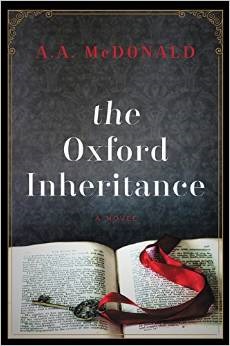
My daughter and I went to Barnes & Noble the other day ago and I immediately walked over to the featured hardbacks up front. This book caught my eye. I’m still not convinced it was the actual cover that caught my eye but the title. Nonetheless, I love the book cover. I love it for its simplicity yet its stark bold feeling to it. Maybe it’s the color of the hardback and with a picture of an open book with a key held by a red ribbon draped across.  It gives it a mysterious, secretive and intelligent feel.  What  hidden secrets will that key unlock? What secrets does that book contain? Will it utterly fascinate me?

This book cover works for me and it encouraged me to find out about the story within.

Stephanie M. Hopkins

Check out more Cover Crush posts from these great bloggers!

Flashlight Commentary

Two Kids and Tired Books

A Bookaholic Swede

indiebrag Cover Crush with Colleen Turner

indiebrag Cover Crush with Lisl

Review: A Murder in Time by Julie McElwain

A murder in time

Beautiful and brilliant, Kendra Donovan is a rising star at the FBI. Yet her path to professional success hits a speed bump during a disastrous raid where half her team is murdered, a mole in the FBI is uncovered and she herself is severely wounded. As soon as she recovers, she goes rogue and travels to England to assassinate the man responsible for the deaths of her teammates. While fleeing from an unexpected assassin herself, Kendra escapes into a stairwell that promises sanctuary but when she stumbles out again, she is in the same place – Aldrich Castle – but in a different time: 1815, to be exact. Mistaken for a lady’s maid hired to help with weekend guests, Kendra is forced to quickly adapt to the time period until she can figure out how she got there; and, more importantly, how to get back home. However, after the body of a young girl is found on the extensive grounds of the county estate, she starts to feel there’s some purpose to her bizarre circumstances. Stripped of her twenty-first century tools, Kendra must use her wits alone in order to unmask a cunning madman.

My thoughts:

I’d like to start off my mentioning the whole concept of time-travel story. Sometimes it works in stories and sometimes it does not. In this story, it works and the author gives such a brilliant and believable description of Kendra being pulled through time. For me that was pretty intense. I could almost feel the physical pain she was going through.

I really dig the premise of an FBI Agent traveling through time and ending up working a case of a 19th century murder that turns into much more. You also meet some other great characters that race to help her solve the crimes. For starters, Rose, Rebecca, Molly, Alec and Duke Aldridge are about the best written supporting characters I have read in a good while. Most of all I was so fascinated with Kendra’s process in trying to solve these murders and some of the other characters thought process. I believe Kendra really brought that out in them and she really got them to think outside their 19th century minds.

The killings are graphic, there is profanity in this story. Quite a bit of it in the beginning actually. I’m not one for profanity but I understand the scenario the author was portraying. Intense situations cause people to react in all kinds of ways. For many, profanity is one of them. Even though the killings are graphic, this gives you a real sense of what the victims are going through, which makes the story all the more intense. I think that was brilliantly done and gives you a real understanding of that type of evil in the world.

I found this story to be atmospheric, packed with lots of action, high-energy situations and such intense and real emotions. I couldn’t put it down. I loved it and I hope there will be a sequel!  I’ve rated this book four and a half stars.

I received a copy from NetGalley for an honest review.

Stephanie M. Hopkins


Interview with Julie McElwain

Julie MelwainI have the great pleasure and honor to introduce Julie McElwain to Layered Pages today, to talk with me about her book A Murder In Time. Julie is an award-winning journalist, who began her career as a business reporter at California Apparel News, a weekly Los Angeles-based fashion trade newspaper. She has freelanced for numerous publications from professional photographer’s magazines to those following the fashion industry. Currently, Julie is an editor for CBS Soaps In Depth, a national soap opera magazine covering the No. 1 daytime drama, The Young and the Restless. Julie lives in Long Beach, CA.
 Julie, please tell your audience about A Murder in Time.

A Murder In Time is about FBI agent Kendra Donovan, who goes rogue after her present day mission is botched. In her quest for justice, she infiltrates a costume ball at Aldridge Castle in England. When she encounters an assassin, she escapes through a passageway and encounters a terrifying phenomenon, which transports her back to 1815.

You could say that Kendra’s modern senses clash with Regency England’s sensibilities. She’s initially mistaken for a lady’s maid, but is quickly demoted to a below-stairs maid. When the body of a young girl is found brutally murdered, Kendra realizes that a serial killer is on the loose. Stripped of her twenty-first century tools, Kendra is forced to rely on her wits to unmask the murderer.

What are some of the courage and strengths of Kendra and possibly the isolation she may feel with these attributes?

As the offspring of two scientists who believed in positive eugenics, Kendra didn’t have a normal upbringing. Like an athlete, she spent her life “training” to excel in academics. Her intelligence has always set her apart from her peers, and made her feel isolated. She was only a young teenager when she went to college. Socially, she didn’t fit in with the older college students, which only made her feel more like a freak. When her parents abandoned her after she asserted her independence, Kendra was forced to develop a tough outer shell to survive. She became a loner, dedicated to proving herself in her chosen career, and deeply wary of emotional attachments because of her parents’ abandonment. As tragic as Kendra’s life was, I think it gave her the strength to deal with being transported to 1815, where she’s the ultimate outlier. I think a person with a more normal upbringing would have been driven insane or reduced to a quivering ball of fear!

A murder in time

What is the mood or tone your characters portrays and how does this affect the story?

 There is a great deal of suspicion between Kendra and her nineteenth century counterparts, which adds to the tension. The Duke of Aldridge, Alec, and Sam Kelly are aware that Kendra lied about how she came to England. They have varying degrees of distrust. They also regard Kendra’s manners, speech patterns and behavior as peculiar, to say the least, but they put it down to her being an American. For her part, Kendra has a difficult time trusting them with her big secret, and that has her proceeding cautiously. And she worries about screwing up the space-time continuum, which is something she’s never had to worry about in her previous murder investigations for the FBI! She can’t help but be skeptical over this group’s contribution to the murder investigation. She was always more advanced than her peers, but with these people, she’s centuries more advanced. It’s not that she thinks she’s superior… but she kind of does. It will be a journey for her to reach a different conclusion.

 Who are your five top antagonist? What motivates them?

 Kendra’s father, Carl Donovan, is an early antagonist. He plays a small part in the overall story, but he is crucial in Kendra’s development as a human being. As a scientist, he prizes intellect above all else, and believes that Kendra stubbornly refused to live up to her potential. His black-and-white view always made Kendra feel unworthy, and therefore more determined to prove herself.

I consider Mrs. Danbury — the castle’s housekeeper — a wonderful antagonist. She’s like the Old Guard protecting the status quo. The world of aristocrats, servants, working class, and merchants is what she’s familiar with, and she finds Kendra’s bold behavior — her lack of deference to the hierarchy — to be bewildering and rather threatening.

I really don’t want to give away the murderer’s identity for someone who hasn’t read the book, so I will put the following men in the antagonist category, with Kendra bumping heads with each of them. Alec’s brother, Gabriel, is a self-pitying alcoholic. Mr. Harris is the youngest son of an earl, who was appointed the village vicar, a station that he thinks is beneath him. Mr. Morland lives in a nearby estate and is the local magistrate, whose chauvinistic attitude towards Kendra is typical of the era. Mr. Dalton is a former surgeon, who inherited a nearby estate, and is insulted to be considered a suspect in Kendra’s investigation. Finally, Captain Harcourt is Gabriel’s friend, and is hunting for an heiress to replenish his funds. All of these men are motivated to keep their secrets from coming to light. Of course, no one is more motivated than the murderer!

 What inspired you for your main character to be an FBI agent?

 I really wanted Kendra to be in some type of law enforcement. She needed to have a specialized skill set — the ability to read a crime scene, to understand criminal behavior, and to be able to defend herself. Being an FBI agent was very organic to the story, which involves a serial killer. But it also felt right, given Kendra’s background. Her parents are driven, ambitious scientists who are at the top of their field. While Kendra chose a different path, which led to a chasm between her and her parents, she is as ambitious and determined to prove herself, and wants to be at the top of her field. Being the youngest agent ever accepted by the Bureau certainly put her on that path!

 Why did you choose 1815 for the period Kendra falls back in time too?

 I’ve always found this period in history to be utterly fascinating. It parallels our own era in so many ways. The war with Napoleon had just ended and the Industrial Revolution was just beginning. New machines were taking away jobs, creating a lot of simmering tensions between the haves and have nots. It was a time of contrasts — with great wealth on one side, and terrible poverty on the other; a silliness in its celebrity culture and yet a seriousness in the political upheaval. Of course, I’m also a big Jane Austen fan, and have enjoyed reading romances set during this era… I just wanted to write a mystery that actually had a modern day heroine — sort of Jane Austen meets Criminal Minds.

Does Aldridge Castle really exist?

 No, but I’ve traveled throughout England, Scotland and Ireland, and one of my favorite things to do is tour old castles and great estates. Aldridge Castle is an amalgam of many of the fantastic places that I’ve visited, including Dublin Castle, Kensington Palace and Leeds Castle, just to name a few.

 How much research went into your story?

 I did tons of research! I probably own every reference and history book on the time period. There are many wonderful blogs and websites by romance writers who specialize in the Regency era, which were invaluable. I also have a library of forensics books and police procedurals, and I did a lot delving into the subjects of quantum physics, wormholes, and string theory. This may be a piece of fiction, but it was important to me to be as accurate as possible.

What do you like most about writing a time travel story?

 I really liked the idea of taking a smart, modern person and tossing them back in time. We have a tendency to think that we’re so much more intelligent than our ancestors. But if you take away our modern inventions, just how smart are we? Would we be able to survive? Once my DSL went out, and I was forced to use dial-up to get on the Internet for about a week. That darned near killed me! I loved putting someone as clever as Kendra, as self-sufficient and independent, in a world that was totally alien to her, and watching how she would cope.

The time travel element also allowed me to offer dual viewpoints. Kendra was as much a puzzle and an oddity to her nineteenth century counterparts as they were to her. I liked being able to view the early nineteenth century through modern eyes, while at the same time, look at our own twenty-first century culture through the lens of the nineteenth century. We don’t blink an eye anymore at using profanity in casual conversation, but that would have shocked and appalled most people in 1815.

Time travel is pivotal to the plot, but this is not a science fiction story. Of course, Kendra thinks about the mechanics of time travel — how could she not? — but I’m more interested in the human element, on how we’ve changed as a people… and how we’ve stayed the same.

Will there be a sequel?

 It depends on how well A Murder In Time does, but I’m currently working on a sequel — so cross your fingers!

Who are your influences in writing?

I’m an avid reader, and am inspired by many authors. Some of my favorites are Karen Slaughter, Lisa Gardener, Tami Hoag, Tess Gerritsen, Nora Roberts, Dean Koontz, Lee Child, Ariana Franklin, Amanda Quick… the list goes on. I tend to be pretty eclectic in what I read, but I veer towards mysteries and thrillers. Let’s just say, I get motivated by anyone who can spin a good tale.

Where can readers buy your book?

 Barnes & Noble and independent bookstores, as well as online retailers like Amazon.

Links: 

Author Facebook Page

Pegasus Books

Thank you, Julie! 

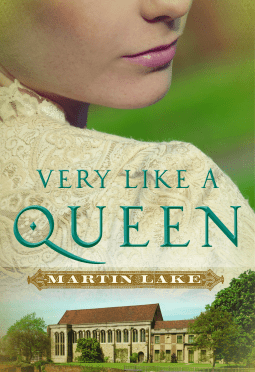
Review: Very Like A Queen by Martin Lake

Very much a queenAlice Petherton is well practiced at using her beauty and wits to survive in the Court of King Henry VIII. As the King’s favorite, she enjoys his protection, but after seeing the downfall of three of his wives, she’s determined to avoid the same fate. Alice must walk a fine line between mistress and wife.

She finds a powerful protector in Thomas Cromwell, and Alice has every reason to believe that she will continue to enjoy a life of wealth and comfort at Court…until she puts everything at risk by falling in love with a Frenchman, Nicholas Bourbon.

When Cromwell is executed, Alice loses her only ally and flees to France. There she hopes to live in peace with Nicholas. But Alice is lured into a perilous game of treason, and peace doesn’t last long. Will Alice get back the life and love she’s fought for? Or will she lose herself to the whims of a capricious monarch?

My review:

First, I’d like to thank NetGalley for providing a copy of this book. What first captured my attention was the title. I thought, how unusual and I liked it. Though with my busy schedule I read this novel in four days. I did NOT want to put it down. This is the first book I have read of Martin Lake and I am now a fan!

I love his portrayal of Cromwell! I actually like the man in this story. If you know the history, you know his demise and how Martin portrayed that was very powerful and believable. So many great men lost under Henry’s rule.

As I was reading the story I couldn’t help keep thinking that I am so glad I wasn’t alive or one of the members during King Henry VIII court. Yikes! The man’s moods were so up and down and vicious! As his health and eating habits became worse, the more suspicious and paranoid he became. What a miserable existence. One never knows what he will do to you if you made him mad!

I love Alice, though I would have liked to shake her sometimes! She couldn’t help but get herself in sticky situations! But she is a true testament of a survivor and wins the heart of many. I would like to read more about her.

There were several notable characters and locations in the story I enjoyed reading about. Nonsuch Palace, Dover Castle and the French Castles comes to mind and then there was Ralph Sadler, Suffolk. Cranmer, Norfolk-archival to Thomas Cromwell, Master Hans Holbein, Marillac, Katheryn Howard- to name a few…Brilliant character development there.

There is so much to this novel. I am adding this among my favorite Tudor stories. Truly a gem and so well written. I will be on the lookout for more books by Martin Lake!

I rated this book four stars.

Stephanie M. Hopkins

A Song of Sixpence by Judith Arnopp

JA Picture

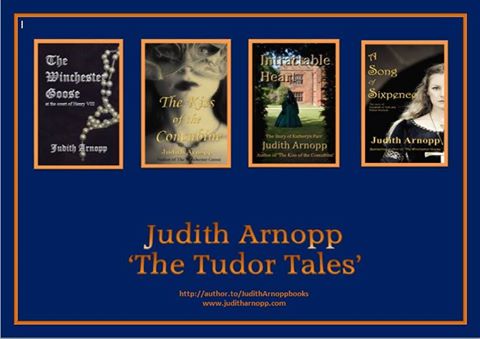
Judith, who is from Wales in the UK, is the author of seven historical fiction novels. Her early novels, Peaceweaver, The Forest Dwellers and The Song of Heledd, are set in the Anglo-Saxon/Medieval period but her later work, The Winchester Goose, The Kiss of the Concubine, Intractable Heart and A Song of Sixpence, concentrate on the Tudor period. She is currently researching for her eighth novel about Margaret Beaufort, the mother of Henry VII. Judith is also a regular blogger and author of historical articles.

A Ssong of Sixspence By JA

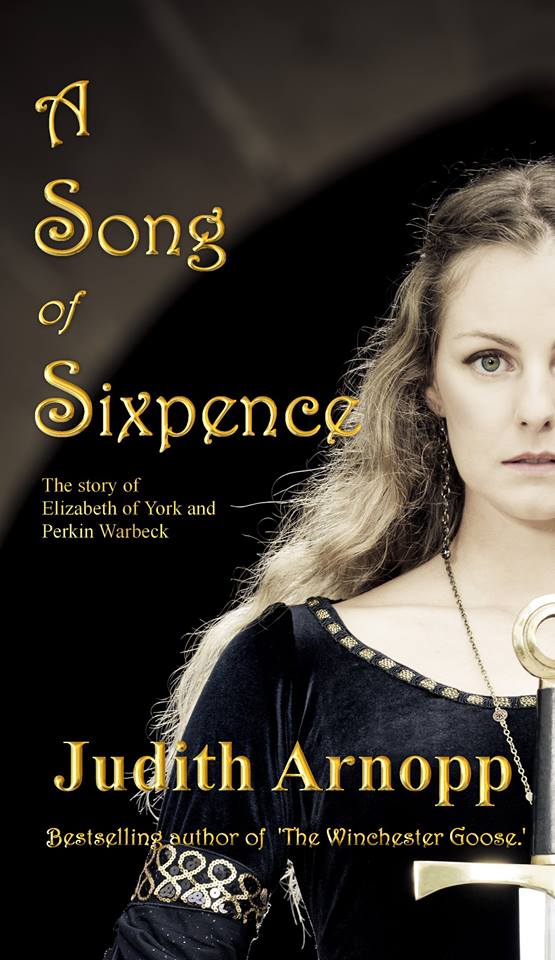
Blurb of A Song of Sixpence

In the years after Bosworth, a small boy is ripped from his rightful place as future king of England.

Years later when he reappears to take back his throne, his sister Elizabeth, now Queen to the invading King, Henry Tudor, is torn between family loyalty and duty.

As the final struggle between the houses of York and Lancaster is played out, Elizabeth is torn by conflicting loyalty, terror and unexpected love.

Elizabeth must choose between supporting the man claiming to be her brother, or her husband, the king?

Set at the court of Henry VII A Song of Sixpence offers a unique perspective on the early years of Tudor rule. Elizabeth of York, often viewed as a meek and uninspiring queen, emerges as a resilient woman whose strengths lay in endurance rather than resistance.

London – Autumn 1483

Ink black water slaps against the Tower wharf where deep impenetrable dark stinks of bleak, dank death. Strong arms constrict him and the rough blanket covering his head clings to his nose and mouth. The boy struggles, kicks, and wrenches his face free to suck in a lung full of life saving breath. The blanket smothers him again. He fights against it, twisting his head, jerking his arms, trying to kick but the hands that hold him, tighten. His head is clamped hard against his attacker’s body. He frees one hand, gropes with his fingers until he discovers chain mail, and an unshaven chin. Clenching his fingers into a fist, he lunges out with a wild inaccurate punch.

With a muffled curse the man throws back his head but, keeping hold of his prisoner, he hurries onward, down narrow, dark steps, turning one corner, then another, before halting abruptly. The boy hears his assailant’s breath coming short and sharp and knows he too is afraid.

The aroma of brackish water is stronger now. The boy strains to hear mumbled voices, low and rough over scuffling footsteps. The ground seems to dip and his stomach lurches as suddenly they are weightless, floating, and he senses they have boarded a river craft. The invisible world dips and sways sickeningly as they push out from the stability of the wharf for the dangers of the river.

The only sound is the gentle splash of oars as they glide across the water, far off the clang of a bell and the cry of a boatman. He squirms, opens his mouth to scream but the hand clamps down hard again. The men draw in their breath and freeze, waiting anxiously. A long moment, a motionless pause before the oars are taken up again and the small craft begins to move silently across the surface.

River mist billows around them; he can smell it, feels it seeping through his clothes. He shivers but more from fear than cold.

He knows when they draw close to the bridge. He can feel the tug of the river; hear the increasing rush of the current, the dangerous turbulence beneath. Surely they will not shoot the bridge, especially after dark. Only a fool would risk it.

The boy wriggles, shakes his head, and tries to work his mouth free of the smothering hand. He strains to see through the blinding darkness but all is inky black. The boat gathers pace and, as the noise of the surging river becomes deafening, the man increases his hold, a hurried prayer rumbling in his chest.

The whole world is consumed in chaos, rushing water, clamouring thunder, biting cold. In the fight for survival, the boy continues to battle fruitlessly for breath, struggle for his freedom. The body that holds him hostage tenses like a board and beneath the boy’s ear beats the dull thud of his assailant’s heart. The blanket is suffocating hot, his stomach turning as the boat is taken, surging forward, spinning upward before it is hurled down again, between the starlings, shooting uncontrollably beneath the bridge.

Then suddenly, the world is calmer. Somehow the boat remains upright on the water. It spins. He hears the men scrabble for the oars, regain control and his captor relaxes, breathes normally again. Exhausted and helpless, the boy slumps in the soldier’s arms, his fight defeated.

All is still now; all is quiet. The oars splash, the boat glides down river, and soon the aroma of the countryside replaces the stench of the city.

His clothes are soaked with river water; his stomach is empty, his body bruised and aching. Defeated and afraid, the man releases his hold and the boy lies still in the bottom of the boat.

He sleeps.

The world moves on.

Much later, waking with a start, the boy hears low, dark whisperings; a thick Portuguese accent is answered by another, lighter and less certain. This time when he blinks into the darkness, he notices a faint glimmer of light through the coarse weave of the blanket. He forces himself to lie still, knows his life could depend upon not moving but his limbs are so cramped he can resist no longer. He shifts, just a little, but it is too much. His kidnapper hauls him unceremoniously from the wet wooden planks.

The boy’s legs are like string. He stumbles as they snatch off his hood and daylight rushes in, blinding bright. He blinks, screwing up his face, blinking at the swimming features before him, fighting for focus. He sees dark hair; a heavy beard; the glint of a golden earring, and recognition and relief floods through him.

“Brampton!” he exclaims, his voice squeaking, his throat parched. “What the devil are you doing? Take me back at once.”

Brampton tugs at the boy’s tethered arms, drawing him more gently now to the bench beside him.

“I cannot. It is unsafe.”

“Why?” As his hands are untied the boy rubs at each wrist in turn, frowning at the red wheals his bonds have left behind. His Plantagenet-bright hair glints in the early morning sun, his chin juts forward in outrage. “If my father were here…”

“Well, he is not.”

Brampton’s words lack respect, but the boy knows him for a brusque, uncourtly man.

“But where are you taking me? What is happening?”

“To safety, England is no longer the place for you.”

The boy swallows, his shadowed eyes threatening tears. Switching his gaze from one man to the other, he moistens his lips, bites his tongue before trusting his breaking voice. “Where is my brother? Where is Edward?”

Brampton narrows his eyes and looks across the misty river. He runs a huge, rough hand across his beard, grimaces before he replies and his words, when they come, spell out the lost cause of York.

“Dead. As would you be had I left you there.”

Links

Amazon Author Page

Author Website

Author Blog

Facebook

JA Banner


Sunday Book Highlight

The Queens Mistake

When the young and beautiful Catherine Howard becomes the fifth wife of the fifty-year-old King Henry VIII, she seems to be on top of the world. Yet her reign is destined to be brief and heartbreaking, as she is forced to do battle with enemies far more powerful and calculating than she could have ever anticipated in a court where one wrong move could mean her undoing. Wanting only love, Catherine is compelled to deny her heart’s desire in favor of her family’s ambition. But in so doing, she unwittingly gives those who sought to bring her down a most effective weapon, her own romantic past. The Queen’s Mistake is the tragic tale of one passionate and idealistic woman who struggles to negotiate the intrigue of the court and the yearnings of her heart.

**********

Catherine stood in the courtyard of Horsham, putting on her riding gloves and gazing into the dry-lipped, scowling expression of her grandmother, who had come out grudgingly to bid her farewell. A cool breeze blew across the gently rolling terrain as Catherine curtsied properly to the woman who had been more keeper than relation.

“Remember,” the dour old woman finally said, “you’re going to court with nothing beyond your passable looks and your Howard name. If you are very, very fortunate, you may become a maid of honor, but your personal state of poverty keeps you no better than the girls with whom you shared that dormitory, unless you do something bold about it. Never forget that.”

Catherine had an overwhelming urge to make a face just then or to say something spiteful in response. She had been aching to do that for years, and yet she had always been forced into compliance.

“I understand, my lady grandmother.”

Agnes arched a silver brow. “Do you? Are you certain?”

It would be impossible not to understand your contempt of me, she thought. “I do,” she said instead.

“Do you also understand, somewhere in that empty head of yours, how that lark to seduce not one but two of my servants could put you in jeopardy of never making any sort of important match at court?”

“How would anyone discover such a thing, and why would anyone care about the indiscretions of a country girl from Sussex?”

The report came tumbling out like marbles rolling across her tongue before she even knew what was happening. She stood frozen, but refused to drop her gaze from the dowager duchess’s cold stare. But this time Agnes would not dare to hit her, not when her soft skin and smooth face were the only chance in the world to regain the Howard standing. Catherine knew it and belligerently took full advantage. The silence stretched on. Catherine still did not break her gaze.

“So you do have something of your cousin Anne Boleyn in you, after all.”

“Thank you, Grandmother.”

“Pray only hope it is not the part that landed her on the Tower Green, separated from her head.”

Catherine felt a shiver deep in her chest, but she would not show it. “Everyone here wishes me well, as I do them. They will speak against me to no one.”

“A spurned heart is a dangerous thing.”

She was not certain whether her grandmother meant Henry Manox or Francis Dereham.

“They shall marry one day and forget the past, just as I plan to do.”

“And for your sake, and for the family’s sake, I shall pray for that, since the alternative could be ghastly.”

Suddenly, before she could say anything more, the old woman drew something from a pocket in her blue slashed bell sleeve. A ruby suspended from a silver chain glittered in the sunlight through the clouds as she held it out to Catherine.

“My husband, the duke, gave this to your mother on her wedding day. He thought it might bring her luck. It quite obviously brought her no benefit. So, since I have no use for it…”

Her words fell away as she awkwardly offered the chain to Catherine. She reached out her hand and took the precious piece of the past her grandmother offered. She had so few things by which to remember her mother. There was no painted likeness, no letter. Only one linen-and-lace chemise had been left to her—one Catherine greedily guarded. Now there was this personal offering from a woman with whom she had felt no personal connection at all before now. As they stood near the entrance to the manor, a breeze whistled softly through the bough of evergreen trees above them.

“Did she wear it?” Catherine’s voice was shallow, and she could barely force herself to speak.

“Out of duty to him, whenever she visited my husband, yes, Jocasta wore it prominently.”

So at least it had touched her skin. It had been a part of her mother, Catherine thought. Not it offered a connection to the only time in her life when she had been the recipient of real affection. Catherine placed the necklace at her own throat and clasped it behind her neck without breaking with her grandmother’s gaze. She vowed she would always wear it to remind herself of what she had lost upon her mother’s death, when she was forced to this sheltered, verdant countryside. There had been no love or affection for her here, but she would try to find that again at court… If some courtier, suitable to her uncle’s purposes might actually come to love her. She had been training herself for a long time to find just that.

 anne-girard

Diane Haeger, who also writes as Anne Girard, is the author of 15 historical novels, most of them based on true stories from history. Her stories are drawn from a range of countries and eras including the French Renaissance, Georgian England, the American Civil War, to a series called In The Court of Henry VIII. Her most recent novel, Madame Picasso, details an early love affair in Paris between the famous artist and his muse. Her next novel, to be published later this year, is Platinum Doll, about 1930’s movie star Jean Harlow. Haeger holds a bachelor’s degree in English literature and a master’s degree in clinical psychology. She lives in California with her husband and children.

Website


Interview with Author Judith Arnopp

Judith Arnopp

In 2007 Judith Arnopp graduated from the University of Wales, Lampeter with a BA in English Literature and a Masters in Medieval Studies; she now combines those skills to write historical novels.

Her early books; Peaceweaver, The Forest Dwellers and The Song of Heledd concentrated on the Anglo- Saxon/ medieval period but in 2010 she published a short pamphlet of ‘Tudor’ stories entitled, Dear Henry: Confessions of the Queens. Some people loathed it but many loved it and she received endless requests for full length ‘Tudor’ novels.

For a while Judith buried herself once more in study, refreshing her already extensive knowledge of the period. The result was The Winchester Goose, the story of a prostitute from Southwark called Joanie Toogood whose harsh existence is contrasted with that of Henry’s fourth and fifth wives, Anne of Cleves and Katherine Howard. The Winchester Goose is a multi-narrative illustrating Tudor life from several, very different perspectives; a prostitute, a Spy, and a Lady-in-Waiting at the royal court.

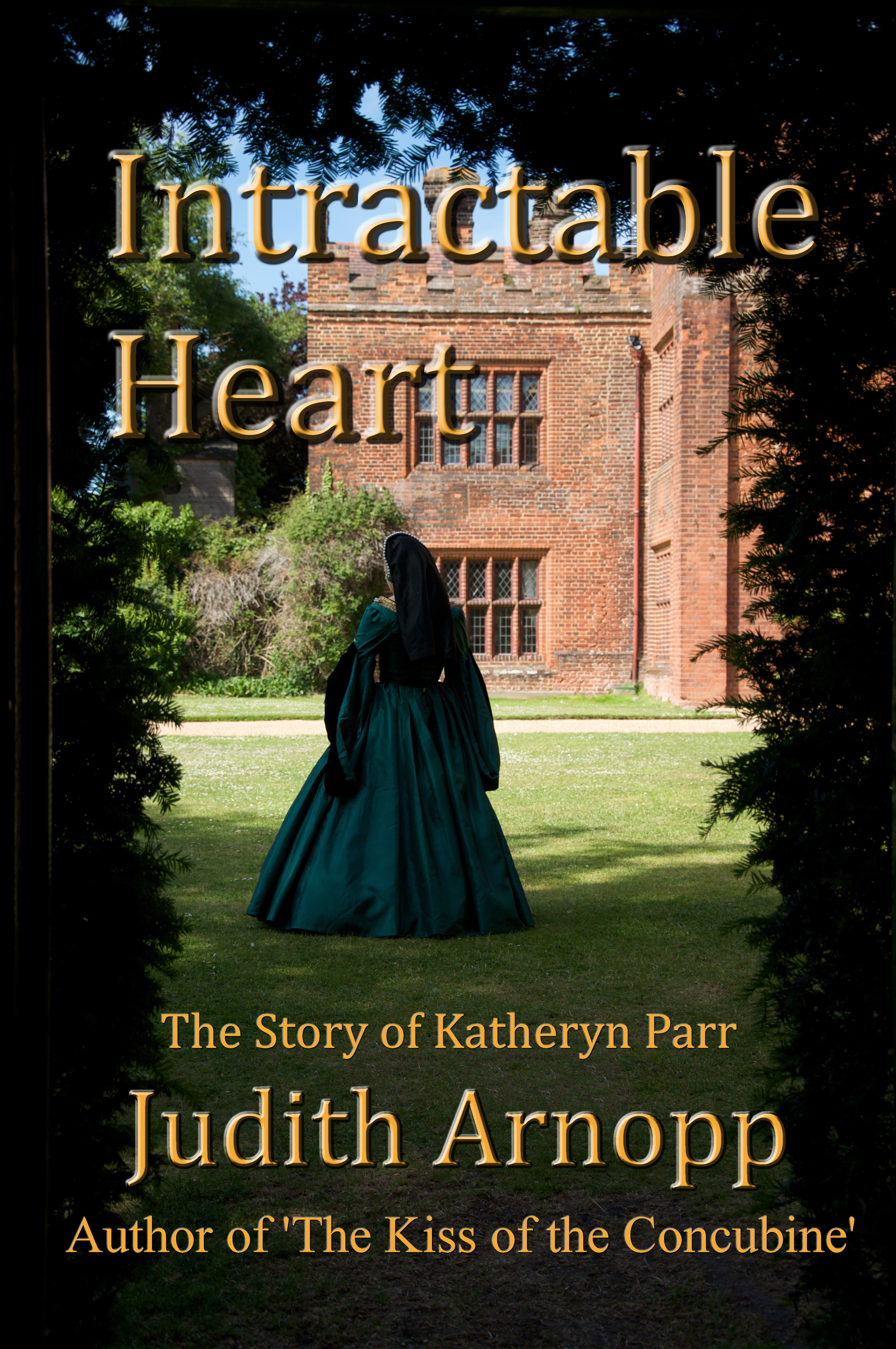
Judith’s next book The Kiss of the Concubine details the life of Anne Boleyn, told in the first person- present tense, the story takes you to the very heart of England’s most talked about queen. She is currently working on a third Tudor novel Intractable Heart, the tale of Henry’s sixth and last wife, Katherine Parr.

Judith also blogs about the Tudor period, both on her own blog-page and on the English Historical Fiction Author’s website. Her work reaches a world-wide audience and her following is steadily increasing.

As a self-published author Judith maintains direct control of her work and avoids the hassle involved with agents and publishers. Self-publishing speeds up the process but accuracy and attention to detail is paramount. Her small team is made up of three proof readers, an editor, and a cover designer all of whom work with Judith toward a finished product that is as polished as they can get it, but still they seek ultimate perfection.

Stephanie: Hello Judith! Welcome to Layered Pages and thank you for chatting with me today…I think it is fantastic you have been writing stories that take place during the Tudor era. My interest lie in that area currently and your latest book, “Intractable Heart” looks fantastic! Please tell me about your story?

Judith: I have tried to imagine how it might have felt to be a woman married to Henry VIII. With five of Henry’s ex-wives before her, Katheryn must have been all too aware of what becoming queen might entail yet she faced it bravely. She put aside her own desire to marry Thomas Seymour and instead married an ageing, cantankerous and dangerous man. She injected all her energies into becoming a good wife to Henry and a good Queen Consort for England and I think she did amazingly well. I wanted to illustrate that. I am not really interested in the rich trappings, the glitz and glamour of being royal; I like to strip that all away and reveal the person beneath, her thoughts, feelings, and desires. I hope I have managed that with Intractable Heart.

Stephanie: Next to Katherine of Aragon, Katheryn Parr is one of my favorites of Henry VIII wives. What are some of the misconceptions people have about her?

Judith: While I was writing The Kiss of the Concubine I couldn’t help but be drawn into reading about the other wives. Of course, I knew about Katheryn Parr from my student days and was surprised to discover she wasn’t the placid nursemaid type figure that she’d been depicted. The woman I read about at school entirely lacked the vitality of everyone’s favourite queen, Anne Boleyn, but the deeper I looked into Katheryn’s life, the more I liked her.

She was much younger than I’d thought, only thirty six when she died. She was also a strong woman and Henry respected her enough to set her up as regent over England when he went to war with France. Katheryn also was the first English queen to become a published writer; she wrote two books on religion and the church and was a strong supporter of the reformation. The title Intractable Heart is a phrase taken from her book Lamentations of a Sinner. Another aspect of her character that really stands out for me was her ability to ‘manage’ Henry.

Judith Arnopp latest book

Stephanie: As your story opens, Katheryn and her step children are held hostage at Snape Castle. What are some of the hardships she had to endure during her confinement?

Judith: To be perfectly frank, we don’t really know very much about it. History tells us there was a siege at Snape while she and her step-children were in residence but few written details of it remain. I had to research other recorded instances to learn of the deprivations and suffering of siege warfare. There were many instances of violence but we don’t know that anything like that occurred at Snape. That is my invention, as a writer of fiction I have to include some fictionalised events to enrich the story and to illustrate character development. In this case I was creating an answer to some of the mysteries of Margaret Neville’s life. As a girl she was betrothed to Ralph Bigod whose father, Francis, was hung in the aftermath of the Pilgrimage of Grace. She was never betrothed again, or married and she died quite young of an unspecified illness. I came up with my own fictional ideas as to why that might have been.

Stephanie: Treachery ran rabid in the Tudor court, what is the one thing that made Katheryn different from the other queens?

Judith: Her intelligence I think, although I don’t mean to say that the other wives were thick. I alluded earlier to Katheryn’s ability to ‘manage’ Henry, and she was the only queen to wriggle out of arrest and possible execution. A warrant was written out and signed by Henry but she got wind of it and managed to see the king before the arrest could be made. She seems to have sweet-talked her way out of it, and when Wriothesley and the guard came to take her to the Tower, Henry sent them about their business and her life was spared. I think Katheryn had the ability to keep her emotions in check and maintain a cool head in a heated situation.

Stephanie: Many have different opinions on Thomas Seymour. Whether they like him or not. What are your personal opinions of the kind of man he was?

Judith: I have a soft spot for Thomas, it probably shows. I think, as far as I can ascertain, Seymour wasn’t as bad as he was painted. After his execution there was such a public outcry that the council had to issue defamatory statements to convince the people that his death was deserved. So anything written after his death needs to be taken with a pinch of salt.

I think he probably had a good dose of ‘second son syndrome’ and was jealous of his brother’s power. He was so determined to get that which he didn’t have, that he failed to appreciate what he did possess. Lord High Admiral is not something to be scoffed at and he had manors and lands a plenty. It seems he was never satisfied and continually strove to climb higher and become ever richer and more powerful.

Whether he loved Katheryn or not is open to debate. He mourned her death and went a little crazy afterwards. His alleged relationship with Elizabeth is no worse than that of any other extra marital affair. I think we have to be careful not to judge him by modern day standards and remember that it wasn’t child abuse; Elizabeth was of marriageable age. His crime was messing with a royal princess; she was too close to the throne. I tend to agree with Elizabeth’s summing up of Thomas Seymour: ‘a man of great wit and very little judgment’, if indeed, she ever actually said that.

Stephanie: Katheryn’s work was published and she very devout in her faith. Is her work available today to the public? And what can we learn from her?

Judith: I know some of it is available because I have a copy of Brandon G. Withrow’s book, Katherine Parr: a guided tour of the life and thoughts of a reformation queen. It has excerpts and some insightful notes on her beliefs. Most of it is pretty dry reading but I think it is quite revealing of her opinions and the inner workings of her mind. If nothing else, reading her book (or skimming if I am honest) did provide an excellent and very personal title for my novel.

Stephanie:What was Henry’s daughter, Elizabeth’s relationship with Katheryn really like? I hear so many different opinions.

Judith: Well, we can never be entirely sure but I think it was very good. All Henry’s children spoke well of Katheryn and illustrated love and a consideration that there was no need to express if they hadn’t wished to. There were many letters and gifts exchanged, all of which illustrate a strong bond. There was a cooling off between Katheryn and Mary due to religion and the speed with which she remarried after the king’s death but they were reconciled later. With Elizabeth in particular, especially if the reports of her and Thomas Seymour are true, she seems to have been particularly close. We don’t know what was said in private but after Elizabeth was sent away from Chelsea they continued to communicate regularly, there doesn’t seem to have been a major breach. In my opinion this again shows she was a strong woman, able to rise above such things, or perhaps able to understand that Elizabeth was young and vulnerable. It seems to be Thomas that she was not able to wholly forgive.

She educated Henry’s children, finding eminent tutors for Edward who leaned to toward Lutherism. She tried to get Mary change her traditional methods of worship but didn’t push her. She also took Henry’s niece and Seymour’s ward, Jane Grey, under her wing. But, most interestingly of all, Elizabeth was with Katheryn during the regency and it may have been the queen who showed the young Elizabeth that women could rule alone in a world of men. Something which would stand her in very good stead.

Stephanie: What were some of the influences Katheryn had over Henry that his other wives didn’t?

Judith: She read to Henry, and soothed him when his leg was playing up; that much is true although she would never had changed his dressing or put salve on his wound as I have read in some novels. I think her ability to take his mind from his problems was her greatest influence over him.

She was also very clever. When her life was on the line, instead of weeping and wailing or tearing out her hair, she outwitted him. Accused of trying to instruct the king, she argued that on the contrary she had been trying to take his mind off his painful ulcer. The next time Henry tried to trick her into argument she claimed that, as a woman, she was in no position to argue theological topics with someone so obviously her intellectual superior. Very shrewd move.

Also, instead of resenting his children, she embraced them and showed him that, actually, the family he already had was made up of three rather brilliant people. Her influence on them was much greater than she is given credit for. In their later years they may have displayed what we see today as tendencies toward megalomania but they were monarchs, and Tudor monarchs at that. We shouldn’t judge them.

Stephanie: What is up next for you?

Judith: A holiday I hope. Even just a home break from work for a short time. I hadn’t intended to begin writing Intractable Heart until this summer but when our house sale fell through in the middle of last year, I was so miserable I buried myself in work without a proper rest after publishing The Kiss of the Concubine. I am due a lovely long luxurious break but I am sure while I am taking it I will be plotting. I have thought about Elizabeth of York and the Perkin Warbeck affair …but time will tell.

Stephanie: How has your career as a self-publishing author been and what advice could you give to others who are thinking of taking this choice in how they publish their work?

Judith: It has been hard work but it certainly got easier once I stopped looking for agents and publishers. I had an agent for a while but they all want to change you into a commercial entity. I don’t want to be a puppet; I don’t write to make huge sums of money, I just want to make a living doing the thing I love to do for the people who love my work. I like to keep it real. For me, by far the hardest thing is the marketing. I am naturally very shy and to push my work under people’s noses and make them read it is the most difficult thing ever.

Stephanie: Is there a message you would like to give to your readers?

Judith: Read an independent author, even if it is only once a month. Give them a chance. Read the free sample on Amazon before you buy it, what is there to lose? Maybe start off with trying one of mine. J

Stephanie: Where can readers buy your book?

Judith: Amazon is the best place to start, or direct from the FeedaRead website. Since I have a great regard for trees my books are print-on-demand and also available on Kindle (for a much lower price.)

Stephanie: Thank you, Judith! It has been a pleasure chatting with you today.

Judith: Thank you for having me, Stephanie, I hope we can do it again soon.

Amazon links to, “Intractable Heart.”

UK Link

US Link

Judith Arnopp’s published work includes:

Peaceweaver

The Forest Dwellers

The Song of Heledd

The Winchester Goose: at the court of Henry VIII

The Kiss of the Concubine: a story of Anne Boleyn

Dear Henry: Confessions of the Queens

A Tapestry of Time

Intractable Heart

Other Links:

Website

Blog

Amazon Author Page

English Historical Fiction Authors