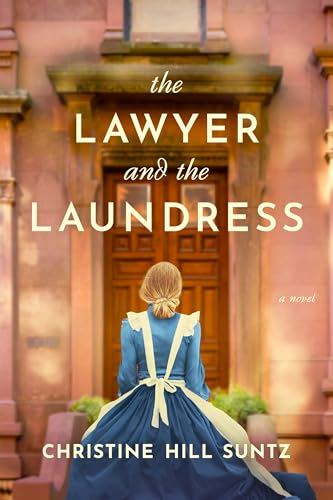
Book Review: The Lawyer and the Laundress by Christine Hill Suntz

Publish Date Jun 10, 2025 by Tyndale House Publishers | Tyndale Fiction

Christian | Historical Fiction | Romance

About the Story:

Lawyer James Kinney isn’t looking for love, and laundress Sara O’Connor doesn’t want to be found. When their paths cross in a British colony on the brink of rebellion, a marriage of convenience may be their best hope of survival.

Canada, 1837. Widower James Kinney knows his precocious daughter, Evie, needs more than his lessons on law and logic, but Toronto offers few options. Classes with the neighbor children seem ideal until James discovers Evie is secretly spending her time with Sara O’Connor, a kind and mysteriously educated servant. For propriety’s sake, James forbids their friendship. But then Evie falls victim to the illness ravaging the city, and James must call upon Sara’s medical knowledge and her special bond with Evie to save his daughter’s life.

When Sara’s presence in his household threatens scandal, however, James offers an unexpected solution: become his wife, in name only, and help him raise Evie to be a proper young lady.

If Sara can ignore the sparks she feels when they’re together, his logical proposal could keep her secret secure forever. But soon, the forces of rebellion unravel their tidy arrangement. When James is accused of treason, Sara must find the courage to face a past that could save her husband’s life.

My Thoughts:

The Lawyer and the Laundress is a beautiful faith based, wholesome, clean story blended with history of the British colony in Canada, 1837.

There aren’t too many fiction stories I’ve read based in Canada so I was delighted to chose this story and I was not disappointed in the slightest. Christine Hill Suntz story flows really well and she pulls the reader in with her fantastic character development. After I read this story, I went to search for her other works and discovered that this is her debut novel. Her characters Sara, Sara’s grandma, James, and Evie now hold a special place in my heart and I felt such a deeply emotional tie to their story as if they were my own family. I wanted to reach out and protect them from danger. That means a lot when a story evokes such emotions. Be sure to have a tissue box next to you while reading this story!

Christine Hill Suntz is now one of my new favorite Christian writers and I look forward to reading more of her stories.

I rated this book five stars! If there was an option for ten stars I would rate it thus.

My thanks and appreciation to Tyndale House Publishers for a galley copy though NetGalley for an honest review.

Stephanie

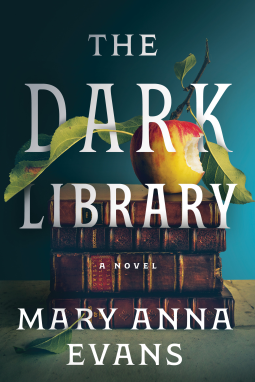
Book Review: The Dark Library by Mary Anna Evans

Publish Date June 24, 2025 by Poisoned Pen Press

Historical Fiction | Mystery & Thrillers

Years after leaving home due to her father’s suffocating and oppressive treatment, Estella receives a phone call from Annie-her family’s housekeeper-that she must come home. Estella’s father has had a stroke that caused his death and her mother has gone missing. When she returns home, everything is disjointed and up in the air and she takes a teaching position at the college where her father influence was powerful to say the least. Not only that, their family house is celebrated throughout the decades and her Father’s library holds rare books that her father closely guards and with strict orders, Estella is not allowed to touch the books.

With her father’s death, her mother missing and the war that is raging on, Estella must figure out how she will support Annie, the house and the gorgeous land it sits on. The more she looks into her father’s and mother’s life, she realizes how much she doesn’t know about them and the secrets they have kept.

This Gothic tale of mystery, buried secrets, death, family and local town intrigue begins slowly and half way through the story, unfolds in a major way. I must confess, at first, I didn’t have high hope for this story but as the plot reveals itself, you have a better understanding of why the story starts out the way it does. It gave me a better understanding of the-bread crumbs-if you will- the author was dropping. You won’t be shown an explanation of why the story is called “The Dark Library” until the second half of the book and it is a shocker! I did not see that coming a mile away. The premise of this story is unique and the author sure can weave a story of intrigue and deceptive people that leaves you trusting no one. The ending does tie up loose ends the reader wonders about and I want to encourage readers who might be frustrated with the beginning to rally on. You won’t regret it.

A truly atmospheric story with Gothic themes, deadly secrets and twisty turns of events that has you racing to the end to discover the deceptions, truths and the fate of Estella and the people in her life.

I rated this book four stars and I obtained an ARC from the publishers through NetGalley for an honest review.

Stephanie

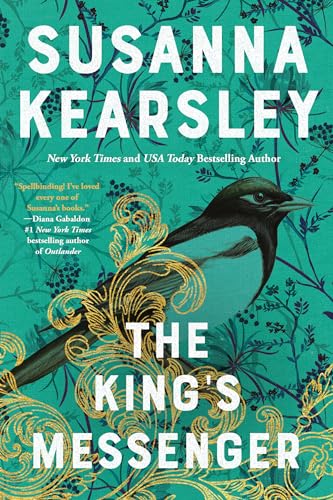
Book Review: The King’s Messenger by Susanna Kearsley

Publish date:  March 4, 2025 by Sourcebooks Landmark

1613:  King James – sixth of Scotland, first of England, son of Mary, Queen of Scots – has unified both countries under one crown. But the death of his eldest son, Henry, has plunged the nation into mourning, as the rumors rise the prince was poisoned.

Andrew Logan’s heard the rumors, but he’s paid them little heed. As one of the King’s Messengers he has enough secrets to guard, including his own. In these perilous times, when the merest suggestion of witchcraft can see someone tortured and hanged, men like Andrew must hide well the fact they were born with the Sight.
 
He’ll need all his gifts, though, when the king sends Andrew north to find and arrest Sir David Murray, once Prince Henry’s trusted courtier, and bring him a prisoner to London to stand trial before the dreaded Star Chamber.
 
My thoughts:

In 1613, Andrew Logan- King James’s Messenger- is given the task of arresting David Murray and bringing him back to England to stand trial.

Logan is a man of duty while holding true to a moral compass and discipline despite the pressures and opinions from his peers. I began to see this about Logan early on and was curious on how this task at the King’s demand would play out. His convictions to do right by others at his own peril had me cheering for him. Without giving too much away, I will say that Logan exemplifies the best of what a king’s messenger ought to be.

I must confess it isn’t often I read historical fiction stories that take place in the 1700s regarding King James’s – sixth of Scotland court. What do I mean by that? I have read a couple books and articles about King James and there was always something about his character and ruling I disliked or mistrusted-if you will. I was curious on how Kersley would depict him and I was surprised-in a good way-by her characterization of him. It I how I imagined him to be.

For me, the story really took off when Logan and others began their dangerous journey to arrest Sir David Murray. The interactions and growing camaraderie between the characters made the story all the more praise worthy and heart-felt in my eyes.

I must confess, I had my doubts upfront about the theme of, “Born with the Sight.” Will it overpower the story? How will it be dealt with and weaved through the story and will it be heavy handed? Kearsley’s out depiction of the Sight was balanced and well-drawn out and I was quite relieved.

What a wonderfully woven historical story with a fantastic cast of characters and a suburb historically depiction of court life, perilous duty and adventure. This is my top favorites of Kersley’s work and seeing as I have been a bit critical of her stories in the past, I’m giving The King’s Messenger five stars.   

Be sure to read the author’s notes at the end. You won’t be disappointed and you will learn a few historical details that will enhance your thoughts on the story.  

Stephanie  

I received a review copy from the publishers through NetGalley for an honest review.

Reader’s Log 032: A New Year of Reading

This is going to be another fabulous year of great books coming out, reading and discovering new authors. I recently finished reading, “Every Precious and Fragile Thing” by Barbara Davis and it moved me so much that I’m still thinking about the story and getting teary eyed. My review will be posted closer to the publish date. I’m currently reading a couple others including, “Babylonia” by Costanza Casati and it is fabulous! I’m delighted to have discovered Casati’s work and look forward to seeing what she publishes next. I already have so much to say about the story, the time period and where the story takes place. Also, I should be posting my review of, “Sisters in Science” by Olivia Campbell soon. I’m a bit behind on that one because how important this story is and I want to make sure my review conveys the importance of women’s contribution to Science.

I know I said I was all set for the titles I was going to read and review this year but I can’t turn down invites to Random House and Atria books often. That is my excuse and I’m sticking to it. Ha!

The next Reader’s Log will be about the book I got for Christmas! Can’t wait to share! – Stephanie

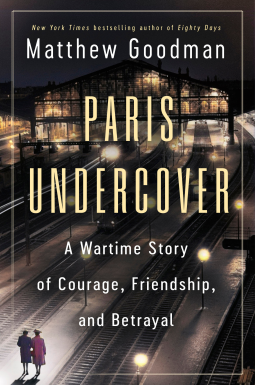
Paris Undercover (A Wartime Story of Courage, Friendship, and Betrayal) by Matthew Goodman

Pub Date Feb 04 2025 by Random House Publishing Group

Description

Two women in Nazi-occupied Paris created a daring escape line that rescued dozens of Allied servicemen. With one still in a German prison camp, the other wrote a book about it—a memoir built on fabrications. Now the bestselling author of Eighty Days shares their incredible, never-before-told full story.

Etta Shiber and Kate Bonnefous are the unlikeliest of heroines: two seemingly ordinary women, an American widow and an English divorcée, living quietly together in Paris. Yet during the Nazi occupation, these two friends find themselves unexpectedly plunged into the whirlwind of history. With the help of a French country priest and others, they set out to rescue British and French soldiers trapped behind enemy lines—some of whom they daringly smuggle through Nazi checkpoints hidden inside the trunk of their car.

Ultimately the Gestapo captures them both. After eighteen months in prison, Etta is returned to the United States in a prisoner exchange. Back home, hoping to bring attention to her friend Kitty’s bravery, she publishes a memoir about their work. Paris-Underground becomes a publishing sensation and Etta a celebrity. Meanwhile Kate spends the rest of the war in a Nazi prison, entirely unaware of the book that has been written about her—and the deeds that have been claimed in her name.

In researching this story, Matthew Goodman uncovered military records and personal testimonies that reveal, for the first time, the shocking truth behind Etta’s memoir and the unexpected, far-reaching consequences of its publication. More than just a story of two women’s remarkable courage, Paris Undercover is a vivid, gripping account of deceit, betrayal, and personal redemption.

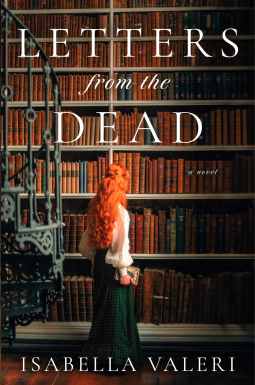
Letters from the Dead by Isabella Valeri

Pub Date May 27 2025 by Atria Books | Atria/Emily Bestler Books

General Fiction (Adult) | Mystery & Thrillers

Description

This addictive debut novel takes us into an intoxicating world of old money, privilege, and family intrigue as a young heiress must return home from a decade-long exile to face the powerful enemies arrayed against her, including those within her own family.

For the first eleven years of her life, the precocious daughter of a great European family tracing its roots back more than fifteen generations, never set foot on land that her family didn’t own. Cloistered on a sprawling estate in the Alpine foothills, as the youngest sibling of her generation she has little knowledge of the dark forces gathering in the shadows to strike at her family. But, when her insatiable curiosity leads her to uncover a priceless text hidden hundreds of years before, she shines light into corners meant to be left in the dark and threatens to uncover secrets that could trigger an internecine battle for succession.

Then, with no warning or explanation, she is whisked away on a private jet and exiled to an elite but isolated all-girls boarding school in the United States. More than a decade later, now in her twenties, she finds her bank accounts abruptly frozen by her family. She is recalled from her affluent but empty existence abroad. Little does she know that her family has plans for her, including an arranged marriage. Worse, as she draws closer to discovering the horrific act that sent her into exile a decade before, and shadowy enemies close in on her family, she must face her most dangerous and powerful foe: her own father.

Characters Influenced By Their Surroundings With Clare Flynn

I usually get the initial inspiration for my novels from their settings. Location is a critical factor – there is something about a place that gets me curious – who lived here before? how different would it have been eighty years ago?  Then I thrust my characters into the location and see what happens. While I usually have a rough outline of the plot, the characters mostly have different ideas – so they lead and I follow.

I write a lot about displacement – taking characters out of comfortable and familiar surroundings and transferring them into the strange and unfamiliar – completely outside their ‘comfort zone’.

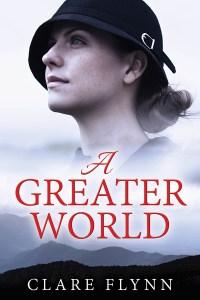
A Greater World Cover MEDIUM WEBMy first novel, A Greater World is set in Australia, but opens in England. Two characters, Elizabeth Morton, a middle-class woman approaching her thirties, unmarried after the death of her fiancé in the First World War, and Michael Winterbourne, a lead miner and war survivor, jilted by his fiancée, are each forced by personal tragedies to take a passage to Australia and a new life.

Elizabeth, used to a world of tennis matches, orchestral concerts and tea parties is dropped into an isolated and squalid homestead in the midst of the Australian outback and left to fend for herself. She’s probably never had to make so much as a cup of tea back in England, having had servants to do everything for her, but is soon scrubbing floors, sewing curtains and baking potatoes over an open fire.

‘Elizabeth Morton, you’ve led a cosseted life: servants to wait on you; agreeable friends to amuse you; nothing too onerous to do, except teach a few charming but talentless children to play the violin. Now let’s see what you’re made of!’ She jumped to her feet.

‘I won’t let him reduce me to living like a wild creature. I’ve never done housework before but by God I’ll do it now. I’ll make this hole a fit place to live if I die in the process!’

An hour later, the contents of the primitive dwelling were stacked on the ground in front of the veranda and Elizabeth, hair piled under a scarf, was at work with a broom. The dust was thick and the broom missing half its bristles. Her throat burned as she laboured, pausing every few minutes to cough.

Michael, uses his skills as a lead miner and his natural leadership qualities, to work his way up to managing a coal mine. Life in Australia was unfamiliar and offered many challenges but both characters learn and grow from their experiences and lead lives which, while tougher than the ones they left behind, are infinitely richer.

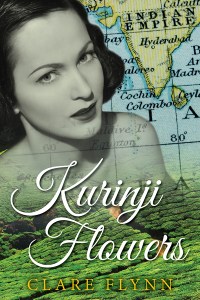
Kurinji Flowers MEDIUM WEBGinny Dunbar in Kurinji Flowers, a London debutante, is destined for a ‘good marriage’ when an abusive relationship makes her the object of a society scandal. Rushed into a marriage of convenience, she is soon on a ship bound for India and a new life as a tea planter’s wife. India has a big effect on Ginny. She has nothing in common with most of the other expatriate Brits and their shallow lives which revolve around the club – tennis, bridge games, gossip and gymkhanas. She is fascinated but fearful of the indigenous Indian population and so is caught between two cultures – until a love affair and a growing passion for painting change her life.

I wasn’t keen to get to know any individual Indians, but I was interested to find out more about their customs and culture. I didn’t want to admit it, but I was slightly afraid of the local people. Not that they would do me harm—despite the constant rumblings among people at the club about the independence movement—all I ever saw were smiling, happy faces. No. I was afraid of their difference from me. The dark brown of their skins, their glossy, raven hair, the little wooden hovels they lived in that were pitch dark inside, and their strange alien smell: slightly sweet, pungent and spicy with a base note of sweat. It was fear of the unknown. Fear at an atavistic level. I hesitate to say this now but, despite my protestations against the bigotry of the rest of the British, I think then I also felt superior to the Indians, viewing them, as many of my countrymen did, as people of lower intelligence. People to feel sorry for. I had absolutely no basis for this judgment as I rarely spoke to any of them, apart from Thankappan and Nirmala, and I knew nothing of their lives. It was blind prejudice and ignorance. My admiration for Gandhi was theoretical—based on his moral certainty and strength of purpose—and the fact he had yet again been slung into prison; it had not been put to the test by a close encounter with a real Indian.

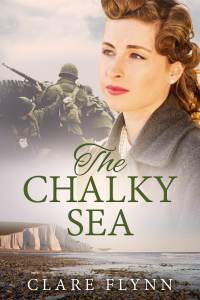
The Chalky Sea LARGE EBOOKMy latest novel, The Chalky Sea, is set in England in a small seaside town on the Sussex coast. For Gwen Collingwood, her home town becomes an alien place with the advent of World War 2, when the peaceful backwater becomes the front line in the Luftwaffe’s bombing campaigns. Gwen’s life transforms from that of bored housewife into a woman with a purpose. By the end of the novel she has discovered love, friendship, self-reliance and self-respect.

For several minutes she was rooted to the spot. How many times had she stood here before, looking down at the town spread out before her? It had always been a beautiful sight, the sea peppermint green under a blue sky, the pier stretching out into the water like a slender finger, the elegant Edwardian hotels lined up along the front, the town houses in their neatly regimented boulevard-like roads and the flat stretch of grassy fields dotted with cows and sheep stretching out to meet the marshes around Pevensey. Today she looked out over an unfamiliar, dystopian world. Meads, the area where she lived, was on fire. The spire of St John’s church, a familiar landmark, was a flaming beacon, the roof below it already collapsed. Through the thick cloud of smoke over the town, fires blazed everywhere. In a matter of moments her peaceful seaside home had been transformed into a battleground.

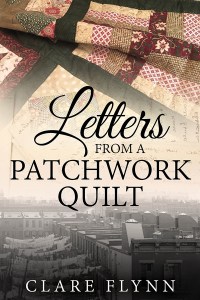
Letters from a patchwork quiltMy last extract is from Letters from a Patchwork Quilt. Jack Brennan is dragged off a ship as he is about to sail to America and instead finds himself in what feels like a hell on earth in industrial Middlesbrough.

The sky in front of him was washed in the deepest purple with moving vermillion clouds of smoke overlaying it, twisting and writhing in saturnine patterns. Plumed lines of fire cut horizontally through the red clouds in bright yellows and oranges. He stopped and stared. The black bulk of buildings, chimneys and cranes were silhouetted against the multicoloured sky. It was the gateway to hell. The mouth of an angry volcano. Boom. Boom. Bang. Bang. Relentless movement of machinery. The stench of sulphur and smoke clogged in his throat. He saw it as a metaphor for the life that was ahead of him. He was a soul condemned to eternal damnation among the blast furnaces of this god-forsaken town.

Unlike Elizabeth in A Greater World, this trial by displacement proves too much for Jack. Life in a Victorian slum, separation from the woman he loves and easy access to alcohol as a pub landlord sets him on a path self-destruction.

In writing all of my novels I have tried to get under the skin of my characters by immersing myself in the physical places where they interact with each other.  From the hill towns of India to the smoke stacks of Victorian Middlesbrough and the breweries of St Louis, location plays a central role in my novels and significantly shapes the fortunes of my characters.

Thank you, Stephanie, for inviting me to participate in this series.

About Clare:

Clare Flynn

Clare Flynn is a former global marketing director, who has marketed global brands from diapers to chocolate biscuits and has lived and worked in Paris, Milan, Brussels and Sydney. After spending most of the last fifteen years running her own strategic management consultancy in London, now most of her time is dedicated to writing her novels. She has wanted to write since she was four years old.

Clare has won BRAG medallions for her first two novels, A Greater World, set in the Blue Mountains of Australia in the 1920s and Kurinji Flowers set in colonial India in the 1930s and 40s. Her latest novel Letters From a Patchwork Quilt was published in September. The book is set in the late nineteenth century and moves from industrial towns in England to New York City and St Louis.

Clare loves to travel – usually with her watercolor paints. She even went to live on a tea plantation while finishing Kurinji Flowers, staying in a tea planter’s bungalow from the 1930s and blagging her way into the incredibly snooty High Range Club to research the Planters’ Club of the book. The original idea for the novel came to her during an earlier trip to Kerala, during a sleepless night in a hotel in Munnar, on which the fictional town of Mudoorayam is based.

The idea for Letters From a Patchwork Quilt came from Clare’s genealogical research. She stole Jack’s jobs and the English towns he lived in from her own great grandfather. All she had were names and places so she changed the names, kept the places and made everything else up.

Clare is a member of the Alliance of Independent Authors and the Historical Novel Society and is on the organizing commit for HNS Oxford 2016.

Links:

Website

Twitter

Facebook

Amazon Author Page

Goodreads

Pinterest


Interview with Best-Selling Author C.S. Harris

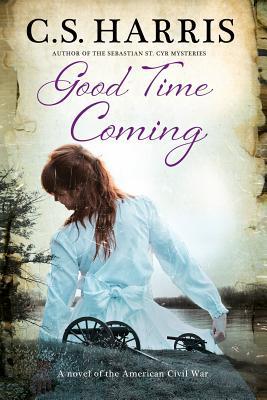
me-iiI’d like to welcome C. S. Harris today to talk with me about her new release, Good Time Coming, novel of the American Civil War. C.S. is the bestselling author of more than twenty novels including the Sebastian St. Cyr Regency mystery series and the standalone historical Good Time Coming. Under her own name, Candice Proctor, she is also the author of seven historical novels and a nonfiction historical study of women in the French Revolution. As C.S. Graham she writes the Tobie Guinness contemporary thriller series.

A Former academic with a PhD in European history, Candice has also worked as an archaeologist at a variety of sites around the world and spent much of her life abroad, living in Spain, Greece, England, France, Jordan, and Australia. She now makes her home in New Orleans with her husband, retired Army intelligence officer Steve Harris, and an ever-expanding number of cats.

Hi, Candice! Thank you for talking with me today about your newly release novel, Good Time Coming. It is a true honor to be talking about what I think is the most important work of fiction of the American Civil War I have read this year and in a long time. Please tell your audience about the premise of your story?

c-s-harrisHi Stephanie, thanks so much, and thanks for having me! Good Time Coming is the story of Amrie St. Pierre, a young girl forced to grow up fast in Civil War-torn Louisiana. This is a side of war we don’t often hear about—the struggle faced by the women and children left alone to survive in the face of starvation, disease, and the ravages of an invading army. War looks very different when seen through the eyes of a child learning hard truths about personal strength, friendship, and the shades of good and evil that exist within us all.

Rarely do I hear people talking about what the women endured during this war. I believe many are uncomfortable talking about it for many reasons. Neither do many people realize the starvation that was taking place because of the blockades and soldiers taking food for their own needs. You really touched on this and I am glad you did. Were there any moments while writing about this that you thought that it might not be well received? Also, what were your own emotions about this while writing your story?

When I first started thinking about this book, I simply wanted to tell a story about a dramatic, compelling aspect of the Civil War I felt had been neglected for some strange reason. (Yes, you can call me naive!) I’d never lived in the South until I moved to New Orleans shortly before Katrina, so I had no idea just how horrible the war was for the women and children of Louisiana until I started reading their surviving letters, diaries, and memoirs. Although I’m a historian and therefore should have known more than most about the brutal realities of warfare, I was frankly stunned. I was also disturbed to realize just how effectively the truth has been glossed over and hidden.

All nations mythologize their past, but I have a sneaky suspicion Americans do it more than most. The brutal realities of our Civil War don’t fit well with the stories we Americans like to tell ourselves, so we tend to ignore them—or try to. Slavery was a vile institution, and anyone who tries to excuse it (as some, amazingly, still do) by saying most slaves were well treated hasn’t read the numerous extant journals and letters of the period, or the Slave Narratives from the Depression-era Federal Writers’ Project. The simple truth is that slaves worked because they were whipped. Full stop. And because a statistical percentage of any population has sociopathic tendencies, any institution that allows one group of people absolute power over others is a recipe for sadism. At the same time, it’s important to remember that the North did not go to war against the South to end slavery. Their war aim was to preserve the Union, and their motive was the same one that led to the Mexican-American War and the virtual extermination of the Native Americans. The army that marched against the South was the same army that perpetrated the massacres of Native American women and children at Sacramento River and Harvey and countless other sites, a well-understood reality that terrified Southern civilians. To turn the Civil War into a morality play in which one side equals good and the other evil serves only to distort history and perpetuate the dangerous divisions that still exist in our country over 150 years later.

But breaking that taboo and telling a story that portrays what really happened is dangerous for a writer. I knew the book would probably provoke discussion; I didn’t realize it would be so controversial that it would be hard to get published. As for its effects on me, writing this book was a wrenching, highly emotional experience. It’s a powerful story and I still cry when I reread it. I poured my heart and soul into this book, and I am not the same person I was before I started it—it was that life altering.
good-time-coming-ii

I believe you have truly captured the diversity of people and social standings and showed different views of the war in a concise way. The attitudes of the war and government were so complex. It wasn’t as straightforward as people would like to believe. Without giving too much away will you tell your audience a little about how you portrayed people’s attitudes during that time?

I carefully studied the people who were living in St. Francisville and Bayou Sara before the war and made a determined effort to be true to their profiles (many of the minor characters in the book are real historical figures). A surprising number of residents were recent immigrants either from the North or Europe. There were a few wealthy, large plantation owners, but most people were small farmers, shopkeepers and tradesmen who owned no slaves. Some, inevitably, were eager for war (as was the case at the outbreak of WWI, most people assumed the war would be over quickly and their side was sure to win). Many were swept up in a patriotic fervor that sounds eerily similar to that of the Revolution. Others, like Amrie’s father, opposed secession but felt compelled to step forward and defend their homes and families. And some, like Amrie’s uncle, a West Point graduate, made the agonizing decision to remain in the Union army and fight their own people.

And then there’s the fact that a huge percentage of the people in the area were enslaved. The antebellum South was also home to over a quarter of a million gens de couleur libres or “free people of color.” Louisiana, especially, had a large population of free African-Americans. Some owned plantations and slaves themselves. Some formed units that fought for the Confederacy; others formed the Corps d’Afrique and fought for the Union. As the war continued and more and more slaves walked off the plantations, those numbers increased.

The longer the war went on, life became increasingly desperate, and society simply broke down. What happened to the people of the area during those years had repercussions that lasted for generations. For many decades after the Civil War, the Feliciana Parishes (in Louisiana, the civil administrative districts known elsewhere as counties are called parishes) had by far the highest murder rate in the country—higher even than the wild, wild West! To be frank, in a very real sense I don’t think it has recovered yet.

What are some emotional triggers for Amrie and her mother and how do they act on them?

One of the things that made the war particularly hard on Southern women was the fact that nineteenth-century Southern culture really did treat women differently—and expected them to behave differently. For example, it was not unusual for women in the North to become schoolteachers and nurses, but that was not true in the South; in fact, it was powerfully discouraged. So when the men all marched off to war (and died at a shocking rate: something like a quarter of the male population) it was even more of a stretch for their women to take over the farms and start running shops. Amrie St. Pierre is what we would today call a tomboy, while her mother defied expectations as a young woman by attending medical lectures in New Orleans (women were allowed to attend lectures even though they could not be licensed as doctors). Yet despite these advantages, they still face enormous hardships in an increasingly dangerous world. And of course one of the truths this story confronts is the reality of rape in war and how Southern women handled that. Two important themes are women finding strengths they don’t know they possess, and the bonds that can form amongst a community of women undergoing hardship together.

Please tell us a little about the supporting characters.

One of the most interesting characters for me to write was Amrie’s mother, Kate St. Pierre. At the beginning of the book Amrie sees her the way all children tend to see their mothers, with little understanding of the hardships and strains Kate is facing. But as the war goes on and Amrie grows up, their relationship subtly shifts, and Amrie begins to realize just how much there is to admire about her mother—and the ways in which they are and are not alike. The mother-daughter dynamic is always a powerful one, and when it is played out against the strains of war and extreme hardship, it’s fascinating.

A very different character is Adelaide Dunbar, Amrie’s grandmother. Adelaide is a hard woman who has done some terrible things in her life (Amrie discovers just how terrible as the story progresses), and yet she has an inner grit that can’t help but inspire respect. She forms a distinct contrast to Castile Boudreaau, a freed slave who serves as something of a mentor to Amrie. He’s an evolved soul who has already lived through so much pain and hardship that he has the calm and wisdom that Amrie lacks—and sorely needs as the war progresses. I could go on and on, talking about Finn, Amrie’s childhood friend, and Hilda Meyers, the enigmatic German shopkeeper; they’re all so real to me that since I’ve finished the book I find I miss them the way you miss friends you haven’t seen in a while.

For those who are not familiar with Civil War battle sites like Port Hudson, Bayou Sara, and Camp Moore, could you talk a little about that?

It’s hard to overstate the strategic importance of the Mississippi River in the Civil War. The Union knew that if they could take the river, they would effectively cut the Confederacy in two and stop the influx of cattle, horses, and other vital supplies coming into the South from Texas. Once New Orleans fell, the last two Confederate strongholds on the river were Port Hudson and Vicksburg, which became the scenes of horrific sieges. The once prosperous town of St. Francisville and its port, Bayou Sara, lay in between the two, so they suffered grievously from the depredations of Union troops trying to overrun both those two fortifications and Camp Moore, an important Confederate training ground that lay just to the east. The entire area was constantly raided and burned, and guerilla attacks on Union supply lines led to brutal acts of retaliation against area civilians. The things done to the women and children of Louisiana were abominable.

This is a big leap from your Regency England St. Cyr series. What prompted you to write this story and will there be any more like this from you? I hope so!

One of the hazards of keeping a series going for years and years is that there’s a risk of the writer becoming complacent or bored working always with the same characters, setting, and types of stories. For a while I was also writing a contemporary thriller series (under the name C. S. Graham), but I’m a slow writer and it almost killed me trying to keep two series going at the same time. So for me, standalones like this are a better solution.

I’ve actually wanted to write this book for over a decade, ever since I wrote a historical mystery set in occupied New Orleans (Midnight Confessions: currently out of print but due to be reissued soon under my real name, Candice Proctor). That’s when I first learned something about how hard the war had been on the civilian population of Louisiana, and I started thinking about looking at those events through the unblinkingly honest eyes of a child. Then Katrina hit, and one of the ways I survived those first horrible months of living in a devastated city was by reminding myself of how the residents of other destroyed cities throughout history pulled together to survive and rebuild. And that experience put a new spin on the story I wanted to tell.

I’m currently writing a novella set in Kent during World War II that will be part of an anthology by four authors called The Jacobite’s Watch. This is a new venture for me in two ways: it’s a time period I’ve never tried before, and I’ve never written a novella. I do think it’s important for a writer to keep challenging herself.

How would your characters describe you?

Ha! That’s an interesting question. I guess it would depend on the character. Amrie and I have much in common—she has a lot of my faults along with a number of characteristics I’d like to have but don’t. Ironically it wasn’t until I was reading the galleys for the published book that I realized Amrie’s mother is in many ways a blending of my own mother and grandmother with parts of me, too. I suspect all writers do this—put parts of themselves in their characters, including parts they don’t have but wish they did.

How much time and research did you spend on Good Time Coming and what was the process in getting a publisher to take it on?

I researched this book for years. I read hundreds of letters, memoirs, and journals, along with countless histories on various aspects of the war. I visited the historic sites that are important in the story—Port Hudson and Camp Moore, Jackson and the site of the vanished town of Bayou Sara. I even bought a weekend house not far from St. Francisville, between Jackson and Clinton! I went to Civil War battle reenactments, toured plantations and slave quarters, and spent days and days in dusty museums learning everything I could about how things were done and what objects actually looked like. And then I sat down and wrote the manuscript in five months in a white heat of eighteen-hour days, seven days a week. I’m normally a painfully slow writer, but this book just came pouring out of me.

Because I’d never written anything like this before—a coming-of-age story told from the first person viewpoint of a young girl—I was more than a bit apprehensive about my ability to do the story justice. But I honestly believe it is the best book I have ever written, and my agent was so excited when I sent it to her. Then she sent it out, and we received the most glowing, lyrical rejection letters ever penned. The problem was the subject matter—the effect of the Civil War on Southern civilians, plus, oddly, the issue of rape. New York editors were afraid to touch it. There’s a reason this book was published in England.

What do you feel is the importance of historical fiction?

As a professional historian, I find it frightening how little so many people know about the past. History has so much to teach us, not only about past events but also about human nature. As the saying goes, history may not repeat itself, but it does rhyme (a truism attributed to Mark Twain although he actually wrote something slightly different). For those who may not enjoy reading nonfiction histories, well-researched historical fiction offers an accessible window to the past.

Who are your influences?

I’ve long believed that the books we read as children influence us the most, and as a child I read Mark Twain, Robert Louis Stevenson, Rudyard Kipling, and Alexandre Dumas. Plus we lived in Europe when I was young, and our weekends and summers were spent crawling around crumbling castles, abbeys, and Roman ruins. So it’s no surprise I grew up fascinated by history, and that when I started writing I gravitated to historicals.

Other writers that undoubtedly had an influence on this book are James Lee Burke, both because of his insight into human nature and his lyrically beautiful prose, and of course Harper Lee. It’s impossible to write about a young girl coming of age in the South without consciously or unconsciously referencing Scout.

When writing, do you use visuals to give you inspiration?

I’ve never been one of those writers who makes collages with photos of characters, houses, clothes, etc. But I do like to go to the places I’ll be writing about and look at objects—a Civil War surgeon’s instruments, for example, or a real nineteenth-century homemade bow (I was so excited when I actually found one hanging on the wall of an outbuilding of a St. Francisville plantation house; they were common in the South in the years after the Civil War because former Confederate soldiers were not allowed to own guns).  I tramped all over the extensive battlefields of Fort Hudson, waded through the swamps of Cat Island, and stood in St. Francisville’s churchyard to watch the annual reenactment of what they call the Day the War Stopped (a commemoration of the time Federal and Confederate Masons joined together to give a Union captain a Masonic funeral). When I sit down to write, those are the things I draw on.

What is your writing process and how much time during the day do you write?

I do the bulk of my research before I start writing because I find my plots and characters grow out of what I’m reading and learning. I’ve heard some authors say they plot first and then research only what they need as they’re writing, so they don’t “waste time” learning what they’ll never use. The problem with that approach is that it risks turning history into mere window dressing. When I’m writing, if I come upon something I need but don’t know, I will stop and look it up. I’ve spent half a day chasing down information to get one word right—it’s the hazard of having been a history professor.

Ever since Katrina (when I had no choice) I’ve learned to love writing my books by hand in a legal pad. Recent studies have shown that there is something about holding a pen that stimulates the creative parts of your brain, so I’m not just imagining it. When I finish a chapter, I type it up, print it out, then find a comfortable chair to reread and edit. I constantly go back and edit the chapters I’ve written, so that by the time I finish a manuscript it is virtually in its final state. Yet I have a good friend who composes entirely on her computer, never edits until she’s finished, and never prints out her manuscripts. À chacun son goût.

As for how much of my day I spend on writing, I feel as if I’m always working, that I’m never free to just relax the way someone with a 9-5 job can. The problem with working for yourself is that you feel as if you should always be working. And yet because you’re operating on this long deadline—in my case, usually a year to write a 440-page manuscript—it’s all too easy to waste time, to tell yourself you need to think more about your plot or that the article about sociopaths you want to read is “research.” And then there’s the Internet. Publishers push their writers to be active on Facebook and Twitter, but I think it’s a mistake—soooo many writers I know are now locked in a constant battle against the distraction of social media. It’s a huge time sink.

There was a time I was rigorously self-disciplined. Now, not so much.

What is up next for you?

The twelfth book in the Sebastian St. Cyr series, Where the Dead Lie, will be out in April 2017, and I’ve almost finished #13 (which unfortunately still doesn’t have a title). Then I’ll be moving on to #14, which does have a title: Who Slays the Wicked (love that title!). The anthology with the World War II novella I mentioned will probably be out in 2018. And I’ve also been revising four of my out-of-print historicals; they should all be available early next year.

Where can readers buy your books?

The Sebastian St. Cyr series is available in virtually all outlets in the States and online elsewhere. Good Time Coming is available in hardcover and e-book through various outlets online and can also be ordered through independent bookstores.

Author Links:

Website

Twitter:  @csharris2

Facebook

Amazon

An Oldie but Goodie

As a book reviewer, I always enjoy going back and checking out older reviews I have written. It’s funny because sometimes I think, “What in the world was I thinking when I wrote that?!” Not that I have a different mind about the story but the words I wrote to describe my feelings about the book or I had wish I had been further in-depth. It must be the mood I am at the moment, if I’m tired or whatever. This past weekend I was in the mood to look back at my review of The Sister Queens I wrote in 2013 and it’s not half bad. Check it out. – It’s an oldie but goodie. 

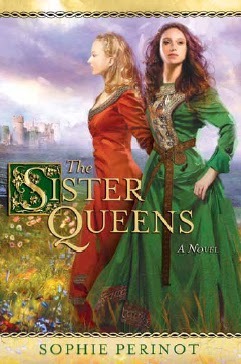
Book Review: The Sister Queens by Sophie Perinot

the-sister-queensThe Sister Queens is the second novel I have read about Marguerite and Eleanor, who both became Queens. The two sisters grew up together at their father’s-Count Raymond of Provence-court. They are separated at an early age to marry, they find their life as they know it completely changed and become two extraordinary women who face many challenges.

Marguerite married King Louis of France and is often neglected by him. She struggles to fulfill her role as Queen by his side. The reason for her struggles is due to her domineering and often time’s cruel mother-in-law, Blanche of Castile. Blanche’s influence over her son is strong as is her involvement in the governance of France.

Eleanor, whose husband is King Henry III of England, is not considered a strong leader to his kingdom but is a good husband and adores her. But as the years go by their marriage becomes strained and Eleanor struggles to bring back that spark in their relationship.

Although this story centers on Marguerite and Eleanor, they have two other sisters- Beatrice and Sanchia- who married the brothers of King Henry and King Louis. Their marriages help bond the relationship between the two countries. The marriages of all the sisters were obviously for political advantage and more power. Which is intriguing to read about and I find that I admire their courage, strength and their amazing resilience to adapt to any situation they encounter.

At the beginning of each chapter you read a letter from Marguerite to Eleanor and vice versa- as they corresponded through the years. As I read their letters, I found myself enthralled with their devotion to each other. For me, the letters were the highlight of the story told.

The alternating point of views told by the two sisters was well developed and easy to follow along. One can tell Perinot takes pride in her work and it shows through the pages and the character’s voices as their lives unfold. The compelling interpretation of Marguerite and Eleanor is believable and admirable. Stories such as this are timeless and Perinot brings the 13th century back to life through this captivating novel. That is one of the reasons why I’m so drawn to historical fiction. I hold this story in high affection and it is certainly praiseworthy!

I rated this story four and a half stars.

Stephanie M. Hopkins

Interview with Andrea Zuvich

Andrea ZuvichAndrea Zuvich is visiting me today to talk with me about her book, The Stuart Vampire and about the period in history she focuses on. Andrea is a seventeenth-century historian specialising in the House of Stuart (1603–1714), as well as a historical advisor and author of historical fiction. She is the host of the popular ‘The Seventeenth Century Lady’ blog. She has degrees in History and Anthropology. Zuvich has appeared on television and radio discussing the Stuarts and gives lectures on the dynasty throughout the UK. She was one of the original developers of and leaders on the Garden History Tours at Kensington Palace. Zuvich, a Chilean-American born in Philadelphia, Pennsylvania, now lives in England with her husband.
Hi, Andrea! Thank you for chatting with me today about your book, The Stuart Vampire. Tell me a little about the premise.

Thank you for having me on this great site! The Stuart Vampire follows the brief life of Henry Stuart, Duke of Gloucester, who was the youngest son of King Charles I (and therefore the youngest brother of King Charles II). Henry historically died from smallpox when he was twenty, and my story takes a decidedly paranormal turn from that point on and takes us along on Henry’s journey as he copes with his forced transformation into a vampire and he embarks on a mission to try to make something good out of this horrible curse. Along the way, he meets Susanna, the shocking inhabitants of the isolated village of Coffin’s Bishop, Sebastian (originally a mediaeval stonemason), among others.

Why 17th Century?

For me, the seventeenth century has it all and is yet grossly overlooked by both readers and authors (though I’m pleased to say I’ve seen a steady surge in interest from both in the past couple of years). The century was pretty controversial and one can still get heated arguments about topics from that time (i.e. whether or not it was lawful to execute King Charles I, what we should call the English Civil Wars, if we should recognize William and Mary as true sovereigns or usurpers… the list goes on and on). I love the aesthetics of this time period as well – the Baroque style is sometimes criticised for being over-exuberant and outrageously flamboyant – but I love it as, to me, it’s stunning and unashamed of displaying the gamut of human emotion.

The Stuart Vampire

Tell me a little about Charles II.

Ah, Charles II, hands-down the most popular of the Stuarts. Often called the “Merry Monarch”, he is best remembered for his rather prolific love life and for the Great Fire of London rather than for the political events during his reign – which included the Popish Plot of the 1670s, the Rye House Plot of 1683, the Secret Treaty of Dover with Louis XIV of France, etc. Charles II appears occasionally in The Stuart Vampire because he was an important figure in Henry’s life.

What are the emotional triggers of Contessa Griselda di Cuorenero and how does she act on them?

Griselda is the main antagonist of the book. Her biggest flaw is her obsession with her looks. She’s been fortunate to have beauty, but naturally this fades with time and it is the lengths to which she’ll go to in order to maintain this beauty that shows the depths of her vanity and evil. I can’t comment any further without giving anything away!

What is the courage and strengths of Henry Stuart? -and possibly the isolation he may feel with these attributes.

Henry has a strong sense of morality, and I think this is his strongest point. When he is around Griselda, she is a despicable individual and he knows he does not want to be like her. His longing to maintain his humanity is touching but at the same time makes him lonely. His devotion to and love for Susanna is another strength, and it’s the same for her. After a secret is revealed, Susanna tells Henry that “Our love will be the light and the darkness shall perish beneath the weight of it” – and that’s the strength of their relationship in a nutshell.

How is your character(s) influenced by their setting?

At one point, Henry leaves London and goes into the countryside, which does influence him – I think characters, like real people, do get influenced by their surroundings and those who surround them. The town of Coffin’s Bishop is a negative influence on Susanna, who does need to get away from that horrid place just for some peace of mind.

What is the greatest challenge of writing a story with Vampires in it?

Believability, especially from those who know me as a more serious historian. Most of my days are spent writing nonfiction history, but I’m very keen on making history accessible to as many people as possible as I don’t think it should only be for the academic community. When some people hear that I’ve written “a vampire story” they have a rude tendency to roll their eyes and/or chuckle, but the fact is, this story has made Henry Stuart known to a lot more people – people who have subsequently gone on to read more about the Stuarts, the English Civil Wars, the seventeenth century, and so on. I had one teenager contact me saying that solely because of The Stuart Vampire, she decided to get books about the Stuarts from her library to learn more about them – which is great! And that’s certainly nothing to snigger about.

Where can readers buy your book?

The Stuart Vampire is available in both paperback and eBook formats on Amazon, iBooks, Google Books, signed copies are available through my website, and the book will soon to be released as an audiobook on Audible. My other books are also available in these formats, but the two nonfiction books, A Year in the Life of Stuart Britain (hardback, 2016) and The Stuarts in 100 Facts (paperback, 2015) can be bought from any good bookseller.

Please tell me about yourself as an Historian.

History has been a very important aspect of my life since I was a little girl. I remember I was in the fourth grade and I knew I wanted to be a historian. I went to a community college during high school and then got my AA in History, and then I went to the University of Central Florida where I obtained two BA degrees – one in History and the other in Anthropology. After this, I got married and moved to the UK, and continued my history studies with Oxford University and Princeton University. That being said, there was absolutely no better training for me than actually delving into archives around the world – handling documents from the seventeenth century brought the history to life in ways that could never be done in a classroom. Indeed, by the time I had finished studying history in university, I was burned out, I almost couldn’t stand it anymore as formal study and the somewhat politically biased teaching wasn’t right for me. I had time off and fell in love with history again, by self-teaching with primary sources. Whilst living in London, I volunteered at Kensington Palace and later was one of the creators and leaders on their Garden History Tours, which was a very enlightening experience for me. Since 2010, I’ve run The Seventeenth Century Lady website which is devoted to all things seventeenth-century, with an emphasis on European history. I’ve been giving lectures on the Stuart period of 1603-1714 for several years now, and it’s a delight to do so.

Will you write other stories related to the paranormal?

It’s funny because I was never before interested in paranormal stories until The Stuart Vampire. That being said, I’ve had numerous readers who have responded favorably to this and many have asked for a continuation of Henry’s story – which does indeed interest me!

What are you currently working on?

I’ve just finished writing a short story set during the plague outbreak of 1630s Venice, and I’m also recording the audio version of The Stuart Vampire. I’m expecting a child due in October, so I hope to finish off two more historical fiction novels that I’ve been working on over the past few years (I started my novel about William and Mary in 2010, and my novel about a Restoration actress’s adventures in 2014) – we’ll see how that goes!

Often times the best inspiration comes within us. How do you flesh out your characters to drive the plot?

I write historical novels based on historical fact, and there are unknowns in any biography and I use my imagination – strictly based on in-depth study on that person’s behavior and character – to flesh out the story. I rather see the whole process as though the facts are the bones of a fish, and my job is to give educated guesses as to the rest – to flesh out the fish. Every author has their way of going about it, but I’m comfortable with this so I’ll keep on trucking.

Thank you, Andrea!

Thank you, Stephanie!

Please visit Andrea’s site here

Other Links:

Amazon Profile

Goodreads


Wish-List 5: The American Civil War

As an American and a Southerner I have always been drawn to my countries history. Like all history there is good and the bad. I live in a state that is extremely rich in Civil War History and Southern Heritage. I have always been interested in the families of the south that live during the war and how it affected their lives. Recently my interest has deepened. I think it’s because I came across some documents or memories-if you will-that was written during the Reconstruction Period of the South. Since then that era has been on my mind. Then I was looking through some pictures of Madison, Georgia. A town in Georgia that Sherman and his army did not burn down on their march to the sea. Low and behold, a story of the south began to develop in my mind. So begins my research and reading of every novel and non-fiction book I can get my hands on about the civil war and the reconstruction.

Today, I share with you five historical fiction books of the era that is on my wish-list. Enjoy!

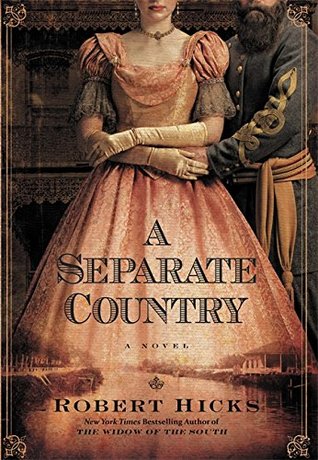
A Separate Country by Robert HicksA Separate Country by Robert Hicks

Set in New Orleans in the years after the Civil War, A Separate Country is based on the incredible life of John Bell Hood, arguably one of the most controversial generals of the Confederate Army–and one of its most tragic figures. Robert E. Lee promoted him to major general after the Battle of Antietam. But the Civil War would mark him forever. At Gettysburg, he lost the use of his left arm. At the Battle of Chickamauga, his right leg was amputated. Starting fresh after the war, he married Anna Marie Hennen and fathered 11 children with her, including three sets of twins. But fate had other plans. Crippled by his war wounds and defeat, ravaged by financial misfortune, Hood had one last foe to battle: Yellow Fever. A Separate Country is the heartrending story of a decent and good man who struggled with his inability to admit his failures-and the story of those who taught him to love, and to be loved, and transformed him.

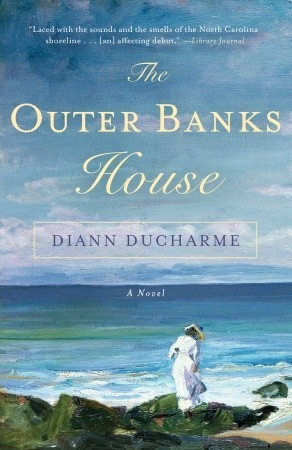
The Outer Banks House by Diann DucharmeThe Outer Banks House by Diann Ducharme

As the wounds of the Civil War are just beginning to heal, one fateful summer would forever alter the course of a young girl’s life.

In 1868, on the barren shores of post-war Outer Banks North Carolina, the once wealthy Sinclair family moves for the summer to one of the first cottages on the ocean side of the resort village of Nags Head. Seventeen-year-old Abigail is beautiful, book-smart, but sheltered by her plantation life and hemmed-in by her emotionally distant family. To make good use of time, she is encouraged by her family to teach her father’s fishing guide, the good-natured but penniless Benjamin Whimble, how to read and write. And in a twist of fate unforeseen by anyone around them, there on the porch of the cottage, the two come to love each other deeply, and to understand each other in a way that no one else does.

But when, against everything he claims to represent, Ben becomes entangled in Abby’s father’s Ku Klux Klan work, the terrible tragedy and surprising revelations that one hot Outer Banks night brings forth threaten to tear them apart forever.

With vivid historical detail and stunning emotional resonance, Diann Ducharme recounts a dramatic story of love, loss, and coming of age at a singular and rapidly changing time in one of America’s most beautiful and storied communities.

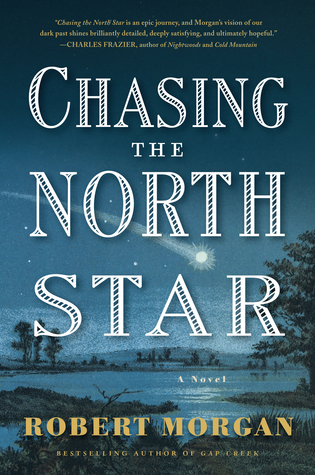
Morgan_NorthStar_jkt_HC_FINAL_PRNT12_22.inddChasing the North Star by Robert Morgan
In his latest historical novel, bestselling author Robert Morgan brings to full and vivid life the story of Jonah Williams, who, in 1850, on his eighteenth birthday, flees the South Carolina plantation on which he was born a slave. He takes with him only a few stolen coins, a knife, and the clothes on his back–no shoes, no map, no clear idea of where to head, except north, following a star that he prays will be his guide.

Hiding during the day and running through the night, Jonah must elude the men sent to capture him and the bounty hunters out to claim the reward on his head. There is one person, however, who, once on his trail, never lets him fully out of sight: Angel, herself a slave, yet with a remarkably free spirit.

In Jonah, she sees her own way to freedom, and so sets out to follow him.

Bristling with breathtaking adventure, Chasing the North Star is deftly grounded in historical fact yet always gripping and poignant as the story follows Jonah and Angel through the close calls and narrow escapes of a fearsome world. It is a celebration of the power of the human spirit to persevere in the face of great adversity. And it is Robert Morgan at his considerable best.

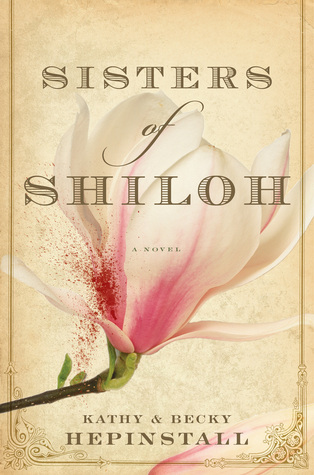
Sisters of Shiloh by Kathy & Becky HepinstallSisters of Shiloh

In a war pitting brother against brother, two sisters choose their own battle.

Joseph and Thomas are fresh recruits for the Confederate Army, daring to join the wild fray that has become the seemingly endless Civil War, sharing everything with their fellow soldiers—except the secret that would mean their undoing: they are sisters.

Before the war, Joseph and Thomas were Josephine and Libby. But that bloodiest battle, Antietam, leaves Libby to find her husband, Arden, dead. She vows vengeance, dons Arden’s clothes, and sneaks off to enlist with the Stonewall Brigade, swearing to kill one Yankee for every year of his too-short life. Desperate to protect her grief-crazed sister, Josephine insists on joining her. Surrounded by flying bullets, deprivation, and illness, the sisters are found by other dangers: Libby is hurtling toward madness, haunted and urged on by her husband’s ghost; Josephine is falling in love with a fellow soldier. She lives in fear both of revealing their disguise and of losing her first love before she can make her heart known to him.

In her trademark “vibrant” (Washington Post Book World) and “luscious” (Atlanta Journal-Constitution) prose, Kathy Hepinstall joins with her sister Becky to show us the hopes of love and war, the impossible-to-sever bonds of sisterhood, and how what matters most can both hurt us and heal us.

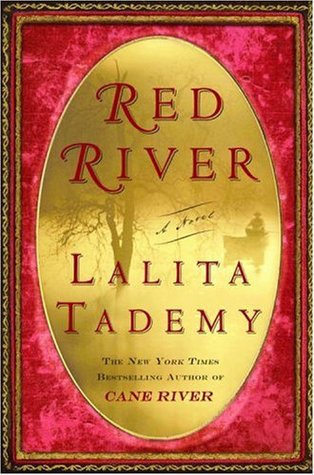
Red River by Lalita TademyRed River by Lalita Tademy

From the New York Times bestselling author of Cane River comes the dramatic, intertwining story of two families and their struggles during the tumultuous years that followed the Civil War.

Here are some of the wishlists from a few of my friends this month:

Heather @ The Maiden’s Court

Magdalena @ A Bookaholic Swede 

Holly @ 2 Kids and Tired 

Erin @ Flashlight Commentary – To Come

Colleen @ A Literary Vacation 

Characters in Motion with Janet Wertman

I’d like to welcome Janet Wertman to Layered Pages today. Janet is taking part in my characters in Motion series and talks with us about her earliest draft of Jane the Quene. Be sure to check out her links below and click on her website to learn more about her.

*******

Janet WertmanFirst, let me thank you for this series and the opportunity to discuss Characters in Motion. It was a fun exercise for me – especially since it was a topic I struggled with. I didn’t get to create the story from my characters, I had to create my characters from the story…and likable ones at that!
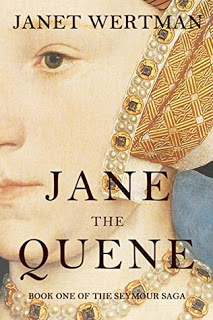
My debut novel, Jane the Quene, is the story of Jane Seymour, the third wife for whom Henry VIII executed Anne Boleyn. A lot of people know the basic facts, and virtually all of them are Team Anne.  But there is a way to tell Jane’s story that highlights its natural poignancy. That’s the story I wanted to tell, the one that would give Jane a team of her own – or at least acceptance.

The earliest drafts of the novel failed to do that. I wanted to make sure I got the story factually right, so I established my markers – very specific dates on which things happened – and I filled in the characters based on how they were reported to have acted at that time (I did have some wiggle room thanks to conflicting reports from inconsistent chroniclers, which let me pick and choose from a tapestry of stories that many had heard before, and reinterpret them in the way that felt right to me). As my writing books suggested, I told each scene from the point of view of the person most impacted in it …but that led to me giving voices to eight people – Jane, Henry, Edward, Cromwell, Anne Boleyn, Anne Seymour, even Mary. Jane’s voice and experience were lost, and the story was flat.

Then I found a great developmental editor who told me that I needed to forget the objective story and make it all about Jane’s personal experience. I could keep my timeline but I had to drastically cut the POVs. She originally suggested keeping only Jane’s voice, but I knew I needed a second someone to tell the other side of the story, someone who could detail the actual plotting that was taking place. Cromwell was the perfect choice – he was another vilified character with a poignant story (though the poignancy does not emerge until the close of this book), and he allowed me to reveal more of Henry (Jane saw him as good, Cromwell saw him as evil).

jane-the-queen-book-cover

From there, everything just fell into place. Since everything I wanted to say had to be filtered through Jane or Cromwell, I found myself showing more and telling less. Making each scene unfold slowly, with sensory details to anchor it. This was fiction after all and I was able to layer in the imagined private moments of Jane’s journey.  The September 1535 meeting in the gardens, the April 1536 hunting trip where Jane learns that Anne will die…these were the key pieces of the narrative. Invented, but still loosely based on facts (like the fact that Henry loved concocting medicines…the fact that hunting involved unmaking the deer and sharing the “good” organs on the spot…).  I had almost free rein with these, except for one particular pivotal scene: The December 1536 confluence of two blessed events (Mary’s return to court, London gathering on the frozen Thames to cheer on the royal procession to church) with two tragic ones (Jane’s father dying and another miscarriage). Luckily, everything worked (assuming a relatively speedy messenger!).

I’m finding the same challenges in the sequel: I am currently working on The Path to Somerset, which is the story of Edward Seymour (another vilified character with a poignant story…I have a pattern!) during the second three-set of Henry’s wives (Henry’s crazy years). Jane was about morality, Somerset is about power and risk. I am really enjoying getting to motivation in between the things we know happened…though I have to say I look forward to the editing process as I already know some places to be smoothed out a bit!

Janet Wertman

Author Links:

LINKS

Amazon US

Amazon UK

Amazon AU

For more information on Janet and her book Jane the Quene, go to her wonderful website, where she blogs on Tudor history.

Facebook Author Page

My Twitter

Jane’s Twitter (yes, she has her own – and tweets different stuff than I do!):

Pinterest

Google+ 

Be sure to check out Nancy Bilyeau’s  interview with Janet!