Reader’s Log 023: Current Read and Difficult Passages

Differentiating between red herrings and explicit content for shock value or book sales in mystery-thrillers.  

Today, I thought I would share a book I’m currently reading and discuss a little about difficult passages that may be disturbing, or what one may feel is inappropriate. Oftentimes, a reader can come across a scene where they wished they hadn’t read or wish they had just skipped over entirely. But what should one do if they’re reviewing a book for the publisher or author and come across this problem? Should they just give up on the book entirely, or power through it, hoping for the best? Personally, I really think it depends on a few things.

Firstly, it depends on the type of reader you are and what you can handle or not handle. I’ve noticed through the decades the different stages I’ve gone through with reading material. What I will tolerate, what I deemed appropriate or inappropriate. What disturbs me and so forth… Like, is it just for shock value for book sales or does it serve a purpose to drive plot of the story? Does it attest to the character’s human nature and lifestyle? What are the purposes of these scenes?

There can also be that the theme or scene-if you will-upsets one’s psyche on a personal level. One must consider these things when reading physiological thrillers and literature as a whole. If you are a reader who reads widely, even then one can have limits and there is nothing wrong with that; one must use discernment in all things.

I’m currently reviewing an ARC of, “The Last Room on the Left” by Leah Konen at the invite via email from the publishers, and I’ve come across two difficult but brief scenes I could have-in all honestly- done without. It seriously had me pause and considered if I wanted to finish this story or not. The next morning, I reflected more on whether or not to continue with the story. The pause had me ask myself the question whether or not the difficult but brief scenes were a red herring or just shock value. As I read further, I came to the conclusion that they are definitely red herrings. To be honest, the old me would have probably given up on the book entirely. I’m glad I didn’t in this case and I believe the author did a good job with writing these scenes without dragging it out. They serve the right purpose in story-telling, in my opinion.

If you come across scenes when reading books for review, what is the standard you set for yourself, and do you ask or consider the questions I mentioned above?  

Edit: My review for, “The Last Room on the Left” by Leah Konen will be posted on January 4, 2025.

Stephanie
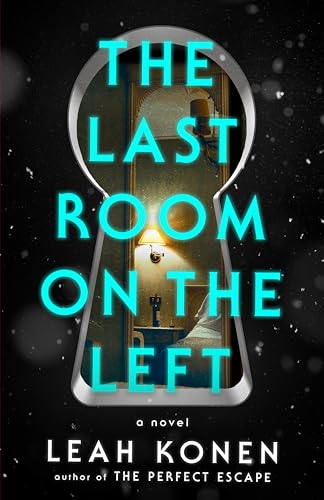
The Last Room on the Left by Leah Konen

Expected publication January 14, 2025 by G.P. Putnam’s Sons – Penguin Random House

Kerry’s life is in shambles: Her husband has left her, her drinking habit has officially become a problem, and though the deadline for her big book deal—the one that was supposed to change everything—is looming, she can’t write a word. When she sees an ad for a caretaker position at a revitalized roadside motel in the Catskills, she jumps at the chance. It’s the perfect getaway to finish her book and start fresh.

But as she hunkers down in a blizzard, she spots something through the window: a pale arm peeking out from a heap of snow. Trapped in the mountains and alone with a dead, frozen body, Kerry must keep her head and make it out before the killer comes for her too. But is the deadly game of cat-and-mouse all in her mind? The body count begs to differ . . .
Reader’s Log 014: Favorite Books?

I love hearing people talk about which books are their favorites. For me, when someone ask what my favorite books are, is a very difficult question for me because I have so many categories! That said, I always begin with the classics. Hands down, if I were only to choose one book it would always be the Holy Bible. Its funny, there are moments when I’ve been out and about and either a random person or an employee of a store, would ask me what my favorite books are. I think depending where my head is at the moment, oftentimes I get stuck with the question. Strange how that works. Thinking back about my blogging, I believe-if I remember correctly- I have avoided this topic perhaps for that reason. Or maybe because-in all seriousness-there are too many to name. Particularly if you’re an avid reader.

Where shall I begin in this post? Childhood reads? The classics like I always do? How about not planning which books and listing a bunch of classics off the top of my head as quick as I can? That would be fun to see what I can come up with. Let’s begin, shall we?

Jane Eyre by Charlotte Brontë

Pride and Prejudice by Jane Austen

The Shadow of the Wind by Carlos Ruiz Zafón

Great Expectations by Charles Dickens

Count of Monte Cristo by Alexandre Dumas

Les Misérables by Victor Hugo

The Hunchback of Notre-Dame by Victor Hugo

To Kill a Mockingbird by Harper Lee

I Capture the Castle by Dodie Smith

Wives and Daughters by Elizabeth Gaskell

Frankenstein by Mary Shelley

Middle March by George Eliot

Mayor of Casterbridge by Thomas Hardy

Far From the Madding Crowd by Thomas Hardy  

The Catcher in the Rye by J.D. Salinger

Of Mice and Men by John Steinbeck

East of Eden by John Steinbeck

War and Peace by Leo Tolstoy

Rebecca by Daphne du Maurier

The Portrait of a Lady Henry James

The House of the Seven Gables by Nathaniel Hawthorne

The Scarlet Letter by Nathaniel Hawthorne

Anne of Green Gables L.M. Montgomery

There are so many more…

These book titles are not in any particular order.

Have you read any of these books? Out of this list, which are your favorites? This may be a fun topic to explore further.

I highly recommend these books to all.

Stephanie

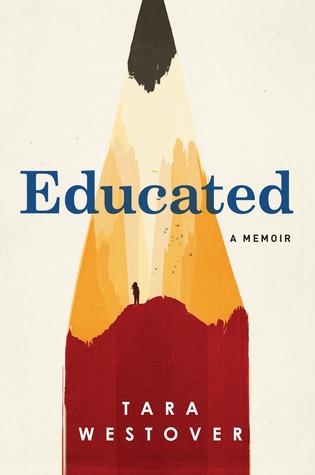
Educated by Tara Westover

For those if you who follow my blog posts, you will know my first reactions to Educated by Tara Westover. I’m slowly working my way through this story while reading another book and have, in the last couple of days, introduced another book to my reading pile. My thoughts on the story unfolding vary and a few things have really stuck with me. For instance, how is it possible for Tara, without a high-school degree, to able to take the ACT and go to college? Maybe I am missing something here and she got her GED or High School Diploma. I’m not entirely sure and perhaps I should go back and reread a few passages. This is what I get for not taking notes this time around. Hmm… Maybe, it will be revealed how she was able to do so further on in the story. I’m still in the early stages of her study.

In my next blog post, I will be discussing two family members of Tara’s and an interesting theme in the story. -Stephanie Hopkins

About the book:

Tara Westover was 17 the first time she set foot in a classroom. Born to survivalists in the mountains of Idaho, she prepared for the end of the world by stockpiling home-canned peaches and sleeping with her “head-for-the-hills bag”. In the summer she stewed herbs for her mother, a midwife and healer, and in the winter, she salvaged in her father’s junkyard.

Her father forbade hospitals, so Tara never saw a doctor or nurse. Gashes and concussions, even burns from explosions, were all treated at home with herbalism. The family was so isolated from mainstream society that there was no one to ensure the children received an education and no one to intervene when one of Tara’s older brothers became violent.

Then, lacking any formal education, Tara began to educate herself. She taught herself enough mathematics and grammar to be admitted to Brigham Young University, where she studied history, learning for the first time about important world events like the Holocaust and the civil rights movement. Her quest for knowledge transformed her, taking her over oceans and across continents, to Harvard and to Cambridge. Only then would she wonder if she’d traveled too far, if there was still a way home.

Educated is an account of the struggle for self-invention. It is a tale of fierce family loyalty and of the grief that comes with severing the closest of ties. With the acute insight that distinguishes all great writers, Westover has crafted a universal coming-of-age story that gets to the heart of what an education is and what it offers: the perspective to see one’s life through new eyes and the will to change it.

What World Building Includes

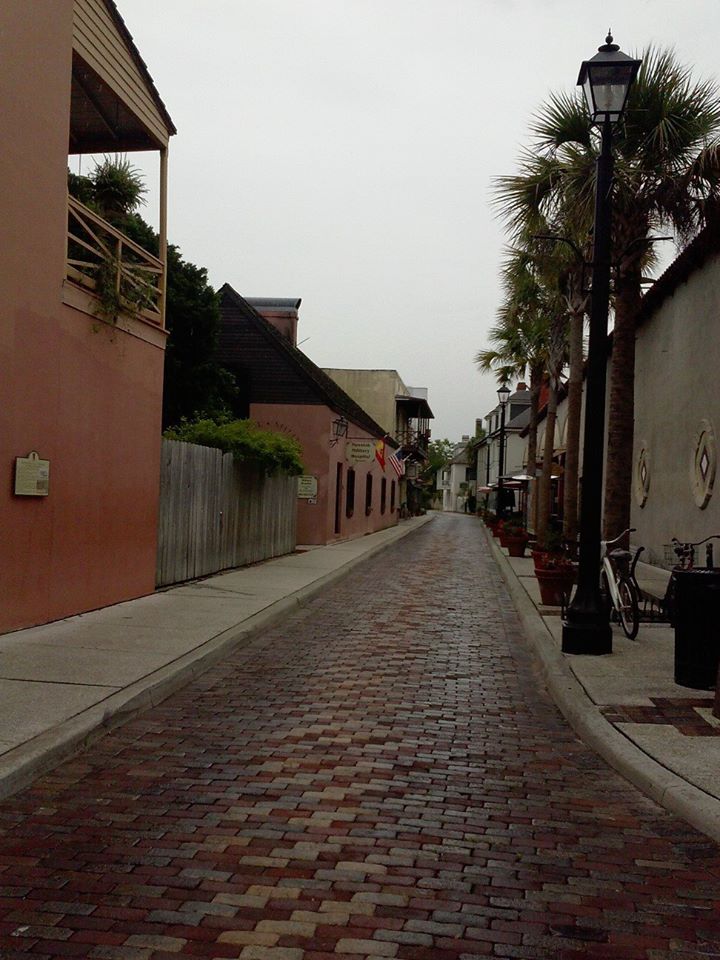
Photo by Stephanie Hopkins

A Reader’s Perceptive

World building serves the purpose to establish, time period, location, landscape, climate, and cultural surroundings. Its foundation of these elements is important for the reader to be transported in the character’s world. By accomplishing this, a writer must research and understand the world they are creating. Saying where your story takes place and adding a few notable locations, and buildings, doesn’t cut it. Make the reader believe they are there.

Use the Senses

You want your readers to be fully engaged in your story. It is a must!

Examples: Do your readers hear the horse’s hoofs on the cobble stone road drawing near? Do they see the dense fog rolling in the city’s streets? Does the reader know the culture’s way of dress, social class norms and rules? What are the events happening in the period they are living in? Such as, how things are made, talked about, and what is the population like? How do they get along or what are their resources? The list goes on…

I read a great story recently but didn’t feel transported to the time period. Which made it harder to understand the character’s actions. World building is vital.

Stephanie Hopkins