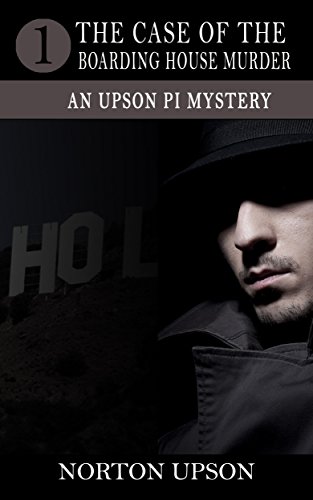
Saturday at 8:00 pm on blog talk radio with Yvonne Mason, Author Norton Upson will be talking about his upcoming book. The Case of the Boarding House Murder! Link HERE

Saturday at 8:00 pm on blog talk radio with Yvonne Mason, Author Norton Upson will be talking about his upcoming book. The Case of the Boarding House Murder! Link HERE
I’d like to welcome best-selling historical fiction author, Tony Riches To Layered Pages!
Thank you for chatting with me today, Tony! Please tell me about your latest book, MARY –Tudor Princess.
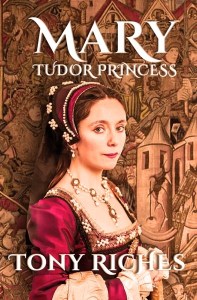
Hi Stephanie, thanks for inviting me. I researched Mary Tudor’s early life for my last book, Henry – Book Three of the Tudor Trilogy. In the Tudor Trilogy I’d moved forward one generation with each book, so it appealed to me to write a ‘sequel’ which did the same. I’d become intrigued with Mary’s story of how she risked everything to defy her brother, King Henry VIII.
How did you come to write stories about the Tudors and what captivates you about them?
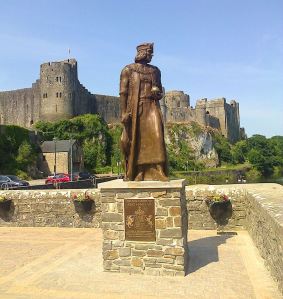
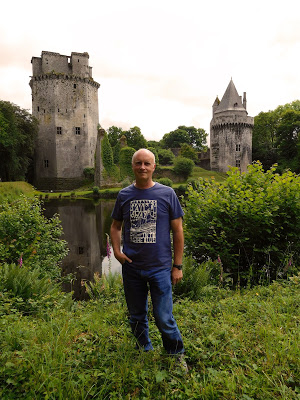
I was born in Pembroke, within sight of the castle where Henry Tudor was born, so I’ve always been keen to know more about how he became King of England. My research has taken me to some amazing places. I followed the footsteps of Jasper and Henry Tudor to their exile in remote Brittany and visited Henry’s magnificent tomb in Westminster Abbey. I’ve become an expert on the Tudor dynasty and want to help readers understand the true stories behind the myths. Last year I was part of a community group which raised the money for a statue of Henry Tudor in front of Pembroke Castle, so his importance to the town will never be forgotten.
Please tell me a little about Mary’s relationship with her brother Henry VIII
Mary was Henry’s closest living relative, as neither got on well with their sister Margaret, (who’d been married off to the King of Scotland at the age of fourteen). Mary didn’t seem to mind when Henry married her off to the fifty-two-year-old King Louis XII of France. Although Mary was barely eighteen at the time, Henry saw his younger sister as a small price to pay for a treaty with France. The problems between them began when Henry turned his back on Queen Catherine, as Mary was one of the few who dared to speak out against Anne Boleyn.
What sets your story apart from other Tudor Stories?
This book has the benefit of the three others in the trilogy which explore how Mary Tudor’s world developed from the beginnings of the Tudor dynasty. Although Mary – Tudor Princess can be read on its own, the Tudor Trilogy means I’ve had the opportunity to explore her life in much greater depth. The same real people and places connect all my books and I’ve worked hard to ensure they are as historically accurate as possible.
How do you flesh out your characters greatest sorrows?
There is a famous quote by Pulitzer prize winning poet Robert Lee Frost ‘No tears in the writer, no tears in the reader.’ I become so immersed in the lives of my characters that something like the loss of a child can be quite emotional. Mary Tudor was a princess and Queen of France, but she suffered greatly after the death of King Louis, so I had plenty to work with.
Was there a scene you found humorous to write about?
Mary was one of the guests of honour at the spectacular meeting between Henry VIII and King Francis I of France in June 1520, which became known as the Field of the Cloth of Gold. The two kings did their best to outdo each other in every possible way. Although it was a serious diplomatic meeting, there are stories about the two kings wresting each other to the ground, playing tricks and even seeing who could sing the loudest. Hall’s chronicle notes that ‘When dinner was over, some time was spent dancing in the banqueting hall. Before he started to dance, the French king went from one end of the room to the other, carrying his hat in his hand and kissing all the ladies on both sides – except for four or five who were too old and ugly’.
What are Mary’s attributes you find most intriguing to write about?
I wanted to explore Mary’s vulnerability as well as her strengths. I was intrigued by the complex relationship with her brother Henry VIII, and she had a strange dependence on Henry’s right hand man, Cardinal Thomas Wolsey. Wolsey was always doing her favours and lending her money. Of course, she knew he had ulterior motives, but she wept when she heard of his death.
What are some emotional triggers for Mary and how does she act on them?
There are many in this book, from the consequences of her decision to marry for love, to the trials of medieval childbirth. Although Mary shows exceptional courage and resilience, in the end they take their toll on her. Then she emerges from her sanctuary in Suffolk to challenge her brother’s decision to divorce her lifelong friend, Catherine of Aragon.
How is Henry influenced by his settings?
Henry used his father’s fortune to create his own settings and filled them with like-minded people. He was constantly on the move, in what was known as a ‘royal progress,’ and often took over a thousand people of his household with wagons carrying everything he might need. Even when he went to France he created a tented palace at huge expense. This could be seen as tremendous self-belief but in truth it veiled a deep insecurity.
How much research went into your story?
I’ve been researching the early Tudors for the last five years. When I began the trilogy I had little information about Owen Tudor, (Mary’s great-grandfather). The amount of information increased exponentially by the time I reached the story of Mary’s father, Henry Tudor, as he kept detailed legers of his finances. This time, I had the advantage of a fascinating book The French Queen’s Letters, by Erin Sadlack, which includes all Mary’s surviving letters, many with replies, as well as an insightful analysis of her state of mind at the time. I prefer primary research and found her letters offer an evocative ‘voice’ for Mary, as well as revealing how she felt about people and events.
What are you working on next?
When I was writing about Mary Tudor I researched the life of her second husband, Sir Charles Brandon, Duke of Suffolk, and visited his tomb at Windsor Castle. He was Henry VIII’s best friend and a champion jouster and adventurer, leading an army into France even though he had no military experience. Then he breaks his promise to Henry and secretly marries Mary. I’m now writing Brandon – Tudor Knight, which will tell the story from his point of view.
Where can readers buy your book?
All my books are exclusive to Amazon and available worldwide in eBook and paperback. The Tudor Trilogy is also available as audiobooks and an audiobook edition of Mary – Tudor Princess is now in production.
(Book links)
About the Author
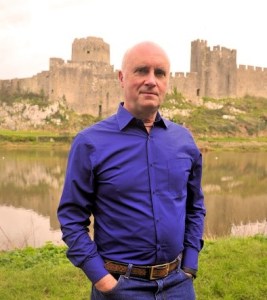
Tony Riches is a full-time author of best-selling historical fiction. He lives in Pembrokeshire, West Wales and is a specialist in the fifteenth century, with a particular interest in the Wars of the Roses and the lives of the early Tudors. For more information about Tony’s other books please visit his website tonyriches.com and his popular blog, The Writing Desk and find him on Facebook and Twitter @tonyriches.
 Last Monday my daughter and I drove by a Hightower Trial Marker heading towards Roswell on Shallowford. I was captivated by seeing the marker and remembering the history. It is a fascinating one and yet sad at the same time…
Learning about old roads and trails people in our own history used is extraordinary. So much happened along those roads and there were many settlements around them. Who were theses people? How far would they walk? How did they live? What did they experience? These questions always flood my mind and my thirst for learning more intensifies when I see these markers.
Stephanie M. Hopkins
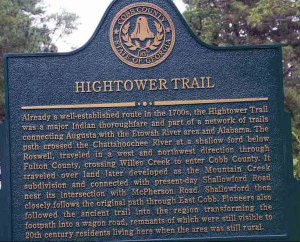
Text from website about the Historic marker: “Already a well-established route in the 1700s, the Hightower Trail was a major Indian thoroughfare and part of a network of trails connecting Augusta with the Etowah River area and Alabama. The path crossed the Chattahoochee River at a shallow ford below Roswell, traveled in a west and northwest direction through Fulton County, crossing Willeo Creek to enter Cobb County. It traveled over land later developed as the Mountain Creek subdivision and connected with present-day Shallowford Road near its intersection with McPherson Road. Shallowford then closely follows the original path through East Cobb. Pioneers also followed the ancient trail into the region transforming the footpath into a wagon road, remnants of which were still visible to 20th century residents living here when the area was still rural.”
Hightower (Etowah) Trial – Fulton Co., GA – Ancient Traces and Roads

NW Window Turret Photo by WSM Photography
WSM Photography Website and Print Shop
 This evening I am hanging out with Madison Liberman and Caleb Trovato. At least this is how I roll with Cold Feet by Branda Novak. This story is character driven and the plot is really interesting. I am about half way in and I’m seeing that not everything is what it appears to be, though I do have my suspicions. Am I feeling the attraction between Madison and Caleb. I don’t know…maybe it’s because I want him for myself. Ha. Stay tune. More to come!
Stephanie M. Hopkins
 About the book:
When the past won’t go away…
The Seattle police suspect Madison Lieberman’s father was the serial killer they call the “Sandpoint Strangler.” Madison refuses to believe it. Her father is now dead, and all she wants is the chance to create a new life for herself and her six-year-old child.
Then she discovers something in the crawl space beneath her parent’s house. Something that makes her question her father’s innocence. Or the innocence of someone else who’s equally close to her…
When another woman turns up dead, crime writer Caleb Trovato wonders whether they’re dealing with a copycat killer. Or is the real Sandpoint Strangler still alive? Caleb’s sure Madison knows more than she’s telling, and he’s determined to find out what. But he doesn’t expect to fall in love – or to lead Madison and her child into danger…
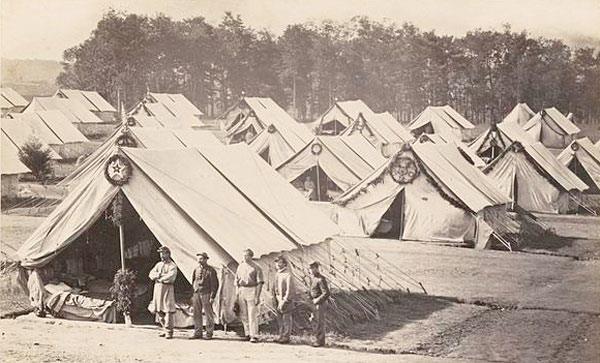
Camp Letterman tents 1863
After the battle of Gettysburg, over 30,000 Confederate and Union soldiers are estimated to have been wounded and were scattered over the battlefield, in field hospitals, and in public buildings and private homes throughout the area. Dr. Jonathan Letterman, Medical Director of the Army of the Potomac (also known as “the Father of Modern Battlefield Medicine), ordered a that a central hospital be established to care for those left behind. Camp Letterman was located east of Gettysburg near the York Pike on Wolf Farm. In A TIME TO HEAL, Capt. Philip Frost is assigned to the hospital, and he and Maggie’s oldest daughter, Lydia, strike up a friendship. Janet Stafford will be writing a blog about Camp Letterman at the end of the week at her website.
Janet Stafford’s Facebook Page
About the book, A TIME TO HEAL:

In 1863, Maggie Blaine Smith sat down and wrote in her journal: “It seems to me that this time after the storm of battle has been a waiting time, a time of recovery. We did not know where we would be led next. We did not know when or if change would happen.” A TIME TO HEAL, set in the months immediately after the Battle of Gettysburg, continues the story of Maggie and Eli Smith and their unconventional family. Maggie’s daughters and friends remain in the town as they struggle to care for a houseful of wounded soldiers. Meanwhile, Maggie and Emily, having suffered terrible trauma, move with their husbands to a more peaceful location about seven miles away. Everyone hopes and prays for healing and a return to normal life. And then an act of compassion puts them in jeopardy.
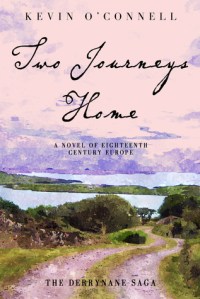 It’s 1767. As the eagerly anticipated sequel to Beyond Derrynane begins, Eileen O’Connell avails herself of a fortuitous opportunity to travel back to Ireland. In Two Journeys Home, the O’Connells encounter old faces and new—and their lives change forever.
Her vivacious personality matched only by her arresting physical presence, Eileen returns to Derrynane this time not as a teen aged widow but as one of the most recognised figures at the Habsburg court. Before returning to Vienna she experiences a whirlwind romance, leading to a tumult of betrayal and conflict with the O’Connell clan.
Abigail lives not in the shadow of her sister but instead becomes the principal lady-in-waiting to Empress Maria Theresa.
Hugh O’Connell leaves behind waning adolescence and a fleeting attraction to the youngest archduchess when he begins a military career in the Irish Brigade under Louis XV. But more royal entanglement awaits him in France…
Author Kevin O’Connell again deftly weaves threads of historical fact and fancy to create a colourful tapestry affording unique insights into the courts of eighteenth-century Catholic Europe and Protestant Ascendancy–ruled Ireland. Watch as the saga continues to unfold amongst the O’Connells, their friends and enemies, at home and abroad.
 I love coming up with art pieces for the books I feature on Layered Pages and for this book tour I wanted to create an abstract painting of the book cover for Two Journey’s Home. This painting was created with admiration for beautiful and atmospheric book covers and the stories within. I hope you all take the time this week to follow the Novel Expressions Two Journeys Home Blog Tour. We have many wonderful posts from our team to come!
Stephanie M. Hopkins
Editorial Reviews:
O’Connell is a fantastic storyteller. His prose is so rich and beautiful it is a joy to read. The story is compelling and the characters memorable – all the more so because they are based on real people. . . I am Irish but I did not know about this piece of Irish history. It is fascinating but historical fiction at the same time . . . Highly recommended for historical fiction lovers!
(c) Beth Nolan, Beth’s Book Nook
I enjoyed the first part of the Saga awhile back . . . (and) couldn’t wait to continue the story of Eileen and her family . . . this author really does have a way with words. The world and the characters are so vivid . . . Overall, I was hooked from page one. I honestly think that (Two Journeys Home) was better than (Beyond Derrynane) – which is rare. The characters and world-building was done in such a beautiful manner . . . I can’t wait for the next one . . .
(c) Carole Rae, Carole’s Sunday Review, Book Girl of Mur-y-Castell
Two Journeys Home: A Novel of Eighteenth Century Europe . . . is a gripping story that will transport the reader back in time, a story with a strong setting and compelling characters . . . a sensational romance, betrayal, family drama and intrigue . . . The plot is so complex that I find it hard to offer a summary in a few lines, but it is intriguing and it holds many surprises . . . great writing. Kevin O’Connell’s prose is crisp and highly descriptive. I was delighted (by) . . . how he builds the setting, offering . . . powerful images of places, exploring cultural traits and unveiling the political climate of the time . . . The conflict is (as well-developed as the characters) and it is a powerful ingredient that moves the plot forward . . . an absorbing and intelligently-crafted historical novel . . .
(c) Divine Zapa for Readers’ Favourite
About the Author:

Kevin O’Connell is a native of New York City and the descendant of a young officer of what had—from 1690 to 1792—been the Irish Brigade of the French Army, believed to have arrived in French Canada following the execution of Queen Marie Antoinette in October of 1793. He holds both Irish and American citizenship.
An international business attorney, Mr. O’Connell is an alumnus of Providence College and Georgetown University Law Centre.
A lifelong personal and scholarly interest in the history of eighteenth-century Ireland, as well as that of his extended family, led O’Connell to create his first book, Beyond Derrynane, which will, together with Two Journeys Home and the two books to follow, comprise the Derrynane Saga.
The father of five children and grandfather of ten, he and his wife, Laurette, live with their golden retriever, Katie, near Annapolis, Maryland.
Author Website
Tour Schedule: Blog Stops
February 19th
Spotlight- Layered Pages
February 20th
Guest Post- The Writing Desk
Guest Post – Blood Mother Blog
February 21th
Book Review- A Bookaholic Swede
Book Excerpt – Kate Braithwaite
Guest Post – A Literary Vacation
February 22nd
Interview – Flashlight Commentary
Book Excerpt – Just One More Chapter
Book Review –Impressions In Ink
February 23rd
Book Review – Lock, Hooks and Books
Book Review – before the second sleep
March 5th –Tour Recap

Hi Stephanie. Thanks for giving me the opportunity to ruminate on my favorite character Tostig, who does his best to justify his position in THE SONS OF GODWINE and FATAL RIVALRY.
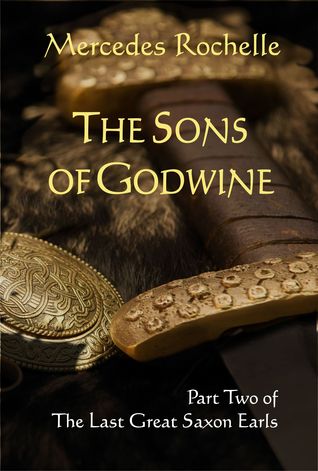
Tostig reminds me, in a way, of Judas Iscariot, the perennial traitor. No matter what his motivations, our villain’s reputation is blackened forever by future generations. But like Judas, Tostig had his reasons for what he did, and once in a while a closer look might serve to mitigate the circumstances. This is why I chose to write these two volumes in first person. I don’t think there is any better way to interpret what is going on inside his head.
I think that from the first, Tostig grew up in the shadow of his older brother. They were only a couple of years apart, but it’s widely accepted that Harold was his mother’s favorite. And Swegn was his father’s favorite. Still, if you can believe Editha’s Monk of St. Bertin who wrote the Life of King Edward (Vita Edwardi Regis), Tostig was every bit the heroic figure that Harold was: “Both had the advantage of distinctly handsome and graceful persons, similar in strength as we gather; and both were equally brave…And Earl Tostig himself was endowed with very great and prudent restraint—although he was occasionally a little over-zealous in attacking evil—and with bold and inflexible constancy of mind…And to sum up their characters for our readers, no age and no province has reared two mortals of such worth at the same time.” As this book was completed after 1066—and before the death of Queen Editha—it’s hard to reconcile this description of Tostig with the traitor everyone loves to hate. Throughout his life, Tostig was apparently Edith’s favorite—and the king’s, as well. When Tostig was forced to go into exile, King Edward parted with him most reluctantly and loaded him with gifts.
Tostig really didn’t come into his own, so to speak, until 1055 when he was made Earl of Northumbria. By then, Harold had been an earl since c.1045. As we know, the Northumbrians were a tempestuous bunch and apparently old Siward, Dane though he was, ruled with an iron fist. Tostig was both an outsider and a southerner, and it’s amazing that he even lasted ten years. He was criticized for his own harsh rule, but the real trouble didn’t start until taxes were raised precipitously in 1065.
So what went wrong between the two brothers? By all accounts, relations between Harold and Tostig were civil until the Northumbrian rebellion of 1065. But I think there were other factors at play that might have caused stress between them. What about the Welsh campaign of 1063? Historians tell us that it was a joint invasion between Harold (who came by sea) and Tostig (who came overland). They met somewhere around the island of Anglesey and pushed south, driving everyone before them until they captured and decapitated Gruffydd ap Llewelyn. Many historians laud Harold’s genius and point to this successful venture, but who gives Tostig any credit? I can’t see how there was much plunder to be had, and indeed, it is suggested that the infamous tax hike was needed to pay for this campaign.
There’s another possible reason to explain the new taxes. Historian Peter Rex suggests that reform in the royal household in the 1060s extended to “a move, possibly inspired by Earl Harold, to require that the north pay more towards the upkeep if its own government.” Since the Witan was dominated by Harold, it “would explain why Tostig blamed Harold for the revolt and accused him of conspiring against him.” (Harold II, The Doomed Saxon King).
The Northumbrian rebellion precipitated a crisis in more ways than one. While Tostig was in the south hunting with the king, his disgruntled thegns banded together and totally wiped out more than 200 of the earl’s housecarls, raided his treasury, murdered his supporters, and declared Morcar, son of Aelfgar, to be their new earl. They then proceeded to march south, devastating Tostig’s lands on their way to confront King Edward with their demands. Harold was brought in to mediate, but the rebels declared they would never take Tostig back, putting Harold in an impossible position. Negotiations went back and forth as the rebels became more and more unmanageable. King Edward wanted to raise the fyrd and chastise the offenders, but Harold urged restraint, considering the time of year (October) and the difficulty of forcing Tostig’s rule on unwilling subjects.
And what of Tostig through all this? He must have chafed while his brother negotiated for him, and when it was clear that Harold was not going to support him, he flew into a rage and accused his brother of fomenting the rebellion. As the Vita Edwardi Regis said, “But Harold, rather too generous with oaths (alas!), cleared this charge too with oaths.” I doubt that Tostig believed him, especially as things went from bad to worse and the king was eventually obliged to accept the rebels’ terms. Not only did Tostig lose his earldom, the rebels insisted that he be outlawed from the county. Was that the best his brother could do for him?
King Edward took the loss of royal authority very badly, and he soon fell into a decline that precipitated his death two months later. By then, Tostig was long gone, nursing his wounded pride and probably contemplating the means by which he would return. I imagine he had every reason to assume that King Edward would find a way to bring him back. The king’s death must have been a terrible blow; Tostig may not even have realized he was ill. Once Harold took the crown, did Tostig assume his brother would finally help him? That was less certain, and once his brother married the sister of Earl Morcar, his hopes must have been dashed altogether.
So in reality, Tostig only had one option open to him: the same option taken by his father and his own brother in 1052—the option used successfully at least twice by Aelfgar, Morcar’s father. He would have to recover his earldom by force of arms. This was almost to be expected, and I don’t know why Harold was surprised when it happened. Was the new king so obsessed with Duke William that he forgot to consider Tostig’s claim? Or did he simply underestimate his little brother? Assuredly, Tostig’s aborted invasion in May of 1066 was easily repulsed; perhaps Harold thought he had dealt with this nuisance once and for all. Alas for him and all of England, he was sorely mistaken. Harald Hardrada and Tostig’s invasion of the north drew the king and his indispensable housecarls away from the coast they had guarded so rigorously. If only Harold could have found a way to compensate Tostig for his lost earldom, perhaps things would have been much different when William the Bastard landed unopposed at Pevensey.
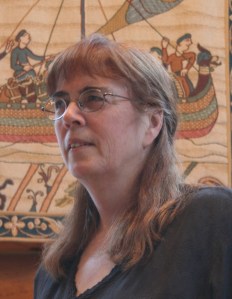
About Author:

Many Literary Small Presses do little to no marketing for their authors before book pre-launches or after the books are released. That leaves the author to do their own promoting and often times they find themselves with limited resources to do so or the know-how. L.A.P. it Marketing LLC offers several book launch and book promotional packages and will also work with the author to tailor their promotional needs at an affordable rate. Why not give us a try? Contact us today to find out more about how to become a client and what we can do for you. Email us at: lapitmarketing@yahoo.com
Our website: L.A.P. it Marketing LLC

I am not a cover designer but I can agree that cover layouts play an important role in the overall presentation of stories and I must admit, often times I first judge a book by its cover.
Cover Crush is a weekly series that originated with Erin at Flashlight Commentary.
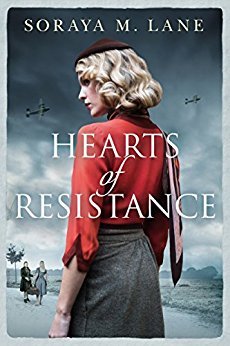 Hearts of Resistance by Soraya M. Lane
At the height of World War II, three women must come together to fight for freedom, for the men they love—and for each other.
When Hazel is given the chance to parachute into Nazi-occupied France, she seizes the opportunity to do more for the British war effort than file paperwork. Alongside her childhood friend, French-born Rose, she quickly rises up the ranks of the freedom fighters. For Rose, the Resistance is a link to her late husband, and a way to move forward without him. What starts out as helping downed airmen becomes a bigger cause when they meet Sophia, a German escapee and fierce critic of Hitler who is wanted by the Gestapo. Together the three women form a bond that will last a lifetime.
But amid the turmoil and tragedy of warfare, all three-risk losing everything—and everyone—they hold dear. Will their united front be strong enough to see them through?
My thoughts:
This is a clean and simple layout really but nonetheless it appeals to me. Probably for the reasons. The premise is interesting as well.
Stephanie M. Hopkins
Other great cover crushes from my fellow book bloggers:
Magdalena at A Bookaholic Swede
Colleen at A Literary Vacation
Heather at The Maiden’s Court
Holly at 2 Kids and Tired
Meghan at Of Quills & Vellum

 Layered Pages